EP2598665B1 - Dispositif d'un acier inoxydable austenitique pour la production de chlorohydrine - Google Patents
Dispositif d'un acier inoxydable austenitique pour la production de chlorohydrine Download PDFInfo
- Publication number
- EP2598665B1 EP2598665B1 EP11734197.4A EP11734197A EP2598665B1 EP 2598665 B1 EP2598665 B1 EP 2598665B1 EP 11734197 A EP11734197 A EP 11734197A EP 2598665 B1 EP2598665 B1 EP 2598665B1
- Authority
- EP
- European Patent Office
- Prior art keywords
- chlorohydrin
- epichlorohydrin
- stainless steel
- stream
- produced
- Prior art date
- Legal status (The legal status is an assumption and is not a legal conclusion. Google has not performed a legal analysis and makes no representation as to the accuracy of the status listed.)
- Active
Links
Images



Classifications
-
- C—CHEMISTRY; METALLURGY
- C07—ORGANIC CHEMISTRY
- C07D—HETEROCYCLIC COMPOUNDS
- C07D301/00—Preparation of oxiranes
- C07D301/02—Synthesis of the oxirane ring
- C07D301/03—Synthesis of the oxirane ring by oxidation of unsaturated compounds, or of mixtures of unsaturated and saturated compounds
-
- C—CHEMISTRY; METALLURGY
- C07—ORGANIC CHEMISTRY
- C07D—HETEROCYCLIC COMPOUNDS
- C07D301/00—Preparation of oxiranes
- C07D301/02—Synthesis of the oxirane ring
- C07D301/03—Synthesis of the oxirane ring by oxidation of unsaturated compounds, or of mixtures of unsaturated and saturated compounds
- C07D301/19—Synthesis of the oxirane ring by oxidation of unsaturated compounds, or of mixtures of unsaturated and saturated compounds with organic hydroperoxides
-
- C—CHEMISTRY; METALLURGY
- C07—ORGANIC CHEMISTRY
- C07D—HETEROCYCLIC COMPOUNDS
- C07D301/00—Preparation of oxiranes
- C07D301/02—Synthesis of the oxirane ring
- C07D301/24—Synthesis of the oxirane ring by splitting off HAL—Y from compounds containing the radical HAL—C—C—OY
- C07D301/26—Y being hydrogen
-
- C—CHEMISTRY; METALLURGY
- C22—METALLURGY; FERROUS OR NON-FERROUS ALLOYS; TREATMENT OF ALLOYS OR NON-FERROUS METALS
- C22C—ALLOYS
- C22C38/00—Ferrous alloys, e.g. steel alloys
- C22C38/001—Ferrous alloys, e.g. steel alloys containing N
-
- C—CHEMISTRY; METALLURGY
- C22—METALLURGY; FERROUS OR NON-FERROUS ALLOYS; TREATMENT OF ALLOYS OR NON-FERROUS METALS
- C22C—ALLOYS
- C22C38/00—Ferrous alloys, e.g. steel alloys
- C22C38/18—Ferrous alloys, e.g. steel alloys containing chromium
- C22C38/40—Ferrous alloys, e.g. steel alloys containing chromium with nickel
- C22C38/44—Ferrous alloys, e.g. steel alloys containing chromium with nickel with molybdenum or tungsten
-
- F—MECHANICAL ENGINEERING; LIGHTING; HEATING; WEAPONS; BLASTING
- F28—HEAT EXCHANGE IN GENERAL
- F28F—DETAILS OF HEAT-EXCHANGE AND HEAT-TRANSFER APPARATUS, OF GENERAL APPLICATION
- F28F21/00—Constructions of heat-exchange apparatus characterised by the selection of particular materials
- F28F21/08—Constructions of heat-exchange apparatus characterised by the selection of particular materials of metal
- F28F21/081—Heat exchange elements made from metals or metal alloys
- F28F21/082—Heat exchange elements made from metals or metal alloys from steel or ferrous alloys
- F28F21/083—Heat exchange elements made from metals or metal alloys from steel or ferrous alloys from stainless steel
Definitions
- the present invention relates to chlorohydrin processing equipment comprising stainless steel.
- chlorohydrins may typically generate process and/or waste streams comprising concentrations of halogenated byproducts and/or chloride salts that may be corrosive to equipment comprised of non-specialized materials like carbon, steel and many grades of stainless steel.
- Degradation or fouling of process equipment can not only be inefficient in time and cost aspects, but also, can result in contamination of the desired product(s).
- the use of specialized materials such as graphite, titanium or hastelloy and/or materials provided with protective coatings, such as enameled or glass-lined steel, in such processes can be cost prohibitive.
- Bengt et al have disclosed the use of the superaustenitic stainless steel, Avesta 654 SMO, which has high corrosion resistance to halo-containing acids ( Scand. Corros. Congr. Eurocorr '92, 12th (1992), vol. 1, p81-90 ).
- Milier et al have disclosed the use of stainless steel "super alloys" for use in sea water cooled heat exchangers ( Materials Technology, vol. 24, no. 3 (2009), p10 ).
- the present invention provides a process for the production of chlorohydrins, wherein at least a portion of a surface contacted by a chlorohydrin processing stream comprises a stainless steel. More particularly, the present processes for the production of chlorohydrins can involve process streams, i.e., streams of reactants, products, byproducts, diluents, contaminants or any other component introduced into, and/or generated by, the process, that have one or more of high salt content, high pH, high oxidation potential and/or elevated temperature. It has now been surprisingly discovered that certain stainless steels can be utilized to form portions, or the entirety of, one or more pieces of processing equipment utilized in such processes.
- the present invention provides a process for the production of a chlorohydrin.
- the process comprises generating a chlorohydrin process stream and contacting at least a portion of a surface comprising an austenitic stainless steel with the process stream.
- the stainless steel comprises from 0.18 wt% to 0.52 wt% nitrogen, from 19.5 wt% to 24.5 wt% chromium, from 17.5 wt% to 22.5 wt% nickel, from 6.0 wt% to 7.5 wt% molybdenum, from 0.01 wt% to 0.02 wt% carbon, with the remainder being incidental impurities and the balance iron.
- the stainless steel comprises from 0.18 wt% to 0.22 wt% nitrogen, from 23.5 wt% to 24.5 wt% chromium, from 21.5 wt% to 22.5 wt% nickel, from 6.0 wt% to 6.5 wt% molybdenum, and from 0.01 wt% to 0.02 wt% carbon.
- the stainless steel comprises from 0.48 wt% to 0.52 wt% nitrogen, from 19.5 wt% to 20.5 wt% chromium, from 17.5 wt% to 18.5 wt% nickel, from 7.1 wt% to 7.5 wt% molybdenum, and from 0.01 wt% to 0.02 wt% carbon.
- the process stream may have a pH of greater than 9, or greater than 10, or even greater than 11; a salt concentration of at least 5 wt%, or at least 10 wt%, or even up to 20 wt%; a temperature of at least 70°C, or at least 80°C, or up to 90°C; and/or an oxidation potential of up to 100 mV/Ag-AgCl, or up to 200mV/Ag-AgCl, or even up to 300mV/Ag-AgCl.
- the process stream may comprise any stream introduced and/or generated by the process, and in some embodiments, may comprise a waste stream.
- the stainless steel may be a portion of a surface of any processing apparatus utilized in the production of chlorohydrins, including e.g., a conduit, reactor, heat exchanger, separation apparatus, chiller, pump, and the like or combinations of these.
- the stainless steel may be a portion of a surface of a separation apparatus, such as a distillation column or a dividing wall column.
- the stainless steel comprises at least a portion of a surface of a heat exchanger.
- the process can be used in any method for the production of chlorohydrins.
- the chlorohydrin produced is epichlorohydrin.
- the epichlorohydrin is produced by reacting allyl chloride with chlorine in the presence of water to form glycerol dichlorohydrin (2,3-propylene dichlorohydrin) and treating the glycerol dichlorohydrin with a base to provide the epichlorohydrin.
- the epichlorohydrin is produced by reacting glycerol with hydrochloric acid to form glycerol dichlorohydrin and treating the glycerol dichlorohydrin with a base to provide the epichlorohydrin.
- the epichlorohydrin is produced by reacting allylalcohol dissolved in hydrochloric acid solution with gaseous chlorine to form glycerol dichlorohydrin and treating the glycerol dichlorohydrin with a base to provide the epichlorohydrin.
- the cost savings provided by the use of stainless steel as a substitute for other more expensive materials in the chlorohydrin process are a significant advantage to the present processes themselves, but this advantage can be even further leveraged by use of the chlorohydrins produced thereby to produce additional products.
- the chlorohydrins produced according to the processes described herein can be utilized to produce alkylene oxides, such as propylene oxide or butylene oxide or epichlorohydrin.
- the alkylene oxides or epoxides produced may, in turn, be utilized to produce glycols, polyols, epoxy resins or synthetic glycerol.
- the present invention provides a process for the production of chlorohydrins, wherein at least a portion of a surface contacted by a chlorohydrin processing stream comprises a stainless steel. That is, it has now been surprisingly discovered that certain stainless steels can be utilized to form portions, or the entirety of, one or more pieces of processing equipment utilized in the production of chlorohydrins. While these stainless steels had previously been reported to be generically useful in chemical processing equipment, their suitability for use in equipment for the production of chlorohydrins is surprising and unexpected due to the extreme conditions that may be present and/or generated by such processes.
- processes for the production of chlorohydrins can involve process streams, i.e., streams of reactants, products, byproducts, diluents, contaminants or any other component introduced into, and/or generated by, the process, that have one or more of high salt content, high pH, elevated temperature and/or high oxidation potential. That is, salt concentrations of 0.5 wt%, based upon the total weight of the process stream, or up to 1.0 wt%, or 1.5 wt%, or 2 wt%, or 2.5 wt%, or 5 wt%, or 10 wt%, or even up to 20 wt%, may typically be introduced into, or generated by, chlorohydrin processes.
- process streams i.e., streams of reactants, products, byproducts, diluents, contaminants or any other component introduced into, and/or generated by, the process, that have one or more of high salt content, high pH, elevated temperature and/or high oxidation potential. That is, salt concentrations of 0.5
- process streams introduced into, or generated by, chlorohydrin processes may typically have pH values of at least 8, or 8.5, or greater than 9, or 9.5, or 10, or 10.5, or even greater than 11. Temperatures of at least 65°C, or 70°C, or 75°C, or 80°C, or 85°C or even up to 90°C can be generated or used by processes for the production of chlorohydrins.
- the stainless steels identified for use in chlorohydrin processing equipment will desirably exhibit a high corrosion resistance, including resistance to crevice corrosion, when exposed to such conditions. That is, the stainless steel utilized will desirably exhibit substantially no current density, i.e., a current density of less than 0.02 mA/mm 2 , or less than 0.01 mA/mm 2 , or even less than 0.005 mA/mm 2 , at applied potentials of up to 100 mV/Ag-AgCl, or up to 150 mV/Ag-AgCl, or up to 200 mV/Ag-AgCl, or up to 250 mV/Ag-AgCl, or even up to 300 mV/Ag-AgCl when in contact with a processing stream comprising at least 5 wt% salt, or up to 10 wt% salt, or even up to 20 wt% salt.
- substantially no current density i.e., a current density of less than 0.02
- the stainless steels will further desirably be commercially available in an easily manipulated format, e.g., as thin sheets, suitably used in the manufacture of the desired piece of processing equipment.
- the stainless steel utilized will also desirably exhibit sufficient heat conductivity so as to be useful in the formation of heat exchangers used to recover some of the heat present in chlorohydrin processing streams.
- Preferred stainless steels may have high contents of chromium, nickel, molybdenum and nitrogen and typically may comprise from 0.18 wt% to 0.52 wt% nitrogen, from 19.5 wt% to 24.5 wt% chromium, from 17.5 wt% to 22.5 wt% nickel, from 6.0 wt% to 7.5 wt% molybdenum, from 0.01 wt% to 0.02 wt% carbon, with the remainder being incidental impurities and the balance iron.
- Commercially available examples of such stainless steels include, but are not limited to, 904L, 254 SMO® and 654 SMO®.
- the stainless steel may comprise at least a portion of at least one surface that comes into contact with a process stream in a chlorohydrin process.
- a surface may be a portion of any apparatus commonly used in a chlorohydrins process, such as, e.g., a conduit, reactor, heat exchanger, separation apparatus, chiller, pumps, etc.
- the stainless steel may comprise at least a portion of a surface of a separation apparatus, such as a distillation column or dividing wall column.
- the surface may be a portion of an apparatus that comes into contact with a high temperature high turbulence flow of the process stream, since these conditions are optimal for corrosion, and in particular crevice corrosion, to occur.
- Such conditions are typical within heat exchangers, and the stainless steel can thus advantageously be used in at least a portion of a surface thereof.
- the heat conductivity of the stainless steel may be used to absorb/recover some of the heat present in chlorohydrin processing streams.
- the stainless steel used may advantageously be commercially available in an easily manipulated formatted, such as thin sheets, so as to be capable of being welded or machined by those of ordinary skill in the machining art to form the desired piece of processing equipment.
- Each of 904L, 254 SMO® and 654 SMO® are commercially available as thin sheets from, e.g., AvestaPolarit, Schaumberg, IL, and exhibit sufficient ductility or weldability so as to be readily formed into the desired piece of processing equipment.
- heat exchangers comprising the stainless steel are commercially available from Alfa Laval, Lund, Sweden.
- olefin chlorohydrins are typically prepared by reacting an olefin with chlorine in the presence of water. The process is believed to occur by means of an intermediate chloronium ion which reacts with the water to form an olefin chlorohydrin.
- the olefin may be one containing from 2 to 30 carbon atoms.
- functionalized olefins such as allylic compounds including chlorinated-olefins or alcohols, can be used as feed-stock for a chlorohydrin process.
- 3-chloropropene (allyl chloride) or allylalcohol reacts with chlorine in the presence of water, such as may be provided in the form of aqueous HCl solution to form glycerol dichlorohydrin, which may be treated with a base, such as sodium hydroxide, to provide epichlorohydrin.
- the process may alternatively include a water miscible solvent, and in such embodiments, the reaction would entail the addition of the hypochlorous acid to a long chain olefin in the presence of water in the water immiscible solvent.
- Suitable water immiscible solvents include decane, chloroform, and petroleum ethers.
- chlorohydrins involve reacting olefins with hypochlorous acid, wherein the process requires acidifying the olefin with gaseous hydrochloric acid and carrying out the process at a pH of between 2 to 7, preferably between 5 and 6.
- the preparation of chlorohydrins may be achieved by reaction of olefins with trichloroisocyanuric acid in alcohols, acetic acid or aqueous acetone.
- Various other methods of forming chlorohydrins are also well known and include reaction olefins with t-butyl hypochlorite or hypochlorous acid substantially free of chloride ions.
- chlorohydrins Another method of making chlorohydrins involves preparing hypochlorous acid by reacting chlorine and water in the presence of alkaline earth metal hydroxides then, reacting the hypochlorous acid mixture with a vinyl group-containing compound. Yet another route for the preparation of chlorohydrins involves the reaction of glycerine with aqueous or gaseous hydrochloric acid in the presence of water.
- the stainless steel surface may be utilized in any of the above processes, or in any process for the production of chlorohydrins known to those of ordinary skill in the art.
- the chlorohydrin produced is epichlorohydrin
- the stainless steel is a portion of a surface utilized in a chlorohydrin process comprising the reaction of allylchloride with chlorine in the presence of water to form glycerol dichlorohydrin, and the treatment of the glycerol dichlorohydrin with sodium hydroxide to provide epichlorohydrin.
- the epichlorohydrin is produced by reacting glycerol with hydrochloric acid to form glycerol-dichlorohydrin and treating the glycerol dichlorohydrin with a base to provide the epichlorohydrin.
- the epichlorohydrin is produced by reacting allylalcohol dissolved in hydrochloric acid with gaseous chlorine to form glycerol dichlorohydrin and treating the glycerol dichlorohydrin with a base to provide the epichlorohydrin.
- the cost savings provided by the use of stainless steel as a substitute for other, more expensive, materials in the chlorohydrin process are a significant advantage to the process itself, but can be further leveraged by use of the chlorohydrins produced thereby to produce additional products.
- propylene chlorohydrin and butylene chlorohydrins are used in producing propylene oxide and butylene oxide, respectively.
- Epichlorohydrin can be further processed to provide epoxy resins by reaction with bisphenol-A or bisphenol-F, examples of which include those commercially available under the tradename D.E.R. TM and D.E.N TM from the Dow Chemical Company, Midland, MI.
- Epichlorohydrin can also be used in the production of synthetic glycerol.
- the crevice corrosion behavior of the alloy 254 SMO® and titanium (grade 2) in 5 wt% salt solution are compared as follows.
- the samples are ground with 800 grit silicon carbide paper and rinsed with distilled water prior to testing.
- the prepped samples are tested in a laboratory crevice corrosion cell with a PTFE gasket providing a 7 mm diameter test surface of the material to be tested.
- the test cell is then submerged in 1 liter of waste water from a chlorohydrin process, i.e., a solution having an NaCl concentration of 5 wt% at a temperature of between 74°C and 81°C and a pH of between 11 and 12.
- Fluid motion of 2 m/s is provided by a magnetic stirrer. Potentiostatic corrosion current density measurements at 150, 200, 300, 325, 350, 400 and 450 mV/Ag-AgCl were carried out for a time period of 1 hour.
- the results from this Example are summarized in FIG. 1 .
- 254 SMO® exhibited no corrosion, i.e., exhibited a maximum current density (mA/mm 2 ) of approximately 0, up to an applied potential of 325 mV/Ag-AgCl, while grade 2 titanium exhibited a current density of 0 up to an applied potential of 450 mV/Ag-AgCl.
- This example thus shows that 254 SMO® is a suitable substitute for grade 2 titanium in applications wherein the 254 SMO® will be exposed to conditions including a pH of from 11 to 12, a temperature of from 70°C to 85°C and oxidation potentials of up to 325 mV/Ag-AgCl.
- the crevice corrosion behavior of the alloy 254 SMO® in 10 wt% and 20 wt% salt solution are evaluated as follows.
- the samples are ground with 800 grit silicon carbide paper and rinsed with distilled water prior to testing.
- the prepped samples are tested in a laboratory crevice corrosion cell with a PTFE gasket providing a 7 mm diameter test surface of the material to be tested.
- the test cell is then submerged in 1 liter of waste water from a chlorohydrin process, i.e., solutions having NaCl concentrations of 10 wt% and 20 wt%, respectively, at a temperature of between 74°C and 81°C and a pH of between 11 and 12.
- Fluid motion of 2 m/s is provided by a magnetic stirrer. Potentiostatic corrosion current density measurements at 150, 200, 300, 325, 350, 400 and 450 mV/Ag-AgCl were carried out for a time period of 1 hour.
- the results from this Example are summarize
- 254 SMO® exhibited no corrosion, i.e., exhibited a maximum current density (mA/mm 2 ) of approximately 0, up to an applied oxidation potential of 200 mV/Ag-AgCl in 10wt% solution of NaCl.
- 254 SMO® exhibited no corrosion, i.e., exhibited a maximum current density (mA/mm 2 ) of approximately 0, up to an applied potential of 100 mV/Ag-AgCl ( FIG. 3 ).
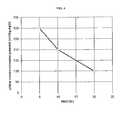
- the data shown in Figures 2 and 3 , as well as the potential data from Example 1 are summarized and shown in FIG. 4 . As shown in FIG 4 , at higher salt concentrations, lower critical potentials are required for the initiation of corrosion of 254 SMO®.
- a plate and frame heat exchanger comprising plates made from 254 SMO® was tied into the waste water stream of an operating chlorohydrin process. After 16 months of operation at a temperature of 75 to 80 °C, pH between 10.5 an 11, NaCl concentrations between 5 an 5.3 wt% and oxidizing potentials of up to +200 mV, no evidence of corrosion or crevice corrosion were observed on the 254 SMO® plates.
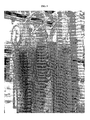
- FIG. 5 and 6 the intact plates after opening of the exchanger are shown. Blank spots indicate direct contact between adjacent plates, where no deposits could form. Although there are still some deposits from the process fluid on the plate surface, even these susceptible areas do not show crevice corrosion and the metal remains intact.
Landscapes
- Chemical & Material Sciences (AREA)
- Organic Chemistry (AREA)
- Engineering & Computer Science (AREA)
- Mechanical Engineering (AREA)
- Materials Engineering (AREA)
- Metallurgy (AREA)
- Physics & Mathematics (AREA)
- Thermal Sciences (AREA)
- General Engineering & Computer Science (AREA)
- Organic Low-Molecular-Weight Compounds And Preparation Thereof (AREA)
- Epoxy Compounds (AREA)
- Cleaning And De-Greasing Of Metallic Materials By Chemical Methods (AREA)
- Physical Or Chemical Processes And Apparatus (AREA)
Claims (13)
- Un procédé pour la production d'une chlorhydrine comprenant
la génération d'un flux de traitement de chlorhydrine ayant un pH d'au moins 8 ; et
la mise en contact d'au moins une portion d'une surface comprenant un acier inoxydable austénitique comprenant de 0,18 % en poids à 0,52 % en poids d'azote, de 19,5 % en poids à 24,5 % en poids de chrome, de 17,5 % en poids à 22,5 % en poids de nickel, de 6,0 % en poids à 7,5 % en poids de molybdène, de 0,01 % en poids à 0,02 % en poids de carbone, moins de 4,0 % en poids de manganèse, le reste étant des impuretés fortuites et du fer pour le solde, avec le flux de traitement de chlorhydrine. - Le procédé de la revendication 1, dans lequel le flux de traitement de chlorhydrine a un pH supérieur à 9.
- Le procédé de la revendication 1, dans lequel le flux de traitement de chlorhydrine a une concentration en sel d'au moins 5 % en poids.
- Le procédé de la revendication 1, dans lequel le flux de traitement de chlorhydrine a une température d'au moins 70 °C.
- Le procédé de la revendication 1, dans lequel le flux de traitement de chlorhydrine a un potentiel d'oxydation allant jusqu'à 300 mV/Ag-AgCl.
- Le procédé de la revendication 1, dans lequel le flux de traitement de chlorhydrine est un flux de déchets.
- Le procédé de la revendication 1, dans lequel l'acier inoxydable comprend de 0,18 % en poids à 0,22 % en poids d'azote, de 23,5 % en poids à 24,5 % en poids de chrome, de 21,5 % en poids à 22,5 % en poids de nickel, de 6,0 % en poids à 6,5 % en poids de molybdène, et de 0,01 % en poids à 0,02 % en poids de carbone.
- Le procédé de la revendication 1, dans lequel l'acier inoxydable comprend de 0,48 % en poids à 0,52 % en poids d'azote, de 19,5 % en poids à 20,5 % en poids de chrome, de 17,5 % en poids à 18,5 % en poids de nickel, de 7,1 % en poids à 7,5 % en poids de molybdène, et de 0,01 % en poids à 0,02 % en poids de carbone.
- Le procédé de la revendication 1, dans lequel la surface comprend une portion d'un échangeur de chaleur.
- Le procédé de la revendication 1, dans lequel la chlorhydrine produite est l'épichlorhydrine.
- Le procédé de la revendication 10, dans lequel l'épichlorhydrine est produite en faisant réagir du chlorure d'allyle avec du chlore en présence d'eau pour former de la dichlorhydrine de glycérol et en traitant la dichlorhydrine de glycérol avec une base pour fournir l'épichlorhydrine.
- Le procédé de la revendication 10, dans lequel l'épichlorhydrine est produite en faisant réagir du glycérol avec de l'acide chlorhydrique pour former de la dichlorhydrine de glycérol et en traitant la dichlorhydrine de glycérol avec une base pour fournir l'épichlorhydrine.
- Le procédé de la revendication 10, dans lequel l'épichlorhydrine est produite en faisant réagir un alcool allylique dissous dans de l'acide chlorhydrique avec du chlore gazeux pour former de la dichlorhydrine de glycérol et en traitant la dichlorhydrine de glycérol avec une base pour fournir l'épichlorhydrine.
Applications Claiming Priority (2)
| Application Number | Priority Date | Filing Date | Title |
|---|---|---|---|
| US36857810P | 2010-07-28 | 2010-07-28 | |
| PCT/US2011/042135 WO2012015553A1 (fr) | 2010-07-28 | 2011-06-28 | Équipement de traitement de chlorohydrine comprenant de l'acier inoxydable |
Publications (2)
| Publication Number | Publication Date |
|---|---|
| EP2598665A1 EP2598665A1 (fr) | 2013-06-05 |
| EP2598665B1 true EP2598665B1 (fr) | 2015-12-30 |
Family
ID=44628748
Family Applications (1)
| Application Number | Title | Priority Date | Filing Date |
|---|---|---|---|
| EP11734197.4A Active EP2598665B1 (fr) | 2010-07-28 | 2011-06-28 | Dispositif d'un acier inoxydable austenitique pour la production de chlorohydrine |
Country Status (9)
| Country | Link |
|---|---|
| US (1) | US9051286B2 (fr) |
| EP (1) | EP2598665B1 (fr) |
| JP (1) | JP2013535466A (fr) |
| KR (1) | KR20140070498A (fr) |
| CN (1) | CN103180477A (fr) |
| BR (1) | BR112013000757A2 (fr) |
| MX (1) | MX2013000477A (fr) |
| SG (1) | SG187010A1 (fr) |
| WO (1) | WO2012015553A1 (fr) |
Family Cites Families (4)
| Publication number | Priority date | Publication date | Assignee | Title |
|---|---|---|---|---|
| DE3010105A1 (de) | 1980-03-15 | 1981-10-01 | Basf Ag, 6700 Ludwigshafen | Verfahren und vorrichtung zur herstellung bzw. umsetzung von alkanolaminen |
| CA2002341A1 (fr) * | 1988-11-09 | 1990-05-09 | Takehisa Nakanishi | Methode de preparation d'epichlorohydrines |
| EA013681B1 (ru) | 2005-05-20 | 2010-06-30 | Солвей (Сосьете Аноним) | Способ получения дихлорпропанола, способ получения эпихлоргидрина и способ получения эпоксидных смол |
| US7482496B2 (en) * | 2007-06-27 | 2009-01-27 | H R D Corporation | Method for making chlorohydrins |
-
2011
- 2011-06-28 EP EP11734197.4A patent/EP2598665B1/fr active Active
- 2011-06-28 WO PCT/US2011/042135 patent/WO2012015553A1/fr not_active Ceased
- 2011-06-28 SG SG2013001912A patent/SG187010A1/en unknown
- 2011-06-28 MX MX2013000477A patent/MX2013000477A/es unknown
- 2011-06-28 CN CN2011800368111A patent/CN103180477A/zh active Pending
- 2011-06-28 US US13/810,695 patent/US9051286B2/en active Active
- 2011-06-28 KR KR1020137004762A patent/KR20140070498A/ko not_active Withdrawn
- 2011-06-28 JP JP2013521788A patent/JP2013535466A/ja not_active Withdrawn
- 2011-06-28 BR BR112013000757A patent/BR112013000757A2/pt not_active Application Discontinuation
Also Published As
| Publication number | Publication date |
|---|---|
| JP2013535466A (ja) | 2013-09-12 |
| BR112013000757A2 (pt) | 2016-05-24 |
| WO2012015553A1 (fr) | 2012-02-02 |
| US20130116452A1 (en) | 2013-05-09 |
| SG187010A1 (en) | 2013-02-28 |
| MX2013000477A (es) | 2013-02-11 |
| CN103180477A (zh) | 2013-06-26 |
| US9051286B2 (en) | 2015-06-09 |
| KR20140070498A (ko) | 2014-06-10 |
| EP2598665A1 (fr) | 2013-06-05 |
Similar Documents
| Publication | Publication Date | Title |
|---|---|---|
| Panagopoulos et al. | Stainless steel in thermal desalination and brine treatment: current status and prospects | |
| JP2021508785A (ja) | 耐食性の二相ステンレス鋼 | |
| JP2016216816A (ja) | 二相ステンレス鋼材、二相ステンレス鋼管及び二相ステンレス鋼材の表面処理方法 | |
| Grubb et al. | Corrosion of wrought stainless steels | |
| EP2598665B1 (fr) | Dispositif d'un acier inoxydable austenitique pour la production de chlorohydrine | |
| JP5890330B2 (ja) | 二相ステンレス鋼材および二相ステンレス鋼管 | |
| Gegner et al. | Corrosion resistance of titanium and zirconium in chemical plant exposures | |
| US4765957A (en) | Alloy resistant to seawater and other corrosive fluids | |
| Oldfield et al. | Technical and economic aspects of stainless steels in MSF desalination plants | |
| US4818483A (en) | Alloy resistant to seawater and corrosive process fluids | |
| JP2003104960A (ja) | メチオニンの製造方法 | |
| CN1426340A (zh) | 焊接二联钢的方法 | |
| US20070246129A1 (en) | Process for producing methionine | |
| Tullmin et al. | Effect of molybdenum additions on the corrosion resistance of a 12% chromium steel | |
| Todd | Nickel-containing materials in marine and related environments | |
| JP2015078429A (ja) | 二相ステンレス鋼材および二相ステンレス鋼管 | |
| Banning et al. | Corrosion resistance of metals in hot brines: a literature review | |
| JPS6126488B2 (fr) | ||
| Bernhardsson et al. | Properties of Two Highly Corrosion Resistant Duplex Stainless Steels | |
| CN106956478A (zh) | 一种不锈钢复合钢板 | |
| JP2018197369A (ja) | 耐腐食方法 | |
| Agarwal | Nickel base alloys and newer 6Mo stainless steels meet corrosion challenges of the modern day chemical process industries | |
| Gambo et al. | Corrosion analysis of API X70 steel in seawater environment | |
| JP7168278B1 (ja) | 海生生物の付着防止方法及び海生生物の付着防止剤 | |
| Crum | Corrosion by hydrogen chloride and hydrochloric acid |
Legal Events
| Date | Code | Title | Description |
|---|---|---|---|
| PUAI | Public reference made under article 153(3) epc to a published international application that has entered the european phase |
Free format text: ORIGINAL CODE: 0009012 |
|
| 17P | Request for examination filed |
Effective date: 20130228 |
|
| AK | Designated contracting states |
Kind code of ref document: A1 Designated state(s): AL AT BE BG CH CY CZ DE DK EE ES FI FR GB GR HR HU IE IS IT LI LT LU LV MC MK MT NL NO PL PT RO RS SE SI SK SM TR |
|
| DAX | Request for extension of the european patent (deleted) | ||
| 17Q | First examination report despatched |
Effective date: 20140225 |
|
| GRAP | Despatch of communication of intention to grant a patent |
Free format text: ORIGINAL CODE: EPIDOSNIGR1 |
|
| INTG | Intention to grant announced |
Effective date: 20150217 |
|
| GRAS | Grant fee paid |
Free format text: ORIGINAL CODE: EPIDOSNIGR3 |
|
| GRAP | Despatch of communication of intention to grant a patent |
Free format text: ORIGINAL CODE: EPIDOSNIGR1 |
|
| INTG | Intention to grant announced |
Effective date: 20150928 |
|
| GRAA | (expected) grant |
Free format text: ORIGINAL CODE: 0009210 |
|
| AK | Designated contracting states |
Kind code of ref document: B1 Designated state(s): AL AT BE BG CH CY CZ DE DK EE ES FI FR GB GR HR HU IE IS IT LI LT LU LV MC MK MT NL NO PL PT RO RS SE SI SK SM TR |
|
| REG | Reference to a national code |
Ref country code: GB Ref legal event code: FG4D |
|
| REG | Reference to a national code |
Ref country code: CH Ref legal event code: EP |
|
| REG | Reference to a national code |
Ref country code: AT Ref legal event code: REF Ref document number: 767534 Country of ref document: AT Kind code of ref document: T Effective date: 20160115 |
|
| REG | Reference to a national code |
Ref country code: IE Ref legal event code: FG4D |
|
| REG | Reference to a national code |
Ref country code: DE Ref legal event code: R096 Ref document number: 602011022267 Country of ref document: DE |
|
| REG | Reference to a national code |
Ref country code: LT Ref legal event code: MG4D |
|
| PG25 | Lapsed in a contracting state [announced via postgrant information from national office to epo] |
Ref country code: LT Free format text: LAPSE BECAUSE OF FAILURE TO SUBMIT A TRANSLATION OF THE DESCRIPTION OR TO PAY THE FEE WITHIN THE PRESCRIBED TIME-LIMIT Effective date: 20151230 Ref country code: NO Free format text: LAPSE BECAUSE OF FAILURE TO SUBMIT A TRANSLATION OF THE DESCRIPTION OR TO PAY THE FEE WITHIN THE PRESCRIBED TIME-LIMIT Effective date: 20160330 Ref country code: HR Free format text: LAPSE BECAUSE OF FAILURE TO SUBMIT A TRANSLATION OF THE DESCRIPTION OR TO PAY THE FEE WITHIN THE PRESCRIBED TIME-LIMIT Effective date: 20151230 |
|
| REG | Reference to a national code |
Ref country code: NL Ref legal event code: MP Effective date: 20151230 |
|
| REG | Reference to a national code |
Ref country code: AT Ref legal event code: MK05 Ref document number: 767534 Country of ref document: AT Kind code of ref document: T Effective date: 20151230 |
|
| PG25 | Lapsed in a contracting state [announced via postgrant information from national office to epo] |
Ref country code: GR Free format text: LAPSE BECAUSE OF FAILURE TO SUBMIT A TRANSLATION OF THE DESCRIPTION OR TO PAY THE FEE WITHIN THE PRESCRIBED TIME-LIMIT Effective date: 20160331 Ref country code: RS Free format text: LAPSE BECAUSE OF FAILURE TO SUBMIT A TRANSLATION OF THE DESCRIPTION OR TO PAY THE FEE WITHIN THE PRESCRIBED TIME-LIMIT Effective date: 20151230 Ref country code: SE Free format text: LAPSE BECAUSE OF FAILURE TO SUBMIT A TRANSLATION OF THE DESCRIPTION OR TO PAY THE FEE WITHIN THE PRESCRIBED TIME-LIMIT Effective date: 20151230 Ref country code: LV Free format text: LAPSE BECAUSE OF FAILURE TO SUBMIT A TRANSLATION OF THE DESCRIPTION OR TO PAY THE FEE WITHIN THE PRESCRIBED TIME-LIMIT Effective date: 20151230 Ref country code: FI Free format text: LAPSE BECAUSE OF FAILURE TO SUBMIT A TRANSLATION OF THE DESCRIPTION OR TO PAY THE FEE WITHIN THE PRESCRIBED TIME-LIMIT Effective date: 20151230 |
|
| PG25 | Lapsed in a contracting state [announced via postgrant information from national office to epo] |
Ref country code: NL Free format text: LAPSE BECAUSE OF FAILURE TO SUBMIT A TRANSLATION OF THE DESCRIPTION OR TO PAY THE FEE WITHIN THE PRESCRIBED TIME-LIMIT Effective date: 20151230 |
|
| PG25 | Lapsed in a contracting state [announced via postgrant information from national office to epo] |
Ref country code: CZ Free format text: LAPSE BECAUSE OF FAILURE TO SUBMIT A TRANSLATION OF THE DESCRIPTION OR TO PAY THE FEE WITHIN THE PRESCRIBED TIME-LIMIT Effective date: 20151230 Ref country code: ES Free format text: LAPSE BECAUSE OF FAILURE TO SUBMIT A TRANSLATION OF THE DESCRIPTION OR TO PAY THE FEE WITHIN THE PRESCRIBED TIME-LIMIT Effective date: 20151230 Ref country code: IT Free format text: LAPSE BECAUSE OF FAILURE TO SUBMIT A TRANSLATION OF THE DESCRIPTION OR TO PAY THE FEE WITHIN THE PRESCRIBED TIME-LIMIT Effective date: 20151230 |
|
| PG25 | Lapsed in a contracting state [announced via postgrant information from national office to epo] |
Ref country code: IS Free format text: LAPSE BECAUSE OF FAILURE TO SUBMIT A TRANSLATION OF THE DESCRIPTION OR TO PAY THE FEE WITHIN THE PRESCRIBED TIME-LIMIT Effective date: 20160430 Ref country code: RO Free format text: LAPSE BECAUSE OF FAILURE TO SUBMIT A TRANSLATION OF THE DESCRIPTION OR TO PAY THE FEE WITHIN THE PRESCRIBED TIME-LIMIT Effective date: 20151230 Ref country code: SM Free format text: LAPSE BECAUSE OF FAILURE TO SUBMIT A TRANSLATION OF THE DESCRIPTION OR TO PAY THE FEE WITHIN THE PRESCRIBED TIME-LIMIT Effective date: 20151230 Ref country code: EE Free format text: LAPSE BECAUSE OF FAILURE TO SUBMIT A TRANSLATION OF THE DESCRIPTION OR TO PAY THE FEE WITHIN THE PRESCRIBED TIME-LIMIT Effective date: 20151230 Ref country code: PL Free format text: LAPSE BECAUSE OF FAILURE TO SUBMIT A TRANSLATION OF THE DESCRIPTION OR TO PAY THE FEE WITHIN THE PRESCRIBED TIME-LIMIT Effective date: 20151230 Ref country code: PT Free format text: LAPSE BECAUSE OF FAILURE TO SUBMIT A TRANSLATION OF THE DESCRIPTION OR TO PAY THE FEE WITHIN THE PRESCRIBED TIME-LIMIT Effective date: 20160502 Ref country code: SK Free format text: LAPSE BECAUSE OF FAILURE TO SUBMIT A TRANSLATION OF THE DESCRIPTION OR TO PAY THE FEE WITHIN THE PRESCRIBED TIME-LIMIT Effective date: 20151230 Ref country code: AT Free format text: LAPSE BECAUSE OF FAILURE TO SUBMIT A TRANSLATION OF THE DESCRIPTION OR TO PAY THE FEE WITHIN THE PRESCRIBED TIME-LIMIT Effective date: 20151230 |
|
| REG | Reference to a national code |
Ref country code: DE Ref legal event code: R097 Ref document number: 602011022267 Country of ref document: DE |
|
| PG25 | Lapsed in a contracting state [announced via postgrant information from national office to epo] |
Ref country code: DK Free format text: LAPSE BECAUSE OF FAILURE TO SUBMIT A TRANSLATION OF THE DESCRIPTION OR TO PAY THE FEE WITHIN THE PRESCRIBED TIME-LIMIT Effective date: 20151230 |
|
| PLBE | No opposition filed within time limit |
Free format text: ORIGINAL CODE: 0009261 |
|
| STAA | Information on the status of an ep patent application or granted ep patent |
Free format text: STATUS: NO OPPOSITION FILED WITHIN TIME LIMIT |
|
| 26N | No opposition filed |
Effective date: 20161003 |
|
| PG25 | Lapsed in a contracting state [announced via postgrant information from national office to epo] |
Ref country code: BE Free format text: LAPSE BECAUSE OF FAILURE TO SUBMIT A TRANSLATION OF THE DESCRIPTION OR TO PAY THE FEE WITHIN THE PRESCRIBED TIME-LIMIT Effective date: 20151230 |
|
| PG25 | Lapsed in a contracting state [announced via postgrant information from national office to epo] |
Ref country code: MC Free format text: LAPSE BECAUSE OF FAILURE TO SUBMIT A TRANSLATION OF THE DESCRIPTION OR TO PAY THE FEE WITHIN THE PRESCRIBED TIME-LIMIT Effective date: 20151230 |
|
| REG | Reference to a national code |
Ref country code: CH Ref legal event code: PL |
|
| PG25 | Lapsed in a contracting state [announced via postgrant information from national office to epo] |
Ref country code: SI Free format text: LAPSE BECAUSE OF FAILURE TO SUBMIT A TRANSLATION OF THE DESCRIPTION OR TO PAY THE FEE WITHIN THE PRESCRIBED TIME-LIMIT Effective date: 20151230 |
|
| GBPC | Gb: european patent ceased through non-payment of renewal fee |
Effective date: 20160628 |
|
| REG | Reference to a national code |
Ref country code: IE Ref legal event code: MM4A |
|
| REG | Reference to a national code |
Ref country code: FR Ref legal event code: ST Effective date: 20170228 |
|
| PG25 | Lapsed in a contracting state [announced via postgrant information from national office to epo] |
Ref country code: CH Free format text: LAPSE BECAUSE OF NON-PAYMENT OF DUE FEES Effective date: 20160630 Ref country code: LI Free format text: LAPSE BECAUSE OF NON-PAYMENT OF DUE FEES Effective date: 20160630 Ref country code: FR Free format text: LAPSE BECAUSE OF NON-PAYMENT OF DUE FEES Effective date: 20160630 |
|
| PG25 | Lapsed in a contracting state [announced via postgrant information from national office to epo] |
Ref country code: GB Free format text: LAPSE BECAUSE OF NON-PAYMENT OF DUE FEES Effective date: 20160628 Ref country code: IE Free format text: LAPSE BECAUSE OF NON-PAYMENT OF DUE FEES Effective date: 20160628 |
|
| PG25 | Lapsed in a contracting state [announced via postgrant information from national office to epo] |
Ref country code: HU Free format text: LAPSE BECAUSE OF FAILURE TO SUBMIT A TRANSLATION OF THE DESCRIPTION OR TO PAY THE FEE WITHIN THE PRESCRIBED TIME-LIMIT; INVALID AB INITIO Effective date: 20110628 Ref country code: CY Free format text: LAPSE BECAUSE OF FAILURE TO SUBMIT A TRANSLATION OF THE DESCRIPTION OR TO PAY THE FEE WITHIN THE PRESCRIBED TIME-LIMIT Effective date: 20151230 |
|
| PG25 | Lapsed in a contracting state [announced via postgrant information from national office to epo] |
Ref country code: MT Free format text: LAPSE BECAUSE OF NON-PAYMENT OF DUE FEES Effective date: 20160630 Ref country code: LU Free format text: LAPSE BECAUSE OF NON-PAYMENT OF DUE FEES Effective date: 20160628 Ref country code: MK Free format text: LAPSE BECAUSE OF FAILURE TO SUBMIT A TRANSLATION OF THE DESCRIPTION OR TO PAY THE FEE WITHIN THE PRESCRIBED TIME-LIMIT Effective date: 20151230 Ref country code: TR Free format text: LAPSE BECAUSE OF FAILURE TO SUBMIT A TRANSLATION OF THE DESCRIPTION OR TO PAY THE FEE WITHIN THE PRESCRIBED TIME-LIMIT Effective date: 20151230 |
|
| PG25 | Lapsed in a contracting state [announced via postgrant information from national office to epo] |
Ref country code: BG Free format text: LAPSE BECAUSE OF FAILURE TO SUBMIT A TRANSLATION OF THE DESCRIPTION OR TO PAY THE FEE WITHIN THE PRESCRIBED TIME-LIMIT Effective date: 20151230 |
|
| PG25 | Lapsed in a contracting state [announced via postgrant information from national office to epo] |
Ref country code: AL Free format text: LAPSE BECAUSE OF FAILURE TO SUBMIT A TRANSLATION OF THE DESCRIPTION OR TO PAY THE FEE WITHIN THE PRESCRIBED TIME-LIMIT Effective date: 20151230 |
|
| P01 | Opt-out of the competence of the unified patent court (upc) registered |
Effective date: 20230525 |
|
| PGFP | Annual fee paid to national office [announced via postgrant information from national office to epo] |
Ref country code: DE Payment date: 20250402 Year of fee payment: 15 |