EP2599083B1 - Détermination d'images représentatives pour une vidéo - Google Patents
Détermination d'images représentatives pour une vidéo Download PDFInfo
- Publication number
- EP2599083B1 EP2599083B1 EP11760556.8A EP11760556A EP2599083B1 EP 2599083 B1 EP2599083 B1 EP 2599083B1 EP 11760556 A EP11760556 A EP 11760556A EP 2599083 B1 EP2599083 B1 EP 2599083B1
- Authority
- EP
- European Patent Office
- Prior art keywords
- image
- shot
- images
- video
- representative
- Prior art date
- Legal status (The legal status is an assumption and is not a legal conclusion. Google has not performed a legal analysis and makes no representation as to the accuracy of the status listed.)
- Not-in-force
Links
Images


Classifications
-
- G—PHYSICS
- G11—INFORMATION STORAGE
- G11B—INFORMATION STORAGE BASED ON RELATIVE MOVEMENT BETWEEN RECORD CARRIER AND TRANSDUCER
- G11B27/00—Editing; Indexing; Addressing; Timing or synchronising; Monitoring; Measuring tape travel
- G11B27/10—Indexing; Addressing; Timing or synchronising; Measuring tape travel
- G11B27/19—Indexing; Addressing; Timing or synchronising; Measuring tape travel by using information detectable on the record carrier
- G11B27/28—Indexing; Addressing; Timing or synchronising; Measuring tape travel by using information detectable on the record carrier by using information signals recorded by the same method as the main recording
-
- G—PHYSICS
- G06—COMPUTING OR CALCULATING; COUNTING
- G06V—IMAGE OR VIDEO RECOGNITION OR UNDERSTANDING
- G06V20/00—Scenes; Scene-specific elements
- G06V20/40—Scenes; Scene-specific elements in video content
-
- G—PHYSICS
- G06—COMPUTING OR CALCULATING; COUNTING
- G06F—ELECTRIC DIGITAL DATA PROCESSING
- G06F16/00—Information retrieval; Database structures therefor; File system structures therefor
- G06F16/70—Information retrieval; Database structures therefor; File system structures therefor of video data
- G06F16/74—Browsing; Visualisation therefor
- G06F16/743—Browsing; Visualisation therefor a collection of video files or sequences
Definitions
- An aspect of the invention relates to a method of determining a representative image for at least one shot in a video.
- the method may be used, for example, to assist a user in finding a specific piece of video in a relatively large video entity, such as, for example, a movie, a broadcast video recording, or a personal video recording.
- Other aspects of the invention relate to a method of browsing in a video, a method of searching a video in a collection of videos, a video processor; a storage medium, and a computer program.
- Determining representative images for a video can serve various purposes. For example, representative images may assist a user in browsing in a video so as to find a particular portion of interest.
- the portion of interest may relate to a specific event, which the user wants to show to family or friends.
- the portion of interest may correspond with a point where the user was interrupted from viewing the video.
- An overview of respective portions of the video can include respective representative images for the respective portions. Such a visually based overview will generally allow the user to conveniently find the particular portion of interest.
- Representative images may also assist a user in finding a particular video in a collection of videos.
- Various techniques for determining representative images for a video have been proposed. Some of these techniques select images from scenes that comprise relatively much action to constitute representative images.
- a video shot comprising N frames is obtained from a shot boundary detection algorithm, N being an integer number.
- the N frames of the video shot are clustered into M clusters, M being an integer number.
- Each cluster has a centroid, which needs to be recalculated when a new image is added to the cluster. For a frame under the consideration, a measure of similarity is calculated between that frame and the centroid of each cluster.
- a new cluster is created for the frame under consideration in case all measures of similarity thus calculated for that frame are below a threshold. Otherwise, the frame under consideration is assigned to an already existing cluster, namely the cluster for which the measure of similarity has the highest value. The higher the threshold parameter is, the greater the number M of clusters that will be obtained.
- a key frame is extracted from each cluster that has a size is bigger than N/M, the average size of clusters.
- the key frame for a cluster is the frame which is closest to the cluster centroid.
- US5635982 discloses an automatic video content parser for parsing video shots such that they are represented in their native media and retrievable based on their visual contents.
- This system provides methods for temporal segmentation of video sequences into individual camera shots using a novel twin-comparison method.
- the method is capable of detecting both camera shots implemented by sharp break and gradual transitions implemented by special editing techniques, including dissolve, wipe, fade-in and fade-out; and content-based key frame selection of individual shots by analysing the temporal variation of video content and selecting a key frame once the difference of content between the current frame and a preceding selected key frame exceeds a set of preselected thresholds.
- a method of determining a representative image for at least one shot in a video a shot being a continuous sequence of images representing a scene viewed from a particular location.
- the method comprises:
- the longest continuous portion of the shot that is relatively stable in terms of image content provides the representative image.
- the representative image is thus effectively taken from a piece of content that has a relatively long viewing time.
- the representative image will generally be of relatively good quality due to the stability of the portion of the shot from which the representative images is taken.
- Another advantage of the invention relates to the following aspects. Determining the representative image in accordance with the invention can be achieved with relatively few image comparisons. For example, the similarity test for an image under consideration may be carried out by comparing that image with one other image only. This is in contrast with the algorithm described in the article mentioned hereinbefore, which requires an image comparison for each cluster and, moreover, recalculation of cluster centroids. Image comparisons are generally computationally intensive and therefore relatively slow. The invention thus allows the representative image to be determined in a relatively fast manner, thanks to a reduced number of image comparisons that are involved in doing so.
- An implementation of the invention advantageously comprises one or more of the following additional features, which are described in separate paragraphs. These additional features each contribute to determining a representative image for a video in a relatively fast and effective manner.
- the selected image may be compared with an immediately neighboring selected image.
- the selected image may be compared with the selected image that starts this continuous subsequence of selected images.
- Such a scheme allows avoiding slow "drift" of image content in a continuous subsequence in the sense that image content slowly but surely changes throughout the continuous subsequence. Such slow drift may occur if the selected image is compared with the immediately neighboring selected image only.
- respective image property differences are advantageously combined into a difference metric, which constitutes the measure of difference, the respective image property differences being obtained by comparing respective image properties of the selected image with those of at least one other selected image.
- N an integer greater than 1.
- N represents a subsampling factor.
- a length indication is advantageously provided for the representative image, the length indication representing a time interval covered by the continuous portion of the shot from which the representative image is selected.
- a method of browsing in a video makes use of respective representative images that have been determined for respective shots comprised in the video and respective length indications for the respective representative images.
- the method comprises:
- the method advantageously comprises a navigation enabling step in which a navigation screen is generated that comprises the respective representative images for the respective sections in the video, whereby the respective representative images are comprised in respective selectable areas associated with the respective sections.
- a method of determining a representative image for a video makes use of respective representative images that have been determined for respective shots comprised in the video, and respective length indications for the respective representative images.
- the method comprises a representative image selection step in which the respective length indications for the respective representative images are compared, whereby the representative image that has the largest length indication is selected to constitute a representative image for the video.
- a method of searching a video in a collection of videos makes use of respective representative images that have been selected for respective videos in the collection, the method comprising:
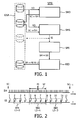
- Fig. 1 functionally illustrates a video processor VPR.
- the video processor VPR comprises various functional modules: a shot detection module SHD, a shot sampling module SHS, a stable shot portion identification module SPI, and a representative image designation module RID.
- the video processor VPR is coupled to a data storage arrangement DSA in which a video VD is stored at least partially and temporarily. Video processing results may be stored in the data storage arrangement DSA in association with the video VD, as illustrated in Fig. 1 .
- the video processor VPR may form part of, for example, a video server, a personal multimedia device or a personal communication device.
- the aforementioned functional modules may each be implemented by means of, for example, a set of instructions that has been loaded into an instruction execution device.
- the set of instructions defines operations that the functional module concerned carries out, which will be described hereinafter.
- Fig. 1 can be regarded as representing a method, at least partially, whereby a functional module, or a combination of functional modules, can be regarded as representing a step of the method.
- the shot sampling module SHS can be regarded as representing a shot sampling step
- the stable shot portion identification module SPI can be regarded as representing a stable portion identification step, and so on. Similar remarks apply to other functional modules, which will be described hereinafter with reference to other Figures.
- the video processor VPR basically operates as follows.
- the shot detection module SHD detects various shots SH comprised in the video VD.
- a shot is a continuous sequence of images representing a scene viewed from a particular location.
- the shot detection module SHD may operate in a conventional manner.
- the shot detection module SHD may detect shot cuts in the video VD. Relatively significant changes in a relatively short series of successive images characterize a shot cut.
- a shot cut may include a special effect, such as, for example, fading. It is possible to detect shot cuts in a sufficiently reliable manner by applying an appropriate algorithm and by applying appropriate shot cut detection parameters. There is abundant literature regarding this subject.
- a shot is typically comprised between two successive shot cuts, the first marking the start of the shot and the latter marking the end.
- the shot detection module SHD may thus provide shot cut markers SC, which effectively partition the video VD into respective shots SH.
- the shot cut markers SC may be stored in association with the video VD.
- the shot sampling module SHS selects a shot for which a representative image needs to be determined.
- the shot sampling module SHS then selects images from that shot so as to obtain a continuous sequence of selected images SI that are evenly distributed throughout the shot.
- the shot sampling module SHS may select one image out of each series of N consecutive images in the shot, N being an integer greater than 1. This is effectively a video sub-sampling process, with a sampling rate equal to N.
- the continuous sequence of selected images SI has an image rate that is N times lower than that of the video VD.
- the continuous sequence of selected images SI may temporarily be stored in, for example, the data storage arrangement DSA.
- the stable shot portion identification module SPI identifies one or more continuous subsequences SB of selected images that meet a predefined similarity test. This similarity test is typically more stringent than tests typically used for shot cut detection. Otherwise, the stable shot portion identification module SPI may systematically identify all the selected images of the shot as belonging to a single continuous subsequence that meets the predefined similarity test.
- the predefined similarity test may be based on, for example, image properties, such as luminance, chrominance, texture, edges. This will be discussed in greater detail hereinafter.
- the stable shot portion identification module SPI may provide an output in the form of subsequence markers SM.
- the subsequence markers SM indicate the one or more continuous subsequences SB of selected images that have been identified as meeting the predefined similarity test.
- a subsequence marker may indicate a serial number of a selected image that marks the start of a subsequence or that marks the end of a subsequence.
- the subsequence marker that has the lowest serial number typically indicates the start of a first subsequence.
- the subsequence marker that has the one but lowest serial number typically indicates the end of the first subsequence, and so on. This is merely an example. Time indications can be used instead of serial numbers.
- the subsequence markers SM provide location information and length information on the continuous subsequences SB of selected images that have been identified.
- the representative image designation module RID determines the longest continuous subsequence of selected images that meet the predefined similarity test.
- the longest continuous step sequence of selected images can be determined on the basis of the subsequence markers SM, which the stable shot portion identification module SPI provides.
- the representative image designation module RID may determine the longest continuous subsequence by comparing respective distances between respective pairs of subsequence markers SM that delimit respective subsequences of selected images SI that meet the predefined similarity test. The longest distance indicates the longest continuous subsequence.
- the representative image designation module RID selects an image from a continuous portion of the shot that coincides in time with the aforementioned longest continuous subsequence of selected images. The image that is thus selected constitutes a representative image RI for the shot.
- the representative image designation module RID may provide an output in the form of a representative image identifier IR.
- the representative image identifier IR uniquely designates the representative image RI in the video VD, as well as the shot to which the representative image RI belongs.
- the representative image designation module RID may further provide a length indication LI for the representative image RI.
- the length indication LI represents a time interval covered by the continuous portion of the shot from which the representative image RI is selected.
- the length indication LI may be included in the representative image identifier IR
- the representative image designation module RID may determine the length indication LI on the basis of the subsequence markers SM that indicate the longest subsequence of selected images that meet the predefined similarity test. For example, let it be assumed that the subsequence markers SM are in the form of serial numbers of selected frames that delimit the subsequences that have been identified. In that case, the difference between the subsequence markers SM that indicate the longest subsequence corresponds with the number of selected frames comprised in the longest subsequence. In case the shot sampling module SHS applies a constant sampling rate, this number of selected frames may constitute the length indication LI. The number of selected frames may also be divided by the frame rate of the sequence of selected frames. Accordingly, the duration of the longest subsequence is obtained, which may constitute the length indication LI.
- the video processor VPR illustrated in Fig. 1 may determine respective representative images RI for respective shots SH comprised in the video VD in a manner as described hereinbefore.
- the shot sampling module SHS may successively select the respective shots SH in the video VD.
- the shot sampling module SHS, the stable shot portion identification module SPI, and the representative image designation module RID then carry out operations described hereinbefore for a currently selected shot.
- the video processor VPR then provides respective representative image identifiers IR for the respective shots SH, which effectively point to the respective representative images.
- RI The video processor VPR further provides respective length indications LI for the respective representative images RI.
- the respective representative image identifiers IR, as well as the respective length indications LI, are stored in association with the video VD and the respective shot cut markers SC, which identify the respective shots SH in the video VD. All this data can be jointly stored in the data storage arrangement DSA illustrated in Fig. 1 . Alternatively, the data may be stored in different storage arrangements provided that there is some form of link between the different types of data relating to the video VD.
- Fig. 2 conceptually illustrates various operations that the shot sampling module SHS, the stable shot portion identification module SPI, and the representative image designation module RID carry out.
- Fig. 2 comprises an upper horizontal section that represents a shot SH comprised between two successive shot cut markers SC i , SC i+1 .
- Relatively small vertical lines represent images within the shot SH. The images are evenly disposed on a horizontal axis that represents time T.
- Fig. 2 comprises a lower horizontal section having a similar horizontal axis on which the selected images SI from the shot are represented by means of relatively small vertical lines.
- One image is selected out of each series of 4 consecutive images in the shot, as illustrated in Fig. 2 .
- the selected images SI represented in the lower horizontal section of Fig. 2 are numbered from 1 to 12.
- Selected images 2 and 3 constitute a first continuous subsequence SB1 of selected images that meet the similarity test.
- the first continuous subsequence SB 1 has a length L1 of 2 selected images.
- Selected images 5, 6, 7, and 8 constitute a second continuous subsequence SB2 of selected images that meet the similarity test.
- the second continuous subsequence SB2 has a length L2 of 4 selected images.
- Selected images 9, 10, and 11 constitute a third continuous subsequence SB3 of selected images that meet the similarity test.
- the third continuous subsequence has a length L3 of 3 selected images.
- a continuous stable portion SP of the shot SH is indicated.
- This continuous stable portion SP coincides in time with the second continuous subsequence SB2 of selected images, which is the longest continuous subsequence of selected images that meet the predefined similarity test.
- the continuous stable portion SP thus constitutes the longest stable portion of the shot SH.
- stable refers to stability of image content; the continuous stable portion SP is relatively static for a relatively long duration.
- An image is selected from the continuous stable portion SP of the shot indicated in Fig. 2 , which is the longest stable portion of the shot.
- the image that is selected from the continuous stable portion SP of the shot constitutes the representative image RI for the shot concerned.
- the image that is selected may be any image in the continuous stable portion SP of the shot. This is because the continuous stable portion SP of the shot is relatively static, meaning that the images comprised therein are relatively similar to each other. Otherwise, the selected images 5, 6, 7, and 8 that constitute the second subsequence SB2 would not have met the similarity test.
- the image that is selected to be the representative image RI is at the center of the continuous stable portion SP. This is merely an example. Any other image of the continuous stable portion SP, such as the first image or the last image, may also be selected to constitute the representative image RI.
- the representative image RI could even be chosen randomly.
- the representative image RI will generally be of relatively good quality. This is because the representative image RI is selected from a portion of the shot that is relatively stable in terms of image content. For example, in case the images have been coded, coding losses will be relatively modest in the continuous stable portion SP of the shot indicated in Fig. 2 because the images in that portion are relatively similar. For example, let it be assumed that the images have been coded in accordance with an MPEG standard, which implies motion estimation and quantization. In that case, the motion estimation for the images in the continuous stable portion SP indicated in Fig. 2 will be relatively precise. There will be a relatively small residue. Moreover, the image is in the continuous stable portion SP will typically undergo a modest degree of quantization.
- Fig. 3 functionally illustrates an implementation of the stable shot portion identification module SPI.
- This implementation will be referred to as the stable shot portion identification module SPI for reasons of simplicity.
- the stable shot portion identification module SPI comprises various functional modules: an image property determination IPD module, an image property comparison module IPC, a threshold comparison module THC, and a subsequence identification module SBI.
- Fig. 3 can be regarded as representing a method, at least partially, whereby a functional module, or a set of functional modules, can be regarded as a step of the method.
- the stable shot portion identification module SPI illustrated in Fig. 3 basically operates as follows.
- the image property determination module IPD determines at least one image property of a selected image.
- the image property determination module IPD may thus provide respective sets of image properties IP for respective selected images SI.
- a set of image properties IP may comprise, for example, a luminance histogram, a chrominance histogram, texture information, and edge information.
- An image property may take the form of information defined in a standard known as MPEG 7.
- the image property comparison module IPC compares the set of image properties IP of a selected image under consideration with that of another selected image according to a predefined scheme SCH.
- the predefined scheme SCH may provide that the selected image under consideration is compared, in terms of image properties, with the selected image that immediately precedes the selected image under consideration.
- the predefined scheme SCH may first verify whether following case applies, or not: the selected image that immediately precedes the image under consideration belongs to a continuous subsequence of selected images that meet the similarity test. The image under consideration is compared, in terms of image properties IP, with the selected image that starts this continuous subsequence of selected images if the case defined hereinbefore applies.
- the image property comparison module IPC determines a set of image property differences for a selected image under consideration.
- the set of image property differences results from image property comparisons that are made according to the predefined scheme SCH.
- the image property comparison module IPC advantageously combines the image property differences for the selected image under consideration into a difference metric DM, which constitutes a one-dimensional measure of difference.
- the image property comparison module IPC thus provides respective difference metrics DM for respective selected images SI.
- a difference metric DM for a selected image will have a relatively low value in case the selected image is relatively similar to one or more other selected images with which the selected image is compared according to the predefmed scheme SCH.
- the difference metric DM will have relatively high value in case the images that are compared according to the predefined scheme SCH are relatively different.
- the threshold comparison module THC compares the respective difference metrics DM, which the image property comparison module IPC provides, with a threshold TH.
- This comparison provides respective similarity decisions SD for the respective selected images SI.
- a similarity decision SD for a selected image is positive if the difference metric DM for the selected image is below the threshold TH. Otherwise, the similarity decision SD is negative.
- the similarity decision SD indicates whether the selected image concerned is sufficiently similar, or not, which respect to the one or more other selected images with which the selected image have been compared in terms of image properties. Stated differently, the similarity decision SD indicates whether the selected images that have been compared meet the predefined similarity test, or not.
- the subsequence identification module SBI identifies one or more subsequences SB of selected images that meet the predefined similarity test on the basis of the respective similarity decisions SD, which the threshold comparison module THC provides.
- a positive similarity decision follows a negative similarity decision.
- the positive similarity decision marks the start of a subsequence of selected images that meet the similarity test.
- the subsequence comprises at least the selected images on which the positive similarity decision is based.
- a further positive similarity decision follows the aforementioned positive similarity decision.
- the subsequence is prolonged, as it were, and further comprises the selected images on which this further positive similarity decision is based.
- the subsequence continues to be prolonged until a negative similarity decision occurs.
- the negative similarity decision then marks the end of the subsequence of selected images.
- a new positive similarity decision will mark the start of a new subsequence of selected images.
- the threshold TH that is used to translate, as it were, difference metrics DM into similarity decisions SD can be a critical parameter.
- the threshold TH represents a degree of severity of the predefined similarity test. In case the threshold TH is too high, it can occur that subsequences SB of selected images are rarely identified, or not even identified at all. Conversely, in case the threshold TH is too low, it can frequently occur that all selected images of the shot are identified as belonging to a single subsequence, which covers the entire shot.
- An appropriate level for the threshold TH may be determined, for example, in an empirical manner.
- the subsequence identification module SBI provides an output that corresponds with that of the stable shot portion identification module SPI illustrated in Fig. 1 . Namely, the subsequence identification module SBI provides the subsequence markers SM that indicate the one or more continuous subsequences SB of selected images that have been identified as meeting the predefined similarity test. The subsequence markers SM provide location information and length information on the continuous subsequences SB of selected images that have been identified.
- Fig. 4 conceptually illustrates various operations that the stable shot portion identification module SPI carries out.
- Fig. 4 comprises an upper horizontal section that represents the selected images SI of the shot, which are also illustrated in Fig. 2 . That is, the upper horizontal section of Fig. 4 corresponds with the lower horizontal section of Fig. 2 .
- the selected images SI which are numbered from 1 to 12, are evenly disposed on a horizontal axis that represents time T.
- Fig. 4 comprises a middle horizontal section in which respective difference metrics DM are indicated.
- Fig. 4 further comprises a lower horizontal section in which respective similarity decisions SD are indicated.
- Fig. 4 constitutes an example, in which the predefined scheme SCH provides that a selected image under consideration is compared with the immediately preceding selected image.
- slightly curved arrows illustrate these image comparisons.
- selected image 2 is under consideration.
- selected image 1 is compared with selected image 1 in terms of image properties.
- difference metric DM2 translates, as it were, into a negative similarity decision (-). This is because the difference metric DM2 is above the aforementioned threshold TH.
- selected image 3 is under consideration. In that case, selected image 3 is compared with selected image 2 in terms of image properties.
- This comparison results in difference metric DM3, which translates into a positive similarity decision (+) because the difference metric DM3 is below the threshold TH.
- Fig. 4 illustrates that a negative to positive transition in similarity decisions marks the start of a subsequence SB of selected images that meets the predefined similarity criterion.
- a positive to negative transition in similarity decisions marks the end of a subsequence SB.
- a subsequence comprises selected images on which one or more consecutive positive similarity decisions were based.
- difference metric DM3 which translates into a positive similarity decision (+)
- difference metric DM2 which translates into a negative similarity decision (-).
- Difference metric DM3 is followed by difference metric DM4, which translates into a negative similarity decision (-).
- Difference metric DM3 is based on selected images 2 and 3, which thus forms the first subsequence SB1.
- difference metric DM6 which translates into a positive similarity decision (+) is preceded by difference metric DM5, which translates into a negative similarity decision (-). This marks the start of the second subsequence SB2 of selected images. Difference metric DM6 is followed by difference metrics DM7 and DM8, each of which equally translates into a positive similarity decision (+). The second subsequence SB2 continues, as it were. Difference metric DM9 translates into a negative similarity decision (-). This marks the end of the second subsequence SB2. There are three consecutive difference metrics DM6, DM7, and DM8 that translate into three consecutive positive similarity decisions (+). These three consecutive difference metrics DM6, DM7, and DM8 are based selected images 5, 6, 7 and 8, which occur consecutively, and thus form the second subsequence SB2.
- Fig. 5 illustrates a video browser VBR.
- the video browser VBR comprises a section definition module SDF, a representative image selection module RIS, and a navigation enabling module NAV.
- These further functional modules may be comprised in, for example, the video processor VPR illustrated in Fig. 1 .
- the functional modules illustrated in Fig. 5 may be comprised in another video processor.
- Fig. 3 can be regarded as representing a method, at least partially, whereby a functional module, or a combination of functional modules, can be regarded as a step of the method.
- the video browser VBR illustrated in Fig. 5 uses results that the video processor VPR illustrated in Fig. 1 provides. These results comprise the respective representative images RI that have been determined for the respective shots SH in the video VD. The results further comprise the respective length indications LI for the respective representative images. As mentioned hereinbefore, these results may be in the form of respective representative image identifiers IR for the respective shots SH, which effectively point to the respective representative images. The respective length indications LI can be included in the respective representative image identifiers IR. All this data may be stored in a data storage arrangement DSA, which may correspond with that illustrated in Fig. 1 , or may be another data storage arrangement to which the data has been transferred.
- DSA data storage arrangement
- the video browser VBR basically operates as follows.
- the section definition module SDF allows defining respective sections SE in the video VD.
- the video VD can effectively be divided into respective sections SE covering respective successive time intervals of a given length.
- the video VD can be divided into respective 10 minutes time intervals. Such a division can be appropriate if, for example, the video VD is a movie or a broadcast recording.
- the section definition module SDF may subdivide a particular section into various subsections. For example, a particular 10 minute time interval may be subdivided into respective 1 minute time intervals.
- respective sections SE can be defined on the basis of date and time of recording. For example, recordings that have been made shortly after each other are most certainly interrelated and can therefore be grouped into a section. Recordings that have been made the same day can also be grouped into a section. These recordings may concern, for example, a particular event, such as a birthday, a wedding, or a one-day trip to visit a particular destination. Recordings that have been made on consecutive days can also be grouped into a section. For example, the recordings may concern a vacation.
- sections can be defined at different hierarchical levels on the basis of the date and time of recording.
- the representative image selection module RIS retrieves respective length indications LI for respective representative images of respective shots SH in a section SE.
- the representative image selection module RIS selects the representative image RI k that has this largest length indication LI.
- This selected representative image RIk constitutes a representative image RI SE for the section.
- the representative image selection module RIS may thus define respective representative images for the respective sections of the video VD that have been defined.
- Fig. 6 conceptually illustrates operations that the representative image selection module RIS carries out.
- Fig. 6 comprises an upper horizontal section that represents a particular section SE in the video VD.
- This particular section SE comprises four respective shots SH1-SH4 of different length.
- These four respective shots SH1-SH4 have four respective representative images RI1-RI4.
- the four respective representative RI1-RI4 images have four respective length indications LI1-LI4. This is indicated in a lower horizontal section of Fig. 6 .
- shot SH3 comprises a continuous subsequence of selected images that meet the predefined similarity test, which is longer than any other continuous subsequence in any of the other three shots SH1, SH2, and SH4.
- the representative image selection module RIS may optionally comprise a shot association module SAM and a length indication upgrading module LIU. These modules may advantageously be used for selecting a representative image in a video section with two or more alternating series of similar shots.
- a video section may represent a dialogue between two persons A and B, whereby shots of the person A and shots of the person B alternately occur, depending on who is talking.
- the video section comprises a single shot of the person A and a single shot of the person B, which are interchanged several times.
- the shot association module SAM can compare a shot with another shot so as to verify whether the one and the other shot meet a predefined shot similarity test, or not.
- the shot similarity test may be based on image properties identical to those on which the image similarity test is based, which is used to identify continuous subsequences of selected images as discussed hereinbefore with reference to Figs. 1-4 .
- the image property determination module IPD may store respective sets of image properties IP that have been determined.
- the shot association module SAM illustrated in Fig. 5 may then use these results for determining whether two shots meet the predefined shot similarity test, or not.
- the shot association module SAM associates the two shots with each other.
- the shot association module SAM may associate yet further shots with the two shots that have been associated with each other.
- the length indication upgrading module LIU upgrades the length indication LI for the representative image RI of a shot that has been associated with at least one other shot. Namely, the length indication LI is upgraded by adding thereto the respective length indications for the respective representative images of the respective other shots that have been associated with the shot. What is more, a single representative image may be retained for respective shots that have been associated with each other. This single representative image has a length indication that has been upgraded as described hereinbefore. In case a length indication has been upgraded, the representative image selection module RIS will take this upgraded length indication into account for determining the representative image RI SE of the section.
- the navigation enabling module NAV generates a navigation screen NVS that comprises the respective representative images RI that have been selected for the respective sections in the video VD.
- the respective representative images RI are comprised in respective areas associated with the respective sections in the video VD.
- the respective areas may further comprise textual information in addition to the representative image. Textual information may indicate, for example, a particular time interval, or a date and time of recording, or both.
- a particular section is selectable by selecting the area that is associated with the particular section and that comprises the representative image thereof. This selection can be accomplished by means of, for example, a pointer on the navigation screen and a computer mouse.
- the section definition module SDF may then divide this selected section into respective subsections for which the representative image selection module RIS may determine representative images in a manner as described hereinbefore.
- Fig. 7 illustrates an example of a navigation screen NVS.
- the navigation screen represents five respective sections SE1-SE5 in the video VD.
- the five respective sections SE1-SE5 are represented by means of five representative images RI SE1 -RI SE5 that have been selected as described hereinbefore.
- the five representative images RI SE1 -RI SE5 are comprised in five respective areas AE1-AE2 associated with the five respective sections SE1-SE5.
- section SE3 is selected, which causes the area AE3 associated with this section to be highlighted.
- the representative image selection module RIS illustrated in Fig. 6 may also serve to select a representative image RI for an entire video VD. In order to do so, the representative image selection module RIS carries out operations similar to those described hereinbefore. Namely, the representative image selection module RIS retrieves respective length indications LI for respective representative images RI of respective shots SH in the entire video VD. The representative image selection module RIS compares these respective length indications LI so as to determine the largest length indication. The representative image selection module RIS then selects the representative image that has this largest length indication. This selected representative image constitutes the representative image for the entire video.
- Fig. 8 illustrates video search engine VSE.
- the video search engine VSE comprises a search module SRCH, a search results processing module SRP, and a search results indication module SRI.
- the video search engine VSE is communicatively coupled to a collection of videos VDC. Respective representative images RI VD_1 -RI VD_N have been selected for the respective videos VD_1-VD_N in the collection, as described in the preceding paragraph.
- the video search engine VSE basically operates as follows.
- the search module SRCH receives search criteria CT and, in response, identifies respective videos in the collection that meet the search criteria CT.
- the search results processing module SRP identifies, among the respective videos that meet the search criteria CT, respective videos for which the respective representative images meet an image similarity test.
- This image similarity test may be based on one or more image properties and, if so, involve operations described hereinbefore with respect to the image property comparison module IPC illustrated in Fig. 3 .
- the image similarity test may be relatively stringent. In case respective videos have been identified that are at least partially identical, the representative images for these respective videos will be relatively similar, or even an identical. This is because the representative images have been selected from the longest subsequences of images that have been found to be sufficiently similar, as described hereinbefore.
- the search results indication module SRI indicates the respective videos for which the respective representative images meet the image similarity test, jointly as a single search result item.
- the respective videos that are indicated as a single search result item will typically be identical, at least partially. Indicating respective videos that are at least partially identical as a single search result item assists a user in comprehending and evaluating the search results.
- the invention may be applied to advantage in numerous types of products or methods related to identification of representative images for video content.
- the invention may be used to advantage in any type of consumer electronics apparatus capable of handling video content, such as, for example a home cinema apparatus.
- the invention may also be in the form of a software program that can be executed by a general purpose processor in any type of apparatus.
- the video processor VPR illustrated in Fig. 1 may form part of a video server from which videos can be downloaded.
- a client station may then download a video from the video server together with shot cut markers and representative image identifiers, which the video server has generated.
- the video browser VBR illustrated in Fig. 3 may form part of the client station so as to allow convenient browsing through the video on the basis of the representative image identifiers and, in particular, length indications comprised in these identifiers.
- Subsampling is advantageous but not essential. In principle, all images of a shot can be selected. In case subsampling is applied, the selected images need not necessarily be precisely equidistantly spaced. For example, the selected images may be located on a time grid that exhibits slight irregularities.
- identifying a continuous subsequence of selected images that meet a predefined similarity test For example, it is possible to analyze all images in a first phase, so as to obtain image analysis results that can be subjected to the predefined similarity test in a second phase. What is more, there are numerous different schemes for comparing selected images with each other. For example, a selected image may be compared with the immediately preceding selected image, as well as further preceding selected images that have been found to meet the predefined similarity test. However, such an approach is more computationally intensive than those described hereinbefore.
- the predefined similarity test may involve determining respective difference metrics for respective image properties. In that case, respective thresholds may be defined for the respective difference metrics for the purpose of making respective partial similarity decisions.
- the respective partial similarity decision can effectively be grouped into an overall similarity decision by means of, for example, an AND function.
- the representative image may be one of the selected images in the longest continuous subsequence.
- the representative image may also be an image that is temporally located between two such selected images. Any particular selection scheme may be used because images are relatively similar in the continuous stable portion of the shot that coincides in time with the longest continuous subsequence of selected images that meet the predefined similarity test. In principle, an image may even be randomly selected from the continuous stable portion of the shot coincides in time with the longest continuous subsequence.
- image should be understood in a broad sense.
- the term embraces any type of data that represents visual information.
- the term is interchangeable with other terms, such as, for example, picture, frame, and field.
- a single module may carry out several functions, or several modules may jointly carry out a single function.
- the drawings are very diagrammatic.
- the image property determination module IPD and the image property comparison module IPC may form part of a single software module.
- software may be stored in a suitable medium, such as, for example, a magnetic disk, an optical disk, or a memory circuit.
- a medium in which software is stored may be supplied as an individual product or together with another product, which may execute the software. Such a medium may also be part of a product that enables software to be executed.
- Software may also be distributed via communication networks, which may be wired, wireless, or hybrid. For example, software may be distributed via the Internet. Software may be made available for download by means of a server. Downloading may be subject to a payment.
Landscapes
- Engineering & Computer Science (AREA)
- Multimedia (AREA)
- Theoretical Computer Science (AREA)
- Physics & Mathematics (AREA)
- General Physics & Mathematics (AREA)
- Data Mining & Analysis (AREA)
- Human Computer Interaction (AREA)
- Databases & Information Systems (AREA)
- General Engineering & Computer Science (AREA)
- Image Analysis (AREA)
- Information Retrieval, Db Structures And Fs Structures Therefor (AREA)
- Studio Devices (AREA)
- Television Signal Processing For Recording (AREA)
Claims (15)
- Procédé de détermination d'une image représentative (RI) pour au moins une prise de vues (SH) dans une vidéo (VD), une prise de vues étant une séquence continue d'images représentant une scène vue à partir d'un emplacement particulier, le procédé comprenant :- la sélection (SHS) d'images à partir d'une prise de vues afin d'obtenir une séquence continue d'images sélectionnées (SI) qui sont régulièrement distribuées dans la totalité de la prise de vues ;- l'identification (SPI) d'au moins une sous-séquence continue (SB) d'images sélectionnées qui satisfont à un essai de similarité prédéfini ; et- la sélection (RID) d'une image à partir d'une portion continue (SP) de la prise de vues qui coïncide en temps avec la sous-séquence continue la plus longue d'images sélectionnées qui satisfont à l'essai de similarité prédéfini, moyennant quoi l'image qui est sélectionnée constitue l'image représentative (RI) pour la prise de vues.
- Procédé de selon la revendication 1, dans lequel, dans l'étape de l'identification (SPI), la série suivante d'étapes est réalisée pour des images sélectionnées respectives :- la comparaison (IPD, IPC) d'au moins une propriété d'image (IP) d'une image sélectionnée à celle d'une autre image sélectionnée afin de déterminer une mesure de différence (DM) pour l'image sélectionnée ; et- la classification (SBI) de l'image sélectionnée comme appartenant à une sous-séquence continue (SB) d'images sélectionnées qui satisfont à l'essai de similarité, ou non, en fonction du fait que la mesure de différence pour l'image sélectionnée est inférieure à un seuil (TH), ou non, respectivement.
- Procédé selon la revendication 2, dans lequel l'image sélectionnée est comparée à une image sélectionnée immédiatement avoisinante.
- Procédé selon la revendication 2, dans lequel, au cas où l'image sélectionnée immédiatement précédente appartient à une sous-séquence continue d'images sélectionnées qui satisfait à l'essai de similarité, l'image sélectionnée est comparée à l'image sélectionnée qui comme cette sous-séquence continue d'images sélectionnées.
- Procédé selon la revendication 2, dans lequel, dans l'étape de la comparaison (IPD, IPC), des différences de propriété d'image respectives sont combinées en une métrique de différence (DM), qui constitue la mesure de différence, les différences de propriété d'image respectives étant obtenues en comparant des propriétés d'image respective (IP) de l'image sélectionnée à celles d'au moins une autre image sélectionnée.
- Procédé selon la revendication 1, dans lequel, dans l'étape de la sélection (SHS) d'images à partir d'une prise de vues, une image est sélectionnée parmi chaque série de N images consécutives, N étant un nombre entier relatif supérieur à 1.
- Procédé selon la revendication 1, dans lequel, dans l'étape de la sélection (RID) d'une image à partir d'une portion continue (SP) de la prise de vues, une indication de longueur (LI) est fournie pour l'image représentative (RI), l'indication de longueur représentant un intervalle temporel couvert par la portion continue (SP) de la prise de vues à partir de laquelle l'image représentative est sélectionnée.
- Procédé selon la revendication 7, comprenant en outre :- l'association (SAM) d'une prise de vues à au moins une autre prise de vues qui, lorsqu'elle comparée à la prise de vues, satisfait à un essai de similarité de prise de vues ; et- la mise à niveau (LIU) de l'indication de longueur (LI) pour l'image représentative (RI) de la prise de vues en ajoutant à celle-ci des indications de longueur respectives pour des images représentatives respectives d'autres prises de vues respectives qui ont été associées à la prise de vues.
- Procédé de navigation dans une vidéo (VD), le procédé utilisant des résultats obtenus en réalisant le procédé selon la revendication 7, les résultats comprenant des images représentatives respectives (RI) qui ont été déterminé pour des prises de vues respectives (SH) comprises dans la vidéo, et des indications de longueur respectives (LI) pour les images représentatives respectives, le procédé comprenant :- la définition (SDF) de sections respectives (SE) dans la vidéo, moyennant quoi l'étape suivante est réalisée pour des sections respectives dans la vidéo :- la comparaison (RIS) d'indications de longueur respectives (LI1-LI4) pour des images représentatives respectives (RI1-RI4) de prises de vues respectives (SH1-SH4) dans une section (SE), moyennant quoi l'image représentative qui possède l'indication de longueur la plus grande est sélectionnée pour constituer une image représentative (RISE) pour la section.
- Procédé de navigation dans une vidéo (VD) selon la revendication 9, dans lequel des images représentatives respectives (RISE1-RISE5) ont été sélectionnées pour des sections respectives (SE1-SE5) dans la vidéo, le procédé comprenant en outre :- la génération (NAV) d'un écran de navigation (NVS) qui comprend les images représentatives respectives pour les sections respectives dans la vidéo, moyennant quoi les images représentatives respectives sont comprises dans des zones sélectionnables respectives (AE1-AE5) associées aux sections respectives.
- Procédé de détermination d'une image représentative pour une vidéo (VD) qui utilise des résultats obtenus en réalisant le procédé selon la revendication 7, les résultats comprenant des images représentatives respectives (RI) qui ont été déterminées pour des prises de vues respectives (SH) comprises dans la vidéo, et des indications de longueur respectives (LI) pour les images représentatives respectives, le procédé comprenant :- la comparaison (RIS) des indications de longueur respectives pour les images représentatives respectives, moyennant quoi l'image représentative qui possède l'indication de longueur la plus grande est sélectionnée pour constituer une image représentative pour la vidéo.
- Procédé de recherche d'une vidéo (VD) dans une collection de vidéos (VDC), le procédé comprenant :- la réalisation du procédé selon la revendication 11 pour obtenir des images représentatives respectives (RIVD_1-RIVD_N) pour des vidéos respectives (VD1-VD-N) dans la collection,- l'identification (SRCH) de vidéos respectives dans la collection qui satisfont à un critère de recherche ;- l'identification (SRP), parmi les vidéos respectives qui satisfont au critère de recherche, de vidéos respectives pour lesquelles les images représentatives respectives satisfont à un essai de similarité d'image ; et- l'indication conjointe (SRI) des vidéos respectives, pour lesquelles les images représentatives respectives satisfont à l'essai de similarité d'image, sous forme d'article de résultat de recherche unique.
- Processeur vidéo (VPR) capable de déterminer une image représentative (RI) pour au moins une prise de vues (SH) dans une vidéo (VD), une prise de vues étant une séquence continue d'images représentant une scène vue à partir d'un emplacement particulier, la vidéo processeur (VPR) comprenant :- un module (SHS) agencé pour sélectionner des images à partir d'une prise de vues afin d'obtenir une séquence continue d'images sélectionnées (SI) qui sont régulièrement distribuées dans la totalité de la prise de vues ;- un module (SPI) agencé pour identifier au moins une sous-séquence continue (SB) d'images sélectionnées qui satisfont à un essai de similarité prédéfini ; et- un module (RID) agencé pour sélectionner une image à partir d'une portion continue (SP) de la prise de vues qui coïncide en temps avec la sous-séquence continue la plus longue d'images sélectionnées qui satisfont à l'essai de similarité prédéfini, moyennant quoi l'image qui est sélectionnée constitue l'image représentative (RI) pour la prise de vues.
- Support de stockage sur lequel des résultats sont stockés obtenus en réalisant le procédé selon la revendication 7, les résultats comprenant des images représentatives respectives (RI) qui ont été déterminées pour des prises de vues respectives (SH) comprises dans une vidéo (VD), et des indications de longueur respectives (LI) pour les images représentatives respectives.
- Produit programme d'ordinateur comprenant un j eu d'instructions qui permettent à un processeur, qui est capable d'exécuter le jeu d'instructions, de réaliser le procédé selon la revendication 1.
Priority Applications (1)
| Application Number | Priority Date | Filing Date | Title |
|---|---|---|---|
| EP11760556.8A EP2599083B1 (fr) | 2010-07-26 | 2011-07-21 | Détermination d'images représentatives pour une vidéo |
Applications Claiming Priority (3)
| Application Number | Priority Date | Filing Date | Title |
|---|---|---|---|
| EP10170773 | 2010-07-26 | ||
| EP11760556.8A EP2599083B1 (fr) | 2010-07-26 | 2011-07-21 | Détermination d'images représentatives pour une vidéo |
| PCT/IB2011/053252 WO2012014129A2 (fr) | 2010-07-26 | 2011-07-21 | Détermination d'images représentatives pour une vidéo |
Publications (2)
| Publication Number | Publication Date |
|---|---|
| EP2599083A2 EP2599083A2 (fr) | 2013-06-05 |
| EP2599083B1 true EP2599083B1 (fr) | 2016-01-27 |
Family
ID=44674830
Family Applications (1)
| Application Number | Title | Priority Date | Filing Date |
|---|---|---|---|
| EP11760556.8A Not-in-force EP2599083B1 (fr) | 2010-07-26 | 2011-07-21 | Détermination d'images représentatives pour une vidéo |
Country Status (7)
| Country | Link |
|---|---|
| US (1) | US9135509B2 (fr) |
| EP (1) | EP2599083B1 (fr) |
| JP (1) | JP5746765B2 (fr) |
| KR (1) | KR20130036765A (fr) |
| CN (1) | CN103003880B (fr) |
| RU (1) | RU2591656C2 (fr) |
| WO (1) | WO2012014129A2 (fr) |
Families Citing this family (2)
| Publication number | Priority date | Publication date | Assignee | Title |
|---|---|---|---|---|
| CN109816650B (zh) * | 2019-01-24 | 2022-11-25 | 强联智创(北京)科技有限公司 | 一种基于二维dsa图像的目标区域识别方法及其系统 |
| CN111918130A (zh) * | 2020-08-11 | 2020-11-10 | 北京达佳互联信息技术有限公司 | 视频封面确定方法、装置、电子设备及存储介质 |
Family Cites Families (21)
| Publication number | Priority date | Publication date | Assignee | Title |
|---|---|---|---|---|
| JP2914170B2 (ja) * | 1994-04-18 | 1999-06-28 | 松下電器産業株式会社 | 映像変化点検出方法 |
| US5635982A (en) | 1994-06-27 | 1997-06-03 | Zhang; Hong J. | System for automatic video segmentation and key frame extraction for video sequences having both sharp and gradual transitions |
| US5805733A (en) * | 1994-12-12 | 1998-09-08 | Apple Computer, Inc. | Method and system for detecting scenes and summarizing video sequences |
| JPH08202849A (ja) | 1995-01-25 | 1996-08-09 | Murata Mfg Co Ltd | 静止・移動物体の検出処理装置 |
| US6098082A (en) * | 1996-07-15 | 2000-08-01 | At&T Corp | Method for automatically providing a compressed rendition of a video program in a format suitable for electronic searching and retrieval |
| FR2756399B1 (fr) * | 1996-11-28 | 1999-06-25 | Thomson Multimedia Sa | Procede et dispositif de compression video pour images de synthese |
| US6496228B1 (en) * | 1997-06-02 | 2002-12-17 | Koninklijke Philips Electronics N.V. | Significant scene detection and frame filtering for a visual indexing system using dynamic thresholds |
| US6119123A (en) * | 1997-12-02 | 2000-09-12 | U.S. Philips Corporation | Apparatus and method for optimizing keyframe and blob retrieval and storage |
| US6782049B1 (en) | 1999-01-29 | 2004-08-24 | Hewlett-Packard Development Company, L.P. | System for selecting a keyframe to represent a video |
| US6549643B1 (en) | 1999-11-30 | 2003-04-15 | Siemens Corporate Research, Inc. | System and method for selecting key-frames of video data |
| AUPQ558000A0 (en) * | 2000-02-11 | 2000-03-09 | Lynch Management Group Pty Ltd | Cd smart card |
| US20030219232A1 (en) | 2001-10-01 | 2003-11-27 | Shu Lin | System and method for identifying data on a storage medium |
| US7212666B2 (en) * | 2003-04-01 | 2007-05-01 | Microsoft Corporation | Generating visually representative video thumbnails |
| JP4166707B2 (ja) | 2004-01-20 | 2008-10-15 | パイオニア株式会社 | 映像内容認識装置、録画装置、映像内容認識方法、録画方法、映像内容認識プログラム、および録画プログラム |
| KR20070037488A (ko) * | 2004-07-13 | 2007-04-04 | 코닌클리케 필립스 일렉트로닉스 엔.브이. | 공간 및 snr 화상 압축 방법 |
| JPWO2007114241A1 (ja) * | 2006-03-29 | 2009-08-13 | パイオニア株式会社 | 映像処理装置 |
| WO2008092131A2 (fr) * | 2007-01-25 | 2008-07-31 | Skyfire Labs, Inc. | Interface utilisateur de dispositif mobile pour interaction à distance |
| US8077930B2 (en) * | 2007-04-13 | 2011-12-13 | Atg Advanced Swiss Technology Group Ag | Method for recognizing content in an image sequence |
| EP2048871B1 (fr) | 2007-10-09 | 2011-08-31 | Tektronix International Sales GmbH | Évaluation d'images |
| EP2114079B2 (fr) * | 2008-05-02 | 2018-01-24 | Psytechnics Ltd | Procédé et appareil pour l'alignement de signaux |
| US8868569B2 (en) * | 2010-02-24 | 2014-10-21 | Yahoo! Inc. | Methods for detecting and removing duplicates in video search results |
-
2011
- 2011-07-21 EP EP11760556.8A patent/EP2599083B1/fr not_active Not-in-force
- 2011-07-21 KR KR1020137004353A patent/KR20130036765A/ko not_active Abandoned
- 2011-07-21 US US13/812,003 patent/US9135509B2/en not_active Expired - Fee Related
- 2011-07-21 WO PCT/IB2011/053252 patent/WO2012014129A2/fr not_active Ceased
- 2011-07-21 JP JP2013521264A patent/JP5746765B2/ja not_active Expired - Fee Related
- 2011-07-21 CN CN201180036564.5A patent/CN103003880B/zh not_active Expired - Fee Related
- 2011-07-21 RU RU2013108227/08A patent/RU2591656C2/ru not_active IP Right Cessation
Also Published As
| Publication number | Publication date |
|---|---|
| RU2591656C2 (ru) | 2016-07-20 |
| JP2013539255A (ja) | 2013-10-17 |
| RU2013108227A (ru) | 2014-09-10 |
| EP2599083A2 (fr) | 2013-06-05 |
| WO2012014129A2 (fr) | 2012-02-02 |
| JP5746765B2 (ja) | 2015-07-08 |
| CN103003880B (zh) | 2016-10-19 |
| US9135509B2 (en) | 2015-09-15 |
| WO2012014129A3 (fr) | 2012-05-18 |
| US20130121586A1 (en) | 2013-05-16 |
| KR20130036765A (ko) | 2013-04-12 |
| CN103003880A (zh) | 2013-03-27 |
Similar Documents
| Publication | Publication Date | Title |
|---|---|---|
| JP4426966B2 (ja) | スケーラブルなビデオ要約およびナビゲーションのシステムおよび方法 | |
| KR101456926B1 (ko) | 핑거프린트에 기반한 광고 검출 시스템 및 방법 | |
| US8830330B2 (en) | Analysis of video footage | |
| CN106937114B (zh) | 用于对视频场景切换进行检测的方法和装置 | |
| CN106557545B (zh) | 视频检索方法和装置 | |
| JP5685324B2 (ja) | 映像を比較する方法および装置 | |
| JP5360979B2 (ja) | 重要情報抽出方法および装置 | |
| JP6557592B2 (ja) | 映像シーン分割装置及び映像シーン分割プログラム | |
| CN103984778B (zh) | 一种视频检索方法及系统 | |
| Wang et al. | Real-time summarization of user-generated videos based on semantic recognition | |
| JP2003503971A (ja) | ビデオシーケンスの構造の自動抽出方法 | |
| EP2599083B1 (fr) | Détermination d'images représentatives pour une vidéo | |
| Kim et al. | Visual rhythm and shot verification | |
| Zhu et al. | Video scene segmentation and semantic representation using a novel scheme | |
| Huang et al. | A film classifier based on low-level visual features | |
| KR101929546B1 (ko) | 영상 품질 기반 중복 파일 관리 시스템 및 방법 | |
| CN105847964A (zh) | 一种影视节目处理方法和系统 | |
| Volkmer et al. | Gradual transition detection using average frame similarity | |
| Zhu et al. | Automatic scene detection for advanced story retrieval | |
| JP2006217046A (ja) | 映像インデックス画像生成装置及び映像のインデックス画像を生成するプログラム | |
| Kim et al. | An efficient graphical shot verifier incorporating visual rhythm | |
| Huang et al. | Movie classification using visual effect features | |
| Benini et al. | Identifying video content consistency by vector quantization | |
| Gonzálbez-Biosca et al. | When and How to Cut Classical Concerts? A Multimodal Automated Video Editing Approach | |
| Ren et al. | Extracting Objects and Events from MPEG Videos for Highlight-based Indexing and Retrieval. |
Legal Events
| Date | Code | Title | Description |
|---|---|---|---|
| PUAI | Public reference made under article 153(3) epc to a published international application that has entered the european phase |
Free format text: ORIGINAL CODE: 0009012 |
|
| 17P | Request for examination filed |
Effective date: 20130226 |
|
| AK | Designated contracting states |
Kind code of ref document: A2 Designated state(s): AL AT BE BG CH CY CZ DE DK EE ES FI FR GB GR HR HU IE IS IT LI LT LU LV MC MK MT NL NO PL PT RO RS SE SI SK SM TR |
|
| RAP1 | Party data changed (applicant data changed or rights of an application transferred) |
Owner name: KONINKLIJKE PHILIPS N.V. |
|
| DAX | Request for extension of the european patent (deleted) | ||
| 17Q | First examination report despatched |
Effective date: 20131129 |
|
| REG | Reference to a national code |
Ref country code: DE Ref legal event code: R079 Ref document number: 602011023030 Country of ref document: DE Free format text: PREVIOUS MAIN CLASS: G11B0027280000 Ipc: G06F0017300000 |
|
| GRAP | Despatch of communication of intention to grant a patent |
Free format text: ORIGINAL CODE: EPIDOSNIGR1 |
|
| RIC1 | Information provided on ipc code assigned before grant |
Ipc: G06F 17/30 20060101AFI20150706BHEP Ipc: G11B 27/28 20060101ALI20150706BHEP Ipc: G06K 9/00 20060101ALI20150706BHEP |
|
| INTG | Intention to grant announced |
Effective date: 20150724 |
|
| GRAS | Grant fee paid |
Free format text: ORIGINAL CODE: EPIDOSNIGR3 |
|
| GRAA | (expected) grant |
Free format text: ORIGINAL CODE: 0009210 |
|
| AK | Designated contracting states |
Kind code of ref document: B1 Designated state(s): AL AT BE BG CH CY CZ DE DK EE ES FI FR GB GR HR HU IE IS IT LI LT LU LV MC MK MT NL NO PL PT RO RS SE SI SK SM TR |
|
| REG | Reference to a national code |
Ref country code: GB Ref legal event code: FG4D |
|
| REG | Reference to a national code |
Ref country code: CH Ref legal event code: EP |
|
| REG | Reference to a national code |
Ref country code: AT Ref legal event code: REF Ref document number: 773000 Country of ref document: AT Kind code of ref document: T Effective date: 20160215 |
|
| REG | Reference to a national code |
Ref country code: IE Ref legal event code: FG4D |
|
| REG | Reference to a national code |
Ref country code: DE Ref legal event code: R096 Ref document number: 602011023030 Country of ref document: DE |
|
| REG | Reference to a national code |
Ref country code: LT Ref legal event code: MG4D |
|
| REG | Reference to a national code |
Ref country code: NL Ref legal event code: MP Effective date: 20160127 |
|
| REG | Reference to a national code |
Ref country code: AT Ref legal event code: MK05 Ref document number: 773000 Country of ref document: AT Kind code of ref document: T Effective date: 20160127 |
|
| PG25 | Lapsed in a contracting state [announced via postgrant information from national office to epo] |
Ref country code: NL Free format text: LAPSE BECAUSE OF FAILURE TO SUBMIT A TRANSLATION OF THE DESCRIPTION OR TO PAY THE FEE WITHIN THE PRESCRIBED TIME-LIMIT Effective date: 20160127 |
|
| REG | Reference to a national code |
Ref country code: FR Ref legal event code: PLFP Year of fee payment: 6 |
|
| PG25 | Lapsed in a contracting state [announced via postgrant information from national office to epo] |
Ref country code: IT Free format text: LAPSE BECAUSE OF FAILURE TO SUBMIT A TRANSLATION OF THE DESCRIPTION OR TO PAY THE FEE WITHIN THE PRESCRIBED TIME-LIMIT Effective date: 20160127 Ref country code: ES Free format text: LAPSE BECAUSE OF FAILURE TO SUBMIT A TRANSLATION OF THE DESCRIPTION OR TO PAY THE FEE WITHIN THE PRESCRIBED TIME-LIMIT Effective date: 20160127 Ref country code: GR Free format text: LAPSE BECAUSE OF FAILURE TO SUBMIT A TRANSLATION OF THE DESCRIPTION OR TO PAY THE FEE WITHIN THE PRESCRIBED TIME-LIMIT Effective date: 20160428 Ref country code: FI Free format text: LAPSE BECAUSE OF FAILURE TO SUBMIT A TRANSLATION OF THE DESCRIPTION OR TO PAY THE FEE WITHIN THE PRESCRIBED TIME-LIMIT Effective date: 20160127 Ref country code: NO Free format text: LAPSE BECAUSE OF FAILURE TO SUBMIT A TRANSLATION OF THE DESCRIPTION OR TO PAY THE FEE WITHIN THE PRESCRIBED TIME-LIMIT Effective date: 20160427 Ref country code: HR Free format text: LAPSE BECAUSE OF FAILURE TO SUBMIT A TRANSLATION OF THE DESCRIPTION OR TO PAY THE FEE WITHIN THE PRESCRIBED TIME-LIMIT Effective date: 20160127 |
|
| PG25 | Lapsed in a contracting state [announced via postgrant information from national office to epo] |
Ref country code: LT Free format text: LAPSE BECAUSE OF FAILURE TO SUBMIT A TRANSLATION OF THE DESCRIPTION OR TO PAY THE FEE WITHIN THE PRESCRIBED TIME-LIMIT Effective date: 20160127 Ref country code: PL Free format text: LAPSE BECAUSE OF FAILURE TO SUBMIT A TRANSLATION OF THE DESCRIPTION OR TO PAY THE FEE WITHIN THE PRESCRIBED TIME-LIMIT Effective date: 20160127 Ref country code: RS Free format text: LAPSE BECAUSE OF FAILURE TO SUBMIT A TRANSLATION OF THE DESCRIPTION OR TO PAY THE FEE WITHIN THE PRESCRIBED TIME-LIMIT Effective date: 20160127 Ref country code: PT Free format text: LAPSE BECAUSE OF FAILURE TO SUBMIT A TRANSLATION OF THE DESCRIPTION OR TO PAY THE FEE WITHIN THE PRESCRIBED TIME-LIMIT Effective date: 20160527 Ref country code: LV Free format text: LAPSE BECAUSE OF FAILURE TO SUBMIT A TRANSLATION OF THE DESCRIPTION OR TO PAY THE FEE WITHIN THE PRESCRIBED TIME-LIMIT Effective date: 20160127 Ref country code: IS Free format text: LAPSE BECAUSE OF FAILURE TO SUBMIT A TRANSLATION OF THE DESCRIPTION OR TO PAY THE FEE WITHIN THE PRESCRIBED TIME-LIMIT Effective date: 20160527 Ref country code: AT Free format text: LAPSE BECAUSE OF FAILURE TO SUBMIT A TRANSLATION OF THE DESCRIPTION OR TO PAY THE FEE WITHIN THE PRESCRIBED TIME-LIMIT Effective date: 20160127 Ref country code: SE Free format text: LAPSE BECAUSE OF FAILURE TO SUBMIT A TRANSLATION OF THE DESCRIPTION OR TO PAY THE FEE WITHIN THE PRESCRIBED TIME-LIMIT Effective date: 20160127 |
|
| REG | Reference to a national code |
Ref country code: DE Ref legal event code: R097 Ref document number: 602011023030 Country of ref document: DE |
|
| PG25 | Lapsed in a contracting state [announced via postgrant information from national office to epo] |
Ref country code: DK Free format text: LAPSE BECAUSE OF FAILURE TO SUBMIT A TRANSLATION OF THE DESCRIPTION OR TO PAY THE FEE WITHIN THE PRESCRIBED TIME-LIMIT Effective date: 20160127 Ref country code: EE Free format text: LAPSE BECAUSE OF FAILURE TO SUBMIT A TRANSLATION OF THE DESCRIPTION OR TO PAY THE FEE WITHIN THE PRESCRIBED TIME-LIMIT Effective date: 20160127 |
|
| PG25 | Lapsed in a contracting state [announced via postgrant information from national office to epo] |
Ref country code: SM Free format text: LAPSE BECAUSE OF FAILURE TO SUBMIT A TRANSLATION OF THE DESCRIPTION OR TO PAY THE FEE WITHIN THE PRESCRIBED TIME-LIMIT Effective date: 20160127 Ref country code: CZ Free format text: LAPSE BECAUSE OF FAILURE TO SUBMIT A TRANSLATION OF THE DESCRIPTION OR TO PAY THE FEE WITHIN THE PRESCRIBED TIME-LIMIT Effective date: 20160127 Ref country code: RO Free format text: LAPSE BECAUSE OF FAILURE TO SUBMIT A TRANSLATION OF THE DESCRIPTION OR TO PAY THE FEE WITHIN THE PRESCRIBED TIME-LIMIT Effective date: 20160127 Ref country code: SK Free format text: LAPSE BECAUSE OF FAILURE TO SUBMIT A TRANSLATION OF THE DESCRIPTION OR TO PAY THE FEE WITHIN THE PRESCRIBED TIME-LIMIT Effective date: 20160127 |
|
| PLBE | No opposition filed within time limit |
Free format text: ORIGINAL CODE: 0009261 |
|
| STAA | Information on the status of an ep patent application or granted ep patent |
Free format text: STATUS: NO OPPOSITION FILED WITHIN TIME LIMIT |
|
| PG25 | Lapsed in a contracting state [announced via postgrant information from national office to epo] |
Ref country code: BE Free format text: LAPSE BECAUSE OF FAILURE TO SUBMIT A TRANSLATION OF THE DESCRIPTION OR TO PAY THE FEE WITHIN THE PRESCRIBED TIME-LIMIT Effective date: 20160127 |
|
| 26N | No opposition filed |
Effective date: 20161028 |
|
| PG25 | Lapsed in a contracting state [announced via postgrant information from national office to epo] |
Ref country code: BG Free format text: LAPSE BECAUSE OF FAILURE TO SUBMIT A TRANSLATION OF THE DESCRIPTION OR TO PAY THE FEE WITHIN THE PRESCRIBED TIME-LIMIT Effective date: 20160427 Ref country code: SI Free format text: LAPSE BECAUSE OF FAILURE TO SUBMIT A TRANSLATION OF THE DESCRIPTION OR TO PAY THE FEE WITHIN THE PRESCRIBED TIME-LIMIT Effective date: 20160127 |
|
| REG | Reference to a national code |
Ref country code: CH Ref legal event code: PL |
|
| PG25 | Lapsed in a contracting state [announced via postgrant information from national office to epo] |
Ref country code: MC Free format text: LAPSE BECAUSE OF FAILURE TO SUBMIT A TRANSLATION OF THE DESCRIPTION OR TO PAY THE FEE WITHIN THE PRESCRIBED TIME-LIMIT Effective date: 20160127 |
|
| PG25 | Lapsed in a contracting state [announced via postgrant information from national office to epo] |
Ref country code: CH Free format text: LAPSE BECAUSE OF NON-PAYMENT OF DUE FEES Effective date: 20160731 Ref country code: LI Free format text: LAPSE BECAUSE OF NON-PAYMENT OF DUE FEES Effective date: 20160731 |
|
| REG | Reference to a national code |
Ref country code: IE Ref legal event code: MM4A |
|
| REG | Reference to a national code |
Ref country code: FR Ref legal event code: PLFP Year of fee payment: 7 |
|
| PG25 | Lapsed in a contracting state [announced via postgrant information from national office to epo] |
Ref country code: IE Free format text: LAPSE BECAUSE OF NON-PAYMENT OF DUE FEES Effective date: 20160721 |
|
| PG25 | Lapsed in a contracting state [announced via postgrant information from national office to epo] |
Ref country code: LU Free format text: LAPSE BECAUSE OF NON-PAYMENT OF DUE FEES Effective date: 20160721 |
|
| PG25 | Lapsed in a contracting state [announced via postgrant information from national office to epo] |
Ref country code: CY Free format text: LAPSE BECAUSE OF FAILURE TO SUBMIT A TRANSLATION OF THE DESCRIPTION OR TO PAY THE FEE WITHIN THE PRESCRIBED TIME-LIMIT Effective date: 20160127 Ref country code: HU Free format text: LAPSE BECAUSE OF FAILURE TO SUBMIT A TRANSLATION OF THE DESCRIPTION OR TO PAY THE FEE WITHIN THE PRESCRIBED TIME-LIMIT; INVALID AB INITIO Effective date: 20110721 |
|
| PG25 | Lapsed in a contracting state [announced via postgrant information from national office to epo] |
Ref country code: MT Free format text: LAPSE BECAUSE OF NON-PAYMENT OF DUE FEES Effective date: 20160731 Ref country code: MK Free format text: LAPSE BECAUSE OF FAILURE TO SUBMIT A TRANSLATION OF THE DESCRIPTION OR TO PAY THE FEE WITHIN THE PRESCRIBED TIME-LIMIT Effective date: 20160127 |
|
| REG | Reference to a national code |
Ref country code: FR Ref legal event code: PLFP Year of fee payment: 8 |
|
| PG25 | Lapsed in a contracting state [announced via postgrant information from national office to epo] |
Ref country code: AL Free format text: LAPSE BECAUSE OF FAILURE TO SUBMIT A TRANSLATION OF THE DESCRIPTION OR TO PAY THE FEE WITHIN THE PRESCRIBED TIME-LIMIT Effective date: 20160127 |
|
| PGFP | Annual fee paid to national office [announced via postgrant information from national office to epo] |
Ref country code: FR Payment date: 20180830 Year of fee payment: 8 |
|
| REG | Reference to a national code |
Ref country code: DE Ref legal event code: R079 Ref document number: 602011023030 Country of ref document: DE Free format text: PREVIOUS MAIN CLASS: G06F0017300000 Ipc: G06F0016000000 |
|
| PGFP | Annual fee paid to national office [announced via postgrant information from national office to epo] |
Ref country code: TR Payment date: 20180829 Year of fee payment: 8 Ref country code: GB Payment date: 20180831 Year of fee payment: 8 |
|
| PGFP | Annual fee paid to national office [announced via postgrant information from national office to epo] |
Ref country code: DE Payment date: 20180928 Year of fee payment: 8 |
|
| REG | Reference to a national code |
Ref country code: DE Ref legal event code: R119 Ref document number: 602011023030 Country of ref document: DE |
|
| GBPC | Gb: european patent ceased through non-payment of renewal fee |
Effective date: 20190721 |
|
| PG25 | Lapsed in a contracting state [announced via postgrant information from national office to epo] |
Ref country code: GB Free format text: LAPSE BECAUSE OF NON-PAYMENT OF DUE FEES Effective date: 20190721 Ref country code: DE Free format text: LAPSE BECAUSE OF NON-PAYMENT OF DUE FEES Effective date: 20200201 |
|
| PG25 | Lapsed in a contracting state [announced via postgrant information from national office to epo] |
Ref country code: FR Free format text: LAPSE BECAUSE OF NON-PAYMENT OF DUE FEES Effective date: 20190731 |
|
| PG25 | Lapsed in a contracting state [announced via postgrant information from national office to epo] |
Ref country code: TR Free format text: LAPSE BECAUSE OF NON-PAYMENT OF DUE FEES Effective date: 20190721 |