EP2600524A2 - Rejet de diaphonie adaptative - Google Patents
Rejet de diaphonie adaptative Download PDFInfo
- Publication number
- EP2600524A2 EP2600524A2 EP12193994.6A EP12193994A EP2600524A2 EP 2600524 A2 EP2600524 A2 EP 2600524A2 EP 12193994 A EP12193994 A EP 12193994A EP 2600524 A2 EP2600524 A2 EP 2600524A2
- Authority
- EP
- European Patent Office
- Prior art keywords
- audio
- listening channel
- signal
- channel
- measuring
- Prior art date
- Legal status (The legal status is an assumption and is not a legal conclusion. Google has not performed a legal analysis and makes no representation as to the accuracy of the status listed.)
- Granted
Links
Images


Classifications
-
- H—ELECTRICITY
- H03—ELECTRONIC CIRCUITRY
- H03F—AMPLIFIERS
- H03F3/00—Amplifiers with only discharge tubes or only semiconductor devices as amplifying elements
- H03F3/181—Low-frequency amplifiers, e.g. audio preamplifiers
-
- H—ELECTRICITY
- H03—ELECTRONIC CIRCUITRY
- H03F—AMPLIFIERS
- H03F3/00—Amplifiers with only discharge tubes or only semiconductor devices as amplifying elements
- H03F3/68—Combinations of amplifiers, e.g. multi-channel amplifiers for stereophonics
-
- H—ELECTRICITY
- H04—ELECTRIC COMMUNICATION TECHNIQUE
- H04R—LOUDSPEAKERS, MICROPHONES, GRAMOPHONE PICK-UPS OR LIKE ACOUSTIC ELECTROMECHANICAL TRANSDUCERS; ELECTRIC HEARING AIDS; PUBLIC ADDRESS SYSTEMS
- H04R5/00—Stereophonic arrangements
- H04R5/04—Circuit arrangements, e.g. for selective connection of amplifier inputs/outputs to loudspeakers, for loudspeaker detection, or for adaptation of settings to personal preferences or hearing impairments
-
- H—ELECTRICITY
- H04—ELECTRIC COMMUNICATION TECHNIQUE
- H04R—LOUDSPEAKERS, MICROPHONES, GRAMOPHONE PICK-UPS OR LIKE ACOUSTIC ELECTROMECHANICAL TRANSDUCERS; ELECTRIC HEARING AIDS; PUBLIC ADDRESS SYSTEMS
- H04R5/00—Stereophonic arrangements
- H04R5/033—Headphones for stereophonic communication
Definitions
- Crosstalk is any phenomenon by which a signal transmitted in one system (or a part of the system such as a channel or segment of the system) can create an undesirable effect in another system (or in a different part of the same system).
- an undesirable effect may include reduced audio quality (e.g., noisy audio, static, or other interference) on one or more of the audio-listening channels.
- this undesirable effect may be caused by impedance or resistance associated with a common path shared by the one or more audio listening channels. Therefore, what is needed is a system to reduce the crosstalk between systems or between parts of the same system.
- an exemplary method of the invention includes detecting a first audio-listening channel and a second audio-listening channel. Additionally, the method includes in response to detecting the first audio-listening channel and the second audio-listening channel, transmitting from a first signal source, a first input signal to a first amplifier associated with a first audio-listening channel. Additionally, the method includes measuring a signal level along at least a portion of a common path shared by the first audio-listening channel and the second audio-listening channel, wherein the common path includes at least some resistance. In some embodiments, this measuring step may be performed at a frequency associated with the first input signal.
- the method includes determining a compensation signal to be injected into the second audio-listening channel based at least partially on the measured signal level. Additionally, the method includes injecting at least a part of the first input signal into the second audio-listening channel based at least partially on the determined compensation signal, thereby reducing a current level in the second audio-listening channel.
- the method includes transmitting from a second signal source a second input signal to a second amplifier associated with the second audio-listening channel. Additionally, the method includes measuring a signal level along a at least a partial portion of the common path shared by the first audio-listening channel and the second audio-listening channel, wherein the common path includes at least some resistance. In some embodiments, this measuring step may be performed at a frequency associated with the second input signal. Additionally, the method includes determining a compensation signal to be injected into the first audio-listening channel based at least partially on the measured signal level. Additionally, the method includes injecting at least a part of the second input signal into the first audio-listening channel based at least partially on the determined compensation signal or the measured signal level, thereby reducing a current level in the first audio-listening channel.
- the step of injecting at least a part of the first input signal into the second audio-listening channel is performed substantially simultaneously with the injecting at least a part of the second input signal into the first audio-listening channel.
- the signal source is a voltage source and the signal level is a voltage level.
- the first audio-listening channel includes a first earphone associated with a first impedance and the second audio-listening channel includes a second earphone associated with a second impedance. Additionally, in some embodiments, the first impedance is different from the second impedance. Additionally, in some embodiments, the first input signal is associated with a first frequency and the second input signal is associated with a second frequency different from the first frequency.
- At least one of the transmitting step, the measuring step, the determining step, or the injecting step is performed in the digital domain.
- the step of detecting further comprises: detecting a connector is inserted into an audio-producing system, wherein the connector is associated with the first audio-listening channel and the second audio-listening channel.
- this connector may be part of the common path shared between the first audio-listening channel and the second audio-listening channel.
- the method further comprises: in response to detecting the first audio-listening channel and the second audio-listening channel, producing an audible beep.
- the method further comprises: determining a first impedance associated with the first audio-listening channel; determining a second impedance associated with the second audio-listening channel; and measuring the signal level along the common path based at least partially on the first impedance and the second impedance.
- the measuring step further comprises: disabling an injecting module that performs the injecting. Additionally, in some embodiments, the measuring further comprises: disabling an input signal provided to an amplifier located in the measuring module; and maximizing a gain associated with the amplifier located in the measuring module. The measuring step is performed by a measuring module described herein.
- the step of measuring a signal level along at least a partial portion of the common path shared by the first audio-listening channel and the second audio-listening channel further comprises measuring an output signal level associated with the first amplifier and measuring an output signal level associated with the second amplifier.
- the step of measuring a signal level along at least a partial portion of the common path shared by the first audio-listening channel and the second audio-listening channel further comprises measuring an input signal level associated with an amplifier located in the measuring module.
- the step of measuring a signal level along at least a partial portion of the common path shared by the first audio-listening channel and the second audio-listening channel further comprises using a compensation factor associated with the configuration of the measuring module.
- the measuring module includes a circuit comprising a microphone.
- the method further includes: measuring a current level in the first audio-listening channel; measuring a current level in the second audio-listening channel; and comparing the current level in the first audio-listening channel and the current level in the second audio-listening channel to determine a difference between the current level in the first audio-listening channel and the current level in the second audio-listening channel is greater than a predetermined threshold level.
- the method further includes: measuring a current level in the second audio-listening channel; and comparing the current level in the second-audio listening channel and a predetermined threshold current level to determine that the current level in the second audio-listening channel is greater than the predetermined threshold current level.
- the method includes providing an application; determining a maximum crosstalk value associated with the application; comparing a current level in the first audio-listening channel and a current level in the second audio-listening channel to determine a measured crosstalk value; comparing the measured crosstalk value and the maximum crosstalk value to determine that the measured crosstalk value is less than or equal to the maximum crosstalk value; and permitting execution of the application.
- An exemplary system of the invention comprises a memory, a processor, and other circuitry as described herein and illustrated in Figures 1 , 3 , 5 , 7 , and 8 .
- the system further comprises a module stored in the memory, executable by the processor, and configured to: detect a first audio-listening channel and a second audio-listening channel; in response to detecting the first audio-listening channel and the second audio-listening channel, transmit, from a first signal source, a first input signal to a first amplifier associated with a first audio-listening channel; measure a signal level over at least a portion of a common path shared by the first audio-listening channel and a second audio-listening channel, wherein the common path includes at least some resistance; determine a compensation signal to be injected into the second audio-listening channel based at least partially on the measured signal level; and divert at least a part of the first input signal to the second audio-listening channel based at least partially on the determined compensation signal, thereby causing an output signal level of
- An exemplary computer program product comprises a non-transitory medium comprising a set of codes that cause a computer to: detect a first audio-listening channel and a second audio-listening channel; in response to detecting the first audio-listening channel and the second audio-listening channel, transmitting, from a first signal source, a first input signal to a first amplifier associated with a first audio-listening channel; measure a signal level along at least a portion of a common path shared by the first audio-listening channel and a second audio-listening channel, wherein the common path includes at least some resistance; determine a digital compensation signal to be injected into the second audio-listening channel based at least partially on the measured signal level; and inject at least a part of the first input signal into the second audio-listening channel based at least partially on the determined compensation signal, thereby reducing a current level in the second audio-listening channel.
- a system may refer to a circuit such as the circuit presented in Figures 1 , 3 , 5 , 7 and 8 .
- a system may include a receiving module to connect to personal hands free (“PHF") earphone hardware that includes one or more earphones (e.g., two earphones).
- PHF earphone hardware may include one or more circuits or circuit fragments that interact with the system described herein.
- an earphone is an audio speaker that is held close to a person's ear and is connected to an audio signal source such as an audio amplifier, portable media player, radio, etc.
- the multiple earphone channels may be located in the same housing (e.g., chassis), while in other embodiments, each of the multiple earphone channels may be located in separate housings.
- the PHF earphone hardware When the PHF earphone hardware receives audio signals from an audio-producing source, crosstalk between the one or more earphone channels of the PHF earphone hardware occurs because of the impedance or resistance on the common path or channel shared between the earphones.
- the common path or channel may be a connector (e.g., a 3.5mm connector) that connects the earphones to an audio producing device or system.
- the impedance or resistance on the common path may occur because of several reasons.
- the common path may include a radio tuning coil, one or more switches for television output or OMPTP/CTIA (Color Television Interface Adaptor) automatic configuration, ferrite polymer composites (FPCs) and/or ferrites to handle various electromagnetic compatibility (EMC) issues, etc.
- OMPTP/CTIA Color Television Interface Adaptor
- FPCs ferrite polymer composites
- EMC electromagnetic compatibility
- crosstalk may refer to introduction of noise from one earphone channel onto another earphone channel.
- a measurement of crosstalk in the system yields a decibel (dB) value relative to a nominal signal level on the earphone channel receiving the noise from the other earphone channel.
- the crosstalk occurs because of ground currents or stray inductance or capacitance between the multiple earphone channels.
- the invention provides a higher quality listening experience to one or more listeners listening to audio transmitted through multiple earphone channels.
- some applications e.g., filmmaking applications
- some applications that involve the subject earphone hardware may specify levels of crosstalk that should not be exceeded in order to execute the applications or in order to achieve optimal performance of the applications.
- an application that is initiated by a user on a system or device e.g., portable computing device, personal computing device, etc.
- the application may initially determine whether a crosstalk level associated with subject earphone hardware is exceeded.
- the application may be automatically configured to execute the crosstalk reduction method described herein as part of the application initiation process.
- the application may indicate to a user of the device that the application cannot be executed on the device unless the user initiates execution of the crosstalk reduction method as described herein.
- earphone hardware may include one earphone, two earphones, or more than two earphones.
- a computer program product described herein that is embodied as a software program can be installed in an audio player that is connected to earphone hardware or can be installed in a computer that is connected to earphone hardware.
- the software program may be directly programmed into programmable earphone hardware.
- the installed software reduces crosstalk between multiple earphone channels associated with the earphone hardware.
- an earphone channel may be a type of audio-listening channel.
- the installed software is always active.
- the installed software is activated when the earphone hardware receives electrical signals to convert into audible sound or when the earphone hardware emits audible sound.
- Embodiments of the present invention can be adapted to be used with (or can be tuned to work with) any audio-listening device (e.g., wired or wireless headphones, earphones, etc.) that includes one or more earphones.
- FIG. 1 presents an illustration of how crosstalk is generated in a system.
- the system 100 includes a circuit as presented in Figure 1 .
- V5 110 and V6 112 are voltage sources that are part of the power supply for the circuit.
- a ground connection 132 is provided for the system.
- R1 122, R2 126, R3 124, R4 128, R6 116, R9 118, and R11 130 are resistors.
- R1 122 and R3 124 are resistors on the path that includes the right earphone.
- R3 124 represents the right earphone.
- R2 126 and R4 128 are resistors on the path that includes the left earphone.
- R4 128 represents the left earphone.
- R11 130 is a resistor on the common path shared by the right and left earphones.
- V1 114 is a voltage source or sound generator that sends out a signal (e.g., a 1 kHz signal) that is used as input to the amplifier U2 120.
- U2 120 is an amplifier (e.g., an operational amplifier) that drives current through the right earphone, R3 124. Therefore, the system presented in Figure 1 causes a 1kHz sound signal to be injected at (or diverted to) the right earphone, R3 124.
- the current that is driven through R3 124 is split up into two paths. The current along one path travels through the left earphone, R4 128.
- R3 124 and R4 128 may take values between 15 and 50 Ohms. However, embodiments of the invention also work well for impedance values for R3 124 and R4 128 above and below this impedance span. Embodiments of the invention are not limited to any particular values for R3 124 and R4 128. In a line-out configuration, R3 124 and R4 128 may take values of thousands of Ohms and, in such a configuration, the crosstalk is small for the earphone hardware. However, crosstalk increases as the values of R3 124 and R4 128 decrease, and as the crosstalk increases, the need for the invention described herein becomes more urgent.
- the crosstalk for a system is very large when the values of R3 124 and R4 128 decrease to 15 Ohms.
- the current along another path travels through the resistor, R11 130, on the common path.
- one method of measuring crosstalk for the system presented in Figure 1 is by measuring the amount of current traveling through the left earphone, R4 128, relative to the amount of current traveling through the resistor R11 130 on the common path.
- another method of measuring crosstalk for the system presented in Figure 1 is by measuring the different between the amount of current traveling through the right earphone, R3 124, and the amount of current traveling through the left earphone, R4 128.
- the system does not include a voltage source that sends out a signal that is used as input to an amplifier that drives a current through the left earphone, R4 128. Therefore, in the embodiment presented in Figure 1 , no audio signal is injected at (or diverted to) the left earphone, R4 128.
- Figure 2 presents a simulation or a frequency response chart associated with the system presented in Figure 1 , in accordance with embodiments of the present invention.
- a "level” may also be referred to as an amplitude associated with a signal waveform.
- a voltage level may also be referred to as a signal level.
- the current 204 measured through the right earphone, R3, is -40 dB.
- the decibel (dB) is a logarithmic unit that indicates a ratio of a physical quantity with respect to a reference value (e.g., relative to 1A for current measurement and 1V for voltage measurement).
- the current 206 measured through the left earphone, R4 is -67 dB.
- the measured crosstalk for the system is the difference between the current 204 measured through R3 and the current 206 measured through R4. Therefore, the crosstalk is -27 dB.
- the system may present, on a user interface associated with the system, a list of applications that can be executed using the system.
- each application may have a particular crosstalk requirement. If the crosstalk requirement of an application is greater than the measured crosstalk (e.g., greater than -27 dB), the system may present that application as an available executable application option. If the crosstalk requirement of an application is smaller than the measured crosstalk (e.g., smaller than -27 dB), the system may not present that application as an available executable application option.
- a system as described herein may determine a maximum crosstalk value associated with an application in response to a user of the system initiating execution of the application. Additionally, in response to the user initiating execution of the application, the system may determine a difference in current level between the right earphone channel and the left earphone channel by comparing the current levels of the right earphone channel and the left earphone channel, where the determined difference is a measured crosstalk value. Subsequently, the system compares the measured crosstalk value and the maximum crosstalk value. In response to determining the measured crosstalk value is less than or equal to the maximum crosstalk value, the system permits initiation of the application.
- the system In response to determining the measured crosstalk value is greater than the maximum crosstalk value, the system does not permit initiation of the application, and instead presents a message to a user via a display associated with the system, where the message informs the user that the measured crosstalk value exceeds the maximum permitted crosstalk value for initiation of the application.
- Figure 3 presents a diagram illustrating a sending channel of a system 200 that generates a compensation signal which rejects crosstalk on a victim channel, in accordance with embodiments of the present invention.
- the sending channel is the channel associated with the right earphone, R3 124
- the victim channel is the channel associated with the left earphone, R4 128.
- the sending channel generates a compensation signal that rejects the crosstalk on the victim channel.
- the description of the system with respect to Figure 1 also applies to the system presented in Figure 3 .
- Figure 3 includes resistors R7 136, R8 134, and R22 138.
- Figure 3 includes amplifier U3 140 (e.g., operational amplifier). As indicated in Figure 3 , at least some part of the sound signal (e.g., 1 kHz signal) generated by the voltage source V1 114 is transmitted as input to the amplifier U3 140.
- Amplifier U3 140 generates a voltage on L_amp (e.g., the voltage measured at point A). This voltage may substantially mirror or match the voltage at the common node (e.g., the voltage measured at point B). Since the voltage measured at point A substantially mirrors the voltage measured at point B, the current flowing through the left path and the left earphone, R4 128, decreases when compared to the embodiment presented in Figure 1 .
- L_amp e.g., the voltage measured at point A
- This voltage may substantially mirror or match the voltage at the common node (e.g., the voltage measured at point B). Since the voltage measured at point A substantially mirrors the voltage measured at point B, the current flowing through the left path and the left earphone, R4 128, decreases when
- the crosstalk that is measured for the system also decreases because as defined previously, the crosstalk for the system is the amount of current flowing through the left earphone, R4 128, relative to the amount of current flowing through the right earphone, R3 124.
- the system does not include a voltage source that sends out a signal that is used as input to an amplifier that drives a current through the left earphone, R4 128.
- Figure 4 presents a simulation or a frequency response chart associated with the system presented in Figure 3 , in accordance with embodiments of the present invention.
- the voltage level 304 at node A (around -34 dBV) is almost the same as the voltage level 302 at node B (around -34 dBV).
- the current 306 measured through the right earphone, R3 124, is -40 dB, which is the same current level that was measured in Figure 2 with respect to the system presented in Figure 1 .
- the current 308 measured through the left earphone, R4 128, is -93 dB, which is lower than the current level that was measured for R4 in Figure 2 with respect to the system presented in Figure 1 . Therefore, the crosstalk is -53 dB, which is less than the crosstalk measured for the system in Figure 1 (-36 dB).
- FIG. 5 presents a diagram illustrating a system 300 that rejects crosstalk between two channels of a system that communicate signals simultaneously or nearly simultaneously, in accordance with embodiments of the present invention.
- each channel i.e., the channel associated with the right earphone, R3, and the channel associated with the left earphone, R4 simultaneously function as both a sending channel and a victim channel.
- the sending channel generates a compensation signal that rejects the crosstalk on the victim channel.
- the description of the system with respect to Figures 1 and 3 also applies to the system presented in Figure 5 .
- Figure 5 includes a second voltage source, V7 142.
- V7 142 is a voltage source or sound generator that sends out a signal (e.g., a 0.837 kHz signal) that is used as input to the amplifier U2 120.
- U2 120 is an amplifier (e.g., an operational amplifier) that drives a current through the left earphone, R4 128.
- U2 120 and U3 140 may also be referred to as earphone output drivers. Therefore, the system presented in Figure 5 causes a 0.837 kHz sound signal to be injected at the left earphone, R4 128.
- a 1 kHz sound signal is injected at the right earphone, R3 124.
- Both the 1 kHz sound signal injected at the right earphone, R3 124, and the 0.837 kHz sound signal injected at the left earphone, R4 128, have the same or substantially same signal level (e.g., the same or substantially same amplitude).
- both the 1 kHz sound signal injected at the right earphone, R3 124, and the 0.837 kHz sound signal injected at the left earphone, R4 128, may have different signal levels.
- the present invention reduces the mixing of the sound signals generated by V1 114 and V7 142.
- mixing means that a portion of the sound signal generated by V1 114 may slip into the left earphone channel which includes R4 128, and a portion of the sound signal generated by V7 142 may slip into the right earphone channel which includes R3 124.
- At least some part of the sound signal (e.g., 1 kHz signal) generated by the voltage source V1 114 is transmitted as input to the amplifier U3 140.
- Amplifier U3 140 generates a voltage on L_amp (e.g., the voltage measured at point or node A). This voltage may substantially mirror the voltage at the common node (e.g., the voltage measured at point or node B). Since the voltage measured at point A substantially mirrors or matches the voltage measured at point B, the current flowing through the left path and the left earphone, R4 128, decreases when compared to the embodiment presented in Figure 1 .
- the crosstalk that is measured for the system also decreases because as defined previously, the crosstalk for the system is the amount of current flowing through the left earphone, R4 128, relative to (e.g., difference between) the amount of current flowing through the right earphone, R3 124.
- At least some part of the sound signal (e.g., 0.837 kHz signal) generated by the voltage source V7 142 is transmitted as input to the amplifier U2 120.
- Amplifier U2 120 generates a voltage on M_amp (e.g., the voltage measured at point or node C). This voltage may substantially mirror the voltage at the common node (e.g., the voltage measured at point or node B). Since the voltage measured at point C substantially mirrors or matches the voltage measured at point or node B, the current flowing through the right path and the right earphone, R3 124, decreases when compared to the embodiment presented in Figures 1 and 3 .
- the crosstalk that is measured for the system also decreases because as defined previously, the crosstalk for the system is the amount of current flowing through the left earphone, R4 128, relative to (e.g., difference between) the amount of current flowing through the right earphone, R3 124 .
- the part of the system to the left of U2 120 and U3 140 may be accomplished in the digital domain of the sound channels (e.g., the right earphone channel and the left earphone channel). Since the part of the system to left of U2 120 and U3 140 may be accomplished in the digital domain of the sound channels, that part of the system may be implemented in software, rather than hardware. Therefore, each of the signals in the system to the left of U2 120 and U3 140 are digital signals, rather than analog signals.
- V7 142 is a voltage source that sends out a digital signal (e.g., a 0.837 kHz signal) that is used as input to the amplifier U2 120, which causes a 0.837 kHz digital sound signal to be injected at the left earphone, R4 128.
- a 1 kHz digital sound signal is injected at the right earphone, R3 124. Both the 1 kHz digital sound signal injected at the right earphone, R3 124, and the 0.837 kHz digital sound signal injected at the left earphone, R4 128, may have the same or substantially same signal level (e.g., the same or substantially same amplitude).
- the entire system may be implemented in hardware only, without any software. In still alternate embodiments of the system, the entire system may be implemented in software only, without any hardware.
- both V1 114 and V7 142 may transmit signals associated with the same or similar frequency.
- a system or computer program product described herein may automatically determine that V1 114 and V7 142 are transmitting signals associated with the same or similar frequency, and may be adapted to automatically consider this information (e.g., may use a compensation factor) when measuring the voltage and/or resistance over the common path or when determining characteristics of a digital compensation signal to be injected into one or more earphone channels.
- Figure 6 presents a simulation graph (e.g., a Fast Fourier Transform (FFT) from a time-based simulation) associated with the system presented in Figure 5 , in accordance with embodiments of the present invention.
- FFT Fast Fourier Transform
- the crosstalk associated with the 1 kHz signal is -53 dB, which is less than the crosstalk measured for the system in Figure 1 (-36 dB).
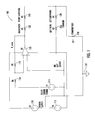
- Figures 7 and 8 presents a diagram of a first part and a second part of a system 400 that permits measurement of voltage and/or resistance in a common path (or any other path) or at the common node of the system, in accordance with embodiments of the present invention.
- Figures 7 and 8 will be explained together. The description of the system with respect to Figures 1 , 3 , and 5 also applies to the system presented in Figures 7 and 8 .
- the part of the system presented in Figure 8 may be referred as the measuring module of the system. Therefore, in some embodiments, the measuring module includes a circuit that comprises a microphone. However, in other embodiments, the measuring module may include at least some part of the system presented in Figure 8 along with at least some part of the system presented in Figure 7 .
- the embodiment of the system presented in Figures 7 and 8 includes a configured microphone circuit in order to measure the voltage and/or the resistance on the common path of the circuit or the system. It is important to measure the voltage on the common path of the system in order to determine the characteristics (e.g., amplitude or signal value) of the compensation signal to be injected into the right channel (which includes right earphone, R3 124) and the characteristics (e.g., amplitude or signal value) of the compensation signal to be injected into the left channel (which includes left earphone, R4 128). Even though the measurement of the voltage and/or resistance on the common path should be made as close as possible to the connection point between the earphone channels, this is not always a practical possibility.
- embodiments of the invention provide alternate strategies for measuring the voltage and/or resistance on the common path.
- the system may measure the voltage and/or resistance on one part of the common path, where the voltage and/or resistance on another part of the common path may be calculated by design.
- the system may calculate the voltage and/or resistance on a part of the common path using a measuring module as described herein and illustrated in Figures 7 and 8 .
- the part of the system to the left of U2 120 and U3 140 in Figures 7 and 8 may be accomplished in the digital domain of the sound channels (e.g., the right earphone channel and the left earphone channel). Since the part of the system to left of U2 120 and U3 140 may be accomplished in the digital domain of the sound channels, that part of the system may be implemented in software, rather than hardware (although it could be implemented in hardware in alternate embodiments). Additionally, in some embodiments, a substantial or entire part of the system illustrated in Figure 8 (referred to as the microphone circuit) may be implemented in software, rather than hardware (although it could be implemented in hardware in alternate embodiments).
- U4 176 is a transistor that represents a microphone.
- U1 150 is an amplifier (e.g., operational amplifier) that senses the voltage and/or resistance on a part of the common path.
- R5 166, R10 154, R11 130, R12 156, R13 160, R14 172, R15 170, and R16 174 are resistors.
- R9 118, R22 138, R1 122, R2 126, R15 170, R16 174, R12 156, R13 160, R5 166, and R10 154 are configured by design.
- R14 172 emulates a virtual resistor inside microphone U4 176, and R14 172 functions as a mirror of the microphone around its working point. R14 172 may not perfectly mirror (e.g., variance of 10%) the virtual resistor inside the microphone U4 176; however, R14 172 may be tuned to a value that delivers substantially optimal performance for standard earphone hardware.
- C1 178 , C2 158, and C3 164 are capacitors.
- V2 168 and V3 180 are voltage sources.
- V2 168 is a bias generator that is substantially free from noise.
- V3 180 is a sound generator. When measuring the voltage and/or the resistance in the common path of the system, V3 180 is disconnected by opening the switch SW1 162.
- R6 116 and R23 144, and R8 134 and R7 136 are representations of digital to analog (DA) convertors along with two additional input resistors to amplifier U2 120 and U3 140, respectively.
- R6 116 and R7 136 are configured by design, while R8 134 and R23 144 are configurable resistor ladders.
- the earphone impedances, R3 124 and R4 128, are treated as unknown quantities.
- the system calculates the earphone impedances, R3 124 and R4 128, based on values associated with other resistors and/or based on values associated with other measurements in the system (e.g., measured voltage at 152 when SW1 162 , SW2 146, and SW3 148 are opened). The system may subsequently use these values to calculate values for R8 134 and R23 144, which may be used to calculate the voltage and/or resistance over the common path of the system.
- the system may calculate the voltage and/or resistance on a part of the common path using a measuring module as described herein and illustrated in Figures 7 and 8 .
- the microphone U4 176 with the amplifier U1 150 measures the voltage and/or the resistance in the common path of the system.
- switches SW1 162 , SW2 146, and SW3 148 are closed.
- the microphone U4 176 is disconnected by opening the switch, SW1 162, on the positive input of the amplifier U1 150.
- the switch SW1 162 is included in the system because the switch is need for one configuration of the audio block.
- two other switches may also be provided in the system in order to facilitate the measurement of the voltage and/or the resistance in the common path.
- These two other switches are represented by SW2 146 and SW3 148 in Figure 7 .
- SW1 162 which is usually a switch implemented in hardware
- the switches SW2 146 and SW3 148 may be implemented in hardware or software.
- the switch SW 1 162 may be implemented in software rather than hardware, and either or both of the switches, SW2 146 and SW3 148, may be implemented in hardware rather than software.
- the three switches (SW1 162, SW2 146, and SW3 148) are opened.
- the measurement of the voltage and/or the resistance in the common path may be made with opening one or more (but not all three) of the switches SW1 1 162, SW2 146, and SW3 148. Opening SW1 162 disconnects the sound generator V3 180 and opening SW2 146 and SW3 148 disconnects the crosstalk elimination function of the system.
- One or more of the voltage sources in the system may be configured to transmit a short "beep" sound signal on both the right channel (which includes right earphone, R3 124) and the left channel (which includes left earphone, R4 128) either before, after, or during opening the switches SW1 162, SW2 146, and SW3 148 in the system.
- the amplifier e.g., U1 150
- U1 150 may be set to maximize the gain associated with the signal input to the amplifier (e.g., U1 150).
- the systems, methods, and computer program products described herein can be adapted to be used with any pre-existing or to-be-invented PHF earphone hardware. Additionally, the systems, methods, and computer program products described herein can be adapted to be used with earphone hardware associated with different impedances (e.g., the resistance values used for the right earphone, R3 124, and the left earphone, R4 128 may be different from those presented in Figures 3 , 5 , and 7 ). Additionally, the systems, methods, and computer program products described herein can be adapted to be used with earphone hardware that includes multiple earphone channels, where each earphone channel is associated with a different impedance or resistance.
- impedances e.g., the resistance values used for the right earphone, R3 124, and the left earphone, R4 128 may be different from those presented in Figures 3 , 5 , and 7 .
- the systems, methods, and computer program products described herein can be adapted to
- earphone hardware may include one earphone, two earphones, or more than two earphones.
- a compensation signal is injected from a voltage source (or from one or more voltage sources) to each earphone channel.
- An embodiment of the computer program product described herein that is embodied as a software program can be installed in an audio player that is connected to earphone hardware or can be installed in a computer that is connected to earphone hardware.
- the software program may be directly programmed into programmable earphone hardware.
- the installed software reduces crosstalk between multiple earphone channels associated with the earphone software.
- the installed software is always active.
- the installed software is activated when the earphone hardware receives electrical signals to convert into audible sound or when the earphone hardware emits audible sound.
- the invention (including any hardware or software associated with the invention) can be adapted to be used with (or can be tuned to work with) any audio producing device (e.g., wired or wireless headphones, earphones, etc.) that includes one or more earphones.
- any audio producing device e.g., wired or wireless headphones, earphones, etc.
- the computer program product described herein may be triggered to initiate the transmission of a short beep as a notice to a user of the system that the earphone hardware is connected to the audio system or the computer.
- an embodiment of the computer program product described herein may be triggered to initiate presentation of a graphical indicator on a display associated with the system as a notice to a user of the system that the earphone hardware is connected to the audio system or the computer.
- an embodiment of the computer program product described herein when the earphone hardware is connected to the audio system or computer, an embodiment of the computer program product described herein 1) initiates the disabling of the crosstalk elimination function of the computer program product (e.g., disabling the injecting step- block 1040 of Figure 10 ), and 2 ) sets the gain of the amplifier (e.g., U1 150 ) in the microphone circuit to a maximum level. Additionally, in some embodiments, when the earphone hardware is connected to the audio system or computer, an embodiment of the computer program product described herein disables an input signal associated with the microphone circuit (e.g., the input signal to the amplifier in the microphone circuit, U1 150) in Figure 8 .
- an input signal associated with the microphone circuit e.g., the input signal to the amplifier in the microphone circuit, U1 150
- this step may be performed by opening the switch SW1 162 in Figure 8 .
- an embodiment of the computer program product described herein may be able to measure the voltage and/or resistance over the common path. This measured voltage and/or resistance may be used to calculate the characteristics of the compensation signal that has to be generated in order to reject crosstalk over one or more victim channels.
- this voltage and/or resistance is calculated by a computer program product that operates in the digital domain, the characteristics of the compensation signal is also generated in the digital domain (e.g., a digital signal waveform). Therefore, as indicated previously, a computer program product described herein generates a digital compensation signal.
- this digital compensation signal may be generated based at least partially on the amount of earphone impedance associated with the one or more earphone channels of the earphone hardware connected to the system in which the computer program product is installed. Additionally, the digital compensation signal may be adapted to small errors associated with impedances of earphones or earphone channels of the connected earphone hardware. In some embodiments, these errors may be errors associated with the frequency response of the earphones or earphone channels.
- the measurement of the voltage and/or resistance over the common path may require several parameters to be measured prior to the measurement of the voltage and/or resistance over the common path. These parameters may be used to determine the characteristics (e.g., amplitude or signal value) of the compensation signal to be injected into the right channel (which includes right earphone, R3 124) and the characteristics (e.g., amplitude or signal value) of the compensation signal to be injected into the left channel (which includes left earphone, R4 128).
- an embodiment of the computer program product described herein may measure the output signal or voltage levels from the earphone drivers, i.e., amplifiers U2 120 and U3 140 in Figure 7 . These signal or voltage levels may be considered by the computer program product in measuring the voltage and/or resistance over the common path (or in determining the digital compensation signal). Additionally, as a further example, an embodiment of the computer program product described herein may measure an input signal level from the amplifier in the microphone circuit, U1 150. This measured input signal level makes it possible calculate the quotient between the resistance in the earphone channel or path and the resistance in the common channel or path. Therefore, this measured input signal level or calculated quotient may be considered by the computer program product in measuring the voltage and/or resistance over the common path (or in determining the digital compensation signal).
- an embodiment of the computer program product described herein may measure the frequencies of the signals at various nodes in the system, e.g., frequencies associated with signals produced by V1, V7, V2, V3, V5, and V6 at various nodes in the system.
- the amplifiers may be configured to alter the frequencies (e.g., through a filtering mechanism in conjunction with other components of the circuit such as capacitors, resistors, etc.) associated with the signals produced by the voltage sources, and in such embodiments, an embodiment of the computer program product described herein may consider the altered frequencies in measuring the voltage and/or resistance over the common path (or in determining the digital compensation signal).
- an embodiment of the computer program product described herein may estimate a compensation factor in embodiments where the system (e.g., the microphone circuit in the system) is configured to measure the resistance and/or voltage along a partial portion of the common path in the system.
- the system e.g., the microphone circuit in the system
- Such embodiments include instances where there is a connector between resistor R14 172 in Figure 8 and the point or node (e.g., node D in Figure 8 ) of the system where the common path begins. Therefore, an embodiment of the computer program product described herein may consider the compensation factor in measuring the voltage and/or resistance over the common path (or in determining the digital compensation signal).
- one or more of the above-described parameters may be used to measure the voltage and/or resistance over the common path and/or determine the characteristics (e.g., amplitude or signal value) of the compensation signal to be injected into the right channel (which includes right earphone, R3) and the characteristics (e.g., amplitude or signal value) of the compensation signal to be injected into the left channel (which includes left earphone, R4).
- characteristics e.g., amplitude or signal value
- Figure 9 presents a simulation graph, in accordance with embodiments of the present invention.
- the voltage in the common path of the system may be measured by measuring the voltage 902 at the "Micamp" node. As indicated in Figure 9 , the voltage level 902 is -15dB.
- a system or a computer program product described herein may measure the current flowing through the first earphone channel (e.g., channel that includes R3 of Figure 7 ) and the current flowing through the second earphone channel (e.g., channel that includes R4 of Figure 7 ). The system or computer program product may subsequently calculate the crosstalk (e.g., difference between the current level in the first audio-listening channel and the current level in the second audio-listening channel) based on these measured values. Subsequently, the system or computer program product compares the difference value to a predetermined threshold crosstalk level.
- the crosstalk e.g., difference between the current level in the first audio-listening channel and the current level in the second audio-listening channel
- the system or computer program product described herein performs the steps of Figure 10 (e.g., measuring the signal level over the common path; determining characteristics of a compensation signal to be injected into a victim channel; injecting, into the victim channel, at least some part of the input signal that is transmitted to an amplifier associated with the sending channel, etc.).
- the steps of Figure 10 may not be performed by a system or computer program product described herein if the difference between the current level in the first audio-listening channel and the current level in the second audio-listening channel is not greater than a pre-determined threshold level (i.e., the crosstalk is not greater than a pre-determined threshold level). In other embodiments, the steps of Figure 10 may be performed without making these initial measurements of the current levels flowing through the multiple earphone channels.
- the system or a computer program product described herein may measure the current flowing through only the victim earphone channel (e.g., channel that includes R4 128 of Figure 7 ). The system or computer program product described herein may subsequently compare the current flowing through the victim earphone channel with a predetermined threshold level to determine whether the current flowing through the victim earphone channel is greater than the pre-determined threshold level. If the current through the victim earphone channel is greater than the pre-determined threshold level, the system or computer program product described herein may use this determination as an indication that the crosstalk is greater than a pre-determined crosstalk threshold.
- the system or computer program product described herein performs the steps of Figure 10 (e.g., measuring the signal level over the common path; determining characteristics of a compensation signal to be injected into a victim channel; injecting, into the victim channel, at least some part of the input signal that is transmitted to an amplifier associated with the sending channel, etc.).
- the steps of Figure 10 may not be performed by a system or computer program product described herein if the current through the victim earphone channel is not greater than a pre-determined threshold level. In other embodiments, the steps of Figure 10 may be performed without making the initial measurement of the current level flowing through the victim earphone channel.
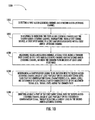
- Figure 10 presents a flowchart 1000 illustrating a general process flow for reducing crosstalk between two earphone channels, in accordance with embodiments of the present invention.
- Each of the blocks may be executed by a system or by a computer program product. Additionally, the blocks may be executed in an order that is different from the order indicted in Figure 10 . Additionally, execution of each step presented in Figure 10 may trigger the execution of a successive step presented in Figure 10 .
- a system detects connection of at least two earphone channels (e.g., a left earphone channel and a right earphone channel), where in some embodiments, the two earphone channels may be connected via a common connector to the system.
- the system in response to detecting the first earphone channel and the second earphone channel, transmits, from a first signal source located in the system, a first input signal to a first amplifier associated with the first earphone channel.
- the first earphone channel may be the sending channel
- the second earphone channel may be the victim channel.
- a system measures the signal or voltage level over a common path (which includes at least some resistance) or at the common node associated with the multiple earphone channels.
- a measuring module associated with or included in the system makes the measurement at block 1020. In some embodiments, this measuring step may be performed by the measuring module at a frequency associated with the first input signal.
- the system determines the characteristics (e.g., amplitude or signal value, signal frequency, etc.) of the compensation signal to be injected into the victim channel (which includes an earphone, e.g., a left earphone).
- the characteristics of the compensation signal are determined such that the compensation signal level (or voltage level) substantially mirrors characteristics (e.g., signal value) of the signal over the common path.
- at block 1040 based on the characteristics of the compensation signal determined at block 1030, at least some part of the sound signal (where the part of the sound signal may also be referred to as the compensation signal) generated by the voltage source associated with the sending channel is transmitted as input to the amplifier associated with the victim channel.
- the crosstalk that is measured for the system also decreases because as defined previously, the crosstalk for the system is the amount of current flowing through the victim channel relative to (e.g., difference between) the amount of current flowing through another channel (which includes an earphone, e.g., a right earphone).
- the term "module" with respect to a system may refer to a hardware component of the system, a software component of the system, or a component of the system that includes both hardware and software.
- Hardware components may include one or more of the circuits or one or more partial portions of the circuits illustrated in Figures 1 , 3 , 5 , 7 , and 8 .
- a module may include one or more modules, where each module may reside in separate pieces of hardware or software.
- the present invention may include and/or be embodied as an apparatus (including, for example, a system, machine, device, computer program product, and/or the like), as a method (including, for example, a business method, computer-implemented process, and/or the like), or as any combination of the foregoing.
- embodiments of the present invention may take the form of an entirely business method embodiment, an entirely software embodiment (including firmware, resident software, micro-code, stored procedures in a database, etc.), an entirely hardware embodiment, or an embodiment combining business method, software, and hardware aspects that may generally be referred to herein as a "system.”
- embodiments of the present invention may take the form of a computer program product that includes a computer-readable storage medium having one or more computer-executable program code portions stored therein.
- a processor which may include one or more processors, may be "configured to" perform a certain function in a variety of ways, including, for example, by having one or more general-purpose circuits perform the function by executing one or more computer-executable program code portions embodied in a computer-readable medium, and/or by having one or more application-specific circuits perform the function.
- the computer-readable medium may include, but is not limited to, a non-transitory computer-readable medium, such as a tangible electronic, magnetic, optical, electromagnetic, infrared, and/or semiconductor system, device, and/or other apparatus.
- the non-transitory computer-readable medium includes a tangible medium such as a portable computer diskette, a hard disk, a random access memory (RAM), a read-only memory (ROM), an erasable programmable read-only memory (EPROM or Flash memory), a compact disc read-only memory (CD-ROM), and/or some other tangible optical and/or magnetic storage device.
- the computer-readable medium may be transitory, such as, for example, a propagation signal including computer-executable program code portions embodied therein.
- One or more computer-executable program code portions for carrying out operations of the present invention may include object-oriented, scripted, and/or unscripted programming languages, such as, for example, Java, Perl, Smalltalk, C++, SAS, SQL, Python, Objective C, JavaScript, and/or the like.
- the one or more computer-executable program code portions for carrying out operations of embodiments of the present invention are written in conventional procedural programming languages, such as the "C" programming languages and/or similar programming languages.
- the computer program code may alternatively or additionally be written in one or more multi-paradigm programming languages, such as, for example, F#.
- These one or more computer-executable program code portions may be provided to a processor of a general purpose computer, special purpose computer, and/or some other programmable data processing apparatus in order to produce a particular machine, such that the one or more computer-executable program code portions, which execute via the processor of the computer and/or other programmable data processing apparatus, create mechanisms for implementing the steps and/or functions represented by the flowchart(s) and/or block diagram block(s).
- the one or more computer-executable program code portions may be stored in a transitory and/or non-transitory computer-readable medium (e.g., a memory, etc.) that can direct, instruct, and/or cause a computer and/or other programmable data processing apparatus to function in a particular manner, such that the computer-executable program code portions stored in the computer-readable medium produce an article of manufacture including instruction mechanisms which implement the steps and/or functions specified in the flowchart(s) and/or block diagram block(s).
- a transitory and/or non-transitory computer-readable medium e.g., a memory, etc.
- the one or more computer-executable program code portions may also be loaded onto a computer and/or other programmable data processing apparatus to cause a series of operational steps to be performed on the computer and/or other programmable apparatus.
- this produces a computer-implemented process such that the one or more computer-executable program code portions which execute on the computer and/or other programmable apparatus provide operational steps to implement the steps specified in the flowchart(s) and/or the functions specified in the block diagram block(s).
- computer-implemented steps may be combined with, and/or replaced with, operator- and/or human-implemented steps in order to carry out an embodiment of the present invention.
Landscapes
- Engineering & Computer Science (AREA)
- Power Engineering (AREA)
- Physics & Mathematics (AREA)
- Acoustics & Sound (AREA)
- Multimedia (AREA)
- Signal Processing (AREA)
- Circuit For Audible Band Transducer (AREA)
- Cable Transmission Systems, Equalization Of Radio And Reduction Of Echo (AREA)
Applications Claiming Priority (1)
| Application Number | Priority Date | Filing Date | Title |
|---|---|---|---|
| US201161564278P | 2011-11-28 | 2011-11-28 |
Publications (3)
| Publication Number | Publication Date |
|---|---|
| EP2600524A2 true EP2600524A2 (fr) | 2013-06-05 |
| EP2600524A3 EP2600524A3 (fr) | 2014-09-24 |
| EP2600524B1 EP2600524B1 (fr) | 2016-03-30 |
Family
ID=47429545
Family Applications (1)
| Application Number | Title | Priority Date | Filing Date |
|---|---|---|---|
| EP12193994.6A Not-in-force EP2600524B1 (fr) | 2011-11-28 | 2012-11-23 | Rejet de diaphonie adaptative |
Country Status (2)
| Country | Link |
|---|---|
| US (1) | US20130156238A1 (fr) |
| EP (1) | EP2600524B1 (fr) |
Cited By (1)
| Publication number | Priority date | Publication date | Assignee | Title |
|---|---|---|---|---|
| CN107071658A (zh) * | 2017-04-28 | 2017-08-18 | 维沃移动通信有限公司 | 一种降低移动终端串音的方法及移动终端 |
Families Citing this family (35)
| Publication number | Priority date | Publication date | Assignee | Title |
|---|---|---|---|---|
| US8908877B2 (en) | 2010-12-03 | 2014-12-09 | Cirrus Logic, Inc. | Ear-coupling detection and adjustment of adaptive response in noise-canceling in personal audio devices |
| US9142207B2 (en) | 2010-12-03 | 2015-09-22 | Cirrus Logic, Inc. | Oversight control of an adaptive noise canceler in a personal audio device |
| US9824677B2 (en) | 2011-06-03 | 2017-11-21 | Cirrus Logic, Inc. | Bandlimiting anti-noise in personal audio devices having adaptive noise cancellation (ANC) |
| US8958571B2 (en) | 2011-06-03 | 2015-02-17 | Cirrus Logic, Inc. | MIC covering detection in personal audio devices |
| US9318094B2 (en) | 2011-06-03 | 2016-04-19 | Cirrus Logic, Inc. | Adaptive noise canceling architecture for a personal audio device |
| US9123321B2 (en) | 2012-05-10 | 2015-09-01 | Cirrus Logic, Inc. | Sequenced adaptation of anti-noise generator response and secondary path response in an adaptive noise canceling system |
| US9318090B2 (en) | 2012-05-10 | 2016-04-19 | Cirrus Logic, Inc. | Downlink tone detection and adaptation of a secondary path response model in an adaptive noise canceling system |
| US9532139B1 (en) | 2012-09-14 | 2016-12-27 | Cirrus Logic, Inc. | Dual-microphone frequency amplitude response self-calibration |
| US9414150B2 (en) | 2013-03-14 | 2016-08-09 | Cirrus Logic, Inc. | Low-latency multi-driver adaptive noise canceling (ANC) system for a personal audio device |
| US9502020B1 (en) | 2013-03-15 | 2016-11-22 | Cirrus Logic, Inc. | Robust adaptive noise canceling (ANC) in a personal audio device |
| US10206032B2 (en) | 2013-04-10 | 2019-02-12 | Cirrus Logic, Inc. | Systems and methods for multi-mode adaptive noise cancellation for audio headsets |
| US9462376B2 (en) | 2013-04-16 | 2016-10-04 | Cirrus Logic, Inc. | Systems and methods for hybrid adaptive noise cancellation |
| US9460701B2 (en) | 2013-04-17 | 2016-10-04 | Cirrus Logic, Inc. | Systems and methods for adaptive noise cancellation by biasing anti-noise level |
| US9478210B2 (en) | 2013-04-17 | 2016-10-25 | Cirrus Logic, Inc. | Systems and methods for hybrid adaptive noise cancellation |
| US9578432B1 (en) | 2013-04-24 | 2017-02-21 | Cirrus Logic, Inc. | Metric and tool to evaluate secondary path design in adaptive noise cancellation systems |
| US9392364B1 (en) | 2013-08-15 | 2016-07-12 | Cirrus Logic, Inc. | Virtual microphone for adaptive noise cancellation in personal audio devices |
| US9549248B2 (en) * | 2013-09-04 | 2017-01-17 | Nuvoton Technology Corporation | Method and apparatus for reducing crosstalk in an integrated headset |
| US9666176B2 (en) | 2013-09-13 | 2017-05-30 | Cirrus Logic, Inc. | Systems and methods for adaptive noise cancellation by adaptively shaping internal white noise to train a secondary path |
| US9620101B1 (en) | 2013-10-08 | 2017-04-11 | Cirrus Logic, Inc. | Systems and methods for maintaining playback fidelity in an audio system with adaptive noise cancellation |
| US9704472B2 (en) * | 2013-12-10 | 2017-07-11 | Cirrus Logic, Inc. | Systems and methods for sharing secondary path information between audio channels in an adaptive noise cancellation system |
| US10382864B2 (en) | 2013-12-10 | 2019-08-13 | Cirrus Logic, Inc. | Systems and methods for providing adaptive playback equalization in an audio device |
| US10219071B2 (en) | 2013-12-10 | 2019-02-26 | Cirrus Logic, Inc. | Systems and methods for bandlimiting anti-noise in personal audio devices having adaptive noise cancellation |
| US9479860B2 (en) | 2014-03-07 | 2016-10-25 | Cirrus Logic, Inc. | Systems and methods for enhancing performance of audio transducer based on detection of transducer status |
| US10181315B2 (en) | 2014-06-13 | 2019-01-15 | Cirrus Logic, Inc. | Systems and methods for selectively enabling and disabling adaptation of an adaptive noise cancellation system |
| US9478212B1 (en) | 2014-09-03 | 2016-10-25 | Cirrus Logic, Inc. | Systems and methods for use of adaptive secondary path estimate to control equalization in an audio device |
| US9936317B2 (en) * | 2014-10-31 | 2018-04-03 | Fairchild Semiconductor Corporation | Audio crosstalk calibration switch |
| US10015578B2 (en) | 2014-11-19 | 2018-07-03 | Fairchild Semiconductor Corporation | Remote ground sensing for reduced crosstalk of headset and microphone audio signals |
| US9552805B2 (en) | 2014-12-19 | 2017-01-24 | Cirrus Logic, Inc. | Systems and methods for performance and stability control for feedback adaptive noise cancellation |
| WO2017029550A1 (fr) | 2015-08-20 | 2017-02-23 | Cirrus Logic International Semiconductor Ltd | Contrôleur d'élimination de bruit adaptatif de rétroaction (anc) et procédé ayant une réponse de rétroaction partiellement fournie par un filtre à réponse fixe |
| US9578415B1 (en) | 2015-08-21 | 2017-02-21 | Cirrus Logic, Inc. | Hybrid adaptive noise cancellation system with filtered error microphone signal |
| CA2908891A1 (fr) * | 2015-10-15 | 2017-04-15 | Clearwater Clinical Limited | Une methode informatique destinee a reduire la diaphonie dans un audiometre informatique |
| US10013966B2 (en) | 2016-03-15 | 2018-07-03 | Cirrus Logic, Inc. | Systems and methods for adaptive active noise cancellation for multiple-driver personal audio device |
| CA2964247A1 (fr) * | 2017-04-13 | 2018-10-13 | Clearwater Clinical Limited | Procede mis en oeuvre par ordinateur pour reduire la diaphonie dans un audiometre informatise |
| CN110718237B (zh) | 2018-07-12 | 2023-08-18 | 阿里巴巴集团控股有限公司 | 串音数据检测方法和电子设备 |
| CN111901727A (zh) * | 2020-07-30 | 2020-11-06 | 维沃移动通信有限公司 | 音频控制电路和电子设备 |
Family Cites Families (13)
| Publication number | Priority date | Publication date | Assignee | Title |
|---|---|---|---|---|
| JPS52125301A (en) * | 1976-04-13 | 1977-10-21 | Victor Co Of Japan Ltd | Signal processing circuit |
| US5887032A (en) * | 1996-09-03 | 1999-03-23 | Amati Communications Corp. | Method and apparatus for crosstalk cancellation |
| US20030179892A1 (en) * | 2002-03-25 | 2003-09-25 | Madsen Kim Nordtorp | System and method for an improved configuration for stereo headphone amplifiers |
| JP4509686B2 (ja) * | 2004-07-29 | 2010-07-21 | 新日本無線株式会社 | 音響信号処理方法および装置 |
| US7751913B2 (en) * | 2005-01-31 | 2010-07-06 | Lsi Corporation | Method and system for reducing power consumption of a sound processor |
| EP1737265A1 (fr) * | 2005-06-23 | 2006-12-27 | AKG Acoustics GmbH | Détermination de la direction de sources de son |
| US20080089361A1 (en) * | 2005-10-06 | 2008-04-17 | Metcalf Thomas D | System and method for transferring data |
| US7925030B2 (en) * | 2006-07-08 | 2011-04-12 | Telefonaktiebolaget Lm Ericsson (Publ) | Crosstalk cancellation using load impedence measurements |
| JP4929960B2 (ja) * | 2006-10-06 | 2012-05-09 | ソニー株式会社 | オーディオ再生装置、計測方法、プログラム、記録媒体、音漏れ低減調整方法 |
| JP5147730B2 (ja) * | 2007-01-12 | 2013-02-20 | パナソニック株式会社 | 受信装置及び受信方法 |
| US8107631B2 (en) * | 2007-10-04 | 2012-01-31 | Creative Technology Ltd | Correlation-based method for ambience extraction from two-channel audio signals |
| US20100056096A1 (en) * | 2008-08-29 | 2010-03-04 | Sony Ericsson Mobile Communications Ab | Method for driving a ground reference on a signal path, control circuit for driving a ground reference on a signal path, and mobile device |
| US20110096931A1 (en) * | 2009-10-28 | 2011-04-28 | Sony Ericsson Mobile Communications Ab | Crosstalk suppression |
-
2012
- 2012-11-19 US US13/680,224 patent/US20130156238A1/en not_active Abandoned
- 2012-11-23 EP EP12193994.6A patent/EP2600524B1/fr not_active Not-in-force
Non-Patent Citations (1)
| Title |
|---|
| None |
Cited By (1)
| Publication number | Priority date | Publication date | Assignee | Title |
|---|---|---|---|---|
| CN107071658A (zh) * | 2017-04-28 | 2017-08-18 | 维沃移动通信有限公司 | 一种降低移动终端串音的方法及移动终端 |
Also Published As
| Publication number | Publication date |
|---|---|
| EP2600524B1 (fr) | 2016-03-30 |
| US20130156238A1 (en) | 2013-06-20 |
| EP2600524A3 (fr) | 2014-09-24 |
Similar Documents
| Publication | Publication Date | Title |
|---|---|---|
| EP2600524B1 (fr) | Rejet de diaphonie adaptative | |
| US8340312B2 (en) | Differential mode noise cancellation with active real-time control for microphone-speaker combinations used in two way audio communications | |
| US9516414B2 (en) | Communication device and method for adapting to audio accessories | |
| JP6306713B2 (ja) | 再生ラウドネス調整方法及び装置 | |
| CN102638743B (zh) | 音频附件类型检测和连接器引脚信号指定 | |
| US9208766B2 (en) | Computer program product for adaptive audio signal shaping for improved playback in a noisy environment | |
| US20100027807A1 (en) | Method and apparatus for adjusting audio volume to prevent hearing loss or damage | |
| US10015578B2 (en) | Remote ground sensing for reduced crosstalk of headset and microphone audio signals | |
| US8150058B2 (en) | Mode switching noise cancellation for microphone-speaker combinations used in two way audio communications | |
| US9820029B2 (en) | Device-adaptable audio headset | |
| US20150078573A1 (en) | Device control based on worn headphone detection | |
| US20150124977A1 (en) | Headset in-use detector | |
| JP2008294803A (ja) | 再生装置および再生方法 | |
| JP2016521072A (ja) | イヤホンのアクティブノイズコントロール方法 | |
| CN107613113A (zh) | 一种耳机模式控制方法、装置及计算机可读存储介质 | |
| CN113038337B (zh) | 一种音频播放方法、无线耳机和计算机可读存储介质 | |
| US20170180859A1 (en) | Crosstalk mitigation | |
| US9525954B2 (en) | Audio device and audio producing method | |
| WO2019100750A1 (fr) | Procédé, circuit, et dispositif pour éliminer la diaphonie entre des canaux de lecture de signaux audio | |
| US10014842B2 (en) | Method and apparatus for identifying audio accessory through two pin connection in a two way radio | |
| TWI522904B (zh) | 電子裝置及用以校正電子裝置的耳機麥克風 | |
| US10111005B2 (en) | Method and device for modifying audio signals based on hearing capabilities of the listener | |
| CN102656904B (zh) | 包括用于连接到一个或更多个外部扩音器的装置和用于检测此类连接的装置的设备 | |
| CN107889031B (zh) | 一种音频控制方法、音频控制装置及电子设备 | |
| CN105323352A (zh) | 音频的调节方法及装置 |
Legal Events
| Date | Code | Title | Description |
|---|---|---|---|
| PUAI | Public reference made under article 153(3) epc to a published international application that has entered the european phase |
Free format text: ORIGINAL CODE: 0009012 |
|
| 17P | Request for examination filed |
Effective date: 20121123 |
|
| AK | Designated contracting states |
Kind code of ref document: A2 Designated state(s): AL AT BE BG CH CY CZ DE DK EE ES FI FR GB GR HR HU IE IS IT LI LT LU LV MC MK MT NL NO PL PT RO RS SE SI SK SM TR |
|
| AX | Request for extension of the european patent |
Extension state: BA ME |
|
| PUAL | Search report despatched |
Free format text: ORIGINAL CODE: 0009013 |
|
| AK | Designated contracting states |
Kind code of ref document: A3 Designated state(s): AL AT BE BG CH CY CZ DE DK EE ES FI FR GB GR HR HU IE IS IT LI LT LU LV MC MK MT NL NO PL PT RO RS SE SI SK SM TR |
|
| AX | Request for extension of the european patent |
Extension state: BA ME |
|
| RIC1 | Information provided on ipc code assigned before grant |
Ipc: H03F 3/181 20060101AFI20140821BHEP Ipc: H03F 3/68 20060101ALI20140821BHEP Ipc: G10K 11/178 20060101ALI20140821BHEP |
|
| GRAP | Despatch of communication of intention to grant a patent |
Free format text: ORIGINAL CODE: EPIDOSNIGR1 |
|
| RIC1 | Information provided on ipc code assigned before grant |
Ipc: H03F 3/68 20060101ALI20150917BHEP Ipc: H03F 3/181 20060101AFI20150917BHEP Ipc: H04R 5/033 20060101ALI20150917BHEP Ipc: G10K 11/178 20060101ALI20150917BHEP Ipc: H04R 5/04 20060101ALI20150917BHEP |
|
| INTG | Intention to grant announced |
Effective date: 20151013 |
|
| GRAS | Grant fee paid |
Free format text: ORIGINAL CODE: EPIDOSNIGR3 |
|
| GRAA | (expected) grant |
Free format text: ORIGINAL CODE: 0009210 |
|
| AK | Designated contracting states |
Kind code of ref document: B1 Designated state(s): AL AT BE BG CH CY CZ DE DK EE ES FI FR GB GR HR HU IE IS IT LI LT LU LV MC MK MT NL NO PL PT RO RS SE SI SK SM TR |
|
| REG | Reference to a national code |
Ref country code: GB Ref legal event code: FG4D |
|
| REG | Reference to a national code |
Ref country code: CH Ref legal event code: EP |
|
| REG | Reference to a national code |
Ref country code: AT Ref legal event code: REF Ref document number: 786359 Country of ref document: AT Kind code of ref document: T Effective date: 20160415 |
|
| REG | Reference to a national code |
Ref country code: IE Ref legal event code: FG4D |
|
| REG | Reference to a national code |
Ref country code: DE Ref legal event code: R096 Ref document number: 602012016224 Country of ref document: DE |
|
| REG | Reference to a national code |
Ref country code: NL Ref legal event code: FP |
|
| REG | Reference to a national code |
Ref country code: LT Ref legal event code: MG4D |
|
| PG25 | Lapsed in a contracting state [announced via postgrant information from national office to epo] |
Ref country code: GR Free format text: LAPSE BECAUSE OF FAILURE TO SUBMIT A TRANSLATION OF THE DESCRIPTION OR TO PAY THE FEE WITHIN THE PRESCRIBED TIME-LIMIT Effective date: 20160701 Ref country code: FI Free format text: LAPSE BECAUSE OF FAILURE TO SUBMIT A TRANSLATION OF THE DESCRIPTION OR TO PAY THE FEE WITHIN THE PRESCRIBED TIME-LIMIT Effective date: 20160330 Ref country code: HR Free format text: LAPSE BECAUSE OF FAILURE TO SUBMIT A TRANSLATION OF THE DESCRIPTION OR TO PAY THE FEE WITHIN THE PRESCRIBED TIME-LIMIT Effective date: 20160330 Ref country code: NO Free format text: LAPSE BECAUSE OF FAILURE TO SUBMIT A TRANSLATION OF THE DESCRIPTION OR TO PAY THE FEE WITHIN THE PRESCRIBED TIME-LIMIT Effective date: 20160630 |
|
| REG | Reference to a national code |
Ref country code: AT Ref legal event code: MK05 Ref document number: 786359 Country of ref document: AT Kind code of ref document: T Effective date: 20160330 |
|
| PG25 | Lapsed in a contracting state [announced via postgrant information from national office to epo] |
Ref country code: LT Free format text: LAPSE BECAUSE OF FAILURE TO SUBMIT A TRANSLATION OF THE DESCRIPTION OR TO PAY THE FEE WITHIN THE PRESCRIBED TIME-LIMIT Effective date: 20160330 Ref country code: LV Free format text: LAPSE BECAUSE OF FAILURE TO SUBMIT A TRANSLATION OF THE DESCRIPTION OR TO PAY THE FEE WITHIN THE PRESCRIBED TIME-LIMIT Effective date: 20160330 Ref country code: SE Free format text: LAPSE BECAUSE OF FAILURE TO SUBMIT A TRANSLATION OF THE DESCRIPTION OR TO PAY THE FEE WITHIN THE PRESCRIBED TIME-LIMIT Effective date: 20160330 Ref country code: RS Free format text: LAPSE BECAUSE OF FAILURE TO SUBMIT A TRANSLATION OF THE DESCRIPTION OR TO PAY THE FEE WITHIN THE PRESCRIBED TIME-LIMIT Effective date: 20160330 |
|
| PG25 | Lapsed in a contracting state [announced via postgrant information from national office to epo] |
Ref country code: EE Free format text: LAPSE BECAUSE OF FAILURE TO SUBMIT A TRANSLATION OF THE DESCRIPTION OR TO PAY THE FEE WITHIN THE PRESCRIBED TIME-LIMIT Effective date: 20160330 Ref country code: IS Free format text: LAPSE BECAUSE OF FAILURE TO SUBMIT A TRANSLATION OF THE DESCRIPTION OR TO PAY THE FEE WITHIN THE PRESCRIBED TIME-LIMIT Effective date: 20160730 Ref country code: PL Free format text: LAPSE BECAUSE OF FAILURE TO SUBMIT A TRANSLATION OF THE DESCRIPTION OR TO PAY THE FEE WITHIN THE PRESCRIBED TIME-LIMIT Effective date: 20160330 |
|
| PG25 | Lapsed in a contracting state [announced via postgrant information from national office to epo] |
Ref country code: PT Free format text: LAPSE BECAUSE OF FAILURE TO SUBMIT A TRANSLATION OF THE DESCRIPTION OR TO PAY THE FEE WITHIN THE PRESCRIBED TIME-LIMIT Effective date: 20160801 Ref country code: AT Free format text: LAPSE BECAUSE OF FAILURE TO SUBMIT A TRANSLATION OF THE DESCRIPTION OR TO PAY THE FEE WITHIN THE PRESCRIBED TIME-LIMIT Effective date: 20160330 Ref country code: SM Free format text: LAPSE BECAUSE OF FAILURE TO SUBMIT A TRANSLATION OF THE DESCRIPTION OR TO PAY THE FEE WITHIN THE PRESCRIBED TIME-LIMIT Effective date: 20160330 Ref country code: CZ Free format text: LAPSE BECAUSE OF FAILURE TO SUBMIT A TRANSLATION OF THE DESCRIPTION OR TO PAY THE FEE WITHIN THE PRESCRIBED TIME-LIMIT Effective date: 20160330 Ref country code: ES Free format text: LAPSE BECAUSE OF FAILURE TO SUBMIT A TRANSLATION OF THE DESCRIPTION OR TO PAY THE FEE WITHIN THE PRESCRIBED TIME-LIMIT Effective date: 20160330 Ref country code: SK Free format text: LAPSE BECAUSE OF FAILURE TO SUBMIT A TRANSLATION OF THE DESCRIPTION OR TO PAY THE FEE WITHIN THE PRESCRIBED TIME-LIMIT Effective date: 20160330 Ref country code: RO Free format text: LAPSE BECAUSE OF FAILURE TO SUBMIT A TRANSLATION OF THE DESCRIPTION OR TO PAY THE FEE WITHIN THE PRESCRIBED TIME-LIMIT Effective date: 20160330 |
|
| PG25 | Lapsed in a contracting state [announced via postgrant information from national office to epo] |
Ref country code: IT Free format text: LAPSE BECAUSE OF FAILURE TO SUBMIT A TRANSLATION OF THE DESCRIPTION OR TO PAY THE FEE WITHIN THE PRESCRIBED TIME-LIMIT Effective date: 20160330 Ref country code: BE Free format text: LAPSE BECAUSE OF FAILURE TO SUBMIT A TRANSLATION OF THE DESCRIPTION OR TO PAY THE FEE WITHIN THE PRESCRIBED TIME-LIMIT Effective date: 20160330 |
|
| REG | Reference to a national code |
Ref country code: DE Ref legal event code: R097 Ref document number: 602012016224 Country of ref document: DE |
|
| PG25 | Lapsed in a contracting state [announced via postgrant information from national office to epo] |
Ref country code: DK Free format text: LAPSE BECAUSE OF FAILURE TO SUBMIT A TRANSLATION OF THE DESCRIPTION OR TO PAY THE FEE WITHIN THE PRESCRIBED TIME-LIMIT Effective date: 20160330 |
|
| PLBE | No opposition filed within time limit |
Free format text: ORIGINAL CODE: 0009261 |
|
| STAA | Information on the status of an ep patent application or granted ep patent |
Free format text: STATUS: NO OPPOSITION FILED WITHIN TIME LIMIT |
|
| 26N | No opposition filed |
Effective date: 20170103 |
|
| PG25 | Lapsed in a contracting state [announced via postgrant information from national office to epo] |
Ref country code: SI Free format text: LAPSE BECAUSE OF FAILURE TO SUBMIT A TRANSLATION OF THE DESCRIPTION OR TO PAY THE FEE WITHIN THE PRESCRIBED TIME-LIMIT Effective date: 20160330 |
|
| REG | Reference to a national code |
Ref country code: DE Ref legal event code: R119 Ref document number: 602012016224 Country of ref document: DE |
|
| REG | Reference to a national code |
Ref country code: CH Ref legal event code: PL |
|
| REG | Reference to a national code |
Ref country code: NL Ref legal event code: MM Effective date: 20161201 |
|
| GBPC | Gb: european patent ceased through non-payment of renewal fee |
Effective date: 20161123 |
|
| PG25 | Lapsed in a contracting state [announced via postgrant information from national office to epo] |
Ref country code: CH Free format text: LAPSE BECAUSE OF NON-PAYMENT OF DUE FEES Effective date: 20161130 Ref country code: LI Free format text: LAPSE BECAUSE OF NON-PAYMENT OF DUE FEES Effective date: 20161130 |
|
| REG | Reference to a national code |
Ref country code: IE Ref legal event code: MM4A |
|
| REG | Reference to a national code |
Ref country code: FR Ref legal event code: ST Effective date: 20170731 |
|
| PG25 | Lapsed in a contracting state [announced via postgrant information from national office to epo] |
Ref country code: NL Free format text: LAPSE BECAUSE OF NON-PAYMENT OF DUE FEES Effective date: 20161201 Ref country code: LU Free format text: LAPSE BECAUSE OF NON-PAYMENT OF DUE FEES Effective date: 20161130 |
|
| PG25 | Lapsed in a contracting state [announced via postgrant information from national office to epo] |
Ref country code: FR Free format text: LAPSE BECAUSE OF NON-PAYMENT OF DUE FEES Effective date: 20161130 |
|
| PG25 | Lapsed in a contracting state [announced via postgrant information from national office to epo] |
Ref country code: DE Free format text: LAPSE BECAUSE OF NON-PAYMENT OF DUE FEES Effective date: 20170601 Ref country code: GB Free format text: LAPSE BECAUSE OF NON-PAYMENT OF DUE FEES Effective date: 20161123 Ref country code: IE Free format text: LAPSE BECAUSE OF NON-PAYMENT OF DUE FEES Effective date: 20161123 |
|
| PG25 | Lapsed in a contracting state [announced via postgrant information from national office to epo] |
Ref country code: CY Free format text: LAPSE BECAUSE OF FAILURE TO SUBMIT A TRANSLATION OF THE DESCRIPTION OR TO PAY THE FEE WITHIN THE PRESCRIBED TIME-LIMIT Effective date: 20160330 Ref country code: HU Free format text: LAPSE BECAUSE OF FAILURE TO SUBMIT A TRANSLATION OF THE DESCRIPTION OR TO PAY THE FEE WITHIN THE PRESCRIBED TIME-LIMIT; INVALID AB INITIO Effective date: 20121123 |
|
| PG25 | Lapsed in a contracting state [announced via postgrant information from national office to epo] |
Ref country code: MK Free format text: LAPSE BECAUSE OF FAILURE TO SUBMIT A TRANSLATION OF THE DESCRIPTION OR TO PAY THE FEE WITHIN THE PRESCRIBED TIME-LIMIT Effective date: 20160330 Ref country code: TR Free format text: LAPSE BECAUSE OF FAILURE TO SUBMIT A TRANSLATION OF THE DESCRIPTION OR TO PAY THE FEE WITHIN THE PRESCRIBED TIME-LIMIT Effective date: 20160330 Ref country code: MC Free format text: LAPSE BECAUSE OF FAILURE TO SUBMIT A TRANSLATION OF THE DESCRIPTION OR TO PAY THE FEE WITHIN THE PRESCRIBED TIME-LIMIT Effective date: 20160330 |
|
| PG25 | Lapsed in a contracting state [announced via postgrant information from national office to epo] |
Ref country code: BG Free format text: LAPSE BECAUSE OF FAILURE TO SUBMIT A TRANSLATION OF THE DESCRIPTION OR TO PAY THE FEE WITHIN THE PRESCRIBED TIME-LIMIT Effective date: 20160330 |
|
| PG25 | Lapsed in a contracting state [announced via postgrant information from national office to epo] |
Ref country code: MT Free format text: LAPSE BECAUSE OF NON-PAYMENT OF DUE FEES Effective date: 20161123 |
|
| PG25 | Lapsed in a contracting state [announced via postgrant information from national office to epo] |
Ref country code: AL Free format text: LAPSE BECAUSE OF FAILURE TO SUBMIT A TRANSLATION OF THE DESCRIPTION OR TO PAY THE FEE WITHIN THE PRESCRIBED TIME-LIMIT Effective date: 20160330 |