EP2600967B1 - Matériaux chromatographiques fonctionnalisés - Google Patents
Matériaux chromatographiques fonctionnalisés Download PDFInfo
- Publication number
- EP2600967B1 EP2600967B1 EP11815387.3A EP11815387A EP2600967B1 EP 2600967 B1 EP2600967 B1 EP 2600967B1 EP 11815387 A EP11815387 A EP 11815387A EP 2600967 B1 EP2600967 B1 EP 2600967B1
- Authority
- EP
- European Patent Office
- Prior art keywords
- silver
- silica gel
- compounds
- chromatography
- unsaturated
- Prior art date
- Legal status (The legal status is an assumption and is not a legal conclusion. Google has not performed a legal analysis and makes no representation as to the accuracy of the status listed.)
- Not-in-force
Links
Images









Classifications
-
- B—PERFORMING OPERATIONS; TRANSPORTING
- B01—PHYSICAL OR CHEMICAL PROCESSES OR APPARATUS IN GENERAL
- B01J—CHEMICAL OR PHYSICAL PROCESSES, e.g. CATALYSIS OR COLLOID CHEMISTRY; THEIR RELEVANT APPARATUS
- B01J20/00—Solid sorbent compositions or filter aid compositions; Sorbents for chromatography; Processes for preparing, regenerating or reactivating thereof
- B01J20/02—Solid sorbent compositions or filter aid compositions; Sorbents for chromatography; Processes for preparing, regenerating or reactivating thereof comprising inorganic material
- B01J20/0203—Solid sorbent compositions or filter aid compositions; Sorbents for chromatography; Processes for preparing, regenerating or reactivating thereof comprising inorganic material comprising compounds of metals not provided for in B01J20/04
- B01J20/0262—Compounds of O, S, Se, Te
-
- B—PERFORMING OPERATIONS; TRANSPORTING
- B01—PHYSICAL OR CHEMICAL PROCESSES OR APPARATUS IN GENERAL
- B01D—SEPARATION
- B01D15/00—Separating processes involving the treatment of liquids with solid sorbents; Apparatus therefor
- B01D15/08—Selective adsorption, e.g. chromatography
- B01D15/26—Selective adsorption, e.g. chromatography characterised by the separation mechanism
- B01D15/38—Selective adsorption, e.g. chromatography characterised by the separation mechanism involving specific interaction not covered by one or more of groups B01D15/265 and B01D15/30 - B01D15/36, e.g. affinity, ligand exchange or chiral chromatography
-
- B—PERFORMING OPERATIONS; TRANSPORTING
- B01—PHYSICAL OR CHEMICAL PROCESSES OR APPARATUS IN GENERAL
- B01J—CHEMICAL OR PHYSICAL PROCESSES, e.g. CATALYSIS OR COLLOID CHEMISTRY; THEIR RELEVANT APPARATUS
- B01J20/00—Solid sorbent compositions or filter aid compositions; Sorbents for chromatography; Processes for preparing, regenerating or reactivating thereof
- B01J20/02—Solid sorbent compositions or filter aid compositions; Sorbents for chromatography; Processes for preparing, regenerating or reactivating thereof comprising inorganic material
- B01J20/0203—Solid sorbent compositions or filter aid compositions; Sorbents for chromatography; Processes for preparing, regenerating or reactivating thereof comprising inorganic material comprising compounds of metals not provided for in B01J20/04
- B01J20/0233—Compounds of Cu, Ag, Au
-
- B—PERFORMING OPERATIONS; TRANSPORTING
- B01—PHYSICAL OR CHEMICAL PROCESSES OR APPARATUS IN GENERAL
- B01J—CHEMICAL OR PHYSICAL PROCESSES, e.g. CATALYSIS OR COLLOID CHEMISTRY; THEIR RELEVANT APPARATUS
- B01J20/00—Solid sorbent compositions or filter aid compositions; Sorbents for chromatography; Processes for preparing, regenerating or reactivating thereof
- B01J20/02—Solid sorbent compositions or filter aid compositions; Sorbents for chromatography; Processes for preparing, regenerating or reactivating thereof comprising inorganic material
- B01J20/0203—Solid sorbent compositions or filter aid compositions; Sorbents for chromatography; Processes for preparing, regenerating or reactivating thereof comprising inorganic material comprising compounds of metals not provided for in B01J20/04
- B01J20/0233—Compounds of Cu, Ag, Au
- B01J20/0237—Compounds of Cu
-
- B—PERFORMING OPERATIONS; TRANSPORTING
- B01—PHYSICAL OR CHEMICAL PROCESSES OR APPARATUS IN GENERAL
- B01J—CHEMICAL OR PHYSICAL PROCESSES, e.g. CATALYSIS OR COLLOID CHEMISTRY; THEIR RELEVANT APPARATUS
- B01J20/00—Solid sorbent compositions or filter aid compositions; Sorbents for chromatography; Processes for preparing, regenerating or reactivating thereof
- B01J20/281—Sorbents specially adapted for preparative, analytical or investigative chromatography
- B01J20/282—Porous sorbents
- B01J20/283—Porous sorbents based on silica
-
- B—PERFORMING OPERATIONS; TRANSPORTING
- B01—PHYSICAL OR CHEMICAL PROCESSES OR APPARATUS IN GENERAL
- B01J—CHEMICAL OR PHYSICAL PROCESSES, e.g. CATALYSIS OR COLLOID CHEMISTRY; THEIR RELEVANT APPARATUS
- B01J20/00—Solid sorbent compositions or filter aid compositions; Sorbents for chromatography; Processes for preparing, regenerating or reactivating thereof
- B01J20/281—Sorbents specially adapted for preparative, analytical or investigative chromatography
- B01J20/286—Phases chemically bonded to a substrate, e.g. to silica or to polymers
- B01J20/287—Non-polar phases; Reversed phases
-
- B—PERFORMING OPERATIONS; TRANSPORTING
- B01—PHYSICAL OR CHEMICAL PROCESSES OR APPARATUS IN GENERAL
- B01J—CHEMICAL OR PHYSICAL PROCESSES, e.g. CATALYSIS OR COLLOID CHEMISTRY; THEIR RELEVANT APPARATUS
- B01J20/00—Solid sorbent compositions or filter aid compositions; Sorbents for chromatography; Processes for preparing, regenerating or reactivating thereof
- B01J20/281—Sorbents specially adapted for preparative, analytical or investigative chromatography
- B01J20/286—Phases chemically bonded to a substrate, e.g. to silica or to polymers
- B01J20/289—Phases chemically bonded to a substrate, e.g. to silica or to polymers bonded via a spacer
-
- B—PERFORMING OPERATIONS; TRANSPORTING
- B01—PHYSICAL OR CHEMICAL PROCESSES OR APPARATUS IN GENERAL
- B01J—CHEMICAL OR PHYSICAL PROCESSES, e.g. CATALYSIS OR COLLOID CHEMISTRY; THEIR RELEVANT APPARATUS
- B01J20/00—Solid sorbent compositions or filter aid compositions; Sorbents for chromatography; Processes for preparing, regenerating or reactivating thereof
- B01J20/281—Sorbents specially adapted for preparative, analytical or investigative chromatography
- B01J20/291—Gel sorbents
-
- B—PERFORMING OPERATIONS; TRANSPORTING
- B01—PHYSICAL OR CHEMICAL PROCESSES OR APPARATUS IN GENERAL
- B01J—CHEMICAL OR PHYSICAL PROCESSES, e.g. CATALYSIS OR COLLOID CHEMISTRY; THEIR RELEVANT APPARATUS
- B01J20/00—Solid sorbent compositions or filter aid compositions; Sorbents for chromatography; Processes for preparing, regenerating or reactivating thereof
- B01J20/30—Processes for preparing, regenerating, or reactivating
- B01J20/32—Impregnating or coating ; Solid sorbent compositions obtained from processes involving impregnating or coating
- B01J20/3202—Impregnating or coating ; Solid sorbent compositions obtained from processes involving impregnating or coating characterised by the carrier, support or substrate used for impregnation or coating
- B01J20/3204—Inorganic carriers, supports or substrates
-
- B—PERFORMING OPERATIONS; TRANSPORTING
- B01—PHYSICAL OR CHEMICAL PROCESSES OR APPARATUS IN GENERAL
- B01J—CHEMICAL OR PHYSICAL PROCESSES, e.g. CATALYSIS OR COLLOID CHEMISTRY; THEIR RELEVANT APPARATUS
- B01J20/00—Solid sorbent compositions or filter aid compositions; Sorbents for chromatography; Processes for preparing, regenerating or reactivating thereof
- B01J20/30—Processes for preparing, regenerating, or reactivating
- B01J20/32—Impregnating or coating ; Solid sorbent compositions obtained from processes involving impregnating or coating
- B01J20/3202—Impregnating or coating ; Solid sorbent compositions obtained from processes involving impregnating or coating characterised by the carrier, support or substrate used for impregnation or coating
- B01J20/3206—Organic carriers, supports or substrates
- B01J20/3208—Polymeric carriers, supports or substrates
-
- B—PERFORMING OPERATIONS; TRANSPORTING
- B01—PHYSICAL OR CHEMICAL PROCESSES OR APPARATUS IN GENERAL
- B01J—CHEMICAL OR PHYSICAL PROCESSES, e.g. CATALYSIS OR COLLOID CHEMISTRY; THEIR RELEVANT APPARATUS
- B01J20/00—Solid sorbent compositions or filter aid compositions; Sorbents for chromatography; Processes for preparing, regenerating or reactivating thereof
- B01J20/30—Processes for preparing, regenerating, or reactivating
- B01J20/32—Impregnating or coating ; Solid sorbent compositions obtained from processes involving impregnating or coating
- B01J20/3214—Impregnating or coating ; Solid sorbent compositions obtained from processes involving impregnating or coating characterised by the method for obtaining this coating or impregnating
- B01J20/3217—Resulting in a chemical bond between the coating or impregnating layer and the carrier, support or substrate, e.g. a covalent bond
- B01J20/3219—Resulting in a chemical bond between the coating or impregnating layer and the carrier, support or substrate, e.g. a covalent bond involving a particular spacer or linking group, e.g. for attaching an active group
-
- B—PERFORMING OPERATIONS; TRANSPORTING
- B01—PHYSICAL OR CHEMICAL PROCESSES OR APPARATUS IN GENERAL
- B01J—CHEMICAL OR PHYSICAL PROCESSES, e.g. CATALYSIS OR COLLOID CHEMISTRY; THEIR RELEVANT APPARATUS
- B01J20/00—Solid sorbent compositions or filter aid compositions; Sorbents for chromatography; Processes for preparing, regenerating or reactivating thereof
- B01J20/30—Processes for preparing, regenerating, or reactivating
- B01J20/32—Impregnating or coating ; Solid sorbent compositions obtained from processes involving impregnating or coating
- B01J20/3231—Impregnating or coating ; Solid sorbent compositions obtained from processes involving impregnating or coating characterised by the coating or impregnating layer
- B01J20/3234—Inorganic material layers
- B01J20/3236—Inorganic material layers containing metal, other than zeolites, e.g. oxides, hydroxides, sulphides or salts
-
- B—PERFORMING OPERATIONS; TRANSPORTING
- B01—PHYSICAL OR CHEMICAL PROCESSES OR APPARATUS IN GENERAL
- B01J—CHEMICAL OR PHYSICAL PROCESSES, e.g. CATALYSIS OR COLLOID CHEMISTRY; THEIR RELEVANT APPARATUS
- B01J20/00—Solid sorbent compositions or filter aid compositions; Sorbents for chromatography; Processes for preparing, regenerating or reactivating thereof
- B01J20/30—Processes for preparing, regenerating, or reactivating
- B01J20/32—Impregnating or coating ; Solid sorbent compositions obtained from processes involving impregnating or coating
- B01J20/3231—Impregnating or coating ; Solid sorbent compositions obtained from processes involving impregnating or coating characterised by the coating or impregnating layer
- B01J20/3242—Layers with a functional group, e.g. an affinity material, a ligand, a reactant or a complexing group
-
- B—PERFORMING OPERATIONS; TRANSPORTING
- B01—PHYSICAL OR CHEMICAL PROCESSES OR APPARATUS IN GENERAL
- B01D—SEPARATION
- B01D15/00—Separating processes involving the treatment of liquids with solid sorbents; Apparatus therefor
- B01D15/08—Selective adsorption, e.g. chromatography
- B01D15/10—Selective adsorption, e.g. chromatography characterised by constructional or operational features
-
- B—PERFORMING OPERATIONS; TRANSPORTING
- B01—PHYSICAL OR CHEMICAL PROCESSES OR APPARATUS IN GENERAL
- B01J—CHEMICAL OR PHYSICAL PROCESSES, e.g. CATALYSIS OR COLLOID CHEMISTRY; THEIR RELEVANT APPARATUS
- B01J20/00—Solid sorbent compositions or filter aid compositions; Sorbents for chromatography; Processes for preparing, regenerating or reactivating thereof
- B01J20/281—Sorbents specially adapted for preparative, analytical or investigative chromatography
- B01J20/282—Porous sorbents
- B01J20/284—Porous sorbents based on alumina
-
- B—PERFORMING OPERATIONS; TRANSPORTING
- B01—PHYSICAL OR CHEMICAL PROCESSES OR APPARATUS IN GENERAL
- B01J—CHEMICAL OR PHYSICAL PROCESSES, e.g. CATALYSIS OR COLLOID CHEMISTRY; THEIR RELEVANT APPARATUS
- B01J20/00—Solid sorbent compositions or filter aid compositions; Sorbents for chromatography; Processes for preparing, regenerating or reactivating thereof
- B01J20/281—Sorbents specially adapted for preparative, analytical or investigative chromatography
- B01J20/282—Porous sorbents
- B01J20/285—Porous sorbents based on polymers
-
- B—PERFORMING OPERATIONS; TRANSPORTING
- B01—PHYSICAL OR CHEMICAL PROCESSES OR APPARATUS IN GENERAL
- B01J—CHEMICAL OR PHYSICAL PROCESSES, e.g. CATALYSIS OR COLLOID CHEMISTRY; THEIR RELEVANT APPARATUS
- B01J2220/00—Aspects relating to sorbent materials
- B01J2220/50—Aspects relating to the use of sorbent or filter aid materials
- B01J2220/62—In a cartridge
Definitions
- Thiolate-containing chromatographic medium functionalized with silver is provided for reusable reproducible efficient separations of organic chemicals.
- Chromatography is a widely used technique for separating organic and inorganic compounds and substances, e.g., amino acids, proteins, nucleic acids, hydrocarbons, and carbohydrates.
- Effective chromatography is influenced mainly by efficiency and selectivity of a chromatographic medium with respect to specific compounds of interest. Major improvements in column efficiency can be obtained by using more uniform particle size, or in the case of high performance liquid chromatography (HPLC), decreasing particle size of the packing material.
- HPLC high performance liquid chromatography
- typical particle size for HPLC has decreased from the early 10 ⁇ m (micrometer or micron) to 1.8 ⁇ m, which has resulted in greatly increased column efficiency.
- a more effective approach for improving compound resolution is to alter the column selectivity of the chromatographic medium with respect to specific compounds.
- the packing material for liquid chromatography is commonly based on porous silica particles.
- the silanol functional groups on the silica surface can be modified by conjugating with a variety of alkyl and other functional groups to change the affinity and selectivity of the packing materials to different compounds. For example, attaching a C 18 alkyl chain on the silanol group creates so called reversed-phase liquid chromatographic media that are widely used for separating polar organic compounds.
- Other ways of modifying the resolution properties of silica gel include physically attaching compounds or ions onto the surface of porous silica particles.
- silver ion (Ag + ) has been attached by a process referred to as impregnation onto the silica surface by immersing the silica gel in an aqueous solution of silver nitrate (AgNO 3 ). Upon evaporating of water from the solution, the silver ion is deposited and electrostatically attached to the surface of silica gel on the silanol functional group.
- Ag + ions strongly interact with double bonds in organic compounds
- silver impregnated silica gel is widely used for resolving compounds with different degrees of unsaturation (i.e., different numbers of double bonds or triple bonds) by a process referred to as argentation chromatography.
- Argentation chromatography has been used for chromatographic separation for more than five decades and is considered a critical technique for separating carbon-carbon double bond containing compounds especially lipids.
- argentation chromatography problems with argentation chromatography include instability of impregnated Ag + ions, which are reduced to Ag 0 upon exposure to light within minutes, and instability of the medium, as the ions are merely electrostatically affiliated with the silanol functional group of the silica gel and are easily washed out.
- Conventional argentation chromatography is generally performed in darkness, which is difficult to achieve in the laboratory, and the medium must be freshly prepared (either by the researchers themselves or by commercial providers) and stored in light blocking containers and under anhydrous conditions. Because a certain level of light exposure is unavoidable, even the most carefully prepared and light-shielded chromatographic column can be reproducibly used only once and must be discarded after a single separation, leading to increased expense, inconvenience, and irreproducible results.
- United States Patent Publication No. US2003/224133A1 discloses a packing material for chromatography or a packing material for a pre-treatment comprising a packing material consisting of a metal or a metal compound reactive with the sulfur-containing compound or a packing material whose surface is coated with the foregoing metal or metal compound; and a sulfur-containing compound bonded to the surface of the foregoing packing material.
- Japanese Patent No. JPH10287506A discloses an antimicrobial agent constituted of polymer particles comprising a polymer having a functional group containing an oxygen atom, a nitrogen atom, a sulfur atom, etc., (having 0.1 nm to 100 ⁇ m average particle diameter with a crosslinking structure), and an antimicrobial metal component (such as silver component) fixed thereon by forming a chemical bond to the functional group.
- the carrying amount of the antimicrobial metal component is about 0.01-50 wt.% in terms of the metal based on the whole amount.
- the adsorbent may be used to remove heavy metals e.g. mercury and/or arsenic, from wastewater streams such as produced water or flue gas scrubber waters.
- Silver ion chromatography in spite of these shortcomings remains in use. There are currently no chromatographic media that specifically target dense electron clouds (such as triple bonds and double bonds) in the molecules and separate these molecules. Improved silver chromatographic materials are needed for medical, industrial and pharmaceutical applications.
- An embodiment of the invention provides a silver thiolate chromatographic medium including a silver thiolate-sulfur-containing functional group (metal thiolate chromatographic medium, MTCM) covalently bound to a silver atom, such that the silver thiolate chromatographic medium has affinity and specificity to bind a compound comprising a carbon-carbon double bond or other electron rich functional groups.
- MTCM metal thiolate chromatographic medium
- transition metals other than silver including for example a metal selected from: copper (Cu + and Cu 2+ ), gold (Au + ), cadmium (Cd 2+ ), zinc (Zn 2+ ), mercury (Hg 2+ ), nickel (Ni + ), palladium (Pd + ), platinum (Pt 2+ ), rhodium (Rh 2+ ), ruthenium (Ru 3+ and Ru 4+ ), and a combination thereof.
- the support medium is selected from: alumina, agarose, cellulose, and starch.
- the support medium is magnesium silicate or dextran.
- the silver thiolate-sulfur-containing functional group includes a thiol.
- a propyl thiol substitution is performed and the substitution is combined with hydroxyl propyl, cyano propyl or butyl propyl substitutions in various proportions to form combined chromatographic stationary phases with different degrees of normal and reversed-phase properties.
- alkyl chains connecting these different functional groups are varied as defined in claim 1 and include C 1 to C 18 alkyl groups that impart different properties to the MTCM.
- a terminal epoxy alkyl functional group with variable carbon chain length is connected to and modified into a 1-thiol; 2-hydroxyl; 1 hydroxyl; 1-thiol-2-hydroxyl; 1-hydroxyl-2-thiol; 1,2-dithiol or 2-thiol terminal functional group.
- the functional groups display higher degrees of normal phase chromatographic behavior than their corresponding unmodified materials, and for example bond bivalent cations more efficiently.
- the sulfur-containing functional group is linked to the support medium by at least one spacer selected from: a C 1 -C 18 alkyl, a C 1 -C 18 alkoxy, a C 1 -C 18 heteroalkyl, a C 6 -C 10 aryl, a C 1 -C 9 heteroaryl and a C 6 -C 10 aryl C 1 -C 6 alkyl.
- the MTCM has affinity to at least one compound selected from: a polycyclic aromatic hydrocarbon, an alkene, an alkenone, a triglyceride, a monoglyceride, a diglyceride, a wax ester, a steryl ester, a phthalate, a sterol, a steroid, a terpene, a terpenoid, a triterpernoid, a fatty acid, a lipid including a phospholipid and other complex lipid molecules, an oil, a sugar, an oligosaccharide, a polysaccharide, a carbohydrate, a protein, an amino acid, a fossil fuel, a natural or synthetic organic compound of pharmaceutical use, a petroleum-derived compound, a coal-derived compound, and a combination thereof found in a biological sample or an environmental sample.
- a polycyclic aromatic hydrocarbon an alkene, an alkenone, a triglyceride, a monoglycer
- the biological sample from a subject including a human or animal is at least one of: an excretion, a secretion, tears, saliva, urine, feces, perspiration, blood, lymph, serum, plasma, cerebrospinal fluid, bile, semen, vaginal fluid, breast milk, and amniotic fluids.
- the biological sample is from a plant, bacteria or archea, and is obtained for example by solvent extraction.
- the environmental sample is at least one selected from: soil; water including samples from a river, a glacier, an ocean and a lake; sediment; algal deposits; oil deposits; and fossil deposits including coal and tar, and atmospheric aerosols.
- the compound containing the carbon-carbon double bond contains tens, hundreds or thousands of carbon atoms, for example the compound is at least about 1 carbon to about 20 carbons in length, at least about 20 carbons to about 40 carbons in length, at least about 20 carbons to at least about 80 carbons, at least about 40 carbons to about 80 carbons in length, at least about 40 carbons to at least about 150 carbons, at least 80 carbons to about 150 carbons in length, and greater than about 150 carbons in length.
- the compound containing a carbon-carbon double bond is a macromolecule, for example a polypeptide having 50 amino acids in length, i.e., hundreds of carbons in length.
- the MTCM forms an analytical component of a system selected from: normal phase chromatography, reversed-phase chromatography, liquid chromatography, planar chromatography, column chromatography, gravity or flush chromatography, flash chromatography, thin layer chromatography, high performance liquid chromatography, and gas chromatography, as defined in claim 2.
- the MTCM forms an analytical component of a gas chromatography system, such that it separates small and volatile compounds at variable temperatures, for example at room temperature or at several hundred degrees celsius.
- the MTCM component in the system separates compounds having different numbers of carbon-carbon double bonds or carbon-carbon triple bonds.
- the MTCM component in the system separates compounds having different carbon lengths.
- the MTCM component in the system separates at least one unsaturated compound from at least one saturated compound.
- the MTCM component in the system separates an alkane from an olefin, a di-unsaturated compound from a tetra-unsaturated compound, and a di-unsaturated C 50 compound from a di-unsaturated C 51 compound.
- the MTCM is characterized by having at least one property selected from: reusable, not staining a user, and stable during storage at room temperature under conditions of ambient light or at temperatures below 60°C.
- the MTCM is stable over a period of days, weeks, months, and even years under certain conditions.
- the metal is characterized by being strongly bonded and fixedly attached to the sulfur-containing functional group, and not leaching into or being dragging out of the MTCM for example by solvents and unsaturated compounds.
- the silver-based MTCM contacted with either acetone or acetonitrile does not leach the silver metal.
- An embodiment of the invention herein provides a method for making a a silver thiolate chromatographic medium as defined in claim 3.
- the method includes stirring, sonicating and filtering a resulting solid formed by contacting and bonding the support medium to the metal reagent; washing the resulting solid with a fluid; and, drying the resulting solid.
- the fluid is selected from the group consisting of: chloroform, dichloromethane, ethyl acetate, diethyl ether, acetic acid, hexane, ethanol, methanol, acetone, tetrahydrofuran, toluene, dimethyl sulfoxide, acetonitrile, and a combination thereof.
- the support medium is covalently linked to the thiol sulfur-containing functional group by at least one spacer selected from the group consisting of: C 1 -C 18 alkyl, a C 1 -C 18 alkoxy, a C 1 -C 18 heteroalkyl, a C 6 -C 10 aryl, a C 1 -C 9 heteroaryl and a C 6 -C 10 aryl C 1 -C 6 alkyl.
- the method prior to reacting, includes reacting a substrate with at least one trimethoxysilane compound selected from:
- the wash fluid is at least one solution selected from: chloroform, dichloromethane, ethyl acetate, diethyl ether, acetic acid, hexane, toluene, ethanol, acetone, methanol, tetrahydrofuran, dimethyl sulfoxide, acetonitrile, and a combination thereof.
- the support medium is selected from: alumina, agarose, cellulose, magnesium silicate, dextran, and starch.
- the method further includes mixing the support medium and metal reagent in a particular ratio, and the ratio of medium to metal reagent is selected from: 1:1, 2:1, 4:1, 5:1, 6:1, 8:1, 10:1 and 12:1.
- the ratio of medium to metal reagent is 5:1 to 20:1 by weight.
- the ratio of medium to metal reagent is selected from: about 1:1 to about 1:5, about 1:5 to about 1:10, about 1:10 to about 1:20, and about 1:20 to about 1:30.
- the method further includes mixing the chromatographic material with additional support medium not attached to a metal reagent, such that mixing comprises adding in a ratio the chromatographic material and additional support medium.
- the method includes mixing the maximn with conventional stationary phases having the same particle size at numerous ratios in order to produce media having different chromatographic properties.
- a method for separating or identifying compounds in a sample including: contacting a metal-thiolate chromatographic medium (MTCM) or metal-selenolate chromatographic medium (MSCM) with the sample, such that the MTCM or the MSCM includes a support medium attached to a sulfur-containing functional group or to a selenium-containing functional group respectively, such that the sulfur-containing functional group or the selenolate selenium-containing functional group is covalently bonded to a metal atom, such that the sample includes a plurality of compounds and at least one compound that specifically binds to the MTCM or the MSCM; and, separating and identifying the at least one compound from a plurality of compounds, for example, separating the compound from other components of the sample, preparatively or analytically.
- MTCM metal-thiolate chromatographic medium
- MSCM metal-selenolate chromatographic medium
- the metal atom is a transition metal.
- the transition metal is at least one selected from: mercury, gold, copper, cadmium, zinc, nickel, palladium, rhodium, platinum, and a combination thereof.
- the sulfur-containing functional group is a thiol.
- the at least one compound includes or contains a carbon-carbon double bond.
- the at least one compound is selected from: a polycyclic aromatic hydrocarbon, an alkene, an alkenone, a triglyceride, a monoglyceride, a diglyceride, a wax ester, a steryl ester, a phthalate, a sterol, a steroid, a terpene, a terpenoid, a triterpernoid, a lipid, a phospholipid, a fatty acid, an oil, a sugar, an oligosaccharide, a polysaccharide, a carbohydrate, a protein, an amino acid, a fossil fuel, a natural or synthetic organic compound of pharmaceutical use, a petroleum-derived compound, a coal-derived compound, and a combination thereof found in a biological sample or an environmental sample, such that the biological sample is selected from: an excretion, a secretion, blood, lymph, serum, plasma, cerebrospinal fluid
- the at least one compound is selected from: a mono-unsaturated C 37 -C 39 alkenone, a di-unsaturated C 37 -C 39 alkenone, a tri-unsaturated C 37 -C 39 alkenone, and a tetra-unsaturated C 37 -C 39 alkenone.
- the method further includes eluting the at least one compound from the MTCM or the MSCM.
- eluting the compound includes a gradient elution.
- eluting includes selecting and using an elution fluid.
- the elution fluid includes at least one fluid selected from: dichloromethane, ethyl acetate, diethyl ether, water, acetic acid, hexane, ethanol, methanol, acetonitrile, and a combination thereof.
- the elution fluid includes water containing different modifiers, or a mixing ratio of hexane, dichloromethane, acetonitrile, methanol and ethyl acetate.
- the elution fluid includes at least one aqueous salt solution.
- the aqueous salt solution includes sodium borate or phosphate buffer.
- detecting of compounds further includes using an optical or electronic device, for example an diode array detector, an evaporative light scattering detector, a fluorescence detector, a flame ionization detector, or a mass spectrometer.
- the optical device includes an analyzer component of a liquid chromatography device.
- the gas chromatography device further interfaces to a mass spectrometer.
- the optical device includes an ultraviolet detector.
- the MTCM forms an analytical component of a system selected from: normal phase chromatography, reversed-phase chromatography, liquid chromatography, planar chromatography, column chromatography, thin layer chromatography, solid phase extraction chromatography, flush chromatography, flash chromatography, high performance liquid chromatography, gas chromatography, and supercritical fluid chromatography.
- detecting further includes analyzing an amount of at least one naturally-occurring isotope.
- the at least one naturally-occurring isotope is selected from: carbon, hydrogen, phosphorous, nitrogen, oxygen, and sulfur.
- the naturally-occurring isotope is carbon-13 ( 13 C), phosphorus-31( 31 P), deuterium ( 2 H), or oxygen-18 ( 18 O).
- the method further includes prior to detecting, washing the MTCM or the MSCM to remove unbound molecules.
- the support medium includes a silica gel.
- the support medium includes a material selected from: silica gel, alumina, polystyrene, agarose, modified polymeric resin, cellulose, magnesium silicate, dextran, and starch.
- the sample is selected from: a polycyclic aromatic hydrocarbon, an alkene, an alkenone, a triglyceride, a monoglyceride, a diglyceride, a wax ester, a steryl ester, a phthalate, a sterol, a steroid, a terpene, a terpenoid, a triterpernoid, a lipid, a phospholipid, a fatty acid, an oil, a sugar, an oligosaccharide, a polysaccharide, a carbohydrate, a protein, an amino acid, a fossil fuel, a natural or synthetic organic compound of pharmaceutical use, a petroleum-derived compound, a coal-derived compound, and a combination thereof found in a biological sample or an environmental sample, wherein the biological sample is selected from: an excretion, a secretion, blood, lymph, serum, plasma, cerebrospinal fluid, bil
- the sample includes an unsaturated lipid.
- the unsaturated lipid is obtained from an alga, for example the alga is a member of Prymnesiophyceae.
- the MTCM component in the system separates compounds having different numbers of carbon-carbon double bonds. In various embodiments provided herein, the MTCM component in the system separates compounds having different carbon lengths. In various embodiments provided herein, the MTCM component in the system separates at least one unsaturated compound from at least one saturated compound. In various embodiments provided herein, the MTCM component in the system separates the at least one compound from at least one impurity.
- the method further includes storing the MTCM at room temperature under ambient light, and the MTCM is stable under such a condition.
- the method includes using both the MTSM and MSCM to effectively separate and identify the compounds.
- An aspect of the invention provides a device for separating and identifying molecules in a sample, the device including: a solid phase extraction (SPE) cartridge including silver-thiolate chromatographic medium as defined by claim 1 , such that the MTCM includes a support medium attached to a sulfur-containing functional group, such that the sulfur-containing functional group is covalently bonded to a metal atom, such that the MTCM has affinity and specificity to bind a compound containing a carbon-carbon double bond.
- SPE solid phase extraction
- An aspect of the disclosure which does not form part of the claimed invention is a device for separating and identifying molecules in a sample, the device including: a solid phase extraction (SPE) cartridge including a metal-selenolate chromatographic medium (MSCM) that includes a support medium attached to a selenium-containing functional group, such that the selenium-containing functional group is covalently bonded to a metal atom, such that the MSCM has affinity and specificity to bind a compound comprising a carbon-carbon double bond.
- SPE solid phase extraction
- MSCM metal-selenolate chromatographic medium
- the device including the MTCM has affinity to other electron rich functional groups in organic molecules including carbonyl groups, aromatic systems, and unpaired electrons on nitrogen atoms.
- the metal is selected from: mercury, gold, copper, cadmium, zinc, nickel, palladium, platinum, rhodium, and a combination thereof.
- the support medium is selected from alumina, agarose, cellulose, magnesium silicate, dextran, and starch.
- the device further includes a filter or a mesh.
- the device further includes an adaptor for connecting the device to a container or a syringe.
- the device includes a stability solution for preventing fungal or microbial growth on the medium.
- kits for isolating compounds including: a silver-thiolate chromatographic medium as defined by claim 1
- kits for isolating compounds including: a metal-selenolate chromatographic medium (MSCM) including a selenium-containing functional group covalently attached to a support medium, such that the selenium-containing functional group is bonded to at least one metal atom, such that the MSCM has affinity and specificity to at least one compound containing a carbon-carbon double bond; and, a container.
- MSCM metal-selenolate chromatographic medium
- the kit further includes a control compound with an affinity for the medium.
- the control includes at least one material selected from: a polycyclic aromatic hydrocarbon, an alkene, an alkenone, a triglyceride, a monoglyceride, a diglyceride, a wax ester, a steryl ester, a phthalate, a sterol, a steroid, a terpene, a terpenoid, a triterpernoid, a lipid, a phospholipid, a fatty acid, an oil, a sugar, an oligosaccharide, a polysaccharide, a carbohydrate, a protein, an amino acid, a fossil fuel, a natural or synthetic organic compound of pharmaceutical use, a petroleum-derived compound, a coal-derived compound, and a combination thereof found in a biological sample or an environmental sample, wherein the biological sample is selected from: an excretion,
- Disclosed but not according to the invention is a method of purifying a compound in a sample including: contacting a devices as provided herein with the sample; and, collecting flow-through from the device, such that the compound in the flow through is purified from contaminants in the sample, which remain bound to medium retained in the device.
- the method involves collecting flow-through solvents from the device, such that the compound in the flow-through is purified from unwanted compounds in the sample, which elute earlier than the target compounds.
- compositions, kits and devices herein include a silver thiolate chromatographic medium as defined by claim 1.
- a silver thiolate chromatographic medium as defined by claim 1.
- systems, compositions and kits include a medium including silver bonded to a sulfur atom are more effective than a metal bonded to a tellurium atom, or a polonium atom.
- the metal rather than simply being impregnated in the media is covalently bonded to sulfur or selenium atoms and does not leach from the stationary phase into the mobile phase.
- compositions, methods, kits and devices herein create a substantially permanent, reusable chromatographic medium that can be used to calibrate, discriminate and separate a broad variety of different samples, compounds and analytes, along with their respective analogs and derivatives.
- the sample, compound or the analyte contains electron rich functional groups such as carbon-carbon double bond (alkenyl group), a carbon-carbon triple bond (alkynyl group), an aromatic system or an amine group.
- Carbon-carbon double bonds are not generally targeted for interaction or affinity by chromatographic media. Commercially available media instead target hydroxyl, carbonyl, and other heteroatoms, and molecules having different sizes. Silver has an affinity for double bonds, and has been employed in chromatographic methods, for example in the mobile phase. DelaRoche, J.A. et al. 1971 Lipids 6: 537-540 . Unsaturated organic compounds are known to readily complex with transition metals. The resulting complexes are formed by a charge-transfer type of interaction, with the unsaturated compound acting as an electron donor and the transition metals acting as an electron acceptor. See Morris, L.J., 1966 J. Lipid Res. 7: 717-732 ; Guha, O.K.
- Chromatographic materials taking advantage of the affinity between metals and carbon-carbon double bounds have in the past primarily involved impregnation of metal ions into the packing material, for example impregnating or imbedding silver ion (Ag + ) into a silica gel. See Heath, R.R. et al. 1977 J. Chromatogr. Sci. 15: 10-13 ; Heath, R.R. et al. 1975 J. Chromatogr. Sci., 13: 380-382 ; Battaglia, R. et al. 1980 Chromatographia 13: 428-431 . Chromatographic methods involving impregnation of silver in silica gel suffer from a number of disadvantages.
- the silver impregnated into silica gel is not covalently bonded to the silica gel, therefore during separation the silver ion leaches or diffuses into the mobile phase.
- This characteristic leaching or mobility of the silver ion into the mobile phase results in a lack of reusability of the material.
- a new column must be prepared for each separation which severely reduces the practicality of the method.
- Irreproducibility of data is also associated with impregnation because the silver ion is rapidly reduced to silver metal on exposure to light. The reduction of the silver causes the metal to lose its binding capacity and effectiveness.
- Ag + can also oxidize the compounds of interest when Ag + is reduced to Ag upon exposure to light, causing structural changes and lower recovery of the target compounds during a chromatographic separation.
- silver ion impregnated silica media are commercially available (Sigma Aldrich, St. Louis, MO), these products are very expensive and are only prepared by the supplier after receiving an order so as to take weeks to prepare and to send to the buyer.
- the leaching or diffusion of silver ion on the column makes the elution peaks broader and decreases the observed resolution, producing a chromatographic profile with elution peaks that are broad and overlapping.
- the stationary phases of these media are not actually stationary and in fact leach from the column into the mobile phase.
- Silver impregnated chromatographic materials have been used to separate compounds containing carbon-carbon double bounds, for example alkenones, long-chain (37 to 39 carbon atoms) di-, tri-, and tetra-unsaturated methyl and ethyl ketones produced by algae such as coccolithophorids ( D'Andrea, W. et al. 2007 Analytical Chemistry 79: 3430-3435 ).
- Alkenones are produced by certain species of Prymnesiophyceae, a class of algae (also known as Haptophyceae).
- alkenone species in algal species Prior efforts to analyze climate history have involved isolation of alkenone species in algal species ( Huang, Y. et al., 2007 Anal. Chem. 79: 3430-3425 ), particularly lipids produced by aquatic algae including coccolithophores.
- the relative proportion of mono-, di-, tri-, and tetra-unsaturated alkenones produced by the algal species is a function of growth temperature, and analysis of alkenones found in ocean sediment cores has been used to investigate past sea surface temperatures.
- the isotope ratios of the alkenones for example hydrogen isotope ratios, reflects the isotope ratios of the source water and the ratios are used to determine conditions in ancient bodies of water.
- silver nitrate impregnated silica gel to separate alkenones a method having drawbacks and limitations, including lack of reproducibility due to broad chromatographic peaks, un-reusable columns and instability of the stationary phase.
- Examples which are all reference examples herein describe methods and compositions for silver chromatography that eliminate the problems of instability and mobility of the Ag + ion during chromatographic separations.
- the chromatographic media herein can be used for many kinds of liquid chromatographic methods including conventional liquid chromatography, HPLC, thin layer chromatography (TLC).
- HPLC high liquid chromatography
- TLC thin layer chromatography
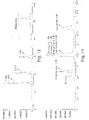
- An example of using an HPLC column composed of MTCM stationary phase for the separation of unsaturated ketones is shown in Fig. 12 .
- the columns used can be repeatedly used for this type of separation and maintains the same retention times for these compounds.
- the silver-thiolate chromatographic media used for example in Fig. 9 panel A was repeatedly tested over a thirty day period of time, and showed no loss of alkene-retention and no change of retention times. The separation is thus highly reproducible.
- the MTCM can be safely kept at room temperature or at 60 °C with no appreciable physical signs of decomposition or degradation, such as
- the invention provides a silver thiolate chromatographic medium as defined by claim 1.
- compositions and kits herein take advantage of a method for preparing thiol propyl-functionalized silica gel ( Wasiak, W. 1987 Chromatographia 23: 423-426 ).
- thiol-functionalized silica gel has not been prepared for chromatographic purposes, but has been used for scavenging metal ions from aqueous solutions.
- Several manufacturers supply thiol-functionalized silica gel (for example, Silicycle; Quebec, Canada). Most manufacturers do not use chromatographic grade silica gel in order to reduce the cost of production, hence directly purchased thiol-functionalized silica gel may not meet the requirement for liquid chromatography.
- Examples which are all reference examples herein used high grade chromatographic silica gel, performed modifications including thiol- and propyl -thiol-functionalization, and monitored sulfur content in products carefully to arrive at an optimal condition for making thiol-functionalized silica gel. Methods and procedures were developed to quantitatively bond silver ion (Ag + ) onto the thiol-functionalized silica gel. Because silver was covalently bonded onto the thiol (S) to form -S-Ag bond (which is a polar covalent bond), silver was completely stabilized towards light exposure and immobilized during chromatographic separations.
- Materials and methods herein involve covalently binding metals to other atoms including selenium, which produces MSCM for effective separation of compounds and molecules having carbon-carbon double bonds or other electron-rich functional groups.
- Organoselenium compounds in various embodiments form a more stable complex with silver (I) than organosulfur compounds ( Pettit, L.D. et. al 1967 Chem. Commun. 1179-1180 ).
- Methods are provided herein for producing MSCM for separating and identifying compounds.
- Systems, compositions, devices, methods and kits using MSCM are also provided herein.
- the covalently bonded silver has completely defied conventional wisdom that only silver ion (Ag + ) will have the effect of interacting with high electron density regions of an organic compound. Data herein shows little or no loss of affinity of covalently bond silver toward double bonds and other electron rich moieties in organic compounds, and at the same time, completely eliminating the two major drawbacks of the silver ion liquid chromatography, instability and poor chromatographic resolution.
- Examples which are all reference examples herein chemically attach a metal or metal ion to a thiol-functionalized or selenolate-functionalized silica gel, to obtain gels that effectively separate organic compounds having different degrees of unsaturation.
- the solubility product of a covalently boned silver and thiol group is ⁇ 10 "34 , a value indicating that the covalent bond between the silver and the thiol is extremely stable. This enhanced stability reduces or even eliminates the leaching characteristic of prior impregnated metal materials.
- Examples herein which are all reference examples have also shown the effectiveness of copper. It is envisioned that in addition to silver and copper, other metals such as transition metals are useful for the chromatographic media herein and for methods of making them, for example gold (Au + ), cadmium (Cd 2" ) and zinc (Zn 2+ ). These elements share a common feature: each has a full d 10 electronic configuration, which has been thought to yield significant interactions with double bonds ( Dean., P. et al. 1993 Rapid Commun. Mass Spectrom. 7: 53-57 ). These metals may demonstrate different chemical properties and degrees of affinity to different organic compounds with double bonds.
- the methods and resulting chromatographic media containing an appropriate choice of metals are selected as useful for separating different compound mixtures found in nature such as biological samples and environmental samples. It is important to note that this is the first time that a liquid chromatographic medium contains metals. These metal-containing media are used individually or as a plurality of metal-containing media (or with unmodified media), mixed in appropriate ratios to obtain a variety of affinity, separatory and retentive properties appropriate to the type of organic compounds in a sample.
- each covalently attached metal to the stationary phase support medium for example, silica gel
- the amount of each covalently attached metal to the stationary phase support medium is optimized to afford the optimal separation of the desired compound class or classes, for example alkenes, aromatic hydrocarbons, aliphatic hydrocarbons, steroids, terpenoids, glycerides, phthalates, chlorophylls, pigments, lipids, proteins, amino acids, nucleic acids, sugars, carbohydrates and alkenones.
- alkyl-sulfur-metal silica gel media or the alkyl-selenium-metal silica gel medium provided herein effectively separated a wide range of otherwise difficult to separate organic molecules and their derivatives and analogs, including for example sterols, polyaromatic hydrocarbons, triglycerides, alkenes (olefins), alkanes, and alkenones, and inorganic compounds.
- Hydrocarbons and polyaromatic hydrocarbons for example are byproducts of fossil fuel, charcoal and wood combustion, and are important for environmental studies and in exploration studies by the petroleum industry and other energy-interested concerns.
- Triglycerides are constituents of oils and fats, and are very important components in the food industry. The medical field is also increasingly interested in determining the number and kinds of triglycerides found in patient biological samples.
- Phthalates are esters of phthalic acid and are mainly used as plasticizers which are substances added to plastics to increase flexibility, transparency, durability, and longevity of the plastics. Phthalate contamination of the environment has been observed to be widespread, and requires assays for monitoring extent of these compounds in various parts of the environment, for example, hospitals and nurseries. Phthalates have been found to damage male reproductive systems and many procedures have been developed to concentrate and analyze phthalates in milk and human urine samples.
- the MTCM or MSCM are used in various embodiments in a SPE device to pre-concentrate the phthalates in these samples, and subsequently, these compounds can be analyzed using HPLC-MS using an HPLC column.
- sterols which are naturally-occurring multi-carbon ring molecules that are components of membranes, and are especially important for development of animals, plants and fungi
- alkenones which are naturally-occurring substances produced by phytoplankton and are analyzed for example to quantify past water and climate temperatures.
- Alkanes are molecules containing only hydrogen and carbon; alkenes which are a wide range of molecules with one or more carbon-carbon double bonds including many of the molecules which are utilized and studied by the petroleum industry.
- chromatographic compositions, methods, kits, and devices herein are useful for purification, isolation, and analysis of a wide range of organic molecules, and are not limited to those listed herein, and include also biological polymers such as carbohydrates, nucleic acids and proteins, and monomeric components such as sugars, amino acids, lipids, and include also synthetic polymers and monomeric components.
- organic molecules and derivatives include a wide range of structural characteristics including without limitation: number of carbon atoms and length; number and location of carbon-carbon double bonds (i.e., degree and position of unsaturation); hydrophobicity and hydrophilicity; aromaticity; number and position of heteroatoms; isomerism, such as branched- and straight-chained and location of branch; and stereoisomerism, of increasing importance to the pharmaceutical industry.
- the chromatographic materials provided in the examples which are all reference examples herein are useful for a variety of products, and have wide application in different applications of organic chemistry such as environmental and pharmaceutical areas both for analytical and preparative chromatography.
- the metal-thiolate chromatographic media are useful in solid phase extraction tubes (SPE), and in HPLC columns.
- SPE tubes are used widely for rapid, manual or automated separation of compound classes for example molecules with different positions of carbon-carbon double bonds, rapid and sharp isolation of aromatic compounds from non-aromatic hydrocarbons and the like.
- the media provided herein are suitable for HPLC columns and are useful for chromatographic resolution of organic compounds bearing double bonds, and long chain aliphatic compounds. Resolution and speed of normal-phase and reversed-phase HPLC are improved by use of the media prepared by methods herein compared to prior normal-phase media that afford only limited separation of most organic compounds.
- Chromatography is characterized by differing relative polarities of the mobile (liquid) and stationary (packing material) phases.
- Normal-phase chromatography involves a polar stationary phase, such as silanol on silica, and a relatively non-polar mobile phase, e.g., hexane and dichloromethane.
- Reversed-phase chromatography involves a non-polar stationary phase, often a hydrocarbon, and the mobile phase is relatively polar, e.g., water, methanol or acetonitrile.
- the least polar sample component is eluted first because it is most soluble in the non-polar mobile phase.
- reversed-phase chromatography the most polar sample component is eluted first because it is most soluble in the polar mobile phase.
- the procedures for making C 18 reversed-phase silica gel include imbedding the silver onto the silica gel thiol (3% to 5 % surface coverage), and then covering the silica gel surface with C 18 alkyl chain molecules. More than 90% of pharmaceutical chromatographic separations are performed using reserved-phase chromatography.
- Silver imbedded silica gels as described herein have a major application in reversed-phase chromatography and thin layer chromatography (TLC).
- TLC thin layer chromatography
- the methods and compositions herein would replace the earlier method of TLC that mixes silver nitrate with silica gel without chemical bonding.
- the methods herein overcome shortcomings of the traditional silver nitrate TLC.
- spacer refers to a chemical moiety used in chemistry synthesis to influence chemical properties, for example reaction conditions, molecule stability, steric hindrance, and hydrophobicity.
- a spacer for example is an alkyl group situated between a plurality of atoms or functional groups, such that the carbons atoms create additional space between the plurality of atoms or functional groups, thus reducing repulsive interaction (i.e., steric hindrance) between the plurality of atoms and functions groups.
- linker is used herein interchangeably with the term "linker”.
- sulfur-containing functional group refers to a molecule or compound which has a molecular or compound structure that contains a sulfur atom or sulfur atom moiety.
- the sulfur atom or moiety for example may have been attached by reaction with a functional group such as a thiol, a sulfide, and a disulfide.
- An exemplary "sulfur-containing functional group” is a thiol, however other sulfur containing functional groups are within the scope of the composition of the chromatographic media provided herein.
- selenium-containing functional group refers to a molecule or compound which has a molecular or compound structure that contains a selenium atom or selenium atom moiety.
- the selenium atom or moiety for example may have been attached by reaction with a functional group such as selenide, a selenol, or a selenolate.
- derivative refers to a chemically related form of a molecule or a compound having an additional substituent, for example, a different functional group or atom attached to an atom of the molecule.
- analog refers to a chemically related form of a molecule or a compound having a different configuration, for example, an isomer, or a D-configuration rather than an L-configuration, or an molecule with the approximate size and shape of the molecule, or a molecule with modification to the atoms that are involved in a chemical bond, including for example to confer resistance to or to facilitate degradation, cleavage, addition, removal, and substitution.
- the length of the aliphatic carbon chain alters the affinity properties of the silica.
- examples herein synthesize different functionalized silica gels by using as starting materials different carbon spacer lengths, e.g., spacers having from 1 to 18 carbons.
- Possible spacers include alkyl and aryl structures and include heteroatoms and functional groups bonded to the carbon chains, for example oxygen, nitrogen, phosphorus, nitrile groups, di-thiol groups, thioester groups, carbonyl groups, and hydroxyl groups.
- Example 1 (Reference Example). Method for preparation of thiol-propyl silica gels
- Silica gel was activated overnight at 150°C degrees. A portion (10 g) was suspended in 50 mL of m-xylene and 15 mL (84 mmol) of 3-mercaptopropyltrimethoxysilane (MPTS) was added dropwise with stirring. The solution was then flushed with Argon gas and the system was closed to keep it under inert-dry conditions. Mercaptopropyltrimethoxysilane is commercially available from Gelest, Inc. (Morrisville, PA). The solution was taken to reflux and stirred for 72 hours. The silica was cooled, filtered and was exhaustively washed with m-xylene, acetone, water and methanol, and dried at 60°C overnight. An alternative method of drying the modified silica includes drying at 25°C under vacuum (- 10 "3 torr) for 72 hours.
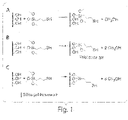
- This Reference Example shows that a mercaptopropylsilane moiety bonds one, two or three silanol groups from the silica gel surface ( Fig. 1 panels A-C), although the majority of the products observed are envisioned to be the product formed by mercaptopropylsilane bonding to two silanol units ( Fig. 1 panel B).
- Example 2 (Reference Example). Method for preparation of propyl-sulfur-silver silica gels
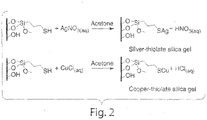
- Thiol silica gel was mixed in different proportions with a silver salt to prepare a silica gel containing a sulfur-silver complex ( FIG. 2 top row).
- Four parts of thiol silica gel were mixed with one part of silver nitrate dissolved in 0.1 M nitric acid (FIN0 3 ).
- the 4 to 1 ratio (by measuring 20% by weight of silver nitrate of the weight of the 40 micron to 60 micron particle size silica gel) produced the complete saturation and replacement of the thiol functionalities by the sulfur-silver complex.
- greater amount of silver nitrate may be needed to fully saturate the silica gel.
- nitric acid FF 0 3
- Reaction glassware was covered with aluminum foil. After mixing, the suspension was sonicated for three minutes and then the silica was filtered and exhaustively washed with water and acetone. The mixture was dried at 60°C overnight. Alternatively, the modified silica is dried at 25°C under vacuum ( ⁇ 10 ⁇ 3 torr) for 72 hours ( Fig. 2 ).
- Thiol silica gel was mixed in different proportions with a copper salt to prepare a silica gel containing a sulfur-copper complex ( Fig. 2 bottom row).
- silica gel was chemically bonded to the silver, and the product displayed a slight yellowish color that did not change upon exposure to light. This observation contrasts to silica gels impregnated with silver nitrate that darken rapidly (e.g., within hours) when exposed to light because of reduction of Ag + to Ag 0 .
- This Reference Example herein shows also that using different loading ratios and percentages of the silver salt yielded sulfur-silver silica gel preparations that have different chromatographic properties, e.g., lower percentages of silver loading resulted in gels characterized by lower retention of compounds that have double bonds. Chromatographic materials having reduced retention of carbon-carbon double bounds (alkenyl groups) are useful and needed for separating highly unsaturated compound moieties such as polycyclic aromatic hydrocarbons.
- Example 3 (Reference Example). Method for preparation of chromatographic gels having varied percentages of thiol-propyl silica gels and cyano-propyl silica gels
- the silica was filtered, and was exhaustively washed with m-xylene, acetone, water and methanol, and dried at 60°C overnight. Alternatively the modified silica is dried at 25°C under vacuum ( ⁇ 10" torr) for 72 hours.
- the ratio of MPTS to CPTS was varied in examples herein to obtain a set of modified silica gels containing different percentages of the thiol and the cyano-propyl groups.
- the thiol and cyanide modified silica gel were then characterized by use in each of normal-phase and reversed-phase liquid chromatography.
- Example 4 (Reference Example). Method for preparation of chromatographic gels having varied percentages of thiol n-butyl and thiol n-propyl silica gels
- modified silica is dried at 25°C under vacuum ( ⁇ 10 "3 torr) for 72 hours.
- the ratio of MPTS to CPTS was varied to obtain modified silica gels containing different percentage compositions of thiol and n-butyl groups.
- the modified silica gels were used in reversed-phase liquid chromatography.
- Example 5 (Reference Example). Method for preparation of diol and thiol-alcohol silica gels
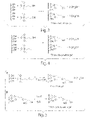
- Silica gel was suspended in an aqueous solution to which perchloric acid was added to obtain pH 3.5, the solution containing GPTS ( Fig. 5 panel A). This suspension was refluxed for five hours and after cooling, the suspension was exhaustively washed with water and methanol and was dried at 60°C overnight. Alternatively the modified silica is dried at 25°C under vacuum HO '3 ton-) for 72 hours. GPTS was obtained from Alfa Aesar (Ward Hill, MA). The diol-silica gel was reacted with sodium sulfide and hydrogen sulfide in methanol to produce a thiol-hydroxy silica gel ( Fig. 5 panel B).
- Epoxy-silica gel was prepared by mixing activated silica gel and GPTS in xylene, flushing the suspension with Argon gas, and maintaining the system closed under inert-dry conditions ( Fig. 6 panel A). The solution was refluxed with stirring for 72 hours. After cooling, the silica was filtered, exhaustively washed with m-xylene, acetone, water and methanol, and was dried at 60°C overnight.
- the epoxy silica gel was reacted with sodium sulfide and hydrogen sulfide in the presence of an acid catalyst in methanol to produce a thiol-hydroxy silica gel ( Fig. 6 panel B).
- This modified silica gel was used in normal-phase liquid chromatography.
- Example 6 (Reference Example). Method for of varied percentages of thiol-propyl and hydroxyl-propyl silica gels
- HPTS 3-hydroxypropyltrimethoxysilane
- the solution was refluxed with stirring for 72 hours.
- the silica was filtered, exhaustively washed with m-xylene, acetone, water and methanol and was dried at 60°C overnight.
- the modified silica is dried at 25°C under vacuum ( ⁇ 10 ⁇ 3 torr) for 72 hours.
- the ratio of MPTS to HPTS was varied to obtain a set of modified silica gels containing different percentages of thiol and hydroxy propyl groups ( Fig. 7 ).
- modified silica gels described herein were used for normal-phase chromatography with silver covalently bonded to the thiol chemically bonded to the silica gel stationary phase.
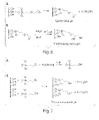
- An alternative method herein is the reaction of trimethoxysilane with an allyl-terminal alkene chloride in the presence of a ruthenium catalyst ( FIG. 8 panel A).
- the alternative method is a two step synthesis, which involves the reaction of trichlorosilane and the alkene chloride in the presence of a platinum catalyst and then the replacement of the chlorine substituents by methoxy groups ( Fig. 8 panel B).
- Example 7 (Reference Example). Mixing commercial silica gels and products of methods herein
- Silver bonded silica gels having different amounts of Ag were prepared by physically mixing the product from Example 2 above commercially available normal-phase and reversed-phase silica gel of the same particle size.
- the resulting mixed silica gel preparations have a range of useful chromatographic properties in addition to the silica gels produced by the methods in Examples 3 to 6. Further, cost associated with making this range of silica gels is reduced. For applications such as solid phase extractions and bulk separations, a mixed silica is sufficient to be effective.
- a smaller particle size silica e.g., 1.8 micron
- a larger particle size e.g., 5 micron silica.
- Example 8 (Reference Example). Separation of saturated and un-saturated Cucompounds using pipette columns containing alkyl-thiol-silver silica gel material
- alkyl-thiol-silver silica gel prepared by the methods herein was observed to be more effective for chromatographically separating saturated and multi-unsaturated organic compounds compared to each of normal unmodified silica gel and commercially available 10% silver nitrate silica gel as shown in examples herein.
- Alkyl-thiol-silver (alkyl-sulfur-silver) silica gel medium (20% w/w) were prepared as described herein and columns of this material and each control media were prepared.
- a solution containing a mixture of saturated, mono-unsaturated, di-unsaturated, and tetra-unsaturated C 14 compounds was loaded onto each column.
- Elution buffer was added to the column and elutes were collected for a time period of 60 fractions. The compounds were identified by gas chromatography and mass spectrometry.
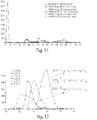
- Fig. 9 Data in Fig. 9 show that the compounds were more effectively separated into fractions displaying discrete peaks using the alkyl-thiol-silver silica gel material ( Fig. 9 panel A) compared to compounds separated using normal unmodified silica gel ( Fig. 9 panel B) or the commercially available impregnated 10% silver nitrate silica gel ( Fig. 9 panel C).
- the compounds were eluted in the following order from the thiol-silver silica gel: saturated C 14 compound, mono-unsaturated C 14 compound, di-unsaturated CM compound and tetra-unsaturated C 14 compound ( Fig. 9 panel A).
- the thiol-silver modified silica gel was determined to have excellent stability and reusability after storage at room temperature in ambient light; in fact similar chromatographic results to those in Fig. 9 panel A were observed upon reuse, even after regenerating and reusing the column five times during one month.
- the commercially available silver impregnated column in which silver was not covalently attached, used as a control to obtain the data in Fig. 9 panel C was observed to not be reusable as it produced irreproducible results upon retesting in subsequent days. It was further observed also that the users of the covalently attached silver medium produced by the methods herein did not later report stained fingers or other skin areas, compared to users of the commercial silver impregnated column who observed such staining.
- the covalently bound alkyl-thiol-silver silica gel effectively separated saturated and mono-unsaturated and multi-unsaturated organic compounds. Additional metals were covalently attached to chromatographic media in examples herein and used for separations, and the data showed that those materials and methods were also effective in separating these compounds.
- Example 9 (Reference Example). Separation of saturated and un-saturated C compounds using pipette columns alky-thiol-metal silica gels
- alkyl-thiol-silica gels in addition to silver (Ag + ) were effective in chromatographically separating organic molecules.
- alkyl-thiol-copper-silica gel materials alkyl-thiol-nickel-silica gel materials, and alkyl-mercury-silica gel materials, were each prepared. These chromatographic materials were loaded onto pipette columns and were tested for ability to separate organic compounds having double C-C bonds and unsaturated compounds.
- Alkyl-sulfur-metal- silica gels were prepared as described herein and a column of each medium was prepared.
- the metals covalently bound to the alkyl-thiol silica gels were each of copper (Cu 1+ and Cu 2+ respectively), nickel (Ni 2+ ), and mercury (Hg 2+ ).
- a solution containing a mixture of saturated, mono-unsaturated, di-unsaturated, and tetra-unsaturated Ci4 compounds was loaded onto each column. Elution buffer was added to the column and elutates were collected for a time period of 60 fractions. The compounds were identified by gas chromatography and mass spectrometry ( Fig. 10 ).
- the separatory properties of these media are optimized by varying the ratio of metal reagent to alkyl-thiol-silica gel.
- the oxidation states and valence electrons affect the binding of the metal reagent to alkyl-sulfur-silica gel, and to the alkyl-thiol-metal-silica gel medium to the organic compounds.
- a plurality of alkyl-sulfur-metal-silica gel media having different ratios of each of two or more metals reacted with alkyl-sulfur-silica gel are accordingly prepared and examined for their chromatographic separation properties.
- alkyl-thiol-copper silica gels were observed to be effective in separating organic compounds specifically separating saturated and mono-unsaturated and multi-unsaturated organic compounds. It is envisioned that gold and platinum chromatographic media would be even more effective than silver, however less economical to prepare. Subsequent Examples herein used the alkyl-thiol-silver silica gel to separate organic compounds.
- Example 10 (Reference Example). Separation of organic molecules including each of polvaromatic hydrocarbons and alkenones using thiol-silver pipette columns
- the PAHs having five rings or six rings were not observed. These compounds are very electronegatively rich, as they have multiple numbers of carbon-carbon double bonds. As the silver atom has strong affinity and specificity to electronegatively rich species such as carbon-carbon double bonds, the thiol-silver silica gel strongly attached to these PAHs. Thus the tightly bound PAHs remained bound to the medium following elution of less electronegatively rich PAHs having fewer carbon-carbon double bonds had eluted from the columns. These data indicate that the media provided herein are useful for batch purifications of materials to separate a sample from unwanted contaminants. By loading smaller amounts of silver or diluting the silver with less effective metal (e.g., copper, Cu) or ineffective metal (e.g., nickel, Ni 2+ ), a column for separating PAHs can be obtained.
- less effective metal e.g., copper, Cu
- ineffective metal e.g., nickel, Ni 2+
- Triglycerides, sterols, alkenones, and alkenes were separated using the alkyl-sulfur-silver silica gel and HPLC.
- the thiol-silver silica gel medium separated and identified triglycerides C 14 and C 16 unsaturated triglycerides, C 18 mono-unsaturated triglycerides and C 18 di-unsaturated triglycerides, and separated these compounds completely from phthalates ( Fig. 13 ). Since phthalates present as plasticizers have been widely found as environmental contaminants, these data show that this medium is useful as an environmental analytical tool, to assay extent of contamination.
- the thiol -silver silica medium further was shown capable of separating an impurity from a mixture of the sterols cholestanone (one carbon-carbon double bond); sterols having one or two carbon-carbon double bounds including cholesterol (one carbon-carbon double bound), ⁇ -sitosterol (one carbon-carbon double bond), campesterol (one carbon-carbon double bound); and stigmasterol (one carbon-carbon double bound); and ergosterol (three carbon-carbon double bonds). See Fig. 14 .
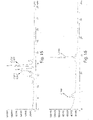
- alkyl-sulfur-silver medium was observed to separate components of a mixture of tri-unsaturated C 37 and C 38 alkenones, tetra-unsaturated C 37 and C 38 alkenones ( Fig. 15 ), and a mixture of C 14 alkanes and tetra-unsaturated C 14 alkenones ( Fig.16 ).
- the chromatographic media herein were observed to be effective in separating a wide range of molecules, including saturated and unsaturated compounds having different degrees of unsaturation, and aliphatic saturated and unsaturated compounds having different carbon lengths.
- the media were effective in separating molecules in a high pressure system such as HPLC and using the pipette column systems at ambient pressure.
- Example 12 (Reference Example). Preparation of sediment samples and algal cultures containing alkenones
- Sediment samples to be tested for hydrogen isotopes are obtained and prepared for testing.
- the samples are homogenized using a mortar and pestle.
- An amount of each sediment (0.5g - 1.5 g) sample is obtained and the organic compounds contained in the sample are extracted using dichloromethane.
- the extracted samples are separated into acid and neutral fractions using Supelco Supelclean LC-NH 2 solid phase extraction tubes.
- the neutral fractions are removed and are added to a column containing alkyl-sulfur-silver silica gel material as prepared by methods in Examples herein.
- Elution buffer is added and separated fractions are collected.
- the fractions include a sequential set that contains aliphatic hydrocarbons, a set that contains ketones, and a set that contains alcohols.
- One liter of medium is filtered using pre-combusted Whatman GF/F glass fiber filters, a porosity 0.7 micron.
- the alkenones are extracted from the filters by soaking once in methanol and twice in dichloromethane.
- Example 13 (Reference Example). Separation of alkenones using alkyl-sulfur-silver silica gel
- the alkenones from the sediment samples and algal cultures are separated using the alkyl-sulfur-silver silica gel described herein, and analyzed for compound- specific hydrogen isotopes.
- the alkyl-sulfur-silver silica gels are rinsed with four bed volumes of dichloromethane. Gels are kept saturated in dichloromethane until use. Samples are added to the each column and are eluted, and fractions are collected for each sample column. The fractions containing ketones and a control (n-heptatriacontane) are quantified using gas chromatography-flame ionization detection (GC-FID). Hydrogen isotopic analysis is performed on the samples using a Hewlett-Packard 6840+ GC-pyrolysis system interfaced to a Finnigan Delta+ XL stable isotope mass spectrometer through a high temperature pyrolysis reactor.
- GC-FID gas chromatography-flame ionization detection
- Example 14 (Reference Example). Chemical reactions for preparing silver-based MTCM
- a variety of synthetic methods are shown for preparing silver-based MTCM having improved loading capacity for silver metal and overall retention capacity of the MTCM.
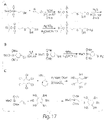
- a chemical reaction for synthesizing a di-thiol is shown in Figure 17 panel A.
- a thiol silica gel having a silanol group on the silica gel surface is reacted with 3-chloropropylene sulfide in acetonitrile initially at 0°C and is then warmed to RT for three hours.
- the product is then reacted with sulfur hydride in acetone and pyridine for three hours to yield a di-thiol, which is then reacted with silver nitrate in a solution of water and acetontrile (1:1) to yield a silver-based (di-thiol) MTCM.
- Figure 17 panel B shows a chemical reaction for synthesizing a silver-based MTCM having a benzyl mercaptan by reacting (trimethoxysilyl)benzyl chloride with sulfure chloride in acetonitrile and pyridine, and then adding silver nitrate in water and acetone (1: 1) solution to yield a silver trimethoxysilyl)benzyl compound that is a substituted benzyl mercaptan.
- a chemical reaction is shown also for synthesizing a benzene hexathiol compound ( Fig. 17 panel C).
- Hexachlorobezene and benzylmercaptan are reacted in dimethylformamide and sodium hydride to yield benzene hexathiol ( Fig. 17 panel C top).
- the benzene hexathiol is reacted with mercatopropylsilane to yield a benzene hexathiol substituted-mercatopropylsilane ( Fig. 17 panel C bottom), which is then reacted with silver nitrate to form the silver-based MTCM.
- Example 15 (Reference Example). Stability of silver-based MTCM
- Acetonitrile resulted in the greatest amount of silver leaching (4.46 parts per million, ppm) compared to methanol (18.94 parts per billion, ppb), acetone (2.28 ppb), ethyl acetate (1.12 ppb) and hexane (none detected). Most important, these detected levels are considered to be at levels below an amount that would negatively affect mass spectrometers and other detecting devices. Thus, HPLC columns prepared using silver-based MTCM were assessed to be reliable and reusable and were safe to connect to a mass spectrometer. Table 1.
- washes i.e., parallel flushing
- amounts of silver ion leached from were determined (Table 2, values in ppm).
- the organic solvents used were acetone, dichloromethane (DCM), and hexane.
- Acetone washing resulted in 21,025-fold more silver leached from impregnated silver nitrate silica gel than the silver-based MTCM.
- the silver-based MTCM was clearly more stable than silver nitrate impregnated silica gel column. Table 2.
- Example 16 (Reference Example). Methods for preparing end-capped MTCM
- the component propyl thiols do not cover the entire silica gel surface, and significant amounts of silanol functional group functionality and surface area remained unused on the surface of silica gel.
- the presence of silanol groups were useful and enhanced the separation because the polar silanol groups reacted with compounds having double bonds (compounds with greater number of double bonds are slightly more polar).
- the presence of silanol provided an adverse effect because the polar silanol groups interfere with the non-polar stationary phase.
- This Reference Example shows methods for effectively ended-capping the silanol groups on the silica gel ( Fig. 18 ).
- a silica gel is reacted for 24 hours with MPTS in o-xylene, n-butyl amine, and refluxed with stirring to form a resulting solid that is a thiol silica gel with two silanol groups ( Fig. 18 panel A).
- the thiol silica produced was then reacted with a silyalating agent (Me 3 SiR) in acetonitrile at RT with Stirling for 16 hours to yield an end-capped thiol silica gel ( Fig.
- Example 17 Comparison Example. Separation of low molecular weight compounds in gas phase using AgTCM
- Separating gaseous alkanes and alkenes is a major step in refining fossil fuels in the petrochemical industry and is performed by fractional cryo-distillation, a process involving condensing these gaseous molecules into liquid phase. Performing this distillation process requires a large amount of energy.
- Alternative commercial processes involve using copper salts in a slurry with variable temperature and pressure to selectively absorb and release the alkenes.
- the copper salt-based approach reduces the amount of energy previously required, however the copper salt is highly unstable. Copper readily disproportionates into Cu and Cu 3+ and loses the capacity to absorb alkenes.
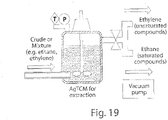
- FIG. 19 An outline of an embodiment of a method and system is shown in Fig. 19 .
- a gaseous crude material or mixture including amounts of saturated (e.g., ethane) and unsaturated (e.g., ethylene) molecules are contacted with aqueous slurry of silver based MTCM (AgTCM).
- AgTCM silver based MTCM
- the gases mixture and AgTCM are stirred to improve mixing and the silver-based MTCM selectively binds to and absorbs (extracts) the unsaturated molecules contained in the gaseous material.
- Saturated molecules do not bind as effective to the silver-based MTCM as the unsaturated molecules.
- the saturated molecules are removed from the vessel using a vacuum pump.
- the silver based MTCM/unsaturated molecules are kept in the vessel or are optionally moved to a separation chamber.
- the temperature of the vessel or the separation chamber is then increased (e.g., above 50 °C) to desorb the alkenes which are then collected and stored.
- MTSM MTSM with or without a silica gel or other substrate.
- a simple molecule R-CH2-CH2-S-Ag R being -OH or other hydrophilic functional groups, is effective as a silver-based MTCM for separating saturated and unsaturated molecules.
- the absence of the silica gel provides greater amount of absorption capacity because greater amount of silver per unit volume is present in the system.
- Example 18 (Reference Example). Separation of triglyercides in oil samples
- HPLC column 15 cm length and 2.6 mm inner diameter
- the mobile phase used was a gradient of hexane and acetone.
- Methods described herein provided easy determination of the quality of the various fats without the complex chromatograms derived from reversed phase CI 8 column.
- the HPLC data was analyzed using a evaporative light scattering detector (ELSD). Data show that the columns were able to separate triglycerides from olive oil, sesame seed oil, and vegetable oil ( Fig. 20 ).
- ELSD evaporative light scattering detector
- the triglycerides were composed of three fatty acids selected from: palmitic acid (P), oleic acid (O), lineolic acid (L), and linolenic acid (Ln). Triglycerides included OPP (7.5 minutes), OOP (8.2 minutes), 000 (8.8 minutes), OOL (9.7 minutes), and OLL (10.3 minutes) were identified in each of the olive oil, sesame seed oil, and vegetable oil samples. Triglyceride LLL (11.6 minutes) was identified also in the sesame seed oil sample and vegetable oil. Triglycerides PLLn, (10.4 minutes), LnLO (11.8 minutes) and LLLn (13 minutes) were also identified in the vegetable oil. Thus, silver-based MTCM effectively separated individual triglycerides from each of olive oil, sesame seed oil, and vegetable oil.
- Example 19 (Reference Example). Separation of omega-3 fatty acids in fish oil samples
- Omega-3 fatty acids have major benefits for heart and mental health.
- the majority of commercially available omega-3 acids products are composed of about 70 % unhealthy fats. Purification methods for removing the unhealthy fats include distillation and urea adduction methods that are expensive and achieve only mixed products. Methods and compositions are needed for preparing products comprising healthy 80% to 90% pure omega-3 fatty acids such as eicosapentaenoic acid (EPA) and docosahexaenoic acid (DHA).
- EPA eicosapentaenoic acid
- DHA docosahexaenoic acid
- Examples herein show HPLC methods using silver-based MTCM to fully separate healthy omega-3 acids EPA and DHA from fish oil samples and standards ( Fig. 21 ). Comparing the HPLC data for the fish oil sample to HPLC data from the EPA (20:5) and the DHA (22:6) standards show that the silver-based MTCM separation produced 100% pure EPA and DHA from the fish oil sample (compare Fig. 21 panels A-C). Gas chromatography and mass spectrometry of the fish oil sample was also performed. Mass spectrometry analysis of the EPA (20:5) and DHA (22:6) peaks from the fish oil sample showed that the MTCM effectively separated the individual omega-3 fatty acids (Compare Fig. 22 panel A to Fig. 22 panels B and C).
- the silver-based MTCM effectively separated the omega-3 fatty acids from the fish oil sample.
- Methods and compositions herein are useful for preparing greater than pure omega-3 fatty acids (e.g., EPA and DHA) products having any desired percentage of individual healthy fats.
- Example 20 (Reference Example). Separation and identification of triglycerides using HPLC-MS and HPLC-ELSD
- Silver-based MTCM column were used to separate and analyze triglyceride components of olive oil using HPLC and mass spectrometry, MS ( Fig. 23 panel A), or evaporative light scattering detector, ELSD ( Fig. 23 panel B). Both MS and ELSD analyses identified triglycerides containing different mixtures of palmitic acid (P), oleic acid (O), linoleic acid (L), or linolenic acid (Ln). Both MS analysis and ELSD analyses identified triglycerides POS, POO, OOO, OOL, and OLL. Further mass spectrometry was performed to identify the specific molecular weights of each of the triglycerides POS ( Fig.
- Example 21 Liquid chromatographic separation of saturated and unsaturated C compounds
- Liquid chromatographic separations were performed on commercially available saturated and unsaturated compounds having 14 carbon atoms (Cj 4 ) using pipette columns containing silica gel reacted with silver nitrate (i.e., silver MTCM) and functionalized with either cyano, cyano and thiol (1 :1), dimethoxytrityl (DMT), or cysteine.
- the C 14 molecules analyzed were an aromatic compound, phrenanthrene, and linear compounds that were fully saturated, or mono-unsaturated, di-unsaturated, or tetra-unsaturated ( Fig. 24 ).
- Example 22 (Reference Example). Separation of polycyclic aromatic hydrocarbons using silver MTCM
- silver thiolate HPLC columns were contacted with sterols ( Fig. 25 ).
- the sterols separated were naphthalene (C 10 :H 8 ; seven degrees of unsaturation); acenaphthylene (C 12 :H 8 ; eight degrees of unsaturation); acenaphthene (C 10 :H 10 ; eight degrees of unsaturation); fluorene (C 13 :H 10 ; nine degrees of unsaturation); phenanthrene (d 4 :H 10 ; ten degrees of unsaturation); anthracene (C 14 :H 10 ; ten degrees of unsaturation); fluoranthene (C 16 :H 10 ; twelve degrees of unsaturation); or pyrene (C 16 :H 10 ; twelve degrees of unsaturation).
- sterols shown herein had different numbers of carbons, degrees of unsaturation (i.e., number of carbon-carbon double bonds), and also structure.
- Compounds were eluted sequentially with hexane, dichloromethane, acetone, and acetonitrile ( Fig. 25 ).
- Data show effective separation of polycyclic aromatic based on size, number of carbon-carbon double bonds, and structure using hydrocarbons silver MTCM.
- Example 23 (Reference Example). Separation and purification of EPA and DHA using supercritical fluid chromatography and MTCM
- Supercritical fluid chromatography (SFC) using silver-based MTCM was performed to purify EPA and DHA from a fish oil sample.
- SFC involves carrying a sample through a separating column using a supercritical fluid (typically carbon dioxide) where the mixture is divided into unique bands based on the amount of interaction between individual analytes and the stationary phase in the column (See Berger et al. U.S. patent number 7,048,517 issued May 23, 2006 ; and Berger et al. U.S. patent number 6,685,828 issued February 3, 2004 , each of which is incorporated herein by reference in its entirety).
- SFC has a number of advantages including reduced solvent cost and convenient product recovery because the light gases (e.g., carbon dioxide) used are volatile and easily removed at room temperature.
- a fish oil samples was analyzed using SFC with carbon dioxide and 20 % ethanol as the mobile phase and silver-based MTCM as the stationary phase. Data show that the silver-based MTCM separated EPA and DHA from other saturated or mono-, di- and tri-unsaturated fatty acid methyl esters ( Fig. 26 ).
- Example 24 (Reference Example). TLC separation of fatty acid methyl esters using silver-based MTCM
- TLC in various embodiments involves use of a flat, relatively thin layer of material that is either self-supporting or is coated on a glass, plastic or metal surface.
- a mobile phase moves through the stationary phase by capillary action, in many occasions assisted by gravity or an electric potential.
- Methods using TLC in various embodiments involve a small quantity of a mixture (containing a plurality of substances) that is deposited as a small spot on a TLC plate, which includes for example a thin layer of silica gel (SiO2) or alumina (A1 2 0 3 ) coated on a glass or plastic sheet.
- the plate constitutes the stationary phase.
- the sheet is then placed in a chamber containing a small amount of solvent, which is the mobile phase.
- the solvent gradually moves up the plate via capillary action, and it carries the deposited substances along with it at different rates.
- the result is that each substance of the deposited mixture is moved a different distance up the plate by the solvent.
- the substances appear as a series of spots at different locations up the plate.
- the retention value for an individual substance is the ratio of the distance that the substance travels to the distance that the solvent travels up the plate.
- FIG. 27 panel A A graph showing the separation of FAMEs with different number of double bonds and having different affinity for AgTCM is shown in Fig. 27 panel A.
- a TLC plate was prepared that was 20 centimeters (cm) wide.
- the solvent used was hexane: acetone (9:1), and ten percent gypsum was used as binder. Increasing fraction number indicates a longer compound migration (fraction 1 is the start point). Partial overlapping peaks were observed.
- R f value was a function of the degree of unsaturation and the most saturated C18:0 having no carbon-carbon double bonds had the greatest R f value, and C22:6 having the greatest degree of unsaturation (i.e., six carbon-carbon double bonds) had the smallest R f value ( Fig. 27 panel B). Further, the AgTCM TLC plate was developed after staining with 6M sulfuric acid using a chromatography sprayer.
- Example 25 (Reference Example). Methods for producing metal selenium/selenide chromatographic material
- 3-bromopropyltrimethoxysilane is reacted with potassium selenocyanate (KSeC ) in acetone and then sodium borohydride (NaBH4) in ethanol to yield a selenol silane which is then reacted with silver nitrate in water/acetonitrile (1 : 1) to yield a silver(1) propylselenol trimethoxysilane ( Fig. 28 panel A).
- KSC potassium selenocyanate
- NaBH4 sodium borohydride
- the reactions herein show multiple methods of preparing metal selenolate chromatographic material MSCM) in addition to methods shown for preparing metal thiolate chromatographic materials. Without being limited by any particular theory or mechanism of action, it is here envisioned that systems, methods, compositions and kits using MTCM or MSCM effectively separate saturated molecules from unsaturated molecules and other electron rich molecules.
- the MTCM and MSCM described herein were stable during storage at room temperature in the light and are reusable. Transition metals including gold and silver are covalently attached to each of the sulfur or selenium containing functional groups, to produce media that are economical for large-scale industrial chemical separations. Separation components including MTCM and MSCM produce accurate, reproducible and reliable separations, products and data for small-scale assays and diagnostic kits.
Landscapes
- Chemical & Material Sciences (AREA)
- Analytical Chemistry (AREA)
- Chemical Kinetics & Catalysis (AREA)
- Organic Chemistry (AREA)
- Inorganic Chemistry (AREA)
- Dispersion Chemistry (AREA)
- Solid-Sorbent Or Filter-Aiding Compositions (AREA)
- Treatment Of Liquids With Adsorbents In General (AREA)
- Compounds Of Unknown Constitution (AREA)
Claims (4)
- Milieu chromatographique à base de thiolate d'argent comprenant un milieu de support et un groupe fonctionnel contenant du soufre-thiolate d'argent lié au support par un élément d'espacement, dans lequel le groupe fonctionnel contenant du soufre est lié au support par au moins un élément d'espacement sélectionné parmi : (C1-C18) alkyle, (C1-C18) alcoxy, (C1-C18) hétéroalkyle, (C6-C10) aryle, (C1-C9) hétéroaryle et (C6-C10) aryle (C1-C6) alkyle, dans lequel le soufre du groupe fonctionnel contenant du soufre-thiolate d'argent est lié de manière covalente à un atome d'argent, dans lequel le milieu chromatographique à base de thiolate d'argent présente une affinité et une spécificité pour lier un composé comprenant une double liaison carbone-carbone ou d'autres groupes fonctionnels riches en électrons, et dans lequel le milieu de support est sélectionné à partir du groupe constitué de : alumine, agarose, cellulose, silicate de magnésium, dextrane et amidon.
- Système de milieu chromatographique à base de thiolate d'argent dans lequel le milieu chromatographique à base de thiolate d'argent forme un composant analytique d'un système sélectionné parmi : chromatographie à phase normale, chromatographie à phase inverse, chromatographie liquide, chromatographie planaire, chromatographie en colonne, chromatographie planaire, chromatographie d'alignement, chromatographie flash, chromatographie en couches minces, chromatographie liquide à performance élevée, chromatographie gazeuse et chromatographie d'extraction de phase solide, comprenant un composant analytique, dans lequel celui-ci comprend un milieu chromatographique à base de thiolate d'argent selon la revendication 1.
- Procédé de fabrication d'un milieu chromatographique à base de thiolated'argent pour séparer et identifier des composés, le procédé comprenant : la réaction d'un milieu de support avec un réactif d'argent, dans lequel le milieu de support comprend un groupe fonctionnel contenant du soufre-thiol d'argent dans lequel le groupe fonctionnel est lié de manière covalente à un atome d'argent, dans lequel le groupe fonctionnel contenant du soufre est lié au milieu de support par au moins un élément d'espacement parmi : (C1-C18) alkyle, (C1-C18) alcoxy, (C1-C18) hétéroalkyle, (C6-C10) aryle, (C1-C9) hétéroaryle et (C6-C10) aryle (C1-C6) alkyle ;l'agitation, la sonification et le filtrage d'un solide obtenu formé par la mise en contact du milieu de support avec le réactif d'argent, le lavage du solide obtenu avec un fluide, dans lequel le fluide utilisé pour le lavage est sélectionné à partir du groupe constitué de : chloroforme, dichlorométhane, acétate d'éthyle, éther diéthylique, acide acétique, hexane, toluène, éthanol, acétone, méthanol, tétrahydrofurane, sulfoxyde de diméthyle, acétonitrile, et une combinaison de ceux-ci ; et,le séchage du solide obtenu,
dans lequel le milieu de support est sélectionné à partir du groupe constitué de : alumine, agarose, cellulose, silicate de magnésium, dextrane et amidon. - Procédé selon la revendication 3, dans lequel avant la réaction, le procédé comprend la formation du milieu de support en faisant réagir un substrat avec du 3-mercaptopropyltriméthoxysilane ;le reflux d'un solide obtenu avec agitation ; etle lavage du solide obtenu avec un fluide de lavage, formant ainsi le milieu de support.
Applications Claiming Priority (2)
| Application Number | Priority Date | Filing Date | Title |
|---|---|---|---|
| US37120710P | 2010-08-06 | 2010-08-06 | |
| PCT/US2011/046810 WO2012019134A2 (fr) | 2010-08-06 | 2011-08-05 | Matériaux chromatographiques fonctionnalisés ainsi que leurs procédés de fabrication et d'utilisation |
Publications (3)
| Publication Number | Publication Date |
|---|---|
| EP2600967A2 EP2600967A2 (fr) | 2013-06-12 |
| EP2600967A4 EP2600967A4 (fr) | 2017-07-26 |
| EP2600967B1 true EP2600967B1 (fr) | 2022-03-30 |
Family
ID=45560100
Family Applications (1)
| Application Number | Title | Priority Date | Filing Date |
|---|---|---|---|
| EP11815387.3A Not-in-force EP2600967B1 (fr) | 2010-08-06 | 2011-08-05 | Matériaux chromatographiques fonctionnalisés |
Country Status (4)
| Country | Link |
|---|---|
| US (2) | US10549255B2 (fr) |
| EP (1) | EP2600967B1 (fr) |
| ES (1) | ES2920831T3 (fr) |
| WO (1) | WO2012019134A2 (fr) |
Families Citing this family (32)
| Publication number | Priority date | Publication date | Assignee | Title |
|---|---|---|---|---|
| WO2014015264A1 (fr) * | 2012-07-20 | 2014-01-23 | Brown University | Milieux fonctionnalisés et procédés de fabrication et d'utilisation de ces derniers |
| RU2015114330A (ru) | 2012-09-17 | 2016-11-10 | У.Р. Грейс Энд Ко.-Конн. | Хроматографические среды и устройства |
| CN104237423B (zh) * | 2013-06-06 | 2016-03-09 | 内蒙古蒙牛乳业(集团)股份有限公司 | 一种快速检测乳化香精中邻苯二甲酸酯的样品前处理方法及使用其的检测方法 |
| WO2015048731A1 (fr) * | 2013-09-30 | 2015-04-02 | The Research Foundation For The State University Of New York | Système et procédé permettant d'éliminer des métaux de transition présents dans une solution |
| CN104749298B (zh) * | 2013-12-30 | 2016-05-25 | 中国石油化工股份有限公司 | 一种分离柴油中不同烃组分的固相萃取柱及应用方法 |
| US11229896B2 (en) | 2014-01-16 | 2022-01-25 | W.R. Grace & Co.—Conn. | Affinity chromatography media and chromatography devices |
| JP6469958B2 (ja) * | 2014-03-17 | 2019-02-13 | 株式会社島津製作所 | トリアシルグリセロールの分離方法 |
| JP6914189B2 (ja) * | 2014-05-02 | 2021-08-04 | ダブリュー・アール・グレース・アンド・カンパニー−コーンW R Grace & Co−Conn | 官能化担体材料並びに官能化担体材料を作製及び使用する方法 |
| CN104226284B (zh) * | 2014-09-12 | 2016-05-25 | 上海应用技术学院 | 一种巯基键合银离子色谱柱的制备方法和应用 |
| CN104535701A (zh) * | 2014-12-24 | 2015-04-22 | 青岛九龙生物医药有限公司 | 一种肝素钠回收乙醇中甲醇含量的测定方法 |
| CN107921407B (zh) | 2015-06-05 | 2022-07-05 | 格雷斯公司 | 生物处理吸附澄清剂及其制备和使用方法 |
| CN106324158B (zh) * | 2015-06-17 | 2018-11-16 | 中国石油天然气股份有限公司 | 固相萃取柴油中含氮化合物的方法 |
| CN106324152A (zh) * | 2015-06-23 | 2017-01-11 | 大连瑞贤达塑胶有限公司 | 塑料包装材料中邻苯二甲酸酯类物质的测定 |
| CN105588895B (zh) * | 2015-12-16 | 2017-09-26 | 湖北兴瑞化工有限公司 | 一种酸中甲醇含量的检测方法 |
| CN105859910B (zh) * | 2016-01-07 | 2020-12-29 | 浙江海洋学院 | 一种硒化低聚氨基多糖的制备方法 |
| CN105842372B (zh) * | 2016-06-08 | 2018-06-22 | 江西恒时生物科技有限公司 | 一种测定植物油脱臭馏出物中不同形式植物甾醇含量的方法 |
| CN107664596A (zh) * | 2016-07-29 | 2018-02-06 | 中国科学院化学研究所 | 有机无机杂化材料及其制备方法和力学测试基底制备方法 |
| CN107607648B (zh) * | 2017-09-14 | 2020-04-07 | 浙江省海洋水产研究所 | 一种沉积物中邻苯二甲酸酯类化合物的固相萃取-气相色谱质谱检测方法 |
| FR3079932B1 (fr) * | 2018-04-06 | 2023-07-14 | Interchim S A | Procede et systeme de pilotage d'une chromatographie liquide preparative |
| WO2020028198A1 (fr) | 2018-08-03 | 2020-02-06 | Biomass Oil Separation Solutions, Llc | Procédés et appareil d'extraction de substances et d'extraits enrichis à partir d'une matière végétale |
| CN109507308A (zh) * | 2018-10-11 | 2019-03-22 | 暨南大学 | 一种测定黑臭水中邻苯二甲酸酯类化合物的方法 |
| CN109613158B (zh) * | 2018-12-17 | 2020-08-25 | 重庆市计量质量检测研究院 | 基于超高效合相色谱同时检测双酚a和邻苯二甲酸酯类物质的方法 |
| CN109598082B (zh) * | 2018-12-17 | 2020-06-02 | 河海大学 | 基于氢氧同位素的湖泊蒸发量及关键水文信息的计算方法 |
| EP3978110A4 (fr) * | 2019-05-31 | 2023-04-05 | China Petroleum & Chemical Corporation | Matériau d'enrichissement réversible, sa préparation et son application |
| CN110398549A (zh) * | 2019-07-10 | 2019-11-01 | 金胜粮油集团有限公司 | 一种白土中提取塑化剂的方法 |
| US10799546B1 (en) | 2019-07-26 | 2020-10-13 | Biomass Oil Separation Solutions, Llc | Modular, integrated process and apparatus for extracting, refining and remediating active substances from plant material |
| CN111257463B (zh) * | 2020-02-26 | 2021-06-18 | 中国科学院生态环境研究中心 | 在线富集测定超痕量甲基汞和/或二价汞的方法和装置 |
| CN113495114B (zh) * | 2020-04-02 | 2024-03-26 | 中国石油天然气股份有限公司 | 一种地下水中油品泄漏的指纹图谱溯源方法 |
| CN113391018A (zh) * | 2021-03-30 | 2021-09-14 | 上海市食品药品检验研究院 | 不饱和多黏菌素及其双键位置的判定方法 |
| CN115078560B (zh) * | 2022-04-27 | 2024-08-06 | 中国食品发酵工业研究院有限公司 | 酒或饮料中矿物油的定性检测方法 |
| WO2024263909A2 (fr) * | 2023-06-21 | 2024-12-26 | Rare Earth Technologies, Inc. | Purification et séparation par chromatographie de métaux élémentaires |
| CN117942952A (zh) * | 2024-01-18 | 2024-04-30 | 中国石油大学(北京) | 一种硝酸银硅胶与石油中硫醇类化合物的分离方法 |
Family Cites Families (24)
| Publication number | Priority date | Publication date | Assignee | Title |
|---|---|---|---|---|
| US3944501A (en) * | 1973-05-30 | 1976-03-16 | Mobil Oil Corporation | Sorbent for removal of heavy metals |
| US4432877A (en) * | 1981-10-19 | 1984-02-21 | New England Nuclear Corporation | Organo-mercurial materials |
| US5149646A (en) * | 1989-12-20 | 1992-09-22 | The Procter & Gamble Company | Process for isolating galactose oxidase |
| US5591690A (en) * | 1994-06-29 | 1997-01-07 | Midwest Research Institute | Self assembled molecular monolayers on high surface area materials as molecular getters |
| JPH10287506A (ja) * | 1997-04-14 | 1998-10-27 | Kansai Shin Gijutsu Kenkyusho:Kk | 抗菌剤、抗菌性樹脂組成物およびその製造方法 |
| DE19811150C2 (de) | 1998-03-14 | 2002-05-02 | Bernd Spangenberg | Dünnschichtchromatographiegerät |
| US6264893B1 (en) | 1998-04-13 | 2001-07-24 | Larry J. Markoski | Method and apparatus for developing thin layer chromatography plates for maximizing mobile phase conditions in column chromatography |
| US6277489B1 (en) * | 1998-12-04 | 2001-08-21 | The Regents Of The University Of California | Support for high performance affinity chromatography and other uses |
| US6479300B1 (en) * | 1999-03-15 | 2002-11-12 | Millipore Corporation | Metal loaded ligand bound membranes for metal ion affinity chromatography |
| US6685828B2 (en) | 1999-09-16 | 2004-02-03 | Berger Instruments, Inc. | Automated sample collection in supercritical fluid chromatography |
| US6783988B1 (en) | 2000-10-19 | 2004-08-31 | Edwards Lifesciences Corporation | Methods for quantitative and qualitative analyses of phospholipids using one-dimensional thin layer chromatography |
| US6648609B2 (en) | 2002-04-05 | 2003-11-18 | Berger Instruments, Inc. | Pump as a pressure source for supercritical fluid chromatography involving pressure regulators and a precision orifice |
| JP2004003897A (ja) | 2002-06-03 | 2004-01-08 | Shinwa Kako Kk | クロマトグラフィー用担体、前処理用担体及びキット |
| US7557232B2 (en) * | 2007-05-25 | 2009-07-07 | Dionex Corporation | Compositions useful as chromatography stationary phases |
| US8491865B2 (en) * | 2008-02-28 | 2013-07-23 | Brown University | Nanostructured sorbent materials for capturing environmental mercury vapor |
| US8124213B2 (en) * | 2008-05-30 | 2012-02-28 | Corning Incorporated | Flow-through sorbent comprising a metal sulfide |
| US20090297885A1 (en) * | 2008-05-30 | 2009-12-03 | Kishor Purushottam Gadkaree | Composite Comprising An Inorganic Substrate With A Coating Comprising Activated Carbon And Metal Sulfide |
| US8691722B2 (en) * | 2008-07-03 | 2014-04-08 | Corning Incorporated | Sorbent comprising activated carbon particles, sulfur and metal catalyst |
| GB0816379D0 (en) * | 2008-09-08 | 2008-10-15 | Johnson Matthey Plc | Adsorbents |
| GB0816378D0 (en) * | 2008-09-08 | 2008-10-15 | Johnson Matthey Plc | Adsorbents |
| US20100147770A1 (en) * | 2008-12-12 | 2010-06-17 | Fryxell Glen E | Functionalized carbon sorbent and process for selective capture of preselected metals |
| AU2011264921B2 (en) * | 2010-06-08 | 2014-04-03 | Phillips 66 Company | Heavy metal removal methods and systems using porous supports impregnated with selenium |
| WO2013096281A1 (fr) * | 2011-12-22 | 2013-06-27 | 3M Innovative Properties Company | Milieu de filtration comprenant un produit de thermolyse d'un oxychalcogénure de carbone et d'un sel métallique, procédé d'élimination de chloramine avec ce milieu de filtration et procédé de fabrication de ce milieu de filtration |
| CA2996586A1 (fr) * | 2015-09-02 | 2017-03-09 | Stephen WECHTER | Composition pour la capture, l'elimination et la recuperation de substances, de composes et de melanges chimiques |
-
2011
- 2011-08-05 EP EP11815387.3A patent/EP2600967B1/fr not_active Not-in-force
- 2011-08-05 ES ES11815387T patent/ES2920831T3/es active Active
- 2011-08-05 WO PCT/US2011/046810 patent/WO2012019134A2/fr not_active Ceased
-
2013
- 2013-02-06 US US13/760,497 patent/US10549255B2/en not_active Expired - Fee Related
-
2020
- 2020-01-15 US US16/743,857 patent/US10843165B2/en not_active Expired - Fee Related
Non-Patent Citations (1)
| Title |
|---|
| RICHARD SPENNATO ET AL: "Silver thiolato complexes grafted on silica and dissolved in organic solution", TRANSITION METAL CHEMISTRY, KLUWER ACADEMIC PUBLISHERS, DO, vol. 29, no. 8, 1 November 2004 (2004-11-01), pages 830 - 839, XP019269105, ISSN: 1572-901X * |
Also Published As
| Publication number | Publication date |
|---|---|
| US20130146542A1 (en) | 2013-06-13 |
| ES2920831T3 (es) | 2022-08-10 |
| US20200147582A1 (en) | 2020-05-14 |
| WO2012019134A3 (fr) | 2012-05-31 |
| US10843165B2 (en) | 2020-11-24 |
| EP2600967A2 (fr) | 2013-06-12 |
| US10549255B2 (en) | 2020-02-04 |
| EP2600967A4 (fr) | 2017-07-26 |
| WO2012019134A2 (fr) | 2012-02-09 |
Similar Documents
| Publication | Publication Date | Title |
|---|---|---|
| US10843165B2 (en) | Functionalized chromatographic materials and methods of making and using therefor | |
| Badawy et al. | A review of the modern principles and applications of solid-phase extraction techniques in chromatographic analysis | |
| Urıa et al. | Inorganic and methylmercury speciation in environmental samples | |
| Raaman | Phytochemical techniques | |
| Aydin et al. | Separation, preconcentration and inductively coupled plasma-mass spectrometric (ICP-MS) determination of thorium (IV), titanium (IV), iron (III), lead (II) and chromium (III) on 2-nitroso-1-naphthol impregnated MCI GEL CHP20P resin | |
| Momchilova et al. | Stationary phases for silver ion chromatography of lipids: Preparation and properties | |
| Chwastowska et al. | Determination of platinum and palladium in environmental samples by graphite furnace atomic absorption spectrometry after separation on dithizone sorbent | |
| Fu et al. | Carbohydrate separation by hydrophilic interaction liquid chromatography on a ‘click’maltose column | |
| Ghazaghi et al. | Graphene-silica hybrid in efficient preconcentration of heavy metal ions via novel single-step method of moderate centrifugation-assisted dispersive micro solid phase extraction | |
| Jorgetto et al. | Incorporation of dithiooxamide as a complexing agent into cellulose for the removal and pre-concentration of Cu (II) and Cd (II) ions from natural water samples | |
| US20100291688A1 (en) | Compositions and methods for solid phase extraction of lipids | |
| Zhang et al. | Separation of polyprenols from Ginkgo biloba leaves by a nano silica-based adsorbent containing silver ions | |
| Bi et al. | Selective extraction and separation of oxymatrine from Sophora flavescens Ait. extract by silica-confined ionic liquid | |
| Yan et al. | Solid phase extraction of 16 polycyclic aromatic hydrocarbons from environmental water samples by π-hole bonds | |
| Mahmoud et al. | Hybrid inorganic/organic alumina adsorbents-functionalized-purpurogallin for removal and preconcentration of Cr (III), Fe (III), Cu (II), Cd (II) and Pb (II) from underground water | |
| Ciftci | Separation and preconcentration of cobalt using a new schiff base derivative on amberlite XAD‐7 | |
| Tong et al. | Preconcentration of indium with 1-phenyl-3-methyl-4-stearoyl-5-pyrazolone on silica gel | |
| PYRZYNSKA et al. | Sorption behavior of vanadium on silica gel modified with tetrakis (4-carboxyphenyl) porphyrin | |
| US9586192B2 (en) | Functionalized media and methods of making and using therefor | |
| JP2004003897A (ja) | クロマトグラフィー用担体、前処理用担体及びキット | |
| Esteve-Turrillas et al. | Smart sorption materials in green analytical chemistry | |
| Wang et al. | Silver ion functionalized covalent organic polymer for selective online solid phase microextraction of unsaturated fatty acid methyl esters | |
| Bouyssiere et al. | 3.2 Sample preparation techniques for elemental speciation studies | |
| CN113075321A (zh) | 一种饮用水中硫醚类嗅味物质的检测分析方法 | |
| Hedar et al. | Green nanomaterials for chromatographic separation |
Legal Events
| Date | Code | Title | Description |
|---|---|---|---|
| PUAI | Public reference made under article 153(3) epc to a published international application that has entered the european phase |
Free format text: ORIGINAL CODE: 0009012 |
|
| 17P | Request for examination filed |
Effective date: 20130226 |
|
| AK | Designated contracting states |
Kind code of ref document: A2 Designated state(s): AL AT BE BG CH CY CZ DE DK EE ES FI FR GB GR HR HU IE IS IT LI LT LU LV MC MK MT NL NO PL PT RO RS SE SI SK SM TR |
|
| RIN1 | Information on inventor provided before grant (corrected) |
Inventor name: DILLON, JAMES Inventor name: TAROZO, RAFAEL Inventor name: APONTE, JOSE C. Inventor name: HUANG, YONGSONG |
|
| DAX | Request for extension of the european patent (deleted) | ||
| RIC1 | Information provided on ipc code assigned before grant |
Ipc: B01J 20/32 20060101ALI20170615BHEP Ipc: B01J 20/289 20060101ALI20170615BHEP Ipc: B01J 20/02 20060101ALI20170615BHEP Ipc: B01D 15/08 20060101ALI20170615BHEP Ipc: C07C 7/12 20060101ALI20170615BHEP Ipc: G01N 30/02 20060101ALI20170615BHEP Ipc: B01J 20/291 20060101ALI20170615BHEP Ipc: B01J 20/282 20060101AFI20170615BHEP |
|
| A4 | Supplementary search report drawn up and despatched |
Effective date: 20170626 |
|
| STAA | Information on the status of an ep patent application or granted ep patent |
Free format text: STATUS: EXAMINATION IS IN PROGRESS |
|
| 17Q | First examination report despatched |
Effective date: 20181029 |
|
| GRAP | Despatch of communication of intention to grant a patent |
Free format text: ORIGINAL CODE: EPIDOSNIGR1 |
|
| STAA | Information on the status of an ep patent application or granted ep patent |
Free format text: STATUS: GRANT OF PATENT IS INTENDED |
|
| INTG | Intention to grant announced |
Effective date: 20211015 |
|
| GRAS | Grant fee paid |
Free format text: ORIGINAL CODE: EPIDOSNIGR3 |
|
| GRAA | (expected) grant |
Free format text: ORIGINAL CODE: 0009210 |
|
| STAA | Information on the status of an ep patent application or granted ep patent |
Free format text: STATUS: THE PATENT HAS BEEN GRANTED |
|
| AK | Designated contracting states |
Kind code of ref document: B1 Designated state(s): AL AT BE BG CH CY CZ DE DK EE ES FI FR GB GR HR HU IE IS IT LI LT LU LV MC MK MT NL NO PL PT RO RS SE SI SK SM TR |
|
| REG | Reference to a national code |
Ref country code: GB Ref legal event code: FG4D |
|
| REG | Reference to a national code |
Ref country code: CH Ref legal event code: EP |
|
| REG | Reference to a national code |
Ref country code: AT Ref legal event code: REF Ref document number: 1478668 Country of ref document: AT Kind code of ref document: T Effective date: 20220415 |
|
| REG | Reference to a national code |
Ref country code: DE Ref legal event code: R096 Ref document number: 602011072684 Country of ref document: DE |
|
| REG | Reference to a national code |
Ref country code: IE Ref legal event code: FG4D |
|
| REG | Reference to a national code |
Ref country code: NO Ref legal event code: T2 Effective date: 20220330 Ref country code: LT Ref legal event code: MG9D |
|
| PG25 | Lapsed in a contracting state [announced via postgrant information from national office to epo] |
Ref country code: SE Free format text: LAPSE BECAUSE OF FAILURE TO SUBMIT A TRANSLATION OF THE DESCRIPTION OR TO PAY THE FEE WITHIN THE PRESCRIBED TIME-LIMIT Effective date: 20220330 Ref country code: RS Free format text: LAPSE BECAUSE OF FAILURE TO SUBMIT A TRANSLATION OF THE DESCRIPTION OR TO PAY THE FEE WITHIN THE PRESCRIBED TIME-LIMIT Effective date: 20220330 Ref country code: LT Free format text: LAPSE BECAUSE OF FAILURE TO SUBMIT A TRANSLATION OF THE DESCRIPTION OR TO PAY THE FEE WITHIN THE PRESCRIBED TIME-LIMIT Effective date: 20220330 Ref country code: HR Free format text: LAPSE BECAUSE OF FAILURE TO SUBMIT A TRANSLATION OF THE DESCRIPTION OR TO PAY THE FEE WITHIN THE PRESCRIBED TIME-LIMIT Effective date: 20220330 Ref country code: BG Free format text: LAPSE BECAUSE OF FAILURE TO SUBMIT A TRANSLATION OF THE DESCRIPTION OR TO PAY THE FEE WITHIN THE PRESCRIBED TIME-LIMIT Effective date: 20220630 |
|
| PGFP | Annual fee paid to national office [announced via postgrant information from national office to epo] |
Ref country code: GB Payment date: 20220630 Year of fee payment: 12 |
|
| REG | Reference to a national code |
Ref country code: NL Ref legal event code: MP Effective date: 20220330 |
|
| REG | Reference to a national code |
Ref country code: ES Ref legal event code: FG2A Ref document number: 2920831 Country of ref document: ES Kind code of ref document: T3 Effective date: 20220810 |
|
| REG | Reference to a national code |
Ref country code: AT Ref legal event code: MK05 Ref document number: 1478668 Country of ref document: AT Kind code of ref document: T Effective date: 20220330 |
|
| PG25 | Lapsed in a contracting state [announced via postgrant information from national office to epo] |
Ref country code: LV Free format text: LAPSE BECAUSE OF FAILURE TO SUBMIT A TRANSLATION OF THE DESCRIPTION OR TO PAY THE FEE WITHIN THE PRESCRIBED TIME-LIMIT Effective date: 20220330 Ref country code: GR Free format text: LAPSE BECAUSE OF FAILURE TO SUBMIT A TRANSLATION OF THE DESCRIPTION OR TO PAY THE FEE WITHIN THE PRESCRIBED TIME-LIMIT Effective date: 20220701 Ref country code: FI Free format text: LAPSE BECAUSE OF FAILURE TO SUBMIT A TRANSLATION OF THE DESCRIPTION OR TO PAY THE FEE WITHIN THE PRESCRIBED TIME-LIMIT Effective date: 20220330 |
|
| PG25 | Lapsed in a contracting state [announced via postgrant information from national office to epo] |
Ref country code: NL Free format text: LAPSE BECAUSE OF FAILURE TO SUBMIT A TRANSLATION OF THE DESCRIPTION OR TO PAY THE FEE WITHIN THE PRESCRIBED TIME-LIMIT Effective date: 20220330 |
|
| PGFP | Annual fee paid to national office [announced via postgrant information from national office to epo] |
Ref country code: FR Payment date: 20220624 Year of fee payment: 12 |
|
| PG25 | Lapsed in a contracting state [announced via postgrant information from national office to epo] |
Ref country code: SM Free format text: LAPSE BECAUSE OF FAILURE TO SUBMIT A TRANSLATION OF THE DESCRIPTION OR TO PAY THE FEE WITHIN THE PRESCRIBED TIME-LIMIT Effective date: 20220330 Ref country code: RO Free format text: LAPSE BECAUSE OF FAILURE TO SUBMIT A TRANSLATION OF THE DESCRIPTION OR TO PAY THE FEE WITHIN THE PRESCRIBED TIME-LIMIT Effective date: 20220330 Ref country code: PT Free format text: LAPSE BECAUSE OF FAILURE TO SUBMIT A TRANSLATION OF THE DESCRIPTION OR TO PAY THE FEE WITHIN THE PRESCRIBED TIME-LIMIT Effective date: 20220801 Ref country code: EE Free format text: LAPSE BECAUSE OF FAILURE TO SUBMIT A TRANSLATION OF THE DESCRIPTION OR TO PAY THE FEE WITHIN THE PRESCRIBED TIME-LIMIT Effective date: 20220330 Ref country code: CZ Free format text: LAPSE BECAUSE OF FAILURE TO SUBMIT A TRANSLATION OF THE DESCRIPTION OR TO PAY THE FEE WITHIN THE PRESCRIBED TIME-LIMIT Effective date: 20220330 Ref country code: AT Free format text: LAPSE BECAUSE OF FAILURE TO SUBMIT A TRANSLATION OF THE DESCRIPTION OR TO PAY THE FEE WITHIN THE PRESCRIBED TIME-LIMIT Effective date: 20220330 |
|
| PGFP | Annual fee paid to national office [announced via postgrant information from national office to epo] |
Ref country code: NO Payment date: 20220620 Year of fee payment: 12 Ref country code: ES Payment date: 20220901 Year of fee payment: 12 |
|
| PG25 | Lapsed in a contracting state [announced via postgrant information from national office to epo] |
Ref country code: PL Free format text: LAPSE BECAUSE OF FAILURE TO SUBMIT A TRANSLATION OF THE DESCRIPTION OR TO PAY THE FEE WITHIN THE PRESCRIBED TIME-LIMIT Effective date: 20220330 Ref country code: IS Free format text: LAPSE BECAUSE OF FAILURE TO SUBMIT A TRANSLATION OF THE DESCRIPTION OR TO PAY THE FEE WITHIN THE PRESCRIBED TIME-LIMIT Effective date: 20220730 Ref country code: AL Free format text: LAPSE BECAUSE OF FAILURE TO SUBMIT A TRANSLATION OF THE DESCRIPTION OR TO PAY THE FEE WITHIN THE PRESCRIBED TIME-LIMIT Effective date: 20220330 |
|
| REG | Reference to a national code |
Ref country code: DE Ref legal event code: R097 Ref document number: 602011072684 Country of ref document: DE |
|
| PG25 | Lapsed in a contracting state [announced via postgrant information from national office to epo] |
Ref country code: DK Free format text: LAPSE BECAUSE OF FAILURE TO SUBMIT A TRANSLATION OF THE DESCRIPTION OR TO PAY THE FEE WITHIN THE PRESCRIBED TIME-LIMIT Effective date: 20220330 |
|
| PLBE | No opposition filed within time limit |
Free format text: ORIGINAL CODE: 0009261 |
|
| STAA | Information on the status of an ep patent application or granted ep patent |
Free format text: STATUS: NO OPPOSITION FILED WITHIN TIME LIMIT |
|
| REG | Reference to a national code |
Ref country code: DE Ref legal event code: R119 Ref document number: 602011072684 Country of ref document: DE |
|
| 26N | No opposition filed |
Effective date: 20230103 |
|
| PG25 | Lapsed in a contracting state [announced via postgrant information from national office to epo] |
Ref country code: MC Free format text: LAPSE BECAUSE OF FAILURE TO SUBMIT A TRANSLATION OF THE DESCRIPTION OR TO PAY THE FEE WITHIN THE PRESCRIBED TIME-LIMIT Effective date: 20220330 |
|
| REG | Reference to a national code |
Ref country code: CH Ref legal event code: PL |
|
| PG25 | Lapsed in a contracting state [announced via postgrant information from national office to epo] |
Ref country code: LU Free format text: LAPSE BECAUSE OF NON-PAYMENT OF DUE FEES Effective date: 20220805 Ref country code: LI Free format text: LAPSE BECAUSE OF NON-PAYMENT OF DUE FEES Effective date: 20220831 Ref country code: CH Free format text: LAPSE BECAUSE OF NON-PAYMENT OF DUE FEES Effective date: 20220831 |
|
| REG | Reference to a national code |
Ref country code: BE Ref legal event code: MM Effective date: 20220831 |
|
| PG25 | Lapsed in a contracting state [announced via postgrant information from national office to epo] |
Ref country code: SI Free format text: LAPSE BECAUSE OF FAILURE TO SUBMIT A TRANSLATION OF THE DESCRIPTION OR TO PAY THE FEE WITHIN THE PRESCRIBED TIME-LIMIT Effective date: 20220330 |
|
| P01 | Opt-out of the competence of the unified patent court (upc) registered |
Effective date: 20230526 |
|
| PG25 | Lapsed in a contracting state [announced via postgrant information from national office to epo] |
Ref country code: IT Free format text: LAPSE BECAUSE OF FAILURE TO SUBMIT A TRANSLATION OF THE DESCRIPTION OR TO PAY THE FEE WITHIN THE PRESCRIBED TIME-LIMIT Effective date: 20220330 Ref country code: IE Free format text: LAPSE BECAUSE OF NON-PAYMENT OF DUE FEES Effective date: 20220805 Ref country code: DE Free format text: LAPSE BECAUSE OF NON-PAYMENT OF DUE FEES Effective date: 20230301 |
|
| PG25 | Lapsed in a contracting state [announced via postgrant information from national office to epo] |
Ref country code: BE Free format text: LAPSE BECAUSE OF NON-PAYMENT OF DUE FEES Effective date: 20220831 |
|
| PG25 | Lapsed in a contracting state [announced via postgrant information from national office to epo] |
Ref country code: HU Free format text: LAPSE BECAUSE OF FAILURE TO SUBMIT A TRANSLATION OF THE DESCRIPTION OR TO PAY THE FEE WITHIN THE PRESCRIBED TIME-LIMIT; INVALID AB INITIO Effective date: 20110805 |
|
| GBPC | Gb: european patent ceased through non-payment of renewal fee |
Effective date: 20230805 |
|
| PG25 | Lapsed in a contracting state [announced via postgrant information from national office to epo] |
Ref country code: CY Free format text: LAPSE BECAUSE OF FAILURE TO SUBMIT A TRANSLATION OF THE DESCRIPTION OR TO PAY THE FEE WITHIN THE PRESCRIBED TIME-LIMIT Effective date: 20220330 |
|
| PG25 | Lapsed in a contracting state [announced via postgrant information from national office to epo] |
Ref country code: NO Free format text: LAPSE BECAUSE OF NON-PAYMENT OF DUE FEES Effective date: 20230831 Ref country code: MK Free format text: LAPSE BECAUSE OF FAILURE TO SUBMIT A TRANSLATION OF THE DESCRIPTION OR TO PAY THE FEE WITHIN THE PRESCRIBED TIME-LIMIT Effective date: 20220330 |
|
| PG25 | Lapsed in a contracting state [announced via postgrant information from national office to epo] |
Ref country code: SK Free format text: LAPSE BECAUSE OF FAILURE TO SUBMIT A TRANSLATION OF THE DESCRIPTION OR TO PAY THE FEE WITHIN THE PRESCRIBED TIME-LIMIT Effective date: 20220330 |
|
| PG25 | Lapsed in a contracting state [announced via postgrant information from national office to epo] |
Ref country code: TR Free format text: LAPSE BECAUSE OF FAILURE TO SUBMIT A TRANSLATION OF THE DESCRIPTION OR TO PAY THE FEE WITHIN THE PRESCRIBED TIME-LIMIT Effective date: 20220330 Ref country code: SK Free format text: LAPSE BECAUSE OF FAILURE TO SUBMIT A TRANSLATION OF THE DESCRIPTION OR TO PAY THE FEE WITHIN THE PRESCRIBED TIME-LIMIT Effective date: 20220330 |
|
| PG25 | Lapsed in a contracting state [announced via postgrant information from national office to epo] |
Ref country code: GB Free format text: LAPSE BECAUSE OF NON-PAYMENT OF DUE FEES Effective date: 20230805 |
|
| PG25 | Lapsed in a contracting state [announced via postgrant information from national office to epo] |
Ref country code: GB Free format text: LAPSE BECAUSE OF NON-PAYMENT OF DUE FEES Effective date: 20230805 Ref country code: FR Free format text: LAPSE BECAUSE OF NON-PAYMENT OF DUE FEES Effective date: 20230831 |
|
| REG | Reference to a national code |
Ref country code: ES Ref legal event code: FD2A Effective date: 20240927 |
|
| PG25 | Lapsed in a contracting state [announced via postgrant information from national office to epo] |
Ref country code: MT Free format text: LAPSE BECAUSE OF FAILURE TO SUBMIT A TRANSLATION OF THE DESCRIPTION OR TO PAY THE FEE WITHIN THE PRESCRIBED TIME-LIMIT Effective date: 20220330 |
|
| PG25 | Lapsed in a contracting state [announced via postgrant information from national office to epo] |
Ref country code: ES Free format text: LAPSE BECAUSE OF NON-PAYMENT OF DUE FEES Effective date: 20230806 |
|
| PG25 | Lapsed in a contracting state [announced via postgrant information from national office to epo] |
Ref country code: ES Free format text: LAPSE BECAUSE OF NON-PAYMENT OF DUE FEES Effective date: 20230806 |