EP2605182A2 - Hochsicheres biometrisches Authentifizierungssystem - Google Patents
Hochsicheres biometrisches Authentifizierungssystem Download PDFInfo
- Publication number
- EP2605182A2 EP2605182A2 EP12195628.8A EP12195628A EP2605182A2 EP 2605182 A2 EP2605182 A2 EP 2605182A2 EP 12195628 A EP12195628 A EP 12195628A EP 2605182 A2 EP2605182 A2 EP 2605182A2
- Authority
- EP
- European Patent Office
- Prior art keywords
- template
- impostor
- distribution
- specific
- query sample
- Prior art date
- Legal status (The legal status is an assumption and is not a legal conclusion. Google has not performed a legal analysis and makes no representation as to the accuracy of the status listed.)
- Withdrawn
Links
Images



Classifications
-
- H—ELECTRICITY
- H04—ELECTRIC COMMUNICATION TECHNIQUE
- H04L—TRANSMISSION OF DIGITAL INFORMATION, e.g. TELEGRAPHIC COMMUNICATION
- H04L63/00—Network architectures or network communication protocols for network security
- H04L63/08—Network architectures or network communication protocols for network security for authentication of entities
- H04L63/0861—Network architectures or network communication protocols for network security for authentication of entities using biometrical features, e.g. fingerprint, retina-scan
-
- G—PHYSICS
- G06—COMPUTING OR CALCULATING; COUNTING
- G06V—IMAGE OR VIDEO RECOGNITION OR UNDERSTANDING
- G06V40/00—Recognition of biometric, human-related or animal-related patterns in image or video data
- G06V40/40—Spoof detection, e.g. liveness detection
-
- G—PHYSICS
- G06—COMPUTING OR CALCULATING; COUNTING
- G06V—IMAGE OR VIDEO RECOGNITION OR UNDERSTANDING
- G06V40/00—Recognition of biometric, human-related or animal-related patterns in image or video data
- G06V40/50—Maintenance of biometric data or enrolment thereof
Definitions
- the present invention relates to a method and a system of biometric authentication for authenticating individuals using biometric features that human beings have.
- Biometric authentication has been known as an authentication means having advantages of being more difficult to be counterfeited compared with authentication based on a password, an IC card, or the like and being never forgotten.
- biometric authentication biometric data are acquired from a user (hereafter, referred to as an enrollee) in enrollment to generate and to register information called features from them. These features for enrollment are called templates.
- features hereafter, referred to as query samples
- a claimant generated from biometric data acquired from a user (hereafter, referred to as a claimant) with the templates and by obtaining scores (similarities or distances)
- the features in biometric authentication can be classified into four kinds: features with which both false rejects and false accepts are rare, features which easily incur false rejects, query samples which incur false accepts for many templates, and templates which incur false accepts for many query samples. They are referred to as “Sheep”, “Goat”, “Wolf”, and “Lamb”, respectively.
- the “Goat” is a factor that reduces convenience, and the “Wolf” and the “Lamb” are factors that degrade security.
- FRR False Reject Rate
- FAR False Accept Rate
- the FRR is an error rate of judging a genuine person as an impostor by mistake
- the FAR is an error rate of judging an impostor as a genuine person by mistake.
- Ave v ⁇ V X represents an average value of X with respect to v ⁇ V.
- e ⁇ v represents that the template e and the query sample v are each presented from separate users. That is, the FAR is an average value of a probability value that false accept occurs for all query samples and all templates.
- WAP Wilf Attack Probability
- LAP Lamb Accept Probability
- the LAP is a probability value of success when a template which would most easily induce false accept is under masquerade attack.
- the above-described accidental coincidence probability method enables to provide effect of enhanced security against a "Wolf". Specifically, in the above-described prior-art document, it is shown that the WAP can be suppressed to a certain value or lower by the accidental coincidence probability method. However, in the accidental coincidence probability method security against a "Lamb" can not be enhanced.
- the present invention adopts the following constitution.
- enrollment of biometric data the Kullback-Leibler distance between the genuine distribution and an impostor distribution of a template is determined and it is compared with a threshold. When it is greater than or equal to the threshold, it is judged as a "Lamb" and a different template is made to be enrolled.
- two log-likelihood ratios are determined using an impostor distribution of a query sample and the impostor distribution of the template, respectively, and a smaller one of them is compared with a threshold so that authentication is performed based on this comparison result.
- authentication when it exceeds the threshold, authentication is to be "accept”; otherwise, authentication is to be "reject” so that output is performed to input a different query sample.
- a biometric authentication system having the following constitution. It is provided with a biometric data input sensor which acquires biometric data from users; a template generation unit which generates a template from the biometric data; a query sample generation unit which generates a query sample from the biometric data; a matching unit which matches the query sample and the template with each other; a query sample-specific impostor distribution estimation unit which estimates a query sample-specific impostor distribution to which a score of the query sample and the template of an impostor follows; a template-specific impostor distribution estimation unit which estimates a template-specific impostor distribution to which a score of the template and the query sample of an impostor follows; and a user judgment unit which performs judgment of a user using one in which false accept is more difficult to occur between the query sample-specific impostor distribution and the template-specific impostor distribution. It should be noted that the present invention also includes a method to implement this and a device and a method which configure this system.
- the present invention user judgment is performed using one in which false accept is more difficult to occur between the query sample-specific impostor distribution and the template-specific impostor distribution. In this way, it becomes possible to suppress the WAP and the LAP to predetermined conditions such as a certain value or lower. As a result, an effect that high security as expected against a "Wolf" and a "Lamb" can be realized is obtained.
- a kind of biometric data may be anything such as fingerprints, faces, irises, veins, or the like.
- a query sample and a template may be the same or may be different.
- Fig. 1 an example of a configuration of a biometric authentication system of the present embodiment is shown.
- This system comprises an enrollment terminal 100 for transmitting enrollment information including a template acquired from a user to a server terminal 200; the server terminal 200 for performing user judgment by matching a query sample sent from a client terminal in authentication with the template; a client terminal 300 for transmitting the query sample acquired from a user to the server terminal 200; and a network 400.
- Each of the enrollment terminal 100, the server terminal 200, and the client terminal 300 may be a single installation, or pluralities of any of them may be present. Further, the enrollment terminal 100 may be the same terminal as the server terminal 200, or may be the same terminal as the client terminal 300. Furthermore, the server terminal 200 may be the same terminal as the client terminal 300. In addition, the server terminal 200 may hold a database 109 of the enrollment terminal 100, and it may be set for the server terminal 200 side to perform match with a dummy query sample 110 in enrollment, estimation of a template-specific impostor distribution, calculation of a KL distance, and judgment of quality of the template (from the step S104 to the step S107).
- the network 400 may use a network such as WAN or LAN, communication between devices using USB, IEEE1394, or the like, or wireless communication such as a mobile phone network or near field communication.
- a network such as WAN or LAN, communication between devices using USB, IEEE1394, or the like, or wireless communication such as a mobile phone network or near field communication.
- the enrollment terminal 100 is an intranet PC
- the server terminal 200 is a single server in a data center operated by a company
- the client terminal 300 is a PC of each employee
- the network 400 is an intra-network.
- the enrollment terminal 100 comprises a biometric data input sensor 101 for acquiring biometric data; a template generation unit 102 for generating a template from biometric data; a matching unit 103 for matching a query sample and the template with each other; a template-specific impostor distribution estimation unit 104 for estimating a distribution (hereafter, a template-specific impostor distribution) to which a score of the query sample and the template of an impostor follows; a Kullback-Leibler distance (hereafter, a KL distance) calculation unit 105 for estimating a KL distance between a distribution to which a score of the query sample and the template of the genuine follows (hereafter, a genuine distribution) and the template-specific impostor distribution; a template quality judgment unit 106 for judging whether a template is a "Sheep" or not; a re-enrollment request unit 107 for requesting re-enrollment in the case where the template is not a "Sheep”; a communication I/F 108
- the database 109 holds M1 pieces of the dummy query samples 110 and the genuine distribution 120.
- the dummy query samples 110 for example, a query sample which is set to be generated in addition to a template being generated in enrollment may be used, or a query sample which has been prepared in advance by the system may be used. Besides, in the case where the query sample and the template are the same, the same one as a dummy template 240 may also be used.
- the genuine distribution 120 there is a method for determining it, for example, using a plurality of the scores of the query sample and the template of the genuine which are obtained based on the query sample and the template prepared in advance by the system.
- the server terminal 200 comprises a matching unit 201 for matching a query sample and a template with each other; a query sample-specific impostor distribution estimation unit 202 for estimating a distribution to which a score of the query sample and the template of an impostor follows (hereafter, a query sample-specific impostor distribution); a query sample log-likelihood ratio calculation unit 203 for determining a log-likelihood ratio using the query sample-specific impostor distribution; a template log-likelihood ratio calculation unit 204 for determining a log-likelihood ratio using a template-specific impostor distribution; a user judgment unit 205 for judging whether a claimant is genuine or not; a communication I/F 209; and a database 210.
- a matching unit 201 for matching a query sample and a template with each other
- a query sample-specific impostor distribution estimation unit 202 for estimating a distribution to which a score of the query sample and the template of an impostor follows (here
- the database 210 holds enrollment information 220 of each enrollee, M2 pieces of the dummy templates 240, and a genuine distribution 250.
- the enrollment information 220 comprises a user ID 221, a template 222, a template-specific impostor distribution 223, and a KL distance 224.
- the dummy template 240 for example, the template 222 already enrolled may be used, or a template which has been prepared by a system in advance separately from the template 222 already enrolled may be used.
- the client terminal 300 comprises a biometric data input sensor 301 for acquiring biometric data, an query sample generation unit 302 for generating an query sample from biometric data, and a communication I/F 303.
- Fig. 2 a hardware configuration of the enrollment terminal 100, the server terminal 200, and the client terminal 300 in the present embodiment is shown.
- These terminals can comprise a CPU 500, a memory 501, an HDD 502, an input device 503, an output device 504, and a communication device 505.
- Arithmetic operations of each terminal shown below are performed by the CPU 500 according to a program stored in the HDD 502. In other words, the operations of each part of Fig. 1 are performed as follows.
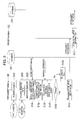
- the enrollment terminal 100 acquires a user ID from a user (step S101). For example, it can be performed by receiving input from an input device such as a keyboard or reading from a recording medium such as an IC card.
- the enrollment terminal 100 acquires biometric data from a user (step S102).
- this step may be set so as to acquire a different kind of biometric data (or fingerprints or veins of a different finger) from the previous one or to acquire the same kind of biometric data (or fingerprints or veins of the same finger).
- the enrollment terminal 100 generates a template from the acquired biometric data (step S103). This is attainable with publicly known technology such as performing by extracting a feature.
- the enrollment terminal 100 matches M1 pieces of dummy query samples acquired from the database 109 with the template to determine M1 pieces of scores (step S104).
- the enrollment terminal 100 estimates a template-specific impostor distribution g t () using the M1 pieces of scores (step S105). Specifically, g t () is estimated by the maximum likelihood estimation or the MAP estimation while assuming a model of a normal distribution, a beta-binomial distribution, or the like. Alternately, a template log-likelihood ratio log ⁇ f()/g t () ⁇ , which is a logarithmic to a ratio of the genuine distribution f() described later and g t () may be estimated by the logistic regression instead of the template-specific impostor distribution g t ().
- the enrollment terminal 100 obtains the KL distance between the genuine distribution 120 f() acquired from the database 109 and the template-specific impostor distribution g t () (step S106).
- the KL distance D(f ⁇ g t ) between the genuine distribution f() and the template-specific impostor distribution g t () can be represented by (MATH. 6).
- D f ⁇ g t ⁇ f s ⁇ log ⁇ f s g t s ⁇ ds
- This may be calculated using a histogram as the genuine distribution, or it may be estimated using a method described in Q. Wang, S. Kulkarni, and S. Verdu, "Divergence estimation for multidimensional densities via k-nearest-neighbor distances," IEEE International Symposium on Information Theory (ISIT2009), vol. 55, 2009 .
- the enrollment terminal 100 judges template quality by comparing the obtained KL distance with a threshold T (step S107). Specifically, it is judged as a high-quality template ("Sheep") when the KL distance is equal to or more than the threshold T while it is judged as a low-quality template (“Goat” or "Lamb”) when it is less than the threshold T.
- a threshold T Specifically, it is judged as a high-quality template (“Sheep") when the KL distance is equal to or more than the threshold T while it is judged as a low-quality template (“Goat” or "Lamb”) when it is less than the threshold T.
- the enrollment terminal 100 proceeds to the step S110 when it is judged as "Sheep”, and it proceeds to the step S109 otherwise (step S108).
- the enrollment terminal 100 returns to the step S102 when it proceeds to the step S109 (step S109).
- the enrollment terminal 100 transmits the enrollment information configured with the user ID, the template, the template-specific impostor distribution, and the KL distance to the server terminal 200 (step S110).
- the server terminal 200 receives the enrollment information and stores it in the database 210 (step S111).
- the client terminal 300 acquires a user ID from a user who requests authentication (a claimant) (step S201). In addition, the client terminal 300 acquires biometric data from the user (step S202).
- the client terminal 300 generates a query sample from acquired biometric data (step S203).
- the client terminal 300 transmits the acquired user ID and the generated query sample to the server terminal 200 (step S204).
- the server terminal 200 receives the user ID and the query sample which are transmitted, matches the received query sample with the M2 pieces of dummy templates acquired from the database 210 corresponding to the received user ID, and determines M2 pieces of scores (step S205).
- the server terminal 200 estimates a query sample-specific impostor distribution g q () using the determined M2 pieces of the scores (step S206).
- the estimation method is the same as the estimation method for the template-specific impostor distribution g t ().
- the server terminal 200 matches the received query sample with a template 222 linked to the received user ID and determines a score s J0 (step S207).
- the server terminal 200 determines a query sample log-likelihood ratio log ⁇ f(s J0 )/g q (s J0 ) ⁇ using the score s J0 determined in the step S207, the genuine distribution 250 f(), and the query sample-specific impostor distribution g q () (step S208).
- the query sample log-likelihood ratio log ⁇ f()/g q () ⁇ was estimated using the logistic regression in the step S206, the genuine distribution 250 f() is not required.
- the server terminal 200 determines a template log-likelihood ratio log ⁇ f(s J0 )/g t (s J0 )) using the score s J0 determined in the step S207, the genuine distribution 250 f(), and a template-specific impostor distribution 223 g t () linked to the received user ID (step S209).
- the server terminal 200 performs judgment on whether the claimant is genuine or not using the query sample log-likelihood ratio log ⁇ f(s J0 )/g q (s J0 ) ⁇ and the template log-likelihood ratio log ⁇ f(s J0 )/g t (s J0 ) ⁇ (step S210). Specifically, a smaller one of log ⁇ f(s J0 )/g q (s J0 ) ⁇ and log ⁇ f(s J0 )/g t (s J0 ) ⁇ is added to L min (J).
- L min J L min ⁇ J - 1 + min log f s J ⁇ 0 / g q s J ⁇ 0 , log f s J ⁇ 0 / g t s J ⁇ 0
- L min (J) is compared with two thresholds of a threshold A and a threshold B (A>B) and it is judged as being “genuine” when it is greater than the threshold A, as being an “impostor” when it is less than the threshold B, and as “undeterminable” when it is neither of them.
- the server terminal 200 transmits a user judgment result (genuine/impostor/undeterminable) to the client terminal 300 (step S211).
- the client terminal 300 judges as "authentication successful” when the user judgment result is genuine, judges as “authentication failed” when it is an impostor, and proceeds to the step S213 when it is undeterminable (step S212).
- the client terminal 300 judges as "authentication failed" when the number of times of input of biometric data J by the claimant has reached J max , and otherwise proceeds to the step S214 (step S213).
- the client terminal 300 proceeds to the step S202 when it proceeds to the step S214 (step S214).
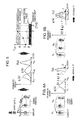
- Fig. 5 a conceptual drawing of authentication of the present embodiment is shown.
- transitions of L min (J) are shown for the two cases of "authentication successful” and "authentication failed”.
- the FAR can be suppressed to 1/e A or lower whatever query sample is input. Since this also holds even in the case where a query sample which tends to induce false accept most is input, the WAP can be suppressed to 1/e A Or lower. Also, as long as a template-specific impostor distribution g t () is used as an impostor distribution, the FAR can be suppressed to 1/e A or lower whatever template is enrolled. Since this also holds even in the case where a template which tends to induce false accept most is enrolled, the LAP can be suppressed to 1/e A or lower.
- FIGs. 6A and 6B conceptual drawings of enrollment of the present embodiment are shown.
- a case judged as a high-quality template (a "Sheep)
- a case judged as a low-quality template (a "Lamb” or a "Goat”).
- the KL distance is taken as a criterion for judgment of template quality.
- authentication process of the present embodiment by using a query sample-specific impostor distribution and a template-specific impostor distribution, high security against a "Wolf" and a "Lamb” can be realized.
- authentication is difficult to be successful for a "Lamb” even when any query samples are input and, therefore, a user himself who enrolled the "Lamb" is difficult to succeed in authentication. Namely, it raises a problem that the "Lamb" becomes a "Goat".
- a measure can be taken in the present embodiment by estimating a template-specific impostor distribution to detect a "Lamb" in advance and having re-enrolled in enrollment. Specifically, as described in A. Wald, "Sequential Analysis,” John Wiley and Sons, New York, 1947 , there is a relation of (MATH.
- the average number of times of input for the genuine can be suppressed to A/T. Therefore, a problem that the "Lamb” becomes a "Goat” can be prevented. As a result, effect that convenience enhances is obtained.
- a user is made to input a plurality of biometric data in enrollment, and these may be judged as high quality templates when the sum of KL distances determined for them exceeds a threshold, whereas these may be judged as low quality templates when it falls below.
- a user may be made to input the same biometric data several times in enrollment, the genuine distribution "f u " unique to the user may be estimated based on them, and the KL distance D(f u ⁇ g t ) between f u and a template-specific impostor distribution g t may be compared with a threshold T. Because a distance between a genuine distribution and an impostor distribution becomes small when the template is a "Goat” similar to the case of a "Lamb", there is a tendency for it to be judged as a low-quality template. In this way, registration of a "Goat” can be prevented by detecting a "Goat” and making it re-enrolled in enrollment. As a result, effect that convenience enhances is obtained.
- a score s th may be determined before enrollment such that probability that a score (a degree of similarity, here) in the genuine distribution is s th or greater is ⁇ as shown in Figs. 6A and 6B , and it may be judged as a high-quality template when the log-likelihood ratio log ⁇ f(s th )/g t (s th ) ⁇ is A or greater in enrollment, whereas it may be judged as a low-quality template when it falls below.
- the FRR may be determined by a numerical calculation similarly and a threshold for template quality may be set so that it becomes ⁇ .
- biometric data may be input in the order of greater KL distances in authentication.
- the present embodiment is applicable to arbitrary applications which perform user authentication based on biometric data. For example, it is applicable to information access control in a corporate network, identity verification in an internet banking system or an ATM, log-in to a Web site for members, individual authentication in admission to a protected area, log-in to a PC, or the like.
Landscapes
- Engineering & Computer Science (AREA)
- Human Computer Interaction (AREA)
- Physics & Mathematics (AREA)
- General Physics & Mathematics (AREA)
- Multimedia (AREA)
- Theoretical Computer Science (AREA)
- Health & Medical Sciences (AREA)
- Biomedical Technology (AREA)
- General Health & Medical Sciences (AREA)
- Computer Hardware Design (AREA)
- Computer Security & Cryptography (AREA)
- Computing Systems (AREA)
- General Engineering & Computer Science (AREA)
- Computer Networks & Wireless Communication (AREA)
- Signal Processing (AREA)
- Collating Specific Patterns (AREA)
Applications Claiming Priority (1)
| Application Number | Priority Date | Filing Date | Title |
|---|---|---|---|
| JP2011270823A JP2013122679A (ja) | 2011-12-12 | 2011-12-12 | 安全性の高い生体認証システム |
Publications (2)
| Publication Number | Publication Date |
|---|---|
| EP2605182A2 true EP2605182A2 (de) | 2013-06-19 |
| EP2605182A3 EP2605182A3 (de) | 2014-11-05 |
Family
ID=47630095
Family Applications (1)
| Application Number | Title | Priority Date | Filing Date |
|---|---|---|---|
| EP12195628.8A Withdrawn EP2605182A3 (de) | 2011-12-12 | 2012-12-05 | Hochsicheres biometrisches Authentifizierungssystem |
Country Status (4)
| Country | Link |
|---|---|
| US (1) | US20140007210A1 (de) |
| EP (1) | EP2605182A3 (de) |
| JP (1) | JP2013122679A (de) |
| CN (1) | CN103164646A (de) |
Families Citing this family (16)
| Publication number | Priority date | Publication date | Assignee | Title |
|---|---|---|---|---|
| US8626681B1 (en) * | 2011-01-04 | 2014-01-07 | Google Inc. | Training a probabilistic spelling checker from structured data |
| US9237232B1 (en) * | 2013-03-14 | 2016-01-12 | Verint Americas Inc. | Recording infrastructure having biometrics engine and analytics service |
| US9619633B1 (en) * | 2014-06-18 | 2017-04-11 | United Services Automobile Association (Usaa) | Systems and methods for upgrading authentication systems |
| US10726235B2 (en) * | 2014-12-01 | 2020-07-28 | Zkteco Co., Ltd. | System and method for acquiring multimodal biometric information |
| WO2016086343A1 (en) * | 2014-12-01 | 2016-06-09 | Xiamen Zkteco Biometric Identification Technology Co., Ltd | System and method for personal identification based on multimodal biometric information |
| US10162853B2 (en) | 2015-12-08 | 2018-12-25 | Rovi Guides, Inc. | Systems and methods for generating smart responses for natural language queries |
| US10432622B2 (en) | 2016-05-05 | 2019-10-01 | International Business Machines Corporation | Securing biometric data through template distribution |
| US10536464B2 (en) * | 2016-06-22 | 2020-01-14 | Intel Corporation | Secure and smart login engine |
| KR102623246B1 (ko) * | 2018-10-12 | 2024-01-11 | 삼성전자주식회사 | 전자 장치, 전자 장치의 제어 방법 및 컴퓨터 판독 가능 매체. |
| IL303147B2 (en) | 2019-06-20 | 2024-09-01 | Verint Americas Inc | Systems and methods for authentication and fraud detection |
| US11868453B2 (en) | 2019-11-07 | 2024-01-09 | Verint Americas Inc. | Systems and methods for customer authentication based on audio-of-interest |
| KR102409790B1 (ko) * | 2020-01-30 | 2022-06-17 | 주식회사 알체라 | 생체정보 분산관리 시스템 및 이를 이용한 생체인식 방법 |
| EP4148601A4 (de) | 2020-05-08 | 2023-06-28 | Fujitsu Limited | Biometrische authentifizierungsvorrichtung, biometrisches authentifizierungsverfahren und biometrisches authentifizierungsprogramm |
| JP7240360B2 (ja) * | 2020-07-15 | 2023-03-15 | ソフトバンク株式会社 | 情報処理システム、情報処理方法及び来訪者管理サーバ |
| US12437574B2 (en) | 2020-09-30 | 2025-10-07 | Nec Corporation | Threshold calculation system, threshold calculation method, and computer program |
| JP7792658B1 (ja) * | 2024-12-26 | 2025-12-26 | ミガロホールディングス株式会社 | 顔認証システム |
Family Cites Families (14)
| Publication number | Priority date | Publication date | Assignee | Title |
|---|---|---|---|---|
| US6020A (en) * | 1849-01-09 | Improvement in plows | ||
| US6076167A (en) * | 1996-12-04 | 2000-06-13 | Dew Engineering And Development Limited | Method and system for improving security in network applications |
| US6038334A (en) * | 1997-02-21 | 2000-03-14 | Dew Engineering And Development Limited | Method of gathering biometric information |
| EP0956818B1 (de) * | 1998-05-11 | 2004-11-24 | Citicorp Development Center, Inc. | System und Verfahren zur biometrischen Authentifizierung eines Benutzers mit einer Chipkarte |
| US7466846B2 (en) * | 2002-09-25 | 2008-12-16 | The Hong Kong Polytechnic University | Method for analyzing a palm print for the identification of an individual using gabor analysis |
| US20060146062A1 (en) * | 2004-12-30 | 2006-07-06 | Samsung Electronics Co., Ltd. | Method and apparatus for constructing classifiers based on face texture information and method and apparatus for recognizing face using statistical features of face texture information |
| US8458465B1 (en) * | 2005-11-16 | 2013-06-04 | AT&T Intellectual Property II, L. P. | Biometric authentication |
| JP5012092B2 (ja) * | 2007-03-02 | 2012-08-29 | 富士通株式会社 | 生体認証装置、生体認証プログラムおよび複合型生体認証方法 |
| JP4951415B2 (ja) * | 2007-05-31 | 2012-06-13 | 株式会社日立製作所 | 生体認証システム |
| CN101520785B (zh) * | 2008-02-29 | 2012-09-05 | 富士通株式会社 | 信息检索方法和系统 |
| JP5121681B2 (ja) * | 2008-04-30 | 2013-01-16 | 株式会社日立製作所 | 生体認証システム、認証クライアント端末、及び生体認証方法 |
| US8521473B2 (en) * | 2009-06-11 | 2013-08-27 | The Trustees Of Columbia University In The City Of New York | Method of adaptive data acquisition |
| JP5641059B2 (ja) * | 2010-12-29 | 2014-12-17 | 富士通株式会社 | 生体情報登録装置及び生体情報登録方法 |
| US8526682B2 (en) * | 2011-01-20 | 2013-09-03 | Daon Holdings Limited | Methods and systems of authentication |
-
2011
- 2011-12-12 JP JP2011270823A patent/JP2013122679A/ja active Pending
-
2012
- 2012-12-05 EP EP12195628.8A patent/EP2605182A3/de not_active Withdrawn
- 2012-12-06 CN CN2012105213467A patent/CN103164646A/zh active Pending
- 2012-12-06 US US13/706,854 patent/US20140007210A1/en not_active Abandoned
Non-Patent Citations (4)
| Title |
|---|
| A. MONDEN: "Secure Biometric Authentication against ''Wolf Attack'' based on Accidental Coincidence Probability", SYMPOSIUM ON CRYPTOGRAPHY AND INFORMATION SECURITY IN 2010, 2010 |
| A. WALD: "Sequential Analysis", 1947, JOHN WILEY AND SONS |
| K. TAKAHASHI; M. MIMURA; Y ISOBE; Y SETO: "A Secure and User-Friendly Multi-Modal Biometric System", PROC. SPIE, vol. 5404, 2004, pages 12 - 19, XP001509147 |
| Q. WANG; S. KULKARNI; S. VERDU: "Divergence estimation for multidimensional densities via k-nearest-neighbor distances", IEEE INTERNATIONAL SYMPOSIUM ON INFORMATION THEORY (ISIT2009, vol. 55, 2009, XP011256135 |
Also Published As
| Publication number | Publication date |
|---|---|
| EP2605182A3 (de) | 2014-11-05 |
| JP2013122679A (ja) | 2013-06-20 |
| CN103164646A (zh) | 2013-06-19 |
| US20140007210A1 (en) | 2014-01-02 |
Similar Documents
| Publication | Publication Date | Title |
|---|---|---|
| EP2605182A2 (de) | Hochsicheres biometrisches Authentifizierungssystem | |
| US9049191B2 (en) | Biometric authentication system, communication terminal device, biometric authentication device, and biometric authentication method | |
| CN101571920B (zh) | 生物体认证系统、认证客户机终端以及生物体认证方法 | |
| CN101478401B (zh) | 一种基于击键特征识别的认证方法及系统 | |
| US9871783B2 (en) | Universal enrollment using biometric PKI | |
| US9122913B2 (en) | Method for logging a user in to a mobile device | |
| EP2279483A2 (de) | Biometrische identifizierung und bestätigung | |
| Xi et al. | Correlation keystroke verification scheme for user access control in cloud computing environment | |
| US20120117633A1 (en) | Enhanced Security For Pervasive Devices Using A Weighting System | |
| Inuma et al. | Theoretical framework for constructing matching algorithms in biometric authentication systems | |
| JP2002230553A (ja) | 個人認証装置 | |
| JP2012234235A (ja) | 生体認証システムおよび生体認証方法 | |
| Nair et al. | An approach to improve the match-on-card fingerprint authentication system security | |
| US12216748B2 (en) | Authentication device, authentication method, and recording medium | |
| KR101006861B1 (ko) | 지문인증 장치의 인증방법 | |
| Murakami et al. | Accuracy improvement with high convenience in biometric identification using multihypothesis sequential probability ratio test | |
| CN107615299A (zh) | 用于评估指纹模板的方法和系统 | |
| KR100701583B1 (ko) | 타인수락율을 감소시키기 위한 생체정보 인증방법 | |
| KR100778891B1 (ko) | 생체정보 인증시의 매칭스코어 임계값 동적 변경 방법 및장치 | |
| Akdoğan et al. | Secure key agreement using pure biometrics | |
| Moi et al. | Error correction on iris biometric template using reed solomon codes | |
| JPH11306352A (ja) | 生体的特徴の認証精度推定方法及び装置、記録媒体 | |
| CN104734858A (zh) | 对数据进行识别的防锁死的usb身份认证系统及方法 | |
| US12406044B2 (en) | Method and system including fingerprint and image scanning for authentication | |
| Kim et al. | A scheme for predicting recognition performance by using confidence intervals |
Legal Events
| Date | Code | Title | Description |
|---|---|---|---|
| PUAI | Public reference made under article 153(3) epc to a published international application that has entered the european phase |
Free format text: ORIGINAL CODE: 0009012 |
|
| 17P | Request for examination filed |
Effective date: 20121220 |
|
| AK | Designated contracting states |
Kind code of ref document: A2 Designated state(s): AL AT BE BG CH CY CZ DE DK EE ES FI FR GB GR HR HU IE IS IT LI LT LU LV MC MK MT NL NO PL PT RO RS SE SI SK SM TR |
|
| AX | Request for extension of the european patent |
Extension state: BA ME |
|
| PUAL | Search report despatched |
Free format text: ORIGINAL CODE: 0009013 |
|
| AK | Designated contracting states |
Kind code of ref document: A3 Designated state(s): AL AT BE BG CH CY CZ DE DK EE ES FI FR GB GR HR HU IE IS IT LI LT LU LV MC MK MT NL NO PL PT RO RS SE SI SK SM TR |
|
| AX | Request for extension of the european patent |
Extension state: BA ME |
|
| RIC1 | Information provided on ipc code assigned before grant |
Ipc: G06K 9/00 20060101AFI20140926BHEP Ipc: G06K 9/62 20060101ALI20140926BHEP |
|
| STAA | Information on the status of an ep patent application or granted ep patent |
Free format text: STATUS: THE APPLICATION IS DEEMED TO BE WITHDRAWN |
|
| 18D | Application deemed to be withdrawn |
Effective date: 20150507 |