EP2606590B1 - Sélection de canal pour une agrégation de porteuses - Google Patents
Sélection de canal pour une agrégation de porteuses Download PDFInfo
- Publication number
- EP2606590B1 EP2606590B1 EP11752145.0A EP11752145A EP2606590B1 EP 2606590 B1 EP2606590 B1 EP 2606590B1 EP 11752145 A EP11752145 A EP 11752145A EP 2606590 B1 EP2606590 B1 EP 2606590B1
- Authority
- EP
- European Patent Office
- Prior art keywords
- component carrier
- determining
- user equipment
- primary component
- bits
- Prior art date
- Legal status (The legal status is an assumption and is not a legal conclusion. Google has not performed a legal analysis and makes no representation as to the accuracy of the status listed.)
- Active
Links
Images


Classifications
-
- H—ELECTRICITY
- H04—ELECTRIC COMMUNICATION TECHNIQUE
- H04L—TRANSMISSION OF DIGITAL INFORMATION, e.g. TELEGRAPHIC COMMUNICATION
- H04L5/00—Arrangements affording multiple use of the transmission path
-
- H—ELECTRICITY
- H04—ELECTRIC COMMUNICATION TECHNIQUE
- H04L—TRANSMISSION OF DIGITAL INFORMATION, e.g. TELEGRAPHIC COMMUNICATION
- H04L1/00—Arrangements for detecting or preventing errors in the information received
- H04L1/004—Arrangements for detecting or preventing errors in the information received by using forward error control
-
- H—ELECTRICITY
- H04—ELECTRIC COMMUNICATION TECHNIQUE
- H04L—TRANSMISSION OF DIGITAL INFORMATION, e.g. TELEGRAPHIC COMMUNICATION
- H04L1/00—Arrangements for detecting or preventing errors in the information received
- H04L1/12—Arrangements for detecting or preventing errors in the information received by using return channel
- H04L1/16—Arrangements for detecting or preventing errors in the information received by using return channel in which the return channel carries supervisory signals, e.g. repetition request signals
- H04L1/18—Automatic repetition systems, e.g. Van Duuren systems
-
- H—ELECTRICITY
- H04—ELECTRIC COMMUNICATION TECHNIQUE
- H04L—TRANSMISSION OF DIGITAL INFORMATION, e.g. TELEGRAPHIC COMMUNICATION
- H04L5/00—Arrangements affording multiple use of the transmission path
- H04L5/0001—Arrangements for dividing the transmission path
- H04L5/0003—Two-dimensional division
- H04L5/0005—Time-frequency
- H04L5/0007—Time-frequency the frequencies being orthogonal, e.g. OFDM(A) or DMT
- H04L5/001—Time-frequency the frequencies being orthogonal, e.g. OFDM(A) or DMT the frequencies being arranged in component carriers
-
- H—ELECTRICITY
- H04—ELECTRIC COMMUNICATION TECHNIQUE
- H04L—TRANSMISSION OF DIGITAL INFORMATION, e.g. TELEGRAPHIC COMMUNICATION
- H04L5/00—Arrangements affording multiple use of the transmission path
- H04L5/0001—Arrangements for dividing the transmission path
- H04L5/0028—Variable division
-
- H—ELECTRICITY
- H04—ELECTRIC COMMUNICATION TECHNIQUE
- H04L—TRANSMISSION OF DIGITAL INFORMATION, e.g. TELEGRAPHIC COMMUNICATION
- H04L5/00—Arrangements affording multiple use of the transmission path
- H04L5/003—Arrangements for allocating sub-channels of the transmission path
- H04L5/0037—Inter-user or inter-terminal allocation
-
- H—ELECTRICITY
- H04—ELECTRIC COMMUNICATION TECHNIQUE
- H04L—TRANSMISSION OF DIGITAL INFORMATION, e.g. TELEGRAPHIC COMMUNICATION
- H04L5/00—Arrangements affording multiple use of the transmission path
- H04L5/003—Arrangements for allocating sub-channels of the transmission path
- H04L5/0044—Allocation of payload; Allocation of data channels, e.g. PDSCH or PUSCH
-
- H—ELECTRICITY
- H04—ELECTRIC COMMUNICATION TECHNIQUE
- H04L—TRANSMISSION OF DIGITAL INFORMATION, e.g. TELEGRAPHIC COMMUNICATION
- H04L5/00—Arrangements affording multiple use of the transmission path
- H04L5/003—Arrangements for allocating sub-channels of the transmission path
- H04L5/0053—Allocation of signalling, i.e. of overhead other than pilot signals
-
- H—ELECTRICITY
- H04—ELECTRIC COMMUNICATION TECHNIQUE
- H04L—TRANSMISSION OF DIGITAL INFORMATION, e.g. TELEGRAPHIC COMMUNICATION
- H04L5/00—Arrangements affording multiple use of the transmission path
- H04L5/003—Arrangements for allocating sub-channels of the transmission path
- H04L5/0053—Allocation of signalling, i.e. of overhead other than pilot signals
- H04L5/0055—Physical resource allocation for ACK/NACK
-
- H—ELECTRICITY
- H04—ELECTRIC COMMUNICATION TECHNIQUE
- H04L—TRANSMISSION OF DIGITAL INFORMATION, e.g. TELEGRAPHIC COMMUNICATION
- H04L5/00—Arrangements affording multiple use of the transmission path
- H04L5/003—Arrangements for allocating sub-channels of the transmission path
- H04L5/0078—Timing of allocation
- H04L5/0087—Timing of allocation when data requirements change
-
- H—ELECTRICITY
- H04—ELECTRIC COMMUNICATION TECHNIQUE
- H04L—TRANSMISSION OF DIGITAL INFORMATION, e.g. TELEGRAPHIC COMMUNICATION
- H04L5/00—Arrangements affording multiple use of the transmission path
- H04L5/0091—Signalling for the administration of the divided path, e.g. signalling of configuration information
- H04L5/0094—Indication of how sub-channels of the path are allocated
-
- H—ELECTRICITY
- H04—ELECTRIC COMMUNICATION TECHNIQUE
- H04W—WIRELESS COMMUNICATION NETWORKS
- H04W72/00—Local resource management
- H04W72/02—Selection of wireless resources by user or terminal
Definitions
- Acknowledgments including affirmative acknowledgments (ACK) and negative acknowledgments (NACK), can be transmitted on a physical uplink control channel (PUCCH).
- PUCCH physical uplink control channel
- Such acknowledgments relate to one or more codeword transmitted on a physical downlink shared channel (PDSCH) in the case of carrier aggregation.
- PDSCH physical downlink shared channel
- Certain embodiments of the present invention relate to channel selection when carrier aggregation is used.
- LTE release 8 time division duplexing
- DL downlink
- UL uplink
- UE user equipment
- ACK/NACK signaling for multiple downlink subframes can be made using either ACK/NACK bundling or ACK/NACK multiplexing mode.
- the ACK/NACK bits can be first bundled in the time domain to get one bit, or 2 bits with multiple codeword (MCW) downlink transmission. Then the ACK/NACK bits can be modulated and transmitted on the physical uplink control channel corresponding to the last detected downlink grant.
- MCW multiple codeword
- channel selection can be used.
- Channel selection enables transmission of 2-4 bits via a single physical uplink control channel.
- the selected channel and the QPSK constellation point used can be determined based on the ACK/NACK/DTX states for the multiple downlink subframes as shown in Table 10.1-2, 10.1-3, and 10.1-4 of 3GPP TS36.213 v850.
- ERICSSON ET AL "PUCCH design for carrier aggregation", 3GPP DRAFT; R1-101730, 3RD GENERATION PARTNERSHIP PROJECT (3GPP), MOBILE COMPETENCE CENTRE ; 650, ROUTE DES LUCIOLES ; F-06921 SOPHIA-ANTIPOLIS CEDEX ; FRANCE, (20100406), vol. RAN WG1, no. Beijing, china; 20100412, XP050419152 [I] 1-28 discloses a PUCCH transmission mode capable of supporting the required number of feedback bits.
- ALCATEL-LUCENT ET AL "PUCCH A/N channel design in LTE-A" relates to techniques for mapping ACK/NACK bits to PUCCH resources for a carrier aggregation scenario.
- Certain embodiments of the present invention provide detailed channel selection possibilities applicable to, for example, LTE-Advanced channel selection.
- At least solutions can be employed: a solution in the case of implicit resource allocation and a solution in the case of hybrid resource allocation.
- the solution in the case of hybrid resource allocation can combine channel selection and enhanced channel selection in a single mapping table. It should be noted that explicit resource allocation can also be supported with both solutions.
- Arranging channel selection in carrier aggregation can be performed various ways.
- a straightforward application of TDD channel selection is one option.
- a Rel-8 TDD solution is applied such that TDD subframes are counted as component carriers.
- existing Rel-8 TDD based channel selection design cannot provide full separation between ACK and NACK in all cases.
- the issue of full separation between ACK and NACK in such cases can be addressed by means of a channel selection table.
- the channel selection table may be sub-optimal in the case of primary component carrier (PCC) only scheduling.
- Primary component carrier only scheduling may refer to the situation in which only a primary component carrier has been scheduled.
- the Rel-8 TDD-based solution may have a separate mapping table for the cases of two, three, and four bits. It should be noted that there can be timing uncertainty involved in component carrier (re-)configuration, particularly in the case of physical uplink control channel selection. In order to avoid this timing uncertainty, the same multiplexing mapping table can be applied regardless of the number of downlink component carriers (CCs) configured.
- CCs downlink component carriers
- Table 1 illustrates channel selection according to Rel-8/9 TDD.
- Certain embodiments of the present invention may differ from the straightforward application of TDD channel selection. For example, there may be two different ACK/NACK signaling scenarios that are addressed and two different solutions for the two different scenarios.
- downlink scheduling can take place from both primary component carrier and secondary component carrier (SCC).
- SCC secondary component carrier
- the solution to be applied can be configured in a user-equipment-specific manner.
- both solutions for the two situations can be utilized as a combination, and/or as separate channel selection solutions.
- Table 2 An embodiment of a solution for the special case is shown in Table 2, above. This is just one example, as it is possible to rotate the data constellations within the resource ( e.g ., h1).
- This embodiment is just one example of a solution for the special case in which carrier-indicator-field-assisted cross-component-carrier scheduling may take place from primary component carrier only.
- the solution in this example, can be characterized as follows. Bundling is applied per component carrier for the ACK/NACKs corresponding to different spatial codewords. Thus, for example, where there are 2 spatial codewords on a component carrier, a logical AND operation is performed to obtain the value of bundled ACK/NACK.
- a single design is applicable to 1-4 bits.
- the selected channel (h#) is selected among the component carriers with ACK ('A') state. If ACK is signaled for component carriers #2 and #3, the physical uplink control channel can be selected among h2 and h3. In the example of Table 2, h3 is shown as selected. ACK being signaled for component carriers #2 and #3 is just one example.
- a special signaling state is reserved to NACK or DTX, for example [N, N/D, N/D, ...], helping to distinguish between NACK and DTX on the primary component carrier.
- NACK or DTX for example [N, N/D, N/D, ...]
- DTX discontinuous transmission
- an evolved node B makes the physical downlink shared channel scheduling for the primary component carrier only, then it has only three signaling states to be considered (1) DTX, (2) [N, D, D, D] and (3) [A, D, D, D]. Taking the proposed constellation points into account, for the eNB this reservation can provide operation similar to Rel-8 in the case of primary component carrier only scheduling.
- Table 3 An embodiment of a solution for a typical carrier aggregation scenario is shown in Table 3, above. Like the previous example embodiment, this embodiment is also simply an example. It is possible to rotate the data constellations within the resource (e.g., h1). Furthermore, there are no problems with changing the constellation and channel selection entries within the explicitly configured multi-A/N resource (h1, h2, ). Although this channel selection table has been optimized for hybrid resource allocation, it is always possible to use this channel selection table with explicit resource allocation.
- a physical uplink control channel Format 1a/1b resource according to Rel-8 is applied in the case of primary component carrier only scheduling.
- Channel and constellation point selection among pre-configured physical uplink control channel format 1b resources takes place in the case where the user equipment receives a scheduling grant corresponding to at least one secondary component carrier.
- Spatial bundling per component carrier is applied only on a per need basis.
- spatial bundling is applied according to higher layer configuration or other pre-definition.
- This example solution combines channel selection and enhanced channel selection in a single table. More specifically, this example solution utilizes ordinary channel selection when there are up to 2 secondary component carriers (or 3 bits) and enhanced channel selection when there are 3 secondary component carriers (or 4 bits).
- a common feature of the two solutions is that they are based on a single design, the single design being applicable to 1-4 bits. Optimization criteria, however, differ between the two scenarios.
- the solution illustrated in Table 2 has been optimized for carrier-indicator-field-based cross-component-carrier scheduling from the primary component carrier.
- the solution can also be applied with other implicit resource allocation schemes as well.
- the solution can be applied with explicit resource allocation. Thus, this solution may be fully compatible with the implicit resource allocation.
- a 3-bit carrier indicator field can be included in a resource allocation grant.
- This solution can support both hybrid and explicit resource allocation, and consequently physical uplink control channel overhead can be minimized.
- a Rel-8/9 implicit resource allocation scheme can be applied for physical uplink control channel format 1a/1b resources corresponding to the primary component carrier and scheduled via the primary component carrier.
- Other physical uplink control channel format 1b resources, if needed, can be reserved explicitly via higher layer signaling.
- this example solution supports Rel-8/9 type of signaling in the case of primary component carrier only scheduling.
- Increased physical uplink control channel overhead can be experienced with explicit RA, since that multi-A/N resources are reserved semi-statically to those UEs configured for carrier aggregation. It is noted that resource reservation issue is relaxed significantly if multi-A/N resource is used only in the case A/N signalling relates to one or more SCCs (PCC only scheduling utilizes Rel-8 A/N resource on the PUCCH). This will allow sharing the same multi-A/N resource among multiple UEs on PUCCH.
- this solution supports 2-bit ACK/NACK feedback in the case of primary component carrier only scheduling.
- this solution has, in this example, built in support for various carrier aggregation combinations with and w/o spatial bundling (2+1, 2+1+1, 2+2, 1+1+1+1 ACK/NACK bits per component carrier).
- the expression, 2+1+1 corresponds to the case with 3-component carriers: one component carrier with 2-bit ACK/NACK, and 2 component carrier with 1-bit ACK/NACK.
- the solution permits extension to 36 states on Multi-ACK/NACK resource to be made using three resources. Furthermore, enhanced DTX-to-NACK separation can be provided using this solution, although such enhanced separation may require a separate mapping table.
- a multi-ACK/NACK resource on the physical uplink control channel is used only in the case ACK/NACK signaling relates to one or more secondary component carriers.
- a single ACK/NACK multiplexing mapping table is applied regardless of the number of downlink component carriers configured.
- Advantages of certain embodiments of the present invention include the fact that there may be small additional complexity on top of Rel-8 operation, that the combined solution may support both carrier aggregation scenarios, and physical uplink control channel overhead can be minimized in all scenarios.
- Figure 1 illustrates a method according to certain embodiments of the present invention.
- the method includes determining 110, for a plurality of user equipment, whether primary component carrier only scheduling has been used. If an eNB makes primary component carrier and secondary component carrier scheduling for a user equipment, but the resource allocation grant corresponding to the secondary component carrier fails, then the user equipment can consider this scheduling as primary component carrier only scheduling. Thus, there can be one determining at the eNB and one another determining at the UE. Moreover, the eNB can make the scheduling decision ( i.e., whether to schedule physical downlink shared channel on the primary component carrier and/or one or more secondary component carrier). This scheduling decision can be signaled to the user equipment via the physical downlink control channel, although signaling is subject to errors. Then, the user equipment can feed back the ACK/NACK/DTX corresponding to the received physical downlink shared channels by means of the proposed channel selection tables.
- the scheduling decision i.e., whether to schedule physical downlink shared channel on the primary component carrier and/or one or more
- the method also includes selecting 120 channels for the plurality of user equipment on a per user equipment basis.
- the selection of the channels is performed on a per user equipment basis depending on whether the user equipment under consideration has received primary component carrier only scheduling.
- the method can further include communicating 130 one to four bits by selecting at least one channel and the constellation point according to at least one pre-determined mapping table. This aspect of the method can be performed regardless of whether the user equipment under consideration has received primary component carrier only scheduling.
- the method can further include combining 135 channel selection and enhanced channel selection in a single mapping table.
- the method can include applying 140 bundling per component carrier for the acknowledgments (broadly including both ACK and NACK as types of acknowledgments) corresponding to different spatial codewords.
- the method can include switching off 145 bundling per component carrier for the acknowledgments (broadly including both ACK and NACK as types of acknowledgments) corresponding to different spatial codewords.
- the method can include selecting 150 a channel for the user equipment under consideration from among component carriers having an affirmative acknowledgment state.
- the method can include reserving 160 a special signaling state to distinguish between a negative acknowledgment and a positive acknowledgement on the primary component carrier.
- the method can include determining 170 whether at least one secondary component carrier has been scheduled.
- the method can include selecting 180 channel and constellation point among preconfigured physical uplink control channel format 1b resources. It should be noted that primary component carrier only scheduling from a secondary component carrier can create the same functionality, as explained above with reference to Table 3.
- the method can include spatial bundling 190 per component carrier only on a per need basis.
- the method illustrated in Figure 1 may be variously implemented.
- the method of Figure 1 may be implemented completely in hardware.
- a computer readable medium such as a storage medium or non-transitory medium, can be encoded with instructions that, when executed in hardware, perform the method of Figure 1 , or some part of the method shown there. Other steps not illustrated in Figure 1 may also be performed by the execution of the instructions.
- the method of Figure 1 may be performed by a user equipment or by some other network element.
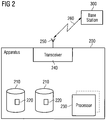
- FIG. 2 illustrates an apparatus according to certain embodiments of the present invention.
- the apparatus 200 of Figure 2 includes at least one memory 210, including computer program code 220.
- the apparatus 200 may be, for example, a user equipment, such as a mobile phone, personal digital assistant, or personal computer. There is no requirement that the apparatus be this specific network element, and other network elements in the communication system may perform the same functions or a distributed portion of the functions.
- the memory 210 may be any storage device, such as random access memory (RAM), read only memory (ROM), hard disk drive, or electronically programmable ROM (EPROM).
- the computer program code 220 may be a any suitable set of computer program instructions. For example, the computer instructions may be in a compiled format or in an interpreted format.
- the apparatus 200 may also include at least one processor 230.
- the processor 230 may be any suitable processing device, such as a controller, a central processing unit (CPU), or an application specific integrated circuit (ASIC).
- the processor 230 may be as a blade in a rack-mounted computer system in one embodiment.
- the at least one memory 210 and the computer program code 220 can be configured to, with the at least one processor 230, cause the apparatus 200 at least to determine, for a plurality of user equipment, whether primary component carrier only scheduling has been used and select channels for the plurality of user equipment on a per user equipment basis. Selection of the channels can be performed on the per user equipment basis depending on whether the user equipment under consideration has received primary component carrier only scheduling.
- the at least one memory 210 and the computer program code 220 can be configured to, with the at least one processor 230, cause the apparatus 200 at least to communicate one to four bits by selecting at least one channel and the constellation point according to at least one pre-determined mapping table.
- the at least one memory 210 and the computer program code 220 can be configured to, with the at least one processor 230, cause the apparatus 200 at least to combine channel selection and enhanced channel selection in a single mapping table.
- the at least one memory 210 and the computer program code 220 can be configured to, with the at least one processor 230, cause the apparatus 200 at least to apply bundling per component carrier for the acknowledgments (broadly including both ACK and NACK as types of acknowledgments) corresponding to different spatial codewords.
- the at least one memory 210 and the computer program code 220 can be configured to, with the at least one processor 230, cause the apparatus 200 at least to switch off bundling per component carrier for the acknowledgments (broadly including both ACK and NACK as types of acknowledgments) corresponding to different spatial codewords
- the at least one memory 210 and the computer program code 220 can be configured to, with the at least one processor 230, cause the apparatus 200 at least to select a channel for the user equipment under consideration from among component carriers having an affirmative acknowledgment state.
- the at least one memory 210 and the computer program code 220 can be configured to, with the at least one processor 230, cause the apparatus 200 at least to reserve a special signaling state to distinguish between a negative acknowledgment and a positive acknowledgment on the primary component carrier.
- the at least one memory 210 and the computer program code 220 can be configured to, with the at least one processor 230, cause the apparatus 200 at least to determine whether at least one secondary component carrier has been scheduled.
- the at least one memory 210 and the computer program code 220 can be configured to, with the at least one processor 230, cause the apparatus 200 at least to select channel and constellation point among preconfigured physical uplink control channel format 1b resources.
- the at least one memory 210 and the computer program code 220 can be configured to, with the at least one processor 230, cause the apparatus 200 at least to spatial bundle per component carrier only on a per need basis.
- the apparatus 200 may also include other features, such as transceiver 240 and an antenna 250.
- the antenna 250 may be configured to communicate with a base station 300 over a wireless link 260.
- the base station 300 such as a base station, enhanced Node B (eNB), or other access point, may have a similar construction to the apparatus 200. Additionally, the base station 300 may also be configured to communicate with a core network, not shown.
- eNB enhanced Node B
- Figure 3 illustrates a method according to certain embodiments of the present invention.
- a method can include, at 310, determining that channel selection and constellation selection are in use or to be used.
- the method can also include, at 320, determining that a single mapping table design for channel selection for up to four bits is in use or to be used, wherein the mapping table for n + 1 acknowledgment, negative acknowledgment and/or discontinuous transmission bits includes the entries in the table for n acknowledgment, negative acknowledgment and/or discontinuous transmission bits, where n is an integer number of bits from 1 to 3.
- the method can further include, at 330, selecting a communication resource from resource entries corresponding to acknowledgment and negative acknowledgment states based on the determining that channel selection and constellation selection are in use or to be used and the determining that the single mapping table design for channel selection for up to four bits is in use or to be used.
- the method can additionally include, at 340, determining that carrier aggregation is in use or to be used.
- the selecting the communication resource can be further based on the determining that carrier aggregation is in use or to be used.
- the method can also include, at 350, determining that spatial bundling of acknowledgement and negative acknowledgement bits for the first and second codeword is in use or to be used.
- the selecting the communication resource can be further based on the determining that carrier aggregation is in use or to be used.
- the method can further include, at 360, determining, for a plurality of user equipment, whether primary component carrier only scheduling has been used, and, at 365, selecting channels for the plurality of user equipment on a per user equipment basis.
- the selection of the channels can be performed on the per user equipment basis depending on whether the user equipment under consideration has received primary component carrier only scheduling.
- the method can include, at 370, reserving a special signaling state to distinguish between a negative acknowledgment and discontinuous transmission on the primary component carrier.
- the method can include, at 380, determining whether at least one secondary component carrier has been scheduled.
- the method can additionally include, at 390, spatial bundling of acknowledgement and negative acknowledgement bits for the first and second codeword per component carrier only on a per need basis.
- the method illustrated in Figure 3 may be variously implemented.
- the method of Figure 3 may be implemented completely in hardware.
- a computer readable medium such as a storage medium or non-transitory medium, can be encoded with instructions that, when executed in hardware, perform the method of Figure 3 , or some part of the method shown there. Other steps not illustrated in Figure 3 may also be performed by the execution of the instructions.
- the method of Figure 3 may be performed by a user equipment or by some other network element.
- the method of Figure 3 may be performed by the apparatus 200 illustrated in Figure 2 .
Landscapes
- Engineering & Computer Science (AREA)
- Signal Processing (AREA)
- Computer Networks & Wireless Communication (AREA)
- Mobile Radio Communication Systems (AREA)
- Digital Transmission Methods That Use Modulated Carrier Waves (AREA)
- Detection And Prevention Of Errors In Transmission (AREA)
Claims (21)
- Procédé, caractérisé en ce que le procédé comprend :la détermination qu'une sélection de canal et qu'une sélection de constellation sont en cours d'utilisation ou à utiliser (310) ;la fourniture d'une seule conception de table de mappage destinée à une utilisation dans une sélection de canal pour jusqu'à quatre bits (320), dans lequel la table de mappage est destinée à n + 1 bits d'accusé de réception, d'accusé de réception négatif et/ou de transmission discontinue, et dans lequel des entrées pour n bits d'accusé de réception, d'accusé de réception négatif et/ou de transmission discontinue sont comprises dans la table de mappage pour n + 1 bits d'accusé de réception, d'accusé de réception négatif et/ou de transmission discontinue, où n est un nombre entier de bits allant de 1 à 3 ; etla sélection d'une ressource de communication (330) à partir d'entrées de ressources comprises dans la conception de table de mappage correspondant à des états d'accusé de réception, d'accusé de réception négatif et/ou de transmission discontinue pour une porteuse composante primaire et jusqu'à trois porteuses composantes secondaires sur la base de la détermination qu'une sélection de canal et qu'une sélection de constellation sont en cours d'utilisation ou à utiliser, et la fourniture de la seule conception de table de mappage destinée à une utilisation dans une sélection de canal pour jusqu'à quatre bits.
- Procédé selon la revendication 1, comprenant en outre :
la détermination qu'une agrégation de porteuses est en cours d'utilisation ou à utiliser (340), dans lequel la sélection de la ressource de communication (330) est basée en outre sur la détermination que l'agrégation de porteuses est en cours d'utilisation ou à utiliser. - Procédé selon la revendication 1 ou la revendication 2, comprenant en outre :
la détermination qu'un groupement spatial de bits d'accusé de réception et d'accusé de réception négatif pour un premier et un second mot codé est en cours d'utilisation ou à utiliser (350), dans lequel la sélection de la ressource de communication est basée en outre sur la détermination qu'une agrégation de porteuses est en cours d'utilisation ou à utiliser, et sur la détermination qu'un groupement spatial de bits d'accusé de réception et d'accusé de réception négatif pour un premier et un second mot codé est en cours d'utilisation. - Procédé selon l'une quelconque des revendications 1 à 3, comprenant en outre :la détermination, pour une pluralité d'équipements utilisateur, pour savoir si uniquement une planification de porteuse composante primaire a été utilisée (110) ; etla sélection de canaux pour la pluralité d'équipements utilisateur sur une base par équipement utilisateur (120),dans lequel la sélection des canaux est exécutée sur la base par équipement utilisateur en fonction de si l'équipement utilisateur considéré a reçu uniquement une planification de porteuse composante primaire.
- Procédé selon la revendication 4, comprenant en outre :
lorsque l'équipement utilisateur considéré a reçu uniquement une planification de porteuse composante primaire, réserver un état de signalisation spécial (160) pour faire la distinction entre un accusé de réception négatif et une transmission discontinue sur la porteuse composante primaire. - Procédé selon la revendication 4 ou la revendication 5, comprenant en outre :
lorsque l'équipement utilisateur considéré n'a pas reçu uniquement une planification de porteuse composante primaire, déterminer si au moins une porteuse composante secondaire a été planifiée (170). - Procédé selon l'une quelconque des revendications 4 à 6, comprenant en outre :
lorsque l'équipement utilisateur considéré n'a pas reçu uniquement une planification de porteuse composante primaire à partir de la porteuse composante primaire, effectuer un groupement spatial de bits d'accusé de réception et d'accusé de réception négatif pour le premier et le second mot codé par porteuse composante uniquement en fonction des besoins. - Support lisible par ordinateur non transitoire codé avec des instructions qui, lorsqu'elles sont exécutées dans du matériel, exécutent un processus, caractérisé en ce que le processus comprend :la détermination qu'une sélection de canal et qu'une sélection de constellation sont en cours d'utilisation ou à utiliser (310) ;la fourniture d'une seule conception de table de mappage destinée à une utilisation dans une sélection de canal pour jusqu'à quatre bits (320), dans lequel la table de mappage est destinée à n + 1 bits d'accusé de réception, d'accusé de réception négatif et/ou de transmission discontinue, et dans lequel des entrées pour n bits d'accusé de réception, d'accusé de réception négatif et/ou de transmission discontinue sont comprises dans la table de mappage pour n + 1 bits d'accusé de réception, d'accusé de réception négatif et/ou de transmission discontinue, où n est un nombre entier de bits allant de 1 à 3 ; etla sélection d'une ressource de communication (330) à partir d'entrées de ressources comprises dans la conception de table de mappage correspondant à des états d'accusé de réception, d'accusé de réception négatif et/ou de transmission discontinue pour une porteuse composante primaire et jusqu'à trois porteuses composantes secondaires sur la base de la détermination qu'une sélection de canal et qu'une sélection de constellation sont en cours d'utilisation ou à utiliser, et la fourniture de la seule conception de table de mappage destinée à une utilisation dans une sélection de canal pour jusqu'à quatre bits.
- Support lisible par ordinateur non transitoire selon la revendication 8, le processus comprenant en outre :
la détermination qu'une agrégation de porteuses est en cours d'utilisation ou à utiliser (340), dans lequel la sélection de la ressource de communication (330) est basée en outre sur la détermination que l'agrégation de porteuses est en cours d'utilisation ou à utiliser. - Support lisible par ordinateur non transitoire selon la revendication 8 ou la revendication 9, le processus comprenant en outre :
la détermination qu'un groupement spatial de bits d'accusé de réception et d'accusé de réception négatif pour un premier et un second mot codé est en cours d'utilisation ou à utiliser (350), dans lequel la sélection de la ressource de communication est basée en outre sur la détermination qu'une agrégation de porteuses est en cours d'utilisation ou à utiliser, et sur la détermination qu'un groupement spatial de bits d'accusé de réception et d'accusé de réception négatif pour un premier et un second mot codé est en cours d'utilisation. - Support lisible par ordinateur non transitoire selon l'une quelconque des revendications 8 à 10, le processus comprenant en outre :la détermination, pour une pluralité d'équipements utilisateur, pour savoir si uniquement une planification de porteuse composante primaire a été utilisée (110) ; etla sélection de canaux pour la pluralité d'équipements utilisateur sur une base par équipement utilisateur (120),dans lequel la sélection des canaux est exécutée sur la base par équipement utilisateur en fonction de si l'équipement utilisateur considéré a reçu uniquement une planification de porteuse composante primaire.
- Support lisible par ordinateur non transitoire selon la revendication 11, le processus comprenant en outre :
lorsque l'équipement utilisateur considéré a reçu uniquement une planification de porteuse composante primaire, réserver un état de signalisation spécial (160) pour faire la distinction entre un accusé de réception négatif et une transmission discontinue sur la porteuse composante primaire. - Support lisible par ordinateur non transitoire selon la revendication 11 ou la revendication 12, le processus comprenant en outre :
lorsque l'équipement utilisateur considéré n'a pas reçu uniquement une planification de porteuse composante primaire, déterminer si au moins une porteuse composante secondaire a été planifiée (170). - Support lisible par ordinateur non transitoire selon l'une quelconque des revendications 11 à 13, le processus comprenant en outre :
lorsque l'équipement utilisateur considéré n'a pas reçu uniquement une planification de porteuse composante primaire à partir de la porteuse composante primaire, effectuer un groupement spatial de bits d'accusé de réception et d'accusé de réception négatif pour le premier et le second mot codé par porteuse composante uniquement en fonction des besoins. - Appareil, caractérisé en ce que l'appareil comprend :un moyen de détermination permettant de déterminer qu'une sélection de canal et qu'une sélection de constellation sont en cours d'utilisation ou à utiliser (310) ;la fourniture d'une seule conception de table de mappage destinée à une utilisation dans une sélection de canal pour jusqu'à quatre bits (320), dans lequel la table de mappage est destinée à n + 1 bits d'accusé de réception, d'accusé de réception négatif et/ou de transmission discontinue, et dans lequel des entrées pour n bits d'accusé de réception, d'accusé de réception négatif et/ou de transmission discontinue sont comprises dans la table de mappage pour n + 1 bits d'accusé de réception, d'accusé de réception négatif et/ou de transmission discontinue, où n est un nombre entier de bits allant de 1 à 3 ; etun moyen de sélection permettant de sélectionner une ressource de communication (330) à partir d'entrées de ressources comprises dans la conception de table de mappage correspondant à des états d'accusé de réception, d'accusé de réception négatif et/ou de transmission discontinue pour une porteuse composante primaire et jusqu'à trois porteuses composantes secondaires sur la base de la détermination qu'une sélection de canal et qu'une sélection de constellation sont en cours d'utilisation ou à utiliser, et la fourniture de la seule conception de table de mappage destinée à une utilisation dans une sélection de canal pour jusqu'à quatre bits.
- Appareil selon la revendication 15, comprenant en outre :
un moyen de détermination permettant de déterminer qu'une agrégation de porteuses est en cours d'utilisation ou à utiliser, dans lequel la sélection de la ressource de communication est basée en outre sur la détermination que l'agrégation de porteuses est en cours d'utilisation ou à utiliser. - Appareil selon la revendication 15 ou 16, comprenant en outre :
un moyen de détermination permettant de déterminer qu'un groupement spatial de bits d'accusé de réception et d'accusé de réception négatif pour le premier et le second mot codé est en cours d'utilisation ou à utiliser, dans lequel la sélection de la ressource de communication est basée en outre sur la détermination qu'une agrégation de porteuses est en cours d'utilisation ou à utiliser. - Appareil selon l'une quelconque des revendications 15 à 17, comprenant en outre :un moyen de détermination permettant de déterminer, pour une pluralité d'équipements utilisateur, si uniquement une planification de porteuse composante primaire a été utilisée ; etun moyen de sélection permettant de sélectionner des canaux pour la pluralité d'équipements utilisateur sur une base par équipement utilisateur,dans lequel la sélection des canaux est exécutée sur la base par équipement utilisateur en fonction de si l'équipement utilisateur considéré a reçu uniquement une planification de porteuse composante primaire.
- Appareil selon la revendication 18, comprenant en outre :
un moyen de réservation pour, lorsque l'équipement utilisateur considéré a reçu uniquement une planification de porteuse composante primaire, réserver un état de signalisation spécial pour faire la distinction entre un accusé de réception négatif et une transmission discontinue sur la porteuse composante primaire. - Appareil selon la revendication 18 ou la revendication 19, comprenant en outre :
un moyen de détermination pour, lorsque l'équipement utilisateur considéré n'a pas reçu uniquement une planification de porteuse composante primaire, déterminer si au moins une porteuse composante secondaire a été planifiée. - Appareil selon l'une quelconque des revendications 18 à 20, comprenant en outre :
un moyen de groupement pour, lorsque l'équipement utilisateur considéré n'a pas reçu uniquement une planification de porteuse composante primaire à partir de la porteuse composante primaire, effectuer un groupement spatial de bits d'accusé de réception et d'accusé de réception négatif pour le premier et le second mot codé par porteuse composante uniquement en fonction des besoins.
Priority Applications (1)
| Application Number | Priority Date | Filing Date | Title |
|---|---|---|---|
| EP19157129.8A EP3534556A1 (fr) | 2010-08-16 | 2011-08-15 | Sélection de canal pour une agrégation de porteuses |
Applications Claiming Priority (2)
| Application Number | Priority Date | Filing Date | Title |
|---|---|---|---|
| US37407810P | 2010-08-16 | 2010-08-16 | |
| PCT/EP2011/064030 WO2012022714A1 (fr) | 2010-08-16 | 2011-08-15 | Sélection de canal pour une agrégation de porteuses |
Related Child Applications (2)
| Application Number | Title | Priority Date | Filing Date |
|---|---|---|---|
| EP19157129.8A Division-Into EP3534556A1 (fr) | 2010-08-16 | 2011-08-15 | Sélection de canal pour une agrégation de porteuses |
| EP19157129.8A Division EP3534556A1 (fr) | 2010-08-16 | 2011-08-15 | Sélection de canal pour une agrégation de porteuses |
Publications (2)
| Publication Number | Publication Date |
|---|---|
| EP2606590A1 EP2606590A1 (fr) | 2013-06-26 |
| EP2606590B1 true EP2606590B1 (fr) | 2019-04-10 |
Family
ID=44584152
Family Applications (2)
| Application Number | Title | Priority Date | Filing Date |
|---|---|---|---|
| EP19157129.8A Withdrawn EP3534556A1 (fr) | 2010-08-16 | 2011-08-15 | Sélection de canal pour une agrégation de porteuses |
| EP11752145.0A Active EP2606590B1 (fr) | 2010-08-16 | 2011-08-15 | Sélection de canal pour une agrégation de porteuses |
Family Applications Before (1)
| Application Number | Title | Priority Date | Filing Date |
|---|---|---|---|
| EP19157129.8A Withdrawn EP3534556A1 (fr) | 2010-08-16 | 2011-08-15 | Sélection de canal pour une agrégation de porteuses |
Country Status (17)
| Country | Link |
|---|---|
| US (1) | US8553636B2 (fr) |
| EP (2) | EP3534556A1 (fr) |
| JP (1) | JP5699214B2 (fr) |
| KR (1) | KR101523196B1 (fr) |
| CN (2) | CN105323040B (fr) |
| AU (1) | AU2011290808B2 (fr) |
| BR (1) | BR112013003553B1 (fr) |
| CA (1) | CA2808157C (fr) |
| ES (1) | ES2728899T3 (fr) |
| MX (1) | MX2013001844A (fr) |
| PH (1) | PH12013500300A1 (fr) |
| PT (1) | PT2606590T (fr) |
| RU (1) | RU2560783C2 (fr) |
| SG (1) | SG187856A1 (fr) |
| TR (1) | TR201907813T4 (fr) |
| TW (1) | TWI571155B (fr) |
| WO (1) | WO2012022714A1 (fr) |
Families Citing this family (11)
| Publication number | Priority date | Publication date | Assignee | Title |
|---|---|---|---|---|
| US8670410B2 (en) * | 2010-09-17 | 2014-03-11 | Qualcomm Incorporated | Uplink control channel resource mapping for carrier aggregation |
| CN101958778B (zh) * | 2010-09-28 | 2015-11-25 | 中兴通讯股份有限公司 | 正确/错误应答消息的映射方法及终端 |
| KR101875253B1 (ko) * | 2011-08-12 | 2018-07-05 | 텔레호낙티에볼라게트 엘엠 에릭슨(피유비엘) | 다중 셀 통신 네트워크에서의 제어 타이밍 구성 할당을 위한 기지국, 사용자 장비 및 이들에서의 방법 |
| US9553798B2 (en) | 2013-04-23 | 2017-01-24 | Telefonaktiebolaget L M Ericsson (Publ) | Method and system of updating conversation allocation in link aggregation |
| US9497074B2 (en) | 2013-04-23 | 2016-11-15 | Telefonaktiebolaget L M Ericsson (Publ) | Packet data unit (PDU) structure for supporting distributed relay control protocol (DRCP) |
| US9497132B2 (en) | 2013-04-23 | 2016-11-15 | Telefonaktiebolaget Lm Ericsson (Publ) | Method and system of implementing conversation-sensitive collection for a link aggregation group |
| CA2920052C (fr) * | 2013-09-27 | 2017-10-31 | Huawei Technologies Co., Ltd. | Retroaction harq utilisant une agregation de porteuses |
| CN109041246B (zh) * | 2015-02-10 | 2020-01-17 | 华为技术有限公司 | 一种基站、用户终端及载波调度指示方法 |
| JP6405450B2 (ja) * | 2015-03-31 | 2018-10-17 | 株式会社Nttドコモ | ユーザ端末及び無線通信方法 |
| US10327268B2 (en) * | 2015-09-25 | 2019-06-18 | Intel Corporation | Microelectronic package with wireless interconnect |
| US10523404B2 (en) * | 2017-10-16 | 2019-12-31 | Huawei Technologies Co., Ltd. | Media access control for full duplex communications |
Family Cites Families (19)
| Publication number | Priority date | Publication date | Assignee | Title |
|---|---|---|---|---|
| US7289570B2 (en) * | 2000-04-10 | 2007-10-30 | Texas Instruments Incorporated | Wireless communications |
| US7505788B1 (en) * | 2002-12-09 | 2009-03-17 | Marvell International, Ltd. | Spatial multiplexing with antenna and constellation selection for correlated MIMO fading channels |
| US7974253B2 (en) * | 2005-03-08 | 2011-07-05 | Qualcomm Incorporated | Methods and apparatus for implementing and using a rate indicator |
| RU2386213C2 (ru) * | 2005-09-22 | 2010-04-10 | Мицубиси Денки Кабусики Кайся | Способ связи |
| RU2391782C1 (ru) * | 2006-03-17 | 2010-06-10 | Интердиджитал Текнолоджи Корпорейшн | Способ адаптивного переотображения сигнальных созвездий при квадратурно-амплитудной модуляции для повторных передач пакетов данных |
| RU2450460C2 (ru) * | 2007-10-30 | 2012-05-10 | Нокиа Сименс Нетуоркс Ой | Обеспечение улучшенной передачи запроса планирования с подтверждением приема (ack/nack) или индикатором качества канала (cqi) |
| EP2258066A2 (fr) * | 2008-03-25 | 2010-12-08 | Nokia Corporation | Émission d ack/nack sur pucch en tdd lte-a avec structure nxpdcch |
| JP5389932B2 (ja) * | 2008-11-14 | 2014-01-15 | エルジー エレクトロニクス インコーポレイティド | 多重アンテナシステムにおける複数のリソースを用いたデータ送信方法及び装置 |
| CN101588224B (zh) * | 2009-05-19 | 2014-07-02 | 中兴通讯股份有限公司 | 一种发送正确/错误应答消息的方法及系统 |
| CN101583164B (zh) * | 2009-06-18 | 2011-12-07 | 西安电子科技大学 | 一种lte-a中的上行小区选择方法 |
| KR101782647B1 (ko) * | 2010-01-28 | 2017-09-28 | 엘지전자 주식회사 | 무선 통신 시스템에서 상향링크 제어 정보 인코딩 방법 및 장치 |
| KR101761618B1 (ko) * | 2010-06-25 | 2017-07-26 | 엘지전자 주식회사 | 무선 통신 시스템에서 제어 정보의 전송 방법 및 장치 |
| WO2012011773A2 (fr) * | 2010-07-23 | 2012-01-26 | 엘지전자 주식회사 | Procédé et dispositif de transmission d'informations de contrôle dans un système de communication sans fil |
| US9100178B2 (en) * | 2010-07-26 | 2015-08-04 | Lg Electronics Inc. | Method and device for transmitting extended uplink control information in wireless communication system |
| US8923223B2 (en) * | 2010-08-16 | 2014-12-30 | Qualcomm Incorporated | Physical uplink control channel resource allocation for multiple component carriers |
| US8670410B2 (en) * | 2010-09-17 | 2014-03-11 | Qualcomm Incorporated | Uplink control channel resource mapping for carrier aggregation |
| US8804639B2 (en) * | 2010-10-04 | 2014-08-12 | Qualcomm Incorporated | Control channel resources for multi-bit ACK/NAK |
| CN102136896A (zh) * | 2011-02-22 | 2011-07-27 | 电信科学技术研究院 | Ack/nack信息的传输方法和设备 |
| CN102769507A (zh) * | 2011-05-03 | 2012-11-07 | 北京三星通信技术研究有限公司 | 一种在物理上行共享信道上传输确认或否认信息的方法 |
-
2011
- 2011-08-15 JP JP2013525242A patent/JP5699214B2/ja active Active
- 2011-08-15 EP EP19157129.8A patent/EP3534556A1/fr not_active Withdrawn
- 2011-08-15 CN CN201510588108.1A patent/CN105323040B/zh active Active
- 2011-08-15 RU RU2013111481/08A patent/RU2560783C2/ru active
- 2011-08-15 AU AU2011290808A patent/AU2011290808B2/en active Active
- 2011-08-15 EP EP11752145.0A patent/EP2606590B1/fr active Active
- 2011-08-15 WO PCT/EP2011/064030 patent/WO2012022714A1/fr not_active Ceased
- 2011-08-15 SG SG2013011317A patent/SG187856A1/en unknown
- 2011-08-15 CA CA2808157A patent/CA2808157C/fr active Active
- 2011-08-15 MX MX2013001844A patent/MX2013001844A/es active IP Right Grant
- 2011-08-15 TR TR2019/07813T patent/TR201907813T4/tr unknown
- 2011-08-15 KR KR1020137006557A patent/KR101523196B1/ko active Active
- 2011-08-15 ES ES11752145T patent/ES2728899T3/es active Active
- 2011-08-15 BR BR112013003553-6A patent/BR112013003553B1/pt active IP Right Grant
- 2011-08-15 PH PH1/2013/500300A patent/PH12013500300A1/en unknown
- 2011-08-15 PT PT11752145T patent/PT2606590T/pt unknown
- 2011-08-15 CN CN201180050014.9A patent/CN103155465B/zh active Active
- 2011-08-16 TW TW100129261A patent/TWI571155B/zh active
- 2011-08-16 US US13/210,627 patent/US8553636B2/en active Active
Non-Patent Citations (1)
| Title |
|---|
| ALCATEL-LUCENT ET AL: "PUCCH A/N channel design in LTE-A", 3GPP DRAFT; R1-102781 PUCCH_ACKNACK FINAL, 3RD GENERATION PARTNERSHIP PROJECT (3GPP), MOBILE COMPETENCE CENTRE ; 650, ROUTE DES LUCIOLES ; F-06921 SOPHIA-ANTIPOLIS CEDEX ; FRANCE, vol. RAN WG1, no. Montreal, Canada; 20100510, 4 May 2010 (2010-05-04), XP050419960 * |
Also Published As
| Publication number | Publication date |
|---|---|
| KR20130048250A (ko) | 2013-05-09 |
| BR112013003553A2 (pt) | 2017-06-20 |
| CN103155465A (zh) | 2013-06-12 |
| JP2013539634A (ja) | 2013-10-24 |
| WO2012022714A1 (fr) | 2012-02-23 |
| EP2606590A1 (fr) | 2013-06-26 |
| TWI571155B (zh) | 2017-02-11 |
| BR112013003553B1 (pt) | 2022-03-29 |
| CN105323040B (zh) | 2019-04-02 |
| CA2808157C (fr) | 2017-02-28 |
| EP3534556A1 (fr) | 2019-09-04 |
| AU2011290808A1 (en) | 2013-03-07 |
| AU2011290808B2 (en) | 2015-03-19 |
| US20120039407A1 (en) | 2012-02-16 |
| US8553636B2 (en) | 2013-10-08 |
| TW201218832A (en) | 2012-05-01 |
| PH12013500300A1 (en) | 2016-02-24 |
| CN105323040A (zh) | 2016-02-10 |
| MX2013001844A (es) | 2013-04-03 |
| SG187856A1 (en) | 2013-03-28 |
| KR101523196B1 (ko) | 2015-05-27 |
| PT2606590T (pt) | 2019-06-12 |
| ES2728899T3 (es) | 2019-10-29 |
| CA2808157A1 (fr) | 2012-02-23 |
| CN103155465B (zh) | 2015-11-25 |
| JP5699214B2 (ja) | 2015-04-08 |
| RU2013111481A (ru) | 2014-09-27 |
| TR201907813T4 (tr) | 2019-06-21 |
| RU2560783C2 (ru) | 2015-08-20 |
Similar Documents
| Publication | Publication Date | Title |
|---|---|---|
| EP2606590B1 (fr) | Sélection de canal pour une agrégation de porteuses | |
| CN110352582B (zh) | 无线通信系统中的上行链路信号发送或接收方法及其设备 | |
| US10862654B2 (en) | Method and apparatus for transmitting uplink control information (UCI) in wireless communication system | |
| US20200221474A1 (en) | Method for transmitting or receiving signal in wireless communication system and device therefor | |
| KR101563774B1 (ko) | Lte-a에서의 상향링크 제어 정보 시그널링 | |
| KR102004832B1 (ko) | 신호 송수신 방법 및 이를 위한 장치 | |
| US10178700B2 (en) | Method and devices for solving resource conflict issues among dynamic TDD capable UE | |
| US8923253B2 (en) | Methods for transmitting and receiving channel state information (CSI) and apparatuses thereof | |
| EP3823196A1 (fr) | Procédé de transmission d'informations de commande de liaison montante et appareil | |
| KR20180012820A (ko) | 32 개까지의 CC 들을 지원하는 eCA 를 실현하고 연관된 사용을 위해 동적 PUCCH 리소스 할당을 강화하는 방법 | |
| CN105264807B (zh) | 上行控制信息的传输方法、基站和用户设备 | |
| US11197293B2 (en) | Method for transmitting or receiving uplink control information in wireless communication system and device therefor | |
| KR20120099469A (ko) | 반송파 집합에 대한 ack/nack 정보를 피드백하기 위한 방법, 기지국 및 사용자 장비 | |
| KR20130141600A (ko) | 제어 정보를 전송하는 방법 및 이를 위한 장치 | |
| KR20190011341A (ko) | 무선 통신 시스템에서 신호를 송수신하는 방법 및 이를 위한 장치 | |
| EP3667975B1 (fr) | Procédé de rapport d'informations d'état de canal et dispositif l'utilisant | |
| EP3664340B1 (fr) | Équipement utilisateur et procédé de programmation de liaison descendante et synchronisation de demande de répétition automatique hybride |
Legal Events
| Date | Code | Title | Description |
|---|---|---|---|
| PUAI | Public reference made under article 153(3) epc to a published international application that has entered the european phase |
Free format text: ORIGINAL CODE: 0009012 |
|
| 17P | Request for examination filed |
Effective date: 20130318 |
|
| AK | Designated contracting states |
Kind code of ref document: A1 Designated state(s): AL AT BE BG CH CY CZ DE DK EE ES FI FR GB GR HR HU IE IS IT LI LT LU LV MC MK MT NL NO PL PT RO RS SE SI SK SM TR |
|
| RAP1 | Party data changed (applicant data changed or rights of an application transferred) |
Owner name: NOKIA SOLUTIONS AND NETWORKS OY |
|
| DAX | Request for extension of the european patent (deleted) | ||
| 17Q | First examination report despatched |
Effective date: 20160727 |
|
| STAA | Information on the status of an ep patent application or granted ep patent |
Free format text: STATUS: EXAMINATION IS IN PROGRESS |
|
| GRAP | Despatch of communication of intention to grant a patent |
Free format text: ORIGINAL CODE: EPIDOSNIGR1 |
|
| STAA | Information on the status of an ep patent application or granted ep patent |
Free format text: STATUS: GRANT OF PATENT IS INTENDED |
|
| INTG | Intention to grant announced |
Effective date: 20181025 |
|
| GRAS | Grant fee paid |
Free format text: ORIGINAL CODE: EPIDOSNIGR3 |
|
| GRAA | (expected) grant |
Free format text: ORIGINAL CODE: 0009210 |
|
| STAA | Information on the status of an ep patent application or granted ep patent |
Free format text: STATUS: THE PATENT HAS BEEN GRANTED |
|
| AK | Designated contracting states |
Kind code of ref document: B1 Designated state(s): AL AT BE BG CH CY CZ DE DK EE ES FI FR GB GR HR HU IE IS IT LI LT LU LV MC MK MT NL NO PL PT RO RS SE SI SK SM TR |
|
| REG | Reference to a national code |
Ref country code: GB Ref legal event code: FG4D |
|
| REG | Reference to a national code |
Ref country code: AT Ref legal event code: REF Ref document number: 1120134 Country of ref document: AT Kind code of ref document: T Effective date: 20190415 Ref country code: CH Ref legal event code: EP |
|
| REG | Reference to a national code |
Ref country code: IE Ref legal event code: FG4D |
|
| REG | Reference to a national code |
Ref country code: DE Ref legal event code: R096 Ref document number: 602011057970 Country of ref document: DE |
|
| REG | Reference to a national code |
Ref country code: PT Ref legal event code: SC4A Ref document number: 2606590 Country of ref document: PT Date of ref document: 20190612 Kind code of ref document: T Free format text: AVAILABILITY OF NATIONAL TRANSLATION Effective date: 20190530 |
|
| REG | Reference to a national code |
Ref country code: NL Ref legal event code: FP |
|
| REG | Reference to a national code |
Ref country code: LT Ref legal event code: MG4D |
|
| RAP2 | Party data changed (patent owner data changed or rights of a patent transferred) |
Owner name: NOKIA SOLUTIONS AND NETWORKS OY |
|
| REG | Reference to a national code |
Ref country code: AT Ref legal event code: MK05 Ref document number: 1120134 Country of ref document: AT Kind code of ref document: T Effective date: 20190410 |
|
| REG | Reference to a national code |
Ref country code: ES Ref legal event code: FG2A Ref document number: 2728899 Country of ref document: ES Kind code of ref document: T3 Effective date: 20191029 |
|
| PG25 | Lapsed in a contracting state [announced via postgrant information from national office to epo] |
Ref country code: AL Free format text: LAPSE BECAUSE OF FAILURE TO SUBMIT A TRANSLATION OF THE DESCRIPTION OR TO PAY THE FEE WITHIN THE PRESCRIBED TIME-LIMIT Effective date: 20190410 Ref country code: SE Free format text: LAPSE BECAUSE OF FAILURE TO SUBMIT A TRANSLATION OF THE DESCRIPTION OR TO PAY THE FEE WITHIN THE PRESCRIBED TIME-LIMIT Effective date: 20190410 Ref country code: LT Free format text: LAPSE BECAUSE OF FAILURE TO SUBMIT A TRANSLATION OF THE DESCRIPTION OR TO PAY THE FEE WITHIN THE PRESCRIBED TIME-LIMIT Effective date: 20190410 Ref country code: HR Free format text: LAPSE BECAUSE OF FAILURE TO SUBMIT A TRANSLATION OF THE DESCRIPTION OR TO PAY THE FEE WITHIN THE PRESCRIBED TIME-LIMIT Effective date: 20190410 Ref country code: FI Free format text: LAPSE BECAUSE OF FAILURE TO SUBMIT A TRANSLATION OF THE DESCRIPTION OR TO PAY THE FEE WITHIN THE PRESCRIBED TIME-LIMIT Effective date: 20190410 Ref country code: NO Free format text: LAPSE BECAUSE OF FAILURE TO SUBMIT A TRANSLATION OF THE DESCRIPTION OR TO PAY THE FEE WITHIN THE PRESCRIBED TIME-LIMIT Effective date: 20190710 |
|
| PG25 | Lapsed in a contracting state [announced via postgrant information from national office to epo] |
Ref country code: BG Free format text: LAPSE BECAUSE OF FAILURE TO SUBMIT A TRANSLATION OF THE DESCRIPTION OR TO PAY THE FEE WITHIN THE PRESCRIBED TIME-LIMIT Effective date: 20190710 Ref country code: PL Free format text: LAPSE BECAUSE OF FAILURE TO SUBMIT A TRANSLATION OF THE DESCRIPTION OR TO PAY THE FEE WITHIN THE PRESCRIBED TIME-LIMIT Effective date: 20190410 Ref country code: RS Free format text: LAPSE BECAUSE OF FAILURE TO SUBMIT A TRANSLATION OF THE DESCRIPTION OR TO PAY THE FEE WITHIN THE PRESCRIBED TIME-LIMIT Effective date: 20190410 Ref country code: GR Free format text: LAPSE BECAUSE OF FAILURE TO SUBMIT A TRANSLATION OF THE DESCRIPTION OR TO PAY THE FEE WITHIN THE PRESCRIBED TIME-LIMIT Effective date: 20190711 Ref country code: LV Free format text: LAPSE BECAUSE OF FAILURE TO SUBMIT A TRANSLATION OF THE DESCRIPTION OR TO PAY THE FEE WITHIN THE PRESCRIBED TIME-LIMIT Effective date: 20190410 |
|
| PG25 | Lapsed in a contracting state [announced via postgrant information from national office to epo] |
Ref country code: IS Free format text: LAPSE BECAUSE OF FAILURE TO SUBMIT A TRANSLATION OF THE DESCRIPTION OR TO PAY THE FEE WITHIN THE PRESCRIBED TIME-LIMIT Effective date: 20190810 Ref country code: AT Free format text: LAPSE BECAUSE OF FAILURE TO SUBMIT A TRANSLATION OF THE DESCRIPTION OR TO PAY THE FEE WITHIN THE PRESCRIBED TIME-LIMIT Effective date: 20190410 |
|
| REG | Reference to a national code |
Ref country code: DE Ref legal event code: R097 Ref document number: 602011057970 Country of ref document: DE |
|
| PG25 | Lapsed in a contracting state [announced via postgrant information from national office to epo] |
Ref country code: DK Free format text: LAPSE BECAUSE OF FAILURE TO SUBMIT A TRANSLATION OF THE DESCRIPTION OR TO PAY THE FEE WITHIN THE PRESCRIBED TIME-LIMIT Effective date: 20190410 Ref country code: EE Free format text: LAPSE BECAUSE OF FAILURE TO SUBMIT A TRANSLATION OF THE DESCRIPTION OR TO PAY THE FEE WITHIN THE PRESCRIBED TIME-LIMIT Effective date: 20190410 Ref country code: RO Free format text: LAPSE BECAUSE OF FAILURE TO SUBMIT A TRANSLATION OF THE DESCRIPTION OR TO PAY THE FEE WITHIN THE PRESCRIBED TIME-LIMIT Effective date: 20190410 Ref country code: CZ Free format text: LAPSE BECAUSE OF FAILURE TO SUBMIT A TRANSLATION OF THE DESCRIPTION OR TO PAY THE FEE WITHIN THE PRESCRIBED TIME-LIMIT Effective date: 20190410 Ref country code: SK Free format text: LAPSE BECAUSE OF FAILURE TO SUBMIT A TRANSLATION OF THE DESCRIPTION OR TO PAY THE FEE WITHIN THE PRESCRIBED TIME-LIMIT Effective date: 20190410 |
|
| PLBE | No opposition filed within time limit |
Free format text: ORIGINAL CODE: 0009261 |
|
| STAA | Information on the status of an ep patent application or granted ep patent |
Free format text: STATUS: NO OPPOSITION FILED WITHIN TIME LIMIT |
|
| PG25 | Lapsed in a contracting state [announced via postgrant information from national office to epo] |
Ref country code: SM Free format text: LAPSE BECAUSE OF FAILURE TO SUBMIT A TRANSLATION OF THE DESCRIPTION OR TO PAY THE FEE WITHIN THE PRESCRIBED TIME-LIMIT Effective date: 20190410 |
|
| 26N | No opposition filed |
Effective date: 20200113 |
|
| PG25 | Lapsed in a contracting state [announced via postgrant information from national office to epo] |
Ref country code: SI Free format text: LAPSE BECAUSE OF FAILURE TO SUBMIT A TRANSLATION OF THE DESCRIPTION OR TO PAY THE FEE WITHIN THE PRESCRIBED TIME-LIMIT Effective date: 20190410 Ref country code: LU Free format text: LAPSE BECAUSE OF NON-PAYMENT OF DUE FEES Effective date: 20190815 Ref country code: MC Free format text: LAPSE BECAUSE OF FAILURE TO SUBMIT A TRANSLATION OF THE DESCRIPTION OR TO PAY THE FEE WITHIN THE PRESCRIBED TIME-LIMIT Effective date: 20190410 Ref country code: CH Free format text: LAPSE BECAUSE OF NON-PAYMENT OF DUE FEES Effective date: 20190831 Ref country code: LI Free format text: LAPSE BECAUSE OF NON-PAYMENT OF DUE FEES Effective date: 20190831 |
|
| REG | Reference to a national code |
Ref country code: BE Ref legal event code: MM Effective date: 20190831 |
|
| PG25 | Lapsed in a contracting state [announced via postgrant information from national office to epo] |
Ref country code: IE Free format text: LAPSE BECAUSE OF NON-PAYMENT OF DUE FEES Effective date: 20190815 |
|
| PG25 | Lapsed in a contracting state [announced via postgrant information from national office to epo] |
Ref country code: BE Free format text: LAPSE BECAUSE OF NON-PAYMENT OF DUE FEES Effective date: 20190831 |
|
| PG25 | Lapsed in a contracting state [announced via postgrant information from national office to epo] |
Ref country code: CY Free format text: LAPSE BECAUSE OF FAILURE TO SUBMIT A TRANSLATION OF THE DESCRIPTION OR TO PAY THE FEE WITHIN THE PRESCRIBED TIME-LIMIT Effective date: 20190410 |
|
| PG25 | Lapsed in a contracting state [announced via postgrant information from national office to epo] |
Ref country code: MT Free format text: LAPSE BECAUSE OF FAILURE TO SUBMIT A TRANSLATION OF THE DESCRIPTION OR TO PAY THE FEE WITHIN THE PRESCRIBED TIME-LIMIT Effective date: 20190410 Ref country code: HU Free format text: LAPSE BECAUSE OF FAILURE TO SUBMIT A TRANSLATION OF THE DESCRIPTION OR TO PAY THE FEE WITHIN THE PRESCRIBED TIME-LIMIT; INVALID AB INITIO Effective date: 20110815 |
|
| PG25 | Lapsed in a contracting state [announced via postgrant information from national office to epo] |
Ref country code: MK Free format text: LAPSE BECAUSE OF FAILURE TO SUBMIT A TRANSLATION OF THE DESCRIPTION OR TO PAY THE FEE WITHIN THE PRESCRIBED TIME-LIMIT Effective date: 20190410 |
|
| P01 | Opt-out of the competence of the unified patent court (upc) registered |
Effective date: 20230527 |
|
| PGFP | Annual fee paid to national office [announced via postgrant information from national office to epo] |
Ref country code: NL Payment date: 20250704 Year of fee payment: 15 |
|
| PGFP | Annual fee paid to national office [announced via postgrant information from national office to epo] |
Ref country code: PT Payment date: 20250812 Year of fee payment: 15 Ref country code: ES Payment date: 20250902 Year of fee payment: 15 |
|
| PGFP | Annual fee paid to national office [announced via postgrant information from national office to epo] |
Ref country code: DE Payment date: 20250702 Year of fee payment: 15 |
|
| PGFP | Annual fee paid to national office [announced via postgrant information from national office to epo] |
Ref country code: TR Payment date: 20250731 Year of fee payment: 15 Ref country code: IT Payment date: 20250722 Year of fee payment: 15 |
|
| PGFP | Annual fee paid to national office [announced via postgrant information from national office to epo] |
Ref country code: GB Payment date: 20250703 Year of fee payment: 15 |
|
| PGFP | Annual fee paid to national office [announced via postgrant information from national office to epo] |
Ref country code: FR Payment date: 20250703 Year of fee payment: 15 |