EP2608041B1 - Überwachung der Benutzeraktivität auf intelligenten mobilen Vorrichtungen - Google Patents
Überwachung der Benutzeraktivität auf intelligenten mobilen Vorrichtungen Download PDFInfo
- Publication number
- EP2608041B1 EP2608041B1 EP20110195582 EP11195582A EP2608041B1 EP 2608041 B1 EP2608041 B1 EP 2608041B1 EP 20110195582 EP20110195582 EP 20110195582 EP 11195582 A EP11195582 A EP 11195582A EP 2608041 B1 EP2608041 B1 EP 2608041B1
- Authority
- EP
- European Patent Office
- Prior art keywords
- user
- user activity
- interface
- application
- android
- Prior art date
- Legal status (The legal status is an assumption and is not a legal conclusion. Google has not performed a legal analysis and makes no representation as to the accuracy of the status listed.)
- Active
Links
Images



Classifications
-
- G—PHYSICS
- G06—COMPUTING OR CALCULATING; COUNTING
- G06F—ELECTRIC DIGITAL DATA PROCESSING
- G06F11/00—Error detection; Error correction; Monitoring
- G06F11/30—Monitoring
- G06F11/34—Recording or statistical evaluation of computer activity, e.g. of down time, of input/output operation ; Recording or statistical evaluation of user activity, e.g. usability assessment
- G06F11/3466—Performance evaluation by tracing or monitoring
- G06F11/3476—Data logging
-
- G—PHYSICS
- G06—COMPUTING OR CALCULATING; COUNTING
- G06F—ELECTRIC DIGITAL DATA PROCESSING
- G06F11/00—Error detection; Error correction; Monitoring
- G06F11/30—Monitoring
- G06F11/34—Recording or statistical evaluation of computer activity, e.g. of down time, of input/output operation ; Recording or statistical evaluation of user activity, e.g. usability assessment
- G06F11/3438—Recording or statistical evaluation of computer activity, e.g. of down time, of input/output operation ; Recording or statistical evaluation of user activity, e.g. usability assessment monitoring of user actions
Definitions
- the invention relates to a method for monitoring user activity on mobile devices and a method for analyzing user activity at a server. Further, a computer program product comprising one or more computer readable media having computer executable instructions for performing the steps of at least one of the aforementioned methods is provided.
- Mobile computing devices as smartphones or tablets for example, are giving the possibility to easily browse the Internet, process emails or make phone calls at any place. Due to their increased attractiveness more and more people start using such devices creating a large market for service and network providers, application developers, and marketing specialists. Since these devices provide comprehensive functionalities to their users, the complexity of some applications and services is too high to be handled by an average user. Helping the user managing this complexity is a hard task since users are often not able to describe the exact technical situation that is causing problems.
- Google's Android is a software stack that includes an operating system, middleware and basic applications.
- the first Android device was released in October 2008, the T-Mobile G1.
- the Android system is built on Linux 2.6 Kernel and supports most of its functionalities.
- Android treats every application equal, meaning both, that a developer is able to replace every single Android program and an Android application can be run on any Android device only being limited by the provided functionalities.
- Google's Android security mechanisms are based on those of a Linux system. Access control, e.g. user and group IDs, is managed where every installed application gets its own user ID with its specific permissions. These permissions allow finer-grained access adjustment for processes using certain functionalities, e.g. sending SMS messages or dialing a phone call. Due to its open platform concept and its large share, Android is on the focus of most malware developers.
- the internal attributes of a computer system are subject to heavy fluctuation. With every state change the status of the system changes as well. Web-based approaches as known from Google Analytics, Opentracker or Clicktale can use user clicks, mouse-movements and cookies to track user behavior. In comparison to this, monitoring user behavior on a mobile device, such as a smartphone or a tablet or the like, is much harder since most mobile operating systems restrict access to corresponding functionality due to security reasons.
- Estrin, Systemsens A tool for monitoring usage in smartphone research deployments; In Proceedings of the sixth ACM international workshop on mobility in the evolving internet architecture. ACM, 2011 ). It is implemented as a background service that records the state of the screen (on or off), the start and end of incoming as well as outgoing voice calls, the interaction duration per application, the network traffic each application produces and finally the battery level. Logged data is stored in a SQLite database on the device and uploaded to a server when the handset is charged in order to not tamper with the battery data. SystemSens collects most of its data event-based via an event logging API introduced in Android 2.2 to minimize energy consumption. Some data like CPU and memory usage is collected via polling at a fixed interval of 2 minutes.
- Swatch is a log file monitor with filtering capabilities ( Stephen E. Hansen, E. Todd Atkins, and E. Todd; Automated system monitoring and notification with swatch; pages 145-155, 1993 ). Its purpose is to ease monitoring system health and security status of computer systems. It relies on the UNIX syslog facility. Swatch, which stands for Simple WATCHer, monitors the log files and filters them to gather relevant system information. It allows specifying actions like execution of a script or sending mail triggered by certain patterns in the log. The functionality of Swatch relies on regular expressions which is the reason why it is implemented in Perl. The underlying syslog makes it easy to scale up to several hosts by logging to a dedicated logging server.
- K. Mani Chandy and Leslie Lamport present an algorithm to determine the global state of a distributed system during a computation ( K. Mani Chandy and Leslie Lamport; Distributed snapshots: determining global states of distributed systems; ACM Trans. Comput. Syst., 3:63-75, February 1985 ).
- a process is used which collects information from other processes. These processes can record their own state. This means that the process which collects the information has to work in cooperation with these other processes.
- the collecting process is superimposed on the underlying computation and it has to run concurrently but it does not alter the underlying computation.
- the algorithm was developed to detect stable properties like "system is deadlocked".
- WISE WIndow-based StatE monitoring
- Xev is a tool working on Linux-based systems for showing window-based events. This is done by creating an own window or by attaching to an existing one. Every event, e.g. a mouse-drag, a keyboard-stroke or a window-movement, is indicated and can be stored for post-processing.
- Every event e.g. a mouse-drag, a keyboard-stroke or a window-movement, is indicated and can be stored for post-processing.
- the main purpose of this tool is stated to be debugging.
- the main problem with Xev is that it requires an X-Server environment for being executed. For now, this environment is not available for current mass market mobile devices using mobile operating systems such as Android.
- the class Instrumentation is a tool that gives simple access to information related to Android Activities which are in most cases the related screens of applications.
- the class has to be registered in the AndroidManifest.xml of each monitored application since the application will be instantiated by the Instrumentation class for being able to monitor it.
- the result is that every installed application would need to be modified for a generic monitoring approach making it inoperative for a method for monitoring user activity on mobile devices.
- An essential step in monitoring user activity is the identification of the foreground running application.
- the foreground application represents the actually viewed application/Android Activity. All open Activities are stored in the Activity Stack where the foreground application lies on top of this stack. Android provides functionality for investigating the stack and hence, allowing you to identify the foreground application. ⁇
- the application context is a class that allows access to application-specific resources and classes. Additionally, actions such as sending and receiving Android intents can be accessed. In general, all information related to an Activity are stored in its context. Again, fetching this information is not possible on an retail phone and a follow up realization would require major changes in the operating system design.
- US2011038542 discloses a method for monitoring user activity wherein the user activity on the input unit is detected, a hash is created of a representation of all elements displayed on the screen and a screenshot is created of the items displayed on the output unit.
- One aspect of the invention is related to a method for monitoring user activity on mobile devices wherein detailed data about the application context is given and support for customer services is given with a minimum of technical conversation with the user of the mobile device.
- This aspect of the invention is carried out using a generic hash key of the user-interface-element management list which generates a unique identifier for the corresponding user action.
- Key strokes or any other user activity on an input device are used in order to detect general user activity.
- the foreground running application which shows the current application in use is detected.
- the user-interface-element management list Using the user-interface-element management list, the exact window within an application the user is currently viewing or editing is identified.
- the user-element-list is hashed for obtaining a unique identifier of the user activity.
- a screenshot is created for making the current user activity verifiable for the customer service or the help desk and for ameliorating debugging possibilities.
- the collected items are stored at a local and / or a remote database, wherein the remote database can be at a server. At the server side, the collected data can be unambiguously labeled or otherwise enriched.
- a mobile device is a non-stationary computational device built on a mobile computing platform, with advanced computing ability and connectivity, having a processor unit capable of being operated by an operating system.
- the mobile device can be for example a smartphone, a tablet, a PDA or the like.
- the input unit is a unit the user can enter commands in for actively operating the mobile device.
- Such an input unit can be a touchscreen for example, or a keyboard or a mouse.
- the foreground running application is the application which the user is currently using, viewing or editing.
- the foreground running application can be the only running application on the mobile device or can be just one among a plurality of running applications. Identifying the foreground application is one step in tracking user activity. It is the basis of investigating detailed activities of users within identified applications.
- a user-interface is a part of an application where the interaction between the user and the application occurs.
- the user-interface typically consists of different user-interface-elements.
- An application which is adapted for the interaction with the user, running on a mobile operating system, has a user-interface-element management list, managing the different user-interface-elements and comprising related information thereof. Analyzing the user-interface-elements, it will be possible to get detailed information about the current application usage of the user.
- User-interface-elements comprise information whether a user is currently writing a text message, reading emails or changing settings. Basing on the structure of an application, user-interface-elements, including the user-interface-element management list, represent the finest-grained information describing user activity.
- the user-interface-element management list is hashed using a hash function, i.e. a hash key of the user-interface-element management list is generated.
- a hash key is generally unambiguous.
- the hashing is performed in order to receive a comparable pattern that can be used to verify user activity. Due to naming conventions of the applications, this hash code is unique and will only be generated, if a corresponding user is using the exactly same user-interface-element as recorded earlier.
- the method for monitoring user activity on a mobile device further comprises the step of storing at least one of the following items: the information about the detected and / or logged user activity, the information about the foreground running application, the hashed user-interface-element list and the screenshot at a local and / or remote database.
- Said items can also be stored at a local database first and then sent to a remote database where they are stored; or said items can also be stored at both databases, the local and the remote one, simultaneously.
- the method for monitoring user activity on a mobile device may further comprise the step of extracting at least one of the following further items: at least one fully qualified class name and / or at least one ID and /or at least one relation of at least one user-interface-element from the user-interface-element management list and storing the extracted items at a local and / or remote database.
- the items can be extracted from the user element, which the user is currently using, for example viewing or editing.
- a relation of the user-interface-element may be an existing child or parent user-interface-element having any relation to the corresponding user-interface-element.
- the foreground running application is identified by polling a running application manager whenever user activity on the input device is detected.
- This method of polling the running application manager is particularly advantageous for mobile devices with limited system resources.
- the screenshot is created by reading data from a buffer and creating a picture from this buffer.
- This method can particularly be used for operating systems that have no built-in possibility to create screenshots.
- the remote database is a database of a remote server.
- At least one of the items stored at a local and / or remote database is labeled with a respective unambiguous tag.
- the unambiguous tag can comprise for example a timestamp, a client's name, a file name or the like.
- a computer program product comprises one or more computer readable media having computer executable instructions for performing the steps of at least one of the aforementioned methods.
- the monitoring data is influenced by three main subjects: the hardware, the operating system including all handled applications and data, and the user. Each of these three subjects influences each other and results in monitorable values describing the current state of a monitored system.
- the hardware the operating system including all handled applications and data
- the user influences each other and results in monitorable values describing the current state of a monitored system.
- monitorable values describing the current state of a monitored system.
- not all values describing the state of a device are accessible.
- user actions are hard to follow since each application builds its own domain restricting access from external sources. It is possible to use generic information such as the running process in order to estimate user activity but normally, these measures will not give detailed information on the current user actions.
- the present invention can be used so that authorized services, such as remote help desks, can help to identify, understand and solve technical problems of users and to detect anomalies in applications running on a mobile device. Especially knowing the exact technical state or situation can be used in order to analyze problems and give detailed recommendations. Moreover, not only support services would benefit of such information: e.g. application developers can analyze the most used functionality of their application for setting priorities in future development tasks and operators and marketing specialist can use this data for activity-based and context-sensitive marketing and recommend systems.
- malware and intrusion detection Another example for a possible use of the present invention is the field of malware and intrusion detection.
- detection of malware that sends messages to premium services for gaining profit.
- a significant increase of such malware targeting mobile devices and in particular smartphones can be observed.
- Using standard monitoring it is possible to detect that a message was sent. In some cases, it might be even possible to detect user activity resulting in positive detection if messages were sent without user interaction. But since it is assumed that malware writers are highly skilled, they will hide message transmission within phases of arbitrary user activity. Without more comprehensive information, an anomaly detection system will not be able to differentiate between an user sending a message and a user just reading his short message while a malware is sending messages to a premium service.
- the subject-matter of the present application - monitoring user activity on a mobile device - is adapted for the use in any kind of mobile operating system due to its general applicability.
- One embodiment is the use in Google's Android operating system. Since the technical implementation in a mobile operating system cannot be obviously solved due to the lack of standard out-of-the-box solutions, several small bypasses are needed. The following description will give a detailed explanation of the performed actions.
- the user interaction with an input unit is detected.
- an operating system level For not being bound to a corresponding application, it is preferable to have an overall detection of key events on an operating system level.
- Android's kernel abstracts input devices, as for example keyboards, touchscreens or mice, as a set of serial devices located under /dev/input/.
- the names of the individual devices may vary according to the manufacturer and device configuration.
- the format of the messages emitted by the devices is the same across handsets.
- a tool in particular a Java-Native-Interface based tool, can be created which is able to observe which serial devices are located under /dev/input/.
- An individual thread is spawned per input device, with an observer obtaining and parsing the input events and posting them to an event pool, in particular an event pool in Java-space.
- the observer may be implemented in C and is able to communicate with the Android application, in particular by using the Java-Native-Interface.
- the event pool can sort its contents by timestamps and / or unambiguous tags. Input events can consist of a starting point, intermediate actions (e.g. mouse drag), and an ending point.
- the event pool can be examined by a detection service. If a complete input event is detected, it can be recorded to a database and the event pool can be flushed to preserve memory.
- the ActivityManager has information about all running activities. Information is hold by an ActivityManager.RunningTaskInfo object.
- the ActivityManager.RunningTaskInfo object To retrieve the foreground activity, i.e. the foreground running application, the ActivityManager.RunningTaskInfo object has a field called topActivity which retrieves the activity component at the top of the history stack of the task.
- the ActivityManager is polled and the name of the running application is compared in order to detect a change of the foreground running application.
- the ActivityManager is polled only when user activity on the input device, on the touchscreen for example, is detected.
- the name of the recognized foreground running application can be stored and / or labeled with a timestamp and / or an unambiguous tag.
- such the user user-interface-element management list which is managing and handling the user-interface-elements, is preferably a View Hierarchy wherein the user-interface-elements are preferably Views.
- Android's source code comprises an infrastructure for debugging View Hierarchies.
- the tool used for this purpose is called Hierarchy Viewer and is included in the Android System Developer Kit.
- the emulator i.e. the tool, hosts a telnet-like service which dumps the current window complete with detailed information on the layout properties of each individual view.
- the tool included in the Android System Developer Kit is modified in order to increase its performance by reducing the set of generated information of a certain View to the following: fully qualified class name, ID, and a relation to other Views, e.g. information about the existence of a child View or a parent View for example. This reduction is a reliable way to generate signatures / items of View Hierarchies which are unique for each screen and state within an application.
- process-related information can enrich the monitoring data, which are stored at a database, e.g. process name, process ID, parent process ID, user ID, memory size or number of started threads.
- a screenshot can be created using an application programming interface (API) which is provided by the operating system or a third party developer.
- API application programming interface
- the screenshot can be created by reading data from the frame buffer and creating a picture from this data. This procedure is particularly important for operating systems that do not provide any means for generating screenshots. Creating screenshots by reading data from the frame buffer and creating a picture from this data is possible since the last picture from the screen is stored in the frame buffer.
- the frame buffer can be found in /dev/graphics/fb0.
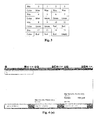
- the data is interpreted as presented schematically in the listing, shown in Fig. 2 .
- a loop reads the data from a pixel and stores it / them in a new pixel array.
- the pixel is stored in 16 bit and each color has 5 bits, wherein the last bit is empty since an alpha value is not stored in the frame buffer of this embodiment.
- lines 18-19 represents the extraction of the color blue, lines 21-22 the extraction of green, and lines 24-25 the extraction of red.
- there is no alpha value / channel such that the last bits are masked with FF (line 27).
- Fig. 3 shows schematically such an array for the color values for one pixel in the frame buffer.
- Fig. 4 (a) presents different stages in a text message conversation according to an embodiment using a mobile device with Android operating system.
- Fig. 4 (b) depicts additional application contexts such as a menu for the selection of a text message ringtone and a text message settings menu according to the embodiment.
- each context receives its own hash code even on minor changes: F896E95C7B7B506B2FB56C1BE46943A9, 3723573169F24490B07DDD2D1572F292, 6566A266CCCBA359D5E708B5E6BB1, 12D65BB4E3EBB4FBD4F2B9E62EC7C14,and 9D7F5636E2989AAF607CC0107A50EC4 E.
- the Bitmap class from Android is able to read the new pixel array and create a Bitmap which can be stored as a picture file, preferably a PNG picture.
- the extracted items are stored at a remote database on a server.
- a custom application is deployed capable of using the extracted items, in particular the hashed user-element-interface management list, for showing the client side application context to a customer service which is logged onto the server.
- This client side application context can be a screenshot possibly amended with extracted information of the user-interface-element management list, the currently used user-interface-element or the hashed user-interface-element management list.
- each item and / or plurality of items relating to the same client case can be manually or automatically labeled, e.g. with "creation of a text message".
- labeling the items with any other information related to the client case is possible, as for example the client name, date, time etc.
- FIG. 5 A server interface presenting the client side application context on the client's mobile device is shown in Fig. 5 , wherein Symbian OS is used as the mobile operating system on the mobile device. Screenshots of detected states are created once and transferred to the server for visualization which basically enables remote working persons to investigate usage on a device.
- a client application on the mobile device is designed within a modular architecture.
- Each client task has a corresponding module performing the desired functionality.
- the system comprises a Tracking and a Communication Module for Android.
- screen IDs are generated from each user-interface-element which has the current focus on the screen, i.e. the output device.
- the Screen IDs are used in connection with remote services for managing more comprehensive and detailed system states. Such a comprehensive state can consist of the hashcodes, keystroke profiles, list of processes running in parallel and so on.
- the screen IDs can be fetched from a SmartMobileService which is implemented as an Android persistent service.
- the fetched screen IDs can be sent via a DataSetsManager method sendDataToService which uses a QueryRestService to finally send all relevant data to a responsible web service.
- the method sendDataToService is a hook method which can be extended to add additional information from existing data collectors, as for example DataCollector A, B, C, and D in Fig. 6 .
- an integer value named reqType a char value for the format of the data which will be sent and an integer for an UID for an initialization process are required corresponding to receiving signatures or sending events to a REST-Webservice.
- the Communication Module there is a method, getREQ(LinkedList ⁇ String> datas), which needs required data as a list of strings which shall be send to a REST-Web service.
- the method returns an instance of a class ModelsType which holds a complete parsed XML structure which was received from a query to the REST-Web service.
- the primary purpose of the Communication Module is to communicate with external components, e.g. a server that can store all identified states with corresponding screenshots. This step is not necessarily required for the identification process itself but it allows integration of additional services basing on the corresponding information resulting from the identification process.
Landscapes
- Engineering & Computer Science (AREA)
- General Engineering & Computer Science (AREA)
- Theoretical Computer Science (AREA)
- Computer Hardware Design (AREA)
- Quality & Reliability (AREA)
- Physics & Mathematics (AREA)
- General Physics & Mathematics (AREA)
- Telephonic Communication Services (AREA)
- User Interface Of Digital Computer (AREA)
Claims (9)
- Verfahren zum Überwachen einer Benutzeraktivität auf einem Mobilgerät, auf dem ein mobiles Android-Betriebssystem läuft und das eine Eingabeeinheit und eine Ausgabeeinheit aufweist, wobei das Verfahren die in der folgenden Folge ausgeführten Schritte aufweist:(a) Erfassen einer Benutzeraktivität auf der Eingabeeinheit;(b) Identifizieren einer im Vordergrund laufenden Anwendung;(c) Hashen einer Benutzeroberflächenelementmanagementliste der im Vordergrund laufenden Anwendung;(d) Erzeugen eines Screenshot, der auf der Ausgabeeinheit dargestellte Elemente enthält,wobei die im Vordergrund laufende Anwendung durch Abfragen des "topActivity"-Feldes des ActivityManager.RunningTasklnfo-Objekts eines Managers für laufende Anwendungen identifiziert wird, immer wenn eine Benutzeraktivität auf der Eingabeeinheit erfasst wird, und
wobei die Benutzeraktivität auf der Eingabeeinheit durch einen Observer Thread erfasst wird, der für jede Eingabeeinheit erzeugt wird, wobei die Eingabeereignisse durch die Observer Threads erhalten werden und die Eingabeereignisse durch die Observer Threads an einen Ereignispool übermittelt werden, wobei der Ereignispool durch einen Erfasssungsdienst untersucht wird, nachdem das Eingabeereignis empfangen wurde, und wobei die Eingabeereignisse in einer lokalen oder in einer abgesetzten Datenbank gespeichert werden. - Verfahren nach Anspruch 1, ferner mit dem Schritt zum Aufzeichnen der Benutzeraktivität auf der Eingabeeinheit.
- Verfahren nach Anspruch 1 oder 2, ferner mit dem Schritt zum Speichern mindestens eines der folgenden Elemente: Information über die erfasste und/oder aufgezeichnete Benutzeraktivität, Information über die im Vordergrund laufende Anwendung, die gehashte Benutzeroberflächenelementmanagementliste und den Screenshot in einer lokalen und/oder in einer abgesetzten Datenbank.
- Verfahren nach einem der Ansprüche 1 bis 3, ferner mit dem Schritt zum Leeren des Ereignispools nach der Untersuchung des Ereignispools.
- Verfahren nach einem der Ansprüche 1 bis 4, ferner mit dem Schritt zum Extrahieren mindestens eines der folgenden weiteren Elemente: mindestens einen voll qualifizierten Klassennamen und/oder mindestens eine ID und/oder mindestens eine Beziehung mindestens eines Benutzeroberflächenelements von der Benutzeroberflächenelementmanagementliste und Speichern der extrahierten Daten in einer lokalen und/oder in einer abgesetzten Datenbank.
- Verfahren nach einem der Ansprüche 1 bis 5, wobei der Screenshot durch Lesen von Daten von einem Pufferspeicher und Erzeugen eines Bildes von den vom Pufferspeicher gelesenen Daten erzeugt wird.
- Verfahren nach einem der Ansprüche 1 bis 6, wobei die abgesetzte Datenbank eine Datenbank eines abgesetzten Servers ist.
- Verfahren nach einem der Ansprüche 2 bis 7, wobei die in der lokalen und/oder in der abgesetzten Datenbank gespeicherten Elemente durch ein entsprechendes eindeutiges Kennzeichen gekennzeichnet sind.
- Computerprogrammprodukt mit einem oder mehreren computerlesbaren Medien, die durch einen Computer ausführbare Anweisungen zum Ausführen der Schritte des Verfahrens nach einem der Ansprüche 1 bis 8 speichern.
Priority Applications (3)
| Application Number | Priority Date | Filing Date | Title |
|---|---|---|---|
| ES11195582.9T ES2544465T3 (es) | 2011-12-23 | 2011-12-23 | Supervisión de la actividad del usuario en dispositivos móviles inteligentes |
| EP20110195582 EP2608041B1 (de) | 2011-12-23 | 2011-12-23 | Überwachung der Benutzeraktivität auf intelligenten mobilen Vorrichtungen |
| PCT/EP2012/076655 WO2013093011A1 (en) | 2011-12-23 | 2012-12-21 | Monitoring user activity on smart mobile devices |
Applications Claiming Priority (1)
| Application Number | Priority Date | Filing Date | Title |
|---|---|---|---|
| EP20110195582 EP2608041B1 (de) | 2011-12-23 | 2011-12-23 | Überwachung der Benutzeraktivität auf intelligenten mobilen Vorrichtungen |
Publications (2)
| Publication Number | Publication Date |
|---|---|
| EP2608041A1 EP2608041A1 (de) | 2013-06-26 |
| EP2608041B1 true EP2608041B1 (de) | 2015-05-20 |
Family
ID=47522586
Family Applications (1)
| Application Number | Title | Priority Date | Filing Date |
|---|---|---|---|
| EP20110195582 Active EP2608041B1 (de) | 2011-12-23 | 2011-12-23 | Überwachung der Benutzeraktivität auf intelligenten mobilen Vorrichtungen |
Country Status (3)
| Country | Link |
|---|---|
| EP (1) | EP2608041B1 (de) |
| ES (1) | ES2544465T3 (de) |
| WO (1) | WO2013093011A1 (de) |
Cited By (1)
| Publication number | Priority date | Publication date | Assignee | Title |
|---|---|---|---|---|
| RU2837045C1 (ru) * | 2024-10-29 | 2025-03-25 | Общество С Ограниченной Ответственностью "Ботто" | Способ валидации обезличенных пользовательских данных |
Families Citing this family (17)
| Publication number | Priority date | Publication date | Assignee | Title |
|---|---|---|---|---|
| US11308227B2 (en) | 2012-01-09 | 2022-04-19 | Visa International Service Association | Secure dynamic page content and layouts apparatuses, methods and systems |
| US20140180595A1 (en) | 2012-12-26 | 2014-06-26 | Fitbit, Inc. | Device state dependent user interface management |
| US9098991B2 (en) | 2013-01-15 | 2015-08-04 | Fitbit, Inc. | Portable monitoring devices and methods of operating the same |
| US8734296B1 (en) * | 2013-10-02 | 2014-05-27 | Fitbit, Inc. | Biometric sensing device having adaptive data threshold, a performance goal, and a goal celebration display |
| US9031812B2 (en) | 2014-02-27 | 2015-05-12 | Fitbit, Inc. | Notifications on a user device based on activity detected by an activity monitoring device |
| US11990019B2 (en) | 2014-02-27 | 2024-05-21 | Fitbit, Inc. | Notifications on a user device based on activity detected by an activity monitoring device |
| CN104182681B (zh) * | 2014-08-28 | 2017-05-03 | 北京软安科技有限公司 | 基于hook的iOS系统关键行为检测装置和方法 |
| US10097430B2 (en) | 2015-02-27 | 2018-10-09 | Walmart Apollo, Llc | Tracking and analyzing mobile application user interactions |
| JP6574681B2 (ja) * | 2015-10-28 | 2019-09-11 | Kddi株式会社 | 画面特定システム、画面特定装置及び画面特定方法 |
| US10511717B1 (en) | 2016-05-20 | 2019-12-17 | Wells Fargo Bank, N.A. | Directed customer support |
| CN106569848A (zh) * | 2016-10-14 | 2017-04-19 | 惠州Tcl移动通信有限公司 | 终端及其应用程序的启动管理方法 |
| US10467230B2 (en) | 2017-02-24 | 2019-11-05 | Microsoft Technology Licensing, Llc | Collection and control of user activity information and activity user interface |
| US10671245B2 (en) | 2017-03-29 | 2020-06-02 | Microsoft Technology Licensing, Llc | Collection and control of user activity set data and activity set user interface |
| US10732796B2 (en) | 2017-03-29 | 2020-08-04 | Microsoft Technology Licensing, Llc | Control of displayed activity information using navigational mnemonics |
| US10693748B2 (en) | 2017-04-12 | 2020-06-23 | Microsoft Technology Licensing, Llc | Activity feed service |
| US10853220B2 (en) | 2017-04-12 | 2020-12-01 | Microsoft Technology Licensing, Llc | Determining user engagement with software applications |
| US11580088B2 (en) | 2017-08-11 | 2023-02-14 | Microsoft Technology Licensing, Llc | Creation, management, and transfer of interaction representation sets |
Family Cites Families (4)
| Publication number | Priority date | Publication date | Assignee | Title |
|---|---|---|---|---|
| US5696702A (en) * | 1995-04-17 | 1997-12-09 | Skinner; Gary R. | Time and work tracker |
| US20050197804A1 (en) * | 2004-03-08 | 2005-09-08 | Reeves Simon J. | System and method for continuously recording user actions and displayed images |
| US8396964B2 (en) * | 2009-05-13 | 2013-03-12 | International Business Machines Corporation | Computer application analysis |
| EP2343651A1 (de) * | 2009-12-15 | 2011-07-13 | Accenture Global Services Limited | Überwachung und Verfolgung der Verwendung einer Anwendung |
-
2011
- 2011-12-23 EP EP20110195582 patent/EP2608041B1/de active Active
- 2011-12-23 ES ES11195582.9T patent/ES2544465T3/es active Active
-
2012
- 2012-12-21 WO PCT/EP2012/076655 patent/WO2013093011A1/en not_active Ceased
Cited By (1)
| Publication number | Priority date | Publication date | Assignee | Title |
|---|---|---|---|---|
| RU2837045C1 (ru) * | 2024-10-29 | 2025-03-25 | Общество С Ограниченной Ответственностью "Ботто" | Способ валидации обезличенных пользовательских данных |
Also Published As
| Publication number | Publication date |
|---|---|
| ES2544465T3 (es) | 2015-08-31 |
| EP2608041A1 (de) | 2013-06-26 |
| WO2013093011A1 (en) | 2013-06-27 |
Similar Documents
| Publication | Publication Date | Title |
|---|---|---|
| EP2608041B1 (de) | Überwachung der Benutzeraktivität auf intelligenten mobilen Vorrichtungen | |
| US11886464B1 (en) | Triage model in service monitoring system | |
| US12468562B1 (en) | Systems and methods for discovering automatable tasks | |
| US11314758B2 (en) | Storing and querying metrics data using a metric-series index | |
| US11870795B1 (en) | Identifying attack behavior based on scripting language activity | |
| US10942960B2 (en) | Automatic triage model execution in machine data driven monitoring automation apparatus with visualization | |
| US11171835B2 (en) | Automated generation of an information technology asset ontology | |
| US9372776B2 (en) | Monitoring user activity and performance of computerized devices | |
| US20220318319A1 (en) | Focus Events | |
| US12568103B2 (en) | Systems and methods for querying incident investigations | |
| US11017412B2 (en) | Contextual information monitoring |
Legal Events
| Date | Code | Title | Description |
|---|---|---|---|
| 17P | Request for examination filed |
Effective date: 20121025 |
|
| AK | Designated contracting states |
Kind code of ref document: A1 Designated state(s): AL AT BE BG CH CY CZ DE DK EE ES FI FR GB GR HR HU IE IS IT LI LT LU LV MC MK MT NL NO PL PT RO RS SE SI SK SM TR |
|
| AX | Request for extension of the european patent |
Extension state: BA ME |
|
| PUAI | Public reference made under article 153(3) epc to a published international application that has entered the european phase |
Free format text: ORIGINAL CODE: 0009012 |
|
| RIC1 | Information provided on ipc code assigned before grant |
Ipc: G06F 11/34 20060101AFI20140924BHEP Ipc: G06F 21/00 20130101ALN20140924BHEP |
|
| GRAP | Despatch of communication of intention to grant a patent |
Free format text: ORIGINAL CODE: EPIDOSNIGR1 |
|
| INTG | Intention to grant announced |
Effective date: 20141031 |
|
| GRAS | Grant fee paid |
Free format text: ORIGINAL CODE: EPIDOSNIGR3 |
|
| RAP1 | Party data changed (applicant data changed or rights of an application transferred) |
Owner name: DEUTSCHE TELEKOM AG |
|
| RIN1 | Information on inventor provided before grant (corrected) |
Inventor name: GLASS, GREGOR Inventor name: SCHNEIDER, LUTZ Inventor name: ALBAYRAK, SAHIN Inventor name: RADDATZ, KARSTEN Inventor name: HENKE, KATJA Inventor name: SCHMIDT, AUBREY-DERRICK Inventor name: BATYUK, LEONID Inventor name: CAMTEPE, AHMET |
|
| GRAA | (expected) grant |
Free format text: ORIGINAL CODE: 0009210 |
|
| AK | Designated contracting states |
Kind code of ref document: B1 Designated state(s): AL AT BE BG CH CY CZ DE DK EE ES FI FR GB GR HR HU IE IS IT LI LT LU LV MC MK MT NL NO PL PT RO RS SE SI SK SM TR |
|
| REG | Reference to a national code |
Ref country code: GB Ref legal event code: FG4D |
|
| REG | Reference to a national code |
Ref country code: CH Ref legal event code: EP |
|
| REG | Reference to a national code |
Ref country code: AT Ref legal event code: REF Ref document number: 728046 Country of ref document: AT Kind code of ref document: T Effective date: 20150615 |
|
| REG | Reference to a national code |
Ref country code: IE Ref legal event code: FG4D |
|
| REG | Reference to a national code |
Ref country code: DE Ref legal event code: R096 Ref document number: 602011016566 Country of ref document: DE |
|
| REG | Reference to a national code |
Ref country code: NL Ref legal event code: T3 |
|
| REG | Reference to a national code |
Ref country code: ES Ref legal event code: FG2A Ref document number: 2544465 Country of ref document: ES Kind code of ref document: T3 Effective date: 20150831 |
|
| REG | Reference to a national code |
Ref country code: AT Ref legal event code: MK05 Ref document number: 728046 Country of ref document: AT Kind code of ref document: T Effective date: 20150520 |
|
| REG | Reference to a national code |
Ref country code: LT Ref legal event code: MG4D |
|
| PG25 | Lapsed in a contracting state [announced via postgrant information from national office to epo] |
Ref country code: NO Free format text: LAPSE BECAUSE OF FAILURE TO SUBMIT A TRANSLATION OF THE DESCRIPTION OR TO PAY THE FEE WITHIN THE PRESCRIBED TIME-LIMIT Effective date: 20150820 Ref country code: HR Free format text: LAPSE BECAUSE OF FAILURE TO SUBMIT A TRANSLATION OF THE DESCRIPTION OR TO PAY THE FEE WITHIN THE PRESCRIBED TIME-LIMIT Effective date: 20150520 Ref country code: LT Free format text: LAPSE BECAUSE OF FAILURE TO SUBMIT A TRANSLATION OF THE DESCRIPTION OR TO PAY THE FEE WITHIN THE PRESCRIBED TIME-LIMIT Effective date: 20150520 Ref country code: PT Free format text: LAPSE BECAUSE OF FAILURE TO SUBMIT A TRANSLATION OF THE DESCRIPTION OR TO PAY THE FEE WITHIN THE PRESCRIBED TIME-LIMIT Effective date: 20150921 |
|
| PG25 | Lapsed in a contracting state [announced via postgrant information from national office to epo] |
Ref country code: GR Free format text: LAPSE BECAUSE OF FAILURE TO SUBMIT A TRANSLATION OF THE DESCRIPTION OR TO PAY THE FEE WITHIN THE PRESCRIBED TIME-LIMIT Effective date: 20150821 Ref country code: IS Free format text: LAPSE BECAUSE OF FAILURE TO SUBMIT A TRANSLATION OF THE DESCRIPTION OR TO PAY THE FEE WITHIN THE PRESCRIBED TIME-LIMIT Effective date: 20150920 Ref country code: BG Free format text: LAPSE BECAUSE OF FAILURE TO SUBMIT A TRANSLATION OF THE DESCRIPTION OR TO PAY THE FEE WITHIN THE PRESCRIBED TIME-LIMIT Effective date: 20150820 Ref country code: AT Free format text: LAPSE BECAUSE OF FAILURE TO SUBMIT A TRANSLATION OF THE DESCRIPTION OR TO PAY THE FEE WITHIN THE PRESCRIBED TIME-LIMIT Effective date: 20150520 Ref country code: LV Free format text: LAPSE BECAUSE OF FAILURE TO SUBMIT A TRANSLATION OF THE DESCRIPTION OR TO PAY THE FEE WITHIN THE PRESCRIBED TIME-LIMIT Effective date: 20150520 Ref country code: RS Free format text: LAPSE BECAUSE OF FAILURE TO SUBMIT A TRANSLATION OF THE DESCRIPTION OR TO PAY THE FEE WITHIN THE PRESCRIBED TIME-LIMIT Effective date: 20150520 |
|
| REG | Reference to a national code |
Ref country code: FR Ref legal event code: PLFP Year of fee payment: 5 |
|
| PG25 | Lapsed in a contracting state [announced via postgrant information from national office to epo] |
Ref country code: EE Free format text: LAPSE BECAUSE OF FAILURE TO SUBMIT A TRANSLATION OF THE DESCRIPTION OR TO PAY THE FEE WITHIN THE PRESCRIBED TIME-LIMIT Effective date: 20150520 Ref country code: DK Free format text: LAPSE BECAUSE OF FAILURE TO SUBMIT A TRANSLATION OF THE DESCRIPTION OR TO PAY THE FEE WITHIN THE PRESCRIBED TIME-LIMIT Effective date: 20150520 |
|
| REG | Reference to a national code |
Ref country code: DE Ref legal event code: R097 Ref document number: 602011016566 Country of ref document: DE |
|
| PG25 | Lapsed in a contracting state [announced via postgrant information from national office to epo] |
Ref country code: PL Free format text: LAPSE BECAUSE OF FAILURE TO SUBMIT A TRANSLATION OF THE DESCRIPTION OR TO PAY THE FEE WITHIN THE PRESCRIBED TIME-LIMIT Effective date: 20150520 Ref country code: RO Free format text: LAPSE BECAUSE OF NON-PAYMENT OF DUE FEES Effective date: 20150520 Ref country code: SK Free format text: LAPSE BECAUSE OF FAILURE TO SUBMIT A TRANSLATION OF THE DESCRIPTION OR TO PAY THE FEE WITHIN THE PRESCRIBED TIME-LIMIT Effective date: 20150520 Ref country code: CZ Free format text: LAPSE BECAUSE OF FAILURE TO SUBMIT A TRANSLATION OF THE DESCRIPTION OR TO PAY THE FEE WITHIN THE PRESCRIBED TIME-LIMIT Effective date: 20150520 |
|
| PLBE | No opposition filed within time limit |
Free format text: ORIGINAL CODE: 0009261 |
|
| STAA | Information on the status of an ep patent application or granted ep patent |
Free format text: STATUS: NO OPPOSITION FILED WITHIN TIME LIMIT |
|
| 26N | No opposition filed |
Effective date: 20160223 |
|
| PG25 | Lapsed in a contracting state [announced via postgrant information from national office to epo] |
Ref country code: BE Free format text: LAPSE BECAUSE OF NON-PAYMENT OF DUE FEES Effective date: 20151231 Ref country code: SI Free format text: LAPSE BECAUSE OF FAILURE TO SUBMIT A TRANSLATION OF THE DESCRIPTION OR TO PAY THE FEE WITHIN THE PRESCRIBED TIME-LIMIT Effective date: 20150520 |
|
| PG25 | Lapsed in a contracting state [announced via postgrant information from national office to epo] |
Ref country code: LU Free format text: LAPSE BECAUSE OF FAILURE TO SUBMIT A TRANSLATION OF THE DESCRIPTION OR TO PAY THE FEE WITHIN THE PRESCRIBED TIME-LIMIT Effective date: 20151223 Ref country code: MC Free format text: LAPSE BECAUSE OF FAILURE TO SUBMIT A TRANSLATION OF THE DESCRIPTION OR TO PAY THE FEE WITHIN THE PRESCRIBED TIME-LIMIT Effective date: 20150520 |
|
| REG | Reference to a national code |
Ref country code: CH Ref legal event code: PL |
|
| PG25 | Lapsed in a contracting state [announced via postgrant information from national office to epo] |
Ref country code: BE Free format text: LAPSE BECAUSE OF FAILURE TO SUBMIT A TRANSLATION OF THE DESCRIPTION OR TO PAY THE FEE WITHIN THE PRESCRIBED TIME-LIMIT Effective date: 20150520 |
|
| REG | Reference to a national code |
Ref country code: IE Ref legal event code: MM4A |
|
| PG25 | Lapsed in a contracting state [announced via postgrant information from national office to epo] |
Ref country code: IE Free format text: LAPSE BECAUSE OF NON-PAYMENT OF DUE FEES Effective date: 20151223 Ref country code: LI Free format text: LAPSE BECAUSE OF NON-PAYMENT OF DUE FEES Effective date: 20151231 Ref country code: CH Free format text: LAPSE BECAUSE OF NON-PAYMENT OF DUE FEES Effective date: 20151231 |
|
| REG | Reference to a national code |
Ref country code: FR Ref legal event code: PLFP Year of fee payment: 6 |
|
| PG25 | Lapsed in a contracting state [announced via postgrant information from national office to epo] |
Ref country code: SM Free format text: LAPSE BECAUSE OF FAILURE TO SUBMIT A TRANSLATION OF THE DESCRIPTION OR TO PAY THE FEE WITHIN THE PRESCRIBED TIME-LIMIT Effective date: 20150520 Ref country code: HU Free format text: LAPSE BECAUSE OF FAILURE TO SUBMIT A TRANSLATION OF THE DESCRIPTION OR TO PAY THE FEE WITHIN THE PRESCRIBED TIME-LIMIT; INVALID AB INITIO Effective date: 20111223 |
|
| PG25 | Lapsed in a contracting state [announced via postgrant information from national office to epo] |
Ref country code: SE Free format text: LAPSE BECAUSE OF FAILURE TO SUBMIT A TRANSLATION OF THE DESCRIPTION OR TO PAY THE FEE WITHIN THE PRESCRIBED TIME-LIMIT Effective date: 20150520 Ref country code: CY Free format text: LAPSE BECAUSE OF FAILURE TO SUBMIT A TRANSLATION OF THE DESCRIPTION OR TO PAY THE FEE WITHIN THE PRESCRIBED TIME-LIMIT Effective date: 20150520 |
|
| PG25 | Lapsed in a contracting state [announced via postgrant information from national office to epo] |
Ref country code: MT Free format text: LAPSE BECAUSE OF FAILURE TO SUBMIT A TRANSLATION OF THE DESCRIPTION OR TO PAY THE FEE WITHIN THE PRESCRIBED TIME-LIMIT Effective date: 20150520 |
|
| REG | Reference to a national code |
Ref country code: FR Ref legal event code: PLFP Year of fee payment: 7 |
|
| PG25 | Lapsed in a contracting state [announced via postgrant information from national office to epo] |
Ref country code: MK Free format text: LAPSE BECAUSE OF FAILURE TO SUBMIT A TRANSLATION OF THE DESCRIPTION OR TO PAY THE FEE WITHIN THE PRESCRIBED TIME-LIMIT Effective date: 20150520 Ref country code: TR Free format text: LAPSE BECAUSE OF FAILURE TO SUBMIT A TRANSLATION OF THE DESCRIPTION OR TO PAY THE FEE WITHIN THE PRESCRIBED TIME-LIMIT Effective date: 20150520 |
|
| PG25 | Lapsed in a contracting state [announced via postgrant information from national office to epo] |
Ref country code: AL Free format text: LAPSE BECAUSE OF FAILURE TO SUBMIT A TRANSLATION OF THE DESCRIPTION OR TO PAY THE FEE WITHIN THE PRESCRIBED TIME-LIMIT Effective date: 20150520 |
|
| PGFP | Annual fee paid to national office [announced via postgrant information from national office to epo] |
Ref country code: GB Payment date: 20251218 Year of fee payment: 15 |
|
| PGFP | Annual fee paid to national office [announced via postgrant information from national office to epo] |
Ref country code: FI Payment date: 20251216 Year of fee payment: 15 |
|
| PGFP | Annual fee paid to national office [announced via postgrant information from national office to epo] |
Ref country code: FR Payment date: 20251218 Year of fee payment: 15 Ref country code: NL Payment date: 20251217 Year of fee payment: 15 |
|
| PGFP | Annual fee paid to national office [announced via postgrant information from national office to epo] |
Ref country code: ES Payment date: 20260119 Year of fee payment: 15 |
|
| PGFP | Annual fee paid to national office [announced via postgrant information from national office to epo] |
Ref country code: DE Payment date: 20251222 Year of fee payment: 15 |
|
| PGFP | Annual fee paid to national office [announced via postgrant information from national office to epo] |
Ref country code: IT Payment date: 20251231 Year of fee payment: 15 |