EP2608096A2 - Compression de fichiers de données génomiques - Google Patents
Compression de fichiers de données génomiques Download PDFInfo
- Publication number
- EP2608096A2 EP2608096A2 EP12160156.1A EP12160156A EP2608096A2 EP 2608096 A2 EP2608096 A2 EP 2608096A2 EP 12160156 A EP12160156 A EP 12160156A EP 2608096 A2 EP2608096 A2 EP 2608096A2
- Authority
- EP
- European Patent Office
- Prior art keywords
- sequence
- file
- genomic
- quality
- modified
- Prior art date
- Legal status (The legal status is an assumption and is not a legal conclusion. Google has not performed a legal analysis and makes no representation as to the accuracy of the status listed.)
- Granted
Links
Images

Classifications
-
- G—PHYSICS
- G16—INFORMATION AND COMMUNICATION TECHNOLOGY [ICT] SPECIALLY ADAPTED FOR SPECIFIC APPLICATION FIELDS
- G16B—BIOINFORMATICS, i.e. INFORMATION AND COMMUNICATION TECHNOLOGY [ICT] SPECIALLY ADAPTED FOR GENETIC OR PROTEIN-RELATED DATA PROCESSING IN COMPUTATIONAL MOLECULAR BIOLOGY
- G16B50/00—ICT programming tools or database systems specially adapted for bioinformatics
- G16B50/50—Compression of genetic data
-
- G—PHYSICS
- G16—INFORMATION AND COMMUNICATION TECHNOLOGY [ICT] SPECIALLY ADAPTED FOR SPECIFIC APPLICATION FIELDS
- G16B—BIOINFORMATICS, i.e. INFORMATION AND COMMUNICATION TECHNOLOGY [ICT] SPECIALLY ADAPTED FOR GENETIC OR PROTEIN-RELATED DATA PROCESSING IN COMPUTATIONAL MOLECULAR BIOLOGY
- G16B30/00—ICT specially adapted for sequence analysis involving nucleotides or amino acids
Definitions
- the present subject matter relates, in general, to the field of genomics and, in particular, to compression of a genomic data file.
- Genome sequencing is a field of active research today. An understanding of the genome variation may enable researchers to fully understand the issues of genetic susceptibility and pharmacogenomics of drug response for all individuals as well as personalized molecular diagnostic tests.
- genetic material obtained directly from either a biological or an environmental sample is generally sequenced into a plurality of sequences, called genomic sequences.
- a facility, such as a research laboratory or a clinic involved in genomic study typically uses high capacity platforms, such as next generation sequencing (NGS) platforms capable of generating large number of genome sequences per year.
- NGS next generation sequencing
- the genomic sequence thus generated may be further processed and assembled into sets called contigs.
- the genomic sequences, or contigs may be stored for future studies for further analysis.
- genomic data such as the genomic sequence and/or the contigs are generated in huge volumes, in the range of hundreds of terabytes (TB), and stored in the repositories.
- the genomic data is either archived in repositories, for example, individual repositories associated with laboratories generating the genomic data or public sequence repositories using various data formats, such as fastq and gff. Storage of such huge volumes of data requires the repositories to have large storage disks having huge volumes of storage capacity. Further, with the advances in the research, the genomic data may also increase, thereby increasing maintenance costs and requirements for additional storage space. Furthermore, since the genomic data may be utilized for future references, the genomic data, for instance, in the fastq format may be archived in compressed form so as to decompress or retrieve the same without any loss of information.
- the method for compression of genomic data includes identifying genomic sequences, sequence headers, and quality sequences associated with a plurality of data streams provided in a genomic data file.
- Each of the genomic sequences includes at least one of primary characters and secondary characters. Further, the secondary characters from each of the genomic sequences may be removed to obtain an intermediate genomic sequence file.
- An intermediate quality sequence file is obtained by modifying, in the quality sequences, a quality score corresponding to the secondary character removed from corresponding genomic sequence. Based on the intermediate genomic sequence file and the intermediate quality sequence file, a modified genomic sequence file and a modified quality sequence file, respectively are generated. Further a compressed genomic data file is obtained using at least the modified genomic sequence and the modified quality sequence.
- Fig. 1 illustrates a system for compression of a genomic data file, in accordance with an embodiment of the present subject matter.
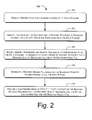
- Fig. 2 illustrates a method for compression of a genomic data file, in accordance with an embodiment of the present subject matter.
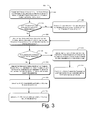
- Fig. 3 illustrates a method of generating modified genomic sequence file, modified quality sequence file, and extra characters file for compressing the genomic data file, in accordance with an embodiment of the present subject matter.
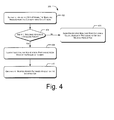
- Fig. 4 illustrates a method of generating a modified header file for compressing the genomic data file, in accordance with an embodiment of the present subject matter.
- genomic data typically includes the genetic material sequenced into a plurality of sequences, called genomic sequences.
- a genomic sequence typically includes data in the form of characters, and is preceded by a header section having information, hereinafter referred to as sequence header, about the genomic sequence.
- sequence header a header section having information, hereinafter referred to as sequence header.
- a quality sequence is included in quality data, which may be stored along with the genomic data.
- a quality sequence includes a corresponding quality score for each of the characters in the corresponding genomic sequence.
- the quality data may include a plurality of quality sequences, and each of the quality sequences may include a plurality of quality scores.
- the quality data and the genomic data may be stored as a genomic data file using a text-based file format, such as a fastq format.
- a text-based file format such as a fastq format.
- file formats generally store each of the genomic sequences and their corresponding quality sequences as a single data stream.
- fastq format each data stream typically begins with the sequence header followed by the genomic sequence, a quality header, and the quality sequence corresponding to a genomic sequence.
- genomic data file may be compressed before being stored.
- Conventional compression techniques employed by sequence repositories or databases are based on compression techniques that are generally used for compression of text files and are thus unable to optimally compress the genomic data files.
- certain genomic data compression techniques are configured to compress genomic data files in fastq format.
- some of these genomic data compression techniques may not optimally compress the genomic data file, for example, such techniques may not efficiently work for genomic data having genomic sequences of variable read-lengths.
- few of the implementations of genomic data compression techniques may not be independent of system architecture, i.e., they may be implementable on high bit processors, such as 64 bit processors but not implementable on lower bit processors, such as 32 bit processors.
- genomic data file compression often have high compression and/or decompression time and memory requirements, thus increasing the processing costs.
- an inefficient compression or decompression of the genomic data files in terms of time taken may additionally affect research by hindering quick and efficient storage, retrieval, and transmission of the genomic data.
- genomic data files using text-based file format, such as fastq and gff format.
- text-based file format such as fastq and gff format.
- a genomic data file having a plurality of data streams is received for compression.
- Each data stream may include a genomic sequence, an associated sequence header, a quality sequence corresponding to the genomic sequence, and a quality header.
- genomic data files in the fastq format normally use four lines per sequence.
- the genomic data file may be analyzed to identify the sequence header, the genomic sequence, the quality header, and the quality sequences for all the data streams.
- the sequence header, the genomic sequence, and the quality sequences for the data streams are subsequently separated and combined to obtain a combined sequence header, a combined genomic sequence, and a combined quality sequence, respectively.
- each of the combined sequence header, the combined genomic sequence, and the combined quality sequence are processed to obtain one or more modified files, such as a modified header file, a modified genomic sequence file, a modified quality sequence file, an extra characters file, and an attributes file.
- the combined genomic sequence and the combined quality sequence are analyzed to identify the primary characters, the secondary characters, and their corresponding quality scores. For instance, in a nucleotide sequence, ⁇ A', 'T', 'G', and 'C', which correspond to four nucleotide bases, adenine (A), thymine (T), guanine (G), and cytosine (C) may be identified as the primary characters, while non-ATGC characters, like 'U', 'Y', 'W', 'M', 'K', 'B', 'V', ⁇ D', 'N', 'X', 'H', 'R', and 'S' may be identified as the secondary characters.
- adenine (A), thymine (T), guanine (G), and cytosine (C) may be identified as the primary characters
- non-ATGC characters like 'U', 'Y', 'W',
- the secondary characters may then be removed from the combined genomic sequence to obtain an intermediate genomic sequence file. Further, the quality scores corresponding to the secondary characters may be modified in the combined quality sequence to obtain an intermediate quality sequence file. In one implementation, the quality scores corresponding to the secondary characters may be modified based on a set of predetermined rules. For example, the quality scores for one or more predetermined secondary characters, say 'N' and 'X' may be modified using an ASCII encoding scheme, while the quality scores of the remaining secondary characters, hereinafter referred to as additional characters, may be replaced using a predetermined ASCII value. In another example, all the secondary characters having the quality score above a threshold value may be identified as the additional characters and the quality score of the additional characters may be replaced using the predetermined ASCII value. Identity and quality scores for all the additional characters may be saved in the extra characters file.
- the intermediate genomic sequence file may be subsequently encoded to obtain a modified genomic sequence file.
- the primary characters may be represented as bits to obtain the modified genomic sequence file in a bit-stream encoded format.
- the intermediate quality sequence file may be analyzed to determine continuous stretches of similar quality scores. Such continuous stretches may then be replaced by a single instance of the quality score and a run-length value indicating the length of the continuous stretch to obtain the modified quality sequence file.
- the combined sequence header may be analyzed to identify identical and non-identical portions between two consecutive sequence headers.
- the combined header sequence may be delta-encoded based on the identification.
- the sequence headers that do not conform to the standard formats are aligned, for example, using a procedure of global-alignment and their differences are subsequently indexed.
- length of the genomic sequences having variable length is appended with the corresponding sequence header if it is not already mentioned in the header.
- the modified header file, thus obtained may be saved along with the modified genomic sequence file and the modified quality sequence file.
- attributes having information about additional information such as the standard format of the sequence header and the length of the fixed-length genomic sequences are saved in the attribute file.
- the modified header file, the attribute file, modified genomic sequence file, the modified quality sequence file, and the extra characters file may be archived together to generate a final output file, referred to as compressed genomic data file that can be stored for further processing and/or future references. Further, in one embodiment, the modified header file, the attribute file, modified genomic sequence file, the modified quality sequence file, and the extra characters file may be separately compressed using any known method of text-file compression before being archived as the compressed genomic data file.
- the compressed genomic data file thus obtained is not only efficient in terms of compression ratio and compression time but is also lossless in terms of information accuracy.
- the provision for identification and removal of secondary characters from the genomic sequences ensures reduction of bit allocation for the genomic sequences. For instance, bit-encoding the intermediate genomic sequence file takes less number of bits than would have been required for encoding the genomic sequence.
- modifying or replacing the quality scores corresponding to the secondary characters ensures that a lossless decryption of the genomic sequences and the quality sequences can be performed.
- modifying the quality sequence and the sequence header ensures that number of bits used for encoding the modified quality sequence file and the modified header file are less than number of bits that would have been required for encoding the quality sequence and the sequence header. For instance, run-length encoding the intermediate quality sequence reduces length of the quality sequences.
- Fig. 1 illustrates a genomic data compression system 100, according to an implementation of the present subject matter.
- the genomic data compression system 100 can be implemented in systems that include, but are not limited to, desktop computers, hand-held devices, multiprocessor systems, personal digital assistants (PDAs), laptops, network computers, cloud servers, minicomputers, mainframe computers, and the like.
- the genomic data compression system 100 hereinafter referred to as, the system 100 includes interface(s) 102, one or more processor(s) 104, and a memory 106 coupled to the processor(s) 104.
- the interfaces 102 may include a variety of software and hardware interfaces, for example, interfaces for peripheral device(s), such as a keyboard, a mouse, an external memory, and a printer. Further, the interfaces 102 may enable the system 100 to communicate with other devices, such as web servers and external databases.
- the interfaces 102 can facilitate multiple communications within a wide variety of networks and protocol types, including wired networks, for example, local area network (LAN), cable, etc., and wireless networks, such as Wireless LAN (WLAN), cellular, or satellite.
- the interfaces 102 may include one or more ports for connecting a number of computing systems with one another or to another server computer.
- the processor(s) 104 can be a single processing unit or a number of units, all of which could include multiple computing units.
- the processor 104 may be implemented as one or more microprocessors, microcomputers, microcontrollers, digital signal processors, central processing units, state machines, logic circuitries, and/or any devices that manipulate signals based on operational instructions.
- the processor 104 is configured to fetch and execute computer-readable instructions and data stored in the memory 106.
- the memory 106 may include any computer-readable medium known in the art including, for example, volatile memory, such as static random access memory (SRAM) and dynamic random access memory (DRAM), and/or non-volatile memory, such as read only memory (ROM), erasable programmable ROM, flash memories, hard disks, optical disks, and magnetic tapes.
- volatile memory such as static random access memory (SRAM) and dynamic random access memory (DRAM)
- non-volatile memory such as read only memory (ROM), erasable programmable ROM, flash memories, hard disks, optical disks, and magnetic tapes.
- ROM read only memory
- erasable programmable ROM erasable programmable ROM
- the modules 108 include routines, programs, objects, components, data structures, etc., which perform particular tasks or implement particular abstract data types.
- the modules 108 further include an intermediate file generation module 112, a compression module 114, and other module(s) 116.
- the other modules 116 may include programs that supplement applications on the system 100, for example, programs in the operating system.
- the data 110 serves, amongst other things, as a repository for storing data processed, received, and generated by one or more of the modules 108.
- the data 110 includes input data 118, compression data 120, and other data 122.
- the other data 122 includes data generated as a result of the execution of one or more modules in the other modules 116.
- the system 100 is associated with a genomic data repository (not shown in the figure).
- the genomic data repository includes a plurality of genomic data files having genomic sequences generated by a genomic data generation platform, such as an NGS based platform.
- the genomic data files are in a text-file format, such as fastq and gff format and are provided to the system 100 for compression.
- the system 100 receives the genomic data files having a plurality of data streams from the sequence database.
- the genomic data file includes the genomic data in a text-format, such that each data stream includes at least a genomic sequence and a corresponding quality sequence.
- each data stream typically begins with a sequence header followed by a genomic sequence, a quality header, and a quality sequence corresponding to the genomic sequence.
- the genomic sequence may include a plurality of primary characters representing useful information, such as nucleotide bases and one or more secondary characters.
- the sequence header includes information, such as an ID of the project for which the nucleotide sequence is generated and sequence ordering.
- the quality sequence includes a plurality of quality scores such that a particular quality score corresponds to a particular character in the genomic sequence, while the quality header may include information related to the quality sequence, which may be similar to the sequence header.
- the system 100 may receive the following genomic data file having four data streams:
- a first line of each of the data stream represents the sequence header corresponding to the data stream and begins with a '@' character followed by a sequence identifier and an optional description.
- a second line represents the genomic sequence having primary characters 'A', ⁇ T', 'G', and 'C', known as nucleotide bases, and secondary characters, such as 'N' and 'X'.
- a third line represents the quality header and includes the symbol '+'.
- a fourth line represents the quality sequence and includes quality scores corresponding to each of the characters included in the genomic sequence and, therefore, contains the same number of symbols as the characters in the genomic sequence. Further, in one implementation, the quality scores may be encoded and presented as ASCII codes.
- quality score corresponding to the first character 'T' of the third genomic sequence is represented as '*'.
- the ASCII encoding may be understood as a scheme to represent a phred score generated by a genomic data generation platform using ASCII codes.
- the ASCII encoding may vary based on the genomic data generation platform used for generation of the genomic data, as illustrated in table 1.
- Table 1 Genomic data generation platform Quality value/ Phred scores (q) Quality scores (Q) saved in fastq format ASCII character-set used Sanger/ Roche 454/ SOLiD 0-93 quality +33 33-126 Illumina /Solexa 0-62 quality + 64 64-126
- a value of 33 is added to the Phred score to obtain the ASCII encoded quality score.
- a value of 64 is added to the Phred score to obtain the ASCII encoded quality score.
- the genomic data file thus received may be saved in the input data 118.
- the sequence headers, the genomic sequences, the quality headers, and the quality sequences, corresponding to the data streams are identified and separated for further processing.
- the intermediate file generation module 112 accesses the input data 118 to obtain the genomic data file.
- the intermediate file generation module 112 analyzes the genomic data file to identify the sequence headers, the genomic sequences, the quality headers, and the quality sequences, corresponding to all the data streams.
- the intermediate file generation module 112 may identify the sequence headers based on one or more preconfigured parameters or rules. For instance, the intermediate file generation module 112 may be configured to identify the information between the symbol '@' and the first character of the genomic sequence as the sequence header. Subsequently, the intermediate file generation module 112 may combine the sequence headers corresponding to all the data streams to obtain a combined sequence header.
- the intermediate file generation module 112 may combine all the sequence headers to provide the combined sequence header as follows:
- sequence header corresponding to each of the data streams has been indicated as separate entries, it will be understood that the sequence headers of the data streams may be combined together as a single sentence or an entry.
- the intermediate file generation module 112 may subsequently save the combined sequence header in the compression data 120.
- the intermediate file generation module 112 may determine the genomic sequences from the genomic data file. In one implementation, the intermediate file generation module 112 may identify the information between the sequence header and the symbol '+' as a genomic sequence. On identification of the genomic sequences, the intermediate file generation module 112 combines the genomic sequences to obtain the combined genomic sequence.
- the intermediate file generation module 112 may combine all the genomic sequences to provide the combined genomic sequence as follows:
- the combined genomic sequence, thus obtained, may be saved in the compression data 120.
- the intermediate file generation module 112 identifies all the quality sequences from the genomic data file.
- the intermediate file generation module 112 may identify all the information after the quality header, the symbol '+' in the above example, as a quality sequence. On identification of all the quality sequences, the intermediate file generation module 112 may combine the quality sequences to obtain the combined quality sequence.
- the intermediate file generation module 112 may combine the genomic sequences to obtain the combined quality sequence as follows:
- the combined quality sequence may be saved in the compression data 120.
- the quality header may not be considered for the compression of the genomic data file, since the quality header typically includes either only the symbol '+' or the same information as the sequence header.
- the combined sequence header, the combined genomic sequences, and the combined quality sequences may be further processed for compressing the genomic data file.
- the intermediate file generation module 112 analyzes the combined genomic sequence to determine the type of character coding used to represent the data in the combined genomic sequence. For instance, the intermediate file generation module 112 may determine whether the data has been represented using a 'base-space coding' or a 'color-space coding'.
- the base-space coding uses standard International Union of Pure and Applied Chemistry (IUPAC) characters, such as ⁇ A', 'T', 'G', and 'C' to represent the data.
- the color-space coding uses non-IUPAC characters, such as numerals 0, 1, 2, 3, and 4.
- the intermediate file generation module 112 converts the characters of the combined genomic sequence to base-space coding to provide a pseudo base-space file representation.
- the intermediate file generation module 112 may convert the character '0' to the character 'A', '1' to 'T', '2' to 'G', '3' to 'C', '4' to 'N' and '.' to 'X'.
- the intermediate file generation module 112 may save the base-space file representation and use the same as combined genomic sequence for the purpose of the compression of the genomic data file.
- the intermediate file generation module 112 may save an attribute defining the type of character coding in an attribute file. Referring to the previous example, the attribute file may indicate that 'A' corresponds to '1', 'T' corresponds to 2, and so on.
- the attribute file may be saved in the compression data 120.
- the intermediate file generation module 112 analyzes the combined genomic sequence to identify the primary characters and the secondary characters. For instance, in a nucleotide sequence, the intermediate file generation module 112 may identify the characters 'A', 'T', 'G', and 'C', as the primary characters, and non-ATGC characters, like 'U','Y', 'W', 'M', 'K', 'B', 'V', 'D', 'N', 'X', 'H', 'R', and 'S as the secondary characters. Further, the intermediate file generation module 112 may analyze the combined quality sequences and based on positions of the secondary characters in the combined genomic sequence, identifies and modifies quality scores corresponding to the secondary characters.
- the intermediate file generation module 112 modifies the quality scores corresponding to the secondary characters based on a set of predetermined rules as illustrated in table 2.
- Table 2 Characte rs in the genomic sequence Quality scores (q) in the quality sequenc e ASCII encoded quality scores (Q0) in the quality sequenc e Characters in the intermedia te genomic sequence ASCII encoded quality scores (Q1) in the intermedia te quality sequence Extra characters file (E1) Range of ASCII character s used A q q +33 A q +33 left blank 33 - 126 q+64 q+64 64 - 126 T q q +33 T q +33 33 - 126 q + 64 q+64 64 - 126 G q q +33 G q +33 33 - 126 q+64 q+64 64 - 126 C q q +33 C q +33 33 - 126 q + 64 - 126 N 0 ⁇ q
- the intermediate file generation module 112 may be configured to modify the quality scores for one or more predetermined secondary characters, say 'N' and 'X' using an encoding scheme, such as ASCII encoding. While the quality scores of the remaining secondary characters, hereinafter referred to as additional characters, may be replaced using a predetermined value, such as an ASCII value. Further, in an example, the intermediate file generation module 112 may identify the secondary characters having the quality score above a threshold value, as the additional characters and replace their associated quality scores using the predetermined ASCII value.
- the intermediate file generation module 112 may identify the secondary character as an additional character and replace the corresponding quality score in the combined quality sequence using a predetermined value 210.
- the intermediate file generation module 112 may ASCII encode the quality score based on the genomic data generation platform used.
- the intermediate file generation module 112 may add a value of 150 to the non-ASCII encoded quality score corresponding to 'N' to obtain the ASCII encoded quality score (Q1).
- the intermediate file generation module 112 may thus modify the quality scores of all the secondary characters to obtain an intermediate quality sequence file. Further, the intermediate file generation module 112 may remove all the secondary characters from the combined genomic sequence to generate an intermediate genomic sequence file having the primary characters. Additionally, the intermediate file generation module 112 may save identity and quality scores for all the additional characters in the extra characters file using a format as shown in the table 2.
- the intermediate file generation module 112 removes all the secondary characters to obtain the intermediate genomic sequence file as follows:
- the intermediate file generation module 112 modifies the quality scores to obtain the intermediate quality sequence file as follows:
- intermediate quality sequence file may include various non-printable ASCII characters, therefore for the sake of clarity the quality scores have been represented here using hexadecimal codes.
- the extra characters file may be a blank file. Additionally, since the generation of the intermediary sequence file and intermediary quality file are independent of each other, these two files may be generated in any order.
- the intermediate genomic sequence file having just the primary characters and the intermediate quality sequence file may be subsequently encoded to obtain a modified genomic sequence file and a modified quality sequence file.
- the compression module 114 accesses the compression data 120 to obtain the intermediate genomic sequence file.
- the compression module 114 may be configured to encode the intermediate genomic sequence file using, for example, a bit-stream encoding scheme to obtain the modified genomic sequence file in a bit-stream encoded format.
- compression module 114 may represent each of the primary characters as bits to obtain the modified genomic sequence file.
- the compression module 114 may represent the character 'A' as 00, 'T' as 01, 'G' as 10, and 'C' as 11.
- the modified genomic sequence file may be saved by the compression module 114 in the compression data 120.
- the compression module 114 may be configured to encode the intermediate quality sequence file using, for example, a run-length encoding scheme to obtain the modified quality sequence file in a run-length encoded format.
- the run-length encoding may be understood as an encoding scheme in which stretches of a similar value are replaced by a single instance of the value followed by a length of the stretch.
- the compression module 114 analyzes the intermediate quality sequence file to identify instances where a particular quality score is followed by the same quality score. Based on the identification, the compression module 114 determines, for all the instances, a run-length, i.e., the number of times the particular quality score value has been repeated in the instance.
- the instances having run-length of more than a predetermined value may be identified by the compression module 114 as continuous stretches of similar quality scores.
- the instances having run-length of more than 4 times may be identified by the compression module 114 as stretches of continuous values.
- the compression module 114 subsequently replaces the identified stretches with a single instance of the particular quality score followed by the associated run-length to obtain the modified quality sequence file.
- the compression module 114 identifies all the stretches of quality scores having run-length of more than 4, in bold script, as follows:
- the compression module 114 subsequently removes all the identified stretches from the intermediate quality sequence to obtain the modified quality sequence file as follows:
- the modified quality sequence file may be stored in the compression data 120.
- the compression module 114 may further modify the combined sequence header to obtain the modified header file.
- the compression module 114 may analyze the combined sequence header to identify, for each of the sequence header, various sections, such as a sequence identifier and sequencing experiment details corresponding to the sequence header.
- a sequence identifier may be defined as a part of a sequence header that may be used to identify the genomic sequence.
- the sequencing experiment details may be understood as a part of a sequence header that provides details about the experiment for which the associated genomic data has been generated. Additionally, if the sequence headers also include the length of their corresponding genomic sequences, the compression module 114 may also identify the length for all the sequence headers from the combined sequence header.
- the sequence identifier may be identified as '@ SRR013951.815 '
- the sequencing experiment details may be identified as ' 30PT5AAXX:8:1:14:518 '
- the compression module 114 may analyze the various sections for all the sequence headers, and determine, for the various sections, all the identical and non-identical portions between two consecutive sequence headers. For example, the compression module 114 may also analyze all the sequence identifiers and determine identical and non-identical portions between the sequence identifiers of all the sequence headers.
- the compression module 114 may, in one implementation, save the non-identical portions in a delta-encoded format. For instance, in the previous example, the compression module 114 may determine that in all the sequence identifiers the portion ' @SRR013951 .' is identical, whereas '815', '816', ⁇ 817', and '818' are the non-identical portions. The compression module 114 may index identical portions for the various sections of all the sequence headers. Further, if the non-identical portions follow a consistent increasing or decreasing numerical pattern, the compression module 114 may delta-encode the various sections based on the index and the non-identical portions to obtain the modified header file.
- the modified header file thus obtained includes the index and the delta-encoded non-identical portions. Additionally, if length information for genomic sequences having variable length is not provided in the sequence header, the compression module 114 determines the length and appends it with the corresponding sequence header. Additionally, for the sequence headers that do not conform to a standard format of sequence header representation, the compression module 114 may be configured to align the sequence headers. For example, the compression module 114 may align the sequence headers using a procedure of global-alignment and subsequently index their differences to obtain the modified header file.
- the compression module 114 modifies the combined sequence header to obtain the modified header file as follows:
- the modified header file, thus obtained may be saved in the compression data 120. Further, the compression module 114 saves attributes having information about additional information, such as whether the sequence headers follow the standard format and whether the genomic sequences are of variable lengths, which are saved in the attribute file.
- the modified header file, the modified genomic sequence file, the modified quality sequence file, the extra characters file, and the attribute file archived together thus provide the compressed genomic data file and may be used for further processing or storage.
- the compression module 114 may further-compress all the files individually using any suitable compression technology and archive the files together to generate a final output file, referred to as the compressed genomic data file.
- the compression module 114 may use any known archiving or compression technology, for example, the modified genomic sequence file may be further-compressed using LZMA compression technique. While, the modified header file, the modified quality sequence file, the extra characters file, and the attribute file may be further-compressed using PPMD compression technique.
- 11 genomic data files were downloaded from the online repository of the 1000 genomes project present in the NCBI database and compressed using the system 100 in accordance with the present embodiment.
- the results were further compared with conventional techniques, such as GZIP -version 1.4, and LZMA - version 9.20, and DSRC (DNA Sequence Reads Compression technique).
- the experiments were performed using a desktop having a 2.33 gigahertz (Ghz) dual core processor with 2 gigabytes (GB) RAM.
- the system 100 and the other compression techniques were used to compress the 11 genomic data files and their results were evaluated using the compression ratio achieved by all the techniques and the time taken for compression and decompression.
- the compression ratio may be understood as a percentage ratio of the compressed file size and the size of the original genomic data file.
- Table 3 indicates size, in megabytes (MB), of the final compressed genomic data files for the various techniques. Further, the compression ratios corresponding to each of the compression technique are indicated in parenthesis.
- the compression ratios obtained using the system 100 and the conventionaltechniques may be compared to obtain a percentage improvement in compression ratio over conventional techniques for each genomic data file.
- the percentage improvement may be understood as a percentage gain in the compression ratio achieved using the system 100 over the compression ratio achieved using the conventional techniques.
- the compression ratios achieved for genomic data files generated using different genomic data generation platforms may also be compared for the percentage improvement. Percentage improvements with respect to the results obtained using the conventional techniques are depicted in table 4.
- the system 100 is approximately 8% to 35 % efficient as compared to the conventional techniques in terms of the compression ratio achieved. Further, it may also be observed that the compression ratios achieved by the system 100 significantly improves for data files generated using certain genomic data generation platforms. For instance, in the case of data sets generated using Roche-454 and Illumina sequencing platforms, the system 100 provides approximately 11% and 8.5% improvement in compression ratio over that obtained using DNA Sequence Reads Compression (DSRC) technique.
- DSRC DNA Sequence Reads Compression
- Table 5 indicates time taken, in seconds, for compression and decompression of the genomic data files using the various techniques. Further, average processing speed, in MB per second, for compression and decompression is independently indicated in the table for the various techniques.
- the compression time achieved using the system 100 is significantly less than the GZIP (default), the GZIP (-9 option), and the LZMA techniques.
- the system 100 is observed to be 8 times faster than the LZMA techniques, 1.2 times faster than the GZIP (default), and 2.3 faster than GZIP (-9 option).
- the compression time achieved using the system 100 is, however slightly more than the DSRC technique.
- total time taken for compression and decompression using the system 100 is significantly less than the GZIP (-9 option), and the LZMA techniques.
- the total time taken for compression and decompression using the system 100 is comparable with the GZIP (default) and slightly more than the DSRC technique.
- the time taken by the system 100 for compression and decompression is slightly more than the time taken by the DSRC technique, the gains in compression ratio achieved by the system 100 is significantly better than the DSRC technique as can be seen in the table 4.
- Fig. 2 illustrates a method 200 for compressing a genomic data file, in accordance with an implementation of the present subject matter
- Fig. 3 illustrates a method 206 for generating modified genomic sequence file and the modified quality sequence file
- Fig. 4 illustrates a method 208 for generating a modified header file according to an embodiment.
- the methods 200, 206, and 208 are implemented in computing device, such as the genomic data compression system 100.
- the methods may be described in the general context of computer executable instructions.
- computer executable instructions can include routines, programs, objects, components, data structures, procedures, modules, functions, etc., that perform particular functions or implement particular abstract data types.
- the methods may also be practiced in a distributed computing environment where functions are performed by remote processing devices that are linked through a communications network.
- genomic data file to be compressed, having a plurality of data streams is received, for example, by the system 100.
- the genomic data file is in a text-based file format, such as fastq and gff format.
- each of the data stream includes a genomic sequence and a quality sequence corresponding to the genomic sequence.
- the genomic data file may thus include a plurality of genomic sequences and a corresponding plurality of quality sequences equal in number to the data stream.
- the genomic sequences may be, for example, nucleotide sequences, polypeptide sequences, DNA sequences, or RNA sequences.
- the genomic data file may be stored in the input data 118.
- a genomic sequence, a sequence header, and a quality sequence associated with the data stream are identified.
- the intermediate file generation module 112 may be configured to analyze the genomic data file to identify the sequence headers, the genomic sequences, and the quality sequences, corresponding to each of the data streams.
- the genomic sequences and the quality sequences are modified to generate at least a modified genomic sequence file, a modified quality sequence file, and an extra characters file.
- the genomic sequences and the quality sequences are analyzed to identify the primary characters, the secondary characters, and their corresponding quality scores.
- the secondary characters from the genomic sequences may be removed and the genomic sequences may be bit-stream encoded, for example, by the compression module 114, to obtain the modified genomic sequence file in a bit-stream encoded format.
- quality scores corresponding to the secondary characters may be modified and the quality scores run-length encoded, for example, by the compression module 114 to obtain the modified quality sequence file in an ASCII encoded format.
- information related to predetermined secondary characters may be saved in the extra characters file.
- the generation of the modified genomic sequence file, the modified quality sequence file, and the extra characters file may be further explained with reference to figure 3 .
- a modified header file may be generated based on the sequence headers corresponding to all the data streams.
- the sequence headers corresponding to all the data streams are analyzed and modified by the compression module 114 to generate the modified header file, as will be explained in detail with reference to Fig. 4 .
- the compression module 114 may also generate an attribute file based on the header sequence.
- a compressed genomic data file is provided based at least on the modified genomic sequence file, the modified quality sequence file, the extra characters file, and the modified header file.
- the compression module 114 archives the modified header file, the modified genomic sequence file, the modified quality sequence file, the extra characters file, and the attribute file to produce the compressed genomic data file. Further, in order to facilitate an efficient processing and storing, the compression module 114 may further-compress all the files individually using any suitable compression technology and archive the files together to generate the compressed genomic data file.
- the compressed genomic data file may be obtained using any known archiving or compression technology, for example, the modified genomic sequence file may be further-compressed using LZMA compression technique.
- the modified header file, the modified quality sequence file, the extra characters file, and the attribute file may be further-compressed using PPMD compression technique.
- the compressed genomic data file thus includes all the details pertaining to not only the primary characters but also the sequence headers and secondary characters.
- the described method provides for lossless compression of data. Further, the genomic data file is compressed without compromising on compression ratio and time, thereby making the described method efficient in terms of computational time and resources.
- the method 206 generates the modified genomic sequence file, the quality sequence file, and the extra characters file for compressing the genomic data file, in accordance with an embodiment of the present subject matter.
- the genomic sequences and the quality sequences of all the data streams are combined to obtain a combined genomic sequence and a combined quality sequence, respectively.
- the genomic sequences for all the data streams may be obtained and combined by, for example, the intermediate file generation module 112 to obtain the combined genomic sequence.
- the quality sequences for all the data streams may be obtained and combined to obtain the combined quality sequence.
- the combined genomic sequence and the combined quality sequence may be saved in the compression data 120.
- the intermediate file generation module 112 analyzes the combined genomic sequence, to ascertain whether the combined genomic sequence is in a base-space representation. If the combined genomic sequence is not in a base-space representation, which is the 'No' path from the block 304, it converts characters of the genomic sequence to the base-space representation and updates the combined genomic sequence at block 306. For example, characters may be converted from the color-space representation to the base-space representation by the intermediate file generation module 112. From the block 306, the method proceeds to block 308, which is the 'Yes' path from the block 304.
- the combined genomic sequence and the combined quality sequence are analyzed to identify one or more secondary characters and their corresponding quality scores, respectively.
- the combined genomic sequence is analyzed to identify the secondary characters. For instance, in a nucleotide sequence, the non-ATGC characters, like 'Y', 'W', 'M', 'K', 'B', 'V', 'D', 'N', 'X', 'H', 'R', and 'S may be identified as the secondary characters.
- the combined quality sequences may be analyzed by the intermediate file generation module 112 to identify, based on positions of the secondary characters in the combined genomic sequence, the quality scores corresponding to the secondary characters.
- the intermediate file generation module 112 analyzes the secondary characters and the corresponding quality scores, to ascertain whether the secondary character is an additional character. If the secondary character is an additional character, which is the 'Yes' path from the block 310, it removes the additional character from the combined genomic sequence and replaces the corresponding quality score in the combined quality sequence with a predefined score, at block 312. From the block 312, the method proceeds to block 314, where an extra characters file is generated using identity and quality scores for all the additional characters.
- the secondary character is removed from the combined genomic sequence and the corresponding quality score is modified in the combined quality sequence.
- An intermediate genomic sequence file and an intermediate quality sequence file are thus obtained at block 316.
- a modified genomic sequence file is generated in a bit-stream encoded format.
- the intermediate genomic sequence file may be encoded, for example, by the compression module 114 using a bit-stream encoding scheme to obtain the modified genomic sequence file.
- the intermediate quality sequence file may be analyzed to determine continuous stretches of similar quality scores, for example, using the compression module 114.
- the continuous stretches having a run-length, indicating the length of the continuous stretch, of more than a predetermined value may then be replaced by a single instance of the quality score and the run-length value to obtain the modified quality sequence file.
- the modified quality sequence file may be saved by the compression module 114 in the compression data 120.
- the method 208 generates a modified header file for compressing the genomic data file, in accordance with an embodiment of the present subj ect matter.
- the sequence headers corresponding to all the data streams are separated and combined to obtain a combined sequence header.
- the sequence headers for all the data streams may be obtained and combined by, for example, the intermediate file generation module 112 to obtain the combined sequence header.
- the compression module 114 analyzes the combined sequence header, to ascertain whether the sequence headers are in a standard format. If the sequence headers are not in a standard format, which is the 'No' path from the block 404, it aligns the consecutive sequence headers using a global alignment procedure to obtain a modified header file at block 406.
- identical and non-identical portions between consecutive sequence headers are identified by global-alignment.
- the identical and non-identical portions for each of the headers are subsequently indexed.
- a first sequence header may be kept as a reference and all portions varying in the subsequent sequence header may be identified and indexed by the compression module 114.
- all the sequence headers may be compared with the preceding sequence headers to obtain the modified header file by the intermediate file generation module 112 based at least on the indexing.
- the compression module 114 may identify identical portions and non-identical portions for various sections, such as sequence identifier and sequencing experiment details of all the sequence headers.
- a modified header file is generated based at least on the identification of the identical and non-identical portions.
- the compression module 114 may index identical portions for the various sections of all the sequence headers and delta encode the non-identical portions. For instance, if the non-identical portions follow a consistent increasing or decreasing numerical pattern, the compression module 114 data may delta-encode the various sections based on the index and the non-identical portions to obtain the modified header file. Additionally, for genomic sequences having variable length the compression module 114 appends the length with the corresponding sequence header. The header file may then be saved in the compression data 120.
Landscapes
- Health & Medical Sciences (AREA)
- Life Sciences & Earth Sciences (AREA)
- Physics & Mathematics (AREA)
- Engineering & Computer Science (AREA)
- Theoretical Computer Science (AREA)
- Medical Informatics (AREA)
- Biophysics (AREA)
- Spectroscopy & Molecular Physics (AREA)
- Bioinformatics & Cheminformatics (AREA)
- Bioinformatics & Computational Biology (AREA)
- Biotechnology (AREA)
- Evolutionary Biology (AREA)
- General Health & Medical Sciences (AREA)
- Proteomics, Peptides & Aminoacids (AREA)
- Analytical Chemistry (AREA)
- Chemical & Material Sciences (AREA)
- Genetics & Genomics (AREA)
- Bioethics (AREA)
- Databases & Information Systems (AREA)
- Information Retrieval, Db Structures And Fs Structures Therefor (AREA)
- Compression, Expansion, Code Conversion, And Decoders (AREA)
- Apparatus Associated With Microorganisms And Enzymes (AREA)
Applications Claiming Priority (1)
| Application Number | Priority Date | Filing Date | Title |
|---|---|---|---|
| IN3655MU2011 | 2011-12-24 |
Publications (3)
| Publication Number | Publication Date |
|---|---|
| EP2608096A2 true EP2608096A2 (fr) | 2013-06-26 |
| EP2608096A3 EP2608096A3 (fr) | 2015-04-29 |
| EP2608096B1 EP2608096B1 (fr) | 2020-08-05 |
Family
ID=45855562
Family Applications (1)
| Application Number | Title | Priority Date | Filing Date |
|---|---|---|---|
| EP12160156.1A Active EP2608096B1 (fr) | 2011-12-24 | 2012-03-19 | Compression de fichiers de données génomiques |
Country Status (2)
| Country | Link |
|---|---|
| US (1) | US8972201B2 (fr) |
| EP (1) | EP2608096B1 (fr) |
Cited By (3)
| Publication number | Priority date | Publication date | Assignee | Title |
|---|---|---|---|---|
| GB2554883A (en) * | 2016-10-11 | 2018-04-18 | Petagene Ltd | System and method for storing and accessing data |
| CN110168651A (zh) * | 2016-10-11 | 2019-08-23 | 基因组系统公司 | 用于选择性访问存储的或传输的生物信息数据的方法和系统 |
| US12364315B2 (en) | 2019-07-17 | 2025-07-22 | Wonderland Swizterland AG | Buckle assembly |
Families Citing this family (33)
| Publication number | Priority date | Publication date | Assignee | Title |
|---|---|---|---|---|
| US10090857B2 (en) * | 2010-04-26 | 2018-10-02 | Samsung Electronics Co., Ltd. | Method and apparatus for compressing genetic data |
| US9898575B2 (en) | 2013-08-21 | 2018-02-20 | Seven Bridges Genomics Inc. | Methods and systems for aligning sequences |
| US9116866B2 (en) | 2013-08-21 | 2015-08-25 | Seven Bridges Genomics Inc. | Methods and systems for detecting sequence variants |
| US11049587B2 (en) | 2013-10-18 | 2021-06-29 | Seven Bridges Genomics Inc. | Methods and systems for aligning sequences in the presence of repeating elements |
| WO2015058095A1 (fr) | 2013-10-18 | 2015-04-23 | Seven Bridges Genomics Inc. | Procédés et systèmes de quantification d'alignement de séquences |
| SG11201603039PA (en) | 2013-10-18 | 2016-05-30 | Seven Bridges Genomics Inc | Methods and systems for identifying disease-induced mutations |
| KR20160062763A (ko) | 2013-10-18 | 2016-06-02 | 세븐 브릿지스 지노믹스 인크. | 유전자 샘플을 유전자형 결정하기 위한 방법 및 시스템 |
| US9092402B2 (en) | 2013-10-21 | 2015-07-28 | Seven Bridges Genomics Inc. | Systems and methods for using paired-end data in directed acyclic structure |
| CA2936485C (fr) | 2014-01-29 | 2020-09-01 | Relican Analytics, Inc. | Dispositif de condensation de donnees optimise et procede |
| US10902937B2 (en) | 2014-02-12 | 2021-01-26 | International Business Machines Corporation | Lossless compression of DNA sequences |
| CN105631239B (zh) | 2014-10-30 | 2018-08-17 | 国际商业机器公司 | 用于管理基因序列的方法和装置 |
| WO2016178643A1 (fr) | 2015-05-06 | 2016-11-10 | Erlab Teknoloji Anonim Sirketi | Procédé destiné à l'analyse des données d'une séquence nucléotidique par utilisation conjointe de multiples unités de calcul à différents emplacements |
| US10394763B2 (en) * | 2015-05-19 | 2019-08-27 | Samsung Electronics Co., Ltd. | Method and device for generating pileup file from compressed genomic data |
| CN107851118A (zh) * | 2015-05-21 | 2018-03-27 | 基因福米卡数据系统有限公司 | 下一代测序数据的存储、传输和压缩 |
| US10275567B2 (en) | 2015-05-22 | 2019-04-30 | Seven Bridges Genomics Inc. | Systems and methods for haplotyping |
| US10793895B2 (en) | 2015-08-24 | 2020-10-06 | Seven Bridges Genomics Inc. | Systems and methods for epigenetic analysis |
| US10584380B2 (en) | 2015-09-01 | 2020-03-10 | Seven Bridges Genomics Inc. | Systems and methods for mitochondrial analysis |
| US10724110B2 (en) | 2015-09-01 | 2020-07-28 | Seven Bridges Genomics Inc. | Systems and methods for analyzing viral nucleic acids |
| US11347704B2 (en) | 2015-10-16 | 2022-05-31 | Seven Bridges Genomics Inc. | Biological graph or sequence serialization |
| US10364468B2 (en) | 2016-01-13 | 2019-07-30 | Seven Bridges Genomics Inc. | Systems and methods for analyzing circulating tumor DNA |
| US10460829B2 (en) | 2016-01-26 | 2019-10-29 | Seven Bridges Genomics Inc. | Systems and methods for encoding genetic variation for a population |
| KR102219745B1 (ko) * | 2016-08-31 | 2021-02-23 | 후아웨이 테크놀러지 컴퍼니 리미티드 | 생물학적 서열 데이터 처리 방법 및 장치 |
| US11250931B2 (en) | 2016-09-01 | 2022-02-15 | Seven Bridges Genomics Inc. | Systems and methods for detecting recombination |
| CN107463606B (zh) * | 2017-06-22 | 2020-11-13 | 浙江力石科技股份有限公司 | 一种用于大数据存储系统的数据压缩引擎及方法 |
| US11163726B2 (en) * | 2017-08-31 | 2021-11-02 | International Business Machines Corporation | Context aware delta algorithm for genomic files |
| DE102021100199A1 (de) | 2020-01-12 | 2021-07-15 | Gottfried Wilhelm Leibniz Universität Hannover, Körperschaft des öffentlichen Rechts | Verfahren zum Komprimieren, Verfahren zum Dekomprimieren einer Information einer Erbinformation, elektronische Speichereinrichtung sowie Datenverarbeitungssystem |
| US11562057B2 (en) * | 2020-02-05 | 2023-01-24 | Quantum Digital Solutions Corporation | Ecosystem security platforms for enabling data exchange between members of a digital ecosystem using digital genomic data sets |
| PL4100954T3 (pl) * | 2020-02-07 | 2026-01-26 | Koninklijke Philips N.V. | Ulepszona struktura kompresji wartości jakości w dopasowanych danych sekwencjonowania na podstawie nowych kontekstów |
| AU2021382348A1 (en) * | 2020-11-20 | 2023-07-06 | Koninklijke Philips N.V. | System and method for auto-configurable data compression framework |
| AU2022460507A1 (en) * | 2022-05-27 | 2024-08-29 | Bgi Tech Solutions Co., Ltd. | Fastq data processing method and apparatus, electronic device, and storage medium |
| WO2024172833A2 (fr) | 2022-08-03 | 2024-08-22 | Quantum Digital Solutions Corporation | Écosystèmes numériques validés par la technologie cyphergenics et signatures numériques validées par la technologie cyphergenics |
| CN116246715B (zh) * | 2023-04-27 | 2024-04-16 | 倍科为(天津)生物技术有限公司 | 多样本基因突变数据存储方法、装置、设备及介质 |
| WO2026006533A1 (fr) | 2024-06-26 | 2026-01-02 | Quantum Digital Solutions Corporation | Schémas de corrélation sécurisée basé sur l'identité résistant à la collusion et à résilience quantique |
Family Cites Families (7)
| Publication number | Priority date | Publication date | Assignee | Title |
|---|---|---|---|---|
| US7657383B2 (en) * | 2004-05-28 | 2010-02-02 | International Business Machines Corporation | Method, system, and apparatus for compactly storing a subject genome |
| US10090857B2 (en) * | 2010-04-26 | 2018-10-02 | Samsung Electronics Co., Ltd. | Method and apparatus for compressing genetic data |
| KR101638594B1 (ko) * | 2010-05-26 | 2016-07-20 | 삼성전자주식회사 | Dna 서열 검색 방법 및 장치 |
| WO2012031031A2 (fr) * | 2010-08-31 | 2012-03-08 | Lawrence Ganeshalingam | Procédé et systèmes de traitement de données de séquences polymères et d'informations associées |
| WO2012122546A2 (fr) * | 2011-03-09 | 2012-09-13 | Lawrence Ganeshalingam | Réseaux de données biologiques et procédés associés |
| AU2012272161B2 (en) * | 2011-06-21 | 2015-12-24 | Illumina Cambridge Limited | Methods and systems for data analysis |
| KR101922129B1 (ko) * | 2011-12-05 | 2018-11-26 | 삼성전자주식회사 | 차세대 시퀀싱을 이용하여 획득된 유전 정보를 압축 및 압축해제하는 방법 및 장치 |
-
2012
- 2012-03-19 EP EP12160156.1A patent/EP2608096B1/fr active Active
- 2012-03-23 US US13/428,794 patent/US8972201B2/en active Active
Non-Patent Citations (1)
| Title |
|---|
| None |
Cited By (4)
| Publication number | Priority date | Publication date | Assignee | Title |
|---|---|---|---|---|
| GB2554883A (en) * | 2016-10-11 | 2018-04-18 | Petagene Ltd | System and method for storing and accessing data |
| CN110168651A (zh) * | 2016-10-11 | 2019-08-23 | 基因组系统公司 | 用于选择性访问存储的或传输的生物信息数据的方法和系统 |
| US11176103B2 (en) | 2016-10-11 | 2021-11-16 | Petagene Ltd | System and method for storing and accessing data |
| US12364315B2 (en) | 2019-07-17 | 2025-07-22 | Wonderland Swizterland AG | Buckle assembly |
Also Published As
| Publication number | Publication date |
|---|---|
| US8972201B2 (en) | 2015-03-03 |
| US20130166518A1 (en) | 2013-06-27 |
| EP2608096A3 (fr) | 2015-04-29 |
| EP2608096B1 (fr) | 2020-08-05 |
Similar Documents
| Publication | Publication Date | Title |
|---|---|---|
| EP2608096B1 (fr) | Compression de fichiers de données génomiques | |
| EP2595076B1 (fr) | Compression de données génomiques | |
| CN110603595B (zh) | 用于从压缩的基因组序列读段重建基因组参考序列的方法和系统 | |
| Jones et al. | Compression of next-generation sequencing reads aided by highly efficient de novo assembly | |
| Zhu et al. | High-throughput DNA sequence data compression | |
| KR101969848B1 (ko) | 유전자 데이터를 압축하는 방법 및 장치 | |
| Bose et al. | BIND–An algorithm for loss-less compression of nucleotide sequence data | |
| US20110288785A1 (en) | Compression of genomic base and annotation data | |
| Li et al. | HUGO: Hierarchical mUlti-reference Genome cOmpression for aligned reads | |
| US20220199202A1 (en) | Method and apparatus for compressing fastq data through character frequency-based sequence reordering | |
| CN110111852A (zh) | 一种海量dna测序数据无损快速压缩平台 | |
| CN115691683B (zh) | 一种基因型信息压缩方法、装置及计算机可读存储介质 | |
| Roy et al. | A lossless reference-free sequence compression algorithm leveraging grammatical, statistical, and substitution rules | |
| CN110120247A (zh) | 一种分布式基因大数据存储平台 | |
| JP2022552779A (ja) | ゲノム配列データの圧縮のための方法 | |
| JP2020509474A (ja) | 圧縮されたゲノムシーケンスリードからゲノムリファレンスシーケンスを再構築するための方法とシステム | |
| Long et al. | GeneComp, a new reference-based compressor for SAM files | |
| Kowalski | MBGC2: Boosting compression via efficient encoding of approximate matches in genome collections | |
| JP7324145B2 (ja) | ゲノムシーケンスリードの効率的圧縮のための方法及びシステム | |
| Wang et al. | AMGC: adaptive match-based genomic compression algorithm | |
| CN115798591B (zh) | 一种基于希尔伯特分形的基因组序列压缩方法 | |
| Bhattacharyya et al. | Recent directions in compressing next generation sequencing data | |
| Saha et al. | Efficient algorithms for the compression of FASTQ files | |
| Hosseini | Compression Models and Tools for Omics Data | |
| WO2024186229A1 (fr) | Procédé et appareil de compression de données |
Legal Events
| Date | Code | Title | Description |
|---|---|---|---|
| 17P | Request for examination filed |
Effective date: 20120319 |
|
| AK | Designated contracting states |
Kind code of ref document: A2 Designated state(s): AL AT BE BG CH CY CZ DE DK EE ES FI FR GB GR HR HU IE IS IT LI LT LU LV MC MK MT NL NO PL PT RO RS SE SI SK SM TR |
|
| AX | Request for extension of the european patent |
Extension state: BA ME |
|
| PUAI | Public reference made under article 153(3) epc to a published international application that has entered the european phase |
Free format text: ORIGINAL CODE: 0009012 |
|
| PUAL | Search report despatched |
Free format text: ORIGINAL CODE: 0009013 |
|
| AK | Designated contracting states |
Kind code of ref document: A3 Designated state(s): AL AT BE BG CH CY CZ DE DK EE ES FI FR GB GR HR HU IE IS IT LI LT LU LV MC MK MT NL NO PL PT RO RS SE SI SK SM TR |
|
| AX | Request for extension of the european patent |
Extension state: BA ME |
|
| RIC1 | Information provided on ipc code assigned before grant |
Ipc: G06F 19/22 20110101AFI20150323BHEP |
|
| STAA | Information on the status of an ep patent application or granted ep patent |
Free format text: STATUS: EXAMINATION IS IN PROGRESS |
|
| 17Q | First examination report despatched |
Effective date: 20190206 |
|
| REG | Reference to a national code |
Ref country code: DE Ref legal event code: R079 Ref document number: 602012071582 Country of ref document: DE Free format text: PREVIOUS MAIN CLASS: G06F0019220000 Ipc: G16B0050500000 |
|
| GRAP | Despatch of communication of intention to grant a patent |
Free format text: ORIGINAL CODE: EPIDOSNIGR1 |
|
| STAA | Information on the status of an ep patent application or granted ep patent |
Free format text: STATUS: GRANT OF PATENT IS INTENDED |
|
| RIC1 | Information provided on ipc code assigned before grant |
Ipc: G16B 50/50 20190101AFI20200129BHEP |
|
| INTG | Intention to grant announced |
Effective date: 20200303 |
|
| GRAS | Grant fee paid |
Free format text: ORIGINAL CODE: EPIDOSNIGR3 |
|
| GRAA | (expected) grant |
Free format text: ORIGINAL CODE: 0009210 |
|
| STAA | Information on the status of an ep patent application or granted ep patent |
Free format text: STATUS: THE PATENT HAS BEEN GRANTED |
|
| AK | Designated contracting states |
Kind code of ref document: B1 Designated state(s): AL AT BE BG CH CY CZ DE DK EE ES FI FR GB GR HR HU IE IS IT LI LT LU LV MC MK MT NL NO PL PT RO RS SE SI SK SM TR |
|
| REG | Reference to a national code |
Ref country code: GB Ref legal event code: FG4D |
|
| REG | Reference to a national code |
Ref country code: CH Ref legal event code: EP |
|
| REG | Reference to a national code |
Ref country code: AT Ref legal event code: REF Ref document number: 1299839 Country of ref document: AT Kind code of ref document: T Effective date: 20200815 |
|
| REG | Reference to a national code |
Ref country code: DE Ref legal event code: R096 Ref document number: 602012071582 Country of ref document: DE |
|
| REG | Reference to a national code |
Ref country code: IE Ref legal event code: FG4D |
|
| REG | Reference to a national code |
Ref country code: LT Ref legal event code: MG4D |
|
| REG | Reference to a national code |
Ref country code: NL Ref legal event code: MP Effective date: 20200805 |
|
| REG | Reference to a national code |
Ref country code: AT Ref legal event code: MK05 Ref document number: 1299839 Country of ref document: AT Kind code of ref document: T Effective date: 20200805 |
|
| PG25 | Lapsed in a contracting state [announced via postgrant information from national office to epo] |
Ref country code: ES Free format text: LAPSE BECAUSE OF FAILURE TO SUBMIT A TRANSLATION OF THE DESCRIPTION OR TO PAY THE FEE WITHIN THE PRESCRIBED TIME-LIMIT Effective date: 20200805 Ref country code: PT Free format text: LAPSE BECAUSE OF FAILURE TO SUBMIT A TRANSLATION OF THE DESCRIPTION OR TO PAY THE FEE WITHIN THE PRESCRIBED TIME-LIMIT Effective date: 20201207 Ref country code: GR Free format text: LAPSE BECAUSE OF FAILURE TO SUBMIT A TRANSLATION OF THE DESCRIPTION OR TO PAY THE FEE WITHIN THE PRESCRIBED TIME-LIMIT Effective date: 20201106 Ref country code: NO Free format text: LAPSE BECAUSE OF FAILURE TO SUBMIT A TRANSLATION OF THE DESCRIPTION OR TO PAY THE FEE WITHIN THE PRESCRIBED TIME-LIMIT Effective date: 20201105 Ref country code: AT Free format text: LAPSE BECAUSE OF FAILURE TO SUBMIT A TRANSLATION OF THE DESCRIPTION OR TO PAY THE FEE WITHIN THE PRESCRIBED TIME-LIMIT Effective date: 20200805 Ref country code: BG Free format text: LAPSE BECAUSE OF FAILURE TO SUBMIT A TRANSLATION OF THE DESCRIPTION OR TO PAY THE FEE WITHIN THE PRESCRIBED TIME-LIMIT Effective date: 20201105 Ref country code: LT Free format text: LAPSE BECAUSE OF FAILURE TO SUBMIT A TRANSLATION OF THE DESCRIPTION OR TO PAY THE FEE WITHIN THE PRESCRIBED TIME-LIMIT Effective date: 20200805 Ref country code: HR Free format text: LAPSE BECAUSE OF FAILURE TO SUBMIT A TRANSLATION OF THE DESCRIPTION OR TO PAY THE FEE WITHIN THE PRESCRIBED TIME-LIMIT Effective date: 20200805 Ref country code: SE Free format text: LAPSE BECAUSE OF FAILURE TO SUBMIT A TRANSLATION OF THE DESCRIPTION OR TO PAY THE FEE WITHIN THE PRESCRIBED TIME-LIMIT Effective date: 20200805 Ref country code: FI Free format text: LAPSE BECAUSE OF FAILURE TO SUBMIT A TRANSLATION OF THE DESCRIPTION OR TO PAY THE FEE WITHIN THE PRESCRIBED TIME-LIMIT Effective date: 20200805 |
|
| PG25 | Lapsed in a contracting state [announced via postgrant information from national office to epo] |
Ref country code: LV Free format text: LAPSE BECAUSE OF FAILURE TO SUBMIT A TRANSLATION OF THE DESCRIPTION OR TO PAY THE FEE WITHIN THE PRESCRIBED TIME-LIMIT Effective date: 20200805 Ref country code: RS Free format text: LAPSE BECAUSE OF FAILURE TO SUBMIT A TRANSLATION OF THE DESCRIPTION OR TO PAY THE FEE WITHIN THE PRESCRIBED TIME-LIMIT Effective date: 20200805 Ref country code: NL Free format text: LAPSE BECAUSE OF FAILURE TO SUBMIT A TRANSLATION OF THE DESCRIPTION OR TO PAY THE FEE WITHIN THE PRESCRIBED TIME-LIMIT Effective date: 20200805 Ref country code: PL Free format text: LAPSE BECAUSE OF FAILURE TO SUBMIT A TRANSLATION OF THE DESCRIPTION OR TO PAY THE FEE WITHIN THE PRESCRIBED TIME-LIMIT Effective date: 20200805 Ref country code: IS Free format text: LAPSE BECAUSE OF FAILURE TO SUBMIT A TRANSLATION OF THE DESCRIPTION OR TO PAY THE FEE WITHIN THE PRESCRIBED TIME-LIMIT Effective date: 20201205 |
|
| PG25 | Lapsed in a contracting state [announced via postgrant information from national office to epo] |
Ref country code: RO Free format text: LAPSE BECAUSE OF FAILURE TO SUBMIT A TRANSLATION OF THE DESCRIPTION OR TO PAY THE FEE WITHIN THE PRESCRIBED TIME-LIMIT Effective date: 20200805 Ref country code: SM Free format text: LAPSE BECAUSE OF FAILURE TO SUBMIT A TRANSLATION OF THE DESCRIPTION OR TO PAY THE FEE WITHIN THE PRESCRIBED TIME-LIMIT Effective date: 20200805 Ref country code: EE Free format text: LAPSE BECAUSE OF FAILURE TO SUBMIT A TRANSLATION OF THE DESCRIPTION OR TO PAY THE FEE WITHIN THE PRESCRIBED TIME-LIMIT Effective date: 20200805 Ref country code: CZ Free format text: LAPSE BECAUSE OF FAILURE TO SUBMIT A TRANSLATION OF THE DESCRIPTION OR TO PAY THE FEE WITHIN THE PRESCRIBED TIME-LIMIT Effective date: 20200805 Ref country code: DK Free format text: LAPSE BECAUSE OF FAILURE TO SUBMIT A TRANSLATION OF THE DESCRIPTION OR TO PAY THE FEE WITHIN THE PRESCRIBED TIME-LIMIT Effective date: 20200805 |
|
| REG | Reference to a national code |
Ref country code: DE Ref legal event code: R097 Ref document number: 602012071582 Country of ref document: DE |
|
| PG25 | Lapsed in a contracting state [announced via postgrant information from national office to epo] |
Ref country code: AL Free format text: LAPSE BECAUSE OF FAILURE TO SUBMIT A TRANSLATION OF THE DESCRIPTION OR TO PAY THE FEE WITHIN THE PRESCRIBED TIME-LIMIT Effective date: 20200805 |
|
| PLBE | No opposition filed within time limit |
Free format text: ORIGINAL CODE: 0009261 |
|
| STAA | Information on the status of an ep patent application or granted ep patent |
Free format text: STATUS: NO OPPOSITION FILED WITHIN TIME LIMIT |
|
| PG25 | Lapsed in a contracting state [announced via postgrant information from national office to epo] |
Ref country code: SK Free format text: LAPSE BECAUSE OF FAILURE TO SUBMIT A TRANSLATION OF THE DESCRIPTION OR TO PAY THE FEE WITHIN THE PRESCRIBED TIME-LIMIT Effective date: 20200805 |
|
| 26N | No opposition filed |
Effective date: 20210507 |
|
| PG25 | Lapsed in a contracting state [announced via postgrant information from national office to epo] |
Ref country code: IT Free format text: LAPSE BECAUSE OF FAILURE TO SUBMIT A TRANSLATION OF THE DESCRIPTION OR TO PAY THE FEE WITHIN THE PRESCRIBED TIME-LIMIT Effective date: 20200805 |
|
| PG25 | Lapsed in a contracting state [announced via postgrant information from national office to epo] |
Ref country code: SI Free format text: LAPSE BECAUSE OF FAILURE TO SUBMIT A TRANSLATION OF THE DESCRIPTION OR TO PAY THE FEE WITHIN THE PRESCRIBED TIME-LIMIT Effective date: 20200805 |
|
| PG25 | Lapsed in a contracting state [announced via postgrant information from national office to epo] |
Ref country code: MC Free format text: LAPSE BECAUSE OF FAILURE TO SUBMIT A TRANSLATION OF THE DESCRIPTION OR TO PAY THE FEE WITHIN THE PRESCRIBED TIME-LIMIT Effective date: 20200805 |
|
| REG | Reference to a national code |
Ref country code: CH Ref legal event code: PL |
|
| REG | Reference to a national code |
Ref country code: BE Ref legal event code: MM Effective date: 20210331 |
|
| PG25 | Lapsed in a contracting state [announced via postgrant information from national office to epo] |
Ref country code: IE Free format text: LAPSE BECAUSE OF NON-PAYMENT OF DUE FEES Effective date: 20210319 Ref country code: CH Free format text: LAPSE BECAUSE OF NON-PAYMENT OF DUE FEES Effective date: 20210331 Ref country code: LU Free format text: LAPSE BECAUSE OF NON-PAYMENT OF DUE FEES Effective date: 20210319 Ref country code: LI Free format text: LAPSE BECAUSE OF NON-PAYMENT OF DUE FEES Effective date: 20210331 |
|
| PG25 | Lapsed in a contracting state [announced via postgrant information from national office to epo] |
Ref country code: BE Free format text: LAPSE BECAUSE OF NON-PAYMENT OF DUE FEES Effective date: 20210331 |
|
| PG25 | Lapsed in a contracting state [announced via postgrant information from national office to epo] |
Ref country code: HU Free format text: LAPSE BECAUSE OF FAILURE TO SUBMIT A TRANSLATION OF THE DESCRIPTION OR TO PAY THE FEE WITHIN THE PRESCRIBED TIME-LIMIT; INVALID AB INITIO Effective date: 20120319 Ref country code: CY Free format text: LAPSE BECAUSE OF FAILURE TO SUBMIT A TRANSLATION OF THE DESCRIPTION OR TO PAY THE FEE WITHIN THE PRESCRIBED TIME-LIMIT Effective date: 20200805 |
|
| P01 | Opt-out of the competence of the unified patent court (upc) registered |
Effective date: 20230526 |
|
| PG25 | Lapsed in a contracting state [announced via postgrant information from national office to epo] |
Ref country code: MK Free format text: LAPSE BECAUSE OF FAILURE TO SUBMIT A TRANSLATION OF THE DESCRIPTION OR TO PAY THE FEE WITHIN THE PRESCRIBED TIME-LIMIT Effective date: 20200805 |
|
| PG25 | Lapsed in a contracting state [announced via postgrant information from national office to epo] |
Ref country code: TR Free format text: LAPSE BECAUSE OF FAILURE TO SUBMIT A TRANSLATION OF THE DESCRIPTION OR TO PAY THE FEE WITHIN THE PRESCRIBED TIME-LIMIT Effective date: 20200805 |
|
| PG25 | Lapsed in a contracting state [announced via postgrant information from national office to epo] |
Ref country code: MT Free format text: LAPSE BECAUSE OF FAILURE TO SUBMIT A TRANSLATION OF THE DESCRIPTION OR TO PAY THE FEE WITHIN THE PRESCRIBED TIME-LIMIT Effective date: 20200805 |
|
| PGFP | Annual fee paid to national office [announced via postgrant information from national office to epo] |
Ref country code: GB Payment date: 20260220 Year of fee payment: 15 |
|
| PGFP | Annual fee paid to national office [announced via postgrant information from national office to epo] |
Ref country code: DE Payment date: 20260220 Year of fee payment: 15 |
|
| PGFP | Annual fee paid to national office [announced via postgrant information from national office to epo] |
Ref country code: FR Payment date: 20260220 Year of fee payment: 15 |