EP2609929A1 - Composition destinée à prévenir ou à traiter la démence - Google Patents
Composition destinée à prévenir ou à traiter la démence Download PDFInfo
- Publication number
- EP2609929A1 EP2609929A1 EP10856466.7A EP10856466A EP2609929A1 EP 2609929 A1 EP2609929 A1 EP 2609929A1 EP 10856466 A EP10856466 A EP 10856466A EP 2609929 A1 EP2609929 A1 EP 2609929A1
- Authority
- EP
- European Patent Office
- Prior art keywords
- acetonitrile
- water
- mixture
- extract
- lycoris aurea
- Prior art date
- Legal status (The legal status is an assumption and is not a legal conclusion. Google has not performed a legal analysis and makes no representation as to the accuracy of the status listed.)
- Withdrawn
Links
- YIBKXHKXGVYXON-HZXAZMDWSA-N CC[C@H](CC(C(C(C(C(C1O)O)N2)=CC1O)=C1)C2=O)C2=C1OCO2 Chemical compound CC[C@H](CC(C(C(C(C(C1O)O)N2)=CC1O)=C1)C2=O)C2=C1OCO2 YIBKXHKXGVYXON-HZXAZMDWSA-N 0.000 description 1
Images




Classifications
-
- A—HUMAN NECESSITIES
- A61—MEDICAL OR VETERINARY SCIENCE; HYGIENE
- A61K—PREPARATIONS FOR MEDICAL, DENTAL OR TOILETRY PURPOSES
- A61K31/00—Medicinal preparations containing organic active ingredients
- A61K31/33—Heterocyclic compounds
- A61K31/395—Heterocyclic compounds having nitrogen as a ring hetero atom, e.g. guanethidine or rifamycins
- A61K31/435—Heterocyclic compounds having nitrogen as a ring hetero atom, e.g. guanethidine or rifamycins having six-membered rings with one nitrogen as the only ring hetero atom
- A61K31/4353—Heterocyclic compounds having nitrogen as a ring hetero atom, e.g. guanethidine or rifamycins having six-membered rings with one nitrogen as the only ring hetero atom ortho- or peri-condensed with heterocyclic ring systems
- A61K31/4375—Heterocyclic compounds having nitrogen as a ring hetero atom, e.g. guanethidine or rifamycins having six-membered rings with one nitrogen as the only ring hetero atom ortho- or peri-condensed with heterocyclic ring systems the heterocyclic ring system containing a six-membered ring having nitrogen as a ring heteroatom, e.g. quinolizines, naphthyridines, berberine, vincamine
-
- A—HUMAN NECESSITIES
- A61—MEDICAL OR VETERINARY SCIENCE; HYGIENE
- A61K—PREPARATIONS FOR MEDICAL, DENTAL OR TOILETRY PURPOSES
- A61K31/00—Medicinal preparations containing organic active ingredients
- A61K31/33—Heterocyclic compounds
- A61K31/395—Heterocyclic compounds having nitrogen as a ring hetero atom, e.g. guanethidine or rifamycins
- A61K31/435—Heterocyclic compounds having nitrogen as a ring hetero atom, e.g. guanethidine or rifamycins having six-membered rings with one nitrogen as the only ring hetero atom
- A61K31/47—Quinolines; Isoquinolines
- A61K31/4738—Quinolines; Isoquinolines ortho- or peri-condensed with heterocyclic ring systems
- A61K31/4741—Quinolines; Isoquinolines ortho- or peri-condensed with heterocyclic ring systems condensed with ring systems having oxygen as a ring hetero atom, e.g. tubocuraran derivatives, noscapine, bicuculline
-
- A—HUMAN NECESSITIES
- A61—MEDICAL OR VETERINARY SCIENCE; HYGIENE
- A61K—PREPARATIONS FOR MEDICAL, DENTAL OR TOILETRY PURPOSES
- A61K36/00—Medicinal preparations of undetermined constitution containing material from algae, lichens, fungi or plants, or derivatives thereof, e.g. traditional herbal medicines
- A61K36/18—Magnoliophyta (angiosperms)
- A61K36/88—Liliopsida (monocotyledons)
-
- A—HUMAN NECESSITIES
- A61—MEDICAL OR VETERINARY SCIENCE; HYGIENE
- A61K—PREPARATIONS FOR MEDICAL, DENTAL OR TOILETRY PURPOSES
- A61K36/00—Medicinal preparations of undetermined constitution containing material from algae, lichens, fungi or plants, or derivatives thereof, e.g. traditional herbal medicines
- A61K36/18—Magnoliophyta (angiosperms)
- A61K36/88—Liliopsida (monocotyledons)
- A61K36/896—Liliaceae (Lily family), e.g. daylily, plantain lily, Hyacinth or narcissus
-
- A—HUMAN NECESSITIES
- A61—MEDICAL OR VETERINARY SCIENCE; HYGIENE
- A61K—PREPARATIONS FOR MEDICAL, DENTAL OR TOILETRY PURPOSES
- A61K9/00—Medicinal preparations characterised by special physical form
- A61K9/08—Solutions
-
- A—HUMAN NECESSITIES
- A61—MEDICAL OR VETERINARY SCIENCE; HYGIENE
- A61P—SPECIFIC THERAPEUTIC ACTIVITY OF CHEMICAL COMPOUNDS OR MEDICINAL PREPARATIONS
- A61P25/00—Drugs for disorders of the nervous system
-
- A—HUMAN NECESSITIES
- A61—MEDICAL OR VETERINARY SCIENCE; HYGIENE
- A61P—SPECIFIC THERAPEUTIC ACTIVITY OF CHEMICAL COMPOUNDS OR MEDICINAL PREPARATIONS
- A61P25/00—Drugs for disorders of the nervous system
- A61P25/28—Drugs for disorders of the nervous system for treating neurodegenerative disorders of the central nervous system, e.g. nootropic agents, cognition enhancers, drugs for treating Alzheimer's disease or other forms of dementia
-
- A—HUMAN NECESSITIES
- A61—MEDICAL OR VETERINARY SCIENCE; HYGIENE
- A61P—SPECIFIC THERAPEUTIC ACTIVITY OF CHEMICAL COMPOUNDS OR MEDICINAL PREPARATIONS
- A61P43/00—Drugs for specific purposes, not provided for in groups A61P1/00-A61P41/00
Definitions
- the present invention relates to use of Lycoris aurea extracts and/or fractions thereof, and/or lycoricidine and lycoricidinol compounds separated from the extracts or fractions for prevention and/or treatment of dementia.
- Alzheimer's disease which is generated by temporary or persistent damage of brain nerves, is a progressive and degenerative disease characterized by the manifestation of the overall disorder of mental functions.
- beta-amyloid a protein called beta-amyloid
- Alzheimer's disease acethyl cholinesterase inhibitors (AchEIs) and N-methyl D-aspartate receptor antagonists (NMDARA) type compounds and currently, about 15 medicines are under clinic tests led by multinational pharmaceutical companies.
- AchEIs acethyl cholinesterase inhibitors
- NMDARA N-methyl D-aspartate receptor antagonists
- beta or gamma-secretase suppressor and beta-amyloid deposition suppressors to reduce the production of beta-amyloids which are assumed to be a main cause of Alzheimer's disease.
- composition for inhibition of beta-amyloid production containing the extract of Lycoris aurea as an active ingredient.
- composition and health functional food for prevention and/or treatment of dementia containing the extract of Lycoris aurea as an active ingredient.
- composition for inhibition of beta-amyloid production containing at least one selected from the group consisting of lycoricidine, lycoricidinol, and a pharmaceutically acceptable salt thereof as an active ingredient.
- composition and health functional food for prevention and/or treatment of dementia containing at least one selected from the group consisting of lycoricidine, lycoricidinol, and a pharmaceutically acceptable salt thereof as an active ingredient.
- a method for inhibition of beta-amyloid production comprising identifying a patient who is in need of the inhibition of beta-amyloid production and administering the extract of Lycoris aurea to the patient.
- a method for prevention and/or treatment of dementia comprising identifying a patient who is in need of prevention and/or treatment of dementia and administering the extract of Lycoris aurea to the patient.
- a method for inhibition of beta-amyloid production comprising identifying a patient who is in need of the inhibition of beta-amyloid production and administering to the patient at least one selected from the group consisting of lycoricidine, lycoricidinol, and a pharmaceutically acceptable salt thereof.
- a method for prevention and/or treatment of dementia comprising identifying a patient who is in need of the prevention and/or treatment of dementia and administering to the patient at least one selected from the group consisting of lycoricidine, lycoricidinol, and a pharmaceutically acceptable salt thereof.
- Lycoris aurea extract having excellent effects on the inhibition of beta-amyloid production, and/or the prevention and/or treatment of dementia.
- Lycoris aurea extracts, and/or fractions thereof, and/or compounds separated from the extracts or the fractions, lycoricidinol and lycoricidine could inhibit beta-amyloid production through in vitro experiments, thereby to have prevention and/or treatment effects of dementia, particularly Alzheimer's disease, and thus completed the invention.
- Beta-amyloid (A ⁇ ) is produced from an amyloid precursor protein (APP) by successive action of beta-secretase (BACE1) and gamma-secretase which are membrane proteases.
- APP amyloid precursor protein
- BACE1 beta-secretase
- gamma-secretase which are membrane proteases.
- sAPP ⁇ is produced by the action of beta-secretase and then, the beta-amyloid is produced by the action of gamma-secretase thereon.
- the beta-amyloid comprises A ⁇ 40 and A ⁇ 42 each of which consists of 40 and 42 amino acids.
- a ⁇ 40 takes up most of it, but A ⁇ 42, which is produced in a relatively smaller amount, is blamed for the most important cause substance of the diseases because it can readily form a plaque.
- APP can be hydrolyzed in another route which is not affected by the action of beta-secretase and in this case, sAPP ⁇ is first produced by alpha-secretase and then it undergoes the successive action of gamma-secretase to produce a harmless substance, p3. That is, no beta-amyloid is produced in this process. Accordingly, it was reported that if a mouse where BACE1 (beta-site amyloid precursor protein (APP)-cleaving enzyme) is genetically eliminated is created, beta-amyloid deposition does not occur, and cognitive disorder expressed in mice with Alzheimer's disease is inhibited ( Laird et al. J. Neuroscience 25: 11693-11709, 2005 ; Ohno et al.
- BACE1 beta-site amyloid precursor protein (APP)-cleaving enzyme
- beta-secretase is an important enzyme for the formation of beta-amyloid, suggesting the possibility that its suppressor can be applied as a medicine for dementia, in particular, Alzheimer's disease.
- a substance capable of changing the activity of alpha-secretase is expected to be an important target for a treatment of Alzheimer's disease.
- the ultimate enzyme of producing the beta-amyloid is the gamma-secretase, an effective suppressor against it is expected to be applicable as a medicine.
- Lycoris aurea is a whole herb of Lycoris plant in the Amaryllidaceae family. Lycoris aurea is distributed throughout Korea (Jeju, Jun-nam, and Choong-nam), Japan, Taiwan, and China, and it has been known to contain alkaloid and flavonoid components. Although the anticancer effects of the Lycoris aurea extracts were known ( Nerome, K. et al. W02008078362A1 ), an inhibition of beta-amyloid production or any effects thereof associated with the prevention and treatment of dementia (e.g., Alzheimer's disease) have not reported so far.
- Lycoricidine and lycoricidinol separated as an active ingredient for the inhibition of beta-amyloid production in the present invention are known to exist in the plants of genera Narcissus, Lycoris, Pancreatium, and Haemanthus.
- the lycoricidine and lycoricidinol are known to have anti-viral effects ( Gabrielsen, B. et al. J. Nat. Prod. 55: 1569, 1992 ) and anti-cancer effects ( Mondon, A. et al. Chem. Ber. 108: 445, 1975 ), but up to now, there is no report about the inhibition of beta-amyloid production or effects thereof associated with the prevention and treatment of dementia (Alzheimer's disease).
- one embodiment of the present invention provides a use of Lycoris aurea extract for inhibition of beta-amyloid production, or for prevention and/or improvement and/or alleviation and/or treatment of dementia.
- one embodiment of the invention is directed to an inhibitor of beta-amyloid production and/or a composition for prevention and/or treatment of dementia, containing Lycoris aurea extract as an active ingredient.
- Another embodiment of the invention is directed to a novel use of Lycoris aurea extract for the preparation of an inhibitor of beta-amyloid production and/or a composition for prevention and/or treatment of dementia.
- Still another embodiment of the invention is directed to a method for inhibition of beta-amyloid production characterized by administering Lycoris aurea extract to a patient who is in need of the inhibition of beta-amyloid production or a method for prevention and/or treatment of dementia, characterized by administering Lycoris aurea extract to a patient who is in need of the prevention and/or treatment of dementia.
- These methods may further comprise, prior to the administration step, a step of identifying a patient who is in need of the inhibition of beta-amyloid production or a step of identifying a patient who is in need of the prevention and/or treatment of dementia.
- the patient may be mammals, preferably, human beings.
- the dementia may include Alzheimer's disease and vascular dementia and in a particularly preferred example, the dementia may be Alzheimer's disease.
- the Lycoris aurea extract may be those obtained by extracting Lycoris aurea with one or more solvents selected from the group consisting of water and a short-chain alcohol of C1 to C4, preferably methanol, ethanol, or isopropanol of 50 to 95 v/v%.
- the Lycoris aurea extract may be an ethyl acetate fraction, a butanol fraction or a mixture thereof of the solvent fractions obtained by extracting Lycoris aurea with one or more solvents selected from the group consisting of water and a short-chain alcohol of C1 to C4, preferably methanol, ethanol, or isopropanol of 50 to 95 v/v% and then fractioning the obtained extract with hexane, methylene chloride, ethyl acetate and butanol in sequence.
- the Lycoris aurea extract may be a subfraction obtained by performing a reversed-phase chromatography for a mixture of the ethyl acetate fraction and the butanol fraction obtained in the above, using a mixture solution of acetonitrile and water as an eluent, and it may be those having excellent suppressive effects against beta-amyloid production, by containing high amounts of active ingredients, lycoricidine and/or lycoricidinol as described below.
- the content of acetonitrile may be preferably 10 to 50 v/v% and in particular, in case of 31 to 33 v/v%, a subfraction with a high amount of lycoricidine can be obtained and in case of 42 to 44 v/v%, a subfraction with a high amount of lycoricidinol can be obtained.
- the content of lycoricidine in the subfraction in the case of 31 to 33 v/v% may be not less than about 80 w/w%, for example, 80 to 99.9 w/w%, preferably 90 to 99.9 w/w%.
- Such content of lycoricidine corresponds to about 0.04 to 0.1 w/w% or so on the basis of the weight of the crude extract extracted with the initial mixture of water and the short-chain alcohol of C1-C4.
- the content of lycoricidinol in the subfraction in the case of 42 to 44 v/v% may be not less than about 80 w/w%, for example, 80 to 99.9 w/w%, preferably 90 to 99.9 w/w%.
- Such content of lycoricidinol corresponds to about 0.02 to 0.05 w/w% or so on the basis of the weight of the crude extract extracted with the initial mixture of water and the short-chain alcohol of C1-C4.
- the inventors analyzed the active ingredients of the Lycoris aurea extracts and/or fractions and/or subfractions and as a result, they found that the compounds, lycoricidine represented by chemical formula 1 below and lycoricidinol represented by chemical formula 2 below are effective for inhibition of beta-amyloid production and/or for inhibition of alpha- or beta-secretase activity.
- another embodiment of the invention is directed to an inhibitor of beta-amyloid production and/or a composition for prevention and/or treatment of dementia, containing at least one selected from the group consisting of lycoricidine represented by chemical formula 1, lycoricidinol represented by chemical formula 2, and a pharmaceutically acceptable salt thereof as an active ingredient.
- Still another embodiment of the invention is directed to a novel use of at least one selected from the group consisting of lycoricidine represented by chemical formula 1, lycoricidinol represented by chemical formula 2, and a pharmaceutically acceptable salt thereof for the preparation of an inhibitor of beta-amyloid production and/or a composition for prevention and/or treatment of dementia.
- Still another embodiment of the invention is directed to a method for inhibition of beta-amyloid production characterized by administering at least one selected from the group consisting of lycoricidine represented by chemical formula 1, lycoricidinol represented by chemical formula 2, and a pharmaceutically acceptable salt thereof to a patient who is in need of the inhibition of beta-amyloid production or a method for prevention and/or treatment of dementia, characterized by administering at least one selected from the group consisting of lycoricidine represented by chemical formula 1, lycoricidinol represented by chemical formula 2, and a pharmaceutically acceptable salt thereof to a patient who is in need of the prevention and/or treatment of dementia.
- These methods may further comprise, prior to the administration step, a step of identifying a patient who is in need of the inhibition of beta-amyloid production or a step of identifying a patient who is in need of the prevention and/or treatment of dementia.
- the patient may be mammals, preferably, human beings.
- the dementia may include Alzheimer's disease and vascular dementia and in a particularly preferred example, the dementia may be Alzheimer's disease.
- the lycoricidine represented by formula 1 above is a light yellow semi-solid substance of which the molecular formula is C 14 H 13 NO 6 and the molecular weight is 291.
- the lycoricidinol represented by formula 2 is a light yellow semi-solid substance of which the molecular formula is C 14 H 13 NO 7 and the molecular weight is 307.
- the lycoricidine and the lycoricidinol exhibit very excellent in vitro inhibitory activity against beta-amyloid production so they can be usefully used for prevention and treatment of dementia, particularly Alzheimer's disease.
- the lycoricidine and the lycoricidinol can be applied as a positive control not only in a clinic but also in an animal model and in vitro model, as an inhibitor of beta-amyloid production as a monotherapy.
- the Lycoris extracts the fractions prepared therefrom (or subfractions), lycoricidine and lycoricidinol are ingredients of herb medicines or ingredients extracted from herb medicines, they have an advantage of minimizing or avoiding any side effects caused by the existing dementia (e.g., Alzheimer's disease) medicines and they may be applied as a monotherapy by the sole administration of one or more kinds of the above ingredients, or they may be applied as a combination therapy by a combined administration along with the existing medicines, Tacrine, Donepezil, Rivastigmine, etc.
- Another embodiment of the invention is directed to a health functional food for prevention and/or treatment of dementia, comprising the composition for prevention and/or treatment of dementia.
- the dementia may include Alzheimer's disease and vascular dementia and in a particularly preferred example, the dementia is Alzheimer's disease.
- the health functional food may include all kinds of various foods and/or drinks for prevention and/or improvement of dementia and for example, it may be various foods, drinks, gum, tea, vitamin complex, health functional food supplements, food additives and may be in the form of powders, granules, a tablet, a capsule or a drink.
- the content of the composition for the prevention and/or treatment of dementia in the food functional foods may be suitably adjusted in light of the purpose, use, object, form, etc.
- the Lycoris aurea extracts, the fractions prepared therefrom (or the subfractions), lycoricidine and/or lycoricidinol may be 0.00001 to 50 wt%, preferably, 0.0001 to 10 wt% on the basis of the solids content, but not limited thereto.
- Still another embodiment of the invention is directed to a method for preparation of Lycoris aurea extracts (including fractions and/or sub fractions) having excellent suppressive activity against beta-amyloid.
- the preparation method may comprise the following steps:
- the thus obtained subfractions are characterized by containing lycoricidine and lycoricidinol as a main ingredient.
- the step 1 is to extract Lycoris aurea with one or more solvents selected from the group consisting of water and a short-chain alcohol of C1 to C4.
- the extracting solvent may be methanol, ethanol, or isopropanol of 50 to 95 v/v%.
- any Lycoris aurea which is either cultivated or commercially available in the market, and the whole herb or a bulb thereof can be used, that is, there is no restriction on parts to be used, but they are cleanly washed and dried in the shade before their use.
- There are no special restrictions on the extracting methods that is, any ordinary methods including heat extraction, ultrasonic extraction, filtration, pressed extraction, reflux extraction, supercritical extraction, or electrical extraction can be applied.
- the whole herbs of dried Lycoris aurea are crushed into a suitable size and then placed into an extraction vessel, to which water or a short-chain alcohol of C1 to C4 or a mixture solvent thereof, preferably, methanol, ethanol, or isopropanol of 50 to 95 v/v% are added and then the thus obtained solution is boiled and extracted under reflux and then, let stand for a certain time and filtrated to eliminate residues, thereby to obtain alcohol extracts.
- the volume of the alcohol solvent may be preferably one to five times the volume of the crushed specimens.
- the extraction time may be preferably 1 to 12 hours, most preferably 3 hours. Thereafter, it may be further subject to ordinary processes including concentration or lyophilization.
- the step 2 is to suspend the extract extracted from step 1 above with water using any ordinarily known methods and then to fraction it with hexane, methylene chloride, ethyl acetate and butanol in sequence, to obtain solvent fractions. For example, about 5 to 100 volume times, preferably 10 to 60 volume times of water on the basis of the weight of the extract are added to the extract obtained in the above, which are then suspended.
- hexane is added to separate a hexane fraction, the residues are treated with methylene chloride to separate a methylene chloride fraction, the thus remaining residues are treated with ethyl acetate to separate an ethyl acetate fraction, and the thus remaining residues are treated with butanol to separate a butanol fraction.
- the amount of hexane, methylene chloride, ethyl acetate and butanol to be used may be about 5 to 100 volume times, preferably 10 to 60 volume times on the basis of the weight of the extract, and may be equal to the amount of the water used in the suspension.
- the ethyl acetate fraction and the butanol fraction have more excellent inhibitory effects against beta-amyloid so that it is preferable to use a mixture of the ethyl acetate fraction and the butanol fraction in the next step.
- the step 3 may be performed by using a mixture solution of acetonitrile and water as an eluent and a reversed-phase liquid chromatography, and it may proceed with the content of acetonitrile being increased.
- it is preferable to proceed with the content of acetonitrile being increased for example, by changing its concentration gradient from 10:90 (acetonitrile:water by volume) to 50:50 (acetonitrile:water by volume), that is, with the concentration of acetonitrile being increased from 10 to 50 v/v%.
- the mixture solution of acetonitrile and water used as the eluent may include 0.001 to 0.004 v/v%, preferably about 0.002 v/v% of trifluoroacetic acid.
- the eluted solutions are dried under reduced pressure to prepare 4 subfractions.
- CN1-M-E-fr2 subfraction includes lycoricidine as a main component in an amount of about not less than 80 w/w%, for example, 80 to 99.9 w/w%, preferably 90 to 99.9 w/w%
- CN1-M-E-fr3 subfraction includes lycoricidinol as a main component in an amount of not less than about 80 w/w%, for example, 80 to 99.9 w/w%, preferably 90 to 99.9 w/w%.
- the preparation method may further comprise a step (step 4) of purifying lycoricidine represented by chemical formula 1 and lycoricidinol represented by chemical formula 2 by re-performing a reversed-phase column chromatography for CN1-M-E-fr2 subfraction having lycoricidine as a main component and CN1-M-E-fr3 subfraction having lycoricidinol as a main component prepared in step 3, respectively.
- a reversed-phase column chromatography may be performed for the above subfractions, preferably, CN1-M-E-fr2 subfraction having lycoricidine as its main component, using the mixture solution of acetonitrile and water containing 0.05 to 0.2 v/v%, preferably 0.1 v/v% trifluoroacetic acid as an eluent with a concentration gradient of increasing the composition of acetonitrile from 10 v/v% acetonitrile/water to 20 v/v% acetonitrile for 40 min, to purify lycoricidine represented by chemical formula 1.
- lycoricidinol For the purification of lycoricidinol, it may be performed for the above subfractions, preferably, CN1-M-E-fr3 subfraction having lycoricidinol as its main component, using the mixture solution of acetonitrile and water as an eluent with a concentration gradient of increasing the composition of acetonitrile from 10 v/v% acetonitrile/water to 20 v/v% acetonitrile for 20 min, to purify lycoricidinol represented by chemical formula 2.
- the Lycoris aurea extracts, fractions, lycoricidine and lycoricidinol of the present invention may be applied as either monotherapy or combination therapy along with the existing dementia (e.g., Alzheimer's disease) medicines such as Tacrine, Donepezil, and Rivastigmine, or they may be applied as a herb medicine composition so that they can be usefully used for the prevention and/or treatment of dementia, in particular, Alzheimer's disease.
- dementia e.g., Alzheimer's disease
- Lycoris aurea which was collected in Wuhan, Hubei, China was used in this example. 200 g of bulbs of Lycoris aurea which were dried in the shade were finely cut and placed into an extracting vessel, to which 95 v/v% ethanol were added in two volume times the specimen volume. Then, it was extracted under reflux for 3 hours, cooled down to a room temperature, and then filtrated. The extracted solution was concentrated under a reduced pressure at 40 °C until the solvent was completely evaporated, to obtain 50 g of alcohol extracts (CN1-M).
- CN1-M-E-fr2 from 36 to 53 min. (acetonitrile content: 31 v/v% to 33 v/v%)
- CN1-M-E-fr3 from 53 to 56 min. (acetonitrile content: 42 v/v% to 44 v/v%)
- CN1-M-E-fr4 from 56 to 60 min. (acetonitrile content: 45 v/v% to 50 v/v%).
- All 4 types of the subfractions contained lycoricidine or lycoricidinol represented by chemical formula 1 or 2 but among them, the CN1-M-E-fr2 subfraction contained about 80% or more of the lycoricidine as a main component and the CN1-M-E-fr3 subfraction contained about 80% or more of the lycoricidinol as a main component.
- the inventors concentrated the subfraction (CN1-M-E-fr2) containing the lycoricidine as a main component prepared in Example 2 under a reduced pressure and then, performed a high performance liquid chromatography separation with a C18 reversed-phase column using a mixture solution of acetonitrile and water containing 0.1 v/v% trifluoroacetic acid as an eluent with a concentration gradient of increasing the composition of acetonitrile from 10 v/v% acetonitrile/water to 20 v/v% acetonitrile/water for 40 min. to obtain 5 mg of lycoricidine represented by chemical formula 1 from 25 g of Lycoris aurea extracts.
- the inventors concentrated the subfraction (CN1-M-E-fr3) containing the lycoricidinol as a main component prepared in Example 2 under a reduced pressure and then, performed a high performance liquid chromatography separation with a C18 reversed-phase column using a mixture solution of acetonitrile and water with a concentration gradient of increasing the composition of acetonitrile from 10 v/v% acetonitrile/water to 20 v/v% acetonitrile/water for 20 min. to obtain 10 mg of lycoricidinol represented by chemical formula 2 from 25 g of Lycoris aurea extracts.
- Test Example 1 Inhibitory Activity of Lycoris Aurea Extracts against Beta-Amyloid Production
- a HeLa cell line transfected with Human APP was used. This cell line was provided from Professor Tae-Wan Kim (Department of Pathology, Columbia University Medical Center, New York, NY10032, USA).
- a ⁇ 40, and A ⁇ 42 which are resulted from the activity of gamma-secretase secreted from cells, Human Beta Amyloid [1-40] (A ⁇ 40), and Human Beta Amyloid [1-42] (A ⁇ 42) Colorimetric ELISA Kit (#KHB3482 and #KHB3442; BioSource International, Inc., USA) were each used.
- the alcohol extracts of Lycoris aurea (CN1-M, see Example 1) with certain concentrations set forth in Table 1 below were added to the cell culture medium (DMEM culture medium #11995; GIBCO) cultured with the transfected HeLa cells, which were then cultured at 37°C for 8 hours.
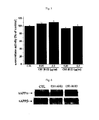
- the quantity of beta-amyloids secreted into the culture medium was measured and shown in Table 1 and Fig. 1 .
- Test Example 2 Inhibitory Activity by Fractions of Lycoris Aurea Extracts CN1-M against Beta-Amyloid Production
- CN1-M a hexane fraction (CN1-MH), methylene chloride fraction (CN1-MM), ethyl acetate fraction (CN1-ME) and butanol fraction (CN1-MB) with a certain concentration (25 ⁇ g/ml)
- CN1-MH hexane fraction
- CN1-MM methylene chloride fraction
- CN1-ME ethyl acetate fraction
- CN1-MB butanol fraction
- Test Example 3 Inhibitory Activity by 4 Types of Subfractions Prepared from the Mixture Fraction (CN1-M-E) of Ethyl Acetate Fraction (CN1-ME) and Butanol Fraction (CN1-MB) against Beta-Amyloid Production
- Test Example 4 Inhibitory Activity by Lycoricidine and Lycoricidinol against Beta-Amyloid Production
- the inhibitory activity test by the compounds, lycoricidine (CN1-M-E2) and lycoricidinol (CN1-M-E3) obtained from Example 3 and Example 4 on A ⁇ 42 and A ⁇ 40 production was carried out by the same method as Test Example 1, and the results are shown in Table 4 and Fig. 4 .
- the lycoricidine and lycoricidinol did not change the activity of the alpha-secretase at concentrations of 0.01 and 0.1 ⁇ g/ml, which were the concentrations at which the compounds effectively inhibited the production of A ⁇ 42 and A ⁇ 40 in Test Example 4 (see Table 4 and Fig. 4 ). Therefore, it can be concluded that the inhibition by lycoricidine and lycoricidinol against the production of A ⁇ 42 and A ⁇ 40 is not caused by the activity change of the alpha-secretase.
- Test Example 6 Inhibitory Activity against Production of Products of Alpha-, or Beta-Secretases by Compounds, Lycoricidine and Lycoricidinol, Prepared from Lycoris Aurea Extracts
Landscapes
- Health & Medical Sciences (AREA)
- Life Sciences & Earth Sciences (AREA)
- Natural Medicines & Medicinal Plants (AREA)
- Medicinal Chemistry (AREA)
- Public Health (AREA)
- Chemical & Material Sciences (AREA)
- Veterinary Medicine (AREA)
- Pharmacology & Pharmacy (AREA)
- Animal Behavior & Ethology (AREA)
- General Health & Medical Sciences (AREA)
- Epidemiology (AREA)
- Engineering & Computer Science (AREA)
- Bioinformatics & Cheminformatics (AREA)
- Alternative & Traditional Medicine (AREA)
- Mycology (AREA)
- Microbiology (AREA)
- Medical Informatics (AREA)
- Botany (AREA)
- Biotechnology (AREA)
- Nuclear Medicine, Radiotherapy & Molecular Imaging (AREA)
- General Chemical & Material Sciences (AREA)
- Neurosurgery (AREA)
- Neurology (AREA)
- Biomedical Technology (AREA)
- Organic Chemistry (AREA)
- Chemical Kinetics & Catalysis (AREA)
- Psychiatry (AREA)
- Hospice & Palliative Care (AREA)
- Pharmaceuticals Containing Other Organic And Inorganic Compounds (AREA)
- Coloring Foods And Improving Nutritive Qualities (AREA)
- Medicines Containing Plant Substances (AREA)
Applications Claiming Priority (1)
| Application Number | Priority Date | Filing Date | Title |
|---|---|---|---|
| PCT/KR2010/005796 WO2012026641A1 (fr) | 2010-08-27 | 2010-08-27 | Composition destinée à prévenir ou à traiter la démence |
Publications (2)
| Publication Number | Publication Date |
|---|---|
| EP2609929A1 true EP2609929A1 (fr) | 2013-07-03 |
| EP2609929A4 EP2609929A4 (fr) | 2014-04-02 |
Family
ID=45723624
Family Applications (1)
| Application Number | Title | Priority Date | Filing Date |
|---|---|---|---|
| EP10856466.7A Withdrawn EP2609929A4 (fr) | 2010-08-27 | 2010-08-27 | Composition destinée à prévenir ou à traiter la démence |
Country Status (4)
| Country | Link |
|---|---|
| US (1) | US20130261147A1 (fr) |
| EP (1) | EP2609929A4 (fr) |
| JP (1) | JP5723010B2 (fr) |
| WO (1) | WO2012026641A1 (fr) |
Cited By (1)
| Publication number | Priority date | Publication date | Assignee | Title |
|---|---|---|---|---|
| CN110074145A (zh) * | 2018-01-26 | 2019-08-02 | 南开大学 | 忽地笑乙醇提取物在农药上的应用 |
Families Citing this family (1)
| Publication number | Priority date | Publication date | Assignee | Title |
|---|---|---|---|---|
| JP5323640B2 (ja) * | 2009-03-04 | 2013-10-23 | 韓国科学技術研究院 | 済州島彼岸花抽出物及び/またはこれから分離された化合物を含む退行性神経疾患の予防及び/または治療用組成物 |
Family Cites Families (13)
| Publication number | Priority date | Publication date | Assignee | Title |
|---|---|---|---|---|
| US3583993A (en) * | 1967-03-28 | 1971-06-08 | Shionogi & Co | Plant growth regulating substances,lycoricidins |
| JPH0665224A (ja) * | 1992-08-13 | 1994-03-08 | Nissan Chem Ind Ltd | リグナン誘導体 |
| CN100450497C (zh) * | 2003-10-10 | 2009-01-14 | 味之素株式会社 | 植物种子提取物及其制备方法 |
| EP1706123A4 (fr) * | 2003-12-22 | 2009-07-15 | Herb Ltd D | Compositions derivees de portulaca oleracea l. et procede d'utilisation de ces dernieres pour moduler les niveaux de glucose sanguin |
| AU2004324030B2 (en) * | 2004-10-15 | 2012-09-06 | Universidade Estadual Paulista-Unesp | Piperidinic derivatives, pharmaceutic compositions containing the same and preparation processes |
| KR101802415B1 (ko) * | 2005-05-09 | 2017-11-28 | 유니젠, 인크. | 바쿠치올의 조성물 및 그것의 제조방법 |
| JP2008013481A (ja) * | 2006-07-05 | 2008-01-24 | Univ Of Tokushima | ゲットウ(Alpiniaspeciosa)由来のチロシナーゼ活性阻害剤及びリポキシゲナーゼ活性阻害剤 |
| WO2008078362A1 (fr) * | 2006-12-22 | 2008-07-03 | The Institute Of Biological Resources | Agent antitumoral et aliment qui le contient |
| KR100740563B1 (ko) * | 2007-02-06 | 2007-07-18 | 주식회사 알앤엘바이오 | 상사화 추출물을 함유하는 항바이러스 조성물 |
| CN101157947B (zh) * | 2007-09-13 | 2011-04-20 | 华中科技大学 | 一种从石蒜属植物中提取活性生物碱的方法 |
| CN102149399A (zh) * | 2008-09-09 | 2011-08-10 | 狮王株式会社 | 富含皂苷元的组合物的制造方法 |
| KR101099651B1 (ko) * | 2008-10-24 | 2011-12-29 | 한국생명공학연구원 | 개상사화 추출물을 유효성분으로 함유하는 암 예방 및 치료용 또는 혈관신생 억제용 약학적 조성물 |
| JP5323640B2 (ja) * | 2009-03-04 | 2013-10-23 | 韓国科学技術研究院 | 済州島彼岸花抽出物及び/またはこれから分離された化合物を含む退行性神経疾患の予防及び/または治療用組成物 |
-
2010
- 2010-08-27 US US13/819,583 patent/US20130261147A1/en not_active Abandoned
- 2010-08-27 WO PCT/KR2010/005796 patent/WO2012026641A1/fr not_active Ceased
- 2010-08-27 EP EP10856466.7A patent/EP2609929A4/fr not_active Withdrawn
- 2010-08-27 JP JP2013526978A patent/JP5723010B2/ja active Active
Cited By (2)
| Publication number | Priority date | Publication date | Assignee | Title |
|---|---|---|---|---|
| CN110074145A (zh) * | 2018-01-26 | 2019-08-02 | 南开大学 | 忽地笑乙醇提取物在农药上的应用 |
| CN110074145B (zh) * | 2018-01-26 | 2022-01-28 | 南开大学 | 忽地笑乙醇提取物在农药上的应用 |
Also Published As
| Publication number | Publication date |
|---|---|
| JP5723010B2 (ja) | 2015-05-27 |
| US20130261147A1 (en) | 2013-10-03 |
| WO2012026641A1 (fr) | 2012-03-01 |
| JP2013537560A (ja) | 2013-10-03 |
| EP2609929A4 (fr) | 2014-04-02 |
Similar Documents
| Publication | Publication Date | Title |
|---|---|---|
| JP2020033374A (ja) | オリーブ果実エキスを含有するTie2活性化剤 | |
| JP2014097977A (ja) | Tie2活性化剤、血管新生抑制剤、血管の成熟化剤、血管の正常化剤、及び血管の安定化剤、並びに医薬品組成物 | |
| KR101745338B1 (ko) | 톱니모자반 추출물을 유효성분으로 포함하는 염증질환의 예방 또는 치료용 조성물 | |
| KR20250163893A (ko) | 염증성 병태 및 장애에 대한 치료적 조합물 | |
| EP2226077B1 (fr) | Extrait de Lycoris chejuenis et/ou d'un composé isolé à partir de celui-ci pour prévenir et/ou traiter des maladies neurodégénératives | |
| EP4349845A1 (fr) | Nouveau composé isoflavone | |
| EP4321518A1 (fr) | Nouveau composé polyphénol | |
| Uesugi et al. | Petasin is the main component responsible for the anti-adipogenic effect of Petasites japonicus | |
| EP2609929A1 (fr) | Composition destinée à prévenir ou à traiter la démence | |
| JP6293402B2 (ja) | Tie2活性化剤、血管新生抑制剤、血管の成熟化剤、及び血管の正常化剤、並びに飲食品 | |
| KR101093778B1 (ko) | 치매의 예방 또는 치료용 조성물 | |
| KR100860540B1 (ko) | 포도나무 수피로부터 분리된 bace-1 저해 효과를 갖는활성물질을 포함하는 퇴행성 뇌질환의 예방 또는 치료용조성물 | |
| KR101332074B1 (ko) | 에스큘레틴을 유효성분으로 함유하는 골 손실 억제용 조성물 | |
| KR20250063358A (ko) | 곽향 추출물을 포함하는 인지능력 또는 기억력 손상 개선용 조성물 | |
| KR100876440B1 (ko) | 수련 추출물을 포함하는 항스트레스 또는 항우울증 조성물 | |
| KR102044232B1 (ko) | 갈색거저리 성충으로부터 BACE-1 또는 AChE에 대한 저해활성을 갖는 화합물을 분리하는 방법 | |
| KR101850752B1 (ko) | 톱니모자반 추출물을 유효성분으로 포함하는 염증질환의 예방 또는 치료용 조성물 | |
| KR102088476B1 (ko) | 레스베라트롤의 함량이 증대된 오디 추출물의 제조 방법 | |
| KR20210113203A (ko) | 대추나무 및 과라나에 있는 생물활성 식물화학물질 | |
| KR20140128710A (ko) | 시나모뭄 캄보디아눔 추출물, 이의 분획물 또는 이로부터 분리한 마리올리드를 유효성분으로 포함하는 염증성 질환 또는 알러지 질환의 예방 또는 치료용 약학적 조성물 | |
| EP3342408A1 (fr) | Composition pharmaceutique pour prévenir et traiter des maladies hépatiques, contenant, en tant que substance active, de la cromolyne ou un sel pharmaceutiquement acceptable de celle-ci | |
| CN1263476C (zh) | 降低有毒成分含量的咔哇提取物及含其组合物与制备方法 | |
| KR102044234B1 (ko) | 갈색거저리 성충으로부터 분리한 화합물을 유효성분으로 포함하는 알츠하이머의 예방 또는 치료용 조성물 | |
| KR20250000936A (ko) | 강황 유래 화합물 인터메딘 b를 유효성분으로 포함하는 뇌염증반응 예방 또는 치료용 조성물 | |
| KR20090011458A (ko) | 코보페놀 에이를 유효성분으로 함유하는 서나일 바이러스성 감염 예방 및 치료용 조성물 |
Legal Events
| Date | Code | Title | Description |
|---|---|---|---|
| PUAI | Public reference made under article 153(3) epc to a published international application that has entered the european phase |
Free format text: ORIGINAL CODE: 0009012 |
|
| 17P | Request for examination filed |
Effective date: 20130327 |
|
| AK | Designated contracting states |
Kind code of ref document: A1 Designated state(s): AL AT BE BG CH CY CZ DE DK EE ES FI FR GB GR HR HU IE IS IT LI LT LU LV MC MK MT NL NO PL PT RO SE SI SK SM TR |
|
| DAX | Request for extension of the european patent (deleted) | ||
| A4 | Supplementary search report drawn up and despatched |
Effective date: 20140303 |
|
| RIC1 | Information provided on ipc code assigned before grant |
Ipc: A61K 31/4375 20060101ALI20140224BHEP Ipc: A61P 25/00 20060101ALI20140224BHEP Ipc: A61P 25/28 20060101ALI20140224BHEP Ipc: A61K 36/896 20060101AFI20140224BHEP |
|
| STAA | Information on the status of an ep patent application or granted ep patent |
Free format text: STATUS: THE APPLICATION IS DEEMED TO BE WITHDRAWN |
|
| 18D | Application deemed to be withdrawn |
Effective date: 20160301 |