EP2610340B1 - Zusammensetzungen und Verfahren in Verbindung mit mRNA-Translation-Enhancer-Elementen - Google Patents
Zusammensetzungen und Verfahren in Verbindung mit mRNA-Translation-Enhancer-Elementen Download PDFInfo
- Publication number
- EP2610340B1 EP2610340B1 EP12195137.0A EP12195137A EP2610340B1 EP 2610340 B1 EP2610340 B1 EP 2610340B1 EP 12195137 A EP12195137 A EP 12195137A EP 2610340 B1 EP2610340 B1 EP 2610340B1
- Authority
- EP
- European Patent Office
- Prior art keywords
- sequence
- absent
- tees
- translational enhancer
- cloning
- Prior art date
- Legal status (The legal status is an assumption and is not a legal conclusion. Google has not performed a legal analysis and makes no representation as to the accuracy of the status listed.)
- Not-in-force
Links
Images


Classifications
-
- C—CHEMISTRY; METALLURGY
- C12—BIOCHEMISTRY; BEER; SPIRITS; WINE; VINEGAR; MICROBIOLOGY; ENZYMOLOGY; MUTATION OR GENETIC ENGINEERING
- C12N—MICROORGANISMS OR ENZYMES; COMPOSITIONS THEREOF; PROPAGATING, PRESERVING, OR MAINTAINING MICROORGANISMS; MUTATION OR GENETIC ENGINEERING; CULTURE MEDIA
- C12N15/00—Mutation or genetic engineering; DNA or RNA concerning genetic engineering, vectors, e.g. plasmids, or their isolation, preparation or purification; Use of hosts therefor
- C12N15/09—Recombinant DNA-technology
- C12N15/10—Processes for the isolation, preparation or purification of DNA or RNA
- C12N15/1034—Isolating an individual clone by screening libraries
- C12N15/1051—Gene trapping, e.g. exon-, intron-, IRES-, signal sequence-trap cloning, trap vectors
-
- C—CHEMISTRY; METALLURGY
- C12—BIOCHEMISTRY; BEER; SPIRITS; WINE; VINEGAR; MICROBIOLOGY; ENZYMOLOGY; MUTATION OR GENETIC ENGINEERING
- C12N—MICROORGANISMS OR ENZYMES; COMPOSITIONS THEREOF; PROPAGATING, PRESERVING, OR MAINTAINING MICROORGANISMS; MUTATION OR GENETIC ENGINEERING; CULTURE MEDIA
- C12N15/00—Mutation or genetic engineering; DNA or RNA concerning genetic engineering, vectors, e.g. plasmids, or their isolation, preparation or purification; Use of hosts therefor
- C12N15/09—Recombinant DNA-technology
- C12N15/63—Introduction of foreign genetic material using vectors; Vectors; Use of hosts therefor; Regulation of expression
- C12N15/79—Vectors or expression systems specially adapted for eukaryotic hosts
- C12N15/85—Vectors or expression systems specially adapted for eukaryotic hosts for animal cells
-
- A—HUMAN NECESSITIES
- A61—MEDICAL OR VETERINARY SCIENCE; HYGIENE
- A61P—SPECIFIC THERAPEUTIC ACTIVITY OF CHEMICAL COMPOUNDS OR MEDICINAL PREPARATIONS
- A61P43/00—Drugs for specific purposes, not provided for in groups A61P1/00-A61P41/00
-
- C—CHEMISTRY; METALLURGY
- C12—BIOCHEMISTRY; BEER; SPIRITS; WINE; VINEGAR; MICROBIOLOGY; ENZYMOLOGY; MUTATION OR GENETIC ENGINEERING
- C12N—MICROORGANISMS OR ENZYMES; COMPOSITIONS THEREOF; PROPAGATING, PRESERVING, OR MAINTAINING MICROORGANISMS; MUTATION OR GENETIC ENGINEERING; CULTURE MEDIA
- C12N15/00—Mutation or genetic engineering; DNA or RNA concerning genetic engineering, vectors, e.g. plasmids, or their isolation, preparation or purification; Use of hosts therefor
- C12N15/09—Recombinant DNA-technology
- C12N15/63—Introduction of foreign genetic material using vectors; Vectors; Use of hosts therefor; Regulation of expression
- C12N15/67—General methods for enhancing the expression
Definitions
- Translation in eukaryotes is initiated following recruitment of the 40S ribosomal subunit, which can occur via the m7G cap-structure, a modified nucleotide found at the 5' ends of mRNAs, or through cap-independent mechanisms.
- the latter has been termed internal initiation of translation and can be mediated by various mechanisms.
- the 40S ribosomal subunit moves to an initiation codon, the 60S ribosomal subunit joins, and peptide synthesis begins.
- Sequence elements contained within non-coding segments at the 5' and 3' ends of mRNAs can affect the efficiency of translation initiation. Sequence elements that can enhance the translation of a cap-dependent mRNA have been termed translational enhancer elements (TEEs).
- TEEs translational enhancer elements
- TEEs enhance translation initiation by a mechanism that involves base pairing to the RNA component of 40S ribosomal subunits, the 18S ribosomal RNA (rRNA).
- rRNA ribosomal RNA
- Some TEEs can also function as ribosomal recruitment sites, facilitating internal initiation of translation; however, most internal ribosome entry sites (IRESes) do not function as TEEs.
- WO00/44896 there is described an isolated nucleic acid molecule that can be incorporated into expression vectors for improving translation of a given mRNA in a cap-dependent and a cap-independent matter.
- WO01/55369 describes synthetic translational regulatory elements including oligonucleotides having translational regulatory activity.
- a method for identifying oligonucleotides with transcriptional/translational regulatory activity in a eukaryotic cell is described in WO01/55371 .
- WO98/37189 describes a translation control element for cap-independent translation.
- WO2007/025008 describes a translational enhancer dependent vector system.
- Database EMBL sequence no.s BF846678.1 and BF846697.1 discloses sequences which comprises a TEE.
- a cloning or expression vector comprising the following elements: (1) a transcriptional promoter, (2) a polynucleotide sequence having a eukaryotic translation initiation codon and encoding a polypeptide operably linked to the transcriptional promoter, (3) a 5' untranslated sequence located between the transcriptional promoter and the eukaryotic translation initiation codon, and (4) a translational enhancer polynucleotide located within the 5' untranslated sequence, wherein the translational enhancer polynucleotide consists of at least two translational enhancer elements (TEEs) and one or more spacer sequences of 1 to 100 nucleotides in length, wherein said at least two TEEs consists of at least two full-length nucleotide sequences that are at least 90% identical to 5'- GCCGAGAGA-3' (SEQ ID NO: 17), wherein the said at least two TEEs are located within about 1-500 nucleotides 5' of
- TEEs translational enhancer
- a DNA vaccine comprising the cloning or expression vector of the invention.
- a eukaryotic host cell transfected with the cloning or expression vector of the invention.
- TEE mRNA translational enhancer element
- the TEE present in the polynucleotide sequences consists of RNSGAGMGRMR (SEQ ID NO:1) or MSCSGCNGMWA (SEQ ID NO:2), or a substantially identical sequence thereof. Also, more than one copy (e.g., 2, 5, 10, 25, 50 or more copies) of each TEE can be present in these polynucleotide sequences.
- the TEE may consist of R 1 N 1 S 1 GAGM 1 GR 2 M 2 R 2 R 3 R 4 (SEQ ID NO:3) or R 5 M 3 S 2 CS 3 GCN 2 GM 4 WR 6 (SEQ ID NO:4), or a substantially identical sequence thereof.
- R 1 is absent, or A or G if present; N 1 is absent, or A,C or G if present, preferably A,C or G; S 1 is absent, or C or G if present, preferably C or G; M 1 is A or C; R 2 is absent, or A or G if present, preferably A or G, and R 1 and R 2 can be the same or different; M 2 is absent, or A or C if present, preferably A or C; R 3 is absent, or A or G if present, preferably absent; R 4 is absent, or C if present, preferably absent; and R 5 is absent, or A if present, preferably absent; M 3 is absent, or C or A if present, preferably C or A; S 2 is absent, or C or G if present, preferably C or G; S 3 is G or C; N 2 is G, C or T; M 4 is A or C; W is absent, or A or T if present and R 6 is absent, or A if present.
- the TEE may consist of R 1 N 1 S 1 GAGM 1 GR 2 M 2 R 2 R 3 R 4 .
- R 1 , R 3 and R 4 are absent; N 1 is A, C or G; S 1 is C or G; M 1 is A or C; R 2 is A or G and M 2 is A or C.
- the TEE may consist of R 5 M 3 S 2 CS 3 GCN 2 GM 4 WR 6 .
- R 5 and R 6 are absent; M 3 is absent, or A or C if present; S 2 is C or G; S 3 is C or G and S 2 and S 3 can be the same or different; N 2 is G, C or T; M 2 is A or C; W is absent, or A if present.
- the polynucleotide sequences may include a TEE having a sequence that is at least 90% identical to a sequence from SEQ ID NOs: 5-35.
- the polynucleotide sequences may include a TEE having a sequence that is identical to one of the sequences of SEQ ID NOs: 5-35.
- polynucleotide sequences at least 2 copies of the TEE are present. In some of the polynucleotide sequences, more than 2 copies of the TEE are present.
- the polynucleotide sequences may include at least 5 copies of the TEE, at least 10 copies, at least 25 or more copies of the TEE.
- the vectors contain a eukaryotic promoter which is operably-linked to a polynucleotide sequence that includes at least one mRNA translational enhancer element (TEE) disclosed herein.
- TEE mRNA translational enhancer element
- the TEE present in the vectors consists of RNSGAGMGRMR (SEQ ID NO:1) or MSCSGCNGMWA (SEQ ID NO:2), or a substantially identical sequence thereof.
- the TEE present in the vectors may consist of R 1 N 1 S 1 GAGM 1 GR 2 M 2 R 2 R 3 R 4 (SEQ ID NO:3) or R 5 M 3 S 2 CS 3 GCN 2 GM 4 WR 6 (SEQ ID NO:4), or a substantially identical sequence thereof.
- R 1 is absent, or A or G if present; N 1 is absent, or A,C or G if present, preferably A,C or G; S 1 is absent, or C or G if present, preferably C or G; M 1 is A or C; R 2 is absent, or A or G if present, preferably A or G, and R 1 and R 2 can be the same or different; M 2 is absent, or A or C if present, preferably A or C; R 3 is absent, or A or G if present, preferably absent; R 4 is absent, or C if present, preferably absent; and R 5 is absent, or A if present, preferably absent; M 3 is absent, or C or A if present, preferably C or A; S 2 is absent, or C or G if present, preferably C or G; S 3 is G or C; N 2 is G, C or T; M 4 is A or C; W is absent, or A or T if present and R 6 is absent, or A if present.
- the TEE present in the vector may consist of R 1 N 1 S 1 GAGM 1 GR 2 M 2 R 2 R 3 R 4 .
- R 1 , R 3 and R 4 are absent; N 1 is A, C or G; S 1 is C or G; M 1 is A or C; R 2 is A or G and M 2 is A or C.
- the TEE present in the vector may consist of R 5 M 3 S 2 CS 3 GCN 2 GM 4 WR 6 .
- R 5 and R 6 are absent; M 3 is absent, or A or C if present; S 2 is C or G; S 3 is C or G and S 2 and S 3 can be the same or different; N 2 is G, C or T; M 2 is A or C; W is absent, or A if present.
- the TEEs consist of a sequence that is substantially identical to a sequence selected from SEQ ID NOs: 5-35. In some other vectors, the TEEs consist of a sequence that is identical to a sequence selected from SEQ ID NOs: 5-35.
- the mRNA translational enhancer element is located 3' to the promoter and adapted for directional ligation of a second polynucleotide sequence encoding a polypeptide of interest. Some of these vectors further include a second polynucleotide sequence encoding a polypeptide of interest which is operably-linked to the mRNA translational enhancer element. In some vectors, the mRNA translational enhancer element is located in the 5' leader of the second polynucleotide sequence. Further provided are DNA vaccines which include a vector expressing an antigen of interest as disclosed herein. Further provided are host cells (e.g., eukaryotic host cells such as CHO cells) which are transfected with the vectors.
- host cells e.g., eukaryotic host cells such as CHO cells
- RNA translational enhancer element present in the vector may consist of RNSGAGMGRMR (SEQ ID NO:1) or MSCSGCNGMWA (SEQ ID NO:2), or a substantially identical sequence thereof.
- the TEE present in the vectors may consist of R 1 N 1 S 1 GAGM 1 GR 2 M 2 R2R 3 R 4 (SEQ ID NO:3) or R 5 M 3 S 2 CS 3 GCN 2 GM 4 WR 6 (SEQ ID NO:4), or a substantially identical sequence thereof.
- R 1 is absent, or A or G if present; N 1 is absent, or A,C or G if present, preferably A,C or G; S 1 is absent, or C or G if present, preferably C or G; M 1 is A or C; R 2 is absent, or A or G if present, preferably A or G, and R 1 and R 2 can be the same or different; M 2 is absent, or A or C if present, preferably A or C; R 3 is absent, or A or G if present, preferably absent; R 4 is absent, or C if present, preferably absent; and R 5 is absent, or A if present, preferably absent; M 3 is absent, or C or A if present, preferably C or A; S 2 is absent, or C or G if present, preferably C or G; S 3 is G or C; N 2 is G, C or T; M 4 is A or C; W is absent, or A or T if present and R 6 is absent, or A if present.
- the TEE present in the vector may consist of R 1 N 1 S 1 GAGM 1 GR 2 M 2 R 2 R 3 R 4 .
- R 1 , R 3 and R 4 are absent; N 1 is A, C or G; S 1 is C or G; M 1 is A or C; R 2 is A or G and M 2 is A or C.
- the TEE present in the vector may consist of R 5 M 3 S 2 CS 3 GCN 2 GM 4 WR 6 .
- R 5 and R 6 are absent; M 3 is absent, or A or C if present; S 2 is C or G; S 3 is C or G and S 2 and S 3 can be the same or different; N 2 is G, C or T; M 2 is A or C; W is absent, or A if present.
- the mRNA translational enhancer element can consist of a sequence that is substantially identical to a sequence selected from the group consisting of SEQ ID NOs: 5-35. In some methods, the mRNA translational enhancer element consists of a sequence that is identical to a sequence selected from the group consisting of SEQ ID NOs: 5-35. Some of the methods can further involve purifying the expressed recombinant polypeptide from the host cells or from the medium surrounding the cultured host cells. Various polypeptides of interest can be produced with the methods described herein. For example, a number of therapeutic proteins of great clinical importance are suitable for the methods.
- TEEs novel mRNA translational enhancer elements
- Motif 1 may be RNSGAGMGRMR (SEQ ID NO:1)
- motif 2 may be MSCSGCNGMWA (SEQ ID NO:2). It is noted that in these sequences, R denotes A or G, M denotes A or C, S denotes G or C, W denotes A or U (T), and N denotes A, G, C or U (T).
- motif 1 may be R 1 N 1 S 1 GAGM 1 GR 2 M 2 R 2 R 3 R 4 (SEQ ID NO: 3).
- R 1 is absent, or A or G if present; N 1 is absent, or A,C or G if present, preferably A, C or G; S 1 is absent, or C or G if present, preferably C or G; M 1 is A or C; R 2 is absent, or A or G if present, preferably A or G, and R 1 and R 2 can be the same or different; M 2 is absent, or A or C if present, preferably A or C; R 3 is absent, or A or G if present, preferably absent; R 4 is absent, or C if present, preferably absent.
- motif 1 may be R 1 N 1 S 1 GAGM 1 GR 2 M 2 R 2 R 3 R 4 (SEQ ID NO: 3) wherein R 1 , R 3 and R 4 are absent; N 1 is A, C or G; S 1 is C or G; M 1 is A or C; R 2 is A or G and M 2 is A or C.
- Motif 2 may be R 5 M 3 S 2 CS 3 GCN 2 GM 4 WR 6 (SEQ ID NO:4).
- R 5 is absent, or A if present, preferably absent
- M 3 is absent, or C or A if present, preferably C or A
- S 2 is absent, or C or G if present, preferably C or G
- S 3 is G or C
- N 2 is G, C or T
- M 4 is A or C
- W is absent, or A or T if present and R 6 is absent, or A if present.
- motif 2 may be R 5 M 3 S 2 CS 3 GCN 2 GM 4 WR 6 (SEQ ID NO: 4) wherein R 5 and R 6 are absent; M 3 is absent, or A or C if present; S 2 is C or G; S 3 is C or G and S 2 and S 3 can be the same or different; N 2 is G, C or T; M 2 is A or C; W is absent, or A if present.
- sequences synthesized based on the consensus motifs are disclosed (e.g. , SEQ ID NOS:5-35). These synthesized sequences are not represented in the sequences used to identify the motif sequences.
- the synthesized sequences exhibit enhanced translation activity. Polynucleotide sequences that contain one or multiple copies of these sequences are capable of enhancing translation by up to 25-fold.
- translation enhancers which are isolated or substantially purified polynucleotides (e.g. , DNA) which contain one or more copies of at least one mRNA translational enhancer element (TEE) disclosed herein. These polynucleotides can function as translation enhancers when operably-linked to a polynucleotide encoding a polypeptide of interest.
- Exemplary TEEs are shown in SEQ ID NOS:1-35. It is noted that while the TEEs are set forth herein in deoxyribonucleotide sequences one should readily appreciate TEEs or polynucleotides including the TEEs also encompass the corresponding ribonucleotide sequences.
- cloning or expression vectors that contain the TEEs or translation enhancer polynucleotides disclosed herein, as well as host cells that harbor such vectors. Further provided are methods of employing the TEEs, the translation enhancer polynucleotides and the expression vectors to enhance translation and production of a desired polypeptide (e.g. , a therapeutic protein).
- a desired polypeptide e.g. , a therapeutic protein
- the disclosed methods employ, unless otherwise indicated, conventional techniques of molecular biology (including recombinant techniques), microbiology, cell biology, biochemistry and immunology, which are within the skill of the art. Such techniques are explained fully in the literature. For example, exemplary methods are described in the following references, Sambrook et al., Molecular Cloning: A Laboratory Manual, Cold Spring Harbor Press (3rd ed., 2001 ); Brent et al., Current Protocols in Molecular Biology, John Wiley & Sons, Inc. (Ringbou ed., 2003 ); and Freshney, Culture of Animal Cells: A Manual of Basic Technique, Wiley-Liss, Inc. (4th ed., 2000 ).
- agent includes any substance, molecule, element, compound, entity, or a combination thereof. It includes, but is not limited to, e.g. , protein, polypeptide, small organic molecule, polysaccharide, polynucleotide, and the like. It can be a natural product, a synthetic compound, or a chemical compound, or a combination of two or more substances. Unless otherwise specified, the terms “agent”, “substance”, and “compound” are used interchangeably herein.
- cistron means a unit of DNA that encodes a single polypeptide or protein.
- transcriptional unit refers to the segment of DNA within which the synthesis of RNA occurs.
- DNA vaccines refers to a DNA that can be introduced into a host cell or a tissue and therein expressed by cells to produce a messenger ribonucleic acid (mRNA) molecule, which is then translated to produce a vaccine antigen encoded by the DNA.
- mRNA messenger ribonucleic acid
- genes of interest is intended to include a cistron, an open reading frame (ORF), or a polynucleotide sequence which codes for a protein product (protein of interest) whose production is to be regulated by the translational enhancer elements (TEEs).
- genes of interest include genes encoding therapeutic proteins, nutritional proteins and industrial useful proteins.
- Genes of interest can also include reporter genes or selectable marker genes such as enhanced green fluorescent protein (EGFP), luciferase genes ( Renilla or Photinus ).
- EGFP enhanced green fluorescent protein
- luciferase genes Renilla or Photinus
- Expression is the process by which a polypeptide is produced from DNA.
- the process involves the transcription of the gene into mRNA and the subsequent translation of the mRNA into a polypeptide.
- endogenous refers to a gene normally found in the wild-type host, while the term “exogenous” refers to a gene not normally found in the wild-type host.
- a “host cell” refers to a living cell into which a heterologous polynucleotide sequence is to be or has been introduced.
- the living cell includes both a cultured cell and a cell within a living organism.
- Means for introducing the heterologous polynucleotide sequence into the cell are well known, e.g. , transfection, electroporation, calcium phosphate precipitation, microinjection, transformation, viral infection, and/or the like.
- the heterologous polynucleotide sequence to be introduced into the cell is a replicable expression vector or cloning vector.
- Host cells can be engineered to incorporate a desired gene on its chromosome or in its genome. Many host cells can be employed ( e.g.
- the host cell may be a eukaryotic cell.
- homolog refers to a sequence which has a structure (e.g. , nucleotide sequence) that is substantially identical to that of a reference sequence (e.g., the specific mRNA translational enhancer elements disclosed herein). Typically, the homolog maintains the ability to enhance translation of an mRNA encoded by a gene of interest. Homologs may be screened for activity by creating mutations in the reference sequence described above, inserting the mutated sequence at an appropriate position in an expression vector containing a promoter operably linked to a reporter gene or a gene of interest. The expression vector can then be introduced into a host cell to examine translation of the protein encoded by the gene. If translation from the reporter gene is the same as that of the reporter gene under the control of the reference enhancer sequence then the mutated sequence is a functional homolog.
- a reference sequence e.g., the specific mRNA translational enhancer elements disclosed herein.
- the homolog maintains the ability to enhance translation of an mRNA encoded by a gene of
- inducing agent is used to refer to a chemical, biological or physical agent that effects translation from an inducible translational regulatory element. In response to exposure to an inducing agent, translation from the element generally is initiated de novo or is increased above a basal or constitutive level of expression.
- An inducing agent can be, for example, a stress condition to which a cell is exposed, for example, a heat or cold shock, a toxic agent such as a heavy metal ion, or a lack of a nutrient, hormone, growth factor, or the like; or can be a compound that affects the growth or differentiation state of a cell such as a hormone or a growth factor.
- isolated or purified polynucleotide is intended to include a piece of polynucleotide sequence (e.g. , DNA) which has been isolated at both ends from the sequences with which it is immediately contiguous in the naturally occurring genome of the organism.
- the purified polynucleotide can be an oligonucleotide which is either double or single stranded; a polynucleotide fragment incorporated into a vector; a fragment inserted into the genome of a eukaryotic or prokaryotic organism; or a fragments used as a probe.
- substantially pure when referring to a polynucleotide, means that the molecule has been separated from other accompanying biological components so that, typically, it has at least 85 percent of a sample or greater percentage.
- nucleic acid sequence refers to a deoxyribonucleotide or ribonucleotide polymer in either single- or double-stranded form, and unless otherwise limited, encompasses known analogs of natural nucleotides that hybridize to nucleic acids in a manner similar to naturally-occurring nucleotides. Nucleic acid sequences can be, e.g.
- prokaryotic sequences eukaryotic mRNA sequences, cDNA sequences from eukaryotic mRNA, genomic DNA sequences from eukaryotic DNA ( e.g ., mammalian DNA), and synthetic DNA or RNA sequences, but are not limited thereto.
- promoter means a nucleic acid sequence capable of directing transcription and at which transcription is initiated.
- a variety of promoter sequences are known in the art.
- such elements can include, but are not limited to, TATA-boxes, CCAAT-boxes, bacteriophage RNA polymerase specific promoters (e.g. , T7, SP6, and T3 promoters), an SP1 site, and a cyclic AMP response element. If the promoter is of the inducible type, then its activity increases in response to an inducing agent.
- the five prime leader or untranslated region (5' leader, 5' leader sequence or 5' UTR) is a particular section of messenger RNA (mRNA) and the DNA that codes for it. It starts at the +1 position (where transcription begins) and ends just before the start codon (usually AUG) of the coding region. In bacteria, it may contain a ribosome binding site (RBS) known as the Shine-Delgarno sequence.
- the 5' leader may be a hundred or more nucleotides long, and the 3' UTR may be even longer (up to several kilobases in length).
- operably linked refers to functional linkage between genetic elements that are joined in a manner that enables them to carry out their normal functions.
- a gene is operably linked to a promoter when its transcription is under the control of the promoter and the transcript produced is correctly translated into the protein normally encoded by the gene.
- a translational enhancer element is operably associated with a gene of interest if it allows up-regulated translation of a mRNA transcribed from the gene.
- a sequence of nucleotides adapted for directional ligation is a region of an expression vector that provides a site or means for directional ligation of a polynucleotide sequence into the vector.
- a directional polylinker is a sequence of nucleotides that defines two or more restriction endonuclease recognition sequences, or restriction sites. Upon restriction cleavage, the two sites yield cohesive termini to which a polynucleotide sequence can be ligated to the expression vector.
- the two restriction sites may provide, upon restriction cleavage, cohesive termini that are non-complementary and thereby permit directional insertion of a polynucleotide sequence into the cassette.
- sequence of nucleotides adapted for directional ligation can contain a sequence of nucleotides that defines multiple directional cloning means.
- sequence of nucleotides adapted for directional ligation defines numerous restriction sites, it is referred to as a multiple cloning site.
- subject for purposes of treatment refers to any animal classified as a mammal, e.g., human and non-human mammals. Examples of non-human animals include dogs, cats, cattle, horses, sheep, pigs, goats, rabbits, and etc. Except when noted, the terms "patient” or “subject” are used herein interchangeably. The subject may be human.
- Transcription factor refers to any polypeptide that is required to initiate or regulate transcription.
- such factors include, but are not limited to, c-Myc, c-Fos, c-Jun, CREB, cEts, GATA, GAL4, GAL4/Vp16, c-Myb, MyoD, NF- ⁇ B, bacteriophage-specific RNA polymerases, Hif-1, and TRE.
- Example of sequences encoding such factors include, but are not limited to, GenBank accession numbers K02276 (c-Myc), K00650 (c-fos), BC002981 (c-jun), M27691 (CREB), X14798 (cEts), M77810 (GATA), K01486 (GAL4), AY136632 (GAL4/Vp16), M95584 (c-Myb), M84918 (MyoD), 2006293A (NF- ⁇ B), NP 853568 (SP6 RNA polymerase), AAB28111 (T7 RNA polymerase), NP 523301 (T3 RNA polymerase), AF364604 (HIF-1), and X63547 (TRE).
- GenBank accession numbers K02276 c-Myc
- K00650 c-fos
- BC002981 c-jun
- M27691 CREB
- X14798 cEts
- M77810 GATA
- a "substantially identical" nucleic acid or amino acid sequence refers to a nucleic acid or amino acid sequence which includes a sequence that has at least 90% sequence identity to a reference sequence as measured by one of the well known programs described herein (e.g. , BLAST) using standard parameters.
- the sequence identity can be at least 95%, at least 98%, and at least 99%.
- the subject sequence may be of about the same length as compared to the reference sequence, i.e., consisting of about the same number of contiguous amino acid residues (for polypeptide sequences) or nucleotide residues (for polynucleotide sequences).
- Sequence identity can be readily determined with various methods known in the art.
- the BLASTP program uses as defaults a wordlength (W) of 3, an expectation (E) of 10, and the BLOSUM62 scoring matrix (see Henikoff & Henikoff, Proc. Natl. Acad. Sci. USA 89:10915 (1989 )).
- Percentage of sequence identity is determined by comparing two optimally-aligned sequences over a comparison window, wherein the portion of the polynucleotide sequence in the comparison window may include additions or deletions ( i.e ., gaps) as compared to the reference sequence (which does not include additions or deletions) for optimal alignment of the two sequences.
- the percentage is calculated by determining the number of positions at which the identical nucleic acid base or amino acid residue occurs in both sequences to yield the number of matched positions, dividing the number of matched positions by the total number of positions in the window of comparison and multiplying the result by 100 to yield the percentage of sequence identity.
- TEE translational enhancer element
- Translational enhancer polynucleotides or “translation enhancer polynucleotide sequences” are polynucleotides which include one or more of the specific TEE exemplified herein ( i.e ., SEQ ID NOs:1-35) or their variants, homologs or functional derivatives.
- One or multiple copies of a specific TEE can be present in the polynucleotides.
- the TEEs in the translational enhancer polynucleotides can be organized in one or more sequence segments.
- a sequence segment can harbor one or more of the specific TEEs exemplified herein, with each TEE being present in one or more copies.
- multiple sequence segments When multiple sequence segments are present in a translational enhancer polynucleotide, they can be homogenous or heterogeneous. Thus, the multiple sequence segments in a translational enhancer polynucleotide can harbor identical or different types of the specific TEEs exemplified herein, identical or different number of copies of each of the specific TEEs, and /or identical or different organization of the TEEs within each sequence segment.
- treating includes the administration of compounds or agents to a subject to prevent or delay the onset of the symptoms, complications, or biochemical indicia of a disease (e.g. , a cardiac dysfunction), alleviating the symptoms or arresting or inhibiting further development of the disease, condition, or disorder.
- Subjects in need of treatment include patients already suffering from the disease or disorder as well as those prone to have the disorder or those in whom the disorder is to be prevented.
- Treatment may be prophylactic (to prevent or delay the onset of the disease, or to prevent the manifestation of clinical or subclinical symptoms thereof) or therapeutic suppression or alleviation of symptoms after the manifestation of the disease.
- a therapeutic agent may directly decrease the pathology of the disease, or render the disease more susceptible to treatment by other therapeutic agents.
- vector refers to polynucleotide sequence elements arranged in a definite pattern of organization such that the expression of genes/gene products that are operably linked to these elements can be predictably controlled. Typically, they are transmissible polynucleotide sequences (e.g. , plasmid or virus) into which a segment of foreign DNA can be spliced in order to introduce the foreign DNA into host cells to promote its replication and/or transcription.
- transmissible polynucleotide sequences e.g. , plasmid or virus
- a cloning vector is a DNA sequence (typically a plasmid or phage) which is able to replicate autonomously in a host cell, and which is characterized by one or a small number of restriction endonuclease recognition sites. A foreign DNA fragment may be spliced into the vector at these sites in order to bring about the replication and cloning of the fragment.
- the vector may contain one or more markers suitable for use in the identification of transformed cells. For example, markers may provide tetracycline or ampicillin resistance.
- An expression vector is similar to a cloning vector but is capable of inducing the expression of the DNA that has been cloned into it, after transformation into a host.
- the cloned DNA is usually placed under the control of ( i.e ., operably linked to) certain regulatory sequences such as promoters or enhancers. Promoter sequences may be constitutive, inducible or repressible.
- translational enhancer polynucleotides which function as translational enhancers.
- These translational enhancer polynucleotides include the specific mRNA translational enhancer elements (TEEs) disclosed herein or their variants, homologs or functional derivatives.
- the translational enhancer polynucleotides can contain one or more sequence segments including the consensus Motif 1 (SEQ ID NO:1), Motif 2 (SEQ ID NO:2), Motif 1a (SEQ ID NO: 3), or Motif 2a (SEQ ID NO: 4).
- Some of the translational enhancer polynucleotides can contain one or more sequence segments that include one of the specific mRNA TEEs shown in SEQ ID NOs:5-35.
- mRNA TEEs As demonstrated in the Examples below, expression of a polypeptide of interest in a vector that harbors one of these mRNA TEEs results in significant increase of protein production.
- the mRNA TEEs also can encompass sequences that are substantially identical to one of these exemplified sequences and can retain the basic functional characteristic of enhancing the expression of an operably linked gene of interest in a host cell.
- a sequence segment in the translational enhancer polynucleotides can contain just one specific mRNA TEE or several of the mRNA TEEs shown in SEQ ID NOs:1-35. For each of the specific mRNA TEEs present in a sequence segment, there can be just one copy of the mRNA TEE in the sequence segment. Alternatively, multiple copies of each of the mRNA TEEs can be present in each sequence segment.
- the different mRNA TEE elements in the translational enhancer polynucleotides can be operatively linked adjacent to each other or separated by spacer nucleotide sequences that can vary from 1 to about 100 nucleotides in length.
- Some translational enhancer polynucleotides contain only one sequence segment. Some other translational enhancer polynucleotides contain a plurality of sequence segments. The sequence segments can be homogenous or heterogeneous.
- translational enhancer polynucleotide sequence segment which includes a mRNA TEE sequence that is the same or substantially identical to one of the sequences shown in SEQ ID NOs: 1-35.
- a translational enhancer polypeptide sequence segment which contains 2, 3, 4, 5, 10, 25, 50 or more copies of a specific mRNA TEE shown in SEQ ID NOs:1-35.
- the translational enhancer polynucleotides may relate to a sequence segment which contains more than one ( e.g. , 2, 3, 4, 5, or more) of the different mRNA TEEs shown in SEQ ID NOs:1-35 or their variants or homologs and each of the specific mRNA TEEs can be present in one or more copies (e.g.
- the translational enhancer polynucleotides may contain more than one of the sequence segments noted above.
- the different sequence segments can be identical in terms of the types of specific mRNA TEEs and the number of copies of each specific mRNA TEE harbored therein.
- the multiple sequence segments can be different in the types of specific mRNA TEEs and/or the number of copies of each of the specific mRNA TEEs.
- the specific mRNA TEEs or translational enhancer polynucleotides disclosed herein can be used to construct recombinant cloning vectors or expression vectors. Such vectors are useful for expressing a polypeptide or protein of interest, e.g. , a therapeutic protein. They can also be employed in therapeutic applications such as DNA vaccines or gene therapy.
- the recombinant vectors can be constructed from a plasmid, virus or other vehicles known in the art by insertion or incorporation of one or more of the specific mRNA TEEs or translational enhancer polynucleotides described herein. Examples of such vehicles are discussed in the Examples below.
- the vectors contain a promoter suitable for expression a polypeptide of interest in a host cell (e.g. , mammalian host cells).
- a TEE-containing sequence is operably linked to the promoter, e.g. , at 3' to the promoter.
- the TEE-containing sequence can be one of the specific TEEs shown in SEQ ID NOs:1-35, a sequence segment including a TEE or a translational enhancer polynucleotide as described above.
- the vectors can additionally harbor a sequence of nucleotides adapted for directional ligation of a polynucleotide sequence encoding a polypeptide of interest.
- a polylinker can be employed for cloning the polynucleotide sequence so that the cloned sequence is operably linked to and put under the control of the promoter and the TEE-containing sequence.
- Polylinkers are polynucleotide sequences that can have a series of three or more closely spaced restriction endonuclease recognition sequences (see, e.g. , Sambrook et al., supra).
- the vectors may allow the polynucleotide sequence to be cloned into the vectors at a position so that the TEE is present in the 5' leader of the transcribed mRNA encoding the polypeptide of interest.
- some recombinant vectors described herein further contain a gene of interest or a polynucleotide encoding a protein or a polypeptide of interest.
- the gene of interest or the polynucleotide sequence is operably linked to a promoter sequence and the TEE which facilitate the efficient transcription of the inserted polynucleotide sequence in a host cell.
- Translation of eukaryotic mRNA initiates at AUG codon which encodes methionine of an mRNA. For this reason, the linkage between a promoter and the gene of interest should not contain any intervening codons for methionine.
- the presence of such codons may result in the formation of a fusion protein (if the AUG codon is in the same reading frame as the gene of interest) or the formation of a peptide that either terminates upstream of the authentic initiation codon or overlaps the gene, but in a different reading frame.
- the gene of interest which encodes a protein may include the 5' leader and 3' untranslated (UTR) sequences. Alternatively, the 5' leader and/or 3' untranslated regions in the output transcription product are already present in the vector prior to cloning of the gene of interest. At least one TEE is located in the 5' leader and/or the 3' untranslated regions.
- the translational enhancer is located between the transcription promoter and the AUG codon.
- the exact position of the TEEs relative to the promoter and the cap site of the gene of interest is not critical; however, the exact position may affect efficiency.
- some TEEs can enhance translation when located in the 5' leader of the encoded mRNA, or in the 3' untranslated region.
- the TEE may be situated in the 5' leader sequence of the gene of interest or a cistron and the enhancer element is positioned within about 1-500 nucleotides, particularly within about 1-100 or about 1-50 nucleotides of the translation start site.
- the recombinant vectors can have one or more of the specific translational enhancer elements shown in SEQ ID NOs:1-35.
- the vectors can harbor just one copy of the enhancer element or multiple copies of the same enhancer element.
- concatemers of 2, 5, 10, 20, 35, 50 or 75 copies of a specific TEE shown in SEQ ID NOs:1-35 can be present in some of the recombinant expression vectors.
- Some other vectors have multiple sequence segments which independently can include one or more of the specific TEE sequences exemplified herein.
- the recombinant or expression vectors can contain additional sequence elements.
- the vector can contain an origin of replication, as well as specific markers which allow phenotypic selection of the transfected or transformed host cells.
- Other elements present in the vectors will vary depending upon host cell type, but will generally include sequences involved in the initiation of transcription and translation and sequences signaling the termination of transcription. Transcriptional enhancer sequences may also be present.
- the vectors can also include coding sequences within the same transcription unit, controlling elements such as ribosome binding sites, and polyadenylation sites, additional transcription units under control of the same or a different promoter, sequences that permit cloning, expression, and transformation of a host cell.
- the vectors may include a polynucleotide that encodes a signal peptide that directs the polypeptide encoded by the cloned gene of interest to the surface of the host cell.
- the vectors can also include a polynucleotide that encodes a molecular tag that can facilitate separation of a host cell that expresses the reporter gene from a host cell that does not express the reporter gene.
- the recombinant vectors may be intended for expressing a protein of interest in eukaryotic host cells. As detailed below, these include various mammalian cells as well as insect cells or plant cells.
- DNA vaccines which expresses a target antigen from an expression vector disclosed herein.
- a large number of vectors suitable for use in eukaryotes are known in the art. Examples include the pMSXND expression vector for expression in mammalian cells ( Lee and Nathans, J. Biol. Chem. 263:3521, 1988 ); baculovirus-derived vectors for expression in insect cells; and other vectors for eukaryotic expression as described in Botstein et al., Miami Winter Symp.
- the translational enhancer elements or polynucleotides may be incorporated into DNA constructs designed for homologous recombination. Such constructs are described, e.g. , in Capecchi, TIG 5:70, 1989 ; Mansour et al., Nature 336:348, 1988 ; Thomas et al., Cell 51:503, 1987 ; and Doetschman et al., Nature 330:576, 1987 .
- the mRNA TEEs or translational enhancer polynucleotides are typically present in the vectors operably linked to regulatory elements such as a promoter, as noted above.
- regulatory elements such as a promoter
- many different promoters can be employed in the recombinant vectors. Examples of promoters that can be used include the promoter of the mouse metallothionein I gene ( Hamer et al. J. Mol. Appl. Gen. 1:273, 1982 ); the immediate early and TK promoters of Herpes virus ( Yao et al. J. Virol. 69:6249-6258, 1995 ); the SV 40 early promoter ( Benoist et al.
- Additional promoters that can be used to construct recombinant expression vectors include the light-inducible promoter from the small subunit of ribulose bis-phosphate carboxylase (ssRUBISCO) ( Coruzzi et al., EMBO J., 3:1671, 1984 ; and Broglie et al., Science, 224:838, 1984 ); mannopine synthase promoter ( Velten et al., EMBO J., 3:2723, 1984 ); nopaline synthase (NOS) promoter ( Shaw et al., Nucl.Acids Res., 12:7831-46, 1984 ); octopine synthase (OCS) promoter ( Koncz et al., EMBO J.
- ssRUBISCO ribulose bis-phosphate carboxylase
- Promoters can include both constitutive and inducible natural promoters as well as engineered promoters.
- the CaMV promoters are examples of constitutive promoters.
- an inducible promoter should 1) provide low expression in the absence of the inducer; 2) provide high expression in the presence of the inducer; 3) employ an induction scheme that does not interfere with the normal physiology of the plant; and 4) have no effect on the expression of other genes.
- the recombinant vectors can optionally contain a selectable marker.
- the marker typically encodes a trait or a phenotype which permits the selection of, or the screening for, a host cell containing the marker.
- the marker gene may be an antibiotic resistance gene whereby the appropriate antibiotic can be used to select for transformed plant cells from among cells that are not transformed.
- Suitable selectable markers include adenosine deaminase, dihydrofolate reductase, hygromycin-B-phosphotransferase, thymidine kinase, xanthine-guanine phospho-ribosyltransferase and amino-glycoside 3'-O-phosphotransferase II (kanamycin, neomycin and G418 resistance).
- Other suitable markers will be known to those of skill in the art, e.g ., screenable markers such as the GUS reporter gene (uidA), luciferase or the GFP gene.
- therapeutic proteins that can be expressed with the vectors can include therapeutic antibodies such as Herceptin®, polypeptide antigens from various pathogens such as disease causing bacteria or viruses (e.g. , E. coli, P. aeruginosa, S. aureus, malaria, HIV, rabies virus, HBV, and cytomegalovirus), and other proteins such as lactoferrin, thioredoxin and beta-caseinvaccines.
- therapeutic antibodies such as Herceptin®
- polypeptide antigens from various pathogens such as disease causing bacteria or viruses (e.g. , E. coli, P. aeruginosa, S. aureus, malaria, HIV, rabies virus, HBV, and cytomegalovirus)
- pathogens e.g. , E. coli, P. aeruginosa, S. aureus, malaria, HIV, rabies virus, HBV, and cytomegalovirus
- proteins nutritionally important proteins; growth promoting factors; proteins for early flowering in plants; proteins giving protection to the plant under certain environmental conditions, e.g. , proteins conferring resistance to metals or other toxic substances, such as herbicides or pesticides; stress related proteins which confer tolerance to temperature extremes; proteins conferring resistance to fungi, bacteria, viruses, insects and nematodes; proteins of specific commercial value, e.g., enzymes involved in metabolic pathways, such as EPSP synthase.
- the recombinant vectors harboring the gene of interest and the mRNA TEEs or enhancer polynucleotides described herein can be introduced into an appropriate host cell by any means known in the art.
- the vector can be transfected into the host cell by calcium phosphate co-precipitation, by conventional mechanical procedures such as microinjection or electroporation, by insertion of a plasmid encased in liposomes, and by virus vectors.
- These techniques are all well known and routinely practiced in the art, e.g. , Brent et al., Current Protocols in Molecular Biology, John Wiley & Sons, Inc.
- Host cells which harbor the transfected recombinant vector can be identified and isolated using the selection marker present on the vector. Large numbers of recipient cells may then be grown in a medium which selects for vector-containing cells. These cells may be used directly or the expressed recombinant protein may be purified in accordance with conventional methods such as extraction, precipitation, chromatography, affinity methods, electrophoresis and the like. The exact procedure used will depend upon the specific protein produced and the specific vector/host expression system utilized.
- Host cells for expressing the recombinant vectors may be eukaryotic cells.
- Eukaryotic vector/host systems, and mammalian expression systems allow for proper post-translational modifications of expressed mammalian proteins to occur, e.g., proper processing of the primary transcript, glycosylation, phosphorylation and advantageously secretion of expressed product. Therefore, eukaryotic cells such as mammalian cells can be the host cells for the protein of a polypeptide of interest. Examples of such host cell lines include CHO, BHK, HEK293, VERO, HeLa, COS, MDCK, NSO and W138.
- Engineered mammalian cell systems that utilize recombinant viruses or viral elements to direct expression of the protein of interest may be employed.
- the coding sequence of a protein of interest along with a TEE or translational enhancer polynucleotide may be ligated to an adenovirus transcription/translation control complex, e.g., the late promoter and tripartite leader sequence.
- This chimeric gene may then be inserted into the adenovirus genome by in vitro or in vivo recombination.
- Insertion in a non-essential region of the viral genome will result in a recombinant virus that is viable and capable of expressing the polypeptide of interest in infected hosts (e.g., see Logan & Shenk, Proc. Natl. Acad. Sci. USA 81:3655-3659, 1984 ).
- the vaccinia virus 7.5K promoter may be used. ( e.g., see, Mackett et al., Proc. Natl. Acad. Sci. USA, 79:7415-7419, 1982 ; Mackett et al., J. Virol. 49:857-864, 1984 ; Panicali et al., Proc.
- vectors based on bovine papilloma virus which have the ability to replicate as extrachromasomal elements ( Sarver et al., Mol. Cell. Biol. 1:486, 1981 ). These vectors can be used for stable expression by including a selectable marker in the plasmid, such as the neo gene.
- the retroviral genome can be modified for use as a vector capable of introducing and directing the expression of the gene of interest in host cells ( Cone & Mulligan, Proc. Natl. Acad. Sci. USA 8 1:6349-6353, 1984 ).
- High level expression may also be achieved using inducible promoters, including, but not limited to, the metallothionine IIA promoter and heat shock promoters.
- the host cell for expression of the recombinant vectors can also be yeast.
- yeast a number of vectors containing constitutive or inducible promoters may be used. See, e.g. , Brent et al., Current Protocols in Molecular Biology, John Wiley & Sons, Inc. (ringbou ed., 2003 ); and The Molecular Biology of the Yeast Saccharomyces, Strathem et al. (eds.), Cold Spring Harbor Press (1982 ).
- a constitutive yeast promoter such as ADH or LEU2 or an inducible promoter such as GAL may be used.
- vectors may be used which promote integration of foreign DNA sequences into the yeast chromosome.
- the expression of a gene of interest may be driven by any of a number of promoters.
- viral promoters such as the 35S RNA and 19S RNA promoters of CaMV ( Brisson et al., Nature 310 ⁇ 511-514, 1984 ) or the coat protein promoter to TMV ( Takamatsu et al., EMBO J., 3:17-3 11, 1987 ) may be used.
- plant promoters such as the small subunit of RUBISCO ( Coruzzi et al., EMBO J.
- An alternative expression system that can be used to express a protein of interest with the recombinant vectors is an insect system.
- Autographa californica nuclear polyhedrosis virus (AcNPV) is used as a vector to express foreign genes.
- the virus grows in Spodoptera frugiperda cells.
- the zinc finger-nucleotide binding polypeptide coding sequence may be cloned into non-essential regions of the virus and placed under control of an AcNPV promoter (e.g., the polyhedrin promoter).
- the expressed recombinant protein may be purified in accordance with conventional methods such as extraction, precipitation, chromatography, affinity chromatography, electrophoresis and the like. The exact procedure used will depend upon both the specific protein produced and the specific expression system utilized. For long-term, high-yield production of recombinant proteins, stable expression is preferred.
- host cells can be transformed with a vector that allows stable integration of the vector into the host chromosomes.
- Host cells with stably integrated polynucleotides that encode the protein of interest can grow to form foci which in turn can be cloned and expanded into cell lines. For example, following the introduction of foreign DNA, engineered cells may be allowed to grow for 1-2 days in an enriched media, and then switched to a selective media.
- a vector for therapeutic expression of proteins can be constructed with an mRNA TEE or translational enhancer polynucleotide described above and a polynucleotide encoding a therapeutic protein.
- Other examples include vectors to be used in vaccines so that increased antigen production can be achieved.
- the translational enhancer elements and polynucleotides disclosed herein may be used in the preparation of DNA vaccines.
- the DNA vaccines can be generally comprised of an expression vector wherein expression of a vaccine antigen is enhanced by the presence of one or more of the translational enhancer elements (e.g. , SEQ ID NOs:1-35).
- the DNA vaccines can deliver and express more than one antigen.
- the DNA vaccine vector typically also includes a promoter for transcription initiation that is active in eukaryotic cells. Such DNA vaccine vectors can be generated in accordance with the methods well known in the art.
- DNA vaccines can include viral vectors such as ALVAC (a canarypox virus), MVA (a cowpox variant), and ADV5 (adenovirus 5) vectors, as well as plasmid vectors such as pUC19 (ATCC# 37254), pcDNA3.1 (Invitrogen, Carlsbad, CA), pNGVL (National Gene Vector Laboratory, University of Michigan, MI), p414cyc (ATCC# 87380), pBSL130 (ATCC# 87145), and pECV25 (ATCC#77187).
- promoters that can be employed in the vaccine vectors include, e.g. , the SV40 early promoter, the cytomegalovirus immediate early promoter/enhancer, and various eukaryotic promoters described herein.
- a diverse array of vaccine antigens can be expressed by the DNA vaccines. These include, e.g. , HIV-1 antigens, Hepatitis C virus antigens, Hepatitis B virus antigens, Herpes Simplex viral antigens, Pox virus antigens, Influenza virus antigens, Measles virus antigens, Dengue virus antigens, Entamoeba histolytica antigens, Semliki Forest virus antigens, Papilloma virus antigens, Plasmodium vivax and Plasmodium falciparum antigens. Additional information of antigens that can be expressed in the DNA vaccines can be obtained from the website of DNAvaccine.com.
- the DNA vaccines can be used to immunize any subject in need of prevention or protection against infection of a pathogen (e.g., HIV infection).
- a pathogen e.g., HIV infection
- Such subjects include humans and non-human animals such as rodents (e.g. mice, rats and guinea pigs), swine, chickens, ferrets, non-human primates.
- rodents e.g. mice, rats and guinea pigs
- swine chickens
- ferrets non-human primates.
- Methods of administering a DNA vaccine to a suitable subject are described in the art. See, e.g., Webster et al, Vacc., 12:1495-1498, 1994 ; Bernstein et al., Vaccine, 17:1964, 1999 ; Huang et al., Viral Immunol., 12:1, 1999 ; Tsukamoto et al., Virol.
- the DNA vaccines can also be formulated with an adjuvant.
- Suitable adjuvants that can be employed include, e.g., aluminum phosphate or aluminum hydroxyphosphate, monophosphoryl-lipid A, QS-21 saponin, dexamethasone, CpG DNA sequences, Cholera toxin, cytokines or chemokines.
- Such adjuvants enhance immunogenicity of the DNA vaccines. Methods of preparing such modified DNA vaccines are known in the art.
- an expression vector harboring a translational enhancer element or polynucleotide and expressing a therapeutic protein are transfected into target cells, ex vivo or in vivo, through the interaction of the vector and the target cell.
- the compositions are administered to a subject in an amount sufficient to elicit a therapeutic response in the subject.
- gene therapy procedures have been used to correct acquired and inherited genetic defects, cancer, and viral infection in a number of contexts.
- adenocarcinomas which include malignancies such as most colon cancers, renal-cell carcinoma, prostate cancer, non-small cell carcinoma of the lung, cancer of the small intestine, and cancer of the esophagus.
- a recombinant expression vector containing an mRNA TEE or translational enhancer polynucleotide disclosed herein is also useful in treating non-malignant cell-proliferative diseases such as psoriasis, pemphigus vulgaris, Behcet's syndrome, and lipid histiocytosis.
- non-malignant cell-proliferative diseases such as psoriasis, pemphigus vulgaris, Behcet's syndrome, and lipid histiocytosis.
- any disorder that can be treated or ameliorated with a therapeutic protein is considered susceptible to treatment with an expression vector that expresses the therapeutic protein at increased level due to the presence of the translational enhancer element in the vector.
- Non-viral vector delivery systems include DNA plasmids, naked nucleic acid, and nucleic acid complexed with a delivery vehicle such as a liposome.
- Viral vector delivery systems include DNA and RNA viruses, which have either episomal or integrated genomes after delivery to the cell.
- Methods of non-viral delivery of nucleic acids include lipofection, microinjection, biolistics, virosomes, liposomes, immunoliposomes, polycation or lipid:nucleic acid conjugates, naked DNA, artificial virions, and agent-enhanced uptake of DNA. Lipofection is described in, e.g ., US Pat. No. 5,049,386 , US Pat. No. 4,946,787 ; and US Pat.
- Cationic and neutral lipids that are suitable for efficient receptor-recognition lipofection of polynucleotides include those described in, e.g. , WO 91/17424 and WO 91/16024 . Delivery can be to cells ( ex vivo administration) or target tissues ( in vivo administration).
- a viral vector is typically modified to have specificity for a given cell type by expressing a ligand as a fusion protein with a viral coat protein on the viruses outer surface.
- the ligand is chosen to have affinity for a receptor known to be present on the cell type of interest.
- Han et al. Proc. Natl. Acad. Sci. USA. 92:9747-9751, 1995 ) reported that Moloney murine leukemia virus can be modified to express human heregulin fused to gp70, and the recombinant virus infects certain human breast cancer cells expressing human epidermal growth factor receptor.
- filamentous phage can be engineered to display antibody fragments (e.g., FAB or Fv) having specific binding affinity for virtually any chosen cellular receptor.
- FAB fragment-binding protein
- Fv antibody fragment-binding protein
- the expression vectors can be delivered in vivo by administration to an individual subject, typically by systemic administration (e.g., intravenous, intraperitoneal, intramuscular, subdermal, or intracranial infusion) or topical application, as described below.
- vectors can be delivered to cells ex vivo, such as cells explanted from an individual subject (e.g., lymphocytes, bone marrow aspirates, tissue biopsy) or universal donor hematopoietic stem cells, followed by reimplantation of the cells into a subject, usually after selection for cells which have incorporated the vector.
- Ex vivo cell transfection for diagnostics, research, or for gene therapy is well known to those of skill in the art.
- Cells can be isolated from the subject organism, transfected with a nucleic acid (gene or cDNA), and re-infused back into the subject organism ( e.g., subject).
- a nucleic acid gene or cDNA
- Various cell types suitable for ex vivo transfection are well known to those of skill in the art ( see, e.g., Freshney et al., Culture of Animal Cells, A Manual of Basic Technique (3rd ed. 1994 )) and the references cited therein for a discussion of how to isolate and culture cells from subjects).
- Example 1 Positive feedback vector system for identifying translational enhancers
- TEEs involved use of a dual-monocistronic positive feedback vector: one cistron encoding Gal4VP16 transcription factor, the other encoding Renilla luciferase.
- Both cistrons contain a minimal promoter with 4-copies of the Upstream Activating Sequence (UAS), which enhances transcription when bound to Gal4VP16.
- UAS Upstream Activating Sequence
- the minimal promoters drive very low levels of both mRNAs and encoded proteins.
- Introduction of a sequence that can enhance translation into the 5' leader of the Gal4VP16 cistron drives translation of the Gal4VP16 mRNA.
- the Gal4VP16 protein can then bind to both promoters, increasing transcription, driving its own transcription and that of the other cistron via specific binding sites in the promoters of the two genes thereby initiating a positive feedback loop.
- TEEs were identified from libraries of random nucleotide sequences.
- cistrons encoding enhanced GFP (EGFP) were used and improved the signal-to-noise ratios allowing for isolation of a single library plasmid per transfected cell.
- Confirmation involved testing in both the positive feedback system and an unamplified vector system.
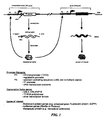
- Figure 1 illustrates a schematic representation of the positive feedback vector along with the various promoter (P1) and transcriptional enhancer (P2) sequences, transcription factor (TF) genes, and a gene of interest.
- the transcription factor gene and the gene of interest may be on the same plasmid or on different plasmids.
- a random nucleotide sequence N
- n nucleotides in length is present in the 5' leader of the transcription factor mRNA.
- a sequence that functions as a translational enhancer element (TEE) will facilitate the translation of this mRNA.
- TEE translational enhancer element
- the encoded transcription factor will then bind to sites in the promoters of the two genes and increase their transcription.
- the construct expresses two mRNAs: one encoding a protein of interest which may be a reporter protein and the other encoding a transcription factor.
- the transcription of both mRNAs is driven by minimal promoters but can be enhanced by the expression of the transcription factor via binding sites for the transcription factor that are located in the promoters of both genes.
- a small amount of transcription factor mRNA is expressed from the minimal promoter but the translation of this mRNA is blocked by an obstacle in the 5' leader of the mRNA encoding the transcription factor. This obstacle may be a stable stem-loop structure and/or upstream AUG initiation codons.
- the synthesis of this transcription factor is dependent on the presence of a translation enhancer in the mRNA encoding this factor.
- Figure 2 illustrates a translation enhancer-driven positive feedback vector with a third protein to block host protein synthesis.
- the first two genes transcription factor gene and gene of interest
- the third protein e.g ., the Rotavirus NSP3 protein
- the third gene will increase the translation of the first two encoded mRNAs by blocking the translation of host mRNAs and reducing the competition from them.
- the third gene is under the transcriptional control of promoter P3, which is either a constitutive promoter or an inducible promoter.
- P3 may also include promoter elements P1 and P2.
- the mRNAs for the gene of interest and third protein will contain a known TEE, while the transcription factor gene will contain a random nucleotide sequence.
- the TEE is resistant to the activity of the third protein.
- all three genes may contain a known TEE that is resistant to the activity of the third protein.
- the three genes may be on one, two, or three different plasmids.
- TEEs translational enhancer elements
- Figure 3 multiple copies of these TEEs increased protein production by up to 25-fold in CHO cells.
- the first construct is a size-matched control which contains no TEEs.
- TEEs showed sequence similarities, and putative consensus motifs were identified from these TEEs (see Figure 4 ). Sequences of two of the TEE motifs herein described are as follows: RNSGAGMGRMR (SEQ ID NO:1), and MSCSGCNGMWA (SEQ ID NO:2). It is noted that in these sequences, R denoted A or G, M denotes A or C, S denotes G or C, W denotes A or U, and N denotes A, G, C or U.
- Motif 1a sequence is R 1 N 1 S 1 GAGM 1 GR 2 M 2 R 2 R 3 R 4 (SEQ ID NO: 3).
- R 1 is absent, or A or G if present; N 1 is absent, or A,C or G if present, preferably A, C or G; S 1 is absent, or C or G if present, preferably C or G; M 1 is A or C; R 2 is absent, or A or G if present, preferably A or G, and R 1 and R 2 can be the same or different; M 2 is absent, or A or C if present, preferably A or C; R 3 is absent, or A or G if present, preferably absent; R 4 is absent, or C if present, preferably absent.
- the Motif 1a sequence is R 1 N 1 S 1 GAGM 1 GR 2 M 2 R 2 R 3 R 4 (SEQ ID NO: 3), wherein R 1 , R 3 and R 4 are absent; N 1 is A, C or G; S 1 is C or G; M 1 is A or C; R 2 is A or G and M 2 is A or C.
- the Motif 2a sequence is R 5 M 3 S 2 CS 3 GCN 2 GM 4 WR 6 (SEQ ID NO:4).
- R 5 is absent, or A if present, preferably absent
- M 3 is absent, or C or A if present, preferably C or A
- S 2 is absent, or C or G if present, preferably C or G
- S 3 is G or C
- N 2 is G, C or T
- M 4 is A or C
- W is absent, or A or T if present and R 6 is absent, or A if present.
- the Motif 2a sequence is R 5 M 3 S 2 CS 3 GCN 2 GM 4 WR 6 (SEQ ID NO: 4), wherein R 5 and R 6 are absent; M 3 is absent, or A or C if present; S 2 is C or G; S 3 is C or G and S 2 and S 3 can be the same or different; N 2 is G, C or T; M 2 is A or C; W is absent, or A if present.
- TEE sequences corresponding to generally to Motifs 1 and 2 were synthesized and tested for translation enhancing activity (see SEQ ID NOs: 5-35 of Table 1).
- DNA fragments containing the test sequences were generated from two overlapping, complementary oligonucleotides that were synthesized and annealed to each other.
- the annealed oligonucleotides had unbasepaired nucleotides at each end, providing sticky ends for cloning into the vector using EcoR1 and BamH1.
- the fragments were cloned into the 5' leader of a luciferase reporter mRNA in the positive feedback expression vector as described in Example 1.
- Renilla luciferase constructs containing the motif sequences were then transiently transfected into CHO cells. Cells were assayed after 3 days for the ability of the test sequences to enhance translation. A size matched control (reference) plasmid contained polyA in the cloning region. Effects of the TEEs on translation efficiency of the reporter polypeptide are shown in Figure 5 .
- TEE sequences based on Motif 1 tend to enhance translation to higher levels than those based on Motif 2. Table 1.
- TEE Nucleotide sequence SEQ ID NO M1-1 GCGAGAGAA 5 M1-2 GGGAGCGAA 6 M1-3 GCGAGAGGA 7 M1-4 GCGAGCGGA 8 M1-5 CGGAGCGAA 9 M1-6 CGGAGCGGA 10 M1-7 ACGAGAGGA 11 M1-8 ACGAGCGGA 12 M1-9 GACGAGAGGA 13 M1-10 GACGAGAGAA 14 M1-11 AGCGAGCG 15 M1-12 AGGAGAGGA 16 M1-13 GCCGAGAGA 17 M1-14 CGAGAGGCA 18 M1-15 GAGAGGAGC 19 M2-1 CGCGGCGGA 20 M2-2 CGCCGCCGC 21 M2-3 GCGGCTGAA 22 M2-4 CCGGCTGAA 23 M2-5 CGCCGCTGAA 24 M2-6 CGCCGCGGAA 25 M2-7 CGCCGCCGAA 26 M2-8 CCCGCGGAA 27 M2-9 CCCGCCGAA 28 M2-10 CCCGCTGAA 29
- the novel translational enhancers described herein can have various practical and industrial applications. For example, they can minimize the costs associated with industrial scale cultures and reduce drug costs. Higher protein concentrations can also facilitate protein purification. In addition, these enhancers may enable processes that may otherwise not be possible due to poor protein expression, e.g. expressing enough antigen from a DNA vaccine to generate an immune response. These translational enhancers can be used to dramatically increase the yield of specific proteins in mammalian cells. For example, many therapeutic proteins are expressed in CHO cells, which are the most commonly used cells for the large scale production of therapeutic proteins, to ensure proper post-transcriptional processing. In addition to industrial protein production, translational enhancers have potential use in various vector systems. For example, for research purposes, therapeutic expression of proteins, and DNA vaccines, for increasing antigen production.
Landscapes
- Health & Medical Sciences (AREA)
- Genetics & Genomics (AREA)
- Life Sciences & Earth Sciences (AREA)
- Engineering & Computer Science (AREA)
- Chemical & Material Sciences (AREA)
- Organic Chemistry (AREA)
- Bioinformatics & Cheminformatics (AREA)
- Wood Science & Technology (AREA)
- Biomedical Technology (AREA)
- Biotechnology (AREA)
- General Engineering & Computer Science (AREA)
- Zoology (AREA)
- General Health & Medical Sciences (AREA)
- Biochemistry (AREA)
- Microbiology (AREA)
- Plant Pathology (AREA)
- Molecular Biology (AREA)
- Biophysics (AREA)
- Physics & Mathematics (AREA)
- Crystallography & Structural Chemistry (AREA)
- Bioinformatics & Computational Biology (AREA)
- Animal Behavior & Ethology (AREA)
- Chemical Kinetics & Catalysis (AREA)
- Pharmacology & Pharmacy (AREA)
- Medicinal Chemistry (AREA)
- Public Health (AREA)
- Veterinary Medicine (AREA)
- General Chemical & Material Sciences (AREA)
- Nuclear Medicine, Radiotherapy & Molecular Imaging (AREA)
- Micro-Organisms Or Cultivation Processes Thereof (AREA)
- Medicines That Contain Protein Lipid Enzymes And Other Medicines (AREA)
- Medicines Containing Antibodies Or Antigens For Use As Internal Diagnostic Agents (AREA)
- Preparation Of Compounds By Using Micro-Organisms (AREA)
- Medicines Containing Material From Animals Or Micro-Organisms (AREA)
- Pharmaceuticals Containing Other Organic And Inorganic Compounds (AREA)
Claims (11)
- Klonierungs- oder Expressionsvektor, umfassend die folgenden Elemente: (1) einen Transkriptionspromotor, (2) eine funktionsfähig mit dem Transkriptionspromotor verknüpfte Polynukleotidsequenz, die ein eukaryotisches Translationsstartcodon aufweist und ein Polypeptid kodiert, (3) eine 5°-untranslatierte Sequenz, die sich zwischen dem Transkriptionspromotor und dem eukaryotischen Translationsstartcodon befindet, und (4) ein Translationsenhancer-Polynukleotid, das sich in der 5'-untranslatierten Sequenz befindet,
wobei das Translationsenhancer-Polynukleotid aus wenigstens zwei Translationsenhancer-Elementen (TEEs) und ein oder mehr 1 bis 100 Nukleotide langen Spacersequenzen besteht, wobei die wenigstens zwei TEEs aus wenigstens zwei vollständigen Nukleotidsequenzen bestehen, die wenigstens 90% mit 5'-GCCGAGAGA-3' (SEQ ID NO: 17) identisch sind,
wobei sich die wenigstens zwei TEEs innerhalb von etwa 1-500 Nukleotiden 5' vom eukaryotischen Translationsstartcodon befinden, und
wobei der Klonierungs- oder Expressionsvektor im Vergleich mit dem gleichen Vektor, dem das Translationsenhancer-Polynukleotid fehlt, eine höhere Cap-abhängige Translation zeigt. - Klonierungs- oder Expressionsvektor nach Anspruch 1, wobei die wenigstens zwei TEEs aus wenigstens zwei vollständigen Nukleotidsequenzen bestehen, die wenigstens 95% mit SEQ ID NO: 17 identisch sind.
- Klonierungs- oder Expressionsvektor nach Anspruch 1, wobei die wenigstens zwei TEEs aus wenigstens zwei vollständigen Sequenzen bestehen, die mit SEQ ID NO: 17 identisch sind.
- Klonierungs- oder Expressionsvektor nach Anspruch 1, wobei das Translationsenhancer-Polynukleotid aus wenigstens fünf Kopien desselben Translationsenhancer-Elements (TEE) besteht.
- Klonierungs- oder Expressionsvektor nach Anspruch 1, wobei das Translationsenhancer-Polynukleotid aus wenigstens zehn Kopien desselben Translationsenhancer-Elements (TEE) besteht.
- Klonierungs- oder Expressionsvektor nach einem der Ansprüche 1-3, wobei die wenigstens zwei TEEs miteinander identisch sind.
- DNA-Impfstoff, umfassend den Klonierungs- oder Expressionsvektor nach einem der Ansprüche 1-6.
- Eukaryotische Wirtszelle, die mit dem Klonierungs- oder Expressionsvektor nach einem der Ansprüche 1-6 transfiziert ist.
- Eukaryotische Wirtszelle nach Anspruch 8, wobei die Wirtszelle eine Chinese Hamster Ovary (CHO)-Zelle ist.
- Verfahren zur rekombinanten Herstellung eines Polypeptids, umfassend:(i) Konstruieren des Klonierungs- oder Expressionsvektors nach einem der Ansprüche 1-6;(ii) Transfizieren des Vektor in eine eukaryotische Wirtszelle; und(iii) Kultivieren der mit dem Vektor transfizierten Wirtszelle; wodurch das Polypeptid hergestellt wird.
- Verfahren nach Anspruch 10,(i) weiterhin umfassend Reinigen des rekombinanten Polypeptids, oder(ii) wobei die Wirtszelle eine CHO-Zelle ist, oder(iii) wobei das Polypeptid ein therapeutisches Protein ist.
Applications Claiming Priority (3)
| Application Number | Priority Date | Filing Date | Title |
|---|---|---|---|
| US744007P | 2007-12-11 | 2007-12-11 | |
| EP08859785A EP2231859B1 (de) | 2007-12-11 | 2008-12-11 | Zusammensetzungen und verfahren in verbindung mit mrna-translation-enhancer-elementen |
| EP12181797.7A EP2527439B1 (de) | 2007-12-11 | 2008-12-11 | Zusammensetzungen und Verfahren in Verbindung mit mRNA-Translation-Enhancer-Elementen |
Related Parent Applications (5)
| Application Number | Title | Priority Date | Filing Date |
|---|---|---|---|
| EP12181797.7A Division EP2527439B1 (de) | 2007-12-11 | 2008-12-11 | Zusammensetzungen und Verfahren in Verbindung mit mRNA-Translation-Enhancer-Elementen |
| EP12181797.7A Division-Into EP2527439B1 (de) | 2007-12-11 | 2008-12-11 | Zusammensetzungen und Verfahren in Verbindung mit mRNA-Translation-Enhancer-Elementen |
| EP08859785.1 Division | 2008-12-11 | ||
| EP08859785A Division EP2231859B1 (de) | 2007-12-11 | 2008-12-11 | Zusammensetzungen und verfahren in verbindung mit mrna-translation-enhancer-elementen |
| EP12181797.7 Division | 2012-08-24 |
Publications (2)
| Publication Number | Publication Date |
|---|---|
| EP2610340A1 EP2610340A1 (de) | 2013-07-03 |
| EP2610340B1 true EP2610340B1 (de) | 2014-10-01 |
Family
ID=40386467
Family Applications (5)
| Application Number | Title | Priority Date | Filing Date |
|---|---|---|---|
| EP12195137.0A Not-in-force EP2610340B1 (de) | 2007-12-11 | 2008-12-11 | Zusammensetzungen und Verfahren in Verbindung mit mRNA-Translation-Enhancer-Elementen |
| EP12181797.7A Not-in-force EP2527439B1 (de) | 2007-12-11 | 2008-12-11 | Zusammensetzungen und Verfahren in Verbindung mit mRNA-Translation-Enhancer-Elementen |
| EP08859785A Not-in-force EP2231859B1 (de) | 2007-12-11 | 2008-12-11 | Zusammensetzungen und verfahren in verbindung mit mrna-translation-enhancer-elementen |
| EP12195122.2A Not-in-force EP2584038B1 (de) | 2007-12-11 | 2008-12-11 | Zusammensetzungen und Verfahren in Verbindung mit mRNA-Translation-Enhancer-Elementen |
| EP12195141.2A Not-in-force EP2610341B1 (de) | 2007-12-11 | 2008-12-11 | Zusammensetzungen und Verfahren in Verbindung mit mRNA-Translation-Enhancer-Elementen |
Family Applications After (4)
| Application Number | Title | Priority Date | Filing Date |
|---|---|---|---|
| EP12181797.7A Not-in-force EP2527439B1 (de) | 2007-12-11 | 2008-12-11 | Zusammensetzungen und Verfahren in Verbindung mit mRNA-Translation-Enhancer-Elementen |
| EP08859785A Not-in-force EP2231859B1 (de) | 2007-12-11 | 2008-12-11 | Zusammensetzungen und verfahren in verbindung mit mrna-translation-enhancer-elementen |
| EP12195122.2A Not-in-force EP2584038B1 (de) | 2007-12-11 | 2008-12-11 | Zusammensetzungen und Verfahren in Verbindung mit mRNA-Translation-Enhancer-Elementen |
| EP12195141.2A Not-in-force EP2610341B1 (de) | 2007-12-11 | 2008-12-11 | Zusammensetzungen und Verfahren in Verbindung mit mRNA-Translation-Enhancer-Elementen |
Country Status (8)
| Country | Link |
|---|---|
| US (2) | US8785611B2 (de) |
| EP (5) | EP2610340B1 (de) |
| JP (3) | JP5474816B2 (de) |
| CN (2) | CN103911378A (de) |
| AU (1) | AU2008335723C1 (de) |
| CA (2) | CA2708766C (de) |
| SG (4) | SG10201408162PA (de) |
| WO (1) | WO2009075886A1 (de) |
Families Citing this family (162)
| Publication number | Priority date | Publication date | Assignee | Title |
|---|---|---|---|---|
| US20130230884A1 (en) * | 2010-07-16 | 2013-09-05 | John Chaput | Methods to Identify Synthetic and Natural RNA Elements that Enhance Protein Translation |
| WO2012019168A2 (en) | 2010-08-06 | 2012-02-09 | Moderna Therapeutics, Inc. | Engineered nucleic acids and methods of use thereof |
| EP2625189B1 (de) | 2010-10-01 | 2018-06-27 | ModernaTX, Inc. | Manipulierte nukleinsäuren und anwendungsverfahren dafür |
| AU2012236099A1 (en) | 2011-03-31 | 2013-10-03 | Moderna Therapeutics, Inc. | Delivery and formulation of engineered nucleic acids |
| US9464124B2 (en) | 2011-09-12 | 2016-10-11 | Moderna Therapeutics, Inc. | Engineered nucleic acids and methods of use thereof |
| DE19216461T1 (de) | 2011-10-03 | 2021-10-07 | Modernatx, Inc. | Modifizierte nukleoside, nukleotide und nukleinsäuren und verwendungen davon |
| CA3018046A1 (en) | 2011-12-16 | 2013-06-20 | Moderna Therapeutics, Inc. | Modified nucleoside, nucleotide, and nucleic acid compositions |
| CN104411338A (zh) | 2012-04-02 | 2015-03-11 | 现代治疗公司 | 用于产生与人类疾病相关的生物制剂和蛋白质的修饰多核苷酸 |
| US9283287B2 (en) | 2012-04-02 | 2016-03-15 | Moderna Therapeutics, Inc. | Modified polynucleotides for the production of nuclear proteins |
| US9254311B2 (en) | 2012-04-02 | 2016-02-09 | Moderna Therapeutics, Inc. | Modified polynucleotides for the production of proteins |
| WO2013151665A2 (en) | 2012-04-02 | 2013-10-10 | modeRNA Therapeutics | Modified polynucleotides for the production of proteins associated with human disease |
| US9572897B2 (en) | 2012-04-02 | 2017-02-21 | Modernatx, Inc. | Modified polynucleotides for the production of cytoplasmic and cytoskeletal proteins |
| WO2014093924A1 (en) | 2012-12-13 | 2014-06-19 | Moderna Therapeutics, Inc. | Modified nucleic acid molecules and uses thereof |
| PL2922554T3 (pl) | 2012-11-26 | 2022-06-20 | Modernatx, Inc. | Na zmodyfikowany na końcach |
| AU2013374345A1 (en) | 2013-01-17 | 2015-08-06 | Moderna Therapeutics, Inc. | Signal-sensor polynucleotides for the alteration of cellular phenotypes |
| US8980864B2 (en) | 2013-03-15 | 2015-03-17 | Moderna Therapeutics, Inc. | Compositions and methods of altering cholesterol levels |
| EP3041934A1 (de) | 2013-09-03 | 2016-07-13 | Moderna Therapeutics, Inc. | Chimäre polynukleotide |
| WO2015034925A1 (en) | 2013-09-03 | 2015-03-12 | Moderna Therapeutics, Inc. | Circular polynucleotides |
| WO2015048744A2 (en) | 2013-09-30 | 2015-04-02 | Moderna Therapeutics, Inc. | Polynucleotides encoding immune modulating polypeptides |
| EP3052521A1 (de) | 2013-10-03 | 2016-08-10 | Moderna Therapeutics, Inc. | Polynukleotide zur codierung von low-density-lipoprotein-rezeptor |
| HUE058792T2 (hu) * | 2013-11-12 | 2022-09-28 | Univ Brussel Vrije | RNS-transzkripciós vektor és felhasználása |
| US20170204152A1 (en) | 2014-07-16 | 2017-07-20 | Moderna Therapeutics, Inc. | Chimeric polynucleotides |
| EP3171895A1 (de) | 2014-07-23 | 2017-05-31 | Modernatx, Inc. | Modifizierte polynukleotide zur herstellung von intrabodys |
| WO2016077125A1 (en) | 2014-11-10 | 2016-05-19 | Moderna Therapeutics, Inc. | Alternative nucleic acid molecules containing reduced uracil content and uses thereof |
| JP6948313B6 (ja) | 2015-09-17 | 2022-01-14 | モデルナティエックス インコーポレイテッド | 治療剤の細胞内送達のための化合物および組成物 |
| EP3350333B2 (de) | 2015-09-17 | 2025-08-06 | ModernaTX, Inc. | Polynukleotide mit stabilisierendem schwanzbereich |
| EP3359670B2 (de) | 2015-10-05 | 2024-02-14 | ModernaTX, Inc. | Verfahren zur therapeutischen verabreichung messenger-ribonukleinsäure-arzneimitteln |
| WO2017066782A1 (en) | 2015-10-16 | 2017-04-20 | Modernatx, Inc. | Hydrophobic mrna cap analogs |
| SI3362461T1 (sl) | 2015-10-16 | 2022-05-31 | Modernatx, Inc. | Analogi kape MRNA z modificirano fosfatno povezavo |
| WO2017066791A1 (en) | 2015-10-16 | 2017-04-20 | Modernatx, Inc. | Sugar substituted mrna cap analogs |
| WO2017066793A1 (en) | 2015-10-16 | 2017-04-20 | Modernatx, Inc. | Mrna cap analogs and methods of mrna capping |
| WO2017066789A1 (en) | 2015-10-16 | 2017-04-20 | Modernatx, Inc. | Mrna cap analogs with modified sugar |
| LT3394030T (lt) | 2015-12-22 | 2022-04-11 | Modernatx, Inc. | Junginiai ir kompozicijos terapinei medžiagai teikti intraceliuliniu būdu |
| PL3394093T3 (pl) | 2015-12-23 | 2022-05-16 | Modernatx, Inc. | Metody stosowania polinukleotydów kodujących ligand ox40 |
| MA43587A (fr) | 2016-01-10 | 2018-11-14 | Modernatx Inc | Arnm thérapeutiques codant pour des anticorps anti-ctla-4 |
| EP3405579A1 (de) | 2016-01-22 | 2018-11-28 | Modernatx, Inc. | Boten-ribonukleinsäuren (mrna) zur herstellung intrazellulärer bindungspolypeptide und verfahren zur verwendung davon |
| WO2017180917A2 (en) | 2016-04-13 | 2017-10-19 | Modernatx, Inc. | Lipid compositions and their uses for intratumoral polynucleotide delivery |
| EP3458104A1 (de) | 2016-05-18 | 2019-03-27 | Modernatx, Inc. | Polynukleotide zur codierung von porphobilinogendeaminase zur behandlung von akuter intermittierender porphyrie |
| SI3458083T1 (sl) | 2016-05-18 | 2023-03-31 | Modernatx, Inc. | Polinukleotidi, ki kodirajo interlevkin-12 (IL12) in njihova uporaba |
| WO2017201342A1 (en) | 2016-05-18 | 2017-11-23 | Modernatx, Inc. | Polynucleotides encoding jagged1 for the treatment of alagille syndrome |
| MA45036A (fr) | 2016-05-18 | 2019-03-27 | Modernatx Inc | Polynucléotides codant pour la citrine pour le traitement de la citrullinémie de type 2 |
| WO2017201328A1 (en) | 2016-05-18 | 2017-11-23 | Modernatx, Inc. | POLYNUCLEOTIDES ENCODING α-GALACTOSIDASE A FOR THE TREATMENT OF FABRY DISEASE |
| JP7194594B2 (ja) | 2016-05-18 | 2022-12-22 | モデルナティエックス インコーポレイテッド | 免疫調節ポリペプチドをコードするmRNAの組み合わせ及びその使用 |
| US20190298657A1 (en) | 2016-05-18 | 2019-10-03 | Modernatx, Inc. | Polynucleotides Encoding Acyl-CoA Dehydrogenase, Very Long-Chain for the Treatment of Very Long-Chain Acyl-CoA Dehydrogenase Deficiency |
| US11001861B2 (en) | 2016-05-18 | 2021-05-11 | Modernatx, Inc. | Polynucleotides encoding galactose-1-phosphate uridylyltransferase for the treatment of galactosemia type 1 |
| WO2017218704A1 (en) | 2016-06-14 | 2017-12-21 | Modernatx, Inc. | Stabilized formulations of lipid nanoparticles |
| US11583504B2 (en) | 2016-11-08 | 2023-02-21 | Modernatx, Inc. | Stabilized formulations of lipid nanoparticles |
| EP4186888B1 (de) | 2017-03-15 | 2025-11-26 | ModernaTX, Inc. | Verbindung und zusammensetzungen zur intrazellulären verabreichung von therapeutischen wirkstoffen |
| CA3055653A1 (en) | 2017-03-15 | 2018-09-20 | Modernatx, Inc. | Lipid nanoparticle formulation |
| US11485972B2 (en) | 2017-05-18 | 2022-11-01 | Modernatx, Inc. | Modified messenger RNA comprising functional RNA elements |
| JP7285220B2 (ja) | 2017-05-18 | 2023-06-01 | モデルナティエックス インコーポレイテッド | 連結したインターロイキン-12(il12)ポリペプチドをコードするポリヌクレオチドを含む脂質ナノ粒子 |
| US20200131498A1 (en) | 2017-06-14 | 2020-04-30 | Modernatx, Inc. | Polynucleotides encoding methylmalonyl-coa mutase |
| WO2018232120A1 (en) | 2017-06-14 | 2018-12-20 | Modernatx, Inc. | Compounds and compositions for intracellular delivery of agents |
| US20200362382A1 (en) | 2017-08-18 | 2020-11-19 | Modernatx, Inc. | Methods of preparing modified rna |
| EP3675817A1 (de) | 2017-08-31 | 2020-07-08 | Modernatx, Inc. | Verfahren zur herstellung von lipidnanopartikeln |
| EP3746090A4 (de) | 2018-01-29 | 2021-11-17 | ModernaTX, Inc. | Rsv-rns-impfstoffe |
| EP3773745A1 (de) | 2018-04-11 | 2021-02-17 | ModernaTX, Inc. | Messenger-rna mit funktionalen rna-elementen |
| WO2020061367A1 (en) | 2018-09-19 | 2020-03-26 | Modernatx, Inc. | Compounds and compositions for intracellular delivery of therapeutic agents |
| WO2020061457A1 (en) | 2018-09-20 | 2020-03-26 | Modernatx, Inc. | Preparation of lipid nanoparticles and methods of administration thereof |
| CN118697900A (zh) | 2019-01-31 | 2024-09-27 | 摩登纳特斯有限公司 | 制备脂质纳米颗粒的方法 |
| KR20210133218A (ko) | 2019-01-31 | 2021-11-05 | 모더나티엑스, 인크. | 볼텍스 믹서 및 연계된 방법, 시스템 및 이의 장치 |
| US20220387628A1 (en) | 2019-06-24 | 2022-12-08 | Modernatx, Inc. | Messenger rna comprising functional rna elements and uses thereof |
| EP3987027A1 (de) | 2019-06-24 | 2022-04-27 | ModernaTX, Inc. | Endonukleaseresistente messenger-rna und verwendungen davon |
| JP2023511633A (ja) | 2020-01-28 | 2023-03-20 | モデルナティエックス インコーポレイテッド | コロナウイルスrnaワクチン |
| BR112022015565A2 (pt) | 2020-02-07 | 2022-09-27 | Modernatx Inc | Vacinas de domínio de mrna para sars-cov-2 |
| EP4132576A1 (de) | 2020-04-09 | 2023-02-15 | Suzhou Abogen Biosciences Co., Ltd. | Nukleinsäureimpfstoffe gegen coronavirus |
| WO2021204175A1 (en) | 2020-04-09 | 2021-10-14 | Suzhou Abogen Biosciences Co., Ltd. | Lipid nanoparticle composition |
| WO2021222304A1 (en) | 2020-04-27 | 2021-11-04 | Modernatx, Inc. | Sars-cov-2 rna vaccines |
| EP4150072A4 (de) * | 2020-05-11 | 2024-05-01 | The Board of Trustees of the Leland Stanford Junior University | Systeme und verfahren zur erhöhung der genexpression |
| WO2021159130A2 (en) | 2020-05-15 | 2021-08-12 | Modernatx, Inc. | Coronavirus rna vaccines and methods of use |
| KR20230030588A (ko) | 2020-06-30 | 2023-03-06 | 쑤저우 아보젠 바이오사이언시스 컴퍼니 리미티드 | 지질 화합물 및 지질 나노입자 조성물 |
| EP4185274A1 (de) | 2020-07-24 | 2023-05-31 | Strand Therapeutics Inc. | Lipidnanopartikel mit modifizierten nukleotiden |
| CN114391008B (zh) | 2020-08-20 | 2024-05-03 | 苏州艾博生物科技有限公司 | 脂质化合物和脂质纳米颗粒组合物 |
| EP4217371A1 (de) | 2020-09-25 | 2023-08-02 | ModernaTX, Inc. | Impfstoffe mit multiprolin-substituiertem coronavirus-spike-protein |
| AR124599A1 (es) | 2021-01-08 | 2023-04-12 | Strand Therapeutics Inc | Constructos de expresión y usos de estos |
| EP4274607A1 (de) | 2021-01-11 | 2023-11-15 | ModernaTX, Inc. | Saisonale rna-influenzavirus-impfstoffe |
| WO2022152109A2 (en) | 2021-01-14 | 2022-07-21 | Suzhou Abogen Biosciences Co., Ltd. | Lipid compounds and lipid nanoparticle compositions |
| WO2022152141A2 (en) | 2021-01-14 | 2022-07-21 | Suzhou Abogen Biosciences Co., Ltd. | Polymer conjugated lipid compounds and lipid nanoparticle compositions |
| WO2022155524A1 (en) | 2021-01-15 | 2022-07-21 | Modernatx, Inc. | Variant strain-based coronavirus vaccines |
| JP2024503699A (ja) | 2021-01-15 | 2024-01-26 | モデルナティエックス インコーポレイテッド | バリアント株ベースのコロナウイルスワクチン |
| JP2024511346A (ja) | 2021-03-15 | 2024-03-13 | モデルナティエックス インコーポレイテッド | Sars-cov-2 mrnaドメインワクチンの治療的使用 |
| JP2024512780A (ja) | 2021-04-01 | 2024-03-19 | モデルナティエックス インコーポレイテッド | 多価rna組成物中のrna種の識別及び比率決定のための方法 |
| JP2024514182A (ja) | 2021-04-13 | 2024-03-28 | モデルナティエックス インコーポレイテッド | 呼吸器ウイルス組み合わせワクチン |
| WO2022221440A1 (en) | 2021-04-14 | 2022-10-20 | Modernatx, Inc. | Influenza-coronavirus combination vaccines |
| WO2022245888A1 (en) | 2021-05-19 | 2022-11-24 | Modernatx, Inc. | Seasonal flu rna vaccines and methods of use |
| KR20240013087A (ko) | 2021-05-24 | 2024-01-30 | 쑤저우 아보젠 바이오사이언시스 컴퍼니 리미티드 | 지질 화합물 및 지질 나노입자 조성물 |
| US20240218353A1 (en) | 2021-06-17 | 2024-07-04 | Modernatx, Inc. | Alternative rna purification strategies |
| EP4384613A1 (de) | 2021-08-13 | 2024-06-19 | ModernaTX, Inc. | Mrna-reinigung für mehrsäulenchromatographie |
| AR127312A1 (es) | 2021-10-08 | 2024-01-10 | Suzhou Abogen Biosciences Co Ltd | Compuestos lipídicos ycomposiciones de nanopartículas lipídicas |
| JP2024536406A (ja) | 2021-10-08 | 2024-10-04 | スージョウ・アボジェン・バイオサイエンシズ・カンパニー・リミテッド | 脂質化合物及び脂質ナノ粒子組成物 |
| CN116064598B (zh) | 2021-10-08 | 2024-03-12 | 苏州艾博生物科技有限公司 | 冠状病毒的核酸疫苗 |
| US20250295755A1 (en) | 2021-10-22 | 2025-09-25 | Sail Biomedicines, Inc. | Mrna vaccine composition |
| EP4426853A1 (de) | 2021-11-01 | 2024-09-11 | ModernaTX, Inc. | Mrna-massenspektrometrie |
| WO2023081311A1 (en) | 2021-11-05 | 2023-05-11 | Modernatx, Inc. | Methods of purifying dna for gene synthesis |
| WO2023092069A1 (en) | 2021-11-18 | 2023-05-25 | Modernatx, Inc. | Sars-cov-2 mrna domain vaccines and methods of use |
| CA3238764A1 (en) | 2021-11-23 | 2023-06-01 | Siddharth Patel | A bacteria-derived lipid composition and use thereof |
| US20250360194A1 (en) | 2021-12-08 | 2025-11-27 | Modernatx, Inc. | Herpes simplex virus mrna vaccines |
| EP4452239A1 (de) | 2021-12-20 | 2024-10-30 | Sail Biomedicines, Inc. | Zusammensetzungen mit mrna und lipidrekonstruierten pflanzenbotenstoffpackungen |
| JP2025502599A (ja) | 2021-12-23 | 2025-01-28 | スージョウ・アボジェン・バイオサイエンシズ・カンパニー・リミテッド | 脂質化合物及び脂質ナノ粒子組成物 |
| US20250084397A1 (en) | 2022-01-04 | 2025-03-13 | Modernatx, Inc. | Methods of purifying dna for gene synthesis |
| EP4463545A1 (de) | 2022-01-14 | 2024-11-20 | ModernaTX, Inc. | In vitro reinigung und wiederverwendung von transkriptions-dna |
| EP4473107A1 (de) | 2022-02-03 | 2024-12-11 | ModernaTX, Inc. | Kontinuierliche fällung zur reinigung von mrna |
| WO2023196914A1 (en) | 2022-04-08 | 2023-10-12 | Modernatx, Inc. | Influenza nucleic acid compositions and uses thereof |
| US20250251391A1 (en) | 2022-04-15 | 2025-08-07 | Modernatx, Inc. | Ribosomal engagement potency assay |
| CN119317430A (zh) | 2022-04-26 | 2025-01-14 | 斯特兰德生物科技公司 | 包含委内瑞拉马脑炎(vee)复制子的脂质纳米颗粒及其用途 |
| WO2023215498A2 (en) | 2022-05-05 | 2023-11-09 | Modernatx, Inc. | Compositions and methods for cd28 antagonism |
| WO2023230481A1 (en) | 2022-05-24 | 2023-11-30 | Modernatx, Inc. | Orthopoxvirus vaccines |
| WO2024010993A1 (en) | 2022-07-06 | 2024-01-11 | Modernatx, Inc. | Primer design for cell-free dna production |
| EP4554617A1 (de) | 2022-07-13 | 2025-05-21 | ModernaTX, Inc. | Norovirus-mrna-impfstoffe |
| WO2024026490A1 (en) | 2022-07-28 | 2024-02-01 | Sqz Biotechnologies Company | Polynucleotides encoding linked antigens and uses thereof |
| WO2024037578A1 (en) | 2022-08-18 | 2024-02-22 | Suzhou Abogen Biosciences Co., Ltd. | Composition of lipid nanoparticles |
| WO2024050483A1 (en) | 2022-08-31 | 2024-03-07 | Modernatx, Inc. | Variant strain-based coronavirus vaccines and uses thereof |
| IL320459A (en) | 2022-10-27 | 2025-06-01 | Pfizer | Rna molecules encoding rsv-f and vaccines containing them |
| WO2024097639A1 (en) | 2022-10-31 | 2024-05-10 | Modernatx, Inc. | Hsa-binding antibodies and binding proteins and uses thereof |
| WO2024097874A1 (en) | 2022-11-03 | 2024-05-10 | Modernatx, Inc. | Chemical stability of mrna |
| WO2024102434A1 (en) | 2022-11-10 | 2024-05-16 | Senda Biosciences, Inc. | Rna compositions comprising lipid nanoparticles or lipid reconstructed natural messenger packs |
| WO2024118866A1 (en) | 2022-12-01 | 2024-06-06 | Modernatx, Inc. | Gpc3-specific antibodies, binding domains, and related proteins and uses thereof |
| EP4648793A1 (de) | 2023-01-11 | 2025-11-19 | ModernaTX, Inc. | Personalisierte krebsimpfstoffe |
| CN121057577A (zh) | 2023-01-27 | 2025-12-02 | 赛欧生物医药股份有限公司 | 经修饰的脂质组合物及其用途 |
| WO2024163465A1 (en) | 2023-01-30 | 2024-08-08 | Modernatx, Inc. | Epstein-barr virus mrna vaccines |
| WO2024191860A2 (en) | 2023-03-10 | 2024-09-19 | Modernatx, Inc. | Nucleic acid influenza vaccines and respiratory virus combination vaccines |
| AU2024234874A1 (en) | 2023-03-15 | 2025-10-09 | Renagade Therapeutics Management Inc. | Lipid nanoparticles comprising coding rna molecules for use in gene editing and as vaccines and therapeutic agents |
| AU2024236558A1 (en) | 2023-03-15 | 2025-10-09 | Renagade Therapeutics Management Inc. | Delivery of gene editing systems and methods of use thereof |
| WO2024206126A1 (en) | 2023-03-27 | 2024-10-03 | Modernatx, Inc. | Cd16-binding antibodies and uses thereof |
| WO2024206835A1 (en) | 2023-03-30 | 2024-10-03 | Modernatx, Inc. | Circular mrna and production thereof |
| WO2024215721A1 (en) | 2023-04-10 | 2024-10-17 | Modernatx, Inc. | Lyme disease vaccines |
| KR20260003656A (ko) | 2023-04-12 | 2026-01-07 | 스트랜드 세러퓨틱스 인코포레이티드 | 합성 회로 및 이의 용도 |
| WO2024220712A2 (en) | 2023-04-19 | 2024-10-24 | Sail Biomedicines, Inc. | Vaccine compositions |
| WO2024238723A1 (en) | 2023-05-16 | 2024-11-21 | Omega Therapeutics, Inc. | Methods and compositions for modulating pcsk9 expression |
| EP4713027A1 (de) | 2023-05-16 | 2026-03-25 | Omega Therapeutics, Inc. | Verfahren und zusammensetzungen zur modulation der methylierung eines zielgens |
| WO2024254552A1 (en) | 2023-06-08 | 2024-12-12 | Modernatx, Inc. | Stabilized flavivirus vaccines |
| WO2024263826A1 (en) | 2023-06-22 | 2024-12-26 | Modernatx, Inc. | Sars-cov-2 t cell vaccines |
| WO2025019352A2 (en) | 2023-07-14 | 2025-01-23 | Modernatx, Inc. | Mers-cov mrna vaccines |
| WO2025019742A1 (en) | 2023-07-19 | 2025-01-23 | Omega Therapeutics, Inc. | Methods and compositions for modulating ctnnb1 expression |
| CN121909034A (zh) | 2023-07-24 | 2026-04-21 | 斯特兰德生物科技公司 | 用于产生用于体外细胞疗法的工程化免疫细胞的基于rna的合成回路 |
| AU2024299882A1 (en) | 2023-07-25 | 2026-01-08 | Strand Therapeutics Inc. | Polynucleotides comprising a micro rna detargeting sensor and uses thereof |
| WO2025029700A1 (en) | 2023-07-28 | 2025-02-06 | Modernatx, Inc. | Vlp enteroviral vaccines |
| WO2025027492A1 (en) | 2023-07-31 | 2025-02-06 | Pfizer Inc. | Coronavirus antigen variants |
| WO2025034612A1 (en) | 2023-08-04 | 2025-02-13 | Modernatx, Inc. | Varicella-zoster virus mrna vaccine |
| AU2024335327A1 (en) | 2023-09-01 | 2026-03-26 | Renagade Therapeutics Management Inc. | Gene editing systems, compositions, and methods for treatment of vexas syndrome |
| WO2025054383A1 (en) | 2023-09-06 | 2025-03-13 | Modernatx, Inc. | Chemical stability of mrna |
| AU2024357861A1 (en) | 2023-10-12 | 2026-04-23 | Renagade Therapeutics Management Inc. | Nickase-retron template-based precision editing system and methods of use |
| WO2025111280A1 (en) | 2023-11-20 | 2025-05-30 | Strand Therapeutics Inc. | Circular rna synthesis |
| WO2025108407A2 (en) | 2023-11-23 | 2025-05-30 | Neuexcell Therapeutics (Suzhou) Co., Ltd. | Gene therapy compositions and methods for treating glioma |
| WO2025113676A1 (en) | 2023-11-29 | 2025-06-05 | Neuexcell Therapeutics (Suzhou) Co., Ltd. | Compositions and methods for treating stroke in primates |
| WO2025122609A1 (en) | 2023-12-04 | 2025-06-12 | Strand Therapeutics Inc. | Circular rna synthesis |
| WO2025126019A1 (en) | 2023-12-13 | 2025-06-19 | Pfizer Inc. | Rna molecules |
| WO2025128871A2 (en) | 2023-12-13 | 2025-06-19 | Renagade Therapeutics Management Inc. | Lipid nanoparticles comprising coding rna molecules for use in gene editing and as vaccines and therapeutic agents |
| WO2025126071A1 (en) | 2023-12-14 | 2025-06-19 | Pfizer Inc. | Rna molecules |
| WO2025134046A1 (en) | 2023-12-22 | 2025-06-26 | Pfizer Inc. | Methods and vaccine compositions for lyme disease |
| WO2025155753A2 (en) | 2024-01-17 | 2025-07-24 | Renagade Therapeutics Management Inc. | Improved gene editing system, guides, and methods |
| WO2025171182A1 (en) | 2024-02-08 | 2025-08-14 | Iovance Biotherapeutics, Inc. | Treatment of cancer patients with tumor infiltrating lymphocyte therapies in combination with cancer vaccine |
| WO2025174765A1 (en) | 2024-02-12 | 2025-08-21 | Renagade Therapeutics Management Inc. | Lipid nanoparticles comprising coding rna molecules for use in gene editing and as vaccines and therapeutic agents |
| WO2025217591A1 (en) | 2024-04-12 | 2025-10-16 | Strand Therapeutics Inc. | Human-derived synthetic regulators and uses thereof |
| WO2025226656A1 (en) | 2024-04-23 | 2025-10-30 | Modernatx, Inc. | Hepatitis b virus mrna vaccines |
| WO2025235563A1 (en) | 2024-05-07 | 2025-11-13 | Omega Therapeutics, Inc. | Epigenetic modulation for upregulation of genes |
| WO2025250938A2 (en) | 2024-05-31 | 2025-12-04 | Modernatx, Inc. | Respiratory syncytial virus and metapneumovirus vaccines |
| WO2026018181A1 (en) | 2024-07-17 | 2026-01-22 | Pfizer Inc. | Immunogenic compositions and uses thereof |
| WO2026030275A1 (en) | 2024-08-01 | 2026-02-05 | Pfizer Inc. | Rna molecules |
| WO2026044087A1 (en) | 2024-08-21 | 2026-02-26 | Shape Therapeutics Inc. | Increased cellular stability for aav production |
| WO2026073032A1 (en) | 2024-09-27 | 2026-04-02 | Shape Therapeutics Inc. | Constructs for improved aav production |
| WO2026080379A1 (en) | 2024-10-07 | 2026-04-16 | Modernatx, Inc. | Lyme disease mrna vaccines |
Family Cites Families (15)
| Publication number | Priority date | Publication date | Assignee | Title |
|---|---|---|---|---|
| US4215051A (en) | 1979-08-29 | 1980-07-29 | Standard Oil Company (Indiana) | Formation, purification and recovery of phthalic anhydride |
| US4946787A (en) | 1985-01-07 | 1990-08-07 | Syntex (U.S.A.) Inc. | N-(ω,(ω-1)-dialkyloxy)- and N-(ω,(ω-1)-dialkenyloxy)-alk-1-yl-N,N,N-tetrasubstituted ammonium lipids and uses therefor |
| US4897355A (en) | 1985-01-07 | 1990-01-30 | Syntex (U.S.A.) Inc. | N[ω,(ω-1)-dialkyloxy]- and N-[ω,(ω-1)-dialkenyloxy]-alk-1-yl-N,N,N-tetrasubstituted ammonium lipids and uses therefor |
| US5049386A (en) | 1985-01-07 | 1991-09-17 | Syntex (U.S.A.) Inc. | N-ω,(ω-1)-dialkyloxy)- and N-(ω,(ω-1)-dialkenyloxy)Alk-1-YL-N,N,N-tetrasubstituted ammonium lipids and uses therefor |
| US5264618A (en) | 1990-04-19 | 1993-11-23 | Vical, Inc. | Cationic lipids for intracellular delivery of biologically active molecules |
| WO1991017424A1 (en) | 1990-05-03 | 1991-11-14 | Vical, Inc. | Intracellular delivery of biologically active substances by means of self-assembling lipid complexes |
| US6116184A (en) | 1996-05-21 | 2000-09-12 | Symetrix Corporation | Method and apparatus for misted liquid source deposition of thin film with reduced mist particle size |
| US6653132B1 (en) * | 1997-02-25 | 2003-11-25 | Qbi Enterprises, Ltd. | IRES sequences with high translational efficiency and expression vectors containing the sequence |
| CA2309535A1 (en) * | 1997-11-12 | 1999-05-20 | Brigham And Women's Hospital, Inc. | The translation enhancer element of the human amyloid precursor protein gene |
| US6197502B1 (en) | 1997-11-17 | 2001-03-06 | Cytos Biotechnology Ag | Expression cloning processes for the discovery characterization, and isolation of genes encoding polypeptides with a predetermined property |
| ATE362531T1 (de) * | 1999-01-26 | 2007-06-15 | Vlaams Interuniv Inst Biotech | Interne ribosom eintrittstelle (ires), vektor der diesen enthaltet und dessen therapeutische verwendung |
| CA2398790A1 (en) * | 2000-01-28 | 2001-08-02 | The Scripps Research Institute | Methods of identifying synthetic transcriptional and translational regulatory elements, and compositions relating to same |
| AU2001250858A1 (en) * | 2000-03-17 | 2001-10-03 | Gene Logic, Inc. | Methods of preparing amplified nucleic acid molecules |
| EP2329846B1 (de) | 2000-09-08 | 2014-11-12 | University Of Maryland, Baltimore | Genetisch veränderte Koexpressions-DNA-Impfstoffe, Herstellungsverfahren und Verwendungen davon |
| EP2479254A1 (de) | 2005-08-24 | 2012-07-25 | The Scripps Research Institute | Von einem Translationsverstärkerelement abhängige Vektorsysteme |
-
2008
- 2008-12-11 SG SG10201408162PA patent/SG10201408162PA/en unknown
- 2008-12-11 EP EP12195137.0A patent/EP2610340B1/de not_active Not-in-force
- 2008-12-11 CN CN201410144264.4A patent/CN103911378A/zh active Pending
- 2008-12-11 EP EP12181797.7A patent/EP2527439B1/de not_active Not-in-force
- 2008-12-11 SG SG10201408165WA patent/SG10201408165WA/en unknown
- 2008-12-11 EP EP08859785A patent/EP2231859B1/de not_active Not-in-force
- 2008-12-11 CA CA2708766A patent/CA2708766C/en not_active Expired - Fee Related
- 2008-12-11 EP EP12195122.2A patent/EP2584038B1/de not_active Not-in-force
- 2008-12-11 SG SG10201408164XA patent/SG10201408164XA/en unknown
- 2008-12-11 CA CA2904904A patent/CA2904904A1/en not_active Abandoned
- 2008-12-11 WO PCT/US2008/013662 patent/WO2009075886A1/en not_active Ceased
- 2008-12-11 SG SG2013017025A patent/SG188866A1/en unknown
- 2008-12-11 AU AU2008335723A patent/AU2008335723C1/en not_active Ceased
- 2008-12-11 CN CN200880126367.0A patent/CN101939428B/zh not_active Expired - Fee Related
- 2008-12-11 EP EP12195141.2A patent/EP2610341B1/de not_active Not-in-force
- 2008-12-11 JP JP2010537974A patent/JP5474816B2/ja not_active Expired - Fee Related
- 2008-12-11 US US12/316,581 patent/US8785611B2/en not_active Expired - Fee Related
-
2013
- 2013-01-07 US US13/735,775 patent/US20130177581A1/en not_active Abandoned
-
2014
- 2014-02-05 JP JP2014020013A patent/JP5873511B2/ja not_active Expired - Fee Related
-
2016
- 2016-01-15 JP JP2016005740A patent/JP2016104027A/ja not_active Withdrawn
Also Published As
Similar Documents
| Publication | Publication Date | Title |
|---|---|---|
| EP2610340B1 (de) | Zusammensetzungen und Verfahren in Verbindung mit mRNA-Translation-Enhancer-Elementen | |
| JP7847619B2 (ja) | 配列操作のための系、方法および最適化ガイド組成物のエンジニアリング | |
| JP5735927B2 (ja) | タンパク質生産の増強のためのmRNAの一次構造の再操作 | |
| JP4489424B2 (ja) | 染色体に基くプラットホーム | |
| KR20160089530A (ko) | Hbv 및 바이러스 질병 및 질환을 위한 crisprcas 시스템 및 조성물의 전달,용도 및 치료적 적용 | |
| JP2018532419A (ja) | CRISPR−Cas sgRNAライブラリー | |
| WO2018236548A1 (en) | NUCLEIC ACID GUIDED NUCLEASES | |
| WO2019206233A1 (zh) | 一种RNA编辑的CRISPR/Cas效应蛋白及系统 | |
| AU2013201458B2 (en) | COMPOSITIONS AND METHODS RELATED TO mRNA TRANSLATIONAL ENHANCER ELEMENTS | |
| WO2012147370A1 (ja) | ターミネータ配列を含む高発現用リバースプライマー及びリニアdna | |
| AU2014274623A1 (en) | Compositions and Methods Related to mRNA Translational Enhancer Elements | |
| CA3254576A1 (en) | METHODS FOR EVALUATING MODIFIED RETRONIC ACTIVITY AND THEIR USES | |
| JP2022500044A (ja) | PaCas9ヌクレアーゼ | |
| RU2841956C1 (ru) | Рекомбинантные плазмидные ДНК pCMV6_T7_synthUTR_AGN/GNN, кодирующие искусственные матричные РНК, обеспечивающие синтез белков в клетках млекопитающих | |
| KR102590276B1 (ko) | 조직 특이적 발현을 위한 융합 프로모터 및 이의 용도 | |
| JP2024520437A5 (de) | ||
| WO2020153871A1 (en) | Gene therapy dna vector | |
| WO2006114834A1 (ja) | 点特異的な官能基導入ベクターの構築方法 |
Legal Events
| Date | Code | Title | Description |
|---|---|---|---|
| PUAI | Public reference made under article 153(3) epc to a published international application that has entered the european phase |
Free format text: ORIGINAL CODE: 0009012 |
|
| AC | Divisional application: reference to earlier application |
Ref document number: 2231859 Country of ref document: EP Kind code of ref document: P Ref document number: 2527439 Country of ref document: EP Kind code of ref document: P |
|
| AK | Designated contracting states |
Kind code of ref document: A1 Designated state(s): AT BE BG CH CY CZ DE DK EE ES FI FR GB GR HR HU IE IS IT LI LT LU LV MC MT NL NO PL PT RO SE SI SK TR |
|
| 17P | Request for examination filed |
Effective date: 20131217 |
|
| RBV | Designated contracting states (corrected) |
Designated state(s): AT BE BG CH CY CZ DE DK EE ES FI FR GB GR HR HU IE IS IT LI LT LU LV MC MT NL NO PL PT RO SE SI SK TR |
|
| GRAP | Despatch of communication of intention to grant a patent |
Free format text: ORIGINAL CODE: EPIDOSNIGR1 |
|
| INTG | Intention to grant announced |
Effective date: 20140423 |
|
| GRAS | Grant fee paid |
Free format text: ORIGINAL CODE: EPIDOSNIGR3 |
|
| GRAA | (expected) grant |
Free format text: ORIGINAL CODE: 0009210 |
|
| AC | Divisional application: reference to earlier application |
Ref document number: 2231859 Country of ref document: EP Kind code of ref document: P Ref document number: 2527439 Country of ref document: EP Kind code of ref document: P |
|
| AK | Designated contracting states |
Kind code of ref document: B1 Designated state(s): AT BE BG CH CY CZ DE DK EE ES FI FR GB GR HR HU IE IS IT LI LT LU LV MC MT NL NO PL PT RO SE SI SK TR |
|
| REG | Reference to a national code |
Ref country code: GB Ref legal event code: FG4D |
|
| REG | Reference to a national code |
Ref country code: CH Ref legal event code: EP Ref country code: AT Ref legal event code: REF Ref document number: 689579 Country of ref document: AT Kind code of ref document: T Effective date: 20141015 |
|
| REG | Reference to a national code |
Ref country code: IE Ref legal event code: FG4D |
|
| REG | Reference to a national code |
Ref country code: DE Ref legal event code: R096 Ref document number: 602008034712 Country of ref document: DE Effective date: 20141113 |
|
| REG | Reference to a national code |
Ref country code: SE Ref legal event code: TRGR |
|
| REG | Reference to a national code |
Ref country code: NL Ref legal event code: VDEP Effective date: 20141001 |
|
| REG | Reference to a national code |
Ref country code: AT Ref legal event code: MK05 Ref document number: 689579 Country of ref document: AT Kind code of ref document: T Effective date: 20141001 |
|
| REG | Reference to a national code |
Ref country code: LT Ref legal event code: MG4D |
|
| PG25 | Lapsed in a contracting state [announced via postgrant information from national office to epo] |
Ref country code: NL Free format text: LAPSE BECAUSE OF FAILURE TO SUBMIT A TRANSLATION OF THE DESCRIPTION OR TO PAY THE FEE WITHIN THE PRESCRIBED TIME-LIMIT Effective date: 20141001 |
|
| PG25 | Lapsed in a contracting state [announced via postgrant information from national office to epo] |
Ref country code: CZ Free format text: LAPSE BECAUSE OF FAILURE TO SUBMIT A TRANSLATION OF THE DESCRIPTION OR TO PAY THE FEE WITHIN THE PRESCRIBED TIME-LIMIT Effective date: 20141001 Ref country code: NO Free format text: LAPSE BECAUSE OF FAILURE TO SUBMIT A TRANSLATION OF THE DESCRIPTION OR TO PAY THE FEE WITHIN THE PRESCRIBED TIME-LIMIT Effective date: 20150101 Ref country code: FI Free format text: LAPSE BECAUSE OF FAILURE TO SUBMIT A TRANSLATION OF THE DESCRIPTION OR TO PAY THE FEE WITHIN THE PRESCRIBED TIME-LIMIT Effective date: 20141001 Ref country code: LT Free format text: LAPSE BECAUSE OF FAILURE TO SUBMIT A TRANSLATION OF THE DESCRIPTION OR TO PAY THE FEE WITHIN THE PRESCRIBED TIME-LIMIT Effective date: 20141001 Ref country code: PT Free format text: LAPSE BECAUSE OF FAILURE TO SUBMIT A TRANSLATION OF THE DESCRIPTION OR TO PAY THE FEE WITHIN THE PRESCRIBED TIME-LIMIT Effective date: 20150202 Ref country code: ES Free format text: LAPSE BECAUSE OF FAILURE TO SUBMIT A TRANSLATION OF THE DESCRIPTION OR TO PAY THE FEE WITHIN THE PRESCRIBED TIME-LIMIT Effective date: 20141001 Ref country code: IS Free format text: LAPSE BECAUSE OF FAILURE TO SUBMIT A TRANSLATION OF THE DESCRIPTION OR TO PAY THE FEE WITHIN THE PRESCRIBED TIME-LIMIT Effective date: 20150201 |
|
| PG25 | Lapsed in a contracting state [announced via postgrant information from national office to epo] |
Ref country code: AT Free format text: LAPSE BECAUSE OF FAILURE TO SUBMIT A TRANSLATION OF THE DESCRIPTION OR TO PAY THE FEE WITHIN THE PRESCRIBED TIME-LIMIT Effective date: 20141001 Ref country code: LV Free format text: LAPSE BECAUSE OF FAILURE TO SUBMIT A TRANSLATION OF THE DESCRIPTION OR TO PAY THE FEE WITHIN THE PRESCRIBED TIME-LIMIT Effective date: 20141001 Ref country code: HR Free format text: LAPSE BECAUSE OF FAILURE TO SUBMIT A TRANSLATION OF THE DESCRIPTION OR TO PAY THE FEE WITHIN THE PRESCRIBED TIME-LIMIT Effective date: 20141001 Ref country code: PL Free format text: LAPSE BECAUSE OF FAILURE TO SUBMIT A TRANSLATION OF THE DESCRIPTION OR TO PAY THE FEE WITHIN THE PRESCRIBED TIME-LIMIT Effective date: 20141001 Ref country code: CY Free format text: LAPSE BECAUSE OF FAILURE TO SUBMIT A TRANSLATION OF THE DESCRIPTION OR TO PAY THE FEE WITHIN THE PRESCRIBED TIME-LIMIT Effective date: 20141001 Ref country code: GR Free format text: LAPSE BECAUSE OF FAILURE TO SUBMIT A TRANSLATION OF THE DESCRIPTION OR TO PAY THE FEE WITHIN THE PRESCRIBED TIME-LIMIT Effective date: 20150102 |
|
| PG25 | Lapsed in a contracting state [announced via postgrant information from national office to epo] |
Ref country code: BE Free format text: LAPSE BECAUSE OF NON-PAYMENT OF DUE FEES Effective date: 20141231 |
|
| REG | Reference to a national code |
Ref country code: DE Ref legal event code: R097 Ref document number: 602008034712 Country of ref document: DE |
|
| PG25 | Lapsed in a contracting state [announced via postgrant information from national office to epo] |
Ref country code: LU Free format text: LAPSE BECAUSE OF FAILURE TO SUBMIT A TRANSLATION OF THE DESCRIPTION OR TO PAY THE FEE WITHIN THE PRESCRIBED TIME-LIMIT Effective date: 20141211 Ref country code: RO Free format text: LAPSE BECAUSE OF FAILURE TO SUBMIT A TRANSLATION OF THE DESCRIPTION OR TO PAY THE FEE WITHIN THE PRESCRIBED TIME-LIMIT Effective date: 20141001 Ref country code: EE Free format text: LAPSE BECAUSE OF FAILURE TO SUBMIT A TRANSLATION OF THE DESCRIPTION OR TO PAY THE FEE WITHIN THE PRESCRIBED TIME-LIMIT Effective date: 20141001 Ref country code: DK Free format text: LAPSE BECAUSE OF FAILURE TO SUBMIT A TRANSLATION OF THE DESCRIPTION OR TO PAY THE FEE WITHIN THE PRESCRIBED TIME-LIMIT Effective date: 20141001 Ref country code: SK Free format text: LAPSE BECAUSE OF FAILURE TO SUBMIT A TRANSLATION OF THE DESCRIPTION OR TO PAY THE FEE WITHIN THE PRESCRIBED TIME-LIMIT Effective date: 20141001 |
|
| REG | Reference to a national code |
Ref country code: CH Ref legal event code: PL |
|
| PLBE | No opposition filed within time limit |
Free format text: ORIGINAL CODE: 0009261 |
|
| STAA | Information on the status of an ep patent application or granted ep patent |
Free format text: STATUS: NO OPPOSITION FILED WITHIN TIME LIMIT |
|
| PG25 | Lapsed in a contracting state [announced via postgrant information from national office to epo] |
Ref country code: IT Free format text: LAPSE BECAUSE OF FAILURE TO SUBMIT A TRANSLATION OF THE DESCRIPTION OR TO PAY THE FEE WITHIN THE PRESCRIBED TIME-LIMIT Effective date: 20141001 |
|
| 26N | No opposition filed |
Effective date: 20150702 |
|
| REG | Reference to a national code |
Ref country code: IE Ref legal event code: MM4A |
|
| PG25 | Lapsed in a contracting state [announced via postgrant information from national office to epo] |
Ref country code: CH Free format text: LAPSE BECAUSE OF NON-PAYMENT OF DUE FEES Effective date: 20141231 Ref country code: IE Free format text: LAPSE BECAUSE OF NON-PAYMENT OF DUE FEES Effective date: 20141211 Ref country code: LI Free format text: LAPSE BECAUSE OF NON-PAYMENT OF DUE FEES Effective date: 20141231 |
|
| REG | Reference to a national code |
Ref country code: FR Ref legal event code: PLFP Year of fee payment: 8 |
|
| PGFP | Annual fee paid to national office [announced via postgrant information from national office to epo] |
Ref country code: DE Payment date: 20151208 Year of fee payment: 8 Ref country code: GB Payment date: 20151209 Year of fee payment: 8 |
|
| PG25 | Lapsed in a contracting state [announced via postgrant information from national office to epo] |
Ref country code: SI Free format text: LAPSE BECAUSE OF FAILURE TO SUBMIT A TRANSLATION OF THE DESCRIPTION OR TO PAY THE FEE WITHIN THE PRESCRIBED TIME-LIMIT Effective date: 20141001 |
|
| PGFP | Annual fee paid to national office [announced via postgrant information from national office to epo] |
Ref country code: FR Payment date: 20151110 Year of fee payment: 8 Ref country code: SE Payment date: 20151211 Year of fee payment: 8 |
|
| PG25 | Lapsed in a contracting state [announced via postgrant information from national office to epo] |
Ref country code: MC Free format text: LAPSE BECAUSE OF FAILURE TO SUBMIT A TRANSLATION OF THE DESCRIPTION OR TO PAY THE FEE WITHIN THE PRESCRIBED TIME-LIMIT Effective date: 20141001 Ref country code: BG Free format text: LAPSE BECAUSE OF FAILURE TO SUBMIT A TRANSLATION OF THE DESCRIPTION OR TO PAY THE FEE WITHIN THE PRESCRIBED TIME-LIMIT Effective date: 20141001 |
|
| PG25 | Lapsed in a contracting state [announced via postgrant information from national office to epo] |
Ref country code: MT Free format text: LAPSE BECAUSE OF FAILURE TO SUBMIT A TRANSLATION OF THE DESCRIPTION OR TO PAY THE FEE WITHIN THE PRESCRIBED TIME-LIMIT Effective date: 20141001 Ref country code: TR Free format text: LAPSE BECAUSE OF FAILURE TO SUBMIT A TRANSLATION OF THE DESCRIPTION OR TO PAY THE FEE WITHIN THE PRESCRIBED TIME-LIMIT Effective date: 20141001 Ref country code: HU Free format text: LAPSE BECAUSE OF FAILURE TO SUBMIT A TRANSLATION OF THE DESCRIPTION OR TO PAY THE FEE WITHIN THE PRESCRIBED TIME-LIMIT; INVALID AB INITIO Effective date: 20081211 |
|
| REG | Reference to a national code |
Ref country code: DE Ref legal event code: R119 Ref document number: 602008034712 Country of ref document: DE |
|
| REG | Reference to a national code |
Ref country code: SE Ref legal event code: EUG |
|
| GBPC | Gb: european patent ceased through non-payment of renewal fee |
Effective date: 20161211 |
|
| PG25 | Lapsed in a contracting state [announced via postgrant information from national office to epo] |
Ref country code: SE Free format text: LAPSE BECAUSE OF NON-PAYMENT OF DUE FEES Effective date: 20161212 |
|
| REG | Reference to a national code |
Ref country code: FR Ref legal event code: ST Effective date: 20170831 |
|
| PG25 | Lapsed in a contracting state [announced via postgrant information from national office to epo] |
Ref country code: FR Free format text: LAPSE BECAUSE OF NON-PAYMENT OF DUE FEES Effective date: 20170102 |
|
| PG25 | Lapsed in a contracting state [announced via postgrant information from national office to epo] |
Ref country code: GB Free format text: LAPSE BECAUSE OF NON-PAYMENT OF DUE FEES Effective date: 20161211 Ref country code: DE Free format text: LAPSE BECAUSE OF NON-PAYMENT OF DUE FEES Effective date: 20170701 |