EP2611096A1 - Verfahren zur Authentifizierung eines Benutzers mittels eines zweiten Mobilgerätes - Google Patents
Verfahren zur Authentifizierung eines Benutzers mittels eines zweiten Mobilgerätes Download PDFInfo
- Publication number
- EP2611096A1 EP2611096A1 EP11306794.6A EP11306794A EP2611096A1 EP 2611096 A1 EP2611096 A1 EP 2611096A1 EP 11306794 A EP11306794 A EP 11306794A EP 2611096 A1 EP2611096 A1 EP 2611096A1
- Authority
- EP
- European Patent Office
- Prior art keywords
- login
- mobile device
- application
- server
- authentication
- Prior art date
- Legal status (The legal status is an assumption and is not a legal conclusion. Google has not performed a legal analysis and makes no representation as to the accuracy of the status listed.)
- Withdrawn
Links
Images
Classifications
-
- H—ELECTRICITY
- H04—ELECTRIC COMMUNICATION TECHNIQUE
- H04L—TRANSMISSION OF DIGITAL INFORMATION, e.g. TELEGRAPHIC COMMUNICATION
- H04L63/00—Network architectures or network communication protocols for network security
- H04L63/08—Network architectures or network communication protocols for network security for authentication of entities
- H04L63/083—Network architectures or network communication protocols for network security for authentication of entities using passwords
- H04L63/0838—Network architectures or network communication protocols for network security for authentication of entities using passwords using one-time-passwords
-
- G—PHYSICS
- G06—COMPUTING OR CALCULATING; COUNTING
- G06F—ELECTRIC DIGITAL DATA PROCESSING
- G06F21/00—Security arrangements for protecting computers, components thereof, programs or data against unauthorised activity
- G06F21/30—Authentication, i.e. establishing the identity or authorisation of security principals
- G06F21/31—User authentication
- G06F21/42—User authentication using separate channels for security data
- G06F21/43—User authentication using separate channels for security data wireless channels
-
- H—ELECTRICITY
- H04—ELECTRIC COMMUNICATION TECHNIQUE
- H04L—TRANSMISSION OF DIGITAL INFORMATION, e.g. TELEGRAPHIC COMMUNICATION
- H04L63/00—Network architectures or network communication protocols for network security
- H04L63/18—Network architectures or network communication protocols for network security using different networks or channels, e.g. using out of band channels
-
- H—ELECTRICITY
- H04—ELECTRIC COMMUNICATION TECHNIQUE
- H04W—WIRELESS COMMUNICATION NETWORKS
- H04W12/00—Security arrangements; Authentication; Protecting privacy or anonymity
- H04W12/60—Context-dependent security
- H04W12/69—Identity-dependent
- H04W12/77—Graphical identity
Definitions
- the present invention relates generally to authentication and more specifically to a method for an authentication to a content provider by a user.
- a web content provider offers a login/password type for authenticating someone and in many cases a user has to remember a lot of couple login/password or uses the same password for different content providers, or in may cases he uses very weak passwords such as a family name, a date of birth, ...
- Password manager applications consit in registering different passwords by a same application on a same PC. Unfortunatly such applications do not necessarily offer much portability. They are not integrated with content provider. Indeed a user has to login with the same device on which such application is installed. The storage of the login&password storage on the PC is then less secured. There is a need to download and install additional softwares.
- PKI PKI
- the present invention provides a method for authenticating a user from a first mobile device to an application server, characterized in that it comprises a step of sending by the application server to the first mobile device in a login web page a one time data code so as to identify a current session of an application; a step of requesting by the application server to an authentication server login data related to the current session and an application identifier extracted from said one time data code; a step of extracting said application identifier from said one time data code with a second mobile device of the user; a step of sending login data related to the current session with the application identifier by the second mobile device to the authentication server gateway; a step of sending login data to the first mobile device to the by the authentication server gateway.
- the method may comprise taking a picture or scanning the one time data code with the second mobile device.
- the method may comprise a step of generating a challenge by the application server.
- the challenge may be included into the one time data code.
- the method may comprise a step of sending said challenge to the authentication gateway during the step of requesting by the application server to the authentication server login data related to the current session and the application identifier extracted from the one time data code.
- the method may comprise the step of giving a unique Callback URL by the application server so as the authentication server gateway returns immediately.
- the method may comprise a step of requesting the login data by the authentication gateway server to the application server, said request targeting the callback url.
- the method may comprise a step of sending a response to the step of requesting the login data by the authentication gateway server to the application server after the step of sending a response to the first mobile device.
- the method may comprise a step of entering a PIN code before the step of sending login data related to the current session with the application identifier by the second mobile device to the authentication server gateway.
- the one time password may be an QR code.
- This solution provides a simple and easy way to use a password manager and a way to integrate with content providers.
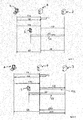
- FIG 1 Shown in figure 1 is an authentication system comprising a first mobile device 1 and a second mobile device 2 of a user such as for example a perconnal computer 1 and a mobile phone 2, an authentication server gateway 3, and an application server or content provider 4.
- a first mobile device 1 and a second mobile device 2 of a user such as for example a perconnal computer 1 and a mobile phone 2, an authentication server gateway 3, and an application server or content provider 4.
- the mobile device 2 comprises a secure element or keystore, i.e. for example an embedded secured element, a removable secured element like a UICC, or simply a keystore in a mobile device, ... non represented, on which there is an application adapted for login/password management.
- This application is for example responsible for storing securely the login/password in the keystore, or in the secured element, ..., to provide a way for the user to edit its login/password inside the application, and to exchange securely those login/passwords with the authentication server gateway.
- the content provider 4 integrates with the authentication server gateway 3.
- the authentication server gateway 3 is a standalone authentication gateway which communicates with the authentication gateway server 3 for example over HTTP(S). This can be achieved by different ways: at network level by using VPN between both parties. Communication protocol is HTTPS and at authentication level, dual authentication can be used.
- the authentication server gateway 3 may also be a logical module inside the content provider 4.
- the method according to the invention comprises opening a browser from the first mobile device 1, and requesting a web page from the application server 4 through an HTTP request in a step S1.
- the application sever 4 In response to this HTTP request received from the first mobile device 1, the application sever 4 returns an HTTP response in a step S2.
- a login page is then displayed for authenticating the user and comprises traditional login/password input fields on the login page.
- This login page also offers a second possibility to login. This second possibility requires no user input on the web page and is explained further.
- the login page also comprises a QR code which encodes an application identifier so as to identify the current application, e.g. the current HTTP session the user has trying to connect to.
- the QR code is only associated to the HTTP session that the user wants to start. Thus when the user will resquest another HTTP session to the application server 3, a new QR code will be generated by the application server 3.
- the QR code is a one time QR code dedicated to be used in relation with the current session.
- the login step then consists in clicking on a "login” button or “login” field. No input from the user is required, e.g. no login, no password, no phone number...
- the mobile device 1 sends a request to login to the application server 4 in a step S4 and still displays the QR code on the screen.
- a step S5 the application server 4 then reaches the authentication server gateway 3 as soon as it receives the login request of the step S4 so as to retreive the login and password for the current user HTTP session. For doing so, an HTTP request is sent to the authentication server gateway 3 requesting login data, e.g. the login and the password related to the current session and the current application identifier ID_QR.
- login data e.g. the login and the password related to the current session and the current application identifier ID_QR.
- step S5 of sending an HTTPS login/password request from the application server 4 to the authentication gateway 3 the user takes the second mobile device 2 and scans the QR code received on the login page from the application server 4 after the step S2.
- the second mobile device 2 comprises means for scanning or taking a picture of the QR code.
- the QR code is treated by the application in the second mobile device 2.
- the method comprises analyzing the QR code from which the application gets the application identifier ID_QR uniquely related to the authentication session of the user.
- the method comprises then the step of proposing to the user to choose the login/password data to submit for authenticating himself to the current application, e.g. the application on the second mobile device 2 proposes to the user to choose the login/password data.
- the application for this part of the invention works in a similar manner than a password manager application.
- the application retrieves the login and password from a keystore on the second mobile device 2 or from a secured element from the same device, ... For example if the embedded application has login and password for "google” and "facebook", then the right credentials based on the application identifier ID_QR are used from the QR code.
- the user chooses his login/password and clicks on a "login" button of his application on the second mobile device 2.
- the method comprises then the step S6 of sending the login and password through HTTPS to the authentication gateway 3 with the identifier code ID_QR of the current application.
- the authentication gateway sends a HTTPS response to the HTTPS request sent in step S6.
- a next step consists in comparing the received or incoming login/password received by the authentication gateway 3 from the second mobile device 2 with the pending request of step S5 received by the authentication gateway 3 from the application server 4.
- the authentication server gateway 4 is able to associate the pending HTTP request from the application server to the login/password received from the second mobile device 2 through the matching identifier code ID_QR.
- the method comprises the step S8 of returning the login/password to the application server 4 by the authentication server 3.
- the method then comprises a step S9 of sending an HTTPS response from the application server 4 to the initial login request of step S1.
- the application server 4 sends the login page response.
- the invention if someone tries to get the QR code, it is not possible to get the login/password from the QR code. Such person can only steal the ID_QR identifier.
- This identifier is transient and applicable only to the single authentication request of the step S1.
- the application identifier itself does not allow to authenticate to other session as the current web session identifier ID_QR from the initial user is needed.
- a challenge is generated by the application server 4 and displayed on the login page. This challenge is submitted together with the QR code when the user tries to login in step S2.
- the challenge is also submitted during step S5 by the application server 4 to the authentication server 3. It is for example included into the QR code scanned by the embedded application of the second mobile device 2. The challenge for example both appears on the login page for the user to read and inside the QR code.
- the embedded application invites the user for accepting the login operation, e.g. before the step S6, the challenge read also from the QR code, is displayed to the user so as he can advantageously check that the session is bound to the login request of step S1.
- all access to the embedded application stored login&password are protected by an applicative PIN code.
- the user When enabled, the user must also enter applicative PIN Code for every login request.
- the method comprises requesting a PIN code to the user.
- request may be HTTP or HTTPS requests.
- the application server 4 login system requires to scale more because the login request will last longer time.
- the end-user HTTP login request will finish after the end-user scan the QR code, accept the login, submit approval from second mobile device 2, ....
- each HTTP login request by end-user lasts much longer time than traditional login because the application server needs to get the login/password from the authentication gateway and this step itself requires this QR code scanning, ....
- This time keeps system resource on hold for much longer time, i.e. from few hundreds ms to few seconds for example for a resource like TCP connection, ....
- an alternative communication protocol is put in place between the application server 4 and the authentication server gateway 3.
- the authentication server gateway 3 returns immediately to requests received from the application server 4, keeps a context of pending requests, with the callback URL for each login request, and later use this callback URL for pushing the login/password information back to the application server through a HTTP request initiated by the authentication server gateway 3 to the application server 4 using this callback URL.
- the application server 4 also give a unique Callback URL so as the authentication server 3 returns immediately.
- the callback URL is the URL to request by HTTP(S) for the authentication server gateway 3 to notify the application server 4..
- the authentication server gateway then returns a HTTPS response in a step S56.
- the related pending request at the authentication server 3 is retrieved using the unique application identifier ID_QR as described previously.
- the login and password are pushed back to the application server 4 using a HTTP or HTTPS request to the callback URL and containing the login and password in a step S80.
- the application server 4 After the application server 4 sends the HTTPS response S9 as in figure 1 , the application server 4 sends an HTTPS response to the authentication gateway 4 in a step S10 as response to the HTTPS request of step S80.
- a single HTTP request can be used instead of of a HTTPS request or vice versa, and or a single HTTP or HTTPS request can be replaced by two HTTP or two HTTPS requests.
- the advantage of using callback URL is to lower system resource usage for both the application server 4 and the authentication server gateway 3.
- the application server should advantageously implement timeout mechanism to prevent from the authentication server gateway 3 which may never request the callback URL.
- the user always has its credentials with him. Passwords are stronger and the method is advantageously easier to deploy.
- the user always has its credentials with him. Passwords are stronger and the method is advantageously easier to deploy.
Landscapes
- Engineering & Computer Science (AREA)
- Computer Security & Cryptography (AREA)
- Computer Networks & Wireless Communication (AREA)
- Computer Hardware Design (AREA)
- General Engineering & Computer Science (AREA)
- Theoretical Computer Science (AREA)
- Computing Systems (AREA)
- Signal Processing (AREA)
- Software Systems (AREA)
- Physics & Mathematics (AREA)
- General Physics & Mathematics (AREA)
- Telephonic Communication Services (AREA)
Priority Applications (1)
| Application Number | Priority Date | Filing Date | Title |
|---|---|---|---|
| EP11306794.6A EP2611096A1 (de) | 2011-12-28 | 2011-12-28 | Verfahren zur Authentifizierung eines Benutzers mittels eines zweiten Mobilgerätes |
Applications Claiming Priority (1)
| Application Number | Priority Date | Filing Date | Title |
|---|---|---|---|
| EP11306794.6A EP2611096A1 (de) | 2011-12-28 | 2011-12-28 | Verfahren zur Authentifizierung eines Benutzers mittels eines zweiten Mobilgerätes |
Publications (1)
| Publication Number | Publication Date |
|---|---|
| EP2611096A1 true EP2611096A1 (de) | 2013-07-03 |
Family
ID=45470414
Family Applications (1)
| Application Number | Title | Priority Date | Filing Date |
|---|---|---|---|
| EP11306794.6A Withdrawn EP2611096A1 (de) | 2011-12-28 | 2011-12-28 | Verfahren zur Authentifizierung eines Benutzers mittels eines zweiten Mobilgerätes |
Country Status (1)
| Country | Link |
|---|---|
| EP (1) | EP2611096A1 (de) |
Cited By (8)
| Publication number | Priority date | Publication date | Assignee | Title |
|---|---|---|---|---|
| WO2015040628A1 (en) * | 2013-09-18 | 2015-03-26 | Bhavin Turakhia | System and method for automated authentication |
| GB2524812A (en) * | 2014-04-03 | 2015-10-07 | Barclays Bank Plc | User Authentication |
| WO2015108924A3 (en) * | 2014-01-15 | 2015-11-19 | Acuity Systems, Inc. | Authentication system |
| US9264423B2 (en) * | 2014-06-12 | 2016-02-16 | Nadapass, Inc. | Password-less authentication system and method |
| WO2018093258A1 (en) * | 2016-11-16 | 2018-05-24 | Tmd Holding B.V. | A method, apparatus and computer program product for providing access to a digital service |
| CN109951550A (zh) * | 2019-03-21 | 2019-06-28 | 浪潮软件集团有限公司 | 一种对象存储的方法及系统 |
| EP3588413A1 (de) * | 2018-06-21 | 2020-01-01 | Auriga S.p.A. | Identifikationsverfahren mit starker authentifizierung für die freigabe eines rechnersystems |
| CN115865562A (zh) * | 2022-11-30 | 2023-03-28 | 浪潮通用软件有限公司 | 多租户架构下的应用程序集成vpn的方法及设备、介质 |
Citations (3)
| Publication number | Priority date | Publication date | Assignee | Title |
|---|---|---|---|---|
| WO2009101549A2 (en) * | 2008-02-11 | 2009-08-20 | Alberto Gasparini | Method and mobile device for registering and authenticating a user at a service provider |
| US20090265776A1 (en) * | 2008-04-18 | 2009-10-22 | Michael Baentsch | Authentication of data communications |
| EP2166697A1 (de) * | 2008-09-17 | 2010-03-24 | GMV Soluciones Globales Internet S.A. | Verfahren und System zur Authentifizierung eines Benutzers mit Hilfe eines Mobilfunkgeräts |
-
2011
- 2011-12-28 EP EP11306794.6A patent/EP2611096A1/de not_active Withdrawn
Patent Citations (3)
| Publication number | Priority date | Publication date | Assignee | Title |
|---|---|---|---|---|
| WO2009101549A2 (en) * | 2008-02-11 | 2009-08-20 | Alberto Gasparini | Method and mobile device for registering and authenticating a user at a service provider |
| US20090265776A1 (en) * | 2008-04-18 | 2009-10-22 | Michael Baentsch | Authentication of data communications |
| EP2166697A1 (de) * | 2008-09-17 | 2010-03-24 | GMV Soluciones Globales Internet S.A. | Verfahren und System zur Authentifizierung eines Benutzers mit Hilfe eines Mobilfunkgeräts |
Non-Patent Citations (1)
| Title |
|---|
| MIN MIN ET AL: "Augmenting the OGC Web Processing Service with Message-Based Asynchronous Notification", GEOSCIENCE AND REMOTE SENSING SYMPOSIUM, 2008. IGARSS 2008. IEEE INTERNATIONAL, IEEE, PISCATAWAY, NJ, USA, 7 July 2008 (2008-07-07), pages II - 1337, XP031422411, ISBN: 978-1-4244-2807-6 * |
Cited By (16)
| Publication number | Priority date | Publication date | Assignee | Title |
|---|---|---|---|---|
| WO2015040628A1 (en) * | 2013-09-18 | 2015-03-26 | Bhavin Turakhia | System and method for automated authentication |
| WO2015108924A3 (en) * | 2014-01-15 | 2015-11-19 | Acuity Systems, Inc. | Authentication system |
| US9756503B2 (en) | 2014-04-03 | 2017-09-05 | Barclays Bank Plc | User authentication |
| GB2524812A (en) * | 2014-04-03 | 2015-10-07 | Barclays Bank Plc | User Authentication |
| GB2535081B (en) * | 2014-04-03 | 2018-02-28 | Barclays Bank Plc | User authentication |
| GB2524812B (en) * | 2014-04-03 | 2016-07-20 | Barclays Bank Plc | User Authentication |
| GB2535081A (en) * | 2014-04-03 | 2016-08-10 | Barclays Bank Plc | User authentication |
| US20160127344A1 (en) * | 2014-06-12 | 2016-05-05 | Nadapass, Inc. | Password-less authentication system and method |
| US9264423B2 (en) * | 2014-06-12 | 2016-02-16 | Nadapass, Inc. | Password-less authentication system and method |
| US10033715B2 (en) | 2014-06-12 | 2018-07-24 | Nadapass, Inc. | Password-less authentication system and method |
| US20190245839A1 (en) * | 2014-06-12 | 2019-08-08 | Nadapass, Inc. | Password-less authentication system and method |
| WO2018093258A1 (en) * | 2016-11-16 | 2018-05-24 | Tmd Holding B.V. | A method, apparatus and computer program product for providing access to a digital service |
| NL2017801B1 (en) * | 2016-11-16 | 2018-05-25 | Tmd Holding B V | A method, apparatus and computer program product for providing access to a digital service |
| EP3588413A1 (de) * | 2018-06-21 | 2020-01-01 | Auriga S.p.A. | Identifikationsverfahren mit starker authentifizierung für die freigabe eines rechnersystems |
| CN109951550A (zh) * | 2019-03-21 | 2019-06-28 | 浪潮软件集团有限公司 | 一种对象存储的方法及系统 |
| CN115865562A (zh) * | 2022-11-30 | 2023-03-28 | 浪潮通用软件有限公司 | 多租户架构下的应用程序集成vpn的方法及设备、介质 |
Similar Documents
| Publication | Publication Date | Title |
|---|---|---|
| US9027085B2 (en) | Method, system and program product for secure authentication | |
| US12499201B2 (en) | Authentication and personal data sharing for partner services using out-of-band optical mark recognition | |
| EP2611096A1 (de) | Verfahren zur Authentifizierung eines Benutzers mittels eines zweiten Mobilgerätes | |
| US8826398B2 (en) | Password changing | |
| US10616217B2 (en) | Website authentication using an internet-connected device | |
| US10050952B2 (en) | Smart phone login using QR code | |
| US9979719B2 (en) | System and method for converting one-time passcodes to app-based authentication | |
| US10362613B2 (en) | Pairing management method, recording medium, and terminal apparatus | |
| US9203825B2 (en) | Method of authenticating a user of a peripheral apparatus, a peripheral apparatus, and a system for authenticating a user of a peripheral apparatus | |
| KR101696612B1 (ko) | 사용자 인증 관리 | |
| US11032275B2 (en) | System for improved identification and authentication | |
| JP5516688B2 (ja) | 通信システム、クライアント装置、中継装置及びプログラム | |
| US20170195314A1 (en) | Provisioning account credentials via a trusted channel | |
| US20160036809A1 (en) | Passwordless strong authentication using trusted devices | |
| US11368449B2 (en) | Asserting a mobile identity to users and devices in an enterprise authentication system | |
| US20210344673A1 (en) | Methods and systems for blocking malware attacks | |
| WO2014201636A1 (zh) | 身份登录方法及设备 | |
| TW201141176A (en) | Method and apparatus for providing trusted single sing-on access to applications and internet-based services | |
| WO2015154488A1 (zh) | 一种访问路由器的方法及装置 | |
| EP2611097A1 (de) | Verfahren zur Authentifizierung eines Benutzers mittels eines zweiten Mobilgerätes | |
| US20150058930A1 (en) | Method and apparatus for enabling authorised users to access computer resources | |
| US20220138306A1 (en) | Offline multi-factor one-time password authentication | |
| US20150040154A1 (en) | Method and telecommunications system for registering a user with an iptv service | |
| US11853102B2 (en) | Remote control system, remote control method, and non-transitory information recording medium | |
| EP3965448A1 (de) | Verfahren und authentifizierungsserver zur authentifizierung von benutzern, die den zugang zu einer beschränkten datenressource anfordern |
Legal Events
| Date | Code | Title | Description |
|---|---|---|---|
| PUAI | Public reference made under article 153(3) epc to a published international application that has entered the european phase |
Free format text: ORIGINAL CODE: 0009012 |
|
| AK | Designated contracting states |
Kind code of ref document: A1 Designated state(s): AL AT BE BG CH CY CZ DE DK EE ES FI FR GB GR HR HU IE IS IT LI LT LU LV MC MK MT NL NO PL PT RO RS SE SI SK SM TR |
|
| AX | Request for extension of the european patent |
Extension state: BA ME |
|
| STAA | Information on the status of an ep patent application or granted ep patent |
Free format text: STATUS: THE APPLICATION IS DEEMED TO BE WITHDRAWN |
|
| 18D | Application deemed to be withdrawn |
Effective date: 20140104 |