EP2615531A1 - Berührungspositionierungsverfahren, berührungsbildschirm, berührungssystem und anzeige - Google Patents
Berührungspositionierungsverfahren, berührungsbildschirm, berührungssystem und anzeige Download PDFInfo
- Publication number
- EP2615531A1 EP2615531A1 EP11823036.6A EP11823036A EP2615531A1 EP 2615531 A1 EP2615531 A1 EP 2615531A1 EP 11823036 A EP11823036 A EP 11823036A EP 2615531 A1 EP2615531 A1 EP 2615531A1
- Authority
- EP
- European Patent Office
- Prior art keywords
- camera
- optical center
- suspected
- touch
- actual
- Prior art date
- Legal status (The legal status is an assumption and is not a legal conclusion. Google has not performed a legal analysis and makes no representation as to the accuracy of the status listed.)
- Withdrawn
Links
Images




Classifications
-
- G—PHYSICS
- G06—COMPUTING OR CALCULATING; COUNTING
- G06F—ELECTRIC DIGITAL DATA PROCESSING
- G06F3/00—Input arrangements for transferring data to be processed into a form capable of being handled by the computer; Output arrangements for transferring data from processing unit to output unit, e.g. interface arrangements
- G06F3/01—Input arrangements or combined input and output arrangements for interaction between user and computer
- G06F3/03—Arrangements for converting the position or the displacement of a member into a coded form
- G06F3/041—Digitisers, e.g. for touch screens or touch pads, characterised by the transducing means
- G06F3/042—Digitisers, e.g. for touch screens or touch pads, characterised by the transducing means by opto-electronic means
- G06F3/0428—Digitisers, e.g. for touch screens or touch pads, characterised by the transducing means by opto-electronic means by sensing at the edges of the touch surface the interruption of optical paths, e.g. an illumination plane, parallel to the touch surface which may be virtual
-
- G—PHYSICS
- G06—COMPUTING OR CALCULATING; COUNTING
- G06F—ELECTRIC DIGITAL DATA PROCESSING
- G06F3/00—Input arrangements for transferring data to be processed into a form capable of being handled by the computer; Output arrangements for transferring data from processing unit to output unit, e.g. interface arrangements
- G06F3/01—Input arrangements or combined input and output arrangements for interaction between user and computer
- G06F3/03—Arrangements for converting the position or the displacement of a member into a coded form
- G06F3/041—Digitisers, e.g. for touch screens or touch pads, characterised by the transducing means
-
- G—PHYSICS
- G06—COMPUTING OR CALCULATING; COUNTING
- G06F—ELECTRIC DIGITAL DATA PROCESSING
- G06F3/00—Input arrangements for transferring data to be processed into a form capable of being handled by the computer; Output arrangements for transferring data from processing unit to output unit, e.g. interface arrangements
- G06F3/01—Input arrangements or combined input and output arrangements for interaction between user and computer
- G06F3/03—Arrangements for converting the position or the displacement of a member into a coded form
- G06F3/041—Digitisers, e.g. for touch screens or touch pads, characterised by the transducing means
- G06F3/042—Digitisers, e.g. for touch screens or touch pads, characterised by the transducing means by opto-electronic means
Definitions
- the present invention relates to the field of photoelectric technology, and in particular, to a touch positioning method, a touch screen, a touch system and a display.
- Figure 1 is a structural schematic diagram of a camera based touch screen in the prior art, comprising a touch detection region 10, two cameras 111 and 112 respectively installed on two corners of the touch detection region 10, two light sources 121 and 122 respectively installed at locations adjacent to the cameras 111 and 112, a regression reflection bar 13 installed around the touch detection region 10, and a processing module 14 connected with the cameras 111 and 112.
- the regression reflection bar 13 reflects light emitted by the light source 121 to the camera 111, and reflects light emitted by the light source 122 to the camera 112; the cameras 111 and 112 respectively collect image data and send the image data to the processing module 14 which processes the image data to determine location information of a touch object.
- the touch screen may be used to obtain location information of a plurality of touch objects.
- Figure 2 is a schematic diagram of brightness of the image data collected by the camera 111 in the touch screen as shown in Figure 1 when there is no touch object in the touch detection region.
- Figure 3 is a schematic diagram of brightness of the image data collected by the camera 111 in the touch screen as shown in Figure 1 when there is one touch object in the touch detection region.
- the processing module 14 determines location information of the touch object based on the image data collected by the cameras 111 and 112.
- Figure 4 is a schematic diagram of brightness of the image data collected by the camera 111 in the touch screen as shown in Figure 1 when a touch object is near to the camera 111.
- a touch object is near to the camera 111, since light reflected by the touch object itself is stronger, it results in a bright bar 41 instead of a dark bar at the location corresponding to the touch object in the image data collected by the camera 111.
- Due to shadows on both sides of the touch object there are dark bars 42, 43 respectively on both sides of the location of the touch object.
- the dark bar 42, 43 is called "crack dot".
- the processing module 14 determines location information of the touch object according to the image data collected by the cameras 111 and 112, it will obtain location information of two touch objects, and in some cases, even three or more touch objects, which leads to misjudgment.
- the invention provides a touch positioning method, touch screen, touch system and display, to eliminate misjudgment caused by "crack dot" in a camera based touch screen.
- the invention provides a touch positioning method, the method being applied to a camera based touch screen, comprising at least two cameras and a regression reflection bar, the at least two cameras comprising a first camera and a second camera, the method comprising:
- the invention further provides a touch screen, comprising at least two cameras, at least two light sources, a regression reflection bar and a processing module, the at least two cameras comprising a first camera and a second camera, the processing module comprising:
- the invention further provides a touch system corresponding to the touch screen.
- the invention further provides a display, comprising a display unit and the touch screen as described.
- the invention processes image data collected by the first camera to obtain the first image data, processes image data collected by the second camera to obtain the second image data, and then processes the second image data to obtain the third image data comprising image blocks of two suspected touch objects, and finally obtains location information of the actual touch object according to the first image data, the third image data and the distance between the two suspected touch objects, thereby eliminating misjudgment caused by "crack dot".
- an imaging device may specifically be a camera.
- the embodiment applies a touch screen, and the structural schematic diagram of the touch screen may refer to the schematic diagram as shown in Figure 1 , wherein a first camera may specifically be camera 111, and a second camera may specifically be camera 112. It should be noted that two cameras are shown here merely as an example and the touch screen may also comprise more cameras.
- Figure 5 is a schematic flowchart of a first embodiment of a touch positioning method of the present invention, comprising the following steps.
- a processing module obtains first image data and second image data.
- the processing module processes image collected by the first camera to obtain first image data, and processes image collected by the second camera to obtain second image data, wherein the first image data comprise one touch image block, and the second image data comprise at least two touch image blocks.
- the first image data and second image data comprise two kinds of image blocks, which are bright and dark, wherein the dark image block is a touch image block.
- the processing module processes the second image data to obtain third image data, the third image data comprising image blocks of two suspected touch objects.
- the processing module regards the two touch image blocks as image blocks of two suspected touch objects, and then such image data comprising image blocks of only two suspected touch objects are regarded as the third image data; when the second image data comprise at least three touch image blocks, the processing module merges, according to a distance between two adjacent edges of two adjacent touch image blocks, the at least three touch image blocks into image blocks of two suspected touch objects, and then such image data comprising image blocks of only two suspected touch objects are regarded as the third image data.
- the processing module orders the distances between two adjacent edges of two adjacent touch image blocks according to size, and then merges other touch image blocks than two adjacent touch image blocks with maximum distance in all the touch image blocks, so as to merge the at least three touch image blocks into image blocks of two suspected touch objects, so that the third image data comprises image blocks of two suspected touch objects.
- the process of merging touch image blocks is described below taking the three touch image blocks as an example.
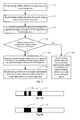
- the second image data comprises three touch image blocks 61, 62 and 63, wherein the distance between two adjacent edges of two adjacent touch image blocks 61 and 62 is smaller, and the distance between two adjacent edges of two adjacent touch image blocks 62 and 63 is larger.
- Figure 6B is a schematic diagram of the second image data after one touch image block is merged in the first embodiment of the touch positioning method of the present invention. Since the distance between two adjacent edges of two adjacent touch image blocks 62 and 63 is larger than the distance between two adjacent edges of two adjacent touch image blocks 61 and 62, the touch image blocks 61 and 62 are merged into one touch image block 64.
- the merging process is mainly performed by identifying the area between the touch image blocks 61 and 62 also as a touch image block, and taking the touch image blocks 64 and 63 as touch image blocks of two suspected touch objects.
- the processing module obtains a distance between the two suspected touch objects according to the first image data and the third image data.
- the processing module obtains location information of the actual touch object according to the first image data, the third image data and the distance between the two suspected touch objects.
- step 54 may further comprise the following steps.
- the processing module judges whether the distance between the two suspected touch objects is larger than a preset threshold; if the distance between the two suspected touch objects is less than or equal to the preset threshold, step 542 is performed, and if the distance between the two suspected touch objects is larger than the preset threshold, step 544 is performed.
- the processing module obtains the distance between the two suspected touch objects according to the first image data and the third image data, and the preset threshold may be determined according to the actual touch object commonly used; for example, when the touch object is a finger, the distance may be 12.7mm.
- the processing module merges image blocks of two suspected touch objects in the third image data into one image block of an actual touch object to obtain a new third image data.
- the touch image blocks 63 and 64 are merged into one touch image block 65. Specifically, the area between the touch image blocks 63 and 64 is changed as a touch image block, and the touch image block 65 is regarded as an image block of an actual touch object. After step 542 is performed, step 543 is performed.
- the processing module obtains location information of the actual touch object according to the first image data and the new third image data.
- the processing module takes the two suspected touch objects as two actual touch objects and obtains location information of the two actual touch objects.
- the processing module processes the image data collected by the first camera to obtain the first image data, processes the image data collected by the second camera to obtain the second image data, and then processes the second image data to obtain the third image data comprising image blocks of two suspected touch objects, and finally obtains location information of the actual touch object according to the first image data, the third image data and the distance between the two suspected touch objects, thereby eliminating misjudgment caused by "crack dot".
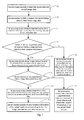
- FIG. 7 is a schematic flowchart of a second embodiment of the touch positioning method of the present invention, and the difference from the schematic flowchart as shown in Figure 5 is that step 541 may comprise the following steps.
- the processing module obtains location information of two suspected touch objects according to the first image data and the third image data.
- the processing module judges whether the two suspected touch objects are both located within a suspected area according to the location information of the two suspected touch objects.
- the suspected area is any closed area enclosing the second camera; preferably, the suspected area is a rectangle or a sector, wherein the rectangle takes the optical center of the second camera as a vertex, and the sector takes the optical center of the second camera as circle center; optionally, the suspected area may further be the entire touch detection region or any other shape.
- the processing module obtains the distance between location information of the two suspected touch objects as the distance between the two suspected touch objects.
- the processing module judges whether the distance between the two suspected touch objects is larger than the preset threshold.
- step 544 may specifically be the following step.
- the processing module takes the two suspected touch objects as two actual touch objects and takes the location information of the two suspected touch objects as location information of the two actual touch objects.
- embodiments may further comprise the following step.
- the processing module takes the two suspected touch objects as two actual touch objects, and takes location information of the two suspected touch objects as location information of the two actual touch objects.
- the processing module may use two solutions to obtain location information of the two suspected touch objects.
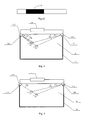
- Figure 8 is a schematic diagram showing the principle of a first solution of obtaining location information of the two suspected touch objects in the second embodiment of the touch positioning method of the present invention.
- camera 111 is the first camera
- camera 112 is the second camera
- P1 is the first suspected touch object
- P2 is the second suspected touch object; it is seen from the camera 111 that the first suspected touch object P1 and the second suspected touch object P2 are in the same straight line, and thus the first image data has only one touch image block while the third image data has an image block of a first suspected touch object and an image block of a second suspected touch object.
- the first actual direction information is an angle between the connection line from the center of the first suspected touch object to the optical center of the first camera and the connection line from the optical center of the first camera to the optical center of the second camera, while this angle is also the angle between the connection line from the center of the second suspected touch object P2 to the optical center of the first camera and the connection line from the optical center of the first camera to the optical center of the second camera.
- the processing module may obtain, according to the location information of two edges of the image block of the first suspected touch object in the third image data, angles between the connection lines from the two edges of the first suspected touch object corresponding to two edges of the touch image block of the first suspected touch object respectively to the optical center of the second camera and the connection line from the optical center of the first camera to the optical center of the second camera, and obtains, according to the angles between the connection lines from the two edges of the first suspected touch object corresponding to two edges of the touch image block of the first suspected touch object respectively to the optical center of the second camera and the connection line from the optical center of the first camera to the optical center of the second camera, the first suspected direction information ⁇ 1 .
- the first suspected direction information ⁇ 1 is the angle between the connection line from the center of the first suspected touch object to the optical center of the second camera and the connection line from the optical center of the first camera to the optical center of the second camera. It can be seen from the previous text that the first suspected direction information ⁇ 1 here is actually obtained also through two angels.
- the second suspected direction information ⁇ 2 is obtained.
- the second suspected direction information ⁇ 2 is the angle between the connection line from the center of the second suspected touch object to the optical center of the second camera and the connection line from the optical center of the first camera to the optical center of the second camera. It can be seen from the previous text that the second suspected direction information ⁇ 2 here is actually obtained also through the two angels. Finally, since the distance between the optical center of the first camera and the optical center of the second camera is known, the processing module may obtain location information of the first suspected touch object according to the first actual direction information ⁇ and the first suspected direction information ⁇ 1 , and obtain location information of the second suspected touch object according to the first actual direction information ⁇ and the second suspected direction information ⁇ 2 .
- Figure 9 is a schematic diagram showing the principle of a second solution of obtaining location information of two suspected touch objects in the second embodiment of the touch positioning method of the present invention, with the difference from the principle schematic diagram as shown in Figure 8 that the processing module directly obtains the first actual direction information ⁇ according to the location information of the center of the tough image block in the first image data, and directly obtains the first suspected direction information ⁇ 1 and the second suspected direction information ⁇ 2 according to the location information of the center of the image block of the first suspected touch object and the location information of the center of the image block of the second suspected touch object in the third image data.
- the precision of the first solution is higher than that of the second solution.
- the processing module may also use two solutions to obtain location information of actual touch objects: the first solution is similar to the principle schematic diagram as shown in Figure 8 , wherein the processing module obtains, according to location information of two edges of the touch image block in the first image data, angles between the connection lines from the two edges of the actual touch object corresponding to two edges of the touch image block respectively to the optical center of the first camera and the connection line from the optical center of the first camera to the optical center of the second camera, and obtains, according to the angles between the connection lines from the two edges of the actual touch object corresponding to two edges of the touch image block respectively to the optical center of the first camera and the connection line from the optical center of the first camera to the optical center of the second camera, the first actual direction information, the first actual direction information being an angle between the connection line from the center of the actual touch object to the optical center of the first camera and the connection line from the optical center of the first camera to the optical center of the second camera; at the same time, the processing module obtains, according to location information of two edges of the image
- the second solution is similar to the principle schematic diagram as shown in Figure 9 , wherein the processing module obtains, according to location information of the center of the touch image block in the first image data, the first actual direction information, the first actual direction information being an angle between the connection line from the center of the actual touch object to the optical center of the first camera and the connection line from the optical center of the first camera to the optical center of the second camera; at the same time, the processing module obtains, according to location information of the center of the image block of the actual tough object in the new third image data, the second actual direction information, the second actual direction information being an angle between the connection line from the center of the actual touch object to the optical center of the second camera and the connection line from the optical center of the first camera to the optical center of the second camera; finally, the processing module obtains location information of the actual touch object according to the first actual direction information and the second actual direction information.
- the processing module processes the image data collected by the first camera to obtain the first image data, and processes the image data collected by the second camera to obtain the second image data.
- the processing module merges the at least three touch image blocks into image blocks of two suspected touch objects so as to obtain the third image data; then it obtains location information of the two suspected touch objects according to the first image data and the third image data.
- the distance between the two suspected touch objects is obtained according to the first image data and the third image data; when the distance between the two suspected touch objects is less than or equal to a preset threshold, the two suspected touch objects are considered as one actual touch object, image blocks of the two suspected touch objects in the third image data are merged into one image block of an actual touch object, and then location information of the actual touch object is obtained according to the first image data and the new third image data, thereby eliminating misjudgment caused by "crack dot".
- FIG 10 is a schematic flowchart of the third embodiment of the touch positioning method of the present invention, with the difference from the schematic flowchart as shown in Figure 7 being that step 73 may be the following step.
- the processing module obtains the distance between the two suspected touch objects according to the first image data and the third image data.
- the two suspected touch objects comprise a first suspected touch object and a second suspected touch object.
- the first edge of the image block of the first suspected touch object is adjacent to the second edge of the image block of the second suspected touch object.
- the first edge of the image block of the first suspected touch object is an image of the first edge of the first suspected touch object, that is, the first edge of the image block of the first suspected touch object corresponds to the first edge of the first suspected touch object;
- the second edge of the image block of the second suspected touch object is an image of the second edge of the second suspected touch object, that is, the second edge of the image block of the second suspected touch object corresponds to the second edge of the second suspected touch object.
- FIG 11 is a schematic diagram showing the principle of obtaining the distance between two suspected touch objects in the third embodiment of the touch positioning method of the present invention.
- the processing module obtains, according to location information of two edges of the touch image block in the first image data, angles ⁇ 1 and ⁇ 2 between the connection lines from the two edges of the first suspected touch object P1 corresponding to two edges of the touch image block respectively to the optical center of the first camera- i.e., camera 111- and the connection line from the optical center of the first camera to the optical center of the second camera, while the angles ⁇ 1 and ⁇ 2 are also angles between the connection lines from the two edges of the second suspected touch object P2 to the optical center of the first camera- i.e., camera 111- and the connection line from the optical center of the first camera to the optical center of the second camera; and then the processing module obtains the first actual direction information ⁇ according to the angles ⁇ 1 and ⁇ 2 between the connection lines from the two edges of the first suspected touch object corresponding to two edges of the touch image block respectively
- the processing module obtains, according to the location information of the first edge of the image block of the first suspected touch object in the third image data, the first edge direction information ⁇ 1 , which is an angle between the connection line from the first edge of the first suspected touch object P1 to the optical center of the second camera (camera 112 herein) and the connection line from the optical center of the first camera to the optical center of the second camera, and obtains, according to the location information of the second edge of the image block of the second suspected touch object in the third image data, the second edge direction information ⁇ 2 , which is an angle between the connection line from the second edge of the second suspected touch object P2 to the optical center of the second camera and the connection line from the optical center of the first camera to the optical center of the second camera.
- the processing module obtains location information of the first edge of the first suspected touch object P1 according to the first actual direction information ⁇ and the first edge direction information ⁇ 1 , and obtains location information of the second edge of the second suspected touch object P2 according to the first actual direction information ⁇ and the second edge direction information ⁇ 2 ; finally, the processing module obtains the distance L between location information of the first edge of the first suspected touch object and location information of the second edge of the second suspected touch object as the distance between the two suspected touch objects.
- the processing module processes the image data collected by the first camera to obtain the first image data, and processes the image data collected by the second camera to obtain the second image data.
- the processing module merges the at least three touch image blocks into image blocks of two suspected touch objects so as to obtain the third image data; then it obtains location information of the two suspected touch objects according to the first image data and the third image data.
- the distance between the two suspected touch objects is obtained according to the first image data and the third image data; when the distance between the two suspected touch objects is less than or equal to a preset threshold, the two suspected touch objects are considered as one actual touch object, image blocks of the two suspected touch objects in the third image data are merged into one image block of an actual touch object, and then location information of the actual touch object is obtained according to the first image data and the new third image data, thereby eliminating misjudgment caused by "crack dot".
- the schematic flowchart of this embodiment is the same as the schematic flowchart as shown in Figure 5 .
- the processing module may use two solutions to obtain the distance between two suspected touch objects.
- the first solution is: the processing module first obtains location information of the two suspected touch objects according to the first image data and the third image data, and then obtains the distance between location information of the two suspected touch objects as the distance between the two suspected touch objects. Specifically, the processing module may further use two solutions to obtain location information of the two suspected touch objects, which two solutions specifically refer to the principle schematic diagrams shown in Figure 8 and Figure 9 and are no more described herein. At this time, at step 56, the processing module takes location information of the two suspected touch objects as location information of two actual touch objects.
- the two actual touch objects comprise a first actual touch object and a second actual touch object.
- the processing module may use two solutions to obtain location information of the two actual touch objects.
- the first solution is: the processing module obtains, according to location information of the center of the touch image block in the first image data, the first actual direction information, which is an angle between the connection line from the center of the first actual touch object to the optical center of the first camera and the connection line from the optical center of the first camera to the optical center of the second camera ,and is also an angle between the connection line from the center of the second actual touch object to the optical center of the first camera and the connection line from the optical center of the first camera to the optical center of the second camera; obtains, according to location information of the center of the image block of the second actual tough object in the third image data, the second actual direction information, which is an angle between the connection line from the center of the first actual touch object to the optical center of the second camera and the connection line from the optical center of the first camera to the optical center of the second camera; obtains, according to location information of the center of the image block of the second actual tough object in the third image data, the third actual direction information, which is an angle between the connection line from the center of the second actual
- the second solution is: the processing module obtains, according to location information of two edges of the touch image block in the first image data, angles between the connection lines from the two edges of the first actual touch object corresponding to two edges of the touch image block respectively to the optical center of the first camera and the connection line from the optical center of the first camera to the optical center of the second camera, such angles being also angles between the connection lines from the two edges of the second actual touch object respectively to the optical center of the first camera and the connection line from the optical center of the first camera to the optical center of the second camera, and obtains, according to the angles between the connection lines from the two edges of the first actual touch object corresponding to two edges of the touch image block respectively to the optical center of the first camera and the connection line from the optical center of the first camera to the optical center of the second camera, the first actual direction information, which is an angle between the connection line from the center of the first actual touch object to the optical center of the first camera and the connection line from the optical center of the first camera to
- the processing module may use two solutions to obtain location information of the actual touch object, and the two solutions are the same as those used by the processing module in the second embodiment of the touch positioning method and are no more described herein.
- the processing module processes the image data collected by the first camera to obtain the first image data, and processes the image data collected by the second camera to obtain the second image data.
- the processing module merges the at least three touch image blocks into image blocks of two suspected touch objects so as to obtain the third image data; then it obtains the distance between the two suspected touch objects according to the first image data and the third image data; when the distance between the two suspected touch objects is less than or equal to a preset threshold, the two suspected touch objects are considered as one actual touch object, image blocks of the two suspected touch objects in the third image data are merged into one image block of an actual touch object, and then location information of the actual touch object is obtained according to the first image data and the new third image data, thereby eliminating misjudgment caused by "crack dot".
- the structural schematic diagram of the embodiment is the same as the structural schematic diagram shown in Figure 1 , wherein the first camera specifically may be camera 111, and the second camera specifically may be camera 112. It should be noted that although only two cameras are shown as an example, the embodiment may further comprise more cameras.
- FIG 12 is a structural schematic diagram of a processing module in the first embodiment of the touch screen of the present invention, which comprises an image data obtaining unit 1201, a second image data processing unit 1202, a distance obtaining unit 1203, and an actual touch object location information obtaining unit 1200.
- the second image data processing unit 1202 is connected with the image data obtaining unit 1201, the distance obtaining unit 1203 is connected with the second image data processing unit 1202, and the actual touch object location information obtaining unit 1200 is connected with the distance obtaining unit 1203.
- the image data obtaining unit 1201 is used to process images collected by the first camera to obtain the first image data, and to process images collected by the second camera to obtain the second image data, wherein the first image data comprises one touch image block therein and the second image data comprises at least two touch image blocks therein. Specifically, after the image data obtaining unit 1201 performs binarization with respect to images collected by the first camera and second camera, the first image data and second image data comprise two kinds of blocks, which are bright and dark image blocks, wherein the dark image block is a touch image block.
- the second image data processing unit 1202 is used to process the second image data to obtain third image data, the third image data comprising image blocks of two suspected touch objects.
- the distance obtaining unit 1203 is used to obtain the distance between the two suspected touch objects according to the first image data and the second image data.
- the actual touch object location information obtaining unit 1200 is used to obtain location information of the actual touch object according to the first image data, the third image data and the distance between the two suspected touch objects.
- the second image data processing unit 1202 may be used, when the second image data comprise two touch image blocks, to take the two touch image blocks as image blocks of two suspected touch objects; and when the second image data comprise at least three touch image blocks, to merge the at least three touch image blocks into image blocks of two suspected touch objects according to the distance between two adjacent edges of two adjacent touch image blocks.
- the second image data processing unit 1202 orders the distance between two adjacent edges of two adjacent touch image blocks according to size, and then merges other touch image blocks than two adjacent touch image blocks with maximum distance in all the touch image blocks, so as to merge the at least three touch image blocks into image blocks of two suspected touch objects.
- the specific examples may refer to the schematic diagrams shown in Figure 6A and Figure 6B .
- the actual touch object location information obtaining unit 1200 may comprise a first judgment unit 1204, a first actual touch object location information obtaining unit 1205 and a second actual touch object location information obtaining unit 1206, wherein the first judgment unit 1204 is connected with the distance obtaining unit 1203, the first actual touch object location information obtaining unit 1205 is connected with the first judgment unit 1204, and the second actual touch object location information obtaining unit 1206 is connected with the first judgment unit 1204.
- the first judgment unit 1204 is used to judge whether the distance between the two suspected touch objects is larger than a preset threshold.
- the preset threshold may be determined according to the actual touch object commonly used, for example, when the touch object is a finger, the distance may be 12.7mm.
- the first actual touch object location information obtaining unit 1205 is used, when the first judgment unit judges that the distance between the two suspected touch objects is less than or equal to the preset threshold, to merge image blocks of two suspected touch objects in the second image data into one image block of an actual touch object to obtain new second image data, or called a third image data, and obtain location information of the actual touch object according to the first image data and the third image data.
- the second actual touch object location information obtaining unit 1206 is used, when the first judgment unit judges that the distance between the two suspected touch objects is larger than the preset threshold, to take the two suspected touch objects as two actual touch objects and obtains location information of the two actual touch objects.
- the image data obtaining unit 1201 processes the image data collected by the first camera to obtain the first image data, and processes the image data collected by the second camera to obtain the second image data.
- the second image data comprise at least three touch image blocks
- the second image data processing unit 1202 merges the at least three touch image blocks into image blocks of two suspected touch objects to obtain the third image data.
- the distance obtaining unit 1203 obtains the distance between the two suspected touch objects according to the first image data and the third image data.
- the actual touch object location information obtaining unit 1200 obtains location information of the actual touch object according to the first image data, the third image data and the distance between the two suspected touch objects, thereby eliminating misjudgment caused by "crack dot".
- Figure 13 is a structural schematic diagram of a processing module in the second embodiment of the touch screen of the present invention.
- the distance obtaining unit 1203 may comprise a suspected touch object location information obtaining subunit 1301, a judgment subunit 1302 and a first distance obtaining subunit 1303, and the processing module may further comprise a third actual touch object location information obtaining unit 1207.
- the suspected touch object location information obtaining subunit 1301 is connected with the second image data processing unit 1202, the judgment subunit 1302 is connected with the suspected touch object location information obtaining subunit 1301, the first distance obtaining subunit 1303 is connected with the judgment subunit 1302, the third actual touch object location information obtaining unit 1207 is connected with the suspected touch object location information obtaining subunit 1301 and with the judgment subunit 1302.
- the second actual touch object location information obtaining unit 1206 is also connected with the suspected touch object location information obtaining subunit 1301.
- the two suspected touch objects comprise a first suspected touch object and a second suspected touch object; in the second image data, the first edge of the image block of the first suspected touch object is adjacent to the second edge of the image block of the second suspected touch object, the first edge of the image block of the first suspected touch object being an image of the first edge of the first suspected touch object, and the second edge of the image block of the second suspected touch object being an image of the second edge of the second suspected touch object.
- the suspected touch object location information obtaining subunit 1301 is used to obtain location information of two suspected touch objects according to the first image data and the second image data.
- the judgment subunit 1302 is used to judge whether the two suspected touch objects are both located within a suspected area, which may be any closed area enclosing the second camera; preferably, the suspected area is a rectangle or a sector, the rectangle takes the optical center of the second camera as a vertex, and the sector takes the optical center of the second camera as circle center; optionally, the suspected area may further be the entire touch detection region or any other shape.
- the first distance obtaining subunit 1303 is used, when the judgment subunit 1302 judges that both the two suspected touch objects are located within the suspected area, to obtain the distance between location information of the two suspected touch objects as the distance between the two suspected touch objects.
- the third actual touch object location information obtaining unit 1207 is used, when the judgment subunit 1302 judges that not both the two suspected touch objects are located within the suspected area, to take the two suspected touch objects as two actual touch objects, and to take location information of the two suspected touch objects as location information of the two actual touch objects.
- the suspected touch object location information obtaining subunit 1301 may use two solutions to obtain location information of the two suspected touch objects.
- the first solution is: the suspected touch object location information obtaining subunit 1301 obtains, according to location information of two edges of the touch image block in the first image data, angles between the connection lines from the two edges of the first suspected touch object corresponding to two edges of the touch image block respectively to the optical center of the first camera and the connection line from the optical center of the first camera to the optical center of the second camera, such angles being also angles between the connection lines from the two edges of the second suspected touch object respectively to the optical center of the first camera and the connection line from the optical center of the first camera to the optical center of the second camera, and obtains, according to the angles between the connection lines from the two edges of the first suspected touch object corresponding to two edges of the touch image block respectively to the optical center of the first camera and the connection line from the optical center of the first camera to the optical center of the second camera, the first actual direction information, which is an angle between the connection line from the center of
- the second solution is: the suspected touch object location information obtaining subunit 1301 obtains, according to location information of the center of the touch image block in the first image data, the first actual direction information, which is an angle between the connection line from the center of the first suspected touch object to the optical center of the first camera and the connection line from the optical center of the first camera to the optical center of the second camera, and is also an angle between the connection line from the center of the second suspected touch object to the optical center of the first camera and the connection line from the optical center of the first camera to the optical center of the second camera; it further obtains, according to location information of the centers of the image blocks of the two suspected tough objects in the second image data, the first suspected direction information and the second suspected direction information, the first suspected direction information being an angle between the connection line from the center of the first suspected touch object to the optical center of the second camera and the connection line from the optical center of the first camera to the optical center of the second camera, the second suspected direction information being an angle between the connection line from the center of the second suspected touch object to the optical center of the
- the precision of the first solution is higher than that of the second solution.
- the first actual touch object location information obtaining unit 1205 also may use two solutions to obtain location information of the actual touch object.
- the first solution is: the first actual touch object location information obtaining unit 1205 obtains, according to location information of the center of the touch image block in the first image data, the first actual direction information, which is an angle between the connection line from the center of the actual touch object to the optical center of the first camera and the connection line from the optical center of the first camera to the optical center of the second camera; obtains, according to location information of the center of the image block of the actual tough object in the new second image data, the second actual direction information, which is an angle between the connection line from the center of the actual touch object to the optical center of the second camera and the connection line from the optical center of the first camera to the optical center of the second camera; then it obtains location information of the actual touch object according to the first actual direction information and the second actual direction information.
- This solution is similar to the principle schematic diagram shown in Figure 9 .
- the second solution is: the first actual touch object location information obtaining unit 1205 obtains, according to location information of two edges of the touch image block in the first image data, angles between the connection lines from the two edges of the actual touch object corresponding to two edges of the touch image block respectively to the optical center of the first camera and the connection line from the optical center of the first camera to the optical center of the second camera, and obtains, according to the angles between the connection lines from the two edges of the actual touch object corresponding to two edges of the touch image block respectively to the optical center of the first camera and the connection line from the optical center of the first camera to the optical center of the second camera, the first actual direction information, which is an angle between the connection line from the center of the actual touch object to the optical center of the first camera and the connection line from the optical center of the first camera to the optical center of the second camera; it further obtains, according to location information of two edges of the image block of the actual tough object in the new second image data, angles between the connection lines from the two edges of the actual touch object corresponding to two edges of the image
- the second actual touch object location information obtaining unit 1206 is used, when the first judgment unit 1204 judges that the distance between the two suspected touch objects is larger than the preset threshold, to take the two suspected touch objects as two actual touch objects and take location information of the two suspected touch objects as location information of the two actual touch objects.
- the image data obtaining unit 1201 processes the image data collected by the first camera to obtain the first image data, and processes the image data collected by the second camera to obtain the second image data.
- the second image data comprise at least three touch image blocks
- the second image data processing unit 1202 merges the at least three touch image blocks into image blocks of two suspected touch objects, and then the suspected touch object location information obtaining subunit 1301 obtains location information of the two suspected touch objects.
- the judgment subunit 1302 judges that location information of both the two suspected touch objects are located within the suspected area
- the first distance obtaining subunit 1303 obtains the distance between location information of the two suspected touch objects as the distance between the two suspected touch objects.
- the first actual touch object location information obtaining unit 1205 considers the two suspected touch objects as one actual touch object, merges image blocks of two suspected touch objects in the second image data into an image block of one actual touch object, and then obtains location information of the actual touch object according to the first image data and the new second image data, thereby eliminating misjudgment caused by "crack dot".
- Figure 14 is a structural schematic diagram of a processing module in the third embodiment of the touch screen of the present invention, with the difference from the schematic flowchart as shown in Figure 13 that the first distance obtaining subunit 1303 may also be a second distance obtaining subunit 1401 for obtaining, when the judgment subunit 1302 judges that location information of both the two suspected touch objects are located within the suspected area, the distance between the two suspected touch objects according to the first image data and the second image data.
- the two suspected touch objects comprise a first suspected touch object and a second suspected touch object; in the second image data, the first edge of the image block of the first suspected touch object is adjacent to the second edge of the image block of the second suspected touch object, the first edge of the image block of the first suspected touch object being an image of the first edge of the first suspected touch object, and the second edge of the image block of the second suspected touch object being an image of the second edge of the second suspected touch object.
- the second distance obtaining subunit 1401 obtains, according to location information of two edges of the touch image block in the first image data, angles between the connection lines from the two edges of the first suspected touch object corresponding to two edges of the touch image block respectively to the optical center of the first camera and the connection line from the optical center of the first camera to the optical center of the second camera, such angles being also angles between the connection lines from the two edges of the second suspected touch object respectively to the optical center of the first camera and the connection line from the optical center of the first camera to the optical center of the second camera, and obtains, according to the angles between the connection lines from the two edges of the first suspected touch object corresponding to two edges of the touch image block respectively to the optical center of the first camera and the connection line from the optical center of the first camera to the optical center of the second camera, the first actual direction information, which is an angle between the connection line from the center of the first suspected touch object to the optical center of the first camera and the connection line from the optical center of the first camera to the optical center of the second camera, and
- the image data obtaining unit 1201 processes the image data collected by the first camera to obtain the first image data, and processes the image data collected by the second camera to obtain the second image data.
- the second image data comprise at least three touch image blocks
- the second image data processing unit 1202 merges the at least three touch image blocks into image blocks of two suspected touch objects, and then the suspected touch object location information obtaining subunit 1301 obtains location information of the two suspected touch objects.
- the second distance obtaining subunit 1401 obtains the distance between the two suspected touch objects according to the first image data and the second image data.
- the first actual touch object location information obtaining unit 1205 considers the two suspected touch objects as one actual touch object, merges image blocks of two suspected touch objects in the second image data into an image block of one actual touch object, and then obtains location information of the actual touch object according to the first image data and the new second image data, thereby eliminating misjudgment caused by "crack dot".
- the two suspected touch objects comprise a first suspected touch object and a second suspected touch object; in the second image data, the first edge of the image block of the first suspected touch object is adjacent to the second edge of the image block of the second suspected touch object, the first edge of the image block of the first suspected touch object being an image of the first edge of the first suspected touch object, and the second edge of the image block of the second suspected touch object being an image of the second edge of the second suspected touch object.
- the distance obtaining unit 1203 obtains, according to location information of two edges of the touch image block in the first image data, angles between the connection lines from the two edges of the first suspected touch object corresponding to two edges of the touch image block respectively to the optical center of the first camera and the connection line from the optical center of the first camera to the optical center of the second camera, such angles being also angles between the connection lines from the two edges of the second suspected touch object respectively to the optical center of the first camera and the connection line from the optical center of the first camera to the optical center of the second camera, and obtains, according to the angles between the connection lines from the two edges of the first suspected touch object corresponding to two edges of the touch image block respectively to the optical center of the first camera and the connection line from the optical center of the first camera to the optical center of the second camera, the first actual direction information, which is the direction of the center of the first suspected touch object and of the optical center of the first camera, and is t also the direction of the center of the second suspected touch object and of the optical center of the first camera;
- the first actual touch object location information obtaining unit 1205 may use two solutions to obtain location information of the actual touch object, and these two solutions are the same as the two solutions used by the first actual touch object location information obtaining unit 1205 in the second embodiment of the touch screen and will not be described any more herein.
- the two actual touch objects comprise a first actual touch object and a second actual touch object.
- the second actual touch object location information obtaining unit 1206 also may use two solutions to obtain location information of the actual touch objects.
- the first solution is: the second actual touch object location information obtaining unit 1206 obtains, according to location information of the center of the touch image block in the first image data, the first actual direction information, which is an angle between the connection line from the center of the first actual touch object to the optical center of the first camera and the connection line from the optical center of the first camera to the optical center of the second camera, and is also an angle between the connection line from the center of the second actual touch object to the optical center of the first camera and the connection line from the optical center of the first camera to the optical center of the second camera, obtains, according to location information of the center of the image block of the first actual tough object in the second image data, the second actual direction information, which is an angle between the connection line from the center of the first actual touch object to the optical center of the second camera and the connection line from the optical
- the second solution is: the second actual touch object location information obtaining unit 1206 obtains, according to location information of two edges of the touch image block in the first image data, angles between the connection lines from the two edges of the first actual touch object corresponding to two edges of the touch image block respectively to the optical center of the first camera and the connection line from the optical center of the first camera to the optical center of the second camera, such angles being also angles between the connection lines from the two edges of the second actual touch object respectively to the optical center of the first camera and the connection line from the optical center of the first camera to the optical center of the second camera, and obtains, according to the angles between the connection lines from the two edges of the first actual touch object corresponding to two edges of the touch image block respectively to the optical center of the first camera and the connection line from the optical center of the first camera to the optical center of the second camera, the first actual direction information, which is an angle between the connection line from the center of the first actual touch object to the optical center of the first camera and the connection line from the optical center of the first camera to the optical center of the second
- the image data obtaining unit 1201 processes the image data collected by the first camera to obtain the first image data, and processes the image data collected by the second camera to obtain the second image data.
- the second image data comprise at least three touch image blocks
- the second image data processing unit 1202 merges the at least three touch image blocks into image blocks of two suspected touch objects, and then the distance obtaining unit 1203 obtains the distance between the two suspected touch objects according to the first image data and the second image data.
- the first actual touch object location information obtaining unit 1205 considers the two suspected touch objects as one actual touch object, merges image blocks of two suspected touch objects in the second image data into an image block of one actual touch object, and then obtains location information of the actual touch object according to the first image data and the new second image data, thereby eliminating misjudgment caused by "crack dot".
- Figure 15 is a structural schematic diagram of a processing module in a fifth embodiment of the touch screen of the present invention.
- the distance obtaining unit 1203 may comprise a suspected touch object location information obtaining subunit 1301 and a distance obtaining subunit 1501.
- the suspected touch object location information obtaining subunit 1301 is connected with the second image data processing unit 1202, the distance obtaining subunit 1501 is connected with the suspected touch object location information obtaining subunit 1301, and the first judgment unit 1204 is connected with the distance obtaining subunit 1501.
- the second actual touch object location information obtaining unit 1206 is also connected with the suspected touch object location information obtaining subunit 1301.
- the suspected touch object location information obtaining subunit 1301 is used to obtain location information of the two suspected touch objects according to the first image data and the second image data.
- the distance obtaining subunit 1501 is used to obtain the distance between location information of the two suspected touch objects as the distance between the two suspected touch objects.
- the suspected touch object location information obtaining subunit 1301 may use two solutions to obtain location information of the two suspected touch objects, and the two solutions may refer to the second embodiment of the touch screen and will not be described any more herein.
- the second actual touch object location information obtaining unit 1206 is used, when the first judgment unit 1204 judges that the distance between the two suspected touch objects is larger than the preset threshold, to take two suspected touch objects as two actual touch objects and take location information of the two suspected touch objects as location information of the two actual touch objects.
- the first actual touch object location information obtaining unit 1205 may use two solutions to obtain location information of the actual touch object, and these two solutions are the same as the two solutions used by the first actual touch object location information obtaining unit 1205 in the second embodiment of the touch screen and will not be described any more herein.
- the image data obtaining unit 1201 processes the image data collected by the first camera to obtain the first image data, and processes the image data collected by the second camera to obtain the second image data.
- the second image data comprise at least three touch image blocks
- the second image data processing unit 1202 merges the at least three touch image blocks into image blocks of two suspected touch objects
- the suspected touch object location information obtaining subunit 1301 obtains location information of the two suspected touch objects according to the first image data and the second image data
- the distance obtaining subunit 1501 obtains the distance between the two suspected touch objects.
- the first actual touch object location information obtaining unit 1205 considers the two suspected touch objects as one actual touch object, merges image blocks of two suspected touch objects in the second image data into an image block of one actual touch object, and then obtains location information of the actual touch object according to the first image data and the new second image data, thereby eliminating misjudgment caused by "crack dot".
- This embodiment may comprise any module and unit in all the embodiments of the touch screen described previously, and will not be described any more herein.
- Figure 16 is a structural schematic diagram of an embodiment of a display of the present invention, comprising a display unit and a touch screen 163.
- the display unit comprises a display screen 161 and a display frame 162.
- the touch screen 163 is mounted in front of the display screen 161, close to the user side, and is located in the display frame 162.
- touch screen 163 may further be mounted outside the display frame 162, and the touch screen 163 may further be integrated with the display frame 162.
- the touch screen 163 may comprise any module and unit in all the embodiments of the touch screen described previously, and will not be described any more herein.
Landscapes
- Engineering & Computer Science (AREA)
- General Engineering & Computer Science (AREA)
- Theoretical Computer Science (AREA)
- Human Computer Interaction (AREA)
- Physics & Mathematics (AREA)
- General Physics & Mathematics (AREA)
- Image Analysis (AREA)
- Length Measuring Devices By Optical Means (AREA)
- Position Input By Displaying (AREA)
- Studio Devices (AREA)
Applications Claiming Priority (2)
| Application Number | Priority Date | Filing Date | Title |
|---|---|---|---|
| CN201010274491.0A CN102402339B (zh) | 2010-09-07 | 2010-09-07 | 触摸定位方法、触摸屏、触摸系统和显示器 |
| PCT/CN2011/077732 WO2012031513A1 (zh) | 2010-09-07 | 2011-07-28 | 触摸定位方法、触摸屏、触摸系统和显示器 |
Publications (2)
| Publication Number | Publication Date |
|---|---|
| EP2615531A1 true EP2615531A1 (de) | 2013-07-17 |
| EP2615531A4 EP2615531A4 (de) | 2017-04-19 |
Family
ID=45810111
Family Applications (1)
| Application Number | Title | Priority Date | Filing Date |
|---|---|---|---|
| EP11823036.6A Withdrawn EP2615531A4 (de) | 2010-09-07 | 2011-07-28 | Berührungspositionierungsverfahren, berührungsbildschirm, berührungssystem und anzeige |
Country Status (5)
| Country | Link |
|---|---|
| US (1) | US9430080B2 (de) |
| EP (1) | EP2615531A4 (de) |
| JP (1) | JP5852120B2 (de) |
| CN (1) | CN102402339B (de) |
| WO (1) | WO2012031513A1 (de) |
Families Citing this family (9)
| Publication number | Priority date | Publication date | Assignee | Title |
|---|---|---|---|---|
| US9063615B2 (en) * | 2008-08-07 | 2015-06-23 | Rapt Ip Limited | Detecting multitouch events in an optical touch-sensitive device using line images |
| US9092092B2 (en) | 2008-08-07 | 2015-07-28 | Rapt Ip Limited | Detecting multitouch events in an optical touch-sensitive device using touch event templates |
| US20130303247A1 (en) * | 2012-05-08 | 2013-11-14 | Mediatek Inc. | Interaction display system and method thereof |
| TWI525507B (zh) * | 2013-10-22 | 2016-03-11 | 緯創資通股份有限公司 | 光學觸控系統、觸控偵測方法及電腦程式產品 |
| CN104808935A (zh) * | 2014-01-27 | 2015-07-29 | 上海斐讯数据通信技术有限公司 | 一种虚拟键盘的布局方法及电子设备 |
| US9965101B2 (en) | 2014-09-02 | 2018-05-08 | Rapt Ip Limited | Instrument detection with an optical touch sensitive device |
| US10108301B2 (en) | 2014-09-02 | 2018-10-23 | Rapt Ip Limited | Instrument detection with an optical touch sensitive device, with associating contacts with active instruments |
| CN107111442B (zh) | 2014-09-02 | 2021-05-25 | 贝奇克有限公司 | 使用光学触敏设备的器械检测 |
| US9791977B2 (en) * | 2014-12-16 | 2017-10-17 | Rapt Ip Limited | Transient deformation detection for a touch-sensitive surface |
Family Cites Families (13)
| Publication number | Priority date | Publication date | Assignee | Title |
|---|---|---|---|---|
| JP2003186616A (ja) * | 2001-12-13 | 2003-07-04 | Ricoh Co Ltd | 情報入力装置、情報入出力システム、位置座標出力方法、プログラム及び記録媒体 |
| EP1628196A4 (de) * | 2003-05-19 | 2008-10-29 | Eit Co Ltd | Mit einem flächenbildsensor arbeitender positionssensor |
| JP2005107607A (ja) * | 2003-09-29 | 2005-04-21 | Eit:Kk | 光学式位置検出装置 |
| JP2005346231A (ja) * | 2004-06-01 | 2005-12-15 | Canon Inc | 光学式座標入力装置 |
| CN1674042A (zh) | 2005-04-15 | 2005-09-28 | 黑龙江大学 | 基于图像识别的触摸屏信息输入定位方法 |
| JP4484796B2 (ja) * | 2005-09-12 | 2010-06-16 | キヤノン株式会社 | 座標入力装置 |
| US7599520B2 (en) * | 2005-11-18 | 2009-10-06 | Accenture Global Services Gmbh | Detection of multiple targets on a plane of interest |
| EP2212763A4 (de) * | 2007-10-10 | 2012-06-20 | Flatfrog Lab Ab | Berührungsfeld und verfahren zum betrieb des berührungsfelds |
| JP4404927B2 (ja) | 2007-10-10 | 2010-01-27 | シャープ株式会社 | 表示システムおよび指示位置の検出方法 |
| WO2009102681A2 (en) * | 2008-02-11 | 2009-08-20 | Next Holdings, Inc. | Systems and methods for resolving multitouch scenarios for optical touchscreens |
| US8305363B2 (en) * | 2008-10-10 | 2012-11-06 | Pixart Imaging | Sensing system and locating method thereof |
| CN201489500U (zh) * | 2009-08-27 | 2010-05-26 | 北京汇冠新技术股份有限公司 | 一种触摸屏 |
| CN101697105B (zh) * | 2009-10-26 | 2011-09-14 | 广东威创视讯科技股份有限公司 | 一种摄像式触摸检测定位方法及摄像式触摸检测系统 |
-
2010
- 2010-09-07 CN CN201010274491.0A patent/CN102402339B/zh active Active
-
2011
- 2011-07-28 JP JP2013527455A patent/JP5852120B2/ja not_active Expired - Fee Related
- 2011-07-28 US US13/821,500 patent/US9430080B2/en not_active Expired - Fee Related
- 2011-07-28 EP EP11823036.6A patent/EP2615531A4/de not_active Withdrawn
- 2011-07-28 WO PCT/CN2011/077732 patent/WO2012031513A1/zh not_active Ceased
Also Published As
| Publication number | Publication date |
|---|---|
| EP2615531A4 (de) | 2017-04-19 |
| JP5852120B2 (ja) | 2016-02-03 |
| WO2012031513A1 (zh) | 2012-03-15 |
| CN102402339B (zh) | 2014-11-05 |
| US9430080B2 (en) | 2016-08-30 |
| CN102402339A (zh) | 2012-04-04 |
| JP2013536970A (ja) | 2013-09-26 |
| US20130162877A1 (en) | 2013-06-27 |
Similar Documents
| Publication | Publication Date | Title |
|---|---|---|
| US9430080B2 (en) | Touch positioning method, touch screen, touch system, and display | |
| CN115053258B (zh) | 一种显示面板的检测方法、装置及系统 | |
| US11010884B2 (en) | System and method for evaluating displays of electronic devices | |
| JP5680976B2 (ja) | 電子黒板システム及びプログラム | |
| CN102779264B (zh) | 一种实现条码识读的方法及装置 | |
| JP2019519844A (ja) | 書類の画質評価 | |
| JP2005072888A (ja) | 画像投影方法、及び画像投影装置 | |
| KR20120058594A (ko) | 향상된 신호 대 노이즈비(snr)를 갖는 인터랙티브 입력 시스템 및 이미지 캡처 방법 | |
| CN102939617A (zh) | 姿势识别装置、姿势识别方法和程序 | |
| EP3723034A1 (de) | Vorrichtung und verfahren zur bestimmung eines falschen fingers | |
| CN104568987A (zh) | 透明体检查方法及透明体检查装置 | |
| CN109886864A (zh) | 隐私遮蔽处理方法及装置 | |
| CN114071072B (zh) | 显示装置、摄影系统、显示控制方法、存储介质 | |
| US20200010016A1 (en) | Lateral image processing apparatus and method of mirrorless car | |
| CN116046791B (zh) | 点胶缺陷检测方法及检测装置 | |
| KR20130070210A (ko) | 영상의 노이즈 제거 방법 | |
| CN110176000B (zh) | 道路质量检测方法及装置、存储介质、电子设备 | |
| CN112532884A (zh) | 识别方法、装置及电子设备 | |
| CN108346132B (zh) | 一种证件成像方法、装置、相机装置及证件成像系统 | |
| JP5862217B2 (ja) | マーカの検出および追跡装置 | |
| KR20100053719A (ko) | 차선이탈경보장치의 ccd 카메라를 이용한 와이퍼 구동방법 및 와이퍼 구동장치 | |
| CN102132239A (zh) | 交互式显示屏 | |
| CN102346601A (zh) | 多点触摸显示屏装置 | |
| CN102253756B (zh) | 光源及其安装方法、触摸屏、触摸系统和显示器 | |
| CN103064560B (zh) | 一种多点触摸屏 |
Legal Events
| Date | Code | Title | Description |
|---|---|---|---|
| PUAI | Public reference made under article 153(3) epc to a published international application that has entered the european phase |
Free format text: ORIGINAL CODE: 0009012 |
|
| 17P | Request for examination filed |
Effective date: 20130405 |
|
| AK | Designated contracting states |
Kind code of ref document: A1 Designated state(s): AL AT BE BG CH CY CZ DE DK EE ES FI FR GB GR HR HU IE IS IT LI LT LU LV MC MK MT NL NO PL PT RO RS SE SI SK SM TR |
|
| DAX | Request for extension of the european patent (deleted) | ||
| RA4 | Supplementary search report drawn up and despatched (corrected) |
Effective date: 20170320 |
|
| RIC1 | Information provided on ipc code assigned before grant |
Ipc: G06F 3/042 20060101AFI20170314BHEP |
|
| GRAP | Despatch of communication of intention to grant a patent |
Free format text: ORIGINAL CODE: EPIDOSNIGR1 |
|
| STAA | Information on the status of an ep patent application or granted ep patent |
Free format text: STATUS: GRANT OF PATENT IS INTENDED |
|
| INTG | Intention to grant announced |
Effective date: 20190507 |
|
| STAA | Information on the status of an ep patent application or granted ep patent |
Free format text: STATUS: THE APPLICATION IS DEEMED TO BE WITHDRAWN |
|
| 18D | Application deemed to be withdrawn |
Effective date: 20190918 |