EP2615552A1 - Procédé de test de système - Google Patents
Procédé de test de système Download PDFInfo
- Publication number
- EP2615552A1 EP2615552A1 EP10857024.3A EP10857024A EP2615552A1 EP 2615552 A1 EP2615552 A1 EP 2615552A1 EP 10857024 A EP10857024 A EP 10857024A EP 2615552 A1 EP2615552 A1 EP 2615552A1
- Authority
- EP
- European Patent Office
- Prior art keywords
- performance
- testing method
- control block
- system testing
- factors
- Prior art date
- Legal status (The legal status is an assumption and is not a legal conclusion. Google has not performed a legal analysis and makes no representation as to the accuracy of the status listed.)
- Ceased
Links
Images


Classifications
-
- G—PHYSICS
- G06—COMPUTING OR CALCULATING; COUNTING
- G06F—ELECTRIC DIGITAL DATA PROCESSING
- G06F11/00—Error detection; Error correction; Monitoring
- G06F11/30—Monitoring
- G06F11/34—Recording or statistical evaluation of computer activity, e.g. of down time, of input/output operation ; Recording or statistical evaluation of user activity, e.g. usability assessment
- G06F11/3409—Recording or statistical evaluation of computer activity, e.g. of down time, of input/output operation ; Recording or statistical evaluation of user activity, e.g. usability assessment for performance assessment
-
- G—PHYSICS
- G06—COMPUTING OR CALCULATING; COUNTING
- G06F—ELECTRIC DIGITAL DATA PROCESSING
- G06F11/00—Error detection; Error correction; Monitoring
- G06F11/30—Monitoring
-
- G—PHYSICS
- G05—CONTROLLING; REGULATING
- G05B—CONTROL OR REGULATING SYSTEMS IN GENERAL; FUNCTIONAL ELEMENTS OF SUCH SYSTEMS; MONITORING OR TESTING ARRANGEMENTS FOR SUCH SYSTEMS OR ELEMENTS
- G05B19/00—Program-control systems
- G05B19/02—Program-control systems electric
- G05B19/04—Program control other than numerical control, i.e. in sequence controllers or logic controllers
- G05B19/042—Program control other than numerical control, i.e. in sequence controllers or logic controllers using digital processors
- G05B19/0428—Safety, monitoring
-
- G—PHYSICS
- G06—COMPUTING OR CALCULATING; COUNTING
- G06F—ELECTRIC DIGITAL DATA PROCESSING
- G06F11/00—Error detection; Error correction; Monitoring
- G06F11/30—Monitoring
- G06F11/3003—Monitoring arrangements specially adapted to the computing system or computing system component being monitored
- G06F11/3013—Monitoring arrangements specially adapted to the computing system or computing system component being monitored where the computing system is an embedded system, i.e. a combination of hardware and software dedicated to perform a certain function in mobile devices, printers, automotive or aircraft systems
-
- G—PHYSICS
- G06—COMPUTING OR CALCULATING; COUNTING
- G06F—ELECTRIC DIGITAL DATA PROCESSING
- G06F11/00—Error detection; Error correction; Monitoring
- G06F11/30—Monitoring
- G06F11/3089—Monitoring arrangements determined by the means or processing involved in sensing the monitored data, e.g. interfaces, connectors, sensors, probes, agents
- G06F11/3096—Monitoring arrangements determined by the means or processing involved in sensing the monitored data, e.g. interfaces, connectors, sensors, probes, agents wherein the means or processing minimize the use of computing system or of computing system component resources, e.g. non-intrusive monitoring which minimizes the probe effect: sniffing, intercepting, indirectly deriving the monitored data from other directly available data
-
- G—PHYSICS
- G06—COMPUTING OR CALCULATING; COUNTING
- G06F—ELECTRIC DIGITAL DATA PROCESSING
- G06F11/00—Error detection; Error correction; Monitoring
- G06F11/30—Monitoring
- G06F11/34—Recording or statistical evaluation of computer activity, e.g. of down time, of input/output operation ; Recording or statistical evaluation of user activity, e.g. usability assessment
- G06F11/3466—Performance evaluation by tracing or monitoring
-
- G—PHYSICS
- G06—COMPUTING OR CALCULATING; COUNTING
- G06F—ELECTRIC DIGITAL DATA PROCESSING
- G06F11/00—Error detection; Error correction; Monitoring
- G06F11/36—Prevention of errors by analysis, debugging or testing of software
-
- G—PHYSICS
- G06—COMPUTING OR CALCULATING; COUNTING
- G06F—ELECTRIC DIGITAL DATA PROCESSING
- G06F11/00—Error detection; Error correction; Monitoring
- G06F11/36—Prevention of errors by analysis, debugging or testing of software
- G06F11/362—Debugging of software
- G06F11/3644—Debugging of software by instrumenting at runtime
-
- G—PHYSICS
- G06—COMPUTING OR CALCULATING; COUNTING
- G06F—ELECTRIC DIGITAL DATA PROCESSING
- G06F11/00—Error detection; Error correction; Monitoring
- G06F11/36—Prevention of errors by analysis, debugging or testing of software
- G06F11/3668—Testing of software
- G06F11/3672—Test management
- G06F11/3688—Test management for test execution, e.g. scheduling of test suites
-
- G—PHYSICS
- G06—COMPUTING OR CALCULATING; COUNTING
- G06F—ELECTRIC DIGITAL DATA PROCESSING
- G06F11/00—Error detection; Error correction; Monitoring
- G06F11/36—Prevention of errors by analysis, debugging or testing of software
- G06F11/3698—Environments for analysis, debugging or testing of software
-
- G—PHYSICS
- G05—CONTROLLING; REGULATING
- G05B—CONTROL OR REGULATING SYSTEMS IN GENERAL; FUNCTIONAL ELEMENTS OF SUCH SYSTEMS; MONITORING OR TESTING ARRANGEMENTS FOR SUCH SYSTEMS OR ELEMENTS
- G05B2219/00—Program-control systems
- G05B2219/20—Pc systems
- G05B2219/23—Pc programming
- G05B2219/23283—Debugging, breakpoint
-
- G—PHYSICS
- G06—COMPUTING OR CALCULATING; COUNTING
- G06F—ELECTRIC DIGITAL DATA PROCESSING
- G06F2201/00—Indexing scheme relating to error detection, to error correction, and to monitoring
- G06F2201/865—Monitoring of software
Definitions
- the present invention relates to a system testing method.
- the embedded software is tailed and produced for a specific hardware and function. Most pieces of embedded software are designed so that they are optimized for restrictive conditions in which available system resources, such as memory, are insufficient and are operated. Accordingly, embedded software operating in a target environment has very limited resources when a system operates, as compared with common software operating in a host environment.
- embedded software is chiefly operated by various types of external inputs, such as electronic signals or communication protocols, rather than by user commands, such as the selection of menus. Accordingly, there is a problem in that conventional software test technology and test tools chiefly operated in response to user commands are applied to a test for embedded software without change.
- An embodiment of the present invention is directed to technology related to a system testing method of collecting data for identifying a performance bottleneck and a cause and position of the bottleneck using minimum resources necessary for a system operation without affecting the operation environment of the system.
- the present invention provides a system testing method including identifying the position of a process control block, accessing the position of the process control block, and monitoring the performance factors of the process control block.
- the present invention is advantageous in that it can test a system using minimum resources necessary for a system operation without affecting the operation environment of a system.
- the present invention is advantageous in that it can test a system based on inputs outside the system.
- the present invention is advantageous in that it can test whether the case where the use rate of a processor falls below a basic level corresponds to a bottleneck phenomenon or not.
- a system testing method of the present invention includes identifying the position of a process control block, accessing the position of the process control block, and monitoring the performance factors of the process control block.
- a process control block means a data structure that manages information about the execution of processes that are being operated by an Operating System (OS) in a system.
- OS Operating System
- the process control block may mean the data structure of a kernel which manages information about the recent execution of processes operated by a system in real time.
- the system testing method hooks a function table related to memory through the process control block in order to detect a defect occurring in the memory of a system.
- the system testing method may hack pieces of system execution information, such as a page fault rate and a processor use rate, and analyze system performance based on the pieces of system execution information in order to analyze a performance bottleneck and a cause of the bottleneck in the data of the process control block.
- system execution information such as a page fault rate and a processor use rate
- the hacking of the process control block can minimize a reduction in system performance due to a test because it concentrates the collection of data necessary for performance analysis on the process control block only.
- the present invention can minimize a reduction in system performance and, at the same time, satisfy requirements for a performance test in a system operation environment.
- system testing method according to the present invention may be performed under the following conditions.
- the process control block is a kernel data structure including information about the execution of processes that are operating in a system.
- the process control block further includes a processor usage for determining a performance bottleneck and performance factors, such as an available memory size.
- the kernel maintains the latest values of the processor usage and the performance factors.
- the system testing method according to the present invention may be used in performance analysis for the development of an agent who hacks the values. Performance factors necessary to analyze a cause of a performance bottleneck and the structure of a process control block associated with the performance factors are described below.
- Performance means the degree that a system or components perform functions under restricted conditions in a given system.
- a performance test is an estimation regarding whether a system satisfies specific performance requirements or not.
- the performance of a system can be improved by analyzing a performance bottleneck and a cause thereof through the performance test and solving them.
- the performance bottleneck of a system is a phenomenon in which the performance of a system is deteriorated owing to contention for limited resources, such as memory, I/O devices, and a network.
- the system performance bottleneck may result from various causes, such as the shortage of resources, contention for shared resources, the exclusive possession of resources, erroneous configurations of resources, and erroneous operations of resources.
- a performance bottleneck resulting from memory may occur when available memory is insufficient.
- Core memory performance factors capable of identifying memory shortage symptoms may include a page fault and a memory usage.
- the system testing method according to the present invention may identify a variety of performance bottlenecks.
- the system testing method according to the present invention may determine a memory bottleneck based on a page fault.
- a page fault when a page fault is high, it may correspond to a memory bottleneck.
- the page fault is a phenomenon occurring when a program attempts to access data or a code which exists in its address space, but does not exist in the memory of a system at the present time.
- an OS fetches the data or code in the memory and enables the program to continue to operate as if a page fault has not occurred.
- the exception handling of the OS on a page fault delays the processing time of an application and affects the entire system performance.
- the system testing method according to the present invention may identify a performance bottleneck through the memory usage.
- the memory of a system includes a physical memory usage and a virtual memory usage and may further include a heap memory usage for each process.
- the system testing method according to the present invention determines a performance bottleneck based on the sum of the memory usages.
- system testing method may identify a performance bottleneck based on a processor usage (or a CPU usage).
- the system testing method according to the present invention may determine that there is a bottleneck in a CPU if the processor usage is high and there is available memory. In contrast, if the processor usage is high and the memory is exhausted, a performance problem may result from a memory bottleneck rather than a CPU bottleneck.
- the system testing method according to the present invention may identify a performance bottleneck based on a process usage.
- the process usage means the time in which an idle time is excluded from the entire CPU usage in the execution time of a system.
- the system testing method according to the present invention may determine a performance bottleneck based on a user time.
- the user time means the time for which execution stays in a user space, that is, the time for which applications are executed.
- the system testing method according to the present invention may determine a performance bottleneck based on a kernel time.
- the kernel time means the time for which execution stays in a kernel space, that is, the time that it takes for the kernel to process service.
- the process control block is a data structure that manages an OS kernel in order to control processes in run-time.
- pieces of execution information such as a process ID, register context, the address space of a process, the memory usage of a process, a shared function list, resources shared by processes, and the priority and state of a process, are stored in the process control block.
- the system testing method includes identifying the position of a process control block at step S100, accessing the process control block at step S200, and monitoring the performance factors of the process control block at step S300.
- the position where a process control block is stored is not determined because the process control block is generated or the process control block disappears when a process is generated or the process disappears.
- information about the process control block of a current process that occupies a processor may be known because the base address of a process control block regarding the current process is managed in a specific memory space or managed at a specific fixed address.
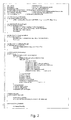
- the base address of a process control block regarding a current process may be calculated as a stack pointer like in line 7, and the process control block of all processes may be accessed like in line 31.
- the process control block In accessing the position of the process control block at step S200, the process control block is placed in the memory space of a kernel.
- access to the memory space of the kernel may not be allowed in terms of security. If access to the memory space of the kernel is blocked as described above, pseudo codes may be implemented in the form of a virtual driver so that the address space of the kernel can be shared like in the lower lines of the program code of Fig. 2 . Accordingly, a process control block placed in the memory space of the kernel may be accessed.
- timer-interrupt may be used and performance data may be measured at a predetermined time interval (e.g., 1 sec pr 100 msec).
- system testing method may measure performance factors, while circulating the processes and thread lists of the process control block, like in line 31 and line 33 of the program code of Fig. 2 in order to analyze system performance not only in a system unit, but also in a process or thread unit.
- call-stack information is stored for each thread in order to precisely track the position at which a system performance bottleneck occurs.
- Performance factors measured for each monitoring are as follows.
- the performance factors of the process control block may include one or more of the processor usage, the memory usage, and the page fault.
- the performance factors of a process of the process control block may include one or more of an identifier (ID), the state of a process, the priority of a process, a heap usage, the operating time of a process, a use time, and a kernel time.
- ID an identifier
- the performance factors of a process of the process control block may include one or more of an identifier (ID), the state of a process, the priority of a process, a heap usage, the operating time of a process, a use time, and a kernel time.
- the performance factors of a thread of the process control block may include one or more of an ID, a run state, a basic priority, a current priority, a use time, a kernel time, and call-stack information.
- Fig. 3 shows the construction of a system for executing the system testing method according to the present invention.
- the system for executing the system testing method according to the present invention includes an agent unit 120 and a test management unit 210.
- the agent unit 120 is included in a target system 100, that is, a target of test, and is configured to measure performance data.
- the agent unit 120 executes the algorithm shown in Fig. 1 .
- the test management unit 210 is included in a host system 200, such as a Personal Computer (PC).
- the test management unit 210 analyzes performance data collected by the agent unit 120 and detects a performance bottleneck and analyzes test coverage based on the analyzed performance data.
- the agent unit 120 is mounted on the target system 100 disposed in an operation environment, and it functions to periodically measure data related to system performance when the target system is operated in response to the test start or end command of a user.
- the agent unit 120 may include PerfAgent.dll and PerfROBO.exe.
- PerfAgent.dll is a virtual kernel device driver that implements the algorithm of Fig.
- PerfROBO.exe functions as a test server for controlling whether to activate the virtual kernel device driver in response to the test start or end command of a user.
- the test server executes a system performance monitoring module through timer setting when the virtual kernel device driver (e.g., PerfAgent.dll) is activated in response to the test start command and terminates a test by finishing a set timer when the test is finished at the request of a user.
- the virtual kernel device driver e.g., PerfAgent.dll
- test management unit 210 may store the collected performance data in a designated storage medium.
- the test management unit 210 functions to analyze the log file of the host system 200 and detect a performance bottleneck occurred in run-time based on the analyzed log file.
- test management unit 210 may use a binary execution code and collected profiling data for a test target as input and display information about the position of a problematic function based on call-stack information when outputting test coverage and performance information.
- a method of inserting an analysis code into a kernel may be used.
- the analysis code is inserted into the kernel statically or dynamically.
- an analysis code may be inserted into a kernel code in run-time.
- a code for collecting data necessary for performance analysis can be inserted without booting a system.
- an analysis code for monitoring important system performance factors may be embedded in a kernel.
- performance monitoring performance data is received through the analysis code previously inserted into the kernel.
- system performance factors including a processor usage and a memory usage, can be measured.
- a method using a simulator may be used as the performance monitoring method. This method is useful to check the performance of a system at the early stage of development.
- Hardware performance factors mean a set of specifically produced registers. If the hardware performance factors are used, performance associated with a CPU, a cache, and memory can be monitored using system overhead lower than that of software-based performance factors. In this method, a source code or a binary code needs not to be modified.
- the present invention can test a system using resources necessary for a system operation at a minimum without affecting the operation environment of the system.
Landscapes
- Engineering & Computer Science (AREA)
- Theoretical Computer Science (AREA)
- General Engineering & Computer Science (AREA)
- Physics & Mathematics (AREA)
- General Physics & Mathematics (AREA)
- Quality & Reliability (AREA)
- Computer Hardware Design (AREA)
- Computing Systems (AREA)
- Automation & Control Theory (AREA)
- Mathematical Physics (AREA)
- Debugging And Monitoring (AREA)
Applications Claiming Priority (1)
| Application Number | Priority Date | Filing Date | Title |
|---|---|---|---|
| PCT/KR2010/006068 WO2012033237A1 (fr) | 2010-09-07 | 2010-09-07 | Procédé de test de système |
Publications (2)
| Publication Number | Publication Date |
|---|---|
| EP2615552A1 true EP2615552A1 (fr) | 2013-07-17 |
| EP2615552A4 EP2615552A4 (fr) | 2014-08-06 |
Family
ID=45810821
Family Applications (1)
| Application Number | Title | Priority Date | Filing Date |
|---|---|---|---|
| EP10857024.3A Ceased EP2615552A4 (fr) | 2010-09-07 | 2010-09-07 | Procédé de test de système |
Country Status (7)
| Country | Link |
|---|---|
| US (1) | US20130096880A1 (fr) |
| EP (1) | EP2615552A4 (fr) |
| JP (1) | JP2013533553A (fr) |
| KR (1) | KR101438990B1 (fr) |
| CN (1) | CN103109276B (fr) |
| CA (1) | CA2800271A1 (fr) |
| WO (1) | WO2012033237A1 (fr) |
Cited By (2)
| Publication number | Priority date | Publication date | Assignee | Title |
|---|---|---|---|---|
| EP2687989A4 (fr) * | 2011-03-15 | 2014-08-06 | Hyundai Motor Co Ltd | Dispositif de test de communication et procédé |
| EP2587379A4 (fr) * | 2010-06-28 | 2014-08-06 | Hyundai Motor Co Ltd | Appareil d'essai de système |
Families Citing this family (11)
| Publication number | Priority date | Publication date | Assignee | Title |
|---|---|---|---|---|
| WO2013000494A1 (fr) * | 2011-06-30 | 2013-01-03 | Telefonaktiebolaget L M Ericsson (Publ) | Communication souple de données |
| US8996919B2 (en) * | 2012-03-13 | 2015-03-31 | Invensense, Inc. | Method and system providng a self-test on one or more sensors coupled to a device |
| US9087041B2 (en) * | 2012-07-24 | 2015-07-21 | Michael Weir | Enterprise test system platform and associated method for interoperable test data management, test development, test libraries and test workflow management and automation |
| KR101438979B1 (ko) * | 2012-12-31 | 2014-09-11 | 현대자동차주식회사 | 소프트웨어 검사 방법 및 시스템 |
| CN105468397A (zh) * | 2014-09-11 | 2016-04-06 | 腾讯科技(深圳)有限公司 | 软件运行数据处理方法及软件运行数据处理装置 |
| WO2016084150A1 (fr) * | 2014-11-26 | 2016-06-02 | 株式会社日立製作所 | Ordinateur de serveur, système informatique et procédé |
| CN104850478B (zh) * | 2014-12-19 | 2017-06-06 | 北汽福田汽车股份有限公司 | 一种建立待测对象模型的方法及虚拟测试方法 |
| CN106293890B (zh) * | 2015-06-09 | 2019-11-05 | 阿里巴巴集团控股有限公司 | 一种基于复杂度的业务处理方法和装置 |
| CN111488290B (zh) * | 2020-04-28 | 2021-01-22 | 南方电网数字电网研究院有限公司 | 基于智能电表操作系统的线程测试方法和装置 |
| CN112306803A (zh) * | 2020-10-29 | 2021-02-02 | 金蝶云科技有限公司 | 一种性能监控方法及相关设备 |
| CN114968745B (zh) * | 2022-06-10 | 2023-06-16 | 北京世冠金洋科技发展有限公司 | 一种处理系统模型的运行信息的方法及装置 |
Family Cites Families (12)
| Publication number | Priority date | Publication date | Assignee | Title |
|---|---|---|---|---|
| JPH10269110A (ja) * | 1997-03-26 | 1998-10-09 | Toshiba Corp | 計算機システムのハングアップ回避方法並びにこの方法を用いた計算機システム。 |
| US6175916B1 (en) * | 1997-05-06 | 2001-01-16 | Microsoft Corporation | Common-thread inter-process function calls invoked by jumps to invalid addresses |
| JP2001318805A (ja) * | 2000-05-08 | 2001-11-16 | Nec Corp | 組み込みシステムのテスト方法及びテストシステム |
| US6988263B1 (en) * | 2000-07-10 | 2006-01-17 | International Business Machines Corporation | Apparatus and method for cataloging symbolic data for use in performance analysis of computer programs |
| KR20030041612A (ko) * | 2001-11-20 | 2003-05-27 | (주)유니트시스템즈 | 서버 병목을 실시간으로 분석하는 방법 |
| JP4562568B2 (ja) * | 2005-03-28 | 2010-10-13 | 富士通テン株式会社 | 異常検出プログラムおよび異常検出方法 |
| KR20080079343A (ko) * | 2006-12-15 | 2008-09-01 | 주식회사 케이티프리텔 | 이동통신망의 미들웨어 서버를 모니터링하는 서버 및 그방법 |
| EP1962192A1 (fr) * | 2007-02-21 | 2008-08-27 | Deutsche Telekom AG | Procédé et système pour la migration transparente du stockage machine virtuel |
| KR20090001897A (ko) * | 2007-05-29 | 2009-01-09 | 주식회사 케이티프리텔 | 턱시도 미들웨어 환경의 모니터링 시스템 및 방법 |
| CN101398780B (zh) * | 2007-09-27 | 2011-08-24 | 国际商业机器公司 | 可基于进程定制调试器的即时调试的方法和系统 |
| KR20090081749A (ko) * | 2008-01-25 | 2009-07-29 | 삼성전자주식회사 | 응용프로그램의 자원 모니터링 방법 및 그 장치 |
| WO2012002635A1 (fr) * | 2010-06-28 | 2012-01-05 | 현대자동차 주식회사 | Appareil d'essai de système |
-
2010
- 2010-09-07 KR KR1020127034454A patent/KR101438990B1/ko active Active
- 2010-09-07 EP EP10857024.3A patent/EP2615552A4/fr not_active Ceased
- 2010-09-07 CA CA2800271A patent/CA2800271A1/fr not_active Abandoned
- 2010-09-07 CN CN201080067546.9A patent/CN103109276B/zh active Active
- 2010-09-07 JP JP2013518210A patent/JP2013533553A/ja active Pending
- 2010-09-07 WO PCT/KR2010/006068 patent/WO2012033237A1/fr not_active Ceased
-
2012
- 2012-12-04 US US13/693,136 patent/US20130096880A1/en not_active Abandoned
Cited By (4)
| Publication number | Priority date | Publication date | Assignee | Title |
|---|---|---|---|---|
| EP2587379A4 (fr) * | 2010-06-28 | 2014-08-06 | Hyundai Motor Co Ltd | Appareil d'essai de système |
| US9354996B2 (en) | 2010-06-28 | 2016-05-31 | Hyundai Motor Company | System test apparatus |
| EP2687989A4 (fr) * | 2011-03-15 | 2014-08-06 | Hyundai Motor Co Ltd | Dispositif de test de communication et procédé |
| US9009532B2 (en) | 2011-03-15 | 2015-04-14 | Hyundai Motor Company | Communication test apparatus and method |
Also Published As
| Publication number | Publication date |
|---|---|
| CA2800271A1 (fr) | 2012-03-15 |
| EP2615552A4 (fr) | 2014-08-06 |
| CN103109276A (zh) | 2013-05-15 |
| WO2012033237A1 (fr) | 2012-03-15 |
| KR20130031860A (ko) | 2013-03-29 |
| KR101438990B1 (ko) | 2014-09-05 |
| US20130096880A1 (en) | 2013-04-18 |
| CN103109276B (zh) | 2016-01-20 |
| JP2013533553A (ja) | 2013-08-22 |
Similar Documents
| Publication | Publication Date | Title |
|---|---|---|
| US20130096880A1 (en) | System test method | |
| KR101019209B1 (ko) | 임베디드 소프트웨어의 인터페이스 자동 추출 장치 및 그방법 | |
| EP2587379B1 (fr) | Appareil d'essai de système | |
| US20030135720A1 (en) | Method and system using hardware assistance for instruction tracing with secondary set of interruption resources | |
| US20080276129A1 (en) | Software tracing | |
| US9069894B2 (en) | Data collisions in concurrent programs | |
| US20110016455A1 (en) | Power Profiling for Embedded System Design | |
| EP2735970B1 (fr) | Procédé de profilage de bibliothèque dynamique | |
| US8312433B2 (en) | Operating system aided code coverage | |
| US20060277371A1 (en) | System and method to instrument references to shared memory | |
| JP5452336B2 (ja) | 周辺機器障害模擬システム、周辺機器障害模擬方法および周辺機器障害模擬プログラム | |
| US12596632B2 (en) | Method for testing a computer program | |
| CN119645872A (zh) | 一种针对闭源操作系统的模糊测试方法及装置 | |
| Seo et al. | A profiling method by PCB hooking and its application for memory fault detection in embedded system operational test | |
| US7657792B2 (en) | Identifying race conditions involving asynchronous memory updates | |
| CN114416412A (zh) | 一种基于Arthas的异常定位方法及系统 | |
| US20250103391A1 (en) | Non-invasive progress-awareness for real-time tasks | |
| US20240403191A1 (en) | Method for testing a computer program | |
| US7130785B2 (en) | System and method for detecting accesses to non-existing hardware entities using architectural simulation | |
| Seo et al. | Lightweight embedded software performance analysis method by kernel hack and its industrial field study | |
| US20120227033A1 (en) | Method and apparatus for evaluating software performance | |
| US9286184B1 (en) | Probabilistic correlation of system events with program instructions | |
| KR20250003334A (ko) | 컴퓨터 프로그램을 테스트하기 위한 방법 | |
| Iyer et al. | Benchmarking the Operating System against Faults Impacting Operating System Functions | |
| CN119226132A (zh) | 用于测试计算机程序的方法 |
Legal Events
| Date | Code | Title | Description |
|---|---|---|---|
| PUAI | Public reference made under article 153(3) epc to a published international application that has entered the european phase |
Free format text: ORIGINAL CODE: 0009012 |
|
| 17P | Request for examination filed |
Effective date: 20121214 |
|
| AK | Designated contracting states |
Kind code of ref document: A1 Designated state(s): AL AT BE BG CH CY CZ DE DK EE ES FI FR GB GR HR HU IE IS IT LI LT LU LV MC MK MT NL NO PL PT RO SE SI SK SM TR |
|
| DAX | Request for extension of the european patent (deleted) | ||
| A4 | Supplementary search report drawn up and despatched |
Effective date: 20140707 |
|
| RIC1 | Information provided on ipc code assigned before grant |
Ipc: G06F 11/36 20060101AFI20140701BHEP Ipc: G06F 11/30 20060101ALI20140701BHEP |
|
| STAA | Information on the status of an ep patent application or granted ep patent |
Free format text: STATUS: EXAMINATION IS IN PROGRESS |
|
| 17Q | First examination report despatched |
Effective date: 20180613 |
|
| REG | Reference to a national code |
Ref country code: DE Ref legal event code: R003 |
|
| STAA | Information on the status of an ep patent application or granted ep patent |
Free format text: STATUS: THE APPLICATION HAS BEEN REFUSED |
|
| 18R | Application refused |
Effective date: 20191113 |