EP2618285A1 - Gesichertes IT-Netzsystem für die Verwaltung von personenbezogenen Daten - Google Patents
Gesichertes IT-Netzsystem für die Verwaltung von personenbezogenen Daten Download PDFInfo
- Publication number
- EP2618285A1 EP2618285A1 EP13000661.2A EP13000661A EP2618285A1 EP 2618285 A1 EP2618285 A1 EP 2618285A1 EP 13000661 A EP13000661 A EP 13000661A EP 2618285 A1 EP2618285 A1 EP 2618285A1
- Authority
- EP
- European Patent Office
- Prior art keywords
- access
- data
- server
- documents
- mediator
- Prior art date
- Legal status (The legal status is an assumption and is not a legal conclusion. Google has not performed a legal analysis and makes no representation as to the accuracy of the status listed.)
- Granted
Links
Images







Classifications
-
- H—ELECTRICITY
- H04—ELECTRIC COMMUNICATION TECHNIQUE
- H04L—TRANSMISSION OF DIGITAL INFORMATION, e.g. TELEGRAPHIC COMMUNICATION
- H04L63/00—Network architectures or network communication protocols for network security
- H04L63/02—Network architectures or network communication protocols for network security for separating internal from external traffic, e.g. firewalls
-
- G—PHYSICS
- G06—COMPUTING OR CALCULATING; COUNTING
- G06F—ELECTRIC DIGITAL DATA PROCESSING
- G06F21/00—Security arrangements for protecting computers, components thereof, programs or data against unauthorised activity
- G06F21/60—Protecting data
- G06F21/62—Protecting access to data via a platform, e.g. using keys or access control rules
- G06F21/6218—Protecting access to data via a platform, e.g. using keys or access control rules to a system of files or objects, e.g. local or distributed file system or database
- G06F21/6245—Protecting personal data, e.g. for financial or medical purposes
-
- G—PHYSICS
- G06—COMPUTING OR CALCULATING; COUNTING
- G06Q—INFORMATION AND COMMUNICATION TECHNOLOGY [ICT] SPECIALLY ADAPTED FOR ADMINISTRATIVE, COMMERCIAL, FINANCIAL, MANAGERIAL OR SUPERVISORY PURPOSES; SYSTEMS OR METHODS SPECIALLY ADAPTED FOR ADMINISTRATIVE, COMMERCIAL, FINANCIAL, MANAGERIAL OR SUPERVISORY PURPOSES, NOT OTHERWISE PROVIDED FOR
- G06Q10/00—Administration; Management
- G06Q10/10—Office automation; Time management
-
- H—ELECTRICITY
- H04—ELECTRIC COMMUNICATION TECHNIQUE
- H04L—TRANSMISSION OF DIGITAL INFORMATION, e.g. TELEGRAPHIC COMMUNICATION
- H04L63/00—Network architectures or network communication protocols for network security
- H04L63/02—Network architectures or network communication protocols for network security for separating internal from external traffic, e.g. firewalls
- H04L63/0272—Virtual private networks
-
- H—ELECTRICITY
- H04—ELECTRIC COMMUNICATION TECHNIQUE
- H04L—TRANSMISSION OF DIGITAL INFORMATION, e.g. TELEGRAPHIC COMMUNICATION
- H04L63/00—Network architectures or network communication protocols for network security
- H04L63/08—Network architectures or network communication protocols for network security for authentication of entities
- H04L63/0823—Network architectures or network communication protocols for network security for authentication of entities using certificates
-
- G—PHYSICS
- G06—COMPUTING OR CALCULATING; COUNTING
- G06F—ELECTRIC DIGITAL DATA PROCESSING
- G06F2221/00—Indexing scheme relating to security arrangements for protecting computers, components thereof, programs or data against unauthorised activity
- G06F2221/21—Indexing scheme relating to G06F21/00 and subgroups addressing additional information or applications relating to security arrangements for protecting computers, components thereof, programs or data against unauthorised activity
- G06F2221/2137—Time limited access, e.g. to a computer or data
-
- G—PHYSICS
- G06—COMPUTING OR CALCULATING; COUNTING
- G06F—ELECTRIC DIGITAL DATA PROCESSING
- G06F2221/00—Indexing scheme relating to security arrangements for protecting computers, components thereof, programs or data against unauthorised activity
- G06F2221/21—Indexing scheme relating to G06F21/00 and subgroups addressing additional information or applications relating to security arrangements for protecting computers, components thereof, programs or data against unauthorised activity
- G06F2221/2141—Access rights, e.g. capability lists, access control lists, access tables, access matrices
-
- H—ELECTRICITY
- H04—ELECTRIC COMMUNICATION TECHNIQUE
- H04L—TRANSMISSION OF DIGITAL INFORMATION, e.g. TELEGRAPHIC COMMUNICATION
- H04L63/00—Network architectures or network communication protocols for network security
- H04L63/02—Network architectures or network communication protocols for network security for separating internal from external traffic, e.g. firewalls
- H04L63/0209—Architectural arrangements, e.g. perimeter networks or demilitarized zones
- H04L63/0218—Distributed architectures, e.g. distributed firewalls
Definitions
- the present invention relates to a secure computer network system for managing data, including personal data.
- the invention relates to a secure computer network system for managing medical records in a health system of a region or country.
- the overall goal of the electronic delivery of patient data in current health systems is to improve one or more of the following processes: administrative flow, including reimbursement of medical benefits; sharing and choking medical records for referring physicians, hospitals and emergencies; and the prescription drug especially for its adequacy to diagnosis and interactions to limit prescription errors, and its dissemination to the pharmacist or insurance for its reimbursement.
- the inhabitants of France are equipped with a smart card, containing information on their social coverage, information used for communication between patients, doctors and insurance companies.
- the French social health network enables better communication between patients and insurers, and offers secure messaging between healthcare professionals. This network serves as support for the smart card.
- the German network offers a computerized medical record and tools to communicate securely and support the daily work of doctors. Each patient is provided with a health card.
- a secure network on which services such as secure messaging can be added, is developed in open source and aims to standardize European telecommunications industries and companies.
- An experimental health card has been distributed to residents of the Rimouski region. It contained all the patient's medical information (vaccines, allergies, medicines).
- the Cretan health network offers better communication of the patient's computerized medical file between professionals and a remote management of medical resources.
- Every inhabitant of Slovenia is equipped with a health card with information on his social security, as well as prescribed medicines and emergency information (vaccines, allergies, etc.).
- This project aims to investigate and study the various projects existing in the country, see in the Nordic countries, and draw unifying lines.
- This Belgian project proposes a government portal on all social services, including health services, a unique and national identification of Belgian inhabitants and a secure transfer of their data between services to avoid re-seizure.
- one of the aims of the invention is to provide a secure computer network system for data management which ensures a high level of data protection.
- the invention aims to provide a secure computer network system for the management of medical data in a regional, national or international health system.
- Another object of the invention is to provide a secure computer network system for the management of personal medical data, which makes it possible to improve the quality of information accessible to authorized users on the one hand, and on the other hand, to reduce the administrative costs of data processing while offering a high level of data protection to unauthorized third parties, or against abuse or negligence by authorized persons.
- Objects of the invention are realized by a secure computer network system for confidential data management according to claim 1 and a data management method in a secure computer network system according to claim 19.
- a secure computer network system for managing protected data includes at least one access point infrastructure connected across a closed back-end communication network to a plurality of data-receiving server systems, each server-side server system.
- data comprising at least one database in which protected data constituting medical documents on patients are stored, and a logging service technical mediator for managing access to documents stored in the database, different documents forming a file medical device that can be distributed to a plurality of data-retrieval server systems located at different sites, the access point infrastructure including at least one folder access mediator in the form of a server system with applications that control and manages the access of users to documents stored in data-receiving server systems.
- the use of a plurality of distributed data storage servers, for the storage of data of a medical file, accessible by means of a secure closed network (backbone) makes it possible to ensure a high level of data protection by virtue of that even in the case of illegal entry (forced) in the secure network system, the recovery of data constituting a medical file requires an attack on a plurality of protected servers, and is therefore extremely difficult.
- the at least two levels of access rights that is to say the authorization to access the backbone and the personal data of a patient by means of a smart card, and access to different data from a specific medical file, greatly reduce the risk of misuse of data and define access to the different elements of the file according to the role and identity of the authorized user.
- Logging data access and other server operations can help identify and prevent abuse by users. Access to protected data is nevertheless possible in case of emergency by certain health professionals such as hospitals and treating physicians, security being provided by the access log on the one hand and, on the other hand, by the need to use a means of authorization and strong authentication with a smart card.
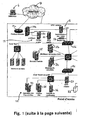
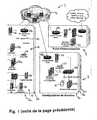
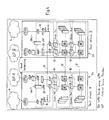
- a computer network system for the management of personal (confidential) medical data 1 (hereinafter: computerized health system) comprises at least one access point infrastructure 2a, 2b, a plurality of data retrieval server systems 3a, 3b, 3c and a closed back-end communication network 4 connecting the access point infrastructures to the data server systems.
- the data sink server systems, as well as the access point infrastructures, are located on different sites.
- the decentralization of data, both physical (data spread over different databases) and geographical data (databases located on different sites), offers a high level of data protection.
- the computerized health system may further comprise one or more server systems interconnection points 5, connected on the one hand to the communication network unifying, and on the other hand to external computer networks, for example computer networks of other regional or national computerized health systems.
- the users 6 access the access point infrastructure 2a, 2b of the computerized health system via the Internet 7 using a secure connection, for example a Virtual Private Network (VPN) encrypted connection.
- Users can be health professionals (doctors, nurses, pharmacists) or patients.
- Each user is provided with a smart card 8 and a personal code (password) for authentication and authorization to access the computerized health system.
- the station from which the user accesses the computerized health system must therefore be equipped with a smart card reader 9.
- This reader can take many forms, but is preferably compatible with the PC / SC standard (Personal Computer / Smart Card) or RSA to ensure interoperability with all components of the authentication system (smart card, smart card reader, interface, and application).
- the reader can be provided with a double slot to allow the insertion of two cards, for example the card of a health professional, and a card of the patient during the consultation of the medical file of the patient. This reassures the patient about the protection of his personal data, especially during his first consultation with the health professional.
- the smart card 8 is an important part of the authentication of the user, whether it is the health professional or the patient.
- the data stored in a memory of the microprocessor of the card includes a unique identifier of the card holder, an authentication certificate, at least one private electronic key, and administrative data, such as surname, first name, date of birth, number insurance or social security, etc.
- the card does not contain medical data.
- the authentication of the user on the computerized health system is carried out by the transmission of the authentication certificate.
- the private key stored in the microprocessor of the smart card allows the encryption and signature of data exchanged between the user and the computerized health system. For security reasons, several private keys can be stored in the smart card, a private key for each authentication, signature, data and encryption operation.
- the access point infrastructure includes an external VPN area 8 connected to the internet network 7 through an access router 19a and a firewall 10a, a service area 11 connected to the outer area 8, through a screen. fire 10b, a test zone 13 connected to the external zone 8 through a firewall 10b, an internal VPN zone 22 connected to the service zone 11 through a firewall 10b, a high security zone 15 and a zone management 16 connected to the service area 11 through a firewall 10c.
- the access point infrastructure may further include a public area 12 connected to the internet 7 through an access router 19a and a firewall 10a.
- the service area 11 is connected through a firewall 10b and an internal access router 19b to the backbone communication network 4 connecting the access point infrastructure 2a, 2b to the data server systems 3 and the server systems interconnection points 5.
- the public area 9 is independent of the internal part of the secure network system used for the management of patient records. It contains a Web server 20 and a public domain name server (DNS) 21.
- DNS public domain name server
- test zone 13 the integration tests of the various components of the network are carried out before the integration of these components into the network. It is also from here that updates are launched to the network.
- the external VPN area 8 all network connections from the user stations are established. This is where the secure tunnel ends between the user station and the access point infrastructure. It is this tunnel that allows secure and encrypted access between the user station and the computerized health system. This is also where the first system access checks and the first intrusion detection are performed.
- This zone is accessible by the user stations 6 to enable them to access the various services offered by the computerized health system.
- the high security area 15 are located the services related to network security. This area is accessible only by the servers that host the computerized health system applications, and by the administration staff.
- management zone 16 are located all the services related to the management of the infrastructure of the computerized health system. This area is only accessible by administrative personnel responsible for infrastructure management operations.
- Routers 19a, 19b are used to connect the network to other networks where the various stakeholders are located. These routers are placed on the edge of the backbone network 4, the access point infrastructure, 2a, 2b, the interconnection point server systems 5, and the data server systems 3. They are set to provide a first level of access. protection of the elements of the secure network they connect. The routers deployed within the computerized health system support the functions of packet filtering, event logging and network intrusion detection.
- Firewalls are machines that can protect all or part of a network by analyzing the contents of packages or sessions. These machines are placed inside the network, just behind the router 19a and are a point of passage to enter the part of the network they protect.
- the firewalls 10a, 10b, 10c deployed within the computerized health system support the functions of packet filtering, packet inspection, event logging; anti-virus and active defense.
- IDS Intrusion Detection System
- IDS infrastructure-to-network
- NIDS network-to-machine
- HIDS machine-to-machine
- the service area 11 of the access point infrastructure 2a, 2b comprises a server system acting as a technical access mediator (hereinafter "access mediator") for the protected data, in particular the medical records, the mediator of access comprising for example an access server 25.
- the access mediator materializes the point of entry into the computerized health system applications related to medical confidential data spread over the network and used by health professionals and patients.
- the access mediator 25 hides the internal structure of the network and makes it possible to maintain control over the security and the interfaces exposed to the users.
- the computerized health system according to the invention may comprise several servers. access 25, for example each being shared by different groups of users. To simplify the operation of the access servers and increase their efficiency and speed, it is however preferable that they are grouped in the infrastructure access points 2a, 2b.
- Access servers store in memory essentially only technical data, not medical data, although they may include technical caches for temporarily storing certain search results, such as server addresses and data constituting a patient's medical record so that they can be accessed more quickly when a session on the network is opened by a user.
- Value-added services such as drug databases and logistical support, can be implemented centrally because they do not store patient information. This centralization is however only “logical”, and does not exclude a “physical” decentralization for questions of performance and accessibility.
- these value-added services can therefore be seen as black boxes of the computerized health system, they are made available to users at the same time. through a specialized access mediator connecting the AVS to the rest of the network.
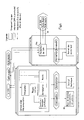
- the figure 6 presents a possible logical architecture for the electronic prescription assistance service.
- This service is called from a value-added service mediator 24b, itself called by a specialized access mediator 24a (not shown in FIG. figure 6 ).
- This VAS has its own data, including a drug database (Compendium) 58 and potential interactions between them.
- a drug database Compendium
- the interaction detection engine has access to the current prescriptions of the patient.
- the service area 11 may further include a secure messaging server 34 used primarily for sending electronic messages between users 6b of the computerized health system, or for the transmission and storage of protected data, such as medical data d. a patient, in a data server system 3a.
- the electronic messages are signed with the private key of the health professional's smart card and sent to an address corresponding to another actor, for example 123456789 (a) e-toile.ch where 123456789 is the identifier of the actor.
- the mail server only accepts mails from the VPN, whose signature corresponds to a health professional known to the secure network system. The health professional can therefore add a message as a patient-related document in the document database of the sending health care provider's data sender system.
- the high security area 15 includes a server system 32 comprising an electronic directory of health professionals 57 (hereinafter PDS directory) used to authorize user accesses according to their roles, an electronic certificate management system 35 ( hereinafter PKI manager), which stores and manages the electronic certificates and certificate revocation lists that have been issued, and an electronic certification authority 36 (hereinafter certification authority) that acts as the certifying authority of the organization of the computerized health system.
- PDS directory electronic directory of health professionals 57
- PKI manager an electronic certificate management system 35
- certification authority 36 hereinafter certification authority
- the electronic certificate management system 35 and the electronic certification authority 36 may be outside the secure computer network system in an external secure system, under control of the organization responsible for the production of smart cards.
- the directory of health professionals 57 is used by the secure messaging service 34 to obtain the public key of the recipient of an encrypted message. Access mediators 25 also use the directory to allow requests according to the role of a health professional.
- the PKI manager 35 may be a standard product of the market, for the production, distribution, revocation and verification of electronic certificates.
- the certification authority server system 36 has the role of authenticating a user of the network and authorizing certain requests according to his role.
- the certification authority server system essentially stores data on the certificate authority certificates that issued the user's smart card certificate as well as revocation or access lists.
- the certification authority is mainly used by the access mediators 25 or the specialized access mediators 24. It should be noted that the data of the revocation lists can also be stored on other servers, and in this case the The certification authority 36 will access these servers to check the list of revocations.
- the management area 16 further includes an electronic application management system 38 for administering and managing computerized health system applications, including application administration and configuration management of the various components and applications of the system, as well as the administration of the applications. cable TV at client stations (see also under deployment server).
- an electronic application management system 38 for administering and managing computerized health system applications, including application administration and configuration management of the various components and applications of the system, as well as the administration of the applications. cable TV at client stations (see also under deployment server).
- the management area 16 may also include a security management server system 28 for reconstructing or tracing events by analyzing the logs and other data collected by the intrusion detection probes 27 installed at the critical points. of the computerized health system.
- a security management server system 28 for reconstructing or tracing events by analyzing the logs and other data collected by the intrusion detection probes 27 installed at the critical points. of the computerized health system.
- the management area may also include a production system 39 of compact discs or other media to provide the file to patients who request it, when they go abroad for example.
- the management zone 16 may also include a deployment server that provides health professionals with updated software for accessing the services of the computerized health system.
- the portal server system is accessible without a VPN connection.
- each data recording mediator knows only the documents he manages and the patients for whom he has a document, the complete file of a patient can therefore be distributed to a plurality of data consignees thus avoiding the storage of a complete medical record on a single server or central registry. This greatly increases the protection of a patient's medical data because it is extremely difficult for a third party to cross a plurality of secure systems in order to reconstruct the complete file.
- the service logger is preferably physically close to the reference server 41 and the document server 40.
- the role of the reference server is to find, on the basis of search criteria, the references to the documents recorded.
- the data stored on the reference server is essentially the references to the documents stored in the document server 40, the attributes of these documents and the indexes.
- the reference server may also include, or at least access, a register (base) of the document-specific access rights 60, this register preferably being located in at least one data-receiving server system 3, in particular the system Consignee server of the patient's trusted doctor.
- the main functions of the reference server 41 are as follows: storage of references to documents; storage of attributes necessary for research; creation and management of indexes necessary for research; search for references with criteria based on the attributes (patient identity, type of document, date, etc.), taking into account the access restrictions enacted by the patient.
- reference server 41 could be integrated or be part of the document server 40, or at least share the same data structures.
- a records access mediator interviews all logger mediators and expects each of them to respond positively or negatively. This leads to the loading of the network, the access mediator (who must manage a large number of interlocutors simultaneously), and each service mediator who must respond to each request that reaches him. This is the risk that the performance of query operations is below the acceptability threshold, and that the increase in the number of service desks (and therefore the number of service mediators and reference servers) will degrade. the overall performance of the network.
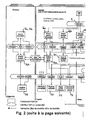
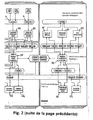
- Data storage mediator 29 accesses the document server database 40 when publishing, searching, and retrieving documents, as shown in FIGS. figures 9 , 10 and 11 .
- the patient's smart card is not required to publish documents, but the patient's identifier is.
- the application does not make it possible to modify the published documents, in order to avoid abuses, and in case of modification it is necessary to make new versions of the documents.
- the application could be implemented by a classic graphical user interface (GUI), or by a web presentation server accessed by a browser.
- GUI graphical user interface
- the computerized health system also includes a file consultation application 50 to allow a health professional or a patient to consult his file stored in the various data-retrieval server systems, according to the permissions and the access profile.
- This application accesses the certificates and functions of the smart card via the smart card reader and delegates all requests to the folder access mediator 25 in the access point infrastructure 2a, 2b.
- This application can also collaborate with external applications to view certain types of documents (eg Acrobat, viewer graphic).
- this consulting application could be implemented by a classic GUI client or by a WEB presentation server accessed by a browser.
- a document validation application 54 which ensures that the published documents meet the requirements of the secure network.
- the access profile of a patient is stored in an access profile register 60 (also called an access rights database) which is preferably stored in a logging services mediator 29 in a decentralized manner to increase the difficulties. unlawful access to restrictions on access to documents.
- an access profile register 60 also called an access rights database
- Access by a healthcare professional to documents published on the computerized health system network is subject to verification with three levels of control.
- the first level is the role of the sender of a request. This may be for example doctor, nurse, pharmacist, and is linked to certain access rights to network functions. A nurse could for example consult but not publish.
- the second level consists of the access profile defined by the patient. This allows for example to prohibit access to all records and gynecology-like documents to the treating professionals but allow it to the doctors of confidence.
- the third level is materialized by specific exceptions to doctors and specific documents or records. For example, it is possible to authorize access to the report of the gynecological visit on a date specific to Doctor X, a doctor who is treating but not trusted.
- ACLs Access Control Lists
- the record access mediator In order to exercise access controls related to the profile, the record access mediator must provide it to the logging service mediators 29 at each request. For a search query (see Figures 2 and 10 ), the folder access mediator must therefore retrieve the access profile in the access rights database 60 from the mediator of the consignment 29 of the document server server of documents of the doctor of confidence, before questioning all the bases access rights 60 ', 60 "of other mediators of consignment 29', 29". In order to avoid this additional subquery for each request of the client software, the access mediator 25 can keep the access profile temporarily in the session information.
- the modification of the access profile (see also Fig. 12 ) by the patient involves only the update of the profile stored by the document holder of the doctor of confidence, without modification of the ACLs of all the documents.
- the ACL of each document includes the patient defined access profile, so that compliance with the ACL alone is sufficient to exercise the second and third level 2 and 3 control.
- the access profile for its part is always stored with the data server server of the trusted doctor. During the update of the profile, it is then necessary to update the profile stored in the documentary agent of the trusted doctor, and to modify all the ACLs of all the documents already published.
- the opening of a session by a user application is performed after establishing the secure VPN tunnel between the health professional station 6 and the access point infrastructure 2a, 2b. Since establishing the VPN involves authentication of the VPN server 23 by the user and all the servers within the access point infrastructure can be considered secure, it is not necessary. that the user application authenticates the servers to which it is addressed (an access mediator for example).
- CA server 36 also called “security server”
- a health professional is attached to a specific data-receiving server system 3a, 3b, 3c that he can choose. When publishing a document, it is stored in this data-receiving server system after passing different levels of authorization and validation, as shown in the figure 9 .
- the access profile is transmitted by the access mediator to the various service mediators during the search.
- This access profile is first retrieved by the comprehensive search of service mediators to find which one has the patient's access profile (the mediator of the consignment services (MS) of the patient's trusted doctor will be the only one to respond positively). Once the profile is retrieved, the access mediator can keep it as session data to speed up subsequent requests (further searches or consultations).
- MS consignment services
- the consultation of a document consists in obtaining the entirety of a document according to its reference.
- the access mediator 25 directly addresses the mediator of the consignment service 29 concerned.
- the access rights have been verified during the search stage, they must be checked again during the consultation in order to prevent a reference being sent to another person who does not have the required rights. .
- the patient has the ability to modify the access profiles to information, the rights being divided into two distinct types: restrictions based on document profiles and exceptions allowing access to specific documents or folders by particular people.
- the records access mediator 25 contacts the recorder mediator 29 of the patient's trusted doctor and gives him the new profile to be saved.
- the folder access mediator transmits to each service mediator 29 'the exceptions that concern him.
- the exceptions are stored in the database 60 'of the server system consignee corresponding folders.
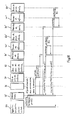
- the progress of the modification steps of the access rights is shown in the figure 12 .
- the figure 13 shows how the value-added service 31a, 31b, in this case the aid for prescription medication, integrates into the secure network.
- Prescription drugs electronically has real added value if supported by a drug interaction detection system.
- the prescribing service inquires about all the prescriptions in progress for the patient concerned with the mediators of the consignment service 29, 29 'in order to detect any incompatibilities between medicinal products prescribed by different professionals.
- the Prescription Assistance System searches for all current prescriptions published on the computerized health care system network, despite patient-defined access restrictions. Nevertheless, in case of proven incompatibility, the prescriber is notified, but in such a way that information to which he does not normally have access, is not disclosed to him.
- the computerized health system further comprises application logs 55,58,59 for keeping track of the operations performed by one or more components of the network, these applications being accessible by any local component.
- application logs 55,58,59 for keeping track of the operations performed by one or more components of the network, these applications being accessible by any local component.
- each technical mediator is provided with his own application log which makes it possible to carry out a posteriori checks in cases of problems (illicit access, wrong therapeutic decision following the information provided by the network, etc.).
- Data processed by the application logs is a timestamp, the identification of the users involved in the operation, the nature of the operation, the identification of the documents concerned, and other relevant parameters of the operation.
- the backbone network 4 is a high-speed communication network between the access point infrastructures 2a, 2b and the data-receiving server systems 3 and the point-of-interconnection server systems 5. All the data circulating on the backbone are encrypted, the data encoding / decoding function being provided by the VPN concentrators located in the access point infrastructures and in each data warehouse server system and each point of interconnection server system.
- the backbone is a closed network of logical type, such as a closed regional or metropolitan network (city network) using an optical fiber infrastructure, dedicated to a group of authorized users. It is also possible, as far as it is available, to have a closed network based on a private infrastructure, that is to say one-time use for the computerized health system.
- the computerized health system preferably has at least two access infrastructure points 2a, 2b located at different sites in order to increase the security of backup of technical and administrative data and to ensure access and operation of the network in case of failure of one or more components of an access point infrastructure.
- a simple equipment failure should not result in the termination of the access point infrastructure.
- a direct optical fiber link 17 connects the two inter-site VPN concentrators 18 of each access point infrastructure.
- the two access point infrastructures are also interconnected by direct optical fiber links at the service areas and high security zones. This allows the replication of the different servers and data that must be consistent between the two sites without unnecessarily overloading access to the backbone nor the internal path through one or two firewalls.
- Virtual local area network (VLAN) virtual networks common to both access point infrastructures can thus be created, for example using the 802.1q protocol over Gigabit Ethernet.
- three pairs of optical fibers connect the access point infrastructures to provide the redundancy and replication functions between the two access points.
- a J2EE-based implementation can use RMI / IIOP
- a .NET-based implementation can use .NET Remoting, but other possibilities exist: JXTA (peer-to-peer communication), Web services, message queues, and others .
- the database interface for access to databases can be done by the standard JDBC standards in the Java or ODBC world, and ADO in the Microsoft world.
- the administration interface of the components managed by the secure network system can use the most appropriate standards for the implementation platform (RMI / IIOP, JMX, Web Services, WMI ).
- the secure network system includes a central directory of health professionals used by users through the secure messaging service, but also by health professionals. Access to this directory can be done by the standard LDAP.
- the secure network system maintains a register of all service mediators in the network, so that Access mediators know where to redirect requests for document manipulation. This registry can be seen as an LDAP resource of the network.
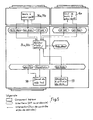
- the diagram of the figure 3 illustrates the transposition of the logical architecture model according to the technological choices described above.
- This solution is based on Java / J2EE technologies, but other solutions using other technologies such as. Net are possible.
- the architecture is n-tier: it is divided into layers that clearly separate presentation, business logic, and data storage responsibilities.
- the upper part represents the client layer, physically present among health professionals accessing the computerized health system.
- the central part materializes the presentation layer and the business services related to the computerized health system: access and service mediators, the mail server, value-added services.
- the lower part shows the technical components of the computerized health system as well as the databases.
- the adopted interfaces are based on open technologies independent of a specific platform (HTTP, SOAP, SMTP, POP3, LDAP ).
- HTTP, SOAP, SMTP, POP3, LDAP The more technical interfaces used within the secure network system are related to the technologies of the Java world, in this case RMI / IIOP and JDBC essentially.
- the web presentation layer uses HTTP services that serve static HTML pages (for example, Apache) and dynamic pages of the JSP and Servlet type.
Landscapes
- Engineering & Computer Science (AREA)
- General Engineering & Computer Science (AREA)
- Computer Security & Cryptography (AREA)
- Computer Hardware Design (AREA)
- Theoretical Computer Science (AREA)
- Business, Economics & Management (AREA)
- Signal Processing (AREA)
- Computer Networks & Wireless Communication (AREA)
- Computing Systems (AREA)
- Health & Medical Sciences (AREA)
- Bioethics (AREA)
- Physics & Mathematics (AREA)
- General Health & Medical Sciences (AREA)
- General Physics & Mathematics (AREA)
- Entrepreneurship & Innovation (AREA)
- Human Resources & Organizations (AREA)
- Strategic Management (AREA)
- Economics (AREA)
- Marketing (AREA)
- Operations Research (AREA)
- Quality & Reliability (AREA)
- Data Mining & Analysis (AREA)
- Tourism & Hospitality (AREA)
- General Business, Economics & Management (AREA)
- Medical Informatics (AREA)
- Databases & Information Systems (AREA)
- Software Systems (AREA)
- Storage Device Security (AREA)
- Data Exchanges In Wide-Area Networks (AREA)
Applications Claiming Priority (2)
| Application Number | Priority Date | Filing Date | Title |
|---|---|---|---|
| CH9292003A CH696748A5 (fr) | 2003-05-23 | 2003-05-23 | Système de réseau informatique sécurisé pour la gestion de données personnelles. |
| EP04733604.5A EP1627352B1 (de) | 2003-05-23 | 2004-05-18 | Sicheres netzwerksystem für die verwaltung von persönlichen daten |
Related Parent Applications (3)
| Application Number | Title | Priority Date | Filing Date |
|---|---|---|---|
| EP04733604.5A Division-Into EP1627352B1 (de) | 2003-05-23 | 2004-05-18 | Sicheres netzwerksystem für die verwaltung von persönlichen daten |
| EP04733604.5A Division EP1627352B1 (de) | 2003-05-23 | 2004-05-18 | Sicheres netzwerksystem für die verwaltung von persönlichen daten |
| EP04733604.5 Division | 2004-05-18 |
Publications (2)
| Publication Number | Publication Date |
|---|---|
| EP2618285A1 true EP2618285A1 (de) | 2013-07-24 |
| EP2618285B1 EP2618285B1 (de) | 2017-01-04 |
Family
ID=33459811
Family Applications (2)
| Application Number | Title | Priority Date | Filing Date |
|---|---|---|---|
| EP13000661.2A Expired - Lifetime EP2618285B1 (de) | 2003-05-23 | 2004-05-18 | Gesichertes IT-Netzsystem für die Verwaltung von personenbezogenen Daten |
| EP04733604.5A Expired - Lifetime EP1627352B1 (de) | 2003-05-23 | 2004-05-18 | Sicheres netzwerksystem für die verwaltung von persönlichen daten |
Family Applications After (1)
| Application Number | Title | Priority Date | Filing Date |
|---|---|---|---|
| EP04733604.5A Expired - Lifetime EP1627352B1 (de) | 2003-05-23 | 2004-05-18 | Sicheres netzwerksystem für die verwaltung von persönlichen daten |
Country Status (6)
| Country | Link |
|---|---|
| EP (2) | EP2618285B1 (de) |
| CH (1) | CH696748A5 (de) |
| DK (2) | DK2618285T3 (de) |
| ES (2) | ES2619431T3 (de) |
| PT (1) | PT2618285T (de) |
| WO (1) | WO2004104877A1 (de) |
Cited By (1)
| Publication number | Priority date | Publication date | Assignee | Title |
|---|---|---|---|---|
| CN109587142A (zh) * | 2018-12-10 | 2019-04-05 | 北京华虹集成电路设计有限责任公司 | 一种面向业务流的数据安全接入模块和设备 |
Families Citing this family (4)
| Publication number | Priority date | Publication date | Assignee | Title |
|---|---|---|---|---|
| WO2005109211A1 (en) * | 2004-05-07 | 2005-11-17 | Chng, Raymond | A file management system |
| FR3004827B1 (fr) * | 2013-04-19 | 2018-10-12 | Hopi | Procede pour l'utilisation a distance d'un lecteur usb de carte a puce associe a une carte professionnelle de sante ou a une carte patient dite carte vitale et systeme associe. |
| CN111383748A (zh) * | 2020-03-09 | 2020-07-07 | 武汉比邻软件有限公司 | 基于弹性计算和5g技术的医疗集成平台系统 |
| CN115499225A (zh) * | 2022-09-19 | 2022-12-20 | 浙江智尔信息技术有限公司 | 一种用于围术期的信息管理方法和系统 |
Citations (1)
| Publication number | Priority date | Publication date | Assignee | Title |
|---|---|---|---|---|
| WO2002005061A2 (en) * | 2000-07-06 | 2002-01-17 | David Paul Felsher | Information record infrastructure, system and method |
Family Cites Families (2)
| Publication number | Priority date | Publication date | Assignee | Title |
|---|---|---|---|---|
| WO2002008944A1 (en) * | 2000-07-20 | 2002-01-31 | Global Healthcare Exchange, Llc. | Integrated management of product information |
| US20030039362A1 (en) * | 2001-08-24 | 2003-02-27 | Andrea Califano | Methods for indexing and storing genetic data |
-
2003
- 2003-05-23 CH CH9292003A patent/CH696748A5/fr not_active IP Right Cessation
-
2004
- 2004-05-18 ES ES13000661.2T patent/ES2619431T3/es not_active Expired - Lifetime
- 2004-05-18 EP EP13000661.2A patent/EP2618285B1/de not_active Expired - Lifetime
- 2004-05-18 DK DK13000661.2T patent/DK2618285T3/da active
- 2004-05-18 WO PCT/IB2004/001696 patent/WO2004104877A1/fr not_active Ceased
- 2004-05-18 DK DK04733604.5T patent/DK1627352T3/en active
- 2004-05-18 EP EP04733604.5A patent/EP1627352B1/de not_active Expired - Lifetime
- 2004-05-18 PT PT130006612T patent/PT2618285T/pt unknown
- 2004-05-18 ES ES04733604.5T patent/ES2575510T3/es not_active Expired - Lifetime
Patent Citations (1)
| Publication number | Priority date | Publication date | Assignee | Title |
|---|---|---|---|---|
| WO2002005061A2 (en) * | 2000-07-06 | 2002-01-17 | David Paul Felsher | Information record infrastructure, system and method |
Non-Patent Citations (1)
| Title |
|---|
| DESWARTE Y ET AL: "Intrusion tolerance in distributed computing systems", PROCEEDINGS OF THE SYMPOSIUM ON RESEARCH IN SECURITY AND PRIVACY. OAKLAND, MAY 20 - 22, 1991; [PROCEEDINGS OF THE SYMPOSIUM ON RESEARCH IN SECURITY AND PRIVACY], LOS ALAMITOS, IEEE COMP. SOC. PRESS, US, vol. SYMP. 12, 20 May 1991 (1991-05-20), pages 110 - 121, XP010024218, ISBN: 978-0-8186-2168-0, DOI: 10.1109/RISP.1991.130780 * |
Cited By (1)
| Publication number | Priority date | Publication date | Assignee | Title |
|---|---|---|---|---|
| CN109587142A (zh) * | 2018-12-10 | 2019-04-05 | 北京华虹集成电路设计有限责任公司 | 一种面向业务流的数据安全接入模块和设备 |
Also Published As
| Publication number | Publication date |
|---|---|
| EP1627352A1 (de) | 2006-02-22 |
| ES2619431T3 (es) | 2017-06-26 |
| PT2618285T (pt) | 2017-04-07 |
| EP1627352B1 (de) | 2016-03-09 |
| EP2618285B1 (de) | 2017-01-04 |
| CH696748A5 (fr) | 2007-11-15 |
| DK1627352T3 (en) | 2016-06-27 |
| WO2004104877A1 (fr) | 2004-12-02 |
| ES2575510T3 (es) | 2016-06-29 |
| DK2618285T3 (en) | 2017-03-27 |
Similar Documents
| Publication | Publication Date | Title |
|---|---|---|
| Kumar et al. | Decentralized secure storage of medical records using Blockchain and IPFS: A comparative analysis with future directions | |
| US12166739B2 (en) | Private data sharing system | |
| EP1327345B1 (de) | Verfahren zur internetadresse-zugangskontrolle | |
| Boyd et al. | An ‘Honest Broker’mechanism to maintain privacy for patient care and academic medical research | |
| US20120259635A1 (en) | Document Certification and Security System | |
| US20220374872A1 (en) | Platform for building decentralized applications | |
| Li et al. | A controllable secure blockchain‐based electronic healthcare records sharing scheme | |
| EP1849118B1 (de) | System und verfahren zur anonymisierung von vertraulichen persönlichen daten und verfahren zum erhalten solcher daten | |
| Al-Sumaidaee et al. | Non-fungible tokens (NFTs) as a means for blockchain networks integration in healthcare | |
| EP2618285B1 (de) | Gesichertes IT-Netzsystem für die Verwaltung von personenbezogenen Daten | |
| FR2980020A1 (fr) | Procede d'acces et de partage d'un dossier medical | |
| Reis et al. | Private data sharing in a secure cloud-based application for acute stroke care | |
| Sharma et al. | On the Internet of Things, blockchain technology for supply chain management (IoT) | |
| Quantin et al. | Medical record: systematic centralization versus secure on demand aggregation | |
| FR2844949A1 (fr) | Procede de gestion d'une configuration d'une passerelle par un utilisateur de la passerelle | |
| WO2021001411A1 (fr) | Architecture informatique en nuage securisee et procede de securisation | |
| Maglogiannis et al. | Web Technologies for Networked E-Health Applications | |
| Erler et al. | Management Application | |
| CA2709919A1 (fr) | Systeme de connexion securise permettant a un usager l'utilisation des services par internet d'un centre de services et methodes correspondantes | |
| FR2963131A1 (fr) | Procede de protection des donnees privees sur un reseau | |
| FR2845501A1 (fr) | Systeme et procede de vote en ligne mis en oeuvre par un tel systeme | |
| Manual | Resource Document | |
| Holub et al. | ADOPT BBMRI-ERIC GRANT AGREEMENT NO 676550 | |
| FR2802040A1 (fr) | Systeme de communication et de fourniture de services via un reseau tel internet, destine notamment a un groupe de professionnels |
Legal Events
| Date | Code | Title | Description |
|---|---|---|---|
| PUAI | Public reference made under article 153(3) epc to a published international application that has entered the european phase |
Free format text: ORIGINAL CODE: 0009012 |
|
| AC | Divisional application: reference to earlier application |
Ref document number: 1627352 Country of ref document: EP Kind code of ref document: P |
|
| AK | Designated contracting states |
Kind code of ref document: A1 Designated state(s): AT BE BG CH CY CZ DE DK EE ES FI FR GB GR HU IE IT LI LU MC NL PL PT RO SE SI SK TR |
|
| RIN1 | Information on inventor provided before grant (corrected) |
Inventor name: GOBET. JEAN |
|
| RAP1 | Party data changed (applicant data changed or rights of an application transferred) |
Owner name: DIE SCHWEIZERISCHE POST AG |
|
| 17P | Request for examination filed |
Effective date: 20130930 |
|
| RBV | Designated contracting states (corrected) |
Designated state(s): AT BE BG CH CY CZ DE DK EE ES FI FR GB GR HU IE IT LI LU MC NL PL PT RO SE SI SK TR |
|
| RAP1 | Party data changed (applicant data changed or rights of an application transferred) |
Owner name: DIE SCHWEIZERISCHE POST AG |
|
| RAP1 | Party data changed (applicant data changed or rights of an application transferred) |
Owner name: DIE SCHWEIZERISCHE POST AG |
|
| GRAP | Despatch of communication of intention to grant a patent |
Free format text: ORIGINAL CODE: EPIDOSNIGR1 |
|
| INTG | Intention to grant announced |
Effective date: 20160308 |
|
| GRAJ | Information related to disapproval of communication of intention to grant by the applicant or resumption of examination proceedings by the epo deleted |
Free format text: ORIGINAL CODE: EPIDOSDIGR1 |
|
| GRAP | Despatch of communication of intention to grant a patent |
Free format text: ORIGINAL CODE: EPIDOSNIGR1 |
|
| INTC | Intention to grant announced (deleted) | ||
| INTG | Intention to grant announced |
Effective date: 20160804 |
|
| GRAS | Grant fee paid |
Free format text: ORIGINAL CODE: EPIDOSNIGR3 |
|
| GRAA | (expected) grant |
Free format text: ORIGINAL CODE: 0009210 |
|
| AC | Divisional application: reference to earlier application |
Ref document number: 1627352 Country of ref document: EP Kind code of ref document: P |
|
| AK | Designated contracting states |
Kind code of ref document: B1 Designated state(s): AT BE BG CH CY CZ DE DK EE ES FI FR GB GR HU IE IT LI LU MC NL PL PT RO SE SI SK TR |
|
| REG | Reference to a national code |
Ref country code: GB Ref legal event code: FG4D Free format text: NOT ENGLISH |
|
| REG | Reference to a national code |
Ref country code: CH Ref legal event code: EP |
|
| REG | Reference to a national code |
Ref country code: AT Ref legal event code: REF Ref document number: 859896 Country of ref document: AT Kind code of ref document: T Effective date: 20170115 |
|
| REG | Reference to a national code |
Ref country code: IE Ref legal event code: FG4D Free format text: LANGUAGE OF EP DOCUMENT: FRENCH |
|
| REG | Reference to a national code |
Ref country code: DE Ref legal event code: R096 Ref document number: 602004050628 Country of ref document: DE |
|
| REG | Reference to a national code |
Ref country code: CH Ref legal event code: NV Representative=s name: KELLER AND PARTNER PATENTANWAELTE AG, CH |
|
| REG | Reference to a national code |
Ref country code: DK Ref legal event code: T3 Effective date: 20170322 |
|
| REG | Reference to a national code |
Ref country code: SE Ref legal event code: TRGR |
|
| REG | Reference to a national code |
Ref country code: PT Ref legal event code: SC4A Ref document number: 2618285 Country of ref document: PT Date of ref document: 20170407 Kind code of ref document: T Free format text: AVAILABILITY OF NATIONAL TRANSLATION Effective date: 20170331 |
|
| REG | Reference to a national code |
Ref country code: NL Ref legal event code: FP |
|
| REG | Reference to a national code |
Ref country code: FR Ref legal event code: PLFP Year of fee payment: 14 |
|
| REG | Reference to a national code |
Ref country code: ES Ref legal event code: FG2A Ref document number: 2619431 Country of ref document: ES Kind code of ref document: T3 Effective date: 20170626 |
|
| PGFP | Annual fee paid to national office [announced via postgrant information from national office to epo] |
Ref country code: NL Payment date: 20170426 Year of fee payment: 14 |
|
| PG25 | Lapsed in a contracting state [announced via postgrant information from national office to epo] |
Ref country code: GR Free format text: LAPSE BECAUSE OF FAILURE TO SUBMIT A TRANSLATION OF THE DESCRIPTION OR TO PAY THE FEE WITHIN THE PRESCRIBED TIME-LIMIT Effective date: 20170405 Ref country code: FI Free format text: LAPSE BECAUSE OF FAILURE TO SUBMIT A TRANSLATION OF THE DESCRIPTION OR TO PAY THE FEE WITHIN THE PRESCRIBED TIME-LIMIT Effective date: 20170104 |
|
| PG25 | Lapsed in a contracting state [announced via postgrant information from national office to epo] |
Ref country code: PL Free format text: LAPSE BECAUSE OF FAILURE TO SUBMIT A TRANSLATION OF THE DESCRIPTION OR TO PAY THE FEE WITHIN THE PRESCRIBED TIME-LIMIT Effective date: 20170104 Ref country code: BG Free format text: LAPSE BECAUSE OF FAILURE TO SUBMIT A TRANSLATION OF THE DESCRIPTION OR TO PAY THE FEE WITHIN THE PRESCRIBED TIME-LIMIT Effective date: 20170404 |
|
| PGFP | Annual fee paid to national office [announced via postgrant information from national office to epo] |
Ref country code: BE Payment date: 20170428 Year of fee payment: 14 Ref country code: PT Payment date: 20170421 Year of fee payment: 14 |
|
| REG | Reference to a national code |
Ref country code: DE Ref legal event code: R097 Ref document number: 602004050628 Country of ref document: DE |
|
| PG25 | Lapsed in a contracting state [announced via postgrant information from national office to epo] |
Ref country code: SK Free format text: LAPSE BECAUSE OF FAILURE TO SUBMIT A TRANSLATION OF THE DESCRIPTION OR TO PAY THE FEE WITHIN THE PRESCRIBED TIME-LIMIT Effective date: 20170104 Ref country code: CZ Free format text: LAPSE BECAUSE OF FAILURE TO SUBMIT A TRANSLATION OF THE DESCRIPTION OR TO PAY THE FEE WITHIN THE PRESCRIBED TIME-LIMIT Effective date: 20170104 Ref country code: RO Free format text: LAPSE BECAUSE OF FAILURE TO SUBMIT A TRANSLATION OF THE DESCRIPTION OR TO PAY THE FEE WITHIN THE PRESCRIBED TIME-LIMIT Effective date: 20170104 Ref country code: EE Free format text: LAPSE BECAUSE OF FAILURE TO SUBMIT A TRANSLATION OF THE DESCRIPTION OR TO PAY THE FEE WITHIN THE PRESCRIBED TIME-LIMIT Effective date: 20170104 |
|
| PLBE | No opposition filed within time limit |
Free format text: ORIGINAL CODE: 0009261 |
|
| STAA | Information on the status of an ep patent application or granted ep patent |
Free format text: STATUS: NO OPPOSITION FILED WITHIN TIME LIMIT |
|
| 26N | No opposition filed |
Effective date: 20171005 |
|
| PG25 | Lapsed in a contracting state [announced via postgrant information from national office to epo] |
Ref country code: MC Free format text: LAPSE BECAUSE OF FAILURE TO SUBMIT A TRANSLATION OF THE DESCRIPTION OR TO PAY THE FEE WITHIN THE PRESCRIBED TIME-LIMIT Effective date: 20170104 |
|
| PG25 | Lapsed in a contracting state [announced via postgrant information from national office to epo] |
Ref country code: SI Free format text: LAPSE BECAUSE OF FAILURE TO SUBMIT A TRANSLATION OF THE DESCRIPTION OR TO PAY THE FEE WITHIN THE PRESCRIBED TIME-LIMIT Effective date: 20170104 |
|
| REG | Reference to a national code |
Ref country code: FR Ref legal event code: PLFP Year of fee payment: 15 |
|
| REG | Reference to a national code |
Ref country code: DK Ref legal event code: EBP Effective date: 20180531 Ref country code: NL Ref legal event code: MM Effective date: 20180601 |
|
| REG | Reference to a national code |
Ref country code: BE Ref legal event code: MM Effective date: 20180531 |
|
| PG25 | Lapsed in a contracting state [announced via postgrant information from national office to epo] |
Ref country code: PT Free format text: LAPSE BECAUSE OF NON-PAYMENT OF DUE FEES Effective date: 20181119 |
|
| PG25 | Lapsed in a contracting state [announced via postgrant information from national office to epo] |
Ref country code: NL Free format text: LAPSE BECAUSE OF NON-PAYMENT OF DUE FEES Effective date: 20180601 |
|
| PG25 | Lapsed in a contracting state [announced via postgrant information from national office to epo] |
Ref country code: BE Free format text: LAPSE BECAUSE OF NON-PAYMENT OF DUE FEES Effective date: 20180531 Ref country code: DK Free format text: LAPSE BECAUSE OF NON-PAYMENT OF DUE FEES Effective date: 20180531 |
|
| PG25 | Lapsed in a contracting state [announced via postgrant information from national office to epo] |
Ref country code: HU Free format text: LAPSE BECAUSE OF FAILURE TO SUBMIT A TRANSLATION OF THE DESCRIPTION OR TO PAY THE FEE WITHIN THE PRESCRIBED TIME-LIMIT; INVALID AB INITIO Effective date: 20040518 |
|
| REG | Reference to a national code |
Ref country code: ES Ref legal event code: FD2A Effective date: 20190913 |
|
| PG25 | Lapsed in a contracting state [announced via postgrant information from national office to epo] |
Ref country code: CY Free format text: LAPSE BECAUSE OF NON-PAYMENT OF DUE FEES Effective date: 20170104 Ref country code: ES Free format text: LAPSE BECAUSE OF NON-PAYMENT OF DUE FEES Effective date: 20180519 |
|
| REG | Reference to a national code |
Ref country code: AT Ref legal event code: UEP Ref document number: 859896 Country of ref document: AT Kind code of ref document: T Effective date: 20170104 |
|
| PG25 | Lapsed in a contracting state [announced via postgrant information from national office to epo] |
Ref country code: TR Free format text: LAPSE BECAUSE OF FAILURE TO SUBMIT A TRANSLATION OF THE DESCRIPTION OR TO PAY THE FEE WITHIN THE PRESCRIBED TIME-LIMIT Effective date: 20170104 |
|
| REG | Reference to a national code |
Ref country code: CH Ref legal event code: PFA Owner name: DIE SCHWEIZERISCHE POST AG, CH Free format text: FORMER OWNER: DIE SCHWEIZERISCHE POST AG, CH |
|
| PGFP | Annual fee paid to national office [announced via postgrant information from national office to epo] |
Ref country code: LU Payment date: 20230519 Year of fee payment: 20 |
|
| PGFP | Annual fee paid to national office [announced via postgrant information from national office to epo] |
Ref country code: IT Payment date: 20230526 Year of fee payment: 20 Ref country code: IE Payment date: 20230522 Year of fee payment: 20 Ref country code: FR Payment date: 20230526 Year of fee payment: 20 Ref country code: DE Payment date: 20230519 Year of fee payment: 20 Ref country code: CH Payment date: 20230602 Year of fee payment: 20 |
|
| PGFP | Annual fee paid to national office [announced via postgrant information from national office to epo] |
Ref country code: SE Payment date: 20230519 Year of fee payment: 20 Ref country code: AT Payment date: 20230522 Year of fee payment: 20 |
|
| PGFP | Annual fee paid to national office [announced via postgrant information from national office to epo] |
Ref country code: GB Payment date: 20230524 Year of fee payment: 20 |
|
| REG | Reference to a national code |
Ref country code: DE Ref legal event code: R071 Ref document number: 602004050628 Country of ref document: DE |
|
| REG | Reference to a national code |
Ref country code: CH Ref legal event code: PL |
|
| REG | Reference to a national code |
Ref country code: GB Ref legal event code: PE20 Expiry date: 20240517 |
|
| REG | Reference to a national code |
Ref country code: SE Ref legal event code: EUG |
|
| REG | Reference to a national code |
Ref country code: IE Ref legal event code: MK9A |
|
| PG25 | Lapsed in a contracting state [announced via postgrant information from national office to epo] |
Ref country code: IE Free format text: LAPSE BECAUSE OF EXPIRATION OF PROTECTION Effective date: 20240518 |
|
| PG25 | Lapsed in a contracting state [announced via postgrant information from national office to epo] |
Ref country code: GB Free format text: LAPSE BECAUSE OF EXPIRATION OF PROTECTION Effective date: 20240517 |
|
| REG | Reference to a national code |
Ref country code: AT Ref legal event code: MK07 Ref document number: 859896 Country of ref document: AT Kind code of ref document: T Effective date: 20240518 |
|
| PG25 | Lapsed in a contracting state [announced via postgrant information from national office to epo] |
Ref country code: IE Free format text: LAPSE BECAUSE OF EXPIRATION OF PROTECTION Effective date: 20240518 Ref country code: GB Free format text: LAPSE BECAUSE OF EXPIRATION OF PROTECTION Effective date: 20240517 |