EP2623625B1 - Stahlplatte für eine rohrleitung mit hervorragender beständigkeit gegen durch wasserstoff herbeigeführte risse und verfahren zu ihrer herstellung - Google Patents
Stahlplatte für eine rohrleitung mit hervorragender beständigkeit gegen durch wasserstoff herbeigeführte risse und verfahren zu ihrer herstellung Download PDFInfo
- Publication number
- EP2623625B1 EP2623625B1 EP11829490.9A EP11829490A EP2623625B1 EP 2623625 B1 EP2623625 B1 EP 2623625B1 EP 11829490 A EP11829490 A EP 11829490A EP 2623625 B1 EP2623625 B1 EP 2623625B1
- Authority
- EP
- European Patent Office
- Prior art keywords
- steel plate
- less
- steel
- cooling
- microstructure
- Prior art date
- Legal status (The legal status is an assumption and is not a legal conclusion. Google has not performed a legal analysis and makes no representation as to the accuracy of the status listed.)
- Active
Links
Images


Classifications
-
- C—CHEMISTRY; METALLURGY
- C21—METALLURGY OF IRON
- C21D—MODIFYING THE PHYSICAL STRUCTURE OF FERROUS METALS; GENERAL DEVICES FOR HEAT TREATMENT OF FERROUS OR NON-FERROUS METALS OR ALLOYS; MAKING METAL MALLEABLE, e.g. BY DECARBURISATION OR TEMPERING
- C21D8/00—Modifying the physical properties of ferrous metals or ferrous alloys by deformation combined with, or followed by, heat treatment
- C21D8/02—Modifying the physical properties of ferrous metals or ferrous alloys by deformation combined with, or followed by, heat treatment during manufacturing of plates or strips
-
- C—CHEMISTRY; METALLURGY
- C21—METALLURGY OF IRON
- C21D—MODIFYING THE PHYSICAL STRUCTURE OF FERROUS METALS; GENERAL DEVICES FOR HEAT TREATMENT OF FERROUS OR NON-FERROUS METALS OR ALLOYS; MAKING METAL MALLEABLE, e.g. BY DECARBURISATION OR TEMPERING
- C21D8/00—Modifying the physical properties of ferrous metals or ferrous alloys by deformation combined with, or followed by, heat treatment
- C21D8/02—Modifying the physical properties of ferrous metals or ferrous alloys by deformation combined with, or followed by, heat treatment during manufacturing of plates or strips
- C21D8/0221—Modifying the physical properties of ferrous metals or ferrous alloys by deformation combined with, or followed by, heat treatment during manufacturing of plates or strips characterised by the working steps
- C21D8/0226—Hot rolling
-
- C—CHEMISTRY; METALLURGY
- C21—METALLURGY OF IRON
- C21D—MODIFYING THE PHYSICAL STRUCTURE OF FERROUS METALS; GENERAL DEVICES FOR HEAT TREATMENT OF FERROUS OR NON-FERROUS METALS OR ALLOYS; MAKING METAL MALLEABLE, e.g. BY DECARBURISATION OR TEMPERING
- C21D8/00—Modifying the physical properties of ferrous metals or ferrous alloys by deformation combined with, or followed by, heat treatment
- C21D8/02—Modifying the physical properties of ferrous metals or ferrous alloys by deformation combined with, or followed by, heat treatment during manufacturing of plates or strips
- C21D8/0247—Modifying the physical properties of ferrous metals or ferrous alloys by deformation combined with, or followed by, heat treatment during manufacturing of plates or strips characterised by the heat treatment
- C21D8/0263—Modifying the physical properties of ferrous metals or ferrous alloys by deformation combined with, or followed by, heat treatment during manufacturing of plates or strips characterised by the heat treatment following hot rolling
-
- C—CHEMISTRY; METALLURGY
- C21—METALLURGY OF IRON
- C21D—MODIFYING THE PHYSICAL STRUCTURE OF FERROUS METALS; GENERAL DEVICES FOR HEAT TREATMENT OF FERROUS OR NON-FERROUS METALS OR ALLOYS; MAKING METAL MALLEABLE, e.g. BY DECARBURISATION OR TEMPERING
- C21D8/00—Modifying the physical properties of ferrous metals or ferrous alloys by deformation combined with, or followed by, heat treatment
- C21D8/10—Modifying the physical properties of ferrous metals or ferrous alloys by deformation combined with, or followed by, heat treatment during manufacturing of tubular bodies
-
- C—CHEMISTRY; METALLURGY
- C22—METALLURGY; FERROUS OR NON-FERROUS ALLOYS; TREATMENT OF ALLOYS OR NON-FERROUS METALS
- C22C—ALLOYS
- C22C38/00—Ferrous alloys, e.g. steel alloys
- C22C38/002—Ferrous alloys, e.g. steel alloys containing In, Mg, or other elements not provided for in one single group C22C38/001 - C22C38/60
-
- C—CHEMISTRY; METALLURGY
- C22—METALLURGY; FERROUS OR NON-FERROUS ALLOYS; TREATMENT OF ALLOYS OR NON-FERROUS METALS
- C22C—ALLOYS
- C22C38/00—Ferrous alloys, e.g. steel alloys
- C22C38/02—Ferrous alloys, e.g. steel alloys containing silicon
-
- C—CHEMISTRY; METALLURGY
- C22—METALLURGY; FERROUS OR NON-FERROUS ALLOYS; TREATMENT OF ALLOYS OR NON-FERROUS METALS
- C22C—ALLOYS
- C22C38/00—Ferrous alloys, e.g. steel alloys
- C22C38/04—Ferrous alloys, e.g. steel alloys containing manganese
-
- C—CHEMISTRY; METALLURGY
- C22—METALLURGY; FERROUS OR NON-FERROUS ALLOYS; TREATMENT OF ALLOYS OR NON-FERROUS METALS
- C22C—ALLOYS
- C22C38/00—Ferrous alloys, e.g. steel alloys
- C22C38/06—Ferrous alloys, e.g. steel alloys containing aluminium
-
- C—CHEMISTRY; METALLURGY
- C22—METALLURGY; FERROUS OR NON-FERROUS ALLOYS; TREATMENT OF ALLOYS OR NON-FERROUS METALS
- C22C—ALLOYS
- C22C38/00—Ferrous alloys, e.g. steel alloys
- C22C38/12—Ferrous alloys, e.g. steel alloys containing tungsten, tantalum, molybdenum, vanadium, or niobium
-
- C—CHEMISTRY; METALLURGY
- C22—METALLURGY; FERROUS OR NON-FERROUS ALLOYS; TREATMENT OF ALLOYS OR NON-FERROUS METALS
- C22C—ALLOYS
- C22C38/00—Ferrous alloys, e.g. steel alloys
- C22C38/14—Ferrous alloys, e.g. steel alloys containing titanium or zirconium
-
- C—CHEMISTRY; METALLURGY
- C22—METALLURGY; FERROUS OR NON-FERROUS ALLOYS; TREATMENT OF ALLOYS OR NON-FERROUS METALS
- C22C—ALLOYS
- C22C38/00—Ferrous alloys, e.g. steel alloys
- C22C38/18—Ferrous alloys, e.g. steel alloys containing chromium
- C22C38/40—Ferrous alloys, e.g. steel alloys containing chromium with nickel
- C22C38/46—Ferrous alloys, e.g. steel alloys containing chromium with nickel with vanadium
-
- C—CHEMISTRY; METALLURGY
- C22—METALLURGY; FERROUS OR NON-FERROUS ALLOYS; TREATMENT OF ALLOYS OR NON-FERROUS METALS
- C22C—ALLOYS
- C22C38/00—Ferrous alloys, e.g. steel alloys
- C22C38/18—Ferrous alloys, e.g. steel alloys containing chromium
- C22C38/40—Ferrous alloys, e.g. steel alloys containing chromium with nickel
- C22C38/48—Ferrous alloys, e.g. steel alloys containing chromium with nickel with niobium or tantalum
-
- C—CHEMISTRY; METALLURGY
- C22—METALLURGY; FERROUS OR NON-FERROUS ALLOYS; TREATMENT OF ALLOYS OR NON-FERROUS METALS
- C22C—ALLOYS
- C22C38/00—Ferrous alloys, e.g. steel alloys
- C22C38/18—Ferrous alloys, e.g. steel alloys containing chromium
- C22C38/40—Ferrous alloys, e.g. steel alloys containing chromium with nickel
- C22C38/50—Ferrous alloys, e.g. steel alloys containing chromium with nickel with titanium or zirconium
-
- C—CHEMISTRY; METALLURGY
- C21—METALLURGY OF IRON
- C21D—MODIFYING THE PHYSICAL STRUCTURE OF FERROUS METALS; GENERAL DEVICES FOR HEAT TREATMENT OF FERROUS OR NON-FERROUS METALS OR ALLOYS; MAKING METAL MALLEABLE, e.g. BY DECARBURISATION OR TEMPERING
- C21D2211/00—Microstructure comprising significant phases
- C21D2211/002—Bainite
-
- C—CHEMISTRY; METALLURGY
- C21—METALLURGY OF IRON
- C21D—MODIFYING THE PHYSICAL STRUCTURE OF FERROUS METALS; GENERAL DEVICES FOR HEAT TREATMENT OF FERROUS OR NON-FERROUS METALS OR ALLOYS; MAKING METAL MALLEABLE, e.g. BY DECARBURISATION OR TEMPERING
- C21D2211/00—Microstructure comprising significant phases
- C21D2211/005—Ferrite
Definitions
- the present invention relates to a technology of manufacturing a steel plate for pipelines having excellent hydrogen-induced crack resistance for use as materials for oil pipelines, and more particularly, to a steel plate for pipelines, which does not suffer from significant reduction in impact toughness and has excellent yield ratio and hydrogen-induced crack resistance, and a method for manufacturing the same.
- Such a steel plate for pipelines is generally produced through a rolling process.
- Rolling generally includes slab reheating, hot rolling, cooling, and coiling.
- the reheated slab is subjected to hot rolling at a predetermined reduction rate using rolling rolls.
- the hot-rolled steel plate is cooled.
- the steel plate In coiling operation, the steel plate is coiled at a predetermined temperature.
- JPH05195057 discloses a high Cr type UOE steel sheet and a high Cr type atmosphere corrosion resisting steel sheet both excellent in YS characteristic in an L direction as well as in toughness.
- An aspect of the present invention is to provide a steel plate for pipelines, which has a low yield ratio and a tensile strength of 450 MPa or more and exhibits excellent hydrogen-induced crack resistance to be applied to materials for oil pipelines and the like.
- Another aspect of the present invention is to provide a method of manufacturing a steel plate for pipelines having excellent hydrogen-induced crack resistance by controlling process conditions while optimizing a composition ratio of chromium (Cr) and other alloy components excluding copper (Cu).
- a steel plate for pipelines having excellent hydrogen-induced crack resistance includes: carbon (C): 0.03 ⁇ 0.05 wt%, silicon (Si): 0.2 ⁇ 0.3 wt%, manganese (Mn): 0.5 ⁇ 1.3 wt%, phosphorous (P): 0.010 wt% or less, sulfur (S): 0.005 wt% or less, aluminum (Al): 0.02 ⁇ 0.05 wt%, nickel (Ni): 0.2 ⁇ 0.5 wt%, chromium (Cr): 0.2 ⁇ 0.3 wt%, niobium (Nb): 0.03 ⁇ 0.05 wt%, vanadium (V): 0.02 ⁇ 0.05 wt%, titanium (Ti): 0.01 ⁇ 0.02 wt%, calcium (Ca): 0.001 ⁇ 0.004 wt%, and the balance of iron (Fe) and other unavoidable
- a method of manufacturing a steel plate for pipelines having excellent hydrogen-induced crack resistance includes: (A) reheating a steel slab, the steel slab including carbon (C): 0.03 ⁇ 0.05 wt%, silicon (Si): 0.2 ⁇ 0.3 wt%, manganese (Mn): 0.5 ⁇ 1.3 wt%, phosphorous (P): 0.010 wt% or less, sulfur (S): 0.005 wt% or less, aluminum (Al): 0.02 ⁇ 0.05 wt%, nickel (Ni): 0.2 ⁇ 0.5 wt%, chromium (Cr): 0.2 ⁇ 0.3 wt%, niobium (Nb): 0.03 ⁇ 0.05 wt%, vanadium (V): 0.02 ⁇ 0.05 wt%, titanium (Ti): 0.01 ⁇ 0.02 wt%, calcium (Ca): 0.001 ⁇ 0.004
- the steel plate for pipelines contains a suitable amount of chromium and is free from copper (Cu), which is generally used in manufacture of steel plates, thereby providing advantages such as insignificant reduction of impact toughness and excellent hydrogen-induced crack resistance.
- Cu copper
- the method of manufacturing a steel plate for pipelines provides a steel plate which exhibits excellent hydrogen-induced crack resistance and allows insignificant reduction in impact toughness even without containing copper (Cu) by controlling rolling and cooling conditions while optimizing a composition ratio of the steel plate.
- a steel plate for pipelines having excellent hydrogen-induced crack resistance includes: carbon (C) : 0.03 ⁇ 0.05 wt%, silicon (Si): 0.2 ⁇ 0.3 wt%, manganese (Mn): 0.5 ⁇ 1.3 wt%, phosphorous (P): 0.010 wt% or less, sulfur (S): 0.005 wt% or less, aluminum (Al): 0.02 ⁇ 0.05 wt%, nickel (Ni): 0.2 ⁇ 0.5 wt%, chromium (Cr): 0.2 ⁇ 0.3 wt%, niobium (Nb): 0.03 ⁇ 0.05 wt%, vanadium (V): 0.02 ⁇ 0.05 wt%, titanium (Ti): 0.01 ⁇ 0.02 wt%, calcium (Ca): 0.001 ⁇ 0.004 wt%, and the balance of iron (Fe) and other unavoidable impurities.
- C carbon
- Carbon (C) is an element for improving strength and hardness of steel.
- a higher content of carbon can provide higher strength, but can cause deterioration in toughness of steel.
- processibility of the steel increase with increasing content of carbon, causing increase in tensile strength and yield point while decreasing elongation.
- the steel plate can be deteriorated in hydrogen-induced crack resistance.
- the carbon content is less than 0.03 wt% in the steel plate, there can be difficulty in securing strength of the steel plate.
- carbon is present in an amount of 0.03 ⁇ 0.05 wt% in the steel plate according to the present invention.
- Silicon (Si) acts as an effective deoxidization element and reinforces ferrite structure in steel while improving yield strength.
- Such effects of silicon can be sufficiently exhibited when the silicon content is 0.2 wt% or more. If the silicon content exceeds 0.3 wt% in the steel, toughness of the steel is deteriorated, reducing formability and causing difficulty in forging and processing.
- silicon is present in an amount of 0.2 ⁇ 0.3 wt% in the steel plate according to the present invention.
- Manganese (Mn) serves to improve quenching properties and strength while increasing plasticity at high temperature to improve casting properties.
- manganese is likely to bind with an unfavorable component, that is, sulfur (S), thereby forming MnS inclusions.
- manganese is added in an excessive amount exceeding 1.3 wt%, a steel slab can suffer from central segregation, which promotes occurrence of hydrogen induced cracking at a segregated portion of the steel slab. If the manganese content is less than 0.5 wt%, it is difficult to secure strength of the steel.
- manganese is present in an amount of 0.5 ⁇ 1.3 wt% in the steel plate according to the present invention.
- Phosphorous (P) is an element that is segregated into a grain boundary, reducing toughness and impact resistance of steel, and causes hydrogen-induced cracking in the steel.
- the phosphorous content is limited to 0.010 wt% or less in the steel plate according to the present invention.
- S is an essential element coupled to manganese (Mn) to form MnS inclusions, thereby improving steel machinability.
- Mn manganese
- sulfur deteriorates hot processibility of the steel, causes fracture, and forms coarse inclusions, causing defects upon surface treatment.
- sulfur is present in an amount of 0.005 wt% or less in the steel plate according to the present invention.
- Aluminum (Al) is a strong deoxidization element and is coupled to nitrogen for grain refinement. However, if the aluminum content exceeds 0.05 wt% in the steel, there can be problems of deterioration in impact toughness and hydrogen-induced crack resistance. Further, if the aluminum content is less than 0.02 wt%, insufficient deoxidization can be obtained. Thus, advantageously, aluminum is present in an amount of 0.02 ⁇ 0.05 wt% in the steel plate according to the present invention.
- the content of nickel (Ni) is suitably adjusted to obtain desired yield strength and a yield ratio of 80% or less even in the absence of copper (Cu). If the nickel content is less than 0.2 wt%, it is difficult for the steel to have a yield strength of 450 MPa or more. If the nickel content exceeds 0.5 wt%, the steel has a yield ratio exceeding 80%. Thus, advantageously, nickel is present in an amount of 0.2 ⁇ 0.5 wt% in the steel plate according to the present invention.
- the steel plate includes chromium and is free from copper (Cu), which is generally used in manufacture of existing steel plates. Copper can cause deterioration of weldability and surface quality of the steel plate. Thus, the steel plate of the invention does not contain copper and contains an optimal amount of chromium.
- chromium Through addition of chromium, it is possible to manufacture a steel plate, which does not suffer from significant reduction in impact toughness and has a low yield ratio and excellent hydrogen-induced crack resistance.
- the chromium content exceeds 0.3 wt%, the steel plate can suffer from deterioration in hydrogen-induced crack resistance. If the chromium content is less than 0.2 wt%, the steel plate cannot obtain desired strength.
- chromium is present in an amount of 0.2 ⁇ 0.3 wt% in the steel plate according to the present invention.
- Niobium (Nb) prevents grains of steel from being coarsened at high temperature and promotes refinement of the grains to improve ductility and toughness of the steel.
- niobium is desirably added in an amount of 0.03 wt% or more. Since secondary phases containing niobium can act as sites for initiation of hydrogen-induced cracking, an upper niobium limit is set to 0.05 wt%.
- niobium is present in an amount of 0.03 ⁇ 0.05 wt% in the steel plate according to the present invention.
- Vanadium (V) serves to improve resistance to hydrogen-induced cracking.
- vanadium is present in an amount of 0.02 ⁇ 0.05 wt% in steel. If the vanadium content is less than 0.02 wt%, the effect of vanadium is not sufficiently exhibited. On the contrary, if the vanadium content exceeds 0.05 wt%, the steel can suffer from deterioration in toughness and hydrogen-induced crack resistance.
- Titanium is an element which forms carbide or nitride in steel, and serves to improve both strength and low temperature toughness through grain refinement.
- Titanium precipitates reduces a diffusion coefficient of hydrogen and increases hydrogen-induced crack resistance. If the titanium content exceeds 0.02 wt%, the steel can be deteriorated in hydrogen-induced crack resistance, and if the titanium content is less than 0.01 wt%, it is difficult to obtain desired strength. Thus, advantageously, titanium is present in an amount of 0.01 ⁇ 0.02 wt% in the steel plate according to the present invention.
- MnS inclusions have a low melting point and are elongated upon rolling to act as starting point of hydrogen-induced cracking. The added calcium reacts with MnS to surround the MnS inclusions, thereby obstructing elongation of the MnS inclusions.
- calcium is advantageously present in an amount of 0.001 wt% or more.
- an upper limit of the calcium content is set to 0.004 wt%.
- the steel plate for pipelines according to the present invention has a yield ratio (YS)/(TS) of 80% or less.
- the microstructure of the steel plate is a composite structure including acicular ferrite and bainite structures that occupies 30% or more of the entirety of the microstructure in terms of cross-sectional area ratio, and a composite structure consisting of ferrite and pearlite structures occupies 70% or less of the entirety of the microstructure in terms of cross-sectional area ratio.
- Fig. 1 is a schematic flowchart of a method of manufacturing a steel plate for pipelines in accordance with one embodiment of the present invention.
- the method of manufacturing the steel plate for pipelines includes: (A) reheating a steel slab, the steel slab including carbon (C): 0.03 ⁇ 0.05 wt%, silicon (Si): 0.2 ⁇ 0.3 wt%, manganese (Mn): 0.5 ⁇ 1.3 wt%, phosphorous (P): 0.010 wt% or less, sulfur (S): 0.005 wt% or less, aluminum (Al): 0.02 ⁇ 0.05 wt%, nickel (Ni): 0.2 ⁇ 0.5 wt%, chromium (Cr): 0.2 ⁇ 0.3 wt%, niobium (Nb): 0.03 ⁇ 0.05 wt%, vanadium (V): 0.050 ⁇ 0.095 wt%, titanium (Ti): 0.01 ⁇ 0.02 wt%, calcium (Ca): 0.001 ⁇ 0.004 wt%, and the balance of
- the method of manufacturing the steel plate for pipelines according to the invention reduces fractions of polygonal ferrite and band structures relatively vulnerable to hydrogen-induced cracking, and includes finish-rolling to be performed at an Ar 3 transformation temperature or less to induce generation of mobile dislocations, which are advantageous for reduction of yield ratio.
- the steel plate is reduced in yield strength, thereby lowering the yield ratio. That is, the steel plate according to the present invention has a low yield ratio, thereby providing excellent plastic deformation and anti-vibration effects.
- the cooling rate is controlled to form acicular ferrite and bainite structures in a fraction of 30% or more.
- reheating is performed at temperatures of 1000°C or more in order to relieve central segregation.
- Nb and V can be sufficiently dissolved in the steel during reheating of the steel slab and can be finely precipitated to increase strength of the steel during rolling.
- the steel slab may be reheated at a temperature from 1 100°C to 1250°C to achieve sufficient dissolution of Nb and V in the steel slab.
- finish-rolling is performed at an Ar 3 transformation temperature or less to induce generation of mobile dislocations which are favorable to reduction of the yield ratio.
- the finish-rolling finishing temperature may be set to 750°C or more to ensure that the steel plate has excellent hydrogen-induced crack resistance and the acicular ferrite and bainite structures are formed in a fraction of 30% or more.
- the finish-rolling finishing temperature is set to 850°C or less to prevent the decrease in strength of the steel plate.
- the reduction rate of hot rolling is set in the range of 50% to 70% based on a reduction rate of 100 at an Ar 3 transformation temperature or less in order to restrict an average grain size of acicular ferrite microstructure in a final product of the steel plate according to the present invention.
- the cooling finishing temperature may be restricted in the cooling stage.
- the cooling finishing temperature may be set to 300°C.
- the cooling finishing temperature may be sent to 450°C or less.
- a cooling rate of less than 15°C/sec makes it difficult for the steel plate to obtain sufficient hardness.
- a cooling rate exceeding 25°C/sec can cause deterioration in hydrogen-induced crack resistance.
- the cooling rate is set in the range of 15 ⁇ 25°C/sec.
- Table 1 shows compositions of steel specimens prepared in examples and comparative examples.
- steel specimens prepared in Comparative Examples 1 to 3 are conventional steel plates for pipelines, and steel specimens prepared in Examples 1 to 3 are inventive steel plates for pipelines in which chromium and other alloy components are present in a suitable composition ratio without adding copper.
- the steel specimens prepared in Comparative Examples 1 to 3 are conventional steel plates for pipelines, and the steel specimens prepared in Examples 1 to 3 are inventive steel plates for pipelines in which chromium and other alloy components are present in a suitable composition ratio without adding copper.
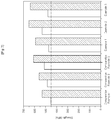
- Fig. 2 is a graph depicting yield strength and tensile strength of each of the specimens prepared in the inventive examples and the comparative examples.
- left-side bars indicate yield strength (YS) and right-side bars indicate tensile strength (TS).
- the specimens of Examples 1 to 3 did not contain copper (Cu), which is included in conventional steel plates for pipelines. It can be confirmed that these steel specimens have a tensile strength of 450 MPa or more even without containing Cu.
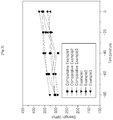
- Fig. 3 is a graph depicting results of impact testing with respect to the respective specimens of the inventive examples and the comparative examples.
- Fig. 4 shows results of hydrogen-induced cracking testing.
Landscapes
- Chemical & Material Sciences (AREA)
- Engineering & Computer Science (AREA)
- Mechanical Engineering (AREA)
- Materials Engineering (AREA)
- Metallurgy (AREA)
- Organic Chemistry (AREA)
- Physics & Mathematics (AREA)
- Thermal Sciences (AREA)
- Crystallography & Structural Chemistry (AREA)
- Manufacturing & Machinery (AREA)
- Heat Treatment Of Steel (AREA)
Claims (8)
- Eine Stahlplatte, aufweisend:Kohlenstoff (C), 0,03 - 0,05 Gew.-%, Silizium (Si), 0,2 - 0,3 Gew.-%, Mangan (Mn), 0,5 - 1,3 Gew.-%, Phosphor (P), 0,010 Gew.-% oder weniger, Schwefel (S), 0,005 Gew.-% oder weniger, Aluminium (Al), 0,02 - 0,05 Gew.-%, Nickel (Ni), 0,2 - 0,5 Gew.-%, Chrom (Cr), 0,2 - 0,3 Gew.-%, Niob (Nb), 0,03 - 0,05 Gew.-%, Vanadium (V), 0,02 - 0,05 Gew.-%, Titan (Ti), 0,01 - 0,02 Gew.-%, Calcium (Ca), 0,001 - 0,004 Gew.-% und als Rest Eisen (Fe) und sonstige unvermeidbare Unreinheiten, wobei die Stahlplatte eine Zugfestigkeit von 450 MPa oder mehr hat,wobei die Stahlplatte ein Streckgrenzenverhältnis (Streckgrenze/Zugfestigkeit) von 80% oder weniger hat,wobei eine Mikrostruktur der Stahlplatte eine Nadelförmiger-Ferrit- und Bainitstrukturen aufweisende Kompositstruktur ist, welche 30% oder mehr der Gesamtheit der Mikrostruktur in Bezug auf ein Querschnitt-Flächenverhältnis einnimmt.
- Die Stahlplatte gemäß Anspruch 1, wobei eine Ferrit- und Perlitstrukturen aufweisende Kompositstruktur 70% oder weniger der Gesamtheit der Mikrostruktur in Bezug auf ein Querschnitt-Flächenverhältnis einnimmt.
- Ein Verfahren des Herstellens einer Stahlpatte, aufweisend:(A) Wiedererwärmen einer Stahlbramme, aufweisend: Kohlenstoff (C), 0,03 - 0,05 Gew.-%, Silizium (Si), 0,2 - 0,3 Gew.-%, Mangan (Mn), 0,5 - 1,3 Gew.-%, Phosphor (P), 0,010 Gew.-% oder weniger, Schwefel (S), 0,005 Gew.-% oder weniger, Aluminium (Al), 0,02 - 0,05 Gew.-%, Nickel (Ni), 0,2 - 0,5 Gew.-%, Chrom (Cr), 0,2 - 0,3 Gew.-%, Niob (Nb), 0,03 - 0,05 Gew.-%, Vanadium (V), 0,02 - 0,05 Gew.-%, Titan (Ti), 0,01 - 0,02 Gew.-%, Calcium (Ca), 0,001 - 0,004 Gew.-% und als Rest Eisen (Fe) und sonstige unvermeidbare Unreinheiten,(B) Warmwalzen der wiedererwärmten Stahlbramme und(C) Abkühlen der warmgewalzten Stahlplatte,wobei die Stahlplatte ein Streckgrenzenverhältnis (Streckgrenze/Zugfestigkeit) von 80% oder weniger hat,
wobei eine Mikrostruktur der Stahlplatte eine Nadelförmiger-Ferrit- und Bainitstrukturen aufweisende Kompositstruktur ist, welche 30% oder mehr der Gesamtheit der Mikrostruktur in Bezug auf ein Querschnitt-Flächenverhältnis einnimmt. - Das Verfahren gemäß Anspruch 3, wobei das Wiedererwärmen (A) bei einer Temperatur von 1100 - 1250°C ausgeführt wird.
- Das Verfahren gemäß Anspruch 3, wobei das Warmwalzen (B) mit einem Reduktionsgrad von 50% bis 70% ausgeführt wird, basierend auf dem Gesamtreduktionsgrad 100 bei einer Ar3-Temperatur oder weniger.
- Das Verfahren gemäß Anspruch 3, wobei das Warmwalzen (B) eine Walzendtemperatur von 750 - 850°C hat.
- Das Verfahren gemäß Anspruch 3, wobei das Abkühlen (C) eine Abkühlungsendtemperatur von 300 - 450°C hat.
- Das Verfahren gemäß Anspruch 3, wobei das Abkühlen (C) bei einer Abkühlungsrate von 15 - 25°C/s ausgeführt wird.
Applications Claiming Priority (3)
| Application Number | Priority Date | Filing Date | Title |
|---|---|---|---|
| KR20100094599 | 2010-09-29 | ||
| KR1020110086685A KR101344638B1 (ko) | 2010-09-29 | 2011-08-29 | 수소유기균열 저항성이 우수한 라인 파이프용 강판 및 그 제조 방법 |
| PCT/KR2011/006373 WO2012043984A2 (ko) | 2010-09-29 | 2011-08-29 | 수소유기균열 저항성이 우수한 라인 파이프용 강판 및 그 제조 방법 |
Publications (3)
| Publication Number | Publication Date |
|---|---|
| EP2623625A2 EP2623625A2 (de) | 2013-08-07 |
| EP2623625A4 EP2623625A4 (de) | 2017-09-27 |
| EP2623625B1 true EP2623625B1 (de) | 2018-10-24 |
Family
ID=46136105
Family Applications (1)
| Application Number | Title | Priority Date | Filing Date |
|---|---|---|---|
| EP11829490.9A Active EP2623625B1 (de) | 2010-09-29 | 2011-08-29 | Stahlplatte für eine rohrleitung mit hervorragender beständigkeit gegen durch wasserstoff herbeigeführte risse und verfahren zu ihrer herstellung |
Country Status (4)
| Country | Link |
|---|---|
| US (1) | US20130224063A1 (de) |
| EP (1) | EP2623625B1 (de) |
| KR (1) | KR101344638B1 (de) |
| WO (1) | WO2012043984A2 (de) |
Families Citing this family (10)
| Publication number | Priority date | Publication date | Assignee | Title |
|---|---|---|---|---|
| JP6086086B2 (ja) * | 2014-03-19 | 2017-03-01 | Jfeスチール株式会社 | 耐hic性能に優れた極厚鋼板およびその製造方法 |
| KR101736638B1 (ko) * | 2015-12-23 | 2017-05-30 | 주식회사 포스코 | 수소유기 균열 (hic) 저항성이 우수한 압력용기용 강재 및 그 제조방법 |
| KR101867701B1 (ko) * | 2016-11-11 | 2018-06-15 | 주식회사 포스코 | 수소유기균열 저항성이 우수한 압력용기용 강재 및 그 제조방법 |
| JP6344538B1 (ja) * | 2017-09-19 | 2018-06-20 | 新日鐵住金株式会社 | 鋼管及び鋼板 |
| KR101988771B1 (ko) * | 2017-12-22 | 2019-09-30 | 주식회사 포스코 | 수소유기균열 저항성 및 길이방향 강도 균일성이 우수한 강판 및 그 제조방법 |
| CA3094517C (en) * | 2018-03-19 | 2022-08-30 | Tata Steel Limited | A steel composition in accordance with api 5l psl-2 specification for x-65 grade having enhanced hydrogen induced cracking (hic) resistance, and method of manufacturing the steel thereof |
| WO2020085888A1 (ko) * | 2018-10-26 | 2020-04-30 | 주식회사 포스코 | 황화물 응력부식 균열 저항성이 우수한 고강도 강재 및 이의 제조방법 |
| CN116426826B (zh) * | 2023-04-17 | 2025-03-21 | 承德建龙特殊钢有限公司 | 一种油气输送管线钢及其制备方法 |
| CN116676538A (zh) * | 2023-05-04 | 2023-09-01 | 首钢集团有限公司 | 一种掺氢天然气管道用钢及其制备方法 |
| WO2025197700A1 (ja) * | 2024-03-18 | 2025-09-25 | Jfeスチール株式会社 | 鋼管、鋼管の製造方法、および高強度鋼管 |
Family Cites Families (8)
| Publication number | Priority date | Publication date | Assignee | Title |
|---|---|---|---|---|
| JPH05195057A (ja) * | 1991-07-31 | 1993-08-03 | Kawasaki Steel Corp | L方向YS特性の優れた高Cr鋼系UOE鋼板および 高Cr系耐候性鋼板の製造方法 |
| JP3941211B2 (ja) * | 1998-03-30 | 2007-07-04 | Jfeスチール株式会社 | 耐hic性に優れた高強度ラインパイプ用鋼板の製造方法 |
| KR100627461B1 (ko) | 1999-12-28 | 2006-09-22 | 주식회사 포스코 | 고강도 라인파이프용 열연강판의 제조방법 |
| US8715430B2 (en) * | 2005-04-04 | 2014-05-06 | Nippon Steel & Sumitomo Metal Corporation | High strength steel plate and high strength welded pipe excellent in ductile fracture characteristic and methods of production of same |
| JP4912013B2 (ja) * | 2006-03-31 | 2012-04-04 | 株式会社神戸製鋼所 | 耐震性に優れたプレスベンド冷間成形円形鋼管の製造方法 |
| KR20080042495A (ko) * | 2006-11-10 | 2008-05-15 | 주식회사 포스코 | 내수소유기균열성이 우수한 고강도 열간곡관 및 그제조방법 |
| US20090301613A1 (en) * | 2007-08-30 | 2009-12-10 | Jayoung Koo | Low Yield Ratio Dual Phase Steel Linepipe with Superior Strain Aging Resistance |
| JP2009235516A (ja) * | 2008-03-27 | 2009-10-15 | Kobe Steel Ltd | 耐震性に優れた建築構造用590MPa級高降伏比円形鋼管およびその製造方法 |
-
2011
- 2011-08-29 KR KR1020110086685A patent/KR101344638B1/ko active Active
- 2011-08-29 WO PCT/KR2011/006373 patent/WO2012043984A2/ko not_active Ceased
- 2011-08-29 EP EP11829490.9A patent/EP2623625B1/de active Active
-
2013
- 2013-03-29 US US13/853,584 patent/US20130224063A1/en not_active Abandoned
Non-Patent Citations (1)
| Title |
|---|
| None * |
Also Published As
| Publication number | Publication date |
|---|---|
| KR20120033235A (ko) | 2012-04-06 |
| US20130224063A1 (en) | 2013-08-29 |
| WO2012043984A2 (ko) | 2012-04-05 |
| KR101344638B1 (ko) | 2014-01-16 |
| EP2623625A4 (de) | 2017-09-27 |
| WO2012043984A3 (ko) | 2012-05-24 |
| EP2623625A2 (de) | 2013-08-07 |
Similar Documents
| Publication | Publication Date | Title |
|---|---|---|
| EP2789699B1 (de) | Hochfestes, warmgewalztes Stahlprodukt und Verfahren zur Herstellung davon | |
| EP2617850B1 (de) | Hochfestes heissgewalztes stahlblech mit hervorragender bruchfestigkeit und herstellungsverfahren dafür | |
| EP2623625A2 (de) | Stahlplatte für eine rohrleitung mit hervorragender beständigkeit gegen durch wasserstoff herbeigeführte risse und verfahren zu ihrer herstellung | |
| CN101868560B (zh) | 具有优良低温韧性的高强度且低屈强比的结构用钢 | |
| EP2554699B1 (de) | Stahlblech von hoher zugfestigkeit und hervorragender dehnbarkeit sowie verfahren zu seiner herstellung | |
| EP3561111B1 (de) | Dickes stahlblech mit hervorragender kryogener schlagfestigkeit und herstellungsverfahren dafür | |
| EP3885462B1 (de) | Kaltgewalztes dual-phasenstahlblech mit hohem streckverhältnis und herstellungsverfahren dafür | |
| WO2014114041A1 (zh) | 一种780MPa级冷轧双相带钢及其制造方法 | |
| WO2001023625A1 (en) | Sheet steel and method for producing sheet steel | |
| KR102178711B1 (ko) | 강도 및 충격인성이 우수한 비조질 선재 및 그 제조방법 | |
| KR20200075337A (ko) | 연성 및 가공성이 우수한 고강도 강판 및 그 제조방법 | |
| EP3733912A1 (de) | Hochfestes, hochzähes, warmgewalztes stahlblech und herstellungsverfahren dafür | |
| JP7221475B6 (ja) | 延性及び低温靭性に優れた高強度鋼材及びその製造方法 | |
| KR20250011608A (ko) | 절삭성 및 충격인성이 우수한 비조질 선재 및 그 제조방법 | |
| JP4344073B2 (ja) | 高温強度に優れた高張力鋼およびその製造方法 | |
| EP4063531A1 (de) | Walzdraht für hochfeste feder, stahldraht und verfahren zur herstellung davon | |
| CN111511934B (zh) | 高强度热轧镀覆钢板及其制造方法 | |
| EP3730653A1 (de) | Hochfester stahl mit hervorragendem niedrigem streckgrenzenverhältnis und verfahren zu seiner herstellung | |
| JP4309561B2 (ja) | 高温強度に優れた高張力鋼板およびその製造方法 | |
| JP2002173734A (ja) | 溶接性に優れた鋼およびその製造方法 | |
| KR102448753B1 (ko) | 절삭성 및 충격인성이 향상된 중탄소 비조질 선재 및 그 제조방법 | |
| EP3231886B1 (de) | Komplexphasenstahlblech mit hervorragender verformbarkeit und herstellungsverfahren dafür | |
| KR100711371B1 (ko) | 극저온 인성이 우수한 라인파이프용 후강판 및 그 제조방법 | |
| EP4438761A1 (de) | Warmgewalztes stahlblech und verfahren zur herstellung davon | |
| EP3553197B1 (de) | Hochfester stahldraht mit hervorragender korrosionsbeständigkeit und verfahren zur herstellung davon |
Legal Events
| Date | Code | Title | Description |
|---|---|---|---|
| PUAI | Public reference made under article 153(3) epc to a published international application that has entered the european phase |
Free format text: ORIGINAL CODE: 0009012 |
|
| 17P | Request for examination filed |
Effective date: 20130327 |
|
| AK | Designated contracting states |
Kind code of ref document: A2 Designated state(s): AL AT BE BG CH CY CZ DE DK EE ES FI FR GB GR HR HU IE IS IT LI LT LU LV MC MK MT NL NO PL PT RO RS SE SI SK SM TR |
|
| DAX | Request for extension of the european patent (deleted) | ||
| A4 | Supplementary search report drawn up and despatched |
Effective date: 20170825 |
|
| RIC1 | Information provided on ipc code assigned before grant |
Ipc: C22C 38/04 20060101ALI20170821BHEP Ipc: C21D 8/10 20060101ALI20170821BHEP Ipc: C21D 8/02 20060101ALI20170821BHEP Ipc: C22C 38/06 20060101ALI20170821BHEP Ipc: C22C 38/28 20060101ALI20170821BHEP Ipc: C22C 38/00 20060101AFI20170821BHEP Ipc: C22C 38/50 20060101ALI20170821BHEP Ipc: C22C 38/14 20060101ALI20170821BHEP Ipc: C22C 38/48 20060101ALI20170821BHEP Ipc: C22C 38/02 20060101ALI20170821BHEP Ipc: C22C 38/46 20060101ALI20170821BHEP Ipc: C22C 38/12 20060101ALI20170821BHEP |
|
| GRAP | Despatch of communication of intention to grant a patent |
Free format text: ORIGINAL CODE: EPIDOSNIGR1 |
|
| STAA | Information on the status of an ep patent application or granted ep patent |
Free format text: STATUS: GRANT OF PATENT IS INTENDED |
|
| INTG | Intention to grant announced |
Effective date: 20180515 |
|
| RIN1 | Information on inventor provided before grant (corrected) |
Inventor name: PARK, KYU-HEOP Inventor name: LEE, MYUNG-JIN Inventor name: KIM, KYU-TAE |
|
| GRAS | Grant fee paid |
Free format text: ORIGINAL CODE: EPIDOSNIGR3 |
|
| GRAA | (expected) grant |
Free format text: ORIGINAL CODE: 0009210 |
|
| STAA | Information on the status of an ep patent application or granted ep patent |
Free format text: STATUS: THE PATENT HAS BEEN GRANTED |
|
| AK | Designated contracting states |
Kind code of ref document: B1 Designated state(s): AL AT BE BG CH CY CZ DE DK EE ES FI FR GB GR HR HU IE IS IT LI LT LU LV MC MK MT NL NO PL PT RO RS SE SI SK SM TR |
|
| REG | Reference to a national code |
Ref country code: GB Ref legal event code: FG4D |
|
| REG | Reference to a national code |
Ref country code: CH Ref legal event code: EP |
|
| REG | Reference to a national code |
Ref country code: IE Ref legal event code: FG4D |
|
| REG | Reference to a national code |
Ref country code: AT Ref legal event code: REF Ref document number: 1056745 Country of ref document: AT Kind code of ref document: T Effective date: 20181115 |
|
| REG | Reference to a national code |
Ref country code: DE Ref legal event code: R096 Ref document number: 602011053285 Country of ref document: DE |
|
| REG | Reference to a national code |
Ref country code: NL Ref legal event code: MP Effective date: 20181024 |
|
| REG | Reference to a national code |
Ref country code: LT Ref legal event code: MG4D |
|
| REG | Reference to a national code |
Ref country code: AT Ref legal event code: MK05 Ref document number: 1056745 Country of ref document: AT Kind code of ref document: T Effective date: 20181024 |
|
| PG25 | Lapsed in a contracting state [announced via postgrant information from national office to epo] |
Ref country code: NL Free format text: LAPSE BECAUSE OF FAILURE TO SUBMIT A TRANSLATION OF THE DESCRIPTION OR TO PAY THE FEE WITHIN THE PRESCRIBED TIME-LIMIT Effective date: 20181024 |
|
| PG25 | Lapsed in a contracting state [announced via postgrant information from national office to epo] |
Ref country code: IS Free format text: LAPSE BECAUSE OF FAILURE TO SUBMIT A TRANSLATION OF THE DESCRIPTION OR TO PAY THE FEE WITHIN THE PRESCRIBED TIME-LIMIT Effective date: 20190224 Ref country code: LT Free format text: LAPSE BECAUSE OF FAILURE TO SUBMIT A TRANSLATION OF THE DESCRIPTION OR TO PAY THE FEE WITHIN THE PRESCRIBED TIME-LIMIT Effective date: 20181024 Ref country code: ES Free format text: LAPSE BECAUSE OF FAILURE TO SUBMIT A TRANSLATION OF THE DESCRIPTION OR TO PAY THE FEE WITHIN THE PRESCRIBED TIME-LIMIT Effective date: 20181024 Ref country code: NO Free format text: LAPSE BECAUSE OF FAILURE TO SUBMIT A TRANSLATION OF THE DESCRIPTION OR TO PAY THE FEE WITHIN THE PRESCRIBED TIME-LIMIT Effective date: 20190124 Ref country code: BG Free format text: LAPSE BECAUSE OF FAILURE TO SUBMIT A TRANSLATION OF THE DESCRIPTION OR TO PAY THE FEE WITHIN THE PRESCRIBED TIME-LIMIT Effective date: 20190124 Ref country code: PL Free format text: LAPSE BECAUSE OF FAILURE TO SUBMIT A TRANSLATION OF THE DESCRIPTION OR TO PAY THE FEE WITHIN THE PRESCRIBED TIME-LIMIT Effective date: 20181024 Ref country code: AT Free format text: LAPSE BECAUSE OF FAILURE TO SUBMIT A TRANSLATION OF THE DESCRIPTION OR TO PAY THE FEE WITHIN THE PRESCRIBED TIME-LIMIT Effective date: 20181024 Ref country code: HR Free format text: LAPSE BECAUSE OF FAILURE TO SUBMIT A TRANSLATION OF THE DESCRIPTION OR TO PAY THE FEE WITHIN THE PRESCRIBED TIME-LIMIT Effective date: 20181024 Ref country code: LV Free format text: LAPSE BECAUSE OF FAILURE TO SUBMIT A TRANSLATION OF THE DESCRIPTION OR TO PAY THE FEE WITHIN THE PRESCRIBED TIME-LIMIT Effective date: 20181024 Ref country code: FI Free format text: LAPSE BECAUSE OF FAILURE TO SUBMIT A TRANSLATION OF THE DESCRIPTION OR TO PAY THE FEE WITHIN THE PRESCRIBED TIME-LIMIT Effective date: 20181024 |
|
| PG25 | Lapsed in a contracting state [announced via postgrant information from national office to epo] |
Ref country code: SE Free format text: LAPSE BECAUSE OF FAILURE TO SUBMIT A TRANSLATION OF THE DESCRIPTION OR TO PAY THE FEE WITHIN THE PRESCRIBED TIME-LIMIT Effective date: 20181024 Ref country code: AL Free format text: LAPSE BECAUSE OF FAILURE TO SUBMIT A TRANSLATION OF THE DESCRIPTION OR TO PAY THE FEE WITHIN THE PRESCRIBED TIME-LIMIT Effective date: 20181024 Ref country code: RS Free format text: LAPSE BECAUSE OF FAILURE TO SUBMIT A TRANSLATION OF THE DESCRIPTION OR TO PAY THE FEE WITHIN THE PRESCRIBED TIME-LIMIT Effective date: 20181024 Ref country code: GR Free format text: LAPSE BECAUSE OF FAILURE TO SUBMIT A TRANSLATION OF THE DESCRIPTION OR TO PAY THE FEE WITHIN THE PRESCRIBED TIME-LIMIT Effective date: 20190125 Ref country code: PT Free format text: LAPSE BECAUSE OF FAILURE TO SUBMIT A TRANSLATION OF THE DESCRIPTION OR TO PAY THE FEE WITHIN THE PRESCRIBED TIME-LIMIT Effective date: 20190224 |
|
| REG | Reference to a national code |
Ref country code: DE Ref legal event code: R097 Ref document number: 602011053285 Country of ref document: DE |
|
| PG25 | Lapsed in a contracting state [announced via postgrant information from national office to epo] |
Ref country code: IT Free format text: LAPSE BECAUSE OF FAILURE TO SUBMIT A TRANSLATION OF THE DESCRIPTION OR TO PAY THE FEE WITHIN THE PRESCRIBED TIME-LIMIT Effective date: 20181024 Ref country code: DK Free format text: LAPSE BECAUSE OF FAILURE TO SUBMIT A TRANSLATION OF THE DESCRIPTION OR TO PAY THE FEE WITHIN THE PRESCRIBED TIME-LIMIT Effective date: 20181024 Ref country code: CZ Free format text: LAPSE BECAUSE OF FAILURE TO SUBMIT A TRANSLATION OF THE DESCRIPTION OR TO PAY THE FEE WITHIN THE PRESCRIBED TIME-LIMIT Effective date: 20181024 |
|
| PG25 | Lapsed in a contracting state [announced via postgrant information from national office to epo] |
Ref country code: SM Free format text: LAPSE BECAUSE OF FAILURE TO SUBMIT A TRANSLATION OF THE DESCRIPTION OR TO PAY THE FEE WITHIN THE PRESCRIBED TIME-LIMIT Effective date: 20181024 Ref country code: EE Free format text: LAPSE BECAUSE OF FAILURE TO SUBMIT A TRANSLATION OF THE DESCRIPTION OR TO PAY THE FEE WITHIN THE PRESCRIBED TIME-LIMIT Effective date: 20181024 Ref country code: SK Free format text: LAPSE BECAUSE OF FAILURE TO SUBMIT A TRANSLATION OF THE DESCRIPTION OR TO PAY THE FEE WITHIN THE PRESCRIBED TIME-LIMIT Effective date: 20181024 Ref country code: RO Free format text: LAPSE BECAUSE OF FAILURE TO SUBMIT A TRANSLATION OF THE DESCRIPTION OR TO PAY THE FEE WITHIN THE PRESCRIBED TIME-LIMIT Effective date: 20181024 |
|
| PLBE | No opposition filed within time limit |
Free format text: ORIGINAL CODE: 0009261 |
|
| STAA | Information on the status of an ep patent application or granted ep patent |
Free format text: STATUS: NO OPPOSITION FILED WITHIN TIME LIMIT |
|
| 26N | No opposition filed |
Effective date: 20190725 |
|
| PG25 | Lapsed in a contracting state [announced via postgrant information from national office to epo] |
Ref country code: SI Free format text: LAPSE BECAUSE OF FAILURE TO SUBMIT A TRANSLATION OF THE DESCRIPTION OR TO PAY THE FEE WITHIN THE PRESCRIBED TIME-LIMIT Effective date: 20181024 |
|
| PG25 | Lapsed in a contracting state [announced via postgrant information from national office to epo] |
Ref country code: TR Free format text: LAPSE BECAUSE OF FAILURE TO SUBMIT A TRANSLATION OF THE DESCRIPTION OR TO PAY THE FEE WITHIN THE PRESCRIBED TIME-LIMIT Effective date: 20181024 |
|
| PG25 | Lapsed in a contracting state [announced via postgrant information from national office to epo] |
Ref country code: LU Free format text: LAPSE BECAUSE OF NON-PAYMENT OF DUE FEES Effective date: 20190829 Ref country code: LI Free format text: LAPSE BECAUSE OF NON-PAYMENT OF DUE FEES Effective date: 20190831 Ref country code: MC Free format text: LAPSE BECAUSE OF FAILURE TO SUBMIT A TRANSLATION OF THE DESCRIPTION OR TO PAY THE FEE WITHIN THE PRESCRIBED TIME-LIMIT Effective date: 20181024 Ref country code: CH Free format text: LAPSE BECAUSE OF NON-PAYMENT OF DUE FEES Effective date: 20190831 |
|
| REG | Reference to a national code |
Ref country code: BE Ref legal event code: MM Effective date: 20190831 |
|
| PG25 | Lapsed in a contracting state [announced via postgrant information from national office to epo] |
Ref country code: IE Free format text: LAPSE BECAUSE OF NON-PAYMENT OF DUE FEES Effective date: 20190829 Ref country code: FR Free format text: LAPSE BECAUSE OF NON-PAYMENT OF DUE FEES Effective date: 20190831 |
|
| PG25 | Lapsed in a contracting state [announced via postgrant information from national office to epo] |
Ref country code: BE Free format text: LAPSE BECAUSE OF NON-PAYMENT OF DUE FEES Effective date: 20190831 |
|
| PG25 | Lapsed in a contracting state [announced via postgrant information from national office to epo] |
Ref country code: CY Free format text: LAPSE BECAUSE OF FAILURE TO SUBMIT A TRANSLATION OF THE DESCRIPTION OR TO PAY THE FEE WITHIN THE PRESCRIBED TIME-LIMIT Effective date: 20181024 |
|
| PG25 | Lapsed in a contracting state [announced via postgrant information from national office to epo] |
Ref country code: MT Free format text: LAPSE BECAUSE OF FAILURE TO SUBMIT A TRANSLATION OF THE DESCRIPTION OR TO PAY THE FEE WITHIN THE PRESCRIBED TIME-LIMIT Effective date: 20181024 Ref country code: HU Free format text: LAPSE BECAUSE OF FAILURE TO SUBMIT A TRANSLATION OF THE DESCRIPTION OR TO PAY THE FEE WITHIN THE PRESCRIBED TIME-LIMIT; INVALID AB INITIO Effective date: 20110829 |
|
| PG25 | Lapsed in a contracting state [announced via postgrant information from national office to epo] |
Ref country code: MK Free format text: LAPSE BECAUSE OF FAILURE TO SUBMIT A TRANSLATION OF THE DESCRIPTION OR TO PAY THE FEE WITHIN THE PRESCRIBED TIME-LIMIT Effective date: 20181024 |
|
| PGFP | Annual fee paid to national office [announced via postgrant information from national office to epo] |
Ref country code: DE Payment date: 20250811 Year of fee payment: 15 |
|
| PGFP | Annual fee paid to national office [announced via postgrant information from national office to epo] |
Ref country code: GB Payment date: 20250822 Year of fee payment: 15 |