EP2624609A1 - Verfahren und vorrichtung zur handhabung eines mobilitätsmanagementkontexts - Google Patents
Verfahren und vorrichtung zur handhabung eines mobilitätsmanagementkontexts Download PDFInfo
- Publication number
- EP2624609A1 EP2624609A1 EP11828134.4A EP11828134A EP2624609A1 EP 2624609 A1 EP2624609 A1 EP 2624609A1 EP 11828134 A EP11828134 A EP 11828134A EP 2624609 A1 EP2624609 A1 EP 2624609A1
- Authority
- EP
- European Patent Office
- Prior art keywords
- network
- context
- terminal
- mobility management
- side device
- Prior art date
- Legal status (The legal status is an assumption and is not a legal conclusion. Google has not performed a legal analysis and makes no representation as to the accuracy of the status listed.)
- Withdrawn
Links
Images

Classifications
-
- H—ELECTRICITY
- H04—ELECTRIC COMMUNICATION TECHNIQUE
- H04W—WIRELESS COMMUNICATION NETWORKS
- H04W28/00—Network traffic management; Network resource management
- H04W28/02—Traffic management, e.g. flow control or congestion control
- H04W28/0289—Congestion control
-
- H—ELECTRICITY
- H04—ELECTRIC COMMUNICATION TECHNIQUE
- H04W—WIRELESS COMMUNICATION NETWORKS
- H04W8/00—Network data management
- H04W8/02—Processing of mobility data, e.g. registration information at HLR [Home Location Register] or VLR [Visitor Location Register]; Transfer of mobility data, e.g. between HLR, VLR or external networks
-
- H—ELECTRICITY
- H04—ELECTRIC COMMUNICATION TECHNIQUE
- H04W—WIRELESS COMMUNICATION NETWORKS
- H04W76/00—Connection management
- H04W76/30—Connection release
- H04W76/38—Connection release triggered by timers
Definitions
- the present invention relates to the technical field of wireless communications and particularly to a method and device for handling a mobility management context.
- M2M Machine to Machine
- 3GPP 3 rd Generation Partnership Project
- APN Access Point Name
- subscription data of a UE shall be stored at the network side for a period of time when an Attach/Tracking Area Update (TAU) request from the UE is rejected at the network side due to APN congestion.
- TAU Attach/Tracking Area Update
- Subscription information of a UE is stored in a mobility management context of the UE, and the value of storing the mobility management context has not been specified so far.
- EPS Evolved Packet System
- EMM Evolved Packet System
- EMM Evolved Packet System
- EMM Evolved Packet System
- MME Mobility Management Entity
- SGSN Serving GPRS Support Node
- HSS Home Subscriber Server
- HLR Home Location Register
- the value of storing the mobility management context at the network side is not specified so far, and consequently signaling consumption and network load may be increased.
- Embodiments of the invention provide a method and device for handling a mobility management context so as to address the problem in the prior art of increasing signaling consumption or network load due to the absence of a specified value of storing the mobility management context at the network side.
- An embodiment of the invention provides a method for handling a mobility management context, which includes:
- An embodiment of the invention provides another method for handling a mobility management context, which includes:
- An embodiment of the invention provides a network-side device for handling a mobility management context, which includes:
- An embodiment of the invention provides another network-side device for handling a mobility management context, which includes:
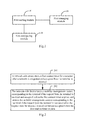
- Fig.1 is a schematic structure diagram of a first network-side device for handling a mobility management context according to an embodiment of the invention
- Fig.2 is a schematic flow chart of a first method for handling a mobility management context according to an embodiment of the invention
- Fig.3 is a schematic structure diagram of a second network-side device for handling a mobility management context according to an embodiment of the invention.
- Fig.4 is a schematic flow chart of a second method for handling a mobility management context according to an embodiment of the invention.
- a network-side device can start a context timer after a network is congested, and after the context timer expires, delete a mobility management context corresponding to a terminal from which all the requests transmitted are rejected in a period of time starting from the network congestion until the context timer expires. Since the value of storing the mobility management context at the network side is specified, signaling consumption and network load are thereby reduced.
- Mobility Management Entity congestion
- Packet Data Network Gateway (GW) congestion
- Serving GW SGW congestion
- Serving GPRS Support Node SGSN
- the request in the embodiments of the invention is one of a request of an EMM procedure, a request of an ESM procedure, a request of a GMM procedure and a request of a GSM procedure.
- the EMM procedure refers to an EPS mobility management procedure including but not limited to one or more of ATTACH, TAU, DETACH, Service Request, Extended Service Request, Transport of NAS messages, Generic transport of NAS messages and other procedures.
- the ESM procedure refers to an EPS session management procedure including but not limited to one or more of a PDN connectivity procedure, a PDN disconnect procedure, a bearer resource allocation procedure, a bearer resource modification procedure, default EPS bearer context activation, dedicated EPS bearer context activation, EPS bearer context modification, EPS bearer context deactivation, an ESM information request procedure, a notification procedure and other procedures.
- the GMM procedure refers to a General Packet Radio Service (GPRS) Mobility Management procedure including but not limited to one or more of GPRS ATTACH, GPRS DETACH, Routing Area Updating (RAU) and other procedures.
- GPRS General Packet Radio Service
- RAU Routing Area Updating
- the GSM procedure refers to a GPRS Session Management procedure including but not limited to one or more of Packet Data Protocol (PDP) Context Activation, PDP Context Deactivation, Secondary PDP Context Activation, a PDP context modification procedure, a notification procedure and other procedures.
- PDP Packet Data Protocol
- the network-side device in the embodiments of the invention can process the request according to an existing flow.
- CN Core Network
- a first network-side device for handling a mobility management context includes a first starting module 10 and a first managing module 20.
- the first starting module 10 is configured to start a first context timer for a terminal after a network is congested and a request from the terminal is rejected.
- the first managing module 20 is configured to keep a mobility management context corresponding to the terminal when the request from the terminal is received and accepted before the first context timer expires and to delete the mobility management context corresponding to the terminal when the request from the terminal is not received or the request from the terminal is received but not accepted before the first context timer expires.
- the first starting module 10 may reject the request from the terminal after receiving the request from the terminal and can start one first context timer for the terminal if the request is rejected.
- one first context timer is only for one terminal, and a plurality of first context timers will be started if all the requests of a plurality of terminals are rejected after the network is congested.
- the network-side device can further include a first configuring module 30 in order to enable the rejected terminal to reinitiate a request in a reasonable period of time.
- the first configuring module 30 is configured to send to the terminal a mobility management back-off timer after the network is congested and the request from the terminal is rejected and before the first context timer is started for the terminal.
- the first configuring module 30 can send to the terminal the mobility management back-off timer via a Non Access Stratum (NAS) message.
- NAS Non Access Stratum
- the configured mobility management back-off timer includes an identifier and value of the mobility management back-off timer; and the terminal knows from the identifier that what has been configured is a mobility management back-off timer when receiving the configuration and then starts the mobility management back-off timer according to the value and retransmits a request after the mobility management back-off timer expires.
- the value of the first context timer shall be longer than that of the mobility management back-off timer.
- the value of the first context timer can be determined according to the value of the mobility management back-off timer, and if the value of the mobility management back-off timer is longer than the current value of the first context timer, the first starting module 10 shall adjust the value of the first context timer; or the value of the mobility management back-off timer can be determined according to the value of the first context timer, and if the value of the mobility management back-off timer is longer than the current value of the first context timer, the first configuring module 30 shall adjust the value of the mobility management back-off timer.
- the value of the first context timer can be determined according to an operator strategy, and if there is the mobility management back-off timer, the value of the first context timer shall be ensured to be longer than that of the mobility management back-off timer.
- Strategy 1 An operator can determine how long the network will be congested according to statistical data of network operation, e.g., five hours, and at this time the value of the first context timer can be configured by the network to five hours or a slightly longer time.
- Strategy 2 The value of the first context timer is configured to one hour so long as the congestion occurs. If the congestion is not removed after one hour, the value of the first context timer is further configured to one hour. The value of the timer is equally configured like this.
- Strategy 3 The value of the first context timer is configured to one hour so long as the congestion occurs. If the congestion is not removed after one hour, the value of the first context timer is further configured to two hours. The value of the timer is incrementally configured like this. Of course, the value of the timer can alternatively be decrementally configured.
- Strategy 4 The value of the first context timer is configured by a human operator through an operation, maintenance and administration system of the network when the congestion occurs.
- Strategy 5 An operator can determine how long the network will be congested according to statistical data of network operation, e.g., five hours, and at this time the value of the first context timer can be configured by the network to five hours, and If the congestion is not removed after five hours, the value can be further configured to five hours or to another preset value (fixed sequentially) or to four hours (decremented sequentially) or to six hours (incremented sequentially).
- the network-side device can be configured with a specific value
- the first managing module 20 can determine when the first timer will expire according to the specific value (L), for example, the first timer can expire at a point of time which is the current time plus L, or the value can be counted down directly and that the first timer expires can be determined when the value becomes zero.
- the network-side device can be configured with a point of time, and the first managing module 20 can take this point of time as the point of time when the first timer expires.
- a preferable scheme may be that the first starting module 10 stops the first context timer after the request from the terminal is received and accepted before the first context timer expires.
- the first managing module 20 can delete the mobility management context by directly deleting locally the mobility management context corresponding to the terminal. This scheme is applicable to such a scenario that the mobility management context includes an EPS bearer or includes no EPS bearer.
- the mobility management context includes an EPS bearer and/or a PDP context
- another deletion scheme in addition to the foregoing scheme is as follows:
- the first managing module 20 initiates an implicit detach procedure to delete the mobility management context corresponding to the terminal.
- a specific implicit deletion procedure can refer to the 3GPP TS23.401 and TS23.060 protocols.
- the first context timer can be a mobile reachable timer or an implicit detach timer or a new timer.
- the network-side device can be a node B (e.g., a macro node B, an evolved node B, a home node B, etc.) or a Relay Node (RN) device or an MME or another network-side device.
- a node B e.g., a macro node B, an evolved node B, a home node B, etc.
- RN Relay Node
- a first method for handling a mobility management context is provided in an embodiment of the invention, and since this method addresses the problem under a similar principle to the first network-side device for handling a mobility management context, an implementation of this method can refer to the implementation of the first network-side device for handling a mobility management context, a repeated description of which will be omitted here.
- a first method for handling a mobility management context includes the following steps:
- Step 201 A network-side device starts a first context timer for a terminal after a network is congested and a request from the terminal is rejected.
- Step 202 The network-side device keeps a mobility management context corresponding to the terminal if the request from the terminal is received and accepted before the first context timer expires; and deletes the mobility management context corresponding to the terminal if the request from the terminal is received or the request from the terminal is received but not accepted before the first context timer expires.
- the network-side device may reject the request from the terminal when receiving the request from the terminal after the network is congested and can start one first context timer for the terminal if the request is rejected.
- one first context timer is only for one terminal, and a plurality of first context timers will be started if all the requests of a plurality of terminals are rejected after the network is congested.
- the network-side device sends to the terminal a mobility management back-off timer after the network is congested and the request from the terminal is rejected and before the first context timer is started for the terminal.
- the network-side device can send to the terminal the mobility management back-off timer via an NAS message.
- the configured mobility management back-off timer includes an identifier and value of the mobility management back-off timer.
- the value of the first context timer shall be longer than that of the mobility management back-off timer.
- the value of the first context timer can also be determined according to an operator strategy, and if there is the mobility management back-off timer, the value of the first context timer shall be ensured to be longer than that of the mobility management back-off timer.
- a specific strategy can refer to the strategies in Fig.1 , a repeated description of which will be omitted here.
- the network-side device can be configured with a specific value, and the network-side device can determine when the first timer will expire according to the specific value (L), for example, the first timer expires at a point of time which is the current time plus L, or the value is counted down directly and that the first timer expires is determined when the value becomes zero.
- L specific value
- the network-side device can be configured with a point of time, and the network-side device can take this point of time as the point of time when the first timer expires.
- a preferable scheme may be that the network-side device stops the first context timer after the request from the terminal is received and accepted before the first context timer expires.
- the network-side device can delete the mobility management context by directly deleting locally the mobility management context corresponding to the terminal.
- This scheme is applicable to such a scenario that the mobility management context includes an EPS bearer or includes no EPS bearer.
- the mobility management context includes an EPS bearer and/or a PDP context
- another deletion scheme in addition to the foregoing scheme is as follows:
- the network-side device initiates an implicit detach procedure to delete the mobility management context corresponding to the terminal.
- a specific implicit deletion procedure can refer to the 3GPP TS23.401 and TS23.060 protocols.
- the first context timer can be a mobile reachable timer or an implicit detach timer or a new timer.
- the network-side device can be a node B (e.g., a macro node B, an evolved node B, a home node B, etc.) or an RN device or an MME or another network-side device.
- a node B e.g., a macro node B, an evolved node B, a home node B, etc.
- an RN device or an MME or another network-side device.
- a second network-side device for handling a mobility management context includes a second starting module 50 and a second managing module 60.
- the second starting module 50 is configured to start a second context timer when a network is congested.
- the second managing module 60 is configured to keep a mobility management context corresponding to a first terminal and to delete a mobility management context corresponding to a second terminal after the second context timer expires.
- the first terminal is a terminal from which one or more requests transmitted is accepted by the network-side device after the network is congested and before the second context timer expires; and the second terminal is a terminal from which all the requests transmitted are rejected by the network-side device after the network is congested and before the second context timer expires.
- a number of terminals may initiate requests after the network is congested and before the second context timer expires, and the request from a terminal may be rejected by the network-side device if the network is congested.
- the terminal from which the requests transmitted are received by the network-side device the terminal from which the request transmitted is accepted is referred to as the first terminal, and the other terminals are referred to as the second terminals.
- the second starting module 50 can start the second context timer immediately after the network is congested; or can start the second context timer immediately after the network congestion is removed.
- the second context timer is started immediately after the network congestion is removed, after the network is congested and before the network congestion is removed, the second context timer is not started, and the network-side device will consider that the second context timer has not expired.
- the second solution to handling a mobility management context according to the embodiment of the invention is specific to one node (per node) (that is, there is only one timer for all the terminals, where only one timer will be started regardless of the number of terminals).
- the network-side device can further include a second configuring module 70 in order to enable the rejected terminal to reinitiate a request in a reasonable period of time.
- the second configuring module 70 is configured to send to the terminal a mobility management back-off timer after the network is congested and the request from the terminal is rejected.
- the second configuring module 70 can send to the terminal the mobility management back-off timer via an NAS message.
- the configured mobility management back-off timer includes an identifier and value of the mobility management back-off timer; and the terminal knows from the identifier that what has been configured is a mobility management back-off timer when receiving the configuration and then starts the mobility management back-off timer according to the value and retransmits a request after the mobility management back-off timer expires.
- the value of the second context timer shall be longer than that of the mobility management back-off timer.
- the value of the second context timer can be determined according to the value of the mobility management back-off timer, and if the value of the mobility management back-off timer is longer than the current value of the second context timer, the second starting module 50 shall adjust the value of the second context timer; or the value of the mobility management back-off timer can be determined according to the value of the second context timer, and if the value of the mobility management back-off timer is longer than the current value of the second context timer, the second configuring module 70 shall adjust the value of the mobility management back-off timer.
- the value of the second context timer can be determined according to an operator strategy, and if there is the mobility management back-off timer, the value of the second context timer shall be ensured to be longer than that of the mobility management back-off timer.
- a specific operator strategy can refer to the strategies in Fig.1 , a repeated description of which will be omitted here.
- the network-side device can be configured with a specific value
- the second managing module 60 can determine when the second timer will expire according to the specific value (L), for example, the second timer expires at a point of time which is the current time plus L, or the value is counted down directly and that the second timer expires is determined when the value becomes zero.
- the network-side device can be configured with a point of time, and the second managing module 60 can take this point of time as the point of time when the second timer expires.
- the operator strategies for the second context timer in this scenario can further be the following several ones in addition to the foregoing five strategies:
- Strategy 1 An operator can determine from statistical data of network operation how long a request transmitted from the UE will be waited for after the network congestion is removed, e.g., one hour, and at this time the value of the second context timer can be configured by the network to one hour or a slightly longer time.
- Strategy 2 The value of the second context timer is configured to two hours so long as the congestion is removed.
- the network configures the second context timer according to the value of the mobility management back-off timer transmitted to the UE when the congestion is removed (at a time TO). For example, a specific UE will initiate an access request after a specific time T as calculated from the value of a mobility management back-off timer configured for the UE by the network.
- the value of the second context timer configured at this time shall ensure that this timer will expire at a specific time T2 after the time T1, that is, the time T2 is required to be later than the time T1.
- the context of the UE has not been deleted by the network when the UE makes an access.
- the time T1 can be calculated according to a mobility management back-off timer indicated to any UE or can be calculated according to mobility management back-off timers indicated to a plurality of UEs, for example, the times of T1 calculated according to mobility management back-off timers indicated to three UEs are different, and then the second context timer can be determined from the calculated average of the three times or the second context timer can be determined from the latest one of the times of T1.
- Strategy 4 The value of the second context timer is configured by a human operator through an operation, maintenance and administration system of the network when the congestion occurs.
- the network-side device can further include a flagging module 80.
- the flagging module 80 is configured to make a special flag for the mobility management contexts of these terminals after the network is congested and the requests of the terminals are rejected and to delete the special flag of the mobility management context of a terminal if a request from the terminal is accepted and the mobility management context of the accepted terminal has the special flag after the network congestion is removed.
- the second managing module 60 keeps the mobility management contexts without the special flag and deletes the mobility management contexts with the special flag after the second context timer expires.
- the flagging module 80 lists the mobility management contexts of the rejected terminals into a blacklist and deletes the mobility management context of an accepted terminal in the blacklist; and the second managing module 60 deletes the mobility management contexts in the blacklist after the second context timer expires.
- the second starting module 50 starts the second context timer immediately after the network is congested, such a scenario may possibly occur that the network congestion is removed very soon but the second timer has not expired, and a preferable scheme may be that the second managing module 60 stops the second context timer and determines that the second context timer expires if the network congestion is removed before the second context timer expires.
- the network may be congested for such a long period of time that the congestion is not removed when the second timer expires, and a preferable scheme may be that the second starting module 50 restarts the second context timer if the network congestion is not removed when the second context timer expires.
- the second managing module 60 can delete the mobility management context by directly deleting locally the mobility management context corresponding to the terminal. This scheme is applicable to such a scenario that the mobility management context includes an EPS bearer or includes no EPS bearer.
- the mobility management context includes an EPS bearer and/or a PDP context
- another deletion scheme in addition to the foregoing scheme is as follows:
- the second managing module 60 initiates an implicit detach procedure to delete the mobility management context corresponding to the terminal.
- a specific implicit deletion procedure can refer to the 3GPP TS23.401 and TS23.060 protocols.
- the network-side device can be a node B (e.g., a macro node B, an evolved node B, a home node B, etc.) or an RN device or an MME or another network-side device.
- a node B e.g., a macro node B, an evolved node B, a home node B, etc.
- an RN device or an MME or another network-side device.
- a second method for handling a mobility management context is provided in an embodiment of the invention, and since this method addresses the problem under a similar principle to the second network-side device for handling a mobility management context, an implementation of this method can refer to the implementation of the second network-side device for handling a mobility management context, a repeated description of which will be omitted here.
- a second method for handling a mobility management context includes the following steps:
- Step 401 A network-side device starts a second context timer when a network is congested.
- Step 402. The network-side device keeps a mobility management context corresponding to a first terminal and deletes a mobility management context corresponding to a second terminal after the second context timer expires.
- the first terminal is a terminal from which a request transmitted is accepted by the network-side device after the network is congested and before the second context timer expires; and the second terminal is a terminal from which all the requests transmitted are rejected by the network-side device after the network is congested and before the second context timer expires.
- a number of terminals may initiate requests after the network is congested and before the second context timer expires, and the request from a terminal may be rejected by the network-side device if the network is congested.
- the terminal from which the requests transmitted are received by the network-side device the terminal from which the request transmitted is accepted is referred to as the first terminal, and the other terminals are referred to as the second terminals.
- the network-side device can start the second context timer immediately after the network is congested; or can start the second context timer immediately after the network congestion is removed.
- the second context timer is started immediately after the network congestion is removed, the second context timer is not started after the network is congested and before the network congestion is removed, and the network-side device will consider that the second context timer has not expired.
- the network-side device can send to the terminal a mobility management back-off timer after the network is congested and the request from the terminal is rejected.
- the network-side device can send to the terminal the mobility management back-off timer via an NAS message.
- the configured mobility management back-off timer includes an identifier and value of the mobility management back-off timer.
- the value of the second context timer shall be longer than that of the mobility management back-off timer.
- the value of the second context timer can be determined according to an operator strategy, and if there is the mobility management back-off timer, the value of the second context timer shall be ensured to be longer than that of the mobility management back-off timer.
- a specific operator strategy can refer to the strategies in Fig.1 , a repeated description of which will be omitted here.
- the network-side device can be configured with a specific value, and the network-side device can determine when the second timer will expire according to the specific value (L), for example, the second timer expires at a point of time which is the current time plus L, or the value is counted down directly and that the second timer expires is determined when the value becomes zero.
- L specific value
- the network-side device can be configured with a point of time, and the network-side device can take this point of time as the point of time when the second timer expires.
- a specific operator strategy can refer to the strategies in Fig.3 for the second context timer in this scenario, a repeated description of which will be omitted here.
- a preferable scheme is to distinguish the mobility management context of the first terminal from that of the second terminal.
- the network-side device rejects the requests of terminals and makes a special flag for the mobility management contexts of these terminals after the network is congested and deletes the special flag of the mobility management context of a terminal if a request from the terminal is accepted and the mobility management context of the accepted terminal has the special flag after the network congestion is removed.
- the network-side device keeps the mobility management contexts without the special flag and deletes the mobility management contexts with the special flag after the second context timer expires.
- the network-side device lists the mobility management contexts of the rejected terminals into a blacklist and deletes the mobility management context of an accepted terminal in the blacklist, and deletes the mobility management contexts in the blacklist after the second context timer expires.
- the network-side device starts the second context timer immediately after the network is congested, such a scenario may possibly occur that the network congestion may be removed very soon but the second timer has not expired, and a preferable scheme may be that the network-side device stops the second context timer and determines that the second context timer expires if the network congestion is removed before the second context timer expires.
- the network-side device may be congested for such a long period of time that the congestion is not removed when the second timer expires, and a preferable scheme may be that the network-side device restarts the second context timer if the network congestion is not removed when the second context timer expires.
- the network-side device can delete the mobility management context by directly deleting locally the mobility management context corresponding to the terminal.
- This scheme is applicable to such a scenario that the mobility management context includes an EPS bearer or includes no EPS bearer.
- the mobility management context includes an EPS bearer and/or a PDP context
- another deletion scheme in addition to the foregoing scheme is as follows:
- the network-side device initiates an implicit detach procedure to delete the mobility management context corresponding to the terminal.
- a specific implicit deletion procedure can refer to the 3GPP TS23.401 and TS23.060 protocols.
- the network-side device can be a node B (e.g., a macro node B, an evolved node B, a home node B, etc.) or an RN device or an MME or another network-side device.
- a node B e.g., a macro node B, an evolved node B, a home node B, etc.
- an RN device or an MME or another network-side device.
- an MME node detects congestion of a PDN and starts congestion control based upon an APN
- the MME receives an Attach request from a UE to connect to the APN with started congestion control
- the MME rejects the Attach request from the UE and indicates a mobility management back-off timer (an EMM back-off timer), i.e., a Timer-B-A, to the UE and keeps a context of the UE;
- a mobility management back-off timer i.e., a Timer-B-A
- the MME starts a Timer 2 for the mobility management context of the UE
- the UE starts the Timer-B-A upon receiving the network indication, and the UE will not initiate an EMM procedure before the timer expires, and the UE reinitiates an Attach procedure immediately after the Timer-B-A expires;
- the MME stops the Timer 2 if the MME receives the Attach request from the UE and accepts the request before the Timer 2 expires.
- the MME deletes the mobility management context of the UE if no Attach request from the UE is accepted after the Timer 2 expires.
- an MME node detects congestion of a PDN and starts congestion control based upon an APN
- the MME receives a TAU request from a UE to connect to the APN with started congestion control
- the MME rejects the TAU request from the UE and indicates an EMM back-off timer, i.e., a Timer-B-T, to the UE and keeps a context of the UE;
- the MME starts a Timer 3 for the mobility management context of the UE
- the UE starts the Timer-B-T upon receiving the network indication, and the UE will not initiate an EMM procedure before the timer expires, and the UE reinitiates a TAU procedure immediately after the Timer-B-T expires;
- the MME stops the Timer 3 if the MME receives the TAU request from the UE and accepts the request before the Timer 3 expires.
- the MME deletes the mobility management context of the UE if no TAU request from the UE is accepted after the timer 3 expires.
- an MME node detects congestion of a PDN and starts congestion control based upon an APN
- the MME receives an Attach or TAU request from a UE to connect to the APN with started congestion control;
- the MME rejects the request from the UE and indicates a mobility management back-off timer, i.e., a Timer-B, to the UE, and at this time, the MME keeps a context of the UE and makes a special flag (sets a flag) for the mobility management context of the UE.
- a mobility management back-off timer i.e., a Timer-B
- the UE starts the Timer-B upon receiving the network indication, and the UE will not initiate an EMM procedure before the timer expires, and the UE can reinitiate an Attach or TAU procedure immediately after the Timer-B expires;
- the MME removes the congestion control based upon the APN and starts a Timer 1 after the MME detects that the congestion of the PDN is removed;
- the MME clears the special flag of a specific UE if a request message from the UE is received before the Timer 1 expires;
- the MME deletes all the mobility management contexts of UEs with the special flag (that is, deletes all the mobility management contexts for which the flag is set) after the Timer 1 expires.
- an MME node detects congestion of a PDN and starts congestion control based upon an APN and a Timer 4;
- the MME receives an Attach or TAU request from a UE to connect to the APN with started congestion control;
- the MME rejects the request from the UE and indicates a mobility management back-off timer, i.e., a Timer-C, to the UE, and at this time, the MME keeps a context of the UE and makes a special flag (sets a flag) for the mobility management context of the UE.
- a mobility management back-off timer i.e., a Timer-C
- the UE starts the Timer-B upon receiving the network indication, and the UE will not initiate an EMM procedure before the timer expires, and the UE can reinitiate an Attach or TAU procedure immediately after the Timer-B expires;
- the MME removes the congestion control based upon the APN after detecting that the congestion of the PDN is removed;
- the MME clears the special flag of a specific UE if a request message from the UE is received before the Timer 4 expires;
- the MME deletes all the mobility management contexts of UEs with the special flag (that is, deletes all the mobility management contexts for which the flag is set) after the Timer 4 expires.
- the embodiments of the invention have been described taking an EPS system as an example. Similarly, the inventive idea can be applicable to a GPRS system.
- the MME node in the EPS system corresponds to an SGSN node in the GPRS system
- the EMM procedure and the ESM procedure in the EPS system correspond respectively to a GMM procedure and a GSM procedure in the GPRS system.
- the same specific methods can be applicable thereto, and a repeated description thereof will be omitted in this context.
- the embodiments of the invention can be embodied as a method, a system or a computer program product. Therefore the invention can be embodied in the form of an all-hardware embodiment, an all-software embodiment or an embodiment of software and hardware in combination. Furthermore the invention can be embodied in the form of a computer program product embodied in one or more computer useable storage mediums (including but not limited to a disk memory, a CD-ROM, an optical memory, etc.) in which computer useable program codes are contained.
- a computer useable storage mediums including but not limited to a disk memory, a CD-ROM, an optical memory, etc.
- These computer program instructions can also be stored into a computer readable memory capable of directing the computer or the other programmable data processing device to operate in a specific manner so that the instructions stored in the computer readable memory create manufactures including instruction means which perform the functions specified in the flow(s) of the flow charts and/or the block(s) of the block diagrams.
- These computer program instructions can also be loaded onto the computer or the other programmable data processing device so that a series of operational steps are performed on the computer or the other programmable data processing device to create a computer implemented process so that the instructions executed on the computer or the other programmable device provide steps for performing the functions specified in the flow(s) of the flow charts and/or the block(s) of the block diagrams.
Landscapes
- Engineering & Computer Science (AREA)
- Computer Networks & Wireless Communication (AREA)
- Signal Processing (AREA)
- Databases & Information Systems (AREA)
- Mobile Radio Communication Systems (AREA)
Applications Claiming Priority (2)
| Application Number | Priority Date | Filing Date | Title |
|---|---|---|---|
| CN201010504082.5A CN102448045B (zh) | 2010-09-30 | 2010-09-30 | 一种处理移动性管理上下文的方法和设备 |
| PCT/CN2011/080324 WO2012041238A1 (zh) | 2010-09-30 | 2011-09-29 | 一种处理移动性管理上下文的方法和设备 |
Publications (2)
| Publication Number | Publication Date |
|---|---|
| EP2624609A1 true EP2624609A1 (de) | 2013-08-07 |
| EP2624609A4 EP2624609A4 (de) | 2013-11-13 |
Family
ID=45891969
Family Applications (1)
| Application Number | Title | Priority Date | Filing Date |
|---|---|---|---|
| EP11828134.4A Withdrawn EP2624609A4 (de) | 2010-09-30 | 2011-09-29 | Verfahren und vorrichtung zur handhabung eines mobilitätsmanagementkontexts |
Country Status (4)
| Country | Link |
|---|---|
| US (1) | US9049614B2 (de) |
| EP (1) | EP2624609A4 (de) |
| CN (1) | CN102448045B (de) |
| WO (1) | WO2012041238A1 (de) |
Families Citing this family (8)
| Publication number | Priority date | Publication date | Assignee | Title |
|---|---|---|---|---|
| US8902850B2 (en) * | 2008-11-24 | 2014-12-02 | At&T Mobility Ii Llc | Selection of packet data protocol context for handover from cellular network to femto cell |
| CN103108305B (zh) * | 2011-11-11 | 2017-11-03 | 中兴通讯股份有限公司 | 一种终端触发消息有效时间控制方法及系统 |
| GB2501278A (en) * | 2012-04-18 | 2013-10-23 | Nec Corp | Rendering ineffective a ready timer depending on an initiated inter-system change |
| WO2014075242A1 (zh) * | 2012-11-14 | 2014-05-22 | 华为技术有限公司 | 无线链路失败的处理方法及装置 |
| KR102179105B1 (ko) * | 2013-07-08 | 2020-11-16 | 삼성전자 주식회사 | 무선 랜에서 제어 혼잡을 방지하는 방법 및 장치 |
| CN106954282A (zh) * | 2016-01-06 | 2017-07-14 | 夏普株式会社 | Ue上下文管理方法和设备 |
| WO2017171348A2 (ko) * | 2016-03-28 | 2017-10-05 | 엘지전자 주식회사 | 무선 통신 시스템에서 슬라이스 구조에서 위치 등록에 관련된 동작 수행 방법 및 이를 위한 장치 |
| CN113162862A (zh) * | 2020-01-23 | 2021-07-23 | 华为技术有限公司 | 拥塞控制方法及装置 |
Family Cites Families (10)
| Publication number | Priority date | Publication date | Assignee | Title |
|---|---|---|---|---|
| NO20013780D0 (no) * | 2001-08-01 | 2001-08-01 | Ericsson Telefon Ab L M | Arrangement i mobile nettverk |
| CN1941993A (zh) * | 2005-10-01 | 2007-04-04 | 华为技术有限公司 | 一种移动终端上下文的控制方法 |
| CN100455125C (zh) * | 2006-01-14 | 2009-01-21 | 华为技术有限公司 | 一种移动通信中控制用户接入的方法 |
| JP2008079079A (ja) * | 2006-09-22 | 2008-04-03 | Fujitsu Ltd | 移動端末再接続制御方法及び装置 |
| US9294294B2 (en) * | 2007-09-11 | 2016-03-22 | Telefonaktiebolaget L M Ericsson (Publ) | Method and arrangement for efficient group communication |
| US8077685B2 (en) * | 2007-04-24 | 2011-12-13 | Telefonaktiebolaget Lm Ericsson (Publ) | Method and system for avoiding hanging PDP contexts |
| RU2009146556A (ru) * | 2007-05-16 | 2011-06-27 | Панасоник Корпорэйшн (Jp) | Способы смешанного управления мобильностью на уровне сети и на уровне хоста |
| US8219026B2 (en) * | 2008-04-15 | 2012-07-10 | Kyocera Corporation | Dynamically varying link super vision timeout in Bluetooth and similarly enabled devices to detect link loss |
| CN101572942B (zh) * | 2008-04-30 | 2012-04-04 | 华为技术有限公司 | 一种隐分离方法、系统和装置 |
| US8818381B2 (en) * | 2009-08-07 | 2014-08-26 | Nokia Siemens Networks Oy | Operation in case of radio link failure |
-
2010
- 2010-09-30 CN CN201010504082.5A patent/CN102448045B/zh active Active
-
2011
- 2011-09-29 EP EP11828134.4A patent/EP2624609A4/de not_active Withdrawn
- 2011-09-29 US US13/701,759 patent/US9049614B2/en active Active
- 2011-09-29 WO PCT/CN2011/080324 patent/WO2012041238A1/zh not_active Ceased
Also Published As
| Publication number | Publication date |
|---|---|
| CN102448045B (zh) | 2015-05-20 |
| CN102448045A (zh) | 2012-05-09 |
| US9049614B2 (en) | 2015-06-02 |
| US20130272120A1 (en) | 2013-10-17 |
| EP2624609A4 (de) | 2013-11-13 |
| WO2012041238A1 (zh) | 2012-04-05 |
Similar Documents
| Publication | Publication Date | Title |
|---|---|---|
| US10624004B2 (en) | Serving node relocating method in wireless communication system and device for same | |
| TWI718517B (zh) | 用於無線通訊中的會話釋放的方法、電子裝置及存儲器 | |
| JP6935489B2 (ja) | Edtによってデータを送信する方法 | |
| US8755766B2 (en) | Handling reachability of mobile device when serving core network node changes | |
| US9049614B2 (en) | Method and device for handling mobility management context | |
| US10575278B2 (en) | Method for controlling idle-mode signaling reduction of terminal in wireless communication system and apparatus for the same | |
| CN102843765B (zh) | 一种确定终端状态的方法、装置和系统 | |
| US12245141B2 (en) | User equipment, intra-core network apparatus, and communication control method | |
| US20220295279A1 (en) | User equipment, intra-core network apparatus, and communication control method | |
| EP2451203A2 (de) | Verfahren zur Abwicklung von Abfragen, die eine Überlastung in einem drahtlosen Kommunikationssystem verursacht haben | |
| US10616850B2 (en) | Periodic timer synchronization logic for RRC inactive state | |
| CN106686565A (zh) | 在无线网络中在用户设备处理ims呼叫和csfb呼叫 | |
| US10327224B2 (en) | Efficient handling of paging | |
| US10091761B2 (en) | Apparatus and method for paging in wireless communication system | |
| US11368837B2 (en) | Node and method for managing a packet data network connection | |
| WO2012041250A1 (zh) | 一种机器类通信中的拥塞处理方法及设备 | |
| CN103813383A (zh) | 请求的发送方法、装置及用户设备 | |
| CN105744502A (zh) | 智能寻呼方法和系统、服务网关、移动管理实体 |
Legal Events
| Date | Code | Title | Description |
|---|---|---|---|
| PUAI | Public reference made under article 153(3) epc to a published international application that has entered the european phase |
Free format text: ORIGINAL CODE: 0009012 |
|
| 17P | Request for examination filed |
Effective date: 20121129 |
|
| AK | Designated contracting states |
Kind code of ref document: A1 Designated state(s): AL AT BE BG CH CY CZ DE DK EE ES FI FR GB GR HR HU IE IS IT LI LT LU LV MC MK MT NL NO PL PT RO RS SE SI SK SM TR |
|
| A4 | Supplementary search report drawn up and despatched |
Effective date: 20131015 |
|
| RIC1 | Information provided on ipc code assigned before grant |
Ipc: H04W 8/02 20090101AFI20131009BHEP |
|
| DAX | Request for extension of the european patent (deleted) | ||
| 17Q | First examination report despatched |
Effective date: 20140121 |
|
| STAA | Information on the status of an ep patent application or granted ep patent |
Free format text: STATUS: THE APPLICATION HAS BEEN WITHDRAWN |
|
| 18W | Application withdrawn |
Effective date: 20141103 |