EP2624643A1 - Procédé pour rechercher l'emplacement du terminal mobile impliquant plusieurs SIM et appareil associé - Google Patents
Procédé pour rechercher l'emplacement du terminal mobile impliquant plusieurs SIM et appareil associé Download PDFInfo
- Publication number
- EP2624643A1 EP2624643A1 EP13153509.8A EP13153509A EP2624643A1 EP 2624643 A1 EP2624643 A1 EP 2624643A1 EP 13153509 A EP13153509 A EP 13153509A EP 2624643 A1 EP2624643 A1 EP 2624643A1
- Authority
- EP
- European Patent Office
- Prior art keywords
- location
- base station
- mobile
- mobile terminal
- sim
- Prior art date
- Legal status (The legal status is an assumption and is not a legal conclusion. Google has not performed a legal analysis and makes no representation as to the accuracy of the status listed.)
- Granted
Links
Images


Classifications
-
- H—ELECTRICITY
- H04—ELECTRIC COMMUNICATION TECHNIQUE
- H04W—WIRELESS COMMUNICATION NETWORKS
- H04W4/00—Services specially adapted for wireless communication networks; Facilities therefor
- H04W4/60—Subscription-based services using application servers or record carriers, e.g. SIM application toolkits
-
- G—PHYSICS
- G01—MEASURING; TESTING
- G01S—RADIO DIRECTION-FINDING; RADIO NAVIGATION; DETERMINING DISTANCE OR VELOCITY BY USE OF RADIO WAVES; LOCATING OR PRESENCE-DETECTING BY USE OF THE REFLECTION OR RERADIATION OF RADIO WAVES; ANALOGOUS ARRANGEMENTS USING OTHER WAVES
- G01S19/00—Satellite radio beacon positioning systems; Determining position, velocity or attitude using signals transmitted by such systems
- G01S19/01—Satellite radio beacon positioning systems transmitting time-stamped messages, e.g. GPS [Global Positioning System], GLONASS [Global Orbiting Navigation Satellite System] or GALILEO
-
- G—PHYSICS
- G01—MEASURING; TESTING
- G01S—RADIO DIRECTION-FINDING; RADIO NAVIGATION; DETERMINING DISTANCE OR VELOCITY BY USE OF RADIO WAVES; LOCATING OR PRESENCE-DETECTING BY USE OF THE REFLECTION OR RERADIATION OF RADIO WAVES; ANALOGOUS ARRANGEMENTS USING OTHER WAVES
- G01S5/00—Position-fixing by co-ordinating two or more direction or position line determinations; Position-fixing by co-ordinating two or more distance determinations
- G01S5/02—Position-fixing by co-ordinating two or more direction or position line determinations; Position-fixing by co-ordinating two or more distance determinations using radio waves
- G01S5/0205—Details
-
- G—PHYSICS
- G01—MEASURING; TESTING
- G01S—RADIO DIRECTION-FINDING; RADIO NAVIGATION; DETERMINING DISTANCE OR VELOCITY BY USE OF RADIO WAVES; LOCATING OR PRESENCE-DETECTING BY USE OF THE REFLECTION OR RERADIATION OF RADIO WAVES; ANALOGOUS ARRANGEMENTS USING OTHER WAVES
- G01S5/00—Position-fixing by co-ordinating two or more direction or position line determinations; Position-fixing by co-ordinating two or more distance determinations
- G01S5/02—Position-fixing by co-ordinating two or more direction or position line determinations; Position-fixing by co-ordinating two or more distance determinations using radio waves
- G01S5/0252—Radio frequency fingerprinting
-
- G—PHYSICS
- G01—MEASURING; TESTING
- G01S—RADIO DIRECTION-FINDING; RADIO NAVIGATION; DETERMINING DISTANCE OR VELOCITY BY USE OF RADIO WAVES; LOCATING OR PRESENCE-DETECTING BY USE OF THE REFLECTION OR RERADIATION OF RADIO WAVES; ANALOGOUS ARRANGEMENTS USING OTHER WAVES
- G01S5/00—Position-fixing by co-ordinating two or more direction or position line determinations; Position-fixing by co-ordinating two or more distance determinations
- G01S5/02—Position-fixing by co-ordinating two or more direction or position line determinations; Position-fixing by co-ordinating two or more distance determinations using radio waves
- G01S5/08—Position of single direction-finder fixed by determining direction of a plurality of spaced sources of known location
-
- H—ELECTRICITY
- H04—ELECTRIC COMMUNICATION TECHNIQUE
- H04W—WIRELESS COMMUNICATION NETWORKS
- H04W4/00—Services specially adapted for wireless communication networks; Facilities therefor
- H04W4/02—Services making use of location information
-
- H—ELECTRICITY
- H04—ELECTRIC COMMUNICATION TECHNIQUE
- H04W—WIRELESS COMMUNICATION NETWORKS
- H04W4/00—Services specially adapted for wireless communication networks; Facilities therefor
- H04W4/02—Services making use of location information
- H04W4/029—Location-based management or tracking services
-
- H—ELECTRICITY
- H04—ELECTRIC COMMUNICATION TECHNIQUE
- H04W—WIRELESS COMMUNICATION NETWORKS
- H04W64/00—Locating users or terminals or network equipment for network management purposes, e.g. mobility management
-
- G—PHYSICS
- G01—MEASURING; TESTING
- G01S—RADIO DIRECTION-FINDING; RADIO NAVIGATION; DETERMINING DISTANCE OR VELOCITY BY USE OF RADIO WAVES; LOCATING OR PRESENCE-DETECTING BY USE OF THE REFLECTION OR RERADIATION OF RADIO WAVES; ANALOGOUS ARRANGEMENTS USING OTHER WAVES
- G01S5/00—Position-fixing by co-ordinating two or more direction or position line determinations; Position-fixing by co-ordinating two or more distance determinations
- G01S5/02—Position-fixing by co-ordinating two or more direction or position line determinations; Position-fixing by co-ordinating two or more distance determinations using radio waves
- G01S5/0205—Details
- G01S5/0226—Transmitters
-
- H—ELECTRICITY
- H04—ELECTRIC COMMUNICATION TECHNIQUE
- H04W—WIRELESS COMMUNICATION NETWORKS
- H04W88/00—Devices specially adapted for wireless communication networks, e.g. terminals, base stations or access point devices
- H04W88/02—Terminal devices
- H04W88/06—Terminal devices adapted for operation in multiple networks or having at least two operational modes, e.g. multi-mode terminals
Definitions
- the present invention relates generally to a method and apparatus for determining the location of a mobile terminal, and in particular, although not exclusively, for determining the location of a multi- Subscriber Identification Module (SIM) mobile terminal.
- SIM Subscriber Identification Module
- mobile terminals developed for the purpose of using mobile communication services are widely used and considered by many as a necessity of everyday life.
- Today's mobile terminals have increased functionality compared to mobile terminal of the past, and typically provide various functionality, for example a computer-based function such as Internet communication, an information search, etc., and can have install therein an application desired by a user for providing additional functionality.
- a service for determining the location of the mobile terminal may be provided, for example through a location determining application. Location-based services are frequently utilized throughout everyday life.
- a location-based service may include various services, for example a weather service for providing weather information for a region where a mobile phone is located, a traffic information service capable of finding a shortcut to avoid heavy traffic, a consumer information service for finding a nearby entity such as a department store, medical center, theater, restaurant, and the like, a telematics service for providing information while traveling, etc.
- a weather service for providing weather information for a region where a mobile phone is located
- a traffic information service capable of finding a shortcut to avoid heavy traffic
- a consumer information service for finding a nearby entity such as a department store, medical center, theater, restaurant, and the like
- a telematics service for providing information while traveling, etc.
- a location-based service it is desirable for a location-based service to be able to determine the location of the mobile terminal with high accuracy.
- Various methods may be used to determine the location of a mobile terminal, including, for example, a network-based scheme that uses the strength of radio waves and cell information including a base station identifier (or a cell identifier (ID)), and a satellite-navigation-based scheme, for example the Global Positioning System (GPS).
- the network-based scheme is a relatively simple positioning technique that does not require additional devices such as satellites or a satellite receiver at the mobile terminal.
- the network scheme has an advantage of simplicity, but suffers a disadvantage in that its accuracy is typically lower than that of a satellite-navigation-based scheme, for example GPS.
- Multi-SIM mobile terminals capable of employing a plurality of Subscriber Identification Modules (SIMs) have recently become more popular.
- SIM stores personal information capable of providing various services of a mobile communication vendor, such as subscriber authentication, accounting, and security functions. Accordingly, a multi-SIM mobile terminal can provide services of a plurality of mobile communication vendors.
- FIG. 1 illustrates a conventional method for determining the location of a multi-SIM mobile terminal.
- a communication state of a mobile network associated with one of the SIMs is poor, the estimated location of the multi-SIM mobile terminal may be inaccurate. For instance, excessive noise, low signal level, or interfering signals may inhibit the ability to correctly determine distance of the mobile terminal from a serving base station, leading to erroneous calculations.
- Accuracy of location information may significantly vary depending on the radius of a cell. Thus, a need exists to address these problems and provide a way to obtain reliable location information for multi-SIM modules using a network-based scheme.
- certain embodiments of the present invention provide a method and apparatus for determining the location of a multi-Subscriber Identification Module (SIM) mobile terminal, for example without using an additional or dedicated device for determining the location, for example, a Global Positioning System (GPS) receiver.
- SIM Subscriber Identification Module
- GPS Global Positioning System
- a method, apparatus and system for determining a location of a multi-Subscriber Identification Module (SIM) mobile terminal that is capable of having at least first and second SIMs mounted therein are provided.
- the first and second SIMs are associated with respective first and second mobile networks using different base stations.
- a first location is determined based on a location of at least one first base station in the first network and receive signal strength at the mobile terminal of a signal transmitted by the at least one first base station.
- a second location is determined based on a location of at least one second base station in the second network associated with the second SIM and receive signal strength at the mobile terminal of a signal transmitted by the at least one second base station.
- the location of the mobile terminal is then estimated from the first and second locations.
- a method for determining the location of a multi-SIM mobile terminal that is capable of having at least first and second SIMs mounted therein, is provided.
- the method comprises: determining whether first and second SIMs mounted in the multi-SIM mobile terminal are associated with a common mobile network or with different mobile networks.
- the method further comprises: if the first and second SIMs are associated with different mobile networks, determining a first location based on a location of at least one first base station in a first network associated with the first SIM and receive signal strength of a signal transmitted by the at least one first base station; determining a second location based on a location of at least one second base station in a second network associated with the second SIM and receive signal strength of a signal transmitted by the at least one second base station; and estimating the location of the multi-SIM mobile terminal from the first and second locations.
- the method further comprises: if the first and second SIMs are associated with a common (e.g. the same) network, estimating the location of the multi-SIM mobile terminal based on the receive signal strength of a signal transmitted by at least one base station in the common network and a location of the at least one base station in the common network.
- an apparatus for determining a location of a multi-SIM mobile terminal comprising: a SIM interface into which at least first and second SIMs are capable of being mounted; and a mobile communication unit coupled to the SIM interface, wherein the mobile communication unit is configured to determine whether the first and second SIMs are associated with a common (e.g. the same) mobile network or with different mobile networks.
- the mobile communication unit is configured to: receive or determine a first location based on a location of at least one first base station in a first network associated with the first SIM and receive signal strength of a signal transmitted by the at least one first base station; receive or determine a second location based on a location of at least one second base station in a second network associated with the second SIM and receive signal strength of a signal transmitted by the at least one second base station; and estimate the location of the mobile terminal from the first and second locations.
- the mobile communication unit is further configured for estimating the location of the multi-SIM mobile terminal based on the receive signal strength of a signal transmitted by at least one base station in the common network and a location of the at least one base station in the common network, if the mobile communication unit determines that the first and second SIMs are associated with the common network.
- the estimated location may be determined as a middle point of the first and second locations.
- the at least one first base station in the first mobile network may comprise a serving first base station and at least one neighboring first base station.
- the first location is determined as a function of locations of the serving first base station and the at least one neighboring first base station in conjunction with received signal strengths at the mobile terminal of signals transmitted by the serving first base station and the at least one neighboring first base station.
- the second location may be determined based on locations of a second serving base station and at least one neighboring second base station in conjunction with receive signal strengths thereof.
- the determination of the first and second locations may be performed by first and second servers in the first and second networks, respectively.
- the mobile terminal transmits the relevant receive signal strengths to the servers, which use pre-stored location information of the corresponding base stations to compute the respective first and second locations.
- the mobile terminal may transmit base station identifiers (received from the base stations) along with the receive signal strengths to the respective servers, where the servers correlate the identifiers to base station location information in a database (e.g. the server stores information that maps identifiers to corresponding base station locations).
- the mobile terminal may select cell information of one of the first and second networks in which communication quality is superior to estimate the mobile terminal location. For instance, if the second network is determined to have better communication quality, the location is determined based on the locations of the second serving base station and at least one neighboring second base station in conjunction with the receive signal strengths of only these second base stations.
- the mobile terminal may further include the capability of using GPS location determination. Further, if the first and second SIMs are determined to be operative in a common network, the location may be estimated using receive signal strengths and base station locations associated with only one of the SIMs.
- Another aspect of the present invention provides a computer program comprising instructions arranged, when executed, to implement a method, system and/or apparatus, in accordance with any one of the above-described aspects.
- a further aspect provides machine-readable storage storing such a program.
- Exemplary embodiments described herein relate to a method, apparatus and system for determining the location of a multi-Subscriber Identification Module (SIM) mobile terminal by using cell information including strength of radio waves of at least one base station and a base station identifier (or a cell identifier (ID)).
- SIM Subscriber Identification Module
- Exemplary embodiments described herein provide a method, apparatus and system for estimating a location of a multi-SIM mobile terminal more accurately by receiving a location in a serving cell from each of two or more mobile networks serving the mobile terminal through two or more respective SIMs of the multi-SIM mobile terminal.
- location information of the mobile terminal is estimated in one embodiment via cell information in each mobile network to obtain two or more estimated locations. These locations can then be combined (e.g. averaged) to more accurately obtain a final estimate.
- only one of the mobile networks e.g. the network having better communication quality conditions is selected for estimating the location of the mobile terminal.
- FIG. 2 is a block diagram illustrating a structure of a system, 200, for estimating the location of a multi-SIM mobile terminal according to an exemplary embodiment of the present invention.
- System 200 includes a multi-SIM mobile terminal 20 and mobile networks 30 and 40 operated by at least one mobile communication vendor for providing a mobile communication service to the multi-SIM mobile terminal 20.
- the mobile terminal 20 is a portable wireless communication apparatus that cooperates with the mobile network to exchange data.
- the mobile terminal 20 may be in the form of, for example, a mobile phone, a Personal Digital Assistant (PDA), a Portable Multimedia Player (PMP), a navigation device, etc.
- the mobile terminal 20 includes a SIM acceptor 21 (e.g. comprising an interface including a number of slots) within which a plurality of SIMs S1, S2 may be removably attached.
- a mobile communication unit/controller 23 (hereafter referred to, for conciseness, as mobile communication unit 23) controls overall operations of the mobile terminal 20 and enables communication using the mobile network provided from the mobile communication vendor through each SIM.
- a display unit 22 outputs display information under the control of the mobile communication unit 23.
- the mobile terminal 20 may also include a GPS receiver (not shown).
- the user may be given the option of using the GPS receiver for location determination, and for turning off the GPS receiver, whereby a network-based location determination scheme may be used, for example the scheme as described below.
- a network-based scheme for example as described below, may be used only when GPS signals are deemed to be unavailable or unsuitable.
- the mobile communication unit 23 communicates with a first mobile network 30 through a first SIM S1, and with a second mobile network 40 through a second SIM S2.
- the first and second networks 30, 40 may be operated by the same or different vendors, and/or may use the same or different communication technologies.
- SIMs S1 and S2 may be used to provide different mobile phone numbers and/or different communication functions to the mobile terminal 20.
- the mobile communication unit 23 cooperates with the mobile network to exchange cell information through signals (e. g. radio waves) from a serving cell which is defined by a base station to which the mobile communication unit 23 is currently connected (camped or in active communication).
- the mobile terminal concurrently receives and measures the signal strength of a signal (e.g. radio signal), for example a pilot channel signal, from a neighbor cell which is defined by a base station adjacent to the serving cell.
- a signal e.g. radio signal
- the mobile communication unit 23 receives a radio wave from at least one base station, e.g., one or more of: the serving cell; and one or more neighboring cells.
- a cell is an area (e.g.
- a compact Transmit (Tx) power base station may be installed in a unit of a cell.
- the cell may define a relatively small service area in which mobile terminals are capable of receiving a radio service from a particular base station.
- the mobile communication unit 23 is an element or module for receiving a signal transmitted from one or more of the serving cell and one or more neighbor cells, and can be configured with a Radio Frequency (RF) module capable of receiving radio waves modulated with only a single technology or with differing technologies such as 3G and 4G technologies. Further, the mobile communication unit 23 collects cell information including a base station identifier of the base station. Mobile communication unit 23 is further adapted to measure signal strength of the base station radio waves transmitted, for example in either a pilot channel or traffic channel. The signal strength measurement may further take into account noise, bit error ratio, etc. to obtain a measure of the quality of the communication channel.
- the base station identifier may be a unique identifier (ID) assigned to each base station.
- the mobile communication unit 23 collects "cell information" which includes, for example, the base station identifier of the cell associated with each base station, and the measured receive signal strength of radio waves from the base station.
- the base station identifier is obtained from the base station radio waves, typically in a pilot channel.
- Cell information may also be periodically collected from at least one neighboring cell adjacent to the serving cell to which the mobile terminal is currently connected; this information may be stored separately in a memory 27.
- the mobile communication unit 23 may transmit the collected cell information to a corresponding mobile network.
- the mobile networks 30 and 40 each include a server which may receive the cell information from the multi-SIM mobile terminal 10, obtain (e.g. determines and/or calculates) a location of the multi-SIM mobile terminal from the received cell information, and transmit the obtained location to the mobile communication unit 23.
- the first network 30 serves mobile terminals via a plurality of base stations such as BS1A, BS1B which are communicatively coupled to at least one server SR1.
- Server SR1 calculates a current location (first location) of the mobile terminal 20 based on received signal strengths at the mobile terminal 20 of signals transmitted by base stations BS1A and BS1B. For instance, server SR1 may consult a database to ascertain the precise locations of base stations BS1A and BS1B (where BS1A is a currently serving base station for mobile terminal 20 and BS1B is a neighboring base station in this example), by correlating base station identifiers with location information (e.g.
- Server SR1 knows which base stations correspond to the receive signal strength measurements by mobile terminal 20 by receiving the base station identifiers from the mobile terminal 20 (or from the base stations themselves as the base stations route the signal strength measurement data to the servers). Server SR1 also knows the absolute power transmitted by base stations BS1A and BS1B, based on predetermined information stored in the database, or based on periodic updates from the base stations.
- Server SR1 can then estimate the distance between the mobile terminal 20 and the serving base station BS1A based on the difference (or ratio) between the absolute power transmitted by base station BS1A and the signal strength received at mobile terminal 20 (calibrated for its antenna gain as well as the antenna gain of the base station antenna).
- the mobile terminal position is estimated as a locus of points defined by a circle having the base station at its centre, and having a radius equal to the estimated distance. Another locus of points may be obtained for another bases station (e.g. at least one neighboring base station BS1B) in the same manner.
- the first location is then estimated at the point of intersection of the two loci of points forming circles having the determined radii around the two base stations (e.g. the serving base station BS1A and the neighboring base station BS1B); and this first location is transmitted to the mobile terminal 20.
- the two base stations e.g. the serving base station BS1A and the neighboring base station BS1B.
- three or more locations may be determined from three or more base stations, and the three or more locations may be suitably combined (e.g. using averaging) to obtain a more accurate overall estimate.
- a third location may be used to verify the accuracy of the location estimate obtained from two other locations.
- the second mobile network 40 serves mobile terminals via a plurality of different base stations such as BS2A, BS2B coupled to at least one server SR2.
- Server SR2 may concurrently calculate a location (second location) of the mobile terminal 20 based on receive signal strengths at the mobile terminal 20 of signals transmitted by base stations BS2A and BS2B. This second location is then transmitted to the mobile terminal 20, which may then estimate a final location as a midpoint between the first and second locations.
- the mobile terminal 20 may perform some or all of the location calculations for the first and second locations, and/or may calculate the midpoint of these locations (as described below), such that servers SR1 and SR2 may not be needed for the location determination.
- This embodiment may be implemented, for example, by means of the base stations providing their precise locations and absolute power levels (calibrated for base station antenna gains) to the mobile terminal 20 in a suitable control channel.
- the mobile communication unit 23 can then perform some or all of the calculations otherwise performed by the servers SR1 and SR2 to obtain the first and second locations, and thereafter calculate the midpoint of the two locations to arrive at a more accurate location estimate.
- the mobile terminal may select cell information of one of the first and second networks in which communication quality is superior, to estimate the mobile terminal location. For instance, if the second network is determined to have better communication quality (e.g., less noise or a significantly stronger signal), the location may be determined as just the second location. As in the embodiment discussed above, the second location may be determined, for example, based on the locations of the second serving base station BS2A and at least one neighboring second base station BS2B in conjunction with the receive signal strengths of only these second base stations. In this case, there is no need to transmit cell information to the first server SR1. This embodiment may be implemented via server SR2 determining the second location, or alternatively by the mobile terminal 20 performing all the location calculations without transmitting cell information to server SR2, in the manner described above for the alternative design.
- server SR2 determining the second location, or alternatively by the mobile terminal 20 performing all the location calculations without transmitting cell information to server SR2, in the manner described above for the alternative design.
- SIMs S1, S2 may be SIMs provided by the same mobile communication vendor for use in a common mobile network.
- SIMs S1 and S2 could each be configured for use in the first mobile network 30 but not in the second mobile network 40.
- SIMs S1, S2 could be used to provide different mobile phone numbers to mobile terminal 20, and/or for different communication functions. Location would then be determined based on the location information of the base stations BS1A, BS1B in the first network in conjunction with the receive signal strengths at the mobile terminal 20.
- FIG. 3 is a flowchart of a process for recognizing a location of a multi-SIM mobile terminal according to an exemplary embodiment of the present invention.
- mobile communication unit 23 determines whether a GPS is utilized to recognize the location in step 301. As mentioned above, a GPS location determining mode may be unavailable if a GPS option is switched off by a user control, or if suitable GPS signals are not received. If the GPS is not utilized, proceeding to step 303, the mobile communication unit 23 determines whether the first mobile network based on the first SIM is identical to the second mobile network based on the second SIM. (Herein, when the first and second mobile networks are determined to be identical, this means the mobile network is a common network. That is, the first and second networks are to be considered a single network using the same base stations and at least one common server.)
- the mobile communication unit 23 receives cell information including a base station identifier and strength of radio waves from at least one base station with respect to the first mobile network based on the first SIM and transmits the cell information to a first server, and receives a first location corresponding to the cell information from the first server.
- the mobile communication unit 23 receives the cell information including the base station identifier and the strength of radio waves from at least one base station with respect to the second mobile network based on the second SIM, transmits the cell information to a second server, and receives a second location corresponding to the cell information from the second server.
- the mobile communication unit 23 determines the location of the multi-SIM mobile terminal from the received first location and second location (i.e., if both the first and second locations are provided. For example, the mobile communication unit 23 may determine a middle point of the first location and the second location as the location of the multi-SIM mobile terminal. Alternatively, if it is determined that the communication quality of one of the first mobile network is poor (below a predetermined threshold) but that of the second mobile network is satisfactory, only the second location may be used as the final estimated location (and vice versa). In some embodiments, where multiple location estimates are determined, the location estimates may be combined to obtain a final estimate by an averaging process. In some embodiments, a weighted average may be used. For examples, the individual location estimates may be weighted according to their estimated reliability (e.g. measured by communication quality etc.).
- the mobile communication unit 23 selects one of the first SIM and the second SIM, receives cell information including a base station identifier and strength of radio waves from at least one base station with respect to a mobile network based on the selected SIM, and transmits the cell information to a corresponding server. Thereafter, the mobile communication unit 23 receives a location corresponding to the cell information from the server, and determines the received location as the location of the multi-SIM mobile terminal.
- the mobile communication unit 23 identifies a mobile network which provides an Assisted GPS (A-GPS) server between the first mobile network based on the first SIM and the second mobile network based on the second SIM, and transmits GPS satellite information confirmed on the basis of information of an occupied base station to the mobile network for providing the A-GPS service.
- the mobile network for providing the A-GPS service can receive GPS satellite information from the mobile terminal, calculate a location from the received GPS satellite information, and transmits the calculated location to the mobile terminal.
- the mobile communication unit 23 receives a location corresponding to the GPS satellite information from the mobile network which provides the A-GPS service, and determines the received location as the location of the multi-SIM mobile terminal.
- the mobile communication unit 23 receives the cell information including the base station identifier and the strength of radio waves from at least one base station with respect to the first mobile network and transmits the cell information to the first server. Thereafter, the mobile communication unit 23 performs an operation for receiving a location corresponding to the cell information from the first server and for determining the received location as the location of the multi-SIM mobile terminal.
- the mobile communication unit 23 selects only one of the mobile networks of which signal transmission and reception have relatively good quality. For example, when the mobile terminal is located near a boundary of two cells, quality of signal transmission and reception can deteriorate at the occurrence of a ping-pong situation in which a call is delivered repetitively forwards and backwards between two base stations. This may present a scenario in which it is beneficial to use only the mobile network providing better quality for location determination.
- first and second locations being determined by the first and second servers, respectively, they may be partly or fully determined by the mobile terminal 20. This can be done, for example, by provisioning the system to transmit the precise base station location information to the mobile terminal along with absolute powers transmitted by the relevant base stations calibrated for base station antenna gains. In this embodiment, the mobile terminal 20 need not transmit cell information to the servers.
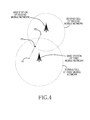
- FIG. 4 illustrates a midpoint determination process for estimating a location of a multi-SIM mobile terminal according to an exemplary embodiment of the present invention.
- the mobile communication unit 23 operates according to the following procedure if the GPS is not utilized and the first mobile network based on the first SIM is different from the second mobile network based on the second SIM.
- the mobile communication unit 23 receives cell information including a base station identifier and strength of radio waves from at least one base station with respect to the first mobile network.
- the first server of the first mobile network obtains a serving cell and a location P1 in the serving cell from the cell information, and transmits the obtained location P1 to the mobile communication unit 23.
- the mobile communication unit 23 receives the cell information including the base station identifier and the strength of radio waves from at least one base station with respect to the second mobile network, and transmits the cell information to the second server.
- the second server of the second mobile network obtains a serving cell and a location P2 in the serving cell from the cell information, and transmits the obtained location P2 to the mobile communication unit 23.
- the mobile communication unit 23 determines the location of the multi-SIM mobile terminal from the received locations P1 and P2 by applying a pre-set algorithm. For example, a middle point of the two locations P1 and P2 can be determined as the location of the mobile terminal.
- various techniques for determining the location of a multi-SIM mobile terminal may be used, including, for example: (i) using a GPS service; (ii) using location information based on one of the SIMs where the first network based on the first SIM and the second network based on the second SIM are the same; and (iii) using location information based on two SIMs where the first and second networks are different.
- GPS service a GPS service
- location information based on one of the SIMs where the first network based on the first SIM and the second network based on the second SIM are the same
- location information based on two SIMs where the first and second networks are different.
- embodiments of the present invention can more accurately estimate the location of a mobile terminal by receiving the location in the serving cell from respective mobile networks allowed for a plurality of SIMs of the multi-SIM mobile terminal.
- the computer readable storage medium may store one or more programs (software modules), the one or more programs comprising instructions, which when executed by one or more processors in an electronic device, cause the electronic device to perform a method according to the present invention.
- Any such software may be stored in the form of volatile or non-volatile storage such as, for example, a storage device like a ROM, whether erasable or rewritable or not, or in the form of memory such as, for example, RAM, memory chips, device or integrated circuits or on an optically or magnetically readable medium such as, for example, a CD, DVD, magnetic disk or magnetic tape or the like.
- volatile or non-volatile storage such as, for example, a storage device like a ROM, whether erasable or rewritable or not
- memory such as, for example, RAM, memory chips, device or integrated circuits or on an optically or magnetically readable medium such as, for example, a CD, DVD, magnetic disk or magnetic tape or the like.
- storage devices and storage media are embodiments of machine-readable storage that are suitable for storing a program or programs comprising instructions that, when executed, implement embodiments of the present invention.
- embodiments provide a program comprising code for implementing apparatus or a method as claimed in any one of the claims of this specification and a machine-readable storage storing such a program. Still further, such programs may be conveyed electronically via any medium such as a communication signal carried over a wired or wireless connection and embodiments suitably encompass the same.
Landscapes
- Engineering & Computer Science (AREA)
- Computer Networks & Wireless Communication (AREA)
- Signal Processing (AREA)
- Radar, Positioning & Navigation (AREA)
- Remote Sensing (AREA)
- Physics & Mathematics (AREA)
- General Physics & Mathematics (AREA)
- Mobile Radio Communication Systems (AREA)
Applications Claiming Priority (1)
| Application Number | Priority Date | Filing Date | Title |
|---|---|---|---|
| KR1020120010713A KR101785618B1 (ko) | 2012-02-02 | 2012-02-02 | 멀티심 모바일 단말의 위치 파악 방법 및 장치 |
Publications (2)
| Publication Number | Publication Date |
|---|---|
| EP2624643A1 true EP2624643A1 (fr) | 2013-08-07 |
| EP2624643B1 EP2624643B1 (fr) | 2015-03-25 |
Family
ID=47747379
Family Applications (1)
| Application Number | Title | Priority Date | Filing Date |
|---|---|---|---|
| EP13153509.8A Not-in-force EP2624643B1 (fr) | 2012-02-02 | 2013-01-31 | Procédé pour rechercher l'emplacement du terminal mobile impliquant plusieurs SIM et appareil associé |
Country Status (5)
| Country | Link |
|---|---|
| US (1) | US8755836B2 (fr) |
| EP (1) | EP2624643B1 (fr) |
| KR (1) | KR101785618B1 (fr) |
| CN (1) | CN103249141B (fr) |
| WO (1) | WO2013115533A1 (fr) |
Cited By (1)
| Publication number | Priority date | Publication date | Assignee | Title |
|---|---|---|---|---|
| WO2018186973A1 (fr) * | 2017-04-05 | 2018-10-11 | Qualcomm Incorporated | Mesure de signaux de positionnement sur la base de données d'assistance |
Families Citing this family (37)
| Publication number | Priority date | Publication date | Assignee | Title |
|---|---|---|---|---|
| KR101593591B1 (ko) * | 2009-09-25 | 2016-02-12 | 삼성전자주식회사 | 멀티 심 단말기의 프로토콜 처리 방법 및 장치 |
| US10143018B2 (en) | 2012-06-27 | 2018-11-27 | Google Llc | Computing device with wireless network selection feature |
| US8849306B1 (en) * | 2013-01-30 | 2014-09-30 | Sprint Spectrum L.P. | Management of base station connectivity in location based service requests |
| US9398638B2 (en) * | 2013-03-05 | 2016-07-19 | Intel Deutschland Gmbh | Communication terminal and method for using a communication service |
| US9204353B2 (en) | 2013-03-15 | 2015-12-01 | Qualcomm Incorporated | Receiver-only tune-away |
| US10097694B1 (en) | 2013-09-27 | 2018-10-09 | Google Llc | Method and system for moving phone call participation between carrier and data networks |
| US9445307B2 (en) * | 2013-11-20 | 2016-09-13 | Sony Corporation | Network smart cell selection |
| KR102241831B1 (ko) | 2013-12-18 | 2021-04-19 | 삼성전자 주식회사 | 전자 장치 및 이의 운영 방법 |
| US9877188B1 (en) | 2014-01-03 | 2018-01-23 | Google Llc | Wireless network access credential sharing using a network based credential storage service |
| US10341929B2 (en) | 2014-01-14 | 2019-07-02 | Google Llc | PSTN / VoIP communication system and method |
| US9491583B2 (en) * | 2014-03-26 | 2016-11-08 | Qualcomm Incorporated | Methods, apparatuses, and devices for positioning mobile devices using measured receiver gain |
| KR101586484B1 (ko) * | 2014-05-30 | 2016-01-18 | 네이버비즈니스플랫폼 주식회사 | 셀 정보를 이용한 위치 정보 결정 시스템 및 방법 |
| US9565578B2 (en) | 2014-06-18 | 2017-02-07 | Google Inc. | Method for collecting and aggregating network quality data |
| US10412230B2 (en) | 2014-07-14 | 2019-09-10 | Google Llc | System and method for retail SIM marketplace |
| US9814009B2 (en) | 2014-08-01 | 2017-11-07 | Google Llc | Multiple carrier attachment establishment and maintenance |
| CN105430747B (zh) * | 2014-09-22 | 2019-04-09 | 阿里巴巴集团控股有限公司 | 一种通信方法、装置及系统 |
| CN104378736B (zh) * | 2014-11-26 | 2018-05-18 | 中国联合网络通信集团有限公司 | 一种无线定位方法及系统 |
| US9648537B2 (en) | 2015-04-17 | 2017-05-09 | Google Inc. | Profile switching powered by location |
| US10021618B2 (en) | 2015-04-30 | 2018-07-10 | Google Technology Holdings LLC | Apparatus and method for cloud assisted wireless mobility |
| US10257782B2 (en) | 2015-07-30 | 2019-04-09 | Google Llc | Power management by powering off unnecessary radios automatically |
| CN105554876B (zh) * | 2015-12-09 | 2019-02-05 | Oppo广东移动通信有限公司 | 一种移动终端定位方法及移动终端 |
| CN105554702B (zh) * | 2015-12-15 | 2019-02-05 | Oppo广东移动通信有限公司 | 一种跨网定位系统、方法、定位服务器及移动终端 |
| US10341923B2 (en) | 2016-01-29 | 2019-07-02 | Google Llc | Techniques for minimizing user disruption during network connection switching |
| US9980095B2 (en) * | 2016-03-22 | 2018-05-22 | Google Llc | Method and apparatus for providing country detection on cellular devices using cell tower information |
| US9980142B2 (en) | 2016-03-22 | 2018-05-22 | Google Llc | Methods and apparatus for SIM-based authentication of non-SIM devices |
| US10225783B2 (en) | 2016-04-01 | 2019-03-05 | Google Llc | Method and apparatus for providing peer based network switching |
| CN106658404A (zh) * | 2016-10-24 | 2017-05-10 | 北京小米移动软件有限公司 | 终端设备定位方法及装置 |
| US10462734B2 (en) | 2016-10-31 | 2019-10-29 | Google Llc | Method, apparatus and system with carrier network switching control |
| US9820091B1 (en) | 2017-01-10 | 2017-11-14 | Qualcomm Incorporated | Position determination using multi-subscription selective diversity |
| CN107071731A (zh) * | 2017-04-11 | 2017-08-18 | 成都特斯拉云网络技术有限公司 | 基于基站定位的2g网络定位系统 |
| US11039364B2 (en) | 2018-09-28 | 2021-06-15 | Google Llc | Methods and apparatus for proactively switching between available networks |
| CN111436017B (zh) * | 2018-12-25 | 2023-11-10 | 北京融信数联科技有限公司 | 一种基于聚类算法的手机用户一人多卡识别方法 |
| US11369003B2 (en) * | 2019-07-15 | 2022-06-21 | Qualcomm Incorporated | Configuring non-standalone mode for a multi-subscriber identity module user equipment |
| CN110418279A (zh) * | 2019-07-31 | 2019-11-05 | 深圳市沃特沃德股份有限公司 | 多卡多待定位的方法、装置、存储介质和计算机设备 |
| CN114143840B (zh) * | 2020-09-04 | 2023-11-17 | 华为技术有限公司 | 通信方法及装置 |
| US11671938B2 (en) | 2020-11-16 | 2023-06-06 | Nokia Technologies Oy | Device positioning for multi-SIM user equipment |
| US20250240755A1 (en) * | 2023-10-31 | 2025-07-24 | Rakuten Mobile, Inc. | Providing position information concerning communication device connected to communication station |
Citations (5)
| Publication number | Priority date | Publication date | Assignee | Title |
|---|---|---|---|---|
| GB2383215A (en) * | 2001-12-12 | 2003-06-18 | Samsung Electronics Co Ltd | Location of a mobile terminal |
| US20090047979A1 (en) * | 2007-08-16 | 2009-02-19 | Helio, Llc | Systems, devices and methods for location determination |
| US20100120435A1 (en) * | 2008-11-11 | 2010-05-13 | Trueposition, Inc. | Use of Radio Access Technology Diversity for Location |
| US20100208649A1 (en) * | 2009-02-19 | 2010-08-19 | Mediatek Inc. | Method for positioning user equipment accessing multiple mobile networks |
| US20110009132A1 (en) * | 2009-07-09 | 2011-01-13 | Telefonaktiebolaget L M Ericsson (Publ) | Positioning with several operators |
Family Cites Families (17)
| Publication number | Priority date | Publication date | Assignee | Title |
|---|---|---|---|---|
| US5504684A (en) | 1993-12-10 | 1996-04-02 | Trimble Navigation Limited | Single-chip GPS receiver digital signal processing and microcomputer |
| DE19629351C2 (de) | 1996-07-20 | 2002-10-24 | Wolfgang Neifer | Mobiles Chipkarten-Lesemodul |
| US6049624A (en) | 1998-02-20 | 2000-04-11 | Micron Technology, Inc. | Non-lot based method for assembling integrated circuit devices |
| CA2296812A1 (fr) | 1999-02-17 | 2000-08-17 | Lucent Technologies Inc. | Methode pour combiner des mesures multiples afin de determiner la position d'un emetteur-recepteur mobile |
| US20040087213A1 (en) | 2002-08-16 | 2004-05-06 | Chi-Lei Kao | Plug used for connection with a usb receptacle |
| US20040033727A1 (en) | 2002-08-16 | 2004-02-19 | Chi-Lei Kao | Plug used for connection with a USB receptacle |
| CA2526687A1 (fr) | 2003-05-22 | 2004-12-09 | Pace Micro Technology Plc | Adaptateur de cable numerique |
| DE10339314B3 (de) | 2003-08-27 | 2005-04-21 | Fraunhofer-Gesellschaft zur Förderung der angewandten Forschung e.V. | Verfahren zur Anzeigesteuerung von unterschiedlichen Informationen in einem Fahrzeug und optoakustische Informationseinheit |
| US7112082B2 (en) | 2004-03-17 | 2006-09-26 | Wieson Technologies Co., Ltd. | Miniature memory card/SIM card dual-function connector |
| EP1718087A1 (fr) | 2005-04-28 | 2006-11-02 | Koninklijke KPN N.V. | Dispositif et procédé pour sélectionner automatiquement un d'un ensemble de lecteurs de cartes de SIM comporté par un dispositif de communications pour l'établissement d'un appel sortant |
| US7535357B2 (en) | 2005-10-31 | 2009-05-19 | Olusola Enitan | Proximity alarm system for articles |
| US7929993B2 (en) | 2007-08-30 | 2011-04-19 | International Business Machines Corporation | Multi-SIM-based mobile device |
| KR101053905B1 (ko) | 2008-06-26 | 2011-08-04 | 삼성전자주식회사 | 이동통신 시스템에서 네트워크 서비스를 제공하기 위한장치 및 방법 |
| US8086269B2 (en) | 2008-09-12 | 2011-12-27 | A-Men Technology Corporation | Modular structure to expand and enhance subscriber identity module card functionality |
| KR101593591B1 (ko) | 2009-09-25 | 2016-02-12 | 삼성전자주식회사 | 멀티 심 단말기의 프로토콜 처리 방법 및 장치 |
| KR20110037487A (ko) | 2009-10-07 | 2011-04-13 | 삼성전자주식회사 | 듀얼 심카드 단말기에서 주 심카드를 설정하기 위한 장치 및 방법 |
| EP2564644A4 (fr) * | 2010-04-27 | 2017-07-12 | Nokia Technologies Oy | Traitement d'objets d'une base de données cartographique radioélectrique |
-
2012
- 2012-02-02 KR KR1020120010713A patent/KR101785618B1/ko not_active Expired - Fee Related
- 2012-12-26 US US13/726,996 patent/US8755836B2/en active Active
-
2013
- 2013-01-28 WO PCT/KR2013/000666 patent/WO2013115533A1/fr not_active Ceased
- 2013-01-29 CN CN201310034043.7A patent/CN103249141B/zh not_active Expired - Fee Related
- 2013-01-31 EP EP13153509.8A patent/EP2624643B1/fr not_active Not-in-force
Patent Citations (5)
| Publication number | Priority date | Publication date | Assignee | Title |
|---|---|---|---|---|
| GB2383215A (en) * | 2001-12-12 | 2003-06-18 | Samsung Electronics Co Ltd | Location of a mobile terminal |
| US20090047979A1 (en) * | 2007-08-16 | 2009-02-19 | Helio, Llc | Systems, devices and methods for location determination |
| US20100120435A1 (en) * | 2008-11-11 | 2010-05-13 | Trueposition, Inc. | Use of Radio Access Technology Diversity for Location |
| US20100208649A1 (en) * | 2009-02-19 | 2010-08-19 | Mediatek Inc. | Method for positioning user equipment accessing multiple mobile networks |
| US20110009132A1 (en) * | 2009-07-09 | 2011-01-13 | Telefonaktiebolaget L M Ericsson (Publ) | Positioning with several operators |
Cited By (1)
| Publication number | Priority date | Publication date | Assignee | Title |
|---|---|---|---|---|
| WO2018186973A1 (fr) * | 2017-04-05 | 2018-10-11 | Qualcomm Incorporated | Mesure de signaux de positionnement sur la base de données d'assistance |
Also Published As
| Publication number | Publication date |
|---|---|
| US8755836B2 (en) | 2014-06-17 |
| EP2624643B1 (fr) | 2015-03-25 |
| KR20130089388A (ko) | 2013-08-12 |
| US20130203438A1 (en) | 2013-08-08 |
| CN103249141A (zh) | 2013-08-14 |
| CN103249141B (zh) | 2018-11-23 |
| WO2013115533A1 (fr) | 2013-08-08 |
| KR101785618B1 (ko) | 2017-11-06 |
Similar Documents
| Publication | Publication Date | Title |
|---|---|---|
| EP2624643B1 (fr) | Procédé pour rechercher l'emplacement du terminal mobile impliquant plusieurs SIM et appareil associé | |
| CN103081545B (zh) | 利用无线lan信号辨别定位误差的方法和装置 | |
| CN103181224B (zh) | 使用日志数据估计ap位置的方法及其装置和终端 | |
| US8738035B1 (en) | System and method for hybrid positioning using Wi-Fi and GNSS blending | |
| US9807555B2 (en) | Enhancement of positioning quality of service | |
| US9215604B2 (en) | Method and device for updating a database for wireless LAN based positioning | |
| US8478280B1 (en) | Minimum coverage area of wireless base station determination | |
| US9402188B2 (en) | Geo-location error correction for small cell placement | |
| KR20120040810A (ko) | 주변 무선랜 신호를 관리하는 방법과 그를 위한 장치, 시스템, ap, 측위 서버 및 단말기 | |
| KR101770136B1 (ko) | 측위 오차 판별 방법 및 장치 | |
| US20100216488A1 (en) | Terminal positioning technique | |
| KR101687793B1 (ko) | 오차 범위를 이용한 위치 정보 제공 방법 및 장치 | |
| KR101627506B1 (ko) | 측위 시스템, 측위 장치 및 그 측위 방법 | |
| KR20120003716A (ko) | 위치 측위 방법과 그를 위한 이동통신 단말기 및 위치 계산 서버 | |
| US8233906B2 (en) | Method and arrangement for determination of the radio coverage in a multicell mobile radio system | |
| KR20040067533A (ko) | 기지국 위치정보와 이동전화로부터 수신된 전파특성정보및 기 측정된 전파특성정보를 이용한 이동전화 위치추정방법 | |
| US8224312B2 (en) | Method and network for determining an environment wherein a mobile terminal is situated | |
| KR20120010014A (ko) | 측위 데이터베이스 구축 시스템, pCell 데이터베이스 분석장치 및 그 분석방법 | |
| KR20120033405A (ko) | pCell 데이터베이스를 이용한 오차 추정 방법과 그를 위한 장치 및 단말기 | |
| KR100911362B1 (ko) | 네트워크에 기반한 이동단말기의 측위 방법 및 측위 서버 | |
| KR100931341B1 (ko) | pCell 데이터베이스를 업데이트하는 서버, 방법 및시스템 | |
| KR20120053129A (ko) | 이동통신 단말기 위치 추정 시스템 및 그 제어방법 |
Legal Events
| Date | Code | Title | Description |
|---|---|---|---|
| PUAI | Public reference made under article 153(3) epc to a published international application that has entered the european phase |
Free format text: ORIGINAL CODE: 0009012 |
|
| AK | Designated contracting states |
Kind code of ref document: A1 Designated state(s): AL AT BE BG CH CY CZ DE DK EE ES FI FR GB GR HR HU IE IS IT LI LT LU LV MC MK MT NL NO PL PT RO RS SE SI SK SM TR |
|
| AX | Request for extension of the european patent |
Extension state: BA ME |
|
| 17P | Request for examination filed |
Effective date: 20140207 |
|
| GRAP | Despatch of communication of intention to grant a patent |
Free format text: ORIGINAL CODE: EPIDOSNIGR1 |
|
| INTG | Intention to grant announced |
Effective date: 20141127 |
|
| GRAS | Grant fee paid |
Free format text: ORIGINAL CODE: EPIDOSNIGR3 |
|
| GRAA | (expected) grant |
Free format text: ORIGINAL CODE: 0009210 |
|
| AK | Designated contracting states |
Kind code of ref document: B1 Designated state(s): AL AT BE BG CH CY CZ DE DK EE ES FI FR GB GR HR HU IE IS IT LI LT LU LV MC MK MT NL NO PL PT RO RS SE SI SK SM TR |
|
| REG | Reference to a national code |
Ref country code: GB Ref legal event code: FG4D |
|
| REG | Reference to a national code |
Ref country code: CH Ref legal event code: EP |
|
| REG | Reference to a national code |
Ref country code: IE Ref legal event code: FG4D |
|
| REG | Reference to a national code |
Ref country code: DE Ref legal event code: R096 Ref document number: 602013001273 Country of ref document: DE Effective date: 20150430 |
|
| REG | Reference to a national code |
Ref country code: AT Ref legal event code: REF Ref document number: 718498 Country of ref document: AT Kind code of ref document: T Effective date: 20150515 |
|
| REG | Reference to a national code |
Ref country code: NL Ref legal event code: T3 |
|
| PG25 | Lapsed in a contracting state [announced via postgrant information from national office to epo] |
Ref country code: SE Free format text: LAPSE BECAUSE OF FAILURE TO SUBMIT A TRANSLATION OF THE DESCRIPTION OR TO PAY THE FEE WITHIN THE PRESCRIBED TIME-LIMIT Effective date: 20150325 Ref country code: HR Free format text: LAPSE BECAUSE OF FAILURE TO SUBMIT A TRANSLATION OF THE DESCRIPTION OR TO PAY THE FEE WITHIN THE PRESCRIBED TIME-LIMIT Effective date: 20150325 Ref country code: LT Free format text: LAPSE BECAUSE OF FAILURE TO SUBMIT A TRANSLATION OF THE DESCRIPTION OR TO PAY THE FEE WITHIN THE PRESCRIBED TIME-LIMIT Effective date: 20150325 Ref country code: FI Free format text: LAPSE BECAUSE OF FAILURE TO SUBMIT A TRANSLATION OF THE DESCRIPTION OR TO PAY THE FEE WITHIN THE PRESCRIBED TIME-LIMIT Effective date: 20150325 |
|
| REG | Reference to a national code |
Ref country code: AT Ref legal event code: MK05 Ref document number: 718498 Country of ref document: AT Kind code of ref document: T Effective date: 20150325 |
|
| REG | Reference to a national code |
Ref country code: LT Ref legal event code: MG4D |
|
| PG25 | Lapsed in a contracting state [announced via postgrant information from national office to epo] |
Ref country code: RS Free format text: LAPSE BECAUSE OF FAILURE TO SUBMIT A TRANSLATION OF THE DESCRIPTION OR TO PAY THE FEE WITHIN THE PRESCRIBED TIME-LIMIT Effective date: 20150325 Ref country code: GR Free format text: LAPSE BECAUSE OF FAILURE TO SUBMIT A TRANSLATION OF THE DESCRIPTION OR TO PAY THE FEE WITHIN THE PRESCRIBED TIME-LIMIT Effective date: 20150626 Ref country code: LV Free format text: LAPSE BECAUSE OF FAILURE TO SUBMIT A TRANSLATION OF THE DESCRIPTION OR TO PAY THE FEE WITHIN THE PRESCRIBED TIME-LIMIT Effective date: 20150325 |
|
| PG25 | Lapsed in a contracting state [announced via postgrant information from national office to epo] |
Ref country code: ES Free format text: LAPSE BECAUSE OF FAILURE TO SUBMIT A TRANSLATION OF THE DESCRIPTION OR TO PAY THE FEE WITHIN THE PRESCRIBED TIME-LIMIT Effective date: 20150325 Ref country code: RO Free format text: LAPSE BECAUSE OF FAILURE TO SUBMIT A TRANSLATION OF THE DESCRIPTION OR TO PAY THE FEE WITHIN THE PRESCRIBED TIME-LIMIT Effective date: 20150325 Ref country code: SK Free format text: LAPSE BECAUSE OF FAILURE TO SUBMIT A TRANSLATION OF THE DESCRIPTION OR TO PAY THE FEE WITHIN THE PRESCRIBED TIME-LIMIT Effective date: 20150325 Ref country code: PT Free format text: LAPSE BECAUSE OF FAILURE TO SUBMIT A TRANSLATION OF THE DESCRIPTION OR TO PAY THE FEE WITHIN THE PRESCRIBED TIME-LIMIT Effective date: 20150727 Ref country code: CZ Free format text: LAPSE BECAUSE OF FAILURE TO SUBMIT A TRANSLATION OF THE DESCRIPTION OR TO PAY THE FEE WITHIN THE PRESCRIBED TIME-LIMIT Effective date: 20150325 Ref country code: EE Free format text: LAPSE BECAUSE OF FAILURE TO SUBMIT A TRANSLATION OF THE DESCRIPTION OR TO PAY THE FEE WITHIN THE PRESCRIBED TIME-LIMIT Effective date: 20150325 |
|
| PG25 | Lapsed in a contracting state [announced via postgrant information from national office to epo] |
Ref country code: PL Free format text: LAPSE BECAUSE OF FAILURE TO SUBMIT A TRANSLATION OF THE DESCRIPTION OR TO PAY THE FEE WITHIN THE PRESCRIBED TIME-LIMIT Effective date: 20150325 Ref country code: IS Free format text: LAPSE BECAUSE OF FAILURE TO SUBMIT A TRANSLATION OF THE DESCRIPTION OR TO PAY THE FEE WITHIN THE PRESCRIBED TIME-LIMIT Effective date: 20150725 Ref country code: AT Free format text: LAPSE BECAUSE OF FAILURE TO SUBMIT A TRANSLATION OF THE DESCRIPTION OR TO PAY THE FEE WITHIN THE PRESCRIBED TIME-LIMIT Effective date: 20150325 |
|
| REG | Reference to a national code |
Ref country code: FR Ref legal event code: PLFP Year of fee payment: 4 |
|
| REG | Reference to a national code |
Ref country code: DE Ref legal event code: R097 Ref document number: 602013001273 Country of ref document: DE |
|
| PG25 | Lapsed in a contracting state [announced via postgrant information from national office to epo] |
Ref country code: DK Free format text: LAPSE BECAUSE OF FAILURE TO SUBMIT A TRANSLATION OF THE DESCRIPTION OR TO PAY THE FEE WITHIN THE PRESCRIBED TIME-LIMIT Effective date: 20150325 |
|
| PLBE | No opposition filed within time limit |
Free format text: ORIGINAL CODE: 0009261 |
|
| STAA | Information on the status of an ep patent application or granted ep patent |
Free format text: STATUS: NO OPPOSITION FILED WITHIN TIME LIMIT |
|
| 26N | No opposition filed |
Effective date: 20160105 |
|
| PG25 | Lapsed in a contracting state [announced via postgrant information from national office to epo] |
Ref country code: BE Free format text: LAPSE BECAUSE OF NON-PAYMENT OF DUE FEES Effective date: 20160131 Ref country code: SI Free format text: LAPSE BECAUSE OF FAILURE TO SUBMIT A TRANSLATION OF THE DESCRIPTION OR TO PAY THE FEE WITHIN THE PRESCRIBED TIME-LIMIT Effective date: 20150325 |
|
| PG25 | Lapsed in a contracting state [announced via postgrant information from national office to epo] |
Ref country code: LU Free format text: LAPSE BECAUSE OF FAILURE TO SUBMIT A TRANSLATION OF THE DESCRIPTION OR TO PAY THE FEE WITHIN THE PRESCRIBED TIME-LIMIT Effective date: 20160131 Ref country code: BE Free format text: LAPSE BECAUSE OF FAILURE TO SUBMIT A TRANSLATION OF THE DESCRIPTION OR TO PAY THE FEE WITHIN THE PRESCRIBED TIME-LIMIT Effective date: 20150325 |
|
| REG | Reference to a national code |
Ref country code: CH Ref legal event code: PL |
|
| PG25 | Lapsed in a contracting state [announced via postgrant information from national office to epo] |
Ref country code: MC Free format text: LAPSE BECAUSE OF FAILURE TO SUBMIT A TRANSLATION OF THE DESCRIPTION OR TO PAY THE FEE WITHIN THE PRESCRIBED TIME-LIMIT Effective date: 20150325 |
|
| PG25 | Lapsed in a contracting state [announced via postgrant information from national office to epo] |
Ref country code: LI Free format text: LAPSE BECAUSE OF NON-PAYMENT OF DUE FEES Effective date: 20160131 Ref country code: CH Free format text: LAPSE BECAUSE OF NON-PAYMENT OF DUE FEES Effective date: 20160131 |
|
| REG | Reference to a national code |
Ref country code: IE Ref legal event code: MM4A |
|
| REG | Reference to a national code |
Ref country code: FR Ref legal event code: PLFP Year of fee payment: 5 |
|
| PG25 | Lapsed in a contracting state [announced via postgrant information from national office to epo] |
Ref country code: IE Free format text: LAPSE BECAUSE OF NON-PAYMENT OF DUE FEES Effective date: 20160131 |
|
| PG25 | Lapsed in a contracting state [announced via postgrant information from national office to epo] |
Ref country code: MT Free format text: LAPSE BECAUSE OF FAILURE TO SUBMIT A TRANSLATION OF THE DESCRIPTION OR TO PAY THE FEE WITHIN THE PRESCRIBED TIME-LIMIT Effective date: 20150325 |
|
| REG | Reference to a national code |
Ref country code: FR Ref legal event code: PLFP Year of fee payment: 6 |
|
| PG25 | Lapsed in a contracting state [announced via postgrant information from national office to epo] |
Ref country code: HU Free format text: LAPSE BECAUSE OF FAILURE TO SUBMIT A TRANSLATION OF THE DESCRIPTION OR TO PAY THE FEE WITHIN THE PRESCRIBED TIME-LIMIT; INVALID AB INITIO Effective date: 20130131 Ref country code: CY Free format text: LAPSE BECAUSE OF FAILURE TO SUBMIT A TRANSLATION OF THE DESCRIPTION OR TO PAY THE FEE WITHIN THE PRESCRIBED TIME-LIMIT Effective date: 20150325 Ref country code: SM Free format text: LAPSE BECAUSE OF FAILURE TO SUBMIT A TRANSLATION OF THE DESCRIPTION OR TO PAY THE FEE WITHIN THE PRESCRIBED TIME-LIMIT Effective date: 20150325 |
|
| PG25 | Lapsed in a contracting state [announced via postgrant information from national office to epo] |
Ref country code: MK Free format text: LAPSE BECAUSE OF FAILURE TO SUBMIT A TRANSLATION OF THE DESCRIPTION OR TO PAY THE FEE WITHIN THE PRESCRIBED TIME-LIMIT Effective date: 20150325 Ref country code: NO Free format text: LAPSE BECAUSE OF NON-PAYMENT OF DUE FEES Effective date: 20150625 Ref country code: TR Free format text: LAPSE BECAUSE OF FAILURE TO SUBMIT A TRANSLATION OF THE DESCRIPTION OR TO PAY THE FEE WITHIN THE PRESCRIBED TIME-LIMIT Effective date: 20150325 |
|
| PG25 | Lapsed in a contracting state [announced via postgrant information from national office to epo] |
Ref country code: BG Free format text: LAPSE BECAUSE OF FAILURE TO SUBMIT A TRANSLATION OF THE DESCRIPTION OR TO PAY THE FEE WITHIN THE PRESCRIBED TIME-LIMIT Effective date: 20150325 |
|
| PG25 | Lapsed in a contracting state [announced via postgrant information from national office to epo] |
Ref country code: AL Free format text: LAPSE BECAUSE OF FAILURE TO SUBMIT A TRANSLATION OF THE DESCRIPTION OR TO PAY THE FEE WITHIN THE PRESCRIBED TIME-LIMIT Effective date: 20150325 |
|
| PGFP | Annual fee paid to national office [announced via postgrant information from national office to epo] |
Ref country code: FR Payment date: 20211223 Year of fee payment: 10 Ref country code: GB Payment date: 20211220 Year of fee payment: 10 |
|
| PGFP | Annual fee paid to national office [announced via postgrant information from national office to epo] |
Ref country code: DE Payment date: 20211220 Year of fee payment: 10 |
|
| PGFP | Annual fee paid to national office [announced via postgrant information from national office to epo] |
Ref country code: NL Payment date: 20211221 Year of fee payment: 10 Ref country code: IT Payment date: 20211221 Year of fee payment: 10 |
|
| REG | Reference to a national code |
Ref country code: DE Ref legal event code: R119 Ref document number: 602013001273 Country of ref document: DE |
|
| REG | Reference to a national code |
Ref country code: NL Ref legal event code: MM Effective date: 20230201 |
|
| GBPC | Gb: european patent ceased through non-payment of renewal fee |
Effective date: 20230131 |
|
| PG25 | Lapsed in a contracting state [announced via postgrant information from national office to epo] |
Ref country code: NL Free format text: LAPSE BECAUSE OF NON-PAYMENT OF DUE FEES Effective date: 20230201 Ref country code: GB Free format text: LAPSE BECAUSE OF NON-PAYMENT OF DUE FEES Effective date: 20230131 Ref country code: DE Free format text: LAPSE BECAUSE OF NON-PAYMENT OF DUE FEES Effective date: 20230801 |
|
| PG25 | Lapsed in a contracting state [announced via postgrant information from national office to epo] |
Ref country code: FR Free format text: LAPSE BECAUSE OF NON-PAYMENT OF DUE FEES Effective date: 20230131 |
|
| PG25 | Lapsed in a contracting state [announced via postgrant information from national office to epo] |
Ref country code: IT Free format text: LAPSE BECAUSE OF NON-PAYMENT OF DUE FEES Effective date: 20230131 |