EP2628672B1 - Commande d'inclination pour véhicules inclinables - Google Patents
Commande d'inclination pour véhicules inclinables Download PDFInfo
- Publication number
- EP2628672B1 EP2628672B1 EP13168191.8A EP13168191A EP2628672B1 EP 2628672 B1 EP2628672 B1 EP 2628672B1 EP 13168191 A EP13168191 A EP 13168191A EP 2628672 B1 EP2628672 B1 EP 2628672B1
- Authority
- EP
- European Patent Office
- Prior art keywords
- damper
- vehicle
- steering
- sensor
- rheologic
- Prior art date
- Legal status (The legal status is an assumption and is not a legal conclusion. Google has not performed a legal analysis and makes no representation as to the accuracy of the status listed.)
- Not-in-force
Links
Images


Classifications
-
- B—PERFORMING OPERATIONS; TRANSPORTING
- B62—LAND VEHICLES FOR TRAVELLING OTHERWISE THAN ON RAILS
- B62K—CYCLES; CYCLE FRAMES; CYCLE STEERING DEVICES; RIDER-OPERATED TERMINAL CONTROLS SPECIALLY ADAPTED FOR CYCLES; CYCLE AXLE SUSPENSIONS; CYCLE SIDECARS, FORECARS, OR THE LIKE
- B62K5/00—Cycles with handlebars, equipped with three or more main road wheels
- B62K5/10—Cycles with handlebars, equipped with three or more main road wheels with means for inwardly inclining the vehicle body on bends
-
- B—PERFORMING OPERATIONS; TRANSPORTING
- B62—LAND VEHICLES FOR TRAVELLING OTHERWISE THAN ON RAILS
- B62J—CYCLE SADDLES OR SEATS; AUXILIARY DEVICES OR ACCESSORIES SPECIALLY ADAPTED TO CYCLES AND NOT OTHERWISE PROVIDED FOR, e.g. ARTICLE CARRIERS OR CYCLE PROTECTORS
- B62J45/00—Electrical equipment arrangements specially adapted for use as accessories on cycles, not otherwise provided for
- B62J45/40—Sensor arrangements; Mounting thereof
- B62J45/41—Sensor arrangements; Mounting thereof characterised by the type of sensor
- B62J45/415—Inclination sensors
- B62J45/4151—Inclination sensors for sensing lateral inclination of the cycle
-
- B—PERFORMING OPERATIONS; TRANSPORTING
- B62—LAND VEHICLES FOR TRAVELLING OTHERWISE THAN ON RAILS
- B62K—CYCLES; CYCLE FRAMES; CYCLE STEERING DEVICES; RIDER-OPERATED TERMINAL CONTROLS SPECIALLY ADAPTED FOR CYCLES; CYCLE AXLE SUSPENSIONS; CYCLE SIDECARS, FORECARS, OR THE LIKE
- B62K5/00—Cycles with handlebars, equipped with three or more main road wheels
- B62K5/02—Tricycles
- B62K5/027—Motorcycles with three wheels
-
- B—PERFORMING OPERATIONS; TRANSPORTING
- B62—LAND VEHICLES FOR TRAVELLING OTHERWISE THAN ON RAILS
- B62K—CYCLES; CYCLE FRAMES; CYCLE STEERING DEVICES; RIDER-OPERATED TERMINAL CONTROLS SPECIALLY ADAPTED FOR CYCLES; CYCLE AXLE SUSPENSIONS; CYCLE SIDECARS, FORECARS, OR THE LIKE
- B62K5/00—Cycles with handlebars, equipped with three or more main road wheels
- B62K5/02—Tricycles
- B62K5/05—Tricycles characterised by a single rear wheel
-
- B—PERFORMING OPERATIONS; TRANSPORTING
- B62—LAND VEHICLES FOR TRAVELLING OTHERWISE THAN ON RAILS
- B62K—CYCLES; CYCLE FRAMES; CYCLE STEERING DEVICES; RIDER-OPERATED TERMINAL CONTROLS SPECIALLY ADAPTED FOR CYCLES; CYCLE AXLE SUSPENSIONS; CYCLE SIDECARS, FORECARS, OR THE LIKE
- B62K5/00—Cycles with handlebars, equipped with three or more main road wheels
- B62K5/08—Cycles with handlebars, equipped with three or more main road wheels with steering devices acting on two or more wheels
Definitions
- the present invention relates to tilt control for tilting vehicles.
- Tilting vehicles are subject to overturning transversely due to transverse forces such as side wind forces, transverse gravitational force components, and centrifugal forces.
- Active tilt control systems have been proposed to prevent transverse overturning. Such systems generally include transverse actuators to force the vehicle to tilt transversely to counteract transverse forces on the vehicle.
- Some existing solutions comprise a mechanical brake being in a brake state or open state, a manually operated tilt control.
- the solution usually is just a plausibility check that doesn't comprise any sensors to measure tilt angle or tilt rate and it can be activated either manually or by using a plausibility check, for example in case of an acceleration of the vehicle.
- Active tilt control systems are complicated and expensive.
- WO 02/068228 A1 reveals a tilting vehicle according to the preamble of claim 1, including a frame freely titable transversely between at least two spaced wheels, at least one variable damper with adjustable damping force operatively connected between the frame and the two wheels and at least one sensor being an acceleration sensor, a braking-circuit pressure sensor, an inclination sensor, a steering sensor or a fuel flow rate sensor to generate signals indicative of transverse tilting of the frame relative to a central vertical plane of the vehicle.
- a separate controller is in communication with said damper for varying damping characteristics in accordance with the signals generated by the at least one sensor to provide transverse tilt stability to the frame through the force generated in the damper in the opposite direction of the damper movement.
- WO 2006/130007 A2 a similar tilting vehicle is described wherein a side wind sensor applied for correcting a control or applying pressure to tilting elements for reaming a vehicle in an upright position.
- a tilting vehicle including a frame freely tiltable transversely between at least two spaced wheels, at least one variable damper with adjustable damping force operatively connected between the frame and the two wheels, at least one sensor to generate signals indicative of transverse tilting of the frame relative to a central vertical plane of the vehicle, and a controller in communication with the at least one variable damper and the at least one sensor, wherein the controller is configured to vary transverse damping by the at least one variable damper in accordance with the signals generated by the at least one sensor to passively provide transverse tilt stability to the frame through the force generated in the damper in the opposite direction of the damper movement.
- the invention suggests to transversely damp a freely tiltable frame in accordance to a damping state for enhancing driving security and comfort of the vehicle.
- the anti-tilting apparatus solely comprises at least one damper, at least one sensor and a controller for controlling the damper in accordance to the sensed tilting state of the vehicle.
- the anti-tilting apparatus is cheap, easy to use and can be refitted to existing vehicles. In contrast to known solutions the anti-tilting apparatus does not rely on a mechanical brake or an actively operated hydraulic system using actuators such as an electro motor, oil pump, hydraulic pressure reservoir or similar.
- the system is automatically controlled by a controller on response of a tilting state sensed by a tilting sensor, which can be a tilt-angle sensor, a tilt-velocity or a tilt-acceleration sensor.
- a tilting sensor which can be a tilt-angle sensor, a tilt-velocity or a tilt-acceleration sensor.
- the system is energy efficient, operates in a semi-passive mode without additional power demand for driving actuators, whereby an active change of the tilting state can be powered by the operating weight of the vehicle and the driver. Only a slight operating electric power is needed for operating the controller and some switching elements such as hydraulic or pneumatic valves.
- the operating power can be provided by a small battery or accumulator, thus the system can be applied to a motorized as well as a non-motorized vehicle such as a bicycle or similar.
- the at least one sensor comprises at least a side wind sensor for detecting a side wind which forces a lateral inclination of the vehicle.
- the controller is connected to a brake system of the vehicle to vary brake pressure by opening a by-pass valve in the brake system or by increasing the brake pressure with an active pump.
- the controller can control tilting as well as breaking for increasing driving safety of the vehicle, for example in case one or more wheels wheel start losing traction.
- the controller is connected to a powertrain control system of the vehicle to vary power and torque output from the power train to the wheels of the vehicle.
- the vehicle can have at least two different powertrains connected to at least two different wheels and that the torque of each of these powertrains can be controlled independently from each other. In this way the controller can control tilting as well as wheel torque for increasing driving safety of the vehicle.
- the one sensor can further comprise one of a tilt sensor, a tilt speed sensor, a vehicle speed sensor, a steering angle sensor, a steering angle velocity sensor, a steering angle acceleration sensor, or combinations thereof.
- the controller can give higher priority to the signal from the steering angle velocity sensor or the steering angle acceleration sensor than any other sensor. In this way the controller can consider signals of various sensors hierarchically, whereby signals of the steering angle velocity sensor as being crucial for driving safety have the highest priority.
- the two wheels can be transversely or longitudinally spaced from each other.
- the damper can ensure transverse stability against tilting while driving the vehicle or in a parking state.
- the two transversely spaced wheels define a horizontal axis being parallel to a road and define a reference axis for measuring of and counteracting against a tilting movement.
- the damper can counteract against longitudinal tilting as well as transversal tilting preferably in a steering state, for instance while driving a curve.
- the vehicle can have at least three wheels, wherein the two wheels can be two front wheels longitudinally spaced from at least one rear wheel.
- the vehicle can be a Trike or a Three-wheeler, favourably a kind of three-wheeled motorcycle, electrobicycle, man-powered bicycle or similar vehicle.
- the vehicle can further include a steering assembly disposed between the frame and the two front wheels.
- the vehicle can further include a suspension assembly disposed between the steering assembly and the two front wheels.
- the vehicle can further include a transverse tilt linkage disposed between the steering assembly and the suspension assembly or between the suspension assembly and the two front wheels.
- the two front wheels can change their longitudinal alignment with respect to the vehicle's longitudinal axis for controlling the direction of movement.
- a suspension assembly can increase comfort and can reduce mechanical shocks to the vehicle's frame.
- a transverse tilt linkage can increase stability and rating of the vehicle's frame.
- the steering assembly can be tiltably mounted relative to the at least one transverse beam to enable tilting of the vehicle.
- the at least one transverse beam can be operatively connected between the two front wheels and the steering assembly. Such a connection increases connection reliability between steering assembly and front wheels especially in rough driving conditions.
- the suspension assembly can be disposed between the frame and the steering assembly.
- a transverse tilt linkage can be disposed between the frame and the suspension assembly or between the steering assembly and the suspension assembly. In this way the suspension assembly is in series connection with the transverse tilt linkage and can act additive to the function of the transverse tilt linkage.
- the at least one variable damper can be transversely disposed between one end of the at least one transverse beam and any one of the frame, the suspension assembly and the steering assembly. In this way a relative movement of frame and transverse beam is defined through the damper movement and a mechanical variable linkage between frame and transverse beam is installed.
- the at least one variable damper can comprise two transversely disposed variable subdampers in a push-pull relationship.
- the two variable subdampers can have adjacent facing ends articulated to one end of the transverse beam and opposite ends articulated to opposite ends of any one of the frame, the suspension assembly or the steering assembly.
- a damper relies on two counteracting subdampers which provides redundancy and enhances damping effects and operating range the damper.
- the transverse tilt linkage can include upper and lower transverse beams articulated together by a central link, which decreases stiffness of the linkage.
- the central link can form part of the frame or part of the steering assembly and the link can be connected to a generally central portion of each transverse beam.
- the suspension assembly can include two transversely spaced suspension struts disposed between the upper and lower transverse beam and the two front wheels, which can reduce damping forces of each suspension strut.
- the at least one variable damper can be transversely disposed between one end of at least one transverse beam and the central link.
- the at least one damper can comprise two transversely disposed variable subdampers in a push-pull relationship.
- the two variable dampers can have adjacent facing ends articulated to the central link and opposite ends articulated to opposite ends of the transverse beam, thus increasing damping effects and reliability of the suspension assembly.
- At least one of the two variable dampers can be hydraulically or electrically operated, thus being controllable by a hydraulic or electric controlling system.
- At least one of the two variable dampers can be a double-acting hydraulic damper fluidly interconnected between both sides of the damper by a closed loop hydraulic circuit,
- a closed loop hydraulic circuit whereby a double-acting damper is passively driven by hydraulic fluid pressurized in a corresponding chamber of the same damper or another damper features a passive tilting system without actively operated devices as an oil pump thus reducing costs and complex actively operated actuators.
- the closed loop hydraulic circuit can include two two-way solenoid valves fluidly connected between the at least one double-acting hydraulic damper, and a reservoir fluidly connected between the two two-way solenoid valves. The two valves can easily be controlled, whereby in a failsafe-position the valves can stay open.
- the controller can be configured to control bi-directional fluid flow through the hydraulic circuit such that the passive damping forces of the damper is actively controllable by
- the closed loop hydraulic circuit can include an electro-rheologic fluid or a magneto-rheologic fluid and at least one electro rheologic valve or at least one magneto rheologic valve hydraulically connected between both sides of the at least one damper.
- an electro-rheologic fluid or a magneto-rheologic fluid and at least one electro rheologic valve or at least one magneto rheologic valve hydraulically connected between both sides of the at least one damper.
- the suspension assembly can comprise at least one shock absorber having a closed loop hydraulic circuit which includes a electro-rheologic fluid or a magneto-rheologic fluid and at least one electro rheologic valve or one magneto rheologic valve hydraulically connected between both sides of a piston of the at least one damper or a mechanical lock out device.
- a shock absorber having a closed loop hydraulic circuit which includes a electro-rheologic fluid or a magneto-rheologic fluid and at least one electro rheologic valve or one magneto rheologic valve hydraulically connected between both sides of a piston of the at least one damper or a mechanical lock out device.
- the vehicle can include at least one steering damper.
- the steering damper can be mounted within the steering assembly.
- the steering damper can reduce effects of sudden steering movements of the driver thus smoothing driving behaviour and increases driving safety.
- the vehicle preferably a vehicle with only two wheels can have at least one steering damper mounted between the steering wheel or handlebar and the frame, wherein the steering damper has a closed loop hydraulic circuit which includes a electro-rheologic fluid or a magneto-rheologic fluid and at least one electro rheologic valve or one magneto rheologic valve hydraulically connected between both sides of the at least one damper.
- the controller can be configured to control bi-directional fluid flow through the at least one steering damper by controlling the position of the electro-rheologic valve or one magneto-rheologic valve to thereby vary steering damping.
- an extension and retraction of a damper can be controlled actively by an electric or magnetic field which can be powered by the vehicle's board electric system.
- the rear wheel can be driven by a motor.
- the rear wheel can be steered.
- Driving a rear wheel can improve traction and driving dynamic of the vehicle.
- a steerable rear wheel can improve steering capability of the vehicle.
- Driving one rear wheel is cheaper and less complex than driving two front wheels, whereby a vehicle having two transversely spaced front wheels and at least one rear wheel is an advantageous embodiment of the invention.
- the steering assembly can include a steering stem which is backwardly inclined so that an upper end of the steering stem is disposed towards the front of the vehicle. During a tilt operation an inclined steering stem reduces tilt of the steering assembly such that tilt effects are reduced.
- a solenoid activated mechanical tilting lockout can be provided to prevent tilting of the frame during parking.
- a fixation of the tiltable frame during parking can increase anti-theft security and can prevent damage of the vehicle.
- a mechanical lockout provides further redundancy in case the hydraulic system would leak after a long period without use, for example through biting attacks from animals.
- the controller can be a fuzzy controller that executes a fuzzy logic algorithm.
- the controller can use look-up tables to control the position of the or each damper.
- fuzzy logic and/or look up tables the controller can control the tilting state of the vehicle in an intelligent way and can optimize tilting behaviour in different driving situations, for instance when driving with low or high velocity, driving upward or downward.
- the controller can consider weather and road conditions like wet streets, winding roads or similar and can control more intelligent.
- the at least one variable damper can provide a continuously variable damping force in both directions of movement at zero velocity of the damper with a spread of at least 10 in a range between a maximum force of 1000N and a minimum force of 100N, or in case of a rotational damper a maximum torque of at least 70Nm and a minimum torque of 7Nm.
- a variable damping force can adapt reaction of the damping system to certain parameters as tilting angle and driving condition, whereby a force being optimal to a distinct driving state can be chosen.
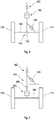
- FIG 1 illustrates a tilting vehicle 10 of one embodiment of the invention.
- the vehicle 10 has a frame 12 manually or freely tiltable transversely between two transversely spaced front wheels 14.
- the vehicle 10 also has a motor-driven rear wheel not visible in Figure 1 .
- the two front wheels 14 are steerable by a handlebar 16 connected to a steering assembly (not visible in Figure 1 ) disposed between the frame 12 and the two front wheels 14.
- the vehicle 10 also has a suspension assembly including two transversely spaced suspension struts 18 (one of which is visible in Figure 1 ) disposed between the steering assembly and the two front wheels 14.
- a transverse tilt linkage 20 is disposed between the steering assembly and the suspension assembly.
- the transverse tilt linkage 20 includes upper and lower transverse beams 22, 24 articulated together by a central link 26.
- Two double-acting hydraulic dampers 28, 30 are transversely disposed in a push-pull relationship between the upper and lower transverse beams 22, 24.
- the two dampers 28, 30 have adjacent facing piston ends articulated to the central link 26 and opposite cap ends articulated to opposite ends of the upper transverse beam 22.
- the suspension struts 18 are vertically disposed between the lower transverse beam 24 and the two front wheels 14.
- the two double-acting hydraulic dampers 28, 30 are fluidly interconnected by a closed loop hydraulic circuit 32 illustrated in Figure 3 .
- the closed loop hydraulic circuit 32 includes two two-way solenoid valves 34, 36 fluidly connected between the two double-acting hydraulic dampers 28, 30, and a reservoir 38 fluidly connected between the two two-way solenoid valves 34, 36.
- a controller (not shown) is provided in communication with the two two-way solenoid valves 34, 36 and sensors (not shown) for generating signals indicative of transverse tilting of the frame 12.
- the sensors include, for example, a tilt sensor, a vehicle speed sensor, and a steering angle sensor.
- the controller is configured to control bi-directional fluid flow through the two two-way solenoid valves 34, 36 to vary transverse damping by the two double-acting hydraulic dampers 28, 30 in accordance with signals generated by the sensors to passively provide transverse tilt stability to the frame 12.
- the controller is, for example, a fuzzy controller that executes a fuzzy logic algorithm.
- the fuzzy logic algorithm is, for example, based on calculated and/or measured dynamic transverse tilting characteristics of the vehicle 10.
- the suspension assembly is disposed between the frame and the steering assembly.
- a transverse tilt linkage is disposed between the frame and the suspension assembly or between the steering assembly and the suspension assembly for example.
- other embodiments of the vehicle include a tilt linkage 144 disposed between the front wheels and the steering assembly.
- At least one transverse beam 146 may be operatively connected between the two front wheels 114 and the steering assembly 142 as can be seen in Figure 4 , or alternatively it can be connected otherwise as can be seen in Figure 5 .
- the steering assembly 142 is tiltably connected relative to the transverse beam 146 with a bearing 150 to enable tilting of the vehicle.
- At least one variable damper 148 can be transversely disposed between one end of the at least one transverse beam 146 and any one of the tilting frame (not shown), the suspension assembly 140 and the steering assembly 142, for example.
- Two transversely disposed variable subdampers may for example be provided in a push-pull relationship and have adjacent facing ends articulated to one end of the transverse beam 146 and opposite ends articulated to opposite ends of any one of the tilting frame (not shown), the suspension assembly 140 or the steering assembly 142. The two subdampers act as one damper.
- At least one of the variable dampers may, for example, be a double-acting hydraulic damper fluidly interconnected between both sides of the piston by a closed loop hydraulic circuit.
- the closed loop hydraulic circuit includes, for example, two two-way solenoid valves fluidly connected between the two double-acting hydraulic dampers, and a reservoir fluidly connected between the two two-way solenoid valves.
- the closed loop hydraulic circuit includes, for example, an electro-rheologic fluid or a magneto-rheologic fluid and at least one electro rheologic valve or one magneto rheologic valve hydraulically connected between both sides of at least one damper piston.
- the controller (not shown) is configured to control bi-directional fluid flow through the two two-way solenoid valves or the electro rheologic valve or one magneto rheologic valve to thereby vary transverse damping by at least one double-acting hydraulic damper.
- the at least one sensor is selected from, for example, a tilt sensor, a tilt speed sensor, a vehicle speed sensor, a steering angle sensor, a steering angle velocity sensor, a steering angle acceleration sensor, a side wind sensor and combinations thereof.
- the controller gives higher priority to the signal from the steering angle velocity sensor or the steering angle acceleration sensor than any other sensor.
- the suspension assembly 140 may, for example, comprise at least one shock absorber (not shown) having a closed loop hydraulic circuit which includes, for example, a electro-rheologic fluid or a magneto-rheologic fluid and at least one electro rheologic valve or one magneto rheologic valve hydraulically connected between both sides of a piston of the at least one damper or a mechanical lock out device (not shown).
- the vehicle includes at least one steering damper.
- the steering damper may be mounted within the steering assembly, for example.
- the steering damper of the vehicle, or a vehicle with only two wheels with at least one steering damper mounted between the steering wheel or handlebar and the frame has a closed loop hydraulic circuit which includes a electro-rheologic fluid or a magneto-rheologic fluid and at least one electro rheologic valve or one magneto rheologic valve hydraulically connected between both sides of the at least one damper.
- the controller (not shown) may be configured to control bi-directional fluid flow through the steering damper by controlling the position of the electro-rheologic valve or one magneto-rheologic valve to thereby vary steering damping by at least one double-acting hydraulic damper.
- the rear wheel is driven by a motor. In other embodiments, the rear wheel can be steered to simplify the tilting mechanism of the vehicle.
- the steering assembly includes a steering stem which is backwardly inclined so that an upper end of the steering stem is disposed towards the front of the vehicle.
- a mechanical tilting lockout (not shown) may be provided to prevent tilting of the frame during parking.
- the mechanical tilting lockout may, for example, by activated by a solenoid.
- the controller is connected to the brake system (not shown) of the vehicle and to vary brake pressure by opening a by-pass valve in the brake system or by increasing the brake pressure with an active pump.
- the controller (not shown) is connected to a powertrain control system of the vehicle to vary power and torque output from the power train to the wheels of the vehicle.
- the vehicle can have at least two different powertrains connected to at least two different wheels and that the torque of each of these powertrains can be controlled independently from each other.
- the controller (not shown) is a fuzzy controller that executes a fuzzy logic algorithm. In some embodiments the controller uses look-up tables to control the position of the or each damper.
- variable damper provides, for example, a continuously variable damping force in both directions of movement at zero velocity of the damper with a spread of at least 10 in a range between a maximum force of 1000N or higher and a minimum force of 100N or lower, or in case of a rotational damper a maximum torque of at least 70Nm or more and a minimum torque of 7Nm or less.
- the tilting vehicle includes a frame freely tiltable transversely between at least two longitudinally spaced wheels.
- the vehicle includes at least one variable damper with adjustable damping force operatively connected between the frame and the at least two wheels, at least one sensor to generate signals indicative of transverse tilting of the frame relative to a central vertical plane of the vehicle, and a controller in communication with the at least one variable damper and the at least one sensor.
- the controller is configured to vary transverse damping by the at least one variable damper in accordance with the signals generated by the at least one sensor to passively provide transverse tilt stability to the frame through the force generated in the damper in the opposite direction of the damper movement.
- the vehicle can further include at least one steering damper, the steering damper having a closed loop hydraulic circuit which includes a electro-rheologic fluid or a magneto-rheologic fluid and at least one electro rheologic valve or one magneto rheologic valve hydraulically connected between both sides of the at least one damper.
- the steering damper having a closed loop hydraulic circuit which includes a electro-rheologic fluid or a magneto-rheologic fluid and at least one electro rheologic valve or one magneto rheologic valve hydraulically connected between both sides of the at least one damper.
- Embodiments of the invention passively provide tilting vehicles with transverse tilt stability, and thereby obviate the necessity of complicated and expensive active tilt control systems.
- the at least one damper may be electrical or pneumatic.
- the at least one damper may also be rotational.
Landscapes
- Engineering & Computer Science (AREA)
- Mechanical Engineering (AREA)
- Vehicle Body Suspensions (AREA)
- Automatic Cycles, And Cycles In General (AREA)
Claims (15)
- Véhicule inclinable (10), comprenant un cadre (12) librement inclinable transversalement entre au moins deux roues (14, 114) espacées, au moins un amortisseur (28, 30, 148) réglable, dont la force d'amortissement est réglable et fonctionnellement relié entre le cadre (12) et les deux roues, au moins un capteur générant des signaux qui indiquent l'inclinaison transversale du cadre (12) par rapport à un plan vertical central du véhicule, ainsi qu'une unité de commande en communication avec l'au moins un amortisseur réglable (28, 30, 148) et l'au moins un capteur, ladite unité de commande étant configurée pour pouvoir modifier l'amortissement transversal de l'au moins un amortisseur réglable (28, 30, 148) en fonction des signaux générés par l'au moins un capteur afin d'assurer passivement une stabilité d'inclinaison transversale du cadre (12) par une force générée dans l'amortisseur dans la direction opposée au mouvement de l'amortisseur, caractérisé en ce que l'au moins un capteur est un capteur de vent latéral qui génère des signaux indiquant l'inclinaison transversale du cadre (12) par rapport à un plan vertical central du véhicule, et que l'unité de commande est connectée au système de freinage du véhicule pour varier la pression de freinage en ouvrant une vanne de dérivation dans ledit système de freinage ou pour augmenter la pression de freinage à l'aide d'une pompe active, et/ou que l'unité de commande est connectée au système de régulation de la chaîne cinématique du véhicule afin de modifier la transmission de force ou de couple de ladite chaîne cinématique aux roues du véhicule (10).
- Véhicule inclinable (10) selon la revendication 1, caractérisé en ce que ledit capteur comprend en outre un capteur de vitesse d'angle de direction et/ou un capteur d'accélération d'angle de direction.
- Véhicule inclinable (10) selon la revendication 1 ou 2, caractérisé en ce que ledit capteur comprend en outre un capteur d'inclinaison, un capteur de vitesse d'inclinaison, un capteur de vitesse du véhicule, un capteur d'angle de direction ou une combinaison de ces capteurs.
- Véhicule selon l'une des revendications précédentes, caractérisé en ce que les deux roues (14, 114) sont espacées en direction transversale ou longitudinale.
- Véhicule selon l'une des revendications 1 à 3, caractérisé en ce que le véhicule (10) est doté d'au moins trois roues en forme d'un tricycle ou d'un « trike », ou que les deux roues avant (14, 114) espacées en direction transversale sont espacées en direction longitudinale de l'au moins une roue arrière, sachant que de préférence un dispositif de direction (142) est disposé entre le cadre (12) et les deux roues avant (14, 114), et que de préférence un dispositif de suspension (140) est disposé entre le dispositif de direction (142) et les deux roues avant (14, 114), et que de préférence une tringlerie d'inclinaison transversale (20) est disposée entre le dispositif de direction (142) et le dispositif de suspension (140) ou entre le dispositif de direction (142) et les deux roues avant (14, 114), et que de préférence le dispositif de direction (142) est monté de manière inclinable par rapport à l'au moins un bras transversal (22, 24, 146) de façon à permettre l'inclinaison du véhicule (10), et que de préférence ledit au moins un bras transversal (22, 24, 146) est fonctionnellement relié aux deux roues avant (14, 114) et au dispositif de direction (142).
- Véhicule selon la revendication 5, caractérisé en ce qu'il comprend en outre un dispositif de suspension (140) qui est disposé entre le cadre (12) et le dispositif de direction (142).
- Véhicule selon la revendication 6, caractérisé en ce qu'il comprend en outre une tringlerie d'inclinaison transversale (20) qui est disposée entre le cadre (12) et le dispositif de suspension (140) ou entre le dispositif de direction (142) et le dispositif de suspension (140).
- Véhicule selon la revendication 5 ou 7, caractérisé en ce que l'au moins un amortisseur réglable (28, 30, 148) est disposé transversalement d'une part entre une extrémité de l'au moins un bras transversal (22, 24, 146) et d'autre part entre une des extrémités du cadre (12), du dispositif de suspension (140) ou du dispositif de direction (142), sachant que de préférence l'au moins un amortisseur réglable (28, 30, 148) comprend deux sous-amortisseurs réglables disposés transversalement dans une relation pousseur-tireur, et que de préférence les deux sous-amortisseurs réglables présentent des extrémités adjacentes et se faisant face qui sont articulées à l'une des extrémités du bras transversal (22, 24, 146), ainsi que des extrémités opposées qui sont articulées aux extrémités opposées du cadre (12), ou du dispositif de suspension (140) ou du dispositif de direction (142).
- Véhicule selon la revendication 5 ou 6, caractérisé en ce que la tringlerie d'inclinaison transversale (20) comprend des bras transversaux supérieurs et inférieurs (22, 24), articulés ensemble par un élément de liaison central (26), cet élément central (26) formant de préférence une partie du cadre (12) ou une partie du dispositif de direction (142), et étant connecté à une partie généralement centrale de chaque bras transversal (22, 24), et le dispositif de suspension (140) comprenant de préférence deux jambes de suspension (18) espacées transversalement et disposées entre le bras transversal supérieur et inférieur (22, 24) et les deux roues avant (14, 114).
- Véhicule selon la revendication 9, caractérisé en ce que l'au moins un amortisseur réglable (28, 38, 148) est disposé transversalement entre une extrémité de l'au moins un bras transversal (22, 24) et l'élément de liaison central (26), et dans lequel l'au moins un amortisseur réglable (28, 30, 148) comprend deux sous-amortisseurs réglables disposés transversalement dans une relation pousseur-tireur, sachant que les deux sous-amortisseurs réglables présentent des extrémités adjacentes se faisant face, articulées sur l'élément de liaison central (26), et des extrémités opposées, articulées sur les extrémités opposées du bras transversal (22, 24).
- Véhicule selon la revendication 8 ou 10, caractérisé en ce qu'au moins un des deux sous-amortisseurs réglables peut être actionné de manière hydraulique ou électrique, sachant qu'au moins un des deux sous-amortisseurs réglables est de préférence un amortisseur hydraulique à double action dont les deux côtés sont hydrauliquement interconnectés par un circuit d'asservissement hydraulique en boucle fermée.
- Véhicule selon la revendication 11, caractérisé en ce que le circuit d'asservissement hydraulique en boucle fermée comprend deux électrovannes à deux voies (34, 36) connectées hydrauliquement à l'au moins un amortisseur hydraulique à double action et à un réservoir connecté hydrauliquement aux deux électrovannes à deux voies (34, 36), et dans lequel l'unité de commande est configurée de préférence pour contrôler le circuit hydraulique (32) dans les deux sens d'écoulement, et dans lequel le circuit d'asservissement hydraulique en boucle fermée (32) comprend un fluide électrorhéologique ou magnétorhéologique et au moins une vanne électrorhéologique ou au moins une vanne magnétorhéologique connectée hydrauliquement aux deux côtés de l'au moins un amortisseur (28, 30, 148).
- Véhicule selon les revendications 2 et 3, caractérisé en ce que l'unité de commande accorde une plus grande priorité au signal en provenance du capteur de vitesse d'angle de direction ou du capteur d'accélération d'angle de direction qu'à ceux en provenance des autres capteurs.
- Véhicule selon l'une des revendications 6 à 13, caractérisé en ce que le dispositif de suspension (140) comprend au moins un absorbeur de chocs présentant un circuit hydraulique en boucle fermée (32) qui comprend un fluide électrorhéologique ou magnétorhéologique et au moins une vanne électrorhéologique ou magnétorhéologique connectée hydrauliquement aux deux côtés d'un piston de l'au moins un amortisseur (28, 30, 148) ou à un dispositif de verrouillage mécanique.
- Véhicule selon l'une des revendications précédentes, caractérisé en ce qu'il comprend en outre au moins un amortisseur de direction, sachant que dans le cas d'un véhicule à seulement deux roues, ledit au moins un amortisseur de direction est monté entre la roue de direction (14, 114) ou le guidon (16) et le cadre (12), et sachant que ledit amortisseur de direction présente de préférence un circuit d'asservissement hydraulique en boucle fermée (32) qui comprend un fluide électrorhéologique ou magnétorhéologique et au moins une vanne électrorhéologique ou magnétorhéologique connectée hydrauliquement aux deux côtés dudit au moins un amortisseur de direction, et que l'unité de commande est configurée pour commander le flux bidirectionnel du fluide à travers l'au moins un amortisseur de direction en contrôlant la position de la vanne électrorhéologique ou magnétorhéologique de manière à faire varier l'amortissement de direction.
Priority Applications (1)
| Application Number | Priority Date | Filing Date | Title |
|---|---|---|---|
| EP16203311.2A EP3192730B1 (fr) | 2009-09-08 | 2010-09-06 | Commande d'inclinaison pour véhicules basculeurs |
Applications Claiming Priority (2)
| Application Number | Priority Date | Filing Date | Title |
|---|---|---|---|
| AU2009904277A AU2009904277A0 (en) | 2009-09-08 | Tilt control for tilting vehicles | |
| EP10754711.9A EP2475570B1 (fr) | 2009-09-08 | 2010-09-06 | Commande d'inclinaison pour vehicules inclinables |
Related Parent Applications (2)
| Application Number | Title | Priority Date | Filing Date |
|---|---|---|---|
| EP10754711.9 Division | 2010-09-06 | ||
| EP10754711.9A Division EP2475570B1 (fr) | 2009-09-08 | 2010-09-06 | Commande d'inclinaison pour vehicules inclinables |
Related Child Applications (2)
| Application Number | Title | Priority Date | Filing Date |
|---|---|---|---|
| EP16203311.2A Division-Into EP3192730B1 (fr) | 2009-09-08 | 2010-09-06 | Commande d'inclinaison pour véhicules basculeurs |
| EP16203311.2A Division EP3192730B1 (fr) | 2009-09-08 | 2010-09-06 | Commande d'inclinaison pour véhicules basculeurs |
Publications (3)
| Publication Number | Publication Date |
|---|---|
| EP2628672A2 EP2628672A2 (fr) | 2013-08-21 |
| EP2628672A3 EP2628672A3 (fr) | 2015-11-11 |
| EP2628672B1 true EP2628672B1 (fr) | 2017-04-19 |
Family
ID=43244858
Family Applications (3)
| Application Number | Title | Priority Date | Filing Date |
|---|---|---|---|
| EP16203311.2A Active EP3192730B1 (fr) | 2009-09-08 | 2010-09-06 | Commande d'inclinaison pour véhicules basculeurs |
| EP10754711.9A Not-in-force EP2475570B1 (fr) | 2009-09-08 | 2010-09-06 | Commande d'inclinaison pour vehicules inclinables |
| EP13168191.8A Not-in-force EP2628672B1 (fr) | 2009-09-08 | 2010-09-06 | Commande d'inclination pour véhicules inclinables |
Family Applications Before (2)
| Application Number | Title | Priority Date | Filing Date |
|---|---|---|---|
| EP16203311.2A Active EP3192730B1 (fr) | 2009-09-08 | 2010-09-06 | Commande d'inclinaison pour véhicules basculeurs |
| EP10754711.9A Not-in-force EP2475570B1 (fr) | 2009-09-08 | 2010-09-06 | Commande d'inclinaison pour vehicules inclinables |
Country Status (3)
| Country | Link |
|---|---|
| EP (3) | EP3192730B1 (fr) |
| CN (1) | CN102596697B (fr) |
| WO (1) | WO2011029795A1 (fr) |
Families Citing this family (37)
| Publication number | Priority date | Publication date | Assignee | Title |
|---|---|---|---|---|
| KR101365709B1 (ko) * | 2013-08-29 | 2014-02-20 | 김성진 | 차량 롤링제어 시스템 및 그 방법 |
| KR101470221B1 (ko) * | 2013-10-17 | 2014-12-05 | 현대자동차주식회사 | 현가 제어 장치 및 그 방법 |
| US9428236B2 (en) * | 2013-11-06 | 2016-08-30 | Bryan Goss | Lean-compensating motorcycle with channel wheels |
| JP6063861B2 (ja) * | 2013-12-27 | 2017-01-18 | 本田技研工業株式会社 | 揺動車両の揺動制御システム |
| JP6006714B2 (ja) * | 2013-12-27 | 2016-10-12 | 本田技研工業株式会社 | 揺動車両の揺動制御システム |
| DE102014209329A1 (de) | 2014-05-16 | 2015-11-19 | Ford Global Technologies, Llc | Radaufhängung für ein Neigefahrwerk und Neigefahrwerk sowie Verfahren zu dessen Betrieb und entsprechend ausgestattetes Fahrzeug |
| DE202014102328U1 (de) | 2014-05-16 | 2014-06-10 | Ford Global Technologies, Llc | Radaufhängung für ein Neigefahrwerk und Neigefahrwerk |
| DE102014209328A1 (de) | 2014-05-16 | 2015-11-19 | Ford Global Technologies, Llc | Radaufhängung für ein Neigefahrwerk und Neigefahrwerk sowie Verfahren zu dessen Betrieb und entsprechend ausgestattetes Fahrzeug |
| ES2699269T3 (es) * | 2014-06-20 | 2019-02-08 | Quadro Vehicles S A | Sistema de control mejorado de la estabilidad de vehículos con más de dos ruedas |
| DE202014104070U1 (de) | 2014-08-29 | 2014-09-09 | Ford Global Technologies, Llc | Stabilisierungsanordnung für ein Neigefahrwerk eines Fahrzeugs sowie Neigefahrwerk |
| DE102014217246B3 (de) | 2014-08-29 | 2015-12-24 | Ford Global Technologies, Llc | Stabilisierungsanordnung für ein Neigefahrwerk eines Fahrzeugs |
| DE102014217247A1 (de) | 2014-08-29 | 2016-03-03 | Ford Global Technologies, Llc | Stabilisierungsanordnung für ein Neigefahrwerk eines Fahrzeugs sowie Neigefahrwerk |
| DE102014217386B4 (de) | 2014-09-01 | 2024-11-14 | Ford Global Technologies, Llc | Verfahren zum Betrieb eines Neigefahrwerks für ein schienenungebundenes Fahrzeug |
| US10076939B2 (en) | 2014-11-26 | 2018-09-18 | Ford Global Technologies, Llc | Suspension systems for laterally tiltable multitrack vehicles |
| US10023019B2 (en) | 2015-02-24 | 2018-07-17 | Ford Global Technologies, Llc | Rear suspension systems with rotary devices for laterally tiltable multitrack vehicles |
| US9925843B2 (en) | 2015-02-24 | 2018-03-27 | Ford Global Technologies, Llc | Rear suspension systems for laterally tiltable multitrack vehicles |
| JP6646681B2 (ja) | 2015-11-20 | 2020-02-14 | ヤマハ発動機株式会社 | リーン車両 |
| JP6726683B2 (ja) | 2015-11-20 | 2020-07-22 | ヤマハ発動機株式会社 | リーン車両 |
| CA3006013A1 (fr) | 2015-11-20 | 2017-05-26 | Yamaha Hatsudoki Kabushiki Kaisha | Vehicule |
| WO2017086351A1 (fr) | 2015-11-20 | 2017-05-26 | ヤマハ発動機株式会社 | Véhicule à inclinaison |
| EP3412530A4 (fr) * | 2016-02-04 | 2019-02-13 | Yamaha Hatsudoki Kabushiki Kaisha | Véhicule à inclinaison |
| EP3431352B1 (fr) * | 2016-04-18 | 2021-03-10 | Yamaha Hatsudoki Kabushiki Kaisha | Véhicule inclinable muni d'un actionneur de contrôle de la posture inclinée et de roues inclinées à gauche et à droite |
| WO2018037400A1 (fr) * | 2016-08-21 | 2018-03-01 | D.S. Raider Ltd | Véhicule pourvu d'un mécanisme de direction avant et/ou arrière, en fonction de l'application d'une force latérale et horizontale sur le châssis du véhicule |
| DE102016221838A1 (de) | 2016-11-08 | 2018-05-09 | Schaeffler Technologies AG & Co. KG | Neigefahrwerk für ein Kraftfahrzeug |
| IT201600129491A1 (it) | 2016-12-21 | 2018-06-21 | Piaggio & C Spa | Avantreno di motoveicolo rollante con blocco di rollio |
| IT201600129510A1 (it) | 2016-12-21 | 2018-06-21 | Piaggio & C Spa | Avantreno di motoveicolo rollante con controllo di rollio |
| IT201600129502A1 (it) * | 2016-12-21 | 2018-06-21 | Piaggio & C Spa | Avantreno di motoveicolo rollante con controllo di rollio |
| CN107487402B (zh) * | 2017-07-20 | 2023-04-25 | 庶邦科技(上海)有限公司 | 一种阻尼机构及其安装结构 |
| TWI615311B (zh) * | 2017-07-27 | 2018-02-21 | 光陽工業股份有限公司 | 具有防傾斜鎖定功能的車輛 |
| CN109367668A (zh) * | 2017-08-03 | 2019-02-22 | 光阳工业股份有限公司 | 具有防倾斜锁定功能的车辆 |
| CN109955973B (zh) * | 2017-12-26 | 2021-06-11 | 亚帝发工业股份有限公司 | 立车稳定及倾斜辅助的具体架构 |
| TWI809203B (zh) * | 2018-09-28 | 2023-07-21 | 義大利商比雅久&C公司 | 用於機動車輛之具有兩個前轉向輪和中央減震器組件的前導輪架以及包括該前導輪架的機動車輛 |
| US11072389B2 (en) | 2019-02-22 | 2021-07-27 | Sway Motorsports Llc | Three-wheeled tilting vehicle |
| US11052942B2 (en) * | 2019-02-22 | 2021-07-06 | Sway Motorsports Llc | Three-wheeled tilting vehicle |
| CN111150273B (zh) * | 2020-01-08 | 2021-07-30 | 南京溧水高新产业股权投资有限公司 | 一种防碰撞倾倒的艺术品展示台 |
| CN111409749B (zh) * | 2020-03-23 | 2021-09-10 | 苏州盱酋汽车科技有限公司 | 转弯自动侧倾的倒三轮车 |
| TWI877489B (zh) | 2021-06-10 | 2025-03-21 | 優何 克里博 | 用於為兩輪車轉向機構提供復位矩的設備 |
Family Cites Families (11)
| Publication number | Priority date | Publication date | Assignee | Title |
|---|---|---|---|---|
| US4351410A (en) * | 1980-07-17 | 1982-09-28 | Townsend Engineering Company | Self-balancing wheeled vehicle |
| NL1007045C2 (nl) * | 1997-09-16 | 1999-03-25 | Brinks Westmaas Bv | Kantelvoertuig. |
| GB0029136D0 (en) * | 2000-11-29 | 2001-01-10 | Shotter Nicholas R | Motorcycle-type vehicle |
| PT1363794E (pt) * | 2001-02-27 | 2006-10-31 | Aprilia Spa | Veiculo de tres rodas com sistema de suspensao basculante |
| EP1362779B1 (fr) * | 2002-05-17 | 2011-04-20 | The Four Wheeled Motorcycle Company Limited | Véhicule de type motocycle |
| DE102004054188A1 (de) * | 2004-11-10 | 2006-05-11 | Bayerische Motoren Werke Ag | Motorrad mit Lenkungsdämpfer |
| US8249775B2 (en) * | 2005-05-31 | 2012-08-21 | Brinks Westmaas B.V. | Self-balancing vehicle |
| JP2006341690A (ja) * | 2005-06-08 | 2006-12-21 | Rikogaku Shinkokai | 三輪移動車両 |
| US7460936B2 (en) * | 2006-05-12 | 2008-12-02 | Delphi Technologies, Inc. | System and method for controlling vehicle hydraulic system |
| DE102007020580A1 (de) * | 2007-05-02 | 2008-11-06 | Ktm Sportmotorcycle Ag | Steuervorrichtung |
| WO2009059099A2 (fr) * | 2007-10-31 | 2009-05-07 | Vectrix Corporation | Système d'inclinaison verrouillable pour véhicule à trois roues |
-
2010
- 2010-09-06 WO PCT/EP2010/063040 patent/WO2011029795A1/fr not_active Ceased
- 2010-09-06 EP EP16203311.2A patent/EP3192730B1/fr active Active
- 2010-09-06 EP EP10754711.9A patent/EP2475570B1/fr not_active Not-in-force
- 2010-09-06 CN CN201080040011.2A patent/CN102596697B/zh not_active Expired - Fee Related
- 2010-09-06 EP EP13168191.8A patent/EP2628672B1/fr not_active Not-in-force
Non-Patent Citations (1)
| Title |
|---|
| None * |
Also Published As
| Publication number | Publication date |
|---|---|
| EP2628672A2 (fr) | 2013-08-21 |
| CN102596697B (zh) | 2014-12-10 |
| EP3192730B1 (fr) | 2020-03-25 |
| EP2628672A3 (fr) | 2015-11-11 |
| EP2475570A1 (fr) | 2012-07-18 |
| CN102596697A (zh) | 2012-07-18 |
| EP2475570B1 (fr) | 2013-07-03 |
| EP3192730A1 (fr) | 2017-07-19 |
| WO2011029795A1 (fr) | 2011-03-17 |
Similar Documents
| Publication | Publication Date | Title |
|---|---|---|
| EP3192730B1 (fr) | Commande d'inclinaison pour véhicules basculeurs | |
| JP6920371B2 (ja) | 車両 | |
| US11161565B2 (en) | Bicycle control device and bicycle electric assist unit including bicycle control device | |
| JP6084968B2 (ja) | 車両 | |
| EP2058155B1 (fr) | Dispositif de suspension et procédé pendant l'action de ressort et/ou l'action d'amortissement d'un véhicule | |
| US8899600B2 (en) | Device for controlling the angle of tilt of a frame mounted on a tiltable wheel set | |
| US4484648A (en) | Ultra narrow enclosed motor vehicles | |
| US9045015B2 (en) | Laterally tiltable, multitrack vehicle | |
| CN108137118B (zh) | 车辆悬吊装置 | |
| CN101511617B (zh) | 三轮或四轮摩托车平稳控制系统 | |
| ES2829634T3 (es) | Disposición de bloqueo de suspensión con reducción del hundimiento delantero para vehículos a motor | |
| CN101092105A (zh) | 轮式车辆的悬架倾斜模块及有该悬架倾斜模块的轮式车辆 | |
| US8583325B2 (en) | Tilting vehicle and control system thereof | |
| EP0788443B1 (fr) | Systeme anti-retournement pour vehicule a moteur a quatre ou trois roues et vehicule a moteur comprenant ce systeme | |
| JP2011126405A (ja) | セミアクティブサスペンション | |
| JPS6226109A (ja) | 車両の懸架装置 | |
| CN109986922A (zh) | 车辆的侧倾控制方法、车辆及横向稳定杆驱动装置 | |
| JP4563013B2 (ja) | 車両懸架装置 | |
| CN211995943U (zh) | 一种车用支点系统及包括该系统的车 | |
| GB2433236A (en) | Motorcycle with a wheelbase variation mechanism | |
| CN207942900U (zh) | 车辆及横向稳定杆驱动装置 | |
| KR200161831Y1 (ko) | 자동차의 자세제어장치 | |
| KR100648811B1 (ko) | 액티브 지오메트리 컨트롤드 서스펜션 시스템의 제어 방법 | |
| KR101937467B1 (ko) | 차량용 댐핑 시스템 | |
| Darling et al. | Design Evolution of a Novel Tilting Three-Wheeled Motorcycle for City Environments |
Legal Events
| Date | Code | Title | Description |
|---|---|---|---|
| PUAI | Public reference made under article 153(3) epc to a published international application that has entered the european phase |
Free format text: ORIGINAL CODE: 0009012 |
|
| AC | Divisional application: reference to earlier application |
Ref document number: 2475570 Country of ref document: EP Kind code of ref document: P |
|
| AK | Designated contracting states |
Kind code of ref document: A2 Designated state(s): AL AT BE BG CH CY CZ DE DK EE ES FI FR GB GR HR HU IE IS IT LI LT LU LV MC MK MT NL NO PL PT RO SE SI SK SM TR |
|
| PUAL | Search report despatched |
Free format text: ORIGINAL CODE: 0009013 |
|
| AK | Designated contracting states |
Kind code of ref document: A3 Designated state(s): AL AT BE BG CH CY CZ DE DK EE ES FI FR GB GR HR HU IE IS IT LI LT LU LV MC MK MT NL NO PL PT RO SE SI SK SM TR |
|
| RIC1 | Information provided on ipc code assigned before grant |
Ipc: B62K 5/10 20130101AFI20151007BHEP Ipc: B62K 5/05 20130101ALI20151007BHEP Ipc: B62K 5/027 20130101ALI20151007BHEP Ipc: B62K 5/08 20060101ALI20151007BHEP |
|
| 17P | Request for examination filed |
Effective date: 20160511 |
|
| RBV | Designated contracting states (corrected) |
Designated state(s): AL AT BE BG CH CY CZ DE DK EE ES FI FR GB GR HR HU IE IS IT LI LT LU LV MC MK MT NL NO PL PT RO SE SI SK SM TR |
|
| GRAP | Despatch of communication of intention to grant a patent |
Free format text: ORIGINAL CODE: EPIDOSNIGR1 |
|
| INTG | Intention to grant announced |
Effective date: 20160803 |
|
| GRAJ | Information related to disapproval of communication of intention to grant by the applicant or resumption of examination proceedings by the epo deleted |
Free format text: ORIGINAL CODE: EPIDOSDIGR1 |
|
| INTC | Intention to grant announced (deleted) | ||
| GRAP | Despatch of communication of intention to grant a patent |
Free format text: ORIGINAL CODE: EPIDOSNIGR1 |
|
| INTG | Intention to grant announced |
Effective date: 20170209 |
|
| GRAS | Grant fee paid |
Free format text: ORIGINAL CODE: EPIDOSNIGR3 |
|
| GRAA | (expected) grant |
Free format text: ORIGINAL CODE: 0009210 |
|
| AC | Divisional application: reference to earlier application |
Ref document number: 2475570 Country of ref document: EP Kind code of ref document: P |
|
| AK | Designated contracting states |
Kind code of ref document: B1 Designated state(s): AL AT BE BG CH CY CZ DE DK EE ES FI FR GB GR HR HU IE IS IT LI LT LU LV MC MK MT NL NO PL PT RO SE SI SK SM TR |
|
| REG | Reference to a national code |
Ref country code: GB Ref legal event code: FG4D |
|
| REG | Reference to a national code |
Ref country code: CH Ref legal event code: EP |
|
| REG | Reference to a national code |
Ref country code: AT Ref legal event code: REF Ref document number: 885655 Country of ref document: AT Kind code of ref document: T Effective date: 20170515 |
|
| REG | Reference to a national code |
Ref country code: IE Ref legal event code: FG4D |
|
| REG | Reference to a national code |
Ref country code: DE Ref legal event code: R096 Ref document number: 602010041771 Country of ref document: DE |
|
| REG | Reference to a national code |
Ref country code: NL Ref legal event code: MP Effective date: 20170419 |
|
| REG | Reference to a national code |
Ref country code: LT Ref legal event code: MG4D |
|
| REG | Reference to a national code |
Ref country code: AT Ref legal event code: MK05 Ref document number: 885655 Country of ref document: AT Kind code of ref document: T Effective date: 20170419 |
|
| REG | Reference to a national code |
Ref country code: FR Ref legal event code: PLFP Year of fee payment: 8 |
|
| PG25 | Lapsed in a contracting state [announced via postgrant information from national office to epo] |
Ref country code: NL Free format text: LAPSE BECAUSE OF FAILURE TO SUBMIT A TRANSLATION OF THE DESCRIPTION OR TO PAY THE FEE WITHIN THE PRESCRIBED TIME-LIMIT Effective date: 20170419 |
|
| PG25 | Lapsed in a contracting state [announced via postgrant information from national office to epo] |
Ref country code: GR Free format text: LAPSE BECAUSE OF FAILURE TO SUBMIT A TRANSLATION OF THE DESCRIPTION OR TO PAY THE FEE WITHIN THE PRESCRIBED TIME-LIMIT Effective date: 20170720 Ref country code: LT Free format text: LAPSE BECAUSE OF FAILURE TO SUBMIT A TRANSLATION OF THE DESCRIPTION OR TO PAY THE FEE WITHIN THE PRESCRIBED TIME-LIMIT Effective date: 20170419 Ref country code: AT Free format text: LAPSE BECAUSE OF FAILURE TO SUBMIT A TRANSLATION OF THE DESCRIPTION OR TO PAY THE FEE WITHIN THE PRESCRIBED TIME-LIMIT Effective date: 20170419 Ref country code: HR Free format text: LAPSE BECAUSE OF FAILURE TO SUBMIT A TRANSLATION OF THE DESCRIPTION OR TO PAY THE FEE WITHIN THE PRESCRIBED TIME-LIMIT Effective date: 20170419 Ref country code: ES Free format text: LAPSE BECAUSE OF FAILURE TO SUBMIT A TRANSLATION OF THE DESCRIPTION OR TO PAY THE FEE WITHIN THE PRESCRIBED TIME-LIMIT Effective date: 20170419 Ref country code: FI Free format text: LAPSE BECAUSE OF FAILURE TO SUBMIT A TRANSLATION OF THE DESCRIPTION OR TO PAY THE FEE WITHIN THE PRESCRIBED TIME-LIMIT Effective date: 20170419 Ref country code: NO Free format text: LAPSE BECAUSE OF FAILURE TO SUBMIT A TRANSLATION OF THE DESCRIPTION OR TO PAY THE FEE WITHIN THE PRESCRIBED TIME-LIMIT Effective date: 20170719 |
|
| PG25 | Lapsed in a contracting state [announced via postgrant information from national office to epo] |
Ref country code: BG Free format text: LAPSE BECAUSE OF FAILURE TO SUBMIT A TRANSLATION OF THE DESCRIPTION OR TO PAY THE FEE WITHIN THE PRESCRIBED TIME-LIMIT Effective date: 20170719 Ref country code: IS Free format text: LAPSE BECAUSE OF FAILURE TO SUBMIT A TRANSLATION OF THE DESCRIPTION OR TO PAY THE FEE WITHIN THE PRESCRIBED TIME-LIMIT Effective date: 20170819 Ref country code: SE Free format text: LAPSE BECAUSE OF FAILURE TO SUBMIT A TRANSLATION OF THE DESCRIPTION OR TO PAY THE FEE WITHIN THE PRESCRIBED TIME-LIMIT Effective date: 20170419 Ref country code: PL Free format text: LAPSE BECAUSE OF FAILURE TO SUBMIT A TRANSLATION OF THE DESCRIPTION OR TO PAY THE FEE WITHIN THE PRESCRIBED TIME-LIMIT Effective date: 20170419 Ref country code: LV Free format text: LAPSE BECAUSE OF FAILURE TO SUBMIT A TRANSLATION OF THE DESCRIPTION OR TO PAY THE FEE WITHIN THE PRESCRIBED TIME-LIMIT Effective date: 20170419 |
|
| REG | Reference to a national code |
Ref country code: DE Ref legal event code: R097 Ref document number: 602010041771 Country of ref document: DE |
|
| PG25 | Lapsed in a contracting state [announced via postgrant information from national office to epo] |
Ref country code: CZ Free format text: LAPSE BECAUSE OF FAILURE TO SUBMIT A TRANSLATION OF THE DESCRIPTION OR TO PAY THE FEE WITHIN THE PRESCRIBED TIME-LIMIT Effective date: 20170419 Ref country code: SK Free format text: LAPSE BECAUSE OF FAILURE TO SUBMIT A TRANSLATION OF THE DESCRIPTION OR TO PAY THE FEE WITHIN THE PRESCRIBED TIME-LIMIT Effective date: 20170419 Ref country code: DK Free format text: LAPSE BECAUSE OF FAILURE TO SUBMIT A TRANSLATION OF THE DESCRIPTION OR TO PAY THE FEE WITHIN THE PRESCRIBED TIME-LIMIT Effective date: 20170419 Ref country code: EE Free format text: LAPSE BECAUSE OF FAILURE TO SUBMIT A TRANSLATION OF THE DESCRIPTION OR TO PAY THE FEE WITHIN THE PRESCRIBED TIME-LIMIT Effective date: 20170419 Ref country code: RO Free format text: LAPSE BECAUSE OF FAILURE TO SUBMIT A TRANSLATION OF THE DESCRIPTION OR TO PAY THE FEE WITHIN THE PRESCRIBED TIME-LIMIT Effective date: 20170419 |
|
| PLBE | No opposition filed within time limit |
Free format text: ORIGINAL CODE: 0009261 |
|
| STAA | Information on the status of an ep patent application or granted ep patent |
Free format text: STATUS: NO OPPOSITION FILED WITHIN TIME LIMIT |
|
| PG25 | Lapsed in a contracting state [announced via postgrant information from national office to epo] |
Ref country code: SM Free format text: LAPSE BECAUSE OF FAILURE TO SUBMIT A TRANSLATION OF THE DESCRIPTION OR TO PAY THE FEE WITHIN THE PRESCRIBED TIME-LIMIT Effective date: 20170419 Ref country code: IT Free format text: LAPSE BECAUSE OF FAILURE TO SUBMIT A TRANSLATION OF THE DESCRIPTION OR TO PAY THE FEE WITHIN THE PRESCRIBED TIME-LIMIT Effective date: 20170419 |
|
| 26N | No opposition filed |
Effective date: 20180122 |
|
| REG | Reference to a national code |
Ref country code: CH Ref legal event code: PL |
|
| GBPC | Gb: european patent ceased through non-payment of renewal fee |
Effective date: 20170906 |
|
| PG25 | Lapsed in a contracting state [announced via postgrant information from national office to epo] |
Ref country code: MC Free format text: LAPSE BECAUSE OF FAILURE TO SUBMIT A TRANSLATION OF THE DESCRIPTION OR TO PAY THE FEE WITHIN THE PRESCRIBED TIME-LIMIT Effective date: 20170419 Ref country code: SI Free format text: LAPSE BECAUSE OF FAILURE TO SUBMIT A TRANSLATION OF THE DESCRIPTION OR TO PAY THE FEE WITHIN THE PRESCRIBED TIME-LIMIT Effective date: 20170419 |
|
| REG | Reference to a national code |
Ref country code: IE Ref legal event code: MM4A |
|
| REG | Reference to a national code |
Ref country code: BE Ref legal event code: MM Effective date: 20170930 |
|
| PG25 | Lapsed in a contracting state [announced via postgrant information from national office to epo] |
Ref country code: LU Free format text: LAPSE BECAUSE OF NON-PAYMENT OF DUE FEES Effective date: 20170906 |
|
| PG25 | Lapsed in a contracting state [announced via postgrant information from national office to epo] |
Ref country code: CH Free format text: LAPSE BECAUSE OF NON-PAYMENT OF DUE FEES Effective date: 20170930 Ref country code: IE Free format text: LAPSE BECAUSE OF NON-PAYMENT OF DUE FEES Effective date: 20170906 Ref country code: GB Free format text: LAPSE BECAUSE OF NON-PAYMENT OF DUE FEES Effective date: 20170906 Ref country code: LI Free format text: LAPSE BECAUSE OF NON-PAYMENT OF DUE FEES Effective date: 20170930 |
|
| PG25 | Lapsed in a contracting state [announced via postgrant information from national office to epo] |
Ref country code: BE Free format text: LAPSE BECAUSE OF NON-PAYMENT OF DUE FEES Effective date: 20170930 |
|
| REG | Reference to a national code |
Ref country code: FR Ref legal event code: PLFP Year of fee payment: 9 |
|
| PG25 | Lapsed in a contracting state [announced via postgrant information from national office to epo] |
Ref country code: MT Free format text: LAPSE BECAUSE OF NON-PAYMENT OF DUE FEES Effective date: 20170906 |
|
| PGFP | Annual fee paid to national office [announced via postgrant information from national office to epo] |
Ref country code: FR Payment date: 20180921 Year of fee payment: 9 |
|
| PG25 | Lapsed in a contracting state [announced via postgrant information from national office to epo] |
Ref country code: HU Free format text: LAPSE BECAUSE OF FAILURE TO SUBMIT A TRANSLATION OF THE DESCRIPTION OR TO PAY THE FEE WITHIN THE PRESCRIBED TIME-LIMIT; INVALID AB INITIO Effective date: 20100906 |
|
| PG25 | Lapsed in a contracting state [announced via postgrant information from national office to epo] |
Ref country code: CY Free format text: LAPSE BECAUSE OF NON-PAYMENT OF DUE FEES Effective date: 20170419 |
|
| PG25 | Lapsed in a contracting state [announced via postgrant information from national office to epo] |
Ref country code: MK Free format text: LAPSE BECAUSE OF FAILURE TO SUBMIT A TRANSLATION OF THE DESCRIPTION OR TO PAY THE FEE WITHIN THE PRESCRIBED TIME-LIMIT Effective date: 20170419 |
|
| PG25 | Lapsed in a contracting state [announced via postgrant information from national office to epo] |
Ref country code: TR Free format text: LAPSE BECAUSE OF FAILURE TO SUBMIT A TRANSLATION OF THE DESCRIPTION OR TO PAY THE FEE WITHIN THE PRESCRIBED TIME-LIMIT Effective date: 20170419 |
|
| PG25 | Lapsed in a contracting state [announced via postgrant information from national office to epo] |
Ref country code: PT Free format text: LAPSE BECAUSE OF FAILURE TO SUBMIT A TRANSLATION OF THE DESCRIPTION OR TO PAY THE FEE WITHIN THE PRESCRIBED TIME-LIMIT Effective date: 20170419 |
|
| PG25 | Lapsed in a contracting state [announced via postgrant information from national office to epo] |
Ref country code: AL Free format text: LAPSE BECAUSE OF FAILURE TO SUBMIT A TRANSLATION OF THE DESCRIPTION OR TO PAY THE FEE WITHIN THE PRESCRIBED TIME-LIMIT Effective date: 20170419 |
|
| PG25 | Lapsed in a contracting state [announced via postgrant information from national office to epo] |
Ref country code: FR Free format text: LAPSE BECAUSE OF NON-PAYMENT OF DUE FEES Effective date: 20190930 |
|
| PGFP | Annual fee paid to national office [announced via postgrant information from national office to epo] |
Ref country code: DE Payment date: 20230919 Year of fee payment: 14 |
|
| REG | Reference to a national code |
Ref country code: DE Ref legal event code: R119 Ref document number: 602010041771 Country of ref document: DE |
|
| PG25 | Lapsed in a contracting state [announced via postgrant information from national office to epo] |
Ref country code: DE Free format text: LAPSE BECAUSE OF NON-PAYMENT OF DUE FEES Effective date: 20250401 |