EP2629294A2 - Système et procédé de mise en forme du bruit résiduel dynamique - Google Patents
Système et procédé de mise en forme du bruit résiduel dynamique Download PDFInfo
- Publication number
- EP2629294A2 EP2629294A2 EP20130155350 EP13155350A EP2629294A2 EP 2629294 A2 EP2629294 A2 EP 2629294A2 EP 20130155350 EP20130155350 EP 20130155350 EP 13155350 A EP13155350 A EP 13155350A EP 2629294 A2 EP2629294 A2 EP 2629294A2
- Authority
- EP
- European Patent Office
- Prior art keywords
- noise
- audio signal
- hiss
- suppression gains
- frequency
- Prior art date
- Legal status (The legal status is an assumption and is not a legal conclusion. Google has not performed a legal analysis and makes no representation as to the accuracy of the status listed.)
- Granted
Links
Images

Classifications
-
- H—ELECTRICITY
- H04—ELECTRIC COMMUNICATION TECHNIQUE
- H04R—LOUDSPEAKERS, MICROPHONES, GRAMOPHONE PICK-UPS OR LIKE ACOUSTIC ELECTROMECHANICAL TRANSDUCERS; ELECTRIC HEARING AIDS; PUBLIC ADDRESS SYSTEMS
- H04R3/00—Circuits for transducers
- H04R3/002—Damping circuit arrangements for transducers, e.g. motional feedback circuits
-
- G—PHYSICS
- G10—MUSICAL INSTRUMENTS; ACOUSTICS
- G10L—SPEECH ANALYSIS TECHNIQUES OR SPEECH SYNTHESIS; SPEECH RECOGNITION; SPEECH OR VOICE PROCESSING TECHNIQUES; SPEECH OR AUDIO CODING OR DECODING
- G10L21/00—Speech or voice signal processing techniques to produce another audible or non-audible signal, e.g. visual or tactile, in order to modify its quality or its intelligibility
- G10L21/02—Speech enhancement, e.g. noise reduction or echo cancellation
- G10L21/0208—Noise filtering
-
- G—PHYSICS
- G10—MUSICAL INSTRUMENTS; ACOUSTICS
- G10L—SPEECH ANALYSIS TECHNIQUES OR SPEECH SYNTHESIS; SPEECH RECOGNITION; SPEECH OR VOICE PROCESSING TECHNIQUES; SPEECH OR AUDIO CODING OR DECODING
- G10L21/00—Speech or voice signal processing techniques to produce another audible or non-audible signal, e.g. visual or tactile, in order to modify its quality or its intelligibility
- G10L21/02—Speech enhancement, e.g. noise reduction or echo cancellation
- G10L21/0208—Noise filtering
- G10L21/0216—Noise filtering characterised by the method used for estimating noise
- G10L21/0232—Processing in the frequency domain
-
- G—PHYSICS
- G10—MUSICAL INSTRUMENTS; ACOUSTICS
- G10L—SPEECH ANALYSIS TECHNIQUES OR SPEECH SYNTHESIS; SPEECH RECOGNITION; SPEECH OR VOICE PROCESSING TECHNIQUES; SPEECH OR AUDIO CODING OR DECODING
- G10L25/00—Speech or voice analysis techniques not restricted to a single one of groups G10L15/00 - G10L21/00
- G10L25/03—Speech or voice analysis techniques not restricted to a single one of groups G10L15/00 - G10L21/00 characterised by the type of extracted parameters
- G10L25/18—Speech or voice analysis techniques not restricted to a single one of groups G10L15/00 - G10L21/00 characterised by the type of extracted parameters the extracted parameters being spectral information of each sub-band
-
- G—PHYSICS
- G10—MUSICAL INSTRUMENTS; ACOUSTICS
- G10L—SPEECH ANALYSIS TECHNIQUES OR SPEECH SYNTHESIS; SPEECH RECOGNITION; SPEECH OR VOICE PROCESSING TECHNIQUES; SPEECH OR AUDIO CODING OR DECODING
- G10L21/00—Speech or voice signal processing techniques to produce another audible or non-audible signal, e.g. visual or tactile, in order to modify its quality or its intelligibility
- G10L21/02—Speech enhancement, e.g. noise reduction or echo cancellation
- G10L21/0208—Noise filtering
- G10L2021/02087—Noise filtering the noise being separate speech, e.g. cocktail party
-
- G—PHYSICS
- G10—MUSICAL INSTRUMENTS; ACOUSTICS
- G10L—SPEECH ANALYSIS TECHNIQUES OR SPEECH SYNTHESIS; SPEECH RECOGNITION; SPEECH OR VOICE PROCESSING TECHNIQUES; SPEECH OR AUDIO CODING OR DECODING
- G10L21/00—Speech or voice signal processing techniques to produce another audible or non-audible signal, e.g. visual or tactile, in order to modify its quality or its intelligibility
- G10L21/02—Speech enhancement, e.g. noise reduction or echo cancellation
- G10L21/0208—Noise filtering
- G10L21/0216—Noise filtering characterised by the method used for estimating noise
Definitions
- the present disclosure relates to the field of signal processing.
- a system and method for dynamic residual noise shaping are known in the art.
- a high frequency hissing sound is often heard in wideband microphone recordings. While the high frequency hissing sound, or hiss noise, may not be audible when the environment is loud, it becomes noticeable and even annoying when in a quiet environment, or when the recording is amplified.
- the hiss noise can be caused by a variety of sources, from poor electronic recording devices to background noise in the recording environment from air conditioning, computer fan, or even the lighting in the recording environment.
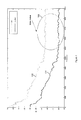
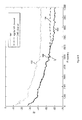
- Fig. 1 is a representation of spectrograms of background noise of an audio signal of a raw recording and a conventional noise reduced audio signal.
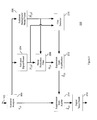
- Fig. 2 is a schematic representation of an exemplary dynamic residual noise shaping system.
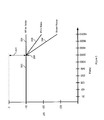
- Fig. 3 is a representation of several exemplary target noise shape functions.
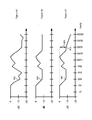
- Fig. 4A is a set of exemplary calculated noise suppression gains.
- Fig. 4B is the set of exemplary limited noise suppression gains.
- Fig. 4C is the set of exemplary hiss noise floored noise suppression gains responsive to the dynamic residual noise shaping process.
- Fig. 5 is a representation of spectrograms of background noise of an audio signal in the same raw recording as represented in Figure 1 processed by a conventionally noise reduced audio signal and a noised reduced audio signal with dynamic residual noise shaping.
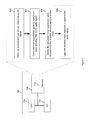
- Fig. 6 is flow diagram representing steps in a method for dynamic residual noise shaping in an audio signal.
- Fig. 7 depicts a system for dynamic residual noise shaping in an audio signal.
- Dynamic shaping of residual noise may include, for example, the reduction of hiss noise.
- x ( t ) and n ( t ) denote a clean audio signal, and a noise signal, respectively.
- G i,k are the noise suppression gains.
- Various methods are known in the literature to calculate these gains.
- One example further described below is a recursive Wiener filter.
- noise suppression gains may be floored (e.g. limited or constrained):
- the parameter ⁇ in (3) is a constant noise floor, which defines a maximum amount of noise attenuation in each frequency bin. For example, when ⁇ is set to 0.3, the system will attenuate the noise by a maximum of 10 dB at frequency bin k .
- the noise reduction process may produce limited noise suppression gains that will range from 0 dB to 10 dB at each frequency bin k .
- the conventional noise reduction method based on the above noise suppression gain limiting applies the same maximum amount of noise attenuation to all frequencies.
- the constant noise floor in the noise suppression gain limiting may result in good performance for conventional noise reduction in narrowband communication. However, it is not ideal for reducing hiss noise in high fidelity audio recordings or wideband communications. In order to remove the hiss noise, a lower constant noise floor in the suppression gain limiting may be required but this approach may also impair low frequency voice or music quality. Hiss noise may be caused by, for example, background noise or audio hardware and software limitations within one or more signal processing devices. Any of the noise sources may contribute to residual noise and/or hiss noise.
- Figure 1 is a representation of spectrograms of background noise of an audio signal 102 of a raw recording and a conventional noise reduced audio signal 104.
- the audio signal 102 is an example raw recording of background noise and the conventional noise reduced audio signal 104 is the same audio signal 102 that has been processed with the noise reduction method where the noise suppression gains have been limited by a constant noise floor as described above.
- the audio signal 102 shows that a hiss noise 106 component of the background noise occurs mainly above 5 kHz in this example, and the hiss noise 106 in the conventional noise reduced audio signal 104 is a lower magnitude but still remains noticeable.
- the conventional noise reduction process illustrated in Figure 1 has reduced the level of the entire spectrum by substantially the same amount because the constant noise floor in the noise suppression gain limiting has prevented further attenuation.
- a dynamic residual noise shaping method may automatically detects hiss noise 106 and once hiss noise 106 is detected, may apply a dynamic attenuation floor to adjust the high frequency noise shape so that the residual noise may sound more natural after processing. For lower frequencies or when no hiss noise is detected in an input signal (e.g. a recording), the method may apply noise reduction similar to conventional noise reduction methods described above. Hiss noise as described herein comprises relatively higher frequency noise components of residual or background noise. Relatively higher frequency noise components may occur, for example, at frequencies above 500Hz in narrowband applications, above 3kHz in wideband applications, or above 5kHz in fullband applications.
- FIG 2 is a schematic representation of an exemplary dynamic residual noise shaping system.
- the dynamic residual noise shaping system 200 may begin its signal processing in Figure 2 with subband analysis 202.
- the system 200 may receive an audio signal 102 that includes speech content, audio content, noise content, or any combination thereof.
- the subband analysis 202 performs a frequency transformation of the audio signal 102 that can be generated by different methods including a Fast Fourier Transform (FFT), wavelets, time-based filtering, and other known transformation methods.
- FFT Fast Fourier Transform
- wavelets wavelets
- time-based filtering time-based filtering
- the frequency based transform may also use a windowed add/overlap analysis.
- the audio signal 102, or audio input signal, after the frequency transformation may be represented by Y i,k at the i th frame and the k th frequency bin or each k th frequency band where a band contains one or more frequency bins.
- the frequency bands may group frequency bins in different ways including critical bands, bark bands, mel bands, or other similar banding techniques.
- a signal resynthesis 216 performs an inverse frequency transformation of the frequency transformation performed by the subband analysis 202.
- the frequency transformation of the audio signal 102 may be processed by a subband signal power module 204 to produce the spectral magnitude of the audio signal
- the subband signal power module 204 may also perform averaging of frequency bins over time and frequency. The averaging calculation may include simple averages, weighted averages or recursive filtering.
- a subband background noise power module 206 may calculate the spectral magnitude of the estimated background noise
- the background noise estimate may include signal information from previously processed frames.
- the spectral magnitude of the background noise is calculated using the background noise estimation techniques disclosed in U.S. Patent No. 7,844,453 , which is incorporated in its entirety herein by reference, except that in the event of any inconsistent disclosure or definition from the present specification, the disclosure or definition herein shall be deemed to prevail.
- alternative background noise estimation techniques may be used, such as a noise power estimation technique based on minimum statistics.
- a noise reduction module 208 calculates suppression gains G i,k using various methods that are known in the literature to calculate suppression gains.
- An exemplary noise reduction method is a recursive Wiener filter.
- the Wiener suppression gain, or noise suppression gains, is defined as:
- G i , k S ⁇ N ⁇ ⁇ R prior i , k S ⁇ N ⁇ ⁇ R prior i , k + 1 .
- SN ⁇ R post i,k is the a posteriori SNR estimate given by:
- N ⁇ i,k is the background noise estimate.
- a hiss detector module 210 estimates the amount of hiss noise in the audio signal.
- the hiss detector module 210 may indicate the presence of hiss noise 106 by analyzing any combination of the audio signal, the spectral magnitude of the audio signal
- An exemplary hiss detector method utilized by the hiss detector module 210 first may convert the short-time power spectrum of a background noise estimation, or background noise level, into the dB domain by:
- the background noise level may be estimated using a background noise level estimator.
- the dB power spectrum B ( f ) may be further smoothed in frequency to remove small dips or peaks in the spectrum.
- a pre-defined hiss cutoff frequency f 0 may be chosen to divide the whole spectrum into a low frequency portion and a high frequency portion.
- the dynamic hiss noise reduction may be applied to the high frequency portion of the spectrum.
- Hiss noise 106 is usually audible in high frequencies.
- the residual noise power density may be a function that has flatter spectral density at lower frequencies and a more slopped spectral density at higher frequencies.
- the target residual noise dB power spectrum is defined by:
- T f B f 0 - 10 ⁇ ⁇ log 10 f / f 0 .
- the difference between the background noise level and the target noise level at a frequency may be calculated with a difference calculator. Whenever the difference between the noise estimation and the target noise defined by:
- a hiss threshold ⁇ hiss noise is detected and a dynamic floor may be used to do substantial noise suppression to eliminate hiss.
- a detector may detect when the residual background noise level exceeds the hiss threshold.
- the dynamic suppression factor for a given frequency above the hiss cutoff frequency f 0 may be given by:
- ⁇ f ⁇ 10 0.05 ⁇ D f , if D f > ⁇ 1 , otherwise .
- the dynamic suppression factor may be given by:
- ⁇ k ⁇ 10 0.05 ⁇ D k 0 , if D k 0 > ⁇ 1 , otherwise .
- the dynamic noise floor may be defined as:
- ⁇ k ⁇ ⁇ * ⁇ k , when k ⁇ k 0 ⁇ , when k ⁇ k 0
- the color of residual noise may be constrained by a pre-defined target noise shape, and the quality of the noise-reduced speech signal may be significantly improved.
- a constant noise floor may be applied below the hiss cutoff frequency f 0 .
- the hiss cutoff frequency f 0 may be a fixed frequency, or may be adaptive depending on the noise spectral shape.
- a suppression gain limiting module 212 may limit the noise suppression gains according to the result of the hiss detector module 210.
- the dynamic hiss noise reduction approach may use the dynamic noise floor defined in equation (9) to estimate the noise suppression gains:
- G ⁇ i , k max ⁇ k , G i , k .
- a noise suppression gain applier 214 applies the noise suppression gains to the frequency transformation of the audio signal 102.
- Figure 3 is a representation of several exemplary target noise shape 308 functions. Frequencies above the hiss cutoff frequency 306 may be constrained by the target noise shape 308.
- the target noise shape 308 may be constrained to have certain colors of residual noise including white, pink and brown.
- the target noise shape 308 may be adjusted by offsetting the target noise shape 308 by the hiss noise floor 304. Frequencies below the hiss cutoff frequency 306, or conventional noise reduced frequencies 302, may be constrained by the hiss noise floor 304. Values shown in Figure 3 are illustrative in nature and are not intended to be limiting in any way.
- Figure 4A is a set of exemplary calculated noise suppression gains 402.
- the exemplary calculated noise suppression gains 402 may be the output of the recursive Wiener filter described in equation 4.
- Figure 4B is a set of limited noise suppression gains 404.
- the limited noise suppression gains 404 are the calculated noise suppression gains 402 that have been floored as described in equation 3. Limiting the calculated noise suppression gains 402 may mitigate audible artifacts caused by the noise reduction process.
- Figure 4C is a set of exemplary modified noise suppression gains 406 responsive to the dynamic residual noise shaping process.
- the modified noise suppression gains 406 are the calculated noise suppression gains 402 that have been floored as described in equation 12.
- Figure 5 is a representation of spectrograms of background noise of an audio signal 102 in the same raw recording as represented in Figure 1 processed by a conventionally noise reduced audio signal 104 and a noise reduced audio signal processed by dynamic residual noise shaping 502.
- the example hiss cutoff frequency 306 is set to approximately 5 kHz. It can be observed that at frequencies above the hiss cutoff frequency 306 that the noise reduced audio signal with dynamic residual noise shaping 502 may produce a lower noise floor than the noise floor produced by the conventionally noise reduced audio signal 104.
- Figure 6 is flow diagram representing steps in a method for dynamic residual noise shaping in an audio signal 102.
- step 602 the amount and type of hiss noise is detected in the audio signal 102.
- step 604 a noise reduction process is used to calculate noise suppression gains 402.
- step 606 the noise suppression gains 402 are modified responsive to the detected amount and type of hiss noise 106. Different modifications may be applied to noise suppression gains 402 associated with frequencies below and above a hiss cutoff frequency 306.
- the modified noise suppression gains 406 are applied to the audio signal 102.
- a system for dynamic hiss reduction may comprise electronic components, analog and/or digital, for implementing the processes described above.
- the system may comprise a processor and memory for storing instructions that, when executed by the processor, enact the processes described above.
- FIG. 7 depicts a system for dynamic residual noise shaping in an audio signal 102.
- the system 702 comprises a processor 704 (aka CPU), input and output interfaces 706 (aka I/O) and memory 708.
- the processor 704 may comprise a single processor or multiple processors that may be disposed on a single chip, on multiple devices or distribute over more than one system.
- the processor 704 may be hardware that executes computer executable instructions or computer code embodied in the memory 708 or in other memory to perform one or more features of the system.
- the processor 704 may include a general processor, a central processing unit, a graphics processing unit, an application specific integrated circuit (ASIC), a digital signal processor, a field programmable gate array (FPGA), a digital circuit, an analog circuit, a microcontroller, any other type of processor, or any combination thereof.
- ASIC application specific integrated circuit
- FPGA field programmable gate array
- the memory 708 may comprise a device for storing and retrieving data or any combination thereof.
- the memory 708 may include non-volatile and/or volatile memory, such as a random access memory (RAM), a read-only memory (ROM), an erasable programmable read-only memory (EPROM), or a flash memory.
- RAM random access memory
- ROM read-only memory
- EPROM erasable programmable read-only memory
- flash memory a flash memory.
- the memory 708 may comprise a single device or multiple devices that may be disposed on one or more dedicated memory devices or on a processor or other similar device.
- the memory 708 may include an optical, magnetic (hard-drive) or any other form of data storage device.
- the memory 708 may store computer code, such as the hiss detector 210, the noise reduction filter 208 and/or any component.
- the computer code may include instructions executable with the processor 704.
- the computer code may be written in any computer language, such as C, C++, assembly language, channel program code, and/or any combination of computer languages.
- the memory 708 may store information in data structures such as the calculated noise suppression gains 402 and the modified noise suppression gains 406.
- the memory 708 may store instructions 710 that when executed by the processor, configure the system to enact the system and method for reducing hiss noise described herein with reference to any of the preceding Figures 1-6 .
- the instructions 710 may include the following. Detecting an amount and type of hiss noise 106 in an audio signal of step 602. Calculating noise suppression gains 402 by applying a noise reduction process to the audio signal 102 of step 604. Modifying the noise suppression gains 402 responsive to the detected amount and type of hiss noise 102 of step 606. Applying the modified noise suppression gains 406 to the audio signal 102 of step 608.
- the system 200 may include more, fewer, or different components than illustrated in Figure 2 . Furthermore, each one of the components of system 200 may include more, fewer, or different elements than is illustrated in Figure 2 .
- Flags, data, databases, tables, entities, and other data structures may be separately stored and managed, may be incorporated into a single memory or database, may be distributed, or may be logically and physically organized in many different ways.
- the components may operate independently or be part of a same program or hardware.
- the components may be resident on separate hardware, such as separate removable circuit boards, or share common hardware, such as a same memory and processor for implementing instructions from the memory. Programs may be parts of a single program, separate programs, or distributed across several memories and processors.
- the functions, acts or tasks illustrated in the figures or described may be executed in response to one or more sets of logic or instructions stored in or on computer readable media.
- the functions, acts or tasks are independent of the particular type of instructions set, storage media, processor or processing strategy and may be performed by software, hardware, integrated circuits, firmware, micro code and the like, operating alone or in combination.
- processing strategies may include multiprocessing, multitasking, parallel processing, distributed processing, and/or any other type of processing.
- the instructions are stored on a removable media device for reading by local or remote systems.
- the logic or instructions are stored in a remote location for transfer through a computer network or over telephone lines.
- the logic or instructions may be stored within a given computer such as, for example, a central processing unit ("CPU").
- CPU central processing unit
Landscapes
- Engineering & Computer Science (AREA)
- Physics & Mathematics (AREA)
- Acoustics & Sound (AREA)
- Signal Processing (AREA)
- Human Computer Interaction (AREA)
- Audiology, Speech & Language Pathology (AREA)
- Health & Medical Sciences (AREA)
- Computational Linguistics (AREA)
- Multimedia (AREA)
- Quality & Reliability (AREA)
- Spectroscopy & Molecular Physics (AREA)
- Soundproofing, Sound Blocking, And Sound Damping (AREA)
- Circuit For Audible Band Transducer (AREA)
- Tone Control, Compression And Expansion, Limiting Amplitude (AREA)
- Control Of Amplification And Gain Control (AREA)
Priority Applications (1)
| Application Number | Priority Date | Filing Date | Title |
|---|---|---|---|
| EP15160720.7A EP2905779B1 (fr) | 2012-02-16 | 2013-02-15 | Système et procédé de mise en forme de bruit résiduel dynamique |
Applications Claiming Priority (1)
| Application Number | Priority Date | Filing Date | Title |
|---|---|---|---|
| US201261599762P | 2012-02-16 | 2012-02-16 |
Related Child Applications (2)
| Application Number | Title | Priority Date | Filing Date |
|---|---|---|---|
| EP15160720.7A Division EP2905779B1 (fr) | 2012-02-16 | 2013-02-15 | Système et procédé de mise en forme de bruit résiduel dynamique |
| EP15160720.7A Division-Into EP2905779B1 (fr) | 2012-02-16 | 2013-02-15 | Système et procédé de mise en forme de bruit résiduel dynamique |
Publications (3)
| Publication Number | Publication Date |
|---|---|
| EP2629294A2 true EP2629294A2 (fr) | 2013-08-21 |
| EP2629294A3 EP2629294A3 (fr) | 2014-01-22 |
| EP2629294B1 EP2629294B1 (fr) | 2015-04-29 |
Family
ID=47845717
Family Applications (2)
| Application Number | Title | Priority Date | Filing Date |
|---|---|---|---|
| EP20130155350 Active EP2629294B1 (fr) | 2012-02-16 | 2013-02-15 | Système et procédé de mise en forme du bruit résiduel dynamique |
| EP15160720.7A Active EP2905779B1 (fr) | 2012-02-16 | 2013-02-15 | Système et procédé de mise en forme de bruit résiduel dynamique |
Family Applications After (1)
| Application Number | Title | Priority Date | Filing Date |
|---|---|---|---|
| EP15160720.7A Active EP2905779B1 (fr) | 2012-02-16 | 2013-02-15 | Système et procédé de mise en forme de bruit résiduel dynamique |
Country Status (3)
| Country | Link |
|---|---|
| US (2) | US9137600B2 (fr) |
| EP (2) | EP2629294B1 (fr) |
| CA (1) | CA2806372C (fr) |
Cited By (1)
| Publication number | Priority date | Publication date | Assignee | Title |
|---|---|---|---|---|
| CN111123266A (zh) * | 2019-11-22 | 2020-05-08 | 中国电子科技集团公司第四十一研究所 | 一种太赫兹波大面积均匀照明装置及成像方法 |
Families Citing this family (22)
| Publication number | Priority date | Publication date | Assignee | Title |
|---|---|---|---|---|
| US6729265B2 (en) * | 2002-06-27 | 2004-05-04 | Arkion Life Sciences Llc | Supplemented antibody feed to enter the circulating system of newborns |
| US10043534B2 (en) * | 2013-12-23 | 2018-08-07 | Staton Techiya, Llc | Method and device for spectral expansion for an audio signal |
| US9858922B2 (en) | 2014-06-23 | 2018-01-02 | Google Inc. | Caching speech recognition scores |
| JP6446893B2 (ja) * | 2014-07-31 | 2019-01-09 | 富士通株式会社 | エコー抑圧装置、エコー抑圧方法及びエコー抑圧用コンピュータプログラム |
| US9299347B1 (en) | 2014-10-22 | 2016-03-29 | Google Inc. | Speech recognition using associative mapping |
| US10605941B2 (en) | 2014-12-18 | 2020-03-31 | Conocophillips Company | Methods for simultaneous source separation |
| US9786270B2 (en) | 2015-07-09 | 2017-10-10 | Google Inc. | Generating acoustic models |
| US10267939B2 (en) | 2015-09-28 | 2019-04-23 | Conocophillips Company | 3D seismic acquisition |
| CN105208221B (zh) * | 2015-10-30 | 2019-01-11 | 维沃移动通信有限公司 | 一种自动调节通话语音的方法及装置 |
| US10229672B1 (en) | 2015-12-31 | 2019-03-12 | Google Llc | Training acoustic models using connectionist temporal classification |
| US10504501B2 (en) | 2016-02-02 | 2019-12-10 | Dolby Laboratories Licensing Corporation | Adaptive suppression for removing nuisance audio |
| US20180018973A1 (en) | 2016-07-15 | 2018-01-18 | Google Inc. | Speaker verification |
| US9807501B1 (en) | 2016-09-16 | 2017-10-31 | Gopro, Inc. | Generating an audio signal from multiple microphones based on a wet microphone condition |
| EP3312838A1 (fr) | 2016-10-18 | 2018-04-25 | Fraunhofer Gesellschaft zur Förderung der Angewand | Appareil et procédé de traitement de signal audio |
| US10809402B2 (en) | 2017-05-16 | 2020-10-20 | Conocophillips Company | Non-uniform optimal survey design principles |
| US10706840B2 (en) | 2017-08-18 | 2020-07-07 | Google Llc | Encoder-decoder models for sequence to sequence mapping |
| AU2018368796B2 (en) | 2017-11-20 | 2023-10-12 | Shearwater Geoservices Software Inc. | Offshore application of non-uniform optimal sampling survey design |
| WO2020069143A1 (fr) * | 2018-09-30 | 2020-04-02 | Conocophillips Company | Récupération de signal fondée sur un apprentissage automatique |
| CN109616135B (zh) * | 2018-11-14 | 2021-08-03 | 腾讯音乐娱乐科技(深圳)有限公司 | 音频处理方法、装置及存储介质 |
| US11587575B2 (en) * | 2019-10-11 | 2023-02-21 | Plantronics, Inc. | Hybrid noise suppression |
| US11658678B2 (en) | 2020-08-10 | 2023-05-23 | Analog Devices, Inc. | System and method to enhance noise performance in a delta sigma converter |
| CN113470618A (zh) * | 2021-06-08 | 2021-10-01 | 阿波罗智联(北京)科技有限公司 | 唤醒测试的方法、装置、电子设备和可读存储介质 |
Citations (1)
| Publication number | Priority date | Publication date | Assignee | Title |
|---|---|---|---|---|
| US7844453B2 (en) | 2006-05-12 | 2010-11-30 | Qnx Software Systems Co. | Robust noise estimation |
Family Cites Families (10)
| Publication number | Priority date | Publication date | Assignee | Title |
|---|---|---|---|---|
| JPS5750097B2 (fr) * | 1973-06-06 | 1982-10-26 | ||
| US4641344A (en) * | 1984-01-06 | 1987-02-03 | Nissan Motor Company, Limited | Audio equipment |
| JPH09305908A (ja) * | 1996-05-09 | 1997-11-28 | Pioneer Electron Corp | 雑音低減装置 |
| US6523003B1 (en) * | 2000-03-28 | 2003-02-18 | Tellabs Operations, Inc. | Spectrally interdependent gain adjustment techniques |
| US8027833B2 (en) | 2005-05-09 | 2011-09-27 | Qnx Software Systems Co. | System for suppressing passing tire hiss |
| KR100667852B1 (ko) * | 2006-01-13 | 2007-01-11 | 삼성전자주식회사 | 휴대용 레코더 기기의 잡음 제거 장치 및 그 방법 |
| JP4836720B2 (ja) * | 2006-09-07 | 2011-12-14 | 株式会社東芝 | ノイズサプレス装置 |
| US8015002B2 (en) * | 2007-10-24 | 2011-09-06 | Qnx Software Systems Co. | Dynamic noise reduction using linear model fitting |
| WO2010046954A1 (fr) | 2008-10-24 | 2010-04-29 | 三菱電機株式会社 | Dispositif de suppression de bruit et dispositif de décodage audio |
| US9135952B2 (en) * | 2010-12-17 | 2015-09-15 | Adobe Systems Incorporated | Systems and methods for semi-automatic audio problem detection and correction |
-
2013
- 2013-02-15 US US13/768,108 patent/US9137600B2/en active Active
- 2013-02-15 CA CA2806372A patent/CA2806372C/fr active Active
- 2013-02-15 EP EP20130155350 patent/EP2629294B1/fr active Active
- 2013-02-15 EP EP15160720.7A patent/EP2905779B1/fr active Active
-
2015
- 2015-08-07 US US14/821,364 patent/US9503813B2/en active Active
Patent Citations (1)
| Publication number | Priority date | Publication date | Assignee | Title |
|---|---|---|---|---|
| US7844453B2 (en) | 2006-05-12 | 2010-11-30 | Qnx Software Systems Co. | Robust noise estimation |
Cited By (2)
| Publication number | Priority date | Publication date | Assignee | Title |
|---|---|---|---|---|
| CN111123266A (zh) * | 2019-11-22 | 2020-05-08 | 中国电子科技集团公司第四十一研究所 | 一种太赫兹波大面积均匀照明装置及成像方法 |
| CN111123266B (zh) * | 2019-11-22 | 2023-05-16 | 中国电子科技集团公司第四十一研究所 | 一种太赫兹波大面积均匀照明装置及成像方法 |
Also Published As
| Publication number | Publication date |
|---|---|
| US20130223645A1 (en) | 2013-08-29 |
| EP2905779A1 (fr) | 2015-08-12 |
| CA2806372C (fr) | 2016-07-19 |
| EP2629294B1 (fr) | 2015-04-29 |
| US20150348568A1 (en) | 2015-12-03 |
| US9503813B2 (en) | 2016-11-22 |
| EP2629294A3 (fr) | 2014-01-22 |
| US9137600B2 (en) | 2015-09-15 |
| CA2806372A1 (fr) | 2013-08-16 |
| EP2905779B1 (fr) | 2016-09-14 |
Similar Documents
| Publication | Publication Date | Title |
|---|---|---|
| EP2629294B1 (fr) | Système et procédé de mise en forme du bruit résiduel dynamique | |
| US8015002B2 (en) | Dynamic noise reduction using linear model fitting | |
| US8165875B2 (en) | System for suppressing wind noise | |
| US9064498B2 (en) | Apparatus and method for processing an audio signal for speech enhancement using a feature extraction | |
| EP2226794B1 (fr) | Estimation du bruit de fond | |
| CN105144290B (zh) | 信号处理装置、信号处理方法和信号处理程序 | |
| CA2805933C (fr) | Systeme et procede d'estimation de bruit au moyen d'une detection de musique | |
| US9349383B2 (en) | Audio bandwidth dependent noise suppression | |
| EP2828853B1 (fr) | Méthode et dispositif de détermination d'un niveau de parole corrigé | |
| Upadhyay et al. | The spectral subtractive-type algorithms for enhancing speech in noisy environments | |
| US11183172B2 (en) | Detection of fricatives in speech signals | |
| US9210507B2 (en) | Microphone hiss mitigation | |
| Udrea et al. | Reduction of background noise from affected speech using a spectral subtraction algorithm based on masking properties of the human ear | |
| Ma et al. | A perceptual kalman filtering-based approach for speech enhancement | |
| EP2760022B1 (fr) | Suppression de bruit dépendant de la largeur de bande audio | |
| EP2760221A1 (fr) | Atténuation de sifflements perceptibles de microphone | |
| CA2840851C (fr) | Attenuation du bruit dependant de la largeur de bande audio | |
| Upadhyay et al. | A perceptually motivated stationary wavelet packet filter-bank utilizing improved spectral over-subtraction algorithm for enhancing speech in non-stationary environments | |
| Zhang et al. | An Improved MMSE-LSA speech enhancement algorithm based on human auditory masking property | |
| EP2760020A1 (fr) | Maintien de stabilité spatiale au moyen d'un coefficient de gain commun | |
| Alam et al. | Speech enhancement based on a hybrid a priori signal-to-noise ratio (SNR) estimator and a self-adaptive Lagrange multiplier |
Legal Events
| Date | Code | Title | Description |
|---|---|---|---|
| PUAI | Public reference made under article 153(3) epc to a published international application that has entered the european phase |
Free format text: ORIGINAL CODE: 0009012 |
|
| 17P | Request for examination filed |
Effective date: 20130215 |
|
| AK | Designated contracting states |
Kind code of ref document: A2 Designated state(s): AL AT BE BG CH CY CZ DE DK EE ES FI FR GB GR HR HU IE IS IT LI LT LU LV MC MK MT NL NO PL PT RO RS SE SI SK SM TR |
|
| AX | Request for extension of the european patent |
Extension state: BA ME |
|
| PUAL | Search report despatched |
Free format text: ORIGINAL CODE: 0009013 |
|
| AK | Designated contracting states |
Kind code of ref document: A3 Designated state(s): AL AT BE BG CH CY CZ DE DK EE ES FI FR GB GR HR HU IE IS IT LI LT LU LV MC MK MT NL NO PL PT RO RS SE SI SK SM TR |
|
| AX | Request for extension of the european patent |
Extension state: BA ME |
|
| RIC1 | Information provided on ipc code assigned before grant |
Ipc: G10L 21/0232 20130101ALN20131217BHEP Ipc: G10L 21/0208 20130101AFI20131217BHEP Ipc: G10L 21/0216 20130101ALN20131217BHEP |
|
| GRAP | Despatch of communication of intention to grant a patent |
Free format text: ORIGINAL CODE: EPIDOSNIGR1 |
|
| RIC1 | Information provided on ipc code assigned before grant |
Ipc: G10L 21/0216 20130101ALN20140714BHEP Ipc: G10L 21/0208 20130101AFI20140714BHEP Ipc: G10L 21/0232 20130101ALN20140714BHEP |
|
| INTG | Intention to grant announced |
Effective date: 20140731 |
|
| RIC1 | Information provided on ipc code assigned before grant |
Ipc: G10L 21/0232 20130101ALN20140722BHEP Ipc: G10L 21/0208 20130101AFI20140722BHEP Ipc: G10L 21/0216 20130101ALN20140722BHEP |
|
| RAP1 | Party data changed (applicant data changed or rights of an application transferred) |
Owner name: 2236008 ONTARIO INC. |
|
| GRAS | Grant fee paid |
Free format text: ORIGINAL CODE: EPIDOSNIGR3 |
|
| GRAA | (expected) grant |
Free format text: ORIGINAL CODE: 0009210 |
|
| AK | Designated contracting states |
Kind code of ref document: B1 Designated state(s): AL AT BE BG CH CY CZ DE DK EE ES FI FR GB GR HR HU IE IS IT LI LT LU LV MC MK MT NL NO PL PT RO RS SE SI SK SM TR |
|
| REG | Reference to a national code |
Ref country code: GB Ref legal event code: FG4D |
|
| REG | Reference to a national code |
Ref country code: CH Ref legal event code: EP |
|
| REG | Reference to a national code |
Ref country code: AT Ref legal event code: REF Ref document number: 724822 Country of ref document: AT Kind code of ref document: T Effective date: 20150515 |
|
| REG | Reference to a national code |
Ref country code: IE Ref legal event code: FG4D |
|
| REG | Reference to a national code |
Ref country code: DE Ref legal event code: R096 Ref document number: 602013001585 Country of ref document: DE Effective date: 20150611 |
|
| REG | Reference to a national code |
Ref country code: NL Ref legal event code: T3 |
|
| REG | Reference to a national code |
Ref country code: AT Ref legal event code: MK05 Ref document number: 724822 Country of ref document: AT Kind code of ref document: T Effective date: 20150429 |
|
| REG | Reference to a national code |
Ref country code: LT Ref legal event code: MG4D |
|
| PG25 | Lapsed in a contracting state [announced via postgrant information from national office to epo] |
Ref country code: NO Free format text: LAPSE BECAUSE OF FAILURE TO SUBMIT A TRANSLATION OF THE DESCRIPTION OR TO PAY THE FEE WITHIN THE PRESCRIBED TIME-LIMIT Effective date: 20150729 Ref country code: ES Free format text: LAPSE BECAUSE OF FAILURE TO SUBMIT A TRANSLATION OF THE DESCRIPTION OR TO PAY THE FEE WITHIN THE PRESCRIBED TIME-LIMIT Effective date: 20150429 Ref country code: LT Free format text: LAPSE BECAUSE OF FAILURE TO SUBMIT A TRANSLATION OF THE DESCRIPTION OR TO PAY THE FEE WITHIN THE PRESCRIBED TIME-LIMIT Effective date: 20150429 Ref country code: PT Free format text: LAPSE BECAUSE OF FAILURE TO SUBMIT A TRANSLATION OF THE DESCRIPTION OR TO PAY THE FEE WITHIN THE PRESCRIBED TIME-LIMIT Effective date: 20150831 Ref country code: HR Free format text: LAPSE BECAUSE OF FAILURE TO SUBMIT A TRANSLATION OF THE DESCRIPTION OR TO PAY THE FEE WITHIN THE PRESCRIBED TIME-LIMIT Effective date: 20150429 Ref country code: FI Free format text: LAPSE BECAUSE OF FAILURE TO SUBMIT A TRANSLATION OF THE DESCRIPTION OR TO PAY THE FEE WITHIN THE PRESCRIBED TIME-LIMIT Effective date: 20150429 |
|
| PG25 | Lapsed in a contracting state [announced via postgrant information from national office to epo] |
Ref country code: AT Free format text: LAPSE BECAUSE OF FAILURE TO SUBMIT A TRANSLATION OF THE DESCRIPTION OR TO PAY THE FEE WITHIN THE PRESCRIBED TIME-LIMIT Effective date: 20150429 Ref country code: IS Free format text: LAPSE BECAUSE OF FAILURE TO SUBMIT A TRANSLATION OF THE DESCRIPTION OR TO PAY THE FEE WITHIN THE PRESCRIBED TIME-LIMIT Effective date: 20150829 Ref country code: RS Free format text: LAPSE BECAUSE OF FAILURE TO SUBMIT A TRANSLATION OF THE DESCRIPTION OR TO PAY THE FEE WITHIN THE PRESCRIBED TIME-LIMIT Effective date: 20150429 Ref country code: LV Free format text: LAPSE BECAUSE OF FAILURE TO SUBMIT A TRANSLATION OF THE DESCRIPTION OR TO PAY THE FEE WITHIN THE PRESCRIBED TIME-LIMIT Effective date: 20150429 Ref country code: GR Free format text: LAPSE BECAUSE OF FAILURE TO SUBMIT A TRANSLATION OF THE DESCRIPTION OR TO PAY THE FEE WITHIN THE PRESCRIBED TIME-LIMIT Effective date: 20150730 |
|
| PG25 | Lapsed in a contracting state [announced via postgrant information from national office to epo] |
Ref country code: DK Free format text: LAPSE BECAUSE OF FAILURE TO SUBMIT A TRANSLATION OF THE DESCRIPTION OR TO PAY THE FEE WITHIN THE PRESCRIBED TIME-LIMIT Effective date: 20150429 Ref country code: EE Free format text: LAPSE BECAUSE OF FAILURE TO SUBMIT A TRANSLATION OF THE DESCRIPTION OR TO PAY THE FEE WITHIN THE PRESCRIBED TIME-LIMIT Effective date: 20150429 |
|
| REG | Reference to a national code |
Ref country code: DE Ref legal event code: R097 Ref document number: 602013001585 Country of ref document: DE |
|
| REG | Reference to a national code |
Ref country code: FR Ref legal event code: PLFP Year of fee payment: 4 |
|
| PG25 | Lapsed in a contracting state [announced via postgrant information from national office to epo] |
Ref country code: CZ Free format text: LAPSE BECAUSE OF FAILURE TO SUBMIT A TRANSLATION OF THE DESCRIPTION OR TO PAY THE FEE WITHIN THE PRESCRIBED TIME-LIMIT Effective date: 20150429 Ref country code: RO Free format text: LAPSE BECAUSE OF NON-PAYMENT OF DUE FEES Effective date: 20150429 Ref country code: SK Free format text: LAPSE BECAUSE OF FAILURE TO SUBMIT A TRANSLATION OF THE DESCRIPTION OR TO PAY THE FEE WITHIN THE PRESCRIBED TIME-LIMIT Effective date: 20150429 Ref country code: PL Free format text: LAPSE BECAUSE OF FAILURE TO SUBMIT A TRANSLATION OF THE DESCRIPTION OR TO PAY THE FEE WITHIN THE PRESCRIBED TIME-LIMIT Effective date: 20150429 |
|
| PLBE | No opposition filed within time limit |
Free format text: ORIGINAL CODE: 0009261 |
|
| STAA | Information on the status of an ep patent application or granted ep patent |
Free format text: STATUS: NO OPPOSITION FILED WITHIN TIME LIMIT |
|
| 26N | No opposition filed |
Effective date: 20160201 |
|
| PG25 | Lapsed in a contracting state [announced via postgrant information from national office to epo] |
Ref country code: IT Free format text: LAPSE BECAUSE OF FAILURE TO SUBMIT A TRANSLATION OF THE DESCRIPTION OR TO PAY THE FEE WITHIN THE PRESCRIBED TIME-LIMIT Effective date: 20150429 |
|
| PG25 | Lapsed in a contracting state [announced via postgrant information from national office to epo] |
Ref country code: BE Free format text: LAPSE BECAUSE OF NON-PAYMENT OF DUE FEES Effective date: 20160229 Ref country code: SI Free format text: LAPSE BECAUSE OF FAILURE TO SUBMIT A TRANSLATION OF THE DESCRIPTION OR TO PAY THE FEE WITHIN THE PRESCRIBED TIME-LIMIT Effective date: 20150429 |
|
| PG25 | Lapsed in a contracting state [announced via postgrant information from national office to epo] |
Ref country code: BE Free format text: LAPSE BECAUSE OF FAILURE TO SUBMIT A TRANSLATION OF THE DESCRIPTION OR TO PAY THE FEE WITHIN THE PRESCRIBED TIME-LIMIT Effective date: 20150429 |
|
| PG25 | Lapsed in a contracting state [announced via postgrant information from national office to epo] |
Ref country code: MC Free format text: LAPSE BECAUSE OF FAILURE TO SUBMIT A TRANSLATION OF THE DESCRIPTION OR TO PAY THE FEE WITHIN THE PRESCRIBED TIME-LIMIT Effective date: 20150429 Ref country code: LU Free format text: LAPSE BECAUSE OF FAILURE TO SUBMIT A TRANSLATION OF THE DESCRIPTION OR TO PAY THE FEE WITHIN THE PRESCRIBED TIME-LIMIT Effective date: 20160215 |
|
| REG | Reference to a national code |
Ref country code: CH Ref legal event code: PL |
|
| PG25 | Lapsed in a contracting state [announced via postgrant information from national office to epo] |
Ref country code: LI Free format text: LAPSE BECAUSE OF NON-PAYMENT OF DUE FEES Effective date: 20160229 Ref country code: CH Free format text: LAPSE BECAUSE OF NON-PAYMENT OF DUE FEES Effective date: 20160229 |
|
| REG | Reference to a national code |
Ref country code: IE Ref legal event code: MM4A |
|
| PG25 | Lapsed in a contracting state [announced via postgrant information from national office to epo] |
Ref country code: IE Free format text: LAPSE BECAUSE OF NON-PAYMENT OF DUE FEES Effective date: 20160215 |
|
| REG | Reference to a national code |
Ref country code: FR Ref legal event code: PLFP Year of fee payment: 5 |
|
| PG25 | Lapsed in a contracting state [announced via postgrant information from national office to epo] |
Ref country code: SE Free format text: LAPSE BECAUSE OF FAILURE TO SUBMIT A TRANSLATION OF THE DESCRIPTION OR TO PAY THE FEE WITHIN THE PRESCRIBED TIME-LIMIT Effective date: 20150429 |
|
| PG25 | Lapsed in a contracting state [announced via postgrant information from national office to epo] |
Ref country code: MT Free format text: LAPSE BECAUSE OF FAILURE TO SUBMIT A TRANSLATION OF THE DESCRIPTION OR TO PAY THE FEE WITHIN THE PRESCRIBED TIME-LIMIT Effective date: 20150429 |
|
| REG | Reference to a national code |
Ref country code: FR Ref legal event code: PLFP Year of fee payment: 6 |
|
| PG25 | Lapsed in a contracting state [announced via postgrant information from national office to epo] |
Ref country code: SM Free format text: LAPSE BECAUSE OF FAILURE TO SUBMIT A TRANSLATION OF THE DESCRIPTION OR TO PAY THE FEE WITHIN THE PRESCRIBED TIME-LIMIT Effective date: 20150429 Ref country code: CY Free format text: LAPSE BECAUSE OF FAILURE TO SUBMIT A TRANSLATION OF THE DESCRIPTION OR TO PAY THE FEE WITHIN THE PRESCRIBED TIME-LIMIT Effective date: 20150429 Ref country code: HU Free format text: LAPSE BECAUSE OF FAILURE TO SUBMIT A TRANSLATION OF THE DESCRIPTION OR TO PAY THE FEE WITHIN THE PRESCRIBED TIME-LIMIT; INVALID AB INITIO Effective date: 20130215 |
|
| PG25 | Lapsed in a contracting state [announced via postgrant information from national office to epo] |
Ref country code: MK Free format text: LAPSE BECAUSE OF FAILURE TO SUBMIT A TRANSLATION OF THE DESCRIPTION OR TO PAY THE FEE WITHIN THE PRESCRIBED TIME-LIMIT Effective date: 20150429 Ref country code: MT Free format text: LAPSE BECAUSE OF FAILURE TO SUBMIT A TRANSLATION OF THE DESCRIPTION OR TO PAY THE FEE WITHIN THE PRESCRIBED TIME-LIMIT Effective date: 20160229 Ref country code: TR Free format text: LAPSE BECAUSE OF FAILURE TO SUBMIT A TRANSLATION OF THE DESCRIPTION OR TO PAY THE FEE WITHIN THE PRESCRIBED TIME-LIMIT Effective date: 20150429 |
|
| PG25 | Lapsed in a contracting state [announced via postgrant information from national office to epo] |
Ref country code: BG Free format text: LAPSE BECAUSE OF FAILURE TO SUBMIT A TRANSLATION OF THE DESCRIPTION OR TO PAY THE FEE WITHIN THE PRESCRIBED TIME-LIMIT Effective date: 20150429 |
|
| PG25 | Lapsed in a contracting state [announced via postgrant information from national office to epo] |
Ref country code: AL Free format text: LAPSE BECAUSE OF FAILURE TO SUBMIT A TRANSLATION OF THE DESCRIPTION OR TO PAY THE FEE WITHIN THE PRESCRIBED TIME-LIMIT Effective date: 20150429 |
|
| REG | Reference to a national code |
Ref country code: DE Ref legal event code: R081 Ref document number: 602013001585 Country of ref document: DE Owner name: MALIKIE INNOVATIONS LTD., IE Free format text: FORMER OWNER: 2236008 ONTARIO INC., WATERLOO, ONTARIO, CA Ref country code: DE Ref legal event code: R082 Ref document number: 602013001585 Country of ref document: DE Representative=s name: MERH-IP MATIAS ERNY REICHL HOFFMANN PATENTANWA, DE Ref country code: DE Ref legal event code: R081 Ref document number: 602013001585 Country of ref document: DE Owner name: BLACKBERRY LIMITED, WATERLOO, CA Free format text: FORMER OWNER: 2236008 ONTARIO INC., WATERLOO, ONTARIO, CA |
|
| REG | Reference to a national code |
Ref country code: GB Ref legal event code: 732E Free format text: REGISTERED BETWEEN 20200730 AND 20200805 |
|
| REG | Reference to a national code |
Ref country code: NL Ref legal event code: PD Owner name: BLACKBERRY LIMITED; CA Free format text: DETAILS ASSIGNMENT: CHANGE OF OWNER(S), ASSIGNMENT; FORMER OWNER NAME: 2236008 ONTARIO INC. Effective date: 20201109 |
|
| REG | Reference to a national code |
Ref country code: DE Ref legal event code: R082 Ref document number: 602013001585 Country of ref document: DE Ref country code: DE Ref legal event code: R081 Ref document number: 602013001585 Country of ref document: DE Owner name: MALIKIE INNOVATIONS LTD., IE Free format text: FORMER OWNER: BLACKBERRY LIMITED, WATERLOO, ONTARIO, CA |
|
| PGFP | Annual fee paid to national office [announced via postgrant information from national office to epo] |
Ref country code: NL Payment date: 20260220 Year of fee payment: 14 |
|
| PGFP | Annual fee paid to national office [announced via postgrant information from national office to epo] |
Ref country code: GB Payment date: 20260223 Year of fee payment: 14 |
|
| PGFP | Annual fee paid to national office [announced via postgrant information from national office to epo] |
Ref country code: DE Payment date: 20260220 Year of fee payment: 14 |
|
| PGFP | Annual fee paid to national office [announced via postgrant information from national office to epo] |
Ref country code: FR Payment date: 20260224 Year of fee payment: 14 |