EP2630872A1 - Verbessertes Lebensmittelprodukt und Verfahren zu dessen Herstellung - Google Patents
Verbessertes Lebensmittelprodukt und Verfahren zu dessen Herstellung Download PDFInfo
- Publication number
- EP2630872A1 EP2630872A1 EP13156053.4A EP13156053A EP2630872A1 EP 2630872 A1 EP2630872 A1 EP 2630872A1 EP 13156053 A EP13156053 A EP 13156053A EP 2630872 A1 EP2630872 A1 EP 2630872A1
- Authority
- EP
- European Patent Office
- Prior art keywords
- flavouring
- potato
- pieces
- water
- blend
- Prior art date
- Legal status (The legal status is an assumption and is not a legal conclusion. Google has not performed a legal analysis and makes no representation as to the accuracy of the status listed.)
- Withdrawn
Links
- 238000000034 method Methods 0.000 title claims abstract description 29
- 235000013305 food Nutrition 0.000 title description 5
- 238000004519 manufacturing process Methods 0.000 title description 3
- 239000000796 flavoring agent Substances 0.000 claims abstract description 80
- 235000019634 flavors Nutrition 0.000 claims abstract description 73
- 235000011888 snacks Nutrition 0.000 claims abstract description 46
- 244000061456 Solanum tuberosum Species 0.000 claims abstract description 40
- 235000002595 Solanum tuberosum Nutrition 0.000 claims abstract description 40
- 239000000203 mixture Substances 0.000 claims abstract description 40
- XLYOFNOQVPJJNP-UHFFFAOYSA-N water Substances O XLYOFNOQVPJJNP-UHFFFAOYSA-N 0.000 claims abstract description 38
- 239000011159 matrix material Substances 0.000 claims abstract description 27
- 235000019684 potato crisps Nutrition 0.000 claims abstract description 18
- 238000010411 cooking Methods 0.000 claims description 11
- 238000005406 washing Methods 0.000 claims description 8
- 238000010936 aqueous wash Methods 0.000 claims description 5
- 238000005520 cutting process Methods 0.000 claims description 5
- 239000012530 fluid Substances 0.000 claims description 3
- 238000005507 spraying Methods 0.000 claims description 2
- 239000000047 product Substances 0.000 description 65
- 235000010675 chips/crisps Nutrition 0.000 description 60
- 239000000126 substance Substances 0.000 description 18
- 235000015090 marinades Nutrition 0.000 description 16
- 239000003921 oil Substances 0.000 description 12
- 230000035515 penetration Effects 0.000 description 11
- 238000002360 preparation method Methods 0.000 description 10
- 235000019625 fat content Nutrition 0.000 description 9
- 239000004615 ingredient Substances 0.000 description 8
- 239000000243 solution Substances 0.000 description 8
- DGAQECJNVWCQMB-PUAWFVPOSA-M Ilexoside XXIX Chemical compound C[C@@H]1CC[C@@]2(CC[C@@]3(C(=CC[C@H]4[C@]3(CC[C@@H]5[C@@]4(CC[C@@H](C5(C)C)OS(=O)(=O)[O-])C)C)[C@@H]2[C@]1(C)O)C)C(=O)O[C@H]6[C@@H]([C@H]([C@@H]([C@H](O6)CO)O)O)O.[Na+] DGAQECJNVWCQMB-PUAWFVPOSA-M 0.000 description 6
- 235000012015 potatoes Nutrition 0.000 description 6
- 230000008901 benefit Effects 0.000 description 5
- 229910052708 sodium Inorganic materials 0.000 description 5
- 239000011734 sodium Substances 0.000 description 5
- 235000015278 beef Nutrition 0.000 description 4
- 239000000843 powder Substances 0.000 description 4
- 150000003839 salts Chemical class 0.000 description 4
- 241000196324 Embryophyta Species 0.000 description 3
- 239000000969 carrier Substances 0.000 description 3
- 230000001055 chewing effect Effects 0.000 description 3
- 230000003111 delayed effect Effects 0.000 description 3
- 238000009826 distribution Methods 0.000 description 3
- 239000003550 marker Substances 0.000 description 3
- 239000000463 material Substances 0.000 description 3
- 239000002245 particle Substances 0.000 description 3
- 239000002002 slurry Substances 0.000 description 3
- 235000013599 spices Nutrition 0.000 description 3
- 239000002344 surface layer Substances 0.000 description 3
- 238000012360 testing method Methods 0.000 description 3
- HRPVXLWXLXDGHG-UHFFFAOYSA-N Acrylamide Chemical compound NC(=O)C=C HRPVXLWXLXDGHG-UHFFFAOYSA-N 0.000 description 2
- 206010013911 Dysgeusia Diseases 0.000 description 2
- 244000017020 Ipomoea batatas Species 0.000 description 2
- 235000002678 Ipomoea batatas Nutrition 0.000 description 2
- 239000000654 additive Substances 0.000 description 2
- 229940041514 candida albicans extract Drugs 0.000 description 2
- 238000010790 dilution Methods 0.000 description 2
- 239000012895 dilution Substances 0.000 description 2
- 238000010410 dusting Methods 0.000 description 2
- 230000000694 effects Effects 0.000 description 2
- 239000000284 extract Substances 0.000 description 2
- 239000012467 final product Substances 0.000 description 2
- 235000008216 herbs Nutrition 0.000 description 2
- 238000010348 incorporation Methods 0.000 description 2
- 239000010410 layer Substances 0.000 description 2
- 150000002894 organic compounds Chemical class 0.000 description 2
- 238000012856 packing Methods 0.000 description 2
- 230000008447 perception Effects 0.000 description 2
- 230000001953 sensory effect Effects 0.000 description 2
- 239000000725 suspension Substances 0.000 description 2
- 235000013311 vegetables Nutrition 0.000 description 2
- 239000012138 yeast extract Substances 0.000 description 2
- 206010013496 Disturbance in attention Diseases 0.000 description 1
- 241000287828 Gallus gallus Species 0.000 description 1
- 241001465754 Metazoa Species 0.000 description 1
- WCUXLLCKKVVCTQ-UHFFFAOYSA-M Potassium chloride Chemical class [Cl-].[K+] WCUXLLCKKVVCTQ-UHFFFAOYSA-M 0.000 description 1
- 229920002472 Starch Polymers 0.000 description 1
- CZMRCDWAGMRECN-UGDNZRGBSA-N Sucrose Chemical compound O[C@H]1[C@H](O)[C@@H](CO)O[C@@]1(CO)O[C@@H]1[C@H](O)[C@@H](O)[C@H](O)[C@@H](CO)O1 CZMRCDWAGMRECN-UGDNZRGBSA-N 0.000 description 1
- 229930006000 Sucrose Natural products 0.000 description 1
- 244000223014 Syzygium aromaticum Species 0.000 description 1
- 235000016639 Syzygium aromaticum Nutrition 0.000 description 1
- 230000002378 acidificating effect Effects 0.000 description 1
- 238000004458 analytical method Methods 0.000 description 1
- 229930002877 anthocyanin Natural products 0.000 description 1
- 235000010208 anthocyanin Nutrition 0.000 description 1
- 239000004410 anthocyanin Substances 0.000 description 1
- 150000004636 anthocyanins Chemical class 0.000 description 1
- 230000003466 anti-cipated effect Effects 0.000 description 1
- 230000015572 biosynthetic process Effects 0.000 description 1
- 238000013452 biotechnological production Methods 0.000 description 1
- 210000000170 cell membrane Anatomy 0.000 description 1
- 210000002421 cell wall Anatomy 0.000 description 1
- 239000010634 clove oil Substances 0.000 description 1
- 150000001875 compounds Chemical class 0.000 description 1
- 239000012141 concentrate Substances 0.000 description 1
- 238000007796 conventional method Methods 0.000 description 1
- 235000013365 dairy product Nutrition 0.000 description 1
- 230000006378 damage Effects 0.000 description 1
- 230000001419 dependent effect Effects 0.000 description 1
- 238000007598 dipping method Methods 0.000 description 1
- 239000006185 dispersion Substances 0.000 description 1
- 235000013399 edible fruits Nutrition 0.000 description 1
- 239000010642 eucalyptus oil Substances 0.000 description 1
- 229940044949 eucalyptus oil Drugs 0.000 description 1
- 235000019264 food flavour enhancer Nutrition 0.000 description 1
- 235000011194 food seasoning agent Nutrition 0.000 description 1
- 229940068517 fruit extracts Drugs 0.000 description 1
- 238000002372 labelling Methods 0.000 description 1
- 230000002045 lasting effect Effects 0.000 description 1
- 238000005259 measurement Methods 0.000 description 1
- 235000013372 meat Nutrition 0.000 description 1
- 230000002906 microbiologic effect Effects 0.000 description 1
- 238000012544 monitoring process Methods 0.000 description 1
- 238000009828 non-uniform distribution Methods 0.000 description 1
- 230000003287 optical effect Effects 0.000 description 1
- 239000011148 porous material Substances 0.000 description 1
- 239000002994 raw material Substances 0.000 description 1
- FAPWRFPIFSIZLT-UHFFFAOYSA-M sodium chloride Inorganic materials [Na+].[Cl-] FAPWRFPIFSIZLT-UHFFFAOYSA-M 0.000 description 1
- 239000011780 sodium chloride Substances 0.000 description 1
- 239000002195 soluble material Substances 0.000 description 1
- 239000008107 starch Substances 0.000 description 1
- 235000019698 starch Nutrition 0.000 description 1
- 239000005720 sucrose Substances 0.000 description 1
- 230000008961 swelling Effects 0.000 description 1
- 235000019583 umami taste Nutrition 0.000 description 1
- 230000000007 visual effect Effects 0.000 description 1
- 238000011179 visual inspection Methods 0.000 description 1
- 238000007794 visualization technique Methods 0.000 description 1
- 239000000341 volatile oil Substances 0.000 description 1
- 239000002699 waste material Substances 0.000 description 1
Images
Classifications
-
- A—HUMAN NECESSITIES
- A23—FOODS OR FOODSTUFFS; TREATMENT THEREOF, NOT COVERED BY OTHER CLASSES
- A23L—FOODS, FOODSTUFFS OR NON-ALCOHOLIC BEVERAGES, NOT OTHERWISE PROVIDED FOR; PREPARATION OR TREATMENT THEREOF
- A23L19/00—Products from fruits or vegetables; Preparation or treatment thereof
- A23L19/10—Products from fruits or vegetables; Preparation or treatment thereof of tuberous or like starch containing root crops
- A23L19/12—Products from fruits or vegetables; Preparation or treatment thereof of tuberous or like starch containing root crops of potatoes
- A23L19/18—Roasted or fried products, e.g. snacks or chips
Definitions
- the invention relates to food products and their manufacture. More particularly, the invention relates to flavoured food products made from potatoes and to methods for the manufacture thereof.
- Potatoes are a versatile vegetable used widely in the snack food industry.
- the term “potato” as used herein does not include “sweet potatoes” (Ipomoea batatas) which botanically are related only remotely to the potato family.
- Food products made from pieces of potato are known in many different forms. Snack products made from pieces of potato are extremely popular with consumers.
- One of the most widespread potato snack products is potato crisps.
- potato crisps are made by cutting slices from peeled raw potatoes, washing the cut slices, frying the slices in hot oil to a moisture content of 3% or less, usually 2% or less, and applying a flavouring to the fried slices.
- the slices may be planar slices. Slices which are non-planar may offer various advantages.
- corrugated potato crisps provide attractive variations in product appearance and texture.
- the corrugated configuration also allows a thicker crisp to be made by virtue of the fact that the corrugations may permit the breakage characteristics in the mouth of the resultant ridged crisps to be better than those of a planar crisp of the same thickness.
- flavouring may be carried out in a variety of ways.
- a powdered flavouring is dusted onto the surfaces of the fried slices, the powder particles becoming attached to the residual frying oil on surfaces of the slices.
- the fried slices, after leaving the fryer are tumbled with an oil-based suspension of flavouring which becomes attached to the surfaces of the slices.
- a first application of flavouring may be applied in an oil-based suspension whilst thereafter additional flavouring is applied by dusting the slices with flavouring in powder form.
- Traditional fried potato crisps may have a fat content of from 30 to 40% by weight.
- flavoured snack products There is a continuing need for improved flavoured snack products.
- the invention provides a snack product comprising a potato crisp, the potato crisp having an exterior surface defining within it a matrix and further comprising at least one flavouring component distributed within the matrix, the potato crisp having a moisture content of not more than 2.5% by weight.
- the snack product further comprises at least one colourant distributed within the matrix of the snack product.
- the snack product of the invention has at least one flavouring component and optionally at least one colourant distributed at least partly within the matrix of the product. Because flavouring is located within the product, rather than being present merely on the surface as in the prior art, the invention can provide increased fullness and depth of flavour and/or colour in crisps prepared from fresh potatoes, without increasing the final product fat content, as compared with an equivalent product flavoured by conventional dust-on means alone. This may also permit a longer duration of perceived flavour on eating, by virtue of the fact that the flavouring is present more integrally and/or more deeply within the structure of the crisp.
- Flavouring components that may optionally be present on the surface of the product will be perceived immediately, whereas flavouring components distributed within the matrix in accordance with the invention will be perceived more on biting and chewing, generating a delayed-release and to some extent controlled, or gradual, release of the flavor.
- flavouring component(s), and/or the colourant if present may be distributed through the entirety of the matrix. In many embodiments, however, the flavouring component(s), and/or the colourant if present, will be distributed non-uniformly within the matrix of the product. In a particularly advantageous embodiment, the flavouring component(s), and/or the colourant if present, are preferentially distributed within a circumferential layer of the matrix, and a core portion enclosed by said circumferential layer comprises a lower concentration of, or is devoid of, the flavouring component(s), and/or the colourant if present.
- the flavouring component is distributed through at least 10 % by volume of the matrix.
- Preferably from 15 to 90% by volume, especially 20 to 80% by volume of the matrix includes the distributed flavouring component.
- a non-uniform distribution through the matrix may in particular be advantageous in embodiments in which colourants are present.
- a stronger colour in an outer portion of the product may simulate the appearance of browning of the kind that may appear in snack products during high-temperature cooking, especially frying.
- a degree of browning is generally considered to be attractive. Since it is now known, however, that undesirable formation of acrylamide often occurs under conditions that favour the browning process, the incorporation of colourant in accordance with the invention allows a desirable colour to be generated even where cooking conditions are not such as to generate browning per se.
- the product may resemble a product which is fried or baked at the normal temperature to produce colour even though it may have been processed at a lower temperature and thereby may benefit from a lower acrylamide content than an equivalent product fried or baked at the normal temperature.
- flavourings used may be coloured as such.
- flavouring component(s), and colourant if present, within the matrix may be visualized by microscopic examination.
- the distribution may be determined by using labeling compounds that generate visible colour in the presence of the component to be visualized, by using alternative visualization techniques under which the flavouring component can be detected or by simulating the product using an equivalent material which is optically visible.
- the snack product is a savoury snack product.
- the snack product may be a fried snack product, which may possess an intensity and depth of flavour (and optionally colour) not achievable by conventional methods of dust-on flavouring after frying, and without the increase in fat content that would result from use of conventional flavour in oil slurry or a flavoured oil either by itself or in combination with a dust-on flavour.
- the fat content of the snack product may be, for example, from 20 to 40% by weight based on the total weight of the product.
- the snack product may instead be a baked snack product, for example a baked crisp.
- the invention allows flavour to be imparted without the need to add fat, hence keeping the overall product fat content very low, although the use of post-cooking flavour application, with or without the use of oil is also possible to apply additional flavouring to the exterior surface of such products.
- the fat content of the snack product may be, for example, lower than 20% by weight based on the total weight of the product.
- the snack product has a moisture content of not more than 2.5%, more preferably not more than 2% by weight based on the total weight of the snack product, and in each case more preferably also based on the weight of the snack product excluding any surface adhered material applied after cooking.
- the crisp may be of any configuration, including planar or any suitable non-planar configurations.
- the snack product is a corrugated snack product, especially a corrugated potato crisp.
- the snack product comprises a flavouring adhered to the external surface.
- the flavouring adhered to the external surface may if desired comprise the same flavouring component or components as distributed within the matrix. It may be preferred, however, that the at least one flavouring component adhered to the external surface is a different flavouring component, that is, the flavouring adhered to the external surface advantageously comprises a flavouring blend comprising one or more flavouring components that are not present in the matrix of the product. That allows novel and innovative combinations of flavours to be delivered by the product.
- the invention also provides a process for making a flavoured snack product, comprising cutting a raw potato to obtain potato pieces, contacting the potato pieces with a water-based flavouring blend to obtain flavour-containing pieces, and cooking the flavour-containing pieces such that their moisture content is reduced to 2.5% or less.
- the potato pieces may be contacted with the water-based flavouring blend by any method that permits the uptake of flavouring components from the solution into the potato pieces. Suitable contacting methods include, without limitation, immersing the pieces within the water-based flavouring blend, tumbling the pieces with the water-based flavouring blend, spraying or drenching the pieces with the water-based flavouring blend, or dripping the water-based flavouring blend onto the pieces.
- the water-based flavouring blend may contain one or more flavouring components.
- flavouring component is used herein to include flavouring substances per se and flavouring preparations.
- “Flavouring substance” as used herein means a chemically defined substance with flavouring properties.
- “flavouring preparations” are not chemically defined substances but complex mixtures having flavouring properties, the composition of the mixtures being defined by natural raw materials.
- Flavouring preparations are typically preparations obtainable from plant, animal or microbiological source materials by means of physical or biotechnological production processes, illustrative examples being vegetable and fruit extracts, spice and herb extracts, yeast extract, and essential oils, such as clove and eucalyptus oil.
- the oils are obtained from plants, such as spices, herbs, fruit or blossoms, and represent the odoriferous and/or tasty "essence" of the plant. Whilst one or more flavouring substances may be present in a flavouring preparation, the flavouring properties of flavouring preparations are typically not attributable to a specific isolatable flavouring substance but are generally characteristic of the mixture as a whole.
- the water-based flavouring blend comprises a solution comprising at least one water-soluble flavouring component, water and optionally one or more further ingredients.
- Suitable flavouring components include non-natural flavouring substances, which may be present as such or as part of a flavouring blend comprising the flavouring substance in admixture with one or more carriers and/or other additives.
- Other suitable flavouring components include natural flavouring substances and natural flavouring preparations which in each case are not naturally present in the potato from which the snack is made.
- the natural flavouring substances or natural flavouring preparations may be present as such or may be present in admixture with other ingredients (for example, one or more ingredients selected from one or more carriers, one or more non-natural flavouring substance and/or preparation, and other additives) in a flavouring blend.
- Illustrative water-soluble flavouring components include, for example, yeast extract or sucrose.
- a flavouring blend may contain one or more flavouring substance and one or more flavouring preparation.
- Illustrative of flavouring components that are water-insoluble or poorly soluble in water are for example dairy powders, herbs, spices. The selection of flavouring components will be dependent upon the desired flavour of the snack product and will be a routine matter for those skilled in the art.
- the water-based flavouring blend comprises one or more water-insoluble flavouring components in the form of dispersed particles.
- the water-based flavouring blend comprises both water-soluble flavouring components in solution and dispersed water-insoluble flavouring components.
- the water-based flavouring blend will advantageously comprise, as flavouring substance(s), at least one organic compound, and frequently a mixture of organic compounds.
- flavouring components include colourants, especially water-soluble colourants, salt, flavour enhancers, and native starch.
- Ingredients other than flavouring components may be selected having regard to the nature of the flavouring component(s) to be present in the water-based flavouring blend, for example, such ingredients may serve as carriers for flavouring components, or enhance the flavour of flavouring components. Once again the selection of such other ingredients is a matter of routine for the person skilled in the art.
- flavouring component as used herein is to be understood as excluding salt. It will be appreciated that the term “flavouring component” also excludes flavoured substances which are inherently present in the potato from which the snack product is made. Notwithstanding that the term “flavouring component” is to be understood as excluding salt, flavourings present in the product may optionally include salt in addition to flavouring components. In practice, where an additional, for example dust-on, flavouring is used, it may be necessary to limit the amount of sodium in the marinade such that the level of sodium in the finished product once the dust-on flavour has been applied remains within desired limits.
- the products may have a higher content of flavouring components without increasing the sodium content.
- ingredients may influence the texture of the final product.
- Such ingredients may be present for a different purpose, for example as a flavouring component, the effect on texture being incidental, or may be added to the flavouring blend with the primary objective of influencing product texture.
- flavouring is applied after cooking
- any suitable form of flavouring may be used, including conventional dust-on or flavour-in-oil slurry flavourings.
- a 'marker' to enable the concentration of the marinade to be monitored to allow for concentration losses arising from, for example, dilution with water carried over on slices from the wash process. It will also typically be necessary in a dipping system to allow for replacement of flavouring blend taken up by the potato pieces.
- the dilution effect may be countered by dosing a concentrated version of the marinade into the marinating tank/ vessel, in order to keep the overall concentration in the marinade tank as consistent as possible. However, this may result in the level/volume of the marinade dropping. If this is the case, then a combination of topping up with water and with the marinade concentrate may be necessary to maintain both the concentration and the volume in the marinating tank.
- the marker required to monitor concentration may be a substance present in the flavouring solution or a substance added specifically for use as a marker.
- conductivity measurement provides a simple and effective method for monitoring the concentration of soluble ionic substances in the marinade (eg sodium or potassium chloride salts if present).
- soluble ionic substances eg sodium or potassium chloride salts if present.
- other suitable markers may be used.
- the potato pieces are subjected to a washing step using an aqueous wash fluid before being contacted with the water-based flavouring blend.
- the aqueous wash fluid preferably water
- the aqueous wash fluid is advantageously at a temperature of at least 40°C, preferably at least 50°C, and more preferably at least 60°C, in each case advantageously not exceeding 90°C and preferably not exceeding 85°C.
- a wash temperature of 70°C may be used.
- the pieces may in addition or instead be subjected to a cold aqueous wash, for example at 5 to 30°C. Where both a cold wash and an elevated temperature wash are used, the cold wash will preferably precede the elevated temperature wash.
- an acidic or alkaline aqueous wash for washing the pieces prior to being contacted with the water-based flavouring blend.
- the potato pieces are advantageously slices.
- the slices may be planar slices having opposed substantially parallel cut surfaces.
- the slices may be corrugated slices having opposed corrugated surfaces.
- each corrugated surface is made up of a multiplicity of parallel, alternate, peaks and troughs, the pitch (that is, the distance between the tops of adjacent peaks and the distance between the bottoms of adjacent troughs) being uniform.
- the corrugations on one side of the slice are parallel to the corrugations on the opposed side of the slice and are so arranged relative thereto that the peaks on one side correspond with the troughs on the opposed side resulting in a wave-like cross-section in a plane perpendicular to the corrugations.
- the invention is of advantageous application to corrugated potato slices in which the corrugations on the opposed cut surfaces have corrugations of equal pitch, whilst the corrugations on one surface are slightly offset relative to the corrugations on the other surface. That results in the slice having a cross-section of wave-like configuration in which each peak is located between a first, thicker web portion and a second, thinner web portion.
- the use of such an offset corrugated configuration in a crisp according to the invention optionally in combination with washing the slices at elevated temperature before cooking, enables a thick-cut crisp to be made with a characteristic texture distinguishable from that of thinner corrugated or planar products and a more intense and/or longer-lasting flavour experience.
- non-planar configurations are also possible, for example crisps with other corrugated configurations in which the ridges are of curved or truncated shape or crisps with other, non-corrugated, surface patterns, and crisps with one planar surface and one non-planar surface.
- thick-cut crisps including thick planar crisps or non-planar crisps which are thick per se or have thick portions as a result of the imposed configuration, the ratio of surface to volume is smaller than that of an equivalent thin-cut crisp, and thus in order to generate the same amount of flavour per unit volume or per unit weight of the slice, a larger amount of surface flavour would be required.
- Thick potato crisps include, for example, planar crisps with a thickness not less than 75, or even not less than 90 thousandths of an inch (1.9mm) or corrugated crisps which have at least some portions with thickness of not less than 90 thousandths of an inch (1.9mm).
- the incorporation of flavouring in accordance with the process of the invention in thick crisps is particularly advantageous because the flavour is directly associated with the matrix of the crisp so that the flavour experience continues to be generated during chewing of the crisp rather than solely on initial bite and during the first few seconds of chewing. Also, as a result of the fact that some of the flavour is locked into the crisp matrix rather than being adhered to the surface, there is reduced wastage resulting from flavour fall off during the conveying and packing processes.
- an aqueous pre-washing step especially one at elevated temperature, is believed to enhance the uptake of flavouring components into the pieces, thereby increasing the concentration and extent of dispersement of the flavouring components within the matrix of the resultant snack product. It is believed that the enhancement of uptake of the flavouring component may be attributable at least in part to the softening and/or swelling of cell walls and destruction of the cell membrane in the potato pieces. It is thought that insoluble particulate flavouring component may in this way be taken up into, and trapped within, pores or interstitial spaces within the pieces.
- aqueous marinating i.e.contacting a potato slice with a water-based flavouring blend before cooking without adding after cooking any additional flavouring, for example, dust-on flavouring
- flavouring blend to be used for the matrix having regard to the additional flavouring or flavourings that may be used on the external surface.
- the stream of crisps produced after frying may be divided and directed to different flavouring stations dispensing different flavourings.
- Each flavouring station can be used to make a different dust-on flavour variant, and in this way multi-pack variants can easily be made in line, without the need for complex and inefficient 'lay-asiding'.
- a marinade having strong and specific flavour tones in a tank prior to the fryer, treating 100% of slices going through that fryer, may limit the types of dust-on flavours that could then be used in combination with the marinated base.
- a marinade of a more generic kind may be used.
- a more generic marinade for example a water-based flavouring blend that delivers an umami characteristic, may give an advantage in flavour delivery in the resulting product but still allow a wider range of dust-on or flavour-in-oil slurry flavours, for example two or more meaty flavours selected from beef-type flavours and chicken type flavours, to be used in combination with it at respective flavouring stations permitting different flavoured products to be made in parallel.
- a flavour dip/ marinade was prepared by dispersing in water 15% w/v of a conventional barbeque flavouring in the form of a dust-on powder conventionally used for external dusting onto snack products post-frying.
- Potato slices were cut from Saturna potatoes using a corrugated cutter, having a corrugated configuration with symmetrical peaks/troughs and a uniform peak-to-peak distance of 212 thousandths of an inch (5.4mm). Each side of the slice was cut with the same cutter blade.
- the peak height as measured from a notional plane containing the base of the troughs to a notional plane containing the top of the peaks, was 84 thousandths of an inch (2.13mm)
- the slices were cut with the corrugations on the first surface extending parallel to those on the second surface.
- the cutter was set in a position slightly offset (by about 35 thousandths of an inch(0.9mm)) from the position of cutting the first surface whereby the peaks extending along each surface are so located that they extend parallel to and generally, but not quite exactly, opposed to the troughs on the other surface.
- the overall thickness of the slice is considered in the case of the corrugated slices to be the distance from the outer extremity of the first side of the slice (defined by a notional plane containing the peaks protruding on the first side of the slice) to the outer extremity of the second (opposed) side of the slice (defined by a notional plane containing the peaks protruding from the second side of the slice).
- the successive cutter blades were set such that slices were cut with an overall thickness of 170 thousandths of an inch (4.3 mm), as measured from the notional plane containing the peaks on the first surface to the notional plane containing the peaks on the second surface.
- the slices were cold-washed in cold water, then hot-washed for 2 minutes in water at 70°C. Slices were then dipped briefly (approx 5 - 15 seconds) into the flavour dip/marinade.
- the marinade which contained a combination of water-soluble and water-insoluble (suspended) components, was stirred frequently to maintain an even dispersion of suspended particles.
- the marinated slices were then placed into the basket of a batch fryer (a Pitco Frialator) and fried for approx 4 minutes in oil that started at approx 185°C and dropped by the end of the 4 minutes to approx 170°C.
- the finished moisture content was about 1.8% by weight based on the total weight of the fried slice after excess oil had been drained.
- a dust-on seasoning (meaty flavour) was then applied to the fried pieces in an amount of 5.5% based on the total weight of the fried pieces after flavouring.
- the resulting product had an appealing uniform light brown colour suggestive of darker meats such as medium well-done steak.
- the intensity and depth of flavour in this product was considered to be greater than what is achieved in the corresponding product flavoured with 5.5% dusted-on meaty flavour alone.
- Sample 4 crisps are made as described in Example 1.
- Sample 1 crisps were made as described in Example 1 except that both the marinating step and the application of dust-on flavour were omitted.
- Sample 2 crisps were made as described in Example 1 except that the application of dust-on flavouring after frying was omitted.
- Sample 3 crisps were made as described in Example 1 except that the marination step was omitted.
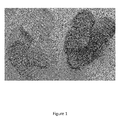
- the crisps of Samples 2 and 4 are embodiments of the invention, whilst the crisps of Samples 1 and 3 are not in accordance with the invention and are for comparison purposes. Photographic images of crisps from samples 1 and 2 are reproduced in Fig. 1 .
- Comparison of Samples 1 and 2 shows that the slices are capable of taking up the flavour marinade (barbeque beef flavour), the flavour scores for the flavours incorporated by marination being significantly higher for Sample 2.
- flavour marinade barbeque beef flavour
- Marination could be used as a route to provide improved flavour profile and flavour longevity during eat.
- Sample 3 was compared with Sample 4. Both had the same level of dust-on meaty flavouring applied.
- Sample 4 produced a higher overall flavour strength perception and stronger meaty and smoky flavours.
- the perceived intensity of the potato flavour in Sample 4 was significantly lower than in Sample 3.
- Marination appears to enhance meaty and depress potato flavour - seen in Samples 2 and 4.
- Table: Flavour intensity sensory rating results Sample 1 Sample 2 Sample 3 Sample 4 Mean scores FLAVOUR Savoury flavour 12 C 44 B 58 A 59 A Meaty/Beefy flavour 0 D 29 C 51 B 58 A Smoky flavour 4 C 25 B 25 B 33 A Onion flavour 0 C 16 B 28 A 32 A Potato flavour 53 A 48 B 50 B 44 C AFTERTASTE Overall aftertaste 32 C 38 B 41 B 46 A
- the difference of intensity rating between the samples is significant at least at a 95% confidence level. Samples sharing the same letter are not statistically significantly different.
- Marinated Sample 2 (shown on the right in Fig. 1 ) had a darker colour than the unmarinated Sample 1 (shown on the left in Fig. 1 ).
- the marinated sample showed a much more even colour distribution across the crisp. The colour distribution is indicative of some marinade penetration at least into the surface layer of the crisp, as predicted by the test described below carried out with a colour solution.
- the uptake of soluble flavouring components into potato slices was simulated using an aqueous colour alone (20% solution of Carantho OF 0900 (an anthocyanin extract) from Overseal, (Naturex Company Ltd)). Slices were cut and prepared from Saturna potatoes as described in Example 1. The slices were dipped into the aqueous colour solution and were immediately fried at the end of the dip period. Dip times of 15 seconds and 2 minutes were tested, on potato slices that had been both cold- and then hot-washed. Crisps were then cut to reveal the matrix which was viewed under a microscope. The penetration of the colour solution into the crisp was determined visually in multiple randomly selected locations to obtain an estimate of the colour uptake.
- Carantho OF 0900 an anthocyanin extract
Landscapes
- Health & Medical Sciences (AREA)
- Nutrition Science (AREA)
- Life Sciences & Earth Sciences (AREA)
- Chemical & Material Sciences (AREA)
- Engineering & Computer Science (AREA)
- Food Science & Technology (AREA)
- Polymers & Plastics (AREA)
- Preparation Of Fruits And Vegetables (AREA)
Applications Claiming Priority (1)
| Application Number | Priority Date | Filing Date | Title |
|---|---|---|---|
| GBGB1202954.2A GB201202954D0 (en) | 2012-02-21 | 2012-02-21 | Improved food product and method for its manufacture |
Publications (1)
| Publication Number | Publication Date |
|---|---|
| EP2630872A1 true EP2630872A1 (de) | 2013-08-28 |
Family
ID=45939939
Family Applications (1)
| Application Number | Title | Priority Date | Filing Date |
|---|---|---|---|
| EP13156053.4A Withdrawn EP2630872A1 (de) | 2012-02-21 | 2013-02-20 | Verbessertes Lebensmittelprodukt und Verfahren zu dessen Herstellung |
Country Status (2)
| Country | Link |
|---|---|
| EP (1) | EP2630872A1 (de) |
| GB (2) | GB201202954D0 (de) |
Cited By (2)
| Publication number | Priority date | Publication date | Assignee | Title |
|---|---|---|---|---|
| CN106616655A (zh) * | 2016-12-23 | 2017-05-10 | 昆明品世食品有限公司 | 一种非油炸土豆休闲食品及其加工方法 |
| JP2020058268A (ja) * | 2018-10-09 | 2020-04-16 | 株式会社レーベン | 調理品 |
Citations (3)
| Publication number | Priority date | Publication date | Assignee | Title |
|---|---|---|---|---|
| CA2088137A1 (en) * | 1992-08-13 | 1994-02-14 | Ronald E. Barnett | Low oil snack chips |
| US5324534A (en) * | 1992-11-13 | 1994-06-28 | Mccain Foods, Inc. | Method of making flavored potato slices |
| US20080138480A1 (en) * | 2006-07-19 | 2008-06-12 | John Richard Bows | Process for making a healthy snack food |
Family Cites Families (6)
| Publication number | Priority date | Publication date | Assignee | Title |
|---|---|---|---|---|
| US2589591A (en) * | 1950-12-18 | 1952-03-18 | Wise Potato Chip Company | Method of controlling color and flavor in potato chips |
| ES2041304T3 (es) * | 1987-12-07 | 1993-11-16 | Quest International B.V. | Procedimiento para mejorar las caracteristicas de sabor de productos de patatas. |
| JPH05184325A (ja) * | 1991-01-29 | 1993-07-27 | Nippon Beet Sugar Mfg Co Ltd | ポテトチップの製造方法 |
| FR2680636A1 (fr) * | 1991-08-30 | 1993-03-05 | Lesieur Alimentaire | Procede et composition pour l'aromatisation de produits alimentaires frits, et produits alimentaires frits aromatises. |
| US20020025367A1 (en) * | 2000-04-18 | 2002-02-28 | The Procter & Gamble Co. | Snack with improved flavor |
| JP2004305201A (ja) * | 2002-11-27 | 2004-11-04 | Hayashibara Biochem Lab Inc | アクリルアミドの生成抑制方法とその用途 |
-
2012
- 2012-02-21 GB GBGB1202954.2A patent/GB201202954D0/en not_active Ceased
-
2013
- 2013-02-20 EP EP13156053.4A patent/EP2630872A1/de not_active Withdrawn
- 2013-02-20 GB GB1303008.5A patent/GB2500309A/en not_active Withdrawn
Patent Citations (3)
| Publication number | Priority date | Publication date | Assignee | Title |
|---|---|---|---|---|
| CA2088137A1 (en) * | 1992-08-13 | 1994-02-14 | Ronald E. Barnett | Low oil snack chips |
| US5324534A (en) * | 1992-11-13 | 1994-06-28 | Mccain Foods, Inc. | Method of making flavored potato slices |
| US20080138480A1 (en) * | 2006-07-19 | 2008-06-12 | John Richard Bows | Process for making a healthy snack food |
Cited By (2)
| Publication number | Priority date | Publication date | Assignee | Title |
|---|---|---|---|---|
| CN106616655A (zh) * | 2016-12-23 | 2017-05-10 | 昆明品世食品有限公司 | 一种非油炸土豆休闲食品及其加工方法 |
| JP2020058268A (ja) * | 2018-10-09 | 2020-04-16 | 株式会社レーベン | 調理品 |
Also Published As
| Publication number | Publication date |
|---|---|
| GB2500309A (en) | 2013-09-18 |
| GB201303008D0 (en) | 2013-04-03 |
| GB201202954D0 (en) | 2012-04-04 |
Similar Documents
| Publication | Publication Date | Title |
|---|---|---|
| JP7550423B2 (ja) | 食肉様食品を含有する液状調味料とその製造方法、並びに肉質感が向上している食肉様食品とその製造方法 | |
| KR101082481B1 (ko) | 육류가공용 염지제 | |
| KR101495731B1 (ko) | 튀김용 닭고기 염지제 및 이를 이용한 튀김용 닭고기 염지방법 | |
| US20090196958A1 (en) | Breading and breading mix comprising crunchy corn ingredient, food products created therewith, and methods related thereto | |
| CA1236333A (en) | Charcoal broiled flavor composition | |
| US20130071544A1 (en) | Food Products, Seasonings and Processing Methods Thereof | |
| WO2004032647A1 (en) | A process and composition for preventing or reducing the formation of acrylamide in foods | |
| KR101333302B1 (ko) | 수육 튀김의 제조 방법 및 이로부터 제조된 수육 튀김 | |
| KR101633591B1 (ko) | 오트밀 치킨 조리방법 | |
| KR102092598B1 (ko) | 압착을 통해 두께가 얇아지고 식감이 향상된 닭 가슴살 가공식품의 제조방법 및 이 제조방법을 통해 제조된 닭 가슴살 가공식품. | |
| EP2630872A1 (de) | Verbessertes Lebensmittelprodukt und Verfahren zu dessen Herstellung | |
| KR101074354B1 (ko) | 명란 소스 제조방법 | |
| KR100375963B1 (ko) | 김치를 주재료로 한 스테이크용 소스 | |
| KR20160040480A (ko) | 무제한 리필 꼬치구이 제조방법 | |
| KR20180119807A (ko) | 치즈김치삼겹살꼬치구이 | |
| JP7046799B2 (ja) | 揚げ物衣用ミックス | |
| KR100411351B1 (ko) | 김치 함유 소스를 이용한 탕수육의 제조방법 | |
| KR20250044593A (ko) | 튀김옷용 조성물 및 그것을 사용한 옷부착 튀김 식품의 제조 방법 | |
| RU2581242C1 (ru) | Способ производства мясосодержащих рубленых полуфабрикатов из свинины, завернутых в растительный лист | |
| KR20200053094A (ko) | 풍미가 뛰어난 짬뽕 및 짜장면의 제조방법 | |
| CA2636298C (en) | Method for producing coated shaped meat for preparation in a toaster, shaped meat product and its use for preparing a schnitzel in a toaster | |
| JP7058227B2 (ja) | パン粉ミックス | |
| CA1063421A (en) | Dry mix for coating foods and process | |
| Pianjing et al. | Utilization of Nile Tilapia (Oreochromis niloticus) in development of fish based Thai snacks. | |
| KR102911532B1 (ko) | 식품 피복 조성물 그리고 가공 식품 및 그의 제조 방법 |
Legal Events
| Date | Code | Title | Description |
|---|---|---|---|
| PUAI | Public reference made under article 153(3) epc to a published international application that has entered the european phase |
Free format text: ORIGINAL CODE: 0009012 |
|
| AK | Designated contracting states |
Kind code of ref document: A1 Designated state(s): AL AT BE BG CH CY CZ DE DK EE ES FI FR GB GR HR HU IE IS IT LI LT LU LV MC MK MT NL NO PL PT RO RS SE SI SK SM TR |
|
| AX | Request for extension of the european patent |
Extension state: BA ME |
|
| 17P | Request for examination filed |
Effective date: 20140228 |
|
| RBV | Designated contracting states (corrected) |
Designated state(s): AL AT BE BG CH CY CZ DE DK EE ES FI FR GB GR HR HU IE IS IT LI LT LU LV MC MK MT NL NO PL PT RO RS SE SI SK SM TR |
|
| RAP1 | Party data changed (applicant data changed or rights of an application transferred) |
Owner name: INTERSNACK GROUP GMBH & CO. KG |
|
| RAP1 | Party data changed (applicant data changed or rights of an application transferred) |
Owner name: INTERSNACK GROUP GMBH & CO. KG |
|
| STAA | Information on the status of an ep patent application or granted ep patent |
Free format text: STATUS: EXAMINATION IS IN PROGRESS |
|
| 17Q | First examination report despatched |
Effective date: 20171002 |
|
| STAA | Information on the status of an ep patent application or granted ep patent |
Free format text: STATUS: THE APPLICATION IS DEEMED TO BE WITHDRAWN |
|
| 18D | Application deemed to be withdrawn |
Effective date: 20190416 |