EP2631002A2 - Informationsverarbeitungssystem, Informationsverarbeitungsprogramm, Informationsverarbeitungsverfahren und Informationsprozessor - Google Patents
Informationsverarbeitungssystem, Informationsverarbeitungsprogramm, Informationsverarbeitungsverfahren und Informationsprozessor Download PDFInfo
- Publication number
- EP2631002A2 EP2631002A2 EP13152451.4A EP13152451A EP2631002A2 EP 2631002 A2 EP2631002 A2 EP 2631002A2 EP 13152451 A EP13152451 A EP 13152451A EP 2631002 A2 EP2631002 A2 EP 2631002A2
- Authority
- EP
- European Patent Office
- Prior art keywords
- program
- routine
- information
- mission
- information processor
- Prior art date
- Legal status (The legal status is an assumption and is not a legal conclusion. Google has not performed a legal analysis and makes no representation as to the accuracy of the status listed.)
- Ceased
Links
Images





Classifications
-
- H—ELECTRICITY
- H04—ELECTRIC COMMUNICATION TECHNIQUE
- H04L—TRANSMISSION OF DIGITAL INFORMATION, e.g. TELEGRAPHIC COMMUNICATION
- H04L67/00—Network arrangements or protocols for supporting network services or applications
- H04L67/01—Protocols
- H04L67/04—Protocols specially adapted for terminals or networks with limited capabilities; specially adapted for terminal portability
-
- A63F13/12—
-
- A—HUMAN NECESSITIES
- A63—SPORTS; GAMES; AMUSEMENTS
- A63F—CARD, BOARD, OR ROULETTE GAMES; INDOOR GAMES USING SMALL MOVING PLAYING BODIES; VIDEO GAMES; GAMES NOT OTHERWISE PROVIDED FOR
- A63F13/00—Video games, i.e. games using an electronically generated display having two or more dimensions
- A63F13/20—Input arrangements for video game devices
- A63F13/23—Input arrangements for video game devices for interfacing with the game device, e.g. specific interfaces between game controller and console
- A63F13/235—Input arrangements for video game devices for interfacing with the game device, e.g. specific interfaces between game controller and console using a wireless connection, e.g. infrared or piconet
-
- A—HUMAN NECESSITIES
- A63—SPORTS; GAMES; AMUSEMENTS
- A63F—CARD, BOARD, OR ROULETTE GAMES; INDOOR GAMES USING SMALL MOVING PLAYING BODIES; VIDEO GAMES; GAMES NOT OTHERWISE PROVIDED FOR
- A63F13/00—Video games, i.e. games using an electronically generated display having two or more dimensions
- A63F13/30—Interconnection arrangements between game servers and game devices; Interconnection arrangements between game devices; Interconnection arrangements between game servers
-
- A—HUMAN NECESSITIES
- A63—SPORTS; GAMES; AMUSEMENTS
- A63F—CARD, BOARD, OR ROULETTE GAMES; INDOOR GAMES USING SMALL MOVING PLAYING BODIES; VIDEO GAMES; GAMES NOT OTHERWISE PROVIDED FOR
- A63F13/00—Video games, i.e. games using an electronically generated display having two or more dimensions
- A63F13/30—Interconnection arrangements between game servers and game devices; Interconnection arrangements between game devices; Interconnection arrangements between game servers
- A63F13/32—Interconnection arrangements between game servers and game devices; Interconnection arrangements between game devices; Interconnection arrangements between game servers using local area network [LAN] connections
- A63F13/327—Interconnection arrangements between game servers and game devices; Interconnection arrangements between game devices; Interconnection arrangements between game servers using local area network [LAN] connections using wireless networks, e.g. Wi-Fi® or piconet
-
- A—HUMAN NECESSITIES
- A63—SPORTS; GAMES; AMUSEMENTS
- A63F—CARD, BOARD, OR ROULETTE GAMES; INDOOR GAMES USING SMALL MOVING PLAYING BODIES; VIDEO GAMES; GAMES NOT OTHERWISE PROVIDED FOR
- A63F13/00—Video games, i.e. games using an electronically generated display having two or more dimensions
- A63F13/45—Controlling the progress of the video game
- A63F13/46—Computing the game score
-
- A—HUMAN NECESSITIES
- A63—SPORTS; GAMES; AMUSEMENTS
- A63F—CARD, BOARD, OR ROULETTE GAMES; INDOOR GAMES USING SMALL MOVING PLAYING BODIES; VIDEO GAMES; GAMES NOT OTHERWISE PROVIDED FOR
- A63F13/00—Video games, i.e. games using an electronically generated display having two or more dimensions
- A63F13/45—Controlling the progress of the video game
- A63F13/48—Starting a game, e.g. activating a game device or waiting for other players to join a multiplayer session
-
- A—HUMAN NECESSITIES
- A63—SPORTS; GAMES; AMUSEMENTS
- A63F—CARD, BOARD, OR ROULETTE GAMES; INDOOR GAMES USING SMALL MOVING PLAYING BODIES; VIDEO GAMES; GAMES NOT OTHERWISE PROVIDED FOR
- A63F13/00—Video games, i.e. games using an electronically generated display having two or more dimensions
- A63F13/70—Game security or game management aspects
- A63F13/79—Game security or game management aspects involving player-related data, e.g. identities, accounts, preferences or play histories
- A63F13/795—Game security or game management aspects involving player-related data, e.g. identities, accounts, preferences or play histories for finding other players; for building a team; for providing a buddy list
-
- A—HUMAN NECESSITIES
- A63—SPORTS; GAMES; AMUSEMENTS
- A63F—CARD, BOARD, OR ROULETTE GAMES; INDOOR GAMES USING SMALL MOVING PLAYING BODIES; VIDEO GAMES; GAMES NOT OTHERWISE PROVIDED FOR
- A63F13/00—Video games, i.e. games using an electronically generated display having two or more dimensions
- A63F13/80—Special adaptations for executing a specific game genre or game mode
- A63F13/822—Strategy games; Role-playing games
-
- A—HUMAN NECESSITIES
- A63—SPORTS; GAMES; AMUSEMENTS
- A63F—CARD, BOARD, OR ROULETTE GAMES; INDOOR GAMES USING SMALL MOVING PLAYING BODIES; VIDEO GAMES; GAMES NOT OTHERWISE PROVIDED FOR
- A63F13/00—Video games, i.e. games using an electronically generated display having two or more dimensions
- A63F13/80—Special adaptations for executing a specific game genre or game mode
- A63F13/847—Cooperative playing, e.g. requiring coordinated actions from several players to achieve a common goal
-
- A—HUMAN NECESSITIES
- A63—SPORTS; GAMES; AMUSEMENTS
- A63F—CARD, BOARD, OR ROULETTE GAMES; INDOOR GAMES USING SMALL MOVING PLAYING BODIES; VIDEO GAMES; GAMES NOT OTHERWISE PROVIDED FOR
- A63F13/00—Video games, i.e. games using an electronically generated display having two or more dimensions
- A63F13/85—Providing additional services to players
- A63F13/88—Mini-games executed independently while main games are being loaded
-
- A—HUMAN NECESSITIES
- A63—SPORTS; GAMES; AMUSEMENTS
- A63F—CARD, BOARD, OR ROULETTE GAMES; INDOOR GAMES USING SMALL MOVING PLAYING BODIES; VIDEO GAMES; GAMES NOT OTHERWISE PROVIDED FOR
- A63F13/00—Video games, i.e. games using an electronically generated display having two or more dimensions
- A63F13/90—Constructional details or arrangements of video game devices not provided for in groups A63F13/20 or A63F13/25, e.g. housing, wiring, connections or cabinets
- A63F13/92—Video game devices specially adapted to be hand-held while playing
-
- A—HUMAN NECESSITIES
- A63—SPORTS; GAMES; AMUSEMENTS
- A63F—CARD, BOARD, OR ROULETTE GAMES; INDOOR GAMES USING SMALL MOVING PLAYING BODIES; VIDEO GAMES; GAMES NOT OTHERWISE PROVIDED FOR
- A63F13/00—Video games, i.e. games using an electronically generated display having two or more dimensions
- A63F13/90—Constructional details or arrangements of video game devices not provided for in groups A63F13/20 or A63F13/25, e.g. housing, wiring, connections or cabinets
- A63F13/95—Storage media specially adapted for storing game information, e.g. video game cartridges
-
- G—PHYSICS
- G06—COMPUTING OR CALCULATING; COUNTING
- G06F—ELECTRIC DIGITAL DATA PROCESSING
- G06F16/00—Information retrieval; Database structures therefor; File system structures therefor
- G06F16/20—Information retrieval; Database structures therefor; File system structures therefor of structured data, e.g. relational data
- G06F16/23—Updating
-
- G—PHYSICS
- G06—COMPUTING OR CALCULATING; COUNTING
- G06F—ELECTRIC DIGITAL DATA PROCESSING
- G06F16/00—Information retrieval; Database structures therefor; File system structures therefor
- G06F16/20—Information retrieval; Database structures therefor; File system structures therefor of structured data, e.g. relational data
- G06F16/27—Replication, distribution or synchronisation of data between databases or within a distributed database system; Distributed database system architectures therefor
-
- G—PHYSICS
- G06—COMPUTING OR CALCULATING; COUNTING
- G06F—ELECTRIC DIGITAL DATA PROCESSING
- G06F16/00—Information retrieval; Database structures therefor; File system structures therefor
- G06F16/20—Information retrieval; Database structures therefor; File system structures therefor of structured data, e.g. relational data
- G06F16/27—Replication, distribution or synchronisation of data between databases or within a distributed database system; Distributed database system architectures therefor
- G06F16/273—Asynchronous replication or reconciliation
-
- H—ELECTRICITY
- H04—ELECTRIC COMMUNICATION TECHNIQUE
- H04L—TRANSMISSION OF DIGITAL INFORMATION, e.g. TELEGRAPHIC COMMUNICATION
- H04L67/00—Network arrangements or protocols for supporting network services or applications
- H04L67/01—Protocols
- H04L67/10—Protocols in which an application is distributed across nodes in the network
- H04L67/104—Peer-to-peer [P2P] networks
-
- A—HUMAN NECESSITIES
- A63—SPORTS; GAMES; AMUSEMENTS
- A63F—CARD, BOARD, OR ROULETTE GAMES; INDOOR GAMES USING SMALL MOVING PLAYING BODIES; VIDEO GAMES; GAMES NOT OTHERWISE PROVIDED FOR
- A63F2300/00—Features of games using an electronically generated display having two or more dimensions, e.g. on a television screen, showing representations related to the game
- A63F2300/20—Features of games using an electronically generated display having two or more dimensions, e.g. on a television screen, showing representations related to the game characterised by details of the game platform
- A63F2300/204—Features of games using an electronically generated display having two or more dimensions, e.g. on a television screen, showing representations related to the game characterised by details of the game platform the platform being a handheld device
-
- A—HUMAN NECESSITIES
- A63—SPORTS; GAMES; AMUSEMENTS
- A63F—CARD, BOARD, OR ROULETTE GAMES; INDOOR GAMES USING SMALL MOVING PLAYING BODIES; VIDEO GAMES; GAMES NOT OTHERWISE PROVIDED FOR
- A63F2300/00—Features of games using an electronically generated display having two or more dimensions, e.g. on a television screen, showing representations related to the game
- A63F2300/40—Features of games using an electronically generated display having two or more dimensions, e.g. on a television screen, showing representations related to the game characterised by details of platform network
- A63F2300/404—Features of games using an electronically generated display having two or more dimensions, e.g. on a television screen, showing representations related to the game characterised by details of platform network characterized by a local network connection
- A63F2300/405—Features of games using an electronically generated display having two or more dimensions, e.g. on a television screen, showing representations related to the game characterised by details of platform network characterized by a local network connection being a wireless ad hoc network, e.g. Bluetooth®, Wi-Fi®, piconet
-
- A—HUMAN NECESSITIES
- A63—SPORTS; GAMES; AMUSEMENTS
- A63F—CARD, BOARD, OR ROULETTE GAMES; INDOOR GAMES USING SMALL MOVING PLAYING BODIES; VIDEO GAMES; GAMES NOT OTHERWISE PROVIDED FOR
- A63F2300/00—Features of games using an electronically generated display having two or more dimensions, e.g. on a television screen, showing representations related to the game
- A63F2300/40—Features of games using an electronically generated display having two or more dimensions, e.g. on a television screen, showing representations related to the game characterised by details of platform network
- A63F2300/408—Peer to peer connection
-
- A—HUMAN NECESSITIES
- A63—SPORTS; GAMES; AMUSEMENTS
- A63F—CARD, BOARD, OR ROULETTE GAMES; INDOOR GAMES USING SMALL MOVING PLAYING BODIES; VIDEO GAMES; GAMES NOT OTHERWISE PROVIDED FOR
- A63F2300/00—Features of games using an electronically generated display having two or more dimensions, e.g. on a television screen, showing representations related to the game
- A63F2300/50—Features of games using an electronically generated display having two or more dimensions, e.g. on a television screen, showing representations related to the game characterized by details of game servers
- A63F2300/55—Details of game data or player data management
- A63F2300/5546—Details of game data or player data management using player registration data, e.g. identification, account, preferences, game history
- A63F2300/5566—Details of game data or player data management using player registration data, e.g. identification, account, preferences, game history by matching opponents or finding partners to build a team, e.g. by skill level, geographical area, background, play style
-
- A—HUMAN NECESSITIES
- A63—SPORTS; GAMES; AMUSEMENTS
- A63F—CARD, BOARD, OR ROULETTE GAMES; INDOOR GAMES USING SMALL MOVING PLAYING BODIES; VIDEO GAMES; GAMES NOT OTHERWISE PROVIDED FOR
- A63F2300/00—Features of games using an electronically generated display having two or more dimensions, e.g. on a television screen, showing representations related to the game
- A63F2300/60—Methods for processing data by generating or executing the game program
- A63F2300/6036—Methods for processing data by generating or executing the game program for offering a minigame in combination with a main game
-
- A—HUMAN NECESSITIES
- A63—SPORTS; GAMES; AMUSEMENTS
- A63F—CARD, BOARD, OR ROULETTE GAMES; INDOOR GAMES USING SMALL MOVING PLAYING BODIES; VIDEO GAMES; GAMES NOT OTHERWISE PROVIDED FOR
- A63F2300/00—Features of games using an electronically generated display having two or more dimensions, e.g. on a television screen, showing representations related to the game
- A63F2300/60—Methods for processing data by generating or executing the game program
- A63F2300/63—Methods for processing data by generating or executing the game program for controlling the execution of the game in time
- A63F2300/636—Methods for processing data by generating or executing the game program for controlling the execution of the game in time involving process of starting or resuming a game
-
- A—HUMAN NECESSITIES
- A63—SPORTS; GAMES; AMUSEMENTS
- A63F—CARD, BOARD, OR ROULETTE GAMES; INDOOR GAMES USING SMALL MOVING PLAYING BODIES; VIDEO GAMES; GAMES NOT OTHERWISE PROVIDED FOR
- A63F2300/00—Features of games using an electronically generated display having two or more dimensions, e.g. on a television screen, showing representations related to the game
- A63F2300/80—Features of games using an electronically generated display having two or more dimensions, e.g. on a television screen, showing representations related to the game specially adapted for executing a specific type of game
- A63F2300/8011—Ball
Definitions
- the present invention relates to an information processing system, an information processing program, an information processing method and an information processor, and more particularly to an information processing system, an information processing program, an information processing method and an information processor which use wireless communication.
- Patent Literature 1 discloses a technique whereby an own device may be connected to a desired parent device from among a plurality of parent devices in a communicable range of the own device. Specifically, before starting a communication game, the own device receives a parent device packet from each of the parent devices in the communicable range and makes a parent device list to display on a screen. When a user selects a desired parent device from the parent device list, a connection request is transmitted to the parent device, and thereby the communication game with the selected parent device is started.
- An objective of the present invention is to provide an information processing system, an information processing program, an information processing method and an information processor in which an application that uses wireless communication can be easily started.
- a first exemplary configuration is an information processing system including a first information processor and a second information processor each having a wireless communication function.
- the first information processor comprises: first execution means for executing a program or a routine which uses wireless communication; and first transmission means for transmitting, while the program or the routine is being executed, identification information for identifying the program or the routine to an unspecified apparatus.
- the second information processor (10) comprises: second reception means for receiving the identification information transmitted from the first information processor to the unspecified apparatus; selection means for selecting, from among a plurality of programs or a plurality of routines stored in the second information processor, a program or a routine corresponding to the identification information received by the second reception means as a program or a routine to be executed; and second execution means for executing the program or the routine selected by the selection means.
- the first transmission means may transmit a beacon at predetermined intervals, thereby transmitting the identification information to the unspecified apparatus.
- the second execution means may execute the program or the routine selected by the selection means, thereby conducting wireless communication with the first information processor.
- the program or the routine executed by the first execution means and the second execution means may be a program or a routine of an application which allows participation of a user of the first information processor together with a user of the second information processor using wireless communication.
- the second information processor may comprise inquiry means for asking the user, before the program or the routine selected by the selection means is executed by the second execution means, whether or not to execute the selected program or routine.
- the selection means automatically may select the program or the routine corresponding to the identification information received by the second reception means.
- the second execution means may automatically execute the program or the routine selected by the selection means.
- the first execution means and the second execution means may execute a program or a routine which uses wireless communication between the first information processor and the second information processor without establishing connection between the first information processor and the second information processor.
- the first transmission means may repeatedly transmit, while the program or the routine is being executed, predetermined data used in the program or the routine together with the identification information to the unspecified apparatus.
- the second reception means may receive the identification information and the predetermined data transmitted from the first information processor to the unspecified apparatus.
- the second execution means may execute the program or the routine using the predetermined data received by the second reception means.
- the second information processor may comprise second transmission means for repeatedly transmitting, while the program or the routine is being executed, predetermined data used in the program or the routine together with identification information for identifying the program or the routine to the unspecified apparatus.
- the first information processor may comprise first reception means for receiving the predetermined data transmitted from the second information processor to the unspecified apparatus.
- the first execution means may execute the program or the routine using the predetermined data received by the first reception means.
- the program or the routine executed by the first execution means and the second execution means may be a program or a routine of an application which allows, in a mission started by a user of the first information processor, participation of a user of the second information processor in the middle of the mission.
- the predetermined data may be data of a progress of the mission being executed.
- the program or the routine may be a program or a routine for a game process.
- a second exemplary configuration is an information processing program which causes a computer of an information processor having a wireless communication function to function as: reception means for receiving identification information which is transmitted from another information processor to an unspecified apparatus and is information for identifying a program or a routine which uses wireless communication and is currently being executed in the other information processor; selection means for selecting, from among a plurality of programs or a plurality of routines stored in the information processor, a program or a routine corresponding to the identification information received by the reception means as a program or a routine to be executed; and execution means for executing the program or the routine selected by the selection means.
- the information processing program may be stored in any computer-readable storage medium (e.g., a flexible disk, a hard disk, an optical disk, a magneto-optical disc, a CD-ROM, a CD-R, a magnetic tape, a semiconductor memory card, a ROM, a RAM, and the like).
- a computer-readable storage medium e.g., a flexible disk, a hard disk, an optical disk, a magneto-optical disc, a CD-ROM, a CD-R, a magnetic tape, a semiconductor memory card, a ROM, a RAM, and the like.
- a third exemplary configuration is an information processing method performed in an information processing system including a first information processor and a second information processor each having a wireless communication function.
- the information processing method comprises: a first execution step of executing, in the first information processor, a program or a routine which uses wireless communication; a transmission step of transmitting, in the first information processor, while the program or the routine is being executed, identification information for identifying the program or the routine to an unspecified apparatus; a reception step for receiving, in the second information processor, the identification information transmitted from the first information processor to the unspecified apparatus; a selection step of selecting, in the second information processor, from among a plurality of programs or a plurality of routines stored in the second information processor, a program or a routine corresponding to the identification information received in the reception step as a program or a routine to be executed; and a second execution step of executing, in the second information processor, the program or the routine selected in the selection step.
- a fourth exemplary configuration is an information processor having a wireless communication function.
- the information processor comprises: reception means for receiving identification information transmitted from another information processor to an unspecified apparatus, the information being for identifying a program or a routine which uses wireless communication and is currently being executed in the other information processor; selection means for selecting, from among a plurality of programs or a plurality of routines stored in the information processor, a program or a routine corresponding to the identification information received by the reception means as a program or a routine to be executed; and execution means for executing the program or the routine selected by the selection means.
- an application that uses wireless communication can be easily started.
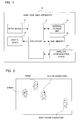
- a hand-held game apparatus 10 includes an input device 11, a display device 12, a processor 13, an internal storage unit 14, a main memory 15, and a wireless communication device 16.
- the input device 11 is operated by a user of the hand-held game apparatus 10 and outputs a signal based on an operation by the user.
- the input device 11 is, for example, a cross switch, a push button, or a touch panel.
- the display device 12 displays an image generated by the hand-held game apparatus 10 on a screen.
- the display device 12 is a liquid crystal display.
- the internal storage unit 14 stores a computer program executed by the processor 13.
- the internal storage unit 14 is a flash EEPROM.
- the main memory 15 temporarily stores the computer program and information.
- the wireless communication device 16 transmits/receives a signal to/from another hand-held game apparatus via wireless communication.
- a user (player) of the hand-held game apparatus 10 can play a game for a single player (hereinafter, referred to as single player game) using the hand-held game apparatus 10.
- FIG. 2 shows an example of a game image displayed on the display device 12 while the single player game is being executed.
- a game world including a player character controlled by the player, non-player characters (NPC), enemies, and the like which are controlled by a computer is displayed.
- the player aims to achieve an objective (e.g., defeating a boss character) of the single player game by controlling the player character.
- the mission may be a game in which a single player or a plurality of players together aim to achieve a predetermined objective, or a game in which a plurality of players compete with each other to achieve a predetermined objective.
- FIG. 4 a list of missions is displayed as shown in FIG. 4 .
- three missions which are "mission A,” “mission B,” and “mission C” are displayed.
- the mission A” is “to pick up 60 or more balls in 10 minutes.”
- the mission B is “to defeat 50 or more enemies in 30 minutes.”
- the mission C is “to talk to 30 or more non-player characters in 10 minutes.” The player can select a desired mission from the list.
- the mission A is started in the same game world as the single player game that the player has been playing until then. That is, the player can enjoy the mission in parallel with the single player game that he/she has been playing until then without suspending it.
- the hand-held game apparatus 10 (hereinafter, referred to as hand-held game apparatus 10a so as to distinguish it from other hand-held game apparatuses 10) periodically (e.g., at intervals of 100 ms) broadcasts a beacon signal (hereinafter, referred to as mission beacon) that includes information of the mission currently being executed via the wireless communication device 16 as shown in FIG. 6 .
- the mission beacon includes, as will be described later, mission identification information, mission condition information, player identification information, personal score information, and the like ( FIG. 12 ).
- the other hand-held game apparatus 10b can receive the mission beacon of the hand-held game apparatus 10a.
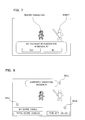
- the hand-held game apparatus 10b Upon receipt of the mission beacon of the hand-held game apparatus 10a, the hand-held game apparatus 10b displays a message asking a player thereof whether or not to participate in the mission currently being executed in the hand-held game apparatus 10a as shown in FIG. 7 .
- the player of the hand-held game apparatus 10a and the player of the hand-held game apparatus 10b are referred to as player A and player B, respectively.
- the mission A is started in the same game world as the single player game that the player B has been playing until then as shown in FIG. 8 . That is, the player B can also enjoy the mission in parallel with the single player game that he/she has been playing until then without suspending it.
- the hand-held game apparatus 10a when the mission A is started in the hand-held game apparatus 10b, a plurality of balls appear in a field of the game world of the single player game and information of a progress status of the mission is displayed as shown in FIG. 8 .
- a time left is 9:43 instead of 10:00 because 17 seconds has passed from a time point at which the mission A is started in the hand-held game apparatus 10a.
- the mission beacon of the hand-held game apparatus 10a received by the hand-held game apparatus 10b includes score information of the player A. Consequently, while a my score is o, a total score is 3.
- a my score is a player's own personal score while a total score is a sum of personal scores of all of players who are participating in a same mission. Accordingly, a condition (time left, total score, and the like) when the mission is started may vary according to a timing of participation in the mission.
- the hand-held game apparatus 10b also periodically broadcasts a mission beacon as shown in FIG. 9 . Accordingly, until the end of the mission, the hand-held game apparatus 10a receives the mission beacon broadcasted periodically from the hand-held game apparatus 10b, and thereby the hand-held game apparatus 10a can obtain a personal score of the player B in real time and update the total score. Similarly, until the end of the mission, the hand-held game apparatus 10b also receives the mission beacon broadcasted periodically from the hand-held game apparatus 10a, and thereby the hand-held game apparatus 10b can obtain a personal score of the player A in real time and update the total score.
- the mission A it is determined that the mission has been successful if 60 or more balls are picked up in 10 minutes. The determination is made based on the total score but not on the respective personal scores. Consequently, if the player A and the player B pick up 45 balls and 30 balls, respectively, for example, the total score is 75 and it is determined that the mission has been successful.
- all the players here, the player A and the player B who have participated in the mission receive a reward (e.g., money, items, and the like in the game world) for success which is predetermined according to each mission.
- success/failure of the mission is determined based on the total score but not on the respective personal scores. Consequently, it is more advantageous when the number of players who participate in the mission is greater.
- a player C of a hand-held game apparatus 10c is participating in the mission started by the player A of the hand-held game apparatus 10a.
- the hand-held game apparatus 10a updates the total score, in real time, based on the mission beacon of the hand-held game apparatus 10b and a mission beacon of the hand-held game apparatus 10c.
- the hand-held game apparatus 10b updates the total score, in real time, based on the mission beacon of the hand-held game apparatus 10a and the mission beacon of the hand-held game apparatus 10c.
- the hand-held game apparatus 10c updates the total score, in real time, based on the mission beacon of the hand-held game apparatus 10a and the mission beacon of the hand-held game apparatus 10b.
- a plurality of hand-held game apparatuses exchange information of a mission currently being executed among each other via mission beacons, thereby a plurality of players can participate in a same mission and play together.
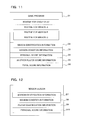
- FIG. 11 shows an example of a program and information stored in the main memory 15 of the hand-held game apparatus 10.
- a game program D1 is a computer program for causing the processor 13 to execute the above described single player game and the respective missions.
- the game program D1 is read out from the internal storage unit 14 and loaded into the main memory 15.
- the game program D1 includes a routine for executing the above described single player game and routines for executing the above described respective missions (mission A, mission B, mission C).
- Mission identification information D2 is information for identifying a mission currently being executed.
- Mission condition information D3 is information indicating a condition (e.g., mission end time and the like) of the mission currently being executed.
- Personal score information D4 is information indicating a score of a player of an own hand-held game apparatus 10.
- the personal score information D4 is updated when, for example, a player character performs a predetermined action (action predetermined for each mission) in the own hand-held game apparatus 10.
- Another player score information D5 is information indicating a score of a player of another hand-held game apparatus 10.
- the another player score information D5 is updated when, for example, a mission beacon from the other hand-held game apparatus 10 is received.
- Total score information D6 is information indicating a sum of the score of the player of the own hand-held game apparatus 10 and the score of the player of the other hand-held game apparatus 10.
- the total score information D6 is updated when either the personal score information D4 or the another player score information D5 is updated.
- FIG. 12 shows an example of data included in a mission beacon.
- the mission beacon includes mission identification information D7, mission condition information D8, player identification information D9, and personal score information D10.
- the mission identification information D7 is information indicating a mission currently being executed.
- the mission identification information D7 may include a value determined randomly at a start of the mission in addition to information (e.g., a mission number and the like) for identifying each of a plurality of missions (mission A, mission B, and mission C in the present embodiment) provided in advance. Accordingly, when a mission (e.g., mission A) having a common mission number is started in each of a hand-held game apparatus and another hand-held game apparatus, the mission can be identified.
- a mission e.g., mission A having a common mission number
- the mission condition information D8 is information indicating a condition (e.g., a mission end time and the like) of the mission currently being executed.
- the player identification information D9 is information for identifying a hand-held game apparatus 10 which has transmitted the mission beacon or a player thereof.
- information such as a player name and the like registered in the hand-held game apparatus 10 may be used.
- a serial number assigned to the hand-held game apparatus 10 a MAC address of the wireless communication device 16, and the like may be used.
- the personal score information D10 is information indicating a score of a player of the own hand-held game apparatus 10.
- the processor 13 Upon start of execution of the game program D1, the processor 13 firstly starts a single player game in step S10 of FIG. 13 .
- step S11 the processor 13 performs a game process.
- the game process includes, for example, a process of controlling a player character based on a signal from the input device 11, a process of controlling an enemy and a non-player character based on a predetermined algorithm, a process of causing a predetermined event in a game world, a process of generating a game image and outputting the game image to the display device 12, and the like.
- step S12 the processor 13 determines whether a mission start instruction has been received from a player. Then, if the mission start instruction has been received from the player (for example, when "YES" is selected in FIG. 3 ), the processor 13 proceeds the processing to step S13. Otherwise, the processor 13 proceeds the processing to step S15.
- step S13 the processor 13 selects a mission from a plurality of missions provided in advance. The selection may be made based on an instruction from the player as shown in FIG. 4 or may be made automatically by the processor 13 based on a predetermined rule.
- the mission identification information D2 corresponding to the selected mission is stored in the main memory 15. Further, an end time and the like of the selected mission is calculated as appropriate and the calculated end time and the like is stored in the main memory 15 as the mission condition information D3.
- step S14 the processor 13 starts the mission selected in step S13. Specifically, the processor 13 starts to execute a routine for the mission selected in step S13 in parallel with a routine for the single player game of the game program D1.
- a routine for the mission A includes a process of causing a plurality of balls appear in the game world when the mission A is started, a process of deleting one of the balls from the game world when the player character touches the ball and updating the personal score information D4 of the main memory 15, and the like.
- step S15 the processor 13 determines whether any of the missions is currently being executed in the own hand-held game apparatus 10. Then, if one of the missions is currently being executed, the processor 13 proceeds the processing to step S16. Otherwise, the processor 13 proceeds the processing to step S20 of FIG. 14 .
- step S16 the processor 13 updates the personal score information D4 and the total score information D6 of the main memory 15 based on a result (i.e., a content of an action of the player character in the game world) of the game process in step S11. For example, while the mission A is being executed, points are added to a personal score each time the player character touches a ball.
- the total score information D6 can be calculated based on the personal score information D4 and the another player score information D5.
- step S17 the processor 13 displays information (e.g., my score, total score, time left in FIG. 5 , and the like) of a progress status of the mission currently being executed.
- the my score can be obtained from the personal score information D4 of the main memory 15.
- the total score can be obtained from the total score information D6 of the main memory 15.
- the time left can be calculated based on a real-time clock (not shown) provided in the hand-held game apparatus 10 and the end time included in the mission condition information D3 of the main memory 15.
- step S18 the processor 13 generates a mission beacon as in FIG. 12 based on the personal score information D4 of the main memory 15 and the like.
- the generated mission beacon is broadcasted via the wireless communication device 16 at a predetermined timing. Then, the processor 13 proceeds the processing to step S20 of FIG. 14 .
- step S20 of FIG. 14 the processor 13 determines whether a mission beacon of another hand-held game apparatus 10 has been received via the wireless communication device 16. Then, if the mission beacon of the other hand-held game apparatus 10 has been received, the processor 13 proceeds the processing to step S21. Otherwise, the processor 13 proceeds the processing to step S27.
- step S21 the processor 13 determines whether any of the missions is being executed in the own hand-held game apparatus 10. Then, if one of the missions is currently being executed, the processor 13 proceeds the processing to step S22. Otherwise, the processor 13 proceeds the processing to step S24.
- step S22 the processor 13 determines whether the mission indicated by the received mission beacon is the mission currently being executed in the own hand-held game apparatus 10. The determination is made by, for example, collating the mission identification information D7 included in the received mission beacon with the mission identification information D2 of the main memory 15. Then, if the mission indicated by the received mission beacon is the mission currently being executed in the own hand-held game apparatus 10, the processor 13 proceeds the processing to step S23. Otherwise, the processor 13 proceeds the processing to step S27.
- step S23 the processor 13 updates the another player score information D5 and the total score information D6 of the main memory 15 based on the player identification information D9 and the personal score information D10 included in the received mission beacon.
- step S24 the processor 13 displays a message (e.g., the message in FIG. 7 ) asking the player of the own hand-held game apparatus 10 whether or not to participate in the mission (that is, the mission already started in the other hand-held game apparatus 10) corresponding to the mission identification information D7 included in the received mission beacon.
- a message e.g., the message in FIG. 7
- the processor 13 displays a message (e.g., the message in FIG. 7 ) asking the player of the own hand-held game apparatus 10 whether or not to participate in the mission (that is, the mission already started in the other hand-held game apparatus 10) corresponding to the mission identification information D7 included in the received mission beacon.
- step S25 the processor 13 determines whether the player of the own hand-held game apparatus 10 participates in the mission (for example, whether the player has selected "YES" in FIG. 7 ). Then, if the player of the own hand-held game apparatus 10 participates in the mission, the processor 13 proceeds the processing to step S26. Otherwise, the processor 13 proceeds the processing to step S27.
- step S26 the processor 13 starts the mission corresponding to the mission identification information D7 included in the received mission beacon. Specifically, the processor 13 starts to execute a routine for the mission corresponding to the mission identification information D7 included in the received mission beacon in parallel with the routine for the single player game of the game program D1. For example, if the mission identification information D7 included in the received mission beacon indicates the mission A, the processor 13 starts to execute the routine for the mission A. Similarly, if the mission identification information D7 included in the received mission beacon indicates the mission B, the processor 13 starts to execute a routine for the mission B.
- the mission identification information D2 and the mission condition information D3 are stored in the main memory 15 based on the mission identification information D7 and the mission condition information D8 included in the received mission beacon.
- step S27 the processor 13 determines whether a mission end condition is satisfied.
- the mission end condition are that an end condition (for example, that a predetermined time period has elapsed, that the total score has reached a predetermined value, and the like) predetermined for each mission is satisfied, that a mission end instruction has been received from the player in the middle of the mission, and the like. Then, if the mission end condition is satisfied, the processor 13 proceeds the processing to step S28. Otherwise, the processor 13 returns the processing to step S11 of FIG. 13 .
- step S28 the processor 13 ends the mission.
- the mission A for example, a process of deleting all of the balls which have appeared in the game world at the start of the mission from the game world, and the like is performed.
- step S29 the processor 13 determines whether or not the mission has been successful. Whether or not the mission has been successful is determined, for example, based on whether the total score indicated by the total score information D6 of the main memory 15 has reached a target total score predetermined for each mission. Then, if the mission has been successful, the processor 13 proceeds the processing to step S30. Otherwise, the processor 13 returns the processing to step S11 of FIG. 13 .
- step S30 the processor 13 performs a success process.
- An example of the success process may be granting a reward (e.g., money, items, and the like in the game world) for success predetermined according to each mission, and the like.
- steps S11 to S30 are repeated at predetermined intervals (e.g., intervals of 1/60 sec), thereby the single player game is advanced.
- predetermined intervals e.g., intervals of 1/60 sec
- a plurality of hand-held game apparatuses 10 exchange mission beacons among themselves, thereby a mission is advanced.
- a mission is advanced.
- a mission (routine for the mission) corresponding to the mission identification information is automatically selected from a plurality of missions provided in advance. Accordingly, a player of the hand-held game apparatus 10 which has received the mission beacon can easily participate in the mission started by another player without manually selecting the corresponding mission from the plurality of missions provided in advance.
- a total score is updated in real time based on personal score information included in a mission beacon of another hand-held game apparatus 10. Consequently, a player can feel as if the player is actually participating in a same mission with another player. That is, the player can feel as if the player is actually participating in the same mission with the other player because data of a progress of the mission in the other hand-held game apparatus 10 can be received from the other hand-held game apparatus 10.
- a mission is started in a same game world as a single player game without suspending the single player game.
- a player can participate in the mission without hesitation and without suspending the single player game.
- a mission beacon includes mission condition information (a mission end time and the like), which allows a mission to be executed under common conditions in a plurality of hand-held game apparatuses 10 (for example, the mission can be ended at the same time in the plurality of hand-held game apparatuses 10).
- mission condition information a mission end time and the like
- the hand-held game apparatus 10 is used.
- the present invention is not limited thereto, and any information processor (e.g., a mobile phone, a smartphone, a notebook computer, and the like) having a wireless communication function may be used.
- the game program which allows a plurality of players to participate in a same mission together is executed.
- the present invention is not limited thereto, and any application which allows users of a plurality of information processors to participate together using wireless communication may be executed.
- any program or a routine which uses wireless communication between a plurality of information processors may be executed.
- a program or a routine which causes a host apparatus to generate predetermined data and transmit the predetermined data to a client apparatus via wireless communication and causes the client apparatus to receive and process the predetermined data may be executed in the host apparatus and the client apparatus.
- a program or a routine which causes a client apparatus to generate predetermined data and transmit the predetermined data to a host apparatus via wireless communication and causes the host apparatus to receive and process the predetermined data may be executed in the host apparatus and the client apparatus.
- a mission beacon including the mission identification information is broadcasted from each of the hand-held game apparatuses 10 and a mission corresponding to the mission identification information included in the mission beacon is selected in the hand-held game apparatus 10 which has received the mission beacon.
- a first information processor may broadcast identification information indicating a program or a routine being executed therein via a beacon signal and the like.
- a second information processor which has received the broadcasted identification information may automatically select, from a plurality of programs or a plurality of routines stored in the second information processor, a program or a routine corresponding to the received identification information and start to execute the selected program or routine.
- the program or the routine corresponding to the program or the routine being executed in the first information processor can be automatically selected and the selected program or routine executes wireless communication with the first information processor. Consequently, a user does not have to bother to manually select an appropriate program or routine. Therefore, the program or routine that uses wireless communication can be easily executed.
- the wireless communication executed by the selected program or routine may be conducted by using the beacon signal without establishing connection between the apparatuses as in the above embodiment, or may be conducted after the communication between the apparatuses is established.
- the hand-held game apparatus 10 when the hand-held game apparatus 10 receives a mission beacon of the other hand-held game apparatus 10, the message asking the player of the hand-held game apparatus 10 whether or not to participate in the mission currently being executed in the other hand-held game apparatus 10 is displayed as shown in FIG. 7 .
- the present invention is not limited thereto.
- the player of the hand-held game apparatus 10 may automatically participate in the mission currently being executed in the other hand-held game apparatus 10 without being asked whether or not to participate in the mission currently being executed in the other hand-held game apparatus 10 (that is, a routine for the corresponding mission may be automatically started).
- success/failure of the mission is determined based on the total score obtained by summing the personal scores of all the players.
- the present invention is not limited thereto.
- the determination of the success/failure of the mission may be made by another method. For example, at a time point at which one of the players has first defeated a specific enemy, it may be determined that the player has succeeded in the mission and the rest of players have failed in the mission.
- the personal score of each player is broadcasted by the mission beacon.
- information indicating that the personal score has been increased may be broadcasted via the mission beacon each time the personal score of each player is increased.
- the personal score of the player corresponding to the mission beacon which is stored as the another player score information may be increased in each hand-held game apparatus 10 which has received the mission beacon.
- the information of the mission currently being executed is broadcasted by the beacon signal.
- the information of the mission currently being executed may be transmitted to an unspecified apparatus (that is, to be transmitted without being addressed to a specific apparatus) using a signal other than the beacon signal.
- the plurality of processes shown in FIG. 13 and FIG. 14 are executed by a single computer (the processor 13).
- the plurality of processes may be shared and executed by a plurality of computers.
- a part of or all of the plurality of processes may be realized by a dedicated circuit.
- the plurality of processes shown in FIG. 13 and FIG. 14 are executed in a single information processor (the hand-held game apparatus 10).
- the plurality of processes may be shared and executed by a plurality of information processors (e.g., the hand-held game apparatus 10 and a server apparatus).
- the game program D1 is loaded into the main memory 15 from the internal storage unit 14.
- the game program D1 may be read from an external storage unit and loaded into the main memory 15, or may be received from another hand-held game apparatus 10 or a server apparatus and loaded into the main memory 15.
Landscapes
- Engineering & Computer Science (AREA)
- Multimedia (AREA)
- Theoretical Computer Science (AREA)
- Databases & Information Systems (AREA)
- Computer Networks & Wireless Communication (AREA)
- General Engineering & Computer Science (AREA)
- General Physics & Mathematics (AREA)
- Data Mining & Analysis (AREA)
- Physics & Mathematics (AREA)
- Signal Processing (AREA)
- Human Computer Interaction (AREA)
- Computing Systems (AREA)
- Business, Economics & Management (AREA)
- General Business, Economics & Management (AREA)
- Computer Security & Cryptography (AREA)
- Mobile Radio Communication Systems (AREA)
- Management, Administration, Business Operations System, And Electronic Commerce (AREA)
- Multi Processors (AREA)
- Stored Programmes (AREA)
Applications Claiming Priority (2)
| Application Number | Priority Date | Filing Date | Title |
|---|---|---|---|
| JP2012035351A JP6274715B2 (ja) | 2012-02-21 | 2012-02-21 | 情報処理システム、情報処理プログラム、情報処理方法および情報処理装置 |
| JP2012035352A JP6174840B2 (ja) | 2012-02-21 | 2012-02-21 | 情報処理システム、情報処理プログラム、情報処理方法および情報処理装置 |
Publications (2)
| Publication Number | Publication Date |
|---|---|
| EP2631002A2 true EP2631002A2 (de) | 2013-08-28 |
| EP2631002A3 EP2631002A3 (de) | 2013-10-16 |
Family
ID=47740774
Family Applications (2)
| Application Number | Title | Priority Date | Filing Date |
|---|---|---|---|
| EP13152305.2A Ceased EP2631001A3 (de) | 2012-02-21 | 2013-01-23 | Informationsverarbeitungssystem, Informationsverarbeitungsprogramm, Informationsverarbeitungsverfahren und Informationsprozessor |
| EP13152451.4A Ceased EP2631002A3 (de) | 2012-02-21 | 2013-01-24 | Informationsverarbeitungssystem, Informationsverarbeitungsprogramm, Informationsverarbeitungsverfahren und Informationsprozessor |
Family Applications Before (1)
| Application Number | Title | Priority Date | Filing Date |
|---|---|---|---|
| EP13152305.2A Ceased EP2631001A3 (de) | 2012-02-21 | 2013-01-23 | Informationsverarbeitungssystem, Informationsverarbeitungsprogramm, Informationsverarbeitungsverfahren und Informationsprozessor |
Country Status (2)
| Country | Link |
|---|---|
| US (4) | US9069796B2 (de) |
| EP (2) | EP2631001A3 (de) |
Families Citing this family (5)
| Publication number | Priority date | Publication date | Assignee | Title |
|---|---|---|---|---|
| US20080076501A1 (en) * | 2006-08-31 | 2008-03-27 | Waterleaf Limited | Method And System For Providing Adaptable Options For Electronic Gaming |
| GB201117329D0 (en) * | 2011-10-07 | 2011-11-23 | Waterleaf Ltd | Gaming systems, apparatus and method with dual game play |
| US9069796B2 (en) | 2012-02-21 | 2015-06-30 | Nintendo Co., Ltd. | Information processing system, computer-readable non-transitory storage medium, information processing method and information processor |
| KR101849244B1 (ko) * | 2013-08-30 | 2018-04-16 | 삼성전자주식회사 | 이미지 채색 정보 제공 방법, 장치 및 기록 매체 |
| JP5980266B2 (ja) | 2014-05-14 | 2016-08-31 | 任天堂株式会社 | 情報処理システム、情報処理プログラム、情報処理装置、及び情報処理方法 |
Citations (5)
| Publication number | Priority date | Publication date | Assignee | Title |
|---|---|---|---|---|
| EP0784837A2 (de) * | 1995-07-05 | 1997-07-23 | Koninklijke Philips Electronics N.V. | Übertragungssystem zwischen einer dynamischen gruppe von vorrichtungen |
| JP2004136009A (ja) | 2002-10-21 | 2004-05-13 | Nintendo Co Ltd | 無線通信ゲームシステム |
| EP1452961A1 (de) * | 2001-12-07 | 2004-09-01 | NTT DoCoMo, Inc. | Mobilkommunikationsendgerät, anwendungssoftwareeinleitungsvorrichtung, anwendungssoftwareeinleitungssystem, anwendungssoftwareeinleitungsverfahren und anwendungssoftwareeinleitungsprogramm |
| US20080298375A1 (en) * | 2007-06-04 | 2008-12-04 | Sony Ericsson Mobile Communications Ab | Operating ad-hoc wireless local area networks using network identifiers and application keys |
| US20110177774A1 (en) * | 2010-01-13 | 2011-07-21 | Qualcomm Incorporated | Dynamic generation, delivery, and execution of interactive applications over a mobile broadcast network |
Family Cites Families (14)
| Publication number | Priority date | Publication date | Assignee | Title |
|---|---|---|---|---|
| US20030177187A1 (en) * | 2000-11-27 | 2003-09-18 | Butterfly.Net. Inc. | Computing grid for massively multi-player online games and other multi-user immersive persistent-state and session-based applications |
| US20090118019A1 (en) * | 2002-12-10 | 2009-05-07 | Onlive, Inc. | System for streaming databases serving real-time applications used through streaming interactive video |
| JP3888558B2 (ja) * | 2004-11-18 | 2007-03-07 | 任天堂株式会社 | 無線ネットワークシステムおよび無線通信プログラム |
| JP5202799B2 (ja) | 2005-11-01 | 2013-06-05 | 任天堂株式会社 | ゲームシステムおよびプログラム |
| US20070149286A1 (en) * | 2005-12-28 | 2007-06-28 | Bemmel Jeroen V | Mobile reality gaming |
| JP5285843B2 (ja) | 2006-06-28 | 2013-09-11 | 任天堂株式会社 | 無線通信システム |
| JP5674296B2 (ja) * | 2009-09-09 | 2015-02-25 | 任天堂株式会社 | 情報処理システムおよび情報処理装置 |
| US20110099507A1 (en) * | 2009-10-28 | 2011-04-28 | Google Inc. | Displaying a collection of interactive elements that trigger actions directed to an item |
| US20120068952A1 (en) * | 2010-05-25 | 2012-03-22 | Motorola Mobility, Inc. | User computer device with temperature sensing capabilities and method of operating same |
| JP2011250874A (ja) | 2010-05-31 | 2011-12-15 | Nintendo Co Ltd | 情報処理プログラム、情報処理装置、情報処理システム及び情報処理方法 |
| JP5800483B2 (ja) * | 2010-07-07 | 2015-10-28 | 任天堂株式会社 | 情報処理プログラム、情報処理装置、情報処理システムおよび情報処理方法 |
| JP5572494B2 (ja) | 2010-07-07 | 2014-08-13 | 任天堂株式会社 | 情報処理システム、情報処理プログラム、情報処理装置、情報処理方法 |
| US9250928B2 (en) * | 2011-10-18 | 2016-02-02 | Mcafee, Inc. | Cooperative mobile analytics |
| US9069796B2 (en) | 2012-02-21 | 2015-06-30 | Nintendo Co., Ltd. | Information processing system, computer-readable non-transitory storage medium, information processing method and information processor |
-
2013
- 2013-01-18 US US13/745,290 patent/US9069796B2/en active Active
- 2013-01-18 US US13/745,133 patent/US9195683B2/en active Active
- 2013-01-23 EP EP13152305.2A patent/EP2631001A3/de not_active Ceased
- 2013-01-24 EP EP13152451.4A patent/EP2631002A3/de not_active Ceased
-
2015
- 2015-05-27 US US14/722,545 patent/US9282140B2/en active Active
- 2015-10-22 US US14/920,113 patent/US9398070B2/en active Active
Patent Citations (5)
| Publication number | Priority date | Publication date | Assignee | Title |
|---|---|---|---|---|
| EP0784837A2 (de) * | 1995-07-05 | 1997-07-23 | Koninklijke Philips Electronics N.V. | Übertragungssystem zwischen einer dynamischen gruppe von vorrichtungen |
| EP1452961A1 (de) * | 2001-12-07 | 2004-09-01 | NTT DoCoMo, Inc. | Mobilkommunikationsendgerät, anwendungssoftwareeinleitungsvorrichtung, anwendungssoftwareeinleitungssystem, anwendungssoftwareeinleitungsverfahren und anwendungssoftwareeinleitungsprogramm |
| JP2004136009A (ja) | 2002-10-21 | 2004-05-13 | Nintendo Co Ltd | 無線通信ゲームシステム |
| US20080298375A1 (en) * | 2007-06-04 | 2008-12-04 | Sony Ericsson Mobile Communications Ab | Operating ad-hoc wireless local area networks using network identifiers and application keys |
| US20110177774A1 (en) * | 2010-01-13 | 2011-07-21 | Qualcomm Incorporated | Dynamic generation, delivery, and execution of interactive applications over a mobile broadcast network |
Non-Patent Citations (1)
| Title |
|---|
| ANONYMOUS: "Remote procedure call - Wikipedia, the free encyclopedia", 6 January 2012 (2012-01-06), XP055132648, Retrieved from the Internet <URL:http://en.wikipedia.org/w/index.php?title=Remote_procedure_call&oldid=469876447> [retrieved on 20140731] * |
Also Published As
| Publication number | Publication date |
|---|---|
| US20130217503A1 (en) | 2013-08-22 |
| US9195683B2 (en) | 2015-11-24 |
| US20150264109A1 (en) | 2015-09-17 |
| US20130217504A1 (en) | 2013-08-22 |
| US9282140B2 (en) | 2016-03-08 |
| EP2631002A3 (de) | 2013-10-16 |
| EP2631001A2 (de) | 2013-08-28 |
| US9069796B2 (en) | 2015-06-30 |
| EP2631001A3 (de) | 2013-10-09 |
| US20160038833A1 (en) | 2016-02-11 |
| US9398070B2 (en) | 2016-07-19 |
Similar Documents
| Publication | Publication Date | Title |
|---|---|---|
| EP3852891B1 (de) | Dynamische schnittstellen zum starten eines direkten spiels | |
| US9398070B2 (en) | Information processing system, computer-readable non-transitory storage medium, information processing method and information processor | |
| JP5715110B2 (ja) | ゲームシステム、ゲーム制御装置、及びプログラム | |
| US8262482B2 (en) | Wireless communication game system and storage medium storing a wireless communication game program | |
| JP2011188887A (ja) | ゲームシステム、ゲームシステムの制御方法及びプログラム | |
| US20130281201A1 (en) | Video game control server, video game control apparatus, and video game control program product | |
| JP7623621B2 (ja) | ゲームプログラム、およびゲームシステム | |
| JP2016063872A (ja) | ゲーム制御方法、コンピュータ及び制御プログラム | |
| JP6174840B2 (ja) | 情報処理システム、情報処理プログラム、情報処理方法および情報処理装置 | |
| JP6835467B2 (ja) | プログラム、及びシステム | |
| US11951393B2 (en) | Game system, terminal apparatus, and recording medium | |
| US8870662B2 (en) | Video game processing apparatus and video game processing program product | |
| JP7028919B2 (ja) | 制御プログラム、制御方法及びゲーム装置 | |
| JP6274715B2 (ja) | 情報処理システム、情報処理プログラム、情報処理方法および情報処理装置 | |
| JP6624453B2 (ja) | ゲームシステム、ゲーム制御装置、及びプログラム | |
| JP2022153640A (ja) | ゲームシステム、およびゲームプログラム | |
| JP4110063B2 (ja) | ゲームシステム、ゲーム装置、ゲーム処理方法、コンピュータプログラム及び記録媒体 | |
| JP6979105B2 (ja) | アトラクションシステム、コンテンツ提供プログラム及びコンテンツ提供方法 | |
| JP2016215077A (ja) | ビデオゲーム処理システム、およびビデオゲーム処理プログラム | |
| JP2020141879A (ja) | 情報処理装置、ゲームプログラム、及び、情報処理方法 | |
| JP2024174804A (ja) | プログラムおよび情報処理システム | |
| JP2024177355A (ja) | プログラム、情報処理装置、及び制御方法 | |
| JP2025062244A (ja) | ゲームシステム及びサーバ | |
| JP2019181235A (ja) | 制御プログラム、制御方法及びゲーム装置 |
Legal Events
| Date | Code | Title | Description |
|---|---|---|---|
| PUAI | Public reference made under article 153(3) epc to a published international application that has entered the european phase |
Free format text: ORIGINAL CODE: 0009012 |
|
| AK | Designated contracting states |
Kind code of ref document: A2 Designated state(s): AL AT BE BG CH CY CZ DE DK EE ES FI FR GB GR HR HU IE IS IT LI LT LU LV MC MK MT NL NO PL PT RO RS SE SI SK SM TR |
|
| AX | Request for extension of the european patent |
Extension state: BA ME |
|
| PUAL | Search report despatched |
Free format text: ORIGINAL CODE: 0009013 |
|
| AK | Designated contracting states |
Kind code of ref document: A3 Designated state(s): AL AT BE BG CH CY CZ DE DK EE ES FI FR GB GR HR HU IE IS IT LI LT LU LV MC MK MT NL NO PL PT RO RS SE SI SK SM TR |
|
| AX | Request for extension of the european patent |
Extension state: BA ME |
|
| RIC1 | Information provided on ipc code assigned before grant |
Ipc: A63F 13/12 20060101AFI20130910BHEP |
|
| 17P | Request for examination filed |
Effective date: 20140414 |
|
| RBV | Designated contracting states (corrected) |
Designated state(s): AL AT BE BG CH CY CZ DE DK EE ES FI FR GB GR HR HU IE IS IT LI LT LU LV MC MK MT NL NO PL PT RO RS SE SI SK SM TR |
|
| 17Q | First examination report despatched |
Effective date: 20140807 |
|
| APBK | Appeal reference recorded |
Free format text: ORIGINAL CODE: EPIDOSNREFNE |
|
| APBN | Date of receipt of notice of appeal recorded |
Free format text: ORIGINAL CODE: EPIDOSNNOA2E |
|
| APBR | Date of receipt of statement of grounds of appeal recorded |
Free format text: ORIGINAL CODE: EPIDOSNNOA3E |
|
| APAF | Appeal reference modified |
Free format text: ORIGINAL CODE: EPIDOSCREFNE |
|
| APBT | Appeal procedure closed |
Free format text: ORIGINAL CODE: EPIDOSNNOA9E |
|
| STAA | Information on the status of an ep patent application or granted ep patent |
Free format text: STATUS: THE APPLICATION HAS BEEN REFUSED |
|
| 18R | Application refused |
Effective date: 20200807 |