EP2631798A2 - Langfristige Ressourcenbereitstellung mit kaskadierenden Zuweisungen - Google Patents
Langfristige Ressourcenbereitstellung mit kaskadierenden Zuweisungen Download PDFInfo
- Publication number
- EP2631798A2 EP2631798A2 EP13156728.1A EP13156728A EP2631798A2 EP 2631798 A2 EP2631798 A2 EP 2631798A2 EP 13156728 A EP13156728 A EP 13156728A EP 2631798 A2 EP2631798 A2 EP 2631798A2
- Authority
- EP
- European Patent Office
- Prior art keywords
- jobs
- qos
- provisioning
- reservations
- resource
- Prior art date
- Legal status (The legal status is an assumption and is not a legal conclusion. Google has not performed a legal analysis and makes no representation as to the accuracy of the status listed.)
- Granted
Links
Images



Classifications
-
- G—PHYSICS
- G06—COMPUTING OR CALCULATING; COUNTING
- G06F—ELECTRIC DIGITAL DATA PROCESSING
- G06F9/00—Arrangements for program control, e.g. control units
- G06F9/06—Arrangements for program control, e.g. control units using stored programs, i.e. using an internal store of processing equipment to receive or retain programs
- G06F9/46—Multiprogramming arrangements
- G06F9/50—Allocation of resources, e.g. of the central processing unit [CPU]
-
- G—PHYSICS
- G06—COMPUTING OR CALCULATING; COUNTING
- G06F—ELECTRIC DIGITAL DATA PROCESSING
- G06F9/00—Arrangements for program control, e.g. control units
- G06F9/06—Arrangements for program control, e.g. control units using stored programs, i.e. using an internal store of processing equipment to receive or retain programs
- G06F9/46—Multiprogramming arrangements
- G06F9/50—Allocation of resources, e.g. of the central processing unit [CPU]
- G06F9/5005—Allocation of resources, e.g. of the central processing unit [CPU] to service a request
-
- G—PHYSICS
- G06—COMPUTING OR CALCULATING; COUNTING
- G06F—ELECTRIC DIGITAL DATA PROCESSING
- G06F9/00—Arrangements for program control, e.g. control units
- G06F9/06—Arrangements for program control, e.g. control units using stored programs, i.e. using an internal store of processing equipment to receive or retain programs
- G06F9/46—Multiprogramming arrangements
- G06F9/50—Allocation of resources, e.g. of the central processing unit [CPU]
- G06F9/5005—Allocation of resources, e.g. of the central processing unit [CPU] to service a request
- G06F9/5027—Allocation of resources, e.g. of the central processing unit [CPU] to service a request the resource being a machine, e.g. CPUs, Servers, Terminals
- G06F9/5038—Allocation of resources, e.g. of the central processing unit [CPU] to service a request the resource being a machine, e.g. CPUs, Servers, Terminals considering the execution order of a plurality of tasks, e.g. taking priority or time dependency constraints into consideration
-
- G—PHYSICS
- G06—COMPUTING OR CALCULATING; COUNTING
- G06F—ELECTRIC DIGITAL DATA PROCESSING
- G06F9/00—Arrangements for program control, e.g. control units
- G06F9/06—Arrangements for program control, e.g. control units using stored programs, i.e. using an internal store of processing equipment to receive or retain programs
- G06F9/46—Multiprogramming arrangements
- G06F9/50—Allocation of resources, e.g. of the central processing unit [CPU]
- G06F9/5005—Allocation of resources, e.g. of the central processing unit [CPU] to service a request
- G06F9/5027—Allocation of resources, e.g. of the central processing unit [CPU] to service a request the resource being a machine, e.g. CPUs, Servers, Terminals
- G06F9/505—Allocation of resources, e.g. of the central processing unit [CPU] to service a request the resource being a machine, e.g. CPUs, Servers, Terminals considering the load
-
- G—PHYSICS
- G06—COMPUTING OR CALCULATING; COUNTING
- G06F—ELECTRIC DIGITAL DATA PROCESSING
- G06F9/00—Arrangements for program control, e.g. control units
- G06F9/06—Arrangements for program control, e.g. control units using stored programs, i.e. using an internal store of processing equipment to receive or retain programs
- G06F9/46—Multiprogramming arrangements
- G06F9/50—Allocation of resources, e.g. of the central processing unit [CPU]
- G06F9/5061—Partitioning or combining of resources
-
- G—PHYSICS
- G06—COMPUTING OR CALCULATING; COUNTING
- G06F—ELECTRIC DIGITAL DATA PROCESSING
- G06F9/00—Arrangements for program control, e.g. control units
- G06F9/06—Arrangements for program control, e.g. control units using stored programs, i.e. using an internal store of processing equipment to receive or retain programs
- G06F9/46—Multiprogramming arrangements
- G06F9/50—Allocation of resources, e.g. of the central processing unit [CPU]
- G06F9/5083—Techniques for rebalancing the load in a distributed system
-
- G—PHYSICS
- G06—COMPUTING OR CALCULATING; COUNTING
- G06F—ELECTRIC DIGITAL DATA PROCESSING
- G06F9/00—Arrangements for program control, e.g. control units
- G06F9/06—Arrangements for program control, e.g. control units using stored programs, i.e. using an internal store of processing equipment to receive or retain programs
- G06F9/46—Multiprogramming arrangements
- G06F9/48—Program initiating; Program switching, e.g. by interrupt
- G06F9/4806—Task transfer initiation or dispatching
- G06F9/4843—Task transfer initiation or dispatching by program, e.g. task dispatcher, supervisor, operating system
- G06F9/4881—Scheduling strategies for dispatcher, e.g. round robin, multi-level priority queues
-
- Y—GENERAL TAGGING OF NEW TECHNOLOGICAL DEVELOPMENTS; GENERAL TAGGING OF CROSS-SECTIONAL TECHNOLOGIES SPANNING OVER SEVERAL SECTIONS OF THE IPC; TECHNICAL SUBJECTS COVERED BY FORMER USPC CROSS-REFERENCE ART COLLECTIONS [XRACs] AND DIGESTS
- Y02—TECHNOLOGIES OR APPLICATIONS FOR MITIGATION OR ADAPTATION AGAINST CLIMATE CHANGE
- Y02D—CLIMATE CHANGE MITIGATION TECHNOLOGIES IN INFORMATION AND COMMUNICATION TECHNOLOGIES [ICT], I.E. INFORMATION AND COMMUNICATION TECHNOLOGIES AIMING AT THE REDUCTION OF THEIR OWN ENERGY USE
- Y02D10/00—Energy efficient computing, e.g. low power processors, power management or thermal management
Definitions
- This disclosure is generally related to data center operations. More specifically, this disclosure is related to a system that provides long-term resource provisioning for a data center.
- Modem virtualization technologies have made it is possible for data centers to run different jobs in a shared environment.
- the different jobs can share the same physical resources, such as memory, central processing unit (CPU), and bandwidth, all of which can be provided by a single machine or a cluster of machines.
- One important consideration for data center operations is to consolidate multiple jobs (or loads) on a single machine or a cluster of machines.
- Effective provisioning of the resources involves finding groups of jobs that can consolidate well, i.e., groups that can more effectively utilize the physical resources on a machine or a cluster of machines.
- a better consolidation can result in increased data center capacity.
- the data center can also increase its energy savings.
- One embodiment of the present invention provides a system for provisioning physical resources shared by a plurality of jobs.
- the system establishes resource-usage models for the jobs, ranks the jobs based on quality of service (QoS) requirements associated with the jobs, and provisions the jobs for a predetermined time interval in such a way that any unused reservations associated with a first subset of jobs having higher QoS rankings are distributed to other remaining jobs with preference given to a second subset of jobs having a highest QoS ranking among the other remaining jobs.
- Provisioning the jobs involves making reservations for the jobs based on the resource-usage model and corresponding QoS requirements associated with the jobs.
- provisioning the jobs further involves assigning different numbers of shares to the jobs based on corresponding QoS rankings associated with the jobs, and assigning reservations based on an assumption that unused reservations associated with the first subset of jobs will be proportionally distributed to the other remaining jobs according to the number of shares assigned to the other remaining jobs.
- the number of shares assigned to a respective job is correlated to the respective job's QoS ranking.
- provisioning the jobs further involves sorting the jobs in descending order based on QoS rankings; and iteratively, starting from a job having a highest QoS ranking, forming a subgroup by adding a next-in-line job to a previously formed subgroup, establishing a resource-usage model for the subgroup, and determining a required amount of resources needed by the subgroup based on the resource-usage model for the subgroup and QoS requirement associated with the next-in-line job.
- the system makes a reservation for the next-in-line job based on a difference between the required amount of resources and reservations made for the previously formed subgroup.
- the system in response to at least two jobs having a same QoS ranking, forms a tiered subgroup by adding the at least two jobs as a tier to the previously formed subgroup, determines a scale factor for each of the at least two jobs based on resources required by each of the at least two jobs, and makes reservations for each of the at least two jobs based on the scale factor.
- the system provisions the jobs for multiple predetermined time intervals, which involves determining a maximum amount of resources required by a group of one or more jobs over the multiple predetermined time intervals.
- the system receives an isolation parameter which defines a degree of isolation among jobs. Provisioning the jobs involves applying the isolation parameter while making reservations for the jobs, and a complete isolation results in making individual reservations for the jobs.
- FIG. 1 presents a diagram illustrating an exemplary shortfall analysis for a job.
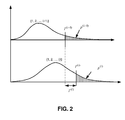
- FIG. 2 presents a diagram illustrating how resources cascade between two adjacent prefix groups, in accordance with an embodiment of the present invention.
- FIG. 3 presents a diagram illustrating a resource-provisioning controller, in accordance with an embodiment of the present invention.
- FIG. 4 presents a flowchart illustrating an exemplary process of resource provisioning, in accordance with an embodiment of the present invention.
- FIG. 5 illustrates an exemplary computer system for resource provisioning in a data center, in accordance with one embodiment of the present invention.
- Embodiments of the present invention provide a system for providing long-term resource provisioning to a data center. More specifically, the system provisions resources for a group of jobs based on resource needs of the jobs in a set of future time intervals. To satisfy the resource needs for the jobs as well as meeting their quality-of-service (QoS) requirements, the system applies a total pool allocation algorithm that makes individual reservations for jobs based on descending QoS orders until the cumulative reservations made are large enough to meet resource needs of all jobs. A cascaded algorithm is also used to plan the redistribution of unused reservations to other jobs based on their QoS rankings.
- QoS quality-of-service
- the term "physical resource” refers to various types of physical equipment needed for finishing a computing job. It can include processing capability, storage space, communication bandwidth, input/output, etc. Moreover, a particular "physical resource” can refer to a single machine, a cluster of machines, or all machines in a data center. Moreover, the terms “physical resource” and “physical machine” are interchangeable.
- a job refers to a computational task in a shared environment. More specifically, a job can be a virtual machine instance or a collection of virtual machine instances.
- a preferred resource-provisioning system for data center operations should be able to automatically and frequently adjust provisioning, close supervision by a human operator to such a system is still desired. For example, it might be desired to have a monitoring tool that monitors the resource needs of the jobs and suggests resource provisioning. A human operator can then approve and implement the provisioning. An automatic system might adjust provisioning every 15 minutes, while a supervised system might adjust much less frequently (e.g., daily, weekly or even monthly).
- Provisioning of resources in a single time interval is very similar to short-term provisioning.
- the only difference is that the short-term system uses models predicting resource-usage requirements of a group of jobs for an immediately following time interval (such as the next 15 minutes) to allocate resources to meet the resource-usage requirements according to QoS specifications of those jobs; single interval provisioning, on the other hand, involves the provision of resources for a particular time interval that may not be immediately following.
- Short-term provisioning is relatively easier because recent resource consumption is a strong predictor of near-term resource needs.
- the QoS specification (or the QoS level) for a job is denoted as p , which is the acceptable probability that the job will not be fully provisioned with its resource needs.
- p the acceptable probability that the job will not be fully provisioned with its resource needs.
- a job with QoS level p will not receive all requested resources with a probability p , during a measured interval.
- QoS level p should not be confused with a job failure probability.
- Most modem applications are written well enough that they can perform adequately well even when they do not have 100% of requested resources. For example, an application under heavy load might temporarily deliver lower resolution images, or an application running in batch mode might start early to ensure completion by a deadline. However, resilience to resource shortfall is an application-specific characteristic.
- the failure to fully provision is also referred to as a "shortfall" situation.
- the appropriate setting of the QoS p i.e., the allowed “probability of shortfall" will be greater than the allowed probability of failure for the job.
- Z ⁇ i we use a random variable Z ⁇ i to represent the resources required by job i in time interval ⁇ .
- Z can be a one-dimensional resource, such as CPU cycles, memory, hard disk, or I/O; or a multidimensional resource.
- the resource needs for job i can be modeled by an observed probability distribution function ⁇ ( i ) ( z ) for the random variable Z ( i ) .
- the remaining jobs (with indexes larger than k ) require no reservation. In other words, once jobs with higher QoS levels are individually provisioned with enough resources to meet their QoS requirements, the frequent availability of unused resources will be adequate to meet the QoS requirements of jobs with lower QoS levels.
- a shortfall occurs when neither the individual reservation nor the group reservation is large enough: ( z > s ( i ) ) ⁇ ( y + z > s T ).
- FIG. 1 presents a diagram illustrating an exemplary shortfall analysis for a job.
- the x-axis is the resource needs of job i (variable z ), and the y-axis is the resource needs of all other jobs (variable y ).
- the dotted line stands for the individual reservation made for job i ( s ( i ) ); the dashed line stands for the reservation made for the entire group ( s T ).
- the resource needs for job i are smaller than the individual reservation made for job i (i.e., on the left side of the dotted line), such needs can be satisfied by the individual reservation for job i .
- Eqs. (6) and (7) can be solved using a fixed-point computation: starting with a total reservation s T , solve for the individual reservations s ( i ) necessary to meet the QoS requirements according to Eq. (6); then use these individual reservations to define a new total reservation according to Eq. (7). If the observed probability distribution functions are provided as histograms, this fixed-point computation can proceed systematically: search for the correct s T by starting with the largest possible value, and reducing s T stepwise. This will result in s ( i ) in the solution of Eq. (6) increasing monotonically.
- the search stops when the sum of the s ( i ) exceeds s T , thus identifying the fixed point to within the accuracy of the quantization of the histogram.
- s T is set to the sum of the s ( i ) according to Eq. (7), thus ensuring that both the s ( i ) and s T are equal to or larger than necessary.
- the aforementioned total pool allocation algorithm allows unused reservations to be redistributed evenly among all jobs in the pool. However, it is beneficial to selectively redistribute those unused reservations by favoring jobs with higher QoS ratings (i.e., jobs with lower p ).
- a "share" machinery is used when redistributing the unused reservations. More specifically, each job is assigned with a number of shares, and the unused reservations are distributed proportionally to the shares of the remaining jobs needing resources. Hence, by assigning higher QoS jobs with more shares, one can ensure that those jobs can obtain more unused reservations.
- the system can assign shares based on the index: job i receives M n - i shares, where M is a large positive constant and n is the number of jobs in the pool.
- M is a large positive constant
- n is the number of jobs in the pool.
- M is set at a finite value, such as 5 or 10. At these finite values, some of the unused resources will "leak" to lower QoS jobs. With the total pool allocation algorithm, these resources are not wasted because giving unused resources to lower QoS jobs also helps with consolidation.
- the system instead of assigning shares to jobs, or virtual machines, uses a grouping machinery to create a similar cascading of unused resources to jobs based on their QoS rankings. More specifically, the two jobs (or virtual machines) with the highest QoS rankings are grouped together, and then a hierarchy of groups is built by adding lower QoS jobs successively as the hierarchy is extended, as shown: vm 1 ⁇ vm 2 ⁇ vm 3 ⁇ vm 4 ... , vm n .
- g ⁇ ( i ) is the reservation for the group formed in the hierarchy containing vm 1 , vm 2 , ..., vm i in its subtree.
- QoS specifications are likely to fall into a small number of fixed levels. Hence, not every job will have a distinct QoS level p ( i ) . Rather than cascading unused resources through the jobs sequentially, the unused resources can cascade simultaneously to all jobs with the same QoS level. This can be arranged by making the share assignment equal for equal QoS jobs, or if the grouping mechanism is used, adding equal QoS jobs together at the same level in the hierarchy.
- the actual reservation r ⁇ ( i ) for job i is the additional reservation necessary for job i (beyond the sum of reservations already made for the higher QoS jobs, r ⁇ (1) + r ⁇ (2) +...+ r ⁇ ( i -1) ) to meet the total requirement for the prefix group ⁇ 1, 2, ..., i ⁇ .
- the algorithm for calculating r ⁇ ( i ) can be written as:
- FIG. 2 presents a diagram illustrating how resources cascade between two adjacent prefix groups, in accordance with an embodiment of the present invention.
- the top half of FIG. 2 shows the probability density function (PDF) for the prefix group ⁇ 1, 2, ..., i -1 ⁇ ; and the bottom half of FIG. 2 shows the PDF for the next prefix group ⁇ 1, 2, ..., i ⁇ .
- PDF probability density function
- the cumulative reservations made based on the cascading-excess algorithm are large enough to meet the resource needs of group ⁇ 1, 2, ..., i ⁇ at QoS level p ( i ) and will necessarily meet the resource needs for job i , the last member of the group, at QoS level p ( i ) .
- a tier-based cascading-excess algorithm can be implemented. More specifically, the unused reservations cascade to all jobs in the same tier, or jobs with the same QoS level, at the same time. To do so, jobs in a given tier are given an equal number of shares. Hence, when these jobs are given their reservations, they will receive equal portions of the extra available resources.
- the tier-based cascade algorithm defines m QoS tiers, such that each (QoS-ordered) job i is assigned to a tier, and such that each job in a given tier shares the same QoS level.
- the system makes actual reservations for each job based on the scaled individual reservation for the job.
- the simple total pool allocation algorithm has the simplest modeling requirements, which models individual job resources and the total resources.
- the fixed-point variation of the total pool allocation algorithm obtains a better, more consolidated solution, but requires joint models for each job.
- the cascading-excess algorithm obtains a better, more consolidated solution by using more provisioning machinery in the underlying virtualization scheduler (i.e., either "shares" or grouping), but its modeling needs are slightly more complicated than the simple total pool allocation, requiring models of n "prefix groups,” rather than n individual models.
- the tier-based cascading-excess algorithm as an extension of the cascading-excess algorithm, also obtains an improved consolidated solution, but requires models of the m tier prefix groups, as well as the n individual models (for calculating ⁇ ).
- the jobs are independent, then the different modeling requirements are not significant, all the above models can be derived by various convolutions of the individual job models.
- the jobs' resource needs are usually correlated, and modeling that accounts for this correlation (i.e., modeling various group resource requirements) is essential to solving the consolidation problem well.
- the cascading-excess algorithm also provides the benefit of more isolation of the high QoS jobs from the low QoS jobs.
- Long-term provisioning of a data center involves provisioning for multiple time intervals. Rather than dynamically changing provisioning before each time interval, it is preferable to set one provisioning in advance that will work well for multiple time intervals (e.g., an entire day, or an entire week). The motivation for this more stable provisioning is that it allows data center operators to more carefully supervise operations of the data center, for example, by less frequently reviewing and/or manually applying a longer-term provisioning recommendation.
- the challenge for multiple interval provisioning is computing a provisioning that works simultaneously for multiple intervals.
- the cascading-excess approach provides the most control for reallocating resources among time intervals.
- the actual reservations can be computed using the following algorithm:
- This algorithm differs from the simple max algorithm described by Eq. (15). Rather than applying the max to the actual single interval reservation r ⁇ ⁇ ( i ) . this algorithm applies the max to the required reservation before making the actual reservation, as shown in Eq. (17). This way allows more sharing of resources within the prefix groups.
- the algorithm is similar to the single interval tier-based cascading-excess algorithm:
- One of the benefits of virtualization is to allow virtual machines to share resources; yet another benefit, less often cited, is to isolate virtual machines from each other. It is challenging to achieve both these benefits because sharing resources often means that complete isolation is not possible or desirable. In practice, it is desirable to have enough isolation that rogue behavior of one job does not seriously impact the other jobs in the system.
- Eq. (23) Another simple approach to specifying the maxima is to use a multiplicative factor greater than 1, such as 1.2, applied to r * ( i ) , but the availability of ⁇ ( i ) makes Eq. (23) a more principled approach to setting the maxima. Note that the maxima set in Eq. (23) can be set even when different group consolidation algorithms, described in the preceding section, are being used to set the minima (i.e., the reservations). While setting maxima is helpful, when group consolidation algorithms are used, additional technology is also needed to provide better control of job isolations.
- Embodiments of the present invention provide a solution for long-term resource provisioning in data centers. More specifically, the system applies multiple interval algorithms (cascading-excess and tier-based cascading-excess) to models for future resource needs over multiple time intervals, such as multiple time periods over a day, or multiple days over a week, thus enabling less frequent changes in provisioning.
- the system provides human operators an opportunity to supervise resource provisioning. For example, a human operator can receive recommendations from a monitoring tool, which monitors the resource usage of the jobs, and can then manually apply the recommendations.
- the system can operate in the complete isolation mode where jobs receive individual reservations that can meet their QoS needs. After the jobs are better modeled and the potential sharing of resources can be analyzed and implemented, the system can operate in the sharing mode where reservations are made to the group (based on the total pool allocation algorithm and its variations) to enable efficient group consolidation.
- FIG. 3 presents a diagram illustrating a resource-provisioning controller, in accordance with an embodiment of the present invention.
- resource-provisioning controller 300 includes a QoS identifier 302, a resource-usage monitor 304, a resource-usage model constructor 306, a reservation calculator 308, an excess-redistribution module 310, a scheduler 312, and a user interface 314.
- Resource-provisioning controller 300 controls the resource provisioning of jobs located on a physical machine or a cluster of machines in order to achieve the best performance.
- QoS identifier 302 identifies the QoS requirements associated with each job. In one embodiment, the QoS requirement is expressed by a shortfall probability.
- Resource-usage monitor 304 monitors the resource needs for each job, which can be totally random or have a certain temporal pattern.
- Resource-usage model constructor 306 receives usage information from resource-usage monitor 304 and constructs a resource-usage model for each job accordingly. In some embodiments, resource-usage model constructor 306 computes models for prefix groups of jobs.
- the resource-usage model includes a resource-needs distribution function, which indicates the probability of a job or group of jobs needing a certain amount of resources.
- the resource-usage model includes a temporal distribution of the resource needs of a job or group of jobs. For example, the probability for certain jobs to need a large amount of resources in the morning may be high.
- reservation calculator 308 Based on the constructed resource-usage model and the QoS requirement for each job, reservation calculator 308 computes the required reservation for each job. In one embodiment, a total pool allocation algorithm is used to compute the required reservation. More specifically, reservation calculator 308 first indexes the jobs in descending QoS order, and then finds the smallest index k such that the partial sum of the individual reservations for the first k - 1 jobs plus a partial reservation for job k is large enough to meet the entire group's resource needs at the k th job's QoS level.
- reservation calculator 308 outputs reservations for the first k - 1 jobs as their individual reservations required to meet their QoS requirements, a reservation for the k th job as a fraction of its individual reservation required to meet its QoS requirement, and zero reservations for the remaining lower QoS jobs.
- reservation calculator 308 computes the reservations using a fixed-point variation of the total pool allocation algorithm. Note that in order to implement the fixed-point variation, resource-usage model constructor 306 needs to construct joint models for jobs that describe resource needs for a job and the remainder of the group.
- Excess-redistribution module 310 controls how the unused reservations are redistributed among jobs.
- excess-redistribution module 310 uses the "share" machinery that assigns shares to jobs based on their QoS requirement, and more shares are given to higher QoS jobs. In this way the operation of a system such as VMware, bydistributing unused reservations proportionally to the shares, will cause unused reservations cascade through the remaining jobs in QoS order.
- excess-redistribution module 310 uses the "grouping" machinery that builds a hierarchy of groups, each of which is formed by adding a next-in-line lower-ordered QoS job to a previously formed group.
- the reservation made for the newly added job is the additional reservation necessary for the job (beyond the sum of reservations already made for the higher QoS jobs) that can meet the QoS requirement for the current group. Note that in cases where the unused reservations are distributed evenly among remaining jobs, excess-redistribution module 310 is not invoked.
- outputs of reservation calculator 308 and excess-redistribution module 310 are sent to scheduler 312, which makes the actual reservations for each job.
- the outputs are sent to user interface 314, which presents the output to a human operator.
- the human operator can review the proposed resource provisioning and determine whether to implement such provisioning.
- User interface 314 also enables the operator to control isolation module 316. More specifically, the operator can set the isolation parameter. Using the isolation parameter, isolation module 316 can manage the degree of isolation among jobs. If the isolation parameter is set as 0, total isolation of jobs is required by isolation module 316. Consequently, reservation calculator 308 computes reservations for jobs based on their individual needs. If the isolation parameter is set as 1, isolation module 316 allows jobs to share resources completely.
- isolation module 316 determines the isolation parameter based on inputs from resource-usage monitor 304. As the system gradually accumulates knowledge about the resource-usage of the jobs, isolation module 316 increases the isolation parameter.
- Resource-provisioning controller 300 can be used to provision resources for a single time interval or multiple time intervals.
- resource-usage model constructor 306 needs to construct resource-usage models for the various time intervals, and reservation calculator 308 computes the reservations for jobs that can meet the QoS requirements for all time intervals.
- excess-redistribution module 310 also needs to implement the multiple interval algorithm when redistributing the unused reservations. Provisioning strategy for the multiple intervals can be presented to the operator by user interface 314, and the operator can instruct scheduler 312 to implement the proposed provisioning for the multiple time intervals simultaneously.
- FIG. 4 presents a flowchart illustrating an exemplary process of resource provisioning, in accordance with an embodiment of the present invention.
- the system identifies QoS requirements for each job running on a machine or a cluster of machines (operation 402), and constructs a resource-usage model for each job based on the resource-usage history of the job (operation 404).
- the resource-usage model includes a resource-usage probability distribution function, such as a probability density function (PDF).
- PDF probability density function
- the resource-usage-distribution probability function varies with time.
- the system computes resource reservations for jobs (operation 406).
- various algorithms can be used to compute the resource reservations, including but not limited to: a simple total pool allocation algorithm, a fixed-point variation of the total pool allocation algorithm, a cascading-excess algorithm, and a tier-based cascading-excess algorithm.
- the system uses an isolation parameter to control the degree of isolation among jobs.
- the computed resource reservations can be applied to a single time interval or multiple time intervals. For multiple interval cases, the multiple interval variations of the various algorithms are implemented by the system when computing the resource reservations.
- the system optionally presents the computed resource reservations to a human operator (operation 408) and receives feedback from the operator (operation 410). Based on the operator's feedback, the system implements the resource reservations for a single time interval or multiple time intervals (operation 412).
- FIG. 5 illustrates an exemplary computer system for resource provisioning in a data center, in accordance with one embodiment of the present invention.
- a computer and communication system 500 includes a processor 502, a memory 504, and a storage device 506.
- Storage device 506 stores a resource-provisioning application 508, as well as other applications, such as applications 510 and 512.
- resource-provisioning application 508 is loaded from storage device 506 into memory 504 and then executed by processor 502. While executing the program, processor 502 performs the aforementioned functions.
- Computer and communication system 500 is coupled to an optional display 514, keyboard 516, and pointing device 518.
- resource provisioning can be applied at multiple levels in the data centers, including a single machine, a cluster of machines, or a data center, where group consolidation can be used to improve the resource utilization while meeting QoS requirements.
- the data structures and code described in this detailed description are typically stored on a computer-readable storage medium, which may be any device or medium that can store code and/or data for use by a computer system.
- the computer-readable storage medium includes, but is not limited to, volatile memory, non-volatile memory, magnetic and optical storage devices such as disk drives, magnetic tape, CDs (compact discs), DVDs (digital versatile discs or digital video discs), or other media capable of storing computer-readable media now known or later developed.
- the methods and processes described in the detailed description section can be embodied as code and/or data, which can be stored in a computer-readable storage medium as described above.
- a computer system reads and executes the code and/or data stored on the computer-readable storage medium, the computer system performs the methods and processes embodied as data structures and code and stored within the computer-readable storage medium.
- modules or apparatus may include, but are not limited to, an application-specific integrated circuit (ASIC) chip, a field-programmable gate array (FPGA), a dedicated or shared processor that executes a particular software module or a piece of code at a particular time, and/or other programmable-logic devices now known or later developed.
- ASIC application-specific integrated circuit
- FPGA field-programmable gate array
- the hardware modules or apparatus When activated, they perform the methods and processes included within them.
Landscapes
- Engineering & Computer Science (AREA)
- Software Systems (AREA)
- Theoretical Computer Science (AREA)
- Physics & Mathematics (AREA)
- General Engineering & Computer Science (AREA)
- General Physics & Mathematics (AREA)
- Data Exchanges In Wide-Area Networks (AREA)
Applications Claiming Priority (2)
| Application Number | Priority Date | Filing Date | Title |
|---|---|---|---|
| US201261603365P | 2012-02-26 | 2012-02-26 | |
| US13/692,912 US9092265B2 (en) | 2012-02-26 | 2012-12-03 | Long-term resource provisioning with cascading allocations |
Publications (3)
| Publication Number | Publication Date |
|---|---|
| EP2631798A2 true EP2631798A2 (de) | 2013-08-28 |
| EP2631798A3 EP2631798A3 (de) | 2013-12-18 |
| EP2631798B1 EP2631798B1 (de) | 2021-01-06 |
Family
ID=47790019
Family Applications (1)
| Application Number | Title | Priority Date | Filing Date |
|---|---|---|---|
| EP13156728.1A Not-in-force EP2631798B1 (de) | 2012-02-26 | 2013-02-26 | Langfristige Ressourcenbereitstellung mit kaskadierenden Zuweisungen |
Country Status (3)
| Country | Link |
|---|---|
| US (1) | US9092265B2 (de) |
| EP (1) | EP2631798B1 (de) |
| JP (1) | JP6157869B2 (de) |
Cited By (2)
| Publication number | Priority date | Publication date | Assignee | Title |
|---|---|---|---|---|
| JP2016212609A (ja) * | 2015-05-08 | 2016-12-15 | 株式会社日立製作所 | 仮想マシン運用支援システムおよび仮想マシン運用支援方法 |
| US10001760B1 (en) * | 2014-09-30 | 2018-06-19 | Hrl Laboratories, Llc | Adaptive control system capable of recovering from unexpected situations |
Families Citing this family (25)
| Publication number | Priority date | Publication date | Assignee | Title |
|---|---|---|---|---|
| US20140136295A1 (en) | 2012-11-13 | 2014-05-15 | Apptio, Inc. | Dynamic recommendations taken over time for reservations of information technology resources |
| US9628399B2 (en) * | 2013-03-14 | 2017-04-18 | International Business Machines Corporation | Software product instance placement |
| US10417591B2 (en) | 2013-07-03 | 2019-09-17 | Apptio, Inc. | Recursive processing of object allocation rules |
| US10325232B2 (en) | 2013-09-20 | 2019-06-18 | Apptio, Inc. | Allocating heritage information in data models |
| US9372636B1 (en) * | 2013-12-20 | 2016-06-21 | Emc Corporation | Tiered-storage design |
| US11244364B2 (en) | 2014-02-13 | 2022-02-08 | Apptio, Inc. | Unified modeling of technology towers |
| US9350561B1 (en) * | 2015-05-27 | 2016-05-24 | Apptio, Inc. | Visualizing the flow of resources in an allocation model |
| US11151493B2 (en) | 2015-06-30 | 2021-10-19 | Apptio, Inc. | Infrastructure benchmarking based on dynamic cost modeling |
| US10268979B2 (en) | 2015-09-28 | 2019-04-23 | Apptio, Inc. | Intermediate resource allocation tracking in data models |
| US10387815B2 (en) | 2015-09-29 | 2019-08-20 | Apptio, Inc. | Continuously variable resolution of resource allocation |
| US9384511B1 (en) | 2015-12-16 | 2016-07-05 | Apptio, Inc. | Version control for resource allocation modeling |
| US9529863B1 (en) | 2015-12-21 | 2016-12-27 | Apptio, Inc. | Normalizing ingested data sets based on fuzzy comparisons to known data sets |
| US10726367B2 (en) | 2015-12-28 | 2020-07-28 | Apptio, Inc. | Resource allocation forecasting |
| EP3842943A1 (de) * | 2016-01-18 | 2021-06-30 | Huawei Technologies Co., Ltd. | System und verfahren für bereitstellung einer cloud-arbeitslast |
| US10474974B2 (en) | 2016-09-08 | 2019-11-12 | Apptio, Inc. | Reciprocal models for resource allocation |
| US10936978B2 (en) | 2016-09-20 | 2021-03-02 | Apptio, Inc. | Models for visualizing resource allocation |
| US10482407B2 (en) | 2016-11-14 | 2019-11-19 | Apptio, Inc. | Identifying resource allocation discrepancies |
| US10157356B2 (en) | 2016-12-14 | 2018-12-18 | Apptio, Inc. | Activity based resource allocation modeling |
| US10268980B1 (en) | 2017-12-29 | 2019-04-23 | Apptio, Inc. | Report generation based on user responsibility |
| US10324951B1 (en) | 2017-12-29 | 2019-06-18 | Apptio, Inc. | Tracking and viewing model changes based on time |
| US11775552B2 (en) | 2017-12-29 | 2023-10-03 | Apptio, Inc. | Binding annotations to data objects |
| US11221887B2 (en) | 2019-03-22 | 2022-01-11 | Amazon Technologies, Inc. | Bin-packing virtual machine workloads using forecasted capacity usage |
| US11249810B2 (en) | 2019-03-22 | 2022-02-15 | Amazon Technologies, Inc. | Coordinated predictive autoscaling of virtualized resource groups |
| US11243794B2 (en) * | 2019-03-22 | 2022-02-08 | Amazon Technologies, Inc. | Interactive GUI for bin-packing virtual machine workloads based on predicted availability of compute instances and scheduled use of the compute instances |
| CN111047057A (zh) * | 2019-12-17 | 2020-04-21 | 珠海市同海科技股份有限公司 | 一种基于钥匙箱的大小修网络级联处理系统及方法 |
Family Cites Families (5)
| Publication number | Priority date | Publication date | Assignee | Title |
|---|---|---|---|---|
| US7062558B2 (en) * | 2001-11-13 | 2006-06-13 | Hewlett-Packard Development, L.P. | Method and system for enabling resource sharing in a communication network having a plurality of application environments |
| US8087026B2 (en) | 2006-04-27 | 2011-12-27 | International Business Machines Corporation | Fair share scheduling based on an individual user's resource usage and the tracking of that usage |
| US8291411B2 (en) * | 2007-05-21 | 2012-10-16 | International Business Machines Corporation | Dynamic placement of virtual machines for managing violations of service level agreements (SLAs) |
| JP5000456B2 (ja) * | 2007-10-31 | 2012-08-15 | ヒューレット−パッカード デベロップメント カンパニー エル.ピー. | 資源管理システム、資源管理装置およびその方法 |
| US8656404B2 (en) | 2008-10-16 | 2014-02-18 | Palo Alto Research Center Incorporated | Statistical packing of resource requirements in data centers |
-
2012
- 2012-12-03 US US13/692,912 patent/US9092265B2/en active Active
-
2013
- 2013-02-12 JP JP2013023968A patent/JP6157869B2/ja not_active Expired - Fee Related
- 2013-02-26 EP EP13156728.1A patent/EP2631798B1/de not_active Not-in-force
Non-Patent Citations (1)
| Title |
|---|
| None |
Cited By (2)
| Publication number | Priority date | Publication date | Assignee | Title |
|---|---|---|---|---|
| US10001760B1 (en) * | 2014-09-30 | 2018-06-19 | Hrl Laboratories, Llc | Adaptive control system capable of recovering from unexpected situations |
| JP2016212609A (ja) * | 2015-05-08 | 2016-12-15 | 株式会社日立製作所 | 仮想マシン運用支援システムおよび仮想マシン運用支援方法 |
Also Published As
| Publication number | Publication date |
|---|---|
| US20130227584A1 (en) | 2013-08-29 |
| EP2631798B1 (de) | 2021-01-06 |
| JP6157869B2 (ja) | 2017-07-05 |
| US9092265B2 (en) | 2015-07-28 |
| JP2013175178A (ja) | 2013-09-05 |
| EP2631798A3 (de) | 2013-12-18 |
Similar Documents
| Publication | Publication Date | Title |
|---|---|---|
| EP2631798B1 (de) | Langfristige Ressourcenbereitstellung mit kaskadierenden Zuweisungen | |
| US9374314B2 (en) | QoS aware balancing in data centers | |
| US8392928B1 (en) | Automated workload placement recommendations for a data center | |
| EP3673370B1 (de) | System und verfahren zur verteilten ressourcenanforderung und -zuteilung | |
| US9218213B2 (en) | Dynamic placement of heterogeneous workloads | |
| KR101812583B1 (ko) | 태스크 할당 장치, 태스크 할당 방법 및 컴퓨터로 읽을 수 있는 저장 매체 | |
| JP6233413B2 (ja) | タスク割り当て判定装置、制御方法、及びプログラム | |
| CN111813523A (zh) | 时长预估模型生成方法、系统资源调度方法、装置、电子设备和存储介质 | |
| JP2004199561A (ja) | 計算機資源割当方法、それを実行するための資源管理サーバおよび計算機システム | |
| JP2017514247A5 (de) | ||
| CN119415272B (zh) | 提高gpu资源利用率的分配方法、系统、介质和程序产品 | |
| JP5616523B2 (ja) | 情報処理システム | |
| US12566640B2 (en) | Allocating of computing resources for applications | |
| CN111143063A (zh) | 任务的资源预约方法及装置 | |
| CN105824705B (zh) | 一种任务分配方法和电子设备 | |
| US9324099B2 (en) | Dynamically allocating resources between computer partitions | |
| EP3611620B1 (de) | Kostenoptimierung beim dynamischen arbeitslast-capping | |
| US10643193B2 (en) | Dynamic workload capping | |
| US20140047454A1 (en) | Load balancing in an sap system | |
| US20230367656A1 (en) | Provisioning method for cloud service and system thereof | |
| KR20220065037A (ko) | 다중 스레드 마이크로프로세서의 공유 리소스 할당 | |
| KR102022972B1 (ko) | 이종 멀티 프로세싱 시스템 환경 기반 런타임 관리장치 및 방법 | |
| JP6732693B2 (ja) | リソース割当制御システム、リソース割当制御方法、及びプログラム | |
| KR102744415B1 (ko) | 공장의 에너지 효율을 향상시키기 위한 태스크 할당 방법 및 상기 방법을 수행하는 컴퓨팅 장치 | |
| JP4121525B2 (ja) | リソース利用率を制御する方法およびコンピュータシステム |
Legal Events
| Date | Code | Title | Description |
|---|---|---|---|
| PUAI | Public reference made under article 153(3) epc to a published international application that has entered the european phase |
Free format text: ORIGINAL CODE: 0009012 |
|
| AK | Designated contracting states |
Kind code of ref document: A2 Designated state(s): AL AT BE BG CH CY CZ DE DK EE ES FI FR GB GR HR HU IE IS IT LI LT LU LV MC MK MT NL NO PL PT RO RS SE SI SK SM TR |
|
| AX | Request for extension of the european patent |
Extension state: BA ME |
|
| PUAL | Search report despatched |
Free format text: ORIGINAL CODE: 0009013 |
|
| AK | Designated contracting states |
Kind code of ref document: A3 Designated state(s): AL AT BE BG CH CY CZ DE DK EE ES FI FR GB GR HR HU IE IS IT LI LT LU LV MC MK MT NL NO PL PT RO RS SE SI SK SM TR |
|
| AX | Request for extension of the european patent |
Extension state: BA ME |
|
| RIC1 | Information provided on ipc code assigned before grant |
Ipc: G06F 9/50 20060101AFI20131113BHEP Ipc: G06F 9/48 20060101ALI20131113BHEP |
|
| 17P | Request for examination filed |
Effective date: 20140618 |
|
| RBV | Designated contracting states (corrected) |
Designated state(s): AL AT BE BG CH CY CZ DE DK EE ES FI FR GB GR HR HU IE IS IT LI LT LU LV MC MK MT NL NO PL PT RO RS SE SI SK SM TR |
|
| 17Q | First examination report despatched |
Effective date: 20150716 |
|
| STAA | Information on the status of an ep patent application or granted ep patent |
Free format text: STATUS: EXAMINATION IS IN PROGRESS |
|
| GRAP | Despatch of communication of intention to grant a patent |
Free format text: ORIGINAL CODE: EPIDOSNIGR1 |
|
| STAA | Information on the status of an ep patent application or granted ep patent |
Free format text: STATUS: GRANT OF PATENT IS INTENDED |
|
| INTG | Intention to grant announced |
Effective date: 20200504 |
|
| GRAJ | Information related to disapproval of communication of intention to grant by the applicant or resumption of examination proceedings by the epo deleted |
Free format text: ORIGINAL CODE: EPIDOSDIGR1 |
|
| STAA | Information on the status of an ep patent application or granted ep patent |
Free format text: STATUS: EXAMINATION IS IN PROGRESS |
|
| GRAP | Despatch of communication of intention to grant a patent |
Free format text: ORIGINAL CODE: EPIDOSNIGR1 |
|
| STAA | Information on the status of an ep patent application or granted ep patent |
Free format text: STATUS: GRANT OF PATENT IS INTENDED |
|
| INTC | Intention to grant announced (deleted) | ||
| INTG | Intention to grant announced |
Effective date: 20200727 |
|
| GRAS | Grant fee paid |
Free format text: ORIGINAL CODE: EPIDOSNIGR3 |
|
| GRAA | (expected) grant |
Free format text: ORIGINAL CODE: 0009210 |
|
| STAA | Information on the status of an ep patent application or granted ep patent |
Free format text: STATUS: THE PATENT HAS BEEN GRANTED |
|
| AK | Designated contracting states |
Kind code of ref document: B1 Designated state(s): AL AT BE BG CH CY CZ DE DK EE ES FI FR GB GR HR HU IE IS IT LI LT LU LV MC MK MT NL NO PL PT RO RS SE SI SK SM TR |
|
| REG | Reference to a national code |
Ref country code: GB Ref legal event code: FG4D |
|
| REG | Reference to a national code |
Ref country code: AT Ref legal event code: REF Ref document number: 1353093 Country of ref document: AT Kind code of ref document: T Effective date: 20210115 Ref country code: CH Ref legal event code: EP |
|
| REG | Reference to a national code |
Ref country code: DE Ref legal event code: R096 Ref document number: 602013075113 Country of ref document: DE |
|
| REG | Reference to a national code |
Ref country code: IE Ref legal event code: FG4D |
|
| REG | Reference to a national code |
Ref country code: NL Ref legal event code: MP Effective date: 20210106 |
|
| REG | Reference to a national code |
Ref country code: AT Ref legal event code: MK05 Ref document number: 1353093 Country of ref document: AT Kind code of ref document: T Effective date: 20210106 |
|
| REG | Reference to a national code |
Ref country code: LT Ref legal event code: MG9D |
|
| PG25 | Lapsed in a contracting state [announced via postgrant information from national office to epo] |
Ref country code: GR Free format text: LAPSE BECAUSE OF FAILURE TO SUBMIT A TRANSLATION OF THE DESCRIPTION OR TO PAY THE FEE WITHIN THE PRESCRIBED TIME-LIMIT Effective date: 20210407 Ref country code: HR Free format text: LAPSE BECAUSE OF FAILURE TO SUBMIT A TRANSLATION OF THE DESCRIPTION OR TO PAY THE FEE WITHIN THE PRESCRIBED TIME-LIMIT Effective date: 20210106 Ref country code: FI Free format text: LAPSE BECAUSE OF FAILURE TO SUBMIT A TRANSLATION OF THE DESCRIPTION OR TO PAY THE FEE WITHIN THE PRESCRIBED TIME-LIMIT Effective date: 20210106 Ref country code: PT Free format text: LAPSE BECAUSE OF FAILURE TO SUBMIT A TRANSLATION OF THE DESCRIPTION OR TO PAY THE FEE WITHIN THE PRESCRIBED TIME-LIMIT Effective date: 20210506 Ref country code: LT Free format text: LAPSE BECAUSE OF FAILURE TO SUBMIT A TRANSLATION OF THE DESCRIPTION OR TO PAY THE FEE WITHIN THE PRESCRIBED TIME-LIMIT Effective date: 20210106 Ref country code: BG Free format text: LAPSE BECAUSE OF FAILURE TO SUBMIT A TRANSLATION OF THE DESCRIPTION OR TO PAY THE FEE WITHIN THE PRESCRIBED TIME-LIMIT Effective date: 20210406 Ref country code: NL Free format text: LAPSE BECAUSE OF FAILURE TO SUBMIT A TRANSLATION OF THE DESCRIPTION OR TO PAY THE FEE WITHIN THE PRESCRIBED TIME-LIMIT Effective date: 20210106 Ref country code: NO Free format text: LAPSE BECAUSE OF FAILURE TO SUBMIT A TRANSLATION OF THE DESCRIPTION OR TO PAY THE FEE WITHIN THE PRESCRIBED TIME-LIMIT Effective date: 20210406 |
|
| PG25 | Lapsed in a contracting state [announced via postgrant information from national office to epo] |
Ref country code: AT Free format text: LAPSE BECAUSE OF FAILURE TO SUBMIT A TRANSLATION OF THE DESCRIPTION OR TO PAY THE FEE WITHIN THE PRESCRIBED TIME-LIMIT Effective date: 20210106 Ref country code: RS Free format text: LAPSE BECAUSE OF FAILURE TO SUBMIT A TRANSLATION OF THE DESCRIPTION OR TO PAY THE FEE WITHIN THE PRESCRIBED TIME-LIMIT Effective date: 20210106 Ref country code: PL Free format text: LAPSE BECAUSE OF FAILURE TO SUBMIT A TRANSLATION OF THE DESCRIPTION OR TO PAY THE FEE WITHIN THE PRESCRIBED TIME-LIMIT Effective date: 20210106 Ref country code: LV Free format text: LAPSE BECAUSE OF FAILURE TO SUBMIT A TRANSLATION OF THE DESCRIPTION OR TO PAY THE FEE WITHIN THE PRESCRIBED TIME-LIMIT Effective date: 20210106 Ref country code: SE Free format text: LAPSE BECAUSE OF FAILURE TO SUBMIT A TRANSLATION OF THE DESCRIPTION OR TO PAY THE FEE WITHIN THE PRESCRIBED TIME-LIMIT Effective date: 20210106 |
|
| REG | Reference to a national code |
Ref country code: DE Ref legal event code: R119 Ref document number: 602013075113 Country of ref document: DE |
|
| PG25 | Lapsed in a contracting state [announced via postgrant information from national office to epo] |
Ref country code: IS Free format text: LAPSE BECAUSE OF FAILURE TO SUBMIT A TRANSLATION OF THE DESCRIPTION OR TO PAY THE FEE WITHIN THE PRESCRIBED TIME-LIMIT Effective date: 20210506 |
|
| REG | Reference to a national code |
Ref country code: BE Ref legal event code: MM Effective date: 20210228 |
|
| PG25 | Lapsed in a contracting state [announced via postgrant information from national office to epo] |
Ref country code: CZ Free format text: LAPSE BECAUSE OF FAILURE TO SUBMIT A TRANSLATION OF THE DESCRIPTION OR TO PAY THE FEE WITHIN THE PRESCRIBED TIME-LIMIT Effective date: 20210106 Ref country code: EE Free format text: LAPSE BECAUSE OF FAILURE TO SUBMIT A TRANSLATION OF THE DESCRIPTION OR TO PAY THE FEE WITHIN THE PRESCRIBED TIME-LIMIT Effective date: 20210106 Ref country code: MC Free format text: LAPSE BECAUSE OF FAILURE TO SUBMIT A TRANSLATION OF THE DESCRIPTION OR TO PAY THE FEE WITHIN THE PRESCRIBED TIME-LIMIT Effective date: 20210106 Ref country code: LU Free format text: LAPSE BECAUSE OF NON-PAYMENT OF DUE FEES Effective date: 20210226 Ref country code: LI Free format text: LAPSE BECAUSE OF NON-PAYMENT OF DUE FEES Effective date: 20210228 Ref country code: SM Free format text: LAPSE BECAUSE OF FAILURE TO SUBMIT A TRANSLATION OF THE DESCRIPTION OR TO PAY THE FEE WITHIN THE PRESCRIBED TIME-LIMIT Effective date: 20210106 Ref country code: CH Free format text: LAPSE BECAUSE OF NON-PAYMENT OF DUE FEES Effective date: 20210228 |
|
| PLBE | No opposition filed within time limit |
Free format text: ORIGINAL CODE: 0009261 |
|
| STAA | Information on the status of an ep patent application or granted ep patent |
Free format text: STATUS: NO OPPOSITION FILED WITHIN TIME LIMIT |
|
| PG25 | Lapsed in a contracting state [announced via postgrant information from national office to epo] |
Ref country code: ES Free format text: LAPSE BECAUSE OF FAILURE TO SUBMIT A TRANSLATION OF THE DESCRIPTION OR TO PAY THE FEE WITHIN THE PRESCRIBED TIME-LIMIT Effective date: 20210106 Ref country code: DK Free format text: LAPSE BECAUSE OF FAILURE TO SUBMIT A TRANSLATION OF THE DESCRIPTION OR TO PAY THE FEE WITHIN THE PRESCRIBED TIME-LIMIT Effective date: 20210106 Ref country code: SK Free format text: LAPSE BECAUSE OF FAILURE TO SUBMIT A TRANSLATION OF THE DESCRIPTION OR TO PAY THE FEE WITHIN THE PRESCRIBED TIME-LIMIT Effective date: 20210106 Ref country code: RO Free format text: LAPSE BECAUSE OF FAILURE TO SUBMIT A TRANSLATION OF THE DESCRIPTION OR TO PAY THE FEE WITHIN THE PRESCRIBED TIME-LIMIT Effective date: 20210106 |
|
| 26N | No opposition filed |
Effective date: 20211007 |
|
| GBPC | Gb: european patent ceased through non-payment of renewal fee |
Effective date: 20210406 |
|
| PG25 | Lapsed in a contracting state [announced via postgrant information from national office to epo] |
Ref country code: AL Free format text: LAPSE BECAUSE OF FAILURE TO SUBMIT A TRANSLATION OF THE DESCRIPTION OR TO PAY THE FEE WITHIN THE PRESCRIBED TIME-LIMIT Effective date: 20210106 Ref country code: GB Free format text: LAPSE BECAUSE OF NON-PAYMENT OF DUE FEES Effective date: 20210406 Ref country code: FR Free format text: LAPSE BECAUSE OF NON-PAYMENT OF DUE FEES Effective date: 20210306 Ref country code: IE Free format text: LAPSE BECAUSE OF NON-PAYMENT OF DUE FEES Effective date: 20210226 Ref country code: DE Free format text: LAPSE BECAUSE OF NON-PAYMENT OF DUE FEES Effective date: 20210901 |
|
| PG25 | Lapsed in a contracting state [announced via postgrant information from national office to epo] |
Ref country code: SI Free format text: LAPSE BECAUSE OF FAILURE TO SUBMIT A TRANSLATION OF THE DESCRIPTION OR TO PAY THE FEE WITHIN THE PRESCRIBED TIME-LIMIT Effective date: 20210106 |
|
| PG25 | Lapsed in a contracting state [announced via postgrant information from national office to epo] |
Ref country code: IT Free format text: LAPSE BECAUSE OF FAILURE TO SUBMIT A TRANSLATION OF THE DESCRIPTION OR TO PAY THE FEE WITHIN THE PRESCRIBED TIME-LIMIT Effective date: 20210106 |
|
| PG25 | Lapsed in a contracting state [announced via postgrant information from national office to epo] |
Ref country code: IS Free format text: LAPSE BECAUSE OF FAILURE TO SUBMIT A TRANSLATION OF THE DESCRIPTION OR TO PAY THE FEE WITHIN THE PRESCRIBED TIME-LIMIT Effective date: 20210506 |
|
| PG25 | Lapsed in a contracting state [announced via postgrant information from national office to epo] |
Ref country code: BE Free format text: LAPSE BECAUSE OF NON-PAYMENT OF DUE FEES Effective date: 20210228 |
|
| PG25 | Lapsed in a contracting state [announced via postgrant information from national office to epo] |
Ref country code: HU Free format text: LAPSE BECAUSE OF FAILURE TO SUBMIT A TRANSLATION OF THE DESCRIPTION OR TO PAY THE FEE WITHIN THE PRESCRIBED TIME-LIMIT; INVALID AB INITIO Effective date: 20130226 |
|
| PG25 | Lapsed in a contracting state [announced via postgrant information from national office to epo] |
Ref country code: CY Free format text: LAPSE BECAUSE OF FAILURE TO SUBMIT A TRANSLATION OF THE DESCRIPTION OR TO PAY THE FEE WITHIN THE PRESCRIBED TIME-LIMIT Effective date: 20210106 |
|
| PG25 | Lapsed in a contracting state [announced via postgrant information from national office to epo] |
Ref country code: MK Free format text: LAPSE BECAUSE OF FAILURE TO SUBMIT A TRANSLATION OF THE DESCRIPTION OR TO PAY THE FEE WITHIN THE PRESCRIBED TIME-LIMIT Effective date: 20210106 |
|
| PG25 | Lapsed in a contracting state [announced via postgrant information from national office to epo] |
Ref country code: MT Free format text: LAPSE BECAUSE OF FAILURE TO SUBMIT A TRANSLATION OF THE DESCRIPTION OR TO PAY THE FEE WITHIN THE PRESCRIBED TIME-LIMIT Effective date: 20210106 |
|
| PG25 | Lapsed in a contracting state [announced via postgrant information from national office to epo] |
Ref country code: TR Free format text: LAPSE BECAUSE OF FAILURE TO SUBMIT A TRANSLATION OF THE DESCRIPTION OR TO PAY THE FEE WITHIN THE PRESCRIBED TIME-LIMIT Effective date: 20210106 |