EP2632103A1 - Procédé et système de communication multimédia ims, terminal et réseau coeur ims - Google Patents
Procédé et système de communication multimédia ims, terminal et réseau coeur ims Download PDFInfo
- Publication number
- EP2632103A1 EP2632103A1 EP11843611.2A EP11843611A EP2632103A1 EP 2632103 A1 EP2632103 A1 EP 2632103A1 EP 11843611 A EP11843611 A EP 11843611A EP 2632103 A1 EP2632103 A1 EP 2632103A1
- Authority
- EP
- European Patent Office
- Prior art keywords
- terminal
- cscf
- security association
- core network
- ims
- Prior art date
- Legal status (The legal status is an assumption and is not a legal conclusion. Google has not performed a legal analysis and makes no representation as to the accuracy of the status listed.)
- Withdrawn
Links
Images

Classifications
-
- H—ELECTRICITY
- H04—ELECTRIC COMMUNICATION TECHNIQUE
- H04L—TRANSMISSION OF DIGITAL INFORMATION, e.g. TELEGRAPHIC COMMUNICATION
- H04L63/00—Network architectures or network communication protocols for network security
- H04L63/16—Implementing security features at a particular protocol layer
- H04L63/164—Implementing security features at a particular protocol layer at the network layer
-
- H—ELECTRICITY
- H04—ELECTRIC COMMUNICATION TECHNIQUE
- H04L—TRANSMISSION OF DIGITAL INFORMATION, e.g. TELEGRAPHIC COMMUNICATION
- H04L65/00—Network arrangements, protocols or services for supporting real-time applications in data packet communication
- H04L65/10—Architectures or entities
- H04L65/1016—IP multimedia subsystem [IMS]
-
- H—ELECTRICITY
- H04—ELECTRIC COMMUNICATION TECHNIQUE
- H04W—WIRELESS COMMUNICATION NETWORKS
- H04W12/00—Security arrangements; Authentication; Protecting privacy or anonymity
- H04W12/03—Protecting confidentiality, e.g. by encryption
- H04W12/033—Protecting confidentiality, e.g. by encryption of the user plane, e.g. user's traffic
-
- H—ELECTRICITY
- H04—ELECTRIC COMMUNICATION TECHNIQUE
- H04W—WIRELESS COMMUNICATION NETWORKS
- H04W12/00—Security arrangements; Authentication; Protecting privacy or anonymity
- H04W12/03—Protecting confidentiality, e.g. by encryption
- H04W12/037—Protecting confidentiality, e.g. by encryption of the control plane, e.g. signalling traffic
-
- H—ELECTRICITY
- H04—ELECTRIC COMMUNICATION TECHNIQUE
- H04W—WIRELESS COMMUNICATION NETWORKS
- H04W12/00—Security arrangements; Authentication; Protecting privacy or anonymity
- H04W12/06—Authentication
- H04W12/065—Continuous authentication
-
- H—ELECTRICITY
- H04—ELECTRIC COMMUNICATION TECHNIQUE
- H04W—WIRELESS COMMUNICATION NETWORKS
- H04W12/00—Security arrangements; Authentication; Protecting privacy or anonymity
- H04W12/10—Integrity
- H04W12/106—Packet or message integrity
Definitions
- the present document relates to the field of communication, and specifically, to an IMS multimedia communication method and system, a terminal and an IMS core network.
- IP MultiMedia Subsystem IMS
- VS Video Sharing
- VoIP Voice over IP
- V2IP Video and Voice over IP
- PoC Push To Talk over Cellular
- All these services are transmitted by using an IP protocol but not by using a Signal System 7 (SS7) of the 2nd Generation (2G) network.
- SS7 Signal System 7
- the introduction of the IP protocol makes the deployment of packet switched services in the IMS core network extremely convenient, and also makes the IMS core network entirely open and easy to access. Since the diversity and complexity of access networks, the security problem of multimedia communication in the IMS is caused.
- the present document is to provide an IMS multimedia communication method and system, a terminal and an IMS core network, to at least solve the above problem.
- an IP MultiMedia Subsystem (IMS) multimedia communication method comprises: performing signaling negotiation between a terminal and an IMS core network, and establishing an IP security-Encapsulate Secure Payload (IPSec-ESP) security association for media transmission between the terminal and the IMS core network during the process of signaling negotiation; and performing transmission of media contents through the IPSec-ESP security association for media transmission between the terminal and the IMS core network.
- IMS IP MultiMedia Subsystem
- the method before performing signaling negotiation between the terminal and the IMS core network, the method further comprises: the terminal performing registration to the IMS core network, and an IPSec-ESP security association for signaling negotiation being established between the terminal and the IMS core network during the process of registration; and performing signaling negotiation between the terminal and the IMS core network comprises: performing signaling negotiation through the IPSec-ESP security association for signaling negotiation between the terminal and the IMS core network.
- the terminal performing registration to the IMS core network and the IPSec-ESP security association for signaling negotiation being established between the terminal and the IMS core network during the process of registration comprises: the terminal sending an IMS registration request message to a Proxy-Call Session Control Function (P-CSCF) in the IMS core network, wherein, the IMS registration request message includes: information of the terminal and first security association information of the terminal; the P-CSCF saving the information in the received IMS registration request message locally, and returning an authentication challenge message to the terminal, wherein, the authentication challenge message includes: second security association information and information of the P-CSCF; and after the terminal receives the authentication challenge message, establishing the IPSec-ESP security association for signaling negotiation through the first security association information and the second security association information of P-CSCF between the terminal and the P-CSCF.
- P-CSCF Proxy-Call Session Control Function
- the information of the terminal includes: an IP address of the terminal, IMS user information and an algorithm list supported by the terminal; after the P-CSCF saves the information in the received IMS registration request message locally and before the P-CSCF returns the authentication challenge message to the terminal, the method further comprises: the P-CSCF acquiring a card key corresponding to the IMS user information; the P-CSCF using the card key and a random number to obtain a first Authentication and Key Agreement (AKA) authentication quintuple, wherein, the first AKA authentication quintuple includes a first Integrity Key (IK), a first Cipher Key (CK) and a first Response (RES) field.
- AKA Authentication and Key Agreement
- the authentication challenge message further includes: the first RES field and the random number; after the terminal receives the authentication challenge message, the method further comprises: an IP Multimedia Services Identity Module (ISIM) or a Universal Subscriber Identity Module (USIM) in the terminal using a local card key and random number to obtain a second AKA authentication quintuple, wherein, the second AKA authentication quintuple includes: a second IK, a second CK and a second RES field; the terminal judging whether the second RES field is identical with the first RES field; if it is identical, the terminal determining that an identity authentication of the P-CSCF is successful.
- ISIM IP Multimedia Services Identity Module
- USIM Universal Subscriber Identity Module
- the method further comprises: the terminal sending an IMS authentication verification request message to the P-CSCF through the IPSec-ESP security association for signaling negotiation between the terminal and the P-CSCF, wherein, the IMS authentication verification request message includes: the information of the terminal, the first security association information of the terminal and the second RES field; after receiving the IMS authentication verification request message, the P-CSCF verifying whether the information of the terminal and the first security association information of the terminal are identical with the information saved locally; if identical, the P-CSCF continuing to judge whether the second RES field is identical with the first RES field, and in the condition that it is identical, determining that an identity authentication of the terminal is successful and the registration is successful; and the P-CSCF returning an identity authentication success message to the terminal.
- the first security association information includes: first Secure Parameter Index (SPI) information randomly generated by the terminal and port information corresponding to the first SPI information
- the second security association information includes: second SPI information randomly generated by the P-CSCF and port information corresponding to the second SPI information
- the information of the P-CSCF includes: an IP address of the P-CSCF and an algorithm list supported by the P-CSCF
- establishing the IPSec-ESP security association for signaling negotiation through the first security association information and the second security association information of P-CSCF between the terminal and the P-CSCF comprises: the terminal using the first SPI information and the port information corresponding to the first SPI information, the IP address of the P-CSCF, algorithms supported by both the terminal and the P-CSCF, the second IK and the second CK to establish the IPSec-ESP security association for signaling negotiation between the terminal and the P-CSCF, wherein, the algorithms supported by both the terminal and the P-CSCF are selected from the algorithm list supported by the terminal and the algorithm list supported by
- performing signaling negotiation through the IPSec-ESP security association for signaling negotiation between the terminal and the IMS core network, and establishing the IPSec-ESP security association for media transmission between the terminal and the IMS core network during the process of signaling negotiation comprises: the terminal sending an IMS session invitation request message to the P-CSCF, wherein, the IMS session invitation request message includes media information of the terminal and third SPI information randomly generated by the terminal; the P-CSCF saving the information in the received IMS session invitation request message, and forwarding the IMS session invitation request message to another terminal invited by the IMS session invitation request message; after receiving a response message returned by the another terminal, the P-CSCF informing a Media Gateway Control Function (MGCF) in the IMS core network to randomly generate fourth SPI information, and forwarding the response message to the terminal, wherein, the response message includes the fourth SPI information; the terminal using the third SPI information, the algorithms supported by both the terminal and the P-CSCF, the second IK and the second CK to establish the IPSec
- performing transmission for the media contents through the IPSec-ESP security association for media transmission between the terminal and the IMS core network comprises: the terminal using the second IK, the second CK and the algorithms supported by both the terminal and the P-CSCF to cipher media contents required to be transmitted, and transmitting the ciphered media contents to the MGCF; and the MGCF using the first IK, the first CK and the algorithms supported by both the terminal and the P-CSCF to decipher the ciphered media contents; or, the MGCF using the first IK, the first CK and the algorithms supported by both the terminal and the P-CSCF to cipher the media contents required to be transmitted to the terminal, and transmitting the ciphered media contents to the terminal; and the terminal using the second IK, the second CK and the algorithms supported by both the terminal and the P-CSCF to decipher the ciphered media contents.
- an IP MultiMedia Subsystem (IMS) multimedia communication system which comprises: a terminal and an IMS core network, wherein, the terminal is configured to: perform signaling negotiation with the IMS core network, and establish an IP security-Encapsulate Secure Payload (IPSec-ESP) security association for media transmission between the terminal and the IMS core network during the process of signaling negotiation, and perform transmission of media contents through the IPSec-ESP security association for media transmission between the terminal and the IMS core network.
- IPSec-ESP IP security-Encapsulate Secure Payload
- the terminal is further configured to: before performing signaling negotiation with the IMS core network, perform registration to the IMS core network, and establish an IPSec-ESP security association for signaling negotiation between the terminal and the IMS core network during the process of registration, and perform signaling negotiation with the IMS core network through the IPSec-ESP security association for signaling negotiation.
- a terminal which comprises: a negotiation and establishment module, configured to: perform signaling negotiation with an IP MultiMedia Subsystem (IMS) core network, and establish an IP security-Encapsulate Secure Payload (IPSec-ESP) security association for media transmission between the terminal and the IMS core network during the process of signaling negotiation; and a media transmission module, configured to: send media contents to the IMS core network and/or receive media contents from the IMS core network through the IPSec-ESP security association for media transmission.
- IMS IP MultiMedia Subsystem
- IPSec-ESP IP security-Encapsulate Secure Payload
- the terminal further comprises a registration and establishment module, wherein: the registration and establishment module is configured to: before the negotiation and establishment module performs signaling negotiation with the IMS core network, perform registration to the IMS core network, and establish an IPSec-ESP security association for signaling negotiation between the registration and establishment module and the IMS core network during the process of registration; and the negotiation and establishment module is configured to: perform signaling negotiation with the IMS core network through the IPSec-ESP security association for signaling negotiation.
- the registration and establishment module is configured to: before the negotiation and establishment module performs signaling negotiation with the IMS core network, perform registration to the IMS core network, and establish an IPSec-ESP security association for signaling negotiation between the registration and establishment module and the IMS core network during the process of registration
- the negotiation and establishment module is configured to: perform signaling negotiation with the IMS core network through the IPSec-ESP security association for signaling negotiation.
- an IP MultiMedia Subsystem (IMS) core network which comprises: a negotiation and establishment module, configured to: perform signaling negotiation with a terminal, and establish an IP security-Encapsulate Secure Payload (IPSec-ESP) security association for media transmission between the negotiation and establishment module and the terminal during the process of signaling negotiation; and a media transmission module, configured to: send media contents to the terminal and/or receive media contents from the terminal through the IPSec-ESP security association for media transmission.
- IPSec-ESP IP security-Encapsulate Secure Payload
- the IMS core network further comprises a signaling negotiation security association establishment module, wherein: the signaling negotiation security association establishment module is configured to: before the negotiation and establishment module performs signaling negotiation with the terminal, accept a registration of the terminal, and establish an IPSec-ESP security association for signaling negotiation between the signaling negotiation security association establishment module and the terminal during the process of registration; and the negotiation and establishment module is configured to: perform signaling negotiation with the terminal through the IPSec-ESP security association for signaling negotiation.
- the signaling negotiation security association establishment module is configured to: before the negotiation and establishment module performs signaling negotiation with the terminal, accept a registration of the terminal, and establish an IPSec-ESP security association for signaling negotiation between the signaling negotiation security association establishment module and the terminal during the process of registration
- the negotiation and establishment module is configured to: perform signaling negotiation with the terminal through the IPSec-ESP security association for signaling negotiation.
- the present document by establishing the IPSec-ESP security association for media transmission between the terminal and the IMS core network, it can perform transmission through the IPSec-ESP security association for media transmission when performing transmission of the media contents, thereby guaranteeing the security of the media contents transmitted between the terminal and the IMS core network, solving the security problem of multimedia communication in the IMS in the related art, and avoiding that the media contents are maliciously stolen and falsified by others during the transmission between the terminal and the IMS core network.
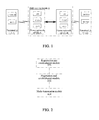
- FIG. 1 is an architecture diagram of an IMS multimedia communication system according to the example of the present document, as shown in FIG. 1 , it normally relates to a terminal 10 (i.e. a UE-A or a UE-B) and an IMS core network 20 ((i.e.
- IMS core networks belong to dedicated wired networks, and it is not required to consider the security problem in general.
- the terminal (UE) 10 in the IMS multimedia communication system can be used to (or configured to) perform signaling negotiation with the IMS core network 20, and establish an IP security-Encapsulate Secure Payload (IPSec-ESP) security association for media transmission between the terminal 10 and the IMS core network 20 during the process of signaling negotiation, and perform transmission of the media contents between the terminal 10 and the IMS core network 20 through the IPSec-ESP security association for media transmission.
- IPSec-ESP IP security-Encapsulate Secure Payload
- the media contents are sent to the IMS core network 20 and/or the media contents sent from the IMS core network 20 are received through the IPSec-ESP security association for media transmission.
- the IMS core network 20 also can be used to perform signaling negotiation with the terminal 10, and establish an IPSec-ESP security association for media transmission between the terminal 10 and the IMS core network 20 during the process of signaling negotiation, and perform transmission of the media contents between the terminal 10 and the IMS core network 20 through the IPSec-ESP security association for media transmission.
- the media contents are sent to the terminal 10 and/or the media contents sent from the terminal 10 are received through the IPSec-ESP security association for media transmission.
- the terminal 10 in order to protect the integrity and encryption protection of signaling negotiation data when the terminal 10 performs signaling negotiation with the IMS core network 20, the terminal 10 is also used to: before performing signaling negotiation with the IMS core network 20, perform registration to the IMS core network 20, and establish an IPSec-ESP security association for signaling negotiation between the terminal 10 and the IMS core network 20 during the process of registration, thus, the terminal 10 can perform signaling negotiation with the IMS core network 20 through the IPSec-ESP security association for signaling negotiation.
- the terminal 10 contains two parts: IP Multimedia Services Identity Module (ISIM)/Universal Subscriber Identity Module (USIM) and an IMS multimedia communication client (i.e. an IMS Client in FIG. 1 ).
- ISIM IP Multimedia Services Identity Module
- USIM Universal Subscriber Identity Module
- IMS multimedia communication client i.e. an IMS Client in FIG. 1 .
- the ISIM/USIM is mainly used to provide identity information of the terminal 10
- the IMS multimedia communication client is an application program used by a user.
- the network elements included in the IMS core network 20 mainly contain a Home Subscriber Server (HSS), a Proxy-Call Session Control Function (P-CSCF) and a Media Gateway Control Function (MGCF), wherein, the HSS saves IMS user information of the terminal and identity information of the ISIM/USIM and so on, the P-CSCF is mainly responsible for user registration and session negotiation of the multimedia communication, and the MGCF is responsible for forwarding the media contents.
- HSS Home Subscriber Server
- P-CSCF Proxy-Call Session Control Function
- MGCF Media Gateway Control Function
- FIG. 2 a structural diagram of the terminal 10 in the IMS multimedia communication system according to the example of the present document can be as shown in FIG. 2 , which includes the following modules: a negotiation and establishment module 102, used to: perform signaling negotiation with the IMS core network 20, and establish the IPSec-ESP security association for media transmission between the terminal 10 and the IMS core network 20 during the process of signaling negotiation; and a media transmission module 104, used to: send the media contents to the IMS core network 20 and/or receive the media contents from the IMS core network 20 through the IPSec-ESP security association for media transmission.
- a negotiation and establishment module 102 used to: perform signaling negotiation with the IMS core network 20, and establish the IPSec-ESP security association for media transmission between the terminal 10 and the IMS core network 20 during the process of signaling negotiation
- a media transmission module 104 used to: send the media contents to the IMS core network 20 and/or receive the media contents from the IMS core network 20 through the IPSec-ESP security association for media
- the terminal 10 can further include: a registration and establishment module 106, used to: before the negotiation and establishment module 102 performs signaling negotiation with the IMS core network 20, perform registration to the IMS core network 20, and establish the IPSec-ESP security association for signaling negotiation between the registration and establishment module 106 and the IMS core network 20 during the process of registration; thus, the negotiation and establishment module 102 can perform signaling negotiation with the IMS core network 20 through the IPSec-ESP security association for signaling negotiation.
- a registration and establishment module 106 used to: before the negotiation and establishment module 102 performs signaling negotiation with the IMS core network 20, perform registration to the IMS core network 20, and establish the IPSec-ESP security association for signaling negotiation between the registration and establishment module 106 and the IMS core network 20 during the process of registration; thus, the negotiation and establishment module 102 can perform signaling negotiation with the IMS core network 20 through the IPSec-ESP security association for signaling negotiation.
- FIG. 3 a structural diagram of the IMS core network 20 in the IMS multimedia communication system according to the example of the present document is as shown in FIG. 3 , which includes the following modules: the negotiation and establishment module 202, used to: perform signaling negotiation with the terminal 10, and establish the IPSec-ESP security association for media transmission between the negotiation and establishment module 202 and the terminal 10 during the process of signaling negotiation; and a media transmission module 204, used to: send the media contents to the terminal 10 and/or receive the media contents from the terminal 10 through the IPSec-ESP security association for media transmission.
- the negotiation and establishment module 202 used to: perform signaling negotiation with the terminal 10, and establish the IPSec-ESP security association for media transmission between the negotiation and establishment module 202 and the terminal 10 during the process of signaling negotiation
- a media transmission module 204 used to: send the media contents to the terminal 10 and/or receive the media contents from the terminal 10 through the IPSec-ESP security association for media transmission.
- the IMS core network 20 also can include: a signaling negotiation security association establishment module 206, used to: before the negotiation and establishment module 202 performs signaling negotiation with the terminal 10, accept a registration of the terminal 10, and establish the IPSec-ESP security association for signaling negotiation between the signaling negotiation security association establishment module 206 and the terminal 10 during the process of registration; thus, the negotiation and establishment module 202 can perform signaling negotiation with the terminal 10 through the IPSec-ESP security association for signaling negotiation.
- a signaling negotiation security association establishment module 206 used to: before the negotiation and establishment module 202 performs signaling negotiation with the terminal 10, accept a registration of the terminal 10, and establish the IPSec-ESP security association for signaling negotiation between the signaling negotiation security association establishment module 206 and the terminal 10 during the process of registration; thus, the negotiation and establishment module 202 can perform signaling negotiation with the terminal 10 through the IPSec-ESP security association for signaling negotiation.
- the above negotiation and establishment module 202 and the signaling negotiation security association establishment module 206 can be implemented by the P-CSCF, and the media transmission module 204 can be implemented by the MGCF.
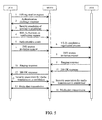
- FIG. 4 a method for the communication system performing IMS multimedia communication is as shown in FIG. 4 , and the following steps are included.
- step S402 signaling negotiation is performed between a terminal and an IMS core network, and an IP security-Encapsulate Secure Payload (IPSec-ESP) security association for media transmission between the terminal and the IMS core network is established during the process of signaling negotiation.
- IPSec-ESP IP security-Encapsulate Secure Payload
- step S404 transmission of media contents is performed through the IPSec-ESP security association for media transmission established in step S402 between the terminal and the IMS core network.
- the transmission is performed through the IPSec-ESP security association for media transmission when performing transmission of the media contents, thereby guaranteeing the security of the media contents transmitted between the terminal and the IMS core network, solving the security problem of multimedia communication in the IMS in the related art, and avoiding that the media contents are maliciously stolen and falsified by others during the transmission between the terminal and the IMS core network.
- the terminal performs registration to the IMS core network, and establishes an IPSec-ESP security association for signaling negotiation between the terminal and the IMS core network during the process of registration; and when the signaling negotiation is performed between the terminal and the IMS core network in step S402, the signaling negotiation can be performed through the IPSec-ESP security association for signaling negotiation between the terminal and the IMS core network.
- a process of the terminal performing registration to the IMS core network includes the following steps.
- a terminal UE-A sends an IMS registration request message to a P-CSCF in the IMS core network, wherein, the IMS registration request message includes: information of the terminal and first security association information.
- the information of the terminal can include: an IP address of the terminal, IMS user information and an algorithm list supported by the terminal (including an integrity algorithm, an encryption algorithm and a compression algorithm) so as to perform negotiation on algorithms between the UE and the P-CSCF in the core network; and the first security association information includes: Secure Parameter Index (SPI) information randomly generated by the terminal (called as first SPI information, the SPI information can be in 8 bytes) and port information corresponding to the first SPI information.
- SPI Secure Parameter Index
- the above first SPI information and the port information corresponding to the first SPI information can be SPI values of two signaling security associations and corresponding port numbers (i.e. a calling service data processing port and a called service data processing port).
- the P-CSCF After receiving the IMS registration request message of the terminal, the P-CSCF acquires the IP address of the UE, the IMS user information, the first SPI information and the port information corresponding to the first SPI information, the algorithm list supported by the UE and a pair of port numbers of the UE sending and receiving the SIP information actively and passively from the IMS registration request message of the SIP protocol, and saves the information.
- the P-CSCF acquires an Authentication and Key Agreement (AKA) authentication quintuple (called as a first AKA authentication quintuple) according to the IMS user information in the IMS registration request message.
- AKA Authentication and Key Agreement
- the P-CSCF firstly acquires a card key corresponding to the IMS user information (i.e. a key in the ISIM/USIM in the UE-A) from an HSS, and then uses the card key and a random number (the random number can be generated randomly or preset) to obtain the above first AKA authentication quintuple, wherein, the first AKA authentication quintuple includes a first Integrity Key (IK), a first Cipher Key (CK) and a first Response (RES) field.
- IK Integrity Key
- CK Cipher Key
- RES first Response
- the card key and random number (the random number can be generated randomly or preset) can be adopted to obtain the above first AKA authentication quintuple by using
- the P-CSCF returns an authentication challenge message of the IMS registration request message to the terminal, wherein, the authentication challenge message includes: second security association information and information of the P-CSCF.
- the information of the P-CSCF includes: an IP address of the P-CSCF and an algorithm list supported by the P-CSCF (including an integrity algorithm, an encryption algorithm and a compression algorithm); and the second security association information includes: SPI information randomly generated by the P-CSCF (called as second SPI information) and port information corresponding to the second SPI information.
- the above second SPI information and the port information corresponding to the second SPI information can be SPI values of two signaling security associations and corresponding port numbers (i.e. a calling service data processing port and a called service data processing port).
- the terminal UE-A After the terminal UE-A receives a challenge response message, it can verify whether a challenge response of the P-CSCF is identical with a calculating result of the local ISIM/USIM of the UE-A, thereby completing the identity authentication of the server, and an AKA authentication quintuple of the UE-A (called as a second AKA authentication quintuple) also can be obtained, and an IK (called as a second IK) and a CK (called as a second CK) are obtained from the second AKA authentication quintuple.
- a second AKA authentication quintuple an IK (called as a second IK) and a CK (called as a second CK) are obtained from the second AKA authentication quintuple.
- the P-CSCF and the UE-A have shared the information of a pair of keys, and integrity keys and cipher keys required during the establishment of the IPSec-ESP security association for signaling negotiation are extended from the IKs (including the first IK and the second IK) and the CKs (including the first CK and the second CK), and it mainly takes into account of the issue of key lengths of the integrity algorithm and encryption algorithm, for example, an RES algorithm needs a key with 192 bits, but the IK and CK only have 128 bits. At the point, for example, the first 64 bits in the 128 bits of the IK and CK can be duplicated and placed at the tail of the 128 bits, thereby 192 bits are constituted.
- the above authentication challenge message also can include: a first RES field and the above random number. Therefore, the step of the terminal UE-A verifying whether the challenge response of the P-CSCF is identical with the calculating result of the local ISIM/USIM of the UE-A and then completing the identity authentication of the server can be: an ISIM or a USIM in the terminal using a local card key and the random number in the above authentication challenge message to obtain the second AKA authentication quintuple, wherein, the second AKA authentication quintuple includes: the second IK, the second CK and a second RES field; and the terminal judging whether the second RES field is identical with the first RES field in the above authentication challenge message; and if identical, determining that an identity authentication of the P-CSCF is successful.
- step 3 after going through the foregoing two message interactions (i.e. the above step 1 and step 2), the terminal UE-A and the P-CSCF have finished negotiations on the SPI information, the supported algorithms and the port numbers, and the information for establishing the IPSec-ESP security association for signaling negotiation has been possessed.
- the terminal UE-A has two groups of security association parameters for establishing the IPSec-ESP security association for signaling negotiation below:
- the P-CSCF also has two groups of security association parameters for establishing the IPSec-ESP security association for signaling negotiation below:
- the algorithms with highest priority supported by both the P-CSCF and the terminal are algorithms supported by both parties selected from the algorithm list, and if there is no intersection set, no corresponding algorithm is used.
- the terminal UE-A and the P-CSCF can establish four groups of IPSec-ESP security associations for signaling negotiation, and then signaling negotiation messages of the terminal UE-A and the P-CSCF can be protected in the four IPSec-ESP security associations for signaling negotiation.
- a group of security associations of the UE and the P-CSCF is used for protecting the signaling negotiation of calling services of the terminal, and another group of security associations is used for protecting the signaling negotiation of called services of the terminal. Therefore, the integrity and encryption protection can be implemented for the signaling negotiation data of the UE and the P-CSCF.
- step 4 the terminal then sends the calculating result of the ISIM/USIM namely the second RES field to the P-CSCF through an IMS authentication verification request message, so that the server verifies the identity of the terminal, wherein, the IMS authentication verification request message also includes: information of the terminal and first security association information of the terminal (that is, the information of the terminal and the first security association information of the terminal are identical with the information in the above IMS registration request message), so that the P-CSCF can confirm the former security parameter negotiations.
- the P-CSCF After receiving the IMS authentication verification request message, the P-CSCF verifies whether the information of the terminal and the first security association information of the terminal in the IMS authentication verification request message are identical with the locally saved information at first (i.e. the first SPI value and the port numbers, and the algorithm list supported by the terminal in the IMS registration request message saved in step 2), if inconsistent, it is determined that the registration of the terminal fails; if consistent, it continues to verify whether the second RES filed carried in the IMS authentication verification request message is consistent (identical) with the first RES field obtained from the previous calculation, and if consistent, it is determined that AKA authentication of the terminal is successful and the registration is successful at the point. Therefore, it is implemented that the servers performs identity authentication of the terminal.
- the servers performs identity authentication of the terminal.
- the above IMS authentication verification request message must be transmitted in the IPSec-ESP security associations for signaling negotiation of the calling services of the terminal and the P-CSCF, and other persons cannot maliciously intercept the communication information between the terminal and the P-CSCF any more.
- step 5 the P-CSCF sends an authentication result message to the terminal, wherein, an authentication result can be an authentication success or an authentication failure.
- the registration process from the terminal to the core network (specifically the P-CSCF) is finished through the above steps 1-5, and the IPSec-ESP security association for signaling negotiation between the terminal and the core network is established in the registration process, which implements the encryption protection and integrity protection for the signaling negotiation data.
- step 6 the terminal UE-B also can complete the process of making a registration to the core network according to the above steps 1-5.
- the process of performing transmission of media data (contents) of the IMS multimedia through the core network between the terminals (the UE-A and the UE-B) specifically includes the following steps.
- the UE-A initiates an IMS session invitation request message to the core network, and the message carries media information and SPI information used for establishing the media transmission randomly generated by the UE-A (called as third SPI information) so as to protect secure transmission of the media data.
- third SPI information media information and SPI information used for establishing the media transmission randomly generated by the UE-A
- the media information can include: transmission port information of media contents and media description information.
- step 8 after the P-CSCF of the UE-A side receives the IMS session invitation request message, the P-CSCF saves the information in the IMS session invitation request message, and sends the IMS session invitation request message to the P-CSCF of the UE-B side, and the P-CSCF of UE-B informs the MGCF of UE-B to generate SPI information of the MGCF and then send the SPI information of the MGCF to the UE-B; as the called, the UE-B will use the security associations of the called services to perform safety protection for the signaling negotiation.
- step 9 after the UE-B receives the IMS session invitation request message of the P-CSCF, it sends a ringing response message to the P-CSCF of the UE-B to indicate that the UE-B has received the IMS session invitation request message of the UE-A.
- step 10 the IMS core network forwards the ringing response message to the UE-A.
- the terminal UE-A knows that the UE-B has received the IMS session invitation request message after receiving the ringing response message.
- step 11 the UE-B accepts the session invitation and sends a 200 OK response to the IMS core network of the UE-B, and the 200 OK response carries media formats and audio/video transmission port numbers supported by both the UE-A and the UE-B, and in addition, media transmission SPI information of the UE-B is also carried.
- the P-CSCF of the UE-B side informs the Media Gateway Control Function (MGCF) of the security association information of media transmission, thus, the MGCF of the UE-B and the UE-B shares a group of IPsec-ESP security association parameter information, and the IK and CK are extended from the AKA authentication of the previous signaling negotiation, and the encryption algorithm and the integrity algorithm use the previously selected algorithms.
- MGCF Media Gateway Control Function
- step 12 the P-CSCF of the UE-B forwards the 200 OK response message to the P-CSCF of the UE-A, and the P-CSCF of the UE-A informs the MGCF of the UE-A, and the MGCF generates SPI information (called as fourth SPI information) and port numbers for preparing to perform media transmission, and then the 200 OK response message is sent to the UE-A.
- SPI information called as fourth SPI information
- port numbers for preparing to perform media transmission
- the 200 OK response message is sent to the UE-A.
- the MGCF of the UE-A side and the UE-A also share a group of IPsec-ESP security association parameter information.
- step 13 after going through the message interaction of steps 7-12, the UE-A and UE-B have their respective security association parameter information for media transmission, and the UE-A uses the IK and CK of the previous signaling negotiation and the previously selected integrity algorithm and encryption algorithm to establish the security association with the media gateway of the UE-A, and according to the number of transmission media, there may be one group or multiple groups of security associations for implementing the safety protection for the media data transmission.
- step 14 the UE-B establishes the IPSec-ESP security association for media transmission between the UE-B and the media gateway in which the UE-B is located according to the message interaction information of the steps 7-12, and then the media data transmission between the UE-B and UE-A has been in the safety protection.
- the UE-A uses the IPSec-ESP security association for media transmission established between the UE-A and the core network to transmit the media contents, which implements various multimedia communication functions, such as audios, videos and pictures.
- step 16 the media contents of the UE-B are transmitted through the previous security associations, and the encryption protection is performed on the media contents by using the IK and CK of the previous signaling negotiation.
- the IPSec-ESP security association for media transmission ends, and the IPSec-ESP security association for signaling negotiation can be maintained until the user logs off.
- the transmission can be performed through the IPSec-ESP security association for media transmission when performing transmission of the media contents, thereby guaranteeing the security of the media contents transmitted between the terminal and the IMS core network, solving the security problem of multimedia communication in the IMS in the related art, and avoiding that the media contents are maliciously stolen and falsified by others during the transmission between the terminal and the IMS core network.
- modules or steps of the present document mentioned above can be implemented through a universal calculating device, and they can be concentrated on a single calculating device or distributed in a network consisting of multiple calculating devices.
- the modules or steps can be implemented through program codes which can be executed by the calculating device, thus, they can be stored in a storage device to be executed by the calculating device, and in some cases, the illustrated and described steps can be executed in an order different from what is described here, or they can be made into multiple integrated circuit modules respectively or multiple modules or steps of them can be made into a single integrated circuit module for implementation. Therefore, the present document is not limited to any combination of hardware and software in a specific form.
Landscapes
- Engineering & Computer Science (AREA)
- Computer Security & Cryptography (AREA)
- Computer Networks & Wireless Communication (AREA)
- Signal Processing (AREA)
- Multimedia (AREA)
- Computer Hardware Design (AREA)
- Computing Systems (AREA)
- General Engineering & Computer Science (AREA)
- Data Exchanges In Wide-Area Networks (AREA)
- Mobile Radio Communication Systems (AREA)
Applications Claiming Priority (2)
| Application Number | Priority Date | Filing Date | Title |
|---|---|---|---|
| CN201010559798.5A CN102006294B (zh) | 2010-11-25 | 2010-11-25 | Ims多媒体通信方法和系统、终端及ims核心网 |
| PCT/CN2011/080027 WO2012068922A1 (fr) | 2010-11-25 | 2011-09-22 | Procédé et système de communication multimédia ims, terminal et réseau coeur ims |
Publications (2)
| Publication Number | Publication Date |
|---|---|
| EP2632103A1 true EP2632103A1 (fr) | 2013-08-28 |
| EP2632103A4 EP2632103A4 (fr) | 2017-11-15 |
Family
ID=43813365
Family Applications (1)
| Application Number | Title | Priority Date | Filing Date |
|---|---|---|---|
| EP11843611.2A Withdrawn EP2632103A4 (fr) | 2010-11-25 | 2011-09-22 | Procédé et système de communication multimédia ims, terminal et réseau coeur ims |
Country Status (4)
| Country | Link |
|---|---|
| US (1) | US20130254531A1 (fr) |
| EP (1) | EP2632103A4 (fr) |
| CN (1) | CN102006294B (fr) |
| WO (1) | WO2012068922A1 (fr) |
Cited By (1)
| Publication number | Priority date | Publication date | Assignee | Title |
|---|---|---|---|---|
| KR20190050835A (ko) * | 2016-10-10 | 2019-05-13 | 후아웨이 테크놀러지 컴퍼니 리미티드 | 통신 방법, 보안 노드 네트워크 엘리먼트, 및 단말 |
Families Citing this family (23)
| Publication number | Priority date | Publication date | Assignee | Title |
|---|---|---|---|---|
| CN102006294B (zh) * | 2010-11-25 | 2014-08-20 | 中兴通讯股份有限公司 | Ims多媒体通信方法和系统、终端及ims核心网 |
| US9565216B2 (en) | 2014-10-24 | 2017-02-07 | At&T Intellectual Property I, L.P. | Methods, systems, and computer program products for security protocol selection in internet protocol multimedia subsystem networks |
| US9729588B2 (en) | 2014-10-31 | 2017-08-08 | T-Mobile Usa, Inc. | SPI handling between UE and P-CSCF in an IMS network |
| US10595203B2 (en) * | 2015-01-21 | 2020-03-17 | Telefonaktiebolaget Lm Ericsson (Publ) | Enhanced establishment of IMS session with secure media |
| EP3284277A4 (fr) | 2015-04-02 | 2018-04-18 | Samsung Electronics Co., Ltd. | Procédé pour effectuer des authentifications multiples au sein d'une procédure d'enregistrement de service |
| US10051000B2 (en) * | 2015-07-28 | 2018-08-14 | Citrix Systems, Inc. | Efficient use of IPsec tunnels in multi-path environment |
| US10582379B2 (en) * | 2015-08-28 | 2020-03-03 | Lg Electronics Inc. | Method for supporting and setting IPsec in mobile communication |
| CN106911638B (zh) * | 2015-12-23 | 2019-12-27 | 中兴通讯股份有限公司 | 一种用户注册信息的处理方法、装置及ePDG设备 |
| CN108347416B (zh) * | 2017-01-24 | 2021-06-29 | 华为技术有限公司 | 一种安全保护协商方法及网元 |
| CN109714293B (zh) * | 2017-10-25 | 2021-08-10 | 中国移动通信有限公司研究院 | VoLTE数据流量过滤方法、装置、网关、设备及介质 |
| CN107734491B (zh) * | 2017-11-06 | 2020-08-11 | 广东工业大学 | 一种VoWifi漫游控制的方法及系统 |
| CN110022283B (zh) * | 2018-01-08 | 2020-09-08 | 华为技术有限公司 | 解密信息处理方法和装置、以及解密方法和装置 |
| US11178190B2 (en) * | 2018-11-06 | 2021-11-16 | Blackberry Limited | Methods and devices for establishing secure communication channels |
| CN109617689A (zh) * | 2018-12-20 | 2019-04-12 | 惠州Tcl移动通信有限公司 | 通话方法、终端及核心网设备 |
| US11310036B2 (en) | 2020-02-26 | 2022-04-19 | International Business Machines Corporation | Generation of a secure key exchange authentication request in a computing environment |
| US11405215B2 (en) * | 2020-02-26 | 2022-08-02 | International Business Machines Corporation | Generation of a secure key exchange authentication response in a computing environment |
| US11502834B2 (en) | 2020-02-26 | 2022-11-15 | International Business Machines Corporation | Refreshing keys in a computing environment that provides secure data transfer |
| US11489821B2 (en) | 2020-02-26 | 2022-11-01 | International Business Machines Corporation | Processing a request to initiate a secure data transfer in a computing environment |
| US11652616B2 (en) | 2020-02-26 | 2023-05-16 | International Business Machines Corporation | Initializing a local key manager for providing secure data transfer in a computing environment |
| US11184160B2 (en) | 2020-02-26 | 2021-11-23 | International Business Machines Corporation | Channel key loading in a computing environment |
| US11546137B2 (en) | 2020-02-26 | 2023-01-03 | International Business Machines Corporation | Generation of a request to initiate a secure data transfer in a computing environment |
| CN111462515A (zh) * | 2020-03-31 | 2020-07-28 | 中国联合网络通信集团有限公司 | 车路协同管理方法、mec服务器、终端和系统 |
| US12483881B2 (en) * | 2022-02-07 | 2025-11-25 | Qualcomm Incorporated | Encrypting discovery messages |
Family Cites Families (17)
| Publication number | Priority date | Publication date | Assignee | Title |
|---|---|---|---|---|
| JP4806400B2 (ja) * | 2004-05-03 | 2011-11-02 | ノキア コーポレイション | Ipネットワークの信頼できるドメインにおけるアイデンティティの処理 |
| JP4334531B2 (ja) * | 2005-11-01 | 2009-09-30 | 株式会社エヌ・ティ・ティ・ドコモ | 通信システム、移動局、交換機及び通信方法 |
| US20080095070A1 (en) * | 2005-12-05 | 2008-04-24 | Chan Tat K | Accessing an IP multimedia subsystem via a wireless local area network |
| CN101102185B (zh) * | 2006-07-06 | 2012-03-21 | 朗迅科技公司 | Ims会话的媒体安全 |
| WO2008020015A1 (fr) * | 2006-08-17 | 2008-02-21 | Nokia Siemens Networks Gmbh & Co. Kg | Transport sécurisé de messages dans le sous-système multimédia ip |
| CN1913437B (zh) * | 2006-08-25 | 2011-01-05 | 华为技术有限公司 | 初始会话协议应用网络及建立安全通道的装置和方法 |
| JP4866802B2 (ja) * | 2006-09-11 | 2012-02-01 | Kddi株式会社 | セキュリティ最適化システムおよびセキュリティ最適化方法 |
| US8141126B2 (en) * | 2007-01-24 | 2012-03-20 | International Business Machines Corporation | Selective IPsec security association recovery |
| CN101242634B (zh) * | 2007-02-07 | 2012-05-23 | 华为技术有限公司 | 一种业务提供系统、装置和方法 |
| JP4573064B2 (ja) * | 2007-04-02 | 2010-11-04 | 日本電気株式会社 | Imsネットワークシステム及びデータリストア方法 |
| EP2028812B1 (fr) * | 2007-08-21 | 2011-06-08 | Nokia Siemens Networks Oy | Procédés, appareils, système et programme d'ordinateur correspondant pour l'accès d'un équipement utilisateur |
| JP2009060245A (ja) * | 2007-08-30 | 2009-03-19 | Seiko Epson Corp | 通信制御方法、プログラム及び通信装置 |
| CN101981885B (zh) * | 2008-03-25 | 2013-07-10 | 上海贝尔股份有限公司 | 使用ipsec esp以支持用于基于udp的oma使能者的安全功能的方法和实体 |
| CN101459910B (zh) * | 2008-06-16 | 2011-03-16 | 中兴通讯股份有限公司 | outbound方式下的注册及IPSec协商方法 |
| KR20100071830A (ko) * | 2008-12-19 | 2010-06-29 | 한국전자통신연구원 | 차세대 통신망에서 개인화된 서비스 홍보를 제공하기 위한 방법 및 장치 |
| CN101478389B (zh) * | 2009-01-16 | 2010-10-13 | 西安电子科技大学 | 支持多级安全的移动IPSec传输认证方法 |
| CN102006294B (zh) * | 2010-11-25 | 2014-08-20 | 中兴通讯股份有限公司 | Ims多媒体通信方法和系统、终端及ims核心网 |
-
2010
- 2010-11-25 CN CN201010559798.5A patent/CN102006294B/zh active Active
-
2011
- 2011-09-22 US US13/989,845 patent/US20130254531A1/en not_active Abandoned
- 2011-09-22 EP EP11843611.2A patent/EP2632103A4/fr not_active Withdrawn
- 2011-09-22 WO PCT/CN2011/080027 patent/WO2012068922A1/fr not_active Ceased
Non-Patent Citations (1)
| Title |
|---|
| See references of WO2012068922A1 * |
Cited By (4)
| Publication number | Priority date | Publication date | Assignee | Title |
|---|---|---|---|---|
| KR20190050835A (ko) * | 2016-10-10 | 2019-05-13 | 후아웨이 테크놀러지 컴퍼니 리미티드 | 통신 방법, 보안 노드 네트워크 엘리먼트, 및 단말 |
| CN109792434A (zh) * | 2016-10-10 | 2019-05-21 | 华为技术有限公司 | 一种通信方法、安全节点网元和终端 |
| EP3522670A4 (fr) * | 2016-10-10 | 2019-09-04 | Huawei Technologies Co., Ltd. | Procédé de communication, élément de réseau formant noeud de sécurité, et terminal |
| US10812980B2 (en) | 2016-10-10 | 2020-10-20 | Huawei Technologies Co., Ltd. | Communication method, security node network element, and terminal |
Also Published As
| Publication number | Publication date |
|---|---|
| US20130254531A1 (en) | 2013-09-26 |
| WO2012068922A1 (fr) | 2012-05-31 |
| CN102006294B (zh) | 2014-08-20 |
| EP2632103A4 (fr) | 2017-11-15 |
| CN102006294A (zh) | 2011-04-06 |
Similar Documents
| Publication | Publication Date | Title |
|---|---|---|
| EP2632103A1 (fr) | Procédé et système de communication multimédia ims, terminal et réseau coeur ims | |
| US8526408B2 (en) | Support of UICC-less calls | |
| US8386767B2 (en) | Methods and systems for bootstrapping security key information using session initiation protocol | |
| US20100153726A1 (en) | Authentication method, system, and apparatus thereof for inter-domain information communication | |
| US10461987B2 (en) | Voice and text data service for mobile subscribers | |
| EP2381710A1 (fr) | Procédé et système de gestion de la sécurité pour un terminal wapi accédant à un réseau ims | |
| WO2004040777A2 (fr) | Equipement utilisateur adapte au protocole de signalisation sip permettant de fournir des services multimedia avec qualite de service | |
| US8990563B2 (en) | Sending protected data in a communication network | |
| US7600116B2 (en) | Authentication of messages in a communication system | |
| WO2011041962A1 (fr) | Procédé et système de négociation de clé de session de bout en bout prenant en charge les interceptions légales | |
| KR20150058534A (ko) | 인증 정보 전송 | |
| US20040043756A1 (en) | Method and system for authentication in IP multimedia core network system (IMS) | |
| EP3132627B1 (fr) | Authentification gsm a3/a8 dans un réseau ims | |
| EP3248355B1 (fr) | Établissement amélioré de session ims avec des supports sécurisés | |
| US20050132075A1 (en) | Authentication of mobile communication devices using mobile networks, SIP and Parlay | |
| US20200204595A1 (en) | Media protection within the core network of an ims network | |
| EP3442191B1 (fr) | Prevention de la mystification d'identite dans un reseau de communication | |
| US8914861B2 (en) | Authentication method and authentication system based on forking, and forking authentication device | |
| Belmekki et al. | Enhances security for IMS client | |
| Moon | Fast and secure session mobility in IMS-based vertical handover scenario | |
| WO2025094204A1 (fr) | Système et procédé d'authentification d'équipement utilisateur | |
| CN118804210A (zh) | 准入控制方法、装置、设备、存储介质及产品 | |
| CN103108325A (zh) | 一种信息安全传输方法及系统及接入服务节点 | |
| Sher et al. | Enhanced SIP Security for Air Interface (Gm) between IMS Core and Client | |
| JP2011182033A (ja) | ネットワークの呼制御システム |
Legal Events
| Date | Code | Title | Description |
|---|---|---|---|
| PUAI | Public reference made under article 153(3) epc to a published international application that has entered the european phase |
Free format text: ORIGINAL CODE: 0009012 |
|
| 17P | Request for examination filed |
Effective date: 20130523 |
|
| AK | Designated contracting states |
Kind code of ref document: A1 Designated state(s): AL AT BE BG CH CY CZ DE DK EE ES FI FR GB GR HR HU IE IS IT LI LT LU LV MC MK MT NL NO PL PT RO RS SE SI SK SM TR |
|
| DAX | Request for extension of the european patent (deleted) | ||
| RA4 | Supplementary search report drawn up and despatched (corrected) |
Effective date: 20171012 |
|
| RIC1 | Information provided on ipc code assigned before grant |
Ipc: H04L 29/06 20060101AFI20171006BHEP |
|
| STAA | Information on the status of an ep patent application or granted ep patent |
Free format text: STATUS: REQUEST FOR EXAMINATION WAS MADE |
|
| STAA | Information on the status of an ep patent application or granted ep patent |
Free format text: STATUS: THE APPLICATION IS DEEMED TO BE WITHDRAWN |
|
| 18D | Application deemed to be withdrawn |
Effective date: 20180515 |