EP2632109A2 - Netzwerkprotokollstapel ohne Abladung - Google Patents
Netzwerkprotokollstapel ohne Abladung Download PDFInfo
- Publication number
- EP2632109A2 EP2632109A2 EP13169223.8A EP13169223A EP2632109A2 EP 2632109 A2 EP2632109 A2 EP 2632109A2 EP 13169223 A EP13169223 A EP 13169223A EP 2632109 A2 EP2632109 A2 EP 2632109A2
- Authority
- EP
- European Patent Office
- Prior art keywords
- data
- protocol
- operating system
- winsock
- interface device
- Prior art date
- Legal status (The legal status is an assumption and is not a legal conclusion. Google has not performed a legal analysis and makes no representation as to the accuracy of the status listed.)
- Granted
Links
Images

Classifications
-
- H—ELECTRICITY
- H04—ELECTRIC COMMUNICATION TECHNIQUE
- H04L—TRANSMISSION OF DIGITAL INFORMATION, e.g. TELEGRAPHIC COMMUNICATION
- H04L69/00—Network arrangements, protocols or services independent of the application payload and not provided for in the other groups of this subclass
- H04L69/16—Implementation or adaptation of Internet protocol [IP], of transmission control protocol [TCP] or of user datagram protocol [UDP]
-
- H—ELECTRICITY
- H04—ELECTRIC COMMUNICATION TECHNIQUE
- H04L—TRANSMISSION OF DIGITAL INFORMATION, e.g. TELEGRAPHIC COMMUNICATION
- H04L69/00—Network arrangements, protocols or services independent of the application payload and not provided for in the other groups of this subclass
- H04L69/12—Protocol engines
-
- H—ELECTRICITY
- H04—ELECTRIC COMMUNICATION TECHNIQUE
- H04L—TRANSMISSION OF DIGITAL INFORMATION, e.g. TELEGRAPHIC COMMUNICATION
- H04L69/00—Network arrangements, protocols or services independent of the application payload and not provided for in the other groups of this subclass
- H04L69/16—Implementation or adaptation of Internet protocol [IP], of transmission control protocol [TCP] or of user datagram protocol [UDP]
- H04L69/161—Implementation details of TCP/IP or UDP/IP stack architecture; Specification of modified or new header fields
-
- H—ELECTRICITY
- H04—ELECTRIC COMMUNICATION TECHNIQUE
- H04L—TRANSMISSION OF DIGITAL INFORMATION, e.g. TELEGRAPHIC COMMUNICATION
- H04L69/00—Network arrangements, protocols or services independent of the application payload and not provided for in the other groups of this subclass
- H04L69/30—Definitions, standards or architectural aspects of layered protocol stacks
- H04L69/32—Architecture of open systems interconnection [OSI] 7-layer type protocol stacks, e.g. the interfaces between the data link level and the physical level
- H04L69/322—Intralayer communication protocols among peer entities or protocol data unit [PDU] definitions
- H04L69/325—Intralayer communication protocols among peer entities or protocol data unit [PDU] definitions in the network layer [OSI layer 3], e.g. X.25
Definitions
- This invention relates to the transmission of data across a network by means of a data processing system having access to a network interface device that is capable of supporting a communication link over a network with another network interface device.
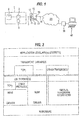
- FIG. 1 is a schematic diagram showing a network interface device such as a network interface card (NIC) and the general architecture of the system in which it may be used.
- the network interface device 10 is connected via a data link 5 to a processing device such as computer 1, and via a data link 14 to a data network 20.
- Further network interface devices such as processing device 30 are also connected to the network, providing interfaces between the network and further processing devices such as processing device 40.
- the computer 1 may, for example, be a personal computer, a server or a dedicated processing device such as a data logger or controller.
- a processor 2 a processor 2
- a program store 4 stores instructions defining an operating system and applications that can run on that operating system.
- the operating system provides means such as drivers and interface libraries by means of which applications can access peripheral hardware devices connected to the computer. Drivers and libraries that are external to the operating system may also be provided.
- a typical computer system 1 includes a processor subsystem (including one or more processors), a memory subsystem (including main memory, cache memory, etc.), and a variety of "peripheral devices" connected to the processor subsystem via a peripheral bus.
- Peripheral devices may include, for example, keyboard, mouse and display adapters, disk drives and CD-ROM drives, network interface devices, and so on.
- the processor subsystem communicates with the peripheral devices by reading and writing commands and information to specific addresses that have been preassigned to the devices.
- the addresses may be preassigned regions of a main memory address space, an I/O address space, or another kind of configuration space.
- Communication with peripheral devices can also take place via direct memory access (DMA), in which the peripheral devices (or another agent on the peripheral bus) transfers data directly between the memory subsystem and one of the preassigned regions of address space assigned to the peripheral devices.
- DMA direct memory access
- modem computer systems are multitasking, meaning they allow multiple different application programs to execute concurrently on the same processor subsystem.
- Most modem computer systems also run an operating system which, among other things, allocates time on the processor subsystem for executing the code of each of the different application programs.
- One difficulty that might arise in a multitasking system is that different application programs may wish to control the same peripheral device at the same time. In order to prevent such conflicts, another job of the operating system is to coordinate control of the peripheral devices. In particular, only the operating system can access the peripheral devices directly; application programs that wish to access a peripheral devices must do so by calling routines in the operating system.
- the placement of exclusive control of the peripheral devices in the operating system also helps to modularize the system, obviating the need for each separate application program to implement its own software code for controlling the hardware.
- the part of the operating system that controls the hardware is usually the kernel.
- the kernel which performs hardware initializations, setting and resetting the processor state, adjusting the processor internal clock, initializing the network interface device, and other direct accesses of the hardware.
- the kernel executes in kernel mode, also sometimes called trusted mode or a privileged mode, whereas application level processes (also called user level processes) execute in a user mode.
- application level processes also called user level processes
- the processor enforces this in at least two ways: certain sensitive instructions will not be executed by the processor unless the current privilege level is high enough, and the processor will not allow user level processes to access memory locations (including memory mapped addresses associated with specific hardware resources) which are outside of a user-level physical or virtual address space already allocated to the process.
- kernel space or "kernel address space” refers to the address and code space of the executing kernel. This includes kernel data structures and functions internal to the kernel. The kernel can access the memory of user processes as well, but "kernel space” generally means the memory (including code and data) that is private to the kernel and not accessible by any user process.
- user space refers to the address and code space allocated by a code that is loaded from an executable and is available to a user process, excluding kernel private code data structures.
- all four terms are intended to accommodate the possibility of an intervening mapping between the software program's view of its own address space and the physical memory locations to which it corresponds.
- the software program's view of its address space is contiguous, whereas the corresponding physical address space may be discontiguous and out-of-order, and even potentially partly on a swap device such as a hard disk drive.
- kernel routine by executing a system call, which is a function that causes the processor to trap, change privilege level and enter kernel mode to execute some code on behalf of the process.
- the "current process” is still the user process, but during system calls it is executing "inside of the kernel", and therefore has access to kernel address space and can execute in a privileged mode.
- Kernel code is also executed in response to an interrupt issued by a hardware device, since the interrupt handler is found within the kernel.
- the kernel also, in its role as process scheduler, switches control between processes rapidly using the clock interrupt (and other means) to trigger a switch from one process to another.
- the current privilege level increases to kernel mode in order to allow the routine to access the hardware directly.
- the kernel relinquishes control back to a user process, the current privilege level returns to that of the user process.
- the operating system implements a system level protocol processing stack which performs protocol processing on behalf of the application.
- an application wishing to transmit a data packet using TCP/IP calls the operating system API (e.g. using a send() call) with data to be transmitted.
- This call causes a context switch to invoke kernel routines to copy the data into a kernel data buffer and perform TCP send processing.
- protocol is applied and fully formed TCP/IP packets are enqueued with the interface driver for transmission.
- Another context switch takes place when control is returned to the application program. Note that kernel routines for network protocol processing may be invoked also due to the passing of time.
- One example is the triggering of retransmission algorithms.
- the operating system provides all OS modules with time and scheduling services (driven by the hardware clock interrupt), which enable the TCP stack to implement timers on a per-connection basis.
- the operating system performs context switches in order to handle such timer-triggered functions, and then again in order to return to the application. It can be seen that network transmit and receive operations can involve excessive context switching and resulting cache pollution, and this can cause significant overhead.
- the problem is especially severe in networking environments in which data packets are often short, causing the amount of required control work to be large as a percentage of the overall network processing work.
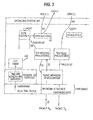
- FIG. 2 illustrates one implementation of this.
- TCP and other protocols are implemented twice: as denoted TCP1 and TCP2 in figure 2 .
- TCP2 will be the standard implementation of the TCP protocol that is built into the operating system of the computer.
- an application running on the computer may issue API (application programming interface) calls.
- Some API calls may be handled by the transport libraries that have been provided to support the network interface device. API calls which cannot be serviced by the transport libraries that are available directly to the application can typically be passed on through the interface between the application and the operating system to be handled by the libraries that are available to the operating system.
- the transport libraries For implementation with many operating systems it is convenient for the transport libraries to use existing Ethernet/IP based control-plane structures: e.g. SNMP and ARP protocols via the OS interface.
- FIG. 3 shows an architecture employing a standard kernel TCP transport (TCPk). The operation of this architecture is as follows.
- the NIC On packet reception from the network interface hardware (e.g. a network interface card (NIC)), the NIC transfers data into pre-allocated data buffer (a) and invokes the OS interrupt handler by means of the interrupt line.
- the interrupt handler manages the hardware interface e.g. posts new receive buffers and passes the received (in this case Ethernet) packet looking for protocol information. If a packet is identified as destined for a valid protocol e.g. TCP/IP it is passed (not copied) to the appropriate receive protocol processing block. (Step ii).
- TCP receive-side processing takes place and the destination part is identified from the packet. If the packet contains valid data for the port then the packet is engaged on the port's data queue (step iii) and that port marked (which may involve the scheduler and the awakening of blocked process) as holding valid data.
- the TCP receive processing may require other packets to be transmitted (step iv), for example in the cases that previously transmitted data should be retransmitted or that previously enqueued data (perhaps because the TCP window has opened) can now be transmitted. In this case packets are enqueued with the OS "NDIS" driver for transmission.
- step v In order for an application to retrieve a data buffer it must invoke the OS API (step v), for example by means of a call such as recv(), select() or poll(). This has the effect of informing the application that data has been received and (in the case of a recv() call) copying the data from the kernel buffer to the application's buffer.
- the copy enables the kernel (OS) to reuse its network buffers, which have special attributes such as being DMA accessible and means that the application does not necessarily have to handle data in units provided by the network, or that the application needs to know a priori the final destination of the data, or that the application must pre-allocate buffers which can then be used for data reception.
- the send process behaves similarly except that there is usually one path of execution.
- the application calls the operating system API (e.g. using a send()call) with data to be transmitted (Step vi). This call copies data into a kernel data buffer and invokes TCP send processing. Here protocol is applied and fully formed TCP/IP packets are enqueued with the interface driver for transmission.
- the system call returns with an indication of the data scheduled (by the hardware) for transmission.
- the transport protocol may queue pending acknowledgements or window updates, and the device driver may queue in software pending data transmission requests to the hardware.
- a third flow of control through the system is generated by actions which must be performed on the passing of time.
- One example is the triggering of retransmission algorithms.
- the operating system provides all OS modules with time and scheduling services (driven by the hardware clock interrupt), which enable the TCP stack to implement timers on a per-connection basis.
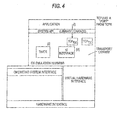
- the structure might be generally as shown in figure 4 .
- the application is linked with the transport library, rather than directly with the OS interface.
- the structure is very similar to the kernel stack implementation with services such as timer support provided by user level packages, and the device driver interface replaced with user-level virtual interface module.
- services such as timer support provided by user level packages, and the device driver interface replaced with user-level virtual interface module.
- the transport library in order to provide the model of asynchronous processing required by the TCP implementation there must be a number of active threads of execution within the transport library:
- TCP Offload Engine For handling the TCP protocol processing. This reduces the load on the system CPU.
- data is sent to a TOE-enabled NIC via a TOE-enabled virtual interface driver, by-passing the kernel TCP/IP stack entirely. Data sent along this fast path therefore need only be formatted to meet the requirements of the TOE driver.
- US Patent Application No. 10/844,665 describes a system for interfacing TCP offload engines using an interposed socket library.
- TCP protocol processing at the NIC requires the NIC to have considerable processing power. This increases expense, especially since embedded processing power on devices such as network interface devices is typically more expensive than main processor power. TOE NICs are therefore more expensive than generic network adapters. Furthermore, data must be formatted twice: firstly at the user-level for the TOE driver, and secondly at the TOE-enabled NIC to form TCP packets.
- the data processing system supports one or more instances of the Winsock Service Provider, each instance being associated with an application or a socket requested by an application.
- the method suitably further comprises the step of performing stateless protocol processing at the network interface device, the stateless protocol processing including at least one of calculating a checksum, performing a cyclic redundancy check (CRC), performing segmentation tasks, and data encryption.
- the stateless protocol processing including at least one of calculating a checksum, performing a cyclic redundancy check (CRC), performing segmentation tasks, and data encryption.
- CRC cyclic redundancy check
- Preferably said buffer is allocated to the Winsock Service Provider in response to a request from the Winsock Service Provider.
- the method suitably further comprises the step of: subsequent to the initiating step, accessing the buffer by means of a kernel mode of the operating system and performing at least part of a transmission operation of at least some of the packets over the network by means of the network interface device.
- the method preferably further comprises, prior to the forming step, creating an instance of the Winsock Service Provider; and wherein:
- a data processing system for transmitting data the system supporting a Microsoft Windows operating system and having access to a memory and a network interface device capable of supporting a communication link over a network with another network interface device, the system comprising:
- the data processing system suitably further comprises:
- a third aspect of the present invention there is provided a method for receiving data by means of a data processing system, the system supporting a Microsoft Windows operating system and at least one application and having access to a memory and a network interface device capable of supporting a communication link over a network with another network interface device, the method comprising the steps of:
- the operating system is configured to read the received data packets from the buffer and perform at least part of a reception operation of at least some of the packets over the network by means of the network interface device.
- the step of the Winsock Service Provider reading the received data packets from the buffer occurs in response to an interrupt set by the network interface device.
- the step of the Winsock Service Provider reading the received data packets from the buffer occurs in response to an event placed on an event queue by the network interface device.
- a data processing system for receiving data, the system supporting a Microsoft Windows operating system and having access to a memory, the system comprising:
- FIG. 5 shows a typical TCP transport architecture for a data processing system.
- an application 505 wishes to send data over the network to which NIC 515 is connected, the application sends a request to socket library 507.
- this request can be sent according to the Winsock API 506 and applications are only therefore required to understand the Winsock API in order to transmit data.
- One or more transport libraries 509 may be present in the system.
- transport library 509 handles, for example, TCP/IP traffic.
- a transport library is a Winsock Service Provider (WSP) which interacts with the Winsock via the Service Provider Interface (SPI) 508.
- WSP Winsock Service Provider
- SPI Service Provider Interface
- Transport library 509 directs the data to be sent to the TCP/IP stack 511 of the operating system which resides in kernel space 501.
- the TCP/IP stack performs the protocol processing and passes the data to the NIC for transmission over the network in accordance with the functionality defined by the NIC driver 513.
- the operating system maintains a catalogue of the service providers (WSPs) present in the data processing system and the order in which the service provider layers should be applied.
- WSPs service providers
- a virus checking WSP usually promotes itself as the primary WSP layer so that all data passing via the Winsock is scanned for viruses.
- the Winsock consults the parameters and order of registered WSPs and directs the data flow to the appropriate WSP or sequence of WSPs.
- a request by an application to transmit data via TCP/IP is therefore directed to a TCP/IP-capable WSP, possibly via WSP-layers offering other data processing or filtering functionality, such as a virus checking WSP.
- each WSP interacts with the next WSP in the chain according to the SPI.
- the chain is terminated by a Base Service Provider which directs all calls it receives to the kernel TCP stack.
- a transport architecture in accordance with the present invention includes an onload transport library.
- An onload transport library is a transport library which is dedicated to an application.
- An onload transport library performs processing of data for transmission and data received at a network interface device within the context of the application to which it is bound. The processing of data within an onload transport library is therefore temporally close to the application processing the data.
- FIG. 6 shows a TCP transport architecture according to an embodiment of the present invention.
- Socket library 507 receives a socket creation request from an application 505 that wishes to transmit data over the network.
- Socket library 507 may be provided by the operating system.
- Socket library 507 preferably operates in user mode.
- the socket library passes on or directs socket calls to the appropriate transport libraries based on the address family, type or protocol identifier of the requested socket.
- Transport library 517 is registered with the socket library as operable to handle data in accordance with a particular transport protocol.
- transport library 517 is selected on the basis of the transport protocol by which the data is to be sent.
- Transport library 517 may be selected on the basis of the address to which data is to be sent.
- Onload transport library 517 is a non-operating-system functionality providing a network protocol stack. An instance of the non-operating-system functionality is created for each application having data to send, or for each socket by which data may be sent. The data flows to and from each application may therefore be independently managed by the respective instances of the transport library.
- the transport library is preferably a WSP and the socket library is preferably the Windows Winsock.
- the transport library is configured to be the primary TCP/IP or UDP/IP WSP.
- Providing a transport library in accordance with the present invention as a WSP that plugs into the existing Winsock via the SPI interface allows the transport library to benefit from any security or other data filtering layers installed into the operating system.
- data for transmission by means of the transport library may be first passed through a virus checking WSP.
- the data transmission system may take advantage of the security measures offered by the operating system and other components installed into it and does not require separate security measures.
- the socket library passes on socket calls as appropriate to transport library 517 across SPI interface 508.
- Transport library 517 includes a TCP/IP stack, with TCP/IP protocol processing being performed in the transport library. This allows the good price:performance ratio of system CPU(s) (as compared to dedicated network card processors) to be fully utilised. Furthermore, in operating the transport library in user mode, no context switching is required in order for an application to transmit data across the network, no interrupts are required for an application to receive data and the processing of data by the application is closely coupled with the execution of the transport library.
- a feature of the present invention is that the transport library is provided in an onload configuration.
- the protocol processing performed by the transport library is loaded onto the CPU and not off-loaded to a processor on a NIC.
- Another feature of the present invention is that a new instance of the transport library is created for each application that requests a connection. Network protocol stacks are therefore defined on a per-application basis.
- the transport library is a user-mode object and each instance of the transport library is directly associated with a particular application.
- the application and transport library may be separated by a dynamic link resolved function call. This allows the transport library to carry out protocol processing within the context of the application to which it is bound.
- each instance of the transport library may be associated with a particular application, but separated by a system call interface.
- the transport library operates in kernel mode but is closely coupled to the application.
- the transport library is separated from the application by a system call interface.
- Many of the benefits of a full user level transport library are provided, but with the exception that there is some context switch overhead. This architecture would be useful where the security policies of the system would not allow a user-level implementation of the transport library.
- the non-operating-system functionality (the transport library) is preferably implemented as a WSP.
- the WSP can be thought of as a per-application transport stack. Data is therefore received directly to a subcomponent of an existing operating system socket library. A user-level transport library would therefore receive data from an operating system API.
- the stack may be a UDP/IP stack. could also support any common network protocol configurations.
- the transport library retains the ability to pass on a socket call to other transport implementations: for example, to the default TCP/IP transport library of the operating system further down the hierarchy.
- Data flows may be sent via the kernel stack if the data flow requires processing that cannot be carried out by the hardware or transport library: for example, flows in accordance with a protocol not understood by the hardware or transport library.
- the data is passed to the NIC for transmission across the network by writing the data to a transmit buffer.
- Buffers are allocated in memory on the data processor for use in cooperation with the NIC for the transmission and/or reception of data over the network.
- the NIC In the case of a transmit buffer, which is for use in transmitting data, the NIC is configured for reading data from that buffer and transmitting it over the network. The NIC may automatically read that data and transmit it, or it may be triggered to read the data by the transport library or the operating system running on the data processor. The trigger can conveniently be a doorbell write to a location decoded by the NIC which identifies the data structure requiring transmission.
- the NIC is configured for writing to that buffer data received over the network. The data in the receive buffer may then be read by the transport library or the operating system and further processed by it.
- the buffers are most conveniently owned by the operating system, in the sense that it has control over which entities have access to the buffers it has allocated, and/or it has created the buffers, and it is responsible for deleting them.
- both the transport library and the operating system can directly access the buffers for reading data from and writing data to them.
- the transport library when operating in an unprivileged (user) mode, is not given access to the physical addresses of these buffers.
- the transport library may instead use the buffers either by a memory mapping onto the buffer which is provided by the operating system, or else by reference to a virtual address which has been associated with the buffer by the operating system. This association may also be programmed into the NIC by the operating system, thus enabling the unprivileged transport library to safely refer to the buffer when communicating directly to the NIC hardware.
- the application In the case of transmission of data, the application will be expected to write data to a buffer for transmission and then trigger the NIC to read from the buffer to transmit that data. In some situations this alone may be sufficient to allow the data to be transmitted successfully over the network.
- the NIC does not perform protocol processing of transmitted or received data. Instead it is performed by the transport library or the operating system. Therefore if, for instance, the data is not received successfully by the intended recipient the transport library or the operating system must process acknowledgements, retransmission requests etc. (according to the protocol in use) and cause the NIC to perform retransmission. Normally this can be expected to be done by the transport library.
- the NIC When the NIC has data such as an acknowledgement message or a timeout for the transport library it writes that either to a receive buffer and/or an event queue. At the same time it starts a timer running. When the transport library accesses the buffer/event queue via the transport library it stops and resets the timer. In that way the NIC knows that the transport library is responsive. However, if the timer reaches a predetermined value then the NIC determines that the application is unresponsive and signals the operating system, for example by means of an interrupt, to handle the data for the application. This has a number of advantages. First, the transmission of the data can be progressed by the operating system even if the application is busy or has been descheduled.
- the application controls the length of the timer, for example by setting its initial value. This allows the application to set the timer to suit its priority.
- the timer is preferably a hardware resource on the NIC to which the application has direct access.
- the NIC parses each packet and determines to which transport library (i.e. which receive interface) the packet data should be sent. The NIC will then write the data to the determined receive buffer.
- the processing by either the transport library or the operating system will typically involve protocol processing: e.g. checking of packet sequence numbers, executing congestion control and avoidance algorithms and removal of data from the buffer for use by the application.
- protocol processing e.g. checking of packet sequence numbers, executing congestion control and avoidance algorithms and removal of data from the buffer for use by the application.
- the processing usually occurs in the context of the application and temporally close to the processing of the data by the application.
- the buffers are preferably allocated by the operating system, it is convenient for that to be done in response to a request from the transport library on behalf of an application (typically at start of day). Thus, if the received data might overflow the available receive buffers for an application, the transport library can request allocation of further buffers by the operating system.
- a state buffer holds protocol state data that is accessible to the operating system and the transport library.
- the state buffers can hold event queues of event messages. This allows the operating system to keep track of the state of a connection when the user level transport library is managing the connection.
- the transmit and receive buffers defined above are internal to the data processing system, i.e. the buffers are not addressable by entities on the network external to the data processing system.
- the above system achieves user-level networking or more generally network onloading, without requiring the transfer of information regarding those buffers over the network.
- the buffers are addressable only by the NIC and the transport library.
- the network interface device can (preferably in hardware) examine the flow of incoming packets. This allows it to identify relevant bit sequences in incoming packets without affecting the flow of data.
- the identification of bit sequences may, for example, be implemented using a simple decode pipeline because of the simple header layout of such packets.
- the NIC may therefore direct incoming data to the appropriate receive buffer of an application by identifying a bit sequence in a data stream. There is thus no requirement (as in RDMA) to define buffer names that are valid over the entire network in order for an application to pass data to another application running on another data processing device via a fast data path that does not require data to traverse a kernel network stack.
- TCP support code for the network interface device is in addition to the generic OS TCP implementation. This is suitably able to co-exist with the stack of the network interface device.
- TCP code can either be executed in the transport library as a result of a system API call (e.g. recv()) or by the kernel as a result of a timer event.
- the VI virtual interface
- both code paths may access connection state or data buffers, whose protection and mutual exclusion may be managed by shared memory locks.
- this feature can prevent the requirement for applications to change their thread and signal-handling assumptions: for example in some situations it can be unacceptable to require a single threaded application to link with a multi-threaded library.
- the network interface device can implement a number of timers which may be allocated to particular virtual interface instances: for example there may be one timer per active TCP transport library. These timers can be made programmable through a memory mapped VI and result in events being issued. Because timers can be set and cleared without a system call - without directly involving the operating system -the overhead for timer management is greatly reduced.
- the network interface device can contain or have access to content addressable memory, which can match bits taken from the headers of incoming packets as a parallel hardware match operation. The results of the match can be taken to indicate the destination virtual interface which must be used for delivery, and the hardware can proceed to deliver the packet onto buffers which have been pushed on the VI.
- a CAM or hash algorithm may be used by hardware to determine which virtual interface to use.
- a network connection When a network connection is handed over the same system-wide resource handle can be passed between the applications.
- the architecture of the network interface device can attach all state associated with the network connection with that (e.g.) file descriptor and require the transport library to memory map on to this state.
- the new application (whether as an application, thread or process) - even if it is executing within a different address space - is able to memory-map and continue to use the state.
- any number of applications are able to share use of a network connection with the same semantics as specified by standard system APIs.
- connection state and protocol code can remain kernel resident.
- the OS kernel code can be informed of the change of state of an application in the same manner as the generic TCP (TCPk) protocol stack. An application which is stopped will then not provide a thread to advance protocol execution, but the protocol will continue via timer events, for example as is known for prior art kernel stack protocols.
- Protocols such as RDMA involve the embedding of framing information and cyclic redundancy check (CRC) data within the TCP stream. While framing information is trivial to calculate within protocol libraries, CRC's (in contrast to checksums) are computationally intensive and best done by hardware. To accommodate this, when a TCP stream is carrying an RDMA or similar encapsulation an option in the virtual interface can be is enabled, for example by means of a flag. On detecting this option, the NIC will parse each packet on transmission, recover the RDMA frame, apply the RDMA CRC algorithm and insert the CRC on the fly during transmission. Analogous procedures can beneficially be used in relation to other protocols, such as iSCSI, that require computationally relatively intensive calculation of error check data.
- CRC cyclic redundancy check
- the network interface device can also verify CRCs on received packets using similar logic. This may, for example, be performed in a manner akin to the standard TCP checksum off-load technique.
- Protocols such as RDMA also mandate additional operations such as RDMA READ which in conventional implementations require additional intelligence on the network interface device.
- This type of implementation has led to the general belief that RDMA/TCP should best be implemented by means of a co-processor network interface device.
- specific hardware filters can be encoded to trap such upper level protocol requests for a particular network connection.
- the NIC can generate an event akin to the timer event in order to request action by software running on the attached computer, as well a delivery data message. By triggering an event in such a way the NIC can achieve the result that either the transport library, or the kernel helper will act on the request immediately. This can avoid the potential problem of kernel extensions not executing until the transport library is scheduled and can be applied to other upper protocols if required.
- the RDMA model may be implemented under the optional Microsoft Windows component Winsock Direct (WSD).
- Winsock Direct bridges the semantic difference between the Winsock API and the RDMA model, providing a direct data path from the Winsock architecture to an RDMA-enabled NIC.
- the interconnect vendor's virtualized hardware driver is provided as an RDMA SAN (System Area Network) Provider.
- the RDMA SAN Provider allows data to be received from the Winsock Direct Switch (which plugs into the native system Winsock) via an SPI interface and addressed directly to the NIC via the vendor's integrated virtualized hardware driver.
- An RDMA-enabled NIC performs all statefull protocol processing, typically on a processor on the NIC.
- statefull protocol processing is performed at the host CPU and preferably in the context of the application to which data is being sent or transmitted from.
- stateless protocol processing (such as checksum calculations) may be performed on the NIC.
- RDMA SANs are connection oriented and require signalling through a non-IP control plane. These operations are implemented within the kernel and a data transfer operation therefore requires the use of kernel system calls. Furthermore, the RDMA model allows a remote application to be given read or write access to a region of memory in an application's address space. Buffers allocated for remote direct memory access must be uniquely named so that they can be referred to over the network. Since buffer resources are finite within a system and since the number of resources required in this model grows as the number of communicating hosts in a cluster grows, the algorithms for efficiently managing this are complex and result in more signalling messages being sent around the network.
- the present invention allows the direct transfer of data over a low latency fast path between applications that are remote to one another but without supporting the RDMA model as such.
- the complexity of an RDMA SAN Provider running under Winsock Direct is not required. For example, no signalling messages to grant or revoke read or write rights to buffers are required.
- Buffers are allocated by the operating system to a transport library and NIC operating according to the principles of the present invention. Preferably buffers are allocated in response to requests made by the transport library. These requests may be made in response to the creation of new sockets or data flows. Buffers are not therefore allocated to (or addressable by) remote applications or allocated on a connection-oriented basis.
- a transport library operable according to the principles of the present invention may exist in a system with the WSD architecture since the WSD switch also plugs into the Winsock via SPI.
- the transport library may precede or follow the WSD switch layer.
- the WSD switch may be the Base Service Provider and therefore be located at the end of the WSP chain.
- One advantage that has been promoted for co-processor TCP implementations is the ability to perform zero-copy operations on transmit and receive.
- TLB transmit look-aside buffer
- the transport library can simply retain sent buffers until the data from them is acknowledged, and data transmitted without copying. This can also be done when asynchronous networking APIs are used by applications.
- the transport library can use memory copy routines which execute non-temporal stores. These can leave copied data in memory (rather than cache), thus avoiding cache pollution.
- the data not being in cache would not be expected to affect performance since the next step for transmission will be expected to be DMA of the data by the network interface device, and the performance of this DMA operation is unlikely to be affected by the data being in memory rather than cache.
- the network interface device can (preferably in hardware) examine the flow of incoming packets in order that it can in effect parse the network header. This allows it to identify relevant bit sequences in incoming packets without affecting the flow of data.
- the NIC may then determine the appropriate receive buffer for a packet by:
Landscapes
- Engineering & Computer Science (AREA)
- Computer Security & Cryptography (AREA)
- Computer Networks & Wireless Communication (AREA)
- Signal Processing (AREA)
- Computer And Data Communications (AREA)
- Communication Control (AREA)
- Data Exchanges In Wide-Area Networks (AREA)
Applications Claiming Priority (4)
| Application Number | Priority Date | Filing Date | Title |
|---|---|---|---|
| GB0613687A GB0613687D0 (en) | 2006-07-10 | 2006-07-10 | Chimney onload implementation of network protocol stack |
| GB0613684A GB0613684D0 (en) | 2006-07-10 | 2006-07-10 | Onload network protocol stack |
| GB0613976A GB0613976D0 (en) | 2006-07-13 | 2006-07-13 | Interrupt management |
| EP07858875A EP2044753A2 (de) | 2006-07-10 | 2007-07-09 | Netzwerkstapel |
Related Parent Applications (2)
| Application Number | Title | Priority Date | Filing Date |
|---|---|---|---|
| EP07858875.3 Division | 2007-07-09 | ||
| EP07858875A Division EP2044753A2 (de) | 2006-07-10 | 2007-07-09 | Netzwerkstapel |
Publications (3)
| Publication Number | Publication Date |
|---|---|
| EP2632109A2 true EP2632109A2 (de) | 2013-08-28 |
| EP2632109A3 EP2632109A3 (de) | 2014-04-23 |
| EP2632109B1 EP2632109B1 (de) | 2017-05-10 |
Family
ID=39230596
Family Applications (5)
| Application Number | Title | Priority Date | Filing Date |
|---|---|---|---|
| EP13169223.8A Active EP2632109B1 (de) | 2006-07-10 | 2007-07-09 | System und verfahren zur datenverarbeitung |
| EP07858875A Withdrawn EP2044753A2 (de) | 2006-07-10 | 2007-07-09 | Netzwerkstapel |
| EP12189776.3A Active EP2552081B1 (de) | 2006-07-10 | 2007-07-09 | Unterbrechungsverwaltung |
| EP13174385.8A Active EP2645674B1 (de) | 2006-07-10 | 2007-07-09 | Unterbrechungsverwaltung |
| EP12189774.8A Active EP2552080B1 (de) | 2006-07-10 | 2007-07-09 | Implementierung eines netzwerkprotokollstapels mit chimney-ladung |
Family Applications After (4)
| Application Number | Title | Priority Date | Filing Date |
|---|---|---|---|
| EP07858875A Withdrawn EP2044753A2 (de) | 2006-07-10 | 2007-07-09 | Netzwerkstapel |
| EP12189776.3A Active EP2552081B1 (de) | 2006-07-10 | 2007-07-09 | Unterbrechungsverwaltung |
| EP13174385.8A Active EP2645674B1 (de) | 2006-07-10 | 2007-07-09 | Unterbrechungsverwaltung |
| EP12189774.8A Active EP2552080B1 (de) | 2006-07-10 | 2007-07-09 | Implementierung eines netzwerkprotokollstapels mit chimney-ladung |
Country Status (3)
| Country | Link |
|---|---|
| US (1) | US8489761B2 (de) |
| EP (5) | EP2632109B1 (de) |
| WO (1) | WO2008038139A2 (de) |
Cited By (4)
| Publication number | Priority date | Publication date | Assignee | Title |
|---|---|---|---|---|
| US9948533B2 (en) | 2006-07-10 | 2018-04-17 | Solarflare Communitations, Inc. | Interrupt management |
| WO2018185107A1 (en) * | 2017-04-06 | 2018-10-11 | Gvbb Holdings, S.A.R.L. | System and method for timely and uniform distribution for real-time packet transmission |
| US10382248B2 (en) | 2006-07-10 | 2019-08-13 | Solarflare Communications, Inc. | Chimney onload implementation of network protocol stack |
| CN112037401A (zh) * | 2019-05-17 | 2020-12-04 | 福建省天正信息资讯工程有限公司 | 一种基于c#的部队物联网设备控制管理系统与管理方法 |
Families Citing this family (67)
| Publication number | Priority date | Publication date | Assignee | Title |
|---|---|---|---|---|
| US7911994B2 (en) * | 2003-02-28 | 2011-03-22 | Openwave Systems Inc. | Confirmation of delivery of content to an HTTP/TCP device |
| US8510491B1 (en) * | 2005-04-05 | 2013-08-13 | Oracle America, Inc. | Method and apparatus for efficient interrupt event notification for a scalable input/output device |
| GB0600417D0 (en) * | 2006-01-10 | 2006-02-15 | Level 5 Networks Inc | Virtualisation support |
| US8209707B2 (en) * | 2008-01-11 | 2012-06-26 | Google Inc. | Gathering state information for an application and kernel components called by the application |
| US9027003B2 (en) * | 2008-03-31 | 2015-05-05 | Vmware, Inc. | Precise branch counting in virtualization systems |
| US10867298B1 (en) | 2008-10-31 | 2020-12-15 | Wells Fargo Bank, N.A. | Payment vehicle with on and off function |
| US20100114768A1 (en) | 2008-10-31 | 2010-05-06 | Wachovia Corporation | Payment vehicle with on and off function |
| US8463928B2 (en) * | 2009-10-27 | 2013-06-11 | Verisign, Inc. | Efficient multiple filter packet statistics generation |
| US8908542B2 (en) * | 2009-12-22 | 2014-12-09 | At&T Mobility Ii Llc | Voice quality analysis device and method thereof |
| US8812733B1 (en) * | 2010-08-19 | 2014-08-19 | Google Inc. | Transport protocol independent communications library |
| US8483095B2 (en) * | 2010-11-11 | 2013-07-09 | International Business Machines Corporation | Configurable network socket retransmission timeout parameters |
| US8806030B2 (en) * | 2010-12-06 | 2014-08-12 | Microsoft Corporation | Multichannel connections in file system sessions |
| US9100398B2 (en) | 2011-04-27 | 2015-08-04 | International Business Machines Corporation | Enhancing directory service authentication and authorization using contextual information |
| US9094400B2 (en) * | 2011-04-27 | 2015-07-28 | International Business Machines Corporation | Authentication in virtual private networks |
| US8763018B2 (en) * | 2011-08-22 | 2014-06-24 | Solarflare Communications, Inc. | Modifying application behaviour |
| KR101357342B1 (ko) * | 2012-03-15 | 2014-02-04 | 엘에스산전 주식회사 | 하드웨어 프로토콜 스택 |
| WO2015116768A2 (en) * | 2014-01-29 | 2015-08-06 | Sipn, Llc | Systems and methods for protecting communications |
| US9442778B2 (en) * | 2012-10-01 | 2016-09-13 | Salesforce.Com, Inc. | Method and system for secured inter-application communication in mobile devices |
| JP2014109882A (ja) * | 2012-11-30 | 2014-06-12 | Toshiba Corp | 情報処理装置、情報処理方法及びプログラム |
| US10158585B2 (en) | 2013-02-21 | 2018-12-18 | Intel Corporation | Packet processing with reduced latency |
| US9258365B2 (en) | 2013-03-15 | 2016-02-09 | International Business Machines Corporation | Remote direct memory access acceleration via hardware context in non-native applciations |
| US9444914B2 (en) | 2013-09-16 | 2016-09-13 | Annapurna Labs Ltd. | Configurable parser and a method for parsing information units |
| US9330036B2 (en) | 2013-11-25 | 2016-05-03 | Red Hat Israel, Ltd. | Interrupt reduction by dynamic application buffering |
| EP3081044B1 (de) * | 2013-12-11 | 2023-11-22 | Essity Hygiene and Health Aktiebolag | Erweiterte protokollrahmen zur datenübertragung |
| CN104734993B (zh) * | 2013-12-24 | 2018-05-18 | 杭州华为数字技术有限公司 | 数据分流方法及分流器 |
| US9778963B2 (en) | 2014-03-31 | 2017-10-03 | Solarflare Communications, Inc. | Ordered event notification |
| US9652130B1 (en) * | 2014-04-23 | 2017-05-16 | Google Inc. | Auto-sizing an untrusted view |
| US9747165B1 (en) * | 2014-04-23 | 2017-08-29 | Google Inc. | Self-recovering application |
| CN104123229B (zh) * | 2014-07-21 | 2017-10-24 | 上海斐讯数据通信技术有限公司 | 能使报文高效地从内核态提交到用户态的方法及系统 |
| US20160026605A1 (en) * | 2014-07-28 | 2016-01-28 | Emulex Corporation | Registrationless transmit onload rdma |
| US9774706B2 (en) | 2014-09-30 | 2017-09-26 | Level 3 Communications, Llc | Providing functional requirements for a network connection from a local library |
| US9846576B2 (en) * | 2014-12-27 | 2017-12-19 | Intel Corporation | Technologies for reprogramming network interface cards over a network |
| US9584628B2 (en) * | 2015-03-17 | 2017-02-28 | Freescale Semiconductor, Inc. | Zero-copy data transmission system |
| US20160285970A1 (en) * | 2015-03-27 | 2016-09-29 | International Business Machines Corporation | Network communication between virtual machine applications via direct memory access |
| US11429975B1 (en) | 2015-03-27 | 2022-08-30 | Wells Fargo Bank, N.A. | Token management system |
| CN106330776A (zh) * | 2015-06-30 | 2017-01-11 | 中兴通讯股份有限公司 | 报文处理方法及装置 |
| US9936051B2 (en) * | 2015-07-07 | 2018-04-03 | International Business Machines Corporation | Managing network sockets |
| US11170364B1 (en) | 2015-07-31 | 2021-11-09 | Wells Fargo Bank, N.A. | Connected payment card systems and methods |
| CN105141603B (zh) * | 2015-08-18 | 2018-10-19 | 北京百度网讯科技有限公司 | 通信数据传输方法及系统 |
| US9954979B2 (en) * | 2015-09-21 | 2018-04-24 | International Business Machines Corporation | Protocol selection for transmission control protocol/internet protocol (TCP/IP) |
| US10291496B1 (en) * | 2015-09-29 | 2019-05-14 | Juniper Networks, Inc. | Packet capture based capturing of protocol layer state information |
| US10547559B2 (en) * | 2015-12-26 | 2020-01-28 | Intel Corporation | Application-level network queueing |
| US10992679B1 (en) | 2016-07-01 | 2021-04-27 | Wells Fargo Bank, N.A. | Access control tower |
| US11615402B1 (en) | 2016-07-01 | 2023-03-28 | Wells Fargo Bank, N.A. | Access control tower |
| US11886611B1 (en) | 2016-07-01 | 2024-01-30 | Wells Fargo Bank, N.A. | Control tower for virtual rewards currency |
| US11935020B1 (en) | 2016-07-01 | 2024-03-19 | Wells Fargo Bank, N.A. | Control tower for prospective transactions |
| US12130937B1 (en) | 2016-07-01 | 2024-10-29 | Wells Fargo Bank, N.A. | Control tower for prospective transactions |
| US11386223B1 (en) | 2016-07-01 | 2022-07-12 | Wells Fargo Bank, N.A. | Access control tower |
| CN106713462A (zh) * | 2016-12-26 | 2017-05-24 | 郑州云海信息技术有限公司 | 一种网络数据包处理方法和装置 |
| US11556936B1 (en) | 2017-04-25 | 2023-01-17 | Wells Fargo Bank, N.A. | System and method for card control |
| US11062388B1 (en) | 2017-07-06 | 2021-07-13 | Wells Fargo Bank, N.A | Data control tower |
| US10616339B2 (en) | 2017-11-28 | 2020-04-07 | Dell Products, L.P. | System and method to configure, manage, and monitor stacking of ethernet devices in a software defined network |
| US11792307B2 (en) * | 2018-03-28 | 2023-10-17 | Apple Inc. | Methods and apparatus for single entity buffer pool management |
| US11829303B2 (en) | 2019-09-26 | 2023-11-28 | Apple Inc. | Methods and apparatus for device driver operation in non-kernel space |
| US11558348B2 (en) | 2019-09-26 | 2023-01-17 | Apple Inc. | Methods and apparatus for emerging use case support in user space networking |
| US10992606B1 (en) | 2020-09-04 | 2021-04-27 | Wells Fargo Bank, N.A. | Synchronous interfacing with unaffiliated networked systems to alter functionality of sets of electronic assets |
| US11775359B2 (en) | 2020-09-11 | 2023-10-03 | Apple Inc. | Methods and apparatuses for cross-layer processing |
| US11954540B2 (en) | 2020-09-14 | 2024-04-09 | Apple Inc. | Methods and apparatus for thread-level execution in non-kernel space |
| US11799986B2 (en) | 2020-09-22 | 2023-10-24 | Apple Inc. | Methods and apparatus for thread level execution in non-kernel space |
| US11546338B1 (en) * | 2021-01-05 | 2023-01-03 | Wells Fargo Bank, N.A. | Digital account controls portal and protocols for federated and non-federated systems and devices |
| US11573853B2 (en) * | 2021-03-31 | 2023-02-07 | Advanced Micro Devices, Inc. | Error checking data used in offloaded operations |
| US11876719B2 (en) | 2021-07-26 | 2024-01-16 | Apple Inc. | Systems and methods for managing transmission control protocol (TCP) acknowledgements |
| US11882051B2 (en) | 2021-07-26 | 2024-01-23 | Apple Inc. | Systems and methods for managing transmission control protocol (TCP) acknowledgements |
| CN113835902B (zh) * | 2021-09-22 | 2023-12-05 | 抖音视界有限公司 | 一种数据处理方法、装置、计算机设备及存储介质 |
| CN114257561B (zh) * | 2021-12-17 | 2023-02-07 | 东土科技(宜昌)有限公司 | 一种串口网口的数据透传方法及装置、设备、存储介质 |
| US11836690B1 (en) | 2022-04-12 | 2023-12-05 | Wells Fargo Bank, N.A. | Systems and methods for private network issuance of digital currency |
| US12155641B1 (en) | 2022-04-15 | 2024-11-26 | Wells Fargo Bank, N.A. | Network access tokens and meta-application programming interfaces for enhanced inter-enterprise system data promulgation and profiling |
Family Cites Families (152)
| Publication number | Priority date | Publication date | Assignee | Title |
|---|---|---|---|---|
| US5325532A (en) * | 1992-09-25 | 1994-06-28 | Compaq Computer Corporation | Automatic development of operating system boot image |
| US5272599A (en) * | 1993-03-19 | 1993-12-21 | Compaq Computer Corporation | Microprocessor heat dissipation apparatus for a printed circuit board |
| US6098112A (en) * | 1995-10-19 | 2000-08-01 | Hewlett-Packard Company | Streams function registering |
| US5886872A (en) * | 1997-04-23 | 1999-03-23 | Compaq Computer Corporation | Pivotable support and heat sink apparatus removably connectable without tools to a computer processor |
| US6427173B1 (en) | 1997-10-14 | 2002-07-30 | Alacritech, Inc. | Intelligent network interfaced device and system for accelerated communication |
| US6591302B2 (en) | 1997-10-14 | 2003-07-08 | Alacritech, Inc. | Fast-path apparatus for receiving data corresponding to a TCP connection |
| US6434620B1 (en) | 1998-08-27 | 2002-08-13 | Alacritech, Inc. | TCP/IP offload network interface device |
| US6470415B1 (en) | 1999-10-13 | 2002-10-22 | Alacritech, Inc. | Queue system involving SRAM head, SRAM tail and DRAM body |
| US6427171B1 (en) | 1997-10-14 | 2002-07-30 | Alacritech, Inc. | Protocol processing stack for use with intelligent network interface device |
| US6226680B1 (en) | 1997-10-14 | 2001-05-01 | Alacritech, Inc. | Intelligent network interface system method for protocol processing |
| US6389479B1 (en) | 1997-10-14 | 2002-05-14 | Alacritech, Inc. | Intelligent network interface device and system for accelerated communication |
| US6160554A (en) * | 1998-03-19 | 2000-12-12 | Hewlett Packard Company | Computer file content preview window |
| US6002804A (en) * | 1998-03-26 | 1999-12-14 | Hewlett-Packard Company | Tone dependent variable halftoning with adjustable algorithm selection |
| US6260127B1 (en) * | 1998-07-13 | 2001-07-10 | Compaq Computer Corporation | Method and apparatus for supporting heterogeneous memory in computer systems |
| US6768996B1 (en) * | 1998-10-08 | 2004-07-27 | Hewlett-Packard Development Company, L.P. | System and method for retrieving an abstracted portion of a file without regard to the operating system of the current host computer |
| US6347337B1 (en) * | 1999-01-08 | 2002-02-12 | Intel Corporation | Credit based flow control scheme over virtual interface architecture for system area networks |
| US6360241B1 (en) * | 1999-02-01 | 2002-03-19 | Compaq Information Technologies Goup, L.P. | Computer method and apparatus for division and square root operations using signed digit |
| US6466952B2 (en) * | 1999-04-08 | 2002-10-15 | Hewlett-Packard Company | Method for transferring and indexing data from old media to new media |
| US6502203B2 (en) * | 1999-04-16 | 2002-12-31 | Compaq Information Technologies Group, L.P. | Method and apparatus for cluster system operation |
| US6304945B1 (en) * | 1999-05-13 | 2001-10-16 | Compaq Computer Corporation | Method and apparatus for maintaining cache coherency in a computer system having multiple processor buses |
| US7318102B1 (en) * | 1999-05-24 | 2008-01-08 | Hewlett-Packard Development Company, L.P. | Reliable datagram |
| AU7036400A (en) * | 1999-09-08 | 2001-04-10 | Mellanox Technologies Ltd. | Synchronization of interrupts with data packets |
| AU2216601A (en) | 1999-12-28 | 2001-07-09 | Mellanox Technologies Ltd. | Variable delay generator |
| ATE403323T1 (de) * | 2000-05-24 | 2008-08-15 | Voltaire Ltd | Gefilterte kommunikation von anwendung zu anwendung |
| US7103626B1 (en) * | 2000-05-24 | 2006-09-05 | Hewlett-Packard Development, L.P. | Partitioning in distributed computer system |
| US6735642B2 (en) * | 2000-06-02 | 2004-05-11 | Mellanox Technologies Ltd. | DMA doorbell |
| US6690757B1 (en) * | 2000-06-20 | 2004-02-10 | Hewlett-Packard Development Company, L.P. | High-speed interconnection adapter having automated lane de-skew |
| JP2004526218A (ja) * | 2000-08-24 | 2004-08-26 | ボルテール アドバンスト データ セキュリティ リミテッド | 相互接続されたファブリックにおける高度にスケーラブルで高速のコンテンツ・ベース・フィルタリング及び負荷均衡化システム及び方法 |
| US6765922B1 (en) * | 2000-09-08 | 2004-07-20 | Hewlett-Packard Development Company, L.P. | Speculative transmit for system area network latency reduction |
| US20020059052A1 (en) * | 2000-09-12 | 2002-05-16 | Mellanox Technologies Ltd. | Co-simulation of network components |
| US6349035B1 (en) * | 2000-09-29 | 2002-02-19 | Compaq Information Technologies Group, L.P. | Method and apparatus for tooless mating of liquid cooled cold plate with tapered interposer heat sink |
| US6718392B1 (en) * | 2000-10-24 | 2004-04-06 | Hewlett-Packard Development Company, L.P. | Queue pair partitioning in distributed computer system |
| AUPR108900A0 (en) | 2000-10-28 | 2000-11-23 | S4 Technology Pty Limited | Modular digital transmission assembly |
| US6728743B2 (en) * | 2001-01-04 | 2004-04-27 | Mellanox Technologies Ltd. | Modulo remainder generator |
| US7254237B1 (en) * | 2001-01-12 | 2007-08-07 | Slt Logic, Llc | System and method for establishing a secure connection |
| US6950961B2 (en) * | 2001-02-13 | 2005-09-27 | Hewlett-Packard Development Company, L.P. | Highly available, monotonic increasing sequence number generation |
| US20020129293A1 (en) * | 2001-03-07 | 2002-09-12 | Hutton John F. | Scan based multiple ring oscillator structure for on-chip speed measurement |
| US20020140985A1 (en) * | 2001-04-02 | 2002-10-03 | Hudson Kevin R. | Color calibration for clustered printing |
| US7543290B2 (en) | 2001-04-11 | 2009-06-02 | Mellanox Technologies Ltd. | Multiple queue pair access with single doorbell |
| US20020152328A1 (en) | 2001-04-11 | 2002-10-17 | Mellanox Technologies, Ltd. | Network adapter with shared database for message context information |
| US6901052B2 (en) | 2001-05-04 | 2005-05-31 | Slt Logic Llc | System and method for policing multiple data flows and multi-protocol data flows |
| US7042848B2 (en) | 2001-05-04 | 2006-05-09 | Slt Logic Llc | System and method for hierarchical policing of flows and subflows of a data stream |
| US6904057B2 (en) | 2001-05-04 | 2005-06-07 | Slt Logic Llc | Method and apparatus for providing multi-protocol, multi-stage, real-time frame classification |
| US6944168B2 (en) | 2001-05-04 | 2005-09-13 | Slt Logic Llc | System and method for providing transformation of multi-protocol packets in a data stream |
| US6438130B1 (en) * | 2001-06-28 | 2002-08-20 | Mellanox Technologies Ltd. | Forwarding database cache |
| US6980328B2 (en) * | 2001-07-05 | 2005-12-27 | Hewlett-Packard Development Company, L.P. | Direction-dependent color conversion in bidirectional printing |
| US7136397B2 (en) * | 2001-08-20 | 2006-11-14 | Slt Logic Llc | Network architecture and system for delivering bi-directional xDSL based services |
| US7151744B2 (en) * | 2001-09-21 | 2006-12-19 | Slt Logic Llc | Multi-service queuing method and apparatus that provides exhaustive arbitration, load balancing, and support for rapid port failover |
| US7099275B2 (en) * | 2001-09-21 | 2006-08-29 | Slt Logic Llc | Programmable multi-service queue scheduler |
| US7161719B2 (en) * | 2001-09-26 | 2007-01-09 | Hewlett-Packard Development Company, L.P. | Generalized color calibration architecture and method |
| US6904534B2 (en) * | 2001-09-29 | 2005-06-07 | Hewlett-Packard Development Company, L.P. | Progressive CPU sleep state duty cycle to limit peak power of multiple computers on shared power distribution unit |
| US7023584B2 (en) * | 2001-10-02 | 2006-04-04 | Hewlett-Packard Development Company, L.P. | Color calibration method and apparatus |
| US20030065856A1 (en) * | 2001-10-03 | 2003-04-03 | Mellanox Technologies Ltd. | Network adapter with multiple event queues |
| US7054035B2 (en) * | 2001-10-29 | 2006-05-30 | Hewlett-Packard Development Company, L.P. | Method and system for management of color through conversion between color spaces |
| US7007157B2 (en) * | 2001-10-30 | 2006-02-28 | Microsoft Corporation | Network interface sharing methods and apparatuses that support kernel mode data traffic and user mode data traffic |
| US7228550B1 (en) * | 2002-01-07 | 2007-06-05 | Slt Logic, Llc | System and method for making communication streams available to processes executing under control of an operating system but without the intervention of the operating system |
| US7093158B2 (en) * | 2002-03-11 | 2006-08-15 | Hewlett-Packard Development Company, L.P. | Data redundancy in a hot pluggable, large symmetric multi-processor system |
| US7245627B2 (en) * | 2002-04-23 | 2007-07-17 | Mellanox Technologies Ltd. | Sharing a network interface card among multiple hosts |
| US6705703B2 (en) * | 2002-04-24 | 2004-03-16 | Hewlett-Packard Development Company, L.P. | Determination of control points for construction of first color space-to-second color space look-up table |
| US6667918B2 (en) * | 2002-05-01 | 2003-12-23 | Mellanox Technologies Ltd. | Self-repair of embedded memory arrays |
| US7149227B2 (en) * | 2002-05-31 | 2006-12-12 | Mellanox Technologies Ltd. | Round-robin arbiter with low jitter |
| US7263103B2 (en) * | 2002-07-23 | 2007-08-28 | Mellanox Technologies Ltd. | Receive queue descriptor pool |
| US7143412B2 (en) * | 2002-07-25 | 2006-11-28 | Hewlett-Packard Development Company, L.P. | Method and apparatus for optimizing performance in a multi-processing system |
| US7631106B2 (en) | 2002-08-15 | 2009-12-08 | Mellanox Technologies Ltd. | Prefetching of receive queue descriptors |
| US7742473B2 (en) * | 2002-11-12 | 2010-06-22 | Mark Adams | Accelerator module |
| US7424710B1 (en) * | 2002-12-18 | 2008-09-09 | Vmware, Inc. | TCP/IP offloading for virtual machines |
| US7316017B1 (en) * | 2003-01-06 | 2008-01-01 | Slt Logic, Llc | System and method for allocatiing communications to processors and rescheduling processes in a multiprocessor system |
| US7386619B1 (en) * | 2003-01-06 | 2008-06-10 | Slt Logic, Llc | System and method for allocating communications to processors in a multiprocessor system |
| US7190827B2 (en) * | 2003-01-22 | 2007-03-13 | Hewlett-Packard Development Company, L.P. | Color space conversion using interpolation |
| GB0304807D0 (en) | 2003-03-03 | 2003-04-09 | Cambridge Internetworking Ltd | Data protocol |
| US7554993B2 (en) * | 2003-03-27 | 2009-06-30 | Hewlett-Packard Development Company, L.P. | Method and apparatus for performing connection management with multiple stacks |
| US7103744B2 (en) * | 2003-03-27 | 2006-09-05 | Hewlett-Packard Development Company, L.P. | Binding a memory window to a queue pair |
| US7502826B2 (en) * | 2003-03-27 | 2009-03-10 | Hewlett-Packard Development Company, L.P. | Atomic operations |
| US8023520B2 (en) * | 2003-03-27 | 2011-09-20 | Hewlett-Packard Development Company, L.P. | Signaling packet |
| US20040210754A1 (en) * | 2003-04-16 | 2004-10-21 | Barron Dwight L. | Shared security transform device, system and methods |
| US20050021680A1 (en) * | 2003-05-12 | 2005-01-27 | Pete Ekis | System and method for interfacing TCP offload engines using an interposed socket library |
| US20040252685A1 (en) * | 2003-06-13 | 2004-12-16 | Mellanox Technologies Ltd. | Channel adapter with integrated switch |
| US7352893B2 (en) * | 2003-07-09 | 2008-04-01 | Hewlett-Packard Development Company, L.P. | Representing extended color gamut information |
| US7446901B2 (en) * | 2003-07-21 | 2008-11-04 | Hewlett-Packard Development Company | Conforming output intensities of pens |
| US7496903B2 (en) * | 2003-08-12 | 2009-02-24 | Hewlett-Packard Development Company, L.P. | Synthesizing application response measurement (ARM) instrumentation |
| US20050039171A1 (en) * | 2003-08-12 | 2005-02-17 | Avakian Arra E. | Using interceptors and out-of-band data to monitor the performance of Java 2 enterprise edition (J2EE) applications |
| US7484209B2 (en) * | 2003-08-12 | 2009-01-27 | Hewlett-Packard Development Company, L.P. | Instrumenting java code by modifying bytecodes |
| US7757232B2 (en) * | 2003-08-14 | 2010-07-13 | Hewlett-Packard Development Company, L.P. | Method and apparatus for implementing work request lists |
| US7617376B2 (en) * | 2003-08-14 | 2009-11-10 | Hewlett-Packard Development Company, L.P. | Method and apparatus for accessing a memory |
| US7404190B2 (en) * | 2003-09-18 | 2008-07-22 | Hewlett-Packard Development Company, L.P. | Method and apparatus for providing notification via multiple completion queue handlers |
| US7653754B2 (en) | 2004-01-05 | 2010-01-26 | Mellanox Technologies Ltd. | Method, system and protocol that enable unrestricted user-level access to a network interface adapter |
| US20050172181A1 (en) * | 2004-01-16 | 2005-08-04 | Mellanox Technologies Ltd. | System and method for production testing of high speed communications receivers |
| GB0404696D0 (en) * | 2004-03-02 | 2004-04-07 | Level 5 Networks Ltd | Dual driver interface |
| US20050219278A1 (en) * | 2004-03-30 | 2005-10-06 | Hudson Kevin R | Image formation with a flexible number of passes |
| US7168784B2 (en) * | 2004-03-30 | 2007-01-30 | Hewlett-Packard Development Company, L.P. | Formation of images |
| US7783769B2 (en) * | 2004-03-31 | 2010-08-24 | Intel Corporation | Accelerated TCP (Transport Control Protocol) stack processing |
| US7929161B2 (en) * | 2004-04-15 | 2011-04-19 | Hewlett-Packard Development Company, L.P. | Image processing system and method |
| GB0408876D0 (en) | 2004-04-21 | 2004-05-26 | Level 5 Networks Ltd | User-level stack |
| US7650386B2 (en) * | 2004-07-29 | 2010-01-19 | Hewlett-Packard Development Company, L.P. | Communication among partitioned devices |
| US20060045098A1 (en) * | 2004-08-31 | 2006-03-02 | Krause Michael R | System for port mapping in a network |
| US7551614B2 (en) * | 2004-12-14 | 2009-06-23 | Hewlett-Packard Development Company, L.P. | Aggregation over multiple processing nodes of network resources each providing offloaded connections between applications over a network |
| US7403535B2 (en) * | 2004-12-14 | 2008-07-22 | Hewlett-Packard Development Company, L.P. | Aggregation of network resources providing offloaded connections between applications over a network |
| US20060193318A1 (en) * | 2005-02-28 | 2006-08-31 | Sriram Narasimhan | Method and apparatus for processing inbound and outbound quanta of data |
| US7674564B2 (en) * | 2005-04-11 | 2010-03-09 | Hewlett-Packard Development Company, L.P. | Color filter |
| US7580415B2 (en) * | 2005-04-27 | 2009-08-25 | Hewlett-Packard Development Company, L.P. | Aggregation of hybrid network resources operable to support both offloaded and non-offloaded connections |
| US7580495B2 (en) | 2005-06-30 | 2009-08-25 | Slt Logic Llc | Mixer-based phase control |
| US7573967B2 (en) | 2005-07-01 | 2009-08-11 | Slt Logic Llc | Input threshold adjustment in a synchronous data sampling circuit |
| US8645964B2 (en) | 2005-08-23 | 2014-02-04 | Mellanox Technologies Ltd. | System and method for accelerating input/output access operation on a virtual machine |
| US7813460B2 (en) | 2005-09-30 | 2010-10-12 | Slt Logic, Llc | High-speed data sampler with input threshold adjustment |
| US7285996B2 (en) * | 2005-09-30 | 2007-10-23 | Slt Logic, Llc | Delay-locked loop |
| US9104894B2 (en) * | 2005-12-16 | 2015-08-11 | Hewlett-Packard Development Company, L.P. | Hardware enablement using an interface |
| US7827442B2 (en) | 2006-01-23 | 2010-11-02 | Slt Logic Llc | Shelf management controller with hardware/software implemented dual redundant configuration |
| US7518164B2 (en) | 2006-03-29 | 2009-04-14 | Mellanox Technologies Ltd. | Current-triggered low turn-on voltage SCR |
| US9111602B2 (en) | 2006-04-07 | 2015-08-18 | Mellanox Technologies, Ltd. | Accurate global reference voltage distribution system with local reference voltages referred to local ground and locally supplied voltage |
| US7514978B2 (en) | 2006-05-08 | 2009-04-07 | Mellanox Technologies Ltd. | Terminated input buffer with offset cancellation circuit |
| US7567267B2 (en) * | 2006-07-31 | 2009-07-28 | Hewlett-Packard Development Company, L.P. | System and method for calibrating a beam array of a printer |
| US7822594B2 (en) | 2006-08-07 | 2010-10-26 | Voltaire Ltd. | Service-oriented infrastructure management |
| US8948199B2 (en) | 2006-08-30 | 2015-02-03 | Mellanox Technologies Ltd. | Fibre channel processing by a host channel adapter |
| US7801027B2 (en) | 2006-08-30 | 2010-09-21 | Mellanox Technologies Ltd. | Auto-negotiation by nodes on an infiniband fabric |
| US8296849B2 (en) * | 2006-10-31 | 2012-10-23 | Hewlett-Packard Development Company, L.P. | Method and apparatus for removing homogeneity from execution environment of computing system |
| US8522042B2 (en) * | 2006-10-31 | 2013-08-27 | Hewlett-Packard Development Company, L.P. | Method and apparatus for enforcement of software licence protection |
| US20080115217A1 (en) * | 2006-10-31 | 2008-05-15 | Hewlett-Packard Development Company, L.P. | Method and apparatus for protection of a computer system from malicious code attacks |
| US8233380B2 (en) * | 2006-11-06 | 2012-07-31 | Hewlett-Packard Development Company, L.P. | RDMA QP simplex switchless connection |
| US8244825B2 (en) * | 2006-11-06 | 2012-08-14 | Hewlett-Packard Development Company, L.P. | Remote direct memory access (RDMA) completion |
| US20080135774A1 (en) * | 2006-12-08 | 2008-06-12 | Asml Netherlands B.V. | Scatterometer, a lithographic apparatus and a focus analysis method |
| US8909742B2 (en) * | 2006-12-18 | 2014-12-09 | Hewlett-Packard Development Company, L.P. | Distributed configuration of network interface cards |
| US7848322B2 (en) | 2007-03-26 | 2010-12-07 | Voltaire Ltd. | Device, system and method of UDP communication |
| US7864787B2 (en) | 2007-03-26 | 2011-01-04 | Voltaire Ltd. | Device, system and method of multicast communication |
| US7856488B2 (en) * | 2007-03-30 | 2010-12-21 | Hewlett-Packard Development Company, L.P. | Electronic device profile migration |
| US20090097200A1 (en) | 2007-04-11 | 2009-04-16 | Viswa Sharma | Modular blade for providing scalable mechanical, electrical and environmental functionality in the enterprise using advancedtca boards |
| US8817817B2 (en) * | 2007-06-06 | 2014-08-26 | Hewlett-Packard Development Company, L.P. | Method for ethernet power savings on link aggregated groups |
| US7802071B2 (en) | 2007-07-16 | 2010-09-21 | Voltaire Ltd. | Device, system, and method of publishing information to multiple subscribers |
| US20090165003A1 (en) | 2007-12-21 | 2009-06-25 | Van Jacobson | System and method for allocating communications to processors and rescheduling processes in a multiprocessor system |
| CN102017533B (zh) | 2008-04-28 | 2014-06-11 | 惠普开发有限公司 | 在多服务器箱体中的固定速度背板连接上的可调节服务器传输速率 |
| US8248930B2 (en) * | 2008-04-29 | 2012-08-21 | Google Inc. | Method and apparatus for a network queuing engine and congestion management gateway |
| US8520686B2 (en) | 2008-05-08 | 2013-08-27 | Hewlett-Packard Development Company, L.P. | Method for interfacing a fibre channel network with an ethernet based network |
| US8108538B2 (en) | 2008-08-21 | 2012-01-31 | Voltaire Ltd. | Device, system, and method of distributing messages |
| US20100088437A1 (en) | 2008-10-06 | 2010-04-08 | Mellanox Technologies Ltd | Infiniband adaptive congestion control adaptive marking rate |
| US7921178B2 (en) | 2008-12-04 | 2011-04-05 | Voltaire Ltd. | Device, system, and method of accessing storage |
| US8201168B2 (en) | 2008-12-25 | 2012-06-12 | Voltaire Ltd. | Virtual input-output connections for machine virtualization |
| US8370675B2 (en) | 2009-01-28 | 2013-02-05 | Mellanox Technologies Ltd. | Precise clock synchronization |
| WO2010087826A1 (en) | 2009-01-29 | 2010-08-05 | Hewlett-Packard Development Company, L.P. | Connecting ports of one or more electronic devices to different subsets of networks based on different operating modes |
| US8000336B2 (en) | 2009-04-21 | 2011-08-16 | Voltaire Ltd. | Spanning tree root selection in a hierarchical network |
| US8255475B2 (en) | 2009-04-28 | 2012-08-28 | Mellanox Technologies Ltd. | Network interface device with memory management capabilities |
| US8407478B2 (en) | 2009-07-07 | 2013-03-26 | Mellanox Technologies Ltd. | Control message signature for device control |
| US8365057B2 (en) | 2009-07-30 | 2013-01-29 | Mellanox Technologies Ltd | Processing of data integrity field |
| US8644140B2 (en) | 2009-09-09 | 2014-02-04 | Mellanox Technologies Ltd. | Data switch with shared port buffers |
| US8225182B2 (en) | 2009-10-04 | 2012-07-17 | Mellanox Technologies Ltd. | Processing of block and transaction signatures |
| US7934959B2 (en) | 2009-10-06 | 2011-05-03 | Mellanox Technologies Ltd. | Adapter for pluggable module |
| US8838907B2 (en) | 2009-10-07 | 2014-09-16 | Hewlett-Packard Development Company, L.P. | Notification protocol based endpoint caching of host memory |
| US8576715B2 (en) | 2009-10-26 | 2013-11-05 | Mellanox Technologies Ltd. | High-performance adaptive routing |
| JP2013509638A (ja) | 2009-10-30 | 2013-03-14 | ヒューレット−パッカード デベロップメント カンパニー エル.ピー. | ブレード・エンクロージャ用の熱バスバー |
| EP2497023B1 (de) | 2009-11-02 | 2015-02-25 | Hewlett Packard Development Company, L.P. | Multiprozessor-datenverarbeitung mit verteilter eingebetteter schaltung |
| US9110860B2 (en) | 2009-11-11 | 2015-08-18 | Mellanox Technologies Tlv Ltd. | Topology-aware fabric-based offloading of collective functions |
| US8811417B2 (en) | 2009-11-15 | 2014-08-19 | Mellanox Technologies Ltd. | Cross-channel network operation offloading for collective operations |
| US8213315B2 (en) | 2009-11-19 | 2012-07-03 | Mellanox Technologies Ltd. | Dynamically-connected transport service |
| US20110173352A1 (en) | 2010-01-13 | 2011-07-14 | Mellanox Technologies Ltd | Power Reduction on Idle Communication Lanes |
-
2007
- 2007-07-09 EP EP13169223.8A patent/EP2632109B1/de active Active
- 2007-07-09 EP EP07858875A patent/EP2044753A2/de not_active Withdrawn
- 2007-07-09 EP EP12189776.3A patent/EP2552081B1/de active Active
- 2007-07-09 US US12/373,173 patent/US8489761B2/en active Active
- 2007-07-09 EP EP13174385.8A patent/EP2645674B1/de active Active
- 2007-07-09 WO PCT/IB2007/003444 patent/WO2008038139A2/en not_active Ceased
- 2007-07-09 EP EP12189774.8A patent/EP2552080B1/de active Active
Cited By (7)
| Publication number | Priority date | Publication date | Assignee | Title |
|---|---|---|---|---|
| US9948533B2 (en) | 2006-07-10 | 2018-04-17 | Solarflare Communitations, Inc. | Interrupt management |
| US10382248B2 (en) | 2006-07-10 | 2019-08-13 | Solarflare Communications, Inc. | Chimney onload implementation of network protocol stack |
| WO2018185107A1 (en) * | 2017-04-06 | 2018-10-11 | Gvbb Holdings, S.A.R.L. | System and method for timely and uniform distribution for real-time packet transmission |
| US10560373B2 (en) | 2017-04-06 | 2020-02-11 | Gvbb Holdings S.A.R.L. | System and method for timely and uniform distribution for real-time packet transmission |
| US10999190B2 (en) | 2017-04-06 | 2021-05-04 | Grass Valley Canada | System and method for timely and uniform distribution for real-time packet transmission |
| US11601361B2 (en) | 2017-04-06 | 2023-03-07 | Grass Valley Canada | System and method for timely and uniform distribution for real-time packet transmission |
| CN112037401A (zh) * | 2019-05-17 | 2020-12-04 | 福建省天正信息资讯工程有限公司 | 一种基于c#的部队物联网设备控制管理系统与管理方法 |
Also Published As
| Publication number | Publication date |
|---|---|
| EP2632109B1 (de) | 2017-05-10 |
| US8489761B2 (en) | 2013-07-16 |
| EP2552080A2 (de) | 2013-01-30 |
| EP2044753A2 (de) | 2009-04-08 |
| WO2008038139A2 (en) | 2008-04-03 |
| EP2645674A1 (de) | 2013-10-02 |
| EP2645674B1 (de) | 2020-09-02 |
| EP2552081B1 (de) | 2015-06-17 |
| EP2552080A3 (de) | 2013-07-03 |
| EP2552080B1 (de) | 2017-05-10 |
| EP2552081A2 (de) | 2013-01-30 |
| WO2008038139A3 (en) | 2008-11-06 |
| EP2632109A3 (de) | 2014-04-23 |
| US20100057932A1 (en) | 2010-03-04 |
| EP2552081A3 (de) | 2013-07-03 |
Similar Documents
| Publication | Publication Date | Title |
|---|---|---|
| EP2632109B1 (de) | System und verfahren zur datenverarbeitung | |
| US11210148B2 (en) | Reception according to a data transfer protocol of data directed to any of a plurality of destination entities | |
| US8612536B2 (en) | User-level stack | |
| US11146508B2 (en) | Data processing system | |
| US8380882B2 (en) | Packet validation in virtual network interface architecture | |
| EP3402172A1 (de) | Datenverarbeitungssystem | |
| US10382248B2 (en) | Chimney onload implementation of network protocol stack | |
| US8737431B2 (en) | Checking data integrity | |
| US20070061439A1 (en) | Signalling data reception |
Legal Events
| Date | Code | Title | Description |
|---|---|---|---|
| PUAI | Public reference made under article 153(3) epc to a published international application that has entered the european phase |
Free format text: ORIGINAL CODE: 0009012 |
|
| AC | Divisional application: reference to earlier application |
Ref document number: 2044753 Country of ref document: EP Kind code of ref document: P |
|
| AK | Designated contracting states |
Kind code of ref document: A2 Designated state(s): AT BE BG CH CY CZ DE DK EE ES FI FR GB GR HU IE IS IT LI LT LU LV MC MT NL PL PT RO SE SI SK TR |
|
| PUAL | Search report despatched |
Free format text: ORIGINAL CODE: 0009013 |
|
| AK | Designated contracting states |
Kind code of ref document: A3 Designated state(s): AT BE BG CH CY CZ DE DK EE ES FI FR GB GR HU IE IS IT LI LT LU LV MC MT NL PL PT RO SE SI SK TR |
|
| RIC1 | Information provided on ipc code assigned before grant |
Ipc: H04L 29/06 20060101AFI20140314BHEP |
|
| 17P | Request for examination filed |
Effective date: 20141023 |
|
| RBV | Designated contracting states (corrected) |
Designated state(s): AT BE BG CH CY CZ DE DK EE ES FI FR GB GR HU IE IS IT LI LT LU LV MC MT NL PL PT RO SE SI SK TR |
|
| 17Q | First examination report despatched |
Effective date: 20150219 |
|
| GRAP | Despatch of communication of intention to grant a patent |
Free format text: ORIGINAL CODE: EPIDOSNIGR1 |
|
| STAA | Information on the status of an ep patent application or granted ep patent |
Free format text: STATUS: GRANT OF PATENT IS INTENDED |
|
| INTG | Intention to grant announced |
Effective date: 20161209 |
|
| GRAS | Grant fee paid |
Free format text: ORIGINAL CODE: EPIDOSNIGR3 |
|
| GRAA | (expected) grant |
Free format text: ORIGINAL CODE: 0009210 |
|
| STAA | Information on the status of an ep patent application or granted ep patent |
Free format text: STATUS: THE PATENT HAS BEEN GRANTED |
|
| AC | Divisional application: reference to earlier application |
Ref document number: 2044753 Country of ref document: EP Kind code of ref document: P |
|
| AK | Designated contracting states |
Kind code of ref document: B1 Designated state(s): AT BE BG CH CY CZ DE DK EE ES FI FR GB GR HU IE IS IT LI LT LU LV MC MT NL PL PT RO SE SI SK TR |
|
| REG | Reference to a national code |
Ref country code: GB Ref legal event code: FG4D |
|
| REG | Reference to a national code |
Ref country code: AT Ref legal event code: REF Ref document number: 893394 Country of ref document: AT Kind code of ref document: T Effective date: 20170515 Ref country code: CH Ref legal event code: EP |
|
| REG | Reference to a national code |
Ref country code: IE Ref legal event code: FG4D |
|
| REG | Reference to a national code |
Ref country code: FR Ref legal event code: PLFP Year of fee payment: 11 |
|
| REG | Reference to a national code |
Ref country code: DE Ref legal event code: R096 Ref document number: 602007050994 Country of ref document: DE |
|
| REG | Reference to a national code |
Ref country code: NL Ref legal event code: MP Effective date: 20170510 |
|
| REG | Reference to a national code |
Ref country code: LT Ref legal event code: MG4D |
|
| REG | Reference to a national code |
Ref country code: AT Ref legal event code: MK05 Ref document number: 893394 Country of ref document: AT Kind code of ref document: T Effective date: 20170510 |
|
| PG25 | Lapsed in a contracting state [announced via postgrant information from national office to epo] |
Ref country code: ES Free format text: LAPSE BECAUSE OF FAILURE TO SUBMIT A TRANSLATION OF THE DESCRIPTION OR TO PAY THE FEE WITHIN THE PRESCRIBED TIME-LIMIT Effective date: 20170510 Ref country code: FI Free format text: LAPSE BECAUSE OF FAILURE TO SUBMIT A TRANSLATION OF THE DESCRIPTION OR TO PAY THE FEE WITHIN THE PRESCRIBED TIME-LIMIT Effective date: 20170510 Ref country code: LT Free format text: LAPSE BECAUSE OF FAILURE TO SUBMIT A TRANSLATION OF THE DESCRIPTION OR TO PAY THE FEE WITHIN THE PRESCRIBED TIME-LIMIT Effective date: 20170510 Ref country code: AT Free format text: LAPSE BECAUSE OF FAILURE TO SUBMIT A TRANSLATION OF THE DESCRIPTION OR TO PAY THE FEE WITHIN THE PRESCRIBED TIME-LIMIT Effective date: 20170510 Ref country code: GR Free format text: LAPSE BECAUSE OF FAILURE TO SUBMIT A TRANSLATION OF THE DESCRIPTION OR TO PAY THE FEE WITHIN THE PRESCRIBED TIME-LIMIT Effective date: 20170811 |
|
| PG25 | Lapsed in a contracting state [announced via postgrant information from national office to epo] |
Ref country code: NL Free format text: LAPSE BECAUSE OF FAILURE TO SUBMIT A TRANSLATION OF THE DESCRIPTION OR TO PAY THE FEE WITHIN THE PRESCRIBED TIME-LIMIT Effective date: 20170510 Ref country code: BG Free format text: LAPSE BECAUSE OF FAILURE TO SUBMIT A TRANSLATION OF THE DESCRIPTION OR TO PAY THE FEE WITHIN THE PRESCRIBED TIME-LIMIT Effective date: 20170810 Ref country code: LV Free format text: LAPSE BECAUSE OF FAILURE TO SUBMIT A TRANSLATION OF THE DESCRIPTION OR TO PAY THE FEE WITHIN THE PRESCRIBED TIME-LIMIT Effective date: 20170510 Ref country code: PL Free format text: LAPSE BECAUSE OF FAILURE TO SUBMIT A TRANSLATION OF THE DESCRIPTION OR TO PAY THE FEE WITHIN THE PRESCRIBED TIME-LIMIT Effective date: 20170510 Ref country code: SE Free format text: LAPSE BECAUSE OF FAILURE TO SUBMIT A TRANSLATION OF THE DESCRIPTION OR TO PAY THE FEE WITHIN THE PRESCRIBED TIME-LIMIT Effective date: 20170510 Ref country code: IS Free format text: LAPSE BECAUSE OF FAILURE TO SUBMIT A TRANSLATION OF THE DESCRIPTION OR TO PAY THE FEE WITHIN THE PRESCRIBED TIME-LIMIT Effective date: 20170910 |
|
| PG25 | Lapsed in a contracting state [announced via postgrant information from national office to epo] |
Ref country code: RO Free format text: LAPSE BECAUSE OF FAILURE TO SUBMIT A TRANSLATION OF THE DESCRIPTION OR TO PAY THE FEE WITHIN THE PRESCRIBED TIME-LIMIT Effective date: 20170510 Ref country code: DK Free format text: LAPSE BECAUSE OF FAILURE TO SUBMIT A TRANSLATION OF THE DESCRIPTION OR TO PAY THE FEE WITHIN THE PRESCRIBED TIME-LIMIT Effective date: 20170510 Ref country code: EE Free format text: LAPSE BECAUSE OF FAILURE TO SUBMIT A TRANSLATION OF THE DESCRIPTION OR TO PAY THE FEE WITHIN THE PRESCRIBED TIME-LIMIT Effective date: 20170510 Ref country code: CZ Free format text: LAPSE BECAUSE OF FAILURE TO SUBMIT A TRANSLATION OF THE DESCRIPTION OR TO PAY THE FEE WITHIN THE PRESCRIBED TIME-LIMIT Effective date: 20170510 Ref country code: SK Free format text: LAPSE BECAUSE OF FAILURE TO SUBMIT A TRANSLATION OF THE DESCRIPTION OR TO PAY THE FEE WITHIN THE PRESCRIBED TIME-LIMIT Effective date: 20170510 |
|
| REG | Reference to a national code |
Ref country code: DE Ref legal event code: R097 Ref document number: 602007050994 Country of ref document: DE |
|
| PG25 | Lapsed in a contracting state [announced via postgrant information from national office to epo] |
Ref country code: IT Free format text: LAPSE BECAUSE OF FAILURE TO SUBMIT A TRANSLATION OF THE DESCRIPTION OR TO PAY THE FEE WITHIN THE PRESCRIBED TIME-LIMIT Effective date: 20170510 |
|
| REG | Reference to a national code |
Ref country code: CH Ref legal event code: PL |
|
| PLBE | No opposition filed within time limit |
Free format text: ORIGINAL CODE: 0009261 |
|
| STAA | Information on the status of an ep patent application or granted ep patent |
Free format text: STATUS: NO OPPOSITION FILED WITHIN TIME LIMIT |
|
| 26N | No opposition filed |
Effective date: 20180213 |
|
| REG | Reference to a national code |
Ref country code: IE Ref legal event code: MM4A |
|
| PG25 | Lapsed in a contracting state [announced via postgrant information from national office to epo] |
Ref country code: LI Free format text: LAPSE BECAUSE OF NON-PAYMENT OF DUE FEES Effective date: 20170731 Ref country code: IE Free format text: LAPSE BECAUSE OF NON-PAYMENT OF DUE FEES Effective date: 20170709 Ref country code: CH Free format text: LAPSE BECAUSE OF NON-PAYMENT OF DUE FEES Effective date: 20170731 |
|
| PG25 | Lapsed in a contracting state [announced via postgrant information from national office to epo] |
Ref country code: SI Free format text: LAPSE BECAUSE OF FAILURE TO SUBMIT A TRANSLATION OF THE DESCRIPTION OR TO PAY THE FEE WITHIN THE PRESCRIBED TIME-LIMIT Effective date: 20170510 |
|
| REG | Reference to a national code |
Ref country code: BE Ref legal event code: MM Effective date: 20170731 |
|
| REG | Reference to a national code |
Ref country code: FR Ref legal event code: PLFP Year of fee payment: 12 |
|
| PG25 | Lapsed in a contracting state [announced via postgrant information from national office to epo] |
Ref country code: LU Free format text: LAPSE BECAUSE OF NON-PAYMENT OF DUE FEES Effective date: 20170709 |
|
| PG25 | Lapsed in a contracting state [announced via postgrant information from national office to epo] |
Ref country code: BE Free format text: LAPSE BECAUSE OF NON-PAYMENT OF DUE FEES Effective date: 20170731 |
|
| PG25 | Lapsed in a contracting state [announced via postgrant information from national office to epo] |
Ref country code: MT Free format text: LAPSE BECAUSE OF NON-PAYMENT OF DUE FEES Effective date: 20170709 |
|
| PG25 | Lapsed in a contracting state [announced via postgrant information from national office to epo] |
Ref country code: HU Free format text: LAPSE BECAUSE OF FAILURE TO SUBMIT A TRANSLATION OF THE DESCRIPTION OR TO PAY THE FEE WITHIN THE PRESCRIBED TIME-LIMIT; INVALID AB INITIO Effective date: 20070709 Ref country code: MC Free format text: LAPSE BECAUSE OF FAILURE TO SUBMIT A TRANSLATION OF THE DESCRIPTION OR TO PAY THE FEE WITHIN THE PRESCRIBED TIME-LIMIT Effective date: 20170510 |
|
| PG25 | Lapsed in a contracting state [announced via postgrant information from national office to epo] |
Ref country code: CY Free format text: LAPSE BECAUSE OF NON-PAYMENT OF DUE FEES Effective date: 20170510 |
|
| REG | Reference to a national code |
Ref country code: DE Ref legal event code: R082 Ref document number: 602007050994 Country of ref document: DE Representative=s name: PAGE, WHITE & FARRER GERMANY LLP, DE Ref country code: DE Ref legal event code: R081 Ref document number: 602007050994 Country of ref document: DE Owner name: XILINX, INC. (N.D.GES.D. STAATES DELAWARE), SA, US Free format text: FORMER OWNER: SOLARFLARE COMMUNICATIONS INC., IRVINE, CALIF., US |
|
| REG | Reference to a national code |
Ref country code: GB Ref legal event code: 732E Free format text: REGISTERED BETWEEN 20200109 AND 20200115 |
|
| PG25 | Lapsed in a contracting state [announced via postgrant information from national office to epo] |
Ref country code: TR Free format text: LAPSE BECAUSE OF FAILURE TO SUBMIT A TRANSLATION OF THE DESCRIPTION OR TO PAY THE FEE WITHIN THE PRESCRIBED TIME-LIMIT Effective date: 20170510 |
|
| PG25 | Lapsed in a contracting state [announced via postgrant information from national office to epo] |
Ref country code: PT Free format text: LAPSE BECAUSE OF FAILURE TO SUBMIT A TRANSLATION OF THE DESCRIPTION OR TO PAY THE FEE WITHIN THE PRESCRIBED TIME-LIMIT Effective date: 20170510 |
|
| REG | Reference to a national code |
Ref country code: DE Ref legal event code: R079 Ref document number: 602007050994 Country of ref document: DE Free format text: PREVIOUS MAIN CLASS: H04L0029060000 Ipc: H04L0065000000 |
|
| P01 | Opt-out of the competence of the unified patent court (upc) registered |
Effective date: 20230530 |
|
| PGFP | Annual fee paid to national office [announced via postgrant information from national office to epo] |
Ref country code: DE Payment date: 20250618 Year of fee payment: 19 |
|
| PGFP | Annual fee paid to national office [announced via postgrant information from national office to epo] |
Ref country code: GB Payment date: 20250708 Year of fee payment: 19 |
|
| PGFP | Annual fee paid to national office [announced via postgrant information from national office to epo] |
Ref country code: FR Payment date: 20250709 Year of fee payment: 19 |
|
| REG | Reference to a national code |
Ref country code: DE Ref legal event code: R082 Ref document number: 602007050994 Country of ref document: DE Representative=s name: WESTPHAL, MUSSGNUG & PARTNER PATENTANWAELTE MI, DE |