EP2632228A1 - Procédé pour casque bluetooth permettant de passer un appel vidéo et terminal compatible avec les appels vidéo - Google Patents
Procédé pour casque bluetooth permettant de passer un appel vidéo et terminal compatible avec les appels vidéo Download PDFInfo
- Publication number
- EP2632228A1 EP2632228A1 EP11833776.5A EP11833776A EP2632228A1 EP 2632228 A1 EP2632228 A1 EP 2632228A1 EP 11833776 A EP11833776 A EP 11833776A EP 2632228 A1 EP2632228 A1 EP 2632228A1
- Authority
- EP
- European Patent Office
- Prior art keywords
- module
- bluetooth
- audio
- communication terminal
- headset
- Prior art date
- Legal status (The legal status is an assumption and is not a legal conclusion. Google has not performed a legal analysis and makes no representation as to the accuracy of the status listed.)
- Ceased
Links
Images

Classifications
-
- H—ELECTRICITY
- H04—ELECTRIC COMMUNICATION TECHNIQUE
- H04N—PICTORIAL COMMUNICATION, e.g. TELEVISION
- H04N7/00—Television systems
- H04N7/14—Systems for two-way working
- H04N7/141—Systems for two-way working between two video terminals, e.g. videophone
- H04N7/147—Communication arrangements, e.g. identifying the communication as a video-communication, intermediate storage of the signals
-
- H—ELECTRICITY
- H04—ELECTRIC COMMUNICATION TECHNIQUE
- H04N—PICTORIAL COMMUNICATION, e.g. TELEVISION
- H04N7/00—Television systems
- H04N7/14—Systems for two-way working
- H04N7/141—Systems for two-way working between two video terminals, e.g. videophone
- H04N7/142—Constructional details of the terminal equipment, e.g. arrangements of the camera and the display
-
- H—ELECTRICITY
- H04—ELECTRIC COMMUNICATION TECHNIQUE
- H04M—TELEPHONIC COMMUNICATION
- H04M1/00—Substation equipment, e.g. for use by subscribers
- H04M1/60—Substation equipment, e.g. for use by subscribers including speech amplifiers
- H04M1/6033—Substation equipment, e.g. for use by subscribers including speech amplifiers for providing handsfree use or a loudspeaker mode in telephone sets
- H04M1/6041—Portable telephones adapted for handsfree use
- H04M1/6058—Portable telephones adapted for handsfree use involving the use of a headset accessory device connected to the portable telephone
- H04M1/6066—Portable telephones adapted for handsfree use involving the use of a headset accessory device connected to the portable telephone including a wireless connection
-
- H—ELECTRICITY
- H04—ELECTRIC COMMUNICATION TECHNIQUE
- H04M—TELEPHONIC COMMUNICATION
- H04M2250/00—Details of telephonic subscriber devices
- H04M2250/02—Details of telephonic subscriber devices including a Bluetooth® interface
-
- H—ELECTRICITY
- H04—ELECTRIC COMMUNICATION TECHNIQUE
- H04M—TELEPHONIC COMMUNICATION
- H04M2250/00—Details of telephonic subscriber devices
- H04M2250/62—Details of telephonic subscriber devices user interface aspects of conference calls
-
- H—ELECTRICITY
- H04—ELECTRIC COMMUNICATION TECHNIQUE
- H04N—PICTORIAL COMMUNICATION, e.g. TELEVISION
- H04N7/00—Television systems
- H04N7/14—Systems for two-way working
- H04N7/141—Systems for two-way working between two video terminals, e.g. videophone
- H04N7/142—Constructional details of the terminal equipment, e.g. arrangements of the camera and the display
- H04N2007/145—Handheld terminals
Definitions
- the present invention generally relates to video call technologies, and more particularly to a method for implementing a video call with a Bluetooth-based headset and a video communication terminal for the same.
- a conventional solving method is to restructure hardware interfaces without changing the overall framework, so as to avoid the technical contradictions.
- the above-mentioned method is restricted to functions of Bluetooth chips and not compatible with the Bluetooth headsets which do not support A2DP (Advanced Audio Distribution Profile, i.e. stereo headsets).
- A2DP Advanced Audio Distribution Profile, i.e. stereo headsets.
- the present invention is to provide a liquid crystal display device and a method for driving the same for reducing a number of LEDs and cost.
- an objective of the present invention is to provide a method for implementing a video call with a Bluetooth-based headset and a video communication terminal capable of executing the video call with a Bluetooth headset.
- the present invention adopts the following scheme: a method for implementing a video call with a Bluetooth-based headset, the method comprising the following steps:
- step (E) the audio module switching an audio channel to a BTVTCALL channel according to the VTCALL command and the AG command, the step (E) comprising:
- a method for implementing a video call with a Bluetooth-based headset comprises the following steps:
- (H) a CP DBB module, the AP module, the audio module and the Bluetooth module executing the uplink and the downlink audio data exchange with the Bluetooth headset for implementing a Bluetooth video call.
- the method for implementing the video call with the Bluetooth-based headset further comprises the following steps after the step (H):
- the method for implementing the video call with the Bluetooth-based headset further comprises the following step before the step (C):
- step (E) further comprises:
- the normal operation mode comprises a general voice recording and playing operation mode and a general Bluetooth call mode.
- the audio module when the audio module transmits the audio data to the Bluetooth module, the uplink and the downlink audio data are transmitted in a full duplex through PCM ports.
- a video communication terminal for implementing a video call with a Bluetooth-based headset the video communication terminal, which is a 3G mobile phone, comprises:
- an AP module for implementing various interface operations of the video communication terminal; an audio module for switching an audio channel to a BTVTCAL channel, then collecting uplink and downlink audio data, and transmitting the uplink and downlink audio data to a Bluetooth module; the Bluetooth module for executing data transmission; and a CP DBB module for executing data transmission with the AP module, the AP module linked with the audio module and the CP DBB module, the Bluetooth module linked with the AP module, the audio module and a Bluetooth headset;
- the AP module comprises a system layer and a VTCALL unit
- the system layer is utilized for looking up the Bluetooth headset matching the video communication terminal, executing a VTCALL dialing, turning on the VTCALL unit and an AG unit of the Bluetooth module
- the VTCALL module is utilized for sending a VTCALL command to the audio module.
- a video communication terminal for implementing a video call with a Bluetooth-based headset comprises:
- an AP module for implementing various interface operations of the video communication terminal; an audio module for switching an audio channel to a BTVTCAL channel, then collecting uplink and downlink audio data, and transmitting the uplink and downlink audio data to a Bluetooth module; and the Bluetooth module for executing data transmission; the AP module linked with the audio module, the Bluetooth module linked with the AP module, the audio module and a Bluetooth headset;
- the AP module comprises a system layer and a VTCALL unit
- the system layer is utilized for looking up the Bluetooth headset matching the video communication terminal, executing a VTCALL dialing, turning on the VTCALL unit and an AG unit of the Bluetooth module
- the VTCALL module is utilized for sending a VTCALL command to the audio module.
- the video communication terminal for implementing the video call with the Bluetooth-based headset further comprises a CP DBB module for executing data transmission with the AP module, the CP DBB module is linked with the AP module.
- the video communication terminal for implementing the video call with the Bluetooth-based headset
- the video communication terminal is a 3G mobile phone.
- the method for implementing the video call with the Bluetooth-based headset and the video communication terminal modify software to change the PLAYBACK channel from the original SSP3 I2S mode to the SSP4 PCM mode (Pulse Code Modulation), and to change the RECORD channel from the original AP module/audio module to the AP module/Bluetooth module mode, and link the other modules including the AP module, the Bluetooth module and the SCO (synchronous connection-oriented) by the AG unit, thereby implementing the Bluetooth video call and achieving the following benefits without modifying the hardware design.
- the Bluetooth video call is implemented by modifying the software, and the PLAYBACK and the RECORD are transmitted through the PCM ports of the audio module and the Bluetooth module in the full duplex operation.
- the current hardware resources are used sufficiently, and the cost is decreased significantly.
- the present invention mainly modifies the audio drive (i.e. the audio module).
- the other modules are coordinated with and adjusted without being modified greatly.
- the first advantage is a high portability. Since transferring several modules is more complicated than transferring one module at the time of transferring the functions.
- the present invention only requires transferring the audio drive. Accordingly, the unstable phenomenon and a problem that the interfaces are disorderly do not occur.
- the second advantage is convenient to manage unifiedly. Transferring one module makes the flow of the link interface drive simply and efficient.
- the video call is increasingly important, and the usage frequency is getting high. Utilizing various audio devices for executing the video call may meet people's requirements.
- the usage of the Bluetooth headset is a trend, and utilizing the Bluetooth headset to make the video call is a trend as well and will be a necessary function of the video communication terminal.
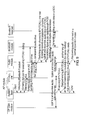
- FIG. 1 illustrates a structural frame of a video communication provided by an embodiment of the present invention
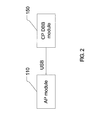
- FIG. 2 illustrates a hardware frame of a communication interface of the video communication provided by the embodiment of the present invention
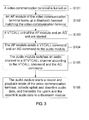
- FIG. 3 illustrates a flowchart of a method of implementing a video call with a Bluetooth-based headset provided by an embodiment of the present invention
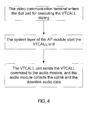
- FIG. 4 illustrates an operational flowchart of a VTCALL unit of the present invention
- FIG. 5 illustrates an operational flowchart of an AG unit of the present invention
- FIG. 6 illustrates an operational flowchart of an integral joint debugging for the AP modules, the Bluetooth module and the Bluetooth headset of the present invention
- FIG. 7 illustrates an operational flowchart of a link interface drive of the present invention
- FIG. 8 illustrates an operational flowchart of switching to the BTVTCALL channel of the present invention
- FIG. 9 illustrates an operational flowchart of implementing a Bluetooth video call with the video communication terminal of the present invention
- the present invention provides a method for implementing a video call with a Bluetooth-based headset and a video communication terminal for the same.
- a unique framework for a video communication terminal is designed fundamentally in an embodiment of the present invention. Firstly, a software and hardware platform for the video communication terminal is analyzed.
- an audio module internally turns on uplink and downlink paths of a CP DBB module (communication processor, i.e. communication baseband chip) and audio data of the video communication terminal is collected and transmitted by an AP module. Accordingly, it should be considered how to link the uplink and the downlink audio data with the Bluetooth module by the AP module.
- CP DBB module communication processor, i.e. communication baseband chip
- an SSP4 port of the AP module is linked with a PCM port of the Bluetooth module and a HI-Z (high impedance) port (i.e. a PCM port of the audio module) of the audio module.
- a PCM port of the audio module i.e. a PCM port of the audio module
- an audio framework is not required to be changed.
- this type of method is infeasible from acquired information. Main reasons comprises: (1) the Bluetooth module and the Bluetooth headset does not support A2DP and SCO to be operated at the same time; and (2) a Bluetooth handle does not support A2DP.
- the SSP4 TX port (transmit port) of the AP module is linked with PCM RX port (receive port) of the Bluetooth module
- the SSP4 RX port of the AP module is linked with the PCM TX port of the Bluetooth module and the HI-Z port of the audio module.
- the audio framework i.e. the audio module
- a PLAYBACK path is changed from an original SSP3 I2S mode to an SSP4 PCM mode, and a RECORD path is changed from an original AP module/audio module to an AP module/Bluetooth module.
- the AP module is required to be changed greatly when inputting DMA and outputting DMA.
- the AP module and the Bluetooth module are linked through the PCM ports in the present implementing method. Both the uplink and the downlink audio data are transmitted in SCO. That is, the SSP4 TX port of the AP module is linked with the PCM RX port of the Bluetooth module, the SSP4 RX port of the AP module is linked with the PCM TX port of the Bluetooth module and the HI-Z port of the audio module.
- a master and slave relation of the SSP4 port of the AP module and the Bluetooth module may be adjusted flexibly. Since the conventional AP module and the Bluetooth module are both in a master mode, the present embodiment reverses the TX function and RX function of SSP4 of the AP module by a GPIO (General Purpose Input/Output) function of the AP module, thereby avoiding modifying hardware for achieving hardware compatibility.
- GPIO General Purpose Input/Output
- the original AP module/audio module is changed to the AP module/Bluetooth module.
- Contents about INPUT DMA and OUTPUT DMA in the audio module are amended. That is, a send buffer address of the PLAYBACK is amended.
- the physical sampling rate of the PLAYBACK channel is required to be changed to be the same as the sampling rate of PCM (pulse code modulation) of the RECORD channel.
- the change can be done in the layer for sampling rate conversion of the PLAYBACK in the audio module.
- the video communication terminal provided by the present embodiment of the present invention comprises an AP module 110, an audio module 120 and a Bluetooth module 130.
- An SSP4 port of the AP module 110 is linked with a PCM port of the audio module 120.
- a PCM port of the Bluetooth module 130 is respectively linked with the SSP4 port of the AP module 110 and the PCM port of the audio module 120.
- the Bluetooth module 130 is linked with a Bluetooth headset 140 via SCO.
- an integrated chip of admirel PXA series is utilized as the AP module 110.
- An audio codec chip manufactured by Dialog company is utilized as the audio module 120.
- a Bluetooth chip manufactured by CSR company is utilized as the Bluetooth module 130.
- the AP module 110 is utilized for implementing various interface operations of the video communication terminal and comprises a system layer (not shown) and a VTCALL module (not shown).
- the system layer is utilized for looking up a Bluetooth headset matching the video communication terminal, entering a dial pad for executing a VTCALL (video telephone call) dial, turning on the audio module 120 and an AG (Audio Gateway) unit of the Bluetooth module 130, and sending an AG command to the audio module 120 and so on.
- the VTCALL module is utilized for sending a VTCALL command to the audio module 120.
- the audio module 120 is utilized for decoding and encoding audio signals outputted by the AP module 110 and the Bluetooth module 130, further collects uplink and downlink audio data after switching an audio channel to a BTVTCAL channel according to the AG command and the VTCALL command, and sending the uplink and the downlink audio data to the Bluetooth module.
- the Bluetooth module 130 is utilized for executing data transmission with the Bluetooth headset 140 according to a control command of the AP module 110.
- the PCM ports are utilized between the AP module 110 and the Bluetooth module 130 for implementing voice signal transmission during a Bluetooth video call. Since all of the AP module 110, the audio module 120 and the Bluetooth module 130 are coupled to the PCM bus, the video communication terminal includes the following three operational modes.
- the Bluetooth module 130 is set in a master state
- the AP module 110 is set in a slave state
- the PCM port of the audio module 120 is set in a high impedance state.
- the SSP port of the AP module 110 simulates PCM timing for linking with the audio module 120.
- the AP module 110 is set to be in a master state
- the audio module 120 is set to be in a slave state
- the PCM pin (PCM port) of the Bluetooth module 130 is required to be set in a high impedance state.
- the Bluetooth module 130 When the video communication terminal executes a function of a general Bluetooth call, the Bluetooth module 130 is set in a master state, the audio module 120 is set in a slave state, and the SSP pin (SSP port) of the AP module 110 is required to set in a high impedance state.
- the video communication terminal further comprises a CP DBB module 150 (communication baseband chip) for executing data transmission with the AP module.
- the CP DBB module 150 communicates with the AP module 110 through a USB port.
- a video communication path of the video communication terminal is the same as a conventional video telephone.
- the uplink and the downlink audio data between the AP module 110 and the CP DBB module 150 are communicated through the USB port.
- the AP module 110 sends the acquired digital uplink audio data to the CP DBB module 150 through the USB port, and then the CP DBB module 150 sends the uplink audio data through a wireless baseband; in the downlink call, the CP DBB module 150 receives the digital downlink audio data from the wireless baseband and then transmits the digital down link audio data to the AP module 110 through the USB port, thereby achieving the exchange of the uplink and the downlink audio data.
- the embodiment of the present invention further provides a corresponding method for implementing a video call with a Bluetooth-based headset. Please refer to FIG. 3 .
- the method is implementing by calling interfaces, transferring parameters and sharing data and particularly comprises the following steps.
- an AP module of the video communication terminal looks up a Bluetooth headset matching the video communication terminal.
- the video communication terminal is a 3G mobile phone.
- a dial pad of the 3G mobile phone is required to be entered through a system layer of the AP module for executing a VGCALL.
- the AP module sends a VTCALL command and an AG command to the audio module.
- the audio module switches an audio channel to a BTVTCALL channel according to the VTCALL command and the AG command.
- the audio module starts a record and playback mode of the video communication terminal, collects uplink and downlink audio data, and transmits the uplink and the downlink audio data to a Bluetooth module.
- PCM ports are utilized for executing full duplex transmission of the uplink and the downlink audio data, so as to make use of current hardware resources sufficiently.
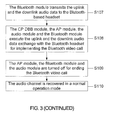
- the Bluetooth module transmits the uplink and the downlink audio data to the Bluetooth headset.
- the Bluetooth module executes the uplink and the downlink audio data transmission with the Bluetooth headset in SCO.
- the CP DBB module, the AP module, the audio module and the Bluetooth module execute the uplink and the downlink audio data exchange with the Bluetooth headset for implementing the Bluetooth video call.
- the audio channel is recovered in a normal operation mode.
- each of the modules is required to be designed independently and tested independently. After each of the modules is operated independently and normally, the modules are integrated for joint debugging.
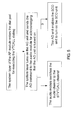
- FIG. 4 illustrates an operational flowchart of the VTCALL unit.
- the video communication terminal enters the dial pad for executing the VTCALL dialing.
- the system layer of the AP module starts the VTCALL unit.
- the VTCALL unit sends the VTCALL command to the audio module, and the audio module collects the uplink and the downlink audio data.
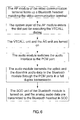
- FIG. 5 illustrates an operational flowchart of the AG unit.
- the system layer of the AP module enters the dial pad for executing the VTCALL dialing.
- the system layer turns on the AG unit and sends the AG command to the audio module for acknowledging that the AG unit is turned on.
- the audio module switches the audio channel to the BTVTCALL channel, and meanwhile the AG unit enables the SCO unit to turn on the SCO unit.
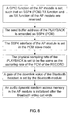
- FIG. 6 illustrates an operational flowchart of an integral joint debugging for the modules.
- the AP module of the video communication terminal looks up a Bluetooth headset matching the video communication terminal.
- the system layer of the AP module enters the dial pad for executing the VTCALL dialing.
- the VTCALL unit and the AG unit are turned on.
- the audio module switches the audio interface to the PCM port, that is, switches the audio channel to the BTVTCALL channel.
- the audio module transmits the uplink and the downlink audio data to the Bluetooth module through the PCM ports in a full duplex transmission.
- the SCO unit of the Bluetooth module is turned on, and the analog audio data (i.e. the uplink and the downlink audio data) are transmitted to the Bluetooth headset in SCO.
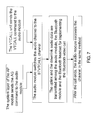
- the embodiment of the present invention provides a unified management method of link interface drive, which is called a link interface drive for short, thereby avoiding the above-mentioned problems effectively.
- the system layer of the AP module sends the AG command to the audio module, and meanwhile the VTCALL unit sends the VTCALL command to the audio module. Then, the audio module switches the audio channel to the BTVTCALL channel. Finally, the uplink and the downlink audio data are transmitted among the audio module, the Bluetooth module and the Bluetooth headset for implementing the Bluetooth video call. After the call ends, the audio module recovers the channel in the same method.
- the AG unit links the other modules including the AP module, the Bluetooth module and the SCO unit for executing the unified management, thereby avoiding isolation and incoordination among the modules effectively.
- the coordination operations can be executed in good order, synchronously and effectively, thereby ensuring stability and quality of the Bluetooth video call.
- FIG. 8 A main process of switching the audio channel to the BTVTCALL channel with the audio module is described in the following.
- a GPIO function of the AP module is set, such that an SSP4 (PCM) TX function and an RX function of the AP module may be reversed.
- PCM SSP4
- the AP module and the Bluetooth module are linked through the PCM ports.
- the master and slave relation of the AP module and the Bluetooth module may be adjusted flexibly.
- the present embodiment of the present invention modifies the audio module and does not require modifying the Bluetooth module. Accordingly, the AP module is modified from the original PCM master module to the slave state, while the Bluetooth module remains in the master state.
- the TX and RX of the SSP4 port are required to be connected reversely and the SSP4 TX and RX functions are reversed by setting the GPIO function of the AP module, so as to avoid modifying hardware for achieving the hardware compatibility.
- the audio module switches the original CODEC channel (i.e. the audio channel) to the PCM channel of the Bluetooth module (i.e. a BTGTCALL module).
- the send buffer address of the PLAYBACK is changed as SSP4 (PCM).
- the send buffer address of the PLAYBACK is changed from the original SSP3(I2S) to SSP4(PCM).
- the SSP4 interface of the AP module is set in the PCM slave mode.
- the PLAYBACK and the RECORD utilizes the PCM slave mode in the BTVTCALL channel, it is only required to set the PCM in the slave mode in the audio module instead of setting each of the PLAYBACK channel and the RECORD channel. As a result, efficiency is increased, and it is convenient to mange unifiedly.
- the physical sampling rate of the PLAYBACK is set to be the same as the sampling rate of the PCM of the RECORD.
- the physical sampling rate of the PLAYBACK is required to be changed to be the same as the sampling rate of the PCM of the RECORD and data format conversion is executed in the layer for sampling rate conversion of the PLAYBACK in the audio module.
- a gain of the downlink voice of the Bluetooth headset is set by the Bluetooth module.
- the gain of the downlink voice of the Bluetooth headset is modified. Since an interface of the Bluetooth module for setting a gain of a MIC (microphone) of the Bluetooth headset is blocked, the Bluetooth module only can set the gain of the downlink voice.
- the gain of the uplink voice is required to be set in an audio drive program.
- the setting task of the uplink voice is automatically completed after the AG unit turns on the SCO, and it is the prior art and omitted herein.
- an audio dynamic random access memory in the AP module is initialized after the Bluetooth video call ends.
- the AP module recovers the I2S PLAYBACK channel correctly by initializing the audio dynamic random access memory in the AP module after the BTVTCALL, thereby preventing the audio dynamic random access memory from occurring suspension.
- the embodiment of the present invention further provides an overall operational process of implementing the Bluetooth video call with the video communication terminal.
- the operational process comprises: (a) turning on a video communication terminal, and a system layer of an AP module of the video communication terminal looking up a Bluetooth headset matching the video communication terminal; (b) the system layer of the AP module entering a dial pad for executing a VTCALL dialing; (c) the system layer turning on a VTCALL unit (i.e.
- setting the sampling rate of the PLAYBACK channel for executing the data format conversion that is, converting playing audio data stream transmitted by the AP module to data in PCM format
- setting the sampling rate of the PLAYBACK channel to be the same as the sampling rate of the RECORD channel
- changing the sampling rate in an intermediate layer of the PLAYBACK channel e. the voice, which is played by the PCM port, being heard from the general headset after the above-mentioned steps, then switching the channel to a channel of the Bluetooth headset for implementing the PLAYBACK through the PCM port.
- the two bits are directions of setting PCM_CLK and PCM_FRAME of the AP module, and they are set to be "1".
- the modules for amplifying the uplink voice comprise the Bluetooth module and the audio module.
- gaining signals includes two stages.
- a first stage is a simulating gain amplification. That is, the Bluetooth module executes a MIC gain amplification. This operation may be completed automatically after the video communication terminal is linked with the Bluetooth headset. In order to be compatible with the general call of the Bluetooth headset, the simulating gain amplification may not be too great and is made such that the general Bluetooth call and the Bluetooth video call are clear.
- a second stage is a digital gain amplification.
- a digital gain amplification function for the RECORD is added in the audio module.
- the audio design of the AP module does not have such a function.
- the digital gain amplification function for the PLAYBACK has been implemented.
- design of the digital gain amplification function for the RECORD in the present embodiment of the present invention may be referred to the digital gain amplification function for the PLAYBACK.
- the method for implementing the video call with the Bluetooth-based headset and the video communication terminal modify software to change the PLAYBACK channel from the original SSP3 I2S mode to the SSP4 PCM mode (Pulse Code Modulation), and to change the RECORD channel from the original AP module/audio module to the AP module/Bluetooth module mode, and link the other modules including the AP module, the Bluetooth module and the SCO (synchronous connection-oriented) by the AG unit, thereby implementing the Bluetooth video call and achieving the following benefits without modifying the hardware design.
- the Bluetooth video call is implemented by modifying the software, and the PLAYBACK and the RECORD are transmitted through the PCM ports in the full duplex operation.
- the current hardware resources are used sufficiently, and the cost is decreased significantly.
- the uplink and the downlink audio data are transmitted in SCO, which only requires that the Bluetooth headset supports the SCO function and is compatible with the Bluetooth headset which does not support A2DP (stereo Bluetooth headset).
- A2DP stereo Bluetooth headset
- the present invention adopts the designed link interface drive to link the VTCALL unit (video telephone call), the audio module, the SCO module and the AG unit for implementing the BTVTCALL (Bluetooth video telephone call).
- Communications and parameter transmissions among the modules are utilized with particular interfaces (including standard interfaces of Win mobile system and interfaces which are user-defined), and the data sharing is in a memory. Accordingly, the design is hierarchical, and interfaces may be called clearly. Communication stability among the modules is excellent and efficiency is great.
- the present invention mainly modifies the audio drive (i.e. the audio module).
- the other modules are coordinated with and adjusted without being modified greatly.
- the first advantage is a high portability. Since transferring several modules is more complicated than transferring one module at the time of transferring the functions.
- the present invention only requires transferring the audio drive. Accordingly, the unstable phenomenon and a problem that the interfaces are disorderly do not occur.
- the second advantage is convenient to manage unifiedly. Transferring one module makes the flow of the link interface drive simply and efficient.
- the video call is increasingly important, and the usage frequency is getting high. Utilizing various audio devices for executing the video call may meet people's requirements.
- the usage of the Bluetooth headset is a trend, and utilizing the Bluetooth headset to make the video call is a trend as well and will be a necessary function of the video communication terminal.
Landscapes
- Engineering & Computer Science (AREA)
- Signal Processing (AREA)
- Multimedia (AREA)
- Computer Networks & Wireless Communication (AREA)
- Telephone Function (AREA)
- Mobile Radio Communication Systems (AREA)
Priority Applications (1)
| Application Number | Priority Date | Filing Date | Title |
|---|---|---|---|
| EP20177144.1A EP3726924A1 (fr) | 2010-10-22 | 2011-07-04 | Procédé pour la mise en uvre d'un appel vidéo avec un casque basé sur bluetooth et terminal de communication vidéo pour celui-ci |
Applications Claiming Priority (2)
| Application Number | Priority Date | Filing Date | Title |
|---|---|---|---|
| CN2010105188837A CN101984728B (zh) | 2010-10-22 | 2010-10-22 | 一种基于蓝牙耳机实现可视通话的方法及可视通信终端 |
| PCT/CN2011/076817 WO2012051870A1 (fr) | 2010-10-22 | 2011-07-04 | Procédé pour casque bluetooth permettant de passer un appel vidéo et terminal compatible avec les appels vidéo |
Related Child Applications (1)
| Application Number | Title | Priority Date | Filing Date |
|---|---|---|---|
| EP20177144.1A Division EP3726924A1 (fr) | 2010-10-22 | 2011-07-04 | Procédé pour la mise en uvre d'un appel vidéo avec un casque basé sur bluetooth et terminal de communication vidéo pour celui-ci |
Publications (2)
| Publication Number | Publication Date |
|---|---|
| EP2632228A1 true EP2632228A1 (fr) | 2013-08-28 |
| EP2632228A4 EP2632228A4 (fr) | 2017-08-16 |
Family
ID=43641897
Family Applications (2)
| Application Number | Title | Priority Date | Filing Date |
|---|---|---|---|
| EP11833776.5A Ceased EP2632228A4 (fr) | 2010-10-22 | 2011-07-04 | Procédé pour casque bluetooth permettant de passer un appel vidéo et terminal compatible avec les appels vidéo |
| EP20177144.1A Ceased EP3726924A1 (fr) | 2010-10-22 | 2011-07-04 | Procédé pour la mise en uvre d'un appel vidéo avec un casque basé sur bluetooth et terminal de communication vidéo pour celui-ci |
Family Applications After (1)
| Application Number | Title | Priority Date | Filing Date |
|---|---|---|---|
| EP20177144.1A Ceased EP3726924A1 (fr) | 2010-10-22 | 2011-07-04 | Procédé pour la mise en uvre d'un appel vidéo avec un casque basé sur bluetooth et terminal de communication vidéo pour celui-ci |
Country Status (4)
| Country | Link |
|---|---|
| US (1) | US8885011B2 (fr) |
| EP (2) | EP2632228A4 (fr) |
| CN (1) | CN101984728B (fr) |
| WO (1) | WO2012051870A1 (fr) |
Cited By (2)
| Publication number | Priority date | Publication date | Assignee | Title |
|---|---|---|---|---|
| TWI636455B (zh) * | 2017-05-02 | 2018-09-21 | 國立臺灣師範大學 | Wearable recording device |
| EP3920550A4 (fr) * | 2019-01-30 | 2022-03-16 | Tencent Technology (Shenzhen) Company Limited | Procédé, appareil et dispositif de lecture et de collecte audio et support de stockage lisible |
Families Citing this family (10)
| Publication number | Priority date | Publication date | Assignee | Title |
|---|---|---|---|---|
| CN101984728B (zh) * | 2010-10-22 | 2013-10-02 | 惠州Tcl移动通信有限公司 | 一种基于蓝牙耳机实现可视通话的方法及可视通信终端 |
| CN102413216B (zh) * | 2011-11-18 | 2015-05-13 | 努比亚技术有限公司 | 实现Android智能移动终端语音通话的方法及系统 |
| TWI517614B (zh) * | 2013-05-24 | 2016-01-11 | 凌通科技股份有限公司 | 藍牙資料/控制訊息傳輸模組、互動系統及其方法 |
| CN104540061B (zh) * | 2014-12-31 | 2018-05-22 | 中科创达软件股份有限公司 | 一种蓝牙耳机录音方法及装置 |
| CN105208591A (zh) * | 2015-09-22 | 2015-12-30 | 上海寰创通信科技股份有限公司 | 一种广播型近场传输设备管理系统 |
| CN108063745B (zh) * | 2016-11-08 | 2019-03-01 | 视联动力信息技术股份有限公司 | 一种基于安卓设备的视频通话方法及其系统 |
| CN109640309A (zh) * | 2019-01-25 | 2019-04-16 | 合肥星空物联信息科技有限公司 | 一种不被手机通话打断的蓝牙录音装置 |
| CN110010139B (zh) * | 2019-03-28 | 2021-12-21 | 南昌黑鲨科技有限公司 | 音频输入输出方法、系统及计算机可读存储介质 |
| CN110087215B (zh) * | 2019-05-06 | 2022-05-13 | 北京百度网讯科技有限公司 | 基于蓝牙连接的信息播报方法、装置、终端及存储介质 |
| CN116614480A (zh) * | 2023-06-21 | 2023-08-18 | 展讯通信(上海)有限公司 | 数字usb音频设备通话数据传输方法、终端及介质 |
Family Cites Families (12)
| Publication number | Priority date | Publication date | Assignee | Title |
|---|---|---|---|---|
| US20080024593A1 (en) * | 2006-07-25 | 2008-01-31 | Larisa Tsirinsky | Multimedia Communication System |
| CN101246417B (zh) | 2007-02-13 | 2010-09-29 | 艾威梯科技(北京)有限公司 | 音频数据流输入/输出无间断软件切换的方法和系统 |
| US20090253457A1 (en) * | 2008-04-04 | 2009-10-08 | Apple Inc. | Audio signal processing for certification enhancement in a handheld wireless communications device |
| CN101360141A (zh) | 2008-09-10 | 2009-02-04 | 嘉兴闻泰通讯科技有限公司 | 具有多种录音功能的移动终端 |
| CN101388996B (zh) * | 2008-09-26 | 2011-11-30 | 中兴通讯股份有限公司 | 一种实现可视电话的方法及系统 |
| US20100080379A1 (en) * | 2008-09-30 | 2010-04-01 | Shaohai Chen | Intelligibility boost |
| US20100159834A1 (en) * | 2008-12-24 | 2010-06-24 | Plantronics, Inc. | Selection of a paired device from a wireless headset |
| US8219063B2 (en) * | 2009-06-26 | 2012-07-10 | Vmware, Inc. | Controlling usage in mobile devices via a virtualization software layer |
| KR20110028056A (ko) * | 2009-09-11 | 2011-03-17 | 삼성전자주식회사 | 블루투스 통신 연결 방법 및 시스템 |
| US8751667B2 (en) * | 2010-04-07 | 2014-06-10 | Apple Inc. | Supporting hands-free services via a hands-free device for IP video calls |
| US8320974B2 (en) * | 2010-09-02 | 2012-11-27 | Apple Inc. | Decisions on ambient noise suppression in a mobile communications handset device |
| CN101984728B (zh) | 2010-10-22 | 2013-10-02 | 惠州Tcl移动通信有限公司 | 一种基于蓝牙耳机实现可视通话的方法及可视通信终端 |
-
2010
- 2010-10-22 CN CN2010105188837A patent/CN101984728B/zh not_active Expired - Fee Related
-
2011
- 2011-07-04 EP EP11833776.5A patent/EP2632228A4/fr not_active Ceased
- 2011-07-04 WO PCT/CN2011/076817 patent/WO2012051870A1/fr not_active Ceased
- 2011-07-04 US US13/878,896 patent/US8885011B2/en active Active
- 2011-07-04 EP EP20177144.1A patent/EP3726924A1/fr not_active Ceased
Non-Patent Citations (1)
| Title |
|---|
| See references of WO2012051870A1 * |
Cited By (3)
| Publication number | Priority date | Publication date | Assignee | Title |
|---|---|---|---|---|
| TWI636455B (zh) * | 2017-05-02 | 2018-09-21 | 國立臺灣師範大學 | Wearable recording device |
| EP3920550A4 (fr) * | 2019-01-30 | 2022-03-16 | Tencent Technology (Shenzhen) Company Limited | Procédé, appareil et dispositif de lecture et de collecte audio et support de stockage lisible |
| US11350215B2 (en) | 2019-01-30 | 2022-05-31 | Tencent Technology (Shenzhen) Company Limited | Audio play and acquisition method and apparatus, device, and readable storage medium |
Also Published As
| Publication number | Publication date |
|---|---|
| US8885011B2 (en) | 2014-11-11 |
| CN101984728B (zh) | 2013-10-02 |
| WO2012051870A1 (fr) | 2012-04-26 |
| EP3726924A1 (fr) | 2020-10-21 |
| US20130201275A1 (en) | 2013-08-08 |
| EP2632228A4 (fr) | 2017-08-16 |
| CN101984728A (zh) | 2011-03-09 |
Similar Documents
| Publication | Publication Date | Title |
|---|---|---|
| US8885011B2 (en) | Method for implementing video call with bluetooth-based headset and video communication terminal for the same | |
| CN103716459B (zh) | 一种兼具手机和对讲机通话功能的音频系统 | |
| CN100367187C (zh) | 一种同时支持多路蓝牙音频应用的方法 | |
| CN101068406A (zh) | 一种td-scdma/gsm双模双待智能移动终端 | |
| CN101068412A (zh) | 一种td-scdma/gsm双模双待智能移动终端 | |
| CN102006681B (zh) | 音频处理方法及双模数字移动通信终端 | |
| CN108076416A (zh) | 一种USBTypeC耳机的控制方法、装置和终端 | |
| CN201303356Y (zh) | 一种手机电视多路音频的装置 | |
| CN102075218A (zh) | 近距离手机多方通话的方法 | |
| CN101232686B (zh) | 一种多模手机蓝牙免提语音切换的实现方法 | |
| CN101931680B (zh) | 一种蓝牙系统 | |
| CN101820459A (zh) | 一种通信设备的接口电路及一种智能移动通信终端 | |
| CN101707641B (zh) | 一种多功能ip语音通信电话装置 | |
| CN101868048B (zh) | 手机系统 | |
| CN104394254B (zh) | 一种基于ip技术的四通道语音指挥通信终端 | |
| CN101815137A (zh) | 一种双模会议电话 | |
| CN211404055U (zh) | 在windows系统中实现通话的装置 | |
| CN201001118Y (zh) | 一种双模手机 | |
| CN101848261B (zh) | 一种实现通话录音的方法及终端 | |
| CN101854574A (zh) | 一种双模双待移动终端中的麦克风电路及其实现方法 | |
| CN224218414U (zh) | 一种应用于桌面环境下通信功能拓展装置 | |
| CN102752459B (zh) | 集团无绳电话交换机 | |
| JP2013051475A (ja) | 半導体装置、それを用いた無線通信端末、及び制御方法 | |
| CN101656796A (zh) | 一种通过usb接口进行pcm数据转发的方法和装置 | |
| CN202261829U (zh) | 一种双模数字音频系统 |
Legal Events
| Date | Code | Title | Description |
|---|---|---|---|
| PUAI | Public reference made under article 153(3) epc to a published international application that has entered the european phase |
Free format text: ORIGINAL CODE: 0009012 |
|
| 17P | Request for examination filed |
Effective date: 20130222 |
|
| AK | Designated contracting states |
Kind code of ref document: A1 Designated state(s): AL AT BE BG CH CY CZ DE DK EE ES FI FR GB GR HR HU IE IS IT LI LT LU LV MC MK MT NL NO PL PT RO RS SE SI SK SM TR |
|
| DAX | Request for extension of the european patent (deleted) | ||
| RA4 | Supplementary search report drawn up and despatched (corrected) |
Effective date: 20170714 |
|
| RIC1 | Information provided on ipc code assigned before grant |
Ipc: H04W 88/02 20090101AFI20170710BHEP Ipc: H04N 21/4363 20110101ALI20170710BHEP Ipc: H04N 7/14 20060101ALI20170710BHEP |
|
| 17Q | First examination report despatched |
Effective date: 20190607 |
|
| REG | Reference to a national code |
Ref country code: DE Ref legal event code: R003 |
|
| STAA | Information on the status of an ep patent application or granted ep patent |
Free format text: STATUS: THE APPLICATION HAS BEEN REFUSED |
|
| 18R | Application refused |
Effective date: 20200626 |