EP2632476B1 - Verfahren zur verbesserung einer transplantatfunktion unter verwendung des löslichen komplementrezeptors typ i (scr1) - Google Patents
Verfahren zur verbesserung einer transplantatfunktion unter verwendung des löslichen komplementrezeptors typ i (scr1) Download PDFInfo
- Publication number
- EP2632476B1 EP2632476B1 EP11837124.4A EP11837124A EP2632476B1 EP 2632476 B1 EP2632476 B1 EP 2632476B1 EP 11837124 A EP11837124 A EP 11837124A EP 2632476 B1 EP2632476 B1 EP 2632476B1
- Authority
- EP
- European Patent Office
- Prior art keywords
- organ
- human
- polypeptide
- fragment
- soluble
- Prior art date
- Legal status (The legal status is an assumption and is not a legal conclusion. Google has not performed a legal analysis and makes no representation as to the accuracy of the status listed.)
- Not-in-force
Links
- 238000000034 method Methods 0.000 title claims description 41
- 102000006834 complement receptors Human genes 0.000 title claims description 30
- 108010047295 complement receptors Proteins 0.000 title claims description 30
- 208000007204 Brain death Diseases 0.000 claims description 147
- 210000000056 organ Anatomy 0.000 claims description 123
- 101000727061 Homo sapiens Complement receptor type 1 Proteins 0.000 claims description 77
- 229920001184 polypeptide Polymers 0.000 claims description 74
- 102000004196 processed proteins & peptides Human genes 0.000 claims description 74
- 108090000765 processed proteins & peptides Proteins 0.000 claims description 74
- 230000024203 complement activation Effects 0.000 claims description 57
- 239000012634 fragment Substances 0.000 claims description 55
- 102000046508 human CR1 Human genes 0.000 claims description 55
- 210000003734 kidney Anatomy 0.000 claims description 46
- 230000009885 systemic effect Effects 0.000 claims description 21
- 238000003306 harvesting Methods 0.000 claims description 15
- 230000013595 glycosylation Effects 0.000 claims description 12
- 238000006206 glycosylation reaction Methods 0.000 claims description 12
- 238000001727 in vivo Methods 0.000 claims description 9
- 238000001990 intravenous administration Methods 0.000 claims description 9
- 238000007918 intramuscular administration Methods 0.000 claims description 7
- 238000007912 intraperitoneal administration Methods 0.000 claims description 7
- 210000002966 serum Anatomy 0.000 claims description 7
- 238000007920 subcutaneous administration Methods 0.000 claims description 7
- NIGUVXFURDGQKZ-UQTBNESHSA-N alpha-Neup5Ac-(2->3)-beta-D-Galp-(1->4)-[alpha-L-Fucp-(1->3)]-beta-D-GlcpNAc Chemical group O[C@H]1[C@H](O)[C@H](O)[C@H](C)O[C@H]1O[C@H]1[C@H](O[C@H]2[C@@H]([C@@H](O[C@]3(O[C@H]([C@H](NC(C)=O)[C@@H](O)C3)[C@H](O)[C@H](O)CO)C(O)=O)[C@@H](O)[C@@H](CO)O2)O)[C@@H](CO)O[C@@H](O)[C@@H]1NC(C)=O NIGUVXFURDGQKZ-UQTBNESHSA-N 0.000 claims description 6
- 210000002216 heart Anatomy 0.000 claims description 6
- 238000007913 intrathecal administration Methods 0.000 claims description 6
- 230000002685 pulmonary effect Effects 0.000 claims description 6
- 230000006872 improvement Effects 0.000 claims description 5
- 238000001361 intraarterial administration Methods 0.000 claims description 5
- 210000004185 liver Anatomy 0.000 claims description 5
- 210000004072 lung Anatomy 0.000 claims description 5
- 238000002054 transplantation Methods 0.000 description 41
- 238000011282 treatment Methods 0.000 description 33
- 230000000295 complement effect Effects 0.000 description 27
- DDRJAANPRJIHGJ-UHFFFAOYSA-N creatinine Chemical compound CN1CC(=O)NC1=N DDRJAANPRJIHGJ-UHFFFAOYSA-N 0.000 description 26
- 230000006870 function Effects 0.000 description 21
- 230000037361 pathway Effects 0.000 description 21
- 102100022133 Complement C3 Human genes 0.000 description 20
- 210000002381 plasma Anatomy 0.000 description 20
- 101000901154 Homo sapiens Complement C3 Proteins 0.000 description 19
- 210000004027 cell Anatomy 0.000 description 18
- 241001465754 Metazoa Species 0.000 description 17
- 241000700159 Rattus Species 0.000 description 17
- 230000003907 kidney function Effects 0.000 description 17
- 108090000623 proteins and genes Proteins 0.000 description 17
- 108020004414 DNA Proteins 0.000 description 16
- 239000000203 mixture Substances 0.000 description 16
- 238000002203 pretreatment Methods 0.000 description 16
- 230000006698 induction Effects 0.000 description 15
- 230000014509 gene expression Effects 0.000 description 14
- 101100006976 Mus musculus C4b gene Proteins 0.000 description 13
- 229940109239 creatinine Drugs 0.000 description 13
- 102000004169 proteins and genes Human genes 0.000 description 12
- 101000911993 Ovis aries CD59 glycoprotein Proteins 0.000 description 11
- 230000000694 effects Effects 0.000 description 11
- 208000037265 diseases, disorders, signs and symptoms Diseases 0.000 description 10
- 230000002401 inhibitory effect Effects 0.000 description 9
- 241000282414 Homo sapiens Species 0.000 description 8
- 108090001005 Interleukin-6 Proteins 0.000 description 8
- 239000008194 pharmaceutical composition Substances 0.000 description 8
- 108010067641 Complement C3-C5 Convertases Proteins 0.000 description 7
- 102000016574 Complement C3-C5 Convertases Human genes 0.000 description 7
- 102000004889 Interleukin-6 Human genes 0.000 description 7
- 102000004887 Transforming Growth Factor beta Human genes 0.000 description 7
- 108090001012 Transforming Growth Factor beta Proteins 0.000 description 7
- 208000027418 Wounds and injury Diseases 0.000 description 7
- 230000004913 activation Effects 0.000 description 7
- 230000006378 damage Effects 0.000 description 7
- 208000035475 disorder Diseases 0.000 description 7
- 239000003814 drug Substances 0.000 description 7
- 238000002474 experimental method Methods 0.000 description 7
- BTCSSZJGUNDROE-UHFFFAOYSA-N gamma-aminobutyric acid Chemical compound NCCCC(O)=O BTCSSZJGUNDROE-UHFFFAOYSA-N 0.000 description 7
- 208000014674 injury Diseases 0.000 description 7
- 230000004083 survival effect Effects 0.000 description 7
- ZRKFYGHZFMAOKI-QMGMOQQFSA-N tgfbeta Chemical compound C([C@H](NC(=O)[C@H](C(C)C)NC(=O)CNC(=O)[C@H](CCC(O)=O)NC(=O)[C@H](CCCNC(N)=N)NC(=O)[C@H](CC(N)=O)NC(=O)[C@H](CC(C)C)NC(=O)[C@H]([C@@H](C)O)NC(=O)[C@H](CCC(O)=O)NC(=O)[C@H]([C@@H](C)O)NC(=O)[C@H](CC(C)C)NC(=O)CNC(=O)[C@H](C)NC(=O)[C@H](CO)NC(=O)[C@H](CCC(N)=O)NC(=O)[C@@H](NC(=O)[C@H](C)NC(=O)[C@H](C)NC(=O)[C@@H](NC(=O)[C@H](CC(C)C)NC(=O)[C@@H](N)CCSC)C(C)C)[C@@H](C)CC)C(=O)N[C@@H]([C@@H](C)O)C(=O)N[C@@H](C(C)C)C(=O)N[C@@H](CC=1C=CC=CC=1)C(=O)N[C@@H](C)C(=O)N1[C@@H](CCC1)C(=O)N[C@@H]([C@@H](C)O)C(=O)N[C@@H](CC(N)=O)C(=O)N[C@@H](CCC(O)=O)C(=O)N[C@@H](C)C(=O)N[C@@H](CC=1C=CC=CC=1)C(=O)N[C@@H](CCCNC(N)=N)C(=O)N[C@@H](C)C(=O)N[C@@H](CC(C)C)C(=O)N1[C@@H](CCC1)C(=O)N1[C@@H](CCC1)C(=O)N[C@@H](CCCNC(N)=N)C(=O)N[C@@H](CCC(O)=O)C(=O)N[C@@H](CCCNC(N)=N)C(=O)N[C@@H](CO)C(=O)N[C@@H](CCCNC(N)=N)C(=O)N[C@@H](CC(C)C)C(=O)N[C@@H](CC(C)C)C(O)=O)C1=CC=C(O)C=C1 ZRKFYGHZFMAOKI-QMGMOQQFSA-N 0.000 description 7
- XLYOFNOQVPJJNP-UHFFFAOYSA-N water Chemical compound O XLYOFNOQVPJJNP-UHFFFAOYSA-N 0.000 description 7
- 102100021943 C-C motif chemokine 2 Human genes 0.000 description 6
- 101710155857 C-C motif chemokine 2 Proteins 0.000 description 6
- 108010024212 E-Selectin Proteins 0.000 description 6
- 102100023471 E-selectin Human genes 0.000 description 6
- 206010061218 Inflammation Diseases 0.000 description 6
- 206010063837 Reperfusion injury Diseases 0.000 description 6
- XSQUKJJJFZCRTK-UHFFFAOYSA-N Urea Chemical compound NC(N)=O XSQUKJJJFZCRTK-UHFFFAOYSA-N 0.000 description 6
- 230000004075 alteration Effects 0.000 description 6
- 239000004202 carbamide Substances 0.000 description 6
- 230000004054 inflammatory process Effects 0.000 description 6
- 238000004519 manufacturing process Methods 0.000 description 6
- 238000003753 real-time PCR Methods 0.000 description 6
- 108010034753 Complement Membrane Attack Complex Proteins 0.000 description 5
- 102000004856 Lectins Human genes 0.000 description 5
- 108090001090 Lectins Proteins 0.000 description 5
- FAPWRFPIFSIZLT-UHFFFAOYSA-M Sodium chloride Chemical compound [Na+].[Cl-] FAPWRFPIFSIZLT-UHFFFAOYSA-M 0.000 description 5
- 206010052779 Transplant rejections Diseases 0.000 description 5
- 210000004369 blood Anatomy 0.000 description 5
- 239000008280 blood Substances 0.000 description 5
- 239000002299 complementary DNA Substances 0.000 description 5
- 230000005764 inhibitory process Effects 0.000 description 5
- 208000012947 ischemia reperfusion injury Diseases 0.000 description 5
- 239000002523 lectin Substances 0.000 description 5
- 230000001404 mediated effect Effects 0.000 description 5
- 230000001105 regulatory effect Effects 0.000 description 5
- 102100034459 Hepatitis A virus cellular receptor 1 Human genes 0.000 description 4
- 101710185991 Hepatitis A virus cellular receptor 1 homolog Proteins 0.000 description 4
- 230000001154 acute effect Effects 0.000 description 4
- 238000010494 dissociation reaction Methods 0.000 description 4
- 230000005593 dissociations Effects 0.000 description 4
- 239000013612 plasmid Substances 0.000 description 4
- 230000001737 promoting effect Effects 0.000 description 4
- 238000007910 systemic administration Methods 0.000 description 4
- 239000013598 vector Substances 0.000 description 4
- 102000007469 Actins Human genes 0.000 description 3
- 108010085238 Actins Proteins 0.000 description 3
- 102000005590 Anaphylatoxin C5a Receptor Human genes 0.000 description 3
- 108010059426 Anaphylatoxin C5a Receptor Proteins 0.000 description 3
- -1 BSS®) Chemical compound 0.000 description 3
- 102100034343 Integrase Human genes 0.000 description 3
- 108010092799 RNA-directed DNA polymerase Proteins 0.000 description 3
- 230000000735 allogeneic effect Effects 0.000 description 3
- 150000001413 amino acids Chemical group 0.000 description 3
- 238000010171 animal model Methods 0.000 description 3
- 238000013459 approach Methods 0.000 description 3
- 238000006243 chemical reaction Methods 0.000 description 3
- 230000004154 complement system Effects 0.000 description 3
- 238000003745 diagnosis Methods 0.000 description 3
- 201000010099 disease Diseases 0.000 description 3
- 239000004615 ingredient Substances 0.000 description 3
- 238000011694 lewis rat Methods 0.000 description 3
- 239000012528 membrane Substances 0.000 description 3
- 238000002360 preparation method Methods 0.000 description 3
- 239000000047 product Substances 0.000 description 3
- 238000000746 purification Methods 0.000 description 3
- 239000011780 sodium chloride Substances 0.000 description 3
- 230000001225 therapeutic effect Effects 0.000 description 3
- 108010089414 Anaphylatoxins Proteins 0.000 description 2
- 108010009575 CD55 Antigens Proteins 0.000 description 2
- 108010078015 Complement C3b Proteins 0.000 description 2
- 102100031506 Complement C5 Human genes 0.000 description 2
- 102100030886 Complement receptor type 1 Human genes 0.000 description 2
- 206010016654 Fibrosis Diseases 0.000 description 2
- 238000000729 Fisher's exact test Methods 0.000 description 2
- WSFSSNUMVMOOMR-UHFFFAOYSA-N Formaldehyde Chemical compound O=C WSFSSNUMVMOOMR-UHFFFAOYSA-N 0.000 description 2
- 206010062016 Immunosuppression Diseases 0.000 description 2
- 102000050019 Membrane Cofactor Human genes 0.000 description 2
- 101710146216 Membrane cofactor protein Proteins 0.000 description 2
- 108091005804 Peptidases Proteins 0.000 description 2
- 239000004365 Protease Substances 0.000 description 2
- 108020004511 Recombinant DNA Proteins 0.000 description 2
- 102100037486 Reverse transcriptase/ribonuclease H Human genes 0.000 description 2
- 241000283984 Rodentia Species 0.000 description 2
- 108020004459 Small interfering RNA Proteins 0.000 description 2
- 230000003321 amplification Effects 0.000 description 2
- 239000003708 ampul Substances 0.000 description 2
- 238000004458 analytical method Methods 0.000 description 2
- 238000003556 assay Methods 0.000 description 2
- 210000003719 b-lymphocyte Anatomy 0.000 description 2
- 238000001574 biopsy Methods 0.000 description 2
- 230000015572 biosynthetic process Effects 0.000 description 2
- 210000004204 blood vessel Anatomy 0.000 description 2
- 210000004978 chinese hamster ovary cell Anatomy 0.000 description 2
- 230000004087 circulation Effects 0.000 description 2
- 230000003247 decreasing effect Effects 0.000 description 2
- 230000006735 deficit Effects 0.000 description 2
- 229940079593 drug Drugs 0.000 description 2
- JPGQOUSTVILISH-UHFFFAOYSA-N enflurane Chemical compound FC(F)OC(F)(F)C(F)Cl JPGQOUSTVILISH-UHFFFAOYSA-N 0.000 description 2
- 229960000305 enflurane Drugs 0.000 description 2
- 238000005516 engineering process Methods 0.000 description 2
- 230000004761 fibrosis Effects 0.000 description 2
- 230000004927 fusion Effects 0.000 description 2
- 102000034356 gene-regulatory proteins Human genes 0.000 description 2
- 108091006104 gene-regulatory proteins Proteins 0.000 description 2
- 230000010247 heart contraction Effects 0.000 description 2
- 230000001506 immunosuppresive effect Effects 0.000 description 2
- 238000000338 in vitro Methods 0.000 description 2
- 230000002779 inactivation Effects 0.000 description 2
- 208000015181 infectious disease Diseases 0.000 description 2
- 230000002757 inflammatory effect Effects 0.000 description 2
- 238000002347 injection Methods 0.000 description 2
- 239000007924 injection Substances 0.000 description 2
- 230000002427 irreversible effect Effects 0.000 description 2
- 210000002540 macrophage Anatomy 0.000 description 2
- 108020004999 messenger RNA Proteins 0.000 description 2
- 238000003199 nucleic acid amplification method Methods 0.000 description 2
- 239000012188 paraffin wax Substances 0.000 description 2
- 239000000546 pharmaceutical excipient Substances 0.000 description 2
- 230000002797 proteolythic effect Effects 0.000 description 2
- 230000000717 retained effect Effects 0.000 description 2
- 239000004055 small Interfering RNA Substances 0.000 description 2
- 210000000329 smooth muscle myocyte Anatomy 0.000 description 2
- 239000000243 solution Substances 0.000 description 2
- 238000010561 standard procedure Methods 0.000 description 2
- 239000000758 substrate Substances 0.000 description 2
- 230000008685 targeting Effects 0.000 description 2
- 210000001519 tissue Anatomy 0.000 description 2
- 238000005406 washing Methods 0.000 description 2
- 108091032973 (ribonucleotides)n+m Proteins 0.000 description 1
- 108010003529 Alternative Pathway Complement C3 Convertase Proteins 0.000 description 1
- 108091093088 Amplicon Proteins 0.000 description 1
- 208000000104 Arthus reaction Diseases 0.000 description 1
- 206010003694 Atrophy Diseases 0.000 description 1
- 101150073986 C3AR1 gene Proteins 0.000 description 1
- 102000014914 Carrier Proteins Human genes 0.000 description 1
- 108010078791 Carrier Proteins Proteins 0.000 description 1
- 241000282552 Chlorocebus aethiops Species 0.000 description 1
- 206010063209 Chronic allograft nephropathy Diseases 0.000 description 1
- 108010034358 Classical Pathway Complement C3 Convertase Proteins 0.000 description 1
- 108091026890 Coding region Proteins 0.000 description 1
- 102100031609 Complement C2 Human genes 0.000 description 1
- 108010028780 Complement C3 Proteins 0.000 description 1
- 108010078018 Complement C3d Proteins 0.000 description 1
- 102000016550 Complement Factor H Human genes 0.000 description 1
- 108010053085 Complement Factor H Proteins 0.000 description 1
- 241000699802 Cricetulus griseus Species 0.000 description 1
- 102000004127 Cytokines Human genes 0.000 description 1
- 108090000695 Cytokines Proteins 0.000 description 1
- FBPFZTCFMRRESA-KVTDHHQDSA-N D-Mannitol Chemical compound OC[C@@H](O)[C@@H](O)[C@H](O)[C@H](O)CO FBPFZTCFMRRESA-KVTDHHQDSA-N 0.000 description 1
- WQZGKKKJIJFFOK-QTVWNMPRSA-N D-mannopyranose Chemical compound OC[C@H]1OC(O)[C@@H](O)[C@@H](O)[C@@H]1O WQZGKKKJIJFFOK-QTVWNMPRSA-N 0.000 description 1
- 230000006820 DNA synthesis Effects 0.000 description 1
- KCXVZYZYPLLWCC-UHFFFAOYSA-N EDTA Chemical compound OC(=O)CN(CC(O)=O)CCN(CC(O)=O)CC(O)=O KCXVZYZYPLLWCC-UHFFFAOYSA-N 0.000 description 1
- 241000588724 Escherichia coli Species 0.000 description 1
- WQZGKKKJIJFFOK-GASJEMHNSA-N Glucose Natural products OC[C@H]1OC(O)[C@H](O)[C@@H](O)[C@@H]1O WQZGKKKJIJFFOK-GASJEMHNSA-N 0.000 description 1
- 102100031181 Glyceraldehyde-3-phosphate dehydrogenase Human genes 0.000 description 1
- 206010018910 Haemolysis Diseases 0.000 description 1
- 102000007625 Hirudins Human genes 0.000 description 1
- 108010007267 Hirudins Proteins 0.000 description 1
- 101100007625 Homo sapiens CR1 gene Proteins 0.000 description 1
- 102000009786 Immunoglobulin Constant Regions Human genes 0.000 description 1
- 108010009817 Immunoglobulin Constant Regions Proteins 0.000 description 1
- 102000003777 Interleukin-1 beta Human genes 0.000 description 1
- 108090000193 Interleukin-1 beta Proteins 0.000 description 1
- YQEZLKZALYSWHR-UHFFFAOYSA-N Ketamine Chemical compound C=1C=CC=C(Cl)C=1C1(NC)CCCCC1=O YQEZLKZALYSWHR-UHFFFAOYSA-N 0.000 description 1
- 238000012313 Kruskal-Wallis test Methods 0.000 description 1
- 108010028921 Lipopeptides Proteins 0.000 description 1
- 229930195725 Mannitol Natural products 0.000 description 1
- 102000009112 Mannose-Binding Lectin Human genes 0.000 description 1
- 108010087870 Mannose-Binding Lectin Proteins 0.000 description 1
- 102100026553 Mannose-binding protein C Human genes 0.000 description 1
- 208000009525 Myocarditis Diseases 0.000 description 1
- 101710163270 Nuclease Proteins 0.000 description 1
- 229920001213 Polysorbate 20 Polymers 0.000 description 1
- 239000013614 RNA sample Substances 0.000 description 1
- 102000007056 Recombinant Fusion Proteins Human genes 0.000 description 1
- 108010008281 Recombinant Fusion Proteins Proteins 0.000 description 1
- 206010061481 Renal injury Diseases 0.000 description 1
- 206010063897 Renal ischaemia Diseases 0.000 description 1
- 101710141795 Ribonuclease inhibitor Proteins 0.000 description 1
- 229940122208 Ribonuclease inhibitor Drugs 0.000 description 1
- 102100037968 Ribonuclease inhibitor Human genes 0.000 description 1
- 102000006382 Ribonucleases Human genes 0.000 description 1
- 108010083644 Ribonucleases Proteins 0.000 description 1
- 240000004808 Saccharomyces cerevisiae Species 0.000 description 1
- QAOWNCQODCNURD-UHFFFAOYSA-N Sulfuric acid Chemical compound OS(O)(=O)=O QAOWNCQODCNURD-UHFFFAOYSA-N 0.000 description 1
- 210000001744 T-lymphocyte Anatomy 0.000 description 1
- 206010053614 Type III immune complex mediated reaction Diseases 0.000 description 1
- 108700042768 University of Wisconsin-lactobionate solution Proteins 0.000 description 1
- 102000005789 Vascular Endothelial Growth Factors Human genes 0.000 description 1
- 108010019530 Vascular Endothelial Growth Factors Proteins 0.000 description 1
- 241000700605 Viruses Species 0.000 description 1
- 229920000392 Zymosan Polymers 0.000 description 1
- PNNCWTXUWKENPE-UHFFFAOYSA-N [N].NC(N)=O Chemical compound [N].NC(N)=O PNNCWTXUWKENPE-UHFFFAOYSA-N 0.000 description 1
- 230000021917 activation of membrane attack complex Effects 0.000 description 1
- 239000004480 active ingredient Substances 0.000 description 1
- 239000013543 active substance Substances 0.000 description 1
- 239000011543 agarose gel Substances 0.000 description 1
- 238000000137 annealing Methods 0.000 description 1
- 208000008784 apnea Diseases 0.000 description 1
- 239000012062 aqueous buffer Substances 0.000 description 1
- 206010003230 arteritis Diseases 0.000 description 1
- 230000037444 atrophy Effects 0.000 description 1
- 230000002238 attenuated effect Effects 0.000 description 1
- 230000002567 autonomic effect Effects 0.000 description 1
- 230000001580 bacterial effect Effects 0.000 description 1
- 230000009286 beneficial effect Effects 0.000 description 1
- WQZGKKKJIJFFOK-VFUOTHLCSA-N beta-D-glucose Chemical compound OC[C@H]1O[C@@H](O)[C@H](O)[C@@H](O)[C@@H]1O WQZGKKKJIJFFOK-VFUOTHLCSA-N 0.000 description 1
- 102000023732 binding proteins Human genes 0.000 description 1
- 108091008324 binding proteins Proteins 0.000 description 1
- 230000008827 biological function Effects 0.000 description 1
- 230000017531 blood circulation Effects 0.000 description 1
- 230000036772 blood pressure Effects 0.000 description 1
- 230000036760 body temperature Effects 0.000 description 1
- 230000037396 body weight Effects 0.000 description 1
- 239000000872 buffer Substances 0.000 description 1
- 239000007975 buffered saline Substances 0.000 description 1
- 238000010804 cDNA synthesis Methods 0.000 description 1
- 230000015556 catabolic process Effects 0.000 description 1
- 210000002421 cell wall Anatomy 0.000 description 1
- 238000005119 centrifugation Methods 0.000 description 1
- 230000001659 chemokinetic effect Effects 0.000 description 1
- 230000035605 chemotaxis Effects 0.000 description 1
- 238000004587 chromatography analysis Methods 0.000 description 1
- 230000001684 chronic effect Effects 0.000 description 1
- 238000003776 cleavage reaction Methods 0.000 description 1
- 239000013599 cloning vector Substances 0.000 description 1
- 238000004440 column chromatography Methods 0.000 description 1
- 108010052926 complement C3d,g Proteins 0.000 description 1
- 239000012141 concentrate Substances 0.000 description 1
- 238000011109 contamination Methods 0.000 description 1
- 230000009260 cross reactivity Effects 0.000 description 1
- 230000009089 cytolysis Effects 0.000 description 1
- 230000001086 cytosolic effect Effects 0.000 description 1
- 230000009849 deactivation Effects 0.000 description 1
- 230000034994 death Effects 0.000 description 1
- 230000007123 defense Effects 0.000 description 1
- 238000006731 degradation reaction Methods 0.000 description 1
- 238000004925 denaturation Methods 0.000 description 1
- 230000036425 denaturation Effects 0.000 description 1
- 230000008021 deposition Effects 0.000 description 1
- 239000008121 dextrose Substances 0.000 description 1
- 238000002405 diagnostic procedure Methods 0.000 description 1
- 239000003085 diluting agent Substances 0.000 description 1
- 239000000539 dimer Substances 0.000 description 1
- 230000007646 directional migration Effects 0.000 description 1
- 239000002552 dosage form Substances 0.000 description 1
- 239000003937 drug carrier Substances 0.000 description 1
- 238000004520 electroporation Methods 0.000 description 1
- 230000008030 elimination Effects 0.000 description 1
- 238000003379 elimination reaction Methods 0.000 description 1
- 238000005538 encapsulation Methods 0.000 description 1
- 210000002889 endothelial cell Anatomy 0.000 description 1
- 210000003743 erythrocyte Anatomy 0.000 description 1
- 238000011156 evaluation Methods 0.000 description 1
- 230000007717 exclusion Effects 0.000 description 1
- 239000012467 final product Substances 0.000 description 1
- 210000000285 follicular dendritic cell Anatomy 0.000 description 1
- 239000004023 fresh frozen plasma Substances 0.000 description 1
- 230000030279 gene silencing Effects 0.000 description 1
- 230000024924 glomerular filtration Effects 0.000 description 1
- 210000001282 glomerular podocyte Anatomy 0.000 description 1
- 150000004676 glycans Chemical class 0.000 description 1
- 108020004445 glyceraldehyde-3-phosphate dehydrogenase Proteins 0.000 description 1
- 210000003714 granulocyte Anatomy 0.000 description 1
- 239000003102 growth factor Substances 0.000 description 1
- 210000003709 heart valve Anatomy 0.000 description 1
- 238000010438 heat treatment Methods 0.000 description 1
- 230000008588 hemolysis Effects 0.000 description 1
- 238000004128 high performance liquid chromatography Methods 0.000 description 1
- WQPDUTSPKFMPDP-OUMQNGNKSA-N hirudin Chemical compound C([C@@H](C(=O)N[C@@H](CCC(O)=O)C(=O)N[C@@H](CCC(O)=O)C(=O)N[C@@H]([C@@H](C)CC)C(=O)N1[C@@H](CCC1)C(=O)N[C@@H](CCC(O)=O)C(=O)N[C@@H](CCC(O)=O)C(=O)N[C@@H](CC=1C=CC(OS(O)(=O)=O)=CC=1)C(=O)N[C@@H](CC(C)C)C(=O)N[C@@H](CCC(N)=O)C(O)=O)NC(=O)[C@H](CC(O)=O)NC(=O)CNC(=O)[C@H](CC(O)=O)NC(=O)[C@H](CC(N)=O)NC(=O)[C@H](CC=1NC=NC=1)NC(=O)[C@H](CO)NC(=O)[C@H](CCC(N)=O)NC(=O)[C@H]1N(CCC1)C(=O)[C@H](CCCCN)NC(=O)[C@H]1N(CCC1)C(=O)[C@@H](NC(=O)CNC(=O)[C@H](CCC(O)=O)NC(=O)CNC(=O)[C@@H](NC(=O)[C@@H](NC(=O)[C@H]1NC(=O)[C@H](CCC(N)=O)NC(=O)[C@H](CC(N)=O)NC(=O)[C@H](CCCCN)NC(=O)[C@H](CCC(O)=O)NC(=O)CNC(=O)[C@H](CC(O)=O)NC(=O)[C@H](CO)NC(=O)CNC(=O)[C@H](CC(C)C)NC(=O)[C@H]([C@@H](C)CC)NC(=O)[C@@H]2CSSC[C@@H](C(=O)N[C@@H](CCC(O)=O)C(=O)NCC(=O)N[C@@H](CO)C(=O)N[C@@H](CC(N)=O)C(=O)N[C@H](C(=O)N[C@H](C(NCC(=O)N[C@@H](CCC(N)=O)C(=O)NCC(=O)N[C@@H](CC(N)=O)C(=O)N[C@@H](CCCCN)C(=O)N2)=O)CSSC1)C(C)C)NC(=O)[C@H](CC(C)C)NC(=O)[C@H]1NC(=O)[C@H](CC(C)C)NC(=O)[C@H](CC(N)=O)NC(=O)[C@H](CCC(N)=O)NC(=O)CNC(=O)[C@H](CO)NC(=O)[C@H](CCC(O)=O)NC(=O)[C@H]([C@@H](C)O)NC(=O)[C@@H](NC(=O)[C@H](CC(O)=O)NC(=O)[C@@H](NC(=O)[C@H](CC=2C=CC(O)=CC=2)NC(=O)[C@@H](NC(=O)[C@@H](N)C(C)C)C(C)C)[C@@H](C)O)CSSC1)C(C)C)[C@@H](C)O)[C@@H](C)O)C1=CC=CC=C1 WQPDUTSPKFMPDP-OUMQNGNKSA-N 0.000 description 1
- 229940006607 hirudin Drugs 0.000 description 1
- 210000003630 histaminocyte Anatomy 0.000 description 1
- 230000002962 histologic effect Effects 0.000 description 1
- 210000005260 human cell Anatomy 0.000 description 1
- 230000001900 immune effect Effects 0.000 description 1
- 238000011532 immunohistochemical staining Methods 0.000 description 1
- 238000011534 incubation Methods 0.000 description 1
- 230000015788 innate immune response Effects 0.000 description 1
- 238000005342 ion exchange Methods 0.000 description 1
- 208000028867 ischemia Diseases 0.000 description 1
- 238000002955 isolation Methods 0.000 description 1
- 229960003299 ketamine Drugs 0.000 description 1
- VCMGMSHEPQENPE-UHFFFAOYSA-N ketamine hydrochloride Chemical compound [Cl-].C=1C=CC=C(Cl)C=1C1([NH2+]C)CCCCC1=O VCMGMSHEPQENPE-UHFFFAOYSA-N 0.000 description 1
- 231100000518 lethal Toxicity 0.000 description 1
- 230000001665 lethal effect Effects 0.000 description 1
- 210000000265 leukocyte Anatomy 0.000 description 1
- 230000000670 limiting effect Effects 0.000 description 1
- 239000002502 liposome Substances 0.000 description 1
- 230000004807 localization Effects 0.000 description 1
- 239000008176 lyophilized powder Substances 0.000 description 1
- 230000002101 lytic effect Effects 0.000 description 1
- 210000004962 mammalian cell Anatomy 0.000 description 1
- 239000000594 mannitol Substances 0.000 description 1
- 235000010355 mannitol Nutrition 0.000 description 1
- 230000008018 melting Effects 0.000 description 1
- 238000002844 melting Methods 0.000 description 1
- 238000001690 micro-dialysis Methods 0.000 description 1
- 244000005700 microbiome Species 0.000 description 1
- 239000003094 microcapsule Substances 0.000 description 1
- 238000000520 microinjection Methods 0.000 description 1
- 239000011859 microparticle Substances 0.000 description 1
- 210000001616 monocyte Anatomy 0.000 description 1
- 208000010125 myocardial infarction Diseases 0.000 description 1
- 230000017074 necrotic cell death Effects 0.000 description 1
- 230000007935 neutral effect Effects 0.000 description 1
- 210000000440 neutrophil Anatomy 0.000 description 1
- 230000014207 opsonization Effects 0.000 description 1
- 210000001672 ovary Anatomy 0.000 description 1
- 239000002245 particle Substances 0.000 description 1
- 244000052769 pathogen Species 0.000 description 1
- 230000008506 pathogenesis Effects 0.000 description 1
- 230000000737 periodic effect Effects 0.000 description 1
- 230000035699 permeability Effects 0.000 description 1
- 230000002085 persistent effect Effects 0.000 description 1
- 239000008363 phosphate buffer Substances 0.000 description 1
- 239000000256 polyoxyethylene sorbitan monolaurate Substances 0.000 description 1
- 235000010486 polyoxyethylene sorbitan monolaurate Nutrition 0.000 description 1
- 229920001282 polysaccharide Polymers 0.000 description 1
- 239000005017 polysaccharide Substances 0.000 description 1
- 230000008092 positive effect Effects 0.000 description 1
- 230000003389 potentiating effect Effects 0.000 description 1
- 230000000770 proinflammatory effect Effects 0.000 description 1
- 238000011321 prophylaxis Methods 0.000 description 1
- 230000001681 protective effect Effects 0.000 description 1
- 102000005962 receptors Human genes 0.000 description 1
- 108020003175 receptors Proteins 0.000 description 1
- 230000009467 reduction Effects 0.000 description 1
- 230000011514 reflex Effects 0.000 description 1
- 230000009711 regulatory function Effects 0.000 description 1
- 230000010410 reperfusion Effects 0.000 description 1
- 230000019254 respiratory burst Effects 0.000 description 1
- 210000001525 retina Anatomy 0.000 description 1
- 238000003757 reverse transcription PCR Methods 0.000 description 1
- 239000003161 ribonuclease inhibitor Substances 0.000 description 1
- 229940069575 rompun Drugs 0.000 description 1
- 239000012266 salt solution Substances 0.000 description 1
- 239000012723 sample buffer Substances 0.000 description 1
- 238000003118 sandwich ELISA Methods 0.000 description 1
- 230000007017 scission Effects 0.000 description 1
- 238000013207 serial dilution Methods 0.000 description 1
- 238000004513 sizing Methods 0.000 description 1
- 210000003491 skin Anatomy 0.000 description 1
- 230000003393 splenic effect Effects 0.000 description 1
- 239000003381 stabilizer Substances 0.000 description 1
- 238000007619 statistical method Methods 0.000 description 1
- 239000008223 sterile water Substances 0.000 description 1
- 239000008227 sterile water for injection Substances 0.000 description 1
- 230000000638 stimulation Effects 0.000 description 1
- 238000003860 storage Methods 0.000 description 1
- 238000006467 substitution reaction Methods 0.000 description 1
- 235000000346 sugar Nutrition 0.000 description 1
- 150000008163 sugars Chemical class 0.000 description 1
- 208000024891 symptom Diseases 0.000 description 1
- 238000012360 testing method Methods 0.000 description 1
- 238000002560 therapeutic procedure Methods 0.000 description 1
- 238000005382 thermal cycling Methods 0.000 description 1
- 208000037816 tissue injury Diseases 0.000 description 1
- 238000001890 transfection Methods 0.000 description 1
- 230000009466 transformation Effects 0.000 description 1
- 108091005703 transmembrane proteins Proteins 0.000 description 1
- 102000035160 transmembrane proteins Human genes 0.000 description 1
- 208000037999 tubulointerstitial fibrosis Diseases 0.000 description 1
- 241000701447 unidentified baculovirus Species 0.000 description 1
- 241001515965 unidentified phage Species 0.000 description 1
- 230000003827 upregulation Effects 0.000 description 1
- 238000011144 upstream manufacturing Methods 0.000 description 1
- 230000002792 vascular Effects 0.000 description 1
- 239000003981 vehicle Substances 0.000 description 1
- 238000005303 weighing Methods 0.000 description 1
- BPICBUSOMSTKRF-UHFFFAOYSA-N xylazine Chemical compound CC1=CC=CC(C)=C1NC1=NCCCS1 BPICBUSOMSTKRF-UHFFFAOYSA-N 0.000 description 1
- 229960001600 xylazine Drugs 0.000 description 1
- QYEFBJRXKKSABU-UHFFFAOYSA-N xylazine hydrochloride Chemical compound Cl.CC1=CC=CC(C)=C1NC1=NCCCS1 QYEFBJRXKKSABU-UHFFFAOYSA-N 0.000 description 1
Images


Classifications
-
- A—HUMAN NECESSITIES
- A61—MEDICAL OR VETERINARY SCIENCE; HYGIENE
- A61K—PREPARATIONS FOR MEDICAL, DENTAL OR TOILETRY PURPOSES
- A61K38/00—Medicinal preparations containing peptides
- A61K38/16—Peptides having more than 20 amino acids; Gastrins; Somatostatins; Melanotropins; Derivatives thereof
- A61K38/17—Peptides having more than 20 amino acids; Gastrins; Somatostatins; Melanotropins; Derivatives thereof from animals; from humans
- A61K38/177—Receptors; Cell surface antigens; Cell surface determinants
-
- A—HUMAN NECESSITIES
- A01—AGRICULTURE; FORESTRY; ANIMAL HUSBANDRY; HUNTING; TRAPPING; FISHING
- A01N—PRESERVATION OF BODIES OF HUMANS OR ANIMALS OR PLANTS OR PARTS THEREOF; BIOCIDES, e.g. AS DISINFECTANTS, AS PESTICIDES OR AS HERBICIDES; PEST REPELLANTS OR ATTRACTANTS; PLANT GROWTH REGULATORS
- A01N1/00—Preservation of bodies of humans or animals, or parts thereof
- A01N1/10—Preservation of living parts
- A01N1/12—Chemical aspects of preservation
- A01N1/122—Preservation or perfusion media
- A01N1/126—Physiologically active agents, e.g. antioxidants or nutrients
-
- A—HUMAN NECESSITIES
- A61—MEDICAL OR VETERINARY SCIENCE; HYGIENE
- A61P—SPECIFIC THERAPEUTIC ACTIVITY OF CHEMICAL COMPOUNDS OR MEDICINAL PREPARATIONS
- A61P37/00—Drugs for immunological or allergic disorders
- A61P37/02—Immunomodulators
-
- A—HUMAN NECESSITIES
- A61—MEDICAL OR VETERINARY SCIENCE; HYGIENE
- A61P—SPECIFIC THERAPEUTIC ACTIVITY OF CHEMICAL COMPOUNDS OR MEDICINAL PREPARATIONS
- A61P37/00—Drugs for immunological or allergic disorders
- A61P37/02—Immunomodulators
- A61P37/06—Immunosuppressants, e.g. drugs for graft rejection
-
- C—CHEMISTRY; METALLURGY
- C07—ORGANIC CHEMISTRY
- C07K—PEPTIDES
- C07K14/00—Peptides having more than 20 amino acids; Gastrins; Somatostatins; Melanotropins; Derivatives thereof
- C07K14/435—Peptides having more than 20 amino acids; Gastrins; Somatostatins; Melanotropins; Derivatives thereof from animals; from humans
- C07K14/705—Receptors; Cell surface antigens; Cell surface determinants
Definitions
- the present invention relates to methods and pharmaceutical compositions for inhibiting rejection of transplant organs from brain-dead organ donors, particularly kidney donors. Improvement of transplant function is achieved in the recipient by treatment of donors prior to harvesting the organ intended for transplant.
- the invention relates to the use of pharmaceutical compositions comprising a soluble complement receptor type I (sCR1) to treat brain-dead organ donors, which leads to improvements in organ function after transplant from the donor to a compatible recipient, which in turn enhances transplant survival.
- sCR1 soluble complement receptor type I
- the complement system comprises more than 40 different proteins directly or indirectly mediating attack and elimination of microbes, foreign particles and altered self cells via three different pathways of activation: classical pathway, alternative pathway, and lectin pathway ( see, The Complement System, 2nd revised edition, Rother et al. (eds); Springer Verlag (1998 )).
- the complement system is a major component of innate immunity and is a central host defense against infection.
- Activation of the complement cascade via the classical pathway, involving antigen-antibody complexes, by the lectin pathway, or by the alternative pathway, involving the recognition of certain cell wall polysaccharides mediates a range of activities including lysis of microorganisms, chemotaxis, opsonization, stimulation of vascular and other smooth muscle cells, degranulation of mast cells, increased permeability of small blood vessels, directed migration of leukocytes, and activation of B lymphocytes and macrophages.
- Inherent to complement activation is the generation of the anaphylatoxins C3a and C5a which have chemokinetic and pro-inflammatory properties ( Walport, MJ, N. Engl. J. Med., 344(14): 1058-66 (2001 ); Walport, MJ, N. Engl. J. Med., 344(15): 1140-4 (2001 )).
- the membrane attack complex is the final product of the activated complement cascade. It is a lytic multi-protein complex that is lethal to pathogens and, at sublytic levels, causes the release of cytokines and growth factors such as beta-FGF and VEGF from nucleated cells (e.g., smooth muscle cells, endothelial cells).
- the present invention relates to the use of a soluble complement receptor type I polypeptide for the therapeutic pre-treatment of brain-dead organ donors to target donor systemic and/or local organ complement activation.
- the present invention relates to a method for improving donor organ function in a transplant recipient by pretreatment of the donor, such as a brain-dead organ donor, with a soluble complement receptor type I (sCR1) polypeptide.
- the method of the present invention will be particularly useful in the field of kidney transplantation, where the majority of transplant organs are harvested from living but brain-dead donors.
- Experiments described below in an in vivo renal transplant model have demonstrated that renal function of transplanted kidneys is improved with treatment of the brain-dead donor prior to removal of the kidney from the donor for transplant.
- the present invention relates to an improvement in transplant outcome where circumstances permit treatment of the organ donor prior to excision for transplant of the donor organ.
- the present invention provides a new pharmaceutical composition for the treatment of brain-dead organ donors comprising an amount of a soluble CR1 polypeptide effective to inhibit complement and a pharmaceutically acceptable vehicle.
- Another aspect of the invention relates to a method for treatment of brain-dead organ donors prior to organ harvest comprising administration of an amount of a soluble CR1 polypeptide effective to inhibit systemic and/or local renal donor complement activation.
- a method for preparing a transplant organ from a brain-dead organ donor to improve organ function in a recipient of said transplanted organ from said brain-dead organ donor comprising administering to a brain-dead mammalian donor an effective amount to inhibit systemic and/or local complement activation of a soluble complement receptor type I (sCR1) polypeptide prior to excision of said organ from said donor.
- sCR1 soluble complement receptor type I
- Another aspect of the invention relates to a method for improving transplant organ function in a transplant organ recipient comprising: administering to a brain-dead organ donor an amount of a soluble CR1 polypeptide effective to inhibit systemic and/or local organ donor complement activation; removing an organ from said brain-dead organ donor; and transplanting said organ into a recipient.
- sCR1 soluble complement receptor type I
- the sCR1 polypeptide is selected from the group consisting of a fragment of human CR1 comprising at least short consensus repeats 8-11; a fragment of human CR1 comprising at least short consensus repeats 15-18; a soluble CR1 polypeptide comprising human CR1 short consensus repeats 8-11 and 15-18; a fragment of human CR1 comprising long homologous repeat B; a fragment of human CR1 comprising long homologous repeat C; a fragment of human CR1 comprising long homologous repeats B and C; a fragment of human CR1 comprising long homologous repeats B, C and D; a fragment of human CR1 comprising at least long homologous repeats A and B; a fragment of human CR1 comprising long homologous repeats A, B and C; a fragment of human CR1 comprising long homologous repeats A, B, C and D; a fragment of human CR1 comprising the extracellular domain of CR1; a fragment of human CR1 comprising the
- the sCR1 polypeptide is administered by an intradermal, intramuscular, intraperitoneal, intravenous, intra-arterial, subcutaneous, intrathecal, epidural, oral or pulmonary route.
- said organ in the aspects above is selected from the group consisting of liver, kidney, heart, and lung. In one aspect of the invention, said organ is a kidney.
- Another aspect of the invention relates to a method for treatment of brain-dead kidney donors prior to organ harvest comprising administration of an amount of a soluble CR1 polypeptide effective to inhibit systemic and/or local renal donor complement activation and to improve renal function of kidney grafts in recipients.
- administration of the soluble CR1 polypeptide may be intravenous (IV), subcutaneous (SC), intramuscular (IM), intra-arterial, intraperitoneal (IP), intrathecal, pulmonary, or oral.
- compositions for use in improving renal function of kidney grafts in recipients comprising a soluble complement receptor type I polypeptide and a pharmaceutically acceptable diluent, carrier or excipient are also contemplated.
- a soluble complement receptor type I (sCR1) polypeptide in treating a mammalian brain-dead organ donor prior to organ harvest, for improvement of donor organ function in a donor organ transplant recipient.
- Another aspect of the invention relates to the use of a soluble complement receptor type I (sCR1) polypeptide in treating transplant organ rejection in a recipient of a transplant from a brain-dead organ donor.
- sCR1 soluble complement receptor type I
- a soluble complement receptor type I (sCR1) polypeptide in treating mammalian brain-dead organ donor prior to organ harvest and/or treating transplant organ rejection, wherein an effective amount to inhibit systemic and/or local complement activation of a soluble complement receptor type I (sCR1) polypeptide is administered to a brain-dead mammalian donor prior to excision of said organ from said donor.
- sCR1 soluble complement receptor type I
- the sCR1 polypeptide used is selected from the group consisting of a fragment of human CR1 comprising at least short consensus repeats 8-11; a fragment of human CR1 comprising at least short consensus repeats 15-18; a soluble CR1 polypeptide comprising human CR1 short consensus repeats 8-11 and 15-18; a fragment of human CR1 comprising long homologous repeat B; a fragment of human CR1 comprising long homologous repeat C; a fragment of human CR1 comprising long homologous repeats B and C; a fragment of human CR1 comprising long homologous repeats B, C and D; a fragment of human CR1 comprising at least long homologous repeats A and B; a fragment of human CR1 comprising long homologous repeats A, B and C; a fragment of human CR1 comprising long homologous repeats A, B, C and D; a fragment of human CR1 comprising the extracellular domain of CR1; a fragment of
- sCR1 polypeptide is administered by an intradermal, intramuscular, intraperitoneal, intravenous, intra-arterial, subcutaneous, intrathecal, epidural, oral or pulmonary route.
- sCR1 soluble complement receptor type I
- sCR1 soluble complement receptor type I
- a soluble complement receptor type I polypeptide in the manufacture of a medicament for the treatment of brain-dead organ donors prior to organ harvest to improve organ function of the transplant in the organ recipient is also contemplated.
- the invention is defined in the claims.
- the present invention is based on the important and surprising discovery that administration of a complement inhibitory protein, in particular soluble CR1, whether prior to or shortly following the onset of brain death, is effective in limiting complement activation in brain-dead organ donors, e.g., brain-dead kidney donors, and improves organ function of the transplant in the recipient (e.g., improves renal function of kidney grafts in kidney transplant recipients).
- a complement inhibitory protein in particular soluble CR1
- complement inhibitory protein refers to any of the complement regulatory proteins that have a negative regulatory activity on complement activation.
- Complement inhibitory proteins include, specifically, soluble complement receptor type I (sCR1), C4-binding protein (C4-BP), decay accelerating factor (DAF), membrane cofactor protein (MCP), and Factor H.
- soluble complement receptor type I As used herein, the terms “soluble complement receptor type I”, “soluble CR1 polypeptide” or “soluble CR1” or “sCR1” will be used to refer to portions of full-length human complement receptor type I (CR1) protein which, in contrast to the native CR1 proteins, are not expressed on the cell surface as transmembrane proteins but nevertheless exhibit a complement regulatory activity such as C3b binding, C4b binding, the ability to inhibit the classical complement activation pathway and/or the alternative complement activation pathway, and/or the lectin complement activation pathway, etc.
- CR1 human complement receptor type I
- CR1 polypeptides which substantially lack a transmembrane region, or, preferably, which comprise all or part of the extracellular domain of CR1 and retain a complement regulatory activity, are soluble CR1 polypeptides.
- the soluble CR1 polypeptides useful in the present invention are secreted by a cell in which they are expressed. Suitable soluble CR1 polypeptides and preparations are described in detail, e.g., in U.S. Pat. No. 5,981,481 ; U.S. Pat. No. 5,456,909 ; and U.S. Pat. No. 6,193,979 .
- Soluble CR1 polypeptides having at least one C3b/C4b binding site intact are preferred, as such molecules have the ability to block complement activation via the classical activation pathway and the alternative activation pathway both.
- Reference to specific complement inhibitory proteins includes fragments of such proteins produced by truncation or splicing-out of unwanted polypeptide segments, so long as complement regulatory activity is retained. Derivatives made by one or more amino acid substitutions or linking to other structures such as carrier proteins or immunoglobulin constant regions are also contemplated, again so long as complement inhibitory activity is retained.
- soluble CR1 polypeptides having at least one of the two C3b/C4b binding sites are preferred, because such molecules will retain the ability to block complement activation via the alternative complement pathway.
- soluble CR1 polypeptide having glycosylation modified to exhibit sialyl Lewis X moieties referred to in the scientific literature as "sCR1-sLe x "), as described in U.S. Pat. No. 6,193,979 ; novel glycoform preparations of soluble CR1 having an increased in vivo half-life as described in U.S. Pat. No. 5,456,909 ; and soluble constructs having two or more CR1 moieties linked to a carrier molecule, e.g., an sCR1-F(ab)2 fusion, as described in U.S. Pat. No. 6,458,360 .
- soluble CR1 polypeptides having at least one of the C3b or C4b binding sites intact covalently linked to lipopeptides to facilitate localization on cell surfaces, as disclosed in U.S. Pat. No. 6,713,606 . More preferably, the method of the invention utilizes a polypeptide comprising the extracellular domain of mature human CR1 (SEQ ID NO:1).
- treatment refers to any regimen that alleviates one or more symptoms of a disorder, e.g., complement-mediated transplant rejection and/or impairment of donor organ function, that inhibits progression of the disorder, that arrests progression or reverses progression (causes regression) of a disorder, or that prevents onset of a disorder.
- Treatment includes prophylaxis and includes but does not require cure of a disease or disorder.
- disorders As used herein, the terms "disorder”, “transplant rejection”, and “impairment of donor organ function” have the meaning generally known and understood in the art and encompasses any condition that occurs when a transplanted organ or tissue is not accepted by the body of the transplant recipient, including, hyper-acute, acute, and chronic rejection.
- a diagnosis of a particular disorder by a healthcare professional may be made by direct examination and/or consideration of results of one or more diagnostic tests.
- composition or method described herein as “comprising” one or more named elements or steps is open-ended, meaning that the named elements or steps are essential, but other elements or steps may be added within the scope of the composition or method.
- any composition or method described as “comprising” (or “comprises”) one or more named elements or steps also describes the corresponding, more limited, composition or method “consisting essentially of” (or “consists essentially of”) the same named elements or steps, meaning that the composition or method includes the named essential elements or steps and may also include additional elements or steps that do not materially affect the basic and novel characteristic(s) of the composition or method.
- composition or method described herein as “comprising” or “consisting essentially of” one or more named elements or steps also describes the corresponding, more limited, and close-ended composition or method “consisting of” (or “consists of”) the named elements or steps to the exclusion of any other unnamed element or step.
- known or disclosed equivalents of any named essential element or step may be substituted for that element or step.
- soluble complement receptor type I polypeptide which is effective to block or limit complement activation.
- complement inhibitory proteins include, for example, soluble complement receptor type I (sCR1) of SEQ ID NO:1, i.e., comprising the extracellular domain of human CR1, or fragments of CR1 that retain complement inhibiting properties, such as the ability to inhibit complement activation, to bind C3b, or to bind both C3b and C4b, or factor I co-factor activity.
- the complement inhibitory protein used in the methods described herein is a soluble (non-membrane-bound) form of human CR1 comprising at least long homologous repeats (LHRs) B and/or C, preferably both LHRs B and C, more preferably long homologous repeats A, B, and C or A, B, C, and D, and most preferably substantially the entire extracellular domain of human CR1 or the molecule sCR1[desLHR-A], which is the extracellular domain of CR1 including the LHRs B, C and D but omitting the N-terminal LHR A ( see , Scesney, S. M. et al, Eur. J.
- LHRs long homologous repeats
- Suitable soluble CR1 polypeptides and preparations are described in detail, e.g., in U.S. Pat. No. 5,981,481 ; U.S. Pat. No. 5,456,909 ; and U.S. Pat. No. 6,193,979 .
- Modified sCR1 molecules having, for example, a modified glycosylation, e.g., to improve serum half-life, such as those described in U.S. Pat. No. 5,456,909 may also be used.
- Soluble CR1 polypeptides having glycosylation modified to exhibit sialyl Lewis X moieties may also be used.
- soluble constructs having two or more CR1 moieties linked to a carrier molecule, e.g., an sCR1-F(ab)2 fusion, as described in U.S. Pat. No. 6,458,360 may also be used.
- sCR1 brain-dead donors has been demonstrated herein in vivo , which demonstrates an important aspect previously unknown, namely, whether sCR1 could be delivered to a prospective brain-dead organ donor, whether the regulatory activity of sCR1 could persist for a meaningful period in vivo to alleviate the effects of brain death complement activation and to improve and/or alleviate the effects of donor complement-mediated transplant rejection and organ function, and whether administration of sCR1 could be effective at a dosage level that would make sCR1 treatment a realistic therapeutic approach to ameliorating allograft rejection and improving survival of transplanted organs in organ recipients.
- sCR1 can effectively be used to treat brain-dead organ donors prior to organ harvest to inhibit systemic and/or local renal donor complement activation and to improve organ function, e.g., short-term renal function of kidney grafts, in recipients.
- C3b/C4b receptor termed complement receptor type I (CR1) or CD35
- CR1 complement receptor type I
- erythrocytes erythrocytes
- monocytes/macrophages granulocytes
- B cells some T cells
- splenic follicular dendritic cells glomerular podocytes.
- CR1 specifically binds C3b, C4b, iC3b and iC4b.
- CR1 can inhibit the classical and alternative pathway C3/C5 convertases and act as a cofactor for the cleavage of C3b and C4b by factor I, indicating that CR1 also has complement regulatory functions in addition to serving as a receptor.
- C3/C5 convertases can inhibit the classical and alternative pathway C3/C5 convertases and act as a cofactor for the cleavage of C3b and C4b by factor I, indicating that CR1 also has complement regulatory functions in addition to serving as a receptor.
- the bimolecular complex C3bBb is a C3 protease (convertase).
- CR1 can bind to C3b thereby promoting the dissociation of fragment Bb from the complex.
- the tri-molecular complex C3bC3bBb is a C5 protease (convertase).
- CR1 can bind to C3bC3b thereby promoting the dissociation of fragment Bb from the complex.
- binding of C3b to CR1 renders C3b susceptible to irreversible proteolytic inactivation by factor I, resulting in the production of inactivated derivatives of C3b (namely, iC3b, C3d and C3dg).
- the bimolecular complex C4bC2a is the C3 convertase.
- CR1 binds to C4b thereby promoting the dissociation of C2a from the complex.
- the complex C3bC4bC2a is the C5 convertase.
- CR1 binds to C4b and/or C3b thereby promoting the dissociation of C2a from the complex.
- the binding renders C4b and/or C3b susceptible to irreversible proteolytic inactivation by factor I.
- the lectin pathway also called the mannose binding lectin or MBL pathway feeds into the classical pathway upstream of the C3 convertase.
- MBL pathway mannose binding lectin
- soluble (non-membrane bound) fragments of CR1 have been generated via recombinant DNA procedures by eliminating the transmembrane and cytoplasmic regions from the DNAs being expressed. See, e.g., Fearon et al., Intl. Patent Publn. WO 89/09220, Oct. 5, 1989 .
- the soluble CR1 fragments are functionally active, i.e., retaining the ability to bind C3b and/or C4b, inhibiting complement activation, and demonstrating factor I co-factor activity, depending upon the native CR1 regions the CR1 fragments contain.
- a soluble construct, sCR1/pBSCR1c also has demonstrated in vivo activity in a reversed passive Arthus reaction ( Yeh et al., 1991, J. Immunol., 146:250 ), suppressed post-ischemic myocardial inflammation and necrosis ( Weisman et al., 1990, Science, 249: 146-151 ) and extended survival rates following transplantation ( Pruitt et al., 1991, J. Surg. Res., 50: 350 ; Pruitt et al., 1991, Transplantation, 52: 868 ).
- the complement inhibitory proteins such as sCR1 that are useful in the methods of the present invention are advantageously produced in quantity using recombinant DNA technology to express the protein in a host cell, such as bacterial cells, mammalian cells, or even plant cells.
- a host cell such as bacterial cells, mammalian cells, or even plant cells.
- mammalian host cells such as Chinese Hamster ovary (CHO) cells, African Green Monkey kidney (COS) cells, or human cells, retina-derived cells (e.g., PER.C6 cells) being preferred.
- Yeast expression, E. coli expression, baculovirus expression, and plant expression are also contemplated, where non-mammalian glycosylation patterns do not have a significant impact on biological function or pharmacokinetics.
- vectors include, but are not limited to, plasmids or modified viruses.
- the vector system must be compatible with the host cell used.
- vectors include, but are not limited to, bacteriophages such as lambda derivatives, or plasmids such as pBR322, pUC or CDM8 plasmids ( Seed, 1987, Nature, 329: 840-842 ) or derivatives of those well-known vectors.
- Recombinant molecules can be introduced into host cells via transformation, transfection, infection, electroporation, etc.
- Recombinant cells producing a preferred form of sCR1 are deposited with the American Type Culture Collection, Rockville, MD (accession no. CRL 10052).
- the deposited cells are a Chinese Hamster ovary cell line DUX B11 carrying plasmid pBSCR1c/pTCSgpt clone 35.6, encoding the extracellular domain of human CR1.
- Such sCR1 polypeptide in purified form is produced under the product designation TP10 and also by the designation CDX-1135 by Celldex Therapeutics, Inc. (Needham, MA).
- the soluble CR1 molecules may be isolated and purified by standard methods including chromatography (e.g., ion exchange, affinity, and sizing column chromatography, high pressure liquid chromatography), centrifugation, differential solubility, or by any other standard technique for the purification of proteins.
- chromatography e.g., ion exchange, affinity, and sizing column chromatography, high pressure liquid chromatography
- centrifugation e.g., centrifugation, differential solubility, or by any other standard technique for the purification of proteins.
- Preferred purification methods are described in U.S. Pat. No. 6,316,604 , U.S. Pat. No. 5,252,216 , and U.S. Pat. No. 5,840,858 .
- Soluble CR1 proteins are therapeutically useful in the modulation of complement-mediated diseases, that is, diseases or conditions characterized by inappropriate or undesired complement activation.
- a soluble CR1 protein or fragment which can bind C3b and/or C4b, retains the ability to inhibit the alternative or classical C3 or C5 convertases, and/or retains factor I cofactor activity, can be used in the methods and uses disclosed herein.
- soluble CR1 can be used to effectively treat brain-dead organ donors prior to organ harvest to inhibit systemic and/or local organ donor complement activation and to improve organ function in the transplant recipient, particularly renal function of kidney grafts in kidney transplant recipients.
- a soluble CR1 polypeptide is administered to a prospective organ donor, e.g., a recently deceased or brain-dead subject, prior to organ harvest, in order to attenuate complement activation and its role in transplant rejection and organ function.
- a prospective organ donor e.g., a recently deceased or brain-dead subject
- the circulatory system remains functional, and administered soluble CR1 is distributed to the potential transplant organs by normal blood circulation.
- artificial circulation such as by heart-lung bypass instruments will be needed to deliver soluble CR1 administered to the donor to the organ(s) contemplated for excision and transplant.
- a therapeutically active amount of a soluble complement receptor type I polypeptide is administered to a donor subject prior to organ harvest.
- the preferred subject is a human.
- the amount administered should be sufficient to inhibit complement activation.
- an effective human dose will be in the range of 0.1-150 mg/kg; preferably 1-100 mg/kg, more preferably 3-75 mg/kg, most preferably 5-60 mg/kg patient body weight (e.g., 5 mg/kg, 10 mg/kg, 25 mg/kg, 50 mg/kg, etc.).
- the route of administration may affect the recommended dose. Repeated systemic doses are contemplated in order to maintain an effective level, e.g., to attenuate or inhibit complement activation in a donor's system, depending on the mode of administration adopted.
- the treatment of the present invention may be used in connection with harvesting from a brain-dead donor any organ or tissue that might otherwise be damaged by complement activation.
- Suitable organs benefitting from the method described herein include but are not limited to kidney, lung, heart, liver, skin, heart valves, blood vessels, and the like.
- the time of administration of an effective amount of a soluble complement receptor type I polypeptide to a donor will be the earliest possible moment following a determination of brain death, or as soon following brain death as is feasible given legal, ethical, and patient considerations.
- the attendant physician or transplant surgeon will recognize a multiplicity of factors that influence the timing of organ harvest from a suitable donor and transplant of harvested organs into a suitable recipient(s).
- Administration of soluble complement receptor type I will be beneficial if administered to a donor at any time between the occurrence of brain death and removal of an organ intended for transplant.
- administration will occur immediately after brain death occurs or within 5 minutes, within 10 minutes, within 20 minutes, within 40 minutes, within 60 minutes, within 2 hours, within 4 hours, within 8 hours, within 10 hours, within 12 hours, within 16 hours, within 20 hours, within 24 hours, or within 48 hours of brain death being declared, or at any time up to the removal from the brain-dead donor of the organ intended for transplant.
- Soluble CR1 may be used in combination or alternating with the administration of other therapeutics prescribed for improving transplant acceptance and organ function, including further treatment of donor and recipient.
- the sCR1 polypeptide may be formulated into an appropriate pharmaceutical composition.
- a composition typically contains as an active ingredient a therapeutically active amount of the sCR1 polypeptide and a pharmaceutically acceptable excipient or carrier such as saline, buffered saline, salt solutions (e.g., BSS®), phosphate buffers, dextrose, or sterile water.
- Compositions may also comprise specific stabilizing agents such as sugars, including mannose and mannitol.
- Suitable modes of administration include but are not limited to intradermal, intramuscular, intraperitoneal, intravenous, subcutaneous, intrathecal, or epidural injection, and oral or pulmonary delivery.
- compositions containing one or more complement inhibitory proteins for use in the present invention may be formulated in accordance with routine procedures as a pharmaceutical composition for systemic administration to prospective organ donors.
- compositions for systemic administration are solutions in sterile aqueous buffer.
- the ingredients will be supplied either separately or mixed together in unit dosage form, for example, as a dry lyophilized powder or water free concentrate in a hermetically sealed container such as an ampoule or sachette indicating the quantity of active agent in activity units.
- an ampoule of sterile water for injection or saline may be provided so that the ingredients may be mixed prior to administration.
- a pharmaceutical pack comprising one or more containers filled with one or more of the ingredients of the pharmaceutical composition is also contemplated.
- sCR1 Recombinant soluble complement receptor type I consisting of the extracellular portion of human CR1, produced in CHO cells, was used in the following experiments.
- the sCR1 was obtained from Celldex Therapeutics, Inc. (Needham, MA).
- Inbred male Lewis (LEW, RT11) and Fisher (F344, RTI1vr) rats weighing 200-250 grams were obtained from Charles River Laboratories (Sulzfeld, Germany). Animals were kept under standard conditions and fed standard rodent chow and water ad libitum. All procedures were performed according to the Guide for the Care and Use of Laboratory Animals published by the National Academy of Sciences and were approved by the local authorities (RP Düsseldorf, AZ 35-9185.81/142/08).
- each group the left kidney was harvested after 6 hours, flushed with 1 ml of cold UW solution (organ storage solution) and transplanted in allogeneic bilaterally nephrectomised Lewis rats.
- the transplantation was performed as previously published ( Gottmann, U, et al., Transplantation, 84(6): 755-62 (2007 ); Gottmann, U, et al., Transpl. Int., 20(6): 542-9 (2007 ); Liu, Z, et al., Transplantation, 83(3): 297-303 (2007 )). No immunosuppression was administered.
- Each group consisted of a minimum of six animals. In the donor, blood samples were drawn at baseline and 6 hours after brain death in all three groups.
- blood samples were drawn at days 0, 1, 3, 5 and 7 after transplantation. Blood samples were collected in hirudin tubes to prevent further in vitro complement activation. Samples were stored on ice, centrifuged to obtain plasma, and the plasma samples were stored in aliquots at -80°C until further analysis. In each assay, fresh frozen plasma samples were used for analysis.
- plasma C3d known to have a relatively long half-life
- Complement C3d was quantified by sandwich ELISA. Nunc Maxisorp 96-well plates were coated with monoclonal mouse-anti-rat C3 (Santa Cruz) overnight. After washing, PEG-precipitated samples were incubated in EDTA containing sample buffer for 1 hour at room temperature. After washing, wells were incubated with polyclonal rabbit-anti-human C3d (with cross-reactivity for rat, DAKO), goat-anti-rabbit-peroxidase and TMB as a substrate. Between incubation steps wells were washed with PBS containing 0.05 % Tween-20. After the reaction was stopped with 1 M H 2 SO 4 , the amount of reacted substrate was measured at OD 450 nm. A standard curve was made using serial dilutions of a Zymosan activated rat plasma pool. The amount of C3d in measured samples was determined from the standard curve and expressed in units relative to an internal control.
- Fig. 1 The results of the donor plasma complement activation assay are showin in Fig. 1 .
- Fig. 1 six hours after the inducement of brain death, plasma C3d levels significantly increased compared to baseline levels. In contrast, in both the pre-treatment and after-treatment groups, C3d levels were not elevated after six hours.
- Renal function was assessed both in donors and in recipients by plasma creatinine and urea levels.
- Glomerular filtration rate was estimated by measuring serum creatinine and blood urea nitrogen (BUN), which are accepted meaures in both animal studies and in human clinical assessment, with higher levels of serum creatinine and BUN indicating decreasing kidney function.
- BUN blood urea nitrogen
- Plasma creatinine and urea were measured on days 0, 1, 3, 5, and 7 after transplantation, while in donors plasma creatinine was measured at baseline before induction of brain death and at the end of the brain death period.
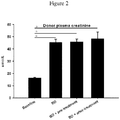
- plasma creatinine significantly increased six hours after brain death, compared to baseline. The increase in plasma creatinine was not prevented in the two sCR1 treatment groups ( see, Fig. 2 ). After transplantation, plasma creatinine and urea were significantly lower at day 1 in recipients of a kidney from sCR1-treated donors compared to recipients of a kidney from an untreated donor. See, Figure 3 .
- cDNA was synthesized by adding a mixture containing 0.5 ⁇ l RnaseOUT® ribonuclease inhibitor (Invitrogen, Carlsbad, USA), 0.5 ⁇ l RNase water (Promega), 4 ⁇ l 5 x first strand buffer (Invitrogen), 2 ⁇ l DTT (Invitrogen), 1 ⁇ l dNTP's and 1 ⁇ l M-MLV reverse transcriptase (Invitrogen, 200U). The mixture was held at 37°C for 50 minutes. Next, reverse-transcriptase was inactivated by incubating the mixture for 15 minutes at 70°C. Samples were stored at -20°C.
- Table 1 Primer sequences used for Real-Time PCR.
- Gene Primers Amplicon size (bp) ⁇ -actin 5'-GGAAATCGTGCGTGACATTAAA-3' (SEQ ID NO:2) 74 5'-GCGGCAGTGGCCATCTC-3' (SEQ ID NO:3) IL-6 5'-CCAACTTCCAATGCTCTCCTAATG-3' (SEQ ID NO:4) 89 5'-TTCAAGTGCTTTCAAGAGTTGGAT-3' (SEQ ID NO:5) IL-1beta 5'-CAGCAATGGTCGGGACATAGTT-3' (SEQ ID NO:6) 75 5'-GCATTAGGAATAGTGCAGCCATCT-3' (SEQ ID NO:7) MCP-1 5'-CTTTGAATGTGAACTTGACCCATAA-3' (SEQ ID NO:8) 78 5'-ACAGAAGTGCTTGAGGTGGTTGT -3' (SEQ ID NO:9) T
- Thermal cycling was performed on the Taqman Applied Biosystems 7900HT Real-Time PCR System with a hot start for 2 minutes at 50°C followed by 10 minutes 95°C.
- Second stage was started with 15 s at 95°C (denaturation step) and 60 s at 60°C (annealing step and DNA synthesis). The latter stage was repeated 40 times.
- Stage 3 was included to detect formation of primer dimers (melting curve) and begins with 15 s at 95°C followed by 60 s at 60°C and 15 s at 95°C.
- Primers were designed with Primer Express software (Applied Biosystems) and primer efficiencies were tested by a standard curve for the primer pair resulting from the amplification of serially diluted cDNA samples (10 ng, 5 ng, 2.5 ng, 1.25 ng and 0.625 ng) obtained from brain-dead rats. CR efficiency were found to be 1.8 ⁇ ⁇ ⁇ 2.0. Real-Time PCR products were checked for product specificity on a 1.5 % agarose gel. Results were expressed as 2 - ⁇ ⁇ CT (CT: Threshold Cycle).
- BANFF classification revealed no statistically significant difference in rejection-associated injury at day 7 after transplantation between recipients of a kidney from a sCR1-treated or untreated donor.
- Table 3 BANFF classification of kidneys 7 days after transplantation.
- BD brain death
- brain-dead donor rats were treated with a single dose of sCR1, a complement inhibiting drug, 1 hour before or 1 hour after brain death induction.
- Soluble CR1 accelerates the decay of C3 convertases and serves as a cofactor for factor I-mediated degradation of C3b and C4b, thereby inhibiting C3 and C5 convertase formation. Consequently, C3 and C5 will not be activated, and generation of anaphylatoxins and MAC-formation is inhibited ( Kinoshita, T., Immunol. Today, 12(9): 291-5 (1991 )).
- sCR1 Recombinant sCR1 is highly potent in inhibiting complement activation ( Weisman, HF, et al., Science, 249(4965): 146-51 (1990 )). Given to recipients in a rat allograft model, sCR1 was successfully shown to protect rats against renal allograft injury (Pratt et al., (2002), op. cit .). Following Pratt et al., we used the same dose of 25 mg/kg which totally depresses complement activation shortly after administration with deactivation to 58% after 24 hours. In our brain-dead rat kidney allograft model, systemic complement activation was decreased after 6 hours of brain death to baseline in both the pre- and after-treatment groups.
- grafts from sCR1-treated animals showed a significantly improved renal function compared to grafts derived from untreated animals. Renal function recovered at day 7 after transplantation, at animal sacrifice. Although renal function was already normalized at day 7, lower gene expression levels of inflammatory genes such as IL-6 and IL-1beta were found in kidneys recovered from a treated compared to an untreated donor. It was not possible to prevent rejection associated injury as classified by the BANFF criteria, since no measures to prevent host immunological attack of the renal grafts were taken in this experimental protocol.
- a preferred soluble complement receptor type I polypeptide for use according to the present disclosure has the amino acid sequence:
Landscapes
- Health & Medical Sciences (AREA)
- Life Sciences & Earth Sciences (AREA)
- Chemical & Material Sciences (AREA)
- Immunology (AREA)
- General Health & Medical Sciences (AREA)
- Engineering & Computer Science (AREA)
- Zoology (AREA)
- Organic Chemistry (AREA)
- Medicinal Chemistry (AREA)
- Bioinformatics & Cheminformatics (AREA)
- Gastroenterology & Hepatology (AREA)
- Proteomics, Peptides & Aminoacids (AREA)
- Cell Biology (AREA)
- Veterinary Medicine (AREA)
- Public Health (AREA)
- Pharmacology & Pharmacy (AREA)
- Animal Behavior & Ethology (AREA)
- Biophysics (AREA)
- Genetics & Genomics (AREA)
- Biochemistry (AREA)
- Molecular Biology (AREA)
- Epidemiology (AREA)
- Toxicology (AREA)
- Chemical Kinetics & Catalysis (AREA)
- Nuclear Medicine, Radiotherapy & Molecular Imaging (AREA)
- General Chemical & Material Sciences (AREA)
- Dentistry (AREA)
- Wood Science & Technology (AREA)
- Environmental Sciences (AREA)
- Transplantation (AREA)
- Medicines That Contain Protein Lipid Enzymes And Other Medicines (AREA)
- Peptides Or Proteins (AREA)
- Physiology (AREA)
Claims (12)
- Verfahren zur Herstellung eines Transplantationsorgans aus einem hirntoten Organspender, um die Funktion des Organs bei einem Empfänger des transplantierten Organs aus dem hirntoten Organspender zu verbessern, wobei das Verfahren die Verabreichung einer zur Hemmung der systemischen und / oder lokalen Komplementaktivierung wirksamen Menge eines löslichen Polypeptids des Komplement-Rezeptors Typ I (sCR1) an einen hirntoten Säugetier- Spender vor der Exzision des Organs aus dem Spender umfasst.
- Lösliches CR1- Polypeptid zur Verwendung zur Verbesserung der Funktion eines Transplantationsorgans in einem Empfänger eines Transplantationsorgans, umfassend:das Verabreichen eines löslichen CR1- Polypeptids an einen hirntoten Organspender in einer Menge, die wirksam ist, um die systemische und / oder lokale Komplementaktivierung des Organspenders zu hemmen;das Entfernen eines Organs aus dem hirntoten Organspender; unddas Transplantieren des Organs in einen Empfänger.
- Das Verfahren nach Anspruch 1, oder das lösliche CR1-Polypeptid zur Verwendung nach Anspruch 2, wobei das sCR1-Polypeptid aus der Gruppe ausgewählt wird, welche aus
einem Fragment von einem humanen CR1, das mindestens die kurzen Konsensus- Wiederholungen 8 bis 11 umfasst;
einem Fragment von einem humanen CR1, das mindestens die kurzen Konsensus- Wiederholungen 15 bis 18 umfasst;
einem löslichen CR1- Polypeptid, das die kurzen Konsensus-Wiederholungen 8 bis 11 und 15 bis 18 des humanen CR1 umfasst;
einem Fragment von einem humanen CR1, das eine lange homologe Wiederholung B umfasst;
einem Fragment von einem humanen CR1, das eine lange homologe Wiederholung C umfasst;
einem Fragment von einem humanen CR1, das die langen homologen Wiederholungen B und C umfasst;
einem Fragment von einem humanen CR1, das die langen homologen Wiederholungen B, C und D umfasst;
einem Fragment von einem humanen CR1, das mindestens die langen homologen Wiederholungen A und B umfasst;
einem Fragment von einem humanen CR1, das die langen homologen Wiederholungen A, B und C umfasst;
einem Fragment von einem humanen CR1, das die langen homologen Wiederholungen A, B, C und D umfasst;
einem Fragment von einem humanen CR1, das die extrazelluläre Domäne von CR1 umfasst;
einem Fragment von einem humanen CR1, das die extrazelluläre Domäne von CR1 umfasst und in welchem die N-terminale LHR-A deletiert (sCR1[desLHR-A]) ist;
ein lösliches CR1- Polypeptid, das eine modifizierte Glykosylierung aufweist, um in vivo die Halbwertszeit im Serum zu verbessern;
ein lösliches CR1- Polypeptid, das eine modifizierte Glykosylierung aufweist, um Sialyl- Lewis-X- Einheiten (sCR1-sLex) zu zeigen;
ein lösliches CR1- Konstrukt, das zwei oder mehr CR1-Polypeptid-Einheiten, die an ein Trägermolekül gebunden sind, aufweist; und
Kombinationen derselben besteht. - Das Verfahren oder das lösliche CR1- Polypeptid zur Verwendung nach Anspruch 3, wobei das sCR1- Polypeptid auf einem intradermalen, einem intramuskulären, einem intraperitonealen, einem intravenösen, einem intraarteriellen, einem subkutanen, einem intrathekalen, einem epiduralen, einem oralen oder einem pulmonalen Weg verabreicht wird.
- Das Verfahren oder das lösliche CR1- Polypeptid zur Verwendung nach Anspruch 4, wobei das Organ aus der Gruppe ausgewählt wird, die aus Leber, Niere, Herz und Lunge besteht.
- Das Verfahren oder das lösliche CR1- Polypeptid zur Verwendung nach Anspruch 5, wobei das Organ eine Niere ist.
- Verwendung eines löslichen Polypeptids des Komplement-Rezeptors Typ I (sCR1) bei der Behandlung eines hirntoten Säugetier- Organspenders vor der Entnahme eines Organs zur Verbesserung der Funktion des Spenderorgans in einem Empfänger des Organtransplantats des Spenders.
- Die Verwendung nach Anspruch 7, wobei eine Menge, die wirksam ist, um die systemische und / oder lokale Komplementaktivierung eines löslichen Polypeptids des Komplement- Rezeptors Typ I (sCR1) zu hemmen, einem hirntoten Säugetier- Spender vor der Exzision von diesem Organ aus diesem Spender verabreicht wird.
- Die Verwendung nach Anspruch 7 oder Anspruch 8, wobei das sCR1- Polypeptid aus der Gruppe ausgewählt wird, welche aus
einem Fragment von einem humanen CR1, das mindestens die kurzen Konsensus- Wiederholungen 8 bis 11 umfasst;
einem Fragment von einem humanen CR1, das mindestens die kurzen Konsensus- Wiederholungen 15 bis 18 umfasst;
einem löslichen CR1- Polypeptid, das die kurzen Konsensus-Wiederholungen 8 bis 11 und 15 bis 18 des humanen CR1 umfasst;
einem Fragment von einem humanen CR1, das eine lange homologe Wiederholung B umfasst;
einem Fragment von einem humanen CR1, das eine lange homologe Wiederholung C umfasst;
einem Fragment von einem humanen CR1, das die langen homologen Wiederholungen B und C umfasst;
einem Fragment von einem humanen CR1, das die langen homologen Wiederholungen B, C und D umfasst;
einem Fragment von einem humanen CR1, das mindestens die langen homologen Wiederholungen A und B umfasst;
einem Fragment von einem humanen CR1, das die langen homologen Wiederholungen A, B und C umfasst;
einem Fragment von einem humanen CR1, das die langen homologen Wiederholungen A, B, C und D umfasst;
einem Fragment von einem humanen CR1, das die extrazelluläre Domäne von CR1 umfasst;
einem Fragment von einem humanen CR1, das die extrazelluläre Domäne von CR1 umfasst und in welchem die N-terminale LHR-A deletiert (sCR1[desLHR-A]) ist;
ein lösliches CR1- Polypeptid, das eine modifizierte Glykosylierung aufweist, um in vivo die Halbwertszeit im Serum zu verbessern;
ein lösliches CR1- Polypeptid, das eine modifizierte Glykosylierung aufweist, um Sialyl- Lewis-X- Einheiten (sCR1-sLex) zu zeigen;
ein lösliches CR1- Konstrukt, das zwei oder mehr CR1-Polypeptid-Einheiten, die an ein Trägermolekül gebunden sind, aufweist; und
Kombinationen derselben besteht. - Die Verwendung nach Anspruch 9, wobei das sCR1- Polypeptid auf einem intradermalen, einem intramuskulären, einem intraperitonealen, einem intravenösen, einem intraarteriellen, einem subkutanen, einem intrathekalen, einem epiduralen, einem oralen oder einem pulmonalen Weg verabreicht wird.
- Die Verwendung nach Anspruch 10, wobei das Organ aus der Gruppe ausgewählt wird, die aus Leber, Niere, Herz und Lunge besteht.
- Die Verwendung nach Anspruch 11, wobei das Organ eine Niere ist.
Applications Claiming Priority (2)
| Application Number | Priority Date | Filing Date | Title |
|---|---|---|---|
| US40733110P | 2010-10-27 | 2010-10-27 | |
| PCT/US2011/058163 WO2012058479A2 (en) | 2010-10-27 | 2011-10-27 | Method of improving transplant function using soluble complement receptor type i (scr1) |
Publications (3)
| Publication Number | Publication Date |
|---|---|
| EP2632476A2 EP2632476A2 (de) | 2013-09-04 |
| EP2632476A4 EP2632476A4 (de) | 2015-04-01 |
| EP2632476B1 true EP2632476B1 (de) | 2017-06-14 |
Family
ID=45994778
Family Applications (1)
| Application Number | Title | Priority Date | Filing Date |
|---|---|---|---|
| EP11837124.4A Not-in-force EP2632476B1 (de) | 2010-10-27 | 2011-10-27 | Verfahren zur verbesserung einer transplantatfunktion unter verwendung des löslichen komplementrezeptors typ i (scr1) |
Country Status (6)
| Country | Link |
|---|---|
| US (1) | US9649356B2 (de) |
| EP (1) | EP2632476B1 (de) |
| AU (1) | AU2011319746B2 (de) |
| BR (1) | BR112013010098A2 (de) |
| CA (1) | CA2815237C (de) |
| WO (1) | WO2012058479A2 (de) |
Families Citing this family (7)
| Publication number | Priority date | Publication date | Assignee | Title |
|---|---|---|---|---|
| CA2838246C (en) | 2011-06-13 | 2018-07-10 | Csl Limited | Antibodies against g-csfr and uses thereof |
| JP7465210B2 (ja) | 2017-11-29 | 2024-04-10 | シーエスエル リミティド | 虚血-再灌流障害の治療又は予防方法 |
| US20210121451A1 (en) * | 2018-04-16 | 2021-04-29 | Kantum Pharma, Inc. | Methods of monitoring, treating, and preventing renal inflammation associated with kidney transplantation |
| AU2019268410B2 (en) | 2018-05-16 | 2025-01-02 | Csl Limited | Soluble complement receptor type 1 variants and uses thereof |
| CN114072425A (zh) * | 2019-06-12 | 2022-02-18 | 杰特创新股份有限公司 | 可溶性补体受体1型变体缀合物及其用途 |
| CN115768475A (zh) | 2020-06-04 | 2023-03-07 | Csl创新私人有限公司 | 治疗或预防急性呼吸窘迫综合征的方法 |
| AU2024290964A1 (en) | 2023-07-05 | 2026-01-08 | CSL Innovation Pty Ltd | Methods of treating or preventing a complication of sickle cell disease |
Family Cites Families (11)
| Publication number | Priority date | Publication date | Assignee | Title |
|---|---|---|---|---|
| US5212071A (en) | 1988-04-01 | 1993-05-18 | The Johns Hopkins University | Nucleic acids encoding a human C3b/C4b receptor (CR1) |
| US5981481A (en) | 1974-12-06 | 1999-11-09 | The Johns Hopkins University | Human C3b/C4b receptor (CR1) |
| IL89790A (en) | 1988-04-01 | 2002-05-23 | Johns Hopking University | Nucleic acid sequences that encode and cells that produce cr1 protein and methods of production and purification |
| US6458360B1 (en) | 1990-04-25 | 2002-10-01 | The Johns Hopkins University | Soluble complement regulatory molecules |
| US5252216A (en) | 1992-03-24 | 1993-10-12 | Smithkline Beecham Corporation | Protein purification |
| US5456909A (en) | 1992-08-07 | 1995-10-10 | T Cell Sciences, Inc. | Glycoform fractions of recombinant soluble complement receptor 1 (sCR1) having extended half-lives in vivo |
| WO1994017822A1 (en) | 1993-02-12 | 1994-08-18 | T Cell Sciences, Inc. | PULMONARY ADMINISTRATION OF sCR1 AND OTHER COMPLEMENT INHIBITORY PROTEINS |
| SG52383A1 (en) | 1993-05-17 | 1998-09-28 | T Cell Sciences Inc | Compositions comprising complement related proteins and carbohydrates and methods for producing and using said compositions |
| CN1130353A (zh) | 1993-07-09 | 1996-09-04 | 史密丝克莱恩比彻姆公司 | 蛋白质的纯化 |
| WO1997011601A1 (en) * | 1995-09-28 | 1997-04-03 | The Johns Hopkins University School Of Medicine | Method for prevention of xenograft rejection by transplant recipients |
| GB9614871D0 (en) | 1996-07-15 | 1996-09-04 | Smithkline Beecham Plc | Compounds |
-
2011
- 2011-10-27 EP EP11837124.4A patent/EP2632476B1/de not_active Not-in-force
- 2011-10-27 BR BR112013010098A patent/BR112013010098A2/pt not_active Application Discontinuation
- 2011-10-27 US US13/283,364 patent/US9649356B2/en not_active Expired - Fee Related
- 2011-10-27 CA CA2815237A patent/CA2815237C/en not_active Expired - Fee Related
- 2011-10-27 WO PCT/US2011/058163 patent/WO2012058479A2/en not_active Ceased
- 2011-10-27 AU AU2011319746A patent/AU2011319746B2/en not_active Ceased
Also Published As
| Publication number | Publication date |
|---|---|
| WO2012058479A2 (en) | 2012-05-03 |
| EP2632476A4 (de) | 2015-04-01 |
| EP2632476A2 (de) | 2013-09-04 |
| AU2011319746B2 (en) | 2015-07-30 |
| US9649356B2 (en) | 2017-05-16 |
| AU2011319746A1 (en) | 2013-05-02 |
| WO2012058479A3 (en) | 2014-04-10 |
| US20120232020A1 (en) | 2012-09-13 |
| CA2815237C (en) | 2018-10-09 |
| CA2815237A1 (en) | 2012-05-03 |
| BR112013010098A2 (pt) | 2017-06-13 |
Similar Documents
| Publication | Publication Date | Title |
|---|---|---|
| US9649356B2 (en) | Method of improving transplant function using soluble complement receptor type I (sCR1) | |
| KR101650264B1 (ko) | 보체 활성을 저해함으로써 동종이식편의 생존 연장 | |
| McCullough et al. | The role of the complement system in acute kidney injury | |
| JP5871798B2 (ja) | 肝再生を刺激する方法 | |
| JP5873047B2 (ja) | 溶血性疾患の処置方法 | |
| Poppelaars et al. | Critical role for complement receptor C5aR2 in the pathogenesis of renal ischemia‐reperfusion injury | |
| US9649357B2 (en) | Treatment of chronic nephropathies using soluble complement receptor type I (sCR1) | |
| WO2018075462A1 (en) | Compositions and methods for treating and preventing transplant-associated injury | |
| CN113209313B (zh) | Tgfbr2在制备卵巢功能保护药物方面中的应用 | |
| US10086070B2 (en) | Combined therapy of alpha-1-antitrypsin and temporal T-cell depletion for preventing graft rejection | |
| CN116390736A (zh) | 用于减轻化疗引起的毒性的内皮细胞 | |
| WO2017144016A1 (zh) | 多肽、其衍生物及其在制备抗肺纤维化的药物中的应用 | |
| JP6373963B2 (ja) | 移植のためのh因子 | |
| JP6484215B2 (ja) | 関節リウマチの治療のためのh因子 | |
| Moon et al. | IL-33 Enhances Host Tolerance to | |
| Poppelaars et al. | Deficiency of early complement components protects against renal injury in a mouse model of brain death. | |
| van Werkhoven et al. | C5L2 is not involved in in vivo Neutrophil Migration in Response to C5a and C5adesArg | |
| 찬장 et al. | IL-33 enhances host tolerance to Candida albicans kidney infections through induction of IL-13 production by CD4+ T cells |
Legal Events
| Date | Code | Title | Description |
|---|---|---|---|
| PUAI | Public reference made under article 153(3) epc to a published international application that has entered the european phase |
Free format text: ORIGINAL CODE: 0009012 |
|
| 17P | Request for examination filed |
Effective date: 20130524 |
|
| AK | Designated contracting states |
Kind code of ref document: A2 Designated state(s): AL AT BE BG CH CY CZ DE DK EE ES FI FR GB GR HR HU IE IS IT LI LT LU LV MC MK MT NL NO PL PT RO RS SE SI SK SM TR |
|
| DAX | Request for extension of the european patent (deleted) | ||
| R17D | Deferred search report published (corrected) |
Effective date: 20140410 |
|
| A4 | Supplementary search report drawn up and despatched |
Effective date: 20150304 |
|
| RIC1 | Information provided on ipc code assigned before grant |
Ipc: A61K 38/17 20060101AFI20150226BHEP Ipc: C07K 14/705 20060101ALI20150226BHEP Ipc: A01N 1/02 20060101ALI20150226BHEP Ipc: A61P 37/06 20060101ALI20150226BHEP |
|
| 17Q | First examination report despatched |
Effective date: 20160615 |
|
| GRAP | Despatch of communication of intention to grant a patent |
Free format text: ORIGINAL CODE: EPIDOSNIGR1 |
|
| STAA | Information on the status of an ep patent application or granted ep patent |
Free format text: STATUS: GRANT OF PATENT IS INTENDED |
|
| INTG | Intention to grant announced |
Effective date: 20170105 |
|
| GRAS | Grant fee paid |
Free format text: ORIGINAL CODE: EPIDOSNIGR3 |
|
| GRAA | (expected) grant |
Free format text: ORIGINAL CODE: 0009210 |
|
| STAA | Information on the status of an ep patent application or granted ep patent |
Free format text: STATUS: THE PATENT HAS BEEN GRANTED |
|
| AK | Designated contracting states |
Kind code of ref document: B1 Designated state(s): AL AT BE BG CH CY CZ DE DK EE ES FI FR GB GR HR HU IE IS IT LI LT LU LV MC MK MT NL NO PL PT RO RS SE SI SK SM TR |
|
| REG | Reference to a national code |
Ref country code: GB Ref legal event code: FG4D |
|
| REG | Reference to a national code |
Ref country code: CH Ref legal event code: EP Ref country code: AT Ref legal event code: REF Ref document number: 900336 Country of ref document: AT Kind code of ref document: T Effective date: 20170615 |
|
| REG | Reference to a national code |
Ref country code: IE Ref legal event code: FG4D |
|
| REG | Reference to a national code |
Ref country code: DE Ref legal event code: R096 Ref document number: 602011038790 Country of ref document: DE |
|
| REG | Reference to a national code |
Ref country code: NL Ref legal event code: MP Effective date: 20170614 |
|
| REG | Reference to a national code |
Ref country code: LT Ref legal event code: MG4D |
|
| REG | Reference to a national code |
Ref country code: FR Ref legal event code: PLFP Year of fee payment: 7 |
|
| PG25 | Lapsed in a contracting state [announced via postgrant information from national office to epo] |
Ref country code: LT Free format text: LAPSE BECAUSE OF FAILURE TO SUBMIT A TRANSLATION OF THE DESCRIPTION OR TO PAY THE FEE WITHIN THE PRESCRIBED TIME-LIMIT Effective date: 20170614 Ref country code: HR Free format text: LAPSE BECAUSE OF FAILURE TO SUBMIT A TRANSLATION OF THE DESCRIPTION OR TO PAY THE FEE WITHIN THE PRESCRIBED TIME-LIMIT Effective date: 20170614 Ref country code: GR Free format text: LAPSE BECAUSE OF FAILURE TO SUBMIT A TRANSLATION OF THE DESCRIPTION OR TO PAY THE FEE WITHIN THE PRESCRIBED TIME-LIMIT Effective date: 20170915 Ref country code: NO Free format text: LAPSE BECAUSE OF FAILURE TO SUBMIT A TRANSLATION OF THE DESCRIPTION OR TO PAY THE FEE WITHIN THE PRESCRIBED TIME-LIMIT Effective date: 20170914 Ref country code: FI Free format text: LAPSE BECAUSE OF FAILURE TO SUBMIT A TRANSLATION OF THE DESCRIPTION OR TO PAY THE FEE WITHIN THE PRESCRIBED TIME-LIMIT Effective date: 20170614 |
|
| REG | Reference to a national code |
Ref country code: AT Ref legal event code: MK05 Ref document number: 900336 Country of ref document: AT Kind code of ref document: T Effective date: 20170614 |
|
| PG25 | Lapsed in a contracting state [announced via postgrant information from national office to epo] |
Ref country code: LV Free format text: LAPSE BECAUSE OF FAILURE TO SUBMIT A TRANSLATION OF THE DESCRIPTION OR TO PAY THE FEE WITHIN THE PRESCRIBED TIME-LIMIT Effective date: 20170614 Ref country code: BG Free format text: LAPSE BECAUSE OF FAILURE TO SUBMIT A TRANSLATION OF THE DESCRIPTION OR TO PAY THE FEE WITHIN THE PRESCRIBED TIME-LIMIT Effective date: 20170914 Ref country code: RS Free format text: LAPSE BECAUSE OF FAILURE TO SUBMIT A TRANSLATION OF THE DESCRIPTION OR TO PAY THE FEE WITHIN THE PRESCRIBED TIME-LIMIT Effective date: 20170614 Ref country code: NL Free format text: LAPSE BECAUSE OF FAILURE TO SUBMIT A TRANSLATION OF THE DESCRIPTION OR TO PAY THE FEE WITHIN THE PRESCRIBED TIME-LIMIT Effective date: 20170614 Ref country code: SE Free format text: LAPSE BECAUSE OF FAILURE TO SUBMIT A TRANSLATION OF THE DESCRIPTION OR TO PAY THE FEE WITHIN THE PRESCRIBED TIME-LIMIT Effective date: 20170614 |
|
| PG25 | Lapsed in a contracting state [announced via postgrant information from national office to epo] |
Ref country code: EE Free format text: LAPSE BECAUSE OF FAILURE TO SUBMIT A TRANSLATION OF THE DESCRIPTION OR TO PAY THE FEE WITHIN THE PRESCRIBED TIME-LIMIT Effective date: 20170614 Ref country code: CZ Free format text: LAPSE BECAUSE OF FAILURE TO SUBMIT A TRANSLATION OF THE DESCRIPTION OR TO PAY THE FEE WITHIN THE PRESCRIBED TIME-LIMIT Effective date: 20170614 Ref country code: AT Free format text: LAPSE BECAUSE OF FAILURE TO SUBMIT A TRANSLATION OF THE DESCRIPTION OR TO PAY THE FEE WITHIN THE PRESCRIBED TIME-LIMIT Effective date: 20170614 Ref country code: SK Free format text: LAPSE BECAUSE OF FAILURE TO SUBMIT A TRANSLATION OF THE DESCRIPTION OR TO PAY THE FEE WITHIN THE PRESCRIBED TIME-LIMIT Effective date: 20170614 Ref country code: RO Free format text: LAPSE BECAUSE OF FAILURE TO SUBMIT A TRANSLATION OF THE DESCRIPTION OR TO PAY THE FEE WITHIN THE PRESCRIBED TIME-LIMIT Effective date: 20170614 |
|
| PG25 | Lapsed in a contracting state [announced via postgrant information from national office to epo] |
Ref country code: ES Free format text: LAPSE BECAUSE OF FAILURE TO SUBMIT A TRANSLATION OF THE DESCRIPTION OR TO PAY THE FEE WITHIN THE PRESCRIBED TIME-LIMIT Effective date: 20170614 Ref country code: PL Free format text: LAPSE BECAUSE OF FAILURE TO SUBMIT A TRANSLATION OF THE DESCRIPTION OR TO PAY THE FEE WITHIN THE PRESCRIBED TIME-LIMIT Effective date: 20170614 Ref country code: SM Free format text: LAPSE BECAUSE OF FAILURE TO SUBMIT A TRANSLATION OF THE DESCRIPTION OR TO PAY THE FEE WITHIN THE PRESCRIBED TIME-LIMIT Effective date: 20170614 Ref country code: IS Free format text: LAPSE BECAUSE OF FAILURE TO SUBMIT A TRANSLATION OF THE DESCRIPTION OR TO PAY THE FEE WITHIN THE PRESCRIBED TIME-LIMIT Effective date: 20171014 Ref country code: IT Free format text: LAPSE BECAUSE OF FAILURE TO SUBMIT A TRANSLATION OF THE DESCRIPTION OR TO PAY THE FEE WITHIN THE PRESCRIBED TIME-LIMIT Effective date: 20170614 |
|
| REG | Reference to a national code |
Ref country code: DE Ref legal event code: R097 Ref document number: 602011038790 Country of ref document: DE |
|
| PLBE | No opposition filed within time limit |
Free format text: ORIGINAL CODE: 0009261 |
|
| STAA | Information on the status of an ep patent application or granted ep patent |
Free format text: STATUS: NO OPPOSITION FILED WITHIN TIME LIMIT |
|
| PG25 | Lapsed in a contracting state [announced via postgrant information from national office to epo] |
Ref country code: DK Free format text: LAPSE BECAUSE OF FAILURE TO SUBMIT A TRANSLATION OF THE DESCRIPTION OR TO PAY THE FEE WITHIN THE PRESCRIBED TIME-LIMIT Effective date: 20170614 |
|
| 26N | No opposition filed |
Effective date: 20180315 |
|
| PG25 | Lapsed in a contracting state [announced via postgrant information from national office to epo] |
Ref country code: MC Free format text: LAPSE BECAUSE OF FAILURE TO SUBMIT A TRANSLATION OF THE DESCRIPTION OR TO PAY THE FEE WITHIN THE PRESCRIBED TIME-LIMIT Effective date: 20170614 |
|
| REG | Reference to a national code |
Ref country code: CH Ref legal event code: PL |
|
| REG | Reference to a national code |
Ref country code: IE Ref legal event code: MM4A |
|
| PG25 | Lapsed in a contracting state [announced via postgrant information from national office to epo] |
Ref country code: CH Free format text: LAPSE BECAUSE OF NON-PAYMENT OF DUE FEES Effective date: 20171031 Ref country code: LU Free format text: LAPSE BECAUSE OF NON-PAYMENT OF DUE FEES Effective date: 20171027 Ref country code: LI Free format text: LAPSE BECAUSE OF NON-PAYMENT OF DUE FEES Effective date: 20171031 |
|
| REG | Reference to a national code |
Ref country code: BE Ref legal event code: MM Effective date: 20171031 |
|
| PG25 | Lapsed in a contracting state [announced via postgrant information from national office to epo] |
Ref country code: BE Free format text: LAPSE BECAUSE OF NON-PAYMENT OF DUE FEES Effective date: 20171031 Ref country code: SI Free format text: LAPSE BECAUSE OF FAILURE TO SUBMIT A TRANSLATION OF THE DESCRIPTION OR TO PAY THE FEE WITHIN THE PRESCRIBED TIME-LIMIT Effective date: 20170614 |
|
| PG25 | Lapsed in a contracting state [announced via postgrant information from national office to epo] |
Ref country code: MT Free format text: LAPSE BECAUSE OF NON-PAYMENT OF DUE FEES Effective date: 20171027 |
|
| REG | Reference to a national code |
Ref country code: FR Ref legal event code: PLFP Year of fee payment: 8 |
|
| PG25 | Lapsed in a contracting state [announced via postgrant information from national office to epo] |
Ref country code: IE Free format text: LAPSE BECAUSE OF NON-PAYMENT OF DUE FEES Effective date: 20171027 |
|
| PGFP | Annual fee paid to national office [announced via postgrant information from national office to epo] |
Ref country code: DE Payment date: 20181030 Year of fee payment: 8 |
|
| PGFP | Annual fee paid to national office [announced via postgrant information from national office to epo] |
Ref country code: GB Payment date: 20181031 Year of fee payment: 8 Ref country code: FR Payment date: 20181030 Year of fee payment: 8 |
|
| PG25 | Lapsed in a contracting state [announced via postgrant information from national office to epo] |
Ref country code: HU Free format text: LAPSE BECAUSE OF FAILURE TO SUBMIT A TRANSLATION OF THE DESCRIPTION OR TO PAY THE FEE WITHIN THE PRESCRIBED TIME-LIMIT; INVALID AB INITIO Effective date: 20111027 |
|
| PG25 | Lapsed in a contracting state [announced via postgrant information from national office to epo] |
Ref country code: CY Free format text: LAPSE BECAUSE OF NON-PAYMENT OF DUE FEES Effective date: 20170614 |
|
| PG25 | Lapsed in a contracting state [announced via postgrant information from national office to epo] |
Ref country code: MK Free format text: LAPSE BECAUSE OF FAILURE TO SUBMIT A TRANSLATION OF THE DESCRIPTION OR TO PAY THE FEE WITHIN THE PRESCRIBED TIME-LIMIT Effective date: 20170614 |
|
| PG25 | Lapsed in a contracting state [announced via postgrant information from national office to epo] |
Ref country code: TR Free format text: LAPSE BECAUSE OF FAILURE TO SUBMIT A TRANSLATION OF THE DESCRIPTION OR TO PAY THE FEE WITHIN THE PRESCRIBED TIME-LIMIT Effective date: 20170614 |
|
| REG | Reference to a national code |
Ref country code: DE Ref legal event code: R119 Ref document number: 602011038790 Country of ref document: DE |
|
| PG25 | Lapsed in a contracting state [announced via postgrant information from national office to epo] |
Ref country code: PT Free format text: LAPSE BECAUSE OF FAILURE TO SUBMIT A TRANSLATION OF THE DESCRIPTION OR TO PAY THE FEE WITHIN THE PRESCRIBED TIME-LIMIT Effective date: 20170614 |
|
| PG25 | Lapsed in a contracting state [announced via postgrant information from national office to epo] |
Ref country code: DE Free format text: LAPSE BECAUSE OF NON-PAYMENT OF DUE FEES Effective date: 20200501 Ref country code: AL Free format text: LAPSE BECAUSE OF FAILURE TO SUBMIT A TRANSLATION OF THE DESCRIPTION OR TO PAY THE FEE WITHIN THE PRESCRIBED TIME-LIMIT Effective date: 20170614 |
|
| GBPC | Gb: european patent ceased through non-payment of renewal fee |
Effective date: 20191027 |
|
| PG25 | Lapsed in a contracting state [announced via postgrant information from national office to epo] |
Ref country code: GB Free format text: LAPSE BECAUSE OF NON-PAYMENT OF DUE FEES Effective date: 20191027 Ref country code: FR Free format text: LAPSE BECAUSE OF NON-PAYMENT OF DUE FEES Effective date: 20191031 |