EP2634698A1 - Procédé de contrôle d'un programme test spécifique à l'application pour tester un système de microprocesseur - Google Patents
Procédé de contrôle d'un programme test spécifique à l'application pour tester un système de microprocesseur Download PDFInfo
- Publication number
- EP2634698A1 EP2634698A1 EP12157720.9A EP12157720A EP2634698A1 EP 2634698 A1 EP2634698 A1 EP 2634698A1 EP 12157720 A EP12157720 A EP 12157720A EP 2634698 A1 EP2634698 A1 EP 2634698A1
- Authority
- EP
- European Patent Office
- Prior art keywords
- command
- program
- microprocessor
- test program
- testing
- Prior art date
- Legal status (The legal status is an assumption and is not a legal conclusion. Google has not performed a legal analysis and makes no representation as to the accuracy of the status listed.)
- Withdrawn
Links
Images

Classifications
-
- G—PHYSICS
- G06—COMPUTING OR CALCULATING; COUNTING
- G06F—ELECTRIC DIGITAL DATA PROCESSING
- G06F11/00—Error detection; Error correction; Monitoring
- G06F11/36—Prevention of errors by analysis, debugging or testing of software
- G06F11/3668—Testing of software
- G06F11/3672—Test management
Definitions
- the invention relates to a method for testing an application-specific test program for testing a microprocessor system, to an apparatus for testing an application-specific test program for testing a microprocessor system and to a computer program product.
- a microprocessor not only performs the actual function, but also simultaneously performs a self-test at all times.
- This self-test includes executions of certain operations whose results are compared to predefined setpoints. A detected deviation between setpoint and actual value should give rise to the execution of a safety-related reaction or countermeasure.
- Microprocessor-controlled components of a technical control or of an automation system detect analog input variables via sensors or digital input variables via interfaces to other components.
- the acquired information is processed by a microprocessor and the calculated output quantities are either to influence technical Processes via actuators or for transmission to other components via digital interfaces used.
- the integrity and freedom from error of the output variables with correctly detected input variables depend, inter alia, on the integrity of the command-executing hardware components of the microprocessor.
- a potential defect of a command executing hardware component of the microprocessor may result in erroneous execution of a single instruction from an implemented instruction set. This in turn can lead to an erroneous calculation of an output variable.
- test programs In order to continuously test the various processing units and peripheral elements of a microprocessor system, special tests are usually carried out virtually simultaneously with the execution of actual processing algorithms of a control program by means of a possibly application-specific test program. Such tests include, for example, a program memory test, a data memory test, instruction tests, and / or addressing tests.
- predefined processing steps in a native instruction set which is usually written in a machine-oriented language, such as assembler, are executed and then compared with previously known results. Any deviation of calculation of an output from the expected target values is evaluated as a failure of the microprocessor hardware.
- the test program should have at least all the commands as well as all addressing modes that are also used by the actual control program of the microprocessor.
- the control program of a microprocessor is today usually written in a high-level programming language, such as C or C ++. Which commands of the microprocessor are actually used in the execution of the control program depends on the compiler used. Therefore, the subset of instructions that must be unconditionally captured by the test program is generally unknown. In the prior art, therefore, test programs are developed which systematically comprise the entire instruction set of a microprocessor, including all possible addressing modes of the operands. Since a high-level programming language can not cover the entire instruction set of a microprocessor, an implementation of a test program with all possible instruction tests of a microprocessor, necessarily in assembler language. This results in a very high development effort in the development and implementation of the test program with coverage of all possible command tests of a microprocessor.
- the method advantageously provides an analysis method for determining a test coverage of the respectively developed or implemented test program to a developer or implementer of a test program for a microprocessor system.
- a targeted Implementation of instruction sets that contain only command code words that are actually used by the control program significantly shorten the running time of the test program.
- Targeted implementation of instruction sets containing only command code words actually used by the control program could save processor resources.
- the response time for detecting errors and thus also the time necessary to restore the control executed by the microprocessor to a safe state could be shortened.
- parsing is used to check whether the command code words of the control program are identical to the command codes of the test program, has the advantage that the comparison can be performed even if the Control program and the test program have been implemented in different programming languages. Because the parsing comprises a decomposition of each program code to be analyzed in a structure that is predetermined by a grammar, focusing the analysis exclusively on the comparative relevant elements of the program code, in this case on the command code words, takes place and for the comparison irrelevant information such For example, comments within the program code, command arguments, parameters and / or variables are eliminated.
- a context-free representation for example in the form of an abstract syntax tree, can thus take place. If, as in the present method, a first abstract syntax tree is created using the identified command code words of the control program and at the same time a second abstract syntax tree is created using the command codes of the test program, comparison of the command code words of the control program and the command code words of the test program can be more effective and faster. A comparison of the two abstract syntax spaces can form the basis of an evaluation regarding the test coverage of the test program.
- results of such an evaluation can be provided via an interface.
- the output of a validation symbol or a deficiency symbol can be carried out with suitable means for user-friendly presentation.
- an "abstract syntax tree” or “abstract syntax tree” is a logical tree structure which reproduces the contextual relationships of a program code in the form of a syntax tree. Since complex information is usually linearly stored by a defined syntax in a program code it is not easy for comparative programs to analyze the content. In order to find the relevant information faster, the content of the program code to be analyzed, in this case the control program code and the test program code, is respectively converted into an abstract syntax tree, which is often referred to as "parsing" itself.
- a parser is generally a program for the automatic decomposition and transformation of character strings into a representation suitable for further processing (eg tree structure).
- an output of a statistic indicating a first frequency of each command codeword of the first set of command codewords and / or a second frequency of each command codeword of the second set of command codewords.
- the indication of a frequency of the occurrence of a command code word in the control program advantageously indicates the respective relevance of the command code word for the executability of the control program.
- Command code words of the high-frequency control program should necessarily be covered by corresponding command code words of the test program because of a higher probability of occurrence of an error.
- the aim of the developer of the test program therefore, should be to confirm that an efficient test program with 100% test coverage has been implemented to obtain a validation symbol as a result of a test coverage analysis confirming that the set of command codes of the control program is at least one Represents subset of the set of command code words of the test program.
- the ideal goal would be if the set of command code words of the control program would be identical to the set of command code words of the test program. Essentially, these goals can also be achieved by eliminating command code words which occur exclusively in the test program from the instruction set of the test program, the statistic indicating the frequency of the command code words of the test program serving as an essential indication.
- reading the application-specific test program from the memory by the computer system and reading the control program by the computer system comprises parsing a machine-level programming language, the parsing comprising identifying the first set of command codewords and the second set of command codewords, wherein the identification represents a basis for creating the first abstract syntax tree and for creating the second abstract syntax tree.
- the syntax analysis which analyzes only the syntactic relationships of the respective program code and not its meaning, offers exclusive focus on the core elements of the program code, ie the command code words, an advantageous basis for further processing of the data structures by a suitable interface for evaluation.
- the access mode to comparison critical elements, in this case the command code words, and the navigability within the simplified data structure is significantly facilitated.
- the machine-level programming language is a result of compiling at least a first higher-level programming language and a second high-level programming language, the first higher-level programming language defining the first set of command codes of the control program and the second higher-level programming language defining the second set of command codes of the test program.
- the control program and the test program can be implemented in any higher-level programming language.
- the prerequisite is that a compiler compiles the higher-level programming language in a machine-oriented programming language.
- This has the significant advantage that not only the control program can be written in a high-level programming language, such as C or C ++, but also the test program.
- a test program written in a high-level programming language not only facilitates the development and implementation of the test program. Due to the higher abstraction level of the program code also a much greater portability of the program code is guaranteed.
- the high-level code granularity is not as fine as a machine-level programming language such as assembler. This implies that the development of the higher-level program code for the test program is also much closer to the problem to be solved.
- the first higher-level programming language and the second higher-level programming language are identical or different
- the higher programming language of the control program and the test program can be either identical or different. Due to the subsequent compilation of the higher-level programming language into the machine-near programming language, an identity or difference of the higher-level programming language of the control program or the test program is irrelevant. The respective capabilities and advantages of the developer or the implementer can thus be taken into account in an advantageous manner.
- the low level programming language eliminates that portion of the second set of command codes of the test program and compilation for that portion.
- part of the test program can be written and implemented in machine-level programming language. In this case, the need for subsequent compilation is eliminated. If a higher-level programming language does not offer the possibility to use part of the command code words of the control program can be covered by appropriate instruction sets, it can alternatively be resorted to an additional implementation of a part of the test program in machine-oriented programming language. By being able to implement part of the test program in machine-level programming language, 100% test coverage can be achieved in any case, even if it is independent of the high-level programming language used in the remainder of the test program.
- command words of a microprocessor can only be programmed by machine-level programming languages, such as assemblers. Because the parsing or the syntax analysis of the control or the test program takes place at the level of the machine-oriented programming language, this part of the test program, which contains the test component that can be programmed exclusively in assembler code, can continue to be programmed in assembler.
- machine-level programming languages such as assemblers. Because the parsing or the syntax analysis of the control or the test program takes place at the level of the machine-oriented programming language, this part of the test program, which contains the test component that can be programmed exclusively in assembler code, can continue to be programmed in assembler.
- an ASM parser which transforms assembler into an XML format
- the initial programming language does not matter if a previous higher-level programming language was compiled by a compiler in the assembler, or if the program code to be analyzed was already written initially in the assembler. For the subsequent analysis with respect to identity of the command code words
- the machine-near programming language is translated into a binary machine code.
- an adaptation of the syntax analysis is performed by adapting a definition of a grammar of the machine-level programming language.
- adaptation of the parsing can be done by simply adapting a definition of a grammar of the machine-level programming language implies that the present method can be used for any type of microprocessor or microcontroller.
- An adaptation of the present analysis method for determining the test coverage of a test program can thus be done by exchanging a file which defines a grammar.
- the present analysis method is therefore independent of the type of microprocessor or microcontroller to be tested. By inserting additional program code pieces, even the functionality of the parser can be extended. Automatic parsing and reporting functionality could also be used by the parser.
- the test program for testing the microprocessor system for its integrity and integrity of the instruction execution hardware components could advantageously comprise complementary or redundant tests with different approaches to testing the hardware components of the microprocessor.
- the test program should offer different measurement options to make fail-safe errors Device in which the microprocessor system takes over the control function to detect quickly and safely. Either standard tests, such as the Abraham test, the Galpat test, a cyclic redundancy check of the program memory, a RAM comparison test or a RAM double memory test, or an individual application-specific test can be used.
- the test program should include various approaches for testing data processing and testing the addressing of hardware components in order to quickly and accurately diagnose possible sources of error in the calculation of output variables.
- an application-specific test program should be configured such that errors in the instruction execution hardware of the microprocessor system are correctly diagnosed within a very short time in order to terminate a negative impact on technical processes via actuators as quickly as possible.
- the invention in another aspect, relates to a computer program product having instructions executable by a processor to perform the method described above.
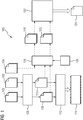
- the FIG1 shows a block diagram illustrating the methods for testing an application-specific test program 102, 104, 110 for testing a microprocessor system 114.
- the microprocessor system 114 includes a program memory for storing a control program 100, 108.
- the control program 100, 108 which is typically written in a high-level programming language such as C or C ++, is implemented
- a high-level language compiler 106 for example, by a C compiler, is transformed into a machine-level programming language, such as an assembler, with an instruction set 108 resulting in machine-level programming language, such as assembler.
- the test program 102 which in the illustrated embodiment is also written in a high-level language such as C or C ++, is transformed by the compiler 106, for example a C compiler, into a machine-level programming code, such as an assembler. wherein the instruction set 110 of the test program results in assembly code.
- the compiler 106 for example a C compiler
- a part of the test program 104 may already have been programmed in machine-oriented programming language in the illustrated embodiment, so that compilation by the compiler 106 is omitted.
- the instruction code 108 of the control program, the test program 110 and the part 104 of the test program are converted into a machine-readable binary code such that the control program and the test program can be executed by the microprocessor 114.
- the instruction set 108 of the control program, the assembler code instruction set 110 of the test program 102, and the assembler code instruction set of the remainder of the test program 104 are read in by a parser 116. It is the task of the parser to generate a machine-readable representation from the assembly code in text form, which is better suited for the subsequent analysis for determining the test coverage of the test program 102, 104. For this purpose eliminated the parser converts irrelevant program code parts, such as comments or jump marks, from the assembly code, and converts the assembler commands into, for example, an XML-based tree representation, for example in the form of an abstract syntax tree.
- the parser After unambiguous identification and assignment of command code words of the control program 110 and the test program 102, 104, the parser generates an abstract syntax tree 118 with command codes of the test program 102, 104 and an abstract syntax tree 120 with command codes of the control program 100.
- the two abstract syntax trees 118 and 120 become another interface 122 which, for example, an analysis software with integrated script for reading the abstract syntax trees and for analyzing and evaluating the abstract syntax trees with respect to an identity and occurrence frequency of the command code words of the control program 100 and the test program 102, 104 could represent provided.
- an XSLT script could be used that could read the abstract syntax trees in XML format, generate a test report in XHTML format, and which could additionally query for assembly-related details using XPATH expressions.
- the results of this test coverage analysis could be output in an interface 124 for outputting a test report via the test coverage of the test program 102, 104 in the form of a test report and / or a statistic.
- the test report should include a statement as to whether or not a present implementation of the test program 102, 104 has a one hundred percent test coverage level.
- the statistics could provide an indication of which command code words in the control program by means of a list of command codes of the control program and of the test program 102, 104, with the occurrence frequency listed in each case 100 are used and whether these command code words are completely covered by the test program 102, 104 or not.
- the syntax analysis performed by the parser 116 could be adapted to the particular type of microprocessor using a variable grammar 126 file Microprocessor system to be adjusted.
- FIG. 12 shows a flow diagram illustrating the method steps of the method for testing an application-specific test program 102, 104, 110 for testing a microprocessor system 114.
- a first higher-level programming language of the control program 100 which is written in C or C ++, for example, is carried out compiler 106 into a machine-level language, such as assembler.
- compiler 106 compilation of the second high level programming language of the test program 102 by the compiler 106 into a near-machine language, such as assembler.
- step S207 the definition of a part of the test program which can not be represented in the second higher-level programming language is carried out in machine-oriented language, so that compilation by the compiler 106 is no longer necessary.
- the parser 116 reads out the assembly codes of the control program 100, the test program 102, and the remainder of the test program 104.
- step S204 a parsing of the assembly code 108 of the control program 100, the assembly code 110 of the test program 102, and the assembly code of the remaining part 104 of the test program is then performed.
- syntax analysis was adapted to the type of microprocessor system by defining a specific grammar.
- the first abstract syntax tree 120 and the second abstract syntax tree 118 are compared with respect to an identity of the first set of command codes of the control program 100 and the second set of command codes of the test program 102, 104
- Output of the results of the previous test coverage analysis is performed in step S218, an output of a statistic indicating an occurrence frequency of the command code words of the first set and / or the second set. This statistic shows which command code words are used in the control program 100 and how often these command code words are used in the execution of the control program 100.
- a listing of the command code words used by the test program 102, 104 could be made in this statistic while simultaneously indicating the occurrence frequency of each individual command code word of the test program 102, 104.
- a test report could also be output which, as a result of the previous test coverage analysis, includes a statement as to whether a present implementation of the test program 102, 104 is a full test coverage (S214) or not (S216).
- the described method for testing an application-specific test program for testing a microprocessor system could therefore provide a developer or implementer of such a test program with a meaningful indication of which command code words must be contained in the test program to be implemented in order to achieve a complete test coverage of the control program.
- the method also allows the developer or implementer to build a large part of the test program in a high-level programming language, which is a considerable facilitation for the developer compared to programming the test program in a machine-level programming language, such as assembler.
- control processes and safety functions can take place integrated in the microprocessor system, which substantially increases the fault detection of a safety-critical actuator to be controlled.
Landscapes
- Engineering & Computer Science (AREA)
- Theoretical Computer Science (AREA)
- Computer Hardware Design (AREA)
- Quality & Reliability (AREA)
- Physics & Mathematics (AREA)
- General Engineering & Computer Science (AREA)
- General Physics & Mathematics (AREA)
- Debugging And Monitoring (AREA)
Priority Applications (1)
| Application Number | Priority Date | Filing Date | Title |
|---|---|---|---|
| EP12157720.9A EP2634698A1 (fr) | 2012-03-01 | 2012-03-01 | Procédé de contrôle d'un programme test spécifique à l'application pour tester un système de microprocesseur |
Applications Claiming Priority (1)
| Application Number | Priority Date | Filing Date | Title |
|---|---|---|---|
| EP12157720.9A EP2634698A1 (fr) | 2012-03-01 | 2012-03-01 | Procédé de contrôle d'un programme test spécifique à l'application pour tester un système de microprocesseur |
Publications (1)
| Publication Number | Publication Date |
|---|---|
| EP2634698A1 true EP2634698A1 (fr) | 2013-09-04 |
Family
ID=45808216
Family Applications (1)
| Application Number | Title | Priority Date | Filing Date |
|---|---|---|---|
| EP12157720.9A Withdrawn EP2634698A1 (fr) | 2012-03-01 | 2012-03-01 | Procédé de contrôle d'un programme test spécifique à l'application pour tester un système de microprocesseur |
Country Status (1)
| Country | Link |
|---|---|
| EP (1) | EP2634698A1 (fr) |
Citations (1)
| Publication number | Priority date | Publication date | Assignee | Title |
|---|---|---|---|---|
| EP1936507A1 (fr) * | 2002-10-15 | 2008-06-25 | Abb As | Détection de panne dans un contrôleur industriel au cours d'un contrôle de sécurité |
-
2012
- 2012-03-01 EP EP12157720.9A patent/EP2634698A1/fr not_active Withdrawn
Patent Citations (1)
| Publication number | Priority date | Publication date | Assignee | Title |
|---|---|---|---|---|
| EP1936507A1 (fr) * | 2002-10-15 | 2008-06-25 | Abb As | Détection de panne dans un contrôleur industriel au cours d'un contrôle de sécurité |
Non-Patent Citations (2)
| Title |
|---|
| ANONYMOUS: "Abstract syntax tree", 19 February 2012 (2012-02-19), pages 1 - 2, XP055024057, Retrieved from the Internet <URL:http://en.wikipedia.org/w/index.php?title=Abstract_syntax_tree&oldid=477788409> [retrieved on 20120405] * |
| ANONYMOUS: "Parsing", 9 February 2012 (2012-02-09), pages 1 - 5, XP055024058, Retrieved from the Internet <URL:http://en.wikipedia.org/w/index.php?title=Parsing&oldid=475958964> [retrieved on 20120405] * |
Similar Documents
| Publication | Publication Date | Title |
|---|---|---|
| EP0753168B1 (fr) | Procede pour le diagnostic automatique de defaillances | |
| EP2742391B1 (fr) | Procédé et dispositif pour établir automatiquement une fonction de sécurité exécutable pour un appareil | |
| EP0966703B1 (fr) | Procede d'analyse assistee par ordinateur de defaillances de capteurs et/ou d'actionneurs dans un systeme technique | |
| EP2927819B1 (fr) | Procede de traitement automatique de plusieurs fichiers journaux d'un systeme d'automatisation | |
| DE102005042126A1 (de) | Verfahren und Vorrichtung zum automatisierten Bewerten der Qualität eines Software-Quellcodes | |
| DE102010033861A1 (de) | Auf einer formellen Analyse basierte Entwicklung von Anforderungsspezifikationen | |
| DE102005032944A1 (de) | Verfahren und Softwaresystem zur Konfiguration eines modularen Systems | |
| DE102008043374A1 (de) | Vorrichtung und Verfahren zur Generierung redundanter, aber unterschiedlicher Maschinencodes aus einem Quellcode zur Verifizierung für ein sicherheitskritisches System | |
| AT515341B1 (de) | Verfahren zur Überprüfung der Abarbeitung von Software | |
| EP2634698A1 (fr) | Procédé de contrôle d'un programme test spécifique à l'application pour tester un système de microprocesseur | |
| EP4530832A1 (fr) | Refacteur automatisé de code de logiciel intégré | |
| EP3764185A1 (fr) | Procédé d'essai d'un système | |
| DE102010032765B4 (de) | Automatische Verifizierung von Übersetzungen | |
| DE102010047954A1 (de) | Formelle offline-Verifikation ausführbarer Modelle | |
| DE102010047957A1 (de) | Formelle online-Verifikation ausführbarer Modelle | |
| EP3173928B1 (fr) | Procédé et dispositif de contrôle d'un arbre de défaillances de composant | |
| DE102021207872A1 (de) | Kompositionelle verifikation von eingebetteten softwaresystemen | |
| EP3933593A1 (fr) | Procédé et programme informatique destinés aux essais d'un système technique | |
| DE102023205747A1 (de) | Rechnergestütztes Verfahren zur modellbasierten Erzeugung eines Computerprogramms | |
| DE102023205749A1 (de) | Rechnergestütztes Verfahren zur Erzeugung eines Computerprogramms | |
| DE102023205751A1 (de) | Rechnergestütztes Verfahren zur automatisierten Erzeugung und Verifizierung eines Computerprogramms | |
| EP4687030A1 (fr) | Procédé et dispositif pour générer et comparer des signatures de paquets de logiciel | |
| EP4530828A1 (fr) | Génération automatisée de modèles informatiques tels que des automates à pile, des automates à états ou des réseaux de pétri | |
| EP4715638A1 (fr) | Exécution d'applications sur un système sécurisé d'une installation industrielle | |
| EP4462199A1 (fr) | Procédé et dispositif d'optimisation d'un jumeau numérique par rapport à sa robustesse |
Legal Events
| Date | Code | Title | Description |
|---|---|---|---|
| PUAI | Public reference made under article 153(3) epc to a published international application that has entered the european phase |
Free format text: ORIGINAL CODE: 0009012 |
|
| AK | Designated contracting states |
Kind code of ref document: A1 Designated state(s): AL AT BE BG CH CY CZ DE DK EE ES FI FR GB GR HR HU IE IS IT LI LT LU LV MC MK MT NL NO PL PT RO RS SE SI SK SM TR |
|
| AX | Request for extension of the european patent |
Extension state: BA ME |
|
| 17P | Request for examination filed |
Effective date: 20140303 |
|
| RBV | Designated contracting states (corrected) |
Designated state(s): AL AT BE BG CH CY CZ DE DK EE ES FI FR GB GR HR HU IE IS IT LI LT LU LV MC MK MT NL NO PL PT RO RS SE SI SK SM TR |
|
| RAP1 | Party data changed (applicant data changed or rights of an application transferred) |
Owner name: SIEMENS AKTIENGESELLSCHAFT |
|
| STAA | Information on the status of an ep patent application or granted ep patent |
Free format text: STATUS: THE APPLICATION IS DEEMED TO BE WITHDRAWN |
|
| 18D | Application deemed to be withdrawn |
Effective date: 20171003 |