EP2636737B1 - Kontrollfaktor für haut- und haarfarbe - Google Patents
Kontrollfaktor für haut- und haarfarbe Download PDFInfo
- Publication number
- EP2636737B1 EP2636737B1 EP11837973.4A EP11837973A EP2636737B1 EP 2636737 B1 EP2636737 B1 EP 2636737B1 EP 11837973 A EP11837973 A EP 11837973A EP 2636737 B1 EP2636737 B1 EP 2636737B1
- Authority
- EP
- European Patent Office
- Prior art keywords
- expression
- gene
- skin
- melanin
- keratinocytes
- Prior art date
- Legal status (The legal status is an assumption and is not a legal conclusion. Google has not performed a legal analysis and makes no representation as to the accuracy of the status listed.)
- Active
Links
Images

Classifications
-
- C—CHEMISTRY; METALLURGY
- C12—BIOCHEMISTRY; BEER; SPIRITS; WINE; VINEGAR; MICROBIOLOGY; ENZYMOLOGY; MUTATION OR GENETIC ENGINEERING
- C12N—MICROORGANISMS OR ENZYMES; COMPOSITIONS THEREOF; PROPAGATING, PRESERVING, OR MAINTAINING MICROORGANISMS; MUTATION OR GENETIC ENGINEERING; CULTURE MEDIA
- C12N15/00—Mutation or genetic engineering; DNA or RNA concerning genetic engineering, vectors, e.g. plasmids, or their isolation, preparation or purification; Use of hosts therefor
- C12N15/09—Recombinant DNA-technology
- C12N15/11—DNA or RNA fragments; Modified forms thereof; Non-coding nucleic acids having a biological activity
- C12N15/113—Non-coding nucleic acids modulating the expression of genes, e.g. antisense oligonucleotides; Antisense DNA or RNA; Triplex- forming oligonucleotides; Catalytic nucleic acids, e.g. ribozymes; Nucleic acids used in co-suppression or gene silencing
-
- A—HUMAN NECESSITIES
- A61—MEDICAL OR VETERINARY SCIENCE; HYGIENE
- A61K—PREPARATIONS FOR MEDICAL, DENTAL OR TOILETRY PURPOSES
- A61K8/00—Cosmetics or similar toiletry preparations
- A61K8/18—Cosmetics or similar toiletry preparations characterised by the composition
- A61K8/30—Cosmetics or similar toiletry preparations characterised by the composition containing organic compounds
- A61K8/60—Sugars; Derivatives thereof
- A61K8/606—Nucleosides; Nucleotides; Nucleic acids
-
- A—HUMAN NECESSITIES
- A61—MEDICAL OR VETERINARY SCIENCE; HYGIENE
- A61P—SPECIFIC THERAPEUTIC ACTIVITY OF CHEMICAL COMPOUNDS OR MEDICINAL PREPARATIONS
- A61P17/00—Drugs for dermatological disorders
-
- A—HUMAN NECESSITIES
- A61—MEDICAL OR VETERINARY SCIENCE; HYGIENE
- A61P—SPECIFIC THERAPEUTIC ACTIVITY OF CHEMICAL COMPOUNDS OR MEDICINAL PREPARATIONS
- A61P43/00—Drugs for specific purposes, not provided for in groups A61P1/00-A61P41/00
-
- A—HUMAN NECESSITIES
- A61—MEDICAL OR VETERINARY SCIENCE; HYGIENE
- A61Q—SPECIFIC USE OF COSMETICS OR SIMILAR TOILETRY PREPARATIONS
- A61Q19/00—Preparations for care of the skin
-
- A—HUMAN NECESSITIES
- A61—MEDICAL OR VETERINARY SCIENCE; HYGIENE
- A61Q—SPECIFIC USE OF COSMETICS OR SIMILAR TOILETRY PREPARATIONS
- A61Q5/00—Preparations for care of the hair
- A61Q5/06—Preparations for styling the hair, e.g. by temporary shaping or colouring
- A61Q5/065—Preparations for temporary colouring the hair, e.g. direct dyes
-
- C—CHEMISTRY; METALLURGY
- C07—ORGANIC CHEMISTRY
- C07K—PEPTIDES
- C07K14/00—Peptides having more than 20 amino acids; Gastrins; Somatostatins; Melanotropins; Derivatives thereof
- C07K14/435—Peptides having more than 20 amino acids; Gastrins; Somatostatins; Melanotropins; Derivatives thereof from animals; from humans
- C07K14/46—Peptides having more than 20 amino acids; Gastrins; Somatostatins; Melanotropins; Derivatives thereof from animals; from humans from vertebrates
- C07K14/47—Peptides having more than 20 amino acids; Gastrins; Somatostatins; Melanotropins; Derivatives thereof from animals; from humans from vertebrates from mammals
- C07K14/4701—Peptides having more than 20 amino acids; Gastrins; Somatostatins; Melanotropins; Derivatives thereof from animals; from humans from vertebrates from mammals not used
- C07K14/4702—Regulators; Modulating activity
-
- C—CHEMISTRY; METALLURGY
- C12—BIOCHEMISTRY; BEER; SPIRITS; WINE; VINEGAR; MICROBIOLOGY; ENZYMOLOGY; MUTATION OR GENETIC ENGINEERING
- C12Q—MEASURING OR TESTING PROCESSES INVOLVING ENZYMES, NUCLEIC ACIDS OR MICROORGANISMS; COMPOSITIONS OR TEST PAPERS THEREFOR; PROCESSES OF PREPARING SUCH COMPOSITIONS; CONDITION-RESPONSIVE CONTROL IN MICROBIOLOGICAL OR ENZYMOLOGICAL PROCESSES
- C12Q1/00—Measuring or testing processes involving enzymes, nucleic acids or microorganisms; Compositions therefor; Processes of preparing such compositions
- C12Q1/68—Measuring or testing processes involving enzymes, nucleic acids or microorganisms; Compositions therefor; Processes of preparing such compositions involving nucleic acids
- C12Q1/6876—Nucleic acid products used in the analysis of nucleic acids, e.g. primers or probes
-
- G—PHYSICS
- G01—MEASURING; TESTING
- G01N—INVESTIGATING OR ANALYSING MATERIALS BY DETERMINING THEIR CHEMICAL OR PHYSICAL PROPERTIES
- G01N33/00—Investigating or analysing materials by specific methods not covered by groups G01N1/00 - G01N31/00
- G01N33/48—Biological material, e.g. blood, urine; Haemocytometers
- G01N33/50—Chemical analysis of biological material, e.g. blood, urine; Testing involving biospecific ligand binding methods; Immunological testing
- G01N33/5005—Chemical analysis of biological material, e.g. blood, urine; Testing involving biospecific ligand binding methods; Immunological testing involving human or animal cells
- G01N33/5008—Chemical analysis of biological material, e.g. blood, urine; Testing involving biospecific ligand binding methods; Immunological testing involving human or animal cells for testing or evaluating the effect of chemical or biological compounds, e.g. drugs, cosmetics
- G01N33/502—Chemical analysis of biological material, e.g. blood, urine; Testing involving biospecific ligand binding methods; Immunological testing involving human or animal cells for testing or evaluating the effect of chemical or biological compounds, e.g. drugs, cosmetics for testing non-proliferative effects
- G01N33/5023—Chemical analysis of biological material, e.g. blood, urine; Testing involving biospecific ligand binding methods; Immunological testing involving human or animal cells for testing or evaluating the effect of chemical or biological compounds, e.g. drugs, cosmetics for testing non-proliferative effects on expression patterns
-
- G—PHYSICS
- G01—MEASURING; TESTING
- G01N—INVESTIGATING OR ANALYSING MATERIALS BY DETERMINING THEIR CHEMICAL OR PHYSICAL PROPERTIES
- G01N33/00—Investigating or analysing materials by specific methods not covered by groups G01N1/00 - G01N31/00
- G01N33/48—Biological material, e.g. blood, urine; Haemocytometers
- G01N33/50—Chemical analysis of biological material, e.g. blood, urine; Testing involving biospecific ligand binding methods; Immunological testing
- G01N33/5005—Chemical analysis of biological material, e.g. blood, urine; Testing involving biospecific ligand binding methods; Immunological testing involving human or animal cells
- G01N33/5008—Chemical analysis of biological material, e.g. blood, urine; Testing involving biospecific ligand binding methods; Immunological testing involving human or animal cells for testing or evaluating the effect of chemical or biological compounds, e.g. drugs, cosmetics
- G01N33/5044—Chemical analysis of biological material, e.g. blood, urine; Testing involving biospecific ligand binding methods; Immunological testing involving human or animal cells for testing or evaluating the effect of chemical or biological compounds, e.g. drugs, cosmetics involving specific cell types
-
- A—HUMAN NECESSITIES
- A61—MEDICAL OR VETERINARY SCIENCE; HYGIENE
- A61K—PREPARATIONS FOR MEDICAL, DENTAL OR TOILETRY PURPOSES
- A61K48/00—Medicinal preparations containing genetic material which is inserted into cells of the living body to treat genetic diseases; Gene therapy
- A61K48/005—Medicinal preparations containing genetic material which is inserted into cells of the living body to treat genetic diseases; Gene therapy characterised by an aspect of the 'active' part of the composition delivered, i.e. the nucleic acid delivered
-
- C—CHEMISTRY; METALLURGY
- C12—BIOCHEMISTRY; BEER; SPIRITS; WINE; VINEGAR; MICROBIOLOGY; ENZYMOLOGY; MUTATION OR GENETIC ENGINEERING
- C12N—MICROORGANISMS OR ENZYMES; COMPOSITIONS THEREOF; PROPAGATING, PRESERVING, OR MAINTAINING MICROORGANISMS; MUTATION OR GENETIC ENGINEERING; CULTURE MEDIA
- C12N2310/00—Structure or type of the nucleic acid
- C12N2310/10—Type of nucleic acid
- C12N2310/14—Type of nucleic acid interfering nucleic acids [NA]
-
- C—CHEMISTRY; METALLURGY
- C12—BIOCHEMISTRY; BEER; SPIRITS; WINE; VINEGAR; MICROBIOLOGY; ENZYMOLOGY; MUTATION OR GENETIC ENGINEERING
- C12Q—MEASURING OR TESTING PROCESSES INVOLVING ENZYMES, NUCLEIC ACIDS OR MICROORGANISMS; COMPOSITIONS OR TEST PAPERS THEREFOR; PROCESSES OF PREPARING SUCH COMPOSITIONS; CONDITION-RESPONSIVE CONTROL IN MICROBIOLOGICAL OR ENZYMOLOGICAL PROCESSES
- C12Q2600/00—Oligonucleotides characterized by their use
- C12Q2600/136—Screening for pharmacological compounds
-
- C—CHEMISTRY; METALLURGY
- C12—BIOCHEMISTRY; BEER; SPIRITS; WINE; VINEGAR; MICROBIOLOGY; ENZYMOLOGY; MUTATION OR GENETIC ENGINEERING
- C12Q—MEASURING OR TESTING PROCESSES INVOLVING ENZYMES, NUCLEIC ACIDS OR MICROORGANISMS; COMPOSITIONS OR TEST PAPERS THEREFOR; PROCESSES OF PREPARING SUCH COMPOSITIONS; CONDITION-RESPONSIVE CONTROL IN MICROBIOLOGICAL OR ENZYMOLOGICAL PROCESSES
- C12Q2600/00—Oligonucleotides characterized by their use
- C12Q2600/148—Screening for cosmetic compounds
-
- C—CHEMISTRY; METALLURGY
- C12—BIOCHEMISTRY; BEER; SPIRITS; WINE; VINEGAR; MICROBIOLOGY; ENZYMOLOGY; MUTATION OR GENETIC ENGINEERING
- C12Q—MEASURING OR TESTING PROCESSES INVOLVING ENZYMES, NUCLEIC ACIDS OR MICROORGANISMS; COMPOSITIONS OR TEST PAPERS THEREFOR; PROCESSES OF PREPARING SUCH COMPOSITIONS; CONDITION-RESPONSIVE CONTROL IN MICROBIOLOGICAL OR ENZYMOLOGICAL PROCESSES
- C12Q2600/00—Oligonucleotides characterized by their use
- C12Q2600/158—Expression markers
Definitions
- the present disclosure relates to the regulation of the amount of melanin in keratinocytes, and the control of the color of skin or hair.
- the amount or quality of melanin that is present in the epidermis is considered to contribute to the color of skin or hair to a large extent. That is, color formation in skin or hair is believed to be largely affected when melanin, which is produced in a cell organelle called melanosome in the pigment cells (melanocytes), is transferred to keratinocytes in the epidermis or hair follicles, and spreads over the entirety of the epidermis or hair.
- melanin which is produced in a cell organelle called melanosome in the pigment cells (melanocytes)
- the amount of melanin produced by those melanocytes has been known for long as a factor associated with the color of skin or hair of an individual.
- Non-Patent Document 1 reports skin whitening agents having an action of inhibiting the enzymatic activity of tyrosinase, which is an enzyme involved in the conversion of tyrosine, a melanin precursor, to melanin and thereby suppressing melanin production, such as ascorbic acid, arbutin, and kojic acid.
- Non-Patent Document 2 a receptor molecule, PAR-2, is involved in the uptake (phagocytosis) of melanin in keratinocytes, and there is a possibility of the control of skin color by regulating the activity of the receptor molecule.
- PAR-2 a receptor molecule
- Non-Patent Documents 4 and 5 protein molecules Dynein and Dynactin participate in the localization of melanin in keratinocytes after melanin is transferred to the keratinocytes. More recently, it has been suggested that a protein molecule, MyoX, which is involved in the formation of a cellular structure called filopodium, is involved in both the transfer of melanin from a melanocyte to a keratinocyte and the transfer of melanin from a keratinocyte to a keratinocyte (Non-Patent Document 6). However, the mechanism of uptake, transport and metabolism by keratinocytes of the melanin (melanosome) produced in melanocytes has not yet been sufficiently elucidated, and the role involving in skin color has not been verified.
- Non-Patent Document 7 reports that melanin is prone to be decomposed in Caucasian-derived epidermal cells, based on the results obtained by incorporating a melanin that was labeled with a fluorescent substance into epidermal cells, and then observing the progress of extinction of fluorescence in the epidermal cells.
- a melanin that was labeled with a fluorescent substance into epidermal cells, and then observing the progress of extinction of fluorescence in the epidermal cells.
- CLIP-170, RAB7B, Rubicon, RAB11A, and ATG7 are known as molecules that participate in the transport or localization of vesicles, or in the decomposition or self-digestion of vesicles (Non-Patent Documents 8 to 16). However, it has not been made clear as to whether these molecules are involved in the melanin dynamics in keratinocytes, for example, uptake, transport, localization or accumulation, excretion or decomposition of melanin.
- the invention relates to the embodiments as defined in the claims.
- One aspect of the invention relates to an in vitro method for evaluating and/or selecting an agent for regulating the amount of melanin in keratinocytes, the method comprising:
- the present disclosure provides, hereinbelow, a method for evaluating and/or selecting an agent for regulating the amount of melanin in keratinocytes, the method comprising:
- the present disclosure provides, hereinbelow, a method for evaluating and/or selecting an agent for the control of the color of skin or hair, the method comprising:
- the present disclosure provides a method for regulating the amount of melanin in keratinocytes, the method comprising regulating the expression of at least one gene selected from the group consisting of ATG7, RAB11A, CLIP-170, Rubicon and RAB7B, or the expression or activity of at least one of the molecules encoded by the genes, in keratinocytes where regulation of the amount of melanin is desired.
- the present disclosure provides a method for controlling the color of skin or hair in a test subject, the method comprising regulating the expression of at least one gene selected from the group consisting of ATG7, RAB11A, CLIP-170, Rubicon and RAB7B, or the expression or activity of at least one of the molecules encoded by the genes, in the keratinocytes of a test subject who desires to control the color of skin or hair.
- the present disclosure provides use of a gene selected from the group consisting of ATG7, RAB11A, CLIP-170, Rubicon and RAB7B, or a molecule encoded by the relevant gene, for regulating the amount of melanin in keratinocytes.
- the present disclosure provides use of a gene selected from the group consisting of ATG7, RAB11A, CLIP-170, Rubicon and RAB7B, or a molecule encoded by the relevant gene, for controlling the color of skin or hair.
- the present disclosure provides a gene that controls the color of skin or hair, the gene being selected from the group consisting of ATG7 gene, RAB11A gene, CLIP-170 gene, Rubicon gene, and RAB7B gene, and being involved in the regulation of the amount of melanin in keratinocytes.
- the present disclosure relates to a factor which participates in the localization, accumulation, excretion or decomposition of melanin in keratinocytes, and is involved in the regulation of the amount of melanin in keratinocytes and the control of the color of skin or hair. Furthermore, the present disclosure relates to a method for regulating the amount of melanin in keratinocytes by using the relevant factor; a method for controlling the color of skin or hair; and a method for evaluating and/or selecting an agent for regulating the amount of melanin, or an agent for the control of the color of skin or hair, in keratinocytes by using the relevant factor.
- the inventors of the present invention searched for a gene which is involved in the regulation of the amount of melanin in keratinocytes, and conducted an investigation on the effect of the expression of the relevant gene on the melanin dynamics in keratinocytes. Then, the inventors found several genes involved in the localization, accumulation, excretion or decomposition of melanin in keratinocytes, and confirmed that there is a high correlation between the expression level of those genes and the skin color. From these results, the inventors of the present invention found that the amount of melanin in keratinocytes or the color of skin or hair can be controlled using the relevant genes or expression products thereof.
- a gene that controls the color of skin or hair which is capable of controlling the color of skin or hair by affecting the localization, accumulation, excretion and decomposition of melanin in keratinocytes.
- the expression or activity of the relevant gene or an expression product thereof By regulating the expression or activity of the relevant gene or an expression product thereof, the amount and distribution of melanin in keratinocytes can be regulated, and the color of skin or hair can be controlled.
- the relevant gene or an expression product thereof is useful for the development of an agent for the control of the color of skin or hair, for example, a whitening agent, a tanning agent, a hair coloring or bleaching agent, or a dye for gray hair, since a material capable of controlling the color of skin or hair can be evaluated and/or selected by employing the expression or activity of the relevant gene or an expression product thereof as an indicator.
- an agent for the control of the color of skin or hair for example, a whitening agent, a tanning agent, a hair coloring or bleaching agent, or a dye for gray hair
- the present disclosure provides a gene that controls the color of skin or hair, which is selected from the group consisting of ATG7 gene, RAB11A gene, CLIP-170 gene, Rubicon gene, and RAB7B gene.
- CLIP-170 CLIP1 Cytoplasmic Linker Protein--170 CAP-GLY domain containing linker protein 1 6249 NM_002956.2 RAB7B RAB7B Ras-related protein Rab-7b 338382 NM_001164522 Rubicon KIAA0226 (RUBICON) KIAA0226 (RUBICON) 9711 NM_001145642.1 RAB11A RAB11A Ras-related protein Rab-11a 8766 NM_004663.3 ATG7 ATG7 ATG7 autophagy related 7 homolog (S. cerevisiae) 10533 NM_006395.2
- CLIP-170 has been traditionally known as a molecule which directly controls intracellular transport of vesicles by tethering vesicles to microtubules. More specifically, CLIP-170 is known to mediate the interaction between a motor protein called Dynein or Dynactin and the microtubules ( Vaughan et al., 1999, J. Cell Sci. 112, 1437-1447 ).
- RAB7B is a molecule which was first identified in 2004, and belongs to the Rab GTPase family, a low molecular weight G protein family, that is deeply involved in the transport of vesicles ( Yang et al., 2004, Biochem. Biophys. Res. Commun. 318, 792-799 ). It is reported that RAB7B is abundantly expressed primarily in immune cells such as monocytes, macrophages and dendritic cells, and participates in the endocytosis of TLR4 (Toll-like receptor 4) or TLR9 (Toll-like receptor 9), which are both involved in immune control ( Wang et al., 2007, Blood 110, 962-971 ; and Yao et al., 2009, J. Immunol.
- RAB7B regulates the maturation of Cathepsin-D, which is a vesicle degrading enzyme, and normal transport to lysosome, which is an intracellular digestive organ, can be interrupted by suppressing the expression of RAB7B ( Progida et al., 2010, J. Cell Sci. 123, 1480-1491 ).
- RAB11A belongs to the Rab GTPase family, a small G-protein family, that is deeply involved in the transport of vesicles similar to RAB7B, and is involved in the recycling of vesicles, formation of cell polarity, and the transport of various vesicles, such as exocytosis ( Bryant et al., 2010, Nat. Cell Biol. 12, 1035-1045 ). Furthermore, it has also been reported that RAB11A is involved in extracellular secretion of lamellar granules (lamellar bodies) in the epidermal granular layer ( Ishida-Yamamoto et al., 2007, J. Invest Dermatol. 127, 2166-2170 ).
- ATG7 is one of factors that control autophagy.
- Autophagy which is also called self-digestion, is a mechanism by which large protein structures such as intracellular organelles are enveloped with membranes and the resultant is fused with lysosome, which is a protein degrading organelle, thereby decomposing the content.
- ATG7 is one of autophagy-related factors, and is known to be involved in the formation of autophagosome ( Komatsu et al., 2005, J. Cell Biol. 169, 425-434 ).
- the dynamics of melanin in keratinocytes for example, the uptake, transport, localization, accumulation, excretion and decomposition of melanin that is transferred from melanocytes, are deeply involved in the amount and distribution of melanin in the skin epidermal layer that is mainly composed of keratinocytes, or in the hair matrix cells of hair follicles or hair cortex cells that constitute the hair shaft, and further affects the color of skin and hair.
- ATG7 gene, RAB11A gene, CLIP-170 gene, Rubicon gene and RAB7B gene are genes that control the color of skin or hair, which can regulate the accumulation, localization and/or decomposition of melanin in keratinocytes by changing the expression of the genes, can thereby regulate the amount and distribution of melanin in the skin epidermal layer, in the hair matrix cells of hair follicles, and in the hair cortex cells that constitute the hair shaft, and can consequently control the color of skin and hair.
- a decrease in the expression of the genes that control the color of skin or hair of the present disclosure causes an increase in the amount of melanin in keratinocytes, and thus darkens the color of the cells.
- an increase in the expression of these genes causes a decrease in the amount of melanin in keratinocytes, and thus brightens the color of the cells.
- a decrease in the expression of the genes that control the color of skin or hair of the present disclosure inhibits localization of melanin in the vicinity of the cell nuclei in keratinocytes and thereby scatters melanin in the cells, or suppresses excretion or decomposition of melanin, and thus darkens the color of the cells.
- an increase in the expression of these genes promotes localization of melanin in the vicinity of the cell nuclei in keratinocytes or excretion or decomposition of melanin, and thus brightens the color of the cells.
- the genes that control the color of skin or hair and the molecules encoded by the relevant genes (expression products) are collectively referred to as skin or hair color-controlling factors in the present specification.
- the relations between the skin or hair color-controlling factors and the color of skin or hair were found for the first time by the inventors of the present invention.
- a skin or hair color-controlling factor of the present disclosure By changing the expression or activity of a skin or hair color-controlling factor of the present disclosure, the amount of accumulation, localization, excretion, decomposition and the like of melanin in keratinocytes can be changed to thereby regulate the amount of melanin therein, and the color of skin or hair can be controlled.
- a skin or hair color-controlling factor of the present disclosure can be used for the regulation of the amount of melanin in keratinocytes, or for the control of the color of skin or hair.
- the skin or hair color-controlling factor of the present disclosure can be used for the preparation of an agent for the regulation of the amount of melanin in keratinocytes or for the control of the color of skin or hair.
- the expression of at least one of the relevant genes, or the expression or activity of at least one of the molecules encoded by the relevant genes may be changed in the keratinocytes of a test subject by an arbitrary means that is conventionally used in the pertinent art.
- the means that changes the expression of the relevant gene or the expression or activity of the relevant molecule.
- the means that changes gene expression include gene knockdown caused by an antisense oligonucleotide, siRNA or the like; transcription activation of a target gene by a specific promoter; insertion of a gene from an external source by using a vector; and addition of an arbitrary substance which has an action of changing the expression of a gene.
- the addition of an arbitrary substance which has an action of changing the expression of the relevant genes is more preferred.
- the molecules encoded by the aforementioned genes include mRNAs and polypeptides that are encoded by the genes.
- the "change in the expression or activity of a molecule” may include any condition by which the expression or activity of a molecule as a whole is changed, for example, a change in the amount of expression of the molecule, a change in the decomposition rate of the molecule, a change in the activation ratio of the molecule, and a change in the inactivation ratio of the molecule.
- the "change in the expression or activity of a molecule” preferably means a change in the amount of expression of the molecule.
- Examples of the means that changes the expression or activity of a molecule include a means which changes gene expression as described above, a means which changes protein expression, a means which changes the enzymatic activity or the like of the molecule, a means which changes the interaction between the molecule and its target factor, and a means which changes the signal pathway that is under the action of the molecule.
- a means which changes gene expression, a means which changes protein expression, and the like are more preferred.
- test subject examples include a keratinocyte which has an ability to express at least one of the genes described above that are natural or genetically modified, and in which regulation of the amount of melanin is desired, and a culture product, a tissue, an organ and an animal, which all contain the keratinocytes.
- the keratinocyte described above is preferably a keratinocyte that exists in the skin or hair follicles, and more preferably an epidermal keratinocyte, a hair matrix cell and a hair cortex cell.
- tissue and organ that contain the keratinocyte, cultured keratinocytes, and the epidermal tissue, the hair follicle tissue, skin, and culture products thereof are preferred.
- the animal is preferably a human being or a non-human mammal.
- the regulation of the amount of melanin, or the control of the color of skin or hair according to the present disclosure can be carried out in vitro by using the keratinocytes, or a culture product, a tissue or an organ containing the keratinocytes as a test subject.
- the test subject is cultured keratinocytes, a cultured skin tissue, cultured epidermis, or cultured hair follicles.
- an animal in which the regulation of the amount of accumulation, localization, excretion or decomposition of melanin, or the control of the color of skin or hair is desired may be a test subject.
- the relevant regulation or control can be carried out non-therapeutically for aesthetic purposes, for example, for the purposes of whitening or tanning of skin, coloring (brightening or darkening) or bleaching of hair, color restoration after bleaching, and dyeing of gray hair.
- non-therapeutic as used herein is a concept which does not include medical activities, that is, treatment activities directed to a human body involving a therapy.
- An exemplary embodiment of the present disclosure is a method for increasing the amount of melanin in keratinocytes, the method comprising increasing the amount of melanin in keratinocytes where an increase in the amount of melanin is desired, by suppressing the expression of at least one gene selected from the group consisting of ATG7, RAB11A, CLIP-170, Rubicon and RAB7B, or the expression or activity of at least one of the molecules encoded by the genes in the keratinocytes.
- Another embodiment is a method for reducing the amount of melanin in keratinocytes, the method comprising reducing the amount of melanin in the keratinocytes where a reduction of the amount of melanin is desired, by enhancing the expression of the relevant gene, or the expression or activity of the relevant molecule.
- Another exemplary embodiment of the present disclosure is a method for browning or darkening the skin color of a test subject, the method comprising increasing the amount of melanin in skin keratinocytes of a test subject who desires browning or darkening of skin color, or scattering melanin in the relevant keratinocytes, by suppressing the expression of at least one gene selected from the group consisting of ATG7, RAB11A, CLIP-170, Rubicon and RAB7B, or the expression or activity of at least one of the molecules encoded by the relevant genes in the relevant skin keratinocytes.
- skin tanning is enabled.
- Another embodiment is a method for brightening the skin color of a test subject, the method comprising reducing the amount of melanin in skin keratinocytes of a test subject who desires brightening of skin color, or limiting the localization of melanin in the relevant keratinocytes, by enhancing the expression of the relevant gene, or the expression or activity of the relevant molecule in the relevant keratinocytes.
- this method for example, skin whitening is enabled.
- Still another exemplary embodiment of the present disclosure is a method for browning or darkening the hair color of a test subject, the method comprising increasing the amount of melanin in hair follicle keratinocytes of a test subject who desires browning or darkening of hair color, or scattering melanin in the relevant keratinocytes, by suppressing the expression of at least one gene selected from the group consisting of ATG7, RAB11A, CLIP-170, Rubicon and RAB7B, or the expression or activity of at least one of the molecules encoded by the relevant genes in the relevant skin keratinocytes.
- this method for example, color restoration of hair after bleaching or dyeing of gray hair is enabled.
- Another embodiment is a method for brightening the hair color of a test subject, the method comprising reducing the amount of melanin in hair follicle keratinocytes of a test subject who desires brightening of hair color, or limiting the localization of melanin in the relevant keratinocytes, by enhancing the expression of the relevant gene, or the expression or activity of the relevant molecule in the relevant keratinocytes.
- this method for example, brightening or bleaching of hair is enabled.
- a substance that changes the expression or activity of the skin or hair color-controlling factor of the present disclosure is a substance which can control the color of skin or hair by changing the amount of accumulation, localization, excretion, decomposition or the like of melanin in keratinocytes, and thereby regulating the amount of melanin. Therefore, the present disclosure also provides a method for evaluating and/or selecting an agent for regulating the amount of melanin in keratinocytes, or an agent for the control of the color of skin or hair, by using the skin or hair color-controlling factor of the present disclosure.
- the method for evaluating and/or selecting the agent for regulating the amount of melanin in keratinocytes includes administering a test substance into cells; measuring a change in the expression of at least one of the skin or hair color-controlling genes of the present disclosure, or the expression or activity of at least one of the molecules encoded by the relevant genes in the cells; evaluating the action of regulating the amount of melanin of the relevant test substance based on the results of the relevant measurement; and selecting the relevant test substance as an agent for regulating the amount of melanin in keratinocytes based on the results of the relevant evaluation.
- the cell into which the test substance is administered may be a natural cell, or may be a genetically modified cell, and is not particularly limited, as long as the cell has an ability to express at least one of the skin or hair color-controlling genes of the present disclosure.
- the cell is preferably a cultured cell, or a cell derived from an animal tissue or organ culture product, and is more preferably a cultured human cell.
- the cell is preferably a skin cell, more preferably an epidermal cell or a hair follicle cell, and even more preferably a human-derived cultured epidermal cell (for example, a normal human epidermal cell (Normal Human Epidermal Keratinocyte; NHEK), or a human tissue cultured hair follicle cell.
- test substance is not particularly limited, and may be a natural product or a synthetic product.
- test substance may be a simple substance, or may be a composition or a mixture.
- the form of administration is dependent on the test substance, and may be any arbitrary form.
- the expression of a skin or hair color-controlling gene, or the expression or activity of a molecule encoded by the relevant gene can be measured according to an arbitrary analysis method that is conventionally used in the pertinent art.
- Examples of the method for analyzing gene expression include a dot blotting method, a Northern Blotting method, an RNase protection assay method, a reporter assay utilizing luciferase or the like, an RT-PCR method, and a DNA microarray method.
- Examples of the method for analyzing the expression or activity of a molecule encoded by a gene include a Western Blotting method, an immunostaining method, an ELISA method, and a binding assay.
- a change in the expression of the relevant gene or the expression or activity of the relevant molecule caused by administration of a test substance can be evaluated on the basis of the expression of the relevant gene or the expression or activity of the relevant molecule thus measured.
- the expression of the skin or hair color-controlling gene of the present disclosure or the expression or activity of a molecule encoded by the gene before and after the administration of a test substance is measured, the measured values are quantified as necessary, and then the results obtained before and after the administration can be compared.
- the expression of the skin or hair color-controlling gene of the present disclosure, or the expression or activity of a molecule encoded by the gene is measured from a test substance-administered group and a non-administered group or a control substance-administered group, the measured values are quantified as necessary, and then a comparison of the results can be made between the administered group and the non-administered group, or between the administered group and the control substance-administered group.
- the expression of the skin or hair color-controlling gene of the present disclosure, or the expression or activity of a molecule encoded by the gene is measured by administering a test substance at different concentrations, and the difference in the measurement results caused by the concentrations of the test substance can be investigated.
- test substance which affects the expression of the relevant gene or the expression or activity of the relevant molecule can be evaluated as a substance having an action of regulating the amount of melanin in keratinocytes.
- a substance which suppresses the expression of the skin or hair color-controlling gene of the present disclosure, or the expression or activity of a molecule encoded by the relevant gene is selected as an agent for increasing the amount of melanin in keratinocytes.
- the relevant agent can be used as an agent for browning or darkening of the color of skin or hair, which increases the amount of melanin in keratinocytes and thereby browns or darkens the color of skin or hair (for example, a skin tanning agent, a hair color darkening agent, an agent for restoring hair color after bleaching, or a gray hair dye).
- a substance which enhances the expression of the relevant gene or the expression or activity of the relevant molecule is selected as an agent for decreasing the amount of melanin in keratinocytes.
- the relevant agent can be used as an agent for brightening the color of skin or hair, which reduces the amount of melanin in keratinocytes and thereby brightens the color of skin or hair (for example, a skin whitening agent, or an agent for brightening or bleaching hair).
- the present disclosure also provides a method for evaluating and/or selecting an agent for the control of the color of skin or hair.
- the relevant method includes administering a test substance into cells; measuring a change in the expression of at least one of the skin or hair color-controlling genes of the present disclosure, or the expression or activity of at least one of molecules encoded by the relevant genes in the cells; evaluating the action for the control of the color of skin or hair of the test substance, on the basis of the results of the relevant measurement; and selecting the relevant test substance as an agent for the control of the color of skin or hair, on the basis of the results of the relevant evaluation.
- the cell used in the relevant method, the test substance, the method for measuring the expression or activity of a gene or a molecule, and the method for evaluating the measurement results are the same as described above.
- test substance which affects the expression of the relevant gene or the expression or activity of the relevant molecule can be evaluated as a substance having a skin or hair color-controlling action, and is selected as an agent for the control of the color of skin or hair, which can be used for the control of the color of skin or hair,
- a substance which suppresses the expression of the skin or hair color-controlling gene of the present disclosure or the expression or activity of a molecule encoded by the relevant gene is selected as an agent for browning or darkening the color of skin or hair, which increases the amount of melanin in keratinocytes and thereby browns or darkens the color of skin or hair(for example, a skin tanning agent, a hair darkening agent, an agent for restoring hair color after bleaching, or a gray hair dye).
- a substance which enhances the expression of the relevant gene or the expression or activity of the relevant molecule is selected as an agent for brightening the color of skin or hair, which reduces the amount of melanin in keratinocytes and thereby brightens the color of skin or hair (for example, a skin whitening agent, or an agent for brightening or bleaching hair).
- MNT-1 cells of melanoma cell line were cultured at 37°C under 5% CO 2 using 10% AIM-V medium and RPMI-1640 medium containing 10% FBS (fetal bovine serum) (all manufactured by Life Technologies Corp.).
- FBS fetal bovine serum
- the MNT-1 cells cultured in a T-175 flask were collected with 0.05% Trypsin/EDTA and washed with PBS.
- 3 mL of a lysis buffer 0.1 M Tris-HCl (pH 7.5), 1% Igepal CA-630, and 0.01% SDS
- This cell extract was dispensed into 1.5-mL tubes, the extract was centrifuged at a rate of 1,000 g for 10 minutes (4°C), and the supernatant was collected. This centrifuge operation was repeated two times in total, and the supernatant thus obtained was centrifuged at 20,000 g for 10 minutes (4°C). The resulting pellet was washed with PBS, and the centrifuge operation was further repeated under the same conditions. The pellet thus obtained was designated as the melanosome fraction (melanin).
- NHEK Normal human infant epidermis-derived epidermal cells
- Epilife registered trademark
- Humedia-KG2 an additive for medium
- siRNAs of CLIP-170 gene, RAB7B gene, Rubicon gene, and a control were purchased from Ambion Silencer Select siRNA (Ambion, Life Technologies), and each of the siRNA's was added to the mixture such that the final concentration of the transfection reagent would be 10 nM. The mixture was stirred and then left to stand at room temperature for 10 minutes, and thus siRNA-transfection reagent complexes were prepared. Each of the reagent complexes was added to each well, and then the plate was gently shaken to make the content of the wells uniform. On the next day, the medium was exchanged. It was confirmed that the expression of the target gene and/or the relevant molecule was specifically suppressed by introduction of siRNA (data not illustrated).
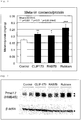
- melanin that had been isolated from MNT-1 cells was added, and after 24 hours, the amount of melanin in the cells was observed, while at the same time, quantification of melanin and quantification of the expression of melanosome protein (Pmel17) based on a Western Blotting method were carried out.
- the cell culture plate was washed three times with PBS, and 120 ⁇ L of 2 M NaOH was added to each well. Subsequently, the cells were lysed therein at 100°C. The plate was centrifuged, the absorbance (405 nm) of the supernatant thus obtained was measured, and thus the amount of melanin was calculated. The amount of melanin was submitted to an evaluation after being compensated with respect to the amount of protein in each well determined by a standard method.
- the cell culture plate (12 wells) was washed with PBS, and then 0.1 mL of RIPA buffer (manufactured by Sigma-Aldrich Company) was added to the wells.
- RIPA buffer manufactured by Sigma-Aldrich Company
- the cells were collected, and the cells were crushed by ultrasonication. Subsequently, the crushed cells were centrifuged at 15,000 rpm for 15 minutes, the supernatant was subjected to protein quantification, and then the supernatant was subjected to SDS-PAGE (12.5% gel) according to a standard method.
- a primary antibody used for the experiment was anti-Pmel17 antibody (HMG45, 1:500, manufactured by DAKO Corp.).
- a secondary antibody used for the experiment was anti-mouse IgG peroxidase linked F(AB')2 fragment (GE Healthcare Bioscience), which was used after diluting 5000 times. Thereafter, color development was carried out by using ECL Plus Western Blotting detection reagents (GE Healthcare Bioscience), and the protein was visualized by using LAS4000 (GE Healthcare Bioscience). Expression of ⁇ -actin as an internal standard was evaluated by using monoclonal antibody specific for ⁇ -actin manufactured by Sigma-Aldrich Company.
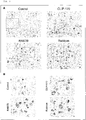
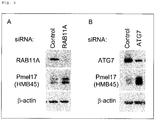
- FIG. 1 to FIG. 3 The results are presented in FIG. 1 to FIG. 3 .
- a change in the localization of melanin in cells was observed together with an increase in the accumulation of melanin in cells ( FIG. 1 ).
- FIG. 2 results of melanin quantification
- FIG. 2 an analysis
- the change in the expression of the skin color-controlling gene of the present disclosure caused by the melanin (melanosome) incorporated into keratinocytes was investigated. Expression of RAB7B protein and mRNA after 24 hours from the addition of melanin will be described as an example.
- Protein expression was evaluated as follows. The culture plate was washed with PBS after 24 hours from the addition of melanin, and then cells were collected by using 0.1 mL of RIPA buffer (manufactured by Sigma-Aldrich Company) and were crushed by ultrasonication. Thereafter, the crushed cells were centrifuged at 15,000 rpm for 15 minutes, the supernatant was subjected to protein quantification, and then the supernatant was subjected to SDS-PAGE (12.5% gel) according to a standard method. A primary antibody used for the experiment was anti-RAB7B antibody (1:1000, manufactured by Abnova Corp.).
- a secondary antibody used for the experiment was anti-mouse IgG peroxidase linked F(AB')2 fragment (GE Healthcare Bioscience), which was diluted 5000 times. Thereafter, color development was carried out by using ECL Plus Western Blotting detection reagents (GE Healthcare Bioscience), and the protein was visualized by using LAS4000 (GE Healthcare Bioscience). As an internal standard, expression of ⁇ -actin was evaluated by using monoclonal antibody specific for ⁇ -actin manufactured by Sigma-Aldrich Company.
- RNA-to-cDNA Kit a standard method by using an RNeasy (registered trademark) Mini Kit (manufactured by Qiagen N.V.).
- a cDNA was synthesized by a reverse transcription reaction by using 1 ⁇ g of the total RNA thus extracted.
- the reverse transcription reaction was carried out according to a standard method, in a Peltier Thermal cycler manufactured by MJ Research, Inc. by using a High Capacity RNA-to-cDNA Kit (manufactured by Life Technologies, Inc.).
- NHEK Normal human infant epidermis-derived epidermal cells
- Epilife registered trademark
- Humedia-KG2 an additive for medium
- siRNAs of RAB11A gene, ATG7 gene, and a control were purchased from Ambion Silencer Select siRNA (Ambion, Life Technologies), and each of the siRNA's was added to the mixture such that the final concentration of the transfection reagent would be 10 nM. The mixture was stirred and then left to stand at room temperature for 10 minutes, and thus siRNA-transfection reagent complexes were prepared. Each of the reagent complexes was added to each well, and then the plate was gently shaken to make the content of the wells uniform. On the next day, the medium was exchanged. It was confirmed that the expression of the target gene and/or the relevant molecule was specifically suppressed by introduction of siRNA.
- the correlation between the expression of RAB11A gene and the color of skin was investigated.
- the entirety of this test was approved by IRB (IntegReview), and was carried out after providing an appropriate explanation and obtaining an agreement.
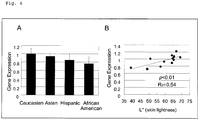
- RNA was extracted from the skin tissues the gene expression was comprehensively analyzed by a DNA microarray method using a GeneChip (Human Genome U133 plus 2.0 array) of Affymetrix, Inc., and also, the correlation between the gene expression and the intensity of skin color (lightness L* value) was investigated. The results are presented in FIG. 6 .
- the L* value which is an index of the lightness of the color of skin, increased in the order of African-American, Hispanic, Asian, and Caucasian, and racial differences were confirmed (data not illustrated). Furthermore, from the results of a DNA microarray analysis, data for the expression of RAB11A gene were extracted, and it was found that RAB11A gene was expressed at an increasing level in the order of African-American, Hispanic, and Asian, as compared with Caucasian ( FIG. 6A ). Furthermore, a high correlation between the amount of expression of RAB11A gene and the L* value was confirmed ( FIG. 6B ), and it was found that as the intensity of skin color was lighter, the amount of gene expression was larger.
Landscapes
- Health & Medical Sciences (AREA)
- Life Sciences & Earth Sciences (AREA)
- Chemical & Material Sciences (AREA)
- Engineering & Computer Science (AREA)
- Biomedical Technology (AREA)
- Molecular Biology (AREA)
- General Health & Medical Sciences (AREA)
- Immunology (AREA)
- Organic Chemistry (AREA)
- Biochemistry (AREA)
- Bioinformatics & Cheminformatics (AREA)
- Biotechnology (AREA)
- Genetics & Genomics (AREA)
- Hematology (AREA)
- Urology & Nephrology (AREA)
- Zoology (AREA)
- Analytical Chemistry (AREA)
- Proteomics, Peptides & Aminoacids (AREA)
- Medicinal Chemistry (AREA)
- Physics & Mathematics (AREA)
- Microbiology (AREA)
- Wood Science & Technology (AREA)
- Cell Biology (AREA)
- Toxicology (AREA)
- Public Health (AREA)
- Animal Behavior & Ethology (AREA)
- Veterinary Medicine (AREA)
- Biophysics (AREA)
- General Engineering & Computer Science (AREA)
- Food Science & Technology (AREA)
- Tropical Medicine & Parasitology (AREA)
- Pathology (AREA)
- General Physics & Mathematics (AREA)
- Dermatology (AREA)
- Gastroenterology & Hepatology (AREA)
- Chemical Kinetics & Catalysis (AREA)
- Pharmacology & Pharmacy (AREA)
- Nuclear Medicine, Radiotherapy & Molecular Imaging (AREA)
- General Chemical & Material Sciences (AREA)
- Epidemiology (AREA)
Claims (14)
- In vivo-Verfahren zum Bewerten und/oder Auswählen eines Agens zum Regulieren der Melaninmenge in Keratinocyten, wobei das Verfahren umfasst:Verabreichen einer Testsubstanz an die Keratinocyten;Messen einer Veränderung in der Expression mindestens eines Gens ausgewählt aus der Gruppe bestehend aus ATG7, RAB11A, CLIP-170, Rubicon und RAB7B oder in der Expression oder Aktivität mindestens eines der Moleküle, die von den Genen in den Keratinocyten codiert werden;Bewerten der Wirkung der Regulierung der Melaninmenge durch die Testsubstanz auf der Grundlage der Messergebnisse; undAuswählen der Testsubstanz als ein Agens zum Regulieren der Melaninmenge in Keratinocyten auf der Grundlage der Bewertungsergebnisse, wobei, wenn die Expression des Gens oder die Expression oder die Aktivität des Moleküls unterdrückt wird, die Testsubstanz als ein Agens zum Erhöhen der Melaninmenge in Keratinocyten ausgewählt wird, oderwobei, wenn die Expression des Gens oder die Expression oder die Aktivität des Moleküls verstärkt wird, die Testsubstanz als ein Agens zum Verringern der Melaninmenge in Keratinocyten ausgewählt wird.
- Verfahren nach Anspruch 1, wobei das Verfahren zum Bewerten und/oder Auswählen eines Agens zur Kontrolle der Haut- oder Haarfarbe ist, wobei das Verfahren umfasst:Verabreichen einer Testsubstanz an Keratinocyten;Messen einer Veränderung in der Expression mindestens eines Gens ausgewählt aus der Gruppe bestehend aus ATG7, RAB11A, CLIP-170, Rubicon und RAB7B oder in der Expression oder Aktivität mindestens eines der Moleküle, die von den Genen in den Keratinocyten codiert werden;Bewerten der Wirkung der Kontrolle der Haut- oder Haarfarbe durch die Testsubstanz auf der Grundlage der Messergebnisse; undAuswählen der Testsubstanz als ein Agens zum Kontrollieren der Haut- oder Haarfarbe auf der Grundlage der Bewertungsergebnisse, wobei, wenn die Expression des Gens oder die Expression oder die Aktivität des Moleküls unterdrückt wird, die Testsubstanz die Bewertung erhält, dass sie eine Nachdunklungswirkung auf die Haut- oder Haarfarbe hat, und als ein Agens zum Nachdunkeln der Haut- oder Haarfarbe ausgewählt wird, oderwobei, wenn die Expression des Gens oder die Expression oder die Aktivität des Moleküls verstärkt wird, die Testsubstanz die Bewertung erhält, dass sie eine Aufhellungswirkung auf die Haut- oder Haarfarbe hat, und als ein Agens zum Aufhellen der Haut- oder Haarfarbe ausgewählt wird.
- Nicht-therapeutisches Verfahren zum Regulieren der Melaninmenge in Keratinocyten, wobei das Verfahren das Regulieren der Expression des Gens RAB11A oder der Expression oder der Aktivität des von dem Gen codierten Moleküls in Keratinocyten umfasst, wobei die Regulierung der Melaninmenge erwünscht ist.
- Verfahren nach Anspruch 3, wobei die Expression des Gens oder die Expression oder die Aktivität des Moleküls unterdrückt wird und dadurch die Melaninmenge in Keratinocyten erhöht wird.
- Verfahren nach Anspruch 3, wobei die Expression des Gens oder die Expression oder die Aktivität des Moleküls verstärkt wird und dadurch die Melaninmenge in Keratinocyten verringert wird.
- Verfahren nach Anspruch 3, wobei das Verfahren zum Kontrollieren der Haut- oder Haarfarbe bei einer Testperson ist, wobei das Verfahren das Regulieren der Expression des Gens RAB11A oder der Expression oder die Aktivität des von dem Gen codierten Moleküls in Keratinocyten einer Testperson umfasst, die die Kontrolle von Haut- oder Haarfarbe wünscht.
- Verfahren nach Anspruch 6, wobei die Expression des Gens oder die Expression oder die Aktivität des Moleküls in Keratinocyten der Haut unterdrückt wird und die Hautfarbe dunkler wird.
- Verfahren nach Anspruch 6, wobei die Expression des Gens oder die Expression oder die Aktivität des Moleküls in Keratinocyten der Haut verstärkt wird und die Hautfarbe heller wird.
- Verfahren nach Anspruch 6, wobei die Expression des Gens oder die Expression oder die Aktivität des Moleküls in Keratinocyten der Haarfollikel unterdrückt wird und die Haarfarbe dunkler wird.
- Verfahren nach Anspruch 6, wobei die Expression des Gens oder die Expression oder die Aktivität des Moleküls in Keratinocyten der Haarfollikel verstärkt wird und die Haarfarbe heller wird.
- Nicht-therapeutische Verwendung des Gens RAB11A oder des von dem Gen codierten Moleküls zum Regulieren der Melaninmenge in Keratinocyten.
- Verwendung nach Anspruch 11 zum Erhöhen oder Verringern der Melaninmenge.
- Verwendung nach Anspruch 11, wobei die Verwendung zum Kontrollieren der Farbe von Haut oder Haar dient.
- Verwendung nach Anspruch 13 zum Nachdunkeln oder Aufhellen der Haut- oder Haarfarbe.
Applications Claiming Priority (2)
| Application Number | Priority Date | Filing Date | Title |
|---|---|---|---|
| JP2010245039 | 2010-11-01 | ||
| PCT/JP2011/075064 WO2012060323A1 (ja) | 2010-11-01 | 2011-10-31 | 皮膚及び毛髪色制御因子 |
Publications (3)
| Publication Number | Publication Date |
|---|---|
| EP2636737A1 EP2636737A1 (de) | 2013-09-11 |
| EP2636737A4 EP2636737A4 (de) | 2014-05-07 |
| EP2636737B1 true EP2636737B1 (de) | 2018-01-17 |
Family
ID=46024437
Family Applications (1)
| Application Number | Title | Priority Date | Filing Date |
|---|---|---|---|
| EP11837973.4A Active EP2636737B1 (de) | 2010-11-01 | 2011-10-31 | Kontrollfaktor für haut- und haarfarbe |
Country Status (5)
| Country | Link |
|---|---|
| US (2) | US9561167B2 (de) |
| EP (1) | EP2636737B1 (de) |
| JP (1) | JP5937515B2 (de) |
| CN (1) | CN103180441B (de) |
| WO (1) | WO2012060323A1 (de) |
Families Citing this family (7)
| Publication number | Priority date | Publication date | Assignee | Title |
|---|---|---|---|---|
| US8927517B2 (en) | 2012-04-27 | 2015-01-06 | Kao Corporation | Factors controlling skin and hair color |
| JP2017169540A (ja) * | 2016-03-25 | 2017-09-28 | ホーユー株式会社 | 白毛化抑制剤のスクリーニング方法及びスクリーニングキット |
| JP6736364B2 (ja) * | 2016-06-09 | 2020-08-05 | 株式会社ナリス化粧品 | シミ改善成分のスクリーニング方法 |
| KR102256277B1 (ko) | 2017-07-10 | 2021-05-27 | 동국대학교 산학협력단 | Rab5A 억제제를 유효성분으로 함유하는 피부 색소형성 억제용 조성물 |
| CN108998537A (zh) * | 2018-07-27 | 2018-12-14 | 珠海伊斯佳科技股份有限公司 | 一种基于肤色相关基因检测制定个性化护肤方案的方法 |
| JP7473331B2 (ja) * | 2019-07-10 | 2024-04-23 | 株式会社ミルボン | 評価方法及び製造方法 |
| JP7623827B2 (ja) * | 2020-12-18 | 2025-01-29 | 花王株式会社 | 睡眠状態マーカー及びそれを用いた睡眠状態の検出方法 |
Family Cites Families (7)
| Publication number | Priority date | Publication date | Assignee | Title |
|---|---|---|---|---|
| JPS5037515B1 (de) | 1968-03-02 | 1975-12-03 | ||
| US7652107B2 (en) | 2005-10-31 | 2010-01-26 | Sabic Innovative Plastics Ip B.V. | Flame resistant polymer blends |
| CN101969915B (zh) | 2008-03-11 | 2014-07-09 | 株式会社资生堂 | 皮肤美白方法以及皮肤斑形成抑制和/或除去因子的筛选方法 |
| PT2331057T (pt) | 2008-09-10 | 2019-06-25 | Univ Bradford | Composições e métodos para modulação da pigmentação da pele |
| JP5220791B2 (ja) | 2010-03-29 | 2013-06-26 | 株式会社マンダム | メラニン産生誘導剤および被験物質の評価方法 |
| US20120034613A1 (en) * | 2010-08-03 | 2012-02-09 | Nse Products, Inc. | Apparatus and Method for Testing Relationships Between Gene Expression and Physical Appearance of Skin |
| US8927517B2 (en) | 2012-04-27 | 2015-01-06 | Kao Corporation | Factors controlling skin and hair color |
-
2011
- 2011-10-31 WO PCT/JP2011/075064 patent/WO2012060323A1/ja not_active Ceased
- 2011-10-31 CN CN201180051267.8A patent/CN103180441B/zh active Active
- 2011-10-31 JP JP2012541850A patent/JP5937515B2/ja active Active
- 2011-10-31 EP EP11837973.4A patent/EP2636737B1/de active Active
- 2011-10-31 US US13/882,669 patent/US9561167B2/en active Active
-
2016
- 2016-11-21 US US15/357,459 patent/US10793854B2/en active Active
Non-Patent Citations (1)
| Title |
|---|
| None * |
Also Published As
| Publication number | Publication date |
|---|---|
| CN103180441B (zh) | 2015-08-05 |
| EP2636737A1 (de) | 2013-09-11 |
| EP2636737A4 (de) | 2014-05-07 |
| US9561167B2 (en) | 2017-02-07 |
| US20170067054A1 (en) | 2017-03-09 |
| JPWO2012060323A1 (ja) | 2014-05-12 |
| US20130243713A1 (en) | 2013-09-19 |
| WO2012060323A1 (ja) | 2012-05-10 |
| JP5937515B2 (ja) | 2016-06-22 |
| US10793854B2 (en) | 2020-10-06 |
| CN103180441A (zh) | 2013-06-26 |
Similar Documents
| Publication | Publication Date | Title |
|---|---|---|
| US10793854B2 (en) | Skin and hair color-controlling factor | |
| Flemming et al. | miRNA-and cytokine-associated extracellular vesicles mediate squamous cell carcinomas | |
| Nallasamy et al. | Steroid hormones are key modulators of tissue mechanical function via regulation of collagen and elastic fibers | |
| Roh et al. | Dermal papilla-induced hair differentiation of adult epithelial stem cells from human skin | |
| CN104254615B (zh) | 皮肤和毛发颜色控制因子 | |
| Kim et al. | Cadherin 11, a miR-675 target, induces N-cadherin expression and epithelial–mesenchymal transition in melasma | |
| Yoshida-Amano et al. | Essential role of RAB27A in determining constitutive human skin color | |
| Strömberg et al. | Transcriptional profiling of melanocytes from patients with vitiligo vulgaris | |
| Murase et al. | Cooperation of endothelin-1 signaling with melanosomes plays a role in developing and/or maintaining human skin hyperpigmentation | |
| Yamamura et al. | Immunolocalization of murine type VI 3β-hydroxysteroid dehydrogenase in the adrenal gland, testis, skin, and placenta | |
| Chen et al. | FOXA1-induced LINC01207 facilitates head and neck squamous cell carcinoma via up-regulation of TNRC6B | |
| TWI528034B (zh) | Screening method of dry skin improving agent due to allergic dermatitis caused by the activity of bleomycin hydrolytic enzyme as an index | |
| Nishida et al. | The glycoprotein GPNMB protects against oxidative stress through enhanced PI3K/AKT signaling in epidermal keratinocytes | |
| Lee et al. | Retinol dehydrogenase 10 but not retinol/sterol dehydrogenase (s) regulates the expression of retinoic acid-responsive genes in human transgenic skin raft culture | |
| KR102212623B1 (ko) | 캐드헤린11 또는 n-캐드헤린 발현을 조절하는 피부 개선 물질 및 이를 스크리닝하는 방법 | |
| Braun et al. | Novel roles of NM23 proteins in skin homeostasis, repair and disease | |
| Piao et al. | Differentiation-dependent expression of NADP (H): quinone oxidoreductase-1 via NF-E2 related factor-2 activation in human epidermal keratinocytes | |
| Cui et al. | SPRY1 deficiency in keratinocytes induces follicular melanocyte stem cell migration to the epidermis through p53/stem cell factor/C-KIT signaling | |
| CN107429284A (zh) | 皮脂腺或毛囊选择性雄激素受体活性控制剂的评价或选择方法 | |
| Yamada et al. | Oculocutaneous albinism type 3: A Japanese girl with novel mutations in TYRP1 gene | |
| KR20060128019A (ko) | 자외선 유도 세포자멸사의 억제 방법 | |
| Zhang et al. | Correlation of deregulated like-acetylglucosaminyl transferase and aberrant α-dystroglycan expression with human tongue cancer metastasis | |
| Yang et al. | Effects of hypoxia on mRNA expression of housekeeping genes in rat brain tissue and primary cultured neural cells | |
| Ruetze et al. | Damage at the root of cell renewal—UV sensitivity of human epidermal stem cells | |
| Millioni et al. | Caldesmon over-expression in type 1 diabetic nephropathy |
Legal Events
| Date | Code | Title | Description |
|---|---|---|---|
| PUAI | Public reference made under article 153(3) epc to a published international application that has entered the european phase |
Free format text: ORIGINAL CODE: 0009012 |
|
| 17P | Request for examination filed |
Effective date: 20130502 |
|
| AK | Designated contracting states |
Kind code of ref document: A1 Designated state(s): AL AT BE BG CH CY CZ DE DK EE ES FI FR GB GR HR HU IE IS IT LI LT LU LV MC MK MT NL NO PL PT RO RS SE SI SK SM TR |
|
| DAX | Request for extension of the european patent (deleted) | ||
| A4 | Supplementary search report drawn up and despatched |
Effective date: 20140404 |
|
| RIC1 | Information provided on ipc code assigned before grant |
Ipc: A61P 17/00 20060101ALI20140331BHEP Ipc: C12Q 1/68 20060101ALI20140331BHEP Ipc: C12N 15/09 20060101AFI20140331BHEP Ipc: A61P 43/00 20060101ALI20140331BHEP Ipc: A61K 48/00 20060101ALI20140331BHEP |
|
| 17Q | First examination report despatched |
Effective date: 20160223 |
|
| GRAP | Despatch of communication of intention to grant a patent |
Free format text: ORIGINAL CODE: EPIDOSNIGR1 |
|
| INTG | Intention to grant announced |
Effective date: 20170809 |
|
| GRAS | Grant fee paid |
Free format text: ORIGINAL CODE: EPIDOSNIGR3 |
|
| GRAA | (expected) grant |
Free format text: ORIGINAL CODE: 0009210 |
|
| AK | Designated contracting states |
Kind code of ref document: B1 Designated state(s): AL AT BE BG CH CY CZ DE DK EE ES FI FR GB GR HR HU IE IS IT LI LT LU LV MC MK MT NL NO PL PT RO RS SE SI SK SM TR |
|
| RAP1 | Party data changed (applicant data changed or rights of an application transferred) |
Owner name: KAO CORPORATION |
|
| REG | Reference to a national code |
Ref country code: GB Ref legal event code: FG4D |
|
| REG | Reference to a national code |
Ref country code: CH Ref legal event code: EP |
|
| REG | Reference to a national code |
Ref country code: IE Ref legal event code: FG4D |
|
| REG | Reference to a national code |
Ref country code: DE Ref legal event code: R096 Ref document number: 602011045192 Country of ref document: DE Ref country code: AT Ref legal event code: REF Ref document number: 964443 Country of ref document: AT Kind code of ref document: T Effective date: 20180215 |
|
| REG | Reference to a national code |
Ref country code: NL Ref legal event code: MP Effective date: 20180117 |
|
| REG | Reference to a national code |
Ref country code: LT Ref legal event code: MG4D |
|
| REG | Reference to a national code |
Ref country code: AT Ref legal event code: MK05 Ref document number: 964443 Country of ref document: AT Kind code of ref document: T Effective date: 20180117 |
|
| PG25 | Lapsed in a contracting state [announced via postgrant information from national office to epo] |
Ref country code: NL Free format text: LAPSE BECAUSE OF FAILURE TO SUBMIT A TRANSLATION OF THE DESCRIPTION OR TO PAY THE FEE WITHIN THE PRESCRIBED TIME-LIMIT Effective date: 20180117 |
|
| PG25 | Lapsed in a contracting state [announced via postgrant information from national office to epo] |
Ref country code: HR Free format text: LAPSE BECAUSE OF FAILURE TO SUBMIT A TRANSLATION OF THE DESCRIPTION OR TO PAY THE FEE WITHIN THE PRESCRIBED TIME-LIMIT Effective date: 20180117 Ref country code: NO Free format text: LAPSE BECAUSE OF FAILURE TO SUBMIT A TRANSLATION OF THE DESCRIPTION OR TO PAY THE FEE WITHIN THE PRESCRIBED TIME-LIMIT Effective date: 20180417 Ref country code: FI Free format text: LAPSE BECAUSE OF FAILURE TO SUBMIT A TRANSLATION OF THE DESCRIPTION OR TO PAY THE FEE WITHIN THE PRESCRIBED TIME-LIMIT Effective date: 20180117 Ref country code: CY Free format text: LAPSE BECAUSE OF FAILURE TO SUBMIT A TRANSLATION OF THE DESCRIPTION OR TO PAY THE FEE WITHIN THE PRESCRIBED TIME-LIMIT Effective date: 20180117 Ref country code: ES Free format text: LAPSE BECAUSE OF FAILURE TO SUBMIT A TRANSLATION OF THE DESCRIPTION OR TO PAY THE FEE WITHIN THE PRESCRIBED TIME-LIMIT Effective date: 20180117 Ref country code: LT Free format text: LAPSE BECAUSE OF FAILURE TO SUBMIT A TRANSLATION OF THE DESCRIPTION OR TO PAY THE FEE WITHIN THE PRESCRIBED TIME-LIMIT Effective date: 20180117 |
|
| PG25 | Lapsed in a contracting state [announced via postgrant information from national office to epo] |
Ref country code: LV Free format text: LAPSE BECAUSE OF FAILURE TO SUBMIT A TRANSLATION OF THE DESCRIPTION OR TO PAY THE FEE WITHIN THE PRESCRIBED TIME-LIMIT Effective date: 20180117 Ref country code: AT Free format text: LAPSE BECAUSE OF FAILURE TO SUBMIT A TRANSLATION OF THE DESCRIPTION OR TO PAY THE FEE WITHIN THE PRESCRIBED TIME-LIMIT Effective date: 20180117 Ref country code: RS Free format text: LAPSE BECAUSE OF FAILURE TO SUBMIT A TRANSLATION OF THE DESCRIPTION OR TO PAY THE FEE WITHIN THE PRESCRIBED TIME-LIMIT Effective date: 20180117 Ref country code: IS Free format text: LAPSE BECAUSE OF FAILURE TO SUBMIT A TRANSLATION OF THE DESCRIPTION OR TO PAY THE FEE WITHIN THE PRESCRIBED TIME-LIMIT Effective date: 20180517 Ref country code: SE Free format text: LAPSE BECAUSE OF FAILURE TO SUBMIT A TRANSLATION OF THE DESCRIPTION OR TO PAY THE FEE WITHIN THE PRESCRIBED TIME-LIMIT Effective date: 20180117 Ref country code: BG Free format text: LAPSE BECAUSE OF FAILURE TO SUBMIT A TRANSLATION OF THE DESCRIPTION OR TO PAY THE FEE WITHIN THE PRESCRIBED TIME-LIMIT Effective date: 20180417 Ref country code: GR Free format text: LAPSE BECAUSE OF FAILURE TO SUBMIT A TRANSLATION OF THE DESCRIPTION OR TO PAY THE FEE WITHIN THE PRESCRIBED TIME-LIMIT Effective date: 20180418 Ref country code: PL Free format text: LAPSE BECAUSE OF FAILURE TO SUBMIT A TRANSLATION OF THE DESCRIPTION OR TO PAY THE FEE WITHIN THE PRESCRIBED TIME-LIMIT Effective date: 20180117 |
|
| REG | Reference to a national code |
Ref country code: FR Ref legal event code: PLFP Year of fee payment: 8 |
|
| REG | Reference to a national code |
Ref country code: DE Ref legal event code: R097 Ref document number: 602011045192 Country of ref document: DE |
|
| PG25 | Lapsed in a contracting state [announced via postgrant information from national office to epo] |
Ref country code: AL Free format text: LAPSE BECAUSE OF FAILURE TO SUBMIT A TRANSLATION OF THE DESCRIPTION OR TO PAY THE FEE WITHIN THE PRESCRIBED TIME-LIMIT Effective date: 20180117 Ref country code: RO Free format text: LAPSE BECAUSE OF FAILURE TO SUBMIT A TRANSLATION OF THE DESCRIPTION OR TO PAY THE FEE WITHIN THE PRESCRIBED TIME-LIMIT Effective date: 20180117 Ref country code: IT Free format text: LAPSE BECAUSE OF FAILURE TO SUBMIT A TRANSLATION OF THE DESCRIPTION OR TO PAY THE FEE WITHIN THE PRESCRIBED TIME-LIMIT Effective date: 20180117 Ref country code: EE Free format text: LAPSE BECAUSE OF FAILURE TO SUBMIT A TRANSLATION OF THE DESCRIPTION OR TO PAY THE FEE WITHIN THE PRESCRIBED TIME-LIMIT Effective date: 20180117 |
|
| PLBE | No opposition filed within time limit |
Free format text: ORIGINAL CODE: 0009261 |
|
| STAA | Information on the status of an ep patent application or granted ep patent |
Free format text: STATUS: NO OPPOSITION FILED WITHIN TIME LIMIT |
|
| PG25 | Lapsed in a contracting state [announced via postgrant information from national office to epo] |
Ref country code: SM Free format text: LAPSE BECAUSE OF FAILURE TO SUBMIT A TRANSLATION OF THE DESCRIPTION OR TO PAY THE FEE WITHIN THE PRESCRIBED TIME-LIMIT Effective date: 20180117 Ref country code: SK Free format text: LAPSE BECAUSE OF FAILURE TO SUBMIT A TRANSLATION OF THE DESCRIPTION OR TO PAY THE FEE WITHIN THE PRESCRIBED TIME-LIMIT Effective date: 20180117 Ref country code: CZ Free format text: LAPSE BECAUSE OF FAILURE TO SUBMIT A TRANSLATION OF THE DESCRIPTION OR TO PAY THE FEE WITHIN THE PRESCRIBED TIME-LIMIT Effective date: 20180117 Ref country code: DK Free format text: LAPSE BECAUSE OF FAILURE TO SUBMIT A TRANSLATION OF THE DESCRIPTION OR TO PAY THE FEE WITHIN THE PRESCRIBED TIME-LIMIT Effective date: 20180117 |
|
| 26N | No opposition filed |
Effective date: 20181018 |
|
| PG25 | Lapsed in a contracting state [announced via postgrant information from national office to epo] |
Ref country code: SI Free format text: LAPSE BECAUSE OF FAILURE TO SUBMIT A TRANSLATION OF THE DESCRIPTION OR TO PAY THE FEE WITHIN THE PRESCRIBED TIME-LIMIT Effective date: 20180117 |
|
| REG | Reference to a national code |
Ref country code: CH Ref legal event code: PL |
|
| REG | Reference to a national code |
Ref country code: BE Ref legal event code: MM Effective date: 20181031 |
|
| PG25 | Lapsed in a contracting state [announced via postgrant information from national office to epo] |
Ref country code: LU Free format text: LAPSE BECAUSE OF NON-PAYMENT OF DUE FEES Effective date: 20181031 Ref country code: MC Free format text: LAPSE BECAUSE OF FAILURE TO SUBMIT A TRANSLATION OF THE DESCRIPTION OR TO PAY THE FEE WITHIN THE PRESCRIBED TIME-LIMIT Effective date: 20180117 |
|
| REG | Reference to a national code |
Ref country code: IE Ref legal event code: MM4A |
|
| PG25 | Lapsed in a contracting state [announced via postgrant information from national office to epo] |
Ref country code: LI Free format text: LAPSE BECAUSE OF NON-PAYMENT OF DUE FEES Effective date: 20181031 Ref country code: CH Free format text: LAPSE BECAUSE OF NON-PAYMENT OF DUE FEES Effective date: 20181031 Ref country code: BE Free format text: LAPSE BECAUSE OF NON-PAYMENT OF DUE FEES Effective date: 20181031 |
|
| PG25 | Lapsed in a contracting state [announced via postgrant information from national office to epo] |
Ref country code: IE Free format text: LAPSE BECAUSE OF NON-PAYMENT OF DUE FEES Effective date: 20181031 |
|
| PG25 | Lapsed in a contracting state [announced via postgrant information from national office to epo] |
Ref country code: MT Free format text: LAPSE BECAUSE OF NON-PAYMENT OF DUE FEES Effective date: 20181031 |
|
| PG25 | Lapsed in a contracting state [announced via postgrant information from national office to epo] |
Ref country code: TR Free format text: LAPSE BECAUSE OF FAILURE TO SUBMIT A TRANSLATION OF THE DESCRIPTION OR TO PAY THE FEE WITHIN THE PRESCRIBED TIME-LIMIT Effective date: 20180117 |
|
| PG25 | Lapsed in a contracting state [announced via postgrant information from national office to epo] |
Ref country code: PT Free format text: LAPSE BECAUSE OF FAILURE TO SUBMIT A TRANSLATION OF THE DESCRIPTION OR TO PAY THE FEE WITHIN THE PRESCRIBED TIME-LIMIT Effective date: 20180117 |
|
| PG25 | Lapsed in a contracting state [announced via postgrant information from national office to epo] |
Ref country code: HU Free format text: LAPSE BECAUSE OF FAILURE TO SUBMIT A TRANSLATION OF THE DESCRIPTION OR TO PAY THE FEE WITHIN THE PRESCRIBED TIME-LIMIT; INVALID AB INITIO Effective date: 20111031 Ref country code: MK Free format text: LAPSE BECAUSE OF NON-PAYMENT OF DUE FEES Effective date: 20180117 |
|
| P01 | Opt-out of the competence of the unified patent court (upc) registered |
Effective date: 20230522 |
|
| PGFP | Annual fee paid to national office [announced via postgrant information from national office to epo] |
Ref country code: GB Payment date: 20250911 Year of fee payment: 15 |
|
| PGFP | Annual fee paid to national office [announced via postgrant information from national office to epo] |
Ref country code: FR Payment date: 20250908 Year of fee payment: 15 |
|
| PGFP | Annual fee paid to national office [announced via postgrant information from national office to epo] |
Ref country code: DE Payment date: 20250902 Year of fee payment: 15 |