EP2637112A1 - Réorganisation en ligne de bases de données en mémoire hybride - Google Patents
Réorganisation en ligne de bases de données en mémoire hybride Download PDFInfo
- Publication number
- EP2637112A1 EP2637112A1 EP13157904.7A EP13157904A EP2637112A1 EP 2637112 A1 EP2637112 A1 EP 2637112A1 EP 13157904 A EP13157904 A EP 13157904A EP 2637112 A1 EP2637112 A1 EP 2637112A1
- Authority
- EP
- European Patent Office
- Prior art keywords
- workload
- layout
- costs
- new
- tables
- Prior art date
- Legal status (The legal status is an assumption and is not a legal conclusion. Google has not performed a legal analysis and makes no representation as to the accuracy of the status listed.)
- Granted
Links
Images


Classifications
-
- G—PHYSICS
- G06—COMPUTING OR CALCULATING; COUNTING
- G06F—ELECTRIC DIGITAL DATA PROCESSING
- G06F16/00—Information retrieval; Database structures therefor; File system structures therefor
- G06F16/20—Information retrieval; Database structures therefor; File system structures therefor of structured data, e.g. relational data
- G06F16/21—Design, administration or maintenance of databases
- G06F16/211—Schema design and management
- G06F16/213—Schema design and management with details for schema evolution support
-
- G—PHYSICS
- G06—COMPUTING OR CALCULATING; COUNTING
- G06F—ELECTRIC DIGITAL DATA PROCESSING
- G06F16/00—Information retrieval; Database structures therefor; File system structures therefor
- G06F16/20—Information retrieval; Database structures therefor; File system structures therefor of structured data, e.g. relational data
- G06F16/21—Design, administration or maintenance of databases
-
- G—PHYSICS
- G06—COMPUTING OR CALCULATING; COUNTING
- G06F—ELECTRIC DIGITAL DATA PROCESSING
- G06F16/00—Information retrieval; Database structures therefor; File system structures therefor
- G06F16/20—Information retrieval; Database structures therefor; File system structures therefor of structured data, e.g. relational data
-
- G—PHYSICS
- G06—COMPUTING OR CALCULATING; COUNTING
- G06F—ELECTRIC DIGITAL DATA PROCESSING
- G06F16/00—Information retrieval; Database structures therefor; File system structures therefor
- G06F16/20—Information retrieval; Database structures therefor; File system structures therefor of structured data, e.g. relational data
- G06F16/21—Design, administration or maintenance of databases
- G06F16/217—Database tuning
Definitions
- the present invention relates to a computer-implemented database online reorganization method for dynamically adapting a database layout of a database.
- Hybrid main-memory database systems-capable of storing data both in a horizontal (tuple store) and in a vertical (column store) manner are gaining traction due to their flexibility and high efficiency.
- the problem of how to store data in such systems i.e., of picking the right physical layout for the data and workload at hand, is central to those systems and is usually solved offline. While determining the optimal layout in advance for a given database workload is possible, it typically leads to sub-optimal layouts for a large fraction of enterprise application databases where the workload is constantly changing or exhibits some periodic behavior.
- Hybrid, in-memory databases provide significant advantages to many modern enterprise applications due to their flexibility (they can store data horizontally or vertically depending on the workload) and their high-efficiency. Exploiting sequential access as often as possible and optimizing the layout to match the application workload is essential to optimize such systems.
- the first dimension defines categories of reorganization like tasks involving conversion between indexing and hashing or restoration of clustering.
- the second dimension defines issues of reorganization like the use of partitions. In this paper we only consider the second dimension. Furthermore for our reorganization framework we consider database reorganization as a reformatting and restructuring operation without modifying the content itself, as stated by Sockut and lyer in [G. H. Sockut and B. R. lyer. Online reorganization of databases. ACM Comput. Surv., 41 (3), 2009 ].
- database reorganization can sometimes refer to changing the logical structure of the data by adding or removing new attributes to a given table.
- schema evolution [ V. M. Markowitz and J. A. Makowsky. Incremental Reorganization of Relational Databases. In VLDB, pages 127-135. Morgan Kaufmann, 1987 ] and are not the focus of the present work.
- Data degeneration is not covered by our approach since HYRISE cyclically performs a recompression operation, see [ J. Krüger, C. Kim, M. Grund, N. Satish, D. Schwalb, J. Chhugani, H. Plattner, P. Dubey, and A. Zeier.
- Recent research in database reorganization can be split in two different directions: The first approach only modifies the original relational table, while the second approach considers modifying secondary data structures as indices or materialized views.
- Beier et al. [ F. Beier, K. Stolze, and K.-U. Sattler. Online reorganization in read optimized MMDBS. In Proceedings of the ACM SIGMOD, pages 1125-1136. ACM, 2011 ] belongs to the first category and is closest to our work. They show how to implement online reorganization for main memory database systems focusing on data structure degradation. However, while our prototype supports a constant flow of single inserts or updates, the former system is optimized for batch updates. In a mixed workload scenario, immediate visibility is a strict requirement and it is thus not possible to optimize for batch updates only. In addition, HYRISE is build to be the central database instance, thus serving as the primary data source, while the ISAOPT of Beier et al. serves as a secondary data sink.
- a database layout of a database containing tables is dynamically adapted.
- the tables of the database are vertically partitioned into containers, each container containing one or more attributes of one table.
- a workload on a set of tables of the database is analyzed by a workload analysis tool of a computer system.
- the workload on the set of tables comprises queries that may be executed by a query processor of the computer system.
- a workload change of the workload is detected by the workload analysis tool of the computer system.
- a workload evaluation tool of the computer system analyses, if a new layout for the set of tables is considered optimal in view of the workload change, and decides, whether the layout of the set of tables is switched to the new layout.
- the workload analysis tool determines a difference query indicative of the difference between a new workload and a previous workload.
- the workload evaluation tool determines a set of containers consisting of all containers of the set of tables that are accessed by the difference query, a set of queries consisting of all queries of the previous workload that access any container of the set of containers, a set of attributes consisting of all attributes of the set of containers that are accessed by any query of the set of queries, and an optimal layout for the set of attributes.
- the workload evaluation tool determines a set of primary partitions consisting of all primary partitions for the set of tables and the workload costs of the new workload for every candidate partition of a first set of candidate partitions, the first set of candidate partitions consisting of all partitions obtained by merging two or more primary partitions of the set of primary partitions. Further a candidate partition is discarded from the first set of candidate partitions if the workload costs of the candidate partition is equal to or greater than the sum of the individual workload costs of the primary partitions forming the candidate partition, resulting in a second set of candidate partitions. The workload costs of the new workload for all possible layouts obtained by combining candidate partitions from the second set of candidate partitions are then determined.
- the workload evaluation tool determines the workload costs of the current layout, the workload costs of the layout that is considered optimal in view of the workload change, and the penalty costs as the difference between the workload costs of the current layout and the workload costs of the layout that is considered optimal in view of the workload change. Further, the transition costs for changing the current layout to the layout that is considered optimal in view of the workload change are determined. Weighted penalty costs are determined by multiplying the penalty costs with a weight factor and new accumulated penalty costs are determined by adding the weighted penalty costs to previously accumulated penalty cost. If the new accumulated penalty costs are larger than the transition costs, the switching of the layout of the set of tables from the current layout to the layout that is considered optimal in view of the workload change is triggered.
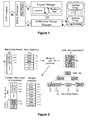
- the merge process can be triggered either by the user through executing a special plan operation or directly by the layout manager on a per table basis.
- the algorithm evaluates if a new layout is more suitable than the current one for the current workload.
- the optimal layout is determined efficiently using the incremental algorithm explained in Section 4.2.
- the incremental algorithm identifies a new optimal layout for the current workload, we have to identify whether the potential transition cost incurred by switching to the new layout can be amortized given our current knowledge of the workload. Therefore, we try to predict if the expected performance gains cover the transition cost. If this is not the case, the layout change will be deferred until the workload is re-evaluated. In case a delta merge has to be performed, we can systematically perform the layout change without further checks (since the table needs to be fully rewritten anyway).
- the system continues with its default behavior, resulting in a merge of the table if the delta buffer is large enough or a no-op otherwise.
- the decision algorithm enters a wait state until the end of the current epoch and the evaluation process is started again.
- the second approach is to keep ⁇ i as the current layout until TC are amortized. If now the layout changes in t 3 the penalty is only a fraction of the transition costs compared to the previous example. The layout ⁇ k will be adopted at t 11 resulting in a total overhead of 1000 if the layout does not change in between.
- the optimal layout for each epoch t based on the workload and calculate the delta costs between the current workload cost and the workload cost with the new layout. If the delta costs are larger than ⁇ we consider this layout as the new optimal one.
- the epoch weight is an incremental multiplier that is used in conjunction with the delta costs of the workload cost.
- the layout is calculated as the optimal layout, we increase the multiplier by one. For each epoch, we save this information in a buffer and trigger the transition to the new optimal layout, if the accumulated cost gets larger than the transition costs.
- the system keeps track of the number of epochs during which a given layout was optimal. When the system switches its layout back to an already known one, we use this value as the initial parameter of the epoch weight. If the workload cycle switches to a different layout, the system updates this value with the current number of epochs the layout was regarded as optimal.
- Figure 6 shows the result of this experiment and highlights the exponential behavior of our algorithm in this case.
- our system will observe the 1000 most important tables used by the application and each of those tables belongs to the category of the 100 primary partitions, we would need at least 1000 * 10s ⁇ 3h to compute the optimal layout for those tables.
- Using our incremental algorithm we can reduce the time to a point where it becomes acceptable to run the workload calculation on an almost continuous basis in the background.
- the baseline for the applicability of the incremental layout algorithm is its performance. Only when the performance is sufficient online database reorganization becomes possible. To compare the performance of our layout algorithm, we focus on non-amortized layout generation costs, however for our experiments we always report the amortized cost as well for completeness.
- the non-amortized costs to determine the best possible layout contain only those costs that will occur during a single epoch. Thus, these costs do not include the cost for determining the previous optimal layout, but only the cost to calculate the current optimal layout.
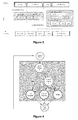
- Figure 8 shows the results of an experiment where each new query touches all attributes that were touched by the previous queries. This means that the first query touches only the first attribute, while the second query performs an operation on the first and the second attribute, until the last query that is added to the workload touches all attributes from 1 ... n where n is the number of primary partitions that are evaluated in this workload.
- n is the number of primary partitions that are evaluated in this workload.
- the change manager keeps track of the accumulated delta costs between the two layouts in a specified moving window.
- the accumulative buffer is only reset if the transition to a new layout is triggered.
- the number of epochs between two changes is chosen to be large enough to accumulate a performance gain even for the naive algorithm.
- the advantage of our history based algorithm is clearly that it keeps track of the last cycle when the layout was active and is able to switch back very fast to adopt this layout again.
- our history based epoch weight algorithm is able to outperform all the other approaches in all cases. Furthermore, the algorithm does not require any a priori knowledge from the database administrator (no tuning parameter). Our algorithm is able to adapt swiftly to important workload changes and provides the best performance both for continuously evolving workloads and for statically repeating workloads (as in day / night cycles).
- Table 3 Comparing the overhead costs (in cache misses) of the change manager including the transition costs, smaller is better Workload Na ⁇ ve Smoothed Cumulative Windows Simple Epoch Weight History Epoch Weight Kind # Workloads Two Step 2 2150 2350 1700 2050 1650 1650 Alternating 5064 5823080 9244680 7781600 8885640 8063800 5754310 Alternating, Random 30380 32636600 32563800 32801000 32188700 32563800 28793100 Random 13140 15083130 15868570 15636590 15522700 16446150 14869770 Best - - - - 1 4
- a “layout” of a relational table is a set of one or more vertical partitions.
- the set of attributes is a disjoint set, i.e., the attributes are partitioned into vertical partitions such that the vertical partitions do not overlap, i.e., each attribute belongs to one and only one partition.
- the layout of the partitions corresponds to the layout of the containers, that is, the physical arrangement of the data storage.
- the term "physical layout" may be used to describe the physical arrangement of the data in the containers in the storage medium.
- changing the layout refers to changing the physical arrangement of data in the storage medium.
- changing the layout to account for the workload improves the performance of the system by virtue of the changed physical arrangement.
- One of ordinary skill would thus not consider changing the schema of a table, or adding columns, or deleting columns, or rearranging columns, to be changing the layout, unless it is specifically described that the physical arrangement of the data is changed.
- column store refers to storing the data of a table column-by-column, instead of row-by-row as in most existing transactional data processing systems.
- Column store describes that the values of a first attribute of multiple database records are physically stored in the storage medium consecutively, followed (if present) by the values of a second attribute of the same multiple database records.
- in-memory database is a database management system that primarily relies on main memory for computer data storage. It is contrasted with database management systems which employ a disk storage mechanism. Main memory databases are faster than disk-optimized databases since the internal optimization algorithms are simpler and execute fewer CPU instructions. Accessing data in memory reduces the disk seek when querying the data which provides faster and more predictable performance than disk. Since all computer systems include a memory and disk, one of ordinary skill in the art would not consider a database to be an in-memory database unless the use of the disk is specifically excluded.
- a database system may perform caching in memory as part of its normal database processing; such caching does not make it an in-memory database system unless the use of the disk is specifically excluded.
- An in-memory database system may include a disk or other persistent storage, e.g. for adding durability by storing snapshots, but what defines it as an in-memory database is that transactional and/or analytical workloads are processed fully in the main memory.
Landscapes
- Engineering & Computer Science (AREA)
- Databases & Information Systems (AREA)
- Theoretical Computer Science (AREA)
- Data Mining & Analysis (AREA)
- Physics & Mathematics (AREA)
- General Engineering & Computer Science (AREA)
- General Physics & Mathematics (AREA)
- Information Retrieval, Db Structures And Fs Structures Therefor (AREA)
Applications Claiming Priority (1)
| Application Number | Priority Date | Filing Date | Title |
|---|---|---|---|
| US201261606487P | 2012-03-05 | 2012-03-05 |
Publications (2)
| Publication Number | Publication Date |
|---|---|
| EP2637112A1 true EP2637112A1 (fr) | 2013-09-11 |
| EP2637112B1 EP2637112B1 (fr) | 2020-07-22 |
Family
ID=47845751
Family Applications (1)
| Application Number | Title | Priority Date | Filing Date |
|---|---|---|---|
| EP13157904.7A Active EP2637112B1 (fr) | 2012-03-05 | 2013-03-05 | Réorganisation en ligne de bases de données en mémoire hybride |
Country Status (2)
| Country | Link |
|---|---|
| US (1) | US9424282B2 (fr) |
| EP (1) | EP2637112B1 (fr) |
Families Citing this family (33)
| Publication number | Priority date | Publication date | Assignee | Title |
|---|---|---|---|---|
| US8856193B2 (en) * | 2011-12-20 | 2014-10-07 | Sap Se | Merge monitor for table delta partitions |
| US9171020B2 (en) * | 2012-04-30 | 2015-10-27 | Sap Se | Deleting records in a multi-level storage architecture |
| US9465844B2 (en) | 2012-04-30 | 2016-10-11 | Sap Se | Unified table query processing |
| US9223810B2 (en) * | 2012-07-09 | 2015-12-29 | Sap Se | Storage advisor for hybrid-store databases |
| US9665572B2 (en) * | 2012-09-12 | 2017-05-30 | Oracle International Corporation | Optimal data representation and auxiliary structures for in-memory database query processing |
| US20150286679A1 (en) * | 2012-10-31 | 2015-10-08 | Hewlett-Packard Development Company, L.P. | Executing a query having multiple set operators |
| US9378228B2 (en) * | 2013-03-08 | 2016-06-28 | Sap Se | Enterprise resource planning running on multiple databases |
| US9798783B2 (en) | 2013-06-14 | 2017-10-24 | Actuate Corporation | Performing data mining operations within a columnar database management system |
| US9679000B2 (en) | 2013-06-20 | 2017-06-13 | Actuate Corporation | Generating a venn diagram using a columnar database management system |
| US9600539B2 (en) | 2013-06-21 | 2017-03-21 | Actuate Corporation | Performing cross-tabulation using a columnar database management system |
| US10311154B2 (en) * | 2013-09-21 | 2019-06-04 | Oracle International Corporation | Combined row and columnar storage for in-memory databases for OLTP and analytics workloads |
| US9489409B2 (en) | 2013-10-17 | 2016-11-08 | Sybase, Inc. | Rollover strategies in a N-bit dictionary compressed column store |
| US9594781B2 (en) * | 2013-11-27 | 2017-03-14 | Sybase, Inc. | Estimation of query input/output (I/O) cost in database |
| US10628417B2 (en) * | 2013-12-01 | 2020-04-21 | Paraccel Llc | Physical planning of database queries using partial solutions |
| CN103678579A (zh) * | 2013-12-12 | 2014-03-26 | 浪潮电子信息产业股份有限公司 | 一种小文件存储效率的优化方法 |
| US9619581B2 (en) * | 2013-12-20 | 2017-04-11 | Microsoft Technology Licensing, Llc | Constructing queries for execution over multi-dimensional data structures |
| KR101546333B1 (ko) * | 2014-02-20 | 2015-08-25 | 주식회사 티맥스데이터 | 복합 저장소를 가지는 데이터베이스에서 질의 처리 장치 및 방법 |
| US10726005B2 (en) | 2014-06-25 | 2020-07-28 | Sap Se | Virtual split dictionary for search optimization |
| US10223437B2 (en) * | 2015-02-27 | 2019-03-05 | Oracle International Corporation | Adaptive data repartitioning and adaptive data replication |
| US10726016B2 (en) * | 2015-10-15 | 2020-07-28 | Oracle International Corporation | In-memory column-level multi-versioned global dictionary for in-memory databases |
| US10678791B2 (en) | 2015-10-15 | 2020-06-09 | Oracle International Corporation | Using shared dictionaries on join columns to improve performance of joins in relational databases |
| US11294816B2 (en) | 2015-10-15 | 2022-04-05 | Oracle International Corporation | Evaluating SQL expressions on dictionary encoded vectors |
| US10311026B2 (en) * | 2016-05-27 | 2019-06-04 | International Business Machines Corporation | Compressed data layout for optimizing data transactions |
| US11675761B2 (en) | 2017-09-30 | 2023-06-13 | Oracle International Corporation | Performing in-memory columnar analytic queries on externally resident data |
| EP3547166B1 (fr) | 2018-03-26 | 2020-12-02 | Hasso-Plattner-Institut für Digital Engineering gGmbH | Placement de données dans des agencements de données hybrides pour bases de données htap étagées |
| US10558671B2 (en) * | 2018-05-01 | 2020-02-11 | Servicenow, Inc. | Modified representational state transfer (REST) application programming interface (API) including a customized GraphQL framework |
| US11170002B2 (en) | 2018-10-19 | 2021-11-09 | Oracle International Corporation | Integrating Kafka data-in-motion with data-at-rest tables |
| US11226978B2 (en) | 2019-04-23 | 2022-01-18 | Servicenow, Inc. | Systems and methods for dynamic creation of schemas |
| US11455195B2 (en) | 2020-01-03 | 2022-09-27 | International Business Machines Corporation | Workload-based cognitive dynamic computing system optimization |
| CN111506797B (zh) * | 2020-03-27 | 2023-06-06 | 中南民族大学 | 解决方向感知SKQ中why-not问题的方法及系统 |
| CN111931985B (zh) * | 2020-07-07 | 2022-05-24 | 上海交通大学 | 一种非线性纵向结构化人机系统机组负荷预测方法 |
| US11455219B2 (en) | 2020-10-22 | 2022-09-27 | Oracle International Corporation | High availability and automated recovery in scale-out distributed database system |
| US12430485B2 (en) * | 2022-05-20 | 2025-09-30 | Nvidia Corporation | VLSI placement optimization using self-supervised graph clustering |
Citations (3)
| Publication number | Priority date | Publication date | Assignee | Title |
|---|---|---|---|---|
| US20080243949A1 (en) * | 2007-03-27 | 2008-10-02 | Yahoo! Inc. | Divided backup of data warehouse |
| US20100235348A1 (en) * | 2009-03-10 | 2010-09-16 | Oracle International Corporation | Loading an index with minimal effect on availability of applications using the corresponding table |
| US20110093479A1 (en) * | 2009-10-19 | 2011-04-21 | Vexigo, Ltd. | System and method for use of semantic understanding in storage, searching and providing of data or other content information |
Family Cites Families (7)
| Publication number | Priority date | Publication date | Assignee | Title |
|---|---|---|---|---|
| US6466931B1 (en) * | 1999-07-30 | 2002-10-15 | International Business Machines Corporation | Method and system for transparently caching and reusing query execution plans efficiently |
| US7353219B2 (en) * | 2004-05-28 | 2008-04-01 | International Business Machines Corporation | Determining validity ranges of query plans based on suboptimality |
| US9213740B2 (en) * | 2007-10-11 | 2015-12-15 | Sybase, Inc. | System and methodology for automatic tuning of database query optimizer |
| US8805852B2 (en) * | 2009-03-02 | 2014-08-12 | International Business Machines Corporation | Automatic query execution plan management and performance stabilization for workloads |
| US8099399B2 (en) * | 2009-07-27 | 2012-01-17 | Hewlett-Packard Development Company, L.P. | Determining whether change in workload of database system has occurred, and/or whether executing current workload will likely result in problem developing with database system |
| US8601038B2 (en) | 2010-10-08 | 2013-12-03 | Hasso-Plattner-Institut Fur Softwaresystemtechnik Gmbh | Available-to-promise on an in-memory column store |
| US20140214793A1 (en) * | 2013-01-29 | 2014-07-31 | Nec Laboratories America, Inc. | Cost-Effective Data Layout Optimization Over Heterogeneous Storage Classes |
-
2013
- 2013-03-05 US US13/786,004 patent/US9424282B2/en active Active
- 2013-03-05 EP EP13157904.7A patent/EP2637112B1/fr active Active
Patent Citations (3)
| Publication number | Priority date | Publication date | Assignee | Title |
|---|---|---|---|---|
| US20080243949A1 (en) * | 2007-03-27 | 2008-10-02 | Yahoo! Inc. | Divided backup of data warehouse |
| US20100235348A1 (en) * | 2009-03-10 | 2010-09-16 | Oracle International Corporation | Loading an index with minimal effect on availability of applications using the corresponding table |
| US20110093479A1 (en) * | 2009-10-19 | 2011-04-21 | Vexigo, Ltd. | System and method for use of semantic understanding in storage, searching and providing of data or other content information |
Non-Patent Citations (16)
| Title |
|---|
| F. BEIER; K. STOLZE; K.-U. SATTLER: "Proceedings of the ACM SIGMOD", 2011, ACM, article "Online reorganization in read optimized MMDBS", pages: 1125 - 1136 |
| G. H. SOCKUT; B. R. LYER.: "Online reorganization of databases", ACM COMPUT. SURV., vol. 41, no. 3, 2009, XP058269521, DOI: doi:10.1145/1541880.1541881 |
| G. H. SOCKUT; R. P. GOLDBERG.: "Database Reorganization - Principles and Practice", ACM COMPUT. SURV., vol. 11, no. 4, 1979, pages 371 - 395, XP002217091, DOI: doi:10.1145/356789.356796 |
| J. KRUGER; C. KIM; M. GRUND; N. SATISH; D. SCHWALB; J. CHHUGANI; H. PLATTNER; P. DUBEY; A. ZEIER.: "Fast Updates on Read-Optimized Databases Using Multi-Core CPUs", PVLDB, vol. 5, no. 1, 2011, pages 61 - 72 |
| J. KRÜGER; C. KIM; M. GRUND; N. SATISH; D. SCHWALB; J. CHHUGANI; H. PLATTNER; P. DUBEY; A. ZEIER.: "Fast Updates on Read-Optimized Databases Using Multi-Core CPUs", PVLDB, vol. 5, no. 1, 2011, pages 61 - 72 |
| J. KRÜGER; C. KIM; M. GRUND; N. SATISH; D. SCHWALB; J. CHHUGANI; H. PLATTNER; P. DUBEY; A. ZEIER: "Fast Updates on Read-Optimized Databases Using Multi-Core CPUs", PVLDB, vol. 5, no. 1, 2011, pages 61 - 72 |
| M. GRUND; J. KRÜGER; H. PLATTNER; A. ZEIER; P. CUDR6-MAUROUX; S. MADDEN: "HYRISE - A Main Memory Hybrid Storage Engine", PVLDB, vol. 4, no. 2, 2010, pages 105 - 116 |
| M. GRUND; J. KRÜGER; H. PLATTNER; A. ZEIER; P. CUDRE-MAUROUX; S. MADDEN: "HYRISE - A Main Memory Hybrid Storage Engine", PVLDB, vol. 4, no. 2, 2010, pages 105 - 116 |
| M. GRUND; J. KRÜGER; H. PLATTNER; A. ZEIER; P. CUDRÉ-MAUROUX; S. MADDEN: "HYRISE - A Main Memory Hybrid Storage Engine", PVLDB, vol. 4, no. 2, 2010, pages 105 - 116 |
| M. STONEBRAKER; D. J. ABADI; A. BATKIN; X. CHEN; M. CHERNIACK; M. FERREIRA; E. LAU; A. LIN; S. MADDEN; E. J. O'NEIL: "VLDB", 2005, ACM, article "C-Store: A Column-oriented DBMS", pages: 553 - 564 |
| N. BRUNO.: "Emerging Directions in Database Systems and Applications", 2011, TAYLOR AND FRANCIS, article "Automated physical database design and tuning" |
| N. BRUNO: "Emerging Directions in Database Systems and Applications", 2011, TAYLOR AND FRANCIS, article "Automated physical database design and tuning", pages: 117 |
| N. BRUNO; S. CHAUDHURI.: "VLDB", 2006, ACM, article "To Tune or not to Tune? A Lightweight Physical Design Alerter", pages: 499 - 510 |
| R. A. HANKINS; J. M. PATEL.: "Data Morphing: An Adaptive, Cache-Conscious Storage Technique", VLDB, 2003, pages 417 - 428 |
| S. AGRAWAL; E. CHU; V. R. NARASAYYA: "Proceedings of the ACM SIGMOD", 2006, ACM, article "Automatic physical design tuning: workload as a sequence", pages: 683 - 694 |
| V. M. MARKOWITZ; J. A. MAKOWSKY: "Incremental Reorganization of Relational Databases", VLDB, 1987, pages 127 - 135 |
Also Published As
| Publication number | Publication date |
|---|---|
| US9424282B2 (en) | 2016-08-23 |
| US20130232176A1 (en) | 2013-09-05 |
| EP2637112B1 (fr) | 2020-07-22 |
Similar Documents
| Publication | Publication Date | Title |
|---|---|---|
| EP2637112B1 (fr) | Réorganisation en ligne de bases de données en mémoire hybride | |
| Wu et al. | Designing succinct secondary indexing mechanism by exploiting column correlations | |
| Marcus et al. | Benchmarking learned indexes | |
| Athanassoulis et al. | BF-tree: approximate tree indexing | |
| US7792823B2 (en) | Maintained symbol table only index | |
| Chaudhuri et al. | Self-tuning technology in microsoft sql server | |
| CN108140021B (zh) | 管理索引的装置和方法、以及机器可读介质 | |
| Perez et al. | History-aware query optimization with materialized intermediate views | |
| US8566308B2 (en) | Intelligent adaptive index density in a database management system | |
| Saxena et al. | Real-time LSM-trees for HTAP workloads | |
| Kipf et al. | Estimating filtered group-by queries is hard: Deep learning to the rescue | |
| EP3547166A1 (fr) | Placement de données dans des agencements de données hybrides pour bases de données htap étagées | |
| US10936594B2 (en) | Self-optimizing value range synopsis in analytical databases | |
| Xin et al. | Enhancing the interactivity of dataframe queries by leveraging think time | |
| Liu et al. | Why are learned indexes so effective but sometimes ineffective? | |
| Sarkar et al. | Enabling timely and persistent deletion in lsm-engines | |
| US20160154805A1 (en) | Estimating most frequent values for a data set | |
| Rumbaugh et al. | Practical dynamic extension for sampling indexes | |
| Jeong et al. | CALL: Context-Aware Low-Latency Retrieval in Disk-Based Vector Databases | |
| CN119271762B (zh) | 一种档案管理方法及系统 | |
| CN119127975B (zh) | 一种基于云计算的智能化信息管理方法及系统 | |
| US9087087B2 (en) | Performing index scans in a database | |
| Gibas et al. | Online index recommendations for high-dimensional databases using query workloads | |
| Datta et al. | Simpli-squared: optimizing without cardinality estimates | |
| Lakkimsetty | Database Optimization Strategies: Enhancing Performance and Scalability |
Legal Events
| Date | Code | Title | Description |
|---|---|---|---|
| PUAI | Public reference made under article 153(3) epc to a published international application that has entered the european phase |
Free format text: ORIGINAL CODE: 0009012 |
|
| AK | Designated contracting states |
Kind code of ref document: A1 Designated state(s): AL AT BE BG CH CY CZ DE DK EE ES FI FR GB GR HR HU IE IS IT LI LT LU LV MC MK MT NL NO PL PT RO RS SE SI SK SM TR |
|
| AX | Request for extension of the european patent |
Extension state: BA ME |
|
| 17P | Request for examination filed |
Effective date: 20140311 |
|
| RBV | Designated contracting states (corrected) |
Designated state(s): AL AT BE BG CH CY CZ DE DK EE ES FI FR GB GR HR HU IE IS IT LI LT LU LV MC MK MT NL NO PL PT RO RS SE SI SK SM TR |
|
| STAA | Information on the status of an ep patent application or granted ep patent |
Free format text: STATUS: EXAMINATION IS IN PROGRESS |
|
| 17Q | First examination report despatched |
Effective date: 20170509 |
|
| REG | Reference to a national code |
Ref country code: DE Ref legal event code: R079 Ref document number: 602013070847 Country of ref document: DE Free format text: PREVIOUS MAIN CLASS: G06F0017300000 Ipc: G06F0016210000 |
|
| GRAP | Despatch of communication of intention to grant a patent |
Free format text: ORIGINAL CODE: EPIDOSNIGR1 |
|
| STAA | Information on the status of an ep patent application or granted ep patent |
Free format text: STATUS: GRANT OF PATENT IS INTENDED |
|
| RIC1 | Information provided on ipc code assigned before grant |
Ipc: G06F 16/21 20190101AFI20200121BHEP |
|
| INTG | Intention to grant announced |
Effective date: 20200207 |
|
| GRAS | Grant fee paid |
Free format text: ORIGINAL CODE: EPIDOSNIGR3 |
|
| GRAA | (expected) grant |
Free format text: ORIGINAL CODE: 0009210 |
|
| STAA | Information on the status of an ep patent application or granted ep patent |
Free format text: STATUS: THE PATENT HAS BEEN GRANTED |
|
| AK | Designated contracting states |
Kind code of ref document: B1 Designated state(s): AL AT BE BG CH CY CZ DE DK EE ES FI FR GB GR HR HU IE IS IT LI LT LU LV MC MK MT NL NO PL PT RO RS SE SI SK SM TR |
|
| REG | Reference to a national code |
Ref country code: GB Ref legal event code: FG4D |
|
| REG | Reference to a national code |
Ref country code: CH Ref legal event code: EP |
|
| REG | Reference to a national code |
Ref country code: DE Ref legal event code: R096 Ref document number: 602013070847 Country of ref document: DE |
|
| REG | Reference to a national code |
Ref country code: AT Ref legal event code: REF Ref document number: 1294079 Country of ref document: AT Kind code of ref document: T Effective date: 20200815 |
|
| REG | Reference to a national code |
Ref country code: IE Ref legal event code: FG4D |
|
| RAP2 | Party data changed (patent owner data changed or rights of a patent transferred) |
Owner name: HASSO-PLATTNER-INSTITUT FUER DIGITAL ENGINEERING GGMBH |
|
| REG | Reference to a national code |
Ref country code: DE Ref legal event code: R081 Ref document number: 602013070847 Country of ref document: DE Owner name: HASSO-PLATTNER-INSTITUT FUER DIGITAL ENGINEERI, DE Free format text: FORMER OWNER: HASSO-PLATTNER-INSTITUT FUER SOFTWARESYSTEMTECHNIK GMBH, 14482 POTSDAM, DE |
|
| REG | Reference to a national code |
Ref country code: LT Ref legal event code: MG4D |
|
| REG | Reference to a national code |
Ref country code: AT Ref legal event code: MK05 Ref document number: 1294079 Country of ref document: AT Kind code of ref document: T Effective date: 20200722 |
|
| PG25 | Lapsed in a contracting state [announced via postgrant information from national office to epo] |
Ref country code: LT Free format text: LAPSE BECAUSE OF FAILURE TO SUBMIT A TRANSLATION OF THE DESCRIPTION OR TO PAY THE FEE WITHIN THE PRESCRIBED TIME-LIMIT Effective date: 20200722 Ref country code: BG Free format text: LAPSE BECAUSE OF FAILURE TO SUBMIT A TRANSLATION OF THE DESCRIPTION OR TO PAY THE FEE WITHIN THE PRESCRIBED TIME-LIMIT Effective date: 20201022 Ref country code: FI Free format text: LAPSE BECAUSE OF FAILURE TO SUBMIT A TRANSLATION OF THE DESCRIPTION OR TO PAY THE FEE WITHIN THE PRESCRIBED TIME-LIMIT Effective date: 20200722 Ref country code: PT Free format text: LAPSE BECAUSE OF FAILURE TO SUBMIT A TRANSLATION OF THE DESCRIPTION OR TO PAY THE FEE WITHIN THE PRESCRIBED TIME-LIMIT Effective date: 20201123 Ref country code: ES Free format text: LAPSE BECAUSE OF FAILURE TO SUBMIT A TRANSLATION OF THE DESCRIPTION OR TO PAY THE FEE WITHIN THE PRESCRIBED TIME-LIMIT Effective date: 20200722 Ref country code: SE Free format text: LAPSE BECAUSE OF FAILURE TO SUBMIT A TRANSLATION OF THE DESCRIPTION OR TO PAY THE FEE WITHIN THE PRESCRIBED TIME-LIMIT Effective date: 20200722 Ref country code: HR Free format text: LAPSE BECAUSE OF FAILURE TO SUBMIT A TRANSLATION OF THE DESCRIPTION OR TO PAY THE FEE WITHIN THE PRESCRIBED TIME-LIMIT Effective date: 20200722 Ref country code: NO Free format text: LAPSE BECAUSE OF FAILURE TO SUBMIT A TRANSLATION OF THE DESCRIPTION OR TO PAY THE FEE WITHIN THE PRESCRIBED TIME-LIMIT Effective date: 20201022 Ref country code: GR Free format text: LAPSE BECAUSE OF FAILURE TO SUBMIT A TRANSLATION OF THE DESCRIPTION OR TO PAY THE FEE WITHIN THE PRESCRIBED TIME-LIMIT Effective date: 20201023 Ref country code: AT Free format text: LAPSE BECAUSE OF FAILURE TO SUBMIT A TRANSLATION OF THE DESCRIPTION OR TO PAY THE FEE WITHIN THE PRESCRIBED TIME-LIMIT Effective date: 20200722 |
|
| PG25 | Lapsed in a contracting state [announced via postgrant information from national office to epo] |
Ref country code: PL Free format text: LAPSE BECAUSE OF FAILURE TO SUBMIT A TRANSLATION OF THE DESCRIPTION OR TO PAY THE FEE WITHIN THE PRESCRIBED TIME-LIMIT Effective date: 20200722 Ref country code: RS Free format text: LAPSE BECAUSE OF FAILURE TO SUBMIT A TRANSLATION OF THE DESCRIPTION OR TO PAY THE FEE WITHIN THE PRESCRIBED TIME-LIMIT Effective date: 20200722 Ref country code: LV Free format text: LAPSE BECAUSE OF FAILURE TO SUBMIT A TRANSLATION OF THE DESCRIPTION OR TO PAY THE FEE WITHIN THE PRESCRIBED TIME-LIMIT Effective date: 20200722 Ref country code: IS Free format text: LAPSE BECAUSE OF FAILURE TO SUBMIT A TRANSLATION OF THE DESCRIPTION OR TO PAY THE FEE WITHIN THE PRESCRIBED TIME-LIMIT Effective date: 20201122 |
|
| PG25 | Lapsed in a contracting state [announced via postgrant information from national office to epo] |
Ref country code: NL Free format text: LAPSE BECAUSE OF FAILURE TO SUBMIT A TRANSLATION OF THE DESCRIPTION OR TO PAY THE FEE WITHIN THE PRESCRIBED TIME-LIMIT Effective date: 20200722 |
|
| REG | Reference to a national code |
Ref country code: DE Ref legal event code: R097 Ref document number: 602013070847 Country of ref document: DE |
|
| PG25 | Lapsed in a contracting state [announced via postgrant information from national office to epo] |
Ref country code: SM Free format text: LAPSE BECAUSE OF FAILURE TO SUBMIT A TRANSLATION OF THE DESCRIPTION OR TO PAY THE FEE WITHIN THE PRESCRIBED TIME-LIMIT Effective date: 20200722 Ref country code: RO Free format text: LAPSE BECAUSE OF FAILURE TO SUBMIT A TRANSLATION OF THE DESCRIPTION OR TO PAY THE FEE WITHIN THE PRESCRIBED TIME-LIMIT Effective date: 20200722 Ref country code: EE Free format text: LAPSE BECAUSE OF FAILURE TO SUBMIT A TRANSLATION OF THE DESCRIPTION OR TO PAY THE FEE WITHIN THE PRESCRIBED TIME-LIMIT Effective date: 20200722 Ref country code: DK Free format text: LAPSE BECAUSE OF FAILURE TO SUBMIT A TRANSLATION OF THE DESCRIPTION OR TO PAY THE FEE WITHIN THE PRESCRIBED TIME-LIMIT Effective date: 20200722 Ref country code: CZ Free format text: LAPSE BECAUSE OF FAILURE TO SUBMIT A TRANSLATION OF THE DESCRIPTION OR TO PAY THE FEE WITHIN THE PRESCRIBED TIME-LIMIT Effective date: 20200722 Ref country code: IT Free format text: LAPSE BECAUSE OF FAILURE TO SUBMIT A TRANSLATION OF THE DESCRIPTION OR TO PAY THE FEE WITHIN THE PRESCRIBED TIME-LIMIT Effective date: 20200722 |
|
| PLBE | No opposition filed within time limit |
Free format text: ORIGINAL CODE: 0009261 |
|
| STAA | Information on the status of an ep patent application or granted ep patent |
Free format text: STATUS: NO OPPOSITION FILED WITHIN TIME LIMIT |
|
| PG25 | Lapsed in a contracting state [announced via postgrant information from national office to epo] |
Ref country code: AL Free format text: LAPSE BECAUSE OF FAILURE TO SUBMIT A TRANSLATION OF THE DESCRIPTION OR TO PAY THE FEE WITHIN THE PRESCRIBED TIME-LIMIT Effective date: 20200722 |
|
| 26N | No opposition filed |
Effective date: 20210423 |
|
| PG25 | Lapsed in a contracting state [announced via postgrant information from national office to epo] |
Ref country code: SK Free format text: LAPSE BECAUSE OF FAILURE TO SUBMIT A TRANSLATION OF THE DESCRIPTION OR TO PAY THE FEE WITHIN THE PRESCRIBED TIME-LIMIT Effective date: 20200722 |
|
| PG25 | Lapsed in a contracting state [announced via postgrant information from national office to epo] |
Ref country code: SI Free format text: LAPSE BECAUSE OF FAILURE TO SUBMIT A TRANSLATION OF THE DESCRIPTION OR TO PAY THE FEE WITHIN THE PRESCRIBED TIME-LIMIT Effective date: 20200722 |
|
| REG | Reference to a national code |
Ref country code: NL Ref legal event code: MP Effective date: 20200722 |
|
| PG25 | Lapsed in a contracting state [announced via postgrant information from national office to epo] |
Ref country code: MC Free format text: LAPSE BECAUSE OF FAILURE TO SUBMIT A TRANSLATION OF THE DESCRIPTION OR TO PAY THE FEE WITHIN THE PRESCRIBED TIME-LIMIT Effective date: 20200722 |
|
| REG | Reference to a national code |
Ref country code: CH Ref legal event code: PL |
|
| REG | Reference to a national code |
Ref country code: BE Ref legal event code: MM Effective date: 20210331 |
|
| PG25 | Lapsed in a contracting state [announced via postgrant information from national office to epo] |
Ref country code: CH Free format text: LAPSE BECAUSE OF NON-PAYMENT OF DUE FEES Effective date: 20210331 Ref country code: LU Free format text: LAPSE BECAUSE OF NON-PAYMENT OF DUE FEES Effective date: 20210305 Ref country code: LI Free format text: LAPSE BECAUSE OF NON-PAYMENT OF DUE FEES Effective date: 20210331 Ref country code: IE Free format text: LAPSE BECAUSE OF NON-PAYMENT OF DUE FEES Effective date: 20210305 |
|
| PG25 | Lapsed in a contracting state [announced via postgrant information from national office to epo] |
Ref country code: BE Free format text: LAPSE BECAUSE OF NON-PAYMENT OF DUE FEES Effective date: 20210331 |
|
| PG25 | Lapsed in a contracting state [announced via postgrant information from national office to epo] |
Ref country code: HU Free format text: LAPSE BECAUSE OF FAILURE TO SUBMIT A TRANSLATION OF THE DESCRIPTION OR TO PAY THE FEE WITHIN THE PRESCRIBED TIME-LIMIT; INVALID AB INITIO Effective date: 20130305 |
|
| PG25 | Lapsed in a contracting state [announced via postgrant information from national office to epo] |
Ref country code: CY Free format text: LAPSE BECAUSE OF FAILURE TO SUBMIT A TRANSLATION OF THE DESCRIPTION OR TO PAY THE FEE WITHIN THE PRESCRIBED TIME-LIMIT Effective date: 20200722 |
|
| PG25 | Lapsed in a contracting state [announced via postgrant information from national office to epo] |
Ref country code: MK Free format text: LAPSE BECAUSE OF FAILURE TO SUBMIT A TRANSLATION OF THE DESCRIPTION OR TO PAY THE FEE WITHIN THE PRESCRIBED TIME-LIMIT Effective date: 20200722 |
|
| PG25 | Lapsed in a contracting state [announced via postgrant information from national office to epo] |
Ref country code: MT Free format text: LAPSE BECAUSE OF FAILURE TO SUBMIT A TRANSLATION OF THE DESCRIPTION OR TO PAY THE FEE WITHIN THE PRESCRIBED TIME-LIMIT Effective date: 20200722 |
|
| PG25 | Lapsed in a contracting state [announced via postgrant information from national office to epo] |
Ref country code: TR Free format text: LAPSE BECAUSE OF FAILURE TO SUBMIT A TRANSLATION OF THE DESCRIPTION OR TO PAY THE FEE WITHIN THE PRESCRIBED TIME-LIMIT Effective date: 20200722 |
|
| PGFP | Annual fee paid to national office [announced via postgrant information from national office to epo] |
Ref country code: GB Payment date: 20260324 Year of fee payment: 14 |
|
| PGFP | Annual fee paid to national office [announced via postgrant information from national office to epo] |
Ref country code: DE Payment date: 20260320 Year of fee payment: 14 |
|
| PGFP | Annual fee paid to national office [announced via postgrant information from national office to epo] |
Ref country code: FR Payment date: 20260325 Year of fee payment: 14 |