EP2638563B1 - Systèmes et procédés pour cribler rapidement des échantillons par spectrométrie de masse - Google Patents
Systèmes et procédés pour cribler rapidement des échantillons par spectrométrie de masse Download PDFInfo
- Publication number
- EP2638563B1 EP2638563B1 EP11819004.0A EP11819004A EP2638563B1 EP 2638563 B1 EP2638563 B1 EP 2638563B1 EP 11819004 A EP11819004 A EP 11819004A EP 2638563 B1 EP2638563 B1 EP 2638563B1
- Authority
- EP
- European Patent Office
- Prior art keywords
- samples
- mass
- sample
- tandem mass
- precursor
- Prior art date
- Legal status (The legal status is an assumption and is not a legal conclusion. Google has not performed a legal analysis and makes no representation as to the accuracy of the status listed.)
- Active
Links
Images


Classifications
-
- H—ELECTRICITY
- H01—ELECTRIC ELEMENTS
- H01J—ELECTRIC DISCHARGE TUBES OR DISCHARGE LAMPS
- H01J49/00—Particle spectrometers or separator tubes
- H01J49/004—Combinations of spectrometers, tandem spectrometers, e.g. MS/MS, MSn
- H01J49/0045—Combinations of spectrometers, tandem spectrometers, e.g. MS/MS, MSn characterised by the fragmentation or other specific reaction
-
- H—ELECTRICITY
- H01—ELECTRIC ELEMENTS
- H01J—ELECTRIC DISCHARGE TUBES OR DISCHARGE LAMPS
- H01J49/00—Particle spectrometers or separator tubes
- H01J49/0027—Methods for using particle spectrometers
-
- H—ELECTRICITY
- H01—ELECTRIC ELEMENTS
- H01J—ELECTRIC DISCHARGE TUBES OR DISCHARGE LAMPS
- H01J49/00—Particle spectrometers or separator tubes
- H01J49/0027—Methods for using particle spectrometers
- H01J49/0031—Step by step routines describing the use of the apparatus
-
- H—ELECTRICITY
- H01—ELECTRIC ELEMENTS
- H01J—ELECTRIC DISCHARGE TUBES OR DISCHARGE LAMPS
- H01J49/00—Particle spectrometers or separator tubes
- H01J49/02—Details
- H01J49/04—Arrangements for introducing or extracting samples to be analysed, e.g. vacuum locks; Arrangements for external adjustment of electron- or ion-optical components
Definitions
- One method of providing rapid sample analysis couples a fast separation technique with a traditional high resolution mass spectrometry method. For example, samples are infused into the system at a high sample rate. One high resolution mass spectrum is produced for each sample. The spectra of different samples are then compared.
- John D Venable et al discloses an "Automated approach for quantitative analysis of complex peptide mixtures from tandem mass spectra” Nature Methods, vol. 1, no. 1,29 October 2004 (2004-10-29), pages 39-45, ISSN: 1548-7091, DOI: 10.1038/nmeth705 .
- John D Venable et al discloses an "Automated approach for quantitative analysis of complex peptide mixtures from tandem mass spectra : Supplementary Figure” Nature Methods, Supplementary Information, 29 September 2004 (2004-09-29), https://media.nature.com/original/nature-assets/nmeth/journal/v1/n1/extref/nmeth705-S1.pdf
- FIG. 1 is a block diagram that illustrates a computer system 100, upon which embodiments of the present teachings may be implemented.
- Computer system 100 includes a bus 102 or other communication mechanism for communicating information, and a processor 104 coupled with bus 102 for processing information.
- Computer system 100 also includes a memory 106, which can be a random access memory (RAM) or other dynamic storage device, coupled to bus 102 for storing instructions to be executed by processor 104.
- Memory 106 also may be used for storing temporary variables or other intermediate information during execution of instructions to be executed by processor 104.
- Computer system 100 further includes a read only memory (ROM) 108 or other static storage device coupled to bus 102 for storing static information and instructions for processor 104.
- a storage device 110 such as a magnetic disk or optical disk, is provided and coupled to bus 102 for storing information and instructions.
- Computer system 100 may be coupled via bus 102 to a display 112, such as a cathode ray tube (CRT) or liquid crystal display (LCD), for displaying information to a computer user.
- a display 112 such as a cathode ray tube (CRT) or liquid crystal display (LCD)
- An input device 114 is coupled to bus 102 for communicating information and command selections to processor 104.
- cursor control 116 is Another type of user input device, such as a mouse, a trackball or cursor direction keys for communicating direction information and command selections to processor 104 and for controlling cursor movement on display 112.
- This input device typically has two degrees of freedom in two axes, a first axis ( i.e ., x) and a second axis ( i.e., y), that allows the device to specify positions in a plane.
- a computer system 100 can perform the present teachings. Consistent with certain implementations of the present teachings, results are provided by computer system 100 in response to processor 104 executing one or more sequences of one or more instructions contained in memory 106. Such instructions may be read into memory 106 from another computer-readable medium, such as storage device 110. Execution of the sequences of instructions contained in memory 106 causes processor 104 to perform the process described herein. Alternatively hard-wired circuitry may be used in place of or in combination with software instructions to implement the present teachings. Thus implementations of the present teachings are not limited to any specific combination of hardware circuitry and software.
- Non-volatile media includes, for example, optical or magnetic disks, such as storage device 110.
- Volatile media includes dynamic memory, such as memory 106.
- Transmission media includes coaxial cables, copper wire, and fiber optics, including the wires that comprise bus 102.
- Computer-readable media include, for example, a floppy disk, a flexible disk, hard disk, magnetic tape, or any other magnetic medium, a CD-ROM, digital video disc (DVD), a Blu-ray Disc, any other optical medium, a thumb drive, a memory card, a RAM, PROM, and EPROM, a FLASH-EPROM, any other memory chip or cartridge, or any other tangible medium from which a computer can read.
- Various forms of computer readable media may be involved in carrying one or more sequences of one or more instructions to processor 104 for execution.
- the instructions may initially be carried on the magnetic disk of a remote computer.
- the remote computer can load the instructions into its dynamic memory and send the instructions over a telephone line using a modem.
- a modem local to computer system 100 can receive the data on the telephone line and use an infra-red transmitter to convert the data to an infra-red signal.
- An infra-red detector coupled to bus 102 can receive the data carried in the infra-red signal and place the data on bus 102.
- Bus 102 carries the data to memory 106, from which processor 104 retrieves and executes the instructions.
- the instructions received by memory 106 may optionally be stored on storage device 110 either before or after execution by processor 104.
- instructions configured to be executed by a processor to perform a method are stored on a computer-readable medium.
- the computer-readable medium can be a device that stores digital information.
- a computer-readable medium includes a compact disc read-only memory (CD-ROM) as is known in the art for storing software.
- CD-ROM compact disc read-only memory
- the computer-readable medium is accessed by a processor suitable for executing instructions configured to be executed.
- a fast sample introduction technique that is non-chromatographic is coupled with a tandem mass spectrometry technique that performs fragmentation scans at two or more mass selection windows across an entire mass range of interest to provide a rapid sample analysis method.
- This method can provide enough MS/MS information to produce meaningful results and can reveal important complexities in the results.
- a fast sample introduction technique that is non-chromatographic can include, but is not limited to, flow injection analysis (FIA), mobility analysis, or a rapid sample cleanup technique.
- a rapid sample cleanup technique can include, for example, a trap and elute technique.
- a fast sample introduction technique can inject samples for tandem mass spectrometry analysis at a rate or frequency of approximately one sample per minute, for example.
- Tandem mass spectrometry is used to reveal complexities in the data between different samples. For example, tandem mass spectrometry can resolve isomers. None in a single mass spectrum reveals that isomers of the same mass are present. However, fragmenting those isomers can reveal that there are differences between samples at different masses, because the fragments from a mass in one sample can be slightly different from the fragments from the same mass in another sample.
- the specificity of a method performed on a tandem mass spectrometer is improved by providing the mass analyzer with a narrow mass selection window width, or precursor mass selection window width.
- a narrow mass selection window width is on the order of 1 atomic mass unit (amu), for example.
- the sensitivity of the method is improved by providing the mass analyzer with a wide mass selection window width.
- a wide mass selection window whidth is on the order of 20 or 200 amu, for example.
- a mass selection window width with sufficient sensitivity is selected for the first mass analysis stage of a tandem mass spectrometer in a rapid sample analysis method. Moving this mass selection window width allows an entire mass range to be fragmented within a short period of time and without the need to determine which masses to fragment.
- Selecting a wider mass selection window requires fewer fragmentation scans to cover a mass range. For example, a mass range from 200 amu to 600 that is scanned using a narrow mass selection window width of 1 amu requires 400 fragmentation scans. Using a wider mass selection window width of 100 amu requires just 4 fragmentation scans.
- selecting a wider mass selection window provides greater sensitivity and less specificity than selecting a narrower mass selection for the first stage of tandem mass spectrometry.
- any loss in specificity can be regained through high resolution detection in the second stage of tandem mass spectrometry.
- both high specificity and high sensitivity can be provided by the overall method.
- tandem mass spectrometer can be varied or set to any value instead of a single value across a mass range.
- RF radio frequency
- DC direct current
- Any type of tandem mass spectrometer can allow the selection of variable mass selection window widths.
- a tandem mass spectrometer can include one or more physical mass analyzers that perform two or more mass analyses.
- a mass analyzer of a tandem mass spectrometer can include, but is not limited to, a time-of-flight (TOF), quadrupole, an ion trap, a linear ion trap, an orbitrap, or a Fourier transform mass spectrometer.
- TOF time-of-flight
- quadrupole quadrupole
- ion trap ion trap
- linear ion trap ion trap
- orbitrap a Fourier transform mass spectrometer
- Fragmentation scans occur with variable mass selection windows across a mass range. Varying the value of the mass selection window width across a mass range of an analysis can improve both the specificity, sensitivity, and speed of the analysis. In areas of the mass range where compounds are known to exist, a narrow mass selection window width is used. This enhances the specificity of the known compounds. In areas of the mass range where no compounds are known to exist, a wide mass selection window width is used. This allows unknown compounds to be found, thereby improving the sensitivity of the analysis. The combination of wide and narrow ranges allows a scan to be completed faster than using fixed narrow windows.
- the value of the mass selection window width chosen for a portion of the mass range is based on information known about the samples. In other words, the value of the mass selection window width is adjusted across the mass range based on the known or expected complexities of the samples. So, where the samples are more complex or have a large number of ions, narrower mass selection window widths are used, and where the samples are less complex or have a sparse number of ions, wider mass selection window widths are used.
- the complexity of the samples can be determined by creating a compound molecular weight profile of the samples, for example.
- a compound molecular weight profile of the samples can be created in a number of ways.
- the compound molecular weight profile of the samples can be created before data acquisition or during data acquisition.
- the compound molecular weight profile of the samples can be created in real-time during data acquisition.
- tandem mass spectrometer Other parameters of a tandem mass spectrometer are dependent on the mass selection window widths that are selected across a mass range. These other parameters can include ion optical elements, such as collision energy, or non-ion optical elements, such as accumulation time, for example.
- ion optical elements such as collision energy
- non-ion optical elements such as accumulation time
- the analysis of samples can further include varying one or more parameters of the tandem mass spectrometer other than the mass selection window width across a mass range. Varying such parameters can reduce the unwanted effects of the additional complications described above. For example, through the fragmentation of windowed regions that do not appear to have a precursor ion present, and by varying the accumulation time for these windows, the potential effects of matrix suppression can be mitigated to some extent.
- One or more samples are analyzed before the subsequent analysis that uses variable mass selection window widths.
- This analysis of the samples includes a complete analysis or a single scan.
- a complete analysis includes, for example, two or more scans.
- a scan is a survey scan.
- a scan can provide, for example, a high resolution mass spectrometry (HRMS) spectrum.
- HRMS spectrum can be used to determine the accurate mass of precursor ions, or to determine the mass distribution of precursor ions in the one or more samples.
- An HRMS spectrum can be used as a fingerprint of a sample.
- comparing fingerprints may already indicate differences that would be the targets of a method of fragmenting all precursor ions in windows across a mass range. This could be based on the peak density (areas with more peaks get narrower windows) or the peak intensity (large peaks get narrow windows and short accumulation times while other areas get longer times with windows based on peak density), for example.
- Data mining is extremely fast allowing many samples to be run, for example for network biology experiments or high throughput screening (HTS), or to provide rapid turnaround of the results.
- the information content of an assay is also very high allowing two-dimensional (2D) maps to be generated from a sample.
- Data mining tools and techniques can include, but are not limited to, (1) libraries of expected compounds which can be used to perform library searches fractionate the sample (perhaps 1 mL of serum or plasma) into compound classes (small polar molecules such as sugars, nucleosides, amino acids, organic acids; lipids; peptides; proteins; miRNA...) prior to analysis.
- a similar approach is used for characterizing commercial products (small and large therapeutics, e.g.), foods, etc.
- FIG. 2 is a schematic diagram showing a system 200 for rapidly screening samples, in accordance with various embodiments.
- System 200 includes tandem mass spectrometer 210, processor 220, and fast sample introduction device 230.
- Processor 220 can be, but is not limited to, a computer, microprocessor, or any device capable of sending and receiving control signals and data to and from mass spectrometer 210 and fast sample introduction device 230 and processing data.
- Tandem mass spectrometer 210 can include can include one or more physical mass analyzers that perform two or more mass analyses.
- a mass analyzer of a tandem mass spectrometer can include, but is not limited to, a time-of-flight (TOF), quadrupole, an ion trap, a linear ion trap, an orbitrap, or a Fourier transform mass analyzer.
- Tandem mass spectrometer 210 can include separate mass spectrometry stages or steps in space or time, respectively.
- Fast sample introduction device 230 performs a fast sample introduction technique that is non-chromatographic and that includes, but is not limited to, FIA, ion mobility analysis, or a rapid sample cleanup technique.
- Fast sample introduction device 230 can be part of tandem mass spectrometer 210 or it can be a separate device as shown in system 200.
- Fast sample introduction device fractionate the sample (perhaps 1 mL of serum or plasma) into compound classes (small polar molecules such as sugars, nucleosides, amino acids, organic acids; lipids; peptides; proteins; miRNA%) prior to analysis.
- compound classes small polar molecules such as sugars, nucleosides, amino acids, organic acids; lipids; peptides; proteins; miRNA
- a similar approach is used for characterizing commercial products (small and large therapeutics, e.g.), foods, etc.
- FIG. 2 is a schematic diagram showing a system 200 for rapidly screening samples, in accordance with various embodiments.
- System 200 includes tandem mass spectrometer 210, processor 220, and fast sample introduction device 230.
- Processor 220 can be, but is not limited to, a computer, microprocessor, or any device capable of sending and receiving control signals and data to and from mass spectrometer 210 and fast sample introduction device 230 and processing data.
- Tandem mass spectrometer 210 can include can include one or more physical mass analyzers that perform two or more mass analyses.
- a mass analyzer of a tandem mass spectrometer can include , but is not limited to, a time-of-flight (TOF), quadrupole, an ion trap, a linear ion trap, an orbitrap, or a Fourier transform mass analyzer.
- Tandem mass spectrometer 210 can include separate mass spectrometry stages or steps in space or time, respectively.
- Fast sample introduction device 230 can perform a fast sample introduction technique that is non-chromatographic and that includes, but is not limited to, FIA, ion mobility analysis, or a rapid sample cleanup technique.
- Fast sample introduction device 230 can be part of tandem mass spectrometer 210 or it can be a separate device as shown in system 200.
- Fast sample introduction device 230 supplies tandem mass spectrometer 210 with each sample of a plurality of samples.
- Processor 220 is in communication with the tandem mass spectrometer 210 and fast sample introduction device 230.
- Processor 220 instructs fast sample introduction device 230 to supply each sample of the plurality of samples to tandem mass spectrometer 210.
- Processor 220 then instructs tandem mass spectrometer 210 to perform fragmentation scans at two or more mass selection windows across an entire mass range of interest of each sample.
- the two or more mass selection windows are adjacent mass selection windows, for example.
- At least two of the two or more mass selection windows used across the mass range have different window widths.
- processor 220 instructs tandem mass spectrometer 210 to obtain a mass spectrum of the mass range before processor 220 instructs the tandem mass spectrometer to perform the fragmentation scans.
- processor 220 instructs tandem mass spectrometer 210 to vary at least one parameter of tandem mass spectrometer 210 between at least two of the two or more mass selection windows used across the mass range.
- Figure 3 is an exemplary flowchart showing a method 300 for rapidly screening samples, in accordance with various embodiments.
- step 310 of method 300 a fast sample introduction device that is non-chromatographic is instructed to supply each sample of a plurality samples to a tandem mass spectrometer using a processor.
- step 320 the tandem mass spectrometer is instructed to perform fragmentation scans at two or more mass selection windows across an entire mass range of interest of each sample of the plurality of samples using the processor.
- a computer program product includes a non-transitory and tangible computer-readable storage medium whose contents include a program with instructions being executed on a processor so as to perform a method for rapidly screening samples. This method is performed by a system that includes one or more distinct software modules.
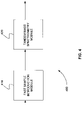
- FIG. 4 is a schematic diagram of a system 400 that includes one or more distinct software modules that performs a method for rapidly screening samples, in accordance with various embodiments.
- System 400 includes fast sample introduction module 410 and tandem mass spectrometry module 420.
- Fast sample introduction module 410 instructs a fast sample introduction device that is non-chromatographic to supply each sample of a plurality samples to a tandem mass spectrometer.
- Tandem mass spectrometry module 420 instructs the tandem mass spectrometer to perform fragmentation scans at two or more mass selection windows across an entire mass range of interest of each sample of the plurality of sample.
- the specification may have presented a method and/or process as a particular sequence of steps.
- the method or process should not be limited to the particular sequence of steps described.
- other sequences of steps may be possible. Therefore, the particular order of the steps set forth in the specification should not be construed as limitations, to the extent defined by the claims.
- the claims directed to the method and/or process should not be limited to the performance of their steps in the order written, and one skilled in the art can readily appreciate that the sequences may be varied to the extent defined by the claims.
Landscapes
- Chemical & Material Sciences (AREA)
- Analytical Chemistry (AREA)
- Chemical Kinetics & Catalysis (AREA)
- Other Investigation Or Analysis Of Materials By Electrical Means (AREA)
Claims (9)
- Système (200) pour cribler rapidement des échantillons, le système comprenant :un spectromètre de masse en tandem (210) qui comprend un filtre de masse quadripolaire qui permet un contrôle indépendant à la fois des tensions radiofréquence (RF) et des tensions de courant continu (CC) ;un dispositif d'introduction d'échantillon (230) qui est non chromatographique et qui est configuré pour alimenter le spectromètre de masse en tandem avec un échantillon d'une pluralité d'échantillons ; etun processeur (220) en communication avec le spectromètre de masse en tandem et le dispositif d'introduction d'échantillon qui est configuré pour :ordonner au spectromètre de masse en tandem d'effectuer un balayage de sondage de l'échantillon fourni par le dispositif d'introduction d'échantillon pour obtenir un spectre de masse précurseur,déterminer une distribution de masse d'ions précurseurs dans l'échantillon à partir du spectre de masse précurseur pour définir deux ou plusieurs fenêtres de sélection de masse précurseur sur une plage entière de masse d'intérêt de l'échantillon, dans lequel au moins deux des deux ou plusieurs fenêtres de sélection de masse précurseur ont des différentes largeurs de fenêtre, dans lequel les différentes largeurs de fenêtre sont définies sur des valeurs basées sur les complexités de la pluralité d'échantillons, de sorte que des largeurs de fenêtre plus larges sont utilisées lorsque la pluralité d'échantillons ont un nombre d'ions clairsemé, et des largeurs de fenêtre plus étroites sont utilisées lorsque la pluralité d'échantillons ont un nombre d'ions élevé ; etordonner au spectromètre de masse en tandem d'effectuer des balayages de fragmentation au niveau des deux ou plusieurs fenêtres de sélection de masse précurseur sur la plage entière de masse d'intérêt de l'échantillon en contrôlant indépendamment les tensions RF et les tensions CC du filtre de masse quadripolaire du spectromètre de masse en tandem.
- Système (200) selon la revendication 1, dans lequel les complexités de la pluralité d'échantillons sont déterminées en créant un profil de poids moléculaire de composé de la pluralité d'échantillons.
- Système (200) selon la revendication 1, dans lequel le dispositif d'introduction d'échantillon (230) comprend un dispositif d'analyse par injection en flux continu, un dispositif d'analyse de mobilité ionique, ou un dispositif de nettoyage rapide d'échantillon.
- Système (200) selon la revendication 1, dans lequel le processeur (220) est configuré pour ordonner au spectromètre de masse en tandem (210) de faire varier au moins un paramètre du spectromètre de masse en tandem entre au moins deux des deux ou plusieurs fenêtres de sélection de masse précurseur.
- Procédé (300) pour cribler rapidement des échantillons, le procédé comprenant :l'instruction (310) à un dispositif d'introduction d'échantillon (230) qui est non chromatographique de fournir un échantillon d'une pluralité d'échantillons injectés par le dispositif d'introduction d'échantillon à un spectromètre de masse en tandem (210) en utilisant un processeur (220), dans lequel le spectromètre de masse en tandem comprend un filtre de masse quadripolaire qui permet un contrôle indépendant à la fois des tensions de radiofréquence (RF) et des tensions de courant continu (CC) ;l'instruction du spectromètre de masse en tandem d'effectuer un balayage de sondage de l'échantillon fourni par le dispositif d'introduction d'échantillon rapide pour obtenir un spectre de masse précurseur en utilisant le processeur ;la détermination d'une distribution de masse d'ions précurseurs dans l'échantillon à partir du spectre de masse précurseur pour définir deux ou plusieurs fenêtres de sélection de masse précurseur sur une plage entière de masse d'intérêt de l'échantillon en utilisant le processeur, dans lequel au moins deux des deux ou plusieurs fenêtres de sélection de masse précurseur ont des largeurs de fenêtre différentes, dans lequel les différentes largeurs de fenêtre sont définies sur des valeurs basées sur les complexités de la pluralité d'échantillons, de sorte que des largeurs de fenêtre plus larges sont utilisées lorsque la pluralité d'échantillons ont un nombre d'ions clairsemé, et des largeurs de fenêtre plus étroites sont utilisées lorsque la pluralité d'échantillons ont un nombre d'ions élevé ; etl'instruction (320) du spectromètre de masse en tandem d'effectuer des balayages de fragmentation au niveau des deux ou plusieurs fenêtres de sélection de masse précurseur sur la plage entière de masse d'intérêt de l'échantillon en contrôlant indépendamment les tensions RF et les tensions CC du filtre de masse quadripolaire du spectromètre de masse en tandem en utilisant le processeur.
- Procédé (300) selon la revendication 5, dans lequel les complexités de la pluralité d'échantillons sont déterminées en créant un profil de poids moléculaire de composé de la pluralité d'échantillons.
- Procédé (300) selon la revendication 5, comprenant en outre l'instruction du spectromètre de masse en tandem (210) de faire varier au moins un paramètre du spectromètre de masse en tandem entre au moins deux des deux ou plusieurs fenêtres de sélection de masse précurseur en utilisant le processeur (220).
- Produit de programme informatique, comprenant un support de stockage non transitoire et tangible lisible par ordinateur dont le contenu comprend un programme avec des instructions exécutées sur un processeur (220) de manière à exécuter un procédé de criblage rapide d'échantillons, le procédé comprenant :la fourniture d'un système (400), dans lequel le système comprend un ou plusieurs modules logiciels distincts, et dans lequel les modules logiciels distincts comprennent un module d'introduction d'échantillon (410) et un module de spectrométrie de masse en tandem (420) ;l'instruction d'un dispositif d'introduction d'échantillon (430) qui est non chromatographique de fournir un échantillon d'une pluralité d'échantillons injectés par le dispositif d'introduction d'échantillon à un spectromètre de masse en tandem (210) en utilisant le module d'introduction d'échantillon, dans lequel le spectromètre de masse en tandem comprend un filtre de masse quadripolaire qui permet un contrôle indépendant des tensions de radiofréquence (RF) et des tensions de courant continu (CC) ;l'instruction du spectromètre de masse en tandem d'effectuer un balayage de l'échantillon fourni par le dispositif d'introduction d'échantillon pour obtenir un spectre de masse précurseur en utilisant le module de spectrométrie de masse en tandem,la détermination d'une distribution de masse d'ions précurseurs dans l'échantillon à partir du spectre de masse précurseur pour définir deux ou plusieurs fenêtres de sélection de masse précurseur sur une plage entière de masse d'intérêt de l'échantillon en utilisant le module de spectrométrie de masse en tandem, dans lequel au moins deux des deux ou plusieurs fenêtres de sélection de masse précurseur ont des largeurs de fenêtre différentes, dans lequel les différentes largeurs de fenêtre sont définies sur des valeurs basées sur des complexités de la pluralité d'échantillons, de sorte que des largeurs de fenêtre plus larges sont utilisées lorsque la pluralité d'échantillons ont un nombre d'ions clairsemé, et des largeurs de fenêtre plus étroites sont utilisées lorsque la pluralité d'échantillons ont un nombre d'ions élevé ; etl'instruction du spectromètre de masse en tandem d'effectuer des balayages de fragmentation au niveau des deux ou plusieurs fenêtres de sélection de masse précurseur sur la plage entière de masse d'intérêt de l'échantillon en contrôlant indépendamment les tensions RF et les tensions CC du filtre de masse quadripolaire du spectromètre de masse en tandem en utilisant le module de spectrométrie de masse en tandem.
- Produit de programme informatique selon la revendication 8, dans lequel les complexités de la pluralité d'échantillons sont déterminées en créant un profil de poids moléculaire de composé de la pluralité d'échantillons.
Applications Claiming Priority (2)
| Application Number | Priority Date | Filing Date | Title |
|---|---|---|---|
| US41102810P | 2010-11-08 | 2010-11-08 | |
| PCT/IB2011/002594 WO2012063108A2 (fr) | 2010-11-08 | 2011-11-02 | Systèmes et procédés pour cribler rapidement des échantillons par spectrométrie de masse |
Publications (2)
| Publication Number | Publication Date |
|---|---|
| EP2638563A2 EP2638563A2 (fr) | 2013-09-18 |
| EP2638563B1 true EP2638563B1 (fr) | 2022-10-05 |
Family
ID=45688183
Family Applications (1)
| Application Number | Title | Priority Date | Filing Date |
|---|---|---|---|
| EP11819004.0A Active EP2638563B1 (fr) | 2010-11-08 | 2011-11-02 | Systèmes et procédés pour cribler rapidement des échantillons par spectrométrie de masse |
Country Status (6)
| Country | Link |
|---|---|
| US (3) | US9269553B2 (fr) |
| EP (1) | EP2638563B1 (fr) |
| JP (2) | JP5946836B2 (fr) |
| CN (2) | CN103109346B (fr) |
| CA (1) | CA2811470C (fr) |
| WO (1) | WO2012063108A2 (fr) |
Families Citing this family (20)
| Publication number | Priority date | Publication date | Assignee | Title |
|---|---|---|---|---|
| CN103109346B (zh) * | 2010-11-08 | 2016-09-28 | Dh科技发展私人贸易有限公司 | 用于通过质谱分析快速筛选样本的系统及方法 |
| JP5821767B2 (ja) * | 2012-04-20 | 2015-11-24 | 株式会社島津製作所 | クロマトグラフタンデム四重極型質量分析装置 |
| WO2014045093A1 (fr) * | 2012-09-18 | 2014-03-27 | Dh Technologies Development Pte. Ltd. | Systèmes et procédés permettant d'obtenir des données pour des images de spectrométrie de masse |
| CN105051530B (zh) * | 2013-03-14 | 2018-05-01 | 莱克公司 | 用于串联质谱分析的系统和方法 |
| CN105190828B (zh) * | 2013-06-06 | 2017-06-30 | Dh科技发展私人贸易有限公司 | 在重叠采集窗的多路分用之后改进数据质量 |
| JP6698668B2 (ja) * | 2015-02-05 | 2020-05-27 | ディーエイチ テクノロジーズ デベロップメント プライベート リミテッド | 断片化エネルギーを切り替えながらの幅広い四重極rf窓の高速スキャニング |
| WO2016125059A1 (fr) * | 2015-02-05 | 2016-08-11 | Dh Technologies Development Pte. Ltd. | Détection d'interférence et déconvolution de pic d'intérêt |
| US10217619B2 (en) * | 2015-03-12 | 2019-02-26 | Thermo Finnigan Llc | Methods for data-dependent mass spectrometry of mixed intact protein analytes |
| EP3335237B1 (fr) * | 2015-08-13 | 2023-12-06 | DH Technologies Development PTE. Ltd. | Déconvolution de spectres mixtes |
| EP3193352A1 (fr) | 2016-01-14 | 2017-07-19 | Thermo Finnigan LLC | Procédés de caractérisation basée sur la spectrométrie de masse de molécules biologiques |
| US10340130B2 (en) * | 2016-04-05 | 2019-07-02 | Thermo Finnigan Llc | Data independent acquisition with variable multiplexing degree |
| US10049868B2 (en) | 2016-12-06 | 2018-08-14 | Rapiscan Systems, Inc. | Apparatus for detecting constituents in a sample and method of using the same |
| US9911585B1 (en) | 2016-12-21 | 2018-03-06 | Thermo Finnigan Llc | Data-independent mass spectral data acquisition including data-dependent precursor-ion surveys |
| US11094516B2 (en) * | 2017-07-10 | 2021-08-17 | Shimadzu Corporation | Mass spectrometer, mass spectrometry method, and mass spectrometry program |
| EP3977628A4 (fr) | 2019-05-31 | 2023-06-28 | DH Technologies Development Pte. Ltd. | Procédé de codage en temps réel de données de bande de balayage et cadre probabiliste pour inférence de précurseur |
| US11721538B2 (en) * | 2020-11-17 | 2023-08-08 | Thermo Finnigan Llc | Feeding real time search results of chimeric MS2 spectra into the dynamic exclusion list |
| US12009194B2 (en) | 2021-12-14 | 2024-06-11 | Thermo Finnigan Llc | Mass spectrometry data-independent analysis methods with improved efficiency |
| GB2621395B (en) | 2022-08-12 | 2025-02-05 | Thermo Fisher Scient Bremen Gmbh | Methods and mass spectrometry systems for acquiring mass spectral data |
| GB2621393B (en) | 2022-08-12 | 2024-12-25 | Thermo Fisher Scient Bremen Gmbh | Methods and mass spectrometry systems for acquiring mass spectral data |
| GB2621394B (en) | 2022-08-12 | 2024-12-04 | Thermo Fisher Scient Bremen Gmbh | Methods and Mass Spectrometry Systems for Acquiring Mass Spectral Data |
Citations (1)
| Publication number | Priority date | Publication date | Assignee | Title |
|---|---|---|---|---|
| WO2003102015A2 (fr) * | 2002-05-29 | 2003-12-11 | University Of Florida | Procede et appareil de detection et de suivi de peptides, et peptides identifies par ces moyens |
Family Cites Families (36)
| Publication number | Priority date | Publication date | Assignee | Title |
|---|---|---|---|---|
| GB9710582D0 (en) * | 1997-05-22 | 1997-07-16 | Oxford Glycosciences Uk Ltd | A method for de novo peptide sequence determination |
| US6748803B1 (en) * | 2000-02-22 | 2004-06-15 | Simmonds Precison Products, Inc. | Liquid measurement system and shared interface apparatus for use therein |
| CA2340150C (fr) * | 2000-06-09 | 2005-11-22 | Micromass Limited | Methodes et appareil pour la spectrometrie de masse |
| US7145133B2 (en) * | 2000-12-14 | 2006-12-05 | Mds Inc. | Apparatus and method for MSnth in a tandem mass spectrometer system |
| JP3990889B2 (ja) * | 2001-10-10 | 2007-10-17 | 株式会社日立ハイテクノロジーズ | 質量分析装置およびこれを用いる計測システム |
| GB0212470D0 (en) * | 2002-05-30 | 2002-07-10 | Shimadzu Res Lab Europe Ltd | Mass spectrometry |
| US7196324B2 (en) * | 2002-07-16 | 2007-03-27 | Leco Corporation | Tandem time of flight mass spectrometer and method of use |
| GB2390935A (en) * | 2002-07-16 | 2004-01-21 | Anatoli Nicolai Verentchikov | Time-nested mass analysis using a TOF-TOF tandem mass spectrometer |
| GB0305796D0 (en) * | 2002-07-24 | 2003-04-16 | Micromass Ltd | Method of mass spectrometry and a mass spectrometer |
| JP4738326B2 (ja) * | 2003-03-19 | 2011-08-03 | サーモ フィニガン リミテッド ライアビリティ カンパニー | イオン母集団内複数親イオン種についてのタンデム質量分析データ取得 |
| US7385187B2 (en) * | 2003-06-21 | 2008-06-10 | Leco Corporation | Multi-reflecting time-of-flight mass spectrometer and method of use |
| CN101014857B (zh) * | 2004-03-12 | 2012-06-13 | 维吉尼亚大学专利基金会 | 用于生物多聚体序列分析的电子转移解离 |
| CA2501003C (fr) * | 2004-04-23 | 2009-05-19 | F. Hoffmann-La Roche Ag | Analyse d'echantillons pour obtenir des donnees de caracterisation |
| WO2006042187A2 (fr) * | 2004-10-08 | 2006-04-20 | University Of Virginia Patent Foundation | Analyse de sequence simultanee de terminaisons amino- et carboxy- |
| WO2006047889A1 (fr) * | 2004-11-08 | 2006-05-11 | The University Of British Columbia | Excitation ionique dans un piege a ions lineaire avec un champ substantiellement quadrupolaire comprenant un champ d'ordre superieur ou hexapolaire additionnel |
| GB0506288D0 (en) * | 2005-03-29 | 2005-05-04 | Thermo Finnigan Llc | Improvements relating to mass spectrometry |
| US7451052B2 (en) * | 2005-05-29 | 2008-11-11 | Cerno Bioscience Llc | Application of comprehensive calibration to mass spectral peak analysis and molecular screening |
| US8105788B2 (en) * | 2005-12-08 | 2012-01-31 | The University Of British Columbia | Mucopolysaccharidosis (MPS) diagnostic methods, systems, kits and assays associated therewith |
| DE102005061425B4 (de) * | 2005-12-22 | 2009-06-10 | Bruker Daltonik Gmbh | Rückgesteuerte Fragmentierung in Ionenfallen-Massenspektrometern |
| US20100285446A1 (en) * | 2007-07-20 | 2010-11-11 | Akos Vertes | Methods for Detecting Metabolic States by Laser Ablation Electrospray Ionization Mass Spectrometry |
| EP2232524A4 (fr) * | 2007-12-04 | 2016-06-08 | Dh Technologies Dev Pte Ltd | Systèmes et procédés pour analyser des substances à l'aide d'un spectromètre de masse |
| US7932487B2 (en) * | 2008-01-11 | 2011-04-26 | Thermo Finnigan Llc | Mass spectrometer with looped ion path |
| US8067728B2 (en) * | 2008-02-22 | 2011-11-29 | Dh Technologies Development Pte. Ltd. | Method of improving signal-to-noise for quantitation by mass spectrometry |
| GB2463633B (en) * | 2008-05-15 | 2013-02-27 | Thermo Fisher Scient Bremen | MS/MS data processing |
| WO2009146345A1 (fr) * | 2008-05-29 | 2009-12-03 | Waters Technologies Corporation | Techniques pour effectuer une correspondance rétention-temps d'ions précurseurs et produits et pour construire des spectres d'ions précurseurs et produits |
| US8160819B2 (en) * | 2008-08-22 | 2012-04-17 | The United States Of America, As Represented By The Secretary Of Agriculture | Rapid identification of proteins and their corresponding source organisms by gas phase fragmentation and identification of protein biomarkers |
| GB0900973D0 (en) * | 2009-01-21 | 2009-03-04 | Micromass Ltd | Method and apparatus for performing MS^N |
| US8101908B2 (en) * | 2009-04-29 | 2012-01-24 | Thermo Finnigan Llc | Multi-resolution scan |
| US8053723B2 (en) * | 2009-04-30 | 2011-11-08 | Thermo Finnigan Llc | Intrascan data dependency |
| WO2010135829A1 (fr) * | 2009-05-27 | 2010-12-02 | Dh Technologies Development Pte. Ltd. | Procédé de spectroscopie de masse en tandem à haute efficacité |
| GB0909285D0 (en) * | 2009-05-29 | 2009-07-15 | Micromass Ltd | Method to detect and sequence post translationally modified peptides |
| GB0915474D0 (en) * | 2009-09-04 | 2009-10-07 | Micromass Ltd | Multiple reaction monitoring with a time-of-flight based mass spectrometer |
| CN103081055B (zh) | 2010-09-08 | 2016-04-27 | Dh科技发展私人贸易有限公司 | 用于在串联质谱分析中使用可变质量选择窗宽度的系统及方法 |
| CN103109345B (zh) | 2010-09-15 | 2016-06-22 | Dh科技发展私人贸易有限公司 | 产物离子光谱的数据独立获取及参考光谱库匹配 |
| DE102011053684B4 (de) * | 2010-09-17 | 2019-03-28 | Wisconsin Alumni Research Foundation | Verfahren zur Durchführung von strahlformstossaktivierter Dissoziation im bereits bestehenden Ioneninjektionspfad eines Massenspektrometers |
| CN103109346B (zh) * | 2010-11-08 | 2016-09-28 | Dh科技发展私人贸易有限公司 | 用于通过质谱分析快速筛选样本的系统及方法 |
-
2011
- 2011-11-02 CN CN201180045135.4A patent/CN103109346B/zh active Active
- 2011-11-02 JP JP2013537216A patent/JP5946836B2/ja not_active Expired - Fee Related
- 2011-11-02 WO PCT/IB2011/002594 patent/WO2012063108A2/fr not_active Ceased
- 2011-11-02 US US13/876,349 patent/US9269553B2/en active Active
- 2011-11-02 EP EP11819004.0A patent/EP2638563B1/fr active Active
- 2011-11-02 CA CA2811470A patent/CA2811470C/fr not_active Expired - Fee Related
- 2011-11-02 CN CN201610619417.5A patent/CN106252192B/zh active Active
-
2015
- 2015-11-18 US US14/944,467 patent/US9543134B2/en active Active
- 2015-12-28 JP JP2015255681A patent/JP6316271B2/ja active Active
-
2016
- 2016-12-02 US US15/367,481 patent/US10074526B2/en active Active
Patent Citations (1)
| Publication number | Priority date | Publication date | Assignee | Title |
|---|---|---|---|---|
| WO2003102015A2 (fr) * | 2002-05-29 | 2003-12-11 | University Of Florida | Procede et appareil de detection et de suivi de peptides, et peptides identifies par ces moyens |
Non-Patent Citations (3)
| Title |
|---|
| JOHN D VENABLE ET AL: "Automated approach for quantitative analysis of complex peptide mixtures from tandem mass spectra : Supplementary Figure", NATURE METHODS, SUPPLEMENTARY INFORMATION, 29 September 2004 (2004-09-29), France, XP055478521, Retrieved from the Internet <URL:https://media.nature.com/original/nature-assets/nmeth/journal/v1/n1/extref/nmeth705-S1.pdf> [retrieved on 20180525] * |
| JOHN D VENABLE ET AL: "Automated approach for quantitative analysis of complex peptide mixtures from tandem mass spectra", NATURE METHODS, vol. 1, no. 1, 29 October 2004 (2004-10-29), pages 39 - 45, XP055241278, ISSN: 1548-7091, DOI: 10.1038/nmeth705 * |
| MARSHALL BERN ET AL: "Deconvolution of Mixture Spectra from Ion-Trap Data-Independent-Acquisition Tandem Mass Spectrometry", ANALYTICAL CHEMISTRY, vol. 82, no. 3, 1 February 2010 (2010-02-01), pages 833 - 841, XP055241280, ISSN: 0003-2700, DOI: 10.1021/ac901801b * |
Also Published As
| Publication number | Publication date |
|---|---|
| US20130240723A1 (en) | 2013-09-19 |
| US20160079048A1 (en) | 2016-03-17 |
| JP2016042105A (ja) | 2016-03-31 |
| US9269553B2 (en) | 2016-02-23 |
| EP2638563A2 (fr) | 2013-09-18 |
| US20170084436A1 (en) | 2017-03-23 |
| CA2811470C (fr) | 2018-03-20 |
| JP2013541720A (ja) | 2013-11-14 |
| CN106252192A (zh) | 2016-12-21 |
| WO2012063108A2 (fr) | 2012-05-18 |
| CN106252192B (zh) | 2018-04-03 |
| US10074526B2 (en) | 2018-09-11 |
| CA2811470A1 (fr) | 2012-05-18 |
| CN103109346B (zh) | 2016-09-28 |
| JP5946836B2 (ja) | 2016-07-06 |
| JP6316271B2 (ja) | 2018-04-25 |
| US9543134B2 (en) | 2017-01-10 |
| CN103109346A (zh) | 2013-05-15 |
| WO2012063108A3 (fr) | 2012-07-19 |
Similar Documents
| Publication | Publication Date | Title |
|---|---|---|
| US10074526B2 (en) | Systems and methods for rapidly screening samples by mass spectrometry | |
| US11107666B2 (en) | Systems and methods for using variable mass selection window widths in tandem mass spectrometry | |
| JP2017044708A (ja) | 滞留時間の決定または確認のための窓処理質量分析データの使用 | |
| EP2850644B1 (fr) | Modulation de la résolution d'un instrument en fonction de la complexité d'un balayage précédent | |
| JP6698668B2 (ja) | 断片化エネルギーを切り替えながらの幅広い四重極rf窓の高速スキャニング | |
| US9768000B2 (en) | Systems and methods for acquiring data for mass spectrometry images |
Legal Events
| Date | Code | Title | Description |
|---|---|---|---|
| PUAI | Public reference made under article 153(3) epc to a published international application that has entered the european phase |
Free format text: ORIGINAL CODE: 0009012 |
|
| 17P | Request for examination filed |
Effective date: 20130529 |
|
| AK | Designated contracting states |
Kind code of ref document: A2 Designated state(s): AL AT BE BG CH CY CZ DE DK EE ES FI FR GB GR HR HU IE IS IT LI LT LU LV MC MK MT NL NO PL PT RO RS SE SI SK SM TR |
|
| DAX | Request for extension of the european patent (deleted) | ||
| STAA | Information on the status of an ep patent application or granted ep patent |
Free format text: STATUS: EXAMINATION IS IN PROGRESS |
|
| 17Q | First examination report despatched |
Effective date: 20180601 |
|
| RAP1 | Party data changed (applicant data changed or rights of an application transferred) |
Owner name: DH TECHNOLOGIES DEVELOPMENT PTE. LTD. |
|
| GRAP | Despatch of communication of intention to grant a patent |
Free format text: ORIGINAL CODE: EPIDOSNIGR1 |
|
| STAA | Information on the status of an ep patent application or granted ep patent |
Free format text: STATUS: GRANT OF PATENT IS INTENDED |
|
| INTG | Intention to grant announced |
Effective date: 20220426 |
|
| RIC1 | Information provided on ipc code assigned before grant |
Ipc: H01J 49/04 20060101ALI20220408BHEP Ipc: H01J 49/00 20060101AFI20220408BHEP |
|
| GRAS | Grant fee paid |
Free format text: ORIGINAL CODE: EPIDOSNIGR3 |
|
| GRAA | (expected) grant |
Free format text: ORIGINAL CODE: 0009210 |
|
| STAA | Information on the status of an ep patent application or granted ep patent |
Free format text: STATUS: THE PATENT HAS BEEN GRANTED |
|
| AK | Designated contracting states |
Kind code of ref document: B1 Designated state(s): AL AT BE BG CH CY CZ DE DK EE ES FI FR GB GR HR HU IE IS IT LI LT LU LV MC MK MT NL NO PL PT RO RS SE SI SK SM TR |
|
| REG | Reference to a national code |
Ref country code: GB Ref legal event code: FG4D |
|
| REG | Reference to a national code |
Ref country code: CH Ref legal event code: EP |
|
| REG | Reference to a national code |
Ref country code: AT Ref legal event code: REF Ref document number: 1523276 Country of ref document: AT Kind code of ref document: T Effective date: 20221015 |
|
| REG | Reference to a national code |
Ref country code: IE Ref legal event code: FG4D |
|
| REG | Reference to a national code |
Ref country code: DE Ref legal event code: R096 Ref document number: 602011073351 Country of ref document: DE |
|
| REG | Reference to a national code |
Ref country code: LT Ref legal event code: MG9D |
|
| REG | Reference to a national code |
Ref country code: NL Ref legal event code: MP Effective date: 20221005 |
|
| REG | Reference to a national code |
Ref country code: AT Ref legal event code: MK05 Ref document number: 1523276 Country of ref document: AT Kind code of ref document: T Effective date: 20221005 |
|
| PG25 | Lapsed in a contracting state [announced via postgrant information from national office to epo] |
Ref country code: NL Free format text: LAPSE BECAUSE OF FAILURE TO SUBMIT A TRANSLATION OF THE DESCRIPTION OR TO PAY THE FEE WITHIN THE PRESCRIBED TIME-LIMIT Effective date: 20221005 |
|
| PG25 | Lapsed in a contracting state [announced via postgrant information from national office to epo] |
Ref country code: SE Free format text: LAPSE BECAUSE OF FAILURE TO SUBMIT A TRANSLATION OF THE DESCRIPTION OR TO PAY THE FEE WITHIN THE PRESCRIBED TIME-LIMIT Effective date: 20221005 Ref country code: PT Free format text: LAPSE BECAUSE OF FAILURE TO SUBMIT A TRANSLATION OF THE DESCRIPTION OR TO PAY THE FEE WITHIN THE PRESCRIBED TIME-LIMIT Effective date: 20230206 Ref country code: NO Free format text: LAPSE BECAUSE OF FAILURE TO SUBMIT A TRANSLATION OF THE DESCRIPTION OR TO PAY THE FEE WITHIN THE PRESCRIBED TIME-LIMIT Effective date: 20230105 Ref country code: LT Free format text: LAPSE BECAUSE OF FAILURE TO SUBMIT A TRANSLATION OF THE DESCRIPTION OR TO PAY THE FEE WITHIN THE PRESCRIBED TIME-LIMIT Effective date: 20221005 Ref country code: FI Free format text: LAPSE BECAUSE OF FAILURE TO SUBMIT A TRANSLATION OF THE DESCRIPTION OR TO PAY THE FEE WITHIN THE PRESCRIBED TIME-LIMIT Effective date: 20221005 Ref country code: ES Free format text: LAPSE BECAUSE OF FAILURE TO SUBMIT A TRANSLATION OF THE DESCRIPTION OR TO PAY THE FEE WITHIN THE PRESCRIBED TIME-LIMIT Effective date: 20221005 Ref country code: AT Free format text: LAPSE BECAUSE OF FAILURE TO SUBMIT A TRANSLATION OF THE DESCRIPTION OR TO PAY THE FEE WITHIN THE PRESCRIBED TIME-LIMIT Effective date: 20221005 |
|
| PG25 | Lapsed in a contracting state [announced via postgrant information from national office to epo] |
Ref country code: RS Free format text: LAPSE BECAUSE OF FAILURE TO SUBMIT A TRANSLATION OF THE DESCRIPTION OR TO PAY THE FEE WITHIN THE PRESCRIBED TIME-LIMIT Effective date: 20221005 Ref country code: PL Free format text: LAPSE BECAUSE OF FAILURE TO SUBMIT A TRANSLATION OF THE DESCRIPTION OR TO PAY THE FEE WITHIN THE PRESCRIBED TIME-LIMIT Effective date: 20221005 Ref country code: LV Free format text: LAPSE BECAUSE OF FAILURE TO SUBMIT A TRANSLATION OF THE DESCRIPTION OR TO PAY THE FEE WITHIN THE PRESCRIBED TIME-LIMIT Effective date: 20221005 Ref country code: IS Free format text: LAPSE BECAUSE OF FAILURE TO SUBMIT A TRANSLATION OF THE DESCRIPTION OR TO PAY THE FEE WITHIN THE PRESCRIBED TIME-LIMIT Effective date: 20230205 Ref country code: HR Free format text: LAPSE BECAUSE OF FAILURE TO SUBMIT A TRANSLATION OF THE DESCRIPTION OR TO PAY THE FEE WITHIN THE PRESCRIBED TIME-LIMIT Effective date: 20221005 Ref country code: GR Free format text: LAPSE BECAUSE OF FAILURE TO SUBMIT A TRANSLATION OF THE DESCRIPTION OR TO PAY THE FEE WITHIN THE PRESCRIBED TIME-LIMIT Effective date: 20230106 |
|
| REG | Reference to a national code |
Ref country code: CH Ref legal event code: PL |
|
| REG | Reference to a national code |
Ref country code: DE Ref legal event code: R097 Ref document number: 602011073351 Country of ref document: DE |
|
| P01 | Opt-out of the competence of the unified patent court (upc) registered |
Effective date: 20230601 |
|
| REG | Reference to a national code |
Ref country code: BE Ref legal event code: MM Effective date: 20221130 |
|
| PG25 | Lapsed in a contracting state [announced via postgrant information from national office to epo] |
Ref country code: SM Free format text: LAPSE BECAUSE OF FAILURE TO SUBMIT A TRANSLATION OF THE DESCRIPTION OR TO PAY THE FEE WITHIN THE PRESCRIBED TIME-LIMIT Effective date: 20221005 Ref country code: RO Free format text: LAPSE BECAUSE OF FAILURE TO SUBMIT A TRANSLATION OF THE DESCRIPTION OR TO PAY THE FEE WITHIN THE PRESCRIBED TIME-LIMIT Effective date: 20221005 Ref country code: MC Free format text: LAPSE BECAUSE OF FAILURE TO SUBMIT A TRANSLATION OF THE DESCRIPTION OR TO PAY THE FEE WITHIN THE PRESCRIBED TIME-LIMIT Effective date: 20221005 Ref country code: LI Free format text: LAPSE BECAUSE OF NON-PAYMENT OF DUE FEES Effective date: 20221130 Ref country code: EE Free format text: LAPSE BECAUSE OF FAILURE TO SUBMIT A TRANSLATION OF THE DESCRIPTION OR TO PAY THE FEE WITHIN THE PRESCRIBED TIME-LIMIT Effective date: 20221005 Ref country code: DK Free format text: LAPSE BECAUSE OF FAILURE TO SUBMIT A TRANSLATION OF THE DESCRIPTION OR TO PAY THE FEE WITHIN THE PRESCRIBED TIME-LIMIT Effective date: 20221005 Ref country code: CZ Free format text: LAPSE BECAUSE OF FAILURE TO SUBMIT A TRANSLATION OF THE DESCRIPTION OR TO PAY THE FEE WITHIN THE PRESCRIBED TIME-LIMIT Effective date: 20221005 Ref country code: CH Free format text: LAPSE BECAUSE OF NON-PAYMENT OF DUE FEES Effective date: 20221130 |
|
| PLBE | No opposition filed within time limit |
Free format text: ORIGINAL CODE: 0009261 |
|
| STAA | Information on the status of an ep patent application or granted ep patent |
Free format text: STATUS: NO OPPOSITION FILED WITHIN TIME LIMIT |
|
| PG25 | Lapsed in a contracting state [announced via postgrant information from national office to epo] |
Ref country code: SK Free format text: LAPSE BECAUSE OF FAILURE TO SUBMIT A TRANSLATION OF THE DESCRIPTION OR TO PAY THE FEE WITHIN THE PRESCRIBED TIME-LIMIT Effective date: 20221005 Ref country code: LU Free format text: LAPSE BECAUSE OF NON-PAYMENT OF DUE FEES Effective date: 20221102 Ref country code: AL Free format text: LAPSE BECAUSE OF FAILURE TO SUBMIT A TRANSLATION OF THE DESCRIPTION OR TO PAY THE FEE WITHIN THE PRESCRIBED TIME-LIMIT Effective date: 20221005 |
|
| 26N | No opposition filed |
Effective date: 20230706 |
|
| PG25 | Lapsed in a contracting state [announced via postgrant information from national office to epo] |
Ref country code: IE Free format text: LAPSE BECAUSE OF NON-PAYMENT OF DUE FEES Effective date: 20221102 |
|
| PG25 | Lapsed in a contracting state [announced via postgrant information from national office to epo] |
Ref country code: SI Free format text: LAPSE BECAUSE OF FAILURE TO SUBMIT A TRANSLATION OF THE DESCRIPTION OR TO PAY THE FEE WITHIN THE PRESCRIBED TIME-LIMIT Effective date: 20221005 Ref country code: BE Free format text: LAPSE BECAUSE OF NON-PAYMENT OF DUE FEES Effective date: 20221130 |
|
| PG25 | Lapsed in a contracting state [announced via postgrant information from national office to epo] |
Ref country code: HU Free format text: LAPSE BECAUSE OF FAILURE TO SUBMIT A TRANSLATION OF THE DESCRIPTION OR TO PAY THE FEE WITHIN THE PRESCRIBED TIME-LIMIT; INVALID AB INITIO Effective date: 20111102 |
|
| PG25 | Lapsed in a contracting state [announced via postgrant information from national office to epo] |
Ref country code: CY Free format text: LAPSE BECAUSE OF FAILURE TO SUBMIT A TRANSLATION OF THE DESCRIPTION OR TO PAY THE FEE WITHIN THE PRESCRIBED TIME-LIMIT Effective date: 20221005 |
|
| PG25 | Lapsed in a contracting state [announced via postgrant information from national office to epo] |
Ref country code: MK Free format text: LAPSE BECAUSE OF FAILURE TO SUBMIT A TRANSLATION OF THE DESCRIPTION OR TO PAY THE FEE WITHIN THE PRESCRIBED TIME-LIMIT Effective date: 20221005 Ref country code: IT Free format text: LAPSE BECAUSE OF FAILURE TO SUBMIT A TRANSLATION OF THE DESCRIPTION OR TO PAY THE FEE WITHIN THE PRESCRIBED TIME-LIMIT Effective date: 20221005 |
|
| PG25 | Lapsed in a contracting state [announced via postgrant information from national office to epo] |
Ref country code: TR Free format text: LAPSE BECAUSE OF FAILURE TO SUBMIT A TRANSLATION OF THE DESCRIPTION OR TO PAY THE FEE WITHIN THE PRESCRIBED TIME-LIMIT Effective date: 20221005 |
|
| PG25 | Lapsed in a contracting state [announced via postgrant information from national office to epo] |
Ref country code: BG Free format text: LAPSE BECAUSE OF FAILURE TO SUBMIT A TRANSLATION OF THE DESCRIPTION OR TO PAY THE FEE WITHIN THE PRESCRIBED TIME-LIMIT Effective date: 20221005 |
|
| PG25 | Lapsed in a contracting state [announced via postgrant information from national office to epo] |
Ref country code: MT Free format text: LAPSE BECAUSE OF FAILURE TO SUBMIT A TRANSLATION OF THE DESCRIPTION OR TO PAY THE FEE WITHIN THE PRESCRIBED TIME-LIMIT Effective date: 20221005 |
|
| PGFP | Annual fee paid to national office [announced via postgrant information from national office to epo] |
Ref country code: DE Payment date: 20251126 Year of fee payment: 15 |
|
| PGFP | Annual fee paid to national office [announced via postgrant information from national office to epo] |
Ref country code: GB Payment date: 20251125 Year of fee payment: 15 |
|
| PGFP | Annual fee paid to national office [announced via postgrant information from national office to epo] |
Ref country code: FR Payment date: 20251125 Year of fee payment: 15 |