EP2640082A1 - Module de traitement pour injecter un flux de transport multimédia numérique dans un dispositif hôte - Google Patents
Module de traitement pour injecter un flux de transport multimédia numérique dans un dispositif hôte Download PDFInfo
- Publication number
- EP2640082A1 EP2640082A1 EP12159791.8A EP12159791A EP2640082A1 EP 2640082 A1 EP2640082 A1 EP 2640082A1 EP 12159791 A EP12159791 A EP 12159791A EP 2640082 A1 EP2640082 A1 EP 2640082A1
- Authority
- EP
- European Patent Office
- Prior art keywords
- transport stream
- processing module
- cicam
- pcr
- data packets
- Prior art date
- Legal status (The legal status is an assumption and is not a legal conclusion. Google has not performed a legal analysis and makes no representation as to the accuracy of the status listed.)
- Granted
Links
- 238000012545 processing Methods 0.000 title claims description 43
- 230000003044 adaptive effect Effects 0.000 claims abstract description 39
- 238000002347 injection Methods 0.000 claims description 30
- 239000007924 injection Substances 0.000 claims description 30
- 238000000034 method Methods 0.000 claims description 26
- 230000005540 biological transmission Effects 0.000 claims description 10
- 238000004891 communication Methods 0.000 claims description 3
- 230000001360 synchronised effect Effects 0.000 abstract description 4
- 239000012634 fragment Substances 0.000 description 9
- 230000033228 biological regulation Effects 0.000 description 6
- 238000005516 engineering process Methods 0.000 description 6
- 230000008569 process Effects 0.000 description 4
- 239000000243 solution Substances 0.000 description 4
- 230000006978 adaptation Effects 0.000 description 3
- 230000008901 benefit Effects 0.000 description 2
- 238000003752 polymerase chain reaction Methods 0.000 description 2
- 230000003139 buffering effect Effects 0.000 description 1
- 238000004364 calculation method Methods 0.000 description 1
- 230000008859 change Effects 0.000 description 1
- 230000001427 coherent effect Effects 0.000 description 1
- 230000007423 decrease Effects 0.000 description 1
- 238000013461 design Methods 0.000 description 1
- 238000009826 distribution Methods 0.000 description 1
- 230000000694 effects Effects 0.000 description 1
- 238000004519 manufacturing process Methods 0.000 description 1
- 230000007246 mechanism Effects 0.000 description 1
- 238000012986 modification Methods 0.000 description 1
- 230000004048 modification Effects 0.000 description 1
- 238000012544 monitoring process Methods 0.000 description 1
- 238000003860 storage Methods 0.000 description 1
- 238000012546 transfer Methods 0.000 description 1
Images

Classifications
-
- H—ELECTRICITY
- H04—ELECTRIC COMMUNICATION TECHNIQUE
- H04N—PICTORIAL COMMUNICATION, e.g. TELEVISION
- H04N21/00—Selective content distribution, e.g. interactive television or video on demand [VOD]
- H04N21/40—Client devices specifically adapted for the reception of or interaction with content, e.g. set-top-box [STB]; Operations thereof
- H04N21/41—Structure of client; Structure of client peripherals
- H04N21/418—External card to be used in combination with the client device, e.g. for conditional access
- H04N21/4183—External card to be used in combination with the client device, e.g. for conditional access providing its own processing capabilities, e.g. external module for video decoding
-
- H—ELECTRICITY
- H04—ELECTRIC COMMUNICATION TECHNIQUE
- H04L—TRANSMISSION OF DIGITAL INFORMATION, e.g. TELEGRAPHIC COMMUNICATION
- H04L65/00—Network arrangements, protocols or services for supporting real-time applications in data packet communication
- H04L65/60—Network streaming of media packets
- H04L65/61—Network streaming of media packets for supporting one-way streaming services, e.g. Internet radio
- H04L65/612—Network streaming of media packets for supporting one-way streaming services, e.g. Internet radio for unicast
-
- H—ELECTRICITY
- H04—ELECTRIC COMMUNICATION TECHNIQUE
- H04L—TRANSMISSION OF DIGITAL INFORMATION, e.g. TELEGRAPHIC COMMUNICATION
- H04L65/00—Network arrangements, protocols or services for supporting real-time applications in data packet communication
- H04L65/60—Network streaming of media packets
- H04L65/75—Media network packet handling
- H04L65/764—Media network packet handling at the destination
-
- H—ELECTRICITY
- H04—ELECTRIC COMMUNICATION TECHNIQUE
- H04N—PICTORIAL COMMUNICATION, e.g. TELEVISION
- H04N21/00—Selective content distribution, e.g. interactive television or video on demand [VOD]
- H04N21/40—Client devices specifically adapted for the reception of or interaction with content, e.g. set-top-box [STB]; Operations thereof
- H04N21/43—Processing of content or additional data, e.g. demultiplexing additional data from a digital video stream; Elementary client operations, e.g. monitoring of home network or synchronising decoder's clock; Client middleware
- H04N21/4302—Content synchronisation processes, e.g. decoder synchronisation
- H04N21/4305—Synchronising client clock from received content stream, e.g. locking decoder clock with encoder clock, extraction of the PCR packets
-
- H—ELECTRICITY
- H04—ELECTRIC COMMUNICATION TECHNIQUE
- H04N—PICTORIAL COMMUNICATION, e.g. TELEVISION
- H04N21/00—Selective content distribution, e.g. interactive television or video on demand [VOD]
- H04N21/40—Client devices specifically adapted for the reception of or interaction with content, e.g. set-top-box [STB]; Operations thereof
- H04N21/43—Processing of content or additional data, e.g. demultiplexing additional data from a digital video stream; Elementary client operations, e.g. monitoring of home network or synchronising decoder's clock; Client middleware
- H04N21/438—Interfacing the downstream path of the transmission network originating from a server, e.g. retrieving encoded video stream packets from an IP network
- H04N21/4381—Recovering the multiplex stream from a specific network, e.g. recovering MPEG packets from ATM cells
-
- H—ELECTRICITY
- H04—ELECTRIC COMMUNICATION TECHNIQUE
- H04N—PICTORIAL COMMUNICATION, e.g. TELEVISION
- H04N21/00—Selective content distribution, e.g. interactive television or video on demand [VOD]
- H04N21/60—Network structure or processes for video distribution between server and client or between remote clients; Control signalling between clients, server and network components; Transmission of management data between server and client, e.g. sending from server to client commands for recording incoming content stream; Communication details between server and client
- H04N21/61—Network physical structure; Signal processing
- H04N21/6106—Network physical structure; Signal processing specially adapted to the downstream path of the transmission network
- H04N21/6125—Network physical structure; Signal processing specially adapted to the downstream path of the transmission network involving transmission via Internet
-
- H—ELECTRICITY
- H04—ELECTRIC COMMUNICATION TECHNIQUE
- H04N—PICTORIAL COMMUNICATION, e.g. TELEVISION
- H04N21/00—Selective content distribution, e.g. interactive television or video on demand [VOD]
- H04N21/60—Network structure or processes for video distribution between server and client or between remote clients; Control signalling between clients, server and network components; Transmission of management data between server and client, e.g. sending from server to client commands for recording incoming content stream; Communication details between server and client
- H04N21/63—Control signaling related to video distribution between client, server and network components; Network processes for video distribution between server and clients or between remote clients, e.g. transmitting basic layer and enhancement layers over different transmission paths, setting up a peer-to-peer communication via Internet between remote STB's; Communication protocols; Addressing
- H04N21/643—Communication protocols
- H04N21/64322—IP
Definitions
- the present invention pertains to the domain of digital media streaming, especially adaptive streaming.
- the invention is intended to be used in a digital television environment as opposed to a computer environment, and can be deployed in digital TV systems used in the processing of either encrypted or non-encrypted digital media.
- the internet is also used to deliver many types of content which is playable using devices other than digital televisions, some such devices being specially adapted to cater for particular techniques which are known to be used to deliver some of the different types of media.
- Providers of digital content who make such content available over the internet may do so using so called adaptive streaming techniques whereby a single piece of content may be encoded several times at different bit-rates and stored in multiple files in order for a client to be able to select from which file to receive the content, depending on the currently available bandwidth of the reception channel.
- Adaptive streaming techniques allow for the client to select a new bit-rate at predetermined positions within a transmission according to fluctuations in available bandwidth during delivery of a piece of content.
- the files corresponding to the different bit-rates to be split into a number of chunks in such a way that chunk boundaries are aligned for all of the files.
- Other generally accepted names for chunks are segments or fragments.
- HTTP adaptive streaming as this technique is called, although known to be employed within the industry, is not yet subject to any standardisation. Although there have been some initiatives in that direction, for example with MPEG-DASH (MPEG data by Dynamic Adaptive Streaming Over HTTP), there is still a level of uncertainty within the industry as to which standard will become the most widely adopted.
- MPEG-DASH MPEG data by Dynamic Adaptive Streaming Over HTTP
- the container may comprise audio data, video data, subtitle data and metadata.
- Metadata includes data which describes the payload of the container or timestamps for example.
- Containers may adhere to any of the known container formats such as MPEG2 transport stream format or MP4/Quicktime, ASF, Smooth Streaming, Live Streaming or H.264/AVC. Other formats widely used for transmitting MPEG data by Dynamic Adaptive Streaming Over HTTP otherwise known as DASH or MPEG DASH. Developers of streaming clients may refer to the various specifications which exist in the domain, such as the ISO Base Media File Format, as specified in ISO/IEC 14496-14, otherwise known as ISOMBFF.
- This technique allows for better file-handling capabilities of the potentially very high number of files of various qualities by taking into account the inter-relationship between the files and caching them within a network of intermediate servers.
- this document does not disclose any solution to particular problems related to the use of such adaptive streaming techniques within a TV broadcast context. Neither does this document disclose any particular considerations related to problems which arise in the context of conditional access to content.
- file may refer equally to entire content files, one or more chunks, fragments or segments from a content file.
- United States Patent Application Publication number 2001/019976 gives an example of how to implement HTTP adaptive streaming capability into a media player for a chosen HTTP adaptive streaming technology.
- a digital TV reception apparatus manufacturer seeking perhaps to increase his market share, who decides to incorporate HTTP adaptive streaming technology in his reception apparatus would find himself at a disadvantage should he try to follow the teaching of this document by including such technology in his apparatus. Indeed, if the market were to change in favour of another type of streaming technology other than the one targeted by the TV manufacturer, requiring different technology to be incorporated into the reception apparatus, then significant reinvestment may then become necessary for the cost of re-tooling, over and above the wasted investment on the first design and the related inventory.
- the present invention provides the capability of having a CICAM pull segments of content from a content database according to a given streaming specification, for example pulling segments from the cloud according to the Apple HLS Client Specifications.
- the CICAM then injects the thus obtained segments, in MPEG2-TS (transport stream) format for example, into a standard CI+ Host device (the digital TV for example) over the CI+ Link Protection interface.
- MPEG2-TS transport stream
- the segments are streamed from the database in the clear (unencrypted format), whereas according to another embodiment, the segments are streamed in encrypted format and decrypted in the CICAM before being injected in the clear to the host device, nonetheless "protected" by the CI+ Link Protection.
- the host device generally receives the transport stream, which is then transferred to the CICAM, whereas according to the invention the transport stream is injected directly to the host from the CICAM, the CICAM being responsible for generating the transport stream from the content database via HTTP adaptive streaming.
- the content database could be "the cloud” or a repository on a server for example.
- the terms streaming source and IP network are also used throughout the document to refer to a content database.
- a processing module for injecting a digital media transport stream into a host device for receiving and decoding the transport stream, via a communication channel comprising a transport stream interface, the processing module comprising:
- a transport stream comprising a plurality of data packets into a transport stream interface using a processing module (CICAM) according to the one described above, comprising:
- the present invention allows for a standard digital TV reception device to receive digital content in the form of a transport stream, such digital content having been streamed from a streaming source using HTTP adaptive streaming techniques.
- a minor adaptation to the standard TV reception device may be made in order to realise the invention.
- a CICAM module comprising an HTTP adaptive streaming client, otherwise known as an adaptive streaming module, the CICAM module being configured to interface with the digital TV reception device via an interface complying with the Common Interface Standard known as CI+.
- the CICAM further comprises an internet protocol interface for receiving the digital content from an IP network using the HTTP adaptive streaming module.
- the streaming content is received in the clear, converted into a transport stream (TS), having a transport stream format, in the CICAM and injected into the TV reception device, known as a host device in this context, the injection being done via the CI+ Link Protection Interface.
- the streaming content is received in encrypted format in a streaming file, decrypted in the CICAM, converted into a transport stream in the CICAM and injected into the host device via the CI+ Link Protection Interface.
- the host device comprises a video buffer, into which the injected transport stream is at least temporarily buffered.
- a suitable bit-rate By suitable it is meant at a bit-rate which is sufficient so as to make sure that the video buffer in the host device does not drift. Drifting in this context means that the video buffer progressively fills towards its maximum capacity or progressively during the course of the injection. Such drift could lead to the video buffer underflowing or overflowing, leading to video disruption. Proper regulation of the transfer of segments of content from the transport stream over the CI+ interface is therefore required. In this manner, smooth decoding of the streamed video may be achieved over time, resulting in clean video buffer regulation and no disrupted video.
- a transport stream comprises a plurality of transport stream packets, each packet comprising a header and a payload, the header comprising metadata such as a packet identifier or a programme clock reference value for the packet and the payload comprising audio/video information.
- the programme clock reference value corresponds to time and can be associated with a packet, thus allowing for packets in a transport stream to be synchronised during playback.
- a group of data packets within a segment may be associated with each other in such a way that a programme clock reference value in a header of one data packet will be applicable to all of the data packets associated with that packet.
- the programme clock reference value can be used to allow content to be synchronised during playback so that the proper timing between packets may be maintained.
- the programme clock reference values therefore may therefore be referred to in general terms as synchronisation attributes, or more simply timing attributes.
- the regulation of the injection of the MPEG2-TS (transport stream) packets over the CI+ interface is achieved by synchronising the transport stream with respect to the programme clock reference; whereas according to a second embodiment of the present invention, the regulation is achieved through a flow control mechanism using feedback from the host to the CICAM based on the monitoring of the occupancy level of the video buffer.
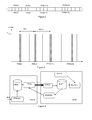
- FIG. 1 illustrates a system in which the mentioned embodiment of the present invention may be deployed.
- the system comprises a host device for playing media content, preferably audio/video content.
- the host device comprises a host Common Interface port configured to receive the media content via a transport stream interface, preferably compliant with a Common Interface Specification such as CI+, which is a known standard in the domain of digital TV processing.
- the host device further comprises a video buffer, in which it may store, at least temporarily, at least part of the received media content, and a video decoder to decode the content for playback (display in the case of video content).
- a suitable host could be a digital TV set.
- media data may be downloaded from a media server in segments or fragments.
- a plurality of files, representing a particular content is stored on the media server in a format whereby each file represents a segment of that content.
- each file comprises more than one segment of the content.
- the data in each of the files is split up into a number of segments such that the segment boundaries align across all of the files, so that a streaming client may switch from one file to another depending on available bandwidth for the transmission of the content, while maintaining a coherent order of segments received.
- the system further comprises a processing module configured to send content via a module Common Interface port which is compatible with the Common Interface Specification i.e. CI+.
- the processing module is configured to be able to send a transport stream comprising the content to the host device's host Common Interface port via the CI+ transport stream interface otherwise simply known as a transport stream interface.
- the processing module is preferably detachable from the host device and may be connected to the host device via the transport stream interface. It is therefore convenient for the processing module to be at least based on a known module such as a Common Interface Conditional Access Module, preferably in the form of an interface card which can be removably connected to the host via a slot in the host device intended for such purposes.
- the processing module comprises an IP interface for receiving data from an IP network.
- the CICAM is configured to be able to receive, and preferably store, data (media content) from an IP network in the form of segment files and, when required to send content to the host, to select the appropriate segment files, and build a transport stream for transmission to the host device via the transport stream interface.
- the processing module further comprises a HTTP adaptive streaming module configured to access files of media content from a media server (otherwise known as the internet or the cloud).
- the HTTP adaptive streaming module is specially adapted to access the content segment by segment and to interpret the segment index file.
- the segment index file is a metadata file comprising information about associated segment files such as bit-rates, particular URLs of files or fragments, duration of content fragments, the number of fragments in a file, position in time of certain fragments and so on.
- the HTTP adaptive streaming module is configured to interpret the segment index file and thereby to pull required segments from the media server, based on which particular content is to be received and what bandwidth is available for doing so at any given time.
- the processing module further comprises a local file system (CHTSF) for buffering segments of a requested content and the HTTP adaptive streaming module is configured to download the requested content segment by segment, thanks to the segment index file, and to buffer the received segments in the local file system (CHTSF).
- CHTSF local file system
- the processing module further comprises a parser (PRS) to parse the segments of content.
- the segments have associated Programme Clock Reference values (PCR values) and the parser is configured to identify the PCR values found and to store them in a PCR index file (PCRIF).
- PCRIF PCR index file
- Each PCR value thus found is logged in the PCR index file (PCRIF) in the processing module (CICAM).
- PCR values in the PCR index file corresponds to the position of a segment associated with that PCR value in a transport stream.
- PCR values correspond to a sequence in which their associated segments are to be played and indeed the relative times at which they are to be displayed.
- a transport stream such as an MPEG-2 transport stream (TS) for example, comprises data packets, each data packet having a header and a payload, the payload comprising audio/video information and the header comprising metadata, including a packet identifier (PID) and the programme clock reference (PCR) among others.
- PID packet identifier
- PCR programme clock reference
- the processing module further comprises a local programme clock reference or module PCR clock (CIPCRC). Thanks to the CICAM having its own PCR clock (CIPCRC), according to the embodiment, the CICAM may be configured to deliver a PCR-accurate transport stream (TS) to the host device.
- CIPCRC module PCR clock
- the PCR index file is needed. Since the segment files stored in the processing module's local file system represent content which has been obtained by a process of adaptive streaming, it is most likely that different segments came from different files. Since the segments buffered in the local file system are susceptible to have come from different files and given that different files comprise content at different bit-rates, it follows that the buffered segments may be a collection of different bit-rate encoded segments.
- PCR values logged in the PCR index file as described above may have been taken from different files (and, by definition of how an adaptive streaming process works, probably will have been taken from different files), it follows then that different quantities of data will be associated with different PCR values and so between successive PCR values in the PCR index file, different quantities of data may be associated. For example, if segment s1, associated with PCR value 101 time units, were to be taken from file f1 comprising content at bit-rate br1 and segment s2, associated with PCR value 102 time units, were to be taken from file f2 comprising content at a bit-rate of br2, which is double the value of br1, then there will be twice as much data in segment s2 than in segment s1.
- segment s3 associated with a PCR value of 103 time units, were to be taken from another file f3 comprising content at a bit-rate of br3, which is 10 times the bit-rate br1, then segment s3 will have 10 times more data than segment s1 .
- segment s3 between PCR value 101 and PCR value 102 there is a quantity q1 of data, while between PCR value 102 and 103 there is a quantity of data q2, which is double that of q1 , and so on. It can be seen then, that for time equidistant PCRs recorded in the PCR index file, the amount of data associated with each PCR can vary. In other words the amount of data between time-equidistant PCRs may vary.
- time-equidistant is used in favour of consecutive or successive in this discussion simply to take into account a possibility that the PCR index file may not actually have consecutive PCR values in the sense that consecutive values may not exhibit equal increments. This could be due to the fact that the parser misses a PCR or otherwise excludes a PCR during parsing for example. It has been established then that the amount of data between time-equidistant PCR values in the PCR index file may vary. This is the reason why the PCR index file is required: careful consideration of how to treat the data packets which have a PCR value since it cannot be assumed in the host device that a certain quantity of data represents a certain time interval. In other words a PCR value cannot simply be calculated at the host end based on a quantity of data received and an average bit-rate for example. For content taken from only one file on the other hand (no adaptive streaming) this calculation would work of course.
- the processing module comprises its own PCR clock (module PCR clock) as mentioned above and further comprises a transport stream injector (TSI).
- the transport stream injector successively reads the values found in the PCR index file and fetches, for each PCR value found, the corresponding data (i.e. the corresponding data packet and a number of subsequent data packets) from the segment files stored in the local file system.
- the Transport stream injector then builds a transport stream from the segment files by taking the packet from the segment file corresponding to the PCR clock value, latching the processor module's PCR clock value and injecting the packet (with its PCR value) into the transport stream. Then all the subsequent packets are injected at a bit-rate of Fr, where Fr is higher than the maximum bit-rate of the segment files, until the packet associated with the next PCR value in the PCR index file is reached. The transport stream injector then compares the next PCR value with the previous one and waits for that amount of time before injecting the packet with the next PCR value and the following packets until the packet with the next PCR value is reached, and so on.
- an injection period always starts with the injection of a packet comprising a PCR value and ends with injection of the packet situated just before the next packet having a PCR value. In this way there are silent periods during which no data is available at the transport stream interface.
- Figure 2 illustrates a series of transport stream packets, some of which are associated with a PCR value.
- the parser generates the PCR index file including entries index(0) (the index of the first packet from the segment files having a PCR value), corresponding to PCR value PCR(0) and subsequent entries index(n), index(n+1) and index(n+2) corresponding to the PCR values (PCR(n), PCR(n+1) and PCR(n+2).
- Figure 3 illustrates a graph of injection time against injection bit-rate for the indexed packets and the subsequent packets associated with each index. The graph shows the silent periods between injection bursts due to the fact that the bit-rate for the injection (Fr) is chosen to be higher than highest bit-rate of the stored segment files.
- the transport stream injector finds index(0) corresponding to PCR value PCR(0) in the PCR index file, fetches the packet from the segment files with PCR(0), latches the current value of the module PCR clock and injects that packet (corresponding to PCR(0)) into the transport stream followed by all subsequent packets until the packet with the next PCR value from the PCR index file is reached (PCR(n)), at which time it stops injecting just before it gets to that packet.
- the injector reads the next PCR value in the PCR index file and waits until the module PCR clock has increased by the difference between the next PCR value and the first PCR value.
- the host device receives a PCR-accurate transport stream which will decode the required video at the proper rate, thereby avoiding any positive or negative drift of the host buffer filling level and therefore avoiding overflow or underflow of the host buffer and their negative effects on continuity of playback.
- the host device treats the received transport stream in the normal fashion. Indeed, the host device may be a standard host device as no modification is necessary for the host device to be able to function properly in the system according to this embodiment and variations based thereupon.
- the host will demultiplex the received transport stream in the normal fashion (as it does when receiving and decoding any broadcast) and will use the thus extracted PCR values to slave the host local PCR clock as illustrated in Figure 1 .
- the host's local PCR clock is thereby adjusted using the PCR values in the transport stream coming in from the processor module. In this way the host's local PCR clock is synchronised at least to some extent to the module PCR clock i.e. whenever a transport stream comprising PCR values is being received.
- the host local PCR clock is used to govern the rate of video decoding in the host, as it normally would.
- the video elementary stream which is demultiplexed from the transport stream is stored in the host's video buffer until the decoding time (associated PCR value) according to the host local PCR clock is reached.
- silent periods will occur on the transport stream interface due to the fact that the transport stream injector injects packets at a bit-rate which is higher than the maximum bit-rate of the segment files. Inevitably, this leads to an effective packet rate over the transport stream interface potentially being different from the effective bit-rate of a data packet taken from a transport stream once received in the host. This may lead to jitter once the video is decoded. According to an embodiment of the present invention, in order to minimise this type of jitter or even eliminate it, the data packets are re-timed as they are injected through the transport stream interface.
- re-timed it is meant that the PCR values found in the transport stream in the processing module is over-written (re-stamped) when the data packet associated with that value is injected into the transport stream interface, thus attributing an actual time, according to the module PCR clock, for the data packet.
- the module PCR clock is thus the master clock, imposing an actual time on the data packets in the transport stream as they leave the processing module, the actual times being properly based on the original PCR values found in the segments with respect at least to their order.
- the processing module participates in determining which segments are pulled from the content database and when and the transport stream injector with the module PCR clock inject a PCR-accurate transport stream into the transport stream interface for the host device at a bit-rate which guarantees that a host device downstream of the transport stream interface will not experience drift and will therefore not experience the resulting video buffer overflow or underflow. The host will therefore be able to present video without disruption.
- the host device works in the normal fashion, as in the prior art, by synchronising its local PCR clock to the processing module's PCR clock using the PCR values found in the received transport stream.
- the host's PCR clock is used to regulate the decoding of the received video content.
- the transport stream injector injects data into the transport stream interface at a bit-rate higher than the highest bit-rate of the segment files and the processing module honors the timing indicated by the PCR values by introducing silent periods during the injection. However, even though the timing is respected, the PCR values themselves are re-stamped with the actual injection time before leaving the processing module. It does not matter what the exact time is when this data is delivered in the transport stream interface but it must be delivered before the time indicated by the next PCR value. This delivery time-stamping is based on the module's PCR clock and the position in the stream.
- the processing module is time stamping an old PCR value from the IP stream because as far as the TV host is concerned this is the position of the clock reference in the output transport stream of the processor and not the input position as defined in the IP stream - the two positions (in PCR space) may be different.
- older PCR values may be encountered in the processing module (by the parser). In this case it is necessary to continue feeding old data until a PCR value having a value which is greater than the current value of the module PCR clock.
- the CICAM further comprises a conditional access module and is configured to decrypt the media content should it be received by the processing module (CICAM) in encrypted format.
- the processing module then processes the decrypted content as in any of the above embodiments in order to properly transmit a transport stream to the host device consistent with the invention as described.
- the decryption is carried out according to any of the generally known techniques in use in the state of the art in the domain of digital pay-TV.
- Figure 4 illustrates a system in which at least part of the goals of the present invention may be realised.
- this system does not strictly fall within the scope of the same invention as the embodiments previously described since it may require technical intervention on the host device.
- the regulation of the injection is achieved through flow control using feedback from the host device to the processing module (CICAM).
- the feedback is based on a measure of the amount of free space left in the host's video buffer i.e. the "fullness" of the video buffer.
- the same technique for pulling the content from the source is used as in any of the embodiments previously described, however the regulation method is different.
- the injection takes place at a bit-rate which is higher than the maximum bit-rate of the original segment files.
- the host device's local PCR clock is set to a default value and default rate, which is used to govern the decoding of the video at the required rate.
Landscapes
- Engineering & Computer Science (AREA)
- Multimedia (AREA)
- Signal Processing (AREA)
- Computer Networks & Wireless Communication (AREA)
- Two-Way Televisions, Distribution Of Moving Picture Or The Like (AREA)
- Data Exchanges In Wide-Area Networks (AREA)
Priority Applications (6)
| Application Number | Priority Date | Filing Date | Title |
|---|---|---|---|
| HUE12159791A HUE026341T2 (en) | 2012-03-16 | 2012-03-16 | Processing module for injecting a digital media delivery stream into a host |
| EP12159791.8A EP2640082B1 (fr) | 2012-03-16 | 2012-03-16 | Module de traitement pour injecter un flux de transport multimédia numérique dans un dispositif hôte |
| PT121597918T PT2640082E (pt) | 2012-03-16 | 2012-03-16 | Módulo de processamento para injetar um fluxo de transporte de média digital para um dispositivo anfitrião |
| DK12159791.8T DK2640082T3 (en) | 2012-03-16 | 2012-03-16 | Processing module for injecting a digital media transport stream in a host device |
| ES12159791.8T ES2561882T3 (es) | 2012-03-16 | 2012-03-16 | Un módulo de procesamiento para inyección de un flujo de transporte de medios digitales en un dispositivo huésped |
| PL12159791T PL2640082T3 (pl) | 2012-03-16 | 2012-03-16 | Moduł przetwarzania do wprowadzania strumienia transportowego mediów cyfrowych do urządzenia hosta |
Applications Claiming Priority (1)
| Application Number | Priority Date | Filing Date | Title |
|---|---|---|---|
| EP12159791.8A EP2640082B1 (fr) | 2012-03-16 | 2012-03-16 | Module de traitement pour injecter un flux de transport multimédia numérique dans un dispositif hôte |
Publications (2)
| Publication Number | Publication Date |
|---|---|
| EP2640082A1 true EP2640082A1 (fr) | 2013-09-18 |
| EP2640082B1 EP2640082B1 (fr) | 2015-11-18 |
Family
ID=45926415
Family Applications (1)
| Application Number | Title | Priority Date | Filing Date |
|---|---|---|---|
| EP12159791.8A Not-in-force EP2640082B1 (fr) | 2012-03-16 | 2012-03-16 | Module de traitement pour injecter un flux de transport multimédia numérique dans un dispositif hôte |
Country Status (6)
| Country | Link |
|---|---|
| EP (1) | EP2640082B1 (fr) |
| DK (1) | DK2640082T3 (fr) |
| ES (1) | ES2561882T3 (fr) |
| HU (1) | HUE026341T2 (fr) |
| PL (1) | PL2640082T3 (fr) |
| PT (1) | PT2640082E (fr) |
Cited By (4)
| Publication number | Priority date | Publication date | Assignee | Title |
|---|---|---|---|---|
| CN103533427A (zh) * | 2013-10-14 | 2014-01-22 | 深圳国微技术有限公司 | 一种播放广告的方法及条件接收装置 |
| WO2016071507A1 (fr) * | 2014-11-06 | 2016-05-12 | Nagravision S.A. | Réception de contenu multimédia et commande de lecture |
| WO2016071501A1 (fr) * | 2014-11-06 | 2016-05-12 | Nagravision S.A. | Réception de contenu multimédia et gestion de commutation |
| US9787751B2 (en) | 2014-08-06 | 2017-10-10 | At&T Intellectual Property I, L.P. | Method and apparatus for delivering media content utilizing segment and packaging information |
Citations (4)
| Publication number | Priority date | Publication date | Assignee | Title |
|---|---|---|---|---|
| US20010019976A1 (en) | 2000-02-24 | 2001-09-06 | Shozo Wakabayashi | Silent chain with a guide washer having a single aperture for a rocker joint pin |
| EP2020800A2 (fr) * | 2007-07-30 | 2009-02-04 | LG Electronics Inc. | Dispositif hôte venant en interface avec un point de déploiement (POD) et procédé pour le traitement de données de diffusion |
| EP2026558A1 (fr) * | 2007-07-30 | 2009-02-18 | Sony United Kingdom Limited | Module de flux de transport pour un récepteur de television numérique |
| WO2012029018A1 (fr) * | 2010-09-03 | 2012-03-08 | Koninklijke Philips Electronics N.V. | Système et procédé d'obtention de données audio/vidéo à partir d'un réseau étendu |
-
2012
- 2012-03-16 PL PL12159791T patent/PL2640082T3/pl unknown
- 2012-03-16 ES ES12159791.8T patent/ES2561882T3/es active Active
- 2012-03-16 HU HUE12159791A patent/HUE026341T2/en unknown
- 2012-03-16 PT PT121597918T patent/PT2640082E/pt unknown
- 2012-03-16 EP EP12159791.8A patent/EP2640082B1/fr not_active Not-in-force
- 2012-03-16 DK DK12159791.8T patent/DK2640082T3/en active
Patent Citations (4)
| Publication number | Priority date | Publication date | Assignee | Title |
|---|---|---|---|---|
| US20010019976A1 (en) | 2000-02-24 | 2001-09-06 | Shozo Wakabayashi | Silent chain with a guide washer having a single aperture for a rocker joint pin |
| EP2020800A2 (fr) * | 2007-07-30 | 2009-02-04 | LG Electronics Inc. | Dispositif hôte venant en interface avec un point de déploiement (POD) et procédé pour le traitement de données de diffusion |
| EP2026558A1 (fr) * | 2007-07-30 | 2009-02-18 | Sony United Kingdom Limited | Module de flux de transport pour un récepteur de television numérique |
| WO2012029018A1 (fr) * | 2010-09-03 | 2012-03-08 | Koninklijke Philips Electronics N.V. | Système et procédé d'obtention de données audio/vidéo à partir d'un réseau étendu |
Non-Patent Citations (4)
| Title |
|---|
| "MPEG transport stream", 18 July 2010 (2010-07-18), pages 1 - 8, XP055010297, Retrieved from the Internet <URL:http://en.wikipedia.org/w/index.php?title=MPEG_transport_stream&oldid=374152729> [retrieved on 20111024] * |
| ALEXANDER M ET AL: "CIplus-Standard und neue Anwendungsmöglichkeiten", FKT FERNSEH UND KINOTECHNIK, FACHVERLAG SCHIELE & SCHON GMBH., BERLIN, DE, vol. 64, no. 8-9, 1 August 2010 (2010-08-01), pages 424 - 429, XP001558110, ISSN: 1430-9947 * |
| IRAJ SODAGAR: "The MPEG-DASH Standard for Multimedia Streaming Over the Internet", IEEE MULTIMEDIA, IEEE SERVICE CENTER, NEW YORK, NY, US, vol. 18, no. 4, 1 April 2011 (2011-04-01), pages 62 - 67, XP011378371, ISSN: 1070-986X, DOI: 10.1109/MMUL.2011.71 * |
| PANTOS R: "HTTP Live Streaming", INTERNET CITATION, 8 June 2009 (2009-06-08), pages 1 - 17, XP002555827, Retrieved from the Internet <URL:http://tools.ietf.org/html/draft-pantos-http-live-streaming-01> [retrieved on 20090608] * |
Cited By (11)
| Publication number | Priority date | Publication date | Assignee | Title |
|---|---|---|---|---|
| CN103533427A (zh) * | 2013-10-14 | 2014-01-22 | 深圳国微技术有限公司 | 一种播放广告的方法及条件接收装置 |
| US9787751B2 (en) | 2014-08-06 | 2017-10-10 | At&T Intellectual Property I, L.P. | Method and apparatus for delivering media content utilizing segment and packaging information |
| US10362088B2 (en) | 2014-08-06 | 2019-07-23 | At&T Intellectual Property I, L.P. | Method and apparatus for delivering media content utilizing segment and packaging information |
| US10999347B2 (en) | 2014-08-06 | 2021-05-04 | At&T Intellectual Property I, L.P. | Method and apparatus for delivering media content utilizing segment and packaging information |
| WO2016071507A1 (fr) * | 2014-11-06 | 2016-05-12 | Nagravision S.A. | Réception de contenu multimédia et commande de lecture |
| WO2016071501A1 (fr) * | 2014-11-06 | 2016-05-12 | Nagravision S.A. | Réception de contenu multimédia et gestion de commutation |
| CN107079188A (zh) * | 2014-11-06 | 2017-08-18 | 耐瑞唯信有限公司 | 媒体内容接收和回放控制 |
| US20170359613A1 (en) * | 2014-11-06 | 2017-12-14 | Nagravision S.A. | Media content reception and playback control |
| JP2018500800A (ja) * | 2014-11-06 | 2018-01-11 | ナグラビジョン エス アー | メディアコンテンツの受信再生制御 |
| AU2015341687B2 (en) * | 2014-11-06 | 2018-10-11 | Nagravision S.A. | Media content reception and playback control |
| AU2015341681B2 (en) * | 2014-11-06 | 2019-03-28 | Nagravision S.A. | Media content reception and switching management |
Also Published As
| Publication number | Publication date |
|---|---|
| EP2640082B1 (fr) | 2015-11-18 |
| HUE026341T2 (en) | 2016-05-30 |
| PL2640082T3 (pl) | 2016-05-31 |
| DK2640082T3 (en) | 2016-02-29 |
| PT2640082E (pt) | 2016-03-08 |
| ES2561882T3 (es) | 2016-03-01 |
Similar Documents
| Publication | Publication Date | Title |
|---|---|---|
| KR101748198B1 (ko) | 다수의 오버 더 탑 스트리밍 클라이언트들의 동기화 | |
| EP3028433B1 (fr) | Évitement de saut d'annonces publicitaires dans des systèmes à débit binaire adaptatif | |
| CA2965667C (fr) | Procedes de mise en uvre de lecture speciale a plusieurs modes | |
| US9027062B2 (en) | Gateway apparatus and methods for digital content delivery in a network | |
| US20160345074A1 (en) | Apparatus and Method for Replacing Conventional Commercials with Targeted Advertisements in Online Live Streams | |
| US20190238910A1 (en) | Playback Synchronization across Playback Devices | |
| EP2891323B1 (fr) | Commande de temps de rendu | |
| US9854019B2 (en) | Method and apparatus for modifying a stream of digital content | |
| EP2640082B1 (fr) | Module de traitement pour injecter un flux de transport multimédia numérique dans un dispositif hôte | |
| US20120116855A1 (en) | Receiving and Recording of Content and of Timing Information | |
| KR101610862B1 (ko) | 스트리밍 서비스에서의 광고 삽입 방법 및 그 장치 | |
| EP3172901A1 (fr) | Procédés de mise en oeuvre de lecture spéciale à plusieurs modes | |
| EP2685737B1 (fr) | Procédé et dispositif permettant la commutation sans interruption d'une couche à une autre dans un contexte de système d'accès conditionnel | |
| US20250126319A1 (en) | Substitution method of at least one portion of a video stream and video receiver implementing the method | |
| EP3759906B1 (fr) | Appareil, procédé et système pour la réception de flux audio-vidéo multiples | |
| WO2017220564A1 (fr) | Procédé de diffusion de média en flux, application cliente, client de média et serveur de média pour validation d'une condition de commande prédéfinie | |
| HK1212128B (en) | Rendering time control |
Legal Events
| Date | Code | Title | Description |
|---|---|---|---|
| PUAI | Public reference made under article 153(3) epc to a published international application that has entered the european phase |
Free format text: ORIGINAL CODE: 0009012 |
|
| AK | Designated contracting states |
Kind code of ref document: A1 Designated state(s): AL AT BE BG CH CY CZ DE DK EE ES FI FR GB GR HR HU IE IS IT LI LT LU LV MC MK MT NL NO PL PT RO RS SE SI SK SM TR |
|
| AX | Request for extension of the european patent |
Extension state: BA ME |
|
| 17P | Request for examination filed |
Effective date: 20140318 |
|
| RBV | Designated contracting states (corrected) |
Designated state(s): AL AT BE BG CH CY CZ DE DK EE ES FI FR GB GR HR HU IE IS IT LI LT LU LV MC MK MT NL NO PL PT RO RS SE SI SK SM TR |
|
| 17Q | First examination report despatched |
Effective date: 20150203 |
|
| GRAP | Despatch of communication of intention to grant a patent |
Free format text: ORIGINAL CODE: EPIDOSNIGR1 |
|
| INTG | Intention to grant announced |
Effective date: 20150811 |
|
| GRAS | Grant fee paid |
Free format text: ORIGINAL CODE: EPIDOSNIGR3 |
|
| GRAA | (expected) grant |
Free format text: ORIGINAL CODE: 0009210 |
|
| AK | Designated contracting states |
Kind code of ref document: B1 Designated state(s): AL AT BE BG CH CY CZ DE DK EE ES FI FR GB GR HR HU IE IS IT LI LT LU LV MC MK MT NL NO PL PT RO RS SE SI SK SM TR |
|
| REG | Reference to a national code |
Ref country code: GB Ref legal event code: FG4D |
|
| REG | Reference to a national code |
Ref country code: CH Ref legal event code: EP |
|
| REG | Reference to a national code |
Ref country code: AT Ref legal event code: REF Ref document number: 762060 Country of ref document: AT Kind code of ref document: T Effective date: 20151215 |
|
| REG | Reference to a national code |
Ref country code: IE Ref legal event code: FG4D |
|
| REG | Reference to a national code |
Ref country code: DE Ref legal event code: R096 Ref document number: 602012012284 Country of ref document: DE Ref country code: CH Ref legal event code: NV Representative=s name: LEMAN CONSULTING S.A., CH |
|
| REG | Reference to a national code |
Ref country code: RO Ref legal event code: EPE |
|
| REG | Reference to a national code |
Ref country code: NO Ref legal event code: T2 Effective date: 20151118 Ref country code: DK Ref legal event code: T3 Effective date: 20160223 |
|
| REG | Reference to a national code |
Ref country code: ES Ref legal event code: FG2A Ref document number: 2561882 Country of ref document: ES Kind code of ref document: T3 Effective date: 20160301 |
|
| REG | Reference to a national code |
Ref country code: PT Ref legal event code: SC4A Free format text: AVAILABILITY OF NATIONAL TRANSLATION Effective date: 20160129 |
|
| REG | Reference to a national code |
Ref country code: FR Ref legal event code: PLFP Year of fee payment: 5 |
|
| REG | Reference to a national code |
Ref country code: SE Ref legal event code: TRGR |
|
| REG | Reference to a national code |
Ref country code: LT Ref legal event code: MG4D |
|
| REG | Reference to a national code |
Ref country code: NL Ref legal event code: FP |
|
| REG | Reference to a national code |
Ref country code: AT Ref legal event code: MK05 Ref document number: 762060 Country of ref document: AT Kind code of ref document: T Effective date: 20151118 |
|
| PG25 | Lapsed in a contracting state [announced via postgrant information from national office to epo] |
Ref country code: HR Free format text: LAPSE BECAUSE OF FAILURE TO SUBMIT A TRANSLATION OF THE DESCRIPTION OR TO PAY THE FEE WITHIN THE PRESCRIBED TIME-LIMIT Effective date: 20151118 Ref country code: IS Free format text: LAPSE BECAUSE OF FAILURE TO SUBMIT A TRANSLATION OF THE DESCRIPTION OR TO PAY THE FEE WITHIN THE PRESCRIBED TIME-LIMIT Effective date: 20160318 Ref country code: LT Free format text: LAPSE BECAUSE OF FAILURE TO SUBMIT A TRANSLATION OF THE DESCRIPTION OR TO PAY THE FEE WITHIN THE PRESCRIBED TIME-LIMIT Effective date: 20151118 |
|
| REG | Reference to a national code |
Ref country code: HU Ref legal event code: AG4A Ref document number: E026341 Country of ref document: HU |
|
| PG25 | Lapsed in a contracting state [announced via postgrant information from national office to epo] |
Ref country code: LV Free format text: LAPSE BECAUSE OF FAILURE TO SUBMIT A TRANSLATION OF THE DESCRIPTION OR TO PAY THE FEE WITHIN THE PRESCRIBED TIME-LIMIT Effective date: 20151118 Ref country code: RS Free format text: LAPSE BECAUSE OF FAILURE TO SUBMIT A TRANSLATION OF THE DESCRIPTION OR TO PAY THE FEE WITHIN THE PRESCRIBED TIME-LIMIT Effective date: 20151118 Ref country code: AT Free format text: LAPSE BECAUSE OF FAILURE TO SUBMIT A TRANSLATION OF THE DESCRIPTION OR TO PAY THE FEE WITHIN THE PRESCRIBED TIME-LIMIT Effective date: 20151118 |
|
| REG | Reference to a national code |
Ref country code: GR Ref legal event code: EP Ref document number: 20160400292 Country of ref document: GR Effective date: 20160414 |
|
| PG25 | Lapsed in a contracting state [announced via postgrant information from national office to epo] |
Ref country code: CZ Free format text: LAPSE BECAUSE OF FAILURE TO SUBMIT A TRANSLATION OF THE DESCRIPTION OR TO PAY THE FEE WITHIN THE PRESCRIBED TIME-LIMIT Effective date: 20151118 |
|
| REG | Reference to a national code |
Ref country code: DE Ref legal event code: R097 Ref document number: 602012012284 Country of ref document: DE |
|
| PG25 | Lapsed in a contracting state [announced via postgrant information from national office to epo] |
Ref country code: SK Free format text: LAPSE BECAUSE OF FAILURE TO SUBMIT A TRANSLATION OF THE DESCRIPTION OR TO PAY THE FEE WITHIN THE PRESCRIBED TIME-LIMIT Effective date: 20151118 Ref country code: SM Free format text: LAPSE BECAUSE OF FAILURE TO SUBMIT A TRANSLATION OF THE DESCRIPTION OR TO PAY THE FEE WITHIN THE PRESCRIBED TIME-LIMIT Effective date: 20151118 Ref country code: EE Free format text: LAPSE BECAUSE OF FAILURE TO SUBMIT A TRANSLATION OF THE DESCRIPTION OR TO PAY THE FEE WITHIN THE PRESCRIBED TIME-LIMIT Effective date: 20151118 |
|
| PLBE | No opposition filed within time limit |
Free format text: ORIGINAL CODE: 0009261 |
|
| STAA | Information on the status of an ep patent application or granted ep patent |
Free format text: STATUS: NO OPPOSITION FILED WITHIN TIME LIMIT |
|
| 26N | No opposition filed |
Effective date: 20160819 |
|
| PG25 | Lapsed in a contracting state [announced via postgrant information from national office to epo] |
Ref country code: MC Free format text: LAPSE BECAUSE OF FAILURE TO SUBMIT A TRANSLATION OF THE DESCRIPTION OR TO PAY THE FEE WITHIN THE PRESCRIBED TIME-LIMIT Effective date: 20151118 Ref country code: LU Free format text: LAPSE BECAUSE OF FAILURE TO SUBMIT A TRANSLATION OF THE DESCRIPTION OR TO PAY THE FEE WITHIN THE PRESCRIBED TIME-LIMIT Effective date: 20160316 |
|
| PG25 | Lapsed in a contracting state [announced via postgrant information from national office to epo] |
Ref country code: SI Free format text: LAPSE BECAUSE OF FAILURE TO SUBMIT A TRANSLATION OF THE DESCRIPTION OR TO PAY THE FEE WITHIN THE PRESCRIBED TIME-LIMIT Effective date: 20151118 |
|
| REG | Reference to a national code |
Ref country code: FR Ref legal event code: PLFP Year of fee payment: 6 |
|
| PG25 | Lapsed in a contracting state [announced via postgrant information from national office to epo] |
Ref country code: MT Free format text: LAPSE BECAUSE OF FAILURE TO SUBMIT A TRANSLATION OF THE DESCRIPTION OR TO PAY THE FEE WITHIN THE PRESCRIBED TIME-LIMIT Effective date: 20151118 |
|
| REG | Reference to a national code |
Ref country code: FR Ref legal event code: PLFP Year of fee payment: 7 |
|
| PGFP | Annual fee paid to national office [announced via postgrant information from national office to epo] |
Ref country code: FI Payment date: 20180322 Year of fee payment: 7 Ref country code: DE Payment date: 20180322 Year of fee payment: 7 Ref country code: GB Payment date: 20180321 Year of fee payment: 7 Ref country code: NL Payment date: 20180321 Year of fee payment: 7 Ref country code: RO Payment date: 20180314 Year of fee payment: 7 Ref country code: DK Payment date: 20180321 Year of fee payment: 7 Ref country code: CH Payment date: 20180321 Year of fee payment: 7 |
|
| PG25 | Lapsed in a contracting state [announced via postgrant information from national office to epo] |
Ref country code: CY Free format text: LAPSE BECAUSE OF FAILURE TO SUBMIT A TRANSLATION OF THE DESCRIPTION OR TO PAY THE FEE WITHIN THE PRESCRIBED TIME-LIMIT Effective date: 20151118 |
|
| PGFP | Annual fee paid to national office [announced via postgrant information from national office to epo] |
Ref country code: IE Payment date: 20180323 Year of fee payment: 7 Ref country code: BE Payment date: 20180321 Year of fee payment: 7 Ref country code: HU Payment date: 20180314 Year of fee payment: 7 Ref country code: GR Payment date: 20180316 Year of fee payment: 7 Ref country code: SE Payment date: 20180321 Year of fee payment: 7 Ref country code: FR Payment date: 20180328 Year of fee payment: 7 Ref country code: PL Payment date: 20180312 Year of fee payment: 7 Ref country code: TR Payment date: 20180315 Year of fee payment: 7 Ref country code: PT Payment date: 20180315 Year of fee payment: 7 |
|
| PG25 | Lapsed in a contracting state [announced via postgrant information from national office to epo] |
Ref country code: MK Free format text: LAPSE BECAUSE OF FAILURE TO SUBMIT A TRANSLATION OF THE DESCRIPTION OR TO PAY THE FEE WITHIN THE PRESCRIBED TIME-LIMIT Effective date: 20151118 Ref country code: MT Free format text: LAPSE BECAUSE OF FAILURE TO SUBMIT A TRANSLATION OF THE DESCRIPTION OR TO PAY THE FEE WITHIN THE PRESCRIBED TIME-LIMIT Effective date: 20160331 |
|
| PG25 | Lapsed in a contracting state [announced via postgrant information from national office to epo] |
Ref country code: BG Free format text: LAPSE BECAUSE OF FAILURE TO SUBMIT A TRANSLATION OF THE DESCRIPTION OR TO PAY THE FEE WITHIN THE PRESCRIBED TIME-LIMIT Effective date: 20151118 |
|
| PGFP | Annual fee paid to national office [announced via postgrant information from national office to epo] |
Ref country code: NO Payment date: 20180323 Year of fee payment: 7 Ref country code: ES Payment date: 20180430 Year of fee payment: 7 |
|
| PGFP | Annual fee paid to national office [announced via postgrant information from national office to epo] |
Ref country code: IT Payment date: 20180327 Year of fee payment: 7 |
|
| PG25 | Lapsed in a contracting state [announced via postgrant information from national office to epo] |
Ref country code: AL Free format text: LAPSE BECAUSE OF FAILURE TO SUBMIT A TRANSLATION OF THE DESCRIPTION OR TO PAY THE FEE WITHIN THE PRESCRIBED TIME-LIMIT Effective date: 20151118 |
|
| REG | Reference to a national code |
Ref country code: DE Ref legal event code: R119 Ref document number: 602012012284 Country of ref document: DE |
|
| REG | Reference to a national code |
Ref country code: DK Ref legal event code: EBP Effective date: 20190331 Ref country code: NO Ref legal event code: MMEP |
|
| REG | Reference to a national code |
Ref country code: SE Ref legal event code: EUG |
|
| PG25 | Lapsed in a contracting state [announced via postgrant information from national office to epo] |
Ref country code: RO Free format text: LAPSE BECAUSE OF NON-PAYMENT OF DUE FEES Effective date: 20190316 Ref country code: PT Free format text: LAPSE BECAUSE OF NON-PAYMENT OF DUE FEES Effective date: 20190916 Ref country code: FI Free format text: LAPSE BECAUSE OF NON-PAYMENT OF DUE FEES Effective date: 20190316 Ref country code: SE Free format text: LAPSE BECAUSE OF NON-PAYMENT OF DUE FEES Effective date: 20190317 |
|
| REG | Reference to a national code |
Ref country code: CH Ref legal event code: PL |
|
| REG | Reference to a national code |
Ref country code: NL Ref legal event code: MM Effective date: 20190401 |
|
| GBPC | Gb: european patent ceased through non-payment of renewal fee |
Effective date: 20190316 |
|
| REG | Reference to a national code |
Ref country code: BE Ref legal event code: MM Effective date: 20190331 |
|
| PG25 | Lapsed in a contracting state [announced via postgrant information from national office to epo] |
Ref country code: GB Free format text: LAPSE BECAUSE OF NON-PAYMENT OF DUE FEES Effective date: 20190316 Ref country code: IE Free format text: LAPSE BECAUSE OF NON-PAYMENT OF DUE FEES Effective date: 20190316 Ref country code: NL Free format text: LAPSE BECAUSE OF NON-PAYMENT OF DUE FEES Effective date: 20190401 Ref country code: DE Free format text: LAPSE BECAUSE OF NON-PAYMENT OF DUE FEES Effective date: 20191001 Ref country code: CH Free format text: LAPSE BECAUSE OF NON-PAYMENT OF DUE FEES Effective date: 20190331 Ref country code: LI Free format text: LAPSE BECAUSE OF NON-PAYMENT OF DUE FEES Effective date: 20190331 Ref country code: NO Free format text: LAPSE BECAUSE OF NON-PAYMENT OF DUE FEES Effective date: 20190331 Ref country code: HU Free format text: LAPSE BECAUSE OF NON-PAYMENT OF DUE FEES Effective date: 20190317 |
|
| PG25 | Lapsed in a contracting state [announced via postgrant information from national office to epo] |
Ref country code: GR Free format text: LAPSE BECAUSE OF NON-PAYMENT OF DUE FEES Effective date: 20191007 Ref country code: IT Free format text: LAPSE BECAUSE OF NON-PAYMENT OF DUE FEES Effective date: 20190316 Ref country code: FR Free format text: LAPSE BECAUSE OF NON-PAYMENT OF DUE FEES Effective date: 20190331 Ref country code: BE Free format text: LAPSE BECAUSE OF NON-PAYMENT OF DUE FEES Effective date: 20190331 |
|
| PG25 | Lapsed in a contracting state [announced via postgrant information from national office to epo] |
Ref country code: DK Free format text: LAPSE BECAUSE OF NON-PAYMENT OF DUE FEES Effective date: 20190331 |
|
| REG | Reference to a national code |
Ref country code: ES Ref legal event code: FD2A Effective date: 20200727 |
|
| PG25 | Lapsed in a contracting state [announced via postgrant information from national office to epo] |
Ref country code: ES Free format text: LAPSE BECAUSE OF NON-PAYMENT OF DUE FEES Effective date: 20190317 |
|
| PG25 | Lapsed in a contracting state [announced via postgrant information from national office to epo] |
Ref country code: PL Free format text: LAPSE BECAUSE OF NON-PAYMENT OF DUE FEES Effective date: 20190316 |
|
| PG25 | Lapsed in a contracting state [announced via postgrant information from national office to epo] |
Ref country code: TR Free format text: LAPSE BECAUSE OF NON-PAYMENT OF DUE FEES Effective date: 20190316 |