EP2640106A1 - Procédés, appareils et produit de programme informatique pour la libération temporaire de ressources dans les réseaux radio - Google Patents
Procédés, appareils et produit de programme informatique pour la libération temporaire de ressources dans les réseaux radio Download PDFInfo
- Publication number
- EP2640106A1 EP2640106A1 EP13155031.1A EP13155031A EP2640106A1 EP 2640106 A1 EP2640106 A1 EP 2640106A1 EP 13155031 A EP13155031 A EP 13155031A EP 2640106 A1 EP2640106 A1 EP 2640106A1
- Authority
- EP
- European Patent Office
- Prior art keywords
- network controller
- control node
- resources
- release
- coexistence
- Prior art date
- Legal status (The legal status is an assumption and is not a legal conclusion. Google has not performed a legal analysis and makes no representation as to the accuracy of the status listed.)
- Withdrawn
Links
- 238000004590 computer program Methods 0.000 title claims abstract description 32
- 238000000034 method Methods 0.000 title claims abstract description 28
- 238000013468 resource allocation Methods 0.000 claims description 18
- 238000001228 spectrum Methods 0.000 description 53
- 101100210353 Arabidopsis thaliana WSD1 gene Proteins 0.000 description 34
- 230000015654 memory Effects 0.000 description 26
- 238000004891 communication Methods 0.000 description 21
- 238000010586 diagram Methods 0.000 description 20
- 230000004044 response Effects 0.000 description 20
- 101100210357 Arabidopsis thaliana WSD5 gene Proteins 0.000 description 14
- 238000005516 engineering process Methods 0.000 description 11
- 230000003595 spectral effect Effects 0.000 description 10
- 101100210354 Arabidopsis thaliana WSD2 gene Proteins 0.000 description 9
- 230000005540 biological transmission Effects 0.000 description 8
- 238000003860 storage Methods 0.000 description 8
- 238000007726 management method Methods 0.000 description 7
- 230000003287 optical effect Effects 0.000 description 7
- 238000012545 processing Methods 0.000 description 6
- 101100210360 Arabidopsis thaliana WSD8 gene Proteins 0.000 description 5
- 230000006870 function Effects 0.000 description 5
- 239000004065 semiconductor Substances 0.000 description 5
- 230000001413 cellular effect Effects 0.000 description 4
- 238000004519 manufacturing process Methods 0.000 description 4
- 230000002776 aggregation Effects 0.000 description 3
- 238000004220 aggregation Methods 0.000 description 3
- 230000002452 interceptive effect Effects 0.000 description 3
- 230000001149 cognitive effect Effects 0.000 description 2
- 230000007246 mechanism Effects 0.000 description 2
- 230000008569 process Effects 0.000 description 2
- 230000009466 transformation Effects 0.000 description 2
- 101100210358 Arabidopsis thaliana WSD6 gene Proteins 0.000 description 1
- 101100210359 Arabidopsis thaliana WSD7 gene Proteins 0.000 description 1
- 238000013459 approach Methods 0.000 description 1
- 238000003491 array Methods 0.000 description 1
- 230000006399 behavior Effects 0.000 description 1
- 230000033228 biological regulation Effects 0.000 description 1
- 230000002596 correlated effect Effects 0.000 description 1
- 230000000875 corresponding effect Effects 0.000 description 1
- 230000009977 dual effect Effects 0.000 description 1
- 238000003384 imaging method Methods 0.000 description 1
- 230000007774 longterm Effects 0.000 description 1
- 239000011159 matrix material Substances 0.000 description 1
- 238000005259 measurement Methods 0.000 description 1
- 230000001105 regulatory effect Effects 0.000 description 1
- 238000000926 separation method Methods 0.000 description 1
- 230000003068 static effect Effects 0.000 description 1
- 230000001629 suppression Effects 0.000 description 1
Images






Classifications
-
- H—ELECTRICITY
- H04—ELECTRIC COMMUNICATION TECHNIQUE
- H04W—WIRELESS COMMUNICATION NETWORKS
- H04W72/00—Local resource management
-
- H—ELECTRICITY
- H04—ELECTRIC COMMUNICATION TECHNIQUE
- H04W—WIRELESS COMMUNICATION NETWORKS
- H04W16/00—Network planning, e.g. coverage or traffic planning tools; Network deployment, e.g. resource partitioning or cells structures
- H04W16/14—Spectrum sharing arrangements between different networks
-
- H—ELECTRICITY
- H04—ELECTRIC COMMUNICATION TECHNIQUE
- H04W—WIRELESS COMMUNICATION NETWORKS
- H04W16/00—Network planning, e.g. coverage or traffic planning tools; Network deployment, e.g. resource partitioning or cells structures
- H04W16/02—Resource partitioning among network components, e.g. reuse partitioning
- H04W16/06—Hybrid resource partitioning, e.g. channel borrowing
Definitions
- the field of the invention relates to efficient radio spectrum use, and more particularly to resource coexistence management in RF white spaces.
- radio frequency bands of the electromagnetic spectrum is regulated by governments in most countries, by allocating specific frequency bands to particular types of uses, such as licensed bands for commercial radio and television broadcasting, cellular telephony, mobile networks such as CDMA2000, WCDMA, HSPA, LTE, and IMT, maritime radio, police, fire, and public safety radio, GPS, radio astronomy, earth stations for satellite communications, and many other uses. Governments also allocate unlicensed bands, for example, for Wireless Regional Area Network (WRAN) broadband access for rural areas and wireless local area networks (WLAN) and wireless personal area networks (WPAN), such as the industrial, scientific, and medical (ISM) band.
- WRAN Wireless Regional Area Network
- WLAN wireless local area networks
- WPAN wireless personal area networks
- the Federal Communications Commission regulates use of the radio spectrum, including radio and television broadcasting. Frequencies are allocated according to a bandplan in which guard bands are assigned between the allocated radio bands to avoid interference between adjacent signals. There are also unassigned frequency bands in the spectrum that either have never been used or have become free as a result of changes in technology. Unassigned or un-used frequencies also appear locally inside the frequency bands, which are otherwise allocated in other locations. The unassigned frequency bands and guard bands are referred to as white spaces.
- TV white space may be broadly defined as broadcast television spectrum that is unused by licensed services. There are at least two categories of TV white space: [1] Dedicated TV white space is a portion of the spectrum that the FCC has reallocated to unlicensed use from previously analog broadcast usage, and [2] Locally unused spectrum by licensed TV broadcasters in a geographic area.
- Dedicated TV white space In the United States, the FCC has dedicated approximately 400 MHz of white spaces for unlicensed use that became unused after a federally mandated transformation of analog TV broadcasting to digital TV broadcasting. However, the FCC has prohibited unlicensed use of white spaces from interfering with existing licensed uses, including digital TV stations, low power TV stations, cable TV headends, and sites where low power wireless microphones are used.
- Various proposals have been made for unlicensed use of the white spaces left by the termination of analog TV, for example rural broadband deployment, auxiliary public safety communications, educational and enterprise video conferencing, personal consumer applications, mesh networks, security applications, municipal broadband access, enhanced local coverage and communications, fixed backhaul, and sensor aggregation for smart grid meter reading.
- the FCC has adopted rules to allow unlicensed radio transmitters to operate in the broadcast television spectrum at locations where that spectrum is not being used by licensed broadcasters.
- the FCC proposes two mechanisms to enable the unlicensed transmitter to discover the available channels: geo-location and database based approach, and spectrum sensing. The use of one of the mechanisms is required for the unlicensed transmitter.
- the FCC proposed the use of geolocation to establish the location of the unlicensed transmitter and a database of TV bands use by licensed broadcasters organized by their geographic coverage areas, to enable the unlicensed transmitter to know where local TV band white spaces may be available.
- the FCC proposed the use of spectrum sensors in the unlicensed transmitter to detect the presence of the incumbent, primary TV broadcaster's signal in the local TV band to enable the unlicensed transmitter to immediately relinquish using the band.
- a primary user in such a local TV band would be an incumbent TV broadcaster licensed to operate in that band, but in those geographic areas where there are no licensed incumbent TV broadcasters in operation, other unlicensed secondary users may make use of that band.
- PMSE program making and special events
- RF spectrum white spaces may be defined as RF spectrum that is locally unused in certain geographic areas, such as for example frequency allocations from maritime radio in landlocked areas remote from the sea.
- a primary user in such a maritime radio band would be a maritime radio licensed to operate in that band, but in those geographic areas where there are no licensed maritime radios in operation, other unlicensed secondary users may make use of that band.
- locally unused spectrum white spaces may be present in certain geographic locations, such as the frequency allocations from 2.025 GHz to 2.110 GHz for earth stations to transmit to communications satellites, in areas remote from such earth stations.
- a primary user in such a satellite earth station radio band would be a satellite earth station licensed to operate in that band, but in those geographic areas where there are no satellite earth stations in operation, other unlicensed secondary users may make use of that band.
- other schemes of secondary use of spectrum other than unlicensed schemes may exist, such as licensing, regulator defined policies, cognitive principles, or authorized shared access.
- Method, apparatus, and computer program product embodiments are disclosed to for efficient radio spectrum use, and more particularly to resource coexistence management in RF white spaces.
- An example embodiment of the invention includes a computer program product comprising computer executable program code recorded on a computer readable, non-transitory storage medium, the computer executable program code comprising:
- An example embodiment of the invention includes a computer program product comprising computer executable program code recorded on a computer readable, non-transitory storage medium, the computer executable program code comprising:
- An example embodiment of the invention includes a computer program product comprising computer executable program code recorded on a computer readable, non-transitory storage medium, the computer executable program code comprising:
- An example embodiment of the invention includes a computer program product comprising computer executable program code recorded on a computer readable, non-transitory storage medium, the computer executable program code comprising:
- the example embodiments of the invention provide efficient radio spectrum use and resource coexistence management in RF white spaces.
- the FCC has opened up 300 MHz to 400 MHz of white spaces for unlicensed use that became unused after a federally mandated transformation of analog TV broadcasting to digital TV broadcasting.
- the FCC has prohibited unlicensed use of white spaces from interfering with existing licensed uses, including digital TV stations, low power TV stations, cable TV headends, and sites where low power wireless microphones are used.
- the FCC has defined the regulation of white spaces in Second Memorandum Opinion and Order, FCC 10-174, Sept. 23, 2010 for secondary white space devices (WSD).
- WSD secondary white space devices
- CEPT European Conference of Postal and Telecommunications Administrations
- ECC Report 159 Technical and Operational Requirements for the Possible Operation of Cognitive Radio Systems in the 'White Spaces' of the Frequency Band 470-790 MHz, Jan. 2011 .
- Coexistence standards are currently being developed to enable two or more independently operated wireless networks or devices using any radio technologies adapted for TV white space frequency bands, to access the same TV white space frequency band in the same location without mutual interference.
- the IEEE 802.19 Working Group is currently defining coexistence rules for heterogeneous secondary networks.
- An example embodiment of the invention enables coexistence between heterogeneous secondary networks and coexistence between secondary networks and primary networks that are required to be protected.
- Primary networks and users are incumbent users of the selected frequency band that have a form of priority access to the band.
- Primary networks include networks operating in FCC licensed bands, such as for commercial radio and television broadcasting.
- Secondary networks and users are allowed to use the selected band only if there are resources that are not used by the primary users.
- Secondary networks include any broadband networks operating unlicensed in the TV white spaces (TVWS) and using transmission devices that comply with the FCC requirements for TV Band Devices (TVBDs).
- Fixed TVBD devices must include geo-location and query a database to determine allowed channels.
- Portable master TVBD devices must be able to access geo-location data or include a spectrum sensing capability to identify TV and wireless microphone signals.
- the FCC has adopted rules to allow unlicensed radio transmitters to operate in the broadcast television spectrum at locations where that spectrum is not being used by licensed broadcasters.
- the FCC required the use of geo-location to establish the location of the unlicensed transmitter and a database of TV bands use by licensed broadcasters organized by their geographic coverage areas, to enable the unlicensed transmitter to know where local TV band white spaces may be available.
- the FCC required the use of spectrum sensors in the unlicensed transmitter to detect the presence of the incumbent, primary TV broadcaster's signal in the local TV band white space to enable the unlicensed transmitter to immediately relinquish using the band.
- a primary user in such a local TV band white space would be an incumbent TV broadcaster licensed to operate in that band, but in those geographic areas where there are no licensed incumbent TV broadcasters in operation, other unlicensed secondary users may make use of that band.
- spectrum white spaces may be locally unused in certain geographic areas, such as the frequency allocations from maritime radio in landlocked areas remote from the sea.
- a primary user in such a maritime radio band would be a maritime radio licensed to operate in that band, but in those geographic areas where there are no licensed maritime radios in operation, other unlicensed secondary users may make use of that band.
- locally unused spectrum white spaces may be present in certain geographic locations, such as the frequency allocations from 2.025 GHz to 2.110 GHz for earth stations to transmit to communications satellites, in areas remote from such earth stations.
- a primary user in such a satellite earth station radio band would be a satellite earth station licensed to operate in that band, but in those geographic areas where there are no satellite earth stations in operation, other unlicensed secondary users may make use of that band.
- Active coexistence between secondary networks using the RF white spaces may require new techniques for fairly sharing the available bandwidth among different heterogeneous secondary networks and accord the required preference for primary users of the band. Such new techniques may require some form of communication between the secondary networks to enable a fair usage of the local spectrum.
- a network controller or coexistence manager CM is the main decision maker of the coexistence system. It discovers and solves the coexistence conflicts of the networks operating in the same area.
- a CM serves one or more networks. Depending on the deployment, it resides either in a TVBD or in the network entity. In independent networks it may reside in a TVBD.
- the CM discovers the interfering networks and their CMs, and shares information with other CMs. Based on the collected information it reconfigures the operation of its own networks, but also performs resource reallocation for those WSOs in a coexistence set the CM is allowed to, as needed.
- the WSD may operate as a master WSD of a network of associated slave WSD devices.
- the master WSD may be an access point or base station.
- the master WSD is expected to access the geo-location database (DB) on behalf of its slave WSD devices, to discover the available spectrum that is not used by the incumbent users, for example, TV broadcasters.
- DB geo-location database
- resource needs in the resource allocations given to the WSOs may vary frequently due to changes in number of connected client devices, active services per client devices, etc.
- a coexistence enabler CE is allowed at any moment, to temporarily release resources that were previously allocated to it and its WSO.
- the coexistence manager (CM) that serves the releasing CE may temporarily release the released resources and make them available to other CMs for the period that the releasing CE does not need them.
- a CE may communicate the release and its temporary nature to the CM that serves it.
- the serving CM may periodically check the releasing CE (at least once per a pre-determined interval) as to whether the release is still valid.
- the serving CM may return the temporarily released resources to the releasing CM upon request of the CE.
- a CM that serves a CE that has temporarily released resources makes the released resources temporarily available to other CMs.
- the serving CM may command the other CMs to stop using the temporarily released resources upon the expiration of a condition required by the CE that released the resources.
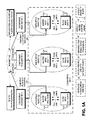
- Figure 1A is an example system architecture according to an example embodiment of the invention, showing three network controllers or coexistence managers CM_A, CM_C and CM_X serving three respective White Space Objects (WSOs), the first WSO A2, the second WSO C2, and the third WSO X that are neighbors in a coexistence set, in an example embodiment of the invention.
- WSOs White Space Objects
- the first WSO A2 includes a network of white space devices (WSDs) WSD5 and WSD8.
- the second WSO C2 includes a second network of WSDs WSD1 and WSD2.
- Example white space spectrum in the operating area of a WSD device include dedicated TV white space spectrum 30, locally unused TV bands 31, locally unused maritime bands 33, locally unused satellite bands 35, and locally unpaired (TDD) mobile device frequencies.
- a network of distributed coexistence managers CM_A, CM_C, and CM_X may communicate with one another over the Internet 105 and CM network 106.
- the white space object (WSO) A2 may transmit to the network controller or coexistence manager CM_A, a temporary release of resources 32A.
- the coexistence manager CM_A may forward over the CM network 106 to coexistence manager CM_C all or a portion of the temporary release of resources 32A.
- the coexistence manager CM_C may, in turn, transmit a reconfiguration command to white space object (WSO) A2 to convey all or a portion of the temporary release of resources 32A.
- Figure 1A also shows three non-limiting example white space spectra locally unused by licensed primary users of their respective spectrum white spaces, which may be used by the master WSD1 or slave WSD2, operating as unlicensed secondary users.
- TV band white space 31 is locally unused by licensed TV broadcasters.
- Maritime radio band 33 is locally unused by licensed maritime band radios.
- Earth station-to-satellite radio band 35 is locally unused by licensed earth station radios.
- a non-limiting example of a TV band white space 31 locally unused by licensed TV broadcasters is the 174-204 MHz band, representing the local absence of broadcast VHF TV channels 7, 8, 9, 10, and 11.
- Non-limiting examples of white space spectra are available in many parts of the electromagnetic spectrum. For example, white space spectra are available for personal/portable devices in the UHF portion of the spectrum.
- a maritime radio operates in a number of licensed frequency allocations and is a primary user in the maritime radio band 33. If there were no licensed maritime radios in operation that would interfere with the master WSD1 or slave WSD2, then they could operate as unlicensed secondary users and make use of maritime radio band 33. If either master WSD1 or slave WSD2 were to detect a signal transmitted from a neighboring maritime radio, then they would have to relinquish their use of the maritime band 33 and make a resource request, in accordance with example embodiments of the invention.
- a satellite earth station transmits to satellites in licensed frequency allocations from 2.025 GHz to 2.110 GHz and is a primary user in the earth-to-satellite band 35. If there were no licensed earth station radios in operation that would interfere with the master WSD1 or slave WSD2, then they could operate as unlicensed secondary users and make use of earth-to-satellite radio band 35. If either master WSD1 or slave WSD2 were to detect a signal transmitted from a neighboring earth station radio, then they would have to relinquish their use of the earth-to-satellite band 35 and make a resource request, in accordance with example embodiments of the invention.
- the master WSD5 uses a cellular 3rd Generation Partnership Project (3GPP) standard, such as Third-Generation (3G), Wideband Code Division Multiple Access (W-CDMA), High Speed Packet Access (HSPA), Long Term Evolution (LTE), LTE Advanced (LTE-A), or International Mobile Telecommunications Advanced (IMT-A), for its normal communications on the cell links, but it is capable of communicating in white space spectrum on TVWS links 6, 7, and 8.
- 3GPP 3rd Generation Partnership Project
- 3G Third-Generation
- W-CDMA Wideband Code Division Multiple Access
- HSPA High Speed Packet Access
- LTE Long Term Evolution
- LTE-A LTE Advanced
- IMT-A International Mobile Telecommunications Advanced
- FIG. 7 shows an example TDMA coexistence frame 24' in sub-band 14' in the unpaired time domain duplex frequency white space 36 in the uplink portion of the mobile device frequency band, which may be used by the cell base master device WSD5 and the cell slave device WSD8 in Figure 1A .
- TVWS may be used, for examine, in carrier aggregation, where it is available, in addition to licensed media.
- Similar examples include local area technologies implemented for example, cellular technologies for small cell operations such as hotspots, pico cells, femto cells, home nodes such as Home Node B (HNB), Home eNodeB (HeNB) and the like.
- integrated local nodes of secondary networks may consist of 3GPP technologies combined with the IEEE technologies, for example LTE Home eNodeB (LTE HeNB) with Wi-Fi.
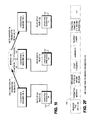
- Figure 1B is an example system architecture according to an example embodiment of the invention, showing the network controllers or coexistence managers CM_A, CM_C and CM_X serving three respective White Space Objects (WSOs), WSO A2, WSO C2, and WSO X that are neighbors in a coexistence set A, in an example embodiment of the invention.
- WSOs White Space Objects
- a network of distributed coexistence managers CM_A and CM_C may communicate with one another over the Internet 105.
- the control node or coexistence enabler 111 in the master WSD1 may communicate over the Internet 105 with the TVWS coexistence manager CM_C.
- the control node or coexistence enabler 111 in the master WSD1 may be collocated with the TVWS coexistence manager CM_C.
- the coexistence enabler 115 in the master WSD5 may communicate over the Internet 105 with the TVWS coexistence manager CM_A.
- the distributed coexistence managers CM_A and CM_C may communicate over the Internet 105, in an example embodiment of the invention.
- Master WSD1 may be registered through the control node or coexistence enabler 111 to the network controller or coexistence manager CM_C.
- Master WSD5 may be registered through the control node or coexistence enabler 115 to the network controller or coexistence manager CM_A.
- the coexistence enabler 111 may obtain information required for coexistence from a traffic network or device representing it. This may include configuration and control of measurements. Also, the coexistence enabler 111 may provide reconfiguration commands and control information to the master WSD1, corresponding to coexistence decisions received from coexistence manager CM_C.
- the coexistence manager CM_A is responsible for discovery of Coexistence Managers (CM)s CM_C managing neighboring wireless networks, for example, and coexistence related information may be exchanged with them.
- the coexistence manager CM_A or CM_C may have the needed information to make decisions of resource sharing among the Coexistence Managers (CM)s managing neighboring wireless networks.
- the coexistence manager CM_C handles resource requests from the coexistence enabler 111 in master WSD1.
- the coexistence manager CM_A handles resource requests from the coexistence enabler 115 in master WSD5.
- the master WSD1 includes IEEE 802.11 MAC and PHY to communicate over its network.
- the master WSD5 cell system includes a cellular 3GPP standard MAC and PHY to communicate over its network.
- the coexistence enablers 111 and 115 in master WSD1 and in master WSD5 send resource requests to the respective coexistence managers CM_C and CM_A.
- the example system architecture of Figure 1B shows the coexistence manager CM_C receiving a resource request from the coexistence enabler 111 in master WSD1.
- the coexistence manager CM_C has received Spectrum sensing results and network parameters from the coexistence enabler 111 in master WSD1. Network parameters may include specific user requirements (user load, QoS, priority, etc), aggregate spectral efficiency, etiquette (first come, first served, etc.), and user or network policies.
- the coexistence manager CM_C accesses a geo-location database 200 in Figure 1A to obtain available secondary channels in the TV band white space.
- the coexistence manager CM_C accesses the coexistence network element coexistence discovery and information server (CDIS) 107 in Figure 1A to obtain potential neighbor networks' addresses.
- CDIS coexistence network element coexistence discovery and information server
- the coexistence manager CM_C processes this data in conjunction with Spectrum maps, Operational parameters, and Time base sync, to determine a resource reallocation for the coexistence enabler 111 in master WSD1.
- the coexistence manager CM_C then sends to the coexistence enabler 111 in master WSD1 the resource reallocation, including Operational parameters, Quiet period parameters, Spectrum sensing strategy, and/or Time base sync.
- the coexistence enabler 111 in master WSD1 controls at least one of the medium access control (MAC) and the physical layer (PHY) and the Radio resource Control (RRC) and the Radio Resource Management (RRM) to communicate in channels in the TV white spaces band reallocated by the coexistence manager CM_C, without interference from other networks sharing the same white space channels.
- MAC medium access control
- PHY physical layer
- RRC Radio resource Control
- RRM Radio Resource Management
- a similar operation may be carried out by the coexistence manager CM_A in conjunction with the coexistence enabler 115 in master WSD5.
- Figure 1C is an example system architecture according to an example embodiment of the invention of Figure 1A , which illustrates the network controller or coexistence manager CM_A, transmitting reconfiguration command temporary release entitlement message 211 of Figure 2A , to control node or coexistence enabler (CE) 115 of white space object A2, in an example embodiment of the invention.
- CM_A network controller or coexistence manager
- CE coexistence enabler
- the control node or coexistence enabler (CE) receives an allocation of resources from the network controller or coexistence manager (CM) serving the control node.
- a CE that is served by a CM and that has subscribed to the management service, and that has received a reconfiguration command from the serving CM with operating parameters has means to release some of the resources allocated to it and its WSO in temporary manner.
- the serving CM has means to manage the CEs it serves with respect to whether the CEs are entitled to release resources in temporary manner.
- each reconfiguration command from a CM to a CE it serves in the coexistence management service may contain an indication whether the CE is entitled to release the given resources in temporary manner. Only a CE that has been entitled to release resources in the previous reconfiguration command from its CM may release some of the resources using the methods defined earlier in this section.
- Figure 1D is an example system architecture according to an example embodiment of the invention of Figure 1A , which illustrates the control node or coexistence enabler (CE) 115 of white space object A2 transmitting to the network controller or coexistence manager CM_A, temporary release message 212 of Figure 2B , in an example embodiment of the invention.
- CE control node or coexistence enabler
- the control node or coexistence enabler (CE) transmits to the network controller or coexistence manager (CM), a temporary release message indicating resources that were kept by the control node after a temporary release.
- the CE may send a message to the serving CM at any time after the reconfiguration message to indicate that the CE and its WSO take only a portion of the given resources in use and make the rest of the resources available for others in temporary manner.
- the message may be similar to the response message sent as a response to a reconfiguration command message.
- the response message may have at least a field with which the CE can indicate that the new parameters are due to temporary release of some resources allocated to the CE and its WSO.
- the release message from a CE to the CM serving it may contain operating parameters of the WSO associated to the CE after the temporary release.
- Figure 1E is an example system architecture according to an example embodiment of the invention of Figure 1A , which illustrates the network controller or coexistence manager CM_A, transmitting validity check message 213 of Figure 2C , to control node or coexistence enabler (CE) 115 of white space object A2, in an example embodiment of the invention.
- CM_A network controller or coexistence manager
- CE coexistence enabler
- the control node or coexistence enabler (CE) periodically indicates to the network controller or coexistence manager (CM), whether the release is still valid.
- the termination message 215 of Figure 2E may be a response message to the validity check message 213 of Figure 2C .
- the response to the validity check message 213 may be either "release is still valid” or "terminate the release”.
- the control node or coexistence enabler (CE) may make this response/indication only when the network controller or coexistence manager (CM) has transmitted the validity check message 213.
- a CM that serves a CE and that receives from the CE a temporary release of resources allocated to the CE and its WSO, takes responsibility for maintaining the temporarily released resources on behalf of the CE.
- the serving CM has a timer for each of the CEs it serves in the management service.
- the timer is reset to a pre-determined value representing the release validity period and is started to decrement upon receiving a release request message from the CE.
- the serving CM may successfully complete a validity check request-response message exchange with the releasing CE at least once per the release validity period.
- the timer may be maintained as long as the release is valid.
- the timer may be reset to the pre-determined value representing the release validity period and restarted to decrement upon reception of a response message from the releasing CE indicating a continuation of the release.
- the control node receives a return of the temporarily released resources from the network controller, when the release is no longer valid.
- control node periodically indicates to the network controller, whether the release is still valid, in response to receiving a request or status query from the network controller.
- Figure 1F1 is an example system architecture according to an example embodiment of the invention of Figure 1A , which illustrates the network controller or coexistence manager CM_A, transmitting CM-TO-ANOTHER-CM temporary release message 214 of Figure 2D , to network controller or coexistence manager CM_C, in an example embodiment of the invention.
- the serving CM communicates its CE's resources after a temporary release. It is then up to receiving CM to calculate what kind of resources it can have according to reduced resources of the releasing neighbor CE, without changing the resource allocation of any WSOs in the coexistence set of the WSO receiving temporary resources.
- temporarily released resources may be communicated to receiving CMs.
- the message may contain a field with which the serving CM may indicate whether the operating parameters are due to a temporary resource release.
- the message may allow the serving CM to indicate the operating parameters of a WSO associated to a CE and whether the operating parameters are due to temporary resource release.
- the same message may be used by the serving CM also to indicate termination of the temporary resource release. Such a message may be sent by the serving CM when the releasing CE has declined to continue the release and when the release timer has expired.
- the network controller receives a temporary release message from a control node that it serves, indicating resources that were kept by the control node after a temporary release.
- the network controller transmits at least a portion of the resources released by the control node, to one or more other network controllers.
- the one or more other network controller receives resources from the originating network controller, which were temporarily released by a control node served by the originating network controller.
- Figure 1F2 is an example system architecture according to an example embodiment of the invention of Figure 1A , which illustrates the network controller or coexistence manager CM_A, transmitting a reconfiguration command message 211' of Figure 2G , to a second control node or coexistence enabler (CE) 115' of a second white space object A1 that CM_A serves, in an example embodiment of the invention.
- CE coexistence enabler
- CM_A may send a reconfiguration command message 211' of Figure 2G to the other CE 115' indicating the additional resources.
- the message may be a reconfiguration command message that contains a field with which the CM indicates the operating parameters and whether the parameters are due to temporarily released resources.
- the indication that the parameters are due to temporarily released resources may be to prohibit the other CE 115' from further releasing the temporary resources. In an example embodiment of the invention, this indication may be the same as the one with which the CM indicates whether the original CE 115 is entitled to release the allocated resources or not.
- the CM_A may send a reconfiguration command to the other CE 115' indicating that both a portion or all of the temporarily released resources are provided and also that free/released resources from the network may be provided, and also that resources still reserved for the network may be provided.
- Figure 1G is an example system architecture according to an example embodiment of the invention of Figure 1A , which illustrates the network controller or coexistence manager CM_C, transmitting reconfiguration command - temporary resources without right to further release 211' similar to Figure 2A , to control node or coexistence enabler (CE) 111 of white space object C2, in an example embodiment of the invention.
- CM_C network controller or coexistence manager
- a CM that receives from another CM a message indicating existence of temporarily released resources may take the resources temporarily for use by a WSO associated to a CE it serves.
- the CM may send a message to the CE indicating the additional resources.
- the message may be a reconfiguration command message that contains a field with which the CM indicates the operating parameters and whether the parameters are due to temporarily released resources.
- the indication that the parameters are due to temporarily released resources may be to prohibit the CE from further releasing the temporary resources. In an example embodiment of the invention, this indication may be the same as the one with which the CM indicates whether the CE is entitled to release the allocated resources or not.
- the network controller or coexistence manager CM_C in Figure 1F1 has received resources in the CM-TO-ANOTHER-CM temporary release message 214 from network controller or coexistence manager CM_A, which were temporarily released by the control node or coexistence enabler (CE) 115 served by the network controller CM_A.
- CE coexistence enabler
- the network controller CM_C in Figure 1G calculates a new resource allocation to the control node or coexistence enabler (CE) 111 of the network controller CM_C, without changing an existing allocation of a coexistence set of the control node 111.
- CE coexistence enabler
- the network controller CM_C in Figure 1G allocates the new resource allocation to the control node 111 with an indication to prohibit making a further a resource release.
- the network controller CM_C in Figure 1J1 sends the reconfiguration command -terminate temporary resources message 211" to control node or coexistence enabler 111, to thereby return the released resources to the network controller CM_A, when the network controller CM_C in Figure 1I , receives the command CM-TO-ANOTHER-CM termination message 216 from network controller CM_A to return the released resources.
- the CM_C may send a reconfiguration command to the CE 111 indicating that both a portion or all of the temporarily released resources are provided and also that free/released resources from the network may be provided, and also that resources still reserved for the network may be provided.
- Figure 1H is an example system architecture according to an example embodiment of the invention of Figure 1A , which illustrates control node or coexistence enabler (CE) 115 of white space object A2 transmitting to the network controller or coexistence manager CM_A, termination message 215 of Figure 2E , in an example embodiment of the invention.
- CE control node or coexistence enabler
- the network controller or coexistence manager periodically obtains an indication from the control node or coexistence enabler (CE) whether the release is still valid.
- the termination message 215 from the control node or coexistence enabler (CE) may be a response message to the validity check message 213 sent by the network controller or coexistence manager (CM).
- the response to the validity check message 213 may be either "release is still valid” or "terminate the release”.
- the control node or coexistence enabler (CE) may make this response/indication only when the network controller or coexistence manager (CM) has transmitted the validity check message 213.
- the originating CE when the originating CE wants to terminate the temporary resource release and take back all the allocated resources in use, it indicates the termination to the serving CM in a message sent as a response to a validity check request from the CM.
- Figure 1I is an example system architecture according to an example embodiment of the invention of Figure 1A , which illustrates the network controller or coexistence manager CM_A, transmitting CM-TO-ANOTHER-CM termination message 216 of Figure 2F , to coexistence manager CM_C, in an example embodiment of the invention.
- the network controller returns the released resources to the originating network controller, when the network controller receives a command from the originating network controller to return the released resources.
- a CM that serves a CE and that receives from the CE a temporary release of resources allocated to the CE and its WSO, takes responsibility for maintaining the temporarily released resources on behalf of the CE.
- the message may be used by the serving CM to indicate termination of the temporary resource release.
- Such a message may be sent by the serving CM when the releasing CE has declined to continue the release and when the release timer has expired.
- Figure 1J1 is an example system architecture according to an example embodiment of the invention of Figure 1A , which illustrates the network controller or coexistence manager CM_C, transmitting reconfiguration command - terminate temporary resources 211" similar to Figure 2A to control node or coexistence enabler (CE) 111 of white space object C2, in an example embodiment of the invention.
- CM_C network controller or coexistence manager
- CE coexistence enabler
- a reconfiguration command from the serving CM commands the CE to stop the use of the temporarily the released resources.
- Figure 1J2 is an example system architecture according to an example embodiment of the invention of Figure 1A , which illustrates the network controller or coexistence manager CM_A, transmitting reconfiguration command terminate temporary resources 211" similar to Figure 2A , to a second coexistence enabler 115' of a second white space object A1 that CM_A serves, in an example embodiment of the invention.
- Figure 3 is a non-limiting example frequency band diagram illustrating an example TDMA coexistence frame sub-band 28 in the TV band white space locally unused by licensed TV broadcasters in the 174-204 MHz band, representing broadcast TV channels 7, 8, 9, 10, and 11 in the Richmond, Virginia (USA) area, as shown in Figure 4 , according to an embodiment of the present invention.
- License-exempt access to these bands as a secondary use for coexistence of networks requesting additional resources may include restrictions on geographic location, transmission power, range, and bandwidth of the transmissions of the requesting networks.
- the 802.11 WLAN standards specify frequencies for operation in the 2.400-2.500 GHz ISM band, the 5 GHz ISM band, and the IEEE 802.11ad Very High Throughput 60 GHz band.
- the 802.11 WLAN standards specify an OFDM-based physical layer with a bandwidth of 20 MHz channel separation. At 11 MHz from the center of the channel, the energy is approximately 20 dB lower than the maximum signal level. Further away from the center frequency, the energy levels fall further resulting in minimal interference on adjacent channels.
- the TV band white spaces at 54-88 MHz and at 470-806 MHz are good candidates for coexistence of an 802.11 WLAN wireless LAN channel.
- the earth station-to-satellite white space spectrum at 2.025 GHz to 2.110 GHz is a good candidate for coexistence of an 802.11 WLAN wireless LAN channel.
- Figure 3 shows a non-limiting example of the location of the white spaces in the RF spectrum and example TDMA coexistence frames in the white space spectrum, showing the freely available time slots before any networks have been allocated slots.
- the white spaces include the FCC dedicated TV white space 54-88 MHz band, the FCC dedicated TV white space 470-806 MHz band, and locally unused the earth station-to-satellite white space spectrum in 2.025 GHz to 2.110 GHz.
- coexistence techniques for enabling two or more independently operated wireless networks or devices using different radio technologies adapted for TV white space frequency bands, to access the same TV white space frequency band in the same location without mutual interference.
- Some examples of coexistence techniques include dynamic frequency selection, transmit power control, listen-before-talk behavior, time division multiplexing different IEEE 802 technologies, message-based on-demand spectrum contention, and control through a centralized network controller or coexistence manager.
- Figure 4 shows an example map of the Richmond, Virginia (USA) geographic area and an overlay of coverage areas for broadcast TV channels 7, 8, 9, 10, and 11, illustrating that there is a locally available TV band white space that is unused by licensed TV broadcasters in the 174-204 MHz band, as shown in Figure 3 .
- the map of Figure 4 shows that there is no coverage by licensed TV broadcasters in the 174-204 MHz band, which is therefore a locally available TV band white space.
- Figure 5A is a functional block diagram according to an example embodiment of the invention, illustrating an example master WSD1 device including the control node or coexistence enabler 111 for the wireless device.
- the device may be configured to operate in the TVWS coexistence bands or additional RF spectrum bands where there may be no primary user radios operating in the neighboring wireless networks, in an example embodiment of the invention.
- master WSD1 includes a protocol stack, including the radio 128 and the IEEE 802.11 MAC 142, which may be based, for example, on the IEEE 802.11 WLAN standard.
- the MAC 142 includes integrated TV white space features.
- the protocol stack may also include a network layer 140, a transport layer 138, and an application program 136.
- the example master WSD1 may include a processor 134 that includes a dual or multi core central processing unit CPU_1 and CPU_2, a RAM memory, a ROM memory, and an interface for a keypad, display, and other input/output devices.
- a location sensor 132 such as a GPS may be included to establish the geographic location of the master WSD1, and the location of the master WSD1 is reported to the network controller or coexistence manager CM_C.
- the coexistence enabler 111 may send resource requests to the coexistence manager CM_C.
- the MAC 142 includes integrated TV white space features to communicate using the radio 128 in channels in the TV white spaces band reallocated by the coexistence manager CM_C, without mutual interference.
- the spectrum sensor 130 senses the electromagnetic environment of the master WSD1 and reports it to the coexistence manager CM_C.
- the geo-location database 200 of Figure 5B may communicate the allowed emission levels via the Internet 105 to the coexistence manager CM_C, which forwards the allowed emission levels via the Internet 105 to coexistence enabler 111 in the master WSD1.
- the master WSD1 includes spectral decoding logic 133.
- spectral decoding logic 133 When input data are not properly correlated, a rectangularly-pulsed OFDM signal is discontinuous in phase and thus exhibits large power spectral sidelobes decaying asymptotically as the frequency. Such large sidelobes cause strong interference to adjacent channels and need to be suppressed before transmission.
- Spectral precoding is capable of suppressing sidelobe powers effectively without trading off system error performance or implementation complexity. By spectral precoding, significant sidelobe suppression is achieved by precoding data symbols in frequency domain without resort to specific data values.
- the idea is to introduce correlation among data symbols by a fixed precoder matrix in a way that the spectrally-precoded rectangularly-pulsed OFDM signal exhibits extremely small power spectral sidelobes decaying asymptotically, and thereby high spectral efficiency.
- Spectral precoders are all invertible and thus enable realizable decoding at the receiver while providing good system error performance.
- An example spectral decoder is described in the publication by Char-Dir Chung, "Spectral Precoding for Constant-Envelope OFDM", IEEE Transactions on Communications, vol. 58, no. 2, February 2010, pages 555-567 .
- the interface circuits in Figure 5A may interface with one or more radio transceivers, battery and other power sources, key pad, touch screen, display, microphone, speakers, ear pieces, camera or other imaging devices, etc.
- the RAM and ROM may be removable memory devices such as smart cards, subscriber identity modules (SIMs), wireless identification modules (WIMs), semiconductor memories such as RAM, ROM, PROMS, flash memory devices, etc, as shown in Figure 9.
- SIMs subscriber identity modules
- WIMs wireless identification modules
- semiconductor memories such as RAM, ROM, PROMS, flash memory devices, etc, as shown in Figure 9.
- the processor protocol stack layers, and/or application program may be embodied as program logic stored in the RAM and/or ROM in the form of sequences of programmed instructions which, when executed in the CPU, carry out the functions of example embodiments.
- the program logic may be delivered to the writeable RAM, PROMS, flash memory devices, etc.
- control node or coexistence enabler and coexistence manager from a computer program product or article of manufacture in the form of computer-usable media such as resident memory devices, smart cards or other removable memory devices. Alternately, they may be embodied as integrated circuit logic in the form of programmed logic arrays or custom designed application specific integrated circuits (ASIC).
- ASIC application specific integrated circuits
- the one or more radios in the device may be separate transceiver circuits or alternately, the one or more radios may be a single RF module capable of handling one or multiple channels in a high speed, time and frequency multiplexed manner in response to the processor.
- the master WSD1 of Figure 5A includes processor 134 that may access random access memory RAM and/or read only memory ROM in order to obtain stored program code and data for use during processing.
- the RAM or ROM may generally include removable or imbedded memories that operate in a static or dynamic mode. Further, the RAM or ROM may include rewritable memories such as Flash, EPROM, EEPROM, etc. Examples of removable storage media based on magnetic, electronic and/or optical technologies such as magnetic disks, optical disks, semiconductor memory circuit devices and micro-SD memory cards (SD refers to the Secure Digital standard) are shown at 126 and in Figure 8 , and may serve, for instance, as a data input/output means. Code may include any interpreted or compiled computer language including computer-executable instructions. The code and/or data may be used to create software modules such as operating systems, communication utilities, user interfaces, more specialized program modules, etc.
- Figure 5B is an example network diagram according to an embodiment of the present invention, illustrating the control node or coexistence enabler 111, communicating over a backhaul wireline and/or internet link with the network controller or coexistence manager CM_C, in an example embodiment of the invention.
- the coexistence manager CM_C may communicate over the internet 105 with the geo-location database 200 and the coexistence network element coexistence discovery and Information server (CDIS) 107, in an example embodiment of the invention.
- CDIS coexistence network element coexistence discovery and Information server
- a master WSD such as WSD1 may send queries for the available spectrum to a geo-location database 200.
- Database 200 may comprise some internal structure, for example, in form functional blocks such as processors, memory, software/hardware modules, and the like, for performing operations described herein. Such blocks may for example transmit and receive information such as spectrum information, emission characteristics, and/or allowed operating parameters.
- the master WSD1 uses the IEEE 802.11 wireless LAN (WLAN) protocol for is normal communications on its IEEE 802.11 links, but it is capable of communicating in white space spectrum on TVWS links 2, 3, and 4.
- the returned information from the geo-location database 200 enables the operation in the white space spectrum, of both the master WSD1 and its associated slave WSD2 that is within the master WSD1's operational area. There may be other reasons to use TVWS, such as better propagation.
- Normal communication medium typically is available for WLAN (e.g. 2.4 or 5GHz), but TVWS may not be available everywhere due primary users.
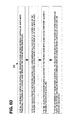
- Figure 6A is an example flow diagram of operational steps in a control node transmitting to a serving network controller, a temporary release message indicating resources that were kept by the control node, according to an embodiment of the present invention.
- the steps of the flow diagram 600 of Figure 6A may represent computer code instructions stored in the RAM and/or ROM memory of the master white space device, which when executed by the central processing units (CPU), carry out the functions of an example embodiment of the invention.
- the steps may be carried out in another order than shown and individual steps may be combined or separated into component steps.
- Step 602 receiving by a control node of a wireless network, an allocation of resources and an indication of allowance to release resources temporarily from a network controller serving the control node;
- Step 604 transmitting by the control node to the network controller, a message indicating temporary release of a portion of the allocated resources.
- Figure 6B is an example flow diagram of operational steps in a network controller that receives a temporary release message from a control node that it serves, indicating resources that were kept by the control node, according to an embodiment of the present invention.
- the steps of the flow diagram 650 of Figure 6B may represent computer code instructions stored in the RAM and/or ROM memory of the slave white space device, which when executed by the central processing units (CPU), carry out the functions of an example embodiment of the invention.
- the steps may be carried out in another order than shown and individual steps may be combined or separated into component steps.
- Step 652 receiving by a network controller, a temporary release message from a control node that it serves, indicating temporary release of a portion of resources allocated to the control node by the network controller;
- Step 654 periodically obtaining an indication from the control node whether the release is still valid.
- Step 656 returning the temporarily released resources to the control node when the release is no longer valid.
- Figure 6C is an example flow diagram of operational steps in a network controller that receives resources from another network controller, in response to receiving a temporary release message, according to an embodiment of the present invention.
- the steps of the flow diagram 680 of Figure 6C may represent computer code instructions stored in the RAM and/or ROM memory of the slave white space device, which when executed by the central processing units (CPU), carry out the functions of an example embodiment of the invention.
- the steps may be carried out in another order than shown and individual steps may be combined or separated into component steps.
- Step 682 receiving by a network controller, resources from another network controller, which were temporarily released by a control node served by the other network controller;
- Step 684 returning by the network controller, the released resources to the other network controller, when the network controller receives a command from the other network controller to return the released resources.
- Figure 6D is an example flow diagram of operational steps in a network controller that receives resources from another network controller and calculates a new resource allocation to a control node of the network controller without changing an existing allocation of a coexistence set of the control node, in response to receiving a temporary release message, according to an embodiment of the present invention.
- the steps of the flow diagram 690 of Figure 6D may represent computer code instructions stored in the RAM and/or ROM memory of the slave white space device, which when executed by the central processing units (CPU), carry out the functions of an example embodiment of the invention.
- the steps may be carried out in another order than shown and individual steps may be combined or separated into component steps.
- Step 692 receiving by a network controller, resources from another network controller, which were temporarily released by a control node served by the other network controller;
- Step 694 calculating by the network controller, a new resource allocation to a control node of the network controller without changing an existing allocation of a coexistence set of the control node;
- Step 696 allocating a new resource allocation to the control node with an indication to prohibit making a further a resource release
- Step 698 returning by the network controller, the released resources to the other network controller, when the network controller receives a command from the other network controller to return the released resources.
- Figure 7 is an example frequency band diagram illustrating an example TDMA coexistence frame 24' in sub-band 14' in an unpaired time domain duplex frequency white space of 900 to 905 MHz in the uplink portion of a mobile device communications frequency band, according to an example embodiment of the invention.
- Figure 7 illustrates an example frequency plan for the example mobile device frequency band, with an uplink portion between 890 and 915 MHz and a down link portion between 935 and 960 MHz, similar to a portion of the frequency plan for GSM.
- a 5 MHz band between 945 and 950 MHz in the down link portion is reserved for other uses, for example as an emergency services band.
- FIG. 7 shows an example TDMA coexistence frame 24' in sub-band 14' in the unpaired time domain duplex frequency white space 36 in the uplink portion of the mobile device frequency band, which may be used by the cell base master device WSD5 and the cell slave devices WSD6, WSD7, and WSD8 in Figure 1A .
- Figure 8 illustrates an example embodiment of the invention, wherein examples of removable storage media 126 are shown, based on magnetic, electronic and/or optical technologies, such as magnetic disks, optical disks, semiconductor memory circuit devices and micro-SD memory cards (SD refers to the Secure Digital standard), for storing data and/or computer program code as an example computer program product, in accordance with at least one embodiment of the present invention.
- magnetic, electronic and/or optical technologies such as magnetic disks, optical disks, semiconductor memory circuit devices and micro-SD memory cards (SD refers to the Secure Digital standard), for storing data and/or computer program code as an example computer program product, in accordance with at least one embodiment of the present invention.
- SD Secure Digital standard
- the embodiments may be implemented as a machine, process, or article of manufacture by using standard programming and/or engineering techniques to produce programming software, firmware, hardware or any combination thereof.
- Any resulting program(s), having computer-readable program code, may be embodied on one or more non-transitory computer-usable media such as resident memory devices, smart cards or other removable memory devices, or transmitting devices, thereby making a computer program product or article of manufacture according to the embodiments.
- non-transitory computer-usable media such as resident memory devices, smart cards or other removable memory devices, or transmitting devices, thereby making a computer program product or article of manufacture according to the embodiments.
- the terms “article of manufacture” and “computer program product” as used herein are intended to encompass a computer program that exists permanently or temporarily on any computer-usable medium.
- memory/storage devices include, but are not limited to, disks, optical disks, removable memory devices such as smart cards, SIMs, WIMs, semiconductor memories such as RAM, ROM, PROMS, etc.
- Transmitting mediums include, but are not limited to, transmissions via wireless communication networks, the Internet, intranets, phone/modem-based network communication, hard-wired/cabled communication network, satellite communication, and other stationary or mobile network systems/communication links.
Landscapes
- Engineering & Computer Science (AREA)
- Computer Networks & Wireless Communication (AREA)
- Signal Processing (AREA)
- Mobile Radio Communication Systems (AREA)
Applications Claiming Priority (1)
| Application Number | Priority Date | Filing Date | Title |
|---|---|---|---|
| US13/417,653 US9473946B2 (en) | 2012-03-12 | 2012-03-12 | Method, apparatus, and computer program product for temporary release of resources in radio networks |
Publications (1)
| Publication Number | Publication Date |
|---|---|
| EP2640106A1 true EP2640106A1 (fr) | 2013-09-18 |
Family
ID=47826863
Family Applications (1)
| Application Number | Title | Priority Date | Filing Date |
|---|---|---|---|
| EP13155031.1A Withdrawn EP2640106A1 (fr) | 2012-03-12 | 2013-02-13 | Procédés, appareils et produit de programme informatique pour la libération temporaire de ressources dans les réseaux radio |
Country Status (4)
| Country | Link |
|---|---|
| US (1) | US9473946B2 (fr) |
| EP (1) | EP2640106A1 (fr) |
| KR (1) | KR101509303B1 (fr) |
| CN (1) | CN103313433B (fr) |
Families Citing this family (8)
| Publication number | Priority date | Publication date | Assignee | Title |
|---|---|---|---|---|
| US9071976B2 (en) * | 2012-05-31 | 2015-06-30 | Intel Mobile Communications GmbH | Communication network device, communication device, method for managing communication resource allocation and method for communication resource allocation |
| EP2904829A1 (fr) * | 2012-10-02 | 2015-08-12 | Telefonaktiebolaget L M Ericsson (PUBL) | N ud de réseau et méthode de gestion des bandes de spectre dans un système de communication radio portable |
| US10057356B2 (en) * | 2013-10-28 | 2018-08-21 | Bae Systems Information And Electronic Systems Integration Inc. | Policy managed system and method thereof |
| US9357402B2 (en) | 2014-02-25 | 2016-05-31 | Microsoft Technology Licensing, Llc | Guard band usage for wireless data transmission |
| CN112019998B (zh) * | 2014-06-20 | 2023-03-10 | 索尼公司 | 无线电资源管理系统和无线电资源管理方法 |
| EP3192320A1 (fr) * | 2014-09-10 | 2017-07-19 | Telefonaktiebolaget LM Ericsson (publ) | Noeud d'accès radio, terminal de communication et procédés mis en oeuvre pour ces derniers |
| US10602369B2 (en) * | 2015-09-11 | 2020-03-24 | Sony Corporation | Communication control device, communication control determination device, and method |
| US11716716B2 (en) * | 2021-02-03 | 2023-08-01 | Qualcomm Incorporated | Barrage signal for protecting wireless communications |
Citations (4)
| Publication number | Priority date | Publication date | Assignee | Title |
|---|---|---|---|---|
| US20090059856A1 (en) * | 2007-08-10 | 2009-03-05 | Nokia Corporation | Spectrum sharing |
| US20090161614A1 (en) * | 2006-05-03 | 2009-06-25 | Motorola, Inc. | Resource exchange discovery in a cellular communication system |
| US20100220676A1 (en) * | 2007-09-26 | 2010-09-02 | Motorola, Inc. | Radio resource management |
| US20110305206A1 (en) * | 2010-06-15 | 2011-12-15 | Nokia Corporation | Method to request resources in tv white spaces type environment |
Family Cites Families (104)
| Publication number | Priority date | Publication date | Assignee | Title |
|---|---|---|---|---|
| US7532610B2 (en) | 2001-01-16 | 2009-05-12 | Texas Instruments Incorporated | Structured adaptive frequency hopping |
| WO2003001742A1 (fr) | 2001-06-25 | 2003-01-03 | Commprize Ventures Limited | Procede et systeme de detection et adaptation dynamique d'interferences radio dans un environnement de communications sans fil partage |
| EA008614B1 (ru) | 2003-06-05 | 2007-06-29 | Интертраст Текнолоджис Корпорейшн | Переносимые системы и способы для приложений одноранговой компоновки услуг |
| US7830907B1 (en) | 2003-09-26 | 2010-11-09 | Coppergate Communications Ltd. | Frame structure for OFDM signaling, including beacons and traffic |
| WO2005048511A2 (fr) | 2003-11-07 | 2005-05-26 | Sharp Laboratories Of America, Inc. | Systemes et procedes destines a l'attribution des canaux dans un reseau |
| US7496070B2 (en) | 2004-06-30 | 2009-02-24 | Symbol Technologies, Inc. | Reconfigureable arrays of wireless access points |
| KR100943614B1 (ko) | 2005-05-31 | 2010-02-24 | 삼성전자주식회사 | 다중 무선 접속 네트워크 환경에서 주파수 자원 관리시스템 및 그 방법 |
| US7856008B2 (en) | 2005-07-27 | 2010-12-21 | Sharp Laboratories Of America, Inc. | Synchronizing channel sharing with neighboring networks |
| KR100964842B1 (ko) | 2005-08-25 | 2010-06-24 | 삼성전자주식회사 | 무선 이동 통신 시스템에서 핸드오버를 위한 시스템 및방법 |
| WO2007031960A2 (fr) | 2005-09-16 | 2007-03-22 | Koninklijke Philips Electronics, N.V. | Procede visant a ameliorer l'auto-coexistence de reseaux de communication sans fil |
| US7272129B2 (en) | 2005-10-13 | 2007-09-18 | Motorola, Inc. | Method and apparatus for synchronizing a node within an ad-hoc communication system |
| CN100415020C (zh) * | 2005-10-31 | 2008-08-27 | 上海华为技术有限公司 | 一种高速物理下行共享信道的码资源分配方法 |
| US8094631B2 (en) | 2005-12-09 | 2012-01-10 | Marvell World Trade Ltd. | Coexistence system and method for wireless network devices |
| US7796545B2 (en) | 2006-01-10 | 2010-09-14 | Qualcomm Incorporated | Method and apparatus for scheduling in a wireless communication network |
| KR101019396B1 (ko) | 2006-01-11 | 2011-03-07 | 퀄컴 인코포레이티드 | 피어-투-피어 통신 시스템에서 파라미터 선택 |
| US20070207800A1 (en) | 2006-02-17 | 2007-09-06 | Daley Robert C | Diagnostics And Monitoring Services In A Mobile Network For A Mobile Device |
| EP2024850A2 (fr) | 2006-03-24 | 2009-02-18 | Bitfone Corporation | Dispositif et réseau capables de diagnostics mobiles sur la base d'objets de gestion de diagnostics |
| US8155649B2 (en) | 2006-05-12 | 2012-04-10 | Shared Spectrum Company | Method and system for classifying communication signals in a dynamic spectrum access system |
| WO2007131958A1 (fr) | 2006-05-17 | 2007-11-22 | Clariant International Ltd | Utilisation de cires de copolymères de propylène dans la production de films plastiques collants |
| US8442434B2 (en) | 2006-05-24 | 2013-05-14 | Broadcom Corporation | Method and system for auto coexistence priority selection for a SCO link |
| CN101083825B (zh) | 2006-05-30 | 2011-09-28 | 株式会社Ntt都科摩 | 在共存的多种无线网络中进行动态频谱分配的方法及装置 |
| EP1883258B1 (fr) | 2006-07-25 | 2012-08-29 | Alcatel Lucent | Procédé pour partager de ressources radio, produit programme d'ordinateur, module de gestion de ressources radio et réseau de communication radio |
| US8554270B2 (en) | 2006-08-16 | 2013-10-08 | Broadcom Corporation | Systems and methods for enabling coexistence of multiple wireless components operating in the same frequency band |
| WO2008035287A2 (fr) * | 2006-09-18 | 2008-03-27 | Nokia Corporation | Procédé et appareil pour la diminution de la bande de garde entre des systèmes de communication sans fil fonctionnant dans la même région géographique |
| US8031618B2 (en) | 2006-10-16 | 2011-10-04 | Stmicroelectronics, Inc. | Methods of RF sensing control and dynamic frequency selection control for cognitive radio based dynamic spectrum access network systems-cognitive dynamic frequency hopping |
| US7869400B2 (en) | 2006-10-16 | 2011-01-11 | Stmicroelectronics, Inc. | Method of inter-system coexistence and spectrum sharing for dynamic spectrum access networks-on-demand spectrum contention |
| US8958810B2 (en) | 2006-11-07 | 2015-02-17 | Alcatel Lucent | Method and apparatus for spectrum allocation in wireless networks |
| KR100959332B1 (ko) | 2006-11-07 | 2010-05-20 | 삼성전자주식회사 | 광대역 무선통신시스템에서 간섭 제거 장치 및 방법 |
| US7876786B2 (en) | 2006-12-01 | 2011-01-25 | Microsoft Corporation | Dynamic time-spectrum block allocation for cognitive radio networks |
| US9137672B2 (en) | 2006-12-09 | 2015-09-15 | Broadcom Corporation | Method and system for coexistence between 20 MHz and 40 MHz overlapping basic service sets (OBSS) in wireless local area networks |
| US8446893B2 (en) | 2006-12-21 | 2013-05-21 | Samsung Electronics Co., Ltd. | Enhanced coexistence beacon protocol (ECBP) for precise intercell synchronization of overlapping wireless base stations |
| US8554137B2 (en) | 2007-02-12 | 2013-10-08 | Broadcom Corporation | Method and system for short range and wireless LAN coexistence |
| US20080228878A1 (en) | 2007-03-15 | 2008-09-18 | Tao Wu | Signaling Support for Grouping Data and Voice Users to Share the Radio Resources in Wireless Systems |
| WO2008114986A2 (fr) | 2007-03-16 | 2008-09-25 | Lg Electronics Inc. | Dans un ou plusieurs environnements pouvant coexister en réseau, procédé pour déterminer si un canal spécifique est ou non disponible, procédé pour recevoir un signal de détection et procédé de communication en coexistence avec un type différent de |
| US8682246B2 (en) | 2007-03-21 | 2014-03-25 | Broadcom Corporation | Method and system for collaborative coexistence of bluetooth and WiMax |
| US8655283B2 (en) | 2007-04-23 | 2014-02-18 | Lingna Holdings Pte., Llc | Cluster-based cooperative spectrum sensing in cognitive radio systems |
| US8041380B2 (en) | 2007-04-26 | 2011-10-18 | Lingna Holdings Pte., Llc | Power control in cognitive radio systems based on spectrum sensing side information |
| US8199707B2 (en) | 2007-05-11 | 2012-06-12 | Stmicroelectronics, Inc. | Inter-cell discovery and communication using time division multiple access coexistence beaconing protocol |
| US7983216B2 (en) | 2007-05-31 | 2011-07-19 | Broadcom Corporation | Coexistence management for cooperative transceiving in a shared spectrum |
| US8385259B2 (en) | 2007-06-01 | 2013-02-26 | Stmicroelectronics, Inc. | Cross channel coexistence beaconing protocol for wireless dynamic spectrum access networks |
| US7826459B2 (en) | 2007-08-10 | 2010-11-02 | Texas Instruments Incorporated | Coexistence of different network technologies |
| KR101099348B1 (ko) | 2007-11-08 | 2011-12-26 | 엘지전자 주식회사 | 무선 메쉬 네트워크에서의 데이터 전송 방법 및 a-msdu 포맷 |
| US7949357B2 (en) | 2007-12-11 | 2011-05-24 | Nokia Corporation | Method and apparatus to select collaborating users in spectrum sensing |
| KR101003730B1 (ko) | 2007-12-14 | 2010-12-23 | 삼성전자주식회사 | 무선통신시스템에서 레인징 신호 검파 장치 및 방법 |
| GB0725053D0 (en) | 2007-12-21 | 2008-01-30 | Fujitsu Lab Of Europ Ltd | Communications system |
| GB0801532D0 (en) | 2008-01-28 | 2008-03-05 | Fujitsu Lab Of Europ Ltd | Communications systems |
| US8068826B2 (en) | 2008-02-01 | 2011-11-29 | Motorola Solutions, Inc. | Method and apparatus for controlling transmit power and incumbent protection in a cognitive radio system |
| US8345607B2 (en) | 2008-03-10 | 2013-01-01 | Marvell World Trade Ltd. | Coexistence and collocation of remote network and local network radios |
| US8428632B2 (en) | 2008-03-31 | 2013-04-23 | Motorola Solutions, Inc. | Dynamic allocation of spectrum sensing resources in cognitive radio networks |
| IL190659A0 (en) | 2008-04-07 | 2008-12-29 | Mariana Goldhamer | Wireless communication network with relay stations |
| US7915867B1 (en) | 2008-04-25 | 2011-03-29 | Potenco, Inc. | Synchronous control for generator output |
| US8274894B2 (en) | 2008-05-07 | 2012-09-25 | Nokia Corporation | Quality of service and power aware forwarding rules for mesh points in wireless mesh networks |
| KR101411024B1 (ko) | 2008-05-08 | 2014-06-23 | 삼성전자주식회사 | 무선 인지 기반 무선통신 시스템에서 공존 비콘 프로토콜 패킷 전송 장치 및 방법 |
| US8194549B2 (en) | 2008-05-09 | 2012-06-05 | At&T Mobility Ii Llc | Femto cell access point passthrough model |
| US8060104B2 (en) | 2008-05-30 | 2011-11-15 | Motorola Solutions, Inc. | Coexistence and incumbent protection in a cognitive radio network |
| DE602008002425D1 (de) | 2008-06-23 | 2010-10-14 | Alcatel Lucent | Signalzuweisungsverfahren und Vorrichtung dafür |
| GB2461724B (en) | 2008-07-09 | 2011-02-23 | Toshiba Res Europ Ltd | Wireless network access |
| US8130708B2 (en) | 2008-08-22 | 2012-03-06 | Telcom Ventures, Llc | Method and system enabling use of white space radio spectrum using an out of band control channel |
| EP2322005A4 (fr) | 2008-09-05 | 2014-03-05 | Ericsson Telefon Ab L M | Transmission coordonnée pour une utilisation secondaire |
| US8600418B2 (en) | 2008-09-10 | 2013-12-03 | Electronics And Telecommunications Research Institute | Relay station for cell information exchange between adjacent BSs over air links in cellular systems |
| WO2010035969A2 (fr) | 2008-09-23 | 2010-04-01 | Lg Electronics Inc. | Appareil et procédé de transmission et de réception de données dans un transfert intercellulaire sans coupure d’un système de communication sans fil |
| EP2356842A1 (fr) | 2008-10-17 | 2011-08-17 | Nokia Siemens Networks Oy | Partage de spectre |
| US20100142463A1 (en) | 2008-12-05 | 2010-06-10 | Stmicroelectronics, Inc. | Frame-based on-demand spectrum contention protocol-messaging method |
| US8363579B2 (en) | 2008-12-08 | 2013-01-29 | Intel Corporation | Apparatus and method of communication in a wireless network |
| US8295153B2 (en) * | 2008-12-23 | 2012-10-23 | Nokia Corporation | Radio resource sharing |
| US20100220687A1 (en) | 2009-02-10 | 2010-09-02 | Interdigital Patent Holdings, Inc. | Spectrum management across diverse radio access technologies |
| US20100232380A1 (en) | 2009-03-10 | 2010-09-16 | Nec Laboratories America, Inc. | System and method for utilizing spectrum operation modes in dynamic spectrum access systems |
| US8131304B2 (en) | 2009-03-30 | 2012-03-06 | Motorola Solutions, Inc. | Dynamic spectrum allocation (DSA) in a communication network |
| US8200161B2 (en) | 2009-04-22 | 2012-06-12 | Broadcom Corporation | Method and system for dynamic selection of a coexistence method and transmit power level based on calibration data |
| US9148889B2 (en) | 2009-06-01 | 2015-09-29 | Qualcomm Incorporated | Control of multiple radios using a database of interference-related information |
| US20100309317A1 (en) | 2009-06-04 | 2010-12-09 | Wi-Lan Inc. | Device and method for detecting unused tv spectrum for wireless communication systems |
| US8937872B2 (en) | 2009-06-08 | 2015-01-20 | Wi-Lan, Inc. | Peer-to-peer control network for a wireless radio access network |
| US8068440B2 (en) * | 2009-06-12 | 2011-11-29 | Cygnus Broadband, Inc. | Systems and methods for intelligent discard in a communication network |
| US9161232B2 (en) | 2009-06-29 | 2015-10-13 | Qualcomm Incorporated | Decentralized coexistence manager for controlling operation of multiple radios |
| US8995996B2 (en) | 2009-08-12 | 2015-03-31 | Harry V. Bims | Methods and apparatus for performance optimization of heterogeneous wireless system communities |
| US9185719B2 (en) | 2009-08-18 | 2015-11-10 | Qualcomm Incorporated | Method and apparatus for mapping applications to radios in a wireless communication device |
| US8379551B2 (en) | 2009-08-18 | 2013-02-19 | Qualcomm Incorporated | Radio selection in a multi-radio device |
| CA2773660C (fr) | 2009-09-09 | 2015-03-31 | Lg Electronics Inc. | Procede de balayage de canaux dans un systeme de reseau local sans fil |
| JP5297317B2 (ja) * | 2009-09-16 | 2013-09-25 | Kddi株式会社 | 無線リソース割当装置および無線リソース割当方法 |
| CN102668648B (zh) | 2009-10-21 | 2015-08-19 | Lg电子株式会社 | 在tvws中扫描现有网络的方法和装置 |
| KR101571904B1 (ko) | 2009-11-09 | 2015-11-27 | 연세대학교 산학협력단 | 이동통신 시스템에서 마이크로 단말에게 주파수 자원을 할당하기 위한 장치 및 방법 |
| EP4568410A3 (fr) | 2009-11-13 | 2025-08-27 | InterDigital Patent Holdings, Inc. | Procédé et appareil pour prendre en charge des actions de gestion pour un très haut débit dans des communications sans fil |
| US20110179174A1 (en) | 2010-01-19 | 2011-07-21 | Nokia Corporation | Apparatus identification in coexistence networking |
| US20110208668A1 (en) | 2010-02-22 | 2011-08-25 | Google Inc. | Server Provider Recommendation Engine |
| JP5370891B2 (ja) | 2010-02-23 | 2013-12-18 | 独立行政法人情報通信研究機構 | 無線通信システム,該システムに設置される共存マネージャー,及び無線通信方法 |
| US8594120B2 (en) | 2010-03-12 | 2013-11-26 | Disney Enterprises, Inc. | Cellular wireless LAN with frequency division multiplex in TV white space |
| US8451776B2 (en) | 2010-03-31 | 2013-05-28 | Qualcomm Incorporated | Method and apparatus to facilitate support for multi-radio coexistence |
| US9055556B2 (en) | 2010-04-01 | 2015-06-09 | Qualcomm Incorporated | Method and apparatus for selecting radios and mapping applications to radios on a wireless device |
| US8442468B2 (en) | 2010-04-12 | 2013-05-14 | Telefonaktiebolaget L M Ericsson (Publ) | Omni-directional sensing of radio spectra |
| US8447237B2 (en) | 2010-04-12 | 2013-05-21 | Telefonaktiebolaget L M Ericsson (Publ) | Interference avoidance in white space communication systems |
| TWI520551B (zh) | 2010-05-06 | 2016-02-01 | 內數位專利控股公司 | 動態空白頻譜管理系統及方法 |
| JP5493078B2 (ja) | 2010-07-26 | 2014-05-14 | 独立行政法人情報通信研究機構 | コグニティブ無線システムの共存マネージャー |
| US9173206B2 (en) | 2010-09-03 | 2015-10-27 | Lg Electronics Inc. | Method of making a coexistence decision on hybrid topology |
| US8385286B2 (en) | 2010-09-03 | 2013-02-26 | Nokia Corporation | Resource sharing between secondary networks |
| US8553576B2 (en) | 2010-09-21 | 2013-10-08 | Intel Corporation | Methods of co-existence for wideband transmissions |
| US20120134328A1 (en) | 2010-10-11 | 2012-05-31 | Interdigital Patent Holdings, Inc. | Method and apparatus for dynamic spectrum management |
| TWI524799B (zh) | 2010-10-12 | 2016-03-01 | 內數位專利控股公司 | 電視閒置頻段頻道選擇及網路配置以服務為基礎之方法 |
| TWI423618B (zh) | 2010-11-24 | 2014-01-11 | Ind Tech Res Inst | 遠端控制方法、系統及裝置及受控設備 |
| US8755275B2 (en) | 2010-12-29 | 2014-06-17 | Electronics And Telecommunications Research Institute | System and method for managing resource in communication system |
| US8804510B2 (en) | 2010-12-29 | 2014-08-12 | Electronics And Telecommunications Research Institute | System and method for managing resource in communication system |
| JP5622322B2 (ja) | 2011-01-12 | 2014-11-12 | 独立行政法人情報通信研究機構 | 通信共存システムによる通信共存方法 |
| US8363602B2 (en) | 2011-01-14 | 2013-01-29 | Nokia Corporation | Method, apparatus and computer program product for resource allocation of coexistent secondary networks |
| KR101738529B1 (ko) * | 2011-02-07 | 2017-05-23 | 인터디지탈 패튼 홀딩스, 인크 | 허가 면제 스펙트럼에서 보충 셀을 동작시키는 방법 및 장치 |
| US8843127B2 (en) | 2011-06-27 | 2014-09-23 | Nokia Corporation | Method and apparatus for providing optimized privacy in cognitive radio information sharing |
-
2012
- 2012-03-12 US US13/417,653 patent/US9473946B2/en active Active
-
2013
- 2013-02-13 EP EP13155031.1A patent/EP2640106A1/fr not_active Withdrawn
- 2013-03-12 CN CN201310077794.7A patent/CN103313433B/zh active Active
- 2013-03-12 KR KR20130026287A patent/KR101509303B1/ko active Active
Patent Citations (4)
| Publication number | Priority date | Publication date | Assignee | Title |
|---|---|---|---|---|
| US20090161614A1 (en) * | 2006-05-03 | 2009-06-25 | Motorola, Inc. | Resource exchange discovery in a cellular communication system |
| US20090059856A1 (en) * | 2007-08-10 | 2009-03-05 | Nokia Corporation | Spectrum sharing |
| US20100220676A1 (en) * | 2007-09-26 | 2010-09-02 | Motorola, Inc. | Radio resource management |
| US20110305206A1 (en) * | 2010-06-15 | 2011-12-15 | Nokia Corporation | Method to request resources in tv white spaces type environment |
Non-Patent Citations (3)
| Title |
|---|
| CHAR-DIR CHUNG: "Spectral Precoding for Constant-Envelope OFDM", IEEE TRANSACTIONS ON COMMUNICATIONS, vol. 58, no. 2, February 2010 (2010-02-01), pages 555 - 567, XP011288611, DOI: doi:10.1109/TCOMM.2010.02.080682 |
| ECC REPORT 159: TECHNICAL AND OPERATIONAL REQUIREMENTS FOR THE POSSIBLE OPERATION OF COGNITIVE RADIO SYSTEMS IN THE 'WHITE SPACES' OF THE FREQUENCY, vol. 470-790, January 2011 (2011-01-01) |
| SECOND MEMORANDUM OPINION AND ORDER, FCC, 23 September 2010 (2010-09-23), pages 10 - 174 |
Also Published As
| Publication number | Publication date |
|---|---|
| KR101509303B1 (ko) | 2015-04-07 |
| KR20130105462A (ko) | 2013-09-25 |
| CN103313433A (zh) | 2013-09-18 |
| CN103313433B (zh) | 2017-05-10 |
| US9473946B2 (en) | 2016-10-18 |
| US20130235810A1 (en) | 2013-09-12 |
Similar Documents
| Publication | Publication Date | Title |
|---|---|---|
| EP2640144B1 (fr) | Procédé, appareil et produit de programme informatique pour la gestion de conflit d'allocation de ressource dans des bandes de fréquence RF | |
| US9107089B2 (en) | Method, apparatus, and computer program product for location based query for interferer discovery in coexistence management system | |
| US9019909B2 (en) | Method, apparatus, and computer program product for coexistence management | |
| CA2802565C (fr) | Procede permettant de demander des ressources dans un environnement de type a espaces blancs | |
| US8942701B2 (en) | Method, apparatus, and computer program product for transferring responsibility between network controllers managing coexistence in radio frequency spectrum | |
| EP2795952B1 (fr) | Procédés et dispositifs de modification des paramètres de fonctionnement d'un dispositif de fréquences libérées | |
| KR101881433B1 (ko) | 트래픽의 서비스 품질(QoS) 제약조건에 기초한 허가 또는 비허가 스펙트럼 상의 트래픽 통신 시스템 및 방법 | |
| CN102685752B (zh) | 用于控制无线网络间共存的方法,装置和计算机程序 | |
| US9137805B2 (en) | Spectrum management in dynamic spectrum access wireless systems | |
| US9473946B2 (en) | Method, apparatus, and computer program product for temporary release of resources in radio networks | |
| WO2012056091A1 (fr) | Gestion d'une coexistence hétérogène dans des réseaux secondaires |
Legal Events
| Date | Code | Title | Description |
|---|---|---|---|
| PUAI | Public reference made under article 153(3) epc to a published international application that has entered the european phase |
Free format text: ORIGINAL CODE: 0009012 |
|
| AK | Designated contracting states |
Kind code of ref document: A1 Designated state(s): AL AT BE BG CH CY CZ DE DK EE ES FI FR GB GR HR HU IE IS IT LI LT LU LV MC MK MT NL NO PL PT RO RS SE SI SK SM TR |
|
| AX | Request for extension of the european patent |
Extension state: BA ME |
|
| 17P | Request for examination filed |
Effective date: 20140306 |
|
| RBV | Designated contracting states (corrected) |
Designated state(s): AL AT BE BG CH CY CZ DE DK EE ES FI FR GB GR HR HU IE IS IT LI LT LU LV MC MK MT NL NO PL PT RO RS SE SI SK SM TR |
|
| RAP1 | Party data changed (applicant data changed or rights of an application transferred) |
Owner name: NOKIA CORPORATION |
|
| RAP1 | Party data changed (applicant data changed or rights of an application transferred) |
Owner name: NOKIA TECHNOLOGIES OY |
|
| 17Q | First examination report despatched |
Effective date: 20180123 |
|
| GRAP | Despatch of communication of intention to grant a patent |
Free format text: ORIGINAL CODE: EPIDOSNIGR1 |
|
| RIC1 | Information provided on ipc code assigned before grant |
Ipc: H04W 16/14 20090101ALN20181031BHEP Ipc: H04W 16/06 20090101AFI20181031BHEP |
|
| INTG | Intention to grant announced |
Effective date: 20181128 |
|
| STAA | Information on the status of an ep patent application or granted ep patent |
Free format text: STATUS: THE APPLICATION IS DEEMED TO BE WITHDRAWN |
|
| RAP1 | Party data changed (applicant data changed or rights of an application transferred) |
Owner name: NOKIA TECHNOLOGIES OY |
|
| 18D | Application deemed to be withdrawn |
Effective date: 20190409 |