EP2640364B9 - Pharmazeutische zusammensetzung mit bicarbonatsalz und ihre verwendung als arzneimittel bei der behandlung und/oder prävention von lithiasis der harnwege und verwandten erkrankungen - Google Patents
Pharmazeutische zusammensetzung mit bicarbonatsalz und ihre verwendung als arzneimittel bei der behandlung und/oder prävention von lithiasis der harnwege und verwandten erkrankungen Download PDFInfo
- Publication number
- EP2640364B9 EP2640364B9 EP11796758.8A EP11796758A EP2640364B9 EP 2640364 B9 EP2640364 B9 EP 2640364B9 EP 11796758 A EP11796758 A EP 11796758A EP 2640364 B9 EP2640364 B9 EP 2640364B9
- Authority
- EP
- European Patent Office
- Prior art keywords
- composition
- bicarbonate
- cellulose
- composition according
- hours
- Prior art date
- Legal status (The legal status is an assumption and is not a legal conclusion. Google has not performed a legal analysis and makes no representation as to the accuracy of the status listed.)
- Active
Links
Images

Classifications
-
- A—HUMAN NECESSITIES
- A61—MEDICAL OR VETERINARY SCIENCE; HYGIENE
- A61K—PREPARATIONS FOR MEDICAL, DENTAL OR TOILETRY PURPOSES
- A61K9/00—Medicinal preparations characterised by special physical form
- A61K9/0002—Galenical forms characterised by the drug release technique; Application systems commanded by energy
-
- A—HUMAN NECESSITIES
- A61—MEDICAL OR VETERINARY SCIENCE; HYGIENE
- A61K—PREPARATIONS FOR MEDICAL, DENTAL OR TOILETRY PURPOSES
- A61K31/00—Medicinal preparations containing organic active ingredients
- A61K31/185—Acids; Anhydrides, halides or salts thereof, e.g. sulfur acids, imidic, hydrazonic or hydroximic acids
- A61K31/19—Carboxylic acids, e.g. valproic acid
-
- A—HUMAN NECESSITIES
- A61—MEDICAL OR VETERINARY SCIENCE; HYGIENE
- A61K—PREPARATIONS FOR MEDICAL, DENTAL OR TOILETRY PURPOSES
- A61K9/00—Medicinal preparations characterised by special physical form
- A61K9/20—Pills, tablets, discs, rods
- A61K9/2004—Excipients; Inactive ingredients
- A61K9/2068—Compounds of unknown constitution, e.g. material from plants or animals
-
- A—HUMAN NECESSITIES
- A61—MEDICAL OR VETERINARY SCIENCE; HYGIENE
- A61K—PREPARATIONS FOR MEDICAL, DENTAL OR TOILETRY PURPOSES
- A61K9/00—Medicinal preparations characterised by special physical form
- A61K9/20—Pills, tablets, discs, rods
- A61K9/2072—Pills, tablets, discs, rods characterised by shape, structure or size; Tablets with holes, special break lines or identification marks; Partially coated tablets; Disintegrating flat shaped forms
-
- A—HUMAN NECESSITIES
- A61—MEDICAL OR VETERINARY SCIENCE; HYGIENE
- A61K—PREPARATIONS FOR MEDICAL, DENTAL OR TOILETRY PURPOSES
- A61K9/00—Medicinal preparations characterised by special physical form
- A61K9/20—Pills, tablets, discs, rods
- A61K9/28—Dragees; Coated pills or tablets, e.g. with film or compression coating
- A61K9/2806—Coating materials
- A61K9/2833—Organic macromolecular compounds
- A61K9/286—Polysaccharides, e.g. gums; Cyclodextrin
- A61K9/2866—Cellulose; Cellulose derivatives, e.g. hydroxypropyl methylcellulose
-
- A—HUMAN NECESSITIES
- A61—MEDICAL OR VETERINARY SCIENCE; HYGIENE
- A61P—SPECIFIC THERAPEUTIC ACTIVITY OF CHEMICAL COMPOUNDS OR MEDICINAL PREPARATIONS
- A61P13/00—Drugs for disorders of the urinary system
- A61P13/02—Drugs for disorders of the urinary system of urine or of the urinary tract, e.g. urine acidifiers
-
- A—HUMAN NECESSITIES
- A61—MEDICAL OR VETERINARY SCIENCE; HYGIENE
- A61P—SPECIFIC THERAPEUTIC ACTIVITY OF CHEMICAL COMPOUNDS OR MEDICINAL PREPARATIONS
- A61P13/00—Drugs for disorders of the urinary system
- A61P13/04—Drugs for disorders of the urinary system for urolithiasis
Definitions
- the present application relates to a solid pharmaceutical composition for oral use in the form of coated tablets and sustained release, said composition comprising at least one salt of bicarbonate, the tablet being constituted by a core comprising at least one salt of bicarbonate as active ingredient and at least one hydrophilic sustained-release matrix, and a coating comprising at least one coating agent, said composition allowing a continuous release in vivo over a period of fifteen minutes and up to twelve hours after taking a single dose, the composition being such that its dissolution occurs at an independent pH in a dissolution medium at pH in a range of 1.3 to 7, used in particular for the alkalinization of urine and / or the treatment and / or prevention of urinary lithiasis and related diseases occurring at physiological pH and / or urinary acidosis and / or hypocarbonatemia and / or hypocitraturia and / or hypercalciuria and / or hyperoxaluria.
- the physiological urinary pH is typically in the range of about 5 to 5.5.
- the related diseases are generally metabolic diseases that can induce urinary lithiases as secondary symptoms.
- the most classic example is type 2 diabetes or diabetes mellitus, which induces acidosis and hyperuricuria and therefore induces urinary calculi of uric acid that can be prevented by alkalinization of the urine.
- kidney diseases can also be kidney diseases as will be explained below.
- Urolithiasis is a disease consisting of the formation of stones in the urinary tract.
- a urinary calculus consists mainly of crystalline substances. Crystallization is closely related to the saturation of urine into crystallizable compounds such as calcium, oxalate, phosphorus, magnesium, bicarbonate, uric acid, urate, sodium or cystine. These various compounds eliminated in the urine thus intervene directly by their concentration and their tendency to crystallize in the formation of the stones. But this trend is also influenced by various inhibitory substances or inducers of crystallization.
- citrate and, by extension, the precursor salts of the Krebs cycle which go secondarily increase citraturia have an inhibitory action on the formation of stones in limiting or even preventing crystal growth, aggregation and nucleation in vitro and in vivo.
- Urinary acidosis and / or hypocitraturia and / or hypercalciuria and / or hyperoxaluria are contributing factors for urolithiasis.
- One of the treatments of some urinary lithiasis is the alkalinization of the urine. Indeed, the solubility of certain substances, such as cystine and uric acid, is reduced in acidic medium.
- Alkaline compositions comprising alkaline salts are generally indicated for the treatment of urinary acidosis.
- many pathologies and therapeutic situations involving the kidney or other organs can induce metabolic acidosis.
- renal tubulopathies include cystinuria, and also certain metabolic diseases, hereditary or otherwise, such as, for example, hereditary tubular acidosis.
- distal (cystinosis) diabetes and certain intoxications.
- the alkalinization must allow the urinary pH to be kept permanently in a given range (6.5 to 7.0 in the case of oxalocalcic crystals or uric acid, 7.0 to 8.0 in the case of cystine crystals).
- the physiological pH of the urine is generally in the range of 5.0 to 5.5 or even 5.0 to 6.0. This pH can reach a minimum value of the order of 4.4. It is even more difficult to maintain the urinary pH at a higher value than the physiological pH of the urine is low.
- bicarbonate salts and more particularly sodium bicarbonate, which is for example present in Vichy water, and potassium bicarbonate.
- the compositions comprising these salts are most often magistral preparations, with immediate effect. It should be noted, however, the poor taste of bicarbonate salts, making their daily intake continuously delicate.
- a number of renal diseases result in bicarbonate leakage such as distal tubular acidosis, kidney disease with renal loss of bicarbonate (particularly following kidney transplants or renal hypoplasia), renal failure with acidosis and Fanconi syndrome.
- Bicarbonate salts are commonly administered to overcome this leakage of bicarbonate.
- bicarbonate salts are absorption into the body via the intestinal tract is independent of pH.
- Another advantage of bicarbonate salts is that they enhance the amount of citrate present in the urine.
- bicarbonate is a product of degradation of citrate in the body.
- the excretion of citrate increases via two mechanisms: the increase of the endogenous synthesis of citrate and the increase of the secretion of citrate in the urine.
- bicarbonate also helps fight against hypocitraturia.
- the therapeutic use of this medicament is very different from the therapeutic use aimed at according to the present invention, namely the alkalinisation of the urine and / or the treatment and / or the prevention of urinary lithiasis and related diseases, manifesting itself at a physiological pH and / or during urinary acidosis and / or hypocarbonatemia and / or hypocitraturia and / or hypercalciuria and / or hyperoxaluria.
- the drug Nephrotrans has the distinction of being very resistant to gastric juices. Indeed, the publication Breitkreutz et al. demonstrates that, whether at pH 1 or pH 4.5, the Nephrotrans capsule produces no (or almost no) sodium bicarbonate release over several hours. In addition, this publication shows that Nephrotrans releases sodium bicarbonate in 5 to 6 hours, because after 5 hours, only 14-16% of the sodium bicarbonate remains in the capsule.
- the bicarbonate salt is present in a proportion (also called "filler rate") of about 37.5% by weight, based on the total composition of Nephrotrans.
- the bicarbonate salt according to Nephrotrans is therefore released according to the pH of the dissolution medium. In vivo, its release is delayed at the entry of the product in the small intestine, and limited in time. Such a release certainly does not allow to maintain alkaline urinary pH continuously up to 8 to 12 hours.
- the alkalinization of the urine is not optimal with the current pharmaceutical compositions, even despite correct compliance with the basic treatment.
- compositions which would advantageously allow a passage of the bicarbonate salt throughout the intestinal tract in a controlled and prolonged manner for at least about 6 to 8 hours, even more preferably on more than about 8 hours.
- the pharmaceutical composition according to the invention therefore generally, and particularly advantageously, release of the bicarbonate salt essentially over a period of about 6 to 12 hours, preferably from about 8 hours to 12 hours.
- composition according to the invention addresses this problem because it makes it possible to retain the advantages of bicarbonate salts, while avoiding the drawbacks mentioned above.
- the composition according to the invention is a solid pharmaceutical composition for oral use in the form of at least one tablet, the tablet consisting of a core comprising at least one salt of bicarbonate as active ingredient, preferably as sole active ingredient, and at least one hydrophilic sustained release matrix, and a coating comprising at least one coating agent, said composition allowing a continuous release in vivo over a period of fifteen minutes and up to twelve hours after taking a single dose, for its use as a medicament for the alkalinization of urine and / or in the treatment and / or prevention of urinary lithiasis and related diseases, manifesting itself at a physiological pH and / or during urinary acidosis and / or during hypocarbonatemia and / or during hypocitraturia and / or during hypercalciuria and / or during hyperoxaluria.
- the tablet according to the invention consists of a core and a coating.
- the tablet according to the invention is coated.
- a coated tablet is a tablet coated with one or more layers of a mixture of various substances such as natural or synthetic resins, gums, gelatin, insoluble inactive fillers, sugars, substances plasticizers, polyols, waxes, colors authorized by the competent authority and, sometimes, flavoring agents and active substances.
- the coating comprises a salt of bicarbonate.
- the tablet is said to be film-coated (see Ph. Eur.).
- the coating allows both to mask the taste and to manage the release kinetics of the bicarbonate salt.
- the European Pharmacopoeia (Ph. Eur.) Defines sustained release tablets, delayed release tablets and sequential release tablets among the modified release tablets.
- the modified release tablets are tablets, coated or uncoated, which are prepared with special excipients, or by particular methods, or both, to alter the rate, location or timing of release of the substance (s). active.
- sustained-release tablets are tablets that release an active substance for a prolonged period of time and according to a specific kinetics. This is preferably done by making a tablet core, or a bare (i.e., uncoated) tablet using a sustained release matrix in which the active substance (s) is present.
- a sustained release matrix is generally a matrix system, most often a polymeric network, whether hydrophilic or lipophilic.
- the diffusion of the active substance (s) within this network is generally influenced not only by the physico-chemical properties inherent to this or these active substances (such as solubility, molecular weight, etc.), but also by those characterizing the network. matrix (such as: hydrophilicity, degree of polymerization, rate of gelation, erosion).
- the hydrophilic sustained-release matrix according to the invention makes it possible to manage the release kinetics of the bicarbonate salt.
- tablette core is, according to the invention, the entire part of the tablet that is not the coating.
- composition a composition whose components are acceptable from a point of view. pharmaceutical.
- the composition consists of suitable and acceptable components for oral pharmaceutical administration.
- selected component among the elements is meant that the component is one of the elements or a mixture of these elements.
- the pharmaceutical composition according to the invention very advantageously allows a continuous release in vivo after taking a single dose, ie a single dose, over a long period, generally after a quarter of an hour and up to twelve hours, so extended.
- the release usually begins shortly after this single dose, most often from a quarter of an hour after this intake, even if the release can begin as soon as it is set.
- continuous release is meant according to the invention a release which is carried out constantly in vivo, since the setting of the composition for a period of about twelve hours.
- the kinetics of this release is generally close to zero-order kinetics. Such a release is described as "prolonged" because it reaches or exceeds a duration of one hour.
- the pharmaceutical composition according to the invention is such that it releases in vivo a majority of the bicarbonate salt (that is to say at least 50% of said salt) over a period of between eight and twelve hours after unique take of the composition.
- This prolonged release observed in vitro reflects a controlled release in the body, which can be verified by measuring the urinary pH of the subjects treated with this composition, usually at regular intervals, for example every two hours.
- the mechanism of action is such that, when the composition is administered orally to a subject, the active ingredient is released in a controlled and prolonged manner: the bicarbonate salt which is absorbed throughout the digestive tract.
- the gastric tolerance is improved compared to the known compositions of the prior art.
- the release of the active ingredient generally taking place over eight hours, there is no intolerance potassium or alkalosis when taking the dose.
- composition according to the invention is particularly well suited to the alkalinization of urine and / or the treatment of acidosis occurring during metabolic or renal diseases or during intoxications, and it allows a more effective anti-acidosis action than the formulations of the prior art. Thus, it is possible in two daily doses to cover the entire nycthemeron.
- the composition according to the invention is capable of releasing (or dissolving) the bicarbonate salt in vitro in a solution of purified water at pH 7 with a type 2 dissolution device, according to the Pharmacopoeia European (Eur.) 2.9.3 " Dissolution test for solid forms " at a rate of not more than 50% in 4 hours, not more than 75% in 6 hours, and not more than 90% in 8 hours.
- the composition according to the invention is able to release (or dissolve) the bicarbonate salt in vitro in a solution of purified water at pH 7 with a Type 2 dissolution device, conforming to the European Pharmacopoeia (Ph. Eur.) 2.9.3 " Dissolution test for solid forms ", at a rate in the range of 5% to 15% in one hour, at a rate of rate in the range of 35% to 55% in five hours, and in the range of 70% to 90% in ten hours.
- This pH of 7 is an easy measure to practice in the laboratory because it is the pH of the purified water. The measurement is therefore simply by dissolution in purified water.
- the composition according to the invention is capable of liberating (or dissolving) the bicarbonate salt in vitro in a pH 1.3 buffered solution dissolution medium with a type 2 dissolution apparatus, in accordance with the present invention.
- European Pharmacopoeia Ph. Eur.
- 2.9.3 Trial of dissolution of solid forms ", at a rate of not more than 50% in 4 hours, not more than 75% in 6 hours, and not more than 90% in 8 hours.
- the composition according to the invention is capable of liberating (or dissolving) the bicarbonate salt in vitro in a pH 1.3 buffered solution dissolution medium with a type 2 dissolution apparatus, according to the invention.
- European Pharmacopoeia Ph. Eur. 2.9.3 " Dissolution test for solid forms ", at a rate in the range of 5% to 15% in one hour, at a rate in the range of 35% to 55% in five hours, and at a rate within a range of 70% to 90% in ten hours.
- the dissolution of the composition according to the invention in vitro in a given dissolution medium occurs at an independent pH.
- the Applicant has chosen here two different dissolution media, each characterized by its pH, namely pH 1.3 and pH 7, to define this profile typically, according to an easily reproducible test in vitro.
- one gram of pharmaceutical composition which corresponds to a dosage unit, is placed in a PTW S3C type Pharmatest dissolving bench, in which the temperature conditions are 37 ° C. ⁇ 0.5 ° C. and the rotation speed is 100rpm (revolutions per minute).
- the volume of the dissolution bowl is 1L and the dissolution medium used is purified water at pH 7 or a buffered solution at pH 1.3.
- the bicarbonate salt is dosed as is known to those skilled in the art.
- the potassium bicarbonate released is assayed by conductimetry, the analytical technique having been validated according to ICH recommendations CPMP / ICH / 381/95 - ICH Q2 (R1).
- the salt only begins to dissolve after a quarter of an hour (dissolution rate generally close to about 0%), then the kinetics of dissolution is almost zero order.
- the bicarbonate salt is preferably selected from potassium bicarbonate, sodium bicarbonate and magnesium bicarbonate, and even more preferably the bicarbonate salt is potassium bicarbonate.
- composition according to the invention most often comprises from 40% to 80%, preferably from 50% to 80%, for example from 50% to 70%, by weight of bicarbonate salt on the basis of the total weight of the composition.
- the bicarbonate salt is thus present at a physiologically effective dose or a multiple or a sub-multiple of an effective dose for a typical patient.
- the coating agent is generally chosen from alginates, carboxyvinyl polymers, sodium carboxymethyl cellulose salts, cellulose derivatives including hydroxypropyl methyl cellulose polymers, hydroxypropyl ethyl cellulose, hydroxypropyl cellulose, hydroxyethyl cellulose, methyl cellulose, ethyl cellulose, xanthan gum and polyethylene oxide waxes such as paraffin wax, beeswax or carnauba wax, ammonium methacrylate copolymers of type A and B as described in the European Pharmacopoeia and dispersion polyacrylates of about 30% as described in the European Pharmacopoeia.
- the coating agent is preferably according to the invention a polymer of ethylcellulose.
- the coating comprises, in addition to a coating agent as chosen from the above list, a flavoring agent and / or a dye.
- the thickness and homogeneity of the coating is one of the essential parameters of the invention, because it influences the diffusion of the bicarbonate salt through the coating and thus the kinetics of dissolution of this salt.
- the choice of the nature and amount of the coating agent used is an important parameter of the invention.
- the pharmaceutical composition according to the invention generally comprises from 1% to 20%, preferably from 1.5% to 3% by weight, relative to the total weight of the composition, of coating agent.
- the sustained-release matrix is a hydrophilic matrix, that is to say formed of a material capable of gelling and absorbing an aqueous medium. More preferably, such a sustained-release matrix is chosen from alginates, carboxyvinyl polymers, sodium carboxymethyl cellulose salts, cellulose derivatives including hydroxypropyl methylcellulose, hydroxypropylethylcellulose, hydroxypropylcellulose and hydroxy polymers. ethyl cellulose, methyl cellulose, and the dispersion polyacrylates about 30% as described in the European Pharmacopoeia, and even more preferably the sustained release matrix is a hydroxypropyl methylcellulose.
- the pharmaceutical composition according to the invention generally comprises from 10% to 30%, preferably from 15% to 25% by weight, relative to the total weight of the composition, of sustained release matrix.
- the pharmaceutical excipient is generally inert, i.e., inactive and non-toxic, and pharmaceutically acceptable.
- Such an excipient is most often chosen from diluents, binders, disintegrants, flow agents, lubricants, dyes authorized by the competent administration, dispersants, solubilizers, stabilizers, preservatives, plasticizers and flavoring agents.
- Such an excipient may also be a support, for example chosen from the group formed by celluloses such as hydroxymethylcellulose, carboxymethylcellulose, cyclodextrins, polysorbate 80, mannitol, gelatin, lactose, vegetable oils and animal oils. , carbonates, starches and acacia.
- all tablets have the same composition and have a similar dissolution rate, which is the rate of dissolution that can characterize the pharmaceutical composition of the invention.
- the pharmaceutical composition is in the form of micro-tablets.
- the European Pharmacopoeia (Ph. Eur.) Defines a tablet as a solid preparation containing a unit of intake of one or more active substances. Tablets are obtained by compression squeezing a constant volume of particles, or by another method of suitable manufacturing such as extrusion, molding or freeze-drying (lyophilization).
- the tablets are intended for the oral route.
- the tablets are generally in the form of a straight cylinder in the lower and upper faces can be flat or convex and beveled edges.
- the size of a tablet, or average size is usually the diameter of this cylinder, or an equivalent. On the other hand, if the height of the cylinder is large, and greater than the diameter of the cylinder, the size of the tablet is the height of this cylinder.
- micro-tablet is meant according to the invention a tablet of size in a range of 2 to 4 mm (generally with a size accuracy of ⁇ 10%).
- all the micro-tablets have the same composition and have a similar dissolution rate, which is the dissolution rate that can characterize the pharmaceutical composition of the invention. This dissolution rate is commonly established on the basis of one unit of the preparation, ie within the scope of the invention of one gram of micro-tablets.
- micro-tablet Due to the small size of the micro-tablet, a single micro-tablet will not be enough for one dose, and each time, several micro-tablets will be administered.
- micro-tablet form An advantage of the micro-tablet form is that the patient's intake is facilitated, compared to taking a single tablet of greater volume. This is particularly advantageous when the patient is a child.
- the patient can ingest several micro-tablets at each dose, according to the therapeutic dose that is appropriate (daily dose divided by the number of doses per day).
- a drug intake corresponds to several micro-tablets, that is to say a set of micro-tablets.
- the invention therefore aims to cover also a set of micro-tablets, corresponding to a therapeutic dose.
- the skilled person is able to evaluate the number of micro-tablets corresponding to a therapeutic dose, according to the needs of the person, his age, his weight, depending on the amount of bicarbonate salt per micro -compressed, as well as the number of shots per day.
- composition according to the invention is not limited to a presentation in the form of micro-tablets.
- the composition according to the invention is more generally, in the context of the invention, in the form of tablets.
- the size of these tablets is generally at least 2 mm, for example in a range of 2 to 25 mm.
- the skilled person is able to choose the tablet size.
- These tablets may be micro-tablets, or larger sized tablets, for example in a range of 4 to 25 mm.
- the tablets according to the invention are coated, which allows a masking of the taste.
- the tablets according to the invention are particularly well suited to the alkalinization of urine, the treatment of urinary lithiasis and related diseases, manifesting themselves at a physiological pH and / or during urinary acidosis and / or during hypocarbonatemia and / or or during hypocitraturia and / or hypercalciuria and / or hyperoxaluria due to their optimal release profile.
- composition according to the present invention may be used in the mammal, more specifically in humans, and especially in children.
- the composition comprises from 60% to 70% of potassium bicarbonate, from 15% to 25% of hypromellose, from 7% to 17% of microcrystalline cellulose, from 1% to 3% of glyceryl behenate. , from 0.01% to 1% of magnesium stearate, and from 1.5 to 3% of ethyl cellulose, relative to the total weight of the composition.
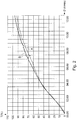
- the figure 1 represents the dissolution profile in dissolution rate T (percentage of active ingredient: potassium bicarbonate) as a function of the duration D (h: min) for three different compositions identified by I, II and III.
- the figure 2 represents the dissolution profile in dissolution rate T (percentage of active principle: potassium bicarbonate) as a function of the duration D (h: min) for two different compositions identified by A and D.
- Curve I of the figure 1 shows the in vitro dissolution profile of such micro-tablets in purified water at pH 7.
- Such a profile was achieved by placing the mini-tablets in a Pharmatest model PTW S3C dissolving bench, at a temperature of 37 ° C. ⁇ 0.5 °, at a volume of the 1 L dissolution bowl and at a rotation speed of 100 rpm. .
- the assay of potassium bicarbonate is carried out by conductimetry according to an analytical method validated according to ICH recommendations CPMP / ICH / 381/95 - ICH Q2 (R1).
- Curve II of the figure 1 shows the in vitro dissolution profile of such micro-tablets in purified water at pH 7. Such a profile and the determination of potassium bicarbonate were carried out as for batch I.
- Curve III of the figure 1 shows the in vitro dissolution profile of such micro-tablets in purified water at pH 7.
- Micro-tablets I, II and III are very well accepted and tolerated by subjects. In addition, they are tasteless and easy to swallow.
- Curves I, II and III have substantially similar shapes, and each of the dissolution profiles corresponding to these curves I, II and III respects the preferred conditions claimed for the composition of the present invention.
- each of the three curves I, II and III illustrates a release of potassium bicarbonate which is done gradually and regularly, meeting the criteria of a rate of not more than 50% in 4 hours, not more than 75% in 6 hours, and not more than 90% in 8 hours.
- each of the three curves I, II and III illustrates a release of potassium bicarbonate which results in an almost complete dissolution after 12 to 15 hours.
- Curves A and D of the figure 2 show the in vitro dissolution profiles of such 12 mm tablets in purified water at pH 7.
- the tablets are placed in a Pharmatest model PTW S3C dissolution bench, in which the temperature conditions are 37 ° C ⁇ 0.5 °, the volume of the dissolving bowl is 1 L and the speed of rotation is 100rpm.
- the assay of potassium bicarbonate is carried out by conductimetry according to an analytical method validated according to ICH recommendations CPMP / ICH / 381/95 - ICH Q2 (R1).
- Tablets A and D are very well accepted and tolerated by subjects. In addition, they are tasteless and easy to swallow.
- Curves A and D have substantially similar shapes, and each of these dissolution profiles A and D follows the preferred conditions claimed for the composition of the present invention.
- each of the two curves A and D illustrates a potassium bicarbonate release which is gradual and regular, meeting the criteria of a rate of at most 50% in 4 hours, at most 75% in 6 hours, and at most 90% in 8 hours.
- each of the two curves D and A illustrates a release of potassium bicarbonate which results in an almost complete dissolution after 12 to 15 hours.
Landscapes
- Health & Medical Sciences (AREA)
- Life Sciences & Earth Sciences (AREA)
- Public Health (AREA)
- General Health & Medical Sciences (AREA)
- Chemical & Material Sciences (AREA)
- Medicinal Chemistry (AREA)
- Pharmacology & Pharmacy (AREA)
- Veterinary Medicine (AREA)
- Animal Behavior & Ethology (AREA)
- Epidemiology (AREA)
- Engineering & Computer Science (AREA)
- Bioinformatics & Cheminformatics (AREA)
- Botany (AREA)
- Zoology (AREA)
- Urology & Nephrology (AREA)
- Chemical Kinetics & Catalysis (AREA)
- General Chemical & Material Sciences (AREA)
- Nuclear Medicine, Radiotherapy & Molecular Imaging (AREA)
- Organic Chemistry (AREA)
- Medicinal Preparation (AREA)
- Pharmaceuticals Containing Other Organic And Inorganic Compounds (AREA)
- Acyclic And Carbocyclic Compounds In Medicinal Compositions (AREA)
Claims (13)
- Feste pharmazeutische Zusammensetzung zur oralen Verwendung in Form mindestens einer Tablette, wobei die Tablette aus einem Kern mit mindestens einem Bicarbonatsalz als aktivem Wirkstoff und mindestens einer hydrophilen Retardmatrix und aus einer Beschichtung mit mindestens einem Beschichtungsmittel besteht, wobei die Zusammensetzung eine kontinuierliche Freisetzung in vivo über einen Zeitraum von nach einer Viertelstunde und bis zwölf Stunden nach der Einnahme einer Einzeldosis ermöglicht,
wobei die Zusammensetzung derart ist, dass ihre Auflösung in einem Lösungsmedium mit einem pH-Wert von 1,3 bis 7 unabhängig vom pH-Wert stattfindet,
für ihre Verwendung als Arzneimittel zur Harn-Alkalisierung und/oder bei der Behandlung und/oder der Vorbeugung von Urolithiasen und damit verbundener Krankheiten, die bei einem physiologischen pH-Wert und/oder bei einer Azidose der Harnwege und/oder bei einer Hypocarbonatämie und/oder bei einer Hypocitraturie und/oder bei einer Hypercalciurie und/oder bei einer Hyperoxalurie auftreten,
wobei die Zusammensetzung das Bicarbonatsalz in einem Lösungsmedium aus einer gepufferten Lösung mit einem pH-Wert von 1,3 mittels einer Lösungsvorrichtung vom Typ 2 gemäß der Europäischen Pharmakopöe 2.9.3. "Test zur Auflösung fester Formen" mit einer Rate in einem Bereich von 5 % bis 15 % innerhalb von einer Stunde, mit einer Rate in einem Bereich von 35 % bis 55 % innerhalb von fünf Stunden und mit einer Rate in einem Bereich von 70 % bis 90 % innerhalb von zehn Stunden in vitro freisetzen kann. - Zusammensetzung nach Anspruch 1, wobei sie das Bicarbonatsalz in einem Lösungsmedium aus gereinigtem Wasser mit einem pH-Wert von 7 mittels einer Lösungsvorrichtung vom Typ 2 gemäß der Europäischen Pharmakopöe 2.9.3. "Test zur Auflösung fester Formen" mit einer Rate von höchstens 50 % innerhalb von 4 Stunden, von höchstens 75 % innerhalb von 6 Stunden und von höchstens 90 % innerhalb von 8 Stunden in vitro freisetzen kann.
- Zusammensetzung nach einem der Ansprüche 1 und 2, wobei sie das Bicarbonatsalz in einem Lösungsmedium aus gereinigtem Wasser mit einem pH-Wert von 7 mittels einer Lösungsvorrichtung vom Typ 2 gemäß der Europäischen Pharmakopöe 2.9.3. "Test zur Auflösung fester Formen" mit einer Rate in einem Bereich von 5% bis 15% innerhalb von einer Stunde, mit einer Rate in einem Bereich von 35 % bis 55 % innerhalb von fünf Stunden und mit einer Rate in einem Bereich von 70 % bis 90 % innerhalb von zehn Stunden in vitro freisetzen kann.
- Zusammensetzung nach einem der Ansprüche 1 bis 3, wobei das Bicarbonatsalz aus Kaliumbicarbonat, Natriumbicarbonat und Magnesiumbicarbonat ausgewählt ist und es sich bei dem Bicarbonatsalz vorzugsweise um Kaliumbicarbonat handelt.
- Zusammensetzung nach einem der Ansprüche 1 bis 4, wobei sie auf der Basis des Gesamtgewichts der Zusammensetzung 40 Gew.-% bis 80 Gew.-%, vorzugsweise 50 Gew.-% bis 80 Gew.-% Bicarbonatsalz umfasst.
- Zusammensetzung nach einem der Ansprüche 1 bis 5, wobei die Retardmatrix aus den Alginaten, den Carboxyvinylpolymeren, den Salzen aus Natrium-Carboxymethylcellulose, den Cellulosederivaten einschließlich der Polymere Hydroxypropylmethylcellulose, Hydroxypropylethylcellulose, Hydroxypropylcellulose, Hydroxyethylcellulose, Methylcellulose und den Polyacrylat-Dispersionen etwa 30%, wie in der Europäischen Pharmakopöe beschrieben, ausgewählt ist und es sich bei der Retardmatrix vorzugsweise um eine Hydroxypropylmethylcellulose handelt.
- Zusammensetzung nach einem der Ansprüche 1 bis 6, wobei sie bezogen auf das Gesamtgewicht der Zusammensetzung 10 Gew.-% bis 30 Gew.-%, vorzugsweise 15 Gew.-% bis 25 Gew.-% einer Retardmatrix umfasst.
- Zusammensetzung nach einem der Ansprüche 1 bis 7, wobei das Beschichtungsmittel aus den Alginaten, den Carboxyvinylpolymeren, den Salzen aus Natrium-Carboxymethylcellulose, den Cellulosederivaten einschließlich der Polymere Hydroxypropylmethylcellulose, Hydroxypropylethylcellulose, Hydroxypropylcellulose, Hydroxyethylcellulose, Methylcellulose, Ethylcellulose, Xanthangummi, Polyethlylenoxid, den Wachsen vom Typ Paraffinwachs, Bienenwachs oder Carnaubawachs, den Ammoniummethacrylat-Copolymeren vom Typ A und B, wie in der Europäischen Pharmakopöe beschrieben, und den Polyacrylat-Dispersionen etwa 30%, wie in der Europäischen Pharmakopöe beschrieben, ausgewählt ist und es sich bei dem Beschichtungsmittel vorzugsweise um ein Ethylcellulosepolymer handelt.
- Zusammensetzung nach einem der Ansprüche 1 bis 8, wobei sie bezogen auf das Gesamtgewicht der Zusammensetzung 1 Gew.-% bis 20 Gew.-%, vorzugsweise 1,5 Gew.-% bis 3 Gew.-% eines Beschichtungsmittels umfasst.
- Zusammensetzung nach einem der Ansprüche 1 bis 9, wobei sie bezogen auf das Gesamtgewicht der Zusammensetzung ferner 5 Gew.-% bis 20 Gew.-%, vorzugsweise 5 Gew.-% bis 10 Gew.-% eines Bindemittels umfasst, das aus den mikrokristallinen Cellulosen, Polyvidon, Polyvinylpyrrolidon, Copovidon, Schellack, Gelatine, den Polymethacrylaten, den Kunstharzen, den Acrylaten, Maltodextrin und den Stärken ausgewählt ist und das Bindemittel vorzugsweise zumindest eine mikrokristalline Cellulose enthält.
- Zusammensetzung nach einem der Ansprüche 1 bis 10, wobei sie bezogen auf das Gesamtgewicht der Zusammensetzung ferner 0,01 Gew.-% bis 5 Gew.-%, vorzugsweise 0,01 Gew.-% bis 3 Gew.-% eines Fließmittels umfasst, das aus Stearinsäure, Polyethylenglycol, Magnesiumstearat, Calciumstearat, Zinkstearat, Talk, Siliciumdioxid, hydriertem Rizinusöl, Glycerylbehenat und Glycerylpalmitostearat ausgewählt ist und es sich bei dem Fließmittel vorzugsweise um Magnesiumstearat handelt.
- Zusammensetzung nach einem der Ansprüche 1 bis 11, wobei sie in Form von Tabletten mit einer Größe in einem Bereich von 2 bis 25 mm vorliegt.
- Zusammensetzung nach einem der Ansprüche 1 bis 12, wobei sie bezogen auf das Gesamtgewicht der Zusammensetzung 60 % bis 70 % Kaliumbicarbonat, 15 bis 25% Hypromellose, 7% bis 17% mikrokristalline Cellulose, 1 % bis 3 % Glycerylbehenat, 0,01 % bis 1 % Magnesiumstearat und 1,5 % bis 3 % Ethylcellulose umfasst.
Applications Claiming Priority (2)
| Application Number | Priority Date | Filing Date | Title |
|---|---|---|---|
| FR1059472A FR2967577B1 (fr) | 2010-11-18 | 2010-11-18 | Composition pharmaceutique comprenant du sel de bicarbonate, et son utilisation comme medicament |
| PCT/FR2011/052695 WO2012066256A1 (fr) | 2010-11-18 | 2011-11-18 | Composition pharmaceutique comprenant du sel de bicarbonate, et son utilisation comme medicament dans le traitement et/ou la prevention des lithiases urinaires et des maladies liees |
Publications (3)
| Publication Number | Publication Date |
|---|---|
| EP2640364A1 EP2640364A1 (de) | 2013-09-25 |
| EP2640364B1 EP2640364B1 (de) | 2017-01-18 |
| EP2640364B9 true EP2640364B9 (de) | 2017-08-30 |
Family
ID=44168791
Family Applications (1)
| Application Number | Title | Priority Date | Filing Date |
|---|---|---|---|
| EP11796758.8A Active EP2640364B9 (de) | 2010-11-18 | 2011-11-18 | Pharmazeutische zusammensetzung mit bicarbonatsalz und ihre verwendung als arzneimittel bei der behandlung und/oder prävention von lithiasis der harnwege und verwandten erkrankungen |
Country Status (9)
| Country | Link |
|---|---|
| US (1) | US9662296B2 (de) |
| EP (1) | EP2640364B9 (de) |
| JP (1) | JP5879358B2 (de) |
| DK (1) | DK2640364T3 (de) |
| ES (1) | ES2622503T3 (de) |
| FR (1) | FR2967577B1 (de) |
| HU (1) | HUE032753T2 (de) |
| PL (1) | PL2640364T3 (de) |
| WO (1) | WO2012066256A1 (de) |
Families Citing this family (5)
| Publication number | Priority date | Publication date | Assignee | Title |
|---|---|---|---|---|
| CN105434457A (zh) * | 2014-09-23 | 2016-03-30 | 中山未标生物新技术有限公司 | 一种用于防治消化道癌性病变的肠溶口服制剂及其制备方法和其应用 |
| JP6213591B2 (ja) | 2016-02-25 | 2017-10-18 | 第一精工株式会社 | コネクタ |
| US20210196747A1 (en) * | 2018-05-25 | 2021-07-01 | University Of The Ryukyus | Metabolism improving agent |
| CA3147731A1 (en) * | 2019-07-18 | 2021-01-21 | C. Lowell Parsons | Alkalization of urinary bladder wall prior to treatment with intravesical heparin and alkalinized lidocaine to enhance relief of bladder pain symptoms |
| CN111228239B (zh) * | 2020-01-13 | 2022-04-22 | 厦门金达威生物科技有限公司 | 一种pH敏感型凝胶微胶囊及其制备方法 |
Family Cites Families (6)
| Publication number | Priority date | Publication date | Assignee | Title |
|---|---|---|---|---|
| US4451454A (en) | 1981-06-16 | 1984-05-29 | Wong Dennis W | Prophylaxis and treatment of thromboembolic disorders in man and in warm-blooded animals with bicarbonate salts of alkali metals |
| GB2130087A (en) * | 1982-09-22 | 1984-05-31 | Dr Joachime Helbig | Pharmaceutical oral dosage forms of an active agent capable of forming or releasing bicarbonate ions |
| IE80467B1 (en) * | 1995-07-03 | 1998-07-29 | Elan Corp Plc | Controlled release formulations for poorly soluble drugs |
| EP1970066A1 (de) * | 2007-03-12 | 2008-09-17 | Medice Arzneimittel Pütter GmbH & Co. KG | Pharmazeutische Zusammensetzung zur Behandlung einer Übersäuerung des Blutes |
| RU2477123C2 (ru) * | 2008-03-28 | 2013-03-10 | Феррер Интернасионал, С.А. | Капсула и лекарственное средство для профилактики сердечно-сосудистых заболеваний |
| WO2009140341A2 (en) * | 2008-05-13 | 2009-11-19 | Dr. Reddy's Laboratories Ltd. | Atorvastatin compositions |
-
2010
- 2010-11-18 FR FR1059472A patent/FR2967577B1/fr active Active
-
2011
- 2011-11-18 WO PCT/FR2011/052695 patent/WO2012066256A1/fr not_active Ceased
- 2011-11-18 PL PL11796758T patent/PL2640364T3/pl unknown
- 2011-11-18 ES ES11796758.8T patent/ES2622503T3/es active Active
- 2011-11-18 JP JP2013539317A patent/JP5879358B2/ja active Active
- 2011-11-18 EP EP11796758.8A patent/EP2640364B9/de active Active
- 2011-11-18 US US13/988,025 patent/US9662296B2/en active Active
- 2011-11-18 HU HUE11796758A patent/HUE032753T2/en unknown
- 2011-11-18 DK DK11796758.8T patent/DK2640364T3/en active
Also Published As
| Publication number | Publication date |
|---|---|
| DK2640364T3 (en) | 2017-05-01 |
| ES2622503T3 (es) | 2017-07-06 |
| US9662296B2 (en) | 2017-05-30 |
| PL2640364T3 (pl) | 2017-09-29 |
| HUE032753T2 (en) | 2017-10-30 |
| FR2967577B1 (fr) | 2013-07-12 |
| WO2012066256A1 (fr) | 2012-05-24 |
| EP2640364A1 (de) | 2013-09-25 |
| JP2013542974A (ja) | 2013-11-28 |
| EP2640364B1 (de) | 2017-01-18 |
| FR2967577A1 (fr) | 2012-05-25 |
| US20130230590A1 (en) | 2013-09-05 |
| JP5879358B2 (ja) | 2016-03-08 |
Similar Documents
| Publication | Publication Date | Title |
|---|---|---|
| BE1011045A3 (fr) | Compositions pharmaceutiques pour la liberation controlee de substances actives. | |
| CA2816660C (fr) | Composition pharmaceutique comportant des sels de citrate et de bicarbonate, et son utilisation pour le traitement de la cystinurie | |
| CA2743767C (fr) | Nouvelle composition a base d'acide gamma-hydroxybutyrique | |
| EP2605757B1 (de) | Auf nalbuphin basierende formuluerungen und ihre verwendung | |
| EP1492531B1 (de) | Orale pharmazeutische formulierung in form einer wässrigen suspension von mikrokapseln zur modifizierten freisetzung von amoxicillin | |
| CA2721232C (fr) | Forme orale solide dotee d'un double profil de liberation comprenant des multiparticules | |
| EP2640364B9 (de) | Pharmazeutische zusammensetzung mit bicarbonatsalz und ihre verwendung als arzneimittel bei der behandlung und/oder prävention von lithiasis der harnwege und verwandten erkrankungen | |
| EP2640365B1 (de) | Pharmazeutische zusammensetzung mit krebszyklusvorläufersalz, insbesondere zitratsalz, und ihre verwendung als arzneimittel | |
| EP1646379A2 (de) | Neue feste pharmazeutische zusammensetzung mit amisulprid | |
| FR3109089A1 (fr) | Composition pharmaceutique pour le traitement des maladies inflammatoires intestinales | |
| EP1904037A1 (de) | Formulierung von wirkstoffen mit ph-abhängiger löslichkeit und verlängerter freisetzung | |
| FR3134314A1 (fr) | Composition pharmaceutique à base de vorapaxar et son utilisation pour le traitement des maladies inflammatoires intestinales | |
| FR2843880A1 (fr) | Formulation pharmaceutique orale sous forme de suspension aqueuse de microcapsules permettant la liberation modifiee d'amoxicilline |
Legal Events
| Date | Code | Title | Description |
|---|---|---|---|
| PUAI | Public reference made under article 153(3) epc to a published international application that has entered the european phase |
Free format text: ORIGINAL CODE: 0009012 |
|
| 17P | Request for examination filed |
Effective date: 20130529 |
|
| AK | Designated contracting states |
Kind code of ref document: A1 Designated state(s): AL AT BE BG CH CY CZ DE DK EE ES FI FR GB GR HR HU IE IS IT LI LT LU LV MC MK MT NL NO PL PT RO RS SE SI SK SM TR |
|
| DAX | Request for extension of the european patent (deleted) | ||
| GRAP | Despatch of communication of intention to grant a patent |
Free format text: ORIGINAL CODE: EPIDOSNIGR1 |
|
| INTG | Intention to grant announced |
Effective date: 20160805 |
|
| GRAS | Grant fee paid |
Free format text: ORIGINAL CODE: EPIDOSNIGR3 |
|
| STAA | Information on the status of an ep patent application or granted ep patent |
Free format text: STATUS: GRANT OF PATENT IS INTENDED |
|
| GRAJ | Information related to disapproval of communication of intention to grant by the applicant or resumption of examination proceedings by the epo deleted |
Free format text: ORIGINAL CODE: EPIDOSDIGR1 |
|
| GRAL | Information related to payment of fee for publishing/printing deleted |
Free format text: ORIGINAL CODE: EPIDOSDIGR3 |
|
| STAA | Information on the status of an ep patent application or granted ep patent |
Free format text: STATUS: REQUEST FOR EXAMINATION WAS MADE |
|
| GRAJ | Information related to disapproval of communication of intention to grant by the applicant or resumption of examination proceedings by the epo deleted |
Free format text: ORIGINAL CODE: EPIDOSDIGR1 |
|
| GRAL | Information related to payment of fee for publishing/printing deleted |
Free format text: ORIGINAL CODE: EPIDOSDIGR3 |
|
| GRAR | Information related to intention to grant a patent recorded |
Free format text: ORIGINAL CODE: EPIDOSNIGR71 |
|
| STAA | Information on the status of an ep patent application or granted ep patent |
Free format text: STATUS: GRANT OF PATENT IS INTENDED |
|
| GRAA | (expected) grant |
Free format text: ORIGINAL CODE: 0009210 |
|
| STAA | Information on the status of an ep patent application or granted ep patent |
Free format text: STATUS: THE PATENT HAS BEEN GRANTED |
|
| INTC | Intention to grant announced (deleted) | ||
| AK | Designated contracting states |
Kind code of ref document: B1 Designated state(s): AL AT BE BG CH CY CZ DE DK EE ES FI FR GB GR HR HU IE IS IT LI LT LU LV MC MK MT NL NO PL PT RO RS SE SI SK SM TR |
|
| INTG | Intention to grant announced |
Effective date: 20161214 |
|
| REG | Reference to a national code |
Ref country code: GB Ref legal event code: FG4D Free format text: NOT ENGLISH |
|
| REG | Reference to a national code |
Ref country code: CH Ref legal event code: EP |
|
| REG | Reference to a national code |
Ref country code: AT Ref legal event code: REF Ref document number: 862484 Country of ref document: AT Kind code of ref document: T Effective date: 20170215 |
|
| REG | Reference to a national code |
Ref country code: IE Ref legal event code: FG4D Free format text: LANGUAGE OF EP DOCUMENT: FRENCH |
|
| REG | Reference to a national code |
Ref country code: DE Ref legal event code: R096 Ref document number: 602011034521 Country of ref document: DE |
|
| REG | Reference to a national code |
Ref country code: NL Ref legal event code: FP |
|
| REG | Reference to a national code |
Ref country code: DK Ref legal event code: T3 Effective date: 20170426 |
|
| REG | Reference to a national code |
Ref country code: SE Ref legal event code: TRGR |
|
| REG | Reference to a national code |
Ref country code: LT Ref legal event code: MG4D |
|
| REG | Reference to a national code |
Ref country code: CH Ref legal event code: NV Representative=s name: KIRKER AND CIE S.A., CH |
|
| GRAT | Correction requested after decision to grant or after decision to maintain patent in amended form |
Free format text: ORIGINAL CODE: EPIDOSNCDEC |
|
| REG | Reference to a national code |
Ref country code: AT Ref legal event code: MK05 Ref document number: 862484 Country of ref document: AT Kind code of ref document: T Effective date: 20170118 |
|
| REG | Reference to a national code |
Ref country code: ES Ref legal event code: FG2A Ref document number: 2622503 Country of ref document: ES Kind code of ref document: T3 Effective date: 20170706 |
|
| PG25 | Lapsed in a contracting state [announced via postgrant information from national office to epo] |
Ref country code: GR Free format text: LAPSE BECAUSE OF FAILURE TO SUBMIT A TRANSLATION OF THE DESCRIPTION OR TO PAY THE FEE WITHIN THE PRESCRIBED TIME-LIMIT Effective date: 20170419 Ref country code: HR Free format text: LAPSE BECAUSE OF FAILURE TO SUBMIT A TRANSLATION OF THE DESCRIPTION OR TO PAY THE FEE WITHIN THE PRESCRIBED TIME-LIMIT Effective date: 20170118 Ref country code: IS Free format text: LAPSE BECAUSE OF FAILURE TO SUBMIT A TRANSLATION OF THE DESCRIPTION OR TO PAY THE FEE WITHIN THE PRESCRIBED TIME-LIMIT Effective date: 20170518 Ref country code: LT Free format text: LAPSE BECAUSE OF FAILURE TO SUBMIT A TRANSLATION OF THE DESCRIPTION OR TO PAY THE FEE WITHIN THE PRESCRIBED TIME-LIMIT Effective date: 20170118 Ref country code: FI Free format text: LAPSE BECAUSE OF FAILURE TO SUBMIT A TRANSLATION OF THE DESCRIPTION OR TO PAY THE FEE WITHIN THE PRESCRIBED TIME-LIMIT Effective date: 20170118 Ref country code: NO Free format text: LAPSE BECAUSE OF FAILURE TO SUBMIT A TRANSLATION OF THE DESCRIPTION OR TO PAY THE FEE WITHIN THE PRESCRIBED TIME-LIMIT Effective date: 20170418 |
|
| PG25 | Lapsed in a contracting state [announced via postgrant information from national office to epo] |
Ref country code: PT Free format text: LAPSE BECAUSE OF FAILURE TO SUBMIT A TRANSLATION OF THE DESCRIPTION OR TO PAY THE FEE WITHIN THE PRESCRIBED TIME-LIMIT Effective date: 20170518 Ref country code: RS Free format text: LAPSE BECAUSE OF FAILURE TO SUBMIT A TRANSLATION OF THE DESCRIPTION OR TO PAY THE FEE WITHIN THE PRESCRIBED TIME-LIMIT Effective date: 20170118 Ref country code: BG Free format text: LAPSE BECAUSE OF FAILURE TO SUBMIT A TRANSLATION OF THE DESCRIPTION OR TO PAY THE FEE WITHIN THE PRESCRIBED TIME-LIMIT Effective date: 20170418 Ref country code: LV Free format text: LAPSE BECAUSE OF FAILURE TO SUBMIT A TRANSLATION OF THE DESCRIPTION OR TO PAY THE FEE WITHIN THE PRESCRIBED TIME-LIMIT Effective date: 20170118 Ref country code: AT Free format text: LAPSE BECAUSE OF FAILURE TO SUBMIT A TRANSLATION OF THE DESCRIPTION OR TO PAY THE FEE WITHIN THE PRESCRIBED TIME-LIMIT Effective date: 20170118 |
|
| REG | Reference to a national code |
Ref country code: FR Ref legal event code: PLFP Year of fee payment: 7 |
|
| REG | Reference to a national code |
Ref country code: DE Ref legal event code: R097 Ref document number: 602011034521 Country of ref document: DE |
|
| REG | Reference to a national code |
Ref country code: HU Ref legal event code: AG4A Ref document number: E032753 Country of ref document: HU |
|
| PG25 | Lapsed in a contracting state [announced via postgrant information from national office to epo] |
Ref country code: SK Free format text: LAPSE BECAUSE OF FAILURE TO SUBMIT A TRANSLATION OF THE DESCRIPTION OR TO PAY THE FEE WITHIN THE PRESCRIBED TIME-LIMIT Effective date: 20170118 Ref country code: EE Free format text: LAPSE BECAUSE OF FAILURE TO SUBMIT A TRANSLATION OF THE DESCRIPTION OR TO PAY THE FEE WITHIN THE PRESCRIBED TIME-LIMIT Effective date: 20170118 Ref country code: RO Free format text: LAPSE BECAUSE OF FAILURE TO SUBMIT A TRANSLATION OF THE DESCRIPTION OR TO PAY THE FEE WITHIN THE PRESCRIBED TIME-LIMIT Effective date: 20170118 |
|
| PLBE | No opposition filed within time limit |
Free format text: ORIGINAL CODE: 0009261 |
|
| STAA | Information on the status of an ep patent application or granted ep patent |
Free format text: STATUS: NO OPPOSITION FILED WITHIN TIME LIMIT |
|
| PG25 | Lapsed in a contracting state [announced via postgrant information from national office to epo] |
Ref country code: SM Free format text: LAPSE BECAUSE OF FAILURE TO SUBMIT A TRANSLATION OF THE DESCRIPTION OR TO PAY THE FEE WITHIN THE PRESCRIBED TIME-LIMIT Effective date: 20170118 |
|
| 26N | No opposition filed |
Effective date: 20171019 |
|
| PG25 | Lapsed in a contracting state [announced via postgrant information from national office to epo] |
Ref country code: SI Free format text: LAPSE BECAUSE OF FAILURE TO SUBMIT A TRANSLATION OF THE DESCRIPTION OR TO PAY THE FEE WITHIN THE PRESCRIBED TIME-LIMIT Effective date: 20170118 |
|
| PG25 | Lapsed in a contracting state [announced via postgrant information from national office to epo] |
Ref country code: MC Free format text: LAPSE BECAUSE OF FAILURE TO SUBMIT A TRANSLATION OF THE DESCRIPTION OR TO PAY THE FEE WITHIN THE PRESCRIBED TIME-LIMIT Effective date: 20170118 |
|
| PG25 | Lapsed in a contracting state [announced via postgrant information from national office to epo] |
Ref country code: LU Free format text: LAPSE BECAUSE OF NON-PAYMENT OF DUE FEES Effective date: 20171118 |
|
| REG | Reference to a national code |
Ref country code: FR Ref legal event code: PLFP Year of fee payment: 8 |
|
| PG25 | Lapsed in a contracting state [announced via postgrant information from national office to epo] |
Ref country code: MT Free format text: LAPSE BECAUSE OF FAILURE TO SUBMIT A TRANSLATION OF THE DESCRIPTION OR TO PAY THE FEE WITHIN THE PRESCRIBED TIME-LIMIT Effective date: 20170118 |
|
| PG25 | Lapsed in a contracting state [announced via postgrant information from national office to epo] |
Ref country code: CY Free format text: LAPSE BECAUSE OF NON-PAYMENT OF DUE FEES Effective date: 20170118 |
|
| PG25 | Lapsed in a contracting state [announced via postgrant information from national office to epo] |
Ref country code: MK Free format text: LAPSE BECAUSE OF FAILURE TO SUBMIT A TRANSLATION OF THE DESCRIPTION OR TO PAY THE FEE WITHIN THE PRESCRIBED TIME-LIMIT Effective date: 20170118 |
|
| PG25 | Lapsed in a contracting state [announced via postgrant information from national office to epo] |
Ref country code: AL Free format text: LAPSE BECAUSE OF FAILURE TO SUBMIT A TRANSLATION OF THE DESCRIPTION OR TO PAY THE FEE WITHIN THE PRESCRIBED TIME-LIMIT Effective date: 20170118 |
|
| PGFP | Annual fee paid to national office [announced via postgrant information from national office to epo] |
Ref country code: CH Payment date: 20241201 Year of fee payment: 14 |
|
| PGFP | Annual fee paid to national office [announced via postgrant information from national office to epo] |
Ref country code: HU Payment date: 20251114 Year of fee payment: 15 |
|
| PGFP | Annual fee paid to national office [announced via postgrant information from national office to epo] |
Ref country code: DE Payment date: 20251127 Year of fee payment: 15 |
|
| REG | Reference to a national code |
Ref country code: CH Ref legal event code: U11 Free format text: ST27 STATUS EVENT CODE: U-0-0-U10-U11 (AS PROVIDED BY THE NATIONAL OFFICE) Effective date: 20260108 |
|
| PGFP | Annual fee paid to national office [announced via postgrant information from national office to epo] |
Ref country code: GB Payment date: 20251027 Year of fee payment: 15 |
|
| PGFP | Annual fee paid to national office [announced via postgrant information from national office to epo] |
Ref country code: IT Payment date: 20251127 Year of fee payment: 15 Ref country code: DK Payment date: 20251126 Year of fee payment: 15 |
|
| PGFP | Annual fee paid to national office [announced via postgrant information from national office to epo] |
Ref country code: FR Payment date: 20251126 Year of fee payment: 15 Ref country code: NL Payment date: 20251127 Year of fee payment: 15 |
|
| PGFP | Annual fee paid to national office [announced via postgrant information from national office to epo] |
Ref country code: TR Payment date: 20251113 Year of fee payment: 15 Ref country code: BE Payment date: 20251127 Year of fee payment: 15 |
|
| PGFP | Annual fee paid to national office [announced via postgrant information from national office to epo] |
Ref country code: SE Payment date: 20251201 Year of fee payment: 15 |
|
| PGFP | Annual fee paid to national office [announced via postgrant information from national office to epo] |
Ref country code: IE Payment date: 20251127 Year of fee payment: 15 Ref country code: CZ Payment date: 20251112 Year of fee payment: 15 |
|
| PGFP | Annual fee paid to national office [announced via postgrant information from national office to epo] |
Ref country code: PL Payment date: 20251113 Year of fee payment: 15 |
|
| PGFP | Annual fee paid to national office [announced via postgrant information from national office to epo] |
Ref country code: ES Payment date: 20251208 Year of fee payment: 15 |