EP2641197B1 - Schnelle anpassung für inhaltsbasierte adressierung - Google Patents
Schnelle anpassung für inhaltsbasierte adressierung Download PDFInfo
- Publication number
- EP2641197B1 EP2641197B1 EP11844413.2A EP11844413A EP2641197B1 EP 2641197 B1 EP2641197 B1 EP 2641197B1 EP 11844413 A EP11844413 A EP 11844413A EP 2641197 B1 EP2641197 B1 EP 2641197B1
- Authority
- EP
- European Patent Office
- Prior art keywords
- query
- field
- content
- value
- message
- Prior art date
- Legal status (The legal status is an assumption and is not a legal conclusion. Google has not performed a legal analysis and makes no representation as to the accuracy of the status listed.)
- Active
Links
Images





Classifications
-
- G—PHYSICS
- G06—COMPUTING OR CALCULATING; COUNTING
- G06F—ELECTRIC DIGITAL DATA PROCESSING
- G06F16/00—Information retrieval; Database structures therefor; File system structures therefor
- G06F16/20—Information retrieval; Database structures therefor; File system structures therefor of structured data, e.g. relational data
- G06F16/24—Querying
- G06F16/245—Query processing
- G06F16/2453—Query optimisation
-
- H—ELECTRICITY
- H04—ELECTRIC COMMUNICATION TECHNIQUE
- H04L—TRANSMISSION OF DIGITAL INFORMATION, e.g. TELEGRAPHIC COMMUNICATION
- H04L67/00—Network arrangements or protocols for supporting network services or applications
- H04L67/50—Network services
- H04L67/60—Scheduling or organising the servicing of application requests, e.g. requests for application data transmissions using the analysis and optimisation of the required network resources
- H04L67/63—Routing a service request depending on the request content or context
-
- H—ELECTRICITY
- H04—ELECTRIC COMMUNICATION TECHNIQUE
- H04L—TRANSMISSION OF DIGITAL INFORMATION, e.g. TELEGRAPHIC COMMUNICATION
- H04L45/00—Routing or path finding of packets in data switching networks
- H04L45/302—Route determination based on requested QoS
- H04L45/306—Route determination based on the nature of the carried application
Definitions
- the disclosed embodiments relate generally to content-based addressing and, more specifically, relate to processes and systems for efficient matching for content-based addressing in the context of a message-oriented middleware system.
- Known content-based addressing allows receivers in a message-oriented middleware system to specify their interests as a query against the content of a message from senders.
- the content of a message may include a field name, a field type of string, field value, and many other fields.
- a receiver might specify interest in any messages in which certain fields match certain values.
- a sender may send a content-based addressed message, and a middleware system may resolve which receivers have specified queries that match the content of the message.
- content-based matching as represented by numerous field types (e.g., integer, float, string, Boolean enumerations, etc.), and in which queries may use wildcards (e.g., an asterisk to match substrings) or regular expressions that are computationally expensive to compute and slow to determine if a match exists.
- wildcards e.g., an asterisk to match substrings
- regular expressions that are computationally expensive to compute and slow to determine if a match exists.
- Matching events in a content-based subscription system by AGUILERA MARCOS K ET AL; PROCEEDINGS OF THE 18TH ANNUAL ACM SYMPOSIUM ON PRINCIPLES OF DISTRIBUTED COMPUTING discloses a proposed solution to the matching problem for content-based systems - determining for each event the subset of all subscriptions whose predicates match the event.
- US 2007/198479 discloses a method and system for evaluating a path query.
- the path query corresponds to a query tree including a plurality of query nodes.
- At least one query node corresponds to at least one predicate and is at a level.
- the predicate(s) are evaluated for previous query node(s).
- the method and system include scanning data nodes of a document and determining if the data nodes match the query nodes.
- the systems and methods may accept, at a receiver machine, a query, wherein the query comprises one or more fields and one or more values, wherein the one or more fields are associated with a category of content, and wherein the one or more values are associated with a particular type of content.
- the systems and methods may generate, at the receiver machine, a tree structure ordered by the one or more fields of the query, wherein the tree structure comprises one or more tree nodes and the one or more tree nodes comprise one or more query nodes.
- the systems and methods may analyze, at the receiver machine, a message from the sender machine, wherein the message comprises a content field associated with a content value.
- the systems and methods may search, by the receiver machine, the tree structure using the content field of the message.
- the systems and methods may determine, by the receiver machine, if the content value of the message matches a content value of the query stored in the tree structure.
- the systems and methods may accept, by the receiver machine, the message if the content value of the message matches one or more content values of the query.
- the present disclosure provides several important technical advantages.
- the present disclosure provides limiting the data types and query syntax in content-based addressing, which may result in more highly efficient content-based matching.
- sorting each query into canonical order allows for fields to be searched in the same order, thereby improving the performance by allowing for one path in the tree for any particular match.
- Other technical advantages of the present disclosure will be readily apparent to one skilled in the art from the following figures, descriptions, and claims.
- various embodiments may include all, some, or none of the enumerated advantages.
- FIGURE 1 is a schematic diagram of an example system 100 for efficient matching for content-based addressing.
- System 100 may include a sender machine 101 and a receiver machine 103.
- system 100 may include a message-based middleware server 107.
- system 100 may further include a format server 109. While FIG. 1 depicts middleware server 107, in an embodiment, system 100 may not include middleware server 107, wherein sender machine 101 may be in direct communication with receiver machine 103 and format server 109 may be in direct communication with both sender machine 101 and receiver machine 103.
- the present disclosure describes the type of ordering as canonical, but any appropriate type of ordering may be used to achieve the results of the present disclosure.
- the queries may be sorted in numerical order, reverse numerical order, alphabetical order, reverse alphabetical order, or any other ordering system that may allow for fields to be searched in the same order.
- Sender machine 101 may include a message application 132 for generating a message with certain content to be sent to message-based middleware server 107.
- Message-based middleware server 107 may evaluate the content-based addressing to determine whether to send the message to receiver machine 103.
- Message application 132 may include a message processing engine 134 for processing content-based addressing data, content, fields, and formatting information for a message to be sent to receiver machine 103.
- Message application 132 may also include an application programming interface (“API”) 130 as an interface for message-based middleware server 107.
- API application programming interface
- system 100 may comprise more than one sender machine 101 in communication with message-based middleware server 107 or receiver machine 103. Although described as sender machine 101 in FIG. 1 , sender machine 101 may receive and process queries in some embodiments.
- Receiver machine 103 may include a query application 133 for generating a query to be sent to message-based middleware 107 for matching against messages sent by sender machine 101.
- a query may be a request originating from query application 133 such as, by way of example, a request to return all content-based addressing messages that include a field A with a value of 1 and a field of B with a value of 4.
- Query application 133 may further include a query processing engine 135 for processing query information, data, fields, and formatting information for a given query or set of queries. Using format limitations for the incoming messages and queries, a tree structure may be built from the queries, and then matched against incoming data in an efficient manner.
- Query processing engine 135 may add or remove queries at any time.
- the tree structure may be modified to reflect this and incoming message may be matched against the modified tree structure.
- Query processing engine 135 may be configured to build a matching tree structure, as described in more detail in FIGURES 6-9 .
- Query processing engine 135 may also be configured to search for matching field nodes within a matching tree, as described in more detail in FIGURE 10 .
- Query application 133 may also include an application programming interface ("API") 131 as an interface to message-based middleware server 107.
- API application programming interface
- system 100 may comprise more than one receiver machine 103 in communication with message-based middleware server 107 or sender machine 101. Although described as receiver machine 103 in FIG. 1 , receiver machine 103 may generate and send messages in some embodiments.
- Sender machine 101 and receiver machine 103 may be in communication with message-based middleware server 107 via a network 140.
- message-based middleware server 107 may also be in communication with format server 109 via network 140.
- sender machine 101 and receiver machine 103 are in communication with format server 109 via message-based middleware server 107.
- Format server 109 may communicate format information to sender machine 101 and receiver machine 103 and may comprise a format engine 112 for formatting the format information. Format information includes, but is not limited to, formatting information for content-based addressing data types, operators, fields, query formation information, etc. to enhance highly efficient messaging within the system 100.
- Format server 109 may determine the format rules for each of the fields of each tree node, as described in more detail in FIGURE 4 , and may format each tree node according to those format rules.
- Format server 109 may also be in communication with a data store element 111 via network 140. Format server 109 may access data, format information, data and operator restriction settings, query formation information, etc. from data store element 111. Data store element 111 may also include a format library for storing message format information. In an embodiment, an administrator machine 105 may be in communication with format server 109 allowing for an administrator to interact with system 100 via network 140.
- sender machine 101 and receiver machine 103 may communicate through peer-to-peer (P2P) communications over network 140.
- sender machine 101 may comprise a query-processing router located within sender machine 101. While only one sender machine 101 and one receiver machine 103 are shown, system 100 may comprise any number of sender machines 101 and any number of receiver machines 103 in direct communication with each other over P2P network 140. Many sender machines 101 may be in contact with many receiver machines 103.
- Network 140 may represent any form of communication network supporting circuit-switched, packet-based, and/or any other suitable type of communications between sender machine 101, receiver machine 103, message-based middleware server 107, format server 109, and any other elements in FIG. 1 .
- Network 140 may additionally include any other nodes of system 100 capable of transmitting and/or receiving information over a communication network. Although shown in FIG. 1 as a single element, network 140 may represent one or more separate networks (including all or parts of various different networks) that are separated and serve different respective elements illustrated in FIG. 1 .
- Network 140 may include routers, hubs, switches, firewalls, content switches, gateways, call controllers, and/or any other suitable components in any suitable form or arrangement.
- Network 140 may include, in whole or in part, one or more secured and/or encrypted Virtual Private Networks (VPNs) operable to couple one or more network elements together by operating or communicating over elements of a public or external communication network.
- VPNs Virtual Private Networks
- network 140 may comprise any combination of public or private communication equipment such as elements of the public switched telephone network (PSTN), a global computer network such as the Internet, a local area network (LAN), a wide area network (WAN), or other appropriate communication equipment.
- PSTN public switched telephone network
- LAN local area network
- WAN wide area network
- network 140 may not be used if all of the components are located on the same machine.
- System 100 may comprise sender machine 101, receiver machine 103, message-based middleware server 107, and format server 109, each of which may be any suitable computing device comprising a processor and a memory to perform the described functionality.
- Sender machine 101, receiver machine 103, message-based middleware server 107, and format server 109 may comprise one or more machines, workstations, laptops, blade servers, server farms, and/or stand-alone servers.
- Sender machine 101, receiver machine 103, message-based middleware server 107, and format server 109 may include any hardware and/or controlling logic used to communicate information to and from one or more elements illustrated in FIG. 1 .
- sender machine 101, receiver machine 103, message-based middleware server 107, and format server 109 may be operable to receive and process data of different types that may be transmitted via different protocols or formats.
- Other elements in FIG. 1 may also comprise hardware and/or controlling logic to communicate information to and from one or more elements illustrated in FIG. 1 .
- Memory may store any suitable information.
- Memory may comprise any collection and arrangement of volatile and/or non-volatile components suitable for storing data.
- memory may comprise random access memory (RAM) devices, read only memory (ROM) devices, magnetic storage devices, optical storage devices, and/or any other suitable data storage devices.
- RAM random access memory
- ROM read only memory
- Memory may represent, in part, computer-readable storage media on which computer instructions and/or logic are encoded.
- Memory may represent any number of memory components within, local to, and/or accessible by processor.
- Processor may represent and/or include any form of processing component, including general purpose computers, dedicated microprocessors, or other processing devices capable of processing electronic information. Examples of processor include digital signal processors (DSPs), application-specific integrated circuits (ASICs), field-programmable gate arrays (FPGAs), and any other suitable specific or general purpose processors.
- DSPs digital signal processors
- ASICs application-specific integrated circuits
- FPGAs field-programmable gate arrays
- Content-based addressing typically allows receivers in a message-oriented middleware system to specify their interests as a query against the content of a message.
- the sender may send the message described above, and the middleware resolves which receivers have specified queries that match the content.
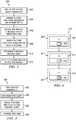
- FIGURE 2 is a high-level flow diagram illustrating an example process 200 for fast, efficient matching for content-based addressing.
- the actions in FIG. 2 may each take place at receiver machine 103, and more specifically, may each take place at query application 133 or query processing engine 135 within receiver machine 103 or any other component of the system chosen to execute query processing engine 135 such as middleware server 107 or sender machine 101.
- query processing engine 135 may accept a query from query application 133 through API 131.
- the query may comprise one or more fields and one or more values, wherein the one or more fields are associated with an operand representing a category of content and the one or more values are associated with content.
- system 100 may generate, at receiver machine 103, a tree structure ordered by one or more fields of the query, wherein the tree structure comprises one or more tree nodes and the one or more tree nodes comprise one or more query nodes.
- receiver machine 103 may receive and analyze a message from sender machine 101. The message may comprise one or more content fields associated with one or more content values.
- receiver machine 103 may search the tree structure using the one or more content fields of the message.
- receiver machine 103 may determine if the content value of the message matches a content value of the query stored in the tree structure. At action 212, receiver machine 103 may accept the message from sender machine 101 if the content value of the message matches one or more content values of the query stored in the tree structure.
- FIGURE 3 is a flow diagram illustrating an example process 300 for building a matching tree based on a query from receiver machine 103.
- the query may be placed into any order (e.g., canonical order) at action 301 by sorting each query's operands in some consistent order based on field names.
- the queries may be processed one-at-a-time, creating tree nodes that contain one or more field nodes, each of which is associated with one or more values.
- a linear 1-ary tree is built at action 305 in which each tree node may represent one operand in the query (and, thus, contains one field node), and the tree nodes are arranged at action 307 such that the first operand is the root, the last operand is the leaf, and the intermediate operands are arranged from first to last (root to leaf).
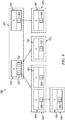
- each tree node contains a separate operand in the query and one field node.
- Tree node 405 comprises a field node 407 represented by 'A' with a value represented by 1.
- Tree node 411 comprises a field node 413 represented by 'B' with a value 415 represented by 4.
- Tree node 417 comprises a field node 419 represented by 'C' with a value 421 represented by 3.
- Query A's field node may contain two value entries, 1 and 2
- query B's field node may contain a single value entry, 3.
- Each field node query value entry (1, 2, and 3 in this example) has an edge pointing at a child tree node.
- tree nodes may contain one or more field nodes once other queries are added to the tree.
- the field nodes as represented by the solid line and containing an ordered operand (i.e., A, B, C, etc.), may also contain more than one value per field name.
- the new query's operands are iterated through and existing field nodes may be re-used (adding new value entries as needed) as long as possible.
- Each query node contains logically separate entries for the field name and value, and tree edges may connect the value entry of a query node to leaf (child) tree node.
- FIGURE 5 is a flow diagram illustrating an example process 500 for building a matching tree at query processing engine 135.
- the current query is determined starting with the first query in the set of queries.
- the first time process 500 is iterated, the current query is the first query.
- the process iterates through the current query's operands at action 503 to build tree nodes for the current query.
- query processing engine 135 determines whether a matching field node exists for the current query. If so, then the existing field node may be re-used at action 507. (Note: when the first query is the current query, decision 505 may not result in no, and, thus, a new field node may be added at 509.)
- a matching field node does not exist for the current query at decision 505
- a new field node is added at action 509 and a new sub-tree is built at action 511 based on the new field node. If a matching field node does exist for the current query at decision 505, the current query is set to the next query in the set of queries at action 513 and the process starts over at action 501.
- FIGURE 6 is a schematic diagram illustrating building a first stage of the exemplary matching tree 600.
- a linear 1-ary tree 600 is built in which each tree node 601, 603, 605 represents one operand in the query, and, thus, contains one field node 602, 604, 606, each with a value 607, 608, 609.
- each tree node 601, 603, 605 contains a separate operand in the query and one field node 602, 604, 606.
- FIGURE 7 is schematic diagram illustrating building a second stage of an exemplary matching tree 700 built from exemplary matching tree 600.
- the process iterates through the second query's operands.
- the new field value 702 becomes the root of a new branch in the tree.
- C does not re-use the C tree node 605 that is a child of the B tree node 603 from the first query because this is a tree not a directed acyclic graph ("DAG”)).
- DAG directed acyclic graph
- FIGURE 8 is a schematic diagram illustrating building a third stage of an exemplary matching tree 800 built from exemplary matching trees 600, 700.
- the process iterates through the third query's operands.
- the process moves to the next tree node 603 in the first query branch.
- FIGURE 9 is a schematic diagram illustrating adding a fourth stage in an exemplary matching tree 900 built from exemplary matching trees 600, 700, 800.
- the process iterates through the fourth query's operands.
- it is determined that no matching field node exists for the first operand in the fourth query (B 7). So a new field node 901 with value 903 is added at action 509 and a new sub-tree is built at action 511 based on the new field node 901.
- the root tree node 601 may be re-used, but because none of the field nodes within root tree node 601 are B field nodes, a new field node 901 is created at the root tree node 601 and a new tree branch is started.
- nodes of a matching tree may be augmented with additional data to improve the performance of the matching phase.
- the augmenting may take place at the time the matching tree is created.
- a tree node may include a list of fields in field nodes, a hash list of the tree node's leaf (child) nodes, where each child node may be represented as a combination of its field name and field value, and a list of queries that terminate at this tree node. Having this information stored at each tree node allows a matching process to quickly determine whether incoming data matches a query encoded in the tree, and allows the matching to optimize whether the matching tree is matched to the incoming data or the incoming data is matched to the matching tree. Referring back to FIG.
- query processing engine 135 may match an incoming data message to a query if any subset of the fields and values in the message match all of the fields and values in the query.
- query processing engine 135 may sort the fields of the message in canonical order and the process either iterates through the fields of the message and walks the matching tree from its root, or walks the matching tree from its root and tracks whether an on-going match within the message is found.
- the messages may be sorted in numerical order, reverse numerical order, alphabetical order, reverse alphabetical order, or any other ordering system that may allow for fields to be searched in the same order as the matching tree comprising the similarly sorted queries. The details of these methods are discussed below.
- FIGURE 10 is a flow diagram illustrating an example process 1000 for matching a message to a matching tree.
- the fields of the message are sorted in canonical order.
- Process 1000 includes iterating through the fields in the message, walking the tree from its root node, and, because partial matches of the message are considered a match, process 1000 is slightly more complicated than a single pass through the message.
- Process 1000 recursively walks the tree, attempting at each tree node to find a matching field node.
- the process may search for a matching field node in the matching tree for the current message field (for the first iteration, the current message field is the first message field). If a matching field node is found at decision 1005, the search may continue recursively with the node's child at action 1007.
- the process attempts to match the remainder of the message's data fields. If the remainder of the message's data fields is not matched at decision 1009, then a new current message field may be determined at action 1013 and the process may start over at action 1003. If the remainder of the message's data fields are matched at decision 1009, then a match may be declared at action 1011.
- the current message field is not a match and the process 1000 may repeat with a new message field by determining a new current message field at action 1013 and starting the process over at action 1003. If a matching field node is not found the search may continue by eliminating the current message field and continuing with the tail of the message because a query may match a subset of fields in a message (it is not necessary to match all fields).
- FIGURE 11 is a schematic diagram illustrating exemplary pseudo code 1100 for matching a message to a matching tree.
- the passing of arguments is by value and the recursive call to findmatch( ) does not alter the value of message at the calling level, but other variations may be used.
- Matching may be invoked by using findmatch(rootnode, message) and a result of true indicates that the message matched at least one of the queries encoded in the tree.
- One embodiment not addressed by the simple pseudo-code of findmatch( ) is an instance in which one query is a prefix of another.
- the pseudo code from FIG. 11 recognizes a match when it reaches a physical tree leaf, but it may be modified to also recognize matches when the process reaches an internally marked terminal.
- FIGURE 12 is a schematic diagram illustrating exemplary pseudo code 1200 for determining an internally marked terminal in the process of matching against a matching tree, in accordance with the present disclosure.
- This pseudo code may be combined with the pseudo code of FIG. 11 to allow for process 1000 (from FIG. 10 ) to declare a match at action 1011 when either a leaf node or a query terminus matches at action 1009.
- the pseudo code includes a routine for reporting a match found (rather than just reporting an absence of a match). In another embodiment, the pseudo code includes a routine to find all query matches for a particular message input.
- FIGURE 13 is a flow diagram illustrating a process 1300 for matching a matching tree to a message at receiver machine 103.
- Process 1300 begins at the root of the tree at action 1301 and determines whether successive field nodes within the tree node may have a match in the message at decision 1302. If a match is found at decision 1302, the child of that field node may be recursively checked at action 1304. If a match is not found at decision 1302, the process may iterate to the next field node within the tree node at action 1310 and may start over at decision 1302. As with the previous matching method, a match is declared at action 1308 if it is determined that a leaf node or query terminus is matched at decision 1306. If a leaf node or query terminus is not matched at decision 1306, the process may iterate to the next field node at action 1310 and may start over at decision 1302.
- the time to match a field node to a query may be optimized in cases where the field node is associated with multiple values, such as the A field node 602 in FIG. 9 , which is associated with the values 607, 702 of 1 and 2, respectively.
- the field node's 602 name may be matched to a query, and, if there is a match, the message's field name and/or value combination may be matched to the field node.
- this latter comparison may be improved through the use of hashing data structures. When the field node has many associated values, this may be significantly faster than simply comparing each field name/value from the field node to the message.
- query processing engine 135 within query application 133 of receiver machine 103 may perform this decision on a node-by-node basis during message matching evaluation. Alternatively, the decision may be performed over network 140 and may perform this decision on a node-by-node basis during message matching evaluation.
- a machine or engine may be a virtual machine, computer, node, instance, host, or machine in a networked computing environment.
- a networked computing environment is a collection of machines connected by communication channels that facilitate communications between machines and allow for machines to share resources.
- a server is a machine deployed to execute a program operating as a socket listener and may include software instances.
- Resources may encompass any types of resources for running instances including hardware (such as servers, clients, mainframe computers, networks, network storage, data sources, memory, central processing unit time, scientific instruments, and other computing devices), as well as software, software licenses, available network services, and other non-hardware resources, or a combination thereof.
- hardware such as servers, clients, mainframe computers, networks, network storage, data sources, memory, central processing unit time, scientific instruments, and other computing devices
- software software licenses, available network services, and other non-hardware resources, or a combination thereof.
- a networked computing environment may include, but is not limited to, computing grid systems, distributed computing environments, cloud computing environment, etc.
- Such networked computing environments include hardware and software infrastructures configured to form a virtual organization comprised of multiple resources which may be in geographically disperse locations.
- Services and applications are described in this application using those alternative terms.
- Services can be java services or other instances of operating code.
- a service/application is a program running on a machine or a cluster of machines in a networked computing environment. Services may be transportable and may be run on multiple machines and/or migrated from one machine to another.
Landscapes
- Engineering & Computer Science (AREA)
- Theoretical Computer Science (AREA)
- Computer Networks & Wireless Communication (AREA)
- Signal Processing (AREA)
- Computational Linguistics (AREA)
- Data Mining & Analysis (AREA)
- Databases & Information Systems (AREA)
- Physics & Mathematics (AREA)
- General Engineering & Computer Science (AREA)
- General Physics & Mathematics (AREA)
- Information Retrieval, Db Structures And Fs Structures Therefor (AREA)
- Information Transfer Between Computers (AREA)
Claims (14)
- Verfahren für effektives Auffinden von Übereinstimmungen für inhaltsbasierte Adressierungen, wobei das Verfahren umfasst:Annehmen einer ersten Anfrage einer Anfrageanwendung an einer Empfängermaschine (103), wobei die erste Anfrage ein oder mehrere Felder umfasst und einen oder mehrere Werte, wobei das eine oder die mehreren Felder mit einer Inhaltskategorie verbunden ist und wobei der eine oder die mehreren Werte mit einer bestimmten Inhaltsart verbunden ist (202),Erstellen einer Baumstruktur in der Empfängermaschine, die nach dem einen oder den mehreren Feldern der ersten Anfrage geordnet ist, wobei die Baumstruktur einen oder mehrere Baumknoten umfasst und der eine oder die mehreren Baumknoten einen oder mehrere Anfrageknoten aufweist und wobei jeder der Anfrageknoten mindestens ein Feld und mindestens einen Wert, der mit der ersten Anfrage verbunden ist, aufweist (204),Analysieren einer Nachricht von einer Sendermaschine (101) in der Empfängermaschine, wobei die Nachricht ein Inhaltsfeld enthält, das mit einem Inhaltswert verbunden ist (206), Durchsuchen der Baumstruktur durch die Empfängermaschine unter Verwendung des Inhaltsfeldes der Nachricht (208),Bestimmen durch die Empfängermaschine, ob der Inhaltswert der Nachricht mit einem Inhaltswert der ersten Anfrage übereinstimmt, der in der Baumstruktur gespeichert ist (210), undAnnehmen der Nachricht durch die Empfängermaschine, wenn der Inhaltswert der Nachricht mit einem oder mehreren Inhaltswerten der ersten Anfrage übereinstimmt (212).
- Verfahren nach Patentanspruch 1, außerdem umfassend:Senden einer zweiten Anfrage, undEinsetzen der zweiten Anfrage in die Baumstruktur aufgrund der Ordnung eines oder mehrerer Felder der zweiten Anfrage.
- Verfahren nach Patentanspruch 1, außerdem umfassend:Senden einer zweiten Anfrage mit demselben Feld, wie die erste Anfrage, und einem anderen Wert, als die erste Anfrage, undEinsetzen des Wertes der zweiten Anfrage in denselben Anfrageknoten in der Baumstruktur, wobei der Anfrageknoten mit dem Feld der ersten und der zweiten Anfrage verbunden ist und mit dem Wert der ersten Anfrage und dem Wert der zweiten Anfrage.
- Verfahren nach Patentanspruch 1, außerdem umfassend:Senden einer zweiten Anfrage mit einem anderen Feld, als die erste Anfrage, undEinsetzen des Feldes der zweiten Anfrage in einen anderen Anfrageknoten in der Baumstruktur, als dem Anfrageknoten der mit dem Feld der ersten Anfrage verbunden ist.
- Verfahren nach Patentanspruch 1, in dem die Baumstruktur durch Sortieren der Anfragen von der Empfängermaschine in kanonischer Ordnung aufgrund des mindestens einen Feldes jeder Anfrage erstellt wird.
- Verfahren nach Patentanspruch 1, in dem das Feld ein Ticker ist und der Wert ein bestimmtes Tickersymbol.
- Verfahren nach Patentanspruch 1, in dem die Anfrage "Ticker = TIBX" lautet.
- Verfahren nach Patentanspruch 1, in dem die Baumstruktur einen Wurzelknoten umfasst, einen oder mehrere innere Knoten und einen oder mehrere Blattknoten.
- System für effektives Auffinden von Übereinstimmungen für inhaltsbasierte Adressierungen, wobei das System umfasst:eine Empfängermaschine (103), eingerichtet zum
Annehmen einer ersten Anfrage einer Anfrageanwendung, wobei die erste Anfrage ein oder mehrere Felder umfasst und einen oder mehrere Werte, wobei das eine oder die mehreren Felder mit einer Inhaltskategorie verbunden ist und wobei der eine oder die mehreren Werte mit einer bestimmten Inhaltsart verbunden ist (202),Erstellen einer Baumstruktur, die nach dem einen oder den mehreren Feldern der ersten Anfrage geordnet ist, wobei die Baumstruktur einen oder mehrere Baumknoten umfasst und der eine oder die mehreren Baumknoten einen oder mehrere Anfrageknoten aufweist und wobei jeder der Anfrageknoten mindestens ein Feld und mindestens einen Wert, der mit der ersten Anfrage verbunden ist, aufweist (204),Analysieren einer Nachricht von einer Sendermaschine (101), wobei die Nachricht ein Inhaltsfeld enthält, das mit einem Inhaltswert verbunden ist (206),Durchsuchen der Baumstruktur unter Verwendung des Inhaltsfeldes der Nachricht (208),Bestimmen, ob der Inhaltswert der Nachricht mit einem Inhaltswert der ersten Anfrage übereinstimmt, der in der Baumstruktur gespeichert ist (210), undAnnehmen der Nachricht, wenn der Inhaltswert der Nachricht mit einem oder mehreren Inhaltswerten der ersten Anfrage übereinstimmt (212). - System nach Patentanspruch 9, wobei die Empfängermaschine außerdem eingerichtet zum
Senden einer zweiten Anfrage, und
Einsetzen der zweiten Anfrage in die Baumstruktur aufgrund der Ordnung eines oder mehrerer Felder der zweiten Anfrage. - System nach Patentanspruch 9, wobei die Empfängermaschine außerdem eingerichtet zum
Senden einer zweiten Anfrage mit demselben Feld, wie die erste Anfrage, und einem anderen Wert, als die erste Anfrage, und Einsetzen des Wertes der zweiten Anfrage in denselben Anfrageknoten in der Baumstruktur, wobei der Anfrageknoten mit dem Feld der ersten und der zweiten Anfrage verbunden ist und mit dem Wert der ersten Anfrage und dem Wert der zweiten Anfrage. - System nach Patentanspruch 9, wobei die Empfängermaschine außerdem eingerichtet zum
Senden einer zweiten Anfrage mit einem anderen Feld, als die erste Anfrage, und
Einsetzen des Feldes der zweiten Anfrage in einen anderen Anfrageknoten in der Baumstruktur, als dem Anfrageknoten, der mit dem Feld der ersten Anfrage verbunden ist. - System nach Patentanspruch 9, in dem mindestens eine der folgenden Bedingungen gilt:a) die Baumstruktur wird durch Sortieren der Anfragen von der Empfängermaschine in kanonischer Ordnung aufgrund des mindestens einen Feldes jeder Anfrage erstelltb) die Baumstruktur umfasst einen oder mehrere Anfrageknoten, wobei Anfrageknoten mindestens ein Feld und mindestens einen mit der Anfrage verbundenen Wert aufweisen,c) wobei das Feld ein Ticker ist und der Wert ein bestimmtes Tickersymbol,d) die Anfrage lautet "Ticker = TIBX",e) die Baumstruktur umfasst einen Wurzelknoten, einen oder mehrere innere Knoten und einen oder mehrere Blattknoten.
- Logik zur Ausführung eines Anwendungsprogramms, wobei die Logik in einem computerlesbaren Medium verkörpert ist und bei Ausführung zu Folgendem in der Lage ist:Annehmen einer Anfrage einer Anfrageanwendung an einer Empfängermaschine (103), wobei die Anfrage ein oder mehrere Felder umfasst und einen oder mehrere Werte, wobei das eine oder die mehreren Felder mit einer Inhaltskategorie verbunden ist und wobei der eine oder die mehreren Werte mit einer bestimmten Inhaltsart verbunden ist (202),Erstellen einer Baumstruktur, die nach dem einen oder den mehreren Feldern der Anfrage geordnet ist, wobei die Baumstruktur einen oder mehrere Baumknoten umfasst und der eine oder die mehreren Baumknoten einen oder mehrere Anfrageknoten aufweist und wobei jeder der Anfrageknoten mindestens ein Feld und mindestens einen Wert, der mit der ersten Anfrage verbunden ist, aufweist (204),Analysieren einer Nachricht von einer Sendermaschine (101), wobei die Nachricht ein Inhaltsfeld enthält, das mit einem Inhaltswert verbunden ist (206),Durchsuchen der Baumstruktur unter Verwendung des Inhaltsfeldes der Nachricht (208),Bestimmen, ob der Inhaltswert der Nachricht mit einem Inhaltswert der Anfrage übereinstimmt, der in der Baumstruktur gespeichert ist (210), undAnnehmen der Nachricht, wenn der Inhaltswert der Nachricht mit einem oder mehreren Inhaltswerten der Anfrage übereinstimmt (212).
Applications Claiming Priority (2)
| Application Number | Priority Date | Filing Date | Title |
|---|---|---|---|
| US41432710P | 2010-11-16 | 2010-11-16 | |
| PCT/US2011/061065 WO2012074759A2 (en) | 2010-11-16 | 2011-11-16 | Fast matching for content-based addresssing |
Publications (3)
| Publication Number | Publication Date |
|---|---|
| EP2641197A2 EP2641197A2 (de) | 2013-09-25 |
| EP2641197A4 EP2641197A4 (de) | 2016-02-17 |
| EP2641197B1 true EP2641197B1 (de) | 2020-02-19 |
Family
ID=46065351
Family Applications (1)
| Application Number | Title | Priority Date | Filing Date |
|---|---|---|---|
| EP11844413.2A Active EP2641197B1 (de) | 2010-11-16 | 2011-11-16 | Schnelle anpassung für inhaltsbasierte adressierung |
Country Status (4)
| Country | Link |
|---|---|
| US (1) | US8694536B2 (de) |
| EP (1) | EP2641197B1 (de) |
| RU (1) | RU2613034C2 (de) |
| WO (1) | WO2012074759A2 (de) |
Families Citing this family (4)
| Publication number | Priority date | Publication date | Assignee | Title |
|---|---|---|---|---|
| US9659082B2 (en) * | 2012-08-27 | 2017-05-23 | Microsoft Technology Licensing, Llc | Semantic query language |
| EP3687123B1 (de) | 2013-01-29 | 2022-07-27 | Huawei Technologies Co., Ltd. | Paketverarbeitungsverfahren und weiterleitungselement |
| US10051438B2 (en) * | 2013-08-28 | 2018-08-14 | Tibco Software Inc. | Message matching |
| CN113268613B (zh) * | 2021-04-30 | 2024-04-09 | 上海右云信息技术有限公司 | 一种用于获取侵权线索的方法、设备、介质及程序产品 |
Family Cites Families (6)
| Publication number | Priority date | Publication date | Assignee | Title |
|---|---|---|---|---|
| GB2406678B (en) * | 2000-11-30 | 2005-05-18 | Coppereye Ltd | Database |
| US20050065964A1 (en) * | 2003-09-19 | 2005-03-24 | Ziemann David M. | Update of a tree-based database |
| US7475070B2 (en) | 2005-01-14 | 2009-01-06 | International Business Machines Corporation | System and method for tree structure indexing that provides at least one constraint sequence to preserve query-equivalence between xml document structure match and subsequence match |
| US20070198479A1 (en) | 2006-02-16 | 2007-08-23 | International Business Machines Corporation | Streaming XPath algorithm for XPath expressions with predicates |
| US7730088B2 (en) * | 2006-09-14 | 2010-06-01 | International Business Machines Corporation | Queriable hierarchical text data |
| US8145674B2 (en) * | 2007-11-26 | 2012-03-27 | International Business Machines Corporation | Structure based storage, query, update and transfer of tree-based documents |
-
2011
- 2011-11-16 EP EP11844413.2A patent/EP2641197B1/de active Active
- 2011-11-16 US US13/298,230 patent/US8694536B2/en not_active Expired - Fee Related
- 2011-11-16 WO PCT/US2011/061065 patent/WO2012074759A2/en not_active Ceased
- 2011-11-16 RU RU2013127143A patent/RU2613034C2/ru active
Non-Patent Citations (1)
| Title |
|---|
| None * |
Also Published As
| Publication number | Publication date |
|---|---|
| RU2613034C2 (ru) | 2017-03-14 |
| EP2641197A2 (de) | 2013-09-25 |
| RU2013127143A (ru) | 2014-12-27 |
| EP2641197A4 (de) | 2016-02-17 |
| US20120131046A1 (en) | 2012-05-24 |
| US8694536B2 (en) | 2014-04-08 |
| WO2012074759A2 (en) | 2012-06-07 |
| WO2012074759A3 (en) | 2013-04-04 |
Similar Documents
| Publication | Publication Date | Title |
|---|---|---|
| US11379482B2 (en) | Methods, systems, and computer readable mediums for performing an aggregated free-form query | |
| US11347851B2 (en) | System and method for file artifact metadata collection and analysis | |
| US11379670B1 (en) | Automatically populating responses using artificial intelligence | |
| US9015214B2 (en) | Process of generating a list of files added, changed, or deleted of a file server | |
| US7730058B2 (en) | Searching for information utilizing a probabilistic detector | |
| US20180089243A1 (en) | Bloom filter index for device discovery | |
| CN102968591B (zh) | 基于行为片段共享的恶意软件特征聚类分析方法及系统 | |
| US12608370B2 (en) | System and method for natural language query processing utilizing language model techniques | |
| US12493615B2 (en) | System and method for improving efficiency in natural language query processing utilizing language model | |
| US8694536B2 (en) | Fast matching for content-based addressing | |
| Elshater et al. | godiscovery: Web service discovery made efficient | |
| US20230342362A1 (en) | Regular expression search query processing using pruning index | |
| Moataz et al. | Semantic search over encrypted data | |
| US7664728B2 (en) | Systems and methods for parallel evaluation of multiple queries | |
| US8732320B2 (en) | Fast content-based routing | |
| WO2020167552A1 (en) | System and method for forensic artifact analysis and visualization | |
| Nolé et al. | Processing Regular Path Queries on Giraph. | |
| CN111444223B (zh) | 基于异步装饰器的双缓存方法、装置、设备及存储介质 | |
| EP2641186B1 (de) | Schnelles inhaltsbasiertes routing | |
| CN104407849B (zh) | 一种带通配符正则表达式的有穷自动机生成方法 | |
| US12050600B2 (en) | Permutation-based clustering of computer-generated data entries | |
| Kniesburges et al. | Hashed Patricia Trie: Efficient longest prefix matching in peer-to-peer systems | |
| Juszczyk et al. | Large scale web service discovery and composition using high performance in-memory indexing | |
| Wang et al. | Efficient filtering query indexing in data stream | |
| Dai et al. | BFilter: Efficient XML Message Filtering and Matching in Publish/Subscribe Systems. |
Legal Events
| Date | Code | Title | Description |
|---|---|---|---|
| PUAI | Public reference made under article 153(3) epc to a published international application that has entered the european phase |
Free format text: ORIGINAL CODE: 0009012 |
|
| 17P | Request for examination filed |
Effective date: 20130614 |
|
| AK | Designated contracting states |
Kind code of ref document: A2 Designated state(s): AL AT BE BG CH CY CZ DE DK EE ES FI FR GB GR HR HU IE IS IT LI LT LU LV MC MK MT NL NO PL PT RO RS SE SI SK SM TR |
|
| DAX | Request for extension of the european patent (deleted) | ||
| A4 | Supplementary search report drawn up and despatched |
Effective date: 20160120 |
|
| RIC1 | Information provided on ipc code assigned before grant |
Ipc: H04L 12/725 20130101ALI20160114BHEP Ipc: G06F 17/30 20060101AFI20160114BHEP Ipc: G06F 15/16 20060101ALI20160114BHEP Ipc: H04L 29/08 20060101ALI20160114BHEP |
|
| RIC1 | Information provided on ipc code assigned before grant |
Ipc: H04L 12/725 20130101ALI20181127BHEP Ipc: G06F 17/30 20060101AFI20181127BHEP Ipc: G06F 15/16 20060101ALI20181127BHEP Ipc: H04L 29/08 20060101ALI20181127BHEP |
|
| STAA | Information on the status of an ep patent application or granted ep patent |
Free format text: STATUS: EXAMINATION IS IN PROGRESS |
|
| 17Q | First examination report despatched |
Effective date: 20190118 |
|
| REG | Reference to a national code |
Ref country code: DE Ref legal event code: R079 Ref document number: 602011065135 Country of ref document: DE Free format text: PREVIOUS MAIN CLASS: G06F0017300000 Ipc: G06F0015160000 |
|
| GRAP | Despatch of communication of intention to grant a patent |
Free format text: ORIGINAL CODE: EPIDOSNIGR1 |
|
| STAA | Information on the status of an ep patent application or granted ep patent |
Free format text: STATUS: GRANT OF PATENT IS INTENDED |
|
| RIC1 | Information provided on ipc code assigned before grant |
Ipc: G06F 15/16 20060101AFI20190919BHEP Ipc: H04L 29/08 20060101ALI20190919BHEP Ipc: H04L 12/725 20130101ALI20190919BHEP Ipc: G06F 16/2453 20190101ALI20190919BHEP |
|
| INTG | Intention to grant announced |
Effective date: 20191015 |
|
| GRAS | Grant fee paid |
Free format text: ORIGINAL CODE: EPIDOSNIGR3 |
|
| GRAA | (expected) grant |
Free format text: ORIGINAL CODE: 0009210 |
|
| STAA | Information on the status of an ep patent application or granted ep patent |
Free format text: STATUS: THE PATENT HAS BEEN GRANTED |
|
| AK | Designated contracting states |
Kind code of ref document: B1 Designated state(s): AL AT BE BG CH CY CZ DE DK EE ES FI FR GB GR HR HU IE IS IT LI LT LU LV MC MK MT NL NO PL PT RO RS SE SI SK SM TR |
|
| REG | Reference to a national code |
Ref country code: GB Ref legal event code: FG4D |
|
| REG | Reference to a national code |
Ref country code: CH Ref legal event code: EP |
|
| REG | Reference to a national code |
Ref country code: DE Ref legal event code: R096 Ref document number: 602011065135 Country of ref document: DE |
|
| REG | Reference to a national code |
Ref country code: AT Ref legal event code: REF Ref document number: 1235754 Country of ref document: AT Kind code of ref document: T Effective date: 20200315 |
|
| REG | Reference to a national code |
Ref country code: IE Ref legal event code: FG4D |
|
| REG | Reference to a national code |
Ref country code: NL Ref legal event code: MP Effective date: 20200219 |
|
| PG25 | Lapsed in a contracting state [announced via postgrant information from national office to epo] |
Ref country code: RS Free format text: LAPSE BECAUSE OF FAILURE TO SUBMIT A TRANSLATION OF THE DESCRIPTION OR TO PAY THE FEE WITHIN THE PRESCRIBED TIME-LIMIT Effective date: 20200219 Ref country code: NO Free format text: LAPSE BECAUSE OF FAILURE TO SUBMIT A TRANSLATION OF THE DESCRIPTION OR TO PAY THE FEE WITHIN THE PRESCRIBED TIME-LIMIT Effective date: 20200519 Ref country code: FI Free format text: LAPSE BECAUSE OF FAILURE TO SUBMIT A TRANSLATION OF THE DESCRIPTION OR TO PAY THE FEE WITHIN THE PRESCRIBED TIME-LIMIT Effective date: 20200219 |
|
| REG | Reference to a national code |
Ref country code: LT Ref legal event code: MG4D |
|
| PG25 | Lapsed in a contracting state [announced via postgrant information from national office to epo] |
Ref country code: LV Free format text: LAPSE BECAUSE OF FAILURE TO SUBMIT A TRANSLATION OF THE DESCRIPTION OR TO PAY THE FEE WITHIN THE PRESCRIBED TIME-LIMIT Effective date: 20200219 Ref country code: SE Free format text: LAPSE BECAUSE OF FAILURE TO SUBMIT A TRANSLATION OF THE DESCRIPTION OR TO PAY THE FEE WITHIN THE PRESCRIBED TIME-LIMIT Effective date: 20200219 Ref country code: HR Free format text: LAPSE BECAUSE OF FAILURE TO SUBMIT A TRANSLATION OF THE DESCRIPTION OR TO PAY THE FEE WITHIN THE PRESCRIBED TIME-LIMIT Effective date: 20200219 Ref country code: BG Free format text: LAPSE BECAUSE OF FAILURE TO SUBMIT A TRANSLATION OF THE DESCRIPTION OR TO PAY THE FEE WITHIN THE PRESCRIBED TIME-LIMIT Effective date: 20200519 Ref country code: IS Free format text: LAPSE BECAUSE OF FAILURE TO SUBMIT A TRANSLATION OF THE DESCRIPTION OR TO PAY THE FEE WITHIN THE PRESCRIBED TIME-LIMIT Effective date: 20200619 Ref country code: GR Free format text: LAPSE BECAUSE OF FAILURE TO SUBMIT A TRANSLATION OF THE DESCRIPTION OR TO PAY THE FEE WITHIN THE PRESCRIBED TIME-LIMIT Effective date: 20200520 |
|
| PG25 | Lapsed in a contracting state [announced via postgrant information from national office to epo] |
Ref country code: NL Free format text: LAPSE BECAUSE OF FAILURE TO SUBMIT A TRANSLATION OF THE DESCRIPTION OR TO PAY THE FEE WITHIN THE PRESCRIBED TIME-LIMIT Effective date: 20200219 |
|
| PG25 | Lapsed in a contracting state [announced via postgrant information from national office to epo] |
Ref country code: PT Free format text: LAPSE BECAUSE OF FAILURE TO SUBMIT A TRANSLATION OF THE DESCRIPTION OR TO PAY THE FEE WITHIN THE PRESCRIBED TIME-LIMIT Effective date: 20200712 Ref country code: SK Free format text: LAPSE BECAUSE OF FAILURE TO SUBMIT A TRANSLATION OF THE DESCRIPTION OR TO PAY THE FEE WITHIN THE PRESCRIBED TIME-LIMIT Effective date: 20200219 Ref country code: SM Free format text: LAPSE BECAUSE OF FAILURE TO SUBMIT A TRANSLATION OF THE DESCRIPTION OR TO PAY THE FEE WITHIN THE PRESCRIBED TIME-LIMIT Effective date: 20200219 Ref country code: EE Free format text: LAPSE BECAUSE OF FAILURE TO SUBMIT A TRANSLATION OF THE DESCRIPTION OR TO PAY THE FEE WITHIN THE PRESCRIBED TIME-LIMIT Effective date: 20200219 Ref country code: LT Free format text: LAPSE BECAUSE OF FAILURE TO SUBMIT A TRANSLATION OF THE DESCRIPTION OR TO PAY THE FEE WITHIN THE PRESCRIBED TIME-LIMIT Effective date: 20200219 Ref country code: RO Free format text: LAPSE BECAUSE OF FAILURE TO SUBMIT A TRANSLATION OF THE DESCRIPTION OR TO PAY THE FEE WITHIN THE PRESCRIBED TIME-LIMIT Effective date: 20200219 Ref country code: CZ Free format text: LAPSE BECAUSE OF FAILURE TO SUBMIT A TRANSLATION OF THE DESCRIPTION OR TO PAY THE FEE WITHIN THE PRESCRIBED TIME-LIMIT Effective date: 20200219 Ref country code: ES Free format text: LAPSE BECAUSE OF FAILURE TO SUBMIT A TRANSLATION OF THE DESCRIPTION OR TO PAY THE FEE WITHIN THE PRESCRIBED TIME-LIMIT Effective date: 20200219 Ref country code: DK Free format text: LAPSE BECAUSE OF FAILURE TO SUBMIT A TRANSLATION OF THE DESCRIPTION OR TO PAY THE FEE WITHIN THE PRESCRIBED TIME-LIMIT Effective date: 20200219 |
|
| REG | Reference to a national code |
Ref country code: AT Ref legal event code: MK05 Ref document number: 1235754 Country of ref document: AT Kind code of ref document: T Effective date: 20200219 |
|
| REG | Reference to a national code |
Ref country code: DE Ref legal event code: R097 Ref document number: 602011065135 Country of ref document: DE |
|
| PLBE | No opposition filed within time limit |
Free format text: ORIGINAL CODE: 0009261 |
|
| STAA | Information on the status of an ep patent application or granted ep patent |
Free format text: STATUS: NO OPPOSITION FILED WITHIN TIME LIMIT |
|
| 26N | No opposition filed |
Effective date: 20201120 |
|
| PG25 | Lapsed in a contracting state [announced via postgrant information from national office to epo] |
Ref country code: AT Free format text: LAPSE BECAUSE OF FAILURE TO SUBMIT A TRANSLATION OF THE DESCRIPTION OR TO PAY THE FEE WITHIN THE PRESCRIBED TIME-LIMIT Effective date: 20200219 Ref country code: IT Free format text: LAPSE BECAUSE OF FAILURE TO SUBMIT A TRANSLATION OF THE DESCRIPTION OR TO PAY THE FEE WITHIN THE PRESCRIBED TIME-LIMIT Effective date: 20200219 |
|
| PG25 | Lapsed in a contracting state [announced via postgrant information from national office to epo] |
Ref country code: SI Free format text: LAPSE BECAUSE OF FAILURE TO SUBMIT A TRANSLATION OF THE DESCRIPTION OR TO PAY THE FEE WITHIN THE PRESCRIBED TIME-LIMIT Effective date: 20200219 Ref country code: PL Free format text: LAPSE BECAUSE OF FAILURE TO SUBMIT A TRANSLATION OF THE DESCRIPTION OR TO PAY THE FEE WITHIN THE PRESCRIBED TIME-LIMIT Effective date: 20200219 |
|
| PG25 | Lapsed in a contracting state [announced via postgrant information from national office to epo] |
Ref country code: MC Free format text: LAPSE BECAUSE OF FAILURE TO SUBMIT A TRANSLATION OF THE DESCRIPTION OR TO PAY THE FEE WITHIN THE PRESCRIBED TIME-LIMIT Effective date: 20200219 |
|
| REG | Reference to a national code |
Ref country code: CH Ref legal event code: PL |
|
| PG25 | Lapsed in a contracting state [announced via postgrant information from national office to epo] |
Ref country code: LU Free format text: LAPSE BECAUSE OF NON-PAYMENT OF DUE FEES Effective date: 20201116 |
|
| REG | Reference to a national code |
Ref country code: BE Ref legal event code: MM Effective date: 20201130 |
|
| PG25 | Lapsed in a contracting state [announced via postgrant information from national office to epo] |
Ref country code: LI Free format text: LAPSE BECAUSE OF NON-PAYMENT OF DUE FEES Effective date: 20201130 Ref country code: CH Free format text: LAPSE BECAUSE OF NON-PAYMENT OF DUE FEES Effective date: 20201130 |
|
| PG25 | Lapsed in a contracting state [announced via postgrant information from national office to epo] |
Ref country code: IE Free format text: LAPSE BECAUSE OF NON-PAYMENT OF DUE FEES Effective date: 20201116 |
|
| PG25 | Lapsed in a contracting state [announced via postgrant information from national office to epo] |
Ref country code: TR Free format text: LAPSE BECAUSE OF FAILURE TO SUBMIT A TRANSLATION OF THE DESCRIPTION OR TO PAY THE FEE WITHIN THE PRESCRIBED TIME-LIMIT Effective date: 20200219 Ref country code: MT Free format text: LAPSE BECAUSE OF FAILURE TO SUBMIT A TRANSLATION OF THE DESCRIPTION OR TO PAY THE FEE WITHIN THE PRESCRIBED TIME-LIMIT Effective date: 20200219 Ref country code: CY Free format text: LAPSE BECAUSE OF FAILURE TO SUBMIT A TRANSLATION OF THE DESCRIPTION OR TO PAY THE FEE WITHIN THE PRESCRIBED TIME-LIMIT Effective date: 20200219 |
|
| PG25 | Lapsed in a contracting state [announced via postgrant information from national office to epo] |
Ref country code: MK Free format text: LAPSE BECAUSE OF FAILURE TO SUBMIT A TRANSLATION OF THE DESCRIPTION OR TO PAY THE FEE WITHIN THE PRESCRIBED TIME-LIMIT Effective date: 20200219 Ref country code: AL Free format text: LAPSE BECAUSE OF FAILURE TO SUBMIT A TRANSLATION OF THE DESCRIPTION OR TO PAY THE FEE WITHIN THE PRESCRIBED TIME-LIMIT Effective date: 20200219 |
|
| PG25 | Lapsed in a contracting state [announced via postgrant information from national office to epo] |
Ref country code: BE Free format text: LAPSE BECAUSE OF NON-PAYMENT OF DUE FEES Effective date: 20201130 |
|
| P01 | Opt-out of the competence of the unified patent court (upc) registered |
Effective date: 20230521 |
|
| PGFP | Annual fee paid to national office [announced via postgrant information from national office to epo] |
Ref country code: DE Payment date: 20241022 Year of fee payment: 14 |
|
| PGFP | Annual fee paid to national office [announced via postgrant information from national office to epo] |
Ref country code: GB Payment date: 20241023 Year of fee payment: 14 |
|
| PGFP | Annual fee paid to national office [announced via postgrant information from national office to epo] |
Ref country code: FR Payment date: 20241022 Year of fee payment: 14 |