EP2642414A2 - Gestion de base de données de document de visualisation panoptique - Google Patents
Gestion de base de données de document de visualisation panoptique Download PDFInfo
- Publication number
- EP2642414A2 EP2642414A2 EP13160848.1A EP13160848A EP2642414A2 EP 2642414 A2 EP2642414 A2 EP 2642414A2 EP 13160848 A EP13160848 A EP 13160848A EP 2642414 A2 EP2642414 A2 EP 2642414A2
- Authority
- EP
- European Patent Office
- Prior art keywords
- layout
- document
- pages
- page
- associated metadata
- Prior art date
- Legal status (The legal status is an assumption and is not a legal conclusion. Google has not performed a legal analysis and makes no representation as to the accuracy of the status listed.)
- Ceased
Links
Images






Classifications
-
- G—PHYSICS
- G06—COMPUTING OR CALCULATING; COUNTING
- G06F—ELECTRIC DIGITAL DATA PROCESSING
- G06F16/00—Information retrieval; Database structures therefor; File system structures therefor
- G06F16/90—Details of database functions independent of the retrieved data types
- G06F16/95—Retrieval from the web
- G06F16/951—Indexing; Web crawling techniques
-
- G—PHYSICS
- G06—COMPUTING OR CALCULATING; COUNTING
- G06F—ELECTRIC DIGITAL DATA PROCESSING
- G06F16/00—Information retrieval; Database structures therefor; File system structures therefor
- G06F16/10—File systems; File servers
- G06F16/18—File system types
- G06F16/1858—Parallel file systems, i.e. file systems supporting multiple processors
-
- G—PHYSICS
- G06—COMPUTING OR CALCULATING; COUNTING
- G06F—ELECTRIC DIGITAL DATA PROCESSING
- G06F16/00—Information retrieval; Database structures therefor; File system structures therefor
- G06F16/40—Information retrieval; Database structures therefor; File system structures therefor of multimedia data, e.g. slideshows comprising image and additional audio data
- G06F16/44—Browsing; Visualisation therefor
-
- G—PHYSICS
- G06—COMPUTING OR CALCULATING; COUNTING
- G06F—ELECTRIC DIGITAL DATA PROCESSING
- G06F16/00—Information retrieval; Database structures therefor; File system structures therefor
- G06F16/90—Details of database functions independent of the retrieved data types
- G06F16/903—Querying
- G06F16/9038—Presentation of query results
-
- G—PHYSICS
- G06—COMPUTING OR CALCULATING; COUNTING
- G06F—ELECTRIC DIGITAL DATA PROCESSING
- G06F16/00—Information retrieval; Database structures therefor; File system structures therefor
- G06F16/90—Details of database functions independent of the retrieved data types
- G06F16/907—Retrieval characterised by using metadata, e.g. metadata not derived from the content or metadata generated manually
-
- G—PHYSICS
- G06—COMPUTING OR CALCULATING; COUNTING
- G06F—ELECTRIC DIGITAL DATA PROCESSING
- G06F30/00—Computer-aided design [CAD]
Definitions
- the present disclosure relates generally to panoptic visualization of documents and, in particular, to panoptic visualization of documents or their document components in a manner that reflects logical relationships between the documents / components.
- Information printed about a topic is often printed on multiple pages because the information does not fit on a single page and/or is more effectively presented using multiple pages.
- the multiple pages may be in the same source or in multiple sources.
- technical drawings of an aircraft may be printed such that different portions of the same diagram may be printed on different pages. Drawings of one assembly on the aircraft may be contained in one library or source, while drawings of another assembly may be contained in a second library or source.
- Printed information may also be printed such that one document contains one level of detail about an object, while a second document contains a second level of detail about the same object.
- a diagram of an aircraft may be printed such that the exterior of the aircraft is visible in the diagram.
- Another diagram of the same aircraft may be printed such that the exterior of the aircraft is obscured, but the interior of the aircraft is presented.
- a reader may use different diagrams to learn different information about the same object.
- wiring diagrams of wiring systems are often printed across multiple pages because the graphical and textual information presented in the wiring diagram is too great to fit on a single page.
- a reader may change documents multiple times to learn information about an entire wiring system.
- Documents such as engineering diagrams, technical drawings, wiring diagrams, and other suitable document types may be used in the maintenance of an aircraft.
- the documents are created to be viewed in printed form.
- Such documents are commonly stored in electronic form and viewed on a display device of a data processing system.
- the reader looks through different documents that may be on different types of media. This type of review may be more time-consuming than desired to find information about an aircraft.
- Documents regarding a complex system of systems such as an aircraft may therefore contain large amounts of information regarding the complex system and its components, subsystems and parts, and the connections and relationships among the respective elements of the complex system.
- the complexity of the system and the large amount of information often required to describe the system may increase not only the time required to study the documents, but the difficulty in comprehending the complex system and its elements.
- a user may not only require the time to review documents containing large amounts of information, but may also require the time and endure the difficulty of studying the information to understand the ways in which the complex system and its elements relate to each other.
- Example embodiments of the present invention are generally directed to a panoptic visualization document database system, and corresponding method and computer-readable storage medium.
- media content and associated metadata for a document collection may be stored in respective records of a database.
- the database may be managed for the insertion and/or retrieval of records, which for the retrieval of records, may include panoptically arranging the collection's media content. This type of arrangement may enable a user to see the content in a single view, and in an arrangement that facilitates a better understanding of the content, which may be otherwise difficult to comprehend.
- the arrangement may not only lessen the time required to review documents containing large amounts of information, but may also lessen the time required and ease the difficulty studying the information to understand the ways in which the complex system and its elements relate to each other.
- Example embodiments may therefore ease the time required and difficulty to manage a database of even the most massive amounts of information contained in some document collections.
- the system includes a database management system engine configured to manage a database having stored therein a panoptic visualization document collection of a plurality of document components.
- Each of the components includes respective media content and has associated metadata providing information about the respective document component, and the document components and metadata are stored in respective records of the database.
- the system of this aspect also includes a data manipulation subsystem coupled to the database management system engine.
- the data manipulation subsystem includes a query language engine configured to receive a request for the respective records of one or more document components and associated metadata from the database.
- the database management system engine is configured to execute the request, including retrieval of the requested, respective records from the database.
- the system additionally includes a layout engine of the query language engine or coupled to the query language engine.
- the layout engine is configured to generate a layout of panoptically-arranged visual representations of the document components according to a layout model, and the retrieved, respective records of the one or more document components and associated metadata.
- the query language engine is configured to communicate the layout and retrieved, respective records of the associated metadata, such as to a graphical user interface for simultaneous display thereby.
- the layout engine is configured to select the layout model from a plurality of layout models, with the layout model being selected according to the retrieved, respective records of the associated metadata.
- the document component(s) are of electronic document(s) of the panoptic visualization document collection, and the associated metadata for the document component(s) provides information about a type of the respective documents.
- the layout engine may be configured to select the layout model according to the type of the respective documents.
- the associated metadata for the document component(s) provides information about the media content of the respective document components.
- the layout engine may be configured to select the layout model according to the media content of the one or more document components.
- the associated metadata for each of the document component(s) provides information specifying a size, location and/or depth of the visual representation of the respective document component(s) in the layout.
- the layout engine may be configured to generate the layout according to the size, location and/or depth specified by the information provided in the associated metadata.
- the size, location and/or depth may be specified relative to one or more others of the document components.
- a method and computer-readable storage medium are provided for managing a database of documents for panoptic visualization.
- Example embodiments of the present invention relate generally to panoptic visualization of documents and, in particular, to panoptic visualization of documents or their document components in a manner that reflects logical relationships between the documents / components.
- Example embodiments will be primarily described in conjunction with aerospace applications. It should be understood, however, that example embodiments may be utilized in conjunction with a variety of other applications, both in the aerospace industry and outside of the aerospace industry.
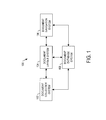
- the system may include any of a number of different subsystems (each an individual system) for performing one or more functions or operations with respect to one or more electronic documents.
- the system may include a document collection system 102, document layout system 104, document navigation system 106 and/or document database system 108.
- the panoptic visualization system may include one or more additional or alternative subsystems than those shown in FIG. 1 .
- an electronic document may be any electronic media content capable of being visualized in an electronic and/or printed (or printable) form.
- the media content of a document may include one or more of textual, graphical or other visual content such as still images, video or the like.
- the document may be of a number of different types of documents in which the type of document may be defined by one or more characteristics of the document such as its format, media content or the like.
- suitable types of documents include computer-aided design documents (e.g., CAD, CATDrawing, CATPart, CATProduct, CATProcess, cgr, DWG, DXF, DWF, etc.), text-based documents (e.g., ANS, ASC, DOC, DOCX, HTML, PDF, RTF, TXT, WPD, etc.), presentation documents (e.g., PDP, PPT, etc.), graphics documents (e.g., BMP, GIF, JPEG, JP2, PNG, PSD, PSP, RAW, TIFF, etc.), video documents (e.g., AVI, MPEG, QuickTime, WMV, etc.) or the like.
- computer-aided design documents e.g., CAD, CATDrawing, CATPart, CATProduct, CATProcess, cgr, DWG, DXF, DWF, etc.
- text-based documents e.g., ANS, ASC,
- suitable types of documents include single or collections of legal documents (e.g., court decisions, briefs, patents, etc.), books, articles, web pages, screenshots, service bulletins, engineering diagrams, warranties, technical drawings, wiring diagrams or the like. And still further examples of suitable types of documents include data sets such as engineering design data, wiring data, troubleshooting data, business data or the like.
- a document may be composed of one or more constituent document components that may be groupings of its media content such as between basic breaking points.
- the document components may depend on the type of document and may include, for example, electronic pages, slides, diagrams, drawings, still images, videos or the like.
- the document component may at times be generally referred to as a "page," although the document component need not necessarily be an electronic page as it may include other types of components. In instances in which a document includes only one component, the document and its component may be one and the same.
- a document composed of constituent pages As described herein, reference may be made to a document composed of constituent pages. It should be understood, however, that example embodiments may be equally applicable to a group (collection) of documents composed of constituent documents, which may or may not be further composed of constituent pages. Thus, functions performed with respect to a document may be equally performed with respect to a group of documents, and functions performed with respect to a page may be equally performed with respect to a constituent document.
- Each page may be formed of data from which a visual representation of it (or rather its media content) may be generated in an electronic and/or printed (or printable) form.
- the visual representation of a page may at times be generally referred to as simply the page or as an "image," although the page need not necessarily include a still image as it may include other types of media content.
- a page may include media content that has one or more subjects and includes one or more objects reflecting or otherwise forming the subject(s). At times, a page may therefore be said to depict its subject(s) and/or object(s) of its subject(s).
- a page may have an aircraft as its subject and include an exterior or interior view or sections of the exterior/interior view of the aircraft as object(s), or the page may have the exterior/interior view as its subject and include the sections of the exterior view as objects.
- a page may have an aircraft instrument panel as its subject and include gauges of the instrument panel as subjects.
- documents and/or their pages may have one or more logical relationships between one another.
- the document collection system 102 of the panoptic visualization system 100 may be generally configured to receive documents and collect pages according to these logical relationships, with the pages being collected as a document collection for panoptic visualization (a panoptic visualization document collection).
- the document layout system 104 may be generally configured to generate a layout of panoptically-arranged, logically-related pages of a panoptic visualization document collection, such as the collection from the document collection system.
- the document navigation system 106 may be generally configured to select and provide navigation option(s) for navigating a visual presentation of a layout of panoptically-arranged, logically-related pages of a panoptic visualization document collection, such as the layout generated by the document layout system.
- the document database system 108 may be generally configured to create and manage database(s) of documents and/or their pages, which have been or may be collected as a panoptic visualization document collection.
- the visual presentation of a layout may at times be generally referred to as simply the layout.
- Example embodiments of the present invention may therefore collect pages of document(s) according to logical relationships between the pages, which in one example in the context of a complex system such as an aircraft, may reflect structural relationships between its elements.
- the pages may be panoptically arranged in a manner that reflects the logical relationships, and in various examples, structural relationships.
- the arrangement may enable a user to see the pages in a single view, and in a manner that facilitates a better understanding of relationships that may be otherwise difficult to comprehend.
- the arrangement may not only lessen the time required to review documents containing large amounts of information, but may also lessen the time required and ease the difficulty studying the information to understand the ways in which the complex system and its elements relate to each other.
- FIGS. 2 , 3 , 4 and 5 illustrate more particular examples of a suitable document collection system, document layout system, document navigation system and document database system, respectively, according to example embodiments of the present invention.
- FIG. 2 illustrates a document collection system 200 according to one example embodiment.
- the document collection system may include a document parser 202 configured to receive and disassemble one or more electronic documents into a plurality of constituent pages (document components) each of which includes respective media content.
- the documents may be received from any of a number of different sources.
- the documents may be received from storage such as file storage, database storage, cloud storage or the like.
- the documents may be received from a document database system such as document database system 100 in which one or more documents may be stored in one or more databases, alone or along with other data.
- the document parser 202 may be configured to disassemble documents in any of a number of different manners.
- the document parser may be may be configured to disassemble documents according to the type of the documents (e.g., computer-aided design documents, presentation documents, graphics documents, video documents, legal documents, books, articles, web pages, engineering diagrams, technical drawings, wiring diagrams, etc.).
- the document parser may therefore also be configured to identify the type of the documents, such as based on the format of the documents, business rules or by user input.
- the document collection system 200 may also include a colligater 204 coupled to the document parser 202 and configured to colligate the pages.
- the colligation of the pages may include, for each of one or more pages of the plurality, the colligater being configured to identify one or more links between the page and one or more other pages of the plurality.
- the link(s) of one example may be identified according to the documents, type of documents, and/or media content of the page and other page(s). And in one example, the link(s) may be defined according to one or more business rules, logic or the like. These link(s) may establish one or more logical relationships between the page and other page(s).
- a link may be identified between pages sharing a common document (constituents of the same document). In one example, a link may be identified between pages adjacent one another in a predetermined sequence, such as a time sequence, spatial sequence or an order sequence in a common document or collection of documents. In some instances, a link may be identified according to the subject(s) or object(s) of the pages. For example, a link may be identified between pages sharing a common subject or common object. In one example, a link may be identified between pages in which an object of one is a subject of the other (object-subject), or in which a subject of one is an object of the other (subject-object).
- a link may be identified between pages related by a parent-child relationship.
- a link may be identified between pages in instances in which one of the pages includes a reference or link to the other page in its media content.
- a court decision may include a citation to another court decision (e.g., in the body of the court decision, or in a footnote, endnote or the like), or a page may include a hyperlink to another page.
- a link may be identified between pages by user input specifying a link between pages.
- the colligator 204 may also be configured to extract, generate or otherwise provide, for each of one or more pages, metadata associated with the page.
- its associated metadata may provide any of a number of different pieces of information about the page.
- the metadata may provide information identifying the link(s) between the page and other page(s) in metadata associated with the page. This information may include the names or other identifiers of the other page(s) linked to the page, and may also include an indication of the logical relationship(s) established by the link(s) therebetween (e.g., share common document, subject and/or object, adjacency, object-subject subject-object, parent-child, reference/link, user specified, etc.).
- the associated metadata for a page may include one or more other pieces of information about the page.
- the metadata may provide information regarding the document for which the page is a constituent, such as the name or other identifier of the document, and/or an author, size, and/or time of creation or last revision of the document.
- the metadata may provide information about one or more content restrictions applied or to be applied to the page, such as access restrictions, editing or modification restrictions, and/or encryption of the page.
- the metadata may also provide information about the media content of the page. This information may include, for example, identification of the page's subject(s) and/or object(s), the portion of the page including one or more of the object(s), and/or a level of detail of one or more of the object(s) in the page.
- a link between pages sharing a common subject, object or having an object-subject or subject-object relationship may be inferred from the metadata identifying the respective documents' subject(s) and/or object(s).
- specification of a page's subject(s) and/or object(s) may suffice as information identifying the appropriate link(s) between pages.
- the colligation of pages may further include the colligater 204 being configured to identify one or more layout models for at least some of the pages.
- the associated metadata extracted, generated or otherwise provided by the colligater for a page may further include information specifying an arrangement of the respective page in each of one or more of the layout models. For a respective layout model, this may include, for example, specifying a size, location and/or depth (z-order) of the page (or more particularly its visual representation).
- the layout model(s) may be identified and size, location and/or depth may be specified in any of a number of different manners, such as according to one or more business rules, logic or the like.
- Examples of suitable layout models include brickwall, partial brickwall, hierarchy, shape, center out, top-down / triangulated, center-out triangulated, size dominance, overlap through detail, master-detail through depth, load shape, facet, mixed-media / static-and-dynamic or the like.
- Other examples may include combinations of one or more of the foregoing layout models.
- Each of a number of example layout models will be further described below.
- the size of a page in a layout model may be specified as an absolute size or a relative size, either of which may be given in a number of different manners.
- the size of the page may relate to a size in pixels and therefore give a pixel count or pixel resolution of the page.
- the absolute size of a page may be given in height and width dimensions (e.g., N ⁇ M pixels).
- the size of the page may be specified as a relative size based on the size of one or more other pages to which the page is logically related.
- the relative size may be given in a number of different manners, such as in a percentage, fraction or multiple of other page(s); or the relative size may be given simply by an indication of smaller than, larger than or equal in size to other page(s).
- the size of the child page may be specified as being half the size of its parent.
- the size of the respective other page(s) may be given in their associated metadata, and may be given as an absolute size or relative size based on the size of even further other pages.
- the location (sometimes referred to as position) of a page in a layout model may be specified as an absolute location or relative location, but in either event, may be given in a number of different manners.
- the depth of a page in a layout model may be specified as an absolute depth or relative depth, either of which may be given in a number of different manners.
- the absolute location of the page may be given in x, y coordinates of a coordinate system that spans the layout model, and/or the absolute depth may be given in a z coordinate of the coordinate system.
- the relative location of the page may be given in x, y coordinates relative to a point or other page(s) in the layout model.
- the relative location may be given simply by an indication of above, below, left or right of a point or other page(s) in the layout model.
- the relative depth may be given simply by an indication of a page being in-front or behind other page(s) in the layout model.
- the location and/or depth of the respective other page(s) may be given in their associated metadata, and may be given as an absolute or relative location and/or depth.
- the colligater 204 may be configured to communicate the pages and metadata as a panoptic visualization document collection, and communicate the collection to any of a number of different destinations.
- the colligater may be configured to communicate the pages and metadata to respective storage 206, 208 for later retrieval.
- the storage may be resident with the document collection system 200, or may be separate from and in communication with the document collection system.
- the pages and metadata may be formatted and stored in any of a number of different manners, and hence, their storage may be of any of a number of different types. Examples of suitable types of storage include file storage, database storage, cloud storage or the like.
- the system may include a tiler 210 coupled to the colligater, and to which the colligater is configured to communicate the pages.
- the tiler may be configured to generate, for each of one or more pages, visual representations of the page at respective resolutions for zoom levels of the page.
- the page (or rather its visual representation) at each zoom level may be generally referred to as a "sub-image,” and may at times be considered a separate version or copy of the page.
- a sub-image of a page need not necessarily include a still image as the page may include other types of media content.
- the tiler 210 may be configured to divide the sub-images across the zoom levels into progressively larger numbers of tiles each of which covers a spatial area of a sub-image at a respective zoom level. This may facilitate retrieval, panning and/or zooming of the page, as explained further below.
- the tiler may then be further configured to communicate the tiles of the sub-images of the pages, such as to the page storage. Before communicating the tiles, however, the tiler may be further configured to compress the tiles, if so desired.
- the tiler 210 may be configured to generate multiple resolutions of a page at respective zoom levels arranged hierarchically from a top zoom level through one or more intermediate zoom levels to a base zoom level.
- Each zoom level includes a sub-image of the entire page but at a different resolution; and the sub-images of the page across zoom levels may have the same native aspect ratio (ratio of the width of the image to its height).
- the top zoom level (level 0) may include a sub-image of the entire page at its lowest resolution
- the one or more intermediate zoom levels may include a sub-image of the entire page at progressively higher resolutions (level 1 immediately below level 0, level 2 immediately below level 1, etc.)
- the base zoom level (level L) may include a sub-image of the entire page at its highest (or full) resolution.
- Each sub-image of a page may be generated in any of a number of different manners.
- one of the sub-images may be received by the tiler 210, such as the full-resolution sub-image.
- the tiler may then be configured to generate the other sub-images at lower resolutions, such as by downsampling the full-resolution sub-image.
- the tiler 210 may be configured to divide sub-images across zoom levels into progressively larger numbers of tiles each of which covers a spatial area of a sub-image at a respective zoom level.
- the tiles may have a fixed size (resolution) within and across the zoom levels, and accordingly, a sub-image composed of a larger number of tiles may generally have a higher resolution than a sub-image composed of a smaller number of tiles.
- Each zoom level may therefore be considered a higher zoom level relative to any zoom level above it (the sub-image at the zoom level being at a higher resolution than the sub-image at any zoom level above it).
- each zoom level may be considered a lower zoom level relative to any zoom level below it (the sub-image at the zoom level being at a lower resolution than the sub-image at any zoom level below it).
- the sub-image at each zoom level may be half the resolution of the zoom level immediately below it, and twice the resolution of the zoom level immediately above it (the resolutions increase or decrease by a factor of two).
- the first intermediate zoom-level (level 1) sub-image may be composed of 4 tiles
- the second intermediate zoom-level (level 2) sub-image may be composed of 16 tiles
- the base zoom-level (level 3) sub-image may be composed of 64 tiles.
- a page covered by a number of tiles in one zoom level may be covered by an increased or decreased number of tiles in higher or lower zoom levels, respectively, thereby leading to an increase or decrease in resolution of the page.
- an area of a page covered by one tile in one zoom level may be covered by multiple (e.g., four) tiles in an adjacent higher zoom level, thereby leading to an increase in resolution of the respective area of the page.
- an area of a page covered by multiple tiles in one zoom level may be covered by one tile in an adjacent lower zoom level, thereby leading to a decrease in resolution of the respective area of the page.
- a page (or area thereof) at a particular resolution may be displayed by the tile(s) covering the page at the zoom level commensurate with the particular resolution.
- a zoom-in of the page may be effectuated by replacing the displayed tile(s) with the increased number of tiles covering the page at a higher zoom level.
- a zoom-out of the page may be effectuated by replacing the displayed tiles with the decreased number of tile(s) covering the page at a lower zoom level.
- the page may be divided into tiles, in instances in which a portion but not all of a page is viewable in a graphical user interface (GUI) in which the page is displayed, only those tiles covering the viewable portion of the page may be retrieved and displayed.
- GUI graphical user interface
- page and metadata respective storage 206, 208 may be of any of a number of different types including, for example, database storage.
- the respective storage and one or more of the document parser 202, colligater 204 or tiler 210 may be included within or otherwise coupled to a document database system such as document database system 100.
- the document database system may receive an insertion request to add data to database(s) of the document database system, or a retrieval request for data from its database(s).
- the request may relate to document(s), pages and/or metadata not yet having been processed by any one or more of the document parser, colligater or tiler.
- the document database system may respond to the request at least in part by causing the respective document parser, colligater and/or tiler to process the document(s), pages and metadata such as in a manner described above.
- the document database system may then store the resulting panoptic visualization document collection in its database(s) (respective storage) - and if in response to a retrieval request, provide the requested data.
- FIG. 3 illustrates a document layout system 300 according to one example embodiment.
- the document layout system 300 may be one example of the document layout system 104 of the panoptic visualization system 100 of FIG. 1 .
- the document layout system may be generally configured to generate a layout of panoptically-arranged, logically-related pages of a panoptic visualization document collection. This collection may be, for example, the collection from the document collection system 102, or more particularly in one example, the document collection system 200 of FIG. 2 .
- the document layout system 300 may include a search engine 302, request interface or the like configured to receive a request for media content and identify one or more pages including the requested media content.
- the identified page may be of a panoptic visualization document collection having a plurality of pages each of which includes respective media content and has associated metadata providing information about the respective page.
- the pages and metadata may be stored in respective storage 304, 306, which in one example may correspond to respective storage 206, 208 shown in FIG. 2 .
- the search engine 302 may be configured to identify page(s) in a number of different manners, such as based on the associated metadata of the pages of the collection.
- the request may include a keyword matching or otherwise having relevance to a subject or object of page(s) of the collection.
- the search engine may be configured to search the metadata storage 306 for the associated metadata of one or more page(s) including media content matching or relevant to the request.
- the document layout system 300 may also include a layout engine 308, layout generator or the like coupled to the search engine 302 and configured to select a layout model (style of presentation) from a plurality of layout models for panoptically-arranged pages of the plurality, including the identified page.
- the layout models may be maintained in a respective storage such as file storage, database storage, cloud storage or the like, and formatted and stored in any of a number of different manners according to the respective storage.
- the layout models may include any of a number of different types of layouts for panoptically arranging pages.
- suitable layout models include brickwall, partial brickwall, hierarchy, shape, center out, top-down / triangulated, center-out triangulated, size dominance, overlap through detail, master-detail through depth, load shape, facet, mixed-media / static-and-dynamic or the like.
- Other examples may include combinations of one or more of the foregoing layout models.
- the layout engine 308 may be configured to select the layout model in any of a number of different manners.
- the layout engine may be configured to select the layout model according to the associated metadata for the identified page.
- the search engine 302 may therefore be configured to communicate the associated metadata for the identified page to the layout engine, which in turn, may be configured to select a layout model according to the respective associated metadata.
- the associated metadata for a page may provide information about the type of document of which the page is a constituent, and/or information about media content of the page.
- the layout engine 308 may be configured to select the layout model according to the type of the document of which the identified page is a constituent (e.g., computer-aided design document, presentation document, graphics document, video document, legal document, book, article, web page, engineering diagram(s), technical drawing(s), wiring diagram(s), etc.).
- the layout engine may be configured to select the layout model according to the media content of the identified page, such as one or more of its subject(s) and/or object(s).
- the associated metadata for a page may include information identifying link(s) between the page and other page(s) of the collection.
- the layout engine 308 may therefore also be configured to retrieve the identified page and other page(s) identified according to the associated metadata for the identified page. These pages may be retrieved from respective storage 304.
- the layout engine 308 may be configured to generate a layout of the retrieved pages, panoptically-arranged according to the selected layout model, and the retrieved pages and their associated metadata.
- the layout engine of one example may also be configured to receive the associated metadata, such as from respective storage 306.
- the layout engine may then be configured to communicate the layout, such as to GUI in which a layout may be displayed, or a printer for generating a printout of the layout.
- the layout may define a panoptic arrangement of the retrieved pages according to the selected layout model.
- the pages may each have a particular size, location and/or depth (z-order).
- the size, location and/or depth of each page of the layout may be absolute or relative to other page(s) of the layout, and may be specified or otherwise determinable in a number of different manners.
- the sizes, locations and/or depths may be specified or otherwise determinable from a definition of the selected layout model of the layout models.
- the associated metadata for each page of the layout may provide information specifying the size, location and/or depth (z-order) of it in the layout, as explained above.
- the layout engine 308 may be configured to generate the layout according to the sizes, locations and/or depths specified by the selected layout model and/or associated metadata of the pages of the layout.
- the aspect ratios of the pages may be their native aspect ratios.
- a layout model may specify or otherwise define, for each of one or more pages, an aspect ratio that is different from the native aspect ratio of the respective page.
- the layout engine 308 may be further configured to generate the layout according to the different, non-native aspect ratio(s) for the page(s).
- one or more of the pages of the layout may be in a state including visual representations (e.g., sub-images) at respective resolutions.
- the layout engine 308 may be configured to retrieve the page for the visual representation at the resolution that matches or most closely matches the size specified by the selected layout model and/or associated metadata. This may include, for example, retrieving the sub-image of the page at or closest to the respective resolution.
- the layout generated by the layout engine 308 may be dynamically generated according to a selected layout model such that a different layout of the pages may be realized by changing the selected layout model.
- a different layout may also be realized in a number of other manners, such as based on associated metadata of the pages of the layout or one or more time-based factors.
- the layout engine may therefore be further configured to receive a request for a different panoptic arrangement of the retrieved pages.
- the layout engine may be configured to select a different layout model from the plurality of layout models in response to the request.
- the layout engine may then be configured to generate a different layout of the retrieved pages. This may include the layout engine being configured to panoptically rearrange the retrieved pages according to the selected different layout model, and the retrieved pages and associated metadata for the retrieved pages.
- page and metadata respective storage 304, 306 may be of any of a number of different types including, for example, database storage.
- the respective storage and layout engine 308 may be included within or otherwise coupled to a document database system such as document database system 100.
- the document database system may cause the layout engine to select a layout model and generate a layout of the pages, panoptically-arranged, such as in a manner the same as or similar to that explained above or otherwise herein.
- the layout models may include any of a number of different types of layouts for panoptically arranging pages.
- logical relationship(s) established by link(s) between pages may be expressed by the arrangement of pages, in either or both of location or depth (z-order).
- logical relationships may be expressed by the proximity of pages to one another in their locations, and/or in their relative depths.
- one or more of the layout models may define or imply a navigation path between documents related to one another, and/or a load shape for loading pages of a layout generated according to the respective layout models.
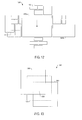
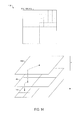
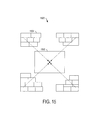
- FIGS. 6-17 schematically illustrate examples of suitable layout models.
- these examples include brickwall, partial brickwall, hierarchy, shape, center out, top-down / triangulated, center-out triangulated, size dominance, overlap through detail, master-detail through depth, load shape, facet, mixed-media / static-and-dynamic or the like.
- FIG. 6 illustrates a brickwall layout model 600 according to one example embodiment in which pages 602 may be arranged in one or more rows and one or more columns.
- the brickwall layout model may be characterized by a consistent end-to-end orientation with the pages being consistent in size and/or aspect ratio along one or more rows and/or columns.
- This type of layout model may be used for general search results.
- the layout model may provide a horizontal orientation related to chapter location, with a vertical orientation associated with a progressive increase in page length.
- a partial brickwall layout model may be considered a superset of the brickwall layout model 600.
- the partial brickwall layout model may be characterized by clusters of pages that may similarly be consistent in size and/or aspect ratio at least within respective clusters.
- the clusters may be related by associated metadata of the respective pages, such as by their media content, author, time of creation, last revision or the like.
- FIG. 7 illustrates a hierarchy layout model 700 according to one example embodiment in which pages may be arranged in a hierarchy in location and/or size.
- a hierarchical relationship between pages may be indicated by their associated metadata in a number of different manners.
- a hierarchical relationship may be indicated by a parent-child relationship between pages.
- a hierarchical relationship may be indicated by an object-subject or subject-object relationship in which an object of one page higher in a hierarchy may be subject(s) of other page(s) lower in the hierarchy, and in which at least some of the respective other page(s) may be at the same level in the hierarchy.
- the subject of the one page may be a master view
- the subject(s) of the other page(s) may be detailed view(s) of object(s) of the master view.
- a hierarchical relationship may be indicated by a relationship in which one page higher in a hierarchy includes reference(s) or link(s) (e.g., citation, hyperlink, etc.) to other document(s) lower in the hierarchy, in which at least some of the respective other document(s) may be at the same level in the hierarchy.
- pages higher in a hierarchy may be located above those lower in the hierarchy (top-down), and/or may be larger in size than those lower in the hierarchy.
- the pages in this layout model may not be consistent in size or aspect ratio. Those pages higher in the hierarchy may dominate those lower in the hierarchy, and in which pages lower in the hierarchy may be constrained in the x-direction by the width of pages higher in the hierarchy.
- the highest page 702 in the hierarchy may be located at the top, and may be sized according to the page's full resolution with its native aspect ratio.
- the next-highest page(s) 704 in the hierarchy may be located immediately below the highest page at a size smaller than the highest page, and with an aspect ratio that constrains the next-highest page(s) collectively to the width of the highest page.
- This pattern may repeat for the third-highest page(s) 706 in the hierarchy below respective ones of the next-highest pages, for the fourth-highest page(s) 708 in the hierarchy, and so forth.
- This layout model may in one example provide a single page with related pages cited in the respective page below it.
- FIG. 8 illustrates a shape layout model 800 according to one example embodiment in which the model mimics a physical structure to which the pages relate, such as an aircraft or the geography of the United States.
- pages 802 may be arranged within boundaries of a visual representation 804 of the physical structure (two or three-dimensional representation), where the location(s) of page(s) may coincide with relationship(s) their media content to the structure.
- pages related to the wing tip area of an aircraft e.g., by subject or object
- pages related to court decisions from different states of the United States may be located in areas of the visual representation of the United States coinciding with the states in which the decisions were rendered.
- one or more subsets of the pages may be arranged in clusters 806 at respective areas of the visual representation of the physical structure.
- the clusters may each be arranged according to another of the layout models, both in terms of location and size of the pages of the cluster.
- FIG. 9 illustrates a center-out layout model 900 according to one example embodiment.
- This layout model may be characterized by a dominating, centrally-located primary page 902 - such as a page identified by a search engine (e.g., search engine 302) searching for media content.
- Pages 904 related to the primary page e.g., hierarchically-related
- the pages in this layout model may not be consistent in size or aspect ratio.
- this layout model may indicate that the primary page has a relation to pre (upper), post (lower) and contemporaneous (beside) pages.
- An example of this type of layout may be a collection of documents or web pages that have been cross-hyperlinked together with the pages being part of a document tree that leads to the center, primary page.
- FIG. 10 illustrates a top-down / triangulated layout model 1000 according to one example embodiment.
- This layout model may be similar to a combination of the brickwall layout model 600 and hierarchy layout model 700, and may be characterized by a top-down arrangement of hierarchically-related pages 1002. Similar to the brickwall layout model, the pages in this layout model may be consistent in size and/or aspect ratio at least within pages at the same level of the hierarchy, which may indicate the importance of the pages relative to one another. Similar to the hierarchy layout model, in one example, pages higher in the hierarchy may be above (in the y-direction) pages lower in the hierarchy; but in contrast to the hierarchy layout model, the widths of the lower pages may not be constrained by the higher pages in the x-direction. In one example, the top-down / triangulated layout model may provide a single page as a node in a graph tree of related pages.
- FIG. 11 illustrates a center-out triangulated layout model 1100 according to one example embodiment.
- This layout model may be characterized by a dominating, centrally-located primary page 1102, similar to the center-out layout model 900.
- pages 1104 related to the primary page e.g., hierarchically-related
- the pages of the center-out triangulated layout model may not be consistent in size or aspect ratio.
- the center-out triangulated layout model may indicate that the primary page has a relation to the pre (upper) and post (lower) pages.
- An example of this type of layout may be a collection of documents or web pages that have been hyperlinked together with the upper pages being part of the document tree that leads to the center, primary page, and the lower pages leading from the primary page.
- FIG. 12 illustrates a size-dominance layout model 1200 according to one example embodiment.
- This layout model may be similar to the center-out layout model 900.
- the size-dominance layout model may be characterized by a dominating, centrally-located primary page 1202, and pages 1204 related to the primary page (e.g., hierarchically-related) located around the primary page in a 360-degree arrangement.
- This layout model may include more than one primary page that may be the same size or different sizes, with two such pages 1202a, 1202b being shown.
- the pages in this layout model may not be consistent in size or aspect ratio.
- the size of the pages in this layout model may convey weight or relevance of the pages relative to one another.
- An example of this type of layout may be a collection of wiring diagrams that have associated reference(s) or link(s) on all four axes of at least the primary diagrams.
- the referenced/linked wiring diagrams/schematics may themselves include relationships to additional diagrams.
- FIG. 13 illustrates an overlap-through-detail layout model 1300 according to one example embodiment.
- This layout model may be characterized by preservation of a hierarchical relationship between pages in the depth (z-order) in which they are arranged.
- a page 1302 higher in the hierarchy may overlay another page 1304 lower in the hierarchy, which in turn may overlay another page 1306 even lower in the hierarchy.
- pages sharing one or more common objects or other media content may overlap 1308 so that the shared object(s) / other media content may at least partially spatially align across the pages.
- Navigating a layout may include zooming into or out of the presentation.
- Zooming into the layout according to the overlap-through-detail layout model 1300 may include increasing the size and, in various instances of one example, resolution of its pages.
- zooming into the layout may also include obscuring an overlaying page so that one or more overlaid pages (or rather the overlaid portions thereof) underneath it may come into view.
- zooming out of a layout may also include showing an obscured overlaying page so that the respective page comes into view, and one or more overlaid pages (or rather the overlaid portions thereof) go out of view.
- obscuring a page may include increasing a transparency of the page (or decreasing its opacity) during a zoom-in, and showing a page may include increasing an opacity of the page (or decreasing its transparency) during a zoom-out.
- page 1302 may be obscured as a user zooms into the layout. At some point during the zoom-in, then, the respective page may no longer be viewable so that the layout appears to only include pages 1304, 1306. The zoom-in may further continue, obscuring page 1304 until it is no longer viewable, at which point the layout appears to only include page 1306. In these instances, obscured pages may remain in the layout, or the layout engine 308 may be configured to remove them from the layout.
- page 1304 may be shown overlaying page 1306 as a user zooms out of the layout.
- the respective page may be viewable so that the layout appears to include both pages 1304, 1306.
- the zoom-out may further continue, showing page 1302 until it is also viewable, at which point the layout appears to include pages 1302, 1304, 1306.
- overlaid pages (or the overlaid portions thereof) may remain in the layout, or the layout engine 308 may be configured to remove them from the layout.
- FIG. 14 illustrates a master-detail through depth layout model 1400 according to one example embodiment.
- This layout model is similar to the overlap-through-detail layout model 1300 in that a hierarchical relationship between pages may be preserved in their depth (z-order).
- an overlaid page e.g., lower in the hierarchy
- an overlaying page e.g., higher in the hierarchy
- navigation in the master-detail through depth layout model 1400 may include zooming into or out of the layout, which may further include obscuring or showing an overlaying page relative to an overlaid page.
- navigating a layout including pages 1402, 1404, 1406 may include obscuring overlaying pages as a user zooms into the layout.
- navigating the layout may include showing overlaying pages as the user zooms out of the layout.
- implementing a zoom in the master-detail through depth layout model of multiple pages may be similar to implementing a zoom for a page including multiple sub-images.
- FIG. 15 illustrates a load-shape layout model 1500 according to one example embodiment.
- This layout model may be similar to some of the other layout models (e.g., center-out, center-out triangulated) including a dominating, centrally-located primary page 1502, and pages 1504 related to the primary page (e.g., hierarchically-related) located around, above and/or below the primary page.
- the pages in this layout model may not be consistent in size or aspect ratio.
- the load-shape layout model may be characterized by the timing of loading the layout (or more particularly its visual presentation). In this layout model, the non-primary pages may be loaded first, followed by the primary page.
- An example of the load-shape layout model 1500 may be pages of media content related in time where pages of older media content may be loaded before the primary page of the most-current media content.
- the timing of media content in this context may relate to a time-aspect of the subject(s) or object(s) of the media content.
- pages e.g., pages 1504
- the timing of media content may relate to the time of creation of the content, such as in the case of loading a first draft and one or more changes or revisions to a document (e.g., pages 1504) before the final or current version of the document (e.g., page 1502).
- FIG. 16 illustrates a facet layout model 1600 according to one example embodiment.
- the facet layout model may be characterized by the arrangement of pages 1602 in a three-dimensional (3D) environment, such as in the context of facets of a 3D structure such as a truncated icosahedron 1604.
- 3D three-dimensional
- each page may be created from a set of x, y, z coordinates with a known consistent unit vector for orientation.
- Each page may then be placed in the layout in relation to a viewer's perspective.
- This layout model may be visually presented in three dimensions, or may be translated to a corresponding two-dimensional (2D) arrangement, such as a translated truncated icosahedron 1606.
- FIG. 17 illustrates a mixed-media / static-and-dynamic layout model 1700 according to one example embodiment.
- This layout model may be a subset of one or more other layout models in which the pages of a layout may include pages of mixed media types.
- this layout model may include one or more static ("S") pages such as in the case of textual content or still images, and one or more dynamic ("D") pages such as in the case of video.
- FIG. 17 illustrates for example the mixed-media / static-and-dynamic layout model arranging mixed-media content in an arrangement similar to the size-dominance layout model 1200. As shown, this arrangement may include dominating, centrally-located primary pages 1702a, 1702b, and pages 1704 related to the primary pages (e.g., hierarchically-related) located around the primary pages.
- the document navigation system 400 may be one example of the document navigation system 106 of the panoptic visualization system 100 of FIG. 1 .
- the document navigation system may be generally configured to select and provide navigation option(s) for navigating a layout of panoptically-arranged, logically-related pages of a panoptic visualization document collection. In one example, this may include the collection from the document collection system 102 (e.g., document collection system 200). Additionally or alternatively, for example, it may include the layout generated by the document layout system 104 (e.g., document layout system 300).
- the document navigation system 400 may include a navigation engine 402 configured to receive a layout of pages (document components) of a panoptic visualization document collection.
- the collection may have a plurality of pages each of which includes respective media content and have associated metadata providing information about the respective page.
- the layout may include a panoptic arrangement of visual representations of the pages of the layout according to the associated metadata of the respective pages.
- the navigation engine 402 may also be configured to select one or more navigation options from a plurality of navigation options for navigating the layout, in which the navigation options may be selected according to the associated metadata for the pages of the layout.
- the navigation options may be maintained in a respective storage such as file storage, database storage, cloud storage or the like, and formatted and stored in any of a number of different manners according to the respective storage.
- the metadata for the pages of the layout may be stored in a respective storage 404, which in one example may correspond to either or both of storage 208, 306.
- the navigation engine may also be configured to communicate the selected navigation options, such as to a GUI in which the selected navigation options may be presented along with the layout.
- the navigation engine 402 may be configured to select navigation options according to the type(s) of document(s) of which the pages of the layout are constituents, which may be indicated in the associated metadata for the pages. In one example, the navigation engine may be configured to select navigation options according to the media content of the pages of the layout, such as their subject(s) and/or object(s), which may also be indicated in the associated metadata.
- Suitable navigation options for a layout include command tools (e.g., pan, rotate, zoom, obscure / show, home, etc.), annotation tools (e.g., timeline / milestone, callout, etc.), linking tools (hyperlink, hotlink, hotspot, etc.), navigation path tools (e.g., tracking, recording, etc.), metadata tools (e.g., search, filter, insertion, etc.), page tools (e.g., search, filter, cue, activation, size, location, dominance, logical relationship(s), etc.), layout-model change, co-navigation, hyper-hypo navigation, printing or the like.
- command tools e.g., pan, rotate, zoom, obscure / show, home, etc.
- annotation tools e.g., timeline / milestone, callout, etc.
- linking tools hyperlink, hotlink, hotspot, etc.
- navigation path tools e.g., tracking, recording, etc.
- metadata tools e.g., search, filter, insertion
- the associated metadata for the pages of the layout may directly or indirectly affect the selected navigation options.
- the associated metadata may be retrieved to directly affect the navigation options selected by the navigation engine 402.
- the associated metadata for the pages may affect their layout, such as by affecting a selected layout model according to which the layout may be generated. More particularly, for example, the layout of pages may be generated according to a layout model selected according to the type of document(s) of the pages, and/or media content of the pages. The layout may then affect the navigation options selected by the navigation engine. In either event of the associated metadata directly or indirectly affecting the selected navigation options, the navigation engine may be said to select navigation options according to the associated metadata for pages of the layout.
- the document navigation system 400 may also include a request interface 404 coupled to the navigation engine 402 and configured to receive a request according to one or more of the selected navigation options.
- the request interface may be configured to communicate the request to the navigation engine.
- the navigation engine may in turn be further configured to effect an adjustment of the visual representation of the layout in response to the request and according to the request, and communicate the adjustment such as to the aforementioned GUI.
- the navigation engine may be configured to effect the adjustment of the visual presentation without adjustment of the layout itself.
- the navigation engine may be configured to effect the adjustment of the visual presentation including adjustment of the layout.
- the selected navigation options may be affected by a layout and/or its pages, or in one more particular example, the associated metadata for the pages of a layout.
- layouts of different pages may result in the selection of one or more different navigation options.
- the navigation engine 402 may at different times receive a layout of first pages and a separate layout of second pages, with each layout including a panoptic arrangement of respective pages.
- the navigation engine may select first navigation options for the first layout, and second navigation options for the second layout.
- the first and second pages may include one or more common pages, but in one example, may also include one or more different pages.
- the first and second layouts may be different at least in that the first and second pages include one or more different pages.
- the first and second navigation options selected by the navigation engine may include one or more different navigation options - although similar to the first and second pages, the first and second navigation options may include one or more common navigation options.
- Metadata storage 404 may be of any of a number of different types including, for example, database storage.
- the respective storage and navigation engine 402 may be included within or otherwise coupled to a document database system such as document database system 100.
- the document database system may cause the navigation engine to select navigation option(s), and/or receive a request to and effect an adjustment of the layout (and/or metadata records), and communicate the adjustment, such as in a manner the same as or similar to that explained above or otherwise herein.
- the navigation engine 402 may be configured to select any of a number of different navigation options for a layout of pages.
- Many layouts generated according to many different layout models, and including pages of many different types of documents, may include command tools such as pan, rotate, zoom, obscure / show, home or the like.
- a portion but not all of a layout may be viewable in a GUI in which the layout is displayed. This may be the case, for example, in instances in which the size of the layout is greater than the viewable area of the GUI (sometimes referred to as a "view"), or in instances in which the layout is of pages in a 3D environment (e.g., facet layout model).
- the navigation options may include panning and/or rotating to move the layout.
- This may include one or more pages of the layout coming into view, and may additionally or alternatively include one or more pages going out of view. Pages of the layout in view or coming into view may be retrieved and displayed, while pages out of view or going out of view may be removed from display. Further, in instances in which only a portion of a page is in view or comes into view, and in which pages are divided into tiles, only those tiles covering the viewable portion of the page may be retrieved and displayed.
- the command tools may also include zooming into or out of a layout and thus its pages, which may include increasing or decreasing the size of the layout.
- This increasing or decreasing the size of the layout may in turn include increasing or decreasing the size(s) and, in various instances of one example, the resolution(s) of its pages.
- pages of a layout may include sub-images at respective resolutions for zoom levels of the pages.
- the layout may include for each respective page, the sub-image of the page at the resolution that matches or most closely matches the page's size specified by a selected layout model and/or associated metadata.
- a zoom-in of the layout then, may be effectuated by replacing the sub-images of its pages with respective sub-images at increased zoom levels, and hence increased resolutions.
- a zoom-out of the layout may be effectuated by replacing the sub-images of its pages with respective sub-images at decreased zoom levels, and hence decreased resolutions.
- the zoom (in or out) of a page or layout may be capable at a finer increment than provided by zoom levels of the page or one or more pages of the layout.
- the zoom of a page (alone or as part of a layout) may be to an increment that relative to a sub-image of the page being displayed, another sub-image of the page matches or most closely matches the page's increased/decreased size.
- the zoom may be effectuated by replacing a sub-image of the page with a corresponding sub-image of the page at a higher/lower resolution.
- the zoom may be to an increment that relative to a sub-image of the page being displayed, the same sub-image still most closely matches the page's increased/decreased size.
- the zoom may be effectuated by increasing the size of the sub-image of the page without replacing the sub-image with another at a higher/lower resolution.
- a page may not only include respective sub-images, but the sub-images across zoom levels may be divided into progressively larger numbers of tiles each of which covers a spatial area of the sub-image at a respective zoom level.
- a zoom-in of the layout may be effectuated by replacing the displayed tile(s) of its pages with the increased numbers of tiles covering the pages at higher zoom level(s).
- a zoom-out of the layout may be effectuated by replacing the displayed tiles with the decreased numbers oftile(s) covering the pages at lower zoom level(s).
- zooming into or out of a layout may include one or more pages of the layout coming into view, and may additionally or alternatively include one or more pages going out of view. These pages may be handled in a manner similar to panning the layout, but at higher or lower zoom level(s).
- the zoom option may implicate one or more other navigation options to further affect one or more of the pages.
- the overlap-through-detail layout model 1300 and master-detail through depth layout model 1400 may implicate obscure / show options in which overlaying pages may be obscured or shown relative to overlaid pages during zoom-in and zoom-out, such as in the manner explained above with reference to FIGS. 13 and 14 .
- the obscure / show options may be utilized to obscure or show one or more pages of a layout independent of the zoom option, and independent of pages overlaying one another.
- a number of navigation options including those command tools described above may effect an adjustment of the visual presentation of a layout.
- a home option may therefore permit a user to return to the visual presentation from the adjusted visual presentation.
- the navigation options may include annotation tools such as timeline / milestone, callout or the like. These tools may permit a user to add annotations to a layout, and may be selected for a number of different layouts to different layout models, and including pages of many different types of documents.
- the timeline / milestone option in various examples may be more particularly applicable to pages logically related to one another in a time sequence. In one example, timeline / milestone may effect a visualization added to the layout that may relate pages of the layout as milestones in a timeline.
- the navigation options may include linking tools such as hyperlink, hotlink, hotspot or the like.
- one or more pages may include reference(s) or link(s) to other page(s) or media content of other page(s) (the page(s) or media content being a target).
- the target page(s) or media content may be in the same layout, or in the same panoptic visualization document collection but perhaps not in the same layout.
- the target may even include page(s) or media content not in the same panoptic visualization document collection.
- the hyperlink option may permit a source page to include inline in its media content, content linked from one or more other pages. This is sometimes more particularly referred to as a hot link.
- the hyperlink option may also permit a user to navigate from a source page to one or more target pages linked to the respective source page.
- a hyperlink may be represented in any of a number of different manners, such as by text, graphic or the like.
- media content of one page may be formatted as a hyperlink to another page or media content of another page.
- an object depicted in one page may be formatted as a hyperlink to another page that also depicts the object, or more directly to the object depicted in the other page. This type of hyperlink is sometimes referred to as a hotspot.
- the navigation options may include navigation path tools such as tracking, recording or the like.
- a navigation path may be defined in any of a number of different manners.
- a navigation path may be defined by a sequence of a user panning, rotating, zooming and/or repositioning a layout or one or more of its pages, navigating from one page to another page or media content (hyperlink), or otherwise effecting an adjustment of the layout (or rather its visual presentation).
- the navigation path tools may permit tracking and/or recording a navigation path followed by a user, thereby creating a navigation history.
- the navigation options of one example may include metadata tools such as search, filter, insertion or the like, which may operate with respect to the associated metadata for pages of the layout.
- the search and filter options may permit a user to search the associated layout for particular metadata, or filter the associated metadata to include or exclude particular metadata.
- the insertion option may permit the insertion of particular metadata to the visual presentation of the layout, such as in the form of a callout including the particular metadata referenced to page(s) for which the associated metadata includes the particular metadata.
- the navigation options may include page tools such as search, filter, cue, activation, size, location, dominance, logical relationship(s) or the like. Similar to the metadata tools, the search and filter options may permit a user to search the pages of the layout for particular page(s) or particular media content. In this regard, the search and filter options may implicate the associated metadata for pages of the layout.
- page tools such as search, filter, cue, activation, size, location, dominance, logical relationship(s) or the like.
- the search and filter options may permit a user to search the pages of the layout for particular page(s) or particular media content.
- the search and filter options may implicate the associated metadata for pages of the layout.
- the cue option may permit the application of one or more visual effects to one or more pages to draw the user's attention to those page(s) in the layout.
- the visual effect may be any of a number of different effects. Examples of suitable visual effects include an opaque or translucent border of a noticeable color (e.g., yellow) around the page(s), an opaque or translucent visual object or shape smaller than and overlaying the page(s) or a translucent visual object or shape the same or greater in size than and overlaying the page(s), or the like. Examples of other suitable visual effects include an increase in a size of the page(s), an animation applied to the page(s), or the like.
- the visual effect(s) may be triggered in any of a number of different manners, as may the page(s) to which the effect(s) are applied. For example, visual effect(s) may be triggered to indicate selection of one or more page(s). In this example, the visual effect(s) may be applied to the selected page(s). Additionally or alternatively in this example, visual effect(s) may be applied to page(s) having a particular logical relationship with the selected page(s) (e.g., share common document, subject and/or object, adjacency, object-subject subject-object, parent-child, reference/link, user specified, etc.). In another example, visual effect(s) may be applied to page(s) to indicate a navigation path followed by the user.
- the activation option may be more particularly applicable to dynamic pages and may permit a user to trigger activity of one or more pages, such as by playing or otherwise controlling (e.g., rewind, fast forward, volume, mute, etc.) video content that may be included in such page(s).
- playing or otherwise controlling e.g., rewind, fast forward, volume, mute, etc.
- Size, location and dominance options may permit a user to resize or otherwise rearrange one or more page(s) of a layout, which may in effect create a different layout.
- These options may be applicable to a number of different layouts to different layout models, and including pages of many different types of documents.
- the dominance option may be more particularly applicable to layouts according to a layout model including a dominating page, such as hierarchy, center out, center-out triangulated, size dominance, load shape, mixed-media / static-and-dynamic or the like.
- the logical relationship(s) option may permit a user to add, delete or otherwise change one or more logical relationships between pages, which may in turn effect a change in the layout of pages.
- These changes may or may not carry from navigation of a layout of pages to the associated metadata of those pages and any other similarly related pages.
- the changes may be temporary in that they are only applied to the layout of pages currently being visually presented.
- the changes may be more permanent in that they result in corresponding changes to the associated metadata for pages, which may not only result in a change in the currently presented layout but other layouts generated including the affected pages.
- navigation options may include layout-model change, co-navigation, hyper-hypo navigation, printing or the like.
- the layout-model change option may permit the user to change the layout model according to which the visually presented layout has been generated. This option may result in a rearrangement of the pages of the layout according to another layout model, thereby generating another layout.
- the co-navigation option may permit users of different instances of the same system to collaboratively navigate a layout of pages that may have been generated by one of the systems, but may be concurrently visually presented by both systems.
- the hyper-hypo navigation option may permit navigation between unique layout states or other pages that may not be part of the same panoptic visualization document collection as pages of the layout (hyper navigation), and/or navigation with a single layout state that may change as a result of that navigation (hypo navigation).
- the printing option may permit the user to direct the visually-presented layout to a printer for generating a printout of it.
- the document database system may be one example of the document database system 108 of the panoptic visualization system 100 of FIG. 1 .
- the document database system may be generally configured to create and manage database(s) of documents and/or their pages, which have been or may be collected as a panoptic visualization document collection. In one example, this may include the collection from the document collection system 102 (e.g., document collection system 200).
- it may include the collection of which the document layout system 104 (e.g., document layout system 300) generates a layout; and/or it may include the collection, a layout of which the document navigation system 106 (e.g., document navigation system 400) selects and provides navigation options.
- the document layout system 104 e.g., document layout system 300
- the document navigation system 106 e.g., document navigation system 400
- the document database system 500 may include one or more databases 502 and a database management system (DBMS) 504.
- the database may be structured according to any of a number of different data models, such as the relational data model in which case the database may be referred to as a relational database.
- the database may be configured to store a panoptic visualization document collection having a plurality of pages each of which includes respective media content and has associated metadata providing information about the respective page.
- the pages and metadata may be stored in records (sometimes referred to as rows or tuples) of respective tables 506, 508 (sometimes referred to as relations), which in one example may correspond to respective storage 206, 208 shown in FIG. 2 .
- the pages and metadata may be formatted as any of number of different data types in the database, such as numeric, date-and-time, string or the like.
- one or more of the pages may be stored as strings in the form of binary large objects (BLOBs), particularly in instances in which the pages include media content in the form of still images, video or the like.
- BLOBs binary large objects
- the sub-images or tiles may be stored as respective BLOBs.
- the DBMS 504 may be generally configured to manage the database 502, and in one example in the context of a relational database, the DBMS may be referred to as a relational database management system (RDBMS).
- RDBMS relational database management system
- the DBMS may be configured to control the organization, storage and retrieval of data in the database 502.
- the DBMS may also be configured to control the security and integrity of the database.
- the DBMS 504 may include any of a number of different subsystems (each an individual system) for performing one or more functions or operations with respect to the database 502.
- the DBMS may include a DBMS engine 510 generally configured to manage data in the DBMS, and data manipulation subsystem 512 generally configured to control adding, changing and deleting data in the database, as well as querying the database for data.
- the data manipulation subsystem 512 may include a query language engine 514 that alone or in combination with a data manipulation language (DML) engine, may be configured to receive queries or requests to add, change and/or delete data in the database 502, and/or query the database for data.
- This request may be in the form of one or more query language statements, and the query language engine may be configured to translate the query language statements to a format understandable by the DBMS engine 510.
- the query language engine may include a parser and query optimizer.
- the parser may be configured to separating or otherwise breaking down the query language statements into basic units of syntax, and may ensure that the statements follow a number of syntax rules.
- the query optimizer may be configured to examine the query language statements and determine the most efficient manner of their execution.
- the DBMS engine 510 may be configured to execute the query language statements, such as in the manner determined by the query optimizer of the query language engine 514.
- the DBMS engine may include a transaction manager and file manager.
- the transaction manager may be configured to enforce permissions and resolve or otherwise prevent conflicts within the document database management system 500.
- the file manager may be configured to control input/output operations on the database 502, depending on the request.
- the query language engine 514 of the data manipulation subsystem 512 may receive an insertion request to add data to the database 502.
- the query language engine may receive the insertion request from the document collection system 102 (e.g., document collection system 200).
- the request in this example may include one or more pages and their associated metadata, with at least the page(s) possibly having been compressed or otherwise processed by the document collection system, such as explained above.
- the DBS engine 510 may receive the request from the query language engine, and through its file manager, may store the page(s) and metadata in the database 502.
- the file manager may store the page(s) and metadata in records of respective tables 506, 508 of the database.
- the query language engine 514 may include or otherwise be coupled to one or more of a document parser, colligater or tiler, such as the document parser 202, colligater 204 or tiler 210 of the document collection system 200.
- an insertion request may include document(s) received by the document parser, or in another example, may include the document's constituent pages from the document parser to the colligater.
- an insertion request may include the pages and metadata from the colligater to the tiler.
- the query language engine in these examples may cause the respective document parser, colligater and/or tiler to process the document(s), pages and metadata to a resulting panoptic visualization document collection.
- the query language engine may pass the request including the panoptic visualization document collection to the DBS engine 510, which through its file manager, may store the page(s) and metadata in the database 502.
- the query language engine 514 of the data manipulation subsystem 512 may receive a retrieval request for data from the database 502, such as a request for one or more page records and associated metadata records from respective tables 506, 508 in the database.
- the query language engine search engine may be configured to identify one or more pages in a number of different manners.
- the retrieval request may specifically identify page(s) of a panoptic visualization document collection, or may identify one or more search criteria from which pages of the collection may be identified such as according to their associated metadata.
- the query language engine may be configured to identify page(s) in a manner similar to that explained above with respect to the search engine 302.
- the DBS engine 510 may receive the request from the query language engine 514 and execute the request.
- the file manager of the DBS engine may be invoked to retrieve the respective page records and associated metadata records from respective tables 506, 508 in the database. The file manager may then be configured to pass the records back to the query language engine.
- the query language engine 514 may include or otherwise be coupled to one or more of a document parser (e.g., document paser 202 ), colligater (e.g., colligater 204) or tiler (e.g., tiler 210).
- a document parser e.g., document paser 202
- colligater e.g., colligater 20
- tiler e.g., tiler 210
- the retrieval request may be for document(s) from the database 502, which may or may not have yet been processed by the document parser, colligater or tiler.
- the retrieval request may be for pages of one or more documents, which pages may be from document(s) disassembled by the document parser but not yet processed by the colligater or tiler.
- the retrieval request may be for pages and associated metadata, which may have been processed by the parser and colligater but not yet processed by the tiler.
- the DBS engine 510 may retrieve and pass back to the query language engine, records for the requested document(s), pages and/or metadata.
- the query language engine in these examples may cause the respective document parser, colligater and/or tiler to process the document(s), pages and metadata to a resulting panoptic visualization document collection.
- the query language engine may then fulfill the request including pages and metadata from the panoptic visualization document collection, and reengage the DBS engine to store the processed pages and metadata in the database.
- the query language engine 514 may include a layout engine, or may be otherwise coupled to a layout engine such as the layout engine 308 of the document layout subsystem 300.
- the respective layout engine may be configured to select a layout model and generate a layout of the pages in the page records, panoptically-arranged, such as in a manner the same as or similar to that explained above.
- the query language engine may communicate the associated metadata records to the layout engine before requesting the page records from the database 502.
- the layout engine may then be configured to identify sub-image(s) of page(s) that matches or most closely match size(s) specified by the selected layout model and/or associated metadata, and may direct or otherwise cause the query language engine to request the record for the identified sub-image(s) from the database for generation of the layout.
- the query language engine 514 may be configured to communicate the layout of pages along with their associated metadata records, such as to a GUI in which the layout and metadata records may be displayed (e.g., simultaneously displayed), or a printer for generating a printout including both the layout and metadata records.
- the metadata records in these cases may be arranged in any of a number of different manners, such as in a grid or table similar to the tables 508 in which the records may be stored.
- the query language engine 514 may further include a navigation engine, or may be otherwise coupled to a navigation engine such as the navigation engine 402 of the document navigation system 400.
- the respective navigation engine may be configured to select one or more navigation options from a plurality of navigation options for navigating the layout generated by the layout engine of or coupled to the query language engine.
- the navigation engine may also be configured to receive a request according to one or more of the selected navigation options, effect adjustment of the layout (and/or metadata records) in response and according to the request, and communicate the adjustment.
- the query language engine or navigation engine may receive the request directly or via a suitable request interface (e.g., request interface 404).
- the navigation options may be selected in a number of different manners, such as in a manner the same as or similar to that explained above.
- the query language engine may then be configured to communicate the selected navigation options, such as to a GUI in which the selected navigation options may be presented along with the layout.
- the selected navigation options may include any one or more of those described above.
- one or more of the selected navigation options may be not only for navigating the layout, but also for navigating the associated metadata records.
- the cue option may permit application of visual effect(s) to one or more metadata records and/or pages of the layout, which may be triggered to indicate selection of one or more metadata records and/or pages.
- selection of a metadata record may cause application of visual effect(s) to the metadata record and/or the page with which it is associated.
- selection of a page of the layout may cause application of visual effect(s) to the page and/or its associated metadata record.
- the change may carry to the metadata records.
- the data manipulation subsystem 512 of the DBMS 504 may control the change to the metadata records, which may also be reflected in the metadata records in the GUI.
- FIGS. 18-23 depict example layouts of pages that may be displayed in a GUI that has a predetermined viewable area, and which may be navigated by a user, according to an example embodiment of the present invention.
- FIGS. 18-20 and 23 illustrate an example of a layout according to the hierarchy layout model 700 displayed in a GUI that has a predetermined viewable area 1800 for presenting a layout.
- a layout according to the hierarchy layout model may include a plurality of pages 1802, each of which in one example may be a sub-image of the page at a respective resolution.
- Various ones of the pages may have different resolutions in the layout, with page 1804 having a higher resolution than pages 1806, which in turn have a higher resolution than pages 1808, which again in turn have a higher resolution than pages 1810.
- the pages may be located and/or sized in the layout according to logical relationship(s) between the pages.
- the pages 1802 are engineering drawings of an aircraft, and may have object-subject relationships. More particularly, for example, object(s) of a page on a level of the hierarchy may be subject(s) of pages below it in the hierarchy, the subject(s) in one example being additional detail regarding the object(s).
- page 1804 may depict an exterior view of the entire aircraft.
- Pages 1806 may depict a nose section, a landing gear assembly, a window, an engine assembly and a tail assembly.
- Pages 1808 may depict additional detail about the content of respective ones of pages 1806, and pages 1810 may depict additional detail about the content of respective ones of pages 1808.
- pages 1808, 1810 may be presented at a resolution that causes their media content to be only partially understood or not understood at all by a user.
- pages 1808 and/or pages 1810 may be presented at a sufficient resolution to interpret substantially all of their media content.
- the GUI may present one or more selected navigation options for navigating the layout of pages 1802.
- pan and zoom navigation options may be presented in the form of controls 1812 to move and/or increase the size of the pages in the viewable area 1800 to focus on a portion 1814 of the layout.
- the user may activate the aforementioned controls to move and/or zoom the layout to fill a greater portion of the viewable area of the GUI with a portion of the layout.
- FIG. 19 illustrates one example of the result of navigating the layout in this manner.
- the size of pages 1804-1810 may increase which, in one example, may include replacing sub-images of pages 1804-1808 with corresponding sub-images at higher resolutions.
- the resolution of the sub-images may allow the user to interpret substantially all of the presented media content.
- pages 1810 may not be presented with sufficient resolution to be interpreted by the user, because the size of the respective pages may not have been increased to a level implicating a next sub-image. That is, even after having increased the size of the image, the size may still most closely approximate the same sub-image so as to not cause its replacement with the next sub-image at a higher resolution.
- the user may again activate controls 1812 to move and/or resize the view to focus on an even smaller portion 1902 of the layout.
- FIG. 20 One example of the result of navigating the layout to focus on portion 1902 is shown in FIG. 20 .
- the viewable area 2000 of the GUI may resize to more fully accommodate the focused portion of the layout.
- the size of pages 1804-1810 may increase, which in one example, may now further include replacing a sub-image of page 1810 with a corresponding sub-image at a higher resolution.
- the media content of page 1810 may now be sufficient to be interpreted by the user.
- only a portion of page 1804 is within the viewable area of the GUI, and in which the respective page is divided into tiles, only those tiles covering the viewable portion of the respective page may be retrieved and displayed.
- FIG. 21 illustrates an example of a layout according to the brickwall layout model 600 displayed in a GUI that has a predetermined viewable area 2100.
- the layout may include pages 2102-2110.
- the pages of the layout are wiring diagrams of a wiring system, which may be related by a spatial sequence.
- page 2102 may depict wire(s) that connect to wire(s) depicted in page 2104.
- Page 2104 may in turn depict wire(s) that connect to wire(s) depicted in page 2106, and so forth for wire(s) of page 2106 to those of page 2108, and wire(s) of page 2108 to those of page 2110.
- Pages of the layout entirely within the viewable area 2100 of the GUI may form or otherwise define an area or region of interest 2112.
- pages within the region of interest may be presented with an increased resolution relative to any pages outside the region of interest.
- the region of interest may include pages 2102-2108, but because only a portion of page 2110 is within the viewable area of the GUI, page 2110 may be considered outside the region of interest (although it may still be considered within the viewable area). In this instance, page 2110 may be presented at a lower resolution than the resolution(s) of pages 2102-2108.
- FIG. 22 illustrates an example of a layout according to the overlap-through-detail layout model 1300 displayed in a GUI that has a predetermined viewable area 2200.
- the layout includes pages 2202, 2204, and in which page 2202 may include a reference to page 2204.
- this hierarchical relationship may be maintained by the layout in which page 2204 (higher in the hierarchy) may partially overlay page 2202, and in one example, page 2204 may overlay page 2202 at the location of its reference in the respective page.
- page 2204 may be presented smaller in size than page 2202, and may therefore be presented with a lower resolution than page 2202.
- FIG. 23 again presents the example layout shown in FIGS. 18-20 but in a further example in which the layout is presented along with associated metadata records of the pages of the layout.
- the GUI may divide its overall viewable area 2300 into a plurality of panes for presenting respective information.
- One of the panes may be or otherwise include the viewable area 1800 (only a portion of which is shown in FIG. 23 ) for presenting a layout of pages, similar to that described above with respect to FIGS. 18-20 .
- the GUI may include metadata records associated with pages in the layout.
- the metadata records may be displayed in their entireties or may only be partially displayed, depending on the request from which the records were retrieved.
- metadata associated with any page may be stored in one or more metadata records, and consequently, the displayed metadata records may reflect only a portion of the records associated with the pages - again depending on the request.
- the GUI in one example may include a pane 2304 for browsing objects in the document database system 500, including the databases 502 and DBMS 504. From this pane, a database and in particular its tables 506, 508 may be browsed or otherwise searched for desired data such as one or more page records and/or metadata records. Additionally or alternatively, for example, the GUI may include a pane 2306 for presenting the request from which the page records of pages of the layout, and their associated metadata records, were retrieved from the database.
- the panoptic visualization system 100 and its subsystems including the document collection system 102, document layout system 104, document navigation system 106 and document database system 108 may be implemented by various means.
- the examples of a document collection system 200, document layout system 300, document navigation system 400 and document database system 500, including each of their respective elements may be implemented by various means according to example embodiments.
- Means for implementing the systems, subsystems and their respective elements may include hardware, alone or under direction of one or more computer program code instructions, program instructions or executable computer-readable program code instructions from a computer-readable storage medium.
- a panoptic visualization document database system 500 including: a database management system engine 510 configured to manage a database 502 having stored therein a panoptic visualization document collection 200 of a plurality of document components each of which includes respective media content and has associated metadata providing information about the respective document component, the document components and metadata being stored in respective records of the database 502; a data manipulation subsystem 512 coupled to the database management system engine 510 and including a query language engine 514 configured to receive a request for the respective records of one or more document components and associated metadata from the database 502, wherein the database management system engine 510 is configured to execute the request, including being configured to retrieve the requested, respective records from the database 502; and a layout engine 308 of the query language engine 514 or coupled to the query language engine, the layout engine 308 being configured to generate a layout of panoptically-arranged visual representations of the document components according to a layout model, and the retrieved, respective records of the one or more document components and associated metadata, wherein the query
- the panoptic visualization document database system 500 includes wherein the layout engine 308 is configured to select the layout model from a plurality of layout models 600, 700, 800, 900, 1000, 1100, 1200, 1300, 1400, 1500, 1600, 1700, the layout model being selected according to the retrieved, respective records of the associated metadata.
- the panoptic visualization document database system 500 includes wherein the one or more document components are of one or more electronic documents of the panoptic visualization document collection 200, and wherein the associated metadata for the one or more document components provides information about a type of the respective documents, the layout engine 308 being configured to select the layout model according to the type of the respective documents.
- the panoptic visualization document database system 500 includes wherein the associated metadata for the one or more document components provides information about the media content of the respective document components, the layout engine 308 being configured to select the layout model according to the media content of the one or more document components.
- the panoptic visualization document database system 500 includes wherein the associated metadata for each of the one or more document components provides information specifying one or more of a size, location or depth of the visual representation of the respective one or more document components in the layout, and wherein for each of the one or more document components, the layout engine 308 is configured to generate the layout according to the one or more of the size, location or depth specified by the information provided in the associated metadata.
- the panoptic visualization document database system 500 includes wherein for each of one or more of the document components, the one or more of the size, location or depth is specified relative to one or more others of the document components.
- the panoptic visualization document database system 500 includes wherein the query language engine 514 is configured to communicate the layout and retrieved, respective records of the associated metadata to a graphical user interface for simultaneous display thereby.
- a method including managing a database 502 having stored therein a panoptic visualization document collection 200 of a plurality of document components each of which includes respective media content and has associated metadata providing information about the respective document component, the document components and metadata being stored in respective records of the database 502; receiving a request for the respective records of one or more document components and associated metadata from the database 502, and executing the request, including retrieving the requested, respective records from the database 502; generating a layout of panoptically-arranged visual representations of the document components according to a layout model, and the retrieved, respective records of the one or more document components and associated metadata; and communicating the layout and retrieved, respective records of the associated metadata.
- the method further includes selecting the layout model from a plurality of layout models 600, 700, 800, 900, 1000, 1100, 1200, 1300, 1400, 1500, 1600, 1700, the layout model being selected according to the retrieved, respective records of the associated metadata.
- the method includes wherein the one or more document components are of one or more electronic documents of the panoptic visualization document collection 200, and wherein the associated metadata for the one or more document components provides information about a type of the respective documents, the layout model being selected according to the type of the respective documents.
- the method includes wherein the associated metadata for the one or more document components provides information about the media content of the respective document components, the layout model being selected according to the media content of the one or more document components.
- the method includes wherein the associated metadata for each of the one or more document components provides information specifying one or more of a size, location or depth of the visual representation of the respective one or more document components in the layout, and wherein for each of the one or more document components, the layout is generated according to the one or more of the size, location or depth specified by the information provided in the associated metadata.
- the method includes wherein for each of one or more of the document components, the one or more of the size, location or depth is specified relative to one or more others of the document components.
- the method includes wherein the layout and retrieved, respective records of the associated metadata are communicated to a graphical user interface for simultaneous display thereby.
- a computer-readable storage medium 500 having computer-readable program code portions stored therein that, in response to execution by a processor, cause an apparatus to at least: manage a database 502 having stored therein a panoptic visualization document collection 200 of a plurality of document components each of which includes respective media content and has associated metadata providing information about the respective document component, the document components and metadata being stored in respective records of the database 502; receive a request for the respective records of one or more document components and associated metadata from the database 502, and execute the request, including the apparatus being caused to retrieve the requested, respective records from the database 502; generate a layout of panoptically-arranged visual representations of the document components according to a layout model, and the retrieved, respective records of the one or more document components and associated metadata; and communicate the layout and retrieved, respective records of the associated metadata.
- the computer-readable storage medium 500 includes wherein the computer-readable storage medium 500 has further computer-readable program code portions stored therein that, in response to execution by the processor, cause the apparatus to further select the layout model from a plurality of layout models 600, 700, 800, 900, 1000, 1100, 1200, 1300, 1400, 1500, 1600, 1700, the layout model being selected according to the retrieved, respective records of the associated metadata.
- the computer-readable storage medium 500 includes wherein the one or more document components are of one or more electronic documents of the panoptic visualization document collection 200, and wherein the associated metadata for the one or more document components provides information about a type of the respective documents, the layout model being selected according to the type of the respective documents.
- the computer-readable storage medium 500 includes wherein the associated metadata for the one or more document components provides information about the media content of the respective document components, the layout model being selected according to the media content of the one or more document components.
- the computer-readable storage medium 500 includes wherein the associated metadata for each of the one or more document components provides information specifying one or more of a size, location or depth of the visual representation of the respective one or more document components in the layout, and wherein for each of the one or more document components, the apparatus being caused to generate the layout includes being caused to generate the layout according to the one or more of the size, location or depth specified by the information provided in the associated metadata.
- the computer-readable storage medium 500 includes wherein for each of one or more of the document components, the one or more of the size, location or depth is specified relative to one or more others of the document components.
- the computer-readable storage medium 500 includes wherein the apparatus is caused to communicate the layout and retrieved, respective records of the associated metadata to a graphical user interface for simultaneous display thereby.
- one or more apparatuses may be provided that are configured to function as or otherwise implement the systems, subsystems and respective elements shown and described herein.
- the respective apparatuses may be connected to or otherwise in communication with one another in a number of different manners, such as directly or indirectly via a wireline or wireless network or the like.
- an apparatus of exemplary embodiments of the present invention may comprise, include or be embodied in one or more fixed or portable electronic devices.
- suitable electronic devices include a smartphone, tablet computer, laptop computer, desktop computer, workstation computer, server computer or the like.
- the apparatus may include one or more of each of a number of components such as, for example, a processor (e.g., processor unit) connected to a memory (e.g., storage device).
- a processor e.g., processor unit
- memory e.g., storage device
- the processor is generally any piece of hardware that is capable of processing information such as, for example, data, computer-readable program code, instructions or the like (generally "computer programs," e.g., software, firmware, etc.), and/or other suitable electronic information. More particularly, for example, the processor may be configured to execute computer programs, which may be stored onboard the processor or otherwise stored in the memory (of the same or another apparatus).
- the processor may be a number of processors, a multi-processor core or some other type of processor, depending on the particular implementation. Further, the processor may be implemented using a number of heterogeneous processor systems in which a main processor is present with one or more secondary processors on a single chip.
- the processor may be a symmetric multi-processor system containing multiple processors of the same type.
- the processor may be embodied as or otherwise include one or more application-specific integrated circuits (ASICs), field-programmable gate arrays (FPGAs) or the like.
- ASICs application-specific integrated circuits
- FPGAs field-programmable gate arrays
- the processor may be capable of executing a computer program to perform one or more functions, the processor of various examples may be capable of performing one or more functions without the aid of a computer program.
- the memory is generally any piece of hardware that is capable of storing information such as, for example, data, computer programs and/or other suitable information either on a temporary basis and/or a permanent basis.
- the memory may include volatile and/or nonvolatile memory, and may be fixed or removable. Examples of suitable memory include random access memory (RAM), read-only memory (ROM), a hard drive, a flash memory, a thumb drive, a removable computer diskette, an optical disk, a magnetic tape or some combination of the above.
- Optical disks may include compact disk - read only memory (CD-ROM), compact disk - read/write (CD-R/W), DVD or the like.
- the memory may be referred to as a computer-readable storage medium which, as a non-transitory device capable of storing information, may be distinguishable from computer-readable transmission media such as electronic transitory signals capable of carrying information from one location to another.
- Computer-readable medium as described herein may generally refer to a computer-readable storage medium or computer-readable transmission medium.
- the processor may also be connected to one or more interfaces for displaying, transmitting and/or receiving information.
- the interfaces may include a communications interface (e.g., communications unit) and/or one or more user interfaces.
- the communications interface may be configured to transmit and/or receive information, such as to and/or from other apparatus(es), network(s) or the like.
- the communications interface may be configured to transmit and/or receive information by physical (wireline) and/or wireless communications links. Examples of suitable communication interfaces include a network interface controller (NIC), wireless NIC (WNIC) or the like.
- NIC network interface controller
- WNIC wireless NIC
- the user interfaces may include a display and/or one or more user input interfaces (e.g., input/output unit).
- the display may be configured to present or otherwise display information to a user, suitable examples of which include a liquid crystal display (LCD), light-emitting diode display (LED), plasma display panel (PDP) or the like.
- the user input interfaces may be wireline or wireless, and may be configured to receive information from a user into the apparatus, such as for processing, storage and/or display. Suitable examples of user input interfaces include a microphone, image or video capture device, keyboard or keypad, joystick, touch-sensitive surface (separate from or integrated into a touchscreen), biometric sensor or the like.
- the user interfaces may further include one or more interfaces for communicating with peripherals such as printers, scanners or the like.
- program code instructions may be stored in memory, and executed by a processor, to implement functions of the systems, subsystems and their respective elements described herein.
- any suitable program code instructions may be loaded onto a computer or other programmable apparatus from a computer-readable storage medium to produce a particular machine, such that the particular machine becomes a means for implementing the functions specified herein.
- These program code instructions may also be stored in a computer-readable storage medium that can direct a computer, a processor or other programmable apparatus to function in a particular manner to thereby generate a particular machine or particular article of manufacture.
- the instructions stored in the computer-readable storage medium may produce an article of manufacture, where the article of manufacture becomes a means for implementing functions described herein.
- the program code instructions may be retrieved from a computer-readable storage medium and loaded into a computer, processor or other programmable apparatus to configure the computer, processor or other programmable apparatus to execute operations to be performed on or by the computer, processor or other programmable apparatus.
- Retrieval, loading and execution of the program code instructions may be performed sequentially such that one instruction is retrieved, loaded and executed at a time. In some example embodiments, retrieval, loading and/or execution may be performed in parallel such that multiple instructions are retrieved, loaded, and/or executed together. Execution of the program code instructions may produce a computer-implemented process such that the instructions executed by the computer, processor or other programmable apparatus provide operations for implementing functions described herein.
- Execution of instructions by a processor, or storage of instructions in a computer-readable storage medium supports combinations of operations for performing the specified functions. It will also be understood that one or more functions, and combinations of functions, may be implemented by special purpose hardware-based computer systems and/or processors which perform the specified functions, or combinations of special purpose hardware and program code instructions.
- example embodiments of the present invention permit the collection, layout and/or navigation of a large number of pages (or documents).
- Example embodiments may allow a user to simultaneously and quickly view and visually search a large number of pages while using less bandwidth than retrieving all of the pages.
- a layout of pages may be generated and/or navigated to allow the user to locate and use page(s) of interest. The user may view and navigate pages as though they were laid out in the physical world without the physical space requirement involved with large collections of pages.
Landscapes
- Engineering & Computer Science (AREA)
- Theoretical Computer Science (AREA)
- Databases & Information Systems (AREA)
- General Physics & Mathematics (AREA)
- Physics & Mathematics (AREA)
- General Engineering & Computer Science (AREA)
- Data Mining & Analysis (AREA)
- Library & Information Science (AREA)
- Computational Linguistics (AREA)
- Multimedia (AREA)
- Processing Or Creating Images (AREA)
- User Interface Of Digital Computer (AREA)
- Information Retrieval, Db Structures And Fs Structures Therefor (AREA)
- Digital Computer Display Output (AREA)
- Document Processing Apparatus (AREA)
Applications Claiming Priority (1)
| Application Number | Priority Date | Filing Date | Title |
|---|---|---|---|
| US13/428,686 US9104760B2 (en) | 2011-12-21 | 2012-03-23 | Panoptic visualization document database management |
Publications (2)
| Publication Number | Publication Date |
|---|---|
| EP2642414A2 true EP2642414A2 (fr) | 2013-09-25 |
| EP2642414A3 EP2642414A3 (fr) | 2013-10-02 |
Family
ID=48049777
Family Applications (1)
| Application Number | Title | Priority Date | Filing Date |
|---|---|---|---|
| EP13160848.1A Ceased EP2642414A3 (fr) | 2012-03-23 | 2013-03-25 | Gestion de base de données de document de visualisation panoptique |
Country Status (3)
| Country | Link |
|---|---|
| EP (1) | EP2642414A3 (fr) |
| JP (1) | JP6134514B2 (fr) |
| CN (1) | CN103324660B (fr) |
Cited By (17)
| Publication number | Priority date | Publication date | Assignee | Title |
|---|---|---|---|---|
| US8887993B2 (en) | 2013-04-23 | 2014-11-18 | The Boeing Company | Barcode access to electronic resources for complex system parts |
| EP2879063A1 (fr) * | 2013-11-28 | 2015-06-03 | The Boeing Company | Impression de documents à visualisation panoptique |
| US9098593B2 (en) | 2013-04-23 | 2015-08-04 | The Boeing Company | Barcode access to electronic resources for lifecycle tracking of complex system parts |
| US9104760B2 (en) | 2011-12-21 | 2015-08-11 | The Boeing Company | Panoptic visualization document database management |
| US9489597B2 (en) | 2014-08-21 | 2016-11-08 | The Boeing Company | Visualization and analysis of a topical element of a complex system |
| US9495476B2 (en) | 2012-03-23 | 2016-11-15 | The Boeing Company | Panoptic visualization of an illustrated parts catalog |
| US9524342B2 (en) | 2011-12-21 | 2016-12-20 | The Boeing Company | Panoptic visualization document navigation |
| US9665557B2 (en) | 2013-01-28 | 2017-05-30 | The Boeing Company | Panoptic visualization of elements of a complex system using localization of a point on a physical instance of the complex system |
| US9734625B2 (en) | 2013-01-28 | 2017-08-15 | The Boeing Company | Panoptic visualization of a three-dimensional representation of a complex system |
| US9841870B2 (en) | 2014-08-21 | 2017-12-12 | The Boeing Company | Integrated visualization and analysis of a complex system |
| US9858245B2 (en) | 2013-01-28 | 2018-01-02 | The Boeing Company | Panoptic visualization of elements of a complex system using a model viewer |
| US9875220B2 (en) | 2012-11-09 | 2018-01-23 | The Boeing Company | Panoptic visualization document printing |
| US10191997B2 (en) | 2014-08-21 | 2019-01-29 | The Boeing Company | Visualization and diagnostic analysis of interested elements of a complex system |
| US10268662B2 (en) | 2012-09-10 | 2019-04-23 | The Boeing Company | Panoptic visualization of a document according to the structure thereof |
| US10268761B2 (en) | 2011-12-21 | 2019-04-23 | The Boeing Company | Panoptic visualization document collection |
| US10275428B2 (en) | 2012-09-25 | 2019-04-30 | The Boeing Company | Panoptic visualization document differencing |
| US10824680B2 (en) | 2012-10-02 | 2020-11-03 | The Boeing Company | Panoptic visualization document access control |
Families Citing this family (5)
| Publication number | Priority date | Publication date | Assignee | Title |
|---|---|---|---|---|
| EP3826019A4 (fr) | 2018-07-16 | 2022-04-27 | Suzhou Gstarsoft Co., Ltd | Système de conception collaborative pour cao |
| CN110232047B (zh) * | 2018-07-16 | 2021-03-23 | 苏州浩辰软件股份有限公司 | Cad文件的时间线管理系统、方法、计算机可读存储介质及计算机终端 |
| CN111124348B (zh) * | 2019-12-03 | 2023-12-05 | 光禹莱特数字科技(上海)有限公司 | 一种生成交互引擎簇的方法及装置 |
| CN113535674A (zh) * | 2020-04-17 | 2021-10-22 | 阿里巴巴集团控股有限公司 | 一种数据管理系统的展现方法和装置 |
| CN116431268B (zh) * | 2023-06-13 | 2023-08-22 | 北京希嘉创智数据技术有限公司 | 基于大数据处理的数据可视化分析方法、系统及存储介质 |
Citations (5)
| Publication number | Priority date | Publication date | Assignee | Title |
|---|---|---|---|---|
| WO2003098484A2 (fr) * | 2002-05-17 | 2003-11-27 | Sap Aktiengesellschaft | Systeme de diffusion de contenu |
| US20040267701A1 (en) * | 2003-06-30 | 2004-12-30 | Horvitz Eric I. | Exploded views for providing rich regularized geometric transformations and interaction models on content for viewing, previewing, and interacting with documents, projects, and tasks |
| US20070233433A1 (en) * | 2004-03-18 | 2007-10-04 | Lee David J | Transforming airplane configuration requirements into intelligent spatial geometry |
| EP2431938A2 (fr) * | 2009-05-15 | 2012-03-21 | Hyundai Motor Company | Procédé et appareil de service de données à site fixe |
| EP2608079A1 (fr) * | 2011-12-21 | 2013-06-26 | The Boeing Company | Mise en page du contenu d'un document pour une visualisation panoptique |
Family Cites Families (13)
| Publication number | Priority date | Publication date | Assignee | Title |
|---|---|---|---|---|
| JP4080130B2 (ja) * | 2000-03-06 | 2008-04-23 | コニカミノルタビジネステクノロジーズ株式会社 | 携帯端末装置および画像処理方法ならびに画像処理プログラムを記録したコンピュータ読取可能な記録媒体 |
| JP2002259446A (ja) * | 2000-12-21 | 2002-09-13 | Xerox Corp | 推定関心度に基づいてノード・リンク構造体をブラウジングするためのシステムおよび方法 |
| JP2002324091A (ja) * | 2001-02-20 | 2002-11-08 | Canon Inc | 情報処理装置、及び方法 |
| JP2002325731A (ja) * | 2001-04-27 | 2002-11-12 | Nidek Co Ltd | 眼科撮影装置 |
| US7127473B2 (en) * | 2002-05-17 | 2006-10-24 | Sap Aktiengesellschaft | Methods and systems for providing supplemental contextual content |
| US7783644B1 (en) * | 2006-12-13 | 2010-08-24 | Google Inc. | Query-independent entity importance in books |
| WO2010004968A1 (fr) * | 2008-07-08 | 2010-01-14 | 株式会社ブロードテイル | Dispositif de serveur de fourniture de contenu |
| JP5060430B2 (ja) * | 2008-08-28 | 2012-10-31 | 株式会社東芝 | 表示制御装置、及び方法 |
| CN101567001B (zh) * | 2009-05-22 | 2012-05-16 | 清华大学 | 并行文件系统的元数据文件布局管理方法 |
| CN101645006B (zh) * | 2009-08-25 | 2012-01-25 | 山东中创软件商用中间件股份有限公司 | 一种Eclipse的属性页的动态生成方法及装置 |
| JP4635097B1 (ja) * | 2009-08-28 | 2011-02-16 | 株式会社東芝 | 表示処理装置、及び表示処理方法 |
| JP2011066589A (ja) * | 2009-09-16 | 2011-03-31 | Oki Data Corp | 画像処理装置及びその画像処理方法 |
| CN102164161B (zh) * | 2011-01-10 | 2013-12-04 | 清华大学 | 一种对并行文件系统进行文件布局提取的方法和装置 |
-
2013
- 2013-01-09 JP JP2013001453A patent/JP6134514B2/ja active Active
- 2013-03-22 CN CN201310095269.8A patent/CN103324660B/zh active Active
- 2013-03-25 EP EP13160848.1A patent/EP2642414A3/fr not_active Ceased
Patent Citations (5)
| Publication number | Priority date | Publication date | Assignee | Title |
|---|---|---|---|---|
| WO2003098484A2 (fr) * | 2002-05-17 | 2003-11-27 | Sap Aktiengesellschaft | Systeme de diffusion de contenu |
| US20040267701A1 (en) * | 2003-06-30 | 2004-12-30 | Horvitz Eric I. | Exploded views for providing rich regularized geometric transformations and interaction models on content for viewing, previewing, and interacting with documents, projects, and tasks |
| US20070233433A1 (en) * | 2004-03-18 | 2007-10-04 | Lee David J | Transforming airplane configuration requirements into intelligent spatial geometry |
| EP2431938A2 (fr) * | 2009-05-15 | 2012-03-21 | Hyundai Motor Company | Procédé et appareil de service de données à site fixe |
| EP2608079A1 (fr) * | 2011-12-21 | 2013-06-26 | The Boeing Company | Mise en page du contenu d'un document pour une visualisation panoptique |
Non-Patent Citations (2)
| Title |
|---|
| ANONYMOUS: "Treemaps for space-constrained visualization of hierarchies", 24 November 2010 (2010-11-24), XP055480614, Retrieved from the Internet <URL:https://web.archive.org/web/20101124152012/http://www.cs.umd.edu/hcil/treemap-history/> [retrieved on 20180601] * |
| WILMOT LI ET AL: "Automated generation of interactive 3D exploded view diagrams", ACM TRANSACTIONS ON GRAPHICS, vol. 27, no. 3, 1 August 2008 (2008-08-01), pages 1, XP055049074, ISSN: 0730-0301, DOI: 10.1145/1360612.1360700 * |
Cited By (18)
| Publication number | Priority date | Publication date | Assignee | Title |
|---|---|---|---|---|
| US9524342B2 (en) | 2011-12-21 | 2016-12-20 | The Boeing Company | Panoptic visualization document navigation |
| US9104760B2 (en) | 2011-12-21 | 2015-08-11 | The Boeing Company | Panoptic visualization document database management |
| US10268761B2 (en) | 2011-12-21 | 2019-04-23 | The Boeing Company | Panoptic visualization document collection |
| US9495476B2 (en) | 2012-03-23 | 2016-11-15 | The Boeing Company | Panoptic visualization of an illustrated parts catalog |
| US10268662B2 (en) | 2012-09-10 | 2019-04-23 | The Boeing Company | Panoptic visualization of a document according to the structure thereof |
| US10275428B2 (en) | 2012-09-25 | 2019-04-30 | The Boeing Company | Panoptic visualization document differencing |
| US10824680B2 (en) | 2012-10-02 | 2020-11-03 | The Boeing Company | Panoptic visualization document access control |
| US9875220B2 (en) | 2012-11-09 | 2018-01-23 | The Boeing Company | Panoptic visualization document printing |
| US9858245B2 (en) | 2013-01-28 | 2018-01-02 | The Boeing Company | Panoptic visualization of elements of a complex system using a model viewer |
| US9734625B2 (en) | 2013-01-28 | 2017-08-15 | The Boeing Company | Panoptic visualization of a three-dimensional representation of a complex system |
| US9665557B2 (en) | 2013-01-28 | 2017-05-30 | The Boeing Company | Panoptic visualization of elements of a complex system using localization of a point on a physical instance of the complex system |
| US8887993B2 (en) | 2013-04-23 | 2014-11-18 | The Boeing Company | Barcode access to electronic resources for complex system parts |
| US9098593B2 (en) | 2013-04-23 | 2015-08-04 | The Boeing Company | Barcode access to electronic resources for lifecycle tracking of complex system parts |
| EP2879063A1 (fr) * | 2013-11-28 | 2015-06-03 | The Boeing Company | Impression de documents à visualisation panoptique |
| US9489597B2 (en) | 2014-08-21 | 2016-11-08 | The Boeing Company | Visualization and analysis of a topical element of a complex system |
| US10191997B2 (en) | 2014-08-21 | 2019-01-29 | The Boeing Company | Visualization and diagnostic analysis of interested elements of a complex system |
| US10789297B2 (en) | 2014-08-21 | 2020-09-29 | The Boeing Company | Visualization and diagnostic analysis of interested elements of a complex system |
| US9841870B2 (en) | 2014-08-21 | 2017-12-12 | The Boeing Company | Integrated visualization and analysis of a complex system |
Also Published As
| Publication number | Publication date |
|---|---|
| EP2642414A3 (fr) | 2013-10-02 |
| CN103324660B (zh) | 2018-10-19 |
| CN103324660A (zh) | 2013-09-25 |
| JP2013232177A (ja) | 2013-11-14 |
| JP6134514B2 (ja) | 2017-05-24 |
Similar Documents
| Publication | Publication Date | Title |
|---|---|---|
| EP2642414A2 (fr) | Gestion de base de données de document de visualisation panoptique | |
| US9875220B2 (en) | Panoptic visualization document printing | |
| US9104760B2 (en) | Panoptic visualization document database management | |
| US10268662B2 (en) | Panoptic visualization of a document according to the structure thereof | |
| US20130167016A1 (en) | Panoptic Visualization Document Layout | |
| EP2711897B1 (fr) | Différentiation de document de visualisation panoptique | |
| US9524342B2 (en) | Panoptic visualization document navigation | |
| US10268761B2 (en) | Panoptic visualization document collection | |
| US10824680B2 (en) | Panoptic visualization document access control | |
| KR102017894B1 (ko) | 판옵틱 가시화 도큐먼트 레이아웃 | |
| US9495476B2 (en) | Panoptic visualization of an illustrated parts catalog | |
| EP2879063A1 (fr) | Impression de documents à visualisation panoptique |
Legal Events
| Date | Code | Title | Description |
|---|---|---|---|
| PUAL | Search report despatched |
Free format text: ORIGINAL CODE: 0009013 |
|
| PUAI | Public reference made under article 153(3) epc to a published international application that has entered the european phase |
Free format text: ORIGINAL CODE: 0009012 |
|
| 17P | Request for examination filed |
Effective date: 20130325 |
|
| AK | Designated contracting states |
Kind code of ref document: A2 Designated state(s): AL AT BE BG CH CY CZ DE DK EE ES FI FR GB GR HR HU IE IS IT LI LT LU LV MC MK MT NL NO PL PT RO RS SE SI SK SM TR |
|
| AX | Request for extension of the european patent |
Extension state: BA ME |
|
| AK | Designated contracting states |
Kind code of ref document: A3 Designated state(s): AL AT BE BG CH CY CZ DE DK EE ES FI FR GB GR HR HU IE IS IT LI LT LU LV MC MK MT NL NO PL PT RO RS SE SI SK SM TR |
|
| AX | Request for extension of the european patent |
Extension state: BA ME |
|
| RIC1 | Information provided on ipc code assigned before grant |
Ipc: G06F 17/30 20060101AFI20130827BHEP |
|
| 17Q | First examination report despatched |
Effective date: 20180315 |
|
| STAA | Information on the status of an ep patent application or granted ep patent |
Free format text: STATUS: THE APPLICATION HAS BEEN REFUSED |
|
| 18R | Application refused |
Effective date: 20190314 |