EP2642428A2 - Vorrichtung und Verfahren zur Verarbeitung biometrischer Informationen - Google Patents
Vorrichtung und Verfahren zur Verarbeitung biometrischer Informationen Download PDFInfo
- Publication number
- EP2642428A2 EP2642428A2 EP20130159919 EP13159919A EP2642428A2 EP 2642428 A2 EP2642428 A2 EP 2642428A2 EP 20130159919 EP20130159919 EP 20130159919 EP 13159919 A EP13159919 A EP 13159919A EP 2642428 A2 EP2642428 A2 EP 2642428A2
- Authority
- EP
- European Patent Office
- Prior art keywords
- instance
- authentication
- relative
- biometric information
- feature
- Prior art date
- Legal status (The legal status is an assumption and is not a legal conclusion. Google has not performed a legal analysis and makes no representation as to the accuracy of the status listed.)
- Granted
Links
Images










Classifications
-
- G—PHYSICS
- G06—COMPUTING OR CALCULATING; COUNTING
- G06V—IMAGE OR VIDEO RECOGNITION OR UNDERSTANDING
- G06V40/00—Recognition of biometric, human-related or animal-related patterns in image or video data
- G06V40/10—Human or animal bodies, e.g. vehicle occupants or pedestrians; Body parts, e.g. hands
- G06V40/12—Fingerprints or palmprints
-
- G—PHYSICS
- G06—COMPUTING OR CALCULATING; COUNTING
- G06F—ELECTRIC DIGITAL DATA PROCESSING
- G06F18/00—Pattern recognition
- G06F18/20—Analysing
- G06F18/22—Matching criteria, e.g. proximity measures
-
- G—PHYSICS
- G06—COMPUTING OR CALCULATING; COUNTING
- G06V—IMAGE OR VIDEO RECOGNITION OR UNDERSTANDING
- G06V10/00—Arrangements for image or video recognition or understanding
- G06V10/20—Image preprocessing
- G06V10/24—Aligning, centring, orientation detection or correction of the image
- G06V10/242—Aligning, centring, orientation detection or correction of the image by image rotation, e.g. by 90 degrees
-
- G—PHYSICS
- G06—COMPUTING OR CALCULATING; COUNTING
- G06V—IMAGE OR VIDEO RECOGNITION OR UNDERSTANDING
- G06V10/00—Arrangements for image or video recognition or understanding
- G06V10/70—Arrangements for image or video recognition or understanding using pattern recognition or machine learning
- G06V10/74—Image or video pattern matching; Proximity measures in feature spaces
- G06V10/75—Organisation of the matching processes, e.g. simultaneous or sequential comparisons of image or video features; Coarse-fine approaches, e.g. multi-scale approaches; using context analysis; Selection of dictionaries
-
- G—PHYSICS
- G06—COMPUTING OR CALCULATING; COUNTING
- G06V—IMAGE OR VIDEO RECOGNITION OR UNDERSTANDING
- G06V10/00—Arrangements for image or video recognition or understanding
- G06V10/98—Detection or correction of errors, e.g. by rescanning the pattern or by human intervention; Evaluation of the quality of the acquired patterns
- G06V10/993—Evaluation of the quality of the acquired pattern
-
- G—PHYSICS
- G06—COMPUTING OR CALCULATING; COUNTING
- G06V—IMAGE OR VIDEO RECOGNITION OR UNDERSTANDING
- G06V40/00—Recognition of biometric, human-related or animal-related patterns in image or video data
- G06V40/70—Multimodal biometrics, e.g. combining information from different biometric modalities
Definitions
- the present disclosure relates to a biometric information processing apparatus, a biometric information processing method and a computer-readable recording medium storing a biometric information processing program.
- biometric information processing apparatus a biometric information processing method and a computer-readable recording medium storing a biometric information processing program for extracting information capable of shortening a time required for authentication.
- a biometric information processing apparatus includes a biometric sensor configured to acquire biometric information of a first instance, a second instance and a third instance; an authentication feature extraction unit configured to extract an authentication feature used for matching from the biometric information of each of the second instance and the third instance; a normalization unit configured to normalize a relative positions of authentication features of the second instance and the third instance by using the biometric information of the first instance; and a relative feature extraction unit configured to extract a relative feature indicating a relative positional relationship between the authentication features of the second instance and the third instance normalized by the normalization unit.
- the biometric information processing apparatus the biometric information processing method and the computer-readable recording medium storing a biometric information processing program, it becomes possible to extract information capable of shortening a time required for authentication.
- FIG. 1A is a block diagram for describing a hardware configuration of a biometric information processing apparatus according to a first exemplary embodiment
- FIG. 1B is a schematic diagram of a biometric sensor of the present disclosure.
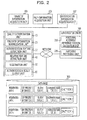
- FIG. 2 is a block diagram of each function implemented by the execution of a biometric information processing program.
- FIG. 3 is a block diagram of each function implemented during a biometric data registration process.
- FIG. 4 is a view for describing an example of a flowchart executed during a biometric data registration process.
- FIG. 5 is a view illustrating an example of a flowchart representing a normalization process.
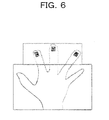
- FIG. 6 is a view illustrating an example of a palm image.
- FIG. 7 is a view illustrating another example of a palm image.
- FIG. 8 is a view illustrating yet another example of a palm image.
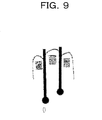
- FIG. 9 is a view illustrating still yet another example of a palm image.
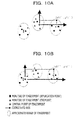
- FIGs. 10A and 10B are views illustrating an example of a coordinate system when the position of a center of a fingerprint is used as the origin.
- FIG. 11 is a view illustrating an example of a data structure of relative features calculated using the position of the center of a fingerprint of each of index finger, middle finger and ring finger as the origin.
- FIG. 12 is a block diagram of each function implemented during a biometric authentication process.
- FIG. 13 is a view for describing an example of a flowchart executed during the biometric authentication process.
- FIG. 14 is a flowchart for describing the details of a positional alignment process as in S26 and a matching process as in S27.
- FIG. 15 is flowchart for describing another example of a biometric authentication process.
- FIG. 16 is another block diagram of each function implemented by the execution of the biometric information processing program.
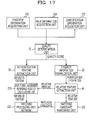
- FIG. 17 is another block diagram of each function implemented during the biometric authentication process.
- FIG. 18 is a view for describing another example of a flowchart executed during the biometric authentication process.
- FIG. 19 is a view for describing another example of normalization.
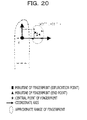
- FIG. 20 is a view for describing an example of normalization using the first joint of a finger.
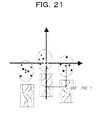
- FIG. 21 is a view illustrating an example in which a relative feature is extracted based on both the veins and fingerprint of each finger.
- FIG. 22 is a view illustrating an example of a data structure for relative features.
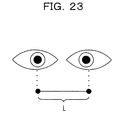
- FIG. 23 is a view for describing an example of normalization using the iris and the face.
- An instance refers to a unit of a living body used in authentication, such as for example, a finger, a palm, a face or an eye. Accordingly, a finger and a palm are different instances. Furthermore, a middle finger and an index finger are also different instances, and a right eye and a left eye are also different instances.
- Modality refers to the type of a biometric feature, such as for example, a fingerprint, a vein, an iris, a face shape, or a palm shape. Accordingly, the fingerprint and the vein for the same finger are different modalities.
- Biometric information refers to information of a body and includes, for example, a biometric feature representing a biometric characteristic of an individual body.
- An authentication feature is data extracted independently from each biometric feature and used in a matching process for authentication.
- the authentication feature includes a pattern of a fingerprint image, a positional relationship between minutiae of fingerprints, or a pattern of a palm vein image.
- the authentication feature may also include features used to narrow candidates for matching.
- the authentication feature may also include a fingerprint pattern along with the pattern of a fingerprint image, which are used to narrow candidates for matching by using fingerprint pattern classifications.
- a relative feature is information indicating a relative positional relationship between the authentication features of different instances.
- the relative feature is, for example, a distance between the right eye and the left eye, the coordinate value of the position of the center of a fingerprint, and minutiae of a fingerprint of a finger, when the position of the center of the fingerprint of any one of other fingers is used as a reference point.
- the relative feature may be, for example, a relative coordinate value of an intersection point, an endpoint, or a bifurcation point of two finger veins.
- the authentication features of other modalities may be the subject of the relative feature.
- the relative feature may be, for example, the intersection point, the endpoint or the bifurcation point of the veins of another finger.
- FIG. 1A is a block diagram for describing the hardware configuration of a biometric information processing apparatus 100 according to a first exemplary embodiment.
- FIG. 1B is a schematic diagram of a biometric sensor that is to be described below.
- the biometric information processing apparatus 100 includes, for example, a central processing unit (CPU) 101, a random access memory (RAM) 102, a storage device 103, a display device 104, a biometric sensor 105, a communication unit 106, and an identification information acquiring unit 107. Each of these components is connected with each other by, for example, a data bus.
- the biometric information processing apparatus 100 is connected to an authentication server 200 and a database server 300 through a network.
- the CPU 101 includes one or more cores.
- the RAM 102 is a volatile memory which temporarily stores, for example, a program executed by the CPU 101 or data processed by the CPU 101.
- the storage device 103 is a non-volatile storage device.
- a read only memory (ROM), a solid state drive (SSD) such as a flash memory, a hard disk driven by a hard disk drive or so on may be used.
- a biometric information processing program according to the present embodiment is stored in the storage device 103.
- the display device 104 is, for example, a liquid crystal display or an electroluminescence panel, and displays, for example, the results of biometric information processing.
- the biometric sensor 105 is a sensor that detects biometric information of a user, takes at least three different instances as a subject to be detected, and acquires the same or different modalities.
- the biometric sensor 105 acquires a palm image as palm information while also acquiring fingerprint images of a plurality of fingers as fingertip information. That is, the biometric sensor 105 takes different instances such as a plurality of fingers and a palm as a subject, and acquires different modalities, such as the fingerprint and the veins.
- the biometric sensor 105 is equipped with a fingertip information acquisition unit 108 and a palm information acquisition unit 109.
- the fingertip information acquisition unit 108 is, for example, an optical sensor or a capacitive sensor, and acquires fingerprint images of two or more fingers. Furthermore, either a contact type sensor or a contactless type sensor may be used as the fingertip information acquisition unit 108.
- the fingertip information acquisition unit 108 acquires the fingerprint images of the index finger, middle finger and ring finger.
- the palm information acquisition unit 109 may be implemented with, for example, a complementary metal-oxide-semiconductor (CMOS) camera, and acquires the palm image.
- CMOS complementary metal-oxide-semiconductor
- the palm information acquisition unit 109 acquires a palm image that includes a portion capable of determining the direction of a finger.
- the palm image may be, for example, a vein image, a palm shape image, or a palm print image.
- the palm information acquisition unit 109 may include the vein image in the palm image.
- the fingertip information acquisition unit 108 and the palm information acquisition unit 109 are disposed to both be fixed in order to stably extract biometric information.
- the distance L is, for example, about several cm to 10 cm, which may be fit within an average palm size.
- the communication unit 106 is, for example, an interface to be coupled to a local area network (LAN).
- the identification information acquiring unit 107 is an input device, such as, for example, a keyboard or a mouse.
- the biometric information processing apparatus 100 communicates and exchanges information with an authentication server 200 and a database server 300 over a network via the communication unit 106.
- the authentication server 200 includes, for example, a CPU 201, a RAM 202, a storage device 203, and a communication unit 204.
- the storage device 203 stores a matching program.
- the database server 300 includes, for example, a storage device 301, and a communication unit 302.
- a biometric information processing program stored in the storage device 103 of the biometric information processing apparatus 100 is deployed to be executable in the RAM 102.
- the CPU 101 executes the biometric information processing program deployed in the RAM 102. Accordingly, the respective processes to be performed by the biometric information processing apparatus 100 are executed.
- a biometric data registration process is a process in which identification information, a quality score, authentication features and relative features (hereinafter, collectively "registration data") of an unregistered new user (hereinafter, "a user to be registered”) are registered in a database as data for a matching process for personal authentication.
- Biometric authentication is a process in which a user to be authenticated is specified by personal authentication based on matching of the identification information, the quality score, authentication features and relative features that are acquired during the authentication (hereinafter, collectively "input data") with the registration data.
- both authentication features and relative features are used during the biometric authentication process so that erroneous authentication is suppressed while suppressing the lengthening of the time required for authentication.
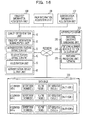
- FIG. 2 illustrates a block diagram of each function implemented by the execution of a biometric information processing program.
- a quality determination unit 10 a fingertip information normalization unit 20, an authentication feature extraction unit 30, a relative feature extraction unit 40, a registration unit 50 and an authentication result output unit 60 are implemented by the execution of the biometric information processing program.
- the positional alignment reference position calculation unit 210 and a matching processing unit 220 are implemented by the execution of the matching program stored in the storage device 203.
- FIG. 3 illustrates a block diagram of each function implemented during a biometric data registration process.
- FIG. 4 is a view for describing an example of a flowchart executed during the biometric data registration process.
- an example of the biometric data registration process will be described with reference to FIGS. 3 and 4 .
- the identification information acquiring unit 107 acquires identification information that is input by the user to be registered (S1).
- the identification information is information that specifies the user and is, for example, a name, a nickname, or an ID of the user.
- the biometric sensor 105 acquires the biometric information of the user to be registered (S2).
- the fingertip information acquisition unit 108 acquires the fingerprint images of the index finger, middle finger and ring finger, and the palm information acquisition unit 109 acquires palm images that include the position of the base of each finger.
- the quality determination unit 10 calculates the quality score using at least a portion of the images acquired by the fingertip information acquisition unit 108 and the palm information acquisition unit 109 (S3).
- a high quality score implies a good state of the biometric characteristic of the body.
- the quality determination unit 10 calculates the quality score based on the fingerprint images acquired by the fingertip information acquisition unit 108.
- the calculated quality score may be, for example, a value which is inversely proportional to the amount of correction in the direction of the ridges.
- the amount of correction in the direction of the ridges has a property indicating that if the value is large, the direction of the ridges becomes scattered and the state of the finger image is poor.
- the authentication feature extraction unit 30 extracts an authentication feature used in the matching process from the fingerprint image (S4).
- the authentication feature that can be extracted from the fingerprint image is, for example, a ridge pattern of the fingerprint, or a positional relationship between minutiae of the fingerprint.
- the authentication feature may be, for example, the pattern of the finger veins.
- the authentication feature extraction unit 30 may extract information used in the matching process based on the palm image as a portion of the authentication features in order to improve the discrimination accuracy of the authentication feature.
- the authentication feature that may be extracted from the palm image is, for example, the pattern of the palm veins.
- the fingertip information normalization unit 20 normalizes by moving the fingerprint images of several fingers to a given position (S5).
- the fingertip information normalization unit 20 normalizes the plurality of the fingerprint images of the finger to a given positional relationship so that the variation of input position of the finger image may be corrected. Accordingly, information may be extracted without being influenced by variation.
- the fingertip information normalization unit 20 performs normalization, for example, by following the flow as illustrated in FIG. 5 .
- the fingertip information normalization unit 20 extracts a straight line corresponding to the direction of each finger based on the outline of the vicinity of the base of each finger among the palm image as illustrated in FIG. 6 (S11).
- the fingertip information normalization unit 20 defines straight lines representing the directions of two neighboring fingers as straight lines R1 and R2, as illustrated by the black bold lines in FIG. 7 .
- the fingertip information normalization unit 20 extends the two straight lines R1 and R2, respectively, to obtain an angle ⁇ and an intersection point O between the two straight lines R1 and R2, as illustrated in FIG. 8 (S12).
- the fingertip information normalization unit 20 rotates one of the fingerprint images around the intersection point O by the angle ⁇ , as illustrated in FIG. 9 (S13).
- the fingertip information normalization unit 20 determines the positional relationship between the fingerprint images obtained by the rotation as a fingerprint image after normalization.
- the fingertip information normalization unit 20 may perform normalization by rotating the fingerprint image until the angle between the straight lines R1 and R2 becomes the most frequently input angle in order to reduce the frequency of the rotation process and optimize the normalization. Furthermore, rather than rotating the fingerprint image, the fingertip information normalization unit 20 may rotate either the position of minutiae or the position of the center of the finger extracted from the authentication feature extraction unit 30 in order to reduce the time required for the rotation process.
- the relative feature extraction unit 40 extracts the relative feature from the fingerprint image after normalization (S6).
- the relative feature extraction unit 40 uses a Cartesian coordinate system in which the position of the center of the fingerprint is set as the origin and the direction of the middle finger is set as an axis.
- the relative features only minutiae located within a given range from the origin may perhaps be used in order to shorten the time required for processing without using all the minutiae in the fingerprint image.
- the positions of the center of the fingerprint of several fingers may be used to calculate the coordinate values of the minutiae points based on the position of the center of each fingerprint.
- the center of the fingerprint indicates the flow of a semicircular shape included in the fingerprint, and may also be called a core.
- the central point of the whorl is the center of the fingerprint.
- the technical contents disclosed in Japanese Patent Publication No. 2790689 may be used.
- FIGs. 10A and 10B An example of a coordinate system in which the positions of the centers of the fingerprint of several fingers are set as the origins is illustrated in FIGs. 10A and 10B . Coordinate values are calculated based on plural positions of the centers of the fingerprint in order to extract the relative feature even when the acquisition of the position of the center of the fingerprint of any one finger fails and so that the relative feature may be extracted stably.
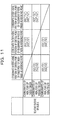
- FIG. 11 illustrates an example of a data structure for the relative features calculated using the position of the center of the fingerprint of each of the index finger, middle finger and ring finger as the origin.
- the registration unit 50 registers the acquired identification information, the quality score, the relative features and the authentication features to a database of the database server 300 as registration data, as illustrated in FIG. 2 (S7).
- the registration data is associated with each user and then registered.
- the biometric data registration process is then ended by completing S7.
- FIG. 12 illustrates a block diagram of each function implemented during the biometric authentication process.
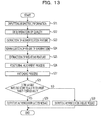
- FIG. 13 is a view for describing an example of a flowchart executed during the biometric authentication process. An example of the biometric authentication process will be described hereinafter with reference to FIGS 12 and 13 .
- the biometric sensor 105 acquires the biometric information of a user to be registered according to the same procedure as S2 of FIG. 4 (S21). Subsequently, the quality determination unit 10 performs a quality determination according to the same procedure as S3 of FIG. 4 (S22). Subsequently, the authentication feature extraction unit 30 extracts the authentication features used in the matching process based on the fingerprint images of several fingers according to the same procedure as S4 of FIG. 4 (S23). Subsequently, the fingertip information normalization unit 20 normalizes the fingertip images by moving the fingerprint images of several fingers to a given position according to the same procedure as S5 of FIG. 4 (S24). The relative feature extraction unit 40 extracts the relative features based on the images of the fingerprints after normalization according to the same procedure as S6 of FIG. 4 (S25). The input data acquired in S21 to S25 is sent to the authentication server 200.
- the positional alignment reference position calculation unit 210 of the authentication server 200 performs a positional alignment process (S26).
- the positional alignment process is a process that aligns the position of the authentication features of the registration data with the position of the authentication features of the input data. Authentication precision is improved by means of the positional alignment process. Furthermore, the positional alignment process may be performed by using relative features.
- the matching processing unit 220 performs matching of the input data with the registration data for each finger based on the result of the positional alignment process (S27). In this case, matching is a process in which the matching score between the authentication feature of the registration data and the authentication feature of the input data is calculated. A high matching score represents a high degree of similarity for the authentication features of the registration data and the authentication features of the input data.
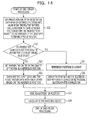
- FIG. 14 is a flowchart for describing details of the positional alignment process of S26 and the matching process of S27.
- the processing of FIG. 14 is performed for each fingerprint image.
- the positional alignment reference position calculation unit 210 first determines corresponding pairs of each minutiae of the input data and each minutiae of the registration data (S31). Specifically, the positional alignment reference position calculation unit 210 prepares pairs of each minutiae of the input data and each minutiae of the registration data so that the distance of a coordinate value among the relative features calculated from the same reference position becomes the shortest.
- the distance is, for example, Euclidean distance.
- the positional alignment reference position calculation unit 210 determines whether there is a pair of which the distance of the relative feature is a given value or less among the pairs (S32). When the determination result is "Yes" at S32, the positional alignment reference position calculation unit 210 determines the center of the gravity of the pair as a reference position for positional alignment (S33). When there are a plurality of pairs of which the distance of the relative feature of each is a given value or less, the positional alignment reference position calculation unit 210 may calculate, for each of the input data and the registration data, the position of the center of the gravity of minutiae selected as the pair as the reference position. When the determination result at S32 is "No", the positional alignment reference position calculation unit 210 determines that the reference position for positional alignment is absent (S34).
- the positional alignment reference position calculation unit 210 may perhaps determine the reference position by using only the value of the relative feature calculated based on the position of the center of the fingerprint of the fingerprint image of a finger of which the quality score of the input data is a given value or more. Alternatively, the positional alignment reference position calculation unit 210 may perhaps use only a value of the relative feature calculated based on the position of the center of the fingerprint of the fingerprint image of a finger of which the quality score is the highest among the three fingers of the input data.
- the positional alignment reference position calculation unit 210 may possibly use only a value of the relative feature calculated based on a position of the center of the fingerprint of the finger for which sum of the quality scores is a given value or more when comparing the quality scores of the same finger between the input data and the registration data.
- a stable reference position obtained using a fingerprint image having a good fingertip state a stable positional alignment process may be performed without spending too much time, even for a fingerprint image that does not have a good fingertip state and does not have good detection precision for the reference position for positional alignment.
- the matching processing unit 220 overlaps the input data and the registration data with each other based on the positional relationship after normalization obtained by the fingertip information normalization unit 20 (S36). For example, the matching processing unit 220 overlaps the input data and the registration data with each other according to a coordinate system based on the position of the center of the fingerprint of a finger.
- the matching processing unit 220 overlaps the input data and the registration data with each other by overlapping the reference positions obtained at S33 (S35).
- the input data and the registration data may be overlapped at a position having a smaller error than when the reference position is not used.
- the matching processing unit 220 After performing either S35 or S36, the matching processing unit 220 performs positional alignment of the input data and the registration data (S37). Specifically, the matching processing unit 220 performs fine adjustment, such as rotation within a given angle ⁇ or movement within a given range S, with respect to the input data and the registration data overlapped with each other, so that the number of matching minutiae becomes the largest. Alternatively, the matching processing unit 220 may perform fine adjustment so that ridge patterns match each other as much as possible. For example, the ⁇ value is 10 (ten) degrees or less and the range of S is several square millimeters or less. Since the deviation of the reference position becomes small due to the normalization by the fingertip information normalization unit 20, the range for fine adjustment may be narrowed. The overall time required for the matching process may be shortened by narrowing the range of the fine adjustment.
- the matching processing unit 220 calculates the matching score with respect to the authentication features of the input data and registration data after positional alignment (S38).
- the matching score is the degree of similarity of the authentication features. For example, using the authentication features, the matching processing unit 220 calculates the degree of similarity of the ridge patterns, or the degree of coincidence of the position or type of minutiae or the like as the matching score. In the meantime, since the processing of FIG. 4 is performed for each finger, the matching score of each finger is calculated.
- the matching processing unit 220 determines whether the largest matching score is greater than or equal to a threshold (S28).
- the authentication result output unit 60 receives the determination result and outputs a result indicating that authentication succeeded (S29).
- the determination result is "No” at S28, the authentication result output unit 60 receives the determination result and outputs a result indicating that authentication failed (S30).
- a relative feature having small positional deviation may be extracted by the normalization process.
- the search range for the positional alignment for the matching target may be narrowed.
- the processing time required for positional alignment may be reduced, the overall matching time may be reduced as well. That is, according to the present embodiment, information that can shorten the time required for authentication may be extracted.
- the effect of the processing time reduction is substantial in one-to-N authentication where a matching of a user to be authenticated needs to be conducted with multiple registered users.
- the influence of the poor state of the body may be reduced by using the relative feature of a body having a good state.
- FIG. 15 illustrates a flowchart for describing another example of the biometric authentication process.
- S41 to S47 of FIG. 15 are the same as S21 to S27 of FIG. 13 .
- the matching processing unit 220 determines whether there is a user whose matching score is a first threshold or more (S48). When the determination result is "Yes” at S48, the matching processing unit 220 determines whether there is only a single user for which the matching score is the first threshold or more (S49). When the determination result is "Yes” at step 49, the authentication result output unit 60 outputs a result indicating that authentication succeeded (S50). Subsequently, the execution of the flowchart of FIG. 15 ends. When the determination result is "No” at S48, the authentication result output unit 60 outputs a result indicating that authentication failed (S53). Subsequently, the execution of the flowchart of FIG. 15 ends.
- the matching processing unit 220 performs a matching process using the relative feature (S51). For example, when the relative feature is the positional relationship between minutiae, the matching processing unit 220 calculates a degree of similarity for the positional relationship between minutiae with respect to registration data that has a matching score greater than or equal to the first threshold value.
- the degree of similarity PS(Ti,I) between the registration data Ti and the input data I is calculated by the following equation 1.
- Ti represents registration data
- I represents input data
- PS(Ti,I) represents the degree of similarity between the registration data Ti and the input data I
- R(I) represents the relative feature of the input data.
- the matching processing unit 220 determines whether the maximum value of the degree of similarity calculated from the equation 1 is greater than or equal to a second threshold value (S52). When the determination result is "Yes” at S52, the authentication result output unit 60 performs S50. When the determination result is "No” at S52, the authentication result output unit 60 performs S53.
- the matching processing unit 220 may calculate the degree of similarity according to equation 1 by using the relative feature.
- the matching processing unit 220 calculates an authentication result indicating that authentication succeeded.
- the matching score is less than the third threshold value but is greater than or equal to the first threshold value, this may be an exceedingly rare case of where the registration data used to match the user is the registration data of another user. In this case, the matching processing unit 220 may perform a second determination by using the relative features as well to suppress erroneous authentication.
- the candidates for matching may be narrowed during a matching process.
- the positional alignment reference position calculation unit 210, the matching processing unit 220, and a candidate for matching narrowing unit 230 may be implemented by executing the matching program stored in the storage device 203 of the authentication server 200.
- FIG. 17 is a block diagram of each function implemented during the biometric authentication process.
- FIG. 18 is a view for describing an example of a flowchart executed during the biometric authentication process. Below, an example of the biometric authentication process will be described with reference to FIGS. 17 and 18 .
- S61 to S65 of FIG. 18 are the same as S21 to S25 of FIG. 13 . Furthermore, S68 to S70 of FIG. 18 are the same as S28 to S30 of FIG. 13 .
- the matching candidate narrowing unit 230 narrows the candidates for matching (S66). Specifically, the matching candidate narrowing unit 230 calculates a narrowed score in which, when comparing the relative feature of the registration data with the relative feature of the input data, the probability that the registration data and the input data correspond to data about the same person becomes higher as the narrowed score becomes higher. For example, the narrowed score is calculated from a value indicating whether the narrowed score, which corresponds to the positional relationship of minutiae among the relative features in the input data, is present in the positional relationship between minutiae among the relative features in the registration data. The narrowed score may be calculated according to equation 1.
- the matching candidate narrowing unit 230 determines registration data having a narrowed score that is greater than or equal to a given numerical value among registration data as the candidates for matching. Alternatively, the matching candidate narrowing unit 230 lists registration data in descending order of narrowed score and determines a given number of the registration data with higher rankings as the candidates for matching.
- the matching processing unit 220 matches the input data against the registration data for the candidates for matching. That is, the matching processing unit 220 completes the matching process without matching all candidates for matching against the input data. Accordingly, the time required for matching may be reduced. In the meantime, through the normalization process of the fingertip information normalization unit 20, the relative feature becomes a stable amount of feature having a small deviation. Accordingly, the relative feature may be used in a narrowing process without performing positional alignment. Accordingly, the narrowing process may be performed within a shorter time than a process which requires positional alignment.
- one-to-N authentication is performed where matching of a user to be authenticated is performed against multiple registered users
- one-to-one authentication may also be performed where the matching of a single user to be authenticated is performed against a single registered user.
- One-to-one authentication may be implemented by limiting the number of registered users for matching by using identification information acquired from the users to be authenticated during the biometric authentication process. Alternatively, when the registration data for only one person has been registered, one-to-one authentication may be implemented.
- the biometric information processing apparatus 100, the authentication server 200, and the database server 300 are configured as separate apparatuses, but may be configured as, for example, a single server.
- the matching program may be included in the biometric information processing program.
- the positional alignment reference position calculation unit 210, the matching processing unit 220 and the matching candidate narrowing unit 230 may be implemented as functions within the biometric information processing apparatus 100.
- FIG. 19 is a view for describing another example of normalization.
- the example in FIG. 19 illustrates the normalization of the position of the finger veins of a middle finger and the position of the fingerprint image of a ring finger. Referring to FIG. 19 , by using the processes of FIG. 5 to FIG. 9 , one of the images is rotated so that the positional relationship between the finger images may be normalized.
- the fingertip information normalization unit 20 may set a coordinate system in which the origin is the center of the fingerprint and an axis is the direction of the fingertip in order to extract as relative features, for example, the pattern of the finger vein, the bifurcation point, and the endpoint of the finger vein.
- the fingertip information normalization unit 20 may use the first joint.
- FIG. 20 is a view for describing an example of normalization using the first joint.
- the fingertip information normalization unit 20 may set a coordinate system in which, in order to extract finger veins, the origin is the center of the first joint of a finger and an axis is the first joint, in order to extract the coordinates of minutiae of fingerprint of the ring finger as the relative feature.
- FIGS. 21 and 22 illustrate an example in which relative features are extracted from both the veins and the fingerprint of each finger.
- the fingertip information normalization unit 20 may extract the pattern of the finger veins, the bifurcation point and the endpoint of the finger veins to use these information as the relative features along with the relative feature of the fingerprint in the coordinate system which is based on the position of the center of the fingerprint.
- FIG. 23 illustrates an example in which the iris and the face are used as instances.
- iris images of both eyes are acquired.
- the iris images of both eyes are normalized by correcting the face image to a frontal face image.
- the iris images of both eyes may be further normalized so that the line segment connecting the centers of both eyes becomes horizontal.
- authentication features may be extracted from the normalized images.
- the length L of the line segment may be used as a relative feature.
- the iris image of the input data may be expanded or contracted so that the length of the relative feature of the registration data becomes the same as the length of the relative feature of the input data.
- a matching process may be performed based on the iris by extracting the authentication feature from the acquired iris image. In this case, rectification may be made even if the scale or gradient of the iris image varies when the distance between the face and the camera are different or the gradient of the face is different during the registration process and during the authentication process.
- a recording medium storing a software program for implementing the function of the biometric information processing apparatus 100 may be provided in the biometric information processing apparatus 100 and the CPU 101 may execute the software program.
- the recording medium for providing the program includes, for example, a CD-ROM, a DVD, a Blue-ray Disc, or a SD card.
- the respective functions are implemented by the execution of the program by the CPU, but each embodiment is not limited thereto.
- the respective functions may be implemented by using, for example, a dedicated circuit.
- a biometric information processing apparatus a biometric information processing method and a recording medium thereof storing a biometric information processing program disclosed in the present disclosure
- information capable of shortening the time required for an authentication process may be extracted.
Landscapes
- Engineering & Computer Science (AREA)
- Theoretical Computer Science (AREA)
- General Physics & Mathematics (AREA)
- Physics & Mathematics (AREA)
- Multimedia (AREA)
- Computer Vision & Pattern Recognition (AREA)
- Evolutionary Computation (AREA)
- Artificial Intelligence (AREA)
- Quality & Reliability (AREA)
- Data Mining & Analysis (AREA)
- Human Computer Interaction (AREA)
- Computing Systems (AREA)
- General Health & Medical Sciences (AREA)
- Health & Medical Sciences (AREA)
- Databases & Information Systems (AREA)
- Software Systems (AREA)
- Life Sciences & Earth Sciences (AREA)
- Bioinformatics & Cheminformatics (AREA)
- Bioinformatics & Computational Biology (AREA)
- Evolutionary Biology (AREA)
- General Engineering & Computer Science (AREA)
- Medical Informatics (AREA)
- Collating Specific Patterns (AREA)
- Measurement Of The Respiration, Hearing Ability, Form, And Blood Characteristics Of Living Organisms (AREA)
Applications Claiming Priority (1)
| Application Number | Priority Date | Filing Date | Title |
|---|---|---|---|
| JP2012068093A JP6024141B2 (ja) | 2012-03-23 | 2012-03-23 | 生体情報処理装置、生体情報処理方法、および生体情報処理プログラム |
Publications (3)
| Publication Number | Publication Date |
|---|---|
| EP2642428A2 true EP2642428A2 (de) | 2013-09-25 |
| EP2642428A3 EP2642428A3 (de) | 2017-01-25 |
| EP2642428B1 EP2642428B1 (de) | 2020-04-08 |
Family
ID=48013758
Family Applications (1)
| Application Number | Title | Priority Date | Filing Date |
|---|---|---|---|
| EP13159919.3A Not-in-force EP2642428B1 (de) | 2012-03-23 | 2013-03-19 | Vorrichtung und Verfahren zur Verarbeitung biometrischer Informationen |
Country Status (3)
| Country | Link |
|---|---|
| US (1) | US9070025B2 (de) |
| EP (1) | EP2642428B1 (de) |
| JP (1) | JP6024141B2 (de) |
Cited By (2)
| Publication number | Priority date | Publication date | Assignee | Title |
|---|---|---|---|---|
| EP2858299A3 (de) * | 2013-07-30 | 2015-06-17 | Fujitsu Limited | Biometrische Authentifizierungsvorrichtung und Verfahren mit Anwendung von Venen Muster |
| EP3862968A4 (de) * | 2018-10-03 | 2022-12-28 | Hitachi, Ltd. | Biometrische authentifizierungsvorrichtung, biometrisches authentifizierungsverfahren und programm |
Families Citing this family (11)
| Publication number | Priority date | Publication date | Assignee | Title |
|---|---|---|---|---|
| EP3125195B1 (de) | 2014-03-25 | 2020-03-11 | Fujitsu Frontech Limited | Biometrische authentifizierungsvorrichtung, biometrisches authentifizierungsverfahren und programm |
| JP6069582B2 (ja) | 2014-03-25 | 2017-02-01 | 富士通フロンテック株式会社 | 生体認証装置、生体認証方法、及びプログラム |
| JP6242726B2 (ja) * | 2014-03-25 | 2017-12-06 | 富士通フロンテック株式会社 | 生体情報登録方法、生体認証方法、生体情報登録装置、生体認証装置及びプログラム |
| JP6117988B2 (ja) * | 2014-03-25 | 2017-04-19 | 富士通フロンテック株式会社 | 生体認証装置、生体認証方法、及びプログラム |
| EP3125194B1 (de) * | 2014-03-25 | 2021-10-27 | Fujitsu Frontech Limited | Vorrichtung zur biometrischen authentifizierung, verfahren zur biometrischen authentifizierung und programm |
| JP6589309B2 (ja) | 2015-03-16 | 2019-10-16 | 富士通株式会社 | 端末装置、生体認証プログラム及び生体認証方法 |
| CN106202071A (zh) * | 2015-04-29 | 2016-12-07 | 腾讯科技(深圳)有限公司 | 账户信息获取的方法、终端、服务器和系统 |
| JP6658188B2 (ja) * | 2016-03-24 | 2020-03-04 | 富士通株式会社 | 画像処理装置、画像処理方法および画像処理プログラム |
| CN108734069B (zh) * | 2017-04-24 | 2020-01-24 | 广州广电运通金融电子股份有限公司 | 一种指静脉图像的质量分数计算方法及装置 |
| CN114817883A (zh) * | 2021-01-29 | 2022-07-29 | Oppo广东移动通信有限公司 | 一种匹配方法、终端及计算机存储介质 |
| WO2025187045A1 (ja) * | 2024-03-08 | 2025-09-12 | 日本電気株式会社 | 情報処理システム、情報処理装置、情報処理方法及び記録媒体 |
Citations (3)
| Publication number | Priority date | Publication date | Assignee | Title |
|---|---|---|---|---|
| JP2790689B2 (ja) | 1989-12-25 | 1998-08-27 | 富士通株式会社 | 指紋中心位置算出方式 |
| JP2003281508A (ja) | 2002-03-26 | 2003-10-03 | Seiko Instruments Inc | 指紋採取装置およびこれを備えた端末装置 |
| WO2005069212A1 (ja) | 2004-01-13 | 2005-07-28 | Fujitsu Limited | 生体情報による認証装置 |
Family Cites Families (7)
| Publication number | Priority date | Publication date | Assignee | Title |
|---|---|---|---|---|
| JP2003263640A (ja) * | 2002-03-08 | 2003-09-19 | Toyota Motor Corp | 生体情報を用いた個人識別装置 |
| JP4232079B2 (ja) * | 2002-07-22 | 2009-03-04 | 有限会社イオネットワーク | 個人識別装置 |
| JP2004078791A (ja) * | 2002-08-22 | 2004-03-11 | Hitachi Ltd | 個人認証装置および該装置を用いた行政システム |
| JP4240502B2 (ja) * | 2006-06-27 | 2009-03-18 | インターナショナル・ビジネス・マシーンズ・コーポレーション | 対象から抽出した特徴に基づきその対象を認証する技術 |
| KR101349892B1 (ko) * | 2006-07-19 | 2014-01-13 | 루미다임 인크. | 다중 생체인식 다중 스펙트럼 이미저 |
| JP2008134862A (ja) * | 2006-11-29 | 2008-06-12 | Hitachi Omron Terminal Solutions Corp | 静脈認証装置 |
| JP5151396B2 (ja) * | 2007-10-29 | 2013-02-27 | 株式会社日立製作所 | 指静脈認証装置 |
-
2012
- 2012-03-23 JP JP2012068093A patent/JP6024141B2/ja not_active Expired - Fee Related
-
2013
- 2013-03-18 US US13/845,303 patent/US9070025B2/en active Active
- 2013-03-19 EP EP13159919.3A patent/EP2642428B1/de not_active Not-in-force
Patent Citations (3)
| Publication number | Priority date | Publication date | Assignee | Title |
|---|---|---|---|---|
| JP2790689B2 (ja) | 1989-12-25 | 1998-08-27 | 富士通株式会社 | 指紋中心位置算出方式 |
| JP2003281508A (ja) | 2002-03-26 | 2003-10-03 | Seiko Instruments Inc | 指紋採取装置およびこれを備えた端末装置 |
| WO2005069212A1 (ja) | 2004-01-13 | 2005-07-28 | Fujitsu Limited | 生体情報による認証装置 |
Cited By (4)
| Publication number | Priority date | Publication date | Assignee | Title |
|---|---|---|---|---|
| EP2858299A3 (de) * | 2013-07-30 | 2015-06-17 | Fujitsu Limited | Biometrische Authentifizierungsvorrichtung und Verfahren mit Anwendung von Venen Muster |
| US9299006B2 (en) | 2013-07-30 | 2016-03-29 | Fujitsu Limited | Authentication device and method |
| EP3862968A4 (de) * | 2018-10-03 | 2022-12-28 | Hitachi, Ltd. | Biometrische authentifizierungsvorrichtung, biometrisches authentifizierungsverfahren und programm |
| US12067095B2 (en) | 2018-10-03 | 2024-08-20 | Hitachi, Ltd. | Biometric authentication system, biometric authentication method, and storage medium |
Also Published As
| Publication number | Publication date |
|---|---|
| JP6024141B2 (ja) | 2016-11-09 |
| EP2642428A3 (de) | 2017-01-25 |
| US20130251213A1 (en) | 2013-09-26 |
| JP2013200673A (ja) | 2013-10-03 |
| US9070025B2 (en) | 2015-06-30 |
| EP2642428B1 (de) | 2020-04-08 |
Similar Documents
| Publication | Publication Date | Title |
|---|---|---|
| US9070025B2 (en) | Biometric information processing apparatus, biometric information processing method | |
| JP5810581B2 (ja) | 生体情報処理装置、生体情報処理方法、および生体情報処理プログラム | |
| US20160147987A1 (en) | Biometrics-based authentication method and apparatus | |
| JP5445584B2 (ja) | 生体認証装置、生体認証方法及び生体認証用コンピュータプログラム | |
| EP2528018B1 (de) | Vorrichtung zur biometrischen Authentisierung und Verfahren zur biometrischen Authentisierung | |
| JP6837288B2 (ja) | 指紋認証方法及び装置 | |
| US9298996B2 (en) | Biometric authentication device and method | |
| JP5930023B2 (ja) | 生体認証装置、生体認証方法及び生体認証用コンピュータプログラム | |
| US20240378274A1 (en) | Multi-modal kinetic biometric authentication | |
| US20180165545A1 (en) | Image processing device, image processing method and computer-readable non-transitory medium | |
| WO2016089529A1 (en) | Technologies for learning body part geometry for use in biometric authentication | |
| JP6798798B2 (ja) | ユーザ認証のためのデータを更新する方法及び装置 | |
| JP6648639B2 (ja) | 生体情報処理装置、生体情報処理方法および生体情報処理プログラム | |
| US20100157088A1 (en) | Authentication apparatus and authentication method | |
| WO2013161077A1 (ja) | 生体認証装置、生体認証プログラム及び生体認証方法 | |
| JP6617570B2 (ja) | 生体認証装置、生体認証方法、および生体認証プログラム | |
| US20180365401A1 (en) | Multi-modal based user authentication apparatus and method using bio signal | |
| JP2018185730A (ja) | 照合装置、照合方法および照合プログラム | |
| JP2023011333A (ja) | 情報処理装置及び情報処理方法 | |
| JP5949903B2 (ja) | 生体認証装置、生体認証方法、および生体認証プログラム | |
| JP6079440B2 (ja) | 認証装置、認証方法および認証プログラム | |
| JP2005275605A (ja) | 個人認証装置および個人認証方法 | |
| JP2015094968A (ja) | 生体情報抽出装置、生体情報抽出方法、および生体情報抽出プログラム | |
| JP6488853B2 (ja) | 認証処理プログラム、認証処理装置および認証処理方法 | |
| US12406529B2 (en) | Determining cosmetic lens candidates that are cosmetic lenses |
Legal Events
| Date | Code | Title | Description |
|---|---|---|---|
| PUAI | Public reference made under article 153(3) epc to a published international application that has entered the european phase |
Free format text: ORIGINAL CODE: 0009012 |
|
| AK | Designated contracting states |
Kind code of ref document: A2 Designated state(s): AL AT BE BG CH CY CZ DE DK EE ES FI FR GB GR HR HU IE IS IT LI LT LU LV MC MK MT NL NO PL PT RO RS SE SI SK SM TR |
|
| AX | Request for extension of the european patent |
Extension state: BA ME |
|
| PUAL | Search report despatched |
Free format text: ORIGINAL CODE: 0009013 |
|
| AK | Designated contracting states |
Kind code of ref document: A3 Designated state(s): AL AT BE BG CH CY CZ DE DK EE ES FI FR GB GR HR HU IE IS IT LI LT LU LV MC MK MT NL NO PL PT RO RS SE SI SK SM TR |
|
| AX | Request for extension of the european patent |
Extension state: BA ME |
|
| RIC1 | Information provided on ipc code assigned before grant |
Ipc: G06K 9/03 20060101ALI20161222BHEP Ipc: G06K 9/00 20060101AFI20161222BHEP Ipc: G06K 9/62 20060101ALI20161222BHEP Ipc: G06K 9/32 20060101ALI20161222BHEP |
|
| STAA | Information on the status of an ep patent application or granted ep patent |
Free format text: STATUS: REQUEST FOR EXAMINATION WAS MADE |
|
| 17P | Request for examination filed |
Effective date: 20170425 |
|
| RBV | Designated contracting states (corrected) |
Designated state(s): AL AT BE BG CH CY CZ DE DK EE ES FI FR GB GR HR HU IE IS IT LI LT LU LV MC MK MT NL NO PL PT RO RS SE SI SK SM TR |
|
| STAA | Information on the status of an ep patent application or granted ep patent |
Free format text: STATUS: EXAMINATION IS IN PROGRESS |
|
| 17Q | First examination report despatched |
Effective date: 20171220 |
|
| GRAP | Despatch of communication of intention to grant a patent |
Free format text: ORIGINAL CODE: EPIDOSNIGR1 |
|
| STAA | Information on the status of an ep patent application or granted ep patent |
Free format text: STATUS: GRANT OF PATENT IS INTENDED |
|
| INTG | Intention to grant announced |
Effective date: 20200107 |
|
| RIN1 | Information on inventor provided before grant (corrected) |
Inventor name: NADA, HAJIME Inventor name: YAMADA, SHIGEFUMI |
|
| GRAS | Grant fee paid |
Free format text: ORIGINAL CODE: EPIDOSNIGR3 |
|
| GRAA | (expected) grant |
Free format text: ORIGINAL CODE: 0009210 |
|
| STAA | Information on the status of an ep patent application or granted ep patent |
Free format text: STATUS: THE PATENT HAS BEEN GRANTED |
|
| AK | Designated contracting states |
Kind code of ref document: B1 Designated state(s): AL AT BE BG CH CY CZ DE DK EE ES FI FR GB GR HR HU IE IS IT LI LT LU LV MC MK MT NL NO PL PT RO RS SE SI SK SM TR |
|
| REG | Reference to a national code |
Ref country code: CH Ref legal event code: EP Ref country code: AT Ref legal event code: REF Ref document number: 1255366 Country of ref document: AT Kind code of ref document: T Effective date: 20200415 |
|
| REG | Reference to a national code |
Ref country code: DE Ref legal event code: R096 Ref document number: 602013067608 Country of ref document: DE |
|
| REG | Reference to a national code |
Ref country code: IE Ref legal event code: FG4D |
|
| REG | Reference to a national code |
Ref country code: NL Ref legal event code: MP Effective date: 20200408 |
|
| REG | Reference to a national code |
Ref country code: LT Ref legal event code: MG4D |
|
| PG25 | Lapsed in a contracting state [announced via postgrant information from national office to epo] |
Ref country code: NL Free format text: LAPSE BECAUSE OF FAILURE TO SUBMIT A TRANSLATION OF THE DESCRIPTION OR TO PAY THE FEE WITHIN THE PRESCRIBED TIME-LIMIT Effective date: 20200408 Ref country code: PT Free format text: LAPSE BECAUSE OF FAILURE TO SUBMIT A TRANSLATION OF THE DESCRIPTION OR TO PAY THE FEE WITHIN THE PRESCRIBED TIME-LIMIT Effective date: 20200817 Ref country code: LT Free format text: LAPSE BECAUSE OF FAILURE TO SUBMIT A TRANSLATION OF THE DESCRIPTION OR TO PAY THE FEE WITHIN THE PRESCRIBED TIME-LIMIT Effective date: 20200408 Ref country code: NO Free format text: LAPSE BECAUSE OF FAILURE TO SUBMIT A TRANSLATION OF THE DESCRIPTION OR TO PAY THE FEE WITHIN THE PRESCRIBED TIME-LIMIT Effective date: 20200708 Ref country code: GR Free format text: LAPSE BECAUSE OF FAILURE TO SUBMIT A TRANSLATION OF THE DESCRIPTION OR TO PAY THE FEE WITHIN THE PRESCRIBED TIME-LIMIT Effective date: 20200709 Ref country code: SE Free format text: LAPSE BECAUSE OF FAILURE TO SUBMIT A TRANSLATION OF THE DESCRIPTION OR TO PAY THE FEE WITHIN THE PRESCRIBED TIME-LIMIT Effective date: 20200408 Ref country code: IS Free format text: LAPSE BECAUSE OF FAILURE TO SUBMIT A TRANSLATION OF THE DESCRIPTION OR TO PAY THE FEE WITHIN THE PRESCRIBED TIME-LIMIT Effective date: 20200808 Ref country code: FI Free format text: LAPSE BECAUSE OF FAILURE TO SUBMIT A TRANSLATION OF THE DESCRIPTION OR TO PAY THE FEE WITHIN THE PRESCRIBED TIME-LIMIT Effective date: 20200408 |
|
| REG | Reference to a national code |
Ref country code: AT Ref legal event code: MK05 Ref document number: 1255366 Country of ref document: AT Kind code of ref document: T Effective date: 20200408 |
|
| PG25 | Lapsed in a contracting state [announced via postgrant information from national office to epo] |
Ref country code: HR Free format text: LAPSE BECAUSE OF FAILURE TO SUBMIT A TRANSLATION OF THE DESCRIPTION OR TO PAY THE FEE WITHIN THE PRESCRIBED TIME-LIMIT Effective date: 20200408 Ref country code: RS Free format text: LAPSE BECAUSE OF FAILURE TO SUBMIT A TRANSLATION OF THE DESCRIPTION OR TO PAY THE FEE WITHIN THE PRESCRIBED TIME-LIMIT Effective date: 20200408 Ref country code: LV Free format text: LAPSE BECAUSE OF FAILURE TO SUBMIT A TRANSLATION OF THE DESCRIPTION OR TO PAY THE FEE WITHIN THE PRESCRIBED TIME-LIMIT Effective date: 20200408 Ref country code: BG Free format text: LAPSE BECAUSE OF FAILURE TO SUBMIT A TRANSLATION OF THE DESCRIPTION OR TO PAY THE FEE WITHIN THE PRESCRIBED TIME-LIMIT Effective date: 20200708 |
|
| PG25 | Lapsed in a contracting state [announced via postgrant information from national office to epo] |
Ref country code: AL Free format text: LAPSE BECAUSE OF FAILURE TO SUBMIT A TRANSLATION OF THE DESCRIPTION OR TO PAY THE FEE WITHIN THE PRESCRIBED TIME-LIMIT Effective date: 20200408 |
|
| REG | Reference to a national code |
Ref country code: DE Ref legal event code: R097 Ref document number: 602013067608 Country of ref document: DE |
|
| PG25 | Lapsed in a contracting state [announced via postgrant information from national office to epo] |
Ref country code: SM Free format text: LAPSE BECAUSE OF FAILURE TO SUBMIT A TRANSLATION OF THE DESCRIPTION OR TO PAY THE FEE WITHIN THE PRESCRIBED TIME-LIMIT Effective date: 20200408 Ref country code: EE Free format text: LAPSE BECAUSE OF FAILURE TO SUBMIT A TRANSLATION OF THE DESCRIPTION OR TO PAY THE FEE WITHIN THE PRESCRIBED TIME-LIMIT Effective date: 20200408 Ref country code: RO Free format text: LAPSE BECAUSE OF FAILURE TO SUBMIT A TRANSLATION OF THE DESCRIPTION OR TO PAY THE FEE WITHIN THE PRESCRIBED TIME-LIMIT Effective date: 20200408 Ref country code: ES Free format text: LAPSE BECAUSE OF FAILURE TO SUBMIT A TRANSLATION OF THE DESCRIPTION OR TO PAY THE FEE WITHIN THE PRESCRIBED TIME-LIMIT Effective date: 20200408 Ref country code: CZ Free format text: LAPSE BECAUSE OF FAILURE TO SUBMIT A TRANSLATION OF THE DESCRIPTION OR TO PAY THE FEE WITHIN THE PRESCRIBED TIME-LIMIT Effective date: 20200408 Ref country code: IT Free format text: LAPSE BECAUSE OF FAILURE TO SUBMIT A TRANSLATION OF THE DESCRIPTION OR TO PAY THE FEE WITHIN THE PRESCRIBED TIME-LIMIT Effective date: 20200408 Ref country code: AT Free format text: LAPSE BECAUSE OF FAILURE TO SUBMIT A TRANSLATION OF THE DESCRIPTION OR TO PAY THE FEE WITHIN THE PRESCRIBED TIME-LIMIT Effective date: 20200408 Ref country code: DK Free format text: LAPSE BECAUSE OF FAILURE TO SUBMIT A TRANSLATION OF THE DESCRIPTION OR TO PAY THE FEE WITHIN THE PRESCRIBED TIME-LIMIT Effective date: 20200408 |
|
| PLBE | No opposition filed within time limit |
Free format text: ORIGINAL CODE: 0009261 |
|
| STAA | Information on the status of an ep patent application or granted ep patent |
Free format text: STATUS: NO OPPOSITION FILED WITHIN TIME LIMIT |
|
| PG25 | Lapsed in a contracting state [announced via postgrant information from national office to epo] |
Ref country code: PL Free format text: LAPSE BECAUSE OF FAILURE TO SUBMIT A TRANSLATION OF THE DESCRIPTION OR TO PAY THE FEE WITHIN THE PRESCRIBED TIME-LIMIT Effective date: 20200408 Ref country code: SK Free format text: LAPSE BECAUSE OF FAILURE TO SUBMIT A TRANSLATION OF THE DESCRIPTION OR TO PAY THE FEE WITHIN THE PRESCRIBED TIME-LIMIT Effective date: 20200408 |
|
| 26N | No opposition filed |
Effective date: 20210112 |
|
| PG25 | Lapsed in a contracting state [announced via postgrant information from national office to epo] |
Ref country code: SI Free format text: LAPSE BECAUSE OF FAILURE TO SUBMIT A TRANSLATION OF THE DESCRIPTION OR TO PAY THE FEE WITHIN THE PRESCRIBED TIME-LIMIT Effective date: 20200408 |
|
| PG25 | Lapsed in a contracting state [announced via postgrant information from national office to epo] |
Ref country code: MC Free format text: LAPSE BECAUSE OF FAILURE TO SUBMIT A TRANSLATION OF THE DESCRIPTION OR TO PAY THE FEE WITHIN THE PRESCRIBED TIME-LIMIT Effective date: 20200408 |
|
| REG | Reference to a national code |
Ref country code: CH Ref legal event code: PL |
|
| REG | Reference to a national code |
Ref country code: DE Ref legal event code: R079 Ref document number: 602013067608 Country of ref document: DE Free format text: PREVIOUS MAIN CLASS: G06K0009000000 Ipc: G06V0010000000 |
|
| REG | Reference to a national code |
Ref country code: BE Ref legal event code: MM Effective date: 20210331 |
|
| PG25 | Lapsed in a contracting state [announced via postgrant information from national office to epo] |
Ref country code: IE Free format text: LAPSE BECAUSE OF NON-PAYMENT OF DUE FEES Effective date: 20210319 Ref country code: CH Free format text: LAPSE BECAUSE OF NON-PAYMENT OF DUE FEES Effective date: 20210331 Ref country code: LI Free format text: LAPSE BECAUSE OF NON-PAYMENT OF DUE FEES Effective date: 20210331 Ref country code: LU Free format text: LAPSE BECAUSE OF NON-PAYMENT OF DUE FEES Effective date: 20210319 |
|
| PG25 | Lapsed in a contracting state [announced via postgrant information from national office to epo] |
Ref country code: BE Free format text: LAPSE BECAUSE OF NON-PAYMENT OF DUE FEES Effective date: 20210331 |
|
| PGFP | Annual fee paid to national office [announced via postgrant information from national office to epo] |
Ref country code: FR Payment date: 20230208 Year of fee payment: 11 |
|
| PG25 | Lapsed in a contracting state [announced via postgrant information from national office to epo] |
Ref country code: HU Free format text: LAPSE BECAUSE OF FAILURE TO SUBMIT A TRANSLATION OF THE DESCRIPTION OR TO PAY THE FEE WITHIN THE PRESCRIBED TIME-LIMIT; INVALID AB INITIO Effective date: 20130319 |
|
| PGFP | Annual fee paid to national office [announced via postgrant information from national office to epo] |
Ref country code: GB Payment date: 20230202 Year of fee payment: 11 Ref country code: DE Payment date: 20230131 Year of fee payment: 11 |
|
| PG25 | Lapsed in a contracting state [announced via postgrant information from national office to epo] |
Ref country code: CY Free format text: LAPSE BECAUSE OF FAILURE TO SUBMIT A TRANSLATION OF THE DESCRIPTION OR TO PAY THE FEE WITHIN THE PRESCRIBED TIME-LIMIT Effective date: 20200408 |
|
| PG25 | Lapsed in a contracting state [announced via postgrant information from national office to epo] |
Ref country code: MK Free format text: LAPSE BECAUSE OF FAILURE TO SUBMIT A TRANSLATION OF THE DESCRIPTION OR TO PAY THE FEE WITHIN THE PRESCRIBED TIME-LIMIT Effective date: 20200408 |
|
| PG25 | Lapsed in a contracting state [announced via postgrant information from national office to epo] |
Ref country code: TR Free format text: LAPSE BECAUSE OF FAILURE TO SUBMIT A TRANSLATION OF THE DESCRIPTION OR TO PAY THE FEE WITHIN THE PRESCRIBED TIME-LIMIT Effective date: 20200408 |
|
| PG25 | Lapsed in a contracting state [announced via postgrant information from national office to epo] |
Ref country code: MT Free format text: LAPSE BECAUSE OF FAILURE TO SUBMIT A TRANSLATION OF THE DESCRIPTION OR TO PAY THE FEE WITHIN THE PRESCRIBED TIME-LIMIT Effective date: 20200408 |
|
| REG | Reference to a national code |
Ref country code: DE Ref legal event code: R119 Ref document number: 602013067608 Country of ref document: DE |
|
| GBPC | Gb: european patent ceased through non-payment of renewal fee |
Effective date: 20240319 |
|
| PG25 | Lapsed in a contracting state [announced via postgrant information from national office to epo] |
Ref country code: DE Free format text: LAPSE BECAUSE OF NON-PAYMENT OF DUE FEES Effective date: 20241001 |
|
| PG25 | Lapsed in a contracting state [announced via postgrant information from national office to epo] |
Ref country code: GB Free format text: LAPSE BECAUSE OF NON-PAYMENT OF DUE FEES Effective date: 20240319 |
|
| PG25 | Lapsed in a contracting state [announced via postgrant information from national office to epo] |
Ref country code: FR Free format text: LAPSE BECAUSE OF NON-PAYMENT OF DUE FEES Effective date: 20240331 |
|
| PG25 | Lapsed in a contracting state [announced via postgrant information from national office to epo] |
Ref country code: GB Free format text: LAPSE BECAUSE OF NON-PAYMENT OF DUE FEES Effective date: 20240319 Ref country code: FR Free format text: LAPSE BECAUSE OF NON-PAYMENT OF DUE FEES Effective date: 20240331 Ref country code: DE Free format text: LAPSE BECAUSE OF NON-PAYMENT OF DUE FEES Effective date: 20241001 |