EP2642771A2 - Audiosignalverarbeitungsvorrichtung - Google Patents
Audiosignalverarbeitungsvorrichtung Download PDFInfo
- Publication number
- EP2642771A2 EP2642771A2 EP13160365.6A EP13160365A EP2642771A2 EP 2642771 A2 EP2642771 A2 EP 2642771A2 EP 13160365 A EP13160365 A EP 13160365A EP 2642771 A2 EP2642771 A2 EP 2642771A2
- Authority
- EP
- European Patent Office
- Prior art keywords
- audio signals
- sounds
- virtual
- audio signal
- sound
- Prior art date
- Legal status (The legal status is an assumption and is not a legal conclusion. Google has not performed a legal analysis and makes no representation as to the accuracy of the status listed.)
- Withdrawn
Links
Images



Classifications
-
- H—ELECTRICITY
- H04—ELECTRIC COMMUNICATION TECHNIQUE
- H04S—STEREOPHONIC SYSTEMS
- H04S5/00—Pseudo-stereo systems, e.g. in which additional channel signals are derived from monophonic signals by means of phase shifting, time delay or reverberation
-
- H—ELECTRICITY
- H04—ELECTRIC COMMUNICATION TECHNIQUE
- H04S—STEREOPHONIC SYSTEMS
- H04S3/00—Systems employing more than two channels, e.g. quadraphonic
-
- H—ELECTRICITY
- H04—ELECTRIC COMMUNICATION TECHNIQUE
- H04S—STEREOPHONIC SYSTEMS
- H04S5/00—Pseudo-stereo systems, e.g. in which additional channel signals are derived from monophonic signals by means of phase shifting, time delay or reverberation
- H04S5/005—Pseudo-stereo systems, e.g. in which additional channel signals are derived from monophonic signals by means of phase shifting, time delay or reverberation of the pseudo five- or more-channel type, e.g. virtual surround
-
- H—ELECTRICITY
- H04—ELECTRIC COMMUNICATION TECHNIQUE
- H04R—LOUDSPEAKERS, MICROPHONES, GRAMOPHONE PICK-UPS OR LIKE ACOUSTIC ELECTROMECHANICAL TRANSDUCERS; ELECTRIC HEARING AIDS; PUBLIC ADDRESS SYSTEMS
- H04R2420/00—Details of connection covered by H04R, not provided for in its groups
- H04R2420/07—Applications of wireless loudspeakers or wireless microphones
-
- H—ELECTRICITY
- H04—ELECTRIC COMMUNICATION TECHNIQUE
- H04S—STEREOPHONIC SYSTEMS
- H04S2400/00—Details of stereophonic systems covered by H04S but not provided for in its groups
- H04S2400/07—Generation or adaptation of the Low Frequency Effect [LFE] channel, e.g. distribution or signal processing
Definitions
- the present invention relates to a virtual surround technology.
- Surround systems realizing a sound field with greater ambience by emitting sounds from a plurality of speakers disposed to surround the periphery of a listener according to audio signals of more than 2 channels (multi-channels) have proliferated.
- the LSch and the RSch are channels of audio signals emitted from the left rear side and the right rear side, respectively.
- the most orthodox method of realizing a sound field by audio signals of multi-channels is a method of disposing the number of speakers corresponding to the number of channels within a sound space and emitting sounds according to audio signals of the corresponding channels from the speakers.
- this method it is necessary to dispose the multiple speakers within a sound space. Therefore, inconveniences and disadvantages such as high cost, necessity of a space for disposing the speakers, and necessity of connection of multiple cables for transmitting audio signals and supplying power may be caused.
- Japanese Unexamined Patent Application, First Publication, No. H08-256400 has suggested a structure in which an improvement in the sense of surround is realized while keeping the sense of expansion of an environmental sound or a reverberant sound by generating audio signals of 2 pseudo-channels from a component of a middle frequency band of a Dolby surround signal having no surround information and adding audio signals obtained through phase-reversing the component of a low frequency band of an input signal to the audio signals.
- Japanese Patent No. 4655098 discloses a structure in which surround is realized without disposition of speakers on the lateral side or the rear side of a listener by emitting an acoustic beam having directivity from multiple speakers (a speaker array) arrayed on a plane to a wall surface so that an acoustic beam sound reflected from wall surface reaches the listener from the rear side or the lateral side of the listener.
- an improvement in the sense of surround of a sound of the low frequency band is designed by dividing components of the low frequency band of an input audio signal into a component with high correlation between channels and a component with low correlation between the channels, assigning directivity to the component with the high correlation so that a sound image can be localized in the middle of two left and right woofers, and assigning directivity to the component with the low correlation so that sound images can be localized to the left and right of the two left and right woofers, respectively.
- speakers included in the liquid crystal televisions or disposed under a rack on which the liquid crystal televisions are placed are preferred to be small due to space restrictions.
- a subwoofer which is a speaker generally having a vibration plate with a size larger than the main speaker and an excellent sound emission capability in the low frequency band is additionally used in many cases.
- the subwoofer generally has a size larger than that of the main speaker, a user may desire to dispose the subwoofer on the lateral side, the rear side, or the like of a room so that the subwoofer is not unsightly and obstructive. Therefore, wireless subwoofers that wirelessly receive an audio signal are also popular.
- a subwoofer having a role in emission of a sound of the low frequency band rarely influences localization of a sound in a realized sound field, regardless of a position in a sound space in which the subwoofer is arranged.
- a frequency band at which the main speaker can emit a sound is narrowed to the high frequency side. Therefore, a bus management process is performed to emit a low frequency band which may not be emitted by the main speaker by complement of the subwoofer. Since the frequency band of a sound emitted from the subwoofer is spread to the high band through the bus management process, the localization of a sound of another channel may be influenced by the subwoofer.
- a component of 100 Hz to 500 Hz frequency bands of a sound emitted from the subwoofer may influence the localization of a sound emitted from the main speaker, and thus the localization of the sound may be pulled in the direction of the subwoofer.
- a surround system In the system (hereinafter referred to as a "virtual surround system") that virtually realizes the surround of the multi-channels, when listening to sounds emitted from fewer speakers than the number of channels, a listener perceives the sounds as if the listener were listening to sounds emitted from nonexistent virtual speakers.
- a surround system of multi-channels such as 5.1 channels is virtually realized by a speaker system of 2.1 channels.
- LSsp LSch speaker
- RSsp RSch speaker
- the localization of the sounds emitted from the virtual speakers is easily influenced by various external factors such as a positional relation between the speakers and the listener and the state of a sound reverberating from a wall, compared to sounds emitted from real speakers, that is an Lch speaker (hereinafter referred to as an "Lsp”), an Rch speaker (hereinafter referred to as an "Rsp”), and an LFEch subwoofer (hereinafter referred to as an "SW"). That is, the localization of the sounds of the LSch and the RSch is more unstable than the localization of the sounds of the Lch, the Rch, and the LFEch.
- Lsp Lch speaker
- Rsp an Rch speaker
- SW LFEch subwoofer
- an SW used in the virtual surround system is also required to emit sounds of 100 Hz to 500 Hz frequency bands of which the listener perceives the localization.
- the sounds of the LSch and the RSch that are perceived as components of the high frequency band are emitted from the virtual speakers, that is, the LSsp and the RSsp, and the component of the low frequency band is emitted from the real SW.
- the localization of the LSch and the RSch may be influenced by the sound emitted from the SW, and thus may be pulled to the position of the SW.
- the invention has been devised in light of the above-mentioned circumstances and an object of the invention is to reduce an influence of a sound emitted from a subwoofer on localization of a sound to be originally localized at the position of a virtual speaker in a sound field realized by a virtual surround system.
- an audio signal processing device including: a generation unit that processes at least one input audio signal to generate n (where n is a natural number equal to or greater than 2) virtual process audio signals indicating n virtual process sounds configured to process virtual sounds emitted from n speakers and perceived as sounds emitted from virtual speakers by a listener; a first output unit that outputs the n virtual process audio signals generated by the generation units to the n speakers; and a second output unit that outputs the n virtual process audio signals generated by the generation unit to a subwoofer.
- the first and second output units output the virtual process audio signals generated by the generation unit so as to have mutually opposite phases.
- the phases of the sounds of the channels for the virtual speakers emitted from the main speakers and the sounds of the overlapping bands included in the sound of the same channel emitted from the subwoofer are opposite to each other. Therefore, the virtual sounds (including considerable components of a high frequency band) perceived as the sounds emitted from the virtual speakers by the listener and the virtual sounds (including considerable components of a low frequency band) emitted from the subwoofer are not combined, and thus the localization of the sounds of the channels for the virtual speakers is not pulled (moved) to the position of the subwoofer.
- At least one of the first and second output units may include an all-pass filter that rotates the phases so that the virtual process audio signals generated by the generation unit and respectively output from the first and second output units have the mutually opposite phases.
- the phase of the virtual process audio signal output from the first output unit can be opposite to the phase of the virtual process audio signal output from the second output unit.
- an audio signal processing device including: a generation unit that processes at least one input audio signal to generate n (where n is a natural number equal to or greater than 2) virtual process audio signals indicating n virtual process sounds configured to process virtual sounds emitted from n speakers and perceived as sounds emitted from virtual speakers by a listener; a first output unit that outputs the n virtual process audio signals generated by the generation units to the n speakers; and a second output unit that outputs the n virtual process audio signals generated by the generation unit to a subwoofer.
- the second output unit outputs the virtual process audio signals generated by the generation unit by delaying the virtual process audio signals by a predetermined time from a timing at which the first output unit outputs the virtual process audio signals generated by the generation unit.
- the sounds of the overlapping bands included in the sound of the same channel emitted from the subwoofer reach the listener later than the sounds of the channels for the virtual speakers emitted from the main speakers. Therefore, due to the precedence effect, the localization of the sounds is determined by the sounds of the channels for the virtual speakers emitted from the main speakers, and thus the localization of the sounds of the channels for the virtual speakers is not pulled (moved) to the position of the subwoofer.
- the first output unit may include a high-pass filter that attenuates a component of a frequency band lower than a predetermined cutoff frequency and included in the virtual process audio signals generated by the generation unit.
- the second output unit may include a low-pass filter that has the same order as the high-pass filter and attenuates a component of a frequency band greater than the predetermined cutoff frequency and included in the virtual process audio signals generated by the generation unit.
- the audio signal which mainly includes only the component of the frequency band to be emitted by the main speakers and the subwoofer is input to each of the main speakers and the subwoofer.
- the first output unit may include a first mixing unit that receives n real audio signals indicating n real sounds emitted from the n speakers and mixes the n virtual process audio signals generated by the generation unit with the n real audio signals.
- the second output unit may include a second mixing unit that receives an audio signal indicating a sound emitted from the subwoofer and mixes the audio signal indicating the sound emitted from the subwoofer with the n virtual process audio signals generated by the generation unit.
- the audio signal output from the first mixing unit is output to each of the n main speakers (or an amplifier or the like outputting the audio signal to the main speaker) and the audio signal output from the second mixing unit is output to the subwoofer (an amplifier or the like outputting the audio signal to the subwoofer). Therefore, a virtual surround system having the above-described advantages is realized.
- FIG. 5 Before describing a virtual surround system 1 according to embodiments of the invention, a virtual surround system 9 according to the related art will be first described with reference to FIG. 5 .
- a player 11 sequentially reads, from a recording medium, acoustic data indicating acoustic contents of 5.1 channels to be reproduced in a sound space in which the virtual surround system 9 is disposed, and then outputs the acoustic data to an audio signal processing device 92 in a format conforming to the High-Definition Multimedia Interface (HDMI) (registered trademark) standard.
- HDMI High-Definition Multimedia Interface
- An HDMI receiver 121 of the audio signal processing device 92 receives the acoustic data input from the player 11 and delivers a DSP group 922 of the audio signal processing device 92.
- the DSP group 922 functions as a decoder 1221 and a postprocessor 9222 under the control of a control unit 129.
- the decoder 1221 decodes the acoustic data delivered from the HDMI receiver 121 to generate audio signals of 5.1 channels, that is, 6 channels of an Lch, an Rch, a Cch, an LSch, an RSch, and an LFEch.
- the decoder 1221 delivers the generated audio signals to the postprocessor 9222.
- the audio signals of the LSch and the RSch delivered to the postprocessor 9222 are converted into a virtual process audio signal indicating a virtual process sound for an LSsp which is a virtual speaker and a virtual process audio signal indicating a virtual process sound for an RSsp which is a virtual speaker in a virtual surround processing unit (generation unit).
- the virtual process sound for the LSsp refers to a sound which is actually emitted from each of an Lsp 13 and an Rsp 14, but is configured to process a virtual sound which is a sound of which localization is perceived at the position of the nonexistent LSsp by a listener A.
- the virtual process sound for the RSsp refers to a sound which is actually emitted from each of the Lsp 13 and the Rsp 14, but is configured to process a virtual sound which is a sound of which localization is perceived at the position of the nonexistent RSsp by the listener A.
- the virtual surround processing unit generates a virtual process audio signal by causing a binaural processing unit to perform binaural processing and causing a crosstalk cancellation processing unit to perform a crosstalk cancellation process on the audio signal of the LSch and the audio signal of the RSch delivered from the decoder 1221.
- the binaural processing unit generates an audio signal indicating a binaural processing sound for the left ear by convolving a head-related transfer function determined by the position of the LSsp and the position of the left ear of the listener A in the audio signal of the LSch.
- the binaural processing unit generates an audio signal indicating a binaural processing sound for the right ear by convolving a head-related transfer function determined by the position of the LSsp and the position of the right ear of the listener A in the audio signal of the LSch.
- the listener A When the listener A listens to the binaural processing sound for the left ear only with the left ear and the binaural processing sound for the right ear only with the right ear, the listener A can perceive a sound from the position of the LSsp due to a level difference, a time difference, and a frequency characteristic difference between the binaural processing sounds.
- the binaural processing sound for the left ear and the binaural processing sound for the right ear indicating the audio signals generated by the binaural processing unit are emitted from the Lsp 13 and the Rsp 14, the binaural processing sound for the left ear also arrives at the right ear and the binaural processing sound for the right ear also arrives at the left ear.
- the crosstalk cancellation processing unit To cancel the unnecessary binaural processing sounds (crosstalk) arriving at the opposite ears, the crosstalk cancellation processing unit generates an audio signal indicating a sound mixed in the binaural processing sound for the right ear as an audio signal for the Lsp 13 by performing a process of cancelling the binaural processing sound for the left ear arriving at the right ear. Likewise, the crosstalk cancellation processing unit generates an audio signal indicating a sound mixed in the binaural processing sound for the left ear as an audio signal for the Rsp 14 by performing a process of cancelling the binaural processing sound for the right ear arriving at the left ear.
- the audio signal for the Lsp 13 and the audio signal for the Rsp 14 generated by the crosstalk cancellation processing unit are virtual process audio signals of the LSch.
- the virtual surround processing unit generates virtual process audio signals of the RSch by also performing the same process on the audio signals of the RSch.
- the virtual surround processing unit generates an audio signal indicating a sound obtained by mixing the sounds indicated by the audio signals for the Lsp 13 among the virtual process audio signals of the LSch and the virtual process audio signals of the RSch generated in this way, as audio signals of the LSch and the RSch for the Lsp 13.
- the virtual surround processing unit generates an audio signal indicating a sound obtained by mixing the sounds indicated by the audio signals for the Rsp 14 among the virtual process audio signals of the LSch and the virtual process audio signals of the RSch generated in this way, as audio signals of the LSch and the RSch for the Rsp 14.
- the above-described processes are the processes performed by the virtual surround processing unit.
- the postprocessor 9222 generates an audio signal indicating a sound from which a component of a low frequency band is attenuated by a high-pass filter (for example, a cutoff frequency is 500 Hz) by mixing the sounds indicated by the audio signals of the Lch and the Cch delivered from the decoder 1221 and the audio signals of the LSch and the RSch for the Lsp 13 generated by the virtual surround processing unit after performing necessary level adjustment.
- the audio signal generated in this way is an audio signal indicating a sound actually emitted from the Lsp 13.
- the postprocessor 9222 generates an audio signal indicating a sound, from which a component of a low frequency band is attenuated by a high-pass filter (for example, a cutoff frequency is 500 Hz), by mixing the sounds indicated by the audio signals of the Rch and the Cch delivered from the decoder 1221 and the audio signals of the LSch and the RSch for the Rsp 14 generated by the virtual surround processing unit after performing necessary level adjustment.
- the audio signal generated in this way is an audio signal indicating a sound actually emitted from the Rsp 14.
- the postprocessor 9222 outputs the audio signals for the Lsp 13 and the Rsp 14 generated in this way to an amplifier 123.
- the amplifier 123 converts the audio signals (digital signals) into analog audio signals, amplifies the levels of the analog audio signals to speaker levels, and then outputs the amplified analog audio signals to the Lsp 13 and the Rsp 14, respectively.
- the Lsp 13 and the Rsp 14 emit sounds according to the analog audio signals input from the amplifier 123.
- the postprocessor 9222 generates audio signals indicating sounds from which components of a low frequency band are attenuated by a low-pass filter (for example, a cutoff frequency is 500 Hz) by mixing the sounds indicated by the audio signals of the Lch, the Rch, and the Cch, and the LFEch delivered from the decoder 1221, the audio signals of the LSch and the RSch for the Lsp 13, and the audio signals of the LSch and RSch for the Rsp 14 generated by the virtual surround processing unit after performing necessary level adjustment.
- the audio signals generated in this way are audio signals indicating sounds actually emitted from the SW 15.
- the postprocessor 9222 outputs the audio signals for the SW 15 generated in this way to a transmitter 124.
- the transmitter 124 wirelessly transmits the audio signals to a receiver 151 of the SW 15.
- the receiver 151 of the SW 15 receives the audio signals transmitted from the transmitter 124 of the audio signal processing device 92.
- the SW 15 converts the received audio signals (digital signals) into analog audio signals, causes an amplifier 152 to amplify the levels of the analog audio signals into speaker levels, and then emits the sounds according to the analog audio signals.
- the sounds emitted from the Lsp 13, the Rsp 14, and the SW 15 arrive at the right and left ears of the listener A.
- the listener A perceives the sounds emitted from the 3 real speakers (two main speakers and one subwoofer) as sounds emitted from a total of 5 speakers including 3 virtual speakers of the Csp (a virtual speaker that is disposed in the middle position of the Lsp 13 and the Rsp 14 and emits the sound of the Cch), the LSsp, and the RSsp in addition to the 2 real speakers of the Lsp and the Rsp.
- the sounds emitted from the SW 15 are collective sounds of the components of the low frequency band of the sounds to be originally emitted from the positions of the 5 speakers, excluding the audio signal of the LFEch. Therefore, as described above, when the SW 15 emits the sound of the frequency band greater than 100 Hz, there is the inconvenience that the localization of the sounds that should be originally perceived from the positions of the Lsp 13, the Rsp 14, the Csp, the LSsp, and the RSsp by the listener A may be pulled (moved) to the position of the SW 15, since the same signal with the same phase is included between the sounds emitted from the positions of the SW 15 and the other speakers.
- each dotted mark O given to a channel name indicates a position in the sound space from which the listener A perceives the localization of the sound of the channel illustrated by the channel name.
- the high-pass filter can completely cut the component of the frequency band equal to or less than the cutoff frequency and the low-pass filter can completely cut the component of the frequency band equal to or greater than the cutoff frequency in the above-described virtual surround system 9
- the sounds emitted from the Lsp 13 and the Rsp 14 do not overlap the sounds emitted from the SW 15 in association with the respective sounds of the LSch and the RSch.
- the listener does not perceive the sounds as the sounds of the same channel, and thus the problem that the localization of the sounds of the LSch and the RSch is influenced by the position of the SW 15 does not occur.
- the inconvenience that the localization of the virtual speakers is pulled to the position of the SW 15 may easily occur.
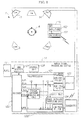
- FIG. 1 is a diagram illustrating the configuration of the virtual surround system 1.
- the same reference numerals are given to the constituent units common to the units of the virtual surround system 9.
- An audio signal processing device 12 of the virtual surround system 1 includes a postprocessor 1222 realized by a DSP group 122, instead of the postprocessor 9222 realized by the DSP group 922 of the audio signal processing device 92 of the virtual surround system 9.
- the postprocessor 1222 generates an audio signal indicating a sound from which a component of a low frequency band is attenuated by a low-pass filter (for example, a cutoff frequency is 500 Hz) by mixing sounds obtained by performing phase-inversion on signals indicated by audio signals of an Lch, an Rch, and a Cch delivered from a decoder 1221 as signals indicating the sounds actually emitted from the SW 15 and on signals indicated by audio signals of an LSch and an RSch for an Lsp 13 and audio signals of the LSch and the RSch for an Rsp 14 generated by a virtual surround processing unit, after performing necessary level adjustment.
- a low-pass filter for example, a cutoff frequency is 500 Hz
- a phase inversion processing unit inverts the phases of the audio signals of the LSch and the RSch for the Lsp 13 generated by the virtual surround processing unit.
- the phase inversion processing unit inverts the phases of the audio signals of the LSch and the RSch for the Rsp 14 generated by the virtual surround processing unit.
- the audio signals of the LSch and the RSch for the Lsp 13 and the audio signals of the LSch and the RSch for the Rsp 14 subjected to the phase inversion by the phase inversion processing unit are mixed with the audio signals of the Lch, the Rch, the Cch, and the LFEch delivered from the decoder 1221. As a result, the audio signal for the SW 15 is generated.
- the audio signals of the LSch and the RSch for the Lsp 13 and the audio signals of the LSch and the RSch for the Rsp 14 generated by the virtual surround processing unit are used without being subjected to the phase inversion in the generation of the audio signals for the Lsp 13 and the audio signals for the Rsp 14.
- the orders of a high-pass filter and the low-pass filter of the postprocessor 1222 of the virtual surround system 1 are the same. Accordingly, the phases of the audio signals for the Lsp 13 and the Rsp 14 are not deviated from the phase of the audio signals for the SW 15.
- the phases of the sounds of the LSch emitted from the Lsp 13 and the Rsp 14 are opposite to the phase of the sound of the LSch emitted from the SW 15.
- the phases of the sounds of the RSch emitted from the Lsp 13 and the Rsp 14 are opposite to the phases of the sounds of the RSch emitted from the SW 15.
- the emitted sounds include the sounds of the overlapping bands, and thus the listener A perceives the combined sounds.
- the localization of the sounds of the LSch may be pulled from the original position of the LSch to the position of the SW 15.
- the phases of the sounds of the LSch emitted from the Lsp 13 and the Rsp 14 are opposite to the phases of the sounds of the overlapping bands included in the sounds of the LSch emitted from the SW 15. Therefore, when the listener A perceives the sounds, the sounds are not combined.
- the listener A strongly perceives the localization of the sounds of the LSch by the sounds emitted from the Lsp 13 and the Rsp 14 and mainly including the component of the high frequency band and rarely perceives the localization of the sounds of the LSeh by the sounds emitted from the SW15 and mainly including the component of the low frequency band.
- the localization of the sounds of the LSch perceived by the listener A is not pulled to the position of the SW and are determined at the original position of the LSsp. The same also applies to the sounds of the RSch.
- the localization of the virtually realized surround sounds is rarely influenced by the disposition position of a subwoofer, even when the subwoofer emits sounds including components of a frequency band (for example, a band equal to or greater than 100 Hz) that gives the sense of localization to a listener with miniaturization of main speakers in a virtual surround system of multi-channels. Therefore, the degree of freedom of the disposition position of the subwoofer in a sound space is improved.
- a frequency band for example, a band equal to or greater than 100 Hz
- FIG. 2 is a diagram illustrating the configuration of a virtual surround system 2 according to a second embodiment of the invention.
- the position of a phase inversion processing unit is different from the position of the phase inversion processing unit of the virtual surround system 1.
- the virtual surround system 1 is configured such that the audio signals of the LSch and the RSch for the Lsp 13 and the audio signals of the LSch and the RSch for the Rsp 14 generated by the virtual surround processing unit are subjected to the phase inversion for use in generation of the audio signals for the SW 15.
- the virtual surround system 2 is configured such that the audio signals of the LSch and the RSch for the Lsp 13 and the audio signals of the LSch and the RSch for the Rsp 14 generated by the virtual surround processing unit are used without being subjected to the phase inversion in generation of the audio signals for the SW 15, and the audio signals of the LSch and the RSch for the Lsp 13 and the audio signals of the LSch and the RSch for the Rsp 14 generated by the virtual surround processing unit are subjected to the phase inversion for use.
- the phases of the sounds of the LSch and the RSch emitted from the Lsp 13 and the Rsp 14 and the components of the overlapping bands included in the sounds of the LSch and the RSch emitted from the SW 15 are opposite to each other. Therefore, the localization of the sounds of the channels for the virtual speakers is not pulled to the position of the subwoofer and is determined at the original positions of the virtual speakers.
- FIG. 3 is a diagram illustrating the configuration of a virtual surround system 3 according to a third embodiment of the invention.
- all-pass filters are disposed instead of the phase inversion processing units at the position of the phase inversion processing unit of the virtual surround system 1 and the position of the phase inversion processing unit of the virtual surround system 2.
- the all-pass filters perform phase rotation of a predetermined angle on the audio signals generated by the virtual surround processing unit and used to generate the audio signals for the SW 15 and the audio signals generated by the virtual surround processing unit and used to generate the audio signals for the Lsp 13 and the Rsp 14 such that the phases of the audio signals are different from each other by 180 degrees.
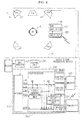
- FIG. 4 is a diagram illustrating the configuration of a virtual surround system 4 according to a fourth embodiment of the invention.
- the virtual surround system 4 is configured such that a delay processing unit is disposed instead of the phase inversion processing unit at the position of the phase inversion processing unit of the virtual surround system 1.
- the delay processing unit adds a delay of about 10 milliseconds to 30 milliseconds to the audio signals output from the virtual surround processing unit and used to generate the audio signals for the SW 15.
- the timing at which the sounds of the LSch and the RSch included in the sounds emitted from the SW 15 reach the listener A is about 10 milliseconds to 30 milliseconds later than the timing at which the sounds of the LSch and the RSch included in the sounds emitted from the Lsp 13 and the Rsp 14 reach the listener A.
- the listener A strongly perceives the localization of the sounds of the LSch and the RSch included in the sounds emitted from the precedent Lsp 13 and Rsp 14 and does not perceive the localization of the sounds of the LSch and the RSch included in the sounds emitted from the SW 15 and subsequently arriving due to the short delay generally equal to or less than 30 milliseconds.
- the localization of the sounds of the channels for the virtual speakers perceived by the listener is not pulled to the position of the subwoofer and is determined at the original positions of the virtual speakers.
- the virtual surround system in which the surround of 5.1 channels is virtually realized by a speaker system of 2.1 channels is used.
- the invention can be applied to a speaker system of various numbers of channels and a virtual surround system of various numbers of channels, as long as virtual surround is realized using a speaker system including one or more subwoofers.
- generation of audio signals used to realize virtual surround of 9.1 channels using a speaker system of 5.1 channels may be realized in the virtual surround system according to the invention.
- the disposition or the number of phase inversion processing units or all-pass filters may be modified in various ways, as long as the audio signals of the sounds are generated so that the phases of the sounds of the channels perceived as sounds emitted from the actual speakers and the virtual speakers by a listener are opposite to the phases of the sounds of the channels emitted from the subwoofer.
- opposite phases when the phrase “opposite phases” is used, the phases may not be deviated by 180 degrees in a strict sense.
- the term “opposite phases” in this specification means a state in which the phases are sufficiently deviated to a degree that two sounds combined as the sound of the same channel and perceived by a listener are not perceived as the sound of the same channel when the phases are not deviated, and the localization of the sounds of the channels for the virtual speakers is not pulled to the position of a subwoofer.
- the disposition of the delay processing unit may be modified in various ways, as long as the audio signals generated by the virtual surround processing unit and used to generate the audio signals for the SW 15 or the audio signals obtained by mixing the audio signals are subjected to the delay process so that the sound of the same channel emitted from the subwoofer reaches a listener later than the sounds of the channels perceived as the sounds emitted from the actual speakers and emitted from the virtual speakers by the listener.
- the delay processing unit may be disposed at a position immediately in front of or behind the low-pass filter, instead of the position of the delay processing unit shown in FIG. 4 .
- the acoustic signals have been transmitted from the player 11 to the audio signal processing device 12 in conformity with the HDMI standard.
- another Digital Audio Interface Receiver may be used as a DIR of the audio signal processing device 12.
- the audio signal processing device 12 may be configured to include an analog-to-digital (AD) converter and deliver audio signals converted to digital signals to the DSP group 122.
- AD analog-to-digital
Landscapes
- Physics & Mathematics (AREA)
- Engineering & Computer Science (AREA)
- Acoustics & Sound (AREA)
- Signal Processing (AREA)
- Stereophonic System (AREA)
Applications Claiming Priority (1)
| Application Number | Priority Date | Filing Date | Title |
|---|---|---|---|
| JP2012068069A JP5776597B2 (ja) | 2012-03-23 | 2012-03-23 | 音信号処理装置 |
Publications (2)
| Publication Number | Publication Date |
|---|---|
| EP2642771A2 true EP2642771A2 (de) | 2013-09-25 |
| EP2642771A3 EP2642771A3 (de) | 2017-05-24 |
Family
ID=48095538
Family Applications (1)
| Application Number | Title | Priority Date | Filing Date |
|---|---|---|---|
| EP13160365.6A Withdrawn EP2642771A3 (de) | 2012-03-23 | 2013-03-21 | Audiosignalverarbeitungsvorrichtung |
Country Status (3)
| Country | Link |
|---|---|
| US (1) | US9294861B2 (de) |
| EP (1) | EP2642771A3 (de) |
| JP (1) | JP5776597B2 (de) |
Families Citing this family (8)
| Publication number | Priority date | Publication date | Assignee | Title |
|---|---|---|---|---|
| US10038957B2 (en) * | 2013-03-19 | 2018-07-31 | Nokia Technologies Oy | Audio mixing based upon playing device location |
| US12008697B2 (en) | 2014-06-10 | 2024-06-11 | Ripple, Inc. Of Delaware | Dynamic location based digital element |
| US10026226B1 (en) * | 2014-06-10 | 2018-07-17 | Ripple Inc | Rendering an augmented reality object |
| US10930038B2 (en) | 2014-06-10 | 2021-02-23 | Lab Of Misfits Ar, Inc. | Dynamic location based digital element |
| US9820073B1 (en) | 2017-05-10 | 2017-11-14 | Tls Corp. | Extracting a common signal from multiple audio signals |
| US10969652B2 (en) | 2018-01-10 | 2021-04-06 | Apple Inc. | Camera with folded optics having moveable lens |
| US11310597B2 (en) | 2019-02-04 | 2022-04-19 | Eric Jay Alexander | Directional sound recording and playback |
| EP3726858A1 (de) * | 2019-04-16 | 2020-10-21 | Fraunhofer Gesellschaft zur Förderung der Angewand | Reproduktion einer unteren schicht |
Citations (2)
| Publication number | Priority date | Publication date | Assignee | Title |
|---|---|---|---|---|
| JPH08256400A (ja) | 1995-03-17 | 1996-10-01 | Matsushita Electric Ind Co Ltd | 音場処理回路 |
| JP4655098B2 (ja) | 2008-03-05 | 2011-03-23 | ヤマハ株式会社 | 音声信号出力装置、音声信号出力方法およびプログラム |
Family Cites Families (10)
| Publication number | Priority date | Publication date | Assignee | Title |
|---|---|---|---|---|
| US7242782B1 (en) * | 1998-07-31 | 2007-07-10 | Onkyo Kk | Audio signal processing circuit |
| JP2002369300A (ja) * | 2001-06-12 | 2002-12-20 | Pioneer Electronic Corp | 音声信号再生装置および方法 |
| JP4254502B2 (ja) * | 2003-11-21 | 2009-04-15 | ヤマハ株式会社 | アレースピーカ装置 |
| WO2006057521A1 (en) * | 2004-11-26 | 2006-06-01 | Samsung Electronics Co., Ltd. | Apparatus and method of processing multi-channel audio input signals to produce at least two channel output signals therefrom, and computer readable medium containing executable code to perform the method |
| DK1718110T3 (en) * | 2005-04-27 | 2017-12-04 | Oticon As | Audio feedback and suppression means |
| JP4946148B2 (ja) * | 2006-04-19 | 2012-06-06 | ソニー株式会社 | 音声信号処理装置、音声信号処理方法及び音声信号処理プログラム |
| JP4946305B2 (ja) * | 2006-09-22 | 2012-06-06 | ソニー株式会社 | 音響再生システム、音響再生装置および音響再生方法 |
| WO2009113147A1 (ja) * | 2008-03-10 | 2009-09-17 | パイオニア株式会社 | 信号処理装置及び信号処理方法 |
| JP5597975B2 (ja) * | 2009-12-01 | 2014-10-01 | ソニー株式会社 | 映像音響装置 |
| EP2548378A1 (de) * | 2010-03-18 | 2013-01-23 | Koninklijke Philips Electronics N.V. | Lautsprechersystem und betriebsverfahren dafür |
-
2012
- 2012-03-23 JP JP2012068069A patent/JP5776597B2/ja active Active
-
2013
- 2013-03-18 US US13/846,081 patent/US9294861B2/en active Active
- 2013-03-21 EP EP13160365.6A patent/EP2642771A3/de not_active Withdrawn
Patent Citations (2)
| Publication number | Priority date | Publication date | Assignee | Title |
|---|---|---|---|---|
| JPH08256400A (ja) | 1995-03-17 | 1996-10-01 | Matsushita Electric Ind Co Ltd | 音場処理回路 |
| JP4655098B2 (ja) | 2008-03-05 | 2011-03-23 | ヤマハ株式会社 | 音声信号出力装置、音声信号出力方法およびプログラム |
Also Published As
| Publication number | Publication date |
|---|---|
| US9294861B2 (en) | 2016-03-22 |
| US20130251156A1 (en) | 2013-09-26 |
| EP2642771A3 (de) | 2017-05-24 |
| JP5776597B2 (ja) | 2015-09-09 |
| JP2013201559A (ja) | 2013-10-03 |
Similar Documents
| Publication | Publication Date | Title |
|---|---|---|
| US9294861B2 (en) | Audio signal processing device | |
| US10038963B2 (en) | Speaker device and audio signal processing method | |
| EP3061268B1 (de) | Verfahren und mobile vorrichtung zur verarbeitung eines audiosignals | |
| US6937737B2 (en) | Multi-channel audio surround sound from front located loudspeakers | |
| EP2596649B1 (de) | System und verfahren zur schallwiedergabe | |
| US20110188662A1 (en) | Method of rendering binaural stereo in a hearing aid system and a hearing aid system | |
| JP7622215B2 (ja) | 増強されたオーディオを提供するためのシステム及び方法 | |
| JP7581509B2 (ja) | 増強されたオーディオを提供するためのシステム及び方法 | |
| US9332349B2 (en) | Sound image localization apparatus | |
| WO2016088745A1 (ja) | スピーカ装置 | |
| EP2466918B1 (de) | Audiosystem, Audiosignal-Verarbeitungsvorrichtung und Verfahren sowie Programm | |
| JP6287191B2 (ja) | スピーカ装置 | |
| US12348951B2 (en) | System and method for virtual sound effect with invisible loudspeaker(s) | |
| JP2025075074A (ja) | 音響再生方法、コンピュータプログラム及び音響再生装置 | |
| WO2015025858A1 (ja) | スピーカ装置及びオーディオ信号処理方法 | |
| US20240205626A1 (en) | Multi-input push-to-talk switch with binaural spatial audio positioning | |
| EP2101517B1 (de) | Audioprozessor zur Umwandlung eines Monosignals in ein Stereosignal | |
| JP2015126358A (ja) | スピーカ装置 | |
| CN117652161A (zh) | 用于回放沉浸式音频的音频处理方法 | |
| KR20150143018A (ko) | 지향성 다채널 스피커 시스템 및 이를 포함하는 오디오시스템 |
Legal Events
| Date | Code | Title | Description |
|---|---|---|---|
| PUAI | Public reference made under article 153(3) epc to a published international application that has entered the european phase |
Free format text: ORIGINAL CODE: 0009012 |
|
| AK | Designated contracting states |
Kind code of ref document: A2 Designated state(s): AL AT BE BG CH CY CZ DE DK EE ES FI FR GB GR HR HU IE IS IT LI LT LU LV MC MK MT NL NO PL PT RO RS SE SI SK SM TR |
|
| AX | Request for extension of the european patent |
Extension state: BA ME |
|
| PUAL | Search report despatched |
Free format text: ORIGINAL CODE: 0009013 |
|
| AK | Designated contracting states |
Kind code of ref document: A3 Designated state(s): AL AT BE BG CH CY CZ DE DK EE ES FI FR GB GR HR HU IE IS IT LI LT LU LV MC MK MT NL NO PL PT RO RS SE SI SK SM TR |
|
| AX | Request for extension of the european patent |
Extension state: BA ME |
|
| RIC1 | Information provided on ipc code assigned before grant |
Ipc: H04S 3/00 20060101AFI20170419BHEP Ipc: H04S 5/00 20060101ALI20170419BHEP |
|
| STAA | Information on the status of an ep patent application or granted ep patent |
Free format text: STATUS: THE APPLICATION IS DEEMED TO BE WITHDRAWN |
|
| 18D | Application deemed to be withdrawn |
Effective date: 20171125 |