EP2645566A2 - Audiosignal-Ausgabevorrichtung - Google Patents
Audiosignal-Ausgabevorrichtung Download PDFInfo
- Publication number
- EP2645566A2 EP2645566A2 EP13158826.1A EP13158826A EP2645566A2 EP 2645566 A2 EP2645566 A2 EP 2645566A2 EP 13158826 A EP13158826 A EP 13158826A EP 2645566 A2 EP2645566 A2 EP 2645566A2
- Authority
- EP
- European Patent Office
- Prior art keywords
- volume
- output
- audio signal
- content
- external device
- Prior art date
- Legal status (The legal status is an assumption and is not a legal conclusion. Google has not performed a legal analysis and makes no representation as to the accuracy of the status listed.)
- Ceased
Links
Images




Classifications
-
- H—ELECTRICITY
- H03—ELECTRONIC CIRCUITRY
- H03G—CONTROL OF AMPLIFICATION
- H03G3/00—Gain control in amplifiers or frequency changers
- H03G3/02—Manually-operated control
- H03G3/04—Manually-operated control in untuned amplifiers
-
- H—ELECTRICITY
- H03—ELECTRONIC CIRCUITRY
- H03G—CONTROL OF AMPLIFICATION
- H03G3/00—Gain control in amplifiers or frequency changers
- H03G3/20—Automatic control
-
- H—ELECTRICITY
- H03—ELECTRONIC CIRCUITRY
- H03G—CONTROL OF AMPLIFICATION
- H03G3/00—Gain control in amplifiers or frequency changers
- H03G3/20—Automatic control
- H03G3/30—Automatic control in amplifiers having semiconductor devices
- H03G3/3005—Automatic control in amplifiers having semiconductor devices in amplifiers suitable for low-frequencies, e.g. audio amplifiers
-
- H—ELECTRICITY
- H03—ELECTRONIC CIRCUITRY
- H03G—CONTROL OF AMPLIFICATION
- H03G5/00—Tone control or bandwidth control in amplifiers
-
- H—ELECTRICITY
- H03—ELECTRONIC CIRCUITRY
- H03G—CONTROL OF AMPLIFICATION
- H03G5/00—Tone control or bandwidth control in amplifiers
- H03G5/02—Manually-operated control
-
- H—ELECTRICITY
- H03—ELECTRONIC CIRCUITRY
- H03G—CONTROL OF AMPLIFICATION
- H03G7/00—Volume compression or expansion in amplifiers
-
- H—ELECTRICITY
- H03—ELECTRONIC CIRCUITRY
- H03G—CONTROL OF AMPLIFICATION
- H03G7/00—Volume compression or expansion in amplifiers
- H03G7/002—Volume compression or expansion in amplifiers in untuned or low-frequency amplifiers, e.g. audio amplifiers
-
- H—ELECTRICITY
- H03—ELECTRONIC CIRCUITRY
- H03G—CONTROL OF AMPLIFICATION
- H03G7/00—Volume compression or expansion in amplifiers
- H03G7/007—Volume compression or expansion in amplifiers of digital or coded signals
-
- H—ELECTRICITY
- H04—ELECTRIC COMMUNICATION TECHNIQUE
- H04N—PICTORIAL COMMUNICATION, e.g. TELEVISION
- H04N21/00—Selective content distribution, e.g. interactive television or video on demand [VOD]
- H04N21/40—Client devices specifically adapted for the reception of or interaction with content, e.g. set-top-box [STB]; Operations thereof
- H04N21/43—Processing of content or additional data, e.g. demultiplexing additional data from a digital video stream; Elementary client operations, e.g. monitoring of home network or synchronising decoder's clock; Client middleware
- H04N21/436—Interfacing a local distribution network, e.g. communicating with another STB or one or more peripheral devices inside the home
- H04N21/4363—Adapting the video stream to a specific local network, e.g. a Bluetooth® network
- H04N21/43632—Adapting the video stream to a specific local network, e.g. a Bluetooth® network involving a wired protocol, e.g. IEEE 1394
-
- H—ELECTRICITY
- H04—ELECTRIC COMMUNICATION TECHNIQUE
- H04N—PICTORIAL COMMUNICATION, e.g. TELEVISION
- H04N21/00—Selective content distribution, e.g. interactive television or video on demand [VOD]
- H04N21/40—Client devices specifically adapted for the reception of or interaction with content, e.g. set-top-box [STB]; Operations thereof
- H04N21/43—Processing of content or additional data, e.g. demultiplexing additional data from a digital video stream; Elementary client operations, e.g. monitoring of home network or synchronising decoder's clock; Client middleware
- H04N21/436—Interfacing a local distribution network, e.g. communicating with another STB or one or more peripheral devices inside the home
- H04N21/4363—Adapting the video stream to a specific local network, e.g. a Bluetooth® network
- H04N21/43632—Adapting the video stream to a specific local network, e.g. a Bluetooth® network involving a wired protocol, e.g. IEEE 1394
- H04N21/43635—HDMI
-
- H—ELECTRICITY
- H04—ELECTRIC COMMUNICATION TECHNIQUE
- H04N—PICTORIAL COMMUNICATION, e.g. TELEVISION
- H04N21/00—Selective content distribution, e.g. interactive television or video on demand [VOD]
- H04N21/40—Client devices specifically adapted for the reception of or interaction with content, e.g. set-top-box [STB]; Operations thereof
- H04N21/43—Processing of content or additional data, e.g. demultiplexing additional data from a digital video stream; Elementary client operations, e.g. monitoring of home network or synchronising decoder's clock; Client middleware
- H04N21/439—Processing of audio elementary streams
-
- H—ELECTRICITY
- H04—ELECTRIC COMMUNICATION TECHNIQUE
- H04N—PICTORIAL COMMUNICATION, e.g. TELEVISION
- H04N21/00—Selective content distribution, e.g. interactive television or video on demand [VOD]
- H04N21/40—Client devices specifically adapted for the reception of or interaction with content, e.g. set-top-box [STB]; Operations thereof
- H04N21/47—End-user applications
- H04N21/485—End-user interface for client configuration
- H04N21/4852—End-user interface for client configuration for modifying audio parameters, e.g. switching between mono and stereo
-
- H—ELECTRICITY
- H04—ELECTRIC COMMUNICATION TECHNIQUE
- H04N—PICTORIAL COMMUNICATION, e.g. TELEVISION
- H04N5/00—Details of television systems
- H04N5/44—Receiver circuitry for the reception of television signals according to analogue transmission standards
- H04N5/60—Receiver circuitry for the reception of television signals according to analogue transmission standards for the sound signals
Definitions
- the present invention relates to an audio signal output device, and more particularly, it relates to an audio signal output device capable of outputting an audio signal of content.
- An audio signal output device capable of outputting an audio signal of content is known in general, as disclosed in Japanese Patent Laying-Open No. 2008-228005 , for example.
- Japanese Patent Laying-Open No. 2008-228005 discloses a video-audio processing apparatus including an audio output portion outputting an audio data signal of content to an audio output apparatus, an audio buffer portion accumulating the audio data signal of the content for a certain reproduction time and sequentially outputting the same to the audio output portion, a volume detection portion detecting a volume level from the audio data signal input from the audio buffer portion, a warning display data generation portion generating a warning display when a change value of the volume level is equal to or larger than a certain value, and a video output portion displaying the warning display on a display device.
- This video-audio processing apparatus is configured to previously notify a user by the warning display that a high volume is output in reproduction of the content. Thus, a mental burden on the user with respect to high volume output is reduced.
- the warning display is only displayed when the change value of the volume level is equal to or larger than the certain value, so that a high volume may be disadvantageously output from the audio output apparatus.
- the present invention has been proposed in order to solve the aforementioned problem, and an object of the present invention is to provide an audio signal output device capable of suppressing audio output at a high volume.
- An audio signal output device includes an audio signal output portion to output an audio signal of content to an external device outputting audio, a volume setting information acquisition portion to acquire volume setting information of the external device, and a control portion acquiring maximum volume information of volume information of the audio signal of the content, while the control portion is configured to calculate the maximum output volume of the external device on the basis of the maximum volume information of the content and the volume setting information of the external device and perform control of lowering the output volume of the external device when the maximum output volume is higher than a prescribed volume threshold.
- the control portion is configured to perform control of lowering the output volume of the external device when the maximum output volume of the external device is higher than the prescribed volume threshold, whereby audio output from the external device at a high volume higher than the volume threshold can be suppressed. Furthermore, the control portion calculates the maximum output volume of the external device on the basis of both the maximum volume information of the content and the volume setting information of the external device, whereby audio output from the external device at a high volume can be more reliably suppressed as compared with a case where the control of lowering the output volume is performed on the basis of only either the maximum volume information or the volume setting information.
- control portion is preferably configured to notify a user to previously select whether or not to perform control of lowering the output volume of the external device when the maximum output volume is higher than the prescribed volume threshold. According to this structure, whether or not to allow audio output from the external device at a high volume is left to the determination of the user, and hence the audio of the content can be output from the external device at an output volume desired by the user.
- control portion is preferably configured to acquire the maximum volume information of volume information of an audio signal of the entire content or volume information of an audio signal of an entire chapter of the content, calculate the maximum output volume of the external device on the basis of the maximum volume information of the content and the volume setting information of the external device, and perform control of lowering the output volume of the entire content or the output volume of the entire chapter of the content of the external device when the maximum output volume is higher than the prescribed volume threshold.
- the control portion is preferably configured to acquire the maximum volume information of volume information of an audio signal of the entire content or volume information of an audio signal of an entire chapter of the content, calculate the maximum output volume of the external device on the basis of the maximum volume information of the content and the volume setting information of the external device, and perform control of lowering the output volume of the entire content or the output volume of the entire chapter of the content of the external device when the maximum output volume is higher than the prescribed volume threshold.
- control portion is preferably configured to perform control of lowering the output volume of the external device by lowering at least one of an amplification rate constituting the volume information of the audio signal of the content and an amplification rate constituting the volume setting information of the external device when the maximum output volume is higher than the prescribed volume threshold.
- the amplification rate is lowered, whereby the output volume output from the external device can be easily lowered.
- control portion is preferably configured to perform control of lowering the output volume of the external device by lowering the amplification rate constituting the volume information of the audio signal of the content when the maximum output volume is higher than the prescribed volume threshold. According to this structure, it is not necessary for the control portion to instruct the external device to lower the amplification rate constituting the volume setting information of the external device, and hence the control of lowering the output volume of the external device can be easily performed.
- the control portion is preferably configured to acquire the maximum volume information of volume information of an audio signal of the entire content or volume information of an audio signal of an entire chapter of the content, calculate the maximum output volume of the external device on the basis of the maximum volume information of the content and the volume setting information of the external device, and perform control of lowering the output volume of the entire content or the output volume of the entire chapter of the content of the external device by lowering an amplification rate constituting the volume information of the audio signal of the entire content or the volume information of the audio signal of the entire chapter of the content when the maximum output volume is higher than the prescribed volume threshold.
- the amplification rate constituting the volume information of the audio signal of the entire content or the volume information of the audio signal of the entire chapter of the content is lowered, whereby the output volume of the entire content or the entire chapter of the content output from the external device can be easily lowered.
- control portion is preferably configured to calculate the maximum output volume of the external device on the basis of an amplification rate constituting the maximum volume information of the content and an amplification rate constituting the volume setting information of the external device. According to this structure, the control portion can easily calculate the maximum output volume of the external device.
- the aforementioned audio signal output device preferably further includes a storage portion to previously store the audio signal of the content, and the control portion is preferably configured to perform control of previously acquiring the maximum volume information of the volume information of the audio signal of the content from the audio signal of the content stored in the storage portion.
- the control portion can perform control of lowering the output volume of the external device before the audio of the content is output from the external device, and hence audio output from the external device at a high volume can be reliably suppressed even immediately after reproduction of the content is started.
- control portion is preferably configured to previously acquire the maximum volume information of volume information of an audio signal of an entire chapter of the content stored in the storage portion for each chapter of the content, calculate the maximum output volume of the external device on the basis of the maximum volume information of the entire chapter of the content and the volume setting information of the external device each time the control portion acquires the maximum volume information of the entire chapter of the content, and perform control of lowering the output volume of the entire chapter of the content of the external device when the maximum output volume is higher than the prescribed volume threshold.
- the control of lowering the output volume of the entire chapter of the content can be performed each time the maximum volume information of the entire chapter of the content is acquired, and hence the audio of the content can be more promptly output from the external device, as compared with a case where the maximum volume information of the entire content is collectively acquired.
- control portion is preferably configured to perform control of lowering the output volume of the external device so that the maximum output volume is equal to the prescribed volume threshold when the maximum output volume is higher than the prescribed volume threshold.
- the audio of the content can be output from the external device in a state where the maximum output volume is maintained at an allowable magnitude (volume threshold) while audio output from the external device at a high volume is suppressed.
- control portion is preferably configured to calculate a modification value to render the maximum output volume equal to the prescribed volume threshold when the maximum output volume is higher than the prescribed volume threshold and perform control of lowering the output volume of the external device on the basis of the modification value.
- the output volume is lowered on the basis of the modification value, whereby the maximum output volume can be more easily set at the allowable magnitude (volume threshold).
- the control portion is preferably configured to perform control of lowering the output volume of the external device by lowering at least one of an amplification rate constituting the volume information of the audio signal of the content and an amplification rate constituting the volume setting information of the external device on the basis of the modification value.
- the amplification rate is lowered on the basis of the modification value, whereby the output volume output from the external device can be easily lowered.
- the prescribed volume threshold is preferably settable by a user. According to this structure, the volume threshold can be set according to the user's preference.
- control portion is preferably configured to output an audio signal of a test tone to set the prescribed volume threshold to the external device
- the audio signal output device is preferably so configured that the user adjusts the output volume of the test tone output from the external device to set the prescribed volume threshold.
- the control portion is preferably configured to notify the user to previously select whether or not to perform control of lowering the output volume of the external device by displaying a notification screen to cause the user to previously select whether or not to perform control of lowering the output volume of the external device on the external device.
- the user can be visually notified to select whether or not to perform control of lowering the output volume through the notification screen, and hence the audio signal output device can cause the user to clearly recognize the selection notification.
- the audio-video output system 100 includes a reproduction apparatus 1 and a television apparatus 2, as shown in Fig. 1 .
- the reproduction apparatus 1 and the television apparatus 2 are examples of the "audio signal output device” and the “external device” in the present invention, respectively.
- the reproduction apparatus 1 and the television apparatus 2 are connected to each other by an HDMI (High-Definition Multimedia Interface) cable 3.
- HDMI High-Definition Multimedia Interface
- the reproduction apparatus 1 is connected to be capable of outputting an audio signal and a video signal of content to the television apparatus 2.
- the reproduction apparatus 1 includes a control portion 10, a reproduction portion 11, a RAM 12, a ROM 13, a flash memory 14, an HDMI transmitter 15, and an HDMI terminal 16 connected with the HDMI cable 3.
- the control portion 10 includes a CPU and is configured to control the operations of the entire reproduction apparatus 1 by executing a control program.
- the reproduction portion 11 has a function of retrieving the audio signal and the video signal constituting the content stored in a storage medium such as a VHS tape, a DVD, a BD, an LD, a USB memory, an SD card, or an HDD.
- the RAM 12 is a rewritable volatile semiconductor memory, and the control portion 10 is configured to previously store the audio signal of the entire content in the RAM 12 before reproduction (before output to the television apparatus 2).
- the RAM 12 is an example of the "storage portion" in the present invention.
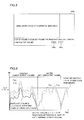
- the control portion 10 is configured to acquire volume information X (waveform shown by a one-dot chain line) shown in Fig. 2 from the audio signal of the entire content stored in the RAM 12.
- P 0 represents a maximum voltage value (prescribed value) capable of being output from the reproduction apparatus 1
- P represents a voltage value actually output from the reproduction apparatus 1.
- (P/P 0 ) is a value not greater than 1
- X is a value not greater than 0.
- the ROM 13 is an unrewritable nonvolatile semiconductor memory and previously stores a video signal constituting a setting screen 13a shown in Fig. 3 , an audio signal constituting a test tone, and a video signal constituting a notification screen 13b shown in Fig. 4 .
- the audio-video output system 100 is so configured that a user can set a volume threshold Z limit , which is the upper limit of an output volume output from the television apparatus 2, on the setting screen 13a, as shown in Fig. 3 .
- the user transversely slides a volume adjustment bar 13c in the setting screen 13a and selects an "OK" button 13d, whereby the user can set the volume threshold Z limit as an allowable output volume to be a desirable magnitude.
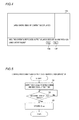
- the notification screen 13b is divided into a region where video of the content is displayed and a region where details of notification are displayed, as shown in Fig. 4 .
- the user selects a "Yes" button 13e or a "No” button 13f in the region where the details of notification are displayed, whereby the user can select whether or not to perform control of lowering the output volume of the television apparatus 2.
- the flash memory 14 is a rewritable nonvolatile semiconductor memory and is configured to store the volume threshold Z limit set by the user on the setting screen 13a (see Fig. 3 ).
- the HDMI transmitter 15 has a function of outputting the audio signal and the video signal as a digital signal to the television apparatus 2 and a function of establishing bidirectional communication of a CEC (Consumer Electronics Control) control signal with the television apparatus 2.
- the HDMI transmitter 15 is configured to be capable of acquiring volume setting information Y described later of the television apparatus 2 using the CEC control signal.
- the HDMI transmitter 15 is an example of the "audio signal output portion" or the "volume setting information acquisition portion" in the present invention.
- the television apparatus 2 includes a control portion 20, an HDMI transmitter 21, an HDMI terminal 22 connected with the HDMI cable 3, a display portion 23, an audio output portion 24, and an operation portion 25.
- the control portion 20 is configured to control the operations of the entire television apparatus 2.
- the HDMI transmitter 21 has a function of accepting input of the audio signal and the video signal from the reproduction apparatus 1 and a function of establishing bidirectional communication of the CEC control signal with the reproduction apparatus 1.
- the display portion 23 has a function of displaying video on the basis of the video signal.
- the audio output portion 24 has an audio signal conversion portion 24a, an audio signal amplification portion 24b, and a speaker portion 24c.
- the voice signal conversion portion 24a has a function of converting the digital audio signal into an analog audio signal.
- the audio signal amplification portion 24b has a function of amplifying an audio signal having the volume information X from the reproduction apparatus 1 on the basis of the volume setting information Y.
- Q 0 represents a maximum voltage value (prescribed value) capable of being output from the audio signal amplification portion 24b, and Q represents a voltage value actually output from the audio signal amplification portion 24b.
- (Q/Q 0 ) is a value not greater than 1
- Y is a value not greater than 0.
- the speaker portion 24c is configured to output the audio of the content at the output volume Z.
- the operation portion 25 has a function of accepting the operation of the user on the television apparatus 2 and the reproduction apparatus 1.
- control processing for setting performed by the control portion 10 of the reproduction apparatus 1 is described with reference to Figs. 1 , 3 , and 5 .
- the user performs an operation of setting the volume threshold Z limit on an unshown menu screen, whereby the control portion 10 (see Fig. 1 ) of the reproduction apparatus 1 retrieves the video signal of the setting screen 13a (see Fig. 3 ) and the audio signal of the test tone from the ROM 13 (see Fig. 1 ) and outputs the same to the television apparatus 2 (see Fig. 1 ) at a step S1, as shown in Fig. 5 .
- the setting screen 13a is displayed on the display portion 23 (see Fig. 1 ), and the test tone having a prescribed output volume is output from the speaker portion 24c (see Fig. 1 ).
- the volume adjustment bar 13c to set the output volume adjusted to a certain volume as the volume threshold L limit (selects the "OK" button 13d)
- information of the set volume threshold Z limit is output to the reproduction apparatus 1 using the CEC control signal.
- control portion 10 determines whether or not the information of the volume threshold Z limit has been input at a step S2, and repeats this determination until the control portion 10 determines that the information of the volume threshold Z limit has been input.
- the control portion 10 stores the volume threshold Z limit in the flash memory 14 (see Fig. 1 ) at a step S3. Then, the control portion 10 terminates the control processing. In this manner, setting of the volume threshold Z limit by the user is completed.
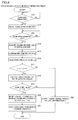
- control processing for volume change performed by the control portion 10 of the reproduction apparatus 1 is described with reference to Figs. 1 , 2 , 4 , and 6 .
- the control portion 10 determines whether or not the content has been selected by the operation of the user or the like at a step S11, and repeats this determination until the control portion 10 determines that the content has been selected.
- the control portion 10 requests the television apparatus 2 (see Fig. 1 ) to transmit the volume setting information Y using the CEC control signal at a step S12.
- the control portion 10 determines whether or not the volume setting information Y has been input into the reproduction apparatus 1 from the television apparatus 2 at a step S13, and repeats this determination until the control portion 10 determines that the volume setting information Y has been input.
- the control portion 10 retrieves the audio signal of the entire content and temporarily stores the same in the RAM 12 (see Fig. 1 ), and acquires the volume information X (see Fig. 2 ) from the audio signal of the entire content at a step S14. Then, the control portion 10 acquires maximum volume information X max (see Fig. 2 ) of the volume information X at a step S15.
- the user is previously notified to select whether or not to perform control of lowering the output volume Z on the notification screen 13b displayed on the display portion 23 of the television apparatus 2.
- the user selects whether or not to perform control of lowering the output volume (selects the "Yes” button 13e or the "No” button 13f (see Fig. 4 ))
- information of whether or not to perform control of lowering the output volume is output to the reproduction apparatus 1 using the CEC control signal.
- the control portion 10 determines whether or not lowering of the output volume Z of the television apparatus 2 has been selected at a step S19.
- the control portion 10 performs control of lowering the output volume Z of the entire content of the television apparatus 2 to a modified output volume Z1 at a step S20.
- the volume information X of the audio signal of the entire content is so modified to modified volume information X1 that the maximum output volume Z max is a modified maximum output volume Z1 max that is substantially equal to the volume threshold Z limit , as shown in Fig. 2 .
- the waveform of the modified output volume Z1 is shown by a bold solid line.
- the control portion 10 outputs an audio signal having the lowered modified volume information X1 to the television apparatus 2 at a step S21. Then, the control portion 10 terminates the control processing.
- the audio signal amplification portion 24b (see Fig. 1 ) of the television apparatus 2
- the control portion 10 When determining that the maximum output volume Z max is not higher than the volume threshold Z limit at the step S17 or determining that lowering of the output volume Z has not been selected at the step S19, the control portion 10 outputs the audio signal having the volume information X including the maximum volume information X max to the television apparatus 2 without performing control of lowering the output volume Z (volume information X) at a step S22. Then, the control portion 10 terminates the control processing.
- control portion 10 is configured to lower the output volume Z of the television apparatus 2 to the modified output volume Z1 when the maximum output volume Z max of the television apparatus 2 is higher than the volume threshold Z limit .
- audio output from the television apparatus 2 at a high volume higher than the volume threshold Z limit can be suppressed.
- the control portion 10 is configured to calculate the maximum output volume Z max of the television apparatus 2 on the basis of both the maximum volume information X max of the content and the volume setting information Y of the television apparatus 2.
- audio output from the television apparatus 2 at a high volume can be more reliably suppressed as compared with a case where the control of lowering the output volume Z is performed on the basis of only either the maximum volume information X max or the volume setting information Y.
- the control portion 10 can easily calculate the maximum output volume Z max of the television apparatus 2 using the maximum volume information X max and the volume setting information Y.
- the control portion 10 is configured to output the notification screen 13b retrieved from the ROM 13 to the television apparatus 2 and display the notification screen 13b to cause the user to previously select whether or not to perform control of lowering the output volume Z of the television apparatus 2 on the display portion 23 when determining that the maximum output volume Z max is higher than the volume threshold Z limit .
- the control portion 10 determines whether or not to allow audio output from the television apparatus 2 at a high volume is left to the determination of the user, and hence the audio of the entire content can be output from the television apparatus 2 at an output volume desired by the user.
- the control portion 10 is configured to acquire the volume information X from the audio signal of the entire content, acquire the maximum volume information X max of the content from the volume information X, calculate the maximum output volume Z max of the television apparatus 2 on the basis of the maximum volume information X max of the content and the volume setting information Y of the television apparatus 2, and lower the output volume Z of the entire content of the television apparatus 2 to the modified output volume Z1 when the maximum output volume Z max is higher than the volume threshold Z limit .
- the user listening to the audio can be inhibited from feeling uncomfortable due to audio output in a state where the output volume Z of the entire content is partially lowered.
- the control portion 10 is configured to perform control of lowering the output volume Z of the entire content of the television apparatus 2 to the modified output volume Z1 by lowering the volume information X of the entire content including the amplification rate to the modified volume information X1 when the maximum output volume Z max is higher than the volume threshold Z limit .
- the volume information X including the amplification rate is lowered to the modified volume information X1, whereby the output volume Z of the entire content output from the television apparatus 2 can be easily lowered to the modified output volume Z1.
- the control of lowering the volume information X of the audio signal of the entire content to the modified volume information X1 is performed in the reproduction apparatus 1.
- the control portion 10 it is not necessary for the control portion 10 to instruct the television apparatus 2 to lower the volume setting information Y, and hence the control of lowering the output volume Z of the television apparatus 2 to the modified output volume Z1 can be easily performed.
- the control portion 10 is configured to previously store the audio signal of the entire content in the RAM 12 before reproduction (before output from the television apparatus 2), acquire the volume information X from the stored audio signal of the entire content, and acquire the maximum volume information X max of the content of the acquired volume information X.
- the control portion 10 can perform control of lowering the output volume Z of the television apparatus 2 to the modified output volume Z1 before the audio of the content is output from the television apparatus 2.
- audio output from the television apparatus 2 at a high volume can be reliably suppressed even immediately after reproduction of the content is started.
- the control portion 10 is configured to lower the output volume Z of the television apparatus 2 to the modified output volume Z1 by lowering the volume information X of the entire content to the modified volume information X1 so that the maximum output volume Z max becomes the modified maximum output volume Z1 max that is substantially equal to the volume threshold Z limit , when the maximum output volume Z max is higher than the volume threshold Z limit .
- the audio of the content can be output from the television apparatus 2 in a state where the modified maximum output volume Z1 max is maintained at an allowable magnitude (volume threshold Z limit ) while audio output from the television apparatus 2 at a high volume is suppressed.
- the output volume Z is lowered on the basis of the modification value ⁇ 1, whereby the maximum output volume Z1 max can be more easily set at the allowable magnitude (volume threshold Z limit ). Furthermore, the volume information X of the entire content including the amplification rate is lowered on the basis of the modification value ⁇ 1, whereby the output volume Z output from the television apparatus 2 can be easily lowered.
- the volume threshold Z limit is set by the user, whereby the volume threshold Z limit can be set according to the user's preference.
- the audio-video output system 100 is so configured that the control portion 10 retrieves the audio signal of the test tone from the ROM 13 (see Fig. 1 ) and outputs the same to the television apparatus 2 to output the test tone having the prescribed output volume from the speaker portion 24c, and the user slides the volume adjustment bar 13c to set the output volume adjusted to the certain volume as the volume threshold Z limit .
- the user can set a prescribed volume threshold Z limit while actually listening to the test tone output from the television apparatus 2, and hence the volume threshold Z limit can be more easily set according to the user's preference.
- the control portion 10 is configured to notify the user to select whether or not to perform control of lowering the output volume Z on the notification screen 13b displayed on the display portion 23 of the television apparatus 2.
- the user can be visually notified to select whether or not to perform control of lowering the output volume Z through the notification screen 13b, and hence the audio-video output system 100 can cause the user to clearly recognize the selection notification.
- an audio-video output system 200 according to a second embodiment of the present invention is described with reference to Figs. 7 to 10 .
- control of lowering an output volume is performed in an amplifier 204 interposed between a reproduction apparatus 201 and a television apparatus 2, dissimilarly to the first embodiment.
- the audio-video output system 200 includes the reproduction apparatus 201, the television apparatus 2, and the amplifier 204 disposed between the reproduction apparatus 201 and the television apparatus 2, as shown in Fig. 7 .
- the amplifier 204 is an example of the "audio signal output device" in the present invention.
- the reproduction apparatus 1 and the amplifier 204 are connected to each other by an HDMI cable 3a, and the amplifier 204 and the television apparatus 2 are connected to each other by an HDMI cable 3b.
- the reproduction apparatus 1 is connected to be capable of outputting an audio signal and a video signal to the television apparatus 2 through the amplifier 204.
- the amplifier 204 includes a control portion 240, an HDMI transmitter 241, an HDMI terminal 242 connected with the HDMI cable 3a, an HDMI terminal 243 connected with the HDMI cable 3b, a RAM 244, a ROM 245, a flash memory 246, and an audio signal amplification portion 247.
- the HDMI transmitter 241 has a function of outputting the audio signal and the video signal input from the reproduction apparatus 201 to the television apparatus 2 and a function of establishing bidirectional communication of a CEC control signal with the reproduction apparatus 201 and the television apparatus 2.
- the HDMI transmitter 241 is configured to be capable of acquiring volume setting information Y of the television apparatus 2 using the CEC control signal.
- the HDMI transmitter 241 is an example of the "audio signal output portion" or the "volume setting information acquisition portion" in the present invention.
- the RAM 244 previously stores the audio signal of content input from the reproduction apparatus 201.
- the content is formed by connecting a plurality of chapters.
- the RAM 244 is an example of the "storage portion" in the present invention.
- the ROM 245 and the flash memory 246 previously store a video signal constituting a notification screen 245a shown in Fig. 8 and a volume threshold z limit , respectively.
- a user selects a "Yes" button 245b or a "No" button 245c in a region where the details of notification are displayed, as shown in Fig. 8 , whereby the user can select whether or not to perform control of lowering the output volume of the television apparatus 2 in the chapters.
- a RAM 212, a ROM 213, and a flash memory 214 of the reproduction apparatus 201 do not store the audio signal of the content, the video signal of the notification screen, and the volume threshold Z limit , respectively.
- the control portion 240 is configured to acquire volume information X of an entire chapter for each of the chapters from the audio signal of the content stored in the RAM 244.
- the audio signal amplification portion 247 has a function of amplifying an audio signal having the volume information X from the reproduction apparatus 201 on the basis of volume setting information W.
- R 0 represents a maximum voltage value (prescribed value) capable of being output from the audio signal amplification portion 247, and R represents a voltage value actually output from the audio signal amplification portion 247.
- (R/R 0 ) is a value not greater than 1
- W is a value not greater than 0.
- the remaining structure of the audio-video output system 200 according to the second embodiment of the present invention is similar to that of the audio-video output system 100 according to the aforementioned first embodiment.
- control processing for volume change performed by the control portion 240 of the amplifier 204 is described with reference to Figs. 7 to 10 .
- the control portion 240 determines whether or not the audio signal of the content has been input from the reproduction apparatus 201 (see Fig. 7 ), as shown in Fig. 10 , and repeats this determination until the control portion 240 determines that the audio signal of the content has been input.
- the control portion 240 requests the television apparatus 2 (see Fig. 7 ) to transmit the volume setting information Y at a step S32.
- the control portion 240 determines whether or not the volume setting information Y has been input from the television apparatus 2 into the amplifier 204 at a step S33, and repeats this determination until the control portion 240 determines that the volume setting information Y has been input.
- the control portion 240 determines whether or not the maximum output volume Z max is higher than the volume threshold Z limit at a step S38. When determining that the maximum output volume Z max is higher than the volume threshold Z limit (Z max > Z limit ), the control portion 240 retrieves the notification screen 245a (see Fig. 8 ) from the ROM 245 (see Fig. 7 ) and displays the same on a display portion 23 (see Fig. 7 ) at a step S39. When the user selects whether or not to perform control of lowering the output volume Z (selects the "Yes" button 245b or the "No" button 245c (see Fig. 8 )), information of whether or not to perform control of lowering the output volume is output to the amplifier 204 using the CEC control signal.
- the control portion 240 determines whether or not lowering of the output volume Z of the television apparatus 2 has been selected at a step S40.
- the control portion 240 performs control of lowering the output volume Z of one chapter of the television apparatus 2 to a modified output volume Z2 at a step S41.
- the volume setting information W of the amplifier 204 is so lowered to modified volume setting information W1 that the maximum output volume Z max is a modified maximum output volume Z2 max that is substantially equal to the volume threshold Z limit , as shown in Fig. 9 .
- the waveform of the modified output volume Z2 is shown by a bold solid line.
- the control portion 240 When determining that the maximum output volume Z max is not higher than the volume threshold Z limit at the step S38 or determining that lowering of the output volume Z has not been selected at the step S40, the control portion 240 outputs the audio signal having the volume information V to the television apparatus 2 without performing control of lowering the output volume Z (volume setting information W) at a step S44. Then, the control portion 240 advances to the step S45.
- the control portion 240 determines whether or not the output volume Z has been confirmed with respect to all the chapters at the step S45. When determining that the output volume Z has not been confirmed with respect to all the chapters, the control portion 240 returns to the step S34 and confirms the output volume Z of a subsequent chapter. Consequently, the output volume Z is confirmed for each of the chapters constituting the content, and the audio of the content of one chapter is output from the speaker portion 24c of the television apparatus 2 at the output volume Z or the modified output volume Z2. When determining that the output volume Z has been confirmed with respect to all the chapters, the control portion 240 terminates the control processing.
- control portion 240 is configured to perform control of lowering the output volume Z of the television apparatus 2 to the modified output volume Z2 when the maximum output volume Z max is higher than the volume threshold z limit .
- audio output from the television apparatus 2 at a high volume higher than the volume threshold Z limit can be suppressed.
- the user listening to the audio can be inhibited from feeling uncomfortable due to audio output in a state where the output volume Z of the entire chapter of the content is partially lowered. Furthermore, the output volume Z can be changed between chapters in which the output volumes Z are low and changes in the output volumes Z are hardly perceived, and hence the audio-video output system 200 can make it hard for the user to feel the change in the output volume Z.
- the control portion 240 is configured to lower the output volume Z of one chapter of the content of the television apparatus 2 to the modified output volume Z2 by lowering the volume information V of the audio signal of the entire chapter (one chapter) of the content to the modified volume information V1 when the maximum output volume Z max is higher than the volume threshold Z limit .
- the volume setting information W is lowered to the modified volume setting information W1, whereby the output volume Z of the entire chapter of the content output from the television apparatus 2 can be easily lowered to the modified output volume Z2.
- control of lowering the volume setting information W of the entire chapter of the content to the modified volume setting information W1 can be performed in the amplifier 204, and hence it is not necessary for the control portion 240 to instruct the television apparatus 2 to lower the volume setting information Y.
- control of lowering the output volume Z of the television apparatus 2 to the modified output volume Z2 can be easily performed.
- control of lowering the output volume Z of the entire chapter of the content to the modified output volume Z2 can be performed each time the maximum volume information X max of the entire chapter of the content is acquired, and hence the audio of the content can be more promptly output from the television apparatus 2, as compared with a case where the maximum volume information X max of the entire content is collectively acquired.
- the remaining effects of the second embodiment of the present invention are similar to those of the aforementioned first embodiment.
- the present invention is not restricted to this.
- the volume setting information Y of the television apparatus 2 may alternatively be lowered.
- the control of lowering the output volume Z of the television apparatus 2 may alternatively be performed by changing (adjusting) both the volume information X of the reproduction apparatus 1 and the volume setting information Y of the television apparatus 2.
- the present invention is not restricted to this. According to the present invention, only the volume information X input from the reproduction apparatus 201 may alternatively be lowered, or only the volume setting information Y of the television apparatus 2 may alternatively be lowered. Furthermore, the output volume Z of the television apparatus 2 may alternatively be lowered by changing two or all three of the volume information X of the reproduction apparatus 201, the volume setting information W of the amplifier 204, and the volume setting information Y of the television apparatus 2.
- the present invention is not restricted to this. According to the present invention, the control of lowering the output volume may simply be performed. In order to suppress excessive lowering of the output volume while suppressing audio output at a high volume, the maximum output volume is preferably lowered to be a value close to the volume threshold.
- the notification screen to cause the user to previously select whether or not to perform control of lowering the output volume Z is displayed on the display portion of the television apparatus in each of the aforementioned first and second embodiments, the present invention is not restricted to this.
- the user may alternatively be notified to select whether or not to perform control of lowering the output volume with audio not the notification screen.
- the reproduction apparatus 1 and the television apparatus 2 are used as the audio signal output device according to the present invention and the external device according to the present invention, respectively to form the audio-video output system 100 in the aforementioned first embodiment and the amplifier 204 and the television apparatus 2 are used as the audio signal output device according to the present invention and the external device according to the present invention, respectively to form the audio-video output system 200 in the aforementioned second embodiment, the present invention is not restricted to this.
- the reproduction apparatus may alternatively be used as the audio signal output device according to the present invention, and an amplifier including a speaker portion capable of outputting audio may alternatively be used as the external device according to the present invention.
- the audio-video output system may alternatively be constituted by a device formed by integrally combining the reproduction apparatus, the amplifier, and the television apparatus.
- the present invention is not restricted to this.
- the two apparatuses may alternatively be connected to each other by wired LAN or wireless LAN to establish bidirectional communication, or the two apparatuses may alternatively be connected to each other by Wireless HD to establish bidirectional communication.
- the two apparatuses may alternatively be connected to each other on the basis of the IEEE1394 standard to establish bidirectional communication.
- volume information of the content having the audio signal and the video signal is adjusted in each of the aforementioned first and second embodiments, the present invention is not restricted to this. According to the present invention, volume information of content having only an audio signal constituting an audio CD, an audio cassette tape, or the like may alternatively be adjusted, for example.
- processing operations of the control portion are described by using the flowchart described in a flow-driven manner in which processing is performed in order along a control processing flow for the convenience of illustration in each of the aforementioned first and second embodiments, the present invention is not restricted to this.
- the processing operations of the control portion may alternatively be performed in an event-driven manner in which processing is performed on an event basis.
- the processing operations of the control portion may be performed in a complete event-driven manner or in a combination of an event-driven manner and a flow-driven manner.
Landscapes
- Engineering & Computer Science (AREA)
- Multimedia (AREA)
- Signal Processing (AREA)
- Computer Networks & Wireless Communication (AREA)
- Human Computer Interaction (AREA)
- Circuit For Audible Band Transducer (AREA)
- Television Receiver Circuits (AREA)
- Two-Way Televisions, Distribution Of Moving Picture Or The Like (AREA)
- Control Of Amplification And Gain Control (AREA)
- Tone Control, Compression And Expansion, Limiting Amplitude (AREA)
Applications Claiming Priority (1)
| Application Number | Priority Date | Filing Date | Title |
|---|---|---|---|
| JP2012070780A JP5853813B2 (ja) | 2012-03-27 | 2012-03-27 | 音声信号出力機器および音声出力システム |
Publications (2)
| Publication Number | Publication Date |
|---|---|
| EP2645566A2 true EP2645566A2 (de) | 2013-10-02 |
| EP2645566A3 EP2645566A3 (de) | 2017-11-22 |
Family
ID=47891426
Family Applications (1)
| Application Number | Title | Priority Date | Filing Date |
|---|---|---|---|
| EP13158826.1A Ceased EP2645566A3 (de) | 2012-03-27 | 2013-03-12 | Audiosignal-Ausgabevorrichtung |
Country Status (3)
| Country | Link |
|---|---|
| US (1) | US9490763B2 (de) |
| EP (1) | EP2645566A3 (de) |
| JP (1) | JP5853813B2 (de) |
Cited By (1)
| Publication number | Priority date | Publication date | Assignee | Title |
|---|---|---|---|---|
| CN111095191A (zh) * | 2017-08-09 | 2020-05-01 | 三星电子株式会社 | 显示装置及其控制方法 |
Families Citing this family (15)
| Publication number | Priority date | Publication date | Assignee | Title |
|---|---|---|---|---|
| CN103716682A (zh) * | 2013-12-13 | 2014-04-09 | 乐视致新电子科技(天津)有限公司 | 一种音量控制方法和装置 |
| EP3490249B1 (de) | 2016-05-23 | 2020-07-22 | Funai Electric Co., Ltd. | Anzeigegerät |
| WO2018155353A1 (ja) * | 2017-02-21 | 2018-08-30 | パナソニックIpマネジメント株式会社 | 生成方法、生成装置、再生方法および再生システム |
| DK180241B1 (en) | 2018-03-12 | 2020-09-08 | Apple Inc | User interfaces for health monitoring |
| US11152100B2 (en) | 2019-06-01 | 2021-10-19 | Apple Inc. | Health application user interfaces |
| US11234077B2 (en) | 2019-06-01 | 2022-01-25 | Apple Inc. | User interfaces for managing audio exposure |
| CN113966503A (zh) * | 2019-06-01 | 2022-01-21 | 苹果公司 | 用于管理音频暴露的用户界面 |
| US12002588B2 (en) | 2019-07-17 | 2024-06-04 | Apple Inc. | Health event logging and coaching user interfaces |
| CN114286975A (zh) | 2019-09-09 | 2022-04-05 | 苹果公司 | 调查研究用户界面 |
| DK181037B1 (en) | 2020-06-02 | 2022-10-10 | Apple Inc | User interfaces for health applications |
| AU2021283914A1 (en) | 2020-06-02 | 2023-01-19 | Apple Inc. | User interfaces for tracking of physical activity events |
| US11698710B2 (en) | 2020-08-31 | 2023-07-11 | Apple Inc. | User interfaces for logging user activities |
| CN113730914A (zh) * | 2021-09-07 | 2021-12-03 | 杭州雾联科技有限公司 | 一种音频调节方法、装置及计算机可读存储介质 |
| US12008290B2 (en) | 2022-05-16 | 2024-06-11 | Apple Inc. | Methods and user interfaces for monitoring sound reduction |
| CN119183555A (zh) | 2022-05-16 | 2024-12-24 | 苹果公司 | 用于监测声音降低的方法和用户界面 |
Citations (1)
| Publication number | Priority date | Publication date | Assignee | Title |
|---|---|---|---|---|
| JP2008228005A (ja) | 2007-03-14 | 2008-09-25 | Seiko Epson Corp | 映像音声処理装置、映像音声再生システム、映像音声処理方法、及び、映像音声処理プログラム |
Family Cites Families (17)
| Publication number | Priority date | Publication date | Assignee | Title |
|---|---|---|---|---|
| JP3243737B2 (ja) * | 1993-07-27 | 2002-01-07 | 船井電機株式会社 | 音量調整回路装置 |
| JP2002191100A (ja) * | 2000-12-20 | 2002-07-05 | Pioneer Electronic Corp | 音響装置 |
| US6970571B2 (en) * | 2002-02-02 | 2005-11-29 | Jackson Products, Inc. | Low cost hearing protection device |
| JP2003243952A (ja) * | 2002-02-20 | 2003-08-29 | Tdk Corp | デジタルオーディオシステム、自動音量調整要素生成方法、自動音量調整方法、自動音量調整要素生成プログラム、自動音量調整プログラム、自動音量調整要素生成プログラムが記録された記録媒体及び自動音量調整プログラムが記録された記録媒体 |
| TWI240573B (en) * | 2004-07-15 | 2005-09-21 | Ali Corp | Methods and related circuit for automatic audio volume level control |
| GB2429346B (en) * | 2006-03-15 | 2007-10-17 | Nec Technologies | A method of adjusting the amplitude of an audio signal and an audio device |
| JP2007281569A (ja) | 2006-04-03 | 2007-10-25 | Seiko Epson Corp | 電源制御装置、電源制御方法およびテレビ |
| JP5132189B2 (ja) | 2007-05-24 | 2013-01-30 | 株式会社東芝 | 映像音声再生装置、および映像音声再生方法 |
| JP2009021834A (ja) * | 2007-07-12 | 2009-01-29 | Victor Co Of Japan Ltd | 音量調整装置 |
| JP4374058B2 (ja) * | 2008-03-31 | 2009-12-02 | 株式会社東芝 | 映像音声出力装置及び映像音声出力方法 |
| JP2010028582A (ja) * | 2008-07-22 | 2010-02-04 | Sharp Corp | 音声処理装置及び音声処理システム |
| TWI377851B (en) * | 2008-12-22 | 2012-11-21 | Wistron Corp | Electronic device and system for controlling volume and method therefor |
| MX2011012736A (es) * | 2009-05-29 | 2011-12-16 | Sharp Kk | Aparato de reproduccion de sonido, metodo de reproduccion de sonido y medio de grabacion. |
| JP2011124925A (ja) | 2009-12-14 | 2011-06-23 | Sony Corp | 出力制御装置、出力制御方法、プログラム、及び出力制御システム |
| JP2011130236A (ja) | 2009-12-18 | 2011-06-30 | Yamaha Corp | オーディオアンプ |
| JP2011160037A (ja) * | 2010-01-29 | 2011-08-18 | Jvc Kenwood Holdings Inc | 音量調整方法及び音量調整装置 |
| US8995685B2 (en) * | 2010-05-28 | 2015-03-31 | Echostar Technologies L.L.C. | Apparatus, systems and methods for limiting output volume of a media presentation device |
-
2012
- 2012-03-27 JP JP2012070780A patent/JP5853813B2/ja not_active Expired - Fee Related
-
2013
- 2013-02-26 US US13/777,502 patent/US9490763B2/en not_active Expired - Fee Related
- 2013-03-12 EP EP13158826.1A patent/EP2645566A3/de not_active Ceased
Patent Citations (1)
| Publication number | Priority date | Publication date | Assignee | Title |
|---|---|---|---|---|
| JP2008228005A (ja) | 2007-03-14 | 2008-09-25 | Seiko Epson Corp | 映像音声処理装置、映像音声再生システム、映像音声処理方法、及び、映像音声処理プログラム |
Cited By (2)
| Publication number | Priority date | Publication date | Assignee | Title |
|---|---|---|---|---|
| CN111095191A (zh) * | 2017-08-09 | 2020-05-01 | 三星电子株式会社 | 显示装置及其控制方法 |
| CN111095191B (zh) * | 2017-08-09 | 2024-02-20 | 三星电子株式会社 | 显示装置及其控制方法 |
Also Published As
| Publication number | Publication date |
|---|---|
| EP2645566A3 (de) | 2017-11-22 |
| JP5853813B2 (ja) | 2016-02-09 |
| JP2013207323A (ja) | 2013-10-07 |
| US9490763B2 (en) | 2016-11-08 |
| US20130259265A1 (en) | 2013-10-03 |
Similar Documents
| Publication | Publication Date | Title |
|---|---|---|
| EP2645566A2 (de) | Audiosignal-Ausgabevorrichtung | |
| US9756439B2 (en) | Method and devices for outputting an audio file | |
| JP4374058B2 (ja) | 映像音声出力装置及び映像音声出力方法 | |
| US10097886B2 (en) | Signal processing device, record/replay device, signal processing method, and program | |
| JP5207860B2 (ja) | 映像音声再生装置、及び映像音声再生方法 | |
| CN102437825B (zh) | 控制装置和控制方法 | |
| US9780750B2 (en) | Audio signal output device and audio output system | |
| JP6803463B2 (ja) | ディスプレイ装置及びその制御方法 | |
| JP4506898B1 (ja) | 映像音声処理装置およびそのプログラム | |
| JP2011135218A (ja) | 音声信号処理装置、音声信号処理方法、プログラム、及び、記録媒体 | |
| JP6501223B2 (ja) | 電子装置、電子システム、音声出力プログラムおよび音声出力方法 | |
| US20100271386A1 (en) | Method for setting display apparatus and display apparatus using the same | |
| JP6284299B2 (ja) | 電子機器 | |
| EP2720472A9 (de) | Aufzeichnungs-und Wiedergabe-Gerät und ein Verfahren zum Steuern derselben | |
| JP6119783B2 (ja) | 音楽再生装置、及び、音楽再生プログラム | |
| JP6212354B2 (ja) | 携帯型情報端末、及び、その制御方法 | |
| WO2020056710A1 (en) | Method and device for configuring hdmi audio setting | |
| JP6566609B2 (ja) | 携帯端末及び画面出力方法 | |
| JP5298366B2 (ja) | Avシステム、およびavシステムの動作方法 | |
| CN102299693A (zh) | 音讯调整系统及方法 | |
| US20170034568A1 (en) | Video audio processing device, video audio processing method, and program | |
| JP2015154231A (ja) | 音声再生システムおよびこれを構成する音声再生装置 | |
| JP2008187253A (ja) | 再生装置 | |
| JP2017212729A (ja) | 表示装置 | |
| JP2012099027A (ja) | 映像出力装置、映像出力方法 |
Legal Events
| Date | Code | Title | Description |
|---|---|---|---|
| PUAI | Public reference made under article 153(3) epc to a published international application that has entered the european phase |
Free format text: ORIGINAL CODE: 0009012 |
|
| AK | Designated contracting states |
Kind code of ref document: A2 Designated state(s): AL AT BE BG CH CY CZ DE DK EE ES FI FR GB GR HR HU IE IS IT LI LT LU LV MC MK MT NL NO PL PT RO RS SE SI SK SM TR |
|
| AX | Request for extension of the european patent |
Extension state: BA ME |
|
| PUAL | Search report despatched |
Free format text: ORIGINAL CODE: 0009013 |
|
| RIC1 | Information provided on ipc code assigned before grant |
Ipc: H03G 3/04 20060101AFI20171011BHEP Ipc: H03G 3/30 20060101ALI20171011BHEP Ipc: H03G 7/00 20060101ALI20171011BHEP Ipc: H04N 5/60 20060101ALI20171011BHEP |
|
| AK | Designated contracting states |
Kind code of ref document: A3 Designated state(s): AL AT BE BG CH CY CZ DE DK EE ES FI FR GB GR HR HU IE IS IT LI LT LU LV MC MK MT NL NO PL PT RO RS SE SI SK SM TR |
|
| AX | Request for extension of the european patent |
Extension state: BA ME |
|
| STAA | Information on the status of an ep patent application or granted ep patent |
Free format text: STATUS: REQUEST FOR EXAMINATION WAS MADE |
|
| 17P | Request for examination filed |
Effective date: 20180515 |
|
| RBV | Designated contracting states (corrected) |
Designated state(s): AL AT BE BG CH CY CZ DE DK EE ES FI FR GB GR HR HU IE IS IT LI LT LU LV MC MK MT NL NO PL PT RO RS SE SI SK SM TR |
|
| STAA | Information on the status of an ep patent application or granted ep patent |
Free format text: STATUS: EXAMINATION IS IN PROGRESS |
|
| 17Q | First examination report despatched |
Effective date: 20210208 |
|
| STAA | Information on the status of an ep patent application or granted ep patent |
Free format text: STATUS: THE APPLICATION HAS BEEN REFUSED |
|
| 18R | Application refused |
Effective date: 20221226 |