EP2647656A2 - Bioresorbierbares und biokompatibles thermoplastisches Elastomer mit einem Formgedächtnis, insbesondere für Biomedizinische Anwendungen, und Verfahren zu deren Herstellung - Google Patents
Bioresorbierbares und biokompatibles thermoplastisches Elastomer mit einem Formgedächtnis, insbesondere für Biomedizinische Anwendungen, und Verfahren zu deren Herstellung Download PDFInfo
- Publication number
- EP2647656A2 EP2647656A2 EP12189833.2A EP12189833A EP2647656A2 EP 2647656 A2 EP2647656 A2 EP 2647656A2 EP 12189833 A EP12189833 A EP 12189833A EP 2647656 A2 EP2647656 A2 EP 2647656A2
- Authority
- EP
- European Patent Office
- Prior art keywords
- diamine
- lactide
- reaction
- aliphatic
- temperature
- Prior art date
- Legal status (The legal status is an assumption and is not a legal conclusion. Google has not performed a legal analysis and makes no representation as to the accuracy of the status listed.)
- Withdrawn
Links
- 238000000034 method Methods 0.000 title claims abstract description 55
- 230000008569 process Effects 0.000 title claims abstract description 26
- 238000002360 preparation method Methods 0.000 title claims abstract description 11
- 229920002725 thermoplastic elastomer Polymers 0.000 title claims 2
- 239000000463 material Substances 0.000 claims abstract description 67
- 230000015572 biosynthetic process Effects 0.000 claims abstract description 48
- 238000003786 synthesis reaction Methods 0.000 claims abstract description 40
- 239000000178 monomer Substances 0.000 claims abstract description 31
- 125000001931 aliphatic group Chemical group 0.000 claims abstract description 22
- 229920001169 thermoplastic Polymers 0.000 claims abstract description 13
- 238000007334 copolymerization reaction Methods 0.000 claims abstract description 12
- 239000004416 thermosoftening plastic Substances 0.000 claims abstract description 12
- 125000002496 methyl group Chemical group [H]C([H])([H])* 0.000 claims abstract description 7
- UTDKTXORJIVKDX-UHFFFAOYSA-N CC(C)(C)O[Zr] Chemical compound CC(C)(C)O[Zr] UTDKTXORJIVKDX-UHFFFAOYSA-N 0.000 claims abstract description 5
- 229920001634 Copolyester Polymers 0.000 claims abstract description 5
- 125000001495 ethyl group Chemical group [H]C([H])([H])C([H])([H])* 0.000 claims abstract description 4
- 230000007246 mechanism Effects 0.000 claims abstract description 4
- RYSXWUYLAWPLES-MTOQALJVSA-N (Z)-4-hydroxypent-3-en-2-one titanium Chemical compound [Ti].C\C(O)=C\C(C)=O.C\C(O)=C\C(C)=O.C\C(O)=C\C(C)=O.C\C(O)=C\C(C)=O RYSXWUYLAWPLES-MTOQALJVSA-N 0.000 claims abstract description 3
- 238000006243 chemical reaction Methods 0.000 claims description 53
- 229920001577 copolymer Polymers 0.000 claims description 45
- 239000003999 initiator Substances 0.000 claims description 38
- 229920001897 terpolymer Polymers 0.000 claims description 38
- 239000000203 mixture Substances 0.000 claims description 31
- YXFVVABEGXRONW-UHFFFAOYSA-N Toluene Chemical compound CC1=CC=CC=C1 YXFVVABEGXRONW-UHFFFAOYSA-N 0.000 claims description 30
- 239000011541 reaction mixture Substances 0.000 claims description 30
- WYURNTSHIVDZCO-UHFFFAOYSA-N Tetrahydrofuran Chemical compound C1CCOC1 WYURNTSHIVDZCO-UHFFFAOYSA-N 0.000 claims description 28
- -1 dimethyl trimethylene Chemical group 0.000 claims description 26
- 239000003054 catalyst Substances 0.000 claims description 21
- 239000000155 melt Substances 0.000 claims description 20
- HEDRZPFGACZZDS-UHFFFAOYSA-N Chloroform Chemical compound ClC(Cl)Cl HEDRZPFGACZZDS-UHFFFAOYSA-N 0.000 claims description 18
- 125000004122 cyclic group Chemical group 0.000 claims description 18
- 125000002887 hydroxy group Chemical group [H]O* 0.000 claims description 18
- JJTUDXZGHPGLLC-IMJSIDKUSA-N 4511-42-6 Chemical compound C[C@@H]1OC(=O)[C@H](C)OC1=O JJTUDXZGHPGLLC-IMJSIDKUSA-N 0.000 claims description 17
- YFHICDDUDORKJB-UHFFFAOYSA-N trimethylene carbonate Chemical compound O=C1OCCCO1 YFHICDDUDORKJB-UHFFFAOYSA-N 0.000 claims description 17
- PEDCQBHIVMGVHV-UHFFFAOYSA-N Glycerine Chemical compound OCC(O)CO PEDCQBHIVMGVHV-UHFFFAOYSA-N 0.000 claims description 16
- WERYXYBDKMZEQL-UHFFFAOYSA-N butane-1,4-diol Chemical compound OCCCCO WERYXYBDKMZEQL-UHFFFAOYSA-N 0.000 claims description 16
- 239000003960 organic solvent Substances 0.000 claims description 16
- XLYOFNOQVPJJNP-UHFFFAOYSA-N water Substances O XLYOFNOQVPJJNP-UHFFFAOYSA-N 0.000 claims description 16
- RKDVKSZUMVYZHH-UHFFFAOYSA-N 1,4-dioxane-2,5-dione Chemical compound O=C1COC(=O)CO1 RKDVKSZUMVYZHH-UHFFFAOYSA-N 0.000 claims description 14
- OZJPLYNZGCXSJM-UHFFFAOYSA-N 5-valerolactone Chemical compound O=C1CCCCO1 OZJPLYNZGCXSJM-UHFFFAOYSA-N 0.000 claims description 14
- PFNFFQXMRSDOHW-UHFFFAOYSA-N spermine Chemical compound NCCCNCCCCNCCCN PFNFFQXMRSDOHW-UHFFFAOYSA-N 0.000 claims description 14
- 150000002596 lactones Chemical class 0.000 claims description 13
- YOBOXHGSEJBUPB-MTOQALJVSA-N (z)-4-hydroxypent-3-en-2-one;zirconium Chemical compound [Zr].C\C(O)=C\C(C)=O.C\C(O)=C\C(C)=O.C\C(O)=C\C(C)=O.C\C(O)=C\C(C)=O YOBOXHGSEJBUPB-MTOQALJVSA-N 0.000 claims description 12
- ATHGHQPFGPMSJY-UHFFFAOYSA-N spermidine Chemical compound NCCCCNCCCN ATHGHQPFGPMSJY-UHFFFAOYSA-N 0.000 claims description 12
- 239000000758 substrate Substances 0.000 claims description 12
- 238000005809 transesterification reaction Methods 0.000 claims description 12
- LCKIEQZJEYYRIY-UHFFFAOYSA-N Titanium ion Chemical compound [Ti+4] LCKIEQZJEYYRIY-UHFFFAOYSA-N 0.000 claims description 11
- 229910052757 nitrogen Inorganic materials 0.000 claims description 11
- 238000006116 polymerization reaction Methods 0.000 claims description 11
- 150000005676 cyclic carbonates Chemical class 0.000 claims description 10
- PTFCDOFLOPIGGS-UHFFFAOYSA-N Zinc dication Chemical compound [Zn+2] PTFCDOFLOPIGGS-UHFFFAOYSA-N 0.000 claims description 9
- 150000001875 compounds Chemical class 0.000 claims description 9
- YLQBMQCUIZJEEH-UHFFFAOYSA-N tetrahydrofuran Natural products C=1C=COC=1 YLQBMQCUIZJEEH-UHFFFAOYSA-N 0.000 claims description 9
- GBNDTYKAOXLLID-UHFFFAOYSA-N zirconium(4+) ion Chemical compound [Zr+4] GBNDTYKAOXLLID-UHFFFAOYSA-N 0.000 claims description 9
- PAPBSGBWRJIAAV-UHFFFAOYSA-N ε-Caprolactone Chemical compound O=C1CCCCCO1 PAPBSGBWRJIAAV-UHFFFAOYSA-N 0.000 claims description 9
- ZRALSGWEFCBTJO-UHFFFAOYSA-N Guanidine Chemical compound NC(N)=N ZRALSGWEFCBTJO-UHFFFAOYSA-N 0.000 claims description 8
- MVPPADPHJFYWMZ-UHFFFAOYSA-N chlorobenzene Chemical compound ClC1=CC=CC=C1 MVPPADPHJFYWMZ-UHFFFAOYSA-N 0.000 claims description 8
- KIDHWZJUCRJVML-UHFFFAOYSA-N putrescine Chemical compound NCCCCN KIDHWZJUCRJVML-UHFFFAOYSA-N 0.000 claims description 8
- LFQSCWFLJHTTHZ-UHFFFAOYSA-N Ethanol Chemical compound CCO LFQSCWFLJHTTHZ-UHFFFAOYSA-N 0.000 claims description 7
- 229920000305 Nylon 6,10 Polymers 0.000 claims description 7
- NAQMVNRVTILPCV-UHFFFAOYSA-N hexane-1,6-diamine Chemical compound NCCCCCCN NAQMVNRVTILPCV-UHFFFAOYSA-N 0.000 claims description 7
- 230000003993 interaction Effects 0.000 claims description 7
- 238000002844 melting Methods 0.000 claims description 7
- 230000008018 melting Effects 0.000 claims description 7
- WXZMFSXDPGVJKK-UHFFFAOYSA-N pentaerythritol Chemical compound OCC(CO)(CO)CO WXZMFSXDPGVJKK-UHFFFAOYSA-N 0.000 claims description 7
- 238000000746 purification Methods 0.000 claims description 7
- PWGJDPKCLMLPJW-UHFFFAOYSA-N 1,8-diaminooctane Chemical compound NCCCCCCCCN PWGJDPKCLMLPJW-UHFFFAOYSA-N 0.000 claims description 6
- UHOVQNZJYSORNB-UHFFFAOYSA-N Benzene Chemical compound C1=CC=CC=C1 UHOVQNZJYSORNB-UHFFFAOYSA-N 0.000 claims description 6
- XEEYBQQBJWHFJM-UHFFFAOYSA-N Iron Chemical compound [Fe] XEEYBQQBJWHFJM-UHFFFAOYSA-N 0.000 claims description 6
- 150000004985 diamines Chemical class 0.000 claims description 6
- JJTUDXZGHPGLLC-UHFFFAOYSA-N lactide Chemical compound CC1OC(=O)C(C)OC1=O JJTUDXZGHPGLLC-UHFFFAOYSA-N 0.000 claims description 6
- 239000002861 polymer material Substances 0.000 claims description 6
- 150000005846 sugar alcohols Polymers 0.000 claims description 6
- YPFDHNVEDLHUCE-UHFFFAOYSA-N 1,3-propanediol Substances OCCCO YPFDHNVEDLHUCE-UHFFFAOYSA-N 0.000 claims description 5
- JQOATXDBTYKMEX-UHFFFAOYSA-N CC[Zn] Chemical compound CC[Zn] JQOATXDBTYKMEX-UHFFFAOYSA-N 0.000 claims description 5
- 150000004703 alkoxides Chemical class 0.000 claims description 5
- 150000001412 amines Chemical class 0.000 claims description 5
- 125000003178 carboxy group Chemical group [H]OC(*)=O 0.000 claims description 5
- 229920000166 polytrimethylene carbonate Polymers 0.000 claims description 5
- 150000003839 salts Chemical class 0.000 claims description 5
- 238000000926 separation method Methods 0.000 claims description 5
- ZQCBNXKMJXYCKX-UHFFFAOYSA-N zinc;hydrate Chemical compound O.[Zn+2] ZQCBNXKMJXYCKX-UHFFFAOYSA-N 0.000 claims description 5
- DNIAPMSPPWPWGF-VKHMYHEASA-N (+)-propylene glycol Chemical compound C[C@H](O)CO DNIAPMSPPWPWGF-VKHMYHEASA-N 0.000 claims description 4
- RGUKYNXWOWSRET-UHFFFAOYSA-N 4-pyrrolidin-1-ylpyridine Chemical compound C1CCCN1C1=CC=NC=C1 RGUKYNXWOWSRET-UHFFFAOYSA-N 0.000 claims description 4
- JRFXQKZEGILCCO-UHFFFAOYSA-N 5,5-dimethyl-1,3-dioxan-2-one Chemical compound CC1(C)COC(=O)OC1 JRFXQKZEGILCCO-UHFFFAOYSA-N 0.000 claims description 4
- RTJMBRNDSHKMEX-UHFFFAOYSA-N 5-phenylmethoxy-1,3-dioxan-2-one Chemical compound C1OC(=O)OCC1OCC1=CC=CC=C1 RTJMBRNDSHKMEX-UHFFFAOYSA-N 0.000 claims description 4
- CHJJGSNFBQVOTG-UHFFFAOYSA-N N-methyl-guanidine Natural products CNC(N)=N CHJJGSNFBQVOTG-UHFFFAOYSA-N 0.000 claims description 4
- 239000005700 Putrescine Substances 0.000 claims description 4
- 230000036760 body temperature Effects 0.000 claims description 4
- SWSQBOPZIKWTGO-UHFFFAOYSA-N dimethylaminoamidine Natural products CN(C)C(N)=N SWSQBOPZIKWTGO-UHFFFAOYSA-N 0.000 claims description 4
- 150000002009 diols Chemical class 0.000 claims description 4
- 150000002148 esters Chemical group 0.000 claims description 4
- 239000001257 hydrogen Substances 0.000 claims description 4
- 229910052739 hydrogen Inorganic materials 0.000 claims description 4
- 229920002601 oligoester Polymers 0.000 claims description 4
- 150000002894 organic compounds Chemical class 0.000 claims description 4
- BASFCYQUMIYNBI-UHFFFAOYSA-N platinum Chemical compound [Pt] BASFCYQUMIYNBI-UHFFFAOYSA-N 0.000 claims description 4
- 229940063673 spermidine Drugs 0.000 claims description 4
- 229940063675 spermine Drugs 0.000 claims description 4
- 150000003512 tertiary amines Chemical class 0.000 claims description 4
- 231100000331 toxic Toxicity 0.000 claims description 4
- 230000002588 toxic effect Effects 0.000 claims description 4
- TYKCBTYOMAUNLH-MTOQALJVSA-J (z)-4-oxopent-2-en-2-olate;titanium(4+) Chemical compound [Ti+4].C\C([O-])=C\C(C)=O.C\C([O-])=C\C(C)=O.C\C([O-])=C\C(C)=O.C\C([O-])=C\C(C)=O TYKCBTYOMAUNLH-MTOQALJVSA-J 0.000 claims description 3
- OFOBLEOULBTSOW-UHFFFAOYSA-N Malonic acid Chemical compound OC(=O)CC(O)=O OFOBLEOULBTSOW-UHFFFAOYSA-N 0.000 claims description 3
- 125000001797 benzyl group Chemical group [H]C1=C([H])C([H])=C(C([H])=C1[H])C([H])([H])* 0.000 claims description 3
- 229910052742 iron Inorganic materials 0.000 claims description 3
- AQBLLJNPHDIAPN-LNTINUHCSA-K iron(3+);(z)-4-oxopent-2-en-2-olate Chemical compound [Fe+3].C\C([O-])=C\C(C)=O.C\C([O-])=C\C(C)=O.C\C([O-])=C\C(C)=O AQBLLJNPHDIAPN-LNTINUHCSA-K 0.000 claims description 3
- JWMBTMQPVIYUAC-UHFFFAOYSA-N n,n'-dimethyloctane-1,8-diamine Chemical compound CNCCCCCCCCNC JWMBTMQPVIYUAC-UHFFFAOYSA-N 0.000 claims description 3
- 238000006384 oligomerization reaction Methods 0.000 claims description 3
- UBTSKZSZYJVJJJ-UHFFFAOYSA-N C1(=CC=CC=C1)[Zn+] Chemical compound C1(=CC=CC=C1)[Zn+] UBTSKZSZYJVJJJ-UHFFFAOYSA-N 0.000 claims description 2
- AZKVIYDOWPFGAQ-UHFFFAOYSA-N CC[O-].CC[Zn+] Chemical compound CC[O-].CC[Zn+] AZKVIYDOWPFGAQ-UHFFFAOYSA-N 0.000 claims description 2
- UFHFLCQGNIYNRP-UHFFFAOYSA-N Hydrogen Chemical compound [H][H] UFHFLCQGNIYNRP-UHFFFAOYSA-N 0.000 claims description 2
- HCHKCACWOHOZIP-UHFFFAOYSA-N Zinc Chemical compound [Zn] HCHKCACWOHOZIP-UHFFFAOYSA-N 0.000 claims description 2
- 125000003368 amide group Chemical group 0.000 claims description 2
- 150000004649 carbonic acid derivatives Chemical class 0.000 claims description 2
- JMRZMIFDYMSZCB-UHFFFAOYSA-N morpholine-2,5-dione Chemical class O=C1COC(=O)CN1 JMRZMIFDYMSZCB-UHFFFAOYSA-N 0.000 claims description 2
- 150000002780 morpholines Chemical class 0.000 claims description 2
- MDKQJOKKKZNQDG-UHFFFAOYSA-N n,n'-dimethylhexane-1,6-diamine Chemical compound CNCCCCCCNC MDKQJOKKKZNQDG-UHFFFAOYSA-N 0.000 claims description 2
- 229910052697 platinum Inorganic materials 0.000 claims description 2
- RINCXYDBBGOEEQ-UHFFFAOYSA-N succinic anhydride Chemical compound O=C1CCC(=O)O1 RINCXYDBBGOEEQ-UHFFFAOYSA-N 0.000 claims description 2
- 229960004295 valine Drugs 0.000 claims description 2
- 229910052725 zinc Inorganic materials 0.000 claims description 2
- 239000011701 zinc Substances 0.000 claims description 2
- JIAARYAFYJHUJI-UHFFFAOYSA-L zinc dichloride Chemical compound [Cl-].[Cl-].[Zn+2] JIAARYAFYJHUJI-UHFFFAOYSA-L 0.000 claims description 2
- UGZADUVQMDAIAO-UHFFFAOYSA-N zinc;dihydrate Chemical compound O.O.[Zn+2] UGZADUVQMDAIAO-UHFFFAOYSA-N 0.000 claims description 2
- POILWHVDKZOXJZ-ARJAWSKDSA-M (z)-4-oxopent-2-en-2-olate Chemical compound C\C([O-])=C\C(C)=O POILWHVDKZOXJZ-ARJAWSKDSA-M 0.000 claims 2
- ALEQTISJLWGNDS-UHFFFAOYSA-N 4-methylmorpholine-2,5-dione Chemical compound CN1CC(=O)OCC1=O ALEQTISJLWGNDS-UHFFFAOYSA-N 0.000 claims 2
- 229910045601 alloy Inorganic materials 0.000 claims 2
- 239000000956 alloy Substances 0.000 claims 2
- 230000001747 exhibiting effect Effects 0.000 claims 2
- LLYKPZOWCPVRPD-UHFFFAOYSA-N n,n-dimethylpyridin-2-amine;n,n-dimethylpyridin-4-amine Chemical compound CN(C)C1=CC=NC=C1.CN(C)C1=CC=CC=N1 LLYKPZOWCPVRPD-UHFFFAOYSA-N 0.000 claims 2
- 238000006722 reduction reaction Methods 0.000 claims 2
- FALRKNHUBBKYCC-UHFFFAOYSA-N 2-(chloromethyl)pyridine-3-carbonitrile Chemical compound ClCC1=NC=CC=C1C#N FALRKNHUBBKYCC-UHFFFAOYSA-N 0.000 claims 1
- BWLBGMIXKSTLSX-UHFFFAOYSA-N 2-hydroxyisobutyric acid Chemical compound CC(C)(O)C(O)=O BWLBGMIXKSTLSX-UHFFFAOYSA-N 0.000 claims 1
- ADLVDYMTBOSDFE-UHFFFAOYSA-N 5-chloro-6-nitroisoindole-1,3-dione Chemical compound C1=C(Cl)C([N+](=O)[O-])=CC2=C1C(=O)NC2=O ADLVDYMTBOSDFE-UHFFFAOYSA-N 0.000 claims 1
- BVKZGUZCCUSVTD-UHFFFAOYSA-L Carbonate Chemical compound [O-]C([O-])=O BVKZGUZCCUSVTD-UHFFFAOYSA-L 0.000 claims 1
- QCWXUUIWCKQGHC-UHFFFAOYSA-N Zirconium Chemical compound [Zr] QCWXUUIWCKQGHC-UHFFFAOYSA-N 0.000 claims 1
- 150000001408 amides Chemical class 0.000 claims 1
- 125000001301 ethoxy group Chemical group [H]C([H])([H])C([H])([H])O* 0.000 claims 1
- 229910000765 intermetallic Inorganic materials 0.000 claims 1
- 150000003951 lactams Chemical class 0.000 claims 1
- VZCYOOQTPOCHFL-UPHRSURJSA-N maleic acid Chemical compound OC(=O)\C=C/C(O)=O VZCYOOQTPOCHFL-UPHRSURJSA-N 0.000 claims 1
- 239000011976 maleic acid Substances 0.000 claims 1
- 229940014800 succinic anhydride Drugs 0.000 claims 1
- VZCYOOQTPOCHFL-UHFFFAOYSA-N trans-butenedioic acid Natural products OC(=O)C=CC(O)=O VZCYOOQTPOCHFL-UHFFFAOYSA-N 0.000 claims 1
- 229910052726 zirconium Inorganic materials 0.000 claims 1
- XKRFYHLGVUSROY-UHFFFAOYSA-N Argon Chemical compound [Ar] XKRFYHLGVUSROY-UHFFFAOYSA-N 0.000 description 42
- OKKJLVBELUTLKV-UHFFFAOYSA-N Methanol Chemical compound OC OKKJLVBELUTLKV-UHFFFAOYSA-N 0.000 description 30
- 239000000047 product Substances 0.000 description 30
- 229910052786 argon Inorganic materials 0.000 description 21
- 230000009477 glass transition Effects 0.000 description 19
- 238000001816 cooling Methods 0.000 description 16
- 229920000642 polymer Polymers 0.000 description 16
- 239000000243 solution Substances 0.000 description 14
- 238000007493 shaping process Methods 0.000 description 8
- 238000002347 injection Methods 0.000 description 7
- 239000007924 injection Substances 0.000 description 7
- IJGRMHOSHXDMSA-UHFFFAOYSA-N Atomic nitrogen Chemical compound N#N IJGRMHOSHXDMSA-UHFFFAOYSA-N 0.000 description 6
- 239000007943 implant Substances 0.000 description 6
- 238000007039 two-step reaction Methods 0.000 description 6
- 230000015556 catabolic process Effects 0.000 description 5
- 238000006731 degradation reaction Methods 0.000 description 5
- 230000009878 intermolecular interaction Effects 0.000 description 5
- 229920000431 shape-memory polymer Polymers 0.000 description 5
- 239000012815 thermoplastic material Substances 0.000 description 5
- 210000001519 tissue Anatomy 0.000 description 5
- KDLHZDBZIXYQEI-UHFFFAOYSA-N Palladium Chemical compound [Pd] KDLHZDBZIXYQEI-UHFFFAOYSA-N 0.000 description 4
- PPBRXRYQALVLMV-UHFFFAOYSA-N Styrene Chemical compound C=CC1=CC=CC=C1 PPBRXRYQALVLMV-UHFFFAOYSA-N 0.000 description 4
- 238000005227 gel permeation chromatography Methods 0.000 description 4
- 230000003446 memory effect Effects 0.000 description 4
- OGYSYXDNLPNNPW-UHFFFAOYSA-N 4-butoxy-4-oxobutanoic acid Chemical compound CCCCOC(=O)CCC(O)=O OGYSYXDNLPNNPW-UHFFFAOYSA-N 0.000 description 3
- YMWUJEATGCHHMB-UHFFFAOYSA-N Dichloromethane Chemical compound ClCCl YMWUJEATGCHHMB-UHFFFAOYSA-N 0.000 description 3
- RTZKZFJDLAIYFH-UHFFFAOYSA-N Diethyl ether Chemical compound CCOCC RTZKZFJDLAIYFH-UHFFFAOYSA-N 0.000 description 3
- ZMANZCXQSJIPKH-UHFFFAOYSA-N Triethylamine Chemical compound CCN(CC)CC ZMANZCXQSJIPKH-UHFFFAOYSA-N 0.000 description 3
- 230000008859 change Effects 0.000 description 3
- 230000008878 coupling Effects 0.000 description 3
- 238000010168 coupling process Methods 0.000 description 3
- 238000005859 coupling reaction Methods 0.000 description 3
- 239000003814 drug Substances 0.000 description 3
- 239000003937 drug carrier Substances 0.000 description 3
- 235000011187 glycerol Nutrition 0.000 description 3
- 230000000977 initiatory effect Effects 0.000 description 3
- 238000003756 stirring Methods 0.000 description 3
- MUXOBHXGJLMRAB-UHFFFAOYSA-N Dimethyl succinate Chemical compound COC(=O)CCC(=O)OC MUXOBHXGJLMRAB-UHFFFAOYSA-N 0.000 description 2
- 238000005481 NMR spectroscopy Methods 0.000 description 2
- PXHVJJICTQNCMI-UHFFFAOYSA-N Nickel Chemical compound [Ni] PXHVJJICTQNCMI-UHFFFAOYSA-N 0.000 description 2
- 229920000147 Styrene maleic anhydride Polymers 0.000 description 2
- 239000002253 acid Substances 0.000 description 2
- 238000001994 activation Methods 0.000 description 2
- 230000004913 activation Effects 0.000 description 2
- 239000012620 biological material Substances 0.000 description 2
- 150000001805 chlorine compounds Chemical class 0.000 description 2
- 239000002131 composite material Substances 0.000 description 2
- 238000010276 construction Methods 0.000 description 2
- 238000013270 controlled release Methods 0.000 description 2
- 229940079593 drug Drugs 0.000 description 2
- 239000012634 fragment Substances 0.000 description 2
- 238000005984 hydrogenation reaction Methods 0.000 description 2
- 238000001746 injection moulding Methods 0.000 description 2
- 239000012948 isocyanate Substances 0.000 description 2
- 150000002513 isocyanates Chemical class 0.000 description 2
- 230000004001 molecular interaction Effects 0.000 description 2
- PEECTLLHENGOKU-UHFFFAOYSA-N n,n-dimethylpyridin-4-amine Chemical compound CN(C)C1=CC=NC=C1.CN(C)C1=CC=NC=C1 PEECTLLHENGOKU-UHFFFAOYSA-N 0.000 description 2
- 229910052763 palladium Inorganic materials 0.000 description 2
- 239000002244 precipitate Substances 0.000 description 2
- 238000003825 pressing Methods 0.000 description 2
- 239000000126 substance Substances 0.000 description 2
- 238000001356 surgical procedure Methods 0.000 description 2
- 230000000930 thermomechanical effect Effects 0.000 description 2
- 231100000167 toxic agent Toxicity 0.000 description 2
- DUNKXUFBGCUVQW-UHFFFAOYSA-J zirconium tetrachloride Chemical compound Cl[Zr](Cl)(Cl)Cl DUNKXUFBGCUVQW-UHFFFAOYSA-J 0.000 description 2
- VPVXHAANQNHFSF-UHFFFAOYSA-N 1,4-dioxan-2-one Chemical compound O=C1COCCO1 VPVXHAANQNHFSF-UHFFFAOYSA-N 0.000 description 1
- KNMQEWSKCAMAIM-UHFFFAOYSA-N 3-methylmorpholine-2,5-dione Chemical compound CC1NC(=O)COC1=O KNMQEWSKCAMAIM-UHFFFAOYSA-N 0.000 description 1
- DZFRTIRBQOOHKT-UHFFFAOYSA-N 5,5-dimethyloxepan-2-one Chemical compound CC1(C)CCOC(=O)CC1 DZFRTIRBQOOHKT-UHFFFAOYSA-N 0.000 description 1
- OBVBGIKXUJJGEC-UHFFFAOYSA-N 6-methylmorpholine-2,5-dione Chemical compound CC1OC(=O)CNC1=O OBVBGIKXUJJGEC-UHFFFAOYSA-N 0.000 description 1
- VMLPBJBNXGMGMR-UHFFFAOYSA-N 6-phenylmethoxyoxepan-2-one Chemical compound C1OC(=O)CCCC1OCC1=CC=CC=C1 VMLPBJBNXGMGMR-UHFFFAOYSA-N 0.000 description 1
- QTBSBXVTEAMEQO-UHFFFAOYSA-N Acetic acid Chemical compound CC(O)=O QTBSBXVTEAMEQO-UHFFFAOYSA-N 0.000 description 1
- FIPWRIJSWJWJAI-UHFFFAOYSA-N Butyl carbitol 6-propylpiperonyl ether Chemical compound C1=C(CCC)C(COCCOCCOCCCC)=CC2=C1OCO2 FIPWRIJSWJWJAI-UHFFFAOYSA-N 0.000 description 1
- OGDHAGYDVGQLQD-UHFFFAOYSA-N C(C)[Zn+].[O-]CC.[Na] Chemical compound C(C)[Zn+].[O-]CC.[Na] OGDHAGYDVGQLQD-UHFFFAOYSA-N 0.000 description 1
- KSSJBGNOJJETTC-UHFFFAOYSA-N COC1=C(C=CC=C1)N(C1=CC=2C3(C4=CC(=CC=C4C=2C=C1)N(C1=CC=C(C=C1)OC)C1=C(C=CC=C1)OC)C1=CC(=CC=C1C=1C=CC(=CC=13)N(C1=CC=C(C=C1)OC)C1=C(C=CC=C1)OC)N(C1=CC=C(C=C1)OC)C1=C(C=CC=C1)OC)C1=CC=C(C=C1)OC Chemical compound COC1=C(C=CC=C1)N(C1=CC=2C3(C4=CC(=CC=C4C=2C=C1)N(C1=CC=C(C=C1)OC)C1=C(C=CC=C1)OC)C1=CC(=CC=C1C=1C=CC(=CC=13)N(C1=CC=C(C=C1)OC)C1=C(C=CC=C1)OC)N(C1=CC=C(C=C1)OC)C1=C(C=CC=C1)OC)C1=CC=C(C=C1)OC KSSJBGNOJJETTC-UHFFFAOYSA-N 0.000 description 1
- RYGMFSIKBFXOCR-UHFFFAOYSA-N Copper Chemical compound [Cu] RYGMFSIKBFXOCR-UHFFFAOYSA-N 0.000 description 1
- AEMRFAOFKBGASW-UHFFFAOYSA-N Glycolic acid Polymers OCC(O)=O AEMRFAOFKBGASW-UHFFFAOYSA-N 0.000 description 1
- 229920001410 Microfiber Polymers 0.000 description 1
- YGYAWVDWMABLBF-UHFFFAOYSA-N Phosgene Chemical compound ClC(Cl)=O YGYAWVDWMABLBF-UHFFFAOYSA-N 0.000 description 1
- 229920000954 Polyglycolide Polymers 0.000 description 1
- VYPSYNLAJGMNEJ-UHFFFAOYSA-N Silicium dioxide Chemical compound O=[Si]=O VYPSYNLAJGMNEJ-UHFFFAOYSA-N 0.000 description 1
- 229910010380 TiNi Inorganic materials 0.000 description 1
- RTAQQCXQSZGOHL-UHFFFAOYSA-N Titanium Chemical compound [Ti] RTAQQCXQSZGOHL-UHFFFAOYSA-N 0.000 description 1
- IPBVNPXQWQGGJP-UHFFFAOYSA-N acetic acid phenyl ester Natural products CC(=O)OC1=CC=CC=C1 IPBVNPXQWQGGJP-UHFFFAOYSA-N 0.000 description 1
- NIXOWILDQLNWCW-UHFFFAOYSA-N acrylic acid group Chemical group C(C=C)(=O)O NIXOWILDQLNWCW-UHFFFAOYSA-N 0.000 description 1
- 239000000654 additive Substances 0.000 description 1
- 239000003463 adsorbent Substances 0.000 description 1
- 150000007933 aliphatic carboxylic acids Chemical class 0.000 description 1
- 229920003232 aliphatic polyester Polymers 0.000 description 1
- 229910052782 aluminium Inorganic materials 0.000 description 1
- XAGFODPZIPBFFR-UHFFFAOYSA-N aluminium Chemical compound [Al] XAGFODPZIPBFFR-UHFFFAOYSA-N 0.000 description 1
- 125000003277 amino group Chemical group 0.000 description 1
- 229920001871 amorphous plastic Polymers 0.000 description 1
- 229920006125 amorphous polymer Polymers 0.000 description 1
- 125000000051 benzyloxy group Chemical group [H]C1=C([H])C([H])=C(C([H])=C1[H])C([H])([H])O* 0.000 description 1
- 229920002988 biodegradable polymer Polymers 0.000 description 1
- 239000004621 biodegradable polymer Substances 0.000 description 1
- 238000006065 biodegradation reaction Methods 0.000 description 1
- 238000000071 blow moulding Methods 0.000 description 1
- 210000000988 bone and bone Anatomy 0.000 description 1
- 239000000969 carrier Substances 0.000 description 1
- 238000004113 cell culture Methods 0.000 description 1
- 239000003086 colorant Substances 0.000 description 1
- 238000006482 condensation reaction Methods 0.000 description 1
- 229910052802 copper Inorganic materials 0.000 description 1
- 239000010949 copper Substances 0.000 description 1
- 238000004132 cross linking Methods 0.000 description 1
- 238000002425 crystallisation Methods 0.000 description 1
- 230000008025 crystallization Effects 0.000 description 1
- 230000006378 damage Effects 0.000 description 1
- 230000007547 defect Effects 0.000 description 1
- 230000001066 destructive effect Effects 0.000 description 1
- 230000001627 detrimental effect Effects 0.000 description 1
- 125000005442 diisocyanate group Chemical group 0.000 description 1
- 239000006185 dispersion Substances 0.000 description 1
- 238000004090 dissolution Methods 0.000 description 1
- 230000000694 effects Effects 0.000 description 1
- 238000005516 engineering process Methods 0.000 description 1
- VCYRFVPNTBNCLW-UHFFFAOYSA-N ethanolate zirconium(4+) Chemical compound C(C)O[Zr+3] VCYRFVPNTBNCLW-UHFFFAOYSA-N 0.000 description 1
- RIFGWPKJUGCATF-UHFFFAOYSA-N ethyl chloroformate Chemical compound CCOC(Cl)=O RIFGWPKJUGCATF-UHFFFAOYSA-N 0.000 description 1
- 238000001125 extrusion Methods 0.000 description 1
- 230000002349 favourable effect Effects 0.000 description 1
- 230000004927 fusion Effects 0.000 description 1
- 239000007789 gas Substances 0.000 description 1
- 238000010438 heat treatment Methods 0.000 description 1
- FHZOYAPGUAKVTA-UHFFFAOYSA-N hexane-1,6-diol;hydrate Chemical compound O.OCCCCCCO FHZOYAPGUAKVTA-UHFFFAOYSA-N 0.000 description 1
- 230000003301 hydrolyzing effect Effects 0.000 description 1
- 238000002513 implantation Methods 0.000 description 1
- 230000006872 improvement Effects 0.000 description 1
- 239000012535 impurity Substances 0.000 description 1
- 238000000338 in vitro Methods 0.000 description 1
- 230000001939 inductive effect Effects 0.000 description 1
- 230000005764 inhibitory process Effects 0.000 description 1
- 208000014674 injury Diseases 0.000 description 1
- FPYJFEHAWHCUMM-UHFFFAOYSA-N maleic anhydride Chemical compound O=C1OC(=O)C=C1 FPYJFEHAWHCUMM-UHFFFAOYSA-N 0.000 description 1
- 238000004519 manufacturing process Methods 0.000 description 1
- 229910052751 metal Inorganic materials 0.000 description 1
- 239000002184 metal Substances 0.000 description 1
- 239000003094 microcapsule Substances 0.000 description 1
- 239000003658 microfiber Substances 0.000 description 1
- 238000002324 minimally invasive surgery Methods 0.000 description 1
- 150000004682 monohydrates Chemical class 0.000 description 1
- 238000000465 moulding Methods 0.000 description 1
- 229920006030 multiblock copolymer Polymers 0.000 description 1
- 230000002107 myocardial effect Effects 0.000 description 1
- 239000002088 nanocapsule Substances 0.000 description 1
- 229910052759 nickel Inorganic materials 0.000 description 1
- 238000005580 one pot reaction Methods 0.000 description 1
- 239000002245 particle Substances 0.000 description 1
- PRCNQQRRDGMPKS-UHFFFAOYSA-N pentane-2,4-dione;zinc Chemical compound [Zn].CC(=O)CC(C)=O.CC(=O)CC(C)=O PRCNQQRRDGMPKS-UHFFFAOYSA-N 0.000 description 1
- 239000012071 phase Substances 0.000 description 1
- 229940049953 phenylacetate Drugs 0.000 description 1
- WLJVXDMOQOGPHL-UHFFFAOYSA-N phenylacetic acid Chemical group OC(=O)CC1=CC=CC=C1 WLJVXDMOQOGPHL-UHFFFAOYSA-N 0.000 description 1
- 229960005235 piperonyl butoxide Drugs 0.000 description 1
- 229920006210 poly(glycolide-co-caprolactone) Polymers 0.000 description 1
- 229920000515 polycarbonate Polymers 0.000 description 1
- 239000004417 polycarbonate Substances 0.000 description 1
- 239000003505 polymerization initiator Substances 0.000 description 1
- 238000004321 preservation Methods 0.000 description 1
- 239000000376 reactant Substances 0.000 description 1
- 239000012429 reaction media Substances 0.000 description 1
- 230000009467 reduction Effects 0.000 description 1
- 238000003303 reheating Methods 0.000 description 1
- 238000005204 segregation Methods 0.000 description 1
- 229920006126 semicrystalline polymer Polymers 0.000 description 1
- 239000002904 solvent Substances 0.000 description 1
- 230000002269 spontaneous effect Effects 0.000 description 1
- 239000003381 stabilizer Substances 0.000 description 1
- 239000007858 starting material Substances 0.000 description 1
- 238000007725 thermal activation Methods 0.000 description 1
- 150000003606 tin compounds Chemical class 0.000 description 1
- 239000010936 titanium Substances 0.000 description 1
- 229910052719 titanium Inorganic materials 0.000 description 1
- 230000008733 trauma Effects 0.000 description 1
- 150000003751 zinc Chemical class 0.000 description 1
- 150000003752 zinc compounds Chemical class 0.000 description 1
- IPSRAFUHLHIWAR-UHFFFAOYSA-N zinc;ethane Chemical compound [Zn+2].[CH2-]C.[CH2-]C IPSRAFUHLHIWAR-UHFFFAOYSA-N 0.000 description 1
- 150000003754 zirconium Chemical class 0.000 description 1
Images

Classifications
-
- C—CHEMISTRY; METALLURGY
- C08—ORGANIC MACROMOLECULAR COMPOUNDS; THEIR PREPARATION OR CHEMICAL WORKING-UP; COMPOSITIONS BASED THEREON
- C08G—MACROMOLECULAR COMPOUNDS OBTAINED OTHERWISE THAN BY REACTIONS ONLY INVOLVING UNSATURATED CARBON-TO-CARBON BONDS
- C08G63/00—Macromolecular compounds obtained by reactions forming a carboxylic ester link in the main chain of the macromolecule
- C08G63/02—Polyesters derived from hydroxycarboxylic acids or from polycarboxylic acids and polyhydroxy compounds
- C08G63/06—Polyesters derived from hydroxycarboxylic acids or from polycarboxylic acids and polyhydroxy compounds derived from hydroxycarboxylic acids
- C08G63/08—Lactones or lactides
-
- A—HUMAN NECESSITIES
- A61—MEDICAL OR VETERINARY SCIENCE; HYGIENE
- A61L—METHODS OR APPARATUS FOR STERILISING MATERIALS OR OBJECTS IN GENERAL; DISINFECTION, STERILISATION OR DEODORISATION OF AIR; CHEMICAL ASPECTS OF BANDAGES, DRESSINGS, ABSORBENT PADS OR SURGICAL ARTICLES; MATERIALS FOR BANDAGES, DRESSINGS, ABSORBENT PADS OR SURGICAL ARTICLES
- A61L27/00—Materials for grafts or prostheses or for coating grafts or prostheses
- A61L27/14—Macromolecular materials
- A61L27/18—Macromolecular materials obtained otherwise than by reactions only involving carbon-to-carbon unsaturated bonds
-
- C—CHEMISTRY; METALLURGY
- C08—ORGANIC MACROMOLECULAR COMPOUNDS; THEIR PREPARATION OR CHEMICAL WORKING-UP; COMPOSITIONS BASED THEREON
- C08G—MACROMOLECULAR COMPOUNDS OBTAINED OTHERWISE THAN BY REACTIONS ONLY INVOLVING UNSATURATED CARBON-TO-CARBON BONDS
- C08G63/00—Macromolecular compounds obtained by reactions forming a carboxylic ester link in the main chain of the macromolecule
- C08G63/02—Polyesters derived from hydroxycarboxylic acids or from polycarboxylic acids and polyhydroxy compounds
- C08G63/60—Polyesters derived from hydroxycarboxylic acids or from polycarboxylic acids and polyhydroxy compounds derived from the reaction of a mixture of hydroxy carboxylic acids, polycarboxylic acids and polyhydroxy compounds
-
- C—CHEMISTRY; METALLURGY
- C08—ORGANIC MACROMOLECULAR COMPOUNDS; THEIR PREPARATION OR CHEMICAL WORKING-UP; COMPOSITIONS BASED THEREON
- C08G—MACROMOLECULAR COMPOUNDS OBTAINED OTHERWISE THAN BY REACTIONS ONLY INVOLVING UNSATURATED CARBON-TO-CARBON BONDS
- C08G63/00—Macromolecular compounds obtained by reactions forming a carboxylic ester link in the main chain of the macromolecule
- C08G63/64—Polyesters containing both carboxylic ester groups and carbonate groups
-
- C—CHEMISTRY; METALLURGY
- C08—ORGANIC MACROMOLECULAR COMPOUNDS; THEIR PREPARATION OR CHEMICAL WORKING-UP; COMPOSITIONS BASED THEREON
- C08G—MACROMOLECULAR COMPOUNDS OBTAINED OTHERWISE THAN BY REACTIONS ONLY INVOLVING UNSATURATED CARBON-TO-CARBON BONDS
- C08G69/00—Macromolecular compounds obtained by reactions forming a carboxylic amide link in the main chain of the macromolecule
- C08G69/44—Polyester-amides
-
- A—HUMAN NECESSITIES
- A61—MEDICAL OR VETERINARY SCIENCE; HYGIENE
- A61L—METHODS OR APPARATUS FOR STERILISING MATERIALS OR OBJECTS IN GENERAL; DISINFECTION, STERILISATION OR DEODORISATION OF AIR; CHEMICAL ASPECTS OF BANDAGES, DRESSINGS, ABSORBENT PADS OR SURGICAL ARTICLES; MATERIALS FOR BANDAGES, DRESSINGS, ABSORBENT PADS OR SURGICAL ARTICLES
- A61L2400/00—Materials characterised by their function or physical properties
- A61L2400/16—Materials with shape-memory or superelastic properties
Definitions
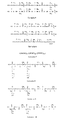
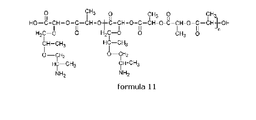
- This invention relates to bioresorbable, fully biocompatible thermoplastic, especially amorphous, which are aliphatic copolyesters or aliphatic poly(ester-co-carbonate) or poly(ester-co-amide), and poly(ester-co-carbonate-co-amide), or poly(amide-co-carbonate), which exhibit elastic properties at temperatures a little higher than the temperature of the human body in the range of 38° - 45°C, and at lower temperatures (in the range of 0° to 38°C) with a relatively high modulus of rigidity, of the controlled synthesis conditions of morphology and the shape memory properties, including long homoblocks and short mixed sequences derived from comonomers used, having the formula 7,
- n, k and m represent a natural number from 2 to 200
- the component of unit A is a group of formula -O-CH(R)-CO-, -O-(CHR) 4 ⁇ 6 -CO- and / or -O-(CHR) 4 ⁇ 6 -O-CO-, in which R is -(CH 2 ) a R 1 or -(CHR 2 -OCH 2 ) b -OH or -(CHR 2 -OCH 2 ) b -NH 2 , where a is an integer from 0 to 10, b is an integer from 1 to 1000, R 1 is -H or -OH or -NH 2 , R 2 is -CH 3 or -CH 2 CH 3 , and the component of unit B is a group of formula -O-CH 2 -CO-, and/or -O-(CH 2 ) 4 ⁇ 6 -CO-, and/or -O(CH 2 ) 4 ⁇ 6 -O-CO-,
- Biodegradable polymers especially aliphatic copolymers of lactide and / or glycolide and / or lactones such as ⁇ -caprolactone, ⁇ -valerolactone and /or aliphatic cyclic carbonates such as trimethylene carbonate, dimethyl trimethylene carbonate, are known and valuable biomaterials used for years in modern surgery in the form of temporary degradable implants ( N. Ashammakhi, P.Rokkanen, Absorbable polyglycolide devices in trauma and bone surgery, Biomaterials, 18, 1997, 3-9 . D. Eglin, M. Alina, Degradable polymeric materials for osteosynthesis: tutorial, European Cells and Materials, 16, 2008, 80-91 ., SL Bennett, CH. K.
- Presented application generally refers to the material described above, which is achieved by the subject invention, in addition to preservation of biocompatibility and biodegradability properties - very valuable from the point of their possible biomedical applications, having high elasticity at temperatures a little higher than the temperature of the human body and a relatively high stiffness at lower temperatures.
- the structure and composition of the polymer chains allows that the materials obtained according to the invention may be subject to large easily controlled deformations (reaching over 300% change in the output dimension) of the original shape to the designed temporary shape, and after activation of the temperature stimulus, which can be the temperature of human body, are capable of rapid return of the given shape to the shape of the original output.
- This type of ownership of the materials are known and called "shape memory".
- the first materials known to possess the property are metal melts with shape memory (SMAs), including titanium and nickel melts, copper / zinc / aluminum [ W. J. Buehler, JV Gilfrich, RC Wiley, Effect of Low-Temperature Phase Changes on the Mechanical Properties of Melts near Composition TiNi, J. Appl Phys 1963, 34, 1475-1477 ]. Also known are many polymers (SMPs) with this property. SMPs polymers, especially thermoplastics, in comparison with melts frying SMAs are easier to form, they may be subject to a greater deformation and the increase of temperature induced return to their initial shape is much faster and more "detailed”.
- SMAs shape memory
- SMPs polymers
- thermoplastic SMPs nodes may not be the chemical bonds of a covalent, it can be create only by strong intermolecular interactions of a physical (eg microfibre separation and the formation of crystalline domains, tangled chains), strong enough to avoid break in the process of shaping but low enough to maintain the plasticity of the polymer at high temperatures, and thus enable their processing by injection molding, pressing, blow molding or other known methods.
- a physical eg microfibre separation and the formation of crystalline domains, tangled chains
- thermoplastic SMPs are mainly characterized as linear block polymers whose chains contain well-defined flexible and stiff segments, which is reflected in the multi-phase morphology of the material [ M. Behl, A. Lendlain, Shape-memory polymers, Materials Today, 10, 2007, 20-28 ].
- the rigid segments of the chain form typical semi-crystalline phase, with a clearly defined melting point, and the flexible segments form part of the amorphous domains of defined low glass transition temperatures.
- the material can be molded to the desired shape of the original, by conventional thermoplastic processing.
- SMPs polymers used as bioresorbable implanting material surgical implants, drug carriers, porous scaffolds for cell culture
- bioresorbable implanting material surgical implants, drug carriers, porous scaffolds for cell culture
- the temperature of inducing the phenomenon of reverse shape of the SMPs from the temporary shape to the permanent programmed shape should be close to the temperature of the human body and cannot be greater than 45-50°C due to the destructive effect of elevated temperature on the living tissue.
- thermoplastic polymers synthesized SMPs currently does not meet all the conditions submitted above and more cannot be applied, as a material for molding medical implants [ Hong-Yan Jiang and Annette M. Schmidt, The Structural Variety of Shape-Memory Polymers for Shape-Memory Polymers and Multifunctional Composites, ed. J. Leng, Sh. Du, CRC Press Taylor & Francis Group, Boca Raton, London, New York, 2010 ].
- Biodegradable thermoplastic with shape memory that can be used biomedical are primarily polyurethanes [ Metcalfe, A., Desfaits, AC, Salazkin, I., Yahia, L., Sokolowski, WM, Raymond, J. (2003).
- biodegradable thermoplastics based on aliphatic polyesters, and polycarbonates.
- multiblock chain structure comprising separate segments of rigid and long flexible segments, capable of producing a shape memory effect.
- biodegradable copolymers remembering shape, based on the said monomers, in order to obtain the structure of a substantially microblocks are obtained in two stages - by synthesis macrodiols derived from cyclic diesters and lactones, hydroxyl-terminated (oligolactide, oligo( ⁇ -caprolactone), oligo-(lactide-co-glycolide)) which are then subjected to a condensation reaction with difunctional coupling compounds, such as: di-acid chlorides, phosgene or diisocyanates [ A.
- lactide units in the copolymer allows for the creation of the desired crystalline phase, forming a knot in the molecular structure of the material [ Min CC, WJ Cui, Bei JZ, and Wang SG, Polym. Adv. Technol., 2007, 18, 299-305 ] .
- Polymers which are obtained in this way unfortunately have a relatively low flexibility due to high participation of lactid semicrystalline phase, which greatly reduces the possibility of deformation of the material at the stage of the provisional shaping.
- Temperature of the return from temporary shape is also relatively high, often well above 45°C, which is associated with glass transition temperature of said copolymers and practically eliminates these copolymers from biological applications.
- Such materials are also characterized by a maximum stress at the time of return to the permanent shape of not more than 3.5 MPa [ Xi Li Lu, W.Cai, Z. Gao, W. Tang Jun . Polymer Bulletin 58, 381-391 (2007 )].
- copolymers containing a small proportion of the crystalline phase, of high biocompatibility such as obtained by the terpolymerization of L-lactide, glycolide and trimethylene carbonate. Shape memory effect was obtained in these terpolymers without creating a physical network which is built of crystalline domains [ Zini E., Scandola M., Dobrzynski P., Kasperczyk J., and M.
- Bioresorbable, fully biocompatible thermoplastics especially amorphous, which are aliphatic copolyesters or aliphatic poly(ester-co-carbonate) or poly(ester-co-amide), and poly(ester-co-carbonate-co-amide) or poly(amide-co-carbonate), which exhibit elastic properties at temperatures a little higher than the temperature of the human body in the range of 38 - 45°C, and at lower temperatures (in the range of 0° to 38°C) with a relatively high modulus of rigidity, of the controlled synthesis conditions of morphology and the shape memory properties, including long homoblocks and short mixed sequences derived from comonomers used, having the formula 7,
- n, k and m represent a natural number from 2 to 200
- the component of unit A is a group of formula -O-CH(R)-CO-, -O-(CHR) 4 ⁇ 6 -CO- and / or -O-(CHR) 4 ⁇ 6 -O-CO-, in which R is -(CH 2 ) a R 1 or -(CHR 2 -OCH 2 ) b -OH or -(CHR 2 -OCH 2 ) b -NH 2 , where a is an integer from 0 to 10, b is an integer from 1 to 1000, R 1 is -H or -OH or -NH 2 , R 2 is -CH 3 or -CH 2 CH 3 , and the component of unit B is a group of formula -O-CH 2 -CO-, and/or -O-(CH 2 ) 4 ⁇ 6 -CO-, and/or -O(CH 2 ) 4 ⁇ 6 -O-CO-.
- Method of preparation of bioresorbable polymeric materials with shape memory according to the invention lies in the fact that the copolymerization process is carried out, extending according to a known mechanism for ROP, monomers selected from the group consisting of lactides, in particular LL-lactide and / or DD-lactide and / or L, D-lactide and / or glycolide of general formula 1 and / or lactones of general formula 2, especially ⁇ -caprolactone, ⁇ -valerolactone and / or cyclic carbonates of the formula 3, preferably trimethylene carbonate and / or dimethyl trimethylene carbonate, in the presence of aliphatic oligoestrodiols previously obtained of formula 4 with an average molecular weight Mn from1 kDa to 10 kDa and / or previously obtained aliphatic oligo(ester-co-carbonate)diols of formula 5, having an average molecular weight Mn from 1kDa to 10 kDa, or /
- initiator co-decides to build a chain microstructure obtained copolymer or terpolymer.
- complexes of zirconium (IV) and / or titanium (IV) and / or iron (III) which in addition to initiating the polymerization, generate strong intermolecular transesterification phenomenon, occurring in parallel to the main chain propagation reaction of the copolymer or terpolymer, and carrying out the reaction in the melt or in solution an organic solvent or mixture of organic solvents, in a relatively low temperature (in the range of 60°C to 150°C, preferably at 110°C) was obtained containing a specific mileage long homoblocks and short mixed sequences derived from comonomers used, having the formula 7,
- n who represent a natural number from 2 to 200
- the component of unit A is a group of formula -O-CH(R)-CO-, -O-(CHR) 4 ⁇ 6 -CO- and / or -O-(CHR) 4 ⁇ 6 -O-CO-, in which R is -(CH 2 ) a R 1 or -(CHR 2 -OCH 2 ) b -OH or -(CHR 2 -OCH 2 ) b -NH 2 , where a is an integer from 0 to 10, b is an integer from 1 to 1000, R 1 is -H or -OH or -NH 2 , R 2 is -CH 3 or -CH 2 CH 3 , and the component of unit B is a group of formula -O-CH 2 -CO-, and/or -O-(CH 2 ) 4 ⁇ 6 -CO-, and/or -O(CH 2 ) 4 ⁇ 6 -O-CO-.
- the specificity of the trans-esterification reaction occurs involving intermolecular initiators of this group lies in the fact that their use is due to trans-esterification intermolecular course characterized by preferential attack of the active end of the growing particles of copolymer ester linkages and / or other molecules carbonate copolymer contained in the final segment blocks included in the chain of the molecule, and does not attack statistics.
- the result is a formation of a short sequence at the same time maintaining the composite formed in the first step of block structure reaction.
- Shape memory in obtained material is substantially associated with Contoured intermolecular interaction resulting from the presence of the intermolecular hydrogen bonds, and the specific structure of the chain, characterized by the presence of rigid segments connecting taken/busy elastic blocks.
- amorphous materials having high elasticity and very good parameters characterizing shape memory are possible in the present invention as a result of the preparation of copolymers or terpolymers with very special segment chain microstructure containing a long elastic blocks (an average length from 10 to 200 of monomer units) connected to the shorter segments rigid, constructed with a sequence of comonomer containing pendant methyl groups and / or ethyl and / or benzyl and / or ester derived from aliphatic carboxylic acid [formula 8].
- the polymerization process is carried out in the melt or solution by gradual.
- the synthesis of the polymerization is carried out in the melt or in solution in an organic solvent or mixture of organic solvents (preferably: in a solution of benzene and / or chlorobenzene and / or toluene and / or tetrahydrofuran, THF) at a temperature in the range from 0°C to 200°C (preferably in toluene solution at a temperature of 50°C, in the melt at a temperature of 110°C).
- an organic solvent or mixture of organic solvents preferably: in a solution of benzene and / or chlorobenzene and / or toluene and / or tetrahydrofuran, THF
- the reaction mixture consists of monomers such as cyclic lactones (preferably: ⁇ -caprolactone, ⁇ -valerolactone) and / or unsubstituted, cyclic carbonates (preferably: trimethylene carbonate) and / or derivatives of morpholine-2,5-dione (preferably: morpholino-2,5-dione, methyl morpholino-2,5-dione) and / or dicarboxylic acid anhydrides (preferably succinic acid anhydride, maleic acid anhydride).
- monomers such as cyclic lactones (preferably: ⁇ -caprolactone, ⁇ -valerolactone) and / or unsubstituted, cyclic carbonates (preferably: trimethylene carbonate) and / or derivatives of morpholine-2,5-dione (preferably: morpholino-2,5-dione, methyl morpholino-2,5-dione) and / or dicarboxylic acid anhydrides (
- the initiator or catalyst in the ongoing process is a metal complex compound, preferably zinc (II) monohydroxyacetylacetonate, zirconium (IV) acetylacetonate and / or is an organic compound belonging to the group of tertiary amines or N-heterocyclic carbenes (preferably DMAP 4-dimethylaminopyridine, 4-pyrrolidinopyridine PPY) or the process of this is without a catalyst or initiator.
- the reaction mixture should also contain water and / or anhydrous polyhydric alcohols and / or mixtures of thereof (preferably: 1,4-butanediol and / or 1,3-propanediol and / or pentaerythritol and / or glycerin) and / or aliphatic amines, diamines and triamines primary (preferably hexane-1,6-diamine, octane-1,8-diamine, 1,4-diaminobutane, tetramethylene-1,4-diamine, guanidine) and / or aliphatic diamine or a tri- or tetra- amine secondary (preferably N,N'-dimethylhex-1,6-diamine, N,N'-dimethyloctane-1,8-diamine, spermidine N-(3-aminopropyl) -1,4-butanediamine, spermine N,N
- amorphous copolymers or terpolymers strongly limits according to the invention by introducing the oligomer chains synthesized in the first phase of the reaction amide groups, as described above, using the cyclic derivatives of morpholine-2,5-dione in an amount of 3 mol%. to 25% mol. of the total content of the reaction mixture thus obtained and the use of an oligomeric product with 2-phase synthesis.
- Tendency to flow at the operating temperature, and thus temperature of the human body eventually obtained amorphous copolymers or terpolymers, in the present invention is limited by the synthesis of oligomers with a branched structure by using the above set of one stage of the method of polyhydric alcohols (preferably pentaerythritol and / or glycerol) and / or aliphatic amines, diamines and triamines of the primary (preferably hexane-1,6-diamine, octane-1,8-diamine, 1,4-diaminobutane, tetramethylene-1,4-diamine, guanidine), and / or aliphatic diamines or tri- or tetra- secondary amines (preferably N,N-dimethylhexan-1 6-diamine, N,N'-dimethylocta-1,8-diamine, spermidine, N-(3-aminpropyl)
- lactides are added (glycolide preferably, LL-lactide, L,D-lactide, DD-lactide) and / or lactones containing side groups (preferably 5,5-dimethyloxepan-2-one, 6-(benzyloxy)oxepan-2-one, benzyl(7-oxooxepan-3-yl)-acetonate) and / or cyclic carbonate containing side groups (preferably 5,5-dimethyl-1,3-dioxan-2-one, 5-(benzyloxy)-1,3-dioxan-2-one).
- the copolymerization initiator After melting or dissolution of the cyclic monomers to the reaction mixture is added the copolymerization initiator, and started second phase of synthesis, which is carried out at a temperature from 60°C to 200°C (preferably in the temperature range from 80°C to 120°C).
- the initiator of this phase of the reaction is used alkoxide, salts and complexes of zirconium (IV) and / or titanium (IV) (preferably zirconium (IV) acetylacetonate, anhydrous six chloride zirconium (IV), t-butoxy zirconium (IV), titanium acetylacetonate (IV)), which in addition to the effective capacity of the initiating ROP reaction, responsible for the creation of a high-molecular copolymer or terpolymer, cause the phenomenon of strong intermolecular transesterification, resulting in the formation of the chain structure containing strongly mixed and relatively short segments consisting of derivatives of 2-phase added substrates.
- zirconium (IV) and / or titanium (IV) preferably zirconium (IV) acetylacetonate, anhydrous six chloride zirconium (IV), t-butoxy zirconium (IV), titanium acetylacetonate (IV)
- transesterification reaction In carrying out the copolymerization in the moderate temperatures in the range from 50°C to 130°C, transesterification due to the presence of the said groups of initiators, runs specifically. In these conditions occurs the transesterification reaction or intermolecular transcarbonization, this reaction is largely redirected to the final ester and / or carbonates bonds of blocks present in the chain.
- Such intermolecular transesterification mechanism causes a relatively slow and small decrease in block length from the long oligomer molecules present in the reaction mixture, formed in parallel with a large number of short-chain segments consisting of mixed sequence, derived from the reaction medium entering the cyclic monomers.
- catalyst or initiator is not added, if used in the first stage initiators or catalysts such as zinc compounds (preferably monohydrate zinc (II) acetylacetonate) and / or compounds of zirconium (IV) (preferably zirconium (IV) acetylacetonate) or compounds of titanium (IV) (preferably butoxide titanium (IV)).
- first stage initiators or catalysts such as zinc compounds (preferably monohydrate zinc (II) acetylacetonate) and / or compounds of zirconium (IV) (preferably zirconium (IV) acetylacetonate) or compounds of titanium (IV) (preferably butoxide titanium (IV)).
- phase 1 and / or 2 cyclic monomers containing side groups low reactive, but which can be activated by a chemical reaction to the active hydroxyl and / or carboxylic groups the reaction is carried out to obtain activation of active hydroxyl and / or carboxylic groups in the copolymer or terpolymer chain after the end of the 2 phase of reaction and the separation and purification of the product by reaction with hydrogen in the presence of a platinum catalyst (preferably, a reaction of reduction benzyloxy and / or phenylacetate groups).
- a platinum catalyst preferably, a reaction of reduction benzyloxy and / or phenylacetate groups
- the presence of active hydroxyl and / or carboxylic groups in the chain of the copolymer or terpolymer increases the strength of intermolecular interactions, resulting in a decrease in the tendency to mainly flow of this material, an increase in mechanical strength and improvement of the parameters characterizing the shape memory properties, such as degree of return to the permanent form, the rate of return, whether the value of the stress released in time to reverse the phenomenon of permanent shape.
- thermoplastic especially amorphous, which are aliphatic copolyesters or aliphatic poly(ester-co-carbonate) or poly(ester-co-amide), and poly(ester-co-carbonate-co-amide), or poly(amide-co-carbonate), which exhibit elastic properties at temperatures a little higher than the temperature of the human body in the range of 38° - 45°C, and at lower temperatures (in the range of 0° to 38°C) with a relatively high modulus of rigidity, of the controlled synthesis conditions of morphology and the shape memory properties.
- the polymeric material obtained by the invention does not contain toxic impurities, because all substrates used in the synthesis and the obtained products are biocompatible.
- Thermoplastics obtained according to the invention, are programmed at synthesis stage properties, through specific selection of the composition of the substrate, selection of the type of initiator or catalyst used, selection of appropriate methods and conditions of the copolymerization. All of these factors shape the final sectional structure of synthesized chain of the copolymer or terpolymer, which is characterized by the presence of both long flexible monomer units and short rigid chain segments composed of mixed comonomer sequences.
- This structure allows to obtain a copolymer or terpolymer having a shape memory effect, regardless of the degree of crystallinity of the material intended to form temporary surgical implants, especially for use in minimally invasive surgery and / or as a material in the production of drug carriers for the controlled release and / or for the formation of three-dimensional substrates for the cultivation of cells and tissues that can respond to a thermal stimulus by controlled change of mechanical properties and shape.
- Process for the preparation of polymeric materials with shape memory which is the subject of the invention, in contrast to previously known methods for the preparation of such materials provides the resulting products, while maintaining the shape memory phenomenon, a high biocompatibility of the material, and full biocompatibility of products formed during the degradation of the material, and during the release of the support compounds in the process used for the synthesis.
- Material obtainable according to the invention exhibits complete biodegradability, relatively high modulus at temperatures below 38°C, thermoplasticity and good processing properties allow processing by injection molding, extrusion, pressing, ease of programming the temporary shape which involves the high plasticity of the material already at temperatures of 39 - 45°C and durability of strong intermolecular interactions forming physical "nodes" at temperature of run deformation.
- a polymeric material, characterized by a set of these properties is therefore especially valuable for biomedical applications.
- the end result of the invention are copolymers or terpolymers with sectional structure of the chain, comprising a flexible blocks of a size between 10 to 200 monomer units, joined with rigid shorter sequences [Formula 1].
- These blocks in the copolymer chain thanks to its flexibility, giving to the received materials the ability for easy of their processing, their controlled deformation during temporary shaping.
- reactants in the first stage of this method of synthesis it is possible to adjust the final flexibility and other thermo-mechanical parameters of derived polymeric materials.
- These sequences due to the chemical structure and presence of steric hindrance act as a rigid physical network nodes.
- a relatively low temperature in the range of 50°C to 200°C, preferably at a temperature of 100°C, causes the inhibition or serious limitation of the transesterification reaction in the construction of the final chains structure of obtained copolymers or terpolymers.
- the process is carried out in two stages.
- the initiator or catalyst in the ongoing process is a metal complex compound (preferably zinc (II) monohydroxyacetylacetonate, zirconium (IV) acetylacetonate) and / or an organic compound belonging to the group of tertiary amines or N-heterocyclic carbenes (preferably DMAP 4-dimethylaminopyridine, 4-pyrrolidinopyridine PPY), or the process is carried without catalyst or initiator.
- the reaction mixture should also contain water and / or aqueous polyhydric alcohols and / or mixtures thereof (preferably: 1,4-butanediol and / or 1,3-propanediol and / or pentaerythritol and / or glycerin) and / or aliphatic primary amines and diamines (preferably hexane-1,6-diamine, octane-1,8-diamine) and / or secondary aliphatic diamine (preferably N,N'-dimethylhexane-1,6-diamine, N,N'-dimethyloctane-1,8-diamine).
- water and / or aqueous polyhydric alcohols and / or mixtures thereof preferably: 1,4-butanediol and / or 1,3-propanediol and / or pentaerythritol and / or glycerin
- the method according to the invention starts with the second phase of the synthesis reaction by adding to the mixture of products obtained in the first stage of the monomers such as cyclic lactones (preferably: ⁇ -caprolactone, ⁇ -valerolactone) and / or glycolide and / or unsubstituted, cyclic carbonates (preferably: trimethylene carbonate) and / or cyclic derivatives of morpholine-2,5-dione (preferably: 3-methylmorpholine-2,5-dione, 6-methylmorpholine-2,5-dione).
- cyclic lactones preferably: ⁇ -caprolactone, ⁇ -valerolactone
- glycolide preferably: glycolide
- unsubstituted cyclic carbonates
- morpholine-2,5-dione preferably: trimethylene carbonate
- morpholine-2,5-dione preferably: 3-methylmorpholine-2,5-dione, 6-methylmorpholine-2,5-dione
- the copolymerization initiator After melting the cyclic monomer or dissolved in a solution, to the reaction mixture is added the copolymerization initiator, which starts the second phase of synthesis, which is carried out at a temperature from 60°C to 180 °C (preferably in the temperature range from 80°C to 120°C).
- an initiator of this phase of the reaction is used alkoxide, salts and complexes of zinc (II) (preferably, zinc (II) acetyacetonate monohydrate and anhydrous zinc (II) dichloride, phenylzinc (II) and / or ethylzinc (II), and / or ethoxy ethylzinc ( II).
- the initiator of this phase are used alkoxides, salts and complexes of zirconium (IV) and / or titanium (IV) (preferably, zirconium (IV) acetylacetonate, anhydrous zirconium (IV) chloride, t-butoxy zirconium (IV), titanium (IV) acetylacetonate, while keeping the reaction temperature to 140°C.
- zirconium (IV) acetylacetonate preferably, zirconium (IV) acetylacetonate, anhydrous zirconium (IV) chloride, t-butoxy zirconium (IV), titanium (IV) acetylacetonate, while keeping the reaction temperature to 140°C.
- Shape memory in obtained in this way materials is associated with the presence of crystalline domains, formed by the segregation of the rigid long chain fragments.
- Flexible amorphous phase which plasticizing the final copolymer or terpolymer formed in so obtained materials the sequences and microblocks formed by polymerization of the monomers added to the reaction mixture in the second stage of the synthesis.
- some part of these sequences also include groups derived from monomers containing side groups, applied in the first phase of the reaction, thus reducing the susceptibility of the final material to flow at temperatures close to the glass transition temperature of the resulting polymeric material.
- Bioresorbable material was obtained, showing the shape memory through a two-step reaction.
- a reactor with a capacity of 50 cm 3 , connected to a vacuum line and with a supply of dried argon mixture was introduced 10.2 g (0.1 mol) of trimethylene carbonate (TMC) with 0.23 g (2.5*10 -3 mol) of 1,4-butanediol and 0.01 g of monohydrate zinc (II) acetylacetonate.
- TMC trimethylene carbonate
- II monohydrate zinc
- Bioresorbable material was obtained, showing the shape memory through a two-step reaction.
- a reactor with a capacity of 50 cm 3 , connected to a vacuum line and with a supply of dried argon mixture was introduced 10.2 g (0.1 mol) of trimethylenecarbonate (TMC) with 0.18 g (1.5*10 -3 mol) of 1, 6-hexanediol monohydrate and 0.01 g of zinc (II) acetylacetonate.
- TMC trimethylenecarbonate
- II zinc
- the reactor contents were melted, and then degassed.
- the obtained melt was heated in a closed reactor under a blanket of argon for 3 hours at 120°C.
- oligo(trimethylenecarbonate) terminated with hydroxyl groups with a number average molecular weight of 8 000 g / mol, a glass transition temperature of -13°C.
- the product was used without further purification, as a substrate to carry out the second stage of the synthesis.
- Bioresorbable material was obtained, showing the shape memory through a two-step reaction.
- a reactor with a capacity of 50 cm 3 , connected to a vacuum line and with a dried argon inlet were introduced 8.16 g (0.08 mol) of trimethylene carbonate (TMC), 2.28 g (0.02 mol) ⁇ -caprolactone and 0.14 g (1.0*10 -3 mol) of pentaerythritol and 0.03 g of 20% sodium ethoxide ethylzinc (II) in tetrahydrofuran.
- TMC trimethylene carbonate
- II sodium ethoxide ethylzinc
- oligo(trimethylocarbonate) terminated with hydroxyl groups with a number average molecular weight of 11 000 g / mol, a glass transition temperature of -18°C.
- the product was used to carry out the second stage of the synthesis.
- Bioresorbable material was obtained, showing the shape memory through a one-step reaction.
- rectangular moulder was made with dimensions of 10 mm x 5 mm x 50 mm (permanent shape), and then at 42°C it was stretched and then rapidly cooling to room temperature, it was given a temporary shape with a length of 75 mm (50% elongation). After placing the temporary shaped moulder in a water bath at 44°C was observed automatic return to a shape permanent in time 29 s. After cooling to room temperature, degree of return to the permanent shape was 95%.
- Bioresorbable material was obtained, showing the shape memory through a two-step reaction.
- Step-1 obtaining macrodiols, oligo(butyl succinate).
- a reactor with a capacity of 250 cm 3 , connected to a vacuum line and with a dried argon inlet, stirrer, condenser, thermometer, and collecting the distillate mixture was introduced 25.1 g (0.29 mol) of 1,4-butanediol with 33.6 g (0.23 mol) dimethyl succinate and 0.1 g of tetra-n-butoxide titanium (IV).
- the reactor contents were degassed and heated in an oil bath. The reaction temperature rose to 150°C for 20 minutes. The temperature was then gradually raised to 10°C per minute to 200°C. Distilled methanol which was formed during the reaction. Subsequently the reaction was carried out under reduced pressure ( ⁇ 1.5 mm Hg) and under these conditions the reaction mixture was maintained for 2.5 hours.
- oligo(butyl succinate) having a number average molecular weight 1 000 g / mol, a glass transition temperature of -27°C.
- the product was used without further purification, as a substrate to carry out the second stage of the synthesis.
- Step-2 the synthesis of a terpolymer with a shape memory containing the crystalline phase
- rectangular moulder was made with dimensions of 10 mm x 5 mm x 50 mm (permanent shape), and then at 45°C it was stretched and then rapidly cooling to room temperature, it was given a temporary shape with a length of 100 mm (100% elongation). After placing the temporary shaped moulder in a water bath at 41°C was observed automatic return to a shape permanent in time 240 s. After cooling to room temperature, degree of return to the permanent shape was 80%.
- Bioresorbable material was obtained, showing the shape memory through a two-step reaction.
- a reactor with a capacity of 250 cm 3 , connected to a vacuum line and with a dried argon inlet, stirrer, condenser, thermometer, and collecting the distillate mixture was introduced 25.1 g (0.29 mol) of 1,4-butanediol with 33.6 g (0.23 mol) dimethyl succinate, 13.59 g (0.115 mol) of hexane-1,6-diamine and 0.1 g of tetra-n-butoxide titanium (IV).
- the reactor contents were degassed and heated in an oil bath. The reaction temperature rose to 150°C for 20 minutes. The temperature was then gradually raised to 10°C per minute to 200°C. Distilled methanol which was formed during the reaction. Subsequently the reaction was carried out under reduced pressure ( ⁇ 1.5 mm Hg) and under these conditions the reaction mixture was maintained for 2.5 hours.
- oligoesteramide number average molecular weight 1 000 g / mol, as determined by NMR analysis of the terminal groups and a molecular weight of 1150 g / mol, determined on the basis of number of -OH groups and / or -NH 2 .
- Glass transition temperature was set -35°C. The product was used without further purification, as a substrate to carry out the second stage of the synthesis.
- Step-2 to obtain a copolymer with shape memory, with a low flow of the temperature close to body temperature
- rectangular moulder was made with dimensions of 10 mm x 5 mm x 50 mm (permanent shape), and then at 45°C it was stretched and then rapidly cooling to room temperature, it was given a temporary shape with a length of 100 mm (100% elongation). After placing the temporary shaped moulder in a water bath at 40°C was observed automatic return to a shape permanent in time 200 s. After cooling to room temperature, degree of return to the permanent shape was 82%.
- Bioresorbable material was obtained, showing the shape memory through a two-step reaction.
- Step-1 to obtain a monomer, 5-benzyloxy-1,3-dioxan-2-one and its oligomerization to makrodiols
- a reactor with a capacity of 100 cm 3 is connected to a vacuum line and with a dry nitrogen inlet, and a stirrer were introduced a mixture of 12.74 g (0.07 mol) of 5-benzyloxy-1,3-propanediol, 23.7 ml (0.245 mol) of ethyl chloroformate and 265 ml of distilled tetrahydrofuran.
- the solution was stirred at 0°C under a nitrogen blanket for 15 minutes. At the time of 30 minutes was added dropwise 32.5 ml (0.23 mol) of triethylamine.
- the reactor contents were stirred at a temperature of 0°C to room temperature over 3 hours. The resulting precipitate was filtered off, the solvent was evaporated. The reaction yield is 67%.
- the residue was recrystallized from a process of THF / diethyl ether.
- the resulting 5-benzyloxy-1,3-dioxan-2-one in an amount of 20 g (0.1 m), and 0.2 g of 1,4-butanediol in a reactor provided with a capacity of 50 cm 3 is connected to a vacuum line and with a dry nitrogen inlet.
- the reaction vessel is placed in an oil bath heated to 140°C. After five minutes, from the melt of the monomer, initiator introduced - zinc (II) octoate (0.07 g 0.1 mol. solution in anhydrous THF). The reaction was carried out for 4 hours, and then the resulting mixture was cooled to room temperature within two hours.
- the product was purified by dissolving in methylene chloride and precipitated with cold methanol, and then dried under vacuum to constant weight.
- oligocarbonate a number average molecular weight determined by gel permeation chromatography GPC, equal to 4700 g /mol, from the observation of end groups by NMR equal to 8500 g / mol and based on the determination of the -OH groups of about 9000 g / mol.
- Step-2 Obtaining of shape memory polymer, with increased hydrophilicity and a low flow of body temperature
- the dried product was subjected to hydrogenation process, 20 g of polymer was dissolved in 150 ml of tetrahydrofuran, then was placed in a hydrogenation vessel, was added palladium catalyst - 3.3 g 10% Pd / C and 3.3 g Pd(OH) 2 / C. The content of the vessel was degassed and H 2 gas was passed through twice. The reaction mixture was stirred for 24 hours in a high pressure (4 bar). Subsequently the reaction mixture was filtered using celite adsorbent. The resulting precipitate was washed with 250 ml of THF, and then dried under vacuum to constant weight.
Landscapes
- Chemical & Material Sciences (AREA)
- Health & Medical Sciences (AREA)
- Chemical Kinetics & Catalysis (AREA)
- Medicinal Chemistry (AREA)
- Polymers & Plastics (AREA)
- Organic Chemistry (AREA)
- Transplantation (AREA)
- Oral & Maxillofacial Surgery (AREA)
- Dermatology (AREA)
- Epidemiology (AREA)
- Life Sciences & Earth Sciences (AREA)
- Animal Behavior & Ethology (AREA)
- General Health & Medical Sciences (AREA)
- Public Health (AREA)
- Veterinary Medicine (AREA)
- Polyesters Or Polycarbonates (AREA)
- Polyamides (AREA)
Applications Claiming Priority (1)
| Application Number | Priority Date | Filing Date | Title |
|---|---|---|---|
| PL398687A PL230303B1 (pl) | 2012-04-02 | 2012-04-02 | Sposób wytwarzania bioresorbowalnych i biokompatybilnych elastomerów termoplastycznych, wykazujących pamięć kształtu, do zastosowań biomedycznych |
Publications (2)
| Publication Number | Publication Date |
|---|---|
| EP2647656A2 true EP2647656A2 (de) | 2013-10-09 |
| EP2647656A3 EP2647656A3 (de) | 2017-02-22 |
Family
ID=47142945
Family Applications (1)
| Application Number | Title | Priority Date | Filing Date |
|---|---|---|---|
| EP12189833.2A Withdrawn EP2647656A3 (de) | 2012-04-02 | 2012-10-24 | Bioresorbierbares und biokompatibles thermoplastisches Elastomer mit einem Formgedächtnis, insbesondere für Biomedizinische Anwendungen, und Verfahren zu deren Herstellung |
Country Status (2)
| Country | Link |
|---|---|
| EP (1) | EP2647656A3 (de) |
| PL (1) | PL230303B1 (de) |
Cited By (3)
| Publication number | Priority date | Publication date | Assignee | Title |
|---|---|---|---|---|
| CN106589336A (zh) * | 2017-01-17 | 2017-04-26 | 复旦大学 | 一种完全生物可降解聚酯及其制备方法 |
| CN112625292A (zh) * | 2020-12-17 | 2021-04-09 | 青岛博远高分子材料研究院有限公司 | 一种可降解形状记忆高分子医用夹板的制备方法 |
| WO2026026652A1 (zh) * | 2024-07-31 | 2026-02-05 | 爱美客技术发展股份有限公司 | 一种生物相容性聚酰胺材料及其制备方法和应用 |
Families Citing this family (1)
| Publication number | Priority date | Publication date | Assignee | Title |
|---|---|---|---|---|
| CN113072692B (zh) * | 2021-03-09 | 2022-09-06 | 浙江恒逸石化有限公司 | 一种用于聚酯合成的高分散性钛系催化剂制备方法 |
Citations (1)
| Publication number | Priority date | Publication date | Assignee | Title |
|---|---|---|---|---|
| US5431679A (en) | 1994-03-10 | 1995-07-11 | United States Surgical Corporation | Absorbable block copolymers and surgical articles fabricated therefrom |
Family Cites Families (6)
| Publication number | Priority date | Publication date | Assignee | Title |
|---|---|---|---|---|
| US4429080A (en) * | 1982-07-01 | 1984-01-31 | American Cyanamid Company | Synthetic copolymer surgical articles and method of manufacturing the same |
| US5322925A (en) * | 1992-10-30 | 1994-06-21 | United States Surgical Corporation | Absorbable block copolymers and surgical articles made therefrom |
| DE19641335A1 (de) * | 1996-10-08 | 1998-04-09 | Inst Textil & Faserforschung | Triblockterpolymer, seine Verwendung für chirurgisches Nahtmaterial und Verfahren zur Herstellung |
| DE19641334A1 (de) * | 1996-10-08 | 1998-04-09 | Inst Textil & Faserforschung | Triblockterpolymer, seine Verwendung für medizinische Produkte und Verfahren zur Herstellung |
| US6255408B1 (en) * | 1998-11-06 | 2001-07-03 | Poly-Med, Inc. | Copolyesters with minimized hydrolytic instability and crystalline absorbable copolymers thereof |
| DE102008012620A1 (de) * | 2008-02-28 | 2009-09-03 | Deutsche Institute Für Textil- Und Faserforschung Denkendorf | Resorbierbares Blockpolymer, Verfahren zu seiner Herstellung und Verwendung |
-
2012
- 2012-04-02 PL PL398687A patent/PL230303B1/pl unknown
- 2012-10-24 EP EP12189833.2A patent/EP2647656A3/de not_active Withdrawn
Patent Citations (1)
| Publication number | Priority date | Publication date | Assignee | Title |
|---|---|---|---|---|
| US5431679A (en) | 1994-03-10 | 1995-07-11 | United States Surgical Corporation | Absorbable block copolymers and surgical articles fabricated therefrom |
Non-Patent Citations (15)
| Title |
|---|
| A. LENDLEIN; S. KELCH: "Shape-memory polymers", ANGEW. CHEM. INT ED., vol. 41, 2002, pages 2034 - 57 |
| CH. MIN; W. CUI; J. BEI; SH. WANG: "Biodegradable shape-memory polymer-polylactide-co-poly (glycolide-co-caprolactone) Multiblock copolymer", POLYM. ADV. TECHN., vol. 16, 2005, pages 608 - 15, XP001239616, DOI: doi:10.1002/pat.624 |
| D. EGLIN; M. ALINA: "Degradable polymeric materials for osteosynthesis: Tutorial", EUROPEAN CELLS AND MATERIALS, vol. 16, 2008, pages 80 - 91 |
| HAYASHI, S.: "Properties and applications of polyurethane shape memory polymer series", INT PROG. URETHANES, vol. 6, 1993, pages 90 - 115 |
| HONG-YAN JIANG; ANNETTE M. SCHMIDT: "The Structural Variety of Shape-Memory Polymers for Shape-Memory Polymers and Multifunctional Composites", 2010, CRC PRESS TAYLOR & FRANCIS GROUP |
| LENDLEIN, A.; KELCH, S., ANGEW.CHEM. INT ED., vol. 41, no. 12, 2002, pages 2034 |
| LS NAIR; CT LAURENCIN: "Biodegradable polymers as Biomaterials", PROG. POLYM. SCI., vol. 32, 2007, pages 762 - 798, XP022188822, DOI: doi:10.1016/j.progpolymsci.2007.05.017 |
| M. BEHL: "A. Lendlain, Shape-memory polymers", MATERIALS TODAY, vol. 10, 2007, pages 20 - 28 |
| METCALFE, A.; DESFAITS, AC; SALAZKIN, I.; YAHIA, L.; SOKOLOWSKI, WM; RAYMOND, J.: "Cold hibernated elastic memory foams for endovascular Interventions", BIOMATERIALS, vol. 24, 2003, pages 491 - 497, XP004390669, DOI: doi:10.1016/S0142-9612(02)00362-9 |
| MIN CC; WJ CUI; BEI JZ; WANG SG, POLYM. ADV. TECHNOL., vol. 18, 2007, pages 299 - 305 |
| N. ASHAMMAKHI; P.ROKKANEN: "Absorbable polyglycolide devices in trauma and bone surgery", BIOMATERIALS, vol. 18, 1997, pages 3 - 9, XP000682597, DOI: doi:10.1016/S0142-9612(96)00107-X |
| S. MUKHERJEE; C. GUALANDI; ML FOCARETE; R. RAVICHANDRAN; JR VENUGOPAL; M. RAGHUNATH; S. RAMAKRISHNA, ELASTOMERIC SCAFFOLDS OF ELECTROSPUN POLY (L-LACTIDE-CO-TRIMETHYLENE CARBONATE) FOR MYOCARDIAL TISSUE ENGINEERING, vol. 22, 2001, pages 1689 - 1699 |
| W. J. BUEHLER; JV GILFRICH; RC WILEY: "Effect of Low-Temperature Phase Changes on the Mechanical Properties of Melts near Composition TiNi", J. APPL PHYS, vol. 34, 1963, pages 1475 - 1477 |
| XI LI LU; W.CAI; Z. GAO; W. TANG, POLYMER BULLETIN, vol. 58, 2007, pages 381 - 391 |
| ZINI E.; SCANDOLA M.; DOBRZYNSKI P.; KASPERCZYK J.; M. BERO, BIOMACROMOLECULES, vol. 8, 2007, pages 3661 - 3667 |
Cited By (4)
| Publication number | Priority date | Publication date | Assignee | Title |
|---|---|---|---|---|
| CN106589336A (zh) * | 2017-01-17 | 2017-04-26 | 复旦大学 | 一种完全生物可降解聚酯及其制备方法 |
| CN106589336B (zh) * | 2017-01-17 | 2021-01-26 | 复旦大学 | 一种完全生物可降解聚酯及其制备方法 |
| CN112625292A (zh) * | 2020-12-17 | 2021-04-09 | 青岛博远高分子材料研究院有限公司 | 一种可降解形状记忆高分子医用夹板的制备方法 |
| WO2026026652A1 (zh) * | 2024-07-31 | 2026-02-05 | 爱美客技术发展股份有限公司 | 一种生物相容性聚酰胺材料及其制备方法和应用 |
Also Published As
| Publication number | Publication date |
|---|---|
| PL230303B1 (pl) | 2018-10-31 |
| EP2647656A3 (de) | 2017-02-22 |
| PL398687A1 (pl) | 2013-10-14 |
Similar Documents
| Publication | Publication Date | Title |
|---|---|---|
| US6770717B2 (en) | Sequentially ordered biodegradable lactide (glycolide or lactide/glycolide)ε-caprolactone multi-block copolymer and process for the preparation thereof | |
| US8674033B2 (en) | Biodegradable phase separated segmented multi block co-polymers | |
| EP1093483B1 (de) | Biomedizinisches polyurethan, seine herstellung und verwendung | |
| Tian et al. | Acid-triggered, degradable and high strength-toughness copolyesters: Comprehensive experimental and theoretical study | |
| US20240084071A1 (en) | Polymer blends | |
| PL230303B1 (pl) | Sposób wytwarzania bioresorbowalnych i biokompatybilnych elastomerów termoplastycznych, wykazujących pamięć kształtu, do zastosowań biomedycznych | |
| CN101450989B (zh) | 一种原位合成聚羟基脂肪酸酯嵌段共聚物的方法 | |
| CN105073025B (zh) | 由具有两个或更多个羧酸基团的单醇和二醇聚合引发剂制备的聚内酯聚合物 | |
| JP2008222768A (ja) | 分岐型生分解性ポリエステル及びその製造方法 | |
| WO2007047244A2 (en) | Functionalized amino acids and absorbable polymers therefrom | |
| Super et al. | Incorporation of salicylates into poly (L-lactide) | |
| JP5258189B2 (ja) | 柔軟性生分解性ポリマー | |
| CN104610533B (zh) | 基于聚乳酸的可降解聚酯及其制备方法 | |
| JP2024541301A (ja) | トリブロック共重合体、その製造方法およびその使用 | |
| KR101394428B1 (ko) | 형상 기억 특성을 가지는 다중블록 공중합체 | |
| JP2022077948A (ja) | ポリマー組成物 | |
| Lipik et al. | Synthesis of biodegradable thermoplastic elastomers (BTPE) based on epsilon-caprolactone | |
| Stankus et al. | Elastomers, biodegradable | |
| Başalp | Macromolecular design of hydroxyl functional linear and star-shaped L-lactide and ε-caprolactone biodegradable polyesters utilizing biosafe catalysts for biomedical applications | |
| PL235484B1 (pl) | Sposób wytwarzania bioresorbowalnych materiałów polimerowych o kontrolowanym stopniu usieciowania do zastosowań medycznych |
Legal Events
| Date | Code | Title | Description |
|---|---|---|---|
| PUAI | Public reference made under article 153(3) epc to a published international application that has entered the european phase |
Free format text: ORIGINAL CODE: 0009012 |
|
| AK | Designated contracting states |
Kind code of ref document: A2 Designated state(s): AL AT BE BG CH CY CZ DE DK EE ES FI FR GB GR HR HU IE IS IT LI LT LU LV MC MK MT NL NO PL PT RO RS SE SI SK SM TR |
|
| AX | Request for extension of the european patent |
Extension state: BA ME |
|
| 18D | Application deemed to be withdrawn |
Effective date: 20150501 |
|
| D18D | Application deemed to be withdrawn (deleted) | ||
| PUAL | Search report despatched |
Free format text: ORIGINAL CODE: 0009013 |
|
| AK | Designated contracting states |
Kind code of ref document: A3 Designated state(s): AL AT BE BG CH CY CZ DE DK EE ES FI FR GB GR HR HU IE IS IT LI LT LU LV MC MK MT NL NO PL PT RO RS SE SI SK SM TR |
|
| AX | Request for extension of the european patent |
Extension state: BA ME |
|
| RIC1 | Information provided on ipc code assigned before grant |
Ipc: C08G 69/44 20060101ALI20170113BHEP Ipc: A61L 27/18 20060101ALI20170113BHEP Ipc: C08G 63/664 20060101ALI20170113BHEP Ipc: C08G 63/08 20060101AFI20170113BHEP Ipc: C08G 63/60 20060101ALI20170113BHEP Ipc: C08G 63/64 20060101ALI20170113BHEP |
|
| 17P | Request for examination filed |
Effective date: 20170822 |
|
| RBV | Designated contracting states (corrected) |
Designated state(s): AL AT BE BG CH CY CZ DE DK EE ES FI FR GB GR HR HU IE IS IT LI LT LU LV MC MK MT NL NO PL PT RO RS SE SI SK SM TR |
|
| 17Q | First examination report despatched |
Effective date: 20190806 |
|
| 17Q | First examination report despatched |
Effective date: 20200127 |
|
| STAA | Information on the status of an ep patent application or granted ep patent |
Free format text: STATUS: THE APPLICATION IS DEEMED TO BE WITHDRAWN |
|
| R18D | Application deemed to be withdrawn (corrected) |
Effective date: 20200307 |