EP2650194A2 - Chassis für eine Straßenbaumaschine - Google Patents
Chassis für eine Straßenbaumaschine Download PDFInfo
- Publication number
- EP2650194A2 EP2650194A2 EP13001823.7A EP13001823A EP2650194A2 EP 2650194 A2 EP2650194 A2 EP 2650194A2 EP 13001823 A EP13001823 A EP 13001823A EP 2650194 A2 EP2650194 A2 EP 2650194A2
- Authority
- EP
- European Patent Office
- Prior art keywords
- chassis
- chassis according
- door
- road construction
- construction machine
- Prior art date
- Legal status (The legal status is an assumption and is not a legal conclusion. Google has not performed a legal analysis and makes no representation as to the accuracy of the status listed.)
- Granted
Links
Images


Classifications
-
- E—FIXED CONSTRUCTIONS
- E01—CONSTRUCTION OF ROADS, RAILWAYS, OR BRIDGES
- E01C—CONSTRUCTION OF, OR SURFACES FOR, ROADS, SPORTS GROUNDS, OR THE LIKE; MACHINES OR AUXILIARY TOOLS FOR CONSTRUCTION OR REPAIR
- E01C23/00—Auxiliary devices or arrangements for constructing, repairing, reconditioning, or taking-up road or like surfaces
-
- B—PERFORMING OPERATIONS; TRANSPORTING
- B62—LAND VEHICLES FOR TRAVELLING OTHERWISE THAN ON RAILS
- B62D—MOTOR VEHICLES; TRAILERS
- B62D21/00—Understructures, i.e. chassis frame on which a vehicle body may be mounted
- B62D21/18—Understructures, i.e. chassis frame on which a vehicle body may be mounted characterised by the vehicle type and not provided for in groups B62D21/02 - B62D21/17
- B62D21/186—Understructures, i.e. chassis frame on which a vehicle body may be mounted characterised by the vehicle type and not provided for in groups B62D21/02 - B62D21/17 for building site vehicles or multi-purpose tractors
-
- B—PERFORMING OPERATIONS; TRANSPORTING
- B62—LAND VEHICLES FOR TRAVELLING OTHERWISE THAN ON RAILS
- B62D—MOTOR VEHICLES; TRAILERS
- B62D25/00—Superstructure or monocoque structure sub-units; Parts or details thereof not otherwise provided for
- B62D25/08—Front or rear portions
- B62D25/10—Bonnets or lids, e.g. for trucks, tractors, busses, work vehicles
Definitions
- the present invention relates to a chassis for a road construction machine with the technical features of claim 1.
- a chassis for a road construction machine consists of longitudinal and transverse spars, which are welded together to ensure a stable construction of the road construction machine.
- the transverse and longitudinal beams are continuously straight.
- the panels mounted on the chassis form a bonnet.
- the hood consists of side panels, which are fixed firmly along continuous longitudinal beams. The problem with known hoods that a trapped therein drive is difficult to access, which in particular repair work are difficult to carry out.
- trim structures which are externally mounted on the continuous longitudinal and transverse bars of the chassis take up much space.
- the object of the invention is to improve a chassis for a road construction machine by means of simple, constructive technical features in such a way that it enables a better accessibility of an engine compartment.
- the chassis of the invention enables a reduced size of the road construction machine.
- the present invention relates to a chassis for a road construction machine, comprising at least one first longitudinal spar, the at least partially laterally runs along an engine room of the road construction machine.
- the longitudinal spar comprises a step which divides the longitudinal spar into an outer longitudinal spar portion and into an inner longitudinal spar portion, wherein the inner longitudinal spar portion forms a receiving area through the step, in which a first cladding element is receivable.
- the chassis according to the invention can couple one or more cladding elements to itself.
- the recording area created by the step is particularly well suited, in which a cladding element can be attached well, without using additional fastening devices, as was customary in the past.
- chassis according to the invention provides improved accessibility to an engine compartment, wherein the engine compartment is easily accessible, in particular via the receiving area.
- a panel can be integrated in the structure of the chassis.
- chassis according to the invention enables a more compact overall structure of a road construction machine, it offers a very stable construction, so that it can be used well for all road construction machine types.
- an outer side of the inner longitudinal beam portion is offset by the step relative to an outer side of the outer longitudinal beam portion toward the engine room of the road construction machine. This makes it possible to attach the first trim element in a space-saving manner and in an aesthetic manner on the outside of the inner longitudinal beam section.
- the step comprises an inclined shoulder between the outer and the inner longitudinal spar portion.
- the inclined shoulder makes it possible for stresses to be distributed uniformly over the inner and outer longitudinal spar sections.
- An extremely stable construction of the chassis is especially present when the step is formed integrally with the outer and the inner longitudinal spar portion.
- a one-piece design of the stage with the inner and the outer longitudinal spar portion can be prepared for example by a bending process.
- the outer and inner longitudinal beam portions are preferably welded together by means of a lap joint to form the step.
- the stage can be produced in a particularly simple manner and inexpensively.
- first cladding element is releasably attached to the chassis. This makes it possible to easily remove the first panel element from the chassis, for example, to get into the engine compartment.
- the first cladding element is screwed directly to the chassis.
- the first cladding element can be fastened to the chassis in a particularly secure and fast manner and removed therefrom.
- a bolted connection allows the first trim member to be repeatedly removed from the chassis or attached to the chassis.
- the first cladding element in the receiving region of the inner longitudinal beam portion is flush receivable relative to the outer longitudinal spar portion.
- the first cladding element can be integrated particularly aesthetically in the chassis of the road construction machine.
- this makes it possible to fasten the first cladding element particularly stably to the chassis. Also, such installation of the first trim element into the chassis allows it to be secured securely to the chassis without significant wear.
- the first cladding element has at least one ventilation opening. Preferably, these are arranged on top of each other elongated ventilation openings. Through this, a particularly effective transport of the waste heat of the drive and an effective air intake of the radiator is possible.
- the first cladding element is a cladding door.
- the cowl door makes the engine compartment particularly accessible, for example for maintenance work on the drive. This makes it possible to easily penetrate from the side of the road construction machine in the engine compartment through the fairing door.
- the trim door is pivotally mounted according to an advantageous embodiment of the chassis.
- the fairing door provides access to the engine compartment without having to remove it from the chassis.
- the trim door is biased against the inner longitudinal spar portion, in particular against an outwardly directed side of the inner longitudinal spar portion, durable. This makes it possible to stably hold the trim door against the chassis, resulting in no unwanted noise through the trim door.
- the trim door is movable by a gas spring between an open and a closed position.
- the gas spring By the gas spring, the trim door can also be kept very stable in the open and in the closed position.
- the trim door In order to prevent the trim door from unintentionally moving from a position adjacent to the chassis to an open position, provision may be made for the trim door to be lockable on the chassis.
- a second cladding element is attached to the outer longitudinal beam section.
- the second trim member may be pivoted from a closed to an open position to provide access to the engine compartment without removing it from the chassis.
- the invention also relates to a road construction machine with a chassis of the type described above.
- the road construction machine is a paver or a feeder vehicle.
- the chassis according to the invention has been found to be advantageous in order to provide an operator, for example, for maintenance, an improved access to the engine compartment. It could also come with the paver or freight vehicles with the chassis according to the invention to a reduced number of components installed. As a result, it has been found that the manufacturing costs and the assembly costs can be reduced.
- FIG. 1 shows a side view of the chassis 1 according to the invention, which is arranged on a road construction machine 2.
- the chassis 1 according to the invention comprises a longitudinal spar 3, which is mounted substantially horizontally.
- the longitudinal spar 3 comprises an outer longitudinal spar portion 4 and an inner longitudinal spar portion 5.
- a step 6 is provided between the outer longitudinal spar portion 4 and the inner longitudinal spar portion 5.
- an outwardly directed side of the inner longitudinal beam portion 5 is offset inwardly relative to an outwardly directed side of the outer longitudinal beam portion 4 in an engine compartment 7 of the road construction machine 2.
- a drive 8 is arranged in the engine compartment 7 of the road construction machine 2.
- the longitudinal spar 3 forms a receiving area 9 along the inner longitudinal spar portion 5.
- a trim door 10 can be accommodated.
- the cowling door 10 in an open position in which it provides direct access to the engine compartment 7 arranged in the drive 8.
- the trim door 10 shown in phantom when it is arranged in a closed position relative to the chassis 1.
- the trim door 10 is arranged in the receiving area 9 of the chassis 1.
- the trim door 10 is attached to the chassis 1 as a first trim element 11.
- the shows FIG. 1 a second trim element 12, which is attached to the outer longitudinal spar portion 4 of the longitudinal spar 3.
- the second cladding element 12 is fastened by a first bearing 13 and a second bearing 14 to the outer longitudinal beam section 4.
- the second cladding element 12 is attached to the outer longitudinal beam section 4 such that it does not cover it.
- the FIG. 1 also shows a lateral mounting bracket 15 to which a screed 16 is attached.
- FIG. 2 shows a side view of the chassis 1 according to the invention, which is used for the road construction machine 2.
- the trim door 10 according to the FIG. 2 is the trim door 10 in a closed position. In the closed position, the covering door 10 is arranged in the receiving area 9 formed by the step 6.
- the trim door 10 comprises in the FIG. 2 a plurality of elongate ventilation openings 17 arranged one above the other, which are provided to ensure sufficient cooling of the drive 8 arranged in the engine compartment 7.
- the trim door 10 is secured to the chassis 1 by third and fourth bearings 18, 19.
- each of the bearings 18, 19 may be a hinge.
- the trim door 10 is fastened by the third and the fourth bearing 18, 19 on a front wall 20 of the chassis 1 oriented vertically to the longitudinal spar 3.
- the trim door 10 is in the receiving area 8 against the inner longitudinal spar portion 5 of the longitudinal spar 3 by means of a gas spring 28 (see FIG. 3 ).
- the FIG. 2 also shows a latch 21 provided on the trim door 10. With the lock 21, the trim door 10 can be locked in the receiving area 9, when the trim door 10 is in the receiving area 9 in the closed position.
- FIG. 3 is a plan view of the chassis 1 according to the invention to see. Relative to the chassis 1, the trim door 10 is in the open position. When the trim door 10 is in the open position, the engine compartment 7 is easily accessible from the outside.
- a gas spring 28 is attached between the inner Llvesholmlabites 5 and the cowling door 10.
- the gas spring 28 keeps the cowling door 10 biased in the open position. Also, the gas spring 28 allows the cowling door 10 in a biased manner in the closed position FIG. 4 to keep.
- the step 6 comprises a first step portion 22 which is vertically aligned relative to the outer side 26 of the outer longitudinal beam portion 4 and relative to the inwardly offset outer side 27 of the inner longitudinal beam portion 5.
- the first step portion 22 is provided to receive an outer edge 23 of the trim door 10.
- FIG. 3 shows FIG. 3 a second step portion 24 that slopes relative to an inner side of the outer longitudinal spar portion 4 and relative to an inner side of the inner longitudinal spar portion 5 that is inwardly offset.
- FIG. 4 1 is a plan view of the chassis 1 according to the invention, in which the trim door 10 is in the closed position relative to the chassis 1. In the closed position, the covering door 10 is arranged in the receiving region 9 of the inner longitudinal beam section 5. In addition, the outer edge 23 of the trim door 10 is in the first step portion 22 of the stage 6th
- an outer side 25 of the trim door 10 is flush relative to an outer side 26 of the outer longitudinal spar portion 4. This makes it possible to arrange the trim door 10 in a particularly aesthetic manner on the chassis 1 of the invention.
- the first cladding element 11 which according to the FIGS. 1 to 4 is shown as fairing door 10, in the structure of the invention Chassis are integrated.
- the invention makes it possible to use the chassis 1 itself as a load-bearing construction for cladding elements.
- the chassis according to the invention can be used on all road construction machines. Moreover, it is quite conceivable that the chassis according to the invention also advantageous on agricultural machinery and transport vehicles, such as trucks, is used.
Landscapes
- Engineering & Computer Science (AREA)
- Chemical & Material Sciences (AREA)
- Combustion & Propulsion (AREA)
- Transportation (AREA)
- Mechanical Engineering (AREA)
- Architecture (AREA)
- Structural Engineering (AREA)
- Civil Engineering (AREA)
- Body Structure For Vehicles (AREA)
- Road Paving Machines (AREA)
- Component Parts Of Construction Machinery (AREA)
Abstract
Description
- Die vorliegende Erfindung betrifft ein Chassis für eine Straßenbaumaschine mit den technischen Merkmalen des Anspruchs 1.
- Herkömmlicherweise besteht ein Chassis für eine Straßenbaumaschine aus Längs- und Querholmen, die miteinander verschweißt sind, um der Straßenbaumaschine einen stabilen Aufbau zu gewährleisten. Dabei sind in der Praxis die Quer- und Längsholme durchgehend gerade ausgebildet.
- Bekannt ist auch, dass entlang der Außenseiten der Quer- und Längsholme Seitenverkleidungen am Chassis befestigt sind. Die Seitenverkleidungen sind mit geeigneten Schraub- bzw. Schweißverbindungen auf den Längs- oder Querholmen des Chassis befestigt.
- Insbesondere im Bereich des Antriebs bilden die auf dem Chassis angebrachten Verkleidungen eine Motorhaube. Bekannt ist, dass die Motorhaube aus seitlichen Verkleidungen besteht, welche fest entlang durchgehender Längsholme befestigt sind. Problematisch ist bei bekannten Motorhauben, dass ein darin eingeschlossener Antrieb nur schwer zugänglich ist, wodurch insbesondere Instandsetzungsarbeiten schwer durchführbar sind.
- Außerdem nehmen die Verkleidungskonstruktionen, die außen auf den durchgehenden Längs- und Querholmen des Chassis angebracht sind viel Platz in Anspruch.
- Folglich liegt der Erfindung die Aufgabe zugrunde, ein Chassis für eine Straßenbaumaschine mittels einfacher, konstruktiver technischer Merkmale dahingehend zu verbessern, dass es eine bessere Zugänglichkeit eines Motorraums ermöglicht. Darüber hinaus wird angestrebt, dass das Chassis der Erfindung eine verringerte Baugröße der Straßenbaumaschine ermöglicht.
- Diese Aufgabe wird gelöst durch die technischen Merkmale des Anspruchs 1. Vorteilhafte Weiterbildungen der Erfindung lassen sich durch die technischen Merkmale der Unteransprüche erzielen.
- Die vorliegende Erfindung bezieht sich auf ein Chassis für eine Straßenbaumaschine, umfassend mindestens einen ersten Längsholm, der zumindest abschnittsweise seitlich entlang eines Motorraums der Straßenbaumaschine verläuft. Erfindungsgemäß umfasst der Längsholm eine Stufe, die den Längsholm in einen äußeren Längsholmabschnitt und in einen inneren Längsholmabschnitt unterteilt, wobei der innere Längsholmabschnitt durch die Stufe einen Aufnahmebereich ausbildet, in dem ein erstes Verkleidungselement aufnehmbar ist.
- Das erfindungsgemäße Chassis kann ein oder mehrere Verkleidungselemente an sich koppeln. Dazu eignet sich besonders gut der durch die Stufe geschaffene Aufnahmebereich, in dem sich ein Verkleidungselement gut anbringen lässt, ohne dabei zusätzliche Befestigungsvorrichtungen zu verwenden, wie es bisher üblich war.
- Außerdem schafft das erfindungsgemäße Chassis eine verbesserte Zugänglichkeit zu einem Motorraum, wobei der Motorraum insbesondere über den Aufnahmebereich gut erreichbar ist.
- Durch die Erfindung kann eine Verkleidung im Aufbau des Chassis integriert werden. Ebenso ist es durch die Erfindung möglich, auf gewichtige Befestigungsvorrichtungen zu verzichten, weil sich Verkleidungselemente direkt am Chassis befestigen lassen.
- Ferner wird durch eine Minimierung der Befestigungsvorrichtungen für die Verkleidungen ein vergrößerter Einbauraum für die Straßenbaumaschine geschaffen.
- Obwohl das erfindungsgemäße Chassis einen insgesamt kompakteren Aufbau einer Straßenbaumaschine ermöglicht, bietet es einen sehr stabilen Aufbau, sodass es für sämtliche Straßenbaumaschinentypen gut einsetzbar ist.
- Vorzugsweise ist eine Außenseite des inneren Längsholmabschnitts durch die Stufe relativ zu einer Außenseite des äußeren Längsholmabschnitts hin zum Motorraum der Straßenbaumaschine versetzt. Dadurch ist es möglich, das erste Verkleidungselement auf platzsparende Art sowie auf ästhetische Weise auf der Außenseite des inneren Längsholmabschnitts zu befestigen.
- Gemäß einer weiteren Ausführungsform der Erfindung umfasst die Stufe einen schrägen Absatz zwischen dem äußeren und dem inneren Längsholmabschnitt. Dadurch ist es möglich, im Bereich der Stufe Spannungen zu vermeiden, die sich negativ auf die Festigkeit des Chassis auswirken. Vielmehr ermöglicht der schräge Absatz, dass sich Spannungen gleichmäßig über den inneren und äußeren Längsholmabschnitt verteilen lassen.
- Eine äußerst stabile Konstruktion des Chassis liegt vor allem dann vor, wenn die Stufe einteilig mit dem äußeren und dem inneren Längsholmabschnitt ausgebildet ist. Eine einteilige Ausbildung der Stufe mit dem inneren und dem äußeren Längsholmabschnitt kann beispielsweise durch einen Biegeprozess hergestellt werden.
- Alternativ sind der äußere und der innere Längsholmabschnitt vorzugsweise mittels eines Überlappungsstoßes miteinander verschweißt, um die Stufe auszubilden. Dadurch kann die Stufe auf besonders einfache Art und Weise sowie kostengünstig hergestellt werden.
- Vorteilhaft ist es auch, wenn das erste Verkleidungselement lösbar am Chassis befestigt ist. Dadurch ist es möglich, das erste Verkleidungselement problemlos vom Chassis abzunehmen, um beispielsweise in den Motorraum zu gelangen.
- Gemäß einer weiteren Ausführungsform der Erfindung ist vorgesehen, dass das erste Verkleidungselement direkt am Chassis verschraubbar ist. Mittels einer Schraubenverbindung lässt sich das erste Verkleidungselement besonders sicher und schnell am Chassis befestigen sowie von diesem entfernen. Außerdem ermöglicht eine Schraubenverbindung, dass das erste Verkleidungselement wiederholt vom Chassis abgenommen bzw. am Chassis angebracht werden kann.
- Vorzugsweise ist das erste Verkleidungselement im Aufnahmebereich des inneren Längsholmabschnitts relativ zum äußeren Längsholmabschnitt bündig aufnehmbar. Dadurch kann das erste Verkleidungselement besonders ästhetisch im Chassis der Straßenbaumaschine integriert werden. Schließlich lässt sich dadurch das erste Verkleidungselement besonders stabil am Chassis befestigen. Ebenfalls ermöglicht eine solche in das Chassis hineinversetzte Anbringung des ersten Verkleidungselements, dass dieses sicher, ohne bemerkenswerte Abnutzung am Chassis befestigt ist.
- Um für eine ausreichende Kühlung eines im Motorraum befindlichen Antriebs zu sorgen, ist vorzugsweise vorgesehen, dass das erste Verkleidungselement mindestens eine Lüftungsöffnung aufweist. Vorzugsweise handelt es sich dabei um übereinander angeordnete länglich ausgebildete Lüftungsöffnungen. Durch diese ist ein besonders effektiver Transport der Abwärme des Antriebs sowie eine effektive Luftansaugung des Kühlers möglich. Gemäß einer weiteren Ausführungsform ist vorgesehen, dass das erste Verkleidungselement eine Verkleidungstür ist. Durch die Verkleidungstür ist der Motorraum besonders gut zugänglich, um beispielsweise Wartungsarbeiten am Antrieb vorzunehmen. Dadurch ist es problemlos möglich von der Seite der Straßenbaumaschine in den Motorraum durch die Verkleidungstür vorzudringen.
- Um die Verkleidungstür wiederholt auf einfache Art und Weise relativ zum Chassis öffnen und schließen zu können, ist die Verkleidungstür gemäß einer vorteilhaften Ausführung schwenkbar am Chassis befestigt. Dadurch bietet die Verkleidungstür Zugang zum Motorraum, ohne dass sie vom Chassis entfernt werden muss.
- Vorzugsweise ist die Verkleidungstür vorgespannt gegen den inneren Längsholmabschnitt, insbesondere gegen eine nach außen gerichtete Seite des inneren Längsholmabschnitts, haltbar. Dadurch ist es möglich, die Verkleidungstür stabil gegen das Chassis zu halten, wobei es zu keiner unerwünschten Geräuschentwicklung durch die Verkleidungstür kommt.
- Vorteilhaft ist es auch, wenn die Verkleidungstür durch eine Gasfeder zwischen einer geöffneten und einer geschlossenen Stellung bewegbar ist. Durch die Gasfeder kann die Verkleidungstür auch besonders stabil in der geöffneten und in der geschlossenen Stellung gehalten werden.
- Um zu verhindern, dass sich die Verkleidungstür ungewollt aus einer am Chassis anliegenden Position, in eine offene Position bewegt, kann vorgesehen sein, dass die Verkleidungstür am Chassis verriegelbar ist.
- Um einen weiteren Abschnitt des Motorraums nach außen zu schützen, ist gemäß einer weiteren Ausführungsform der Erfindung am äußeren Längsholmabschnitt ein zweites Verkleidungselement befestigt.
- Im Bereich des zweiten Verkleidungselements ist der Motorraum besonders einfach zugänglich, wenn dieses lösbar am äußeren Längsholmabschnitt befestigt ist. Vorzugsweise lässt sich das zweite Verkleidungselement aus einer geschlossenen in eine offene Position schwenken, um Zugang zum Motorraum zu verschaffen, ohne es dabei vom Chassis zu entfernen.
- Die Erfindung betrifft auch eine Straßenbaumaschine mit einem Chassis der zuvor beschriebenen Art. Insbesondere handelt es sich bei der Straßenbaumaschine um einen Straßenfertiger oder ein Beschickerfahrzeug. Insbesondere bei Straßenbau- sowie Beschickerfahrzeugen hat sich das erfindungsgemäße Chassis als vorteilhaft herausgestellt, um einem Bediener, beispielsweise für Wartungsarbeiten, einen verbesserten Zugang zum Motorraum zu verschaffen. Außerdem konnte es bei den Straßenfertigern bzw. Beschickerfahrzeugen mit dem erfindungsgemäßen Chassis zu einer reduzierten Anzahl an verbauten Komponenten kommen. Infolgedessen hat sich herausgestellt, dass sich die Herstellungskosten sowie der Montageaufwand reduzieren lassen.
- Der Gegenstand der Erfindung wird anhand der nachfolgend erläuterten Figuren genauer beschrieben. Dabei zeigen die
- Figur 1
- eine Seitenansicht einer Straßenbaumaschine mit dem erfindungsgemäßen Chassis und einer daran befestigten geöffneten Verkleidungstür,
- Figur 2
- eine Seitenansicht einer Straßenbaumaschine mit dem erfindungsgemäßen Chassis und einer daran befestigten geschlossenen Verkleidungstür,
- Figur 3
- eine Draufsicht des erfindungsgemäßen Chassis mit einer geöffneten Verkleidungstür, und
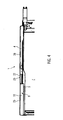
- Figur 4
- eine Draufsicht des erfindungsgemäßen Chassis mit einer geschlossenen Verkleidungstür.
- Die
Figur 1 zeigt eine Seitenansicht des erfindungsgemäßen Chassis 1, das an einer Straßenbaumaschine 2 angeordnet ist. Das erfindungsgemäße Chassis 1 umfasst einen Längsholm 3, der im Wesentlichen horizontal gelagert ist. - Der Längsholm 3 umfasst einen äußeren Längsholmabschnitt 4 sowie einen inneren Längsholmabschnitt 5. Zwischen dem äußeren Längsholmabschnitt 4 und dem inneren Längsholmabschnitt 5 ist eine Stufe 6 vorgesehen. Durch die Stufe 6 ist eine nach außen gerichtete Seite des inneren Längsholmabschnitts 5 relativ zu einer nach außen gerichteten Seite des äußeren Längsholmabschnitts 4 nach innen in einen Motorraum 7 der Straßenbaumaschine 2 versetzt. Im Motorraum 7 der Straßenbaumaschine 2 ist ein Antrieb 8 angeordnet.
- Der Längsholm 3 bildet entlang des inneren Längsholmabschnitts 5 einen Aufnahmebereich 9 aus. Im Aufnahmebereich 9 kann eine Verkleidungstür 10 aufgenommen werden. In der
Figur 1 ist die Verkleidungstür 10 in einer offenen Stellung, in der sie direkten Zugang zum im Motorraum 7 angeordneten Antrieb 8 verschafft. Ebenfalls ist in derFigur 1 die Verkleidungstür 10 gestrichelt dargestellt, wenn sie in einer geschlossenen Stellung relativ zum Chassis 1 angeordnet ist. Dabei ist die Verkleidungstür 10 im Aufnahmebereich 9 des Chassis 1 angeordnet. - Gemäß der
Figur 1 ist die Verkleidungstür 10 als ein erstes Verkleidungselement 11 am Chassis 1 befestigt. Außerdem zeigt dieFigur 1 ein zweites Verkleidungselement 12, das am äußeren Längsholmabschnitt 4 des Längsholms 3 befestigt ist. Das zweite Verkleidungselement 12 ist durch ein erstes Lager 13 und ein zweites Lager 14 am äußeren Längsholmabschnitt 4 befestigt. Dabei ist das zweite Verkleidungselement 12 derart am äußeren Längsholmabschnitt 4 befestigt, dass es diesen nicht überdeckt. - Die
Figur 1 zeigt auch einen seitlichen Befestigungsträger 15, an dem eine Einbaubohle 16 befestigt ist. - Die
Figur 2 zeigt eine Seitenansicht des erfindungsgemäßen Chassis 1, das für die Straßenbaumaschine 2 verwendbar ist. Gemäß derFigur 2 befindet sich die Verkleidungstür 10 in einer geschlossenen Stellung. In der geschlossenen Stellung ist die Verkleidungstür 10 in dem durch die Stufe 6 ausgebildeten Aufnahmebereich 9 angeordnet. - Die Verkleidungstür 10 umfasst in der
Figur 2 mehrere übereinander angeordnete längliche Lüftungsöffnungen 17, die dafür vorgesehen sind, eine ausreichende Kühlung des im Motorraum 7 angeordneten Antriebs 8 sicherzustellen. - Die Verkleidungstür 10 ist durch ein drittes und ein viertes Lager 18, 19 am Chassis 1 befestigt. Bei den Lagern 18, 19 kann es sich beispielsweise jeweils um ein Scharnier handeln. Insbesondere ist die Verkleidungstür 10 durch das dritte und das vierte Lager 18, 19 an einer zum Längsholm 3 vertikal ausgerichteten Vorderwand 20 des Chassis 1 befestigt. Die Verkleidungstür 10 ist in dem Aufnahmebereich 8 gegen den inneren Längsholmabschnitt 5 des Längsholms 3 mittels einer Gasfeder 28 (siehe
Figur 3 ) vorgespannt. - Die
Figur 2 zeigt auch eine Verriegelung 21, die an der Verkleidungstür 10 vorgesehen ist. Mit der Verriegelung 21 lässt sich die Verkleidungstür 10 im Aufnahmebereich 9 verriegeln, wenn die Verkleidungstür 10 im Aufnahmebereich 9 in der geschlossenen Position ist. - In der
Figur 3 ist eine Draufsicht des erfindungsgemäßen Chassis 1 zu sehen. Relativ zum Chassis 1 befindet sich die Verkleidungstür 10 in der offenen Stellung. Wenn sich die Verkleidungstür 10 in der offenen Stellung befindet, ist der Motorraum 7 von außen gut zugänglich. - Zwischen dem inneren Längsholmlabschnitt 5 und der Verkleidungstür 10 ist eine Gasfeder 28 befestigt. Die Gasfeder 28 hält die Verkleidungstür 10 vorgespannt in der geöffneten Stellung. Ebenfalls ermöglicht es die Gasfeder 28 die Verkleidungstür 10 in vorgespannter Weise in der geschlossenen Stellung nach
Figur 4 zu halten. - Die Stufe 6 umfasst einen ersten Stufenabschnitt 22, der relativ zu der Außenseite 26 des äußeren Längsholmabschnitts 4 und relativ zur nach innen versetzten Außenseite 27 des inneren Längsholmabschnitts 5 vertikal ausgerichtet ist. Der erste Stufenabschnitt 22 ist dafür vorgesehen, um eine äußere Kante 23 der Verkleidungstür 10 aufzunehmen.
- Außerdem zeigt die
Figur 3 einen zweiten Stufenabschnitt 24, der relativ zu einer Innenseite des äußeren Längsholmabschnitts 4 und relativ zu einer Innenseite des nach innen versetzten inneren Längsholmabschnitts 5 schräg verläuft. - In der
Figur 4 ist eine Draufsicht des erfindungsgemäßen Chassis 1 zu sehen, in der sich die Verkleidungstür 10 in der geschlossenen Stellung relativ zum Chassis 1 befindet. In der geschlossenen Stellung ist die Verkleidungstür 10 im Aufnahmebereich 9 des inneren Längsholmabschnitts 5 angeordnet. Außerdem befindet sich die äußere Kante 23 der Verkleidungstür 10 im ersten Stufenabschnitt 22 der Stufe 6. - Außerdem ist in der
Figur 4 dargestellt, dass eine Außenseite 25 der Verkleidungstür 10 relativ zu einer Außenseite 26 des äußeren Längsholmabschnitts 4 bündig verläuft. Dadurch ist es möglich, die Verkleidungstür 10 auf besonderes ästhetische Art und Weise am Chassis 1 der Erfindung anzuordnen. - Gemäß der Erfindung kann das erste Verkleidungselement 11, welches gemäß den
Figuren 1 bis 4 als Verkleidungstür 10 dargestellt ist, im Aufbau des erfindungsgemäßen Chassis integriert werden. Die Erfindung ermöglicht es, das Chassis 1 selbst als tragende Konstruktion für Verkleidungselemente anzuwenden. - Durch die Erfindung ist es auch möglich, besonders gut Zugang zu einem Inneren des Motorraums zu erhalten, wodurch insbesondere Wartungsarbeiten erleichtert werden.
- Das erfindungsgemäße Chassis kann an sämtlichen Straßenbaumaschinen zum Einsatz kommen. Außerdem ist es durchaus vorstellbar, dass das erfindungsgemäße Chassis darüber hinaus vorteilhaft an landwirtschaftlichen Maschinen sowie an Transportfahrzeugen, wie beispielsweise Lastwagen, einsetzbar ist.
Claims (17)
- Chassis (1) für eine Straßenbaumaschine (2), umfassend mindestens einen ersten Längsholm (3), der zumindest abschnittsweise seitlich entlang eines Motorraumes (7) der Straßenbaumaschine (2) verläuft, wobei der Längsholm (3) eine Stufe (6) aufweist, die den Längsholm (3) in einen äußeren Längsholmabschnitt (4) und in einen inneren Längsholmabschnitt (5) unterteilt, wobei der innere Längsholmabschnitt (5) durch die Stufe (6) einen Aufnahmebereich (9) ausbildet, in dem ein erstes Verkleidungselement (11) aufnehmbar ist.
- Chassis nach Anspruch 1, dadurch gekennzeichnet, dass eine Außenseite (27) des inneren Längsholmabschnitts (5) durch die Stufe (6) relativ zu einer Außenseite (26) des äußeren Längsholmabschnitts (4) zum Motorraum (7) der Straßenbaumaschine (2) hin versetzt ist.
- Chassis nach Anspruch 1 oder 2, dadurch gekennzeichnet, dass die Stufe (6) einen schrägen Stufenabschnitt (23) zwischen dem äußeren und dem inneren Längsholmabschnitt (4, 5) umfasst.
- Chassis nach einem der vorigen Ansprüche, dadurch gekennzeichnet, dass die Stufe (6) einteilig mit dem äußeren und dem inneren Längsholmabschnitt (4, 5) ausgebildet ist.
- Chassis nach einem der vorigen Ansprüche, dadurch gekennzeichnet, dass der äußere und der innere Längsholmabschnitt (4, 5) mittels eines Überlappungsstoßes miteinander verschweißt sind, um die Stufe (6) auszubilden.
- Chassis nach einem der vorigen Ansprüche, dadurch gekennzeichnet, dass das erste Verkleidungselement (11) lösbar am Chassis (1) befestigt ist.
- Chassis nach einem der vorigen Ansprüche, dadurch gekennzeichnet, dass das erste Verkleidungselement (11) direkt am Chassis (1) verschraubbar ist.
- Chassis nach einem der vorigen Ansprüche, dadurch gekennzeichnet, dass das erste Verkleidungselement (11) im Aufnahmebereich (9) des inneren Längsholmabschnittes (5) relativ zum äußeren Längsholmabschnitt (4) bündig aufnehmbar ist.
- Chassis nach einem der vorigen Ansprüche, dadurch gekennzeichnet, dass das erste Verkleidungselement (11) mindestens eine Lüftungsöffnung (17) aufweist.
- Chassis nach einem der vorigen Ansprüche, dadurch gekennzeichnet, dass das erste Verkleidungselement (11) eine Verkleidungstür (10) ist.
- Chassis nach Anspruch 10, dadurch gekennzeichnet, dass die Verkleidungstür (10) schwenkbar am Chassis (1) befestigt ist.
- Chassis nach Anspruch 10 oder 11, dadurch gekennzeichnet, dass die Verkleidungstür (10) vorgespannt gegen den inneren Längsholmabschnitt (5) haltbar ist.
- Chassis nach einem der Ansprüche 10 bis 12, dadurch gekennzeichnet, dass die Verkleidungstür (10) durch eine Gasfeder (28) zwischen einer geöffneten und einer geschlossenen Stellung bewegbar ist.
- Chassis nach einem der Ansprüche 10 bis 13, dadurch gekennzeichnet, dass die Verkleidungstür (10) am Chassis (1) verriegelbar ist.
- Chassis nach einem der vorigen Ansprüche, dadurch gekennzeichnet, dass am äußeren Längsholmabschnitt (4) ein zweites Verkleidungselement (12) befestigt ist.
- Chassis nach Anspruch 15, dadurch gekennzeichnet, dass das zweite Verkleidungselement (12) lösbar am äußeren Längsholmabschnitt (4) befestigt ist.
- Straßenbaumaschine (2) mit einem Chassis (1) gemäß einem der vorigen Ansprüche.
Priority Applications (1)
| Application Number | Priority Date | Filing Date | Title |
|---|---|---|---|
| PL13001823.7T PL2650194T5 (pl) | 2012-04-13 | 2013-04-09 | Podwozie do maszyny do budowy dróg |
Applications Claiming Priority (1)
| Application Number | Priority Date | Filing Date | Title |
|---|---|---|---|
| DE202012003756U DE202012003756U1 (de) | 2012-04-13 | 2012-04-13 | Chassis für eine Straßenbaumaschine |
Publications (4)
| Publication Number | Publication Date |
|---|---|
| EP2650194A2 true EP2650194A2 (de) | 2013-10-16 |
| EP2650194A3 EP2650194A3 (de) | 2016-12-21 |
| EP2650194B1 EP2650194B1 (de) | 2018-10-24 |
| EP2650194B2 EP2650194B2 (de) | 2023-03-01 |
Family
ID=46145109
Family Applications (1)
| Application Number | Title | Priority Date | Filing Date |
|---|---|---|---|
| EP13001823.7A Active EP2650194B2 (de) | 2012-04-13 | 2013-04-09 | Chassis für eine Straßenbaumaschine |
Country Status (6)
| Country | Link |
|---|---|
| US (1) | US8776940B2 (de) |
| EP (1) | EP2650194B2 (de) |
| JP (1) | JP5757972B2 (de) |
| CN (1) | CN203294191U (de) |
| DE (1) | DE202012003756U1 (de) |
| PL (1) | PL2650194T5 (de) |
Family Cites Families (19)
| Publication number | Priority date | Publication date | Assignee | Title |
|---|---|---|---|---|
| US3533336A (en) * | 1969-07-07 | 1970-10-13 | David C Wikel | Asphalt sealing machine |
| US3969947A (en) † | 1975-05-22 | 1976-07-20 | Gehl Company | Tapered tooth sprocket |
| IT1077571B (it) * | 1977-01-12 | 1985-05-04 | Eigenmann Ludwig | Perfezionamento ai metodi per la formazione e la posa in opera meccanica di mezzi e materiali per seganletica stradale orizzontale,e relative macchine perfezionate |
| US4174642A (en) † | 1978-02-09 | 1979-11-20 | Gehl Company | Chain drive including sprocket having alternate wide and narrow teeth |
| DE3140338A1 (de) * | 1981-10-10 | 1983-04-21 | Walter Hofmann, Maschinenfabrik, 2084 Rellingen | Fahrzeug, insbes. fahrzeugrahmen |
| JPS628181A (ja) † | 1985-07-04 | 1987-01-16 | Canon Inc | 静電分離装置 |
| GB2195301B (en) * | 1986-09-23 | 1990-08-01 | Raymond Joseph Parker | Motorised adaptor unit for manually propelled vehicles |
| DE4105844A1 (de) | 1991-02-25 | 1992-09-03 | Deere & Co | Verkleidung fuer den motorbereich eines kraftfahrzeuges |
| US5350339A (en) † | 1993-03-10 | 1994-09-27 | Carmichael George H | Derailleur pulley for use with bicycle derailleur systems |
| US5495910A (en) | 1994-10-05 | 1996-03-05 | New Holland North America, Inc. | Radiator seals for rear hinged tractor hood |
| JPH08119146A (ja) | 1994-10-24 | 1996-05-14 | Kubota Corp | 作業車 |
| JPH09137403A (ja) * | 1995-11-10 | 1997-05-27 | Kensetsusho Kinkichihou Kensetsukyoku | 路面区画線設置機械 |
| NO955174L (no) * | 1995-12-20 | 1997-06-23 | Rieber & Soen | Fremgangsmåte ved påföring av markeringer eller merking på et underlag |
| US6374936B1 (en) | 2000-07-20 | 2002-04-23 | Deere & Company | Hood closure guide and seal |
| US6837326B2 (en) | 2001-10-19 | 2005-01-04 | Deere & Co. | Tractor grille and grille guard |
| ITVR20030102A1 (it) * | 2003-08-11 | 2005-02-12 | Lago Gianluigi Dal | Macchina per il tracciamento di linee segni e/o pittogrammi |
| JP4170881B2 (ja) * | 2003-10-27 | 2008-10-22 | 株式会社クボタ | 旋回作業機 |
| JP4388509B2 (ja) * | 2005-06-14 | 2009-12-24 | 大成建設株式会社 | スプレースクィーザ |
| JP5184387B2 (ja) | 2009-01-09 | 2013-04-17 | ヤンマー株式会社 | ボンネット構造 |
-
2012
- 2012-04-13 DE DE202012003756U patent/DE202012003756U1/de not_active Expired - Lifetime
-
2013
- 2013-04-08 JP JP2013080349A patent/JP5757972B2/ja active Active
- 2013-04-08 CN CN2013201721094U patent/CN203294191U/zh not_active Expired - Lifetime
- 2013-04-09 EP EP13001823.7A patent/EP2650194B2/de active Active
- 2013-04-09 PL PL13001823.7T patent/PL2650194T5/pl unknown
- 2013-04-11 US US13/861,019 patent/US8776940B2/en active Active
Non-Patent Citations (1)
| Title |
|---|
| None |
Also Published As
| Publication number | Publication date |
|---|---|
| CN203294191U (zh) | 2013-11-20 |
| US8776940B2 (en) | 2014-07-15 |
| JP2013221400A (ja) | 2013-10-28 |
| EP2650194B2 (de) | 2023-03-01 |
| EP2650194A3 (de) | 2016-12-21 |
| US20130272787A1 (en) | 2013-10-17 |
| PL2650194T5 (pl) | 2023-07-03 |
| PL2650194T3 (pl) | 2019-05-31 |
| DE202012003756U1 (de) | 2012-04-25 |
| EP2650194B1 (de) | 2018-10-24 |
| JP5757972B2 (ja) | 2015-08-05 |
Similar Documents
| Publication | Publication Date | Title |
|---|---|---|
| EP0501276B1 (de) | Verkleidung für den Motorbereich eines Kraftfahrzeuges | |
| DE602004006494T2 (de) | Trittbrett | |
| EP2974945B1 (de) | Klappe für ein fahrzeug | |
| EP3313679B1 (de) | Klimaanlage für ein fahrzeug, insbesondere aufdachklimaanlage und fahrzeug mit einer solchen klimaanlage | |
| DE102010050959A1 (de) | Befestigungsanordnung zur Montage einer Zierblende | |
| EP3807943B1 (de) | Kraftfahrzeug mit koppelelement | |
| DE102017109887B4 (de) | Fahrzeugheck eines Kraftfahrzeuges | |
| EP4126669B1 (de) | Fahrzeugbereich mit gepäckfach und deckenpaneel oberhalb des gepäckfaches, und verfahren zum einbau und ausbau eines deckenpaneels oberhalb eines gepäckfaches | |
| DE102020126146B4 (de) | Windschutzvorrichtung für ein fahrzeug | |
| EP2508407B1 (de) | Gerüst, insbesondere für elektrische Einrichtungen in einem Schienenfahrzeug, und Verfahren zur Herstellung des Gerüsts | |
| DE19534972C2 (de) | Geräuschdämpfende Motorunterverkleidung | |
| EP2650194B1 (de) | Chassis für eine Straßenbaumaschine | |
| DE102012023020A1 (de) | Schlossquerträger und Haubenschloss für ein Kraftfahrzeug | |
| DE202014001822U1 (de) | Vorrichtung zur Befestigung einer Unterbodenverkleidung an einem Kraftfahrzeug | |
| EP3656191A1 (de) | E-schrank für ein fahrzeug sowie montageverfahren für einen e-schrank | |
| EP3842322B1 (de) | Kraftfahrzeugbaugruppe | |
| DE102017115544A1 (de) | Fahrzeugverkleidungsstruktur | |
| DE102013111789B4 (de) | Fahrzeugheckstruktur | |
| DE102012220533A1 (de) | Fahrzeugtüranordnung | |
| DE102022206776A1 (de) | Frontschürze mit Wartungsklappe | |
| DE2642110A1 (de) | Motorhaube fuer fahrzeuge, insbesondere fuer land- und/oder bauwirtschaftlich nutzbare schlepper | |
| DE102019120003B4 (de) | Fahrzeugkomponente, insbesondere Fahrzeugheck | |
| EP2790940B1 (de) | Halteanordnung eines flügelelements, insbesondere einer haube, einer klappe oder dergleichen, und eines verkleidungselements an einem kraftwagenaufbau | |
| DE102010020310A1 (de) | Abstützanordnung | |
| EP3473460A1 (de) | Dachlukenvorrichtung |
Legal Events
| Date | Code | Title | Description |
|---|---|---|---|
| PUAI | Public reference made under article 153(3) epc to a published international application that has entered the european phase |
Free format text: ORIGINAL CODE: 0009012 |
|
| AK | Designated contracting states |
Kind code of ref document: A2 Designated state(s): AL AT BE BG CH CY CZ DE DK EE ES FI FR GB GR HR HU IE IS IT LI LT LU LV MC MK MT NL NO PL PT RO RS SE SI SK SM TR |
|
| AX | Request for extension of the european patent |
Extension state: BA ME |
|
| PUAL | Search report despatched |
Free format text: ORIGINAL CODE: 0009013 |
|
| AK | Designated contracting states |
Kind code of ref document: A3 Designated state(s): AL AT BE BG CH CY CZ DE DK EE ES FI FR GB GR HR HU IE IS IT LI LT LU LV MC MK MT NL NO PL PT RO RS SE SI SK SM TR |
|
| AX | Request for extension of the european patent |
Extension state: BA ME |
|
| RIC1 | Information provided on ipc code assigned before grant |
Ipc: B62D 25/10 20060101ALI20161115BHEP Ipc: B62D 33/00 20060101AFI20161115BHEP Ipc: B62D 21/18 20060101ALI20161115BHEP |
|
| 17P | Request for examination filed |
Effective date: 20170424 |
|
| RBV | Designated contracting states (corrected) |
Designated state(s): AL AT BE BG CH CY CZ DE DK EE ES FI FR GB GR HR HU IE IS IT LI LT LU LV MC MK MT NL NO PL PT RO RS SE SI SK SM TR |
|
| STAA | Information on the status of an ep patent application or granted ep patent |
Free format text: STATUS: REQUEST FOR EXAMINATION WAS MADE |
|
| STAA | Information on the status of an ep patent application or granted ep patent |
Free format text: STATUS: EXAMINATION IS IN PROGRESS |
|
| 17Q | First examination report despatched |
Effective date: 20170614 |
|
| GRAP | Despatch of communication of intention to grant a patent |
Free format text: ORIGINAL CODE: EPIDOSNIGR1 |
|
| STAA | Information on the status of an ep patent application or granted ep patent |
Free format text: STATUS: GRANT OF PATENT IS INTENDED |
|
| INTG | Intention to grant announced |
Effective date: 20180221 |
|
| GRAJ | Information related to disapproval of communication of intention to grant by the applicant or resumption of examination proceedings by the epo deleted |
Free format text: ORIGINAL CODE: EPIDOSDIGR1 |
|
| STAA | Information on the status of an ep patent application or granted ep patent |
Free format text: STATUS: EXAMINATION IS IN PROGRESS |
|
| INTC | Intention to grant announced (deleted) | ||
| GRAP | Despatch of communication of intention to grant a patent |
Free format text: ORIGINAL CODE: EPIDOSNIGR1 |
|
| STAA | Information on the status of an ep patent application or granted ep patent |
Free format text: STATUS: GRANT OF PATENT IS INTENDED |
|
| INTG | Intention to grant announced |
Effective date: 20180529 |
|
| GRAS | Grant fee paid |
Free format text: ORIGINAL CODE: EPIDOSNIGR3 |
|
| GRAA | (expected) grant |
Free format text: ORIGINAL CODE: 0009210 |
|
| STAA | Information on the status of an ep patent application or granted ep patent |
Free format text: STATUS: THE PATENT HAS BEEN GRANTED |
|
| AK | Designated contracting states |
Kind code of ref document: B1 Designated state(s): AL AT BE BG CH CY CZ DE DK EE ES FI FR GB GR HR HU IE IS IT LI LT LU LV MC MK MT NL NO PL PT RO RS SE SI SK SM TR |
|
| REG | Reference to a national code |
Ref country code: CH Ref legal event code: EP |
|
| REG | Reference to a national code |
Ref country code: IE Ref legal event code: FG4D Free format text: LANGUAGE OF EP DOCUMENT: GERMAN |
|
| REG | Reference to a national code |
Ref country code: AT Ref legal event code: REF Ref document number: 1056342 Country of ref document: AT Kind code of ref document: T Effective date: 20181115 |
|
| REG | Reference to a national code |
Ref country code: DE Ref legal event code: R096 Ref document number: 502013011386 Country of ref document: DE |
|
| REG | Reference to a national code |
Ref country code: NL Ref legal event code: MP Effective date: 20181024 |
|
| REG | Reference to a national code |
Ref country code: LT Ref legal event code: MG4D |
|
| PG25 | Lapsed in a contracting state [announced via postgrant information from national office to epo] |
Ref country code: NL Free format text: LAPSE BECAUSE OF FAILURE TO SUBMIT A TRANSLATION OF THE DESCRIPTION OR TO PAY THE FEE WITHIN THE PRESCRIBED TIME-LIMIT Effective date: 20181024 |
|
| PG25 | Lapsed in a contracting state [announced via postgrant information from national office to epo] |
Ref country code: HR Free format text: LAPSE BECAUSE OF FAILURE TO SUBMIT A TRANSLATION OF THE DESCRIPTION OR TO PAY THE FEE WITHIN THE PRESCRIBED TIME-LIMIT Effective date: 20181024 Ref country code: BG Free format text: LAPSE BECAUSE OF FAILURE TO SUBMIT A TRANSLATION OF THE DESCRIPTION OR TO PAY THE FEE WITHIN THE PRESCRIBED TIME-LIMIT Effective date: 20190124 Ref country code: LT Free format text: LAPSE BECAUSE OF FAILURE TO SUBMIT A TRANSLATION OF THE DESCRIPTION OR TO PAY THE FEE WITHIN THE PRESCRIBED TIME-LIMIT Effective date: 20181024 Ref country code: FI Free format text: LAPSE BECAUSE OF FAILURE TO SUBMIT A TRANSLATION OF THE DESCRIPTION OR TO PAY THE FEE WITHIN THE PRESCRIBED TIME-LIMIT Effective date: 20181024 Ref country code: LV Free format text: LAPSE BECAUSE OF FAILURE TO SUBMIT A TRANSLATION OF THE DESCRIPTION OR TO PAY THE FEE WITHIN THE PRESCRIBED TIME-LIMIT Effective date: 20181024 Ref country code: ES Free format text: LAPSE BECAUSE OF FAILURE TO SUBMIT A TRANSLATION OF THE DESCRIPTION OR TO PAY THE FEE WITHIN THE PRESCRIBED TIME-LIMIT Effective date: 20181024 Ref country code: IS Free format text: LAPSE BECAUSE OF FAILURE TO SUBMIT A TRANSLATION OF THE DESCRIPTION OR TO PAY THE FEE WITHIN THE PRESCRIBED TIME-LIMIT Effective date: 20190224 Ref country code: NO Free format text: LAPSE BECAUSE OF FAILURE TO SUBMIT A TRANSLATION OF THE DESCRIPTION OR TO PAY THE FEE WITHIN THE PRESCRIBED TIME-LIMIT Effective date: 20190124 |
|
| PG25 | Lapsed in a contracting state [announced via postgrant information from national office to epo] |
Ref country code: RS Free format text: LAPSE BECAUSE OF FAILURE TO SUBMIT A TRANSLATION OF THE DESCRIPTION OR TO PAY THE FEE WITHIN THE PRESCRIBED TIME-LIMIT Effective date: 20181024 Ref country code: PT Free format text: LAPSE BECAUSE OF FAILURE TO SUBMIT A TRANSLATION OF THE DESCRIPTION OR TO PAY THE FEE WITHIN THE PRESCRIBED TIME-LIMIT Effective date: 20190224 Ref country code: GR Free format text: LAPSE BECAUSE OF FAILURE TO SUBMIT A TRANSLATION OF THE DESCRIPTION OR TO PAY THE FEE WITHIN THE PRESCRIBED TIME-LIMIT Effective date: 20190125 Ref country code: AL Free format text: LAPSE BECAUSE OF FAILURE TO SUBMIT A TRANSLATION OF THE DESCRIPTION OR TO PAY THE FEE WITHIN THE PRESCRIBED TIME-LIMIT Effective date: 20181024 Ref country code: SE Free format text: LAPSE BECAUSE OF FAILURE TO SUBMIT A TRANSLATION OF THE DESCRIPTION OR TO PAY THE FEE WITHIN THE PRESCRIBED TIME-LIMIT Effective date: 20181024 |
|
| REG | Reference to a national code |
Ref country code: DE Ref legal event code: R026 Ref document number: 502013011386 Country of ref document: DE |
|
| PLBI | Opposition filed |
Free format text: ORIGINAL CODE: 0009260 |
|
| PG25 | Lapsed in a contracting state [announced via postgrant information from national office to epo] |
Ref country code: DK Free format text: LAPSE BECAUSE OF FAILURE TO SUBMIT A TRANSLATION OF THE DESCRIPTION OR TO PAY THE FEE WITHIN THE PRESCRIBED TIME-LIMIT Effective date: 20181024 Ref country code: CZ Free format text: LAPSE BECAUSE OF FAILURE TO SUBMIT A TRANSLATION OF THE DESCRIPTION OR TO PAY THE FEE WITHIN THE PRESCRIBED TIME-LIMIT Effective date: 20181024 |
|
| PLAX | Notice of opposition and request to file observation + time limit sent |
Free format text: ORIGINAL CODE: EPIDOSNOBS2 |
|
| 26 | Opposition filed |
Opponent name: DYNAPAC GMBH Effective date: 20190723 |
|
| PG25 | Lapsed in a contracting state [announced via postgrant information from national office to epo] |
Ref country code: SK Free format text: LAPSE BECAUSE OF FAILURE TO SUBMIT A TRANSLATION OF THE DESCRIPTION OR TO PAY THE FEE WITHIN THE PRESCRIBED TIME-LIMIT Effective date: 20181024 Ref country code: EE Free format text: LAPSE BECAUSE OF FAILURE TO SUBMIT A TRANSLATION OF THE DESCRIPTION OR TO PAY THE FEE WITHIN THE PRESCRIBED TIME-LIMIT Effective date: 20181024 Ref country code: SM Free format text: LAPSE BECAUSE OF FAILURE TO SUBMIT A TRANSLATION OF THE DESCRIPTION OR TO PAY THE FEE WITHIN THE PRESCRIBED TIME-LIMIT Effective date: 20181024 Ref country code: RO Free format text: LAPSE BECAUSE OF FAILURE TO SUBMIT A TRANSLATION OF THE DESCRIPTION OR TO PAY THE FEE WITHIN THE PRESCRIBED TIME-LIMIT Effective date: 20181024 |
|
| PG25 | Lapsed in a contracting state [announced via postgrant information from national office to epo] |
Ref country code: SI Free format text: LAPSE BECAUSE OF FAILURE TO SUBMIT A TRANSLATION OF THE DESCRIPTION OR TO PAY THE FEE WITHIN THE PRESCRIBED TIME-LIMIT Effective date: 20181024 |
|
| REG | Reference to a national code |
Ref country code: CH Ref legal event code: PL |
|
| PLBB | Reply of patent proprietor to notice(s) of opposition received |
Free format text: ORIGINAL CODE: EPIDOSNOBS3 |
|
| REG | Reference to a national code |
Ref country code: BE Ref legal event code: MM Effective date: 20190430 |
|
| PG25 | Lapsed in a contracting state [announced via postgrant information from national office to epo] |
Ref country code: MC Free format text: LAPSE BECAUSE OF FAILURE TO SUBMIT A TRANSLATION OF THE DESCRIPTION OR TO PAY THE FEE WITHIN THE PRESCRIBED TIME-LIMIT Effective date: 20181024 Ref country code: LU Free format text: LAPSE BECAUSE OF NON-PAYMENT OF DUE FEES Effective date: 20190409 |
|
| PG25 | Lapsed in a contracting state [announced via postgrant information from national office to epo] |
Ref country code: LI Free format text: LAPSE BECAUSE OF NON-PAYMENT OF DUE FEES Effective date: 20190430 Ref country code: CH Free format text: LAPSE BECAUSE OF NON-PAYMENT OF DUE FEES Effective date: 20190430 |
|
| PG25 | Lapsed in a contracting state [announced via postgrant information from national office to epo] |
Ref country code: BE Free format text: LAPSE BECAUSE OF NON-PAYMENT OF DUE FEES Effective date: 20190430 |
|
| PG25 | Lapsed in a contracting state [announced via postgrant information from national office to epo] |
Ref country code: TR Free format text: LAPSE BECAUSE OF FAILURE TO SUBMIT A TRANSLATION OF THE DESCRIPTION OR TO PAY THE FEE WITHIN THE PRESCRIBED TIME-LIMIT Effective date: 20181024 |
|
| PG25 | Lapsed in a contracting state [announced via postgrant information from national office to epo] |
Ref country code: IE Free format text: LAPSE BECAUSE OF NON-PAYMENT OF DUE FEES Effective date: 20190409 |
|
| REG | Reference to a national code |
Ref country code: AT Ref legal event code: MM01 Ref document number: 1056342 Country of ref document: AT Kind code of ref document: T Effective date: 20190409 |
|
| PG25 | Lapsed in a contracting state [announced via postgrant information from national office to epo] |
Ref country code: AT Free format text: LAPSE BECAUSE OF NON-PAYMENT OF DUE FEES Effective date: 20190409 |
|
| PG25 | Lapsed in a contracting state [announced via postgrant information from national office to epo] |
Ref country code: CY Free format text: LAPSE BECAUSE OF FAILURE TO SUBMIT A TRANSLATION OF THE DESCRIPTION OR TO PAY THE FEE WITHIN THE PRESCRIBED TIME-LIMIT Effective date: 20181024 |
|
| PG25 | Lapsed in a contracting state [announced via postgrant information from national office to epo] |
Ref country code: HU Free format text: LAPSE BECAUSE OF FAILURE TO SUBMIT A TRANSLATION OF THE DESCRIPTION OR TO PAY THE FEE WITHIN THE PRESCRIBED TIME-LIMIT; INVALID AB INITIO Effective date: 20130409 Ref country code: MT Free format text: LAPSE BECAUSE OF FAILURE TO SUBMIT A TRANSLATION OF THE DESCRIPTION OR TO PAY THE FEE WITHIN THE PRESCRIBED TIME-LIMIT Effective date: 20181024 |
|
| PG25 | Lapsed in a contracting state [announced via postgrant information from national office to epo] |
Ref country code: MK Free format text: LAPSE BECAUSE OF FAILURE TO SUBMIT A TRANSLATION OF THE DESCRIPTION OR TO PAY THE FEE WITHIN THE PRESCRIBED TIME-LIMIT Effective date: 20181024 |
|
| PUAH | Patent maintained in amended form |
Free format text: ORIGINAL CODE: 0009272 |
|
| STAA | Information on the status of an ep patent application or granted ep patent |
Free format text: STATUS: PATENT MAINTAINED AS AMENDED |
|
| 27A | Patent maintained in amended form |
Effective date: 20230301 |
|
| AK | Designated contracting states |
Kind code of ref document: B2 Designated state(s): AL AT BE BG CH CY CZ DE DK EE ES FI FR GB GR HR HU IE IS IT LI LT LU LV MC MK MT NL NO PL PT RO RS SE SI SK SM TR |
|
| REG | Reference to a national code |
Ref country code: DE Ref legal event code: R102 Ref document number: 502013011386 Country of ref document: DE |
|
| P01 | Opt-out of the competence of the unified patent court (upc) registered |
Effective date: 20230524 |
|
| PGFP | Annual fee paid to national office [announced via postgrant information from national office to epo] |
Ref country code: DE Payment date: 20250425 Year of fee payment: 13 |
|
| PGFP | Annual fee paid to national office [announced via postgrant information from national office to epo] |
Ref country code: GB Payment date: 20250426 Year of fee payment: 13 |
|
| PGFP | Annual fee paid to national office [announced via postgrant information from national office to epo] |
Ref country code: IT Payment date: 20250428 Year of fee payment: 13 |
|
| PGFP | Annual fee paid to national office [announced via postgrant information from national office to epo] |
Ref country code: FR Payment date: 20250426 Year of fee payment: 13 |
|
| PGFP | Annual fee paid to national office [announced via postgrant information from national office to epo] |
Ref country code: PL Payment date: 20260330 Year of fee payment: 14 |