EP2651165A1 - Verfahren und vorrichtung zur verarbeitung von trägeraggregations-kapazitätsinformationen über eine benutzervorrichtung - Google Patents
Verfahren und vorrichtung zur verarbeitung von trägeraggregations-kapazitätsinformationen über eine benutzervorrichtung Download PDFInfo
- Publication number
- EP2651165A1 EP2651165A1 EP11855889.9A EP11855889A EP2651165A1 EP 2651165 A1 EP2651165 A1 EP 2651165A1 EP 11855889 A EP11855889 A EP 11855889A EP 2651165 A1 EP2651165 A1 EP 2651165A1
- Authority
- EP
- European Patent Office
- Prior art keywords
- duration time
- discontinuous reception
- time length
- cycle
- duration
- Prior art date
- Legal status (The legal status is an assumption and is not a legal conclusion. Google has not performed a legal analysis and makes no representation as to the accuracy of the status listed.)
- Withdrawn
Links
Images



Classifications
-
- H—ELECTRICITY
- H04—ELECTRIC COMMUNICATION TECHNIQUE
- H04W—WIRELESS COMMUNICATION NETWORKS
- H04W52/00—Power management, e.g. Transmission Power Control [TPC] or power classes
- H04W52/02—Power saving arrangements
- H04W52/0209—Power saving arrangements in terminal devices
-
- H—ELECTRICITY
- H04—ELECTRIC COMMUNICATION TECHNIQUE
- H04W—WIRELESS COMMUNICATION NETWORKS
- H04W52/00—Power management, e.g. Transmission Power Control [TPC] or power classes
- H04W52/02—Power saving arrangements
- H04W52/0209—Power saving arrangements in terminal devices
- H04W52/0212—Power saving arrangements in terminal devices managed by the network, e.g. network or access point is leader and terminal is follower
- H04W52/0216—Power saving arrangements in terminal devices managed by the network, e.g. network or access point is leader and terminal is follower using a pre-established activity schedule, e.g. traffic indication frame
-
- H—ELECTRICITY
- H04—ELECTRIC COMMUNICATION TECHNIQUE
- H04W—WIRELESS COMMUNICATION NETWORKS
- H04W76/00—Connection management
- H04W76/20—Manipulation of established connections
- H04W76/28—Discontinuous transmission [DTX]; Discontinuous reception [DRX]
-
- H—ELECTRICITY
- H04—ELECTRIC COMMUNICATION TECHNIQUE
- H04L—TRANSMISSION OF DIGITAL INFORMATION, e.g. TELEGRAPHIC COMMUNICATION
- H04L5/00—Arrangements affording multiple use of the transmission path
- H04L5/0091—Signalling for the administration of the divided path, e.g. signalling of configuration information
- H04L5/0096—Indication of changes in allocation
- H04L5/0098—Signalling of the activation or deactivation of component carriers, subcarriers or frequency bands
-
- Y—GENERAL TAGGING OF NEW TECHNOLOGICAL DEVELOPMENTS; GENERAL TAGGING OF CROSS-SECTIONAL TECHNOLOGIES SPANNING OVER SEVERAL SECTIONS OF THE IPC; TECHNICAL SUBJECTS COVERED BY FORMER USPC CROSS-REFERENCE ART COLLECTIONS [XRACs] AND DIGESTS
- Y02—TECHNOLOGIES OR APPLICATIONS FOR MITIGATION OR ADAPTATION AGAINST CLIMATE CHANGE
- Y02D—CLIMATE CHANGE MITIGATION TECHNOLOGIES IN INFORMATION AND COMMUNICATION TECHNOLOGIES [ICT], I.E. INFORMATION AND COMMUNICATION TECHNOLOGIES AIMING AT THE REDUCTION OF THEIR OWN ENERGY USE
- Y02D30/00—Reducing energy consumption in communication networks
- Y02D30/70—Reducing energy consumption in communication networks in wireless communication networks
Definitions
- the present invention relates to the field of communication technologies, in particular, to a method, a device and a system for discontinuous reception.
- resource allocation for a terminal needs to be performed by a base station if data transmission is required. It is necessary for the terminal to determine when the base station performs resource allocation to it, so the terminal has to monitor PDCCH channel (Physical Downlink Control Channel, physical downlink control channel) all the time. If PDCCH signaling is detected, then it means that the base station has downlink resource allocation or uplink resource allocation. However, such action for detecting the PDCCH will seriously consume the power of the terminal.
- PDCCH channel Physical Downlink Control Channel, physical downlink control channel
- a DRX discontinuous Reception, discontinuous reception
- DRX means that the terminal stops monitoring the PDCCH in a period of time.
- a DRX cycle needs to be configured for the terminal by the base station, and one DRX cycle includes a time period of on duration (On duration) and a time period of opportunity for DRX (Opportunity for DRX).
- the terminal configured with DRX can monitor the PDCCH in each time period of on duration in the DRX cycle; correspondingly, the base station also can perform resource allocation for the terminal in each time period of on duration of the DRX cycle. It can be seen that the use of DRX technique has considerably shortened the time for the terminal detecting the PDCCH signaling, and achieved the effect of saving the power of the terminal.
- the terminal can only operate based on one set of pre-configured DRX parameters (including a DRX cycle, a time period of on duration, a time period of opportunity for DRX, and etc).
- DRX parameters of the terminal need to be changed during the DRX procedure so as to further reduce the power consumption of the terminal or for other reasons, it can only be implemented by the base station sending RRC (Radio Resource Control, radio resource control) signaling to re-configure the DRX parameters of the terminal.
- RRC Radio Resource Control, radio resource control
- one aspect of the present invention provides the following technical solution.
- a method for discontinuous reception comprising:
- a device for discontinuous reception comprising:
- the base station since the base station configures several on duration time lengths for the terminal, changing on duration time length during a DRX process, if needed, no longer relies on re-configuration of the on duration time length through the RRC signaling; the terminal can directly switch the on duration time lengths when detecting that a set condition is satisfied, so as to achieve the changing of the on duration time length.
- additional RRC signaling overhead can be avoided, thereby reducing system complexity.
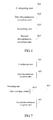
- FIG. 1 is a flow chart of a method according to an embodiment of the present invention
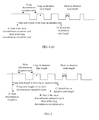
- FIG. 2 is a schematic view of switching a first on duration time according to an embodiment of the present invention
- FIG. 3 is a schematic view of switching a second on duration time according to an embodiment of the present invention.
- FIGs. 4(a) and 4(b) are schematic views of switching a third on duration time according to an embodiment of the present invention.
- FIG. 5 is a schematic view of switching a fourth on duration time according to an embodiment of the present invention.
- FIG. 6 is a schematic view of a first device according to an embodiment of the present invention.
- FIG. 7 is a schematic view of a second device according to an embodiment of the present invention.
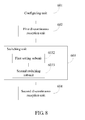
- FIG. 8 is a schematic view of a third device according to an embodiment of the present invention.
- FIG. 9 is a schematic view of a fourth device according to an embodiment of the present invention.
- FIG. 10 is a schematic view of a fifth device according to an embodiment of the present invention.
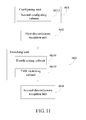
- FIG. 11 is a schematic view of a six device according to an embodiment of the present invention.
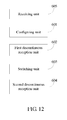
- FIG. 12 is a schematic view of a seventh device according to an embodiment of the present invention.
- a method for discontinuous reception comprises the following steps.
- S101 Configure at least two on duration time lengths of discontinuous reception.
- This step may be executed prior to a terminal performing DRX, that is, on duration time lengths that may be used are configured to the terminal before the terminal performs DRX. Since the configuration procedure is executed prior to DRX, it can be implemented through RRC signaling sent by the base station. Specifically, when sending signaling, the base station can either directly carry the values of various on duration time lengths, or carry one on duration time length, as well as the offset or difference with other time lengths, and various on duration time lengths can be calculated and obtained by the terminal via the offset or difference, such that the amount of transferred information can be reduced.
- S 102 Perform the discontinuous reception according to a first on duration time length in the at least two on duration time lengths.
- the base station In addition to configuring various on duration time lengths for the terminal, the base station also can configure for the user which on duration time length is used to start the DRX. In this way, the terminal can start the DRX based on one on duration time length according to the configuration of the base station.
- S103 Switch the first on duration time length of the discontinuous reception to a second on duration time length according to the configured at least two on duration time lengths when a set condition is satisfied.
- the preset condition may be that: the terminal times the time of using a certain on duration time length to perform DRX; if a preset using time length of the on duration time length (the preset using time length can be configured solely by the base station, or can be calculated by the terminal based on other DRX parameters configured by the base station) is exceeded, then the switching of the on duration time length may be performed.
- a switching indication may be sent by the base station to the terminal through MAC layer signaling, and the terminal performs the switching of the on duration time length according to the indication of the base station.
- the base station can directly send a switching indication through MAC layer signaling without carrying the specific length value information, and compared to RRC signaling, the MAC layer signaling is relatively simple to realize, therefore, system complexity also can be reduced.
- S104 Perform the discontinuous reception according to the second on duration time length.
- the DRX After switching the on duration time length, the DRX can be performed with the switched on duration time length.
- the base station since the base station configures several on duration time lengths for the terminal, changing on duration time length during the DRX procedure, if needed, no longer relies on re-configuration of the on duration time length through the RRC signaling; the terminal can directly switch the on duration time length when detecting that a set condition is satisfied, so as to achieve the changing of the on duration time length.
- additional RRC signaling overhead can be avoided, thereby reducing system complexity.
- switching of on duration time length can be performed when a discontinuous reception cycle remains unchanged. That is, when a set condition is satisfied, the first on duration time length of the discontinuous reception is switched to a second on duration time length according to the configured at least two on duration time lengths, in case that the discontinuous reception cycle remaining unchanged.
- the base station can configure at least two on duration time lengths for the terminal, and the DRX cycle remains unchanged throughout the DRX procedure.
- the DRX cycle consists of a time period of on duration and a time period of opportunity for DRX, and thus if the length of the time period of on duration changes, the length of the time period of opportunity for DRX will also change accordingly, but in any case the sum of the two remains constant.
- the base station can directly configure a first on duration time length and a second on duration time length for the terminal, and the first on duration time length is longer than the second on duration time length. So, when performing specific switching, a first using time may be set, when the time length of using the first on duration time length to perform the DRX reaches the first using time, the first on duration time length of the DRX is switched to the second on duration time length.
- the first on duration time length may be referred to as a long on duration time length
- the second on duration time length may be referred to as a short on duration time length.
- the terminal can start the DRX with the long on duration time length.
- a set condition for example, when the time length of using the long on duration time length to perform the DRX reaches the preset first using time length of the long on duration time length, or, when a switching indication sent by the base station through MAC layer signaling is received, the on duration time length can be switched to the short on duration time length, and the DRX is performed according to the short on duration time length.
- the first using time length can be pre-configured by the base station as a separate DRX parameter.
- the base station can also implicitly include the first using time length in other DRX parameters, and the terminal can calculate and obtain the first using time length from other DRX parameters.
- the specific value of the first using time length can be set according to specific service characteristics, such as QoS (Quality of Service, quality of service).
- the above mode of implementation that is, starting DRX with the long on duration time length and switching to the short on duration time length when the time length of using the long on duration time length to perform the DRX reaches the first using time length, has the practical significance as follows: due to not knowing about the information on terminal service usage when starting the DRX, the long on duration time length can be used to avoid adversely affecting normal services; after a long period (the first using time) of performing DRX with the long on duration time length, if it is observed that the terminal does not transmit any service data during this period, then it is considered that there is little possibility that the terminal will transmit service data subsequently, and as a result, the on duration time length of the terminal can be further reduced, that is, a shorter on duration time length may be used to perform the DRX, thereby the power of the terminal can be further saved.
- the terminal also can start the DRX with the short on duration time length; when a set condition is satisfied, for example, when receiving a switching indication sent by the base station through MAC layer signaling or physical layer indication and etc., the on duration time length can be switched to the long on duration time length, and the DRX is performed according to the long on duration time length.
- Such an operation mode has the following practical significance: since the base station can perform resource scheduling only within the time period of on duration of the terminal when the terminal performs DRX, as a result, once the base station misses the time period of on duration of the terminal, the base station cannot perform resource scheduling until the time period of on duration of the next DRX cycle arrives. In this way, if the DRX cycle is long, it will result in a large time delay to the downlink resource allocation. In the practical application, therefore, there may be the need to keep a constant DRX cycle and increase the on duration time length, so as to relatively reduce the time length of opportunity for DRX so as to shorten the time delay of the downlink resource allocation. And such an operation mode can satisfy the need. For example, in order to shorten the time delay of the downlink resource allocation, the base station can send a switching indication to the terminal through MAC signaling, and then the on duration time length is switched to the long on duration time length by the terminal.
- the base station configures the following DRX parameters for the terminal: a DRX cycle, a long on duration time, a short on duration time and a first using time length.
- the terminal starts DRX at point A in the figure, and starts a timer for employment of the long on duration time. Seen from FIG. 2 , at first the terminal starts the DRX according to the DRX cycle and the long on duration time length (may also include other DRX parameters such as DRX start offset).
- the terminal When the time length of the terminal using the long on duration time to perform the DRX reaches the configured first using time length, namely reaching point B, since there is no service data transmission through the procedure from point A to point B, then the terminal will switch the on duration time length to the short on duration time, and employ the short on duration time length to perform the DRX.
- the base station knows the first using time length, and also may know whether the terminal has service data transmission, and therefore, after the terminal switches the on duration time length, the base station also can know that the terminal has performed the switching operation, and then the base station also can perform resource scheduling for the terminal according to the switched on duration time length.
- the starting point (point A) of DRX in FIG. 2 is in a state of on duration, while in practical application, point A also may be in a state of opportunity for DRX.
- the terminal can perform switching of on duration time length in the case of changed discontinuous reception cycle. That is, the DRX includes at least two DRX cycles, each of which is configured with at least one on duration time length, respectively. In this embodiment, there are several scenarios, which will be described respectively as follows.
- the base station configures at least two discontinuous reception cycles for the terminal, and configures one on duration time length respectively for each discontinuous reception cycle.
- the terminal can perform the discontinuous reception according to a designated DRX cycle of the various discontinuous reception cycles that are configured by the base station and the corresponding on duration time length; when a set condition is satisfied, the discontinuous reception cycle is switched according to the various discontinuous reception cycles configured by the base station, and the on duration time length is switched to the corresponding on duration time length of the switched discontinuous reception cycle.
- the base station also can configure two DRX cycles for the terminal, i.e., a first DRX cycle and a second DRX cycle, and configure a first on duration time length for the first DRX cycle and a second on duration time length for the second DRX cycle, respectively.
- switching may be performed by setting a second using time; switching the first on duration time length of the discontinuous reception to the second on duration time length and switching the first discontinuous reception cycle of the discontinuous reception to the second discontinuous reception cycle, when the time length of using the first on duration time length to perform the discontinuous reception reaches the second using time.
- the terminal can be configured with two DRX cycles, i.e., a long DRX cycle and a short DRX cycle, and meanwhile respective on duration time lengths are configured for the two DRX cycles respectively. It can be seen that at least two on duration time lengths are also configured in this case, unlike the embodiment 1, various on duration time lengths correspond to different DRX cycles.
- the set condition may be to time a period of using certain DRX, and may also be that the base station sends a switching indication through MAC layer signaling.
- the base station also can configure a second using time length for the terminal and the terminal can take the second using time length as the switching basis. Specifically, referring to FIG.
- the terminal starts DRX at point A according to the short discontinuous reception cycle and the corresponding on duration time length thereof, and also starts the timing; during the DRX with the short discontinuous reception cycle, the on duration time length configured for the short discontinuous reception cycle is used for performing the DRX; when the time length of using the short discontinuous reception cycle to perform the DRX reaches the second using time length, and if there is no service for the terminal all the time, the short DRX cycle of the DRX is switched to the long DRX cycle, and the on duration time length corresponding to the long DRX cycle is used for performing the DRX; and during the DRX with the long discontinuous reception cycle, the on duration time length configured for the long discontinuous reception cycle is used for performing the DRX.
- the base station configures for the terminal at least two discontinuous reception cycles including a first DRX cycle and a second DRX cycle; and at least three on duration time lengths of DRX including the first on duration time length, the second on duration time length and a third on duration time length; where the first on duration time length is configured for the first DRX cycle, and the second on duration time length and the third on duration time length are configured for the second DRX cycle.
- a third using time and a fourth using time may be set; when an using time of the first DRX cycle reaches the third using time, the first DRX cycle of the DRX is switched to the second DRX cycle, and the first on duration time length of the DRX is switched to the second on duration time length; and when the using time of the second on duration time length of the second DRX cycle reaches the fourth using time, the second on duration time length of the second DRX cycle is switched to the third on duration time length.
- the DRX cycles may have no corresponding relationship with the on duration time lengths.
- the terminal can start the discontinuous reception according to a designated DRX cycle of the various DRX cycles and a designated on duration time length in the various on duration time lengths configured by the base station; and in the same DRX cycle, the on duration time length also can be switched according to the various on duration time lengths configured by the base station, when a set condition is satisfied.
- the set condition may be to time the time of using certain DRX, and may also be that the base station sends a switching indication through MAC layer signaling.
- the base station also can configure a third using time length for the DRX cycle used when starting the DRX, and configure a fourth using time length for the on duration time length first used in the same DRX cycle, where the third using time length is longer than or reaches the second using time length; and the third using time length can be longer than the fourth using time length.
- the on duration time length is switched according to the various on duration time lengths configured by the base station; when the time of using the discontinuous reception cycle, which is used when starting the discontinuous reception, to perform the discontinuous reception reaches the third using time length, the discontinuous reception cycle is switched and the on duration time length is switched to the on duration time length first used in the same discontinuous reception cycle.
- the base station can configure the following DRX parameters for the terminal: two DRX cycles, namely a short DRX cycle and a long DRX cycle, an using time length of the short DRX cycle, two on duration time lengths, namely a long on duration time and a short on duration time, and an using time length of the long on duration time.
- the using time length of the short DRX cycle is greater than the using time length of the long on duration time. Assuming that DRX is started with the short DRX cycle, and the long on duration time is always used first in every discontinuous reception cycle. Referring to FIG.
- the terminal starts DRX with the short DRX cycle and the long on duration time at point A, when arriving at point B, the time of using the long on duration time to perform the DRX reaches the using time length of the long on duration time, then switch to the short on duration time.
- the time of using the short DRX cycle to perform the DRX reaches the using time length of the short DRX cycle, then switch to the long DRX cycle.
- the DRX can be performed at first with the long on duration time, and when the time of using the long on duration time to perform the DRX reaches the using time length of the long on duration time at point D, the on duration time length is switched to the short on duration time; optionally, in the period of the long DRX cycle, the short on duration time may be used first, and then when the time of using the short on duration time reaches the above using time length, the on duration time length is switched to the long on duration time.
- the switching can be performed as follows: when the time of using the discontinuous reception cycle, which is used when starting the DRX, to perform the discontinuous reception reaches the third using time length, switch the DRX cycle and continue to employ the on duration time length, which is first used in the same discontinuous reception cycle, to perform the discontinuous reception; and when the time of using the on duration time length, which is currently used in the same discontinuous reception cycle, to perform the discontinuous reception reaches the fourth using time length, switch the on duration time length according to the various on duration time lengths configured by the base station.
- a long DRX cycle, a short DRX cycle, an using time length of the short DRX cycle, a long on duration time, a short on duration time and an using time length of the long on duration time are configured.
- the using time length of the short DRX cycle is less than that of the long on duration time.
- the terminal starts DRX at point A with the short DRX cycle and the long on duration time.
- a timer for the short DRX cycle times out, but a timer for the long on duration time is still performing.
- the DRX cycle may be switched to the long DRX cycle, and the on duration time length remains unchanged until the timer of the long on duration time times out, then the on duration time length is switched to the short on duration time length.
- the base station also can configure at least two DRX cycles for the terminal; and at least three on duration time lengths of DRX for the terminal, where the at least three on duration time lengths include a first on duration time length, a second on duration time length and a third on duration time length; where the first DRX cycle is configured with the first on duration time length and the second on duration time length, and the second DRX cycle is configured with the third on duration time length.
- a fifth using time and a sixth using time may be set; when the using time of the first on duration time length of the first DRX cycle reaches the fifth using time, the first on duration time length of the first DRX cycle is switched to the second on duration time length; and when the using time of the first DRX cycle reaches the sixth using time, the first DRX cycle of the DRX is switched to the second DRX cycle and the second on duration time length of the DRX is switched to the third on duration time length.
- At least two on duration time lengths can be configured respectively for various DRX cycles; namely, in every DRX cycle, respective on duration time lengths are used to perform DRX and switching of the on duration time length.
- DRX may be performed according to a designated DRX cycle of various DRX cycles configured by the base station and the corresponding first-used on duration time length thereof; in the same DRX cycle and when switching the DRX cycle, the on duration time length is switched according to various on duration time lengths configured by the base station when a set condition is satisfied.
- the set condition also can be implemented by using a timer, for example, the base station also can configure an using time length (a fifth using time length) for the DRX cycle used when starting DRX, and configure an using time length (a sixth using time length) for the on duration time length first used in the same discontinuous reception cycle, where the fifth using time length is greater than the sixth using time length.
- a timer for example, the base station also can configure an using time length (a fifth using time length) for the DRX cycle used when starting DRX, and configure an using time length (a sixth using time length) for the on duration time length first used in the same discontinuous reception cycle, where the fifth using time length is greater than the sixth using time length.
- the on duration time length is switched according to the various on duration time lengths configured by the base station for the DRX; when the time of using the DRX cycle, which is used when starting the DRX, reaches the fifth using time length, the DRX cycle is switched and the on duration time length is switched to the corresponding first-used on duration time length of the DRX cycle switched to.
- the base station can configure two DRX cycles for the terminal: a short DRX cycle and a long DRX cycle, and configure two on duration time lengths for the short DRX cycle, which are a first on duration time length and a second on duration time length respectively; and configure two on duration time lengths for the long DRX cycle, which are a third on duration time length and a fourth on duration time length respectively.
- DRX is started with the short DRX cycle, and the first on duration time length is first used in the short DRX cycle and the third on duration time length is first used in the long DRX cycle.
- the short DRX cycle and the first on duration time length are used first, and when the time of using the first on duration time length to perform the DRX reaches the using time length of the first on duration time length, switch to the second on duration time length. At this time, the DRX cycle is still the short DRX cycle, and the timer for DRX cycle continues performing.
- the embodiments of the present invention equivalently provide an enhanced DRX mechanism, the performing of which needs the support of the terminal, in other words, only when the terminal supports the enhanced DRX mechanism, the method described in the embodiments of the present invention can be used to perform DRX. Therefore, the base station needs to treat different terminals differently when configuring DRX parameters to the terminal. To this end, the embodiments of the present invention further provide the technical solutions as follows.
- information on whether it supports the enhanced DRX mechanism may be reported to the base station through an RRC message either in a manner of a support indicator, such as support/non-support; or a capability information, indicating support if present and indicating non-support if absent; or a Boolean quantity, 1 or True for support and 0 or False for non-support, and so on.
- a support indicator such as support/non-support
- capability information indicating support if present and indicating non-support if absent
- Boolean quantity 1 or True for support and 0 or False for non-support, and so on.
- the enhanced DRX parameters are configured for the terminal, such as the long on duration time, the short on duration time, the using time length of the long on duration time; if the DRX cycle needs to be changed, the long DRX cycle and the short DRX cycle can also be configured for the terminal, and so on.
- the method according to the embodiments of the present invention can be used to perform the enhanced DRX.
- the base station pre-configures several on duration time lengths for the terminal, and thus during the DRX procedure, the changing of the on duration time length, if needed, is no longer dependent on the re-configuration of the on duration time length by the RRC signaling. Instead, a condition is directly set for the switching, and then, the terminal can directly switch the on duration time length when the set condition is satisfied, so as to achieve the changing of the on duration time length.
- additional RRC signaling overhead can be prevented, thereby reducing system complexity.
- a device for discontinuous reception is also provided.
- the device includes the following units:
- the switching unit 603 may include:
- the first on duration time length configured by the configuring unit 601 may be longer than the second on duration time length.
- the switching unit 603 may include:
- the configuring unit 601 is specially configured to: when the discontinuous reception includes at least two discontinuous reception cycles, respectively configure at least one on duration time length for the at least two on discontinuous reception cycles.
- the configuring unit 601 is specially configured to: when the at least two discontinuous reception cycles include a first discontinuous reception cycle and a second discontinuous reception cycle, configure the first on duration time length for the first discontinuous reception cycle and configure the second on duration time length for the second discontinuous reception cycle;
- the switching unit 603 includes:
- the at least two discontinuous reception cycles can include a first discontinuous reception cycle and a second discontinuous reception cycle
- the configuring unit 601 can include:
- the switching unit 603 includes:
- the at least two discontinuous reception cycles can include a first discontinuous reception cycle and a second discontinuous reception cycle
- the configuring unit 603 includes:
- the switching unit 603 can include:
- the device also can include:
- the configuring unit 603 is specifically configured to:
- the storage medium may be, such as a read only memory (ROM)/random access memory (RAM), a floppy disk, or an optical disk, etc.
Landscapes
- Engineering & Computer Science (AREA)
- Computer Networks & Wireless Communication (AREA)
- Signal Processing (AREA)
- Mobile Radio Communication Systems (AREA)
Applications Claiming Priority (2)
| Application Number | Priority Date | Filing Date | Title |
|---|---|---|---|
| CN2011100058155A CN102595568A (zh) | 2011-01-12 | 2011-01-12 | 一种非连续接收的方法、装置及系统 |
| PCT/CN2011/085154 WO2012094950A1 (zh) | 2011-01-12 | 2011-12-31 | 用户设备的载波聚合能力信息的处理方法及装置 |
Publications (2)
| Publication Number | Publication Date |
|---|---|
| EP2651165A1 true EP2651165A1 (de) | 2013-10-16 |
| EP2651165A4 EP2651165A4 (de) | 2014-03-26 |
Family
ID=46483657
Family Applications (1)
| Application Number | Title | Priority Date | Filing Date |
|---|---|---|---|
| EP11855889.9A Withdrawn EP2651165A4 (de) | 2011-01-12 | 2011-12-31 | Verfahren und vorrichtung zur verarbeitung von trägeraggregations-kapazitätsinformationen über eine benutzervorrichtung |
Country Status (4)
| Country | Link |
|---|---|
| US (1) | US9516590B2 (de) |
| EP (1) | EP2651165A4 (de) |
| CN (1) | CN102595568A (de) |
| WO (1) | WO2012094950A1 (de) |
Cited By (1)
| Publication number | Priority date | Publication date | Assignee | Title |
|---|---|---|---|---|
| WO2020204802A1 (en) * | 2019-04-02 | 2020-10-08 | Telefonaktiebolaget Lm Ericsson (Publ) | Control channel monitoring in a wireless communication system |
Families Citing this family (18)
| Publication number | Priority date | Publication date | Assignee | Title |
|---|---|---|---|---|
| WO2014059572A1 (zh) * | 2012-10-15 | 2014-04-24 | 华为技术有限公司 | 配置方法、装置、基站和终端 |
| CN104641677B (zh) * | 2013-04-03 | 2019-03-01 | 华为技术有限公司 | 一种监听物理广播信道的方法及装置 |
| TWI484850B (zh) * | 2013-11-14 | 2015-05-11 | Univ Nat Chiao Tung | 用於長期演進技術中省電資料排程系統及其方法 |
| CA2938016C (en) * | 2014-01-28 | 2021-12-14 | Huawei Technologies Co., Ltd. | Channel monitoring method and device |
| CN105992266B (zh) * | 2015-02-02 | 2021-02-12 | 中兴通讯股份有限公司 | 一种非连续接收能力的检测方法和终端、网络侧设备 |
| US10165511B2 (en) * | 2015-11-23 | 2018-12-25 | Telefonaktiebolaget L M Ericsson (Publ) | Method and communication device for establishing a discontinuous reception mode configuration |
| EP3386250A1 (de) * | 2017-04-07 | 2018-10-10 | Telefonaktiebolaget LM Ericsson (publ) | Netzwerkknoten, eine erste kommunikationsvorrichtung und -verfahren darin zur überwachung eines informationssignals bei der überwachung von zeiträumen mit verschiedener zeitdauer |
| CN109429258B (zh) * | 2017-07-17 | 2021-10-29 | 中国移动通信有限公司研究院 | 一种信道监听的指示方法、监听方法、终端及网络侧设备 |
| CN109891973B (zh) * | 2017-08-08 | 2021-12-10 | 华为技术有限公司 | 一种下行控制信息监测方法、终端 |
| WO2020237488A1 (zh) * | 2019-05-27 | 2020-12-03 | 北京小米移动软件有限公司 | 非连续接收方法和装置,电子设备和计算机可读存储介质 |
| CN113039837B (zh) * | 2019-06-26 | 2022-07-19 | Oppo广东移动通信有限公司 | 基于drx的数据传输方法和设备 |
| US11012936B2 (en) * | 2019-10-16 | 2021-05-18 | Verizon Patent And Licensing Inc. | Systems and methods for dynamic adjustment of intermittent reception parameters in a radio access network |
| CN110999526B (zh) | 2019-11-29 | 2023-10-03 | 北京小米移动软件有限公司 | 短周期配置方法、装置、通信设备及存储介质 |
| CN114667769B (zh) * | 2020-02-07 | 2023-10-31 | Oppo广东移动通信有限公司 | 基于drx的侧行反馈方法及相关装置 |
| US12557115B2 (en) | 2020-10-19 | 2026-02-17 | Beijing Xiaomi Mobile Software Co., Ltd. | Method and apparatus for determining data processing duration, communication device and storage medium |
| CN115915346A (zh) * | 2021-08-13 | 2023-04-04 | 华为技术有限公司 | 一种通信方法和设备 |
| WO2024031401A1 (zh) * | 2022-08-09 | 2024-02-15 | 北京小米移动软件有限公司 | Drx周期配置方法及装置、通信设备及存储介质 |
| WO2024229846A1 (zh) * | 2023-05-11 | 2024-11-14 | 富士通株式会社 | 监听信道的方法、装置和通信系统 |
Family Cites Families (17)
| Publication number | Priority date | Publication date | Assignee | Title |
|---|---|---|---|---|
| KR20070024302A (ko) | 2005-08-26 | 2007-03-02 | 한국전자통신연구원 | 셀룰러 시스템의 수면 모드 제어 장치 및 제어 방법 |
| CN101411095B (zh) * | 2006-03-28 | 2013-06-19 | 三星电子株式会社 | 用于移动通信系统中的连接终端的非连续接收的方法和设备 |
| MY151801A (en) | 2007-01-30 | 2014-07-14 | Interdigital Tech Corp | Implicit drx cycle length adjustment control in lte_active mode |
| KR20080084533A (ko) | 2007-03-16 | 2008-09-19 | 엘지전자 주식회사 | 이동통신 시스템에서의 데이터 통신 방법 |
| ES2532681T3 (es) * | 2007-03-26 | 2015-03-30 | Samsung Electronics Co., Ltd. | Procedimiento y aparato de recepción discontinua de un equipo de usuario en un sistema de comunicación móvil |
| WO2008133564A1 (en) | 2007-04-27 | 2008-11-06 | Telefonaktiebolaget Lm Ericsson (Publ) | A method and a device for saving power in a wireless user terminal |
| GB2452022B (en) | 2007-07-24 | 2012-03-28 | Nec Corp | DRX configuration |
| US8249004B2 (en) * | 2008-03-14 | 2012-08-21 | Interdigital Patent Holdings, Inc. | Coordinated uplink transmission in LTE DRX operations for a wireless transmit receive unit |
| CN102067683B (zh) * | 2008-04-25 | 2014-12-10 | 黑莓有限公司 | 用于无线网络中不连续接收的控制的方法和系统 |
| KR101477061B1 (ko) * | 2008-05-16 | 2014-12-29 | 삼성전자주식회사 | 휴대 단말기의 비연속 수신 수행 방법 및 장치 |
| US9237523B2 (en) * | 2008-07-07 | 2016-01-12 | Mediatek Inc. | Method of establishing sleep mode operation for broadband wireless communications systems |
| US20100110896A1 (en) | 2008-11-06 | 2010-05-06 | Li-Chih Tseng | Method of improving discontinuous reception functionality and related communication device |
| KR101642309B1 (ko) | 2008-11-06 | 2016-07-25 | 엘지전자 주식회사 | 단말의 하향링크 제어채널 모니터링 방법 |
| KR20100052064A (ko) * | 2008-11-10 | 2010-05-19 | 삼성전자주식회사 | 이동 통신 시스템에서 불연속 수신 동작 제어 방법 및 장치 |
| CN101925161B (zh) * | 2009-06-11 | 2014-11-19 | 株式会社Ntt都科摩 | 无线通信系统中自适应调整非连续接收模式的方法和装置 |
| PT3419208T (pt) * | 2009-06-15 | 2021-04-13 | Guangdong Oppo Mobile Telecommunications Corp Ltd | Método para o funcionamento de receção descontínua para agregação de portadora de evolução a longo prazo avançada |
| CN101583178B (zh) * | 2009-06-25 | 2012-10-10 | 北京邮电大学 | 动态控制用户设备非连续接收的方法和装置 |
-
2011
- 2011-01-12 CN CN2011100058155A patent/CN102595568A/zh active Pending
- 2011-12-31 EP EP11855889.9A patent/EP2651165A4/de not_active Withdrawn
- 2011-12-31 WO PCT/CN2011/085154 patent/WO2012094950A1/zh not_active Ceased
-
2013
- 2013-07-11 US US13/940,023 patent/US9516590B2/en active Active
Cited By (4)
| Publication number | Priority date | Publication date | Assignee | Title |
|---|---|---|---|---|
| WO2020204802A1 (en) * | 2019-04-02 | 2020-10-08 | Telefonaktiebolaget Lm Ericsson (Publ) | Control channel monitoring in a wireless communication system |
| EP3949541A1 (de) * | 2019-04-02 | 2022-02-09 | Telefonaktiebolaget Lm Ericsson (Publ) | Steuerkanalüberwachung in einem drahtlosen kommunikationssystem |
| US20220191789A1 (en) * | 2019-04-02 | 2022-06-16 | Telefonaktiebolaget Lm Ericsson (Publ) | Control Channel Monitoring in a Wireless Communication System |
| US12471019B2 (en) * | 2019-04-02 | 2025-11-11 | Telefonaktiebolaget Lm Ericsson (Publ) | Control channel monitoring in a wireless communication system |
Also Published As
| Publication number | Publication date |
|---|---|
| CN102595568A (zh) | 2012-07-18 |
| US20130294313A1 (en) | 2013-11-07 |
| EP2651165A4 (de) | 2014-03-26 |
| WO2012094950A1 (zh) | 2012-07-19 |
| US9516590B2 (en) | 2016-12-06 |
Similar Documents
| Publication | Publication Date | Title |
|---|---|---|
| US9516590B2 (en) | Method, device and system for discontinuous reception | |
| EP3963953B1 (de) | Bestimmung der pdcch-überwachung während der einschaltdauer im energiesparmodus | |
| US11871349B2 (en) | Sleep method for terminal device and apparatus | |
| KR101299277B1 (ko) | 롱 텀 이볼루션에서 데이터 전송의 종료를 표시함으로써 배터리에 대해 효과적인 상태 또는 구성으로 전환하는 방법 및 장치 | |
| CN114424482B (zh) | 通信方法及装置 | |
| US10779234B2 (en) | Transmission mode switching method and apparatus | |
| WO2012139272A1 (en) | Method and apparatus for providing for discontinuous reception via cells having different time division duplex subframe configurations | |
| CA3046401A1 (en) | Discontinuous reception method and device | |
| US9565631B2 (en) | Method and arrangement for controlling discontinuous reception by a user equipment | |
| CN103581885A (zh) | 用户设备辅助信息上报方法、装置和系统 | |
| JP2022517197A (ja) | リソース設定方法、リソース取得方法、ネットワーク機器及び端末 | |
| WO2015048658A2 (en) | System and method for selective prevention of transmitting a scheduling request | |
| WO2016091285A1 (en) | Access management of a communication device in a cellular network | |
| CN104509179B (zh) | 数据接收方法、发送方法及设备 | |
| EP3944720A1 (de) | Verfahren zur steuerung von diskontinuierlichem empfang, vorrichtung und speichermedium | |
| KR102094774B1 (ko) | 세컨더리 셀 상태 제어 방법 및 장치 | |
| CN118985145A (zh) | 用于xr业务的节电机制的方法及设备 | |
| US20160057702A1 (en) | Communications device for transmitting and receiving data | |
| JP2019501596A (ja) | システム情報送信方法、システム情報更新方法、及びデバイス | |
| CN120660396A (zh) | 用于小数据传输的设备、方法和装置 | |
| CN103581859A (zh) | 一种用户设备及用户设备辅助信息的传输方法 | |
| CN116709544A (zh) | 一种drx传输方法及相关设备 | |
| KR102164038B1 (ko) | 세컨더리 셀 상태 제어 방법 및 장치 | |
| WO2018170693A1 (zh) | 信号测量方法、装置、终端及系统 | |
| CN119856569A (zh) | 用于无线网络中的不连续数据传输和接收的方法、装置和系统 |
Legal Events
| Date | Code | Title | Description |
|---|---|---|---|
| PUAI | Public reference made under article 153(3) epc to a published international application that has entered the european phase |
Free format text: ORIGINAL CODE: 0009012 |
|
| 17P | Request for examination filed |
Effective date: 20130711 |
|
| AK | Designated contracting states |
Kind code of ref document: A1 Designated state(s): AL AT BE BG CH CY CZ DE DK EE ES FI FR GB GR HR HU IE IS IT LI LT LU LV MC MK MT NL NO PL PT RO RS SE SI SK SM TR |
|
| A4 | Supplementary search report drawn up and despatched |
Effective date: 20140226 |
|
| RIC1 | Information provided on ipc code assigned before grant |
Ipc: H04W 52/02 20090101AFI20140220BHEP |
|
| DAX | Request for extension of the european patent (deleted) | ||
| 17Q | First examination report despatched |
Effective date: 20161216 |
|
| GRAP | Despatch of communication of intention to grant a patent |
Free format text: ORIGINAL CODE: EPIDOSNIGR1 |
|
| STAA | Information on the status of an ep patent application or granted ep patent |
Free format text: STATUS: GRANT OF PATENT IS INTENDED |
|
| INTG | Intention to grant announced |
Effective date: 20180219 |
|
| STAA | Information on the status of an ep patent application or granted ep patent |
Free format text: STATUS: THE APPLICATION IS DEEMED TO BE WITHDRAWN |
|
| 18D | Application deemed to be withdrawn |
Effective date: 20180703 |