EP2651932B1 - Bicyclische ringsystemsubstituierte sulfonamidfunktionalisierte phenole als arzneimittel - Google Patents
Bicyclische ringsystemsubstituierte sulfonamidfunktionalisierte phenole als arzneimittel Download PDFInfo
- Publication number
- EP2651932B1 EP2651932B1 EP11802356.3A EP11802356A EP2651932B1 EP 2651932 B1 EP2651932 B1 EP 2651932B1 EP 11802356 A EP11802356 A EP 11802356A EP 2651932 B1 EP2651932 B1 EP 2651932B1
- Authority
- EP
- European Patent Office
- Prior art keywords
- alkyl
- optionally substituted
- phenyl
- compound
- amino
- Prior art date
- Legal status (The legal status is an assumption and is not a legal conclusion. Google has not performed a legal analysis and makes no representation as to the accuracy of the status listed.)
- Active
Links
- 0 *N(C1)CC2C1CCCC2 Chemical compound *N(C1)CC2C1CCCC2 0.000 description 10
- DLCKVNYNZQFIFV-UHFFFAOYSA-N CN(CC1)CC(CC2)N1C2=O Chemical compound CN(CC1)CC(CC2)N1C2=O DLCKVNYNZQFIFV-UHFFFAOYSA-N 0.000 description 2
- BHFXPKPIPBNKFI-UHFFFAOYSA-N O=C(CC1)N2C1CNCC2 Chemical compound O=C(CC1)N2C1CNCC2 BHFXPKPIPBNKFI-UHFFFAOYSA-N 0.000 description 2
- PDELQDSYLBLPQO-UHFFFAOYSA-N C1C(CCCC2)C2NC1 Chemical compound C1C(CCCC2)C2NC1 PDELQDSYLBLPQO-UHFFFAOYSA-N 0.000 description 1
- GUKNFXRSSGYLPU-VIFPVBQESA-N CC(C)(C)OC(N(CC1)C[C@@H](COC2)N1C2=O)=O Chemical compound CC(C)(C)OC(N(CC1)C[C@@H](COC2)N1C2=O)=O GUKNFXRSSGYLPU-VIFPVBQESA-N 0.000 description 1
- GCYBVYSYBHKFOR-UHFFFAOYSA-N CC(C)(C)c([o]c1c2S(N(CC3)CC(CC4)N3C4=O)(=O)=O)nc1ccc2Cl Chemical compound CC(C)(C)c([o]c1c2S(N(CC3)CC(CC4)N3C4=O)(=O)=O)nc1ccc2Cl GCYBVYSYBHKFOR-UHFFFAOYSA-N 0.000 description 1
- CICQKRJJEHCJQU-BFUOFWGJSA-N CC(C)(C)c([o]c1c2S(N(C[C@H]34)C[C@@]3(C)OCCN4C(C(F)(F)F)=O)(=O)=O)nc1ccc2Cl Chemical compound CC(C)(C)c([o]c1c2S(N(C[C@H]34)C[C@@]3(C)OCCN4C(C(F)(F)F)=O)(=O)=O)nc1ccc2Cl CICQKRJJEHCJQU-BFUOFWGJSA-N 0.000 description 1
- FOWBGGZXVDIAFH-UHFFFAOYSA-N CC(C)(C)c1nc(ccc(Cl)c2S(Cl)(=O)=O)c2[o]1 Chemical compound CC(C)(C)c1nc(ccc(Cl)c2S(Cl)(=O)=O)c2[o]1 FOWBGGZXVDIAFH-UHFFFAOYSA-N 0.000 description 1
- PAEBTPROVAXMQL-UHFFFAOYSA-N CCOC(C(C1=O)=O)=C1Nc(c(O)c1S(N(CC2)CC3N2CCOC3)(=O)=O)ccc1Cl Chemical compound CCOC(C(C1=O)=O)=C1Nc(c(O)c1S(N(CC2)CC3N2CCOC3)(=O)=O)ccc1Cl PAEBTPROVAXMQL-UHFFFAOYSA-N 0.000 description 1
- IJVIUQDRVBIXGR-UHFFFAOYSA-N CCOC(C(C1=O)=O)=C1Nc(c(O)c1S(N(CC2)CCC2(CCN2)C2=O)(=O)=O)ccc1Cl Chemical compound CCOC(C(C1=O)=O)=C1Nc(c(O)c1S(N(CC2)CCC2(CCN2)C2=O)(=O)=O)ccc1Cl IJVIUQDRVBIXGR-UHFFFAOYSA-N 0.000 description 1
- ZJLZDHAYRXPLEM-UHFFFAOYSA-N CCOC(C(C1=O)=O)=C1Nc(c(O)c1S(N(CC2)CCC22NCCOC2)(=O)=O)ccc1Cl Chemical compound CCOC(C(C1=O)=O)=C1Nc(c(O)c1S(N(CC2)CCC22NCCOC2)(=O)=O)ccc1Cl ZJLZDHAYRXPLEM-UHFFFAOYSA-N 0.000 description 1
- KRXMWTNCVJAHNK-UHFFFAOYSA-N CCOC(C(C1=O)=O)=C1Nc(ccc(Cl)c1S(N(CC2)CC(CC3)N2C3=O)(=O)=O)c1O Chemical compound CCOC(C(C1=O)=O)=C1Nc(ccc(Cl)c1S(N(CC2)CC(CC3)N2C3=O)(=O)=O)c1O KRXMWTNCVJAHNK-UHFFFAOYSA-N 0.000 description 1
- SISISFDJGUSBQY-OAHLLOKOSA-N CC[C@H](c1ccc(C(F)(F)F)[o]1)NC(C(C1=O)=O)=C1Nc(ccc(Cl)c1S(N(CC2)CCC22NCCOC2)(=O)=O)c1O Chemical compound CC[C@H](c1ccc(C(F)(F)F)[o]1)NC(C(C1=O)=O)=C1Nc(ccc(Cl)c1S(N(CC2)CCC22NCCOC2)(=O)=O)c1O SISISFDJGUSBQY-OAHLLOKOSA-N 0.000 description 1
- WHSZUMLWCDZNIX-GOSISDBHSA-N CC[C@H](c1ccccc1)NC(C(C1=O)=O)=C1Nc(ccc(Cl)c1S(N(CC2)CCC2(CCN2)C2=O)(=O)=O)c1O Chemical compound CC[C@H](c1ccccc1)NC(C(C1=O)=O)=C1Nc(ccc(Cl)c1S(N(CC2)CCC2(CCN2)C2=O)(=O)=O)c1O WHSZUMLWCDZNIX-GOSISDBHSA-N 0.000 description 1
- URYBAAPVMDYADQ-UHFFFAOYSA-N CN(CC1)CCC11NCCOC1 Chemical compound CN(CC1)CCC11NCCOC1 URYBAAPVMDYADQ-UHFFFAOYSA-N 0.000 description 1
- HULIQIFSWBOHTE-UHFFFAOYSA-N CN1CC(CCC2)C2C1 Chemical compound CN1CC(CCC2)C2C1 HULIQIFSWBOHTE-UHFFFAOYSA-N 0.000 description 1
- ATZWXDWXCISHBE-UHFFFAOYSA-N CN1CC(CCC2)N2CC1 Chemical compound CN1CC(CCC2)N2CC1 ATZWXDWXCISHBE-UHFFFAOYSA-N 0.000 description 1
- HBQXTZXLQBSTCJ-UHFFFAOYSA-N CN1CC2OCCNC2C1 Chemical compound CN1CC2OCCNC2C1 HBQXTZXLQBSTCJ-UHFFFAOYSA-N 0.000 description 1
- PAMIQIKDUOTOBW-UHFFFAOYSA-N CN1CCCCC1 Chemical compound CN1CCCCC1 PAMIQIKDUOTOBW-UHFFFAOYSA-N 0.000 description 1
- UTGPLBJLFSUEMA-UHFFFAOYSA-N NN(CC1)CC2N1CCOC2 Chemical compound NN(CC1)CC2N1CCOC2 UTGPLBJLFSUEMA-UHFFFAOYSA-N 0.000 description 1
- UYBJIMRFMFRILW-UHFFFAOYSA-N NN(CC1)CCC11NCCOC1 Chemical compound NN(CC1)CCC11NCCOC1 UYBJIMRFMFRILW-UHFFFAOYSA-N 0.000 description 1
- UTGPLBJLFSUEMA-ZETCQYMHSA-N NN(CC1)C[C@@H]2N1CCOC2 Chemical compound NN(CC1)C[C@@H]2N1CCOC2 UTGPLBJLFSUEMA-ZETCQYMHSA-N 0.000 description 1
- UTGPLBJLFSUEMA-SSDOTTSWSA-N NN(CC1)C[C@H]2N1CCOC2 Chemical compound NN(CC1)C[C@H]2N1CCOC2 UTGPLBJLFSUEMA-SSDOTTSWSA-N 0.000 description 1
- YXHVQZKESFGWTP-UHFFFAOYSA-N Nc(c(O)c1S(N(CC2)CC(CC3)N2C3=O)(=O)=O)ccc1Cl Chemical compound Nc(c(O)c1S(N(CC2)CC(CC3)N2C3=O)(=O)=O)ccc1Cl YXHVQZKESFGWTP-UHFFFAOYSA-N 0.000 description 1
- XKKMPVXDQZHSQZ-UHFFFAOYSA-N Nc(c(O)c1S(N(CC2)CC3N2CCOC3)(=O)=O)ccc1Cl Chemical compound Nc(c(O)c1S(N(CC2)CC3N2CCOC3)(=O)=O)ccc1Cl XKKMPVXDQZHSQZ-UHFFFAOYSA-N 0.000 description 1
- MTCWTJKARNZOLR-LURJTMIESA-N O=C1N(CCNC2)[C@@H]2COC1 Chemical compound O=C1N(CCNC2)[C@@H]2COC1 MTCWTJKARNZOLR-LURJTMIESA-N 0.000 description 1
Classifications
-
- C—CHEMISTRY; METALLURGY
- C07—ORGANIC CHEMISTRY
- C07D—HETEROCYCLIC COMPOUNDS
- C07D487/00—Heterocyclic compounds containing nitrogen atoms as the only ring hetero atoms in the condensed system, not provided for by groups C07D451/00 - C07D477/00
- C07D487/02—Heterocyclic compounds containing nitrogen atoms as the only ring hetero atoms in the condensed system, not provided for by groups C07D451/00 - C07D477/00 in which the condensed system contains two hetero rings
- C07D487/04—Ortho-condensed systems
-
- A—HUMAN NECESSITIES
- A61—MEDICAL OR VETERINARY SCIENCE; HYGIENE
- A61P—SPECIFIC THERAPEUTIC ACTIVITY OF CHEMICAL COMPOUNDS OR MEDICINAL PREPARATIONS
- A61P1/00—Drugs for disorders of the alimentary tract or the digestive system
-
- A—HUMAN NECESSITIES
- A61—MEDICAL OR VETERINARY SCIENCE; HYGIENE
- A61P—SPECIFIC THERAPEUTIC ACTIVITY OF CHEMICAL COMPOUNDS OR MEDICINAL PREPARATIONS
- A61P11/00—Drugs for disorders of the respiratory system
-
- A—HUMAN NECESSITIES
- A61—MEDICAL OR VETERINARY SCIENCE; HYGIENE
- A61P—SPECIFIC THERAPEUTIC ACTIVITY OF CHEMICAL COMPOUNDS OR MEDICINAL PREPARATIONS
- A61P11/00—Drugs for disorders of the respiratory system
- A61P11/06—Antiasthmatics
-
- A—HUMAN NECESSITIES
- A61—MEDICAL OR VETERINARY SCIENCE; HYGIENE
- A61P—SPECIFIC THERAPEUTIC ACTIVITY OF CHEMICAL COMPOUNDS OR MEDICINAL PREPARATIONS
- A61P11/00—Drugs for disorders of the respiratory system
- A61P11/12—Mucolytics
-
- A—HUMAN NECESSITIES
- A61—MEDICAL OR VETERINARY SCIENCE; HYGIENE
- A61P—SPECIFIC THERAPEUTIC ACTIVITY OF CHEMICAL COMPOUNDS OR MEDICINAL PREPARATIONS
- A61P17/00—Drugs for dermatological disorders
-
- A—HUMAN NECESSITIES
- A61—MEDICAL OR VETERINARY SCIENCE; HYGIENE
- A61P—SPECIFIC THERAPEUTIC ACTIVITY OF CHEMICAL COMPOUNDS OR MEDICINAL PREPARATIONS
- A61P19/00—Drugs for skeletal disorders
- A61P19/02—Drugs for skeletal disorders for joint disorders, e.g. arthritis, arthrosis
-
- A—HUMAN NECESSITIES
- A61—MEDICAL OR VETERINARY SCIENCE; HYGIENE
- A61P—SPECIFIC THERAPEUTIC ACTIVITY OF CHEMICAL COMPOUNDS OR MEDICINAL PREPARATIONS
- A61P25/00—Drugs for disorders of the nervous system
-
- A—HUMAN NECESSITIES
- A61—MEDICAL OR VETERINARY SCIENCE; HYGIENE
- A61P—SPECIFIC THERAPEUTIC ACTIVITY OF CHEMICAL COMPOUNDS OR MEDICINAL PREPARATIONS
- A61P25/00—Drugs for disorders of the nervous system
- A61P25/02—Drugs for disorders of the nervous system for peripheral neuropathies
-
- A—HUMAN NECESSITIES
- A61—MEDICAL OR VETERINARY SCIENCE; HYGIENE
- A61P—SPECIFIC THERAPEUTIC ACTIVITY OF CHEMICAL COMPOUNDS OR MEDICINAL PREPARATIONS
- A61P27/00—Drugs for disorders of the senses
- A61P27/02—Ophthalmic agents
-
- A—HUMAN NECESSITIES
- A61—MEDICAL OR VETERINARY SCIENCE; HYGIENE
- A61P—SPECIFIC THERAPEUTIC ACTIVITY OF CHEMICAL COMPOUNDS OR MEDICINAL PREPARATIONS
- A61P29/00—Non-central analgesic, antipyretic or antiinflammatory agents, e.g. antirheumatic agents; Non-steroidal antiinflammatory drugs [NSAID]
-
- A—HUMAN NECESSITIES
- A61—MEDICAL OR VETERINARY SCIENCE; HYGIENE
- A61P—SPECIFIC THERAPEUTIC ACTIVITY OF CHEMICAL COMPOUNDS OR MEDICINAL PREPARATIONS
- A61P35/00—Antineoplastic agents
-
- A—HUMAN NECESSITIES
- A61—MEDICAL OR VETERINARY SCIENCE; HYGIENE
- A61P—SPECIFIC THERAPEUTIC ACTIVITY OF CHEMICAL COMPOUNDS OR MEDICINAL PREPARATIONS
- A61P37/00—Drugs for immunological or allergic disorders
- A61P37/08—Antiallergic agents
-
- A—HUMAN NECESSITIES
- A61—MEDICAL OR VETERINARY SCIENCE; HYGIENE
- A61P—SPECIFIC THERAPEUTIC ACTIVITY OF CHEMICAL COMPOUNDS OR MEDICINAL PREPARATIONS
- A61P9/00—Drugs for disorders of the cardiovascular system
- A61P9/04—Inotropic agents, i.e. stimulants of cardiac contraction; Drugs for heart failure
-
- C—CHEMISTRY; METALLURGY
- C07—ORGANIC CHEMISTRY
- C07D—HETEROCYCLIC COMPOUNDS
- C07D413/00—Heterocyclic compounds containing two or more hetero rings, at least one ring having nitrogen and oxygen atoms as the only ring hetero atoms
- C07D413/02—Heterocyclic compounds containing two or more hetero rings, at least one ring having nitrogen and oxygen atoms as the only ring hetero atoms containing two hetero rings
- C07D413/12—Heterocyclic compounds containing two or more hetero rings, at least one ring having nitrogen and oxygen atoms as the only ring hetero atoms containing two hetero rings linked by a chain containing hetero atoms as chain links
-
- C—CHEMISTRY; METALLURGY
- C07—ORGANIC CHEMISTRY
- C07D—HETEROCYCLIC COMPOUNDS
- C07D471/00—Heterocyclic compounds containing nitrogen atoms as the only ring hetero atoms in the condensed system, at least one ring being a six-membered ring with one nitrogen atom, not provided for by groups C07D451/00 - C07D463/00
- C07D471/02—Heterocyclic compounds containing nitrogen atoms as the only ring hetero atoms in the condensed system, at least one ring being a six-membered ring with one nitrogen atom, not provided for by groups C07D451/00 - C07D463/00 in which the condensed system contains two hetero rings
- C07D471/10—Spiro-condensed systems
-
- C—CHEMISTRY; METALLURGY
- C07—ORGANIC CHEMISTRY
- C07D—HETEROCYCLIC COMPOUNDS
- C07D498/00—Heterocyclic compounds containing in the condensed system at least one hetero ring having nitrogen and oxygen atoms as the only ring hetero atoms
- C07D498/02—Heterocyclic compounds containing in the condensed system at least one hetero ring having nitrogen and oxygen atoms as the only ring hetero atoms in which the condensed system contains two hetero rings
- C07D498/04—Ortho-condensed systems
-
- C—CHEMISTRY; METALLURGY
- C07—ORGANIC CHEMISTRY
- C07D—HETEROCYCLIC COMPOUNDS
- C07D498/00—Heterocyclic compounds containing in the condensed system at least one hetero ring having nitrogen and oxygen atoms as the only ring hetero atoms
- C07D498/02—Heterocyclic compounds containing in the condensed system at least one hetero ring having nitrogen and oxygen atoms as the only ring hetero atoms in which the condensed system contains two hetero rings
- C07D498/10—Spiro-condensed systems
Definitions
- This invention relates to bicyclic ring system substituted sulfonamide functionalized phenols and their use as inhibitors of CXCR2 activity, pharmaceutical compositions containing the same, and methods of using the same as agents for treatment and/or prevention of respiratory diseases or gastrointestinal complaints or diseases, inflammatory diseases of the joints, skin, or eyes, diseases of the peripheral or central nervous system or cancers, as well as pharmaceutical compositions which contain these compounds.
- Cellular movement and placement represents a fundamental property of cells of the immune system. It enables their mobilization and expansion to sites of pathogen challenge. Cell movement is also essential for the complex T cell, B cell and dendritic cell interactions to orchestrate the immune response. For cell migration chemoattractants that signal through seven-transmembrane-G-protein-coupled receptors are of central importance.
- chemoattractant cytokines chemokines
- T and B lymphocytes including T and B lymphocytes, natural killer (NK) cells, neutrophils, eosinophils, basophils, dendritic cells (DC) and nonleukocytic cells, such as endothelial cells, fibroblasts, smooth muscle cells, are able to respond to chemotactic stimuli.
- NK natural killer
- DC dendritic cells
- nonleukocytic cells such as endothelial cells, fibroblasts, smooth muscle cells
- Chemokines have been classified into 4 subfamilies based on the presence of cysteines at the N-terminal part of the protein. CXC, CC, CX3C and C. CXC chemokines can be further subclassified into Glutamin-Leucin-Arginine containing (ELR+) and ELR- chemokines (not containing this tripeptide motif). All members of the ELR+ family of chemokines (CXC1-3 and CXCL5-8) bind to and activate the CXC chemokines receptor 2 (CXCR2), two members (CXCL6 and 8) additionally bind and activate CXCR1. CXCR2 is expressed in the myeloid compartment (e.g. neutrophils, monocytes). It has attracted particular attention, as it has been shown to play a crucial role in the development and promotion of numerous inflammatory diseases and tumor progression. In many animal models, functional blockade of CXCR2 has been shown to dampen inflammatory processes.
- ELR+ Glutamin-Leucin
- the present invention describes low molecular weight bicyclic ring system substituted sulfonamide functionalized phenols with CXCR2 antagonist activity. It has been surprisingly found that the compounds of the present invention have a superior efficacy in inhibition of CXCR2 dependent chemotaxis. In addition, compounds of the present invention have been found to have satisfactory pharmacokinetic properties.
- C 1-6 -alkyl means an alkyl group or radical having 1 to 6 carbon atoms.
- radical attachment point(s) to the molecule from the free valences of the group itself.
- the last named subgroup is the radical attachment point, for example, the substituent "aryl-C 1-3 -alkyl-" means an aryl group which is bound to a C 1-3 -alkyl-group, the latter of which is bound to the core or to the group to which the substituent is attached.
- 3-carboxypropyl-group represents the following substituent: wherein the carboxy group is attached to the third carbon atom of the propyl group.
- the terms "1-methylpropyl-", “2,2-dimethylpropyl-” or “cyclopropylmethyl-” group represent the following groups:
- the asterisk may be used in sub-formulas to indicate the bond which is connected to the core molecule as defined.
- a given chemical formula or name shall encompass tautomers and all stereo, optical and geometrical isomers (e.g. enantiomers, diastereomers, E/Z isomers etc%) and racemates thereof as well as mixtures in different proportions of the separate enantiomers, mixtures of diastereomers, or mixtures of any of the foregoing forms where such isomers and enantiomers exist, as well as salts, including pharmaceutically acceptable salts thereof and solvates thereof such as for instance hydrates including solvates of the free compounds or solvates of a salt of the compound.
- phrases "pharmaceutically acceptable” is employed herein to refer to those compounds, materials, compositions, and/or dosage forms which are, within the scope of sound medical judgment, suitable for use in contact with the tissues of human beings and animals without excessive toxicity, irritation, allergic response, or other problem or complication, and commensurate with a reasonable benefit/risk ratio.
- pharmaceutically acceptable salts refer to derivatives of the disclosed compounds wherein the parent compound is modified by making acid or base salts thereof.
- examples of pharmaceutically acceptable salts include, but are not limited to, mineral or organic acid salts of basic residues such as amines; alkali or organic salts of acidic residues such as carboxylic acids; and the like.
- such salts include salts from ammonia, L-arginine, betaine, benethamine, benzathine, calcium hydroxide, choline, deanol, diethanolamine (2,2'-iminobis(ethanol)), diethylamine, 2-(diethylamino)-ethanol, 2-aminoethanol, ethylenediamine, N-ethyl-glucamine, hydrabamine, 1H-imidazole, lysine, magnesium hydroxide, 4-(2-hydroxyethyl)-morpholine, piperazine, potassium hydroxide, 1-(2-hydroxyethyl)-pyrrolidine, sodium hydroxide, triethanolamine (2,2',2"-nitrilotris(ethanol)), tromethamine, zinc hydroxide, acetic acid, 2.2-dichloro-acetic acid, adipic acid, alginic acid, ascorbic acid, L-aspartic acid, benzenesulfonic acid,
- salts can be formed with cations from metals like aluminium, calcium, lithium, magnesium, potassium, sodium, zinc and the like. (also see Pharmaceutical salts, Berge, S.M. et al., J. Pharm. Sci., (1977), 66, 1-19 ).
- the pharmaceutically acceptable salts of the present invention can be synthesized from the parent compound which contains a basic or acidic moiety by conventional chemical methods. Generally, such salts can be prepared by reacting the free acid or base forms of these compounds with a sufficient amount of the appropriate base or acid in water or in an organic diluent like ether, ethyl acetate, ethanol, isopropanol, or acetonitrile, or a mixture thereof.
- Salts of other acids than those mentioned above which for example are useful for purifying or isolating the compounds of the present invention e.g. trifluoro acetate salts, also comprise a part of the invention.
- halogen generally denotes fluorine, chlorine, bromine and iodine.
- C 1-n -alkyl wherein n is an integer from 2 to n, either alone or in combination with another radical denotes an acyclic, saturated, branched or linear hydrocarbon radical with 1 to n C atoms.
- C 1-5 -alkyl embraces the radicals H 3 C-, H 3 C-CH 2 -, H 3 C-CH 2 -CH 2 -, H 3 C-CH(CH 3 )-, H 3 C-CH 2 -CH 2 -CH 2 -, H 3 C-CH 2 -CH(CH 3 )-, H 3 C-CH(CH 3 )-CH 2 -, H 3 C-C(CH 3 ) 2 -, H 3 C-CH 2 -CH 2 -CH 2 -CH 2 -, H 3 C-CH 2 -CH 2 -CH(CH 3 )-, H 3 C-CH 2 -CH(CH 3 )-CH 2 -, H 3 C-CH(CH 3 )-CH 2 -, H 3
- Carbocyclyl as used either alone or in combination with another radical, means a mono- bi- or tricyclic ring structure consisting of 3 to 14 carbon atoms.
- the term “carbocycle” refers to fully saturated and aromatic ring systems and partially saturated ring systems.
- the term “carbocycle” encompasses fused, bridged and spirocyclic systems.
- C 3-n -cycloalkyl wherein n is an integer from 4 to n, either alone or in combination with another radical denotes a cyclic, saturated, unbranched hydrocarbon radical with 3 to n C atoms.
- C 3-7 -cycloalkyl includes cyclopropyl, cyclobutyl, cyclopentyl, cyclohexyl and cycloheptyl.
- aryl denotes a carbocyclic aromatic monocyclic group containing 6 carbon atoms which may be further fused to a second 5- or 6-membered carbocyclic group which may be aromatic, saturated or unsaturated.
- Aryl includes, but is not limited to, phenyl, indanyl, indenyl, naphthyl, anthracenyl, phenanthrenyl, tetrahydronaphthyl and dihydronaphthyl.
- heterocycle is intended to include all the possible isomeric forms.
- heterocyclyl includes the following exemplary structures which are not depicted as radicals as each form may be attached through a covalent bond to any atom so long as appropriate valences are maintained:
- heteroaryl is intended to include all the possible isomeric forms.
- heteroaryl includes the following exemplary structures which are not depicted as radicals as each form may be attached through a covalent bond to any atom so long as appropriate valences are maintained:
- R 1 is an 5 or 6 membered aryl, heterocyclyl or heteroaryl ring optionally substituted by one, two or three residues selected from halogen or C 1-6 -alkyl, optionally substituted with one or more F atoms.
- R 1 is phenyl or furanyl, optionally substituted by one or two residues selected from halogen or C 1-6 -alkyl, optionally substituted with one or more F atoms.
- A is a N-linked four-, five- or six membered non-aromatic ring, with an additional condensed or spiro attached four-, five- or six membered ring, forming a bicyclic heterocyclic ring system, wherein
- a suitable amine can be reacted with 3,4-diethoxy-3-cyclobutene-1,2-dione or a similar reagent to give Intermediate E, which can then be reacted with intermediate B, synthesised as described in Scheme 1 to give Intermediate D Protecting groups (if used) can then be removed to give the required Product as shown in the general Scheme 2 below.
- Suitable protecting groups P for the syntheses described above and suitable conditions for their use can be chosen by those skilled in the art from examples described in " Protecting Groups, 3rd Edition", Philip J. Kocienski, Theime, 2005 or " Greene's Protective Groups in Organic Synthesis, 4th Edition", Peter G. M. Wuts, Theadora W. Greene, John Wiley and Sons, 2007 .
- Flash chromatography is performed on prepacked silica gel columns from Biotage using FlashVac (IST), Flashmaster (Argonaut) SP1 or Isolera (Biotage) manual and automatic purification systems.
- SCX columns are purchased from Biotage or Phenomenex and are washed with methanol prior to use.
- Reactions are monitored by TLC using suitable solvents and visualisation by UV absorbance or a suitable staining reagent.
- Compound 4-5 (150 mg, 0.96 mmol) is suspended in dry THF (5 mL) and borane THF complex (1 M in THF, 9.6 mL, 9.6 mmol) is added. The mixture is heated at 90 °C for 28 hours. The mixture is loaded onto a 10 g SCX cartridge, washed with methanol and then eluted with 2 M ammonia solution in methanol. The solvent is removed under reduced pressure, the residue cooled in an ice bath and hydrogen chloride (6 M in dioxane, 10 mL) added. The mixture is heated at 60 °C for 4 hours and the solvent removed.
- CD 3 OD 27 °C 8.13 (1H, d); 7.08 (1H, d); 6.19 (1H, d); 5.96 (1H, d); 5.21 (1H, m); 3.19 (1H, m);2.26 (3H, s); 2.00 (2H, m); 1.64 (4H, m); 1.54 (4H, m); 1.46 (4H, m); 1.28 (2H, m); 0.99 (3H,t). 3 H not observed.
- Chemotaxis assay 1 transfected cell line : This assay measures the inhibition of CXCL1 induced chemotaxis of BAF/3 cells expressing human CXCR2. For each assay point, 100 ⁇ L of a 3 x 10 6 /mL cell suspension are incubated with 1 ⁇ L of test compound diluted in DMSO. The bottom wells of a chemotaxis plate (5 ⁇ m pore size, Neuroprobe) is filled with 305 ⁇ L of chemotaxis buffer (RPMI 1640 medium (phenol red free), containing 2 % fetal calf serum) and 3 nM CXCL1.
- RPMI 1640 medium phenol red free
- the 5 ⁇ m pore membrane is applied onto the chemotaxis plate and 80 ⁇ L of the cell suspension is cautiously pipetted onto the membrane.
- the lid is put on the chemotaxis plate and the plate is incubated for 4 hours in an incubator (37 °C, 5% CO2).
- the cell suspension and the lid are removed and 100 ⁇ L from the bottom chamber are transferred to an Opti plate 96 (Perkin Elmer).
- 100 ⁇ L of substrate solution (provided by Cell Titer Glo kit, Promega) are added. This method uses the measurement of ATP present in metabolically active cells. After 10 min incubation at room temperature the plate is measured at Luminoscan for quantification of ATP-dependent generation of oxyluciferin.
- IC50s of the tested compound are calculated by non-linear regression and using a sigmoidal dose-response curve as fitting algorithm (provided by GraphPadPrism). Determination of a bottom value is performed by quantification of migration of buffer treated cells, migrating towards buffer only. Determination of a top value is performed by quantification of migration of buffer treated cells, migrating towards CXCL1.
- Chemotaxis assay 2 primary human PMN (polymorph nuclear cells) from healthy donors: This assay measures the inhibition of CXCL1 induced chemotaxis of primary human PMN cells isolated from healthy donors. Neutrophils, the major type of human PMN cells express both CXCR1 and CXCR2. CXCL1 specifically binds to CXCR2, not CXCR1 and therefore, upon stimulation with CXCL1 measurements are focused on CXCR2.
- human whole blood is mixed with DPBS and ACD buffer (38 mM citric acid, 75 mM tri-sodium citrate, 121 mM glucose) to prevent coagulation. Blood, DPBS and ACD buffer are mixed at a ratio of 4:1:1.
- the anti-coagulated blood is layered over 18-20 mL Ficoll (Ficoll-Paqu TM Plus) and centrifuged for 30 min at 300 x g, without brake. Supernatant containing mononuclear cells is discarded. Pellet contains PMN cells and erythrocytes. For lysis of erythrocytes, the pellet is suspended with 30 mL of ammonium hydroxide buffer (155 mM NH 4 Cl, 10 mM KHCO 3 , 0.1 mM EDTA, pH 5.0) and incubated for 8 minutes on ice.
- ammonium hydroxide buffer 155 mM NH 4 Cl, 10 mM KHCO 3 , 0.1 mM EDTA, pH 5.0
- a 5 ⁇ m pore chemotaxis plate (Neuro-Probe) are filled with either 305 ⁇ L HBSS buffer (negative control) of HBSS buffer containing 10 nM CXCL1.
- the membrane is applied onto the chemotaxis plate and 80 ⁇ l of the cell suspension is cautiously pipetted onto the membrane.
- the lid is put on the chemotaxis plate and the plate is incubated for 1 hour in an incubator (37 °C, 5 % CO2).
- the cell suspension and the lid are removed and 100 ⁇ l from the bottom chamber are transferred to an Opti plate 96 (Perkin Elmer). 100 ⁇ l of substrate solution (provided by Cell Titer Glo kit, Promega) are added.
- IC50s of the tested compound are calculated by non-linear regression and using a sigmoidal dose-response curve as fitting algorithm (provided by GraphPadPrism). Determination of a bottom value was performed by quantification of migration of buffer treated cells, migrating towards buffer only. Determination of a top value was performed by quantification of migration of buffer treated cells, migrating towards CXCL1.
- Example IC 50 (nM) Example IC 50 (nM) 1 0.7 11 2.6 2 0.9 12 14.4 3 5.1 13 22.6 4 0.6 14 47.1 5 6.8 15 33.8 6 37.8 16 8.7 7 4.9 17 54.4 8 56.6 18 149.0 9 13.4 19 11.6 10 64.8 20 58.6
- the compounds of formula 1 may be used on their own or in conjunction with other active substances of formula 1 according to the invention. If desired the compounds of formula 1 may also be used in combination with other pharmacologically active substances. It is preferable to use for this purpose active substances selected for example from among ß2-adrenoceptor-agonists (short and lon-acting betamimetics), anti-cholinergics (short and lon-acting), anti-inflammatory steroids (oral and topical corticosteroids), cromoglycate, methylxanthine, dissociated-glucocorticoidmimetics, PDE3 inhibitors, PDE4- inhibitors, PDE7- inhibitors, LTD4 antagonists, EGFR- inhibitors, Dopamine agonists, statins, PAF antagonists, Lipoxin A4 derivatives, FPRL1 modulators, LTB4-receptor (BLT1, BLT2) antagonists, Histamine H1 receptor antagonists, Histamine H4 receptor antagonists, dual Histamine
- the compounds of formula 1 may be used on their own or in conjunction with other active substances of formula I according to the invention. If desired the compounds of formula I may also be used in combination with other pharmacologically active substances. It is preferable to use for this purpose active substances selected for example from among ß2-adrenoceptor-agonists (short and lon-acting betamimetics), anti-cholinergics (short and lon-acting), anti-inflammatory steroids (oral and topical corticosteroids), cromoglycate, methylxanthine, dissociated-glucocorticoidmimetics, PDE3 inhibitors, PDE4- inhibitors, PDE7- inhibitors, LTD4 antagonists, EGFR- inhibitors, Dopamine agonists, statins, PAF antagonists, Lipoxin A4 derivatives, FPRL1 modulators, LTB4-receptor (BLT1, BLT2) antagonists, Histamine H1 receptor antagonists, Histamine H4 receptor antagonists, dual Histamine
- betamimetics examples include Albuterole, Arformoterole, Bambuterole, Bitolterole, Broxaterole, Carbuterole, Clenbuterole, Fenoterole, Formoterole, Hexoprenaline, Ibuterole, Isoetharine, Isoprenaline, Levosalbutamole, Mabuterole, Meluadrine, Metaproterenole, Milveterol, Orciprenaline, Pirbuterole, Procaterole, Reproterole, Rimiterole, Ritodrine, Salmefamole, Salmeterole, Soterenole, Sulphonterole, Terbutaline, Tiaramide, Tolubuterole, Zinterole, Nolomirole, and
- Examples of preferred anticholinergics which may be mentioned include Tiotropium salts, preferred the bromide salt, Oxitropium salts, preferred the bromide salt, Flutropium salts, preferred the bromide salt, Ipratropium salts, preferred the bromide salt, Aclidinium salts, preferred the bromide salt, Glycopyrronium salts, preferred the bromide salt, Trospium salts, preferred the chloride salt, Tolterodin.
- the pharmacologically active part is the cation
- possible anions are chloride, bromide, iodide, sulfate, phosphate, methansulfonate, nitrate, maleate, acetate, citrate, fumarate, tartrate, oxalate, succinate, benzoate or p-toluenesulfonate.
- preferred anticholinergics are selected from among
- corticosteroids examples include Beclomethasone, Betamethasone, Budesonide, Butixocorte, Ciclesonide, Deflazacorte, Dexamethasone, Etiprednole, Flunisolide, Fluticasone, Loteprednole, Mometasone, Prednisolone, Prednisone, Rofleponide, Triamcinolone, Tepredane, and
- PDE4-inhibtors examples include Enprofylline, Theophylline, Roflumilaste, Ariflo (Cilomilaste), Tofimilaste, Pumafentrine , Lirimilaste , Apremilaste, Arofylline, Atizorame, Oglemilastum, Tetomilaste and
- EGFR-inhibitors examples include Cetuximab, Trastuzumab, Panitumumab Gefitinib, Canertinib, Erlotinib, Mab ICR-62 and
- Examples of preferred antiallergic agents include Epinastine, Cetirizine, Azelastine, Fexofenadine, Levocabastine, Loratadine, Mizolastine, Ketotifene, Emedastine, Dimetindene, Clemastine, Bamipine, Cexchlorpheniramine, Pheniramine, Doxylamine, Chlorphenoxamine, Dimenhydrinate, Diphenhydramine, Promethazine, Ebastine, Olopatadine, Desloratidine and Meclozine, optionally in racemic form, as enantiomers, diastereomeres or as pharmacologically acceptable salts, solvates or hydrates.
- salts selected from the group consisting of hydrochloride, hydrobromide, hydroiodide, hydrosulfate, hydrophosphate, hydromethansulfonate, hydronitrate, hydromaleate, hydroacetate, hydrocitrate, hydrofumarate, hydrotartrate, hydrooxalate, hydrosuccinate, hydrobenzoate und hydro-p-toluenesulfonate.
- MAP kinase inhibitors examples include
- the present invention is directed to compounds of general formula 1 which are useful in the prevention and/or treatment of a disease and/or condition wherein the activity of CXCR2 antagonism is of therapeutic benefit, including but not limited to the treatment and/or prevention of inflammatory diseases.
- inflammatory diseases include respiratory or gastrointestinal diseases or complaints, inflammatory diseases of the joints, skin, or eyes, cancers and also diseases of the peripheral or central nervous system.
- the compounds of general formula 1 are useful for the prevention and/or treatment of diseases of the airways and of the lung which are accompanied by increased mucus production, inflammations, and/or obstructive diseases of the airways.
- diseases of the airways and of the lung which are accompanied by increased mucus production, inflammations, and/or obstructive diseases of the airways.
- Examples include acute, allergic, or chronic bronchitis, chronic obstructive bronchitis (COPD), coughing, pulmonary emphysema, allergic or non-allergic rhinitis or sinusitis, chronic rhinitis or sinusitis, asthma, alveolitis, Farmer's disease, hyper-reactive airways, infections, bronchitis, pneumonitis, paediatric asthma, bronchiectases, pulmonary fibrosis, ARDS (acute adult respiratory distress syndrome), bronchial edema, pulmonary edema, bronchitis, pneumonia or intersti
- the present invention relates to a compound of general formula 1 as a medicament.
- the present invention relates to the use of a compound of general formula 1 for the treatment and/or prevention of a disease and/or condition wherein the activity of CXCR2 antagonism is of therapeutic benefit.
- the present invention relates to the use of a compound of general formula 1 for the treatment and/or prevention of inflammatory diseases.
- inflammatory diseases examples include respiratory or gastrointestinal diseases or complaints, inflammatory diseases of the joints, skin, or eyes, cancers and also diseases of the peripheral or central nervous system.
- the present invention relates to the use of a compound of general formula 1 for the treatment and/or prevention of diseases of the airways and of the lung which are accompanied by increased mucus production, inflammations, and/or obstructive diseases of the airways.
- diseases of the airways and of the lung which are accompanied by increased mucus production, inflammations, and/or obstructive diseases of the airways.
- Examples include acute, allergic, or chronic bronchitis, chronic obstructive bronchitis (COPD), coughing, pulmonary emphysema, allergic or non-allergic rhinitis or sinusitis, chronic rhinitis or sinusitis, asthma, alveolitis, Farmer's disease, hyper-reactive airways, infections bronchitis or pneumonitis, paediatric asthma, bronchiectases, pulmonary fibrosis, ARDS (acute adult respiratory distress syndrome), bronchial edema, pulmonary edema, bronchi
- the present invention relates to methods for the treatment or prevention of above mentioned diseases and conditions, which method comprises the administration of an effective amount of a compound of general formula 1 to a human being.
- the dose range of the compounds of general formula 1 applicable per day is usually from 0.1 mg to 500 mg, preferably from 1 mg to 50 mg.
- the actual pharmaceutically effective amount or therapeutic dosage will of course depend on factors known by those skilled in the art such as age and weight of the patient, route of administration and severity of disease. In any case the combination will be administered at dosages and in a manner which allows a pharmaceutically effective amount to be delivered based upon patient's unique condition.
- the preparations may be administered orally in the form of a tablet, as a powder, as a powder in a capsule (e.g. a hard gelatine capsule), as a solution or suspension.
- a tablet e.g. a powder
- a capsule e.g. a hard gelatine capsule
- the active substance combination may be given as a powder, as an aqueous or aqueous-ethanolic solution or using a propellant gas formulation.
- pharmaceutical formulations are characterised in that they contain one or more compounds of formula I according to the preferred embodiments above.
- Suitable tablets may be obtained, for example, by mixing the active substance(s) with known excipients, for example inert diluents such as calcium carbonate, calcium phosphate or lactose, disintegrants such as corn starch or alginic acid, binders such as starch or gelatine, lubricants such as magnesium stearate or talc and/or agents for delaying release, such as carboxymethyl cellulose, cellulose acetate phthalate, or polyvinyl acetate.
- excipients for example inert diluents such as calcium carbonate, calcium phosphate or lactose, disintegrants such as corn starch or alginic acid, binders such as starch or gelatine, lubricants such as magnesium stearate or talc and/or agents for delaying release, such as carboxymethyl cellulose, cellulose acetate phthalate, or polyvinyl acetate.
- the tablets may also comprise several layers.
- Coated tablets may be prepared accordingly by coating cores produced analogously to the tablets with substances normally used for tablet coatings, for example collidone or shellac, gum arabic, talc, titanium dioxide or sugar.
- the core may also consist of a number of layers.
- the tablet coating may consist of a number of layers to achieve delayed release, possibly using the excipients mentioned above for the tablets.
- Syrups containing the active substances or combinations thereof according to the invention may additionally contain a sweetener such as saccharine, cyclamate, glycerol or sugar and a flavour enhancer, e.g. flavouring such as vanillin or orange extract. They may also contain suspension adjuvants or thickeners such as sodium carboxymethyl cellulose, wetting agents such as, for example, condensation products of fatty alcohols with ethylene oxide, or preservatives such as p -hydroxybenzoates.
- a sweetener such as saccharine, cyclamate, glycerol or sugar
- a flavour enhancer e.g. flavouring such as vanillin or orange extract.
- They may also contain suspension adjuvants or thickeners such as sodium carboxymethyl cellulose, wetting agents such as, for example, condensation products of fatty alcohols with ethylene oxide, or preservatives such as p -hydroxybenzoates.
- Capsules containing one or more active substances or combinations of active substances may for example be prepared by mixing the active substances with inert carriers such as lactose or sorbitol and packing them into gelatine capsules.
- Suitable suppositories may be made for example by mixing with carriers provided for this purpose, such as neutral fats or polyethyleneglycol or the derivatives thereof.
- Excipients which may be used include, for example, water, pharmaceutically acceptable organic solvents such as paraffins (e.g. petroleum fractions), vegetable oils (e.g. groundnut or sesame oil), mono- or polyfunctional alcohols (e.g. ethanol or glycerol), carriers such as e.g. natural mineral powders (e.g. kaolins, clays, talc, chalk), synthetic mineral powders (e.g. highly dispersed silicic acid and silicates), sugars (e.g. cane sugar, lactose and glucose), emulsifiers (e.g.
- pharmaceutically acceptable organic solvents such as paraffins (e.g. petroleum fractions), vegetable oils (e.g. groundnut or sesame oil), mono- or polyfunctional alcohols (e.g. ethanol or glycerol), carriers such as e.g. natural mineral powders (e.g. kaolins, clays, talc, chalk), synthetic mineral powders (e.g. highly disper
- lignin e.g. lignin, spent sulphite liquors, methylcellulose, starch and polyvinylpyrrolidone
- lubricants e.g. magnesium stearate, talc, stearic acid and sodium lauryl sulphate.
- the tablets may, of course, contain, apart from the abovementioned carriers, additives such as sodium citrate, calcium carbonate and dicalcium phosphate together with various additives such as starch, preferably potato starch, gelatine and the like.
- additives such as sodium citrate, calcium carbonate and dicalcium phosphate together with various additives such as starch, preferably potato starch, gelatine and the like.
- lubricants such as magnesium stearate, sodium lauryl sulphate and talc may be used at the same time for the tabletting process.
- the active substances may be combined with various flavour enhancers or colourings in addition to the excipients mentioned above.
- the compounds of formula I are administered by inhalation, particularly preferably if they are administered once or twice a day.
- the compounds of formula I have to be made available in forms suitable for inhalation.
- Inhalable preparations include inhalable powders, propellant-containing metered-dose aerosols or propellant-free inhalable solutions, which are optionally present in admixture with conventional physiologically acceptable excipients.
- propellant-free inhalable solutions also include concentrates or sterile ready-to-use inhalable solutions.
- the preparations which may be used according to the invention are described in more detail in the next part of the specification.
- physiologically acceptable excipients may be used to prepare the inhalable powders according to the invention: monosaccharides (e.g. glucose or arabinose), disaccharides (e.g. lactose, saccharose, maltose), oligo- and polysaccharides (e.g. dextran), polyalcohols (e.g. sorbitol, mannitol, xylitol), salts (e.g. sodium chloride, calcium carbonate) or mixtures of these excipients with one another.
- monosaccharides e.g. glucose or arabinose
- disaccharides e.g. lactose, saccharose, maltose
- oligo- and polysaccharides e.g. dextran
- polyalcohols e.g. sorbitol, mannitol, xylitol
- salts e.g. sodium chloride, calcium carbonate
- lactose is the particularly preferred excipient, while lactose monohydrate is most particularly preferred.
- the propellant-containing inhalable aerosols which may be used according to the invention may contain 1 dissolved in the propellant gas or in dispersed form.
- the propellant gases which may be used to prepare the inhalation aerosols according to the invention are known from the prior art. Suitable propellant gases are selected from among hydrocarbons such as n-propane, n-butane or isobutane and halohydrocarbons such as preferably fluorinated derivatives of methane, ethane, propane, butane, cyclopropane or cyclobutane.
- the propellant gases mentioned above may be used on their own or in mixtures thereof.
- propellant gases are fluorinated alkane derivatives selected from TG134a (1,1,1,2-tetrafluoroethane), TG227 (1,1,1,2,3,3,3-heptafluoropropane) and mixtures thereof.
- the propellant-driven inhalation aerosols used within the scope of the use according to the invention may also contain other ingredients such as co-solvents, stabilisers, surfactants, antioxidants, lubricants and pH adjusters. All these ingredients are known in the art.
- the compounds of formula I according to the invention are preferably used to prepare propellant-free inhalable solutions and inhalable suspensions.
- Solvents used for this purpose include aqueous or alcoholic, preferably ethanolic solutions.
- the solvent may be water on its own or a mixture of water and ethanol.
- the solutions or suspensions are adjusted to a pH of 2 to 7, preferably 2 to 5, using suitable acids.
- the pH may be adjusted using acids selected from inorganic or organic acids. Examples of particularly suitable inorganic acids include hydrochloric acid, hydrobromic acid, nitric acid, sulphuric acid and/or phosphoric acid.
- organic acids examples include ascorbic acid, citric acid, malic acid, tartaric acid, maleic acid, succinic acid, fumaric acid, acetic acid, formic acid and/or propionic acid etc.
- Preferred inorganic acids are hydrochloric and sulphuric acids. It is also possible to use the acids which have already formed an acid addition salt with one of the active substances.
- ascorbic acid, fumaric acid and citric acid are preferred.
- mixtures of the above acids may also be used, particularly in the case of acids which have other properties in addition to their acidifying qualities, e.g. as flavourings, antioxidants or complexing agents, such as citric acid or ascorbic acid, for example.
- hydrochloric acid it is particularly preferred to use hydrochloric acid to adjust the pH.
- Co-solvents and/or other excipients may be added to the propellant-free inhalable solutions used for the purpose according to the invention.
- Preferred co-solvents are those which contain hydroxyl groups or other polar groups, e.g. alcohols - particularly isopropyl alcohol, glycols - particularly propyleneglycol, polyethyleneglycol, polypropyleneglycol, glycolether, glycerol, polyoxyethylene alcohols and polyoxyethylene fatty acid esters.
- excipients and additives in this context denote any pharmacologically acceptable substance which is not an active substance but which can be formulated with the active substance or substances in the pharmacologically suitable solvent in order to improve the qualitative properties of the active substance formulation.
- these substances have no pharmacological effect or, in connection with the desired therapy, no appreciable or at least no undesirable pharmacological effect.
- the excipients and additives include, for example, surfactants such as soya lecithin, oleic acid, sorbitan esters, such as polysorbates, polyvinylpyrrolidone, other stabilisers, complexing agents, antioxidants and/or preservatives which guarantee or prolong the shelf life of the finished pharmaceutical formulation, flavourings, vitamins and/or other additives known in the art.
- the additives also include pharmacologically acceptable salts such as sodium chloride as isotonic agents.
- the preferred excipients include antioxidants such as ascorbic acid, for example, provided that it has not already been used to adjust the pH, vitamin A, vitamin E, tocopherols and similar vitamins or provitamins occurring in the human body.
- Preservatives may be used to protect the formulation from contamination with pathogens. Suitable preservatives are those which are known in the art, particularly cetyl pyridinium chloride, benzalkonium chloride or benzoic acid or benzoates such as sodium benzoate in the concentration known from the prior art.
- ready-to-use packs of a medicament for the treatment of respiratory complaints are provided, containing an enclosed description including for example the words respiratory disease, COPD or asthma, a pteridine and one or more combination partners selected from those described above.
Landscapes
- Chemical & Material Sciences (AREA)
- Organic Chemistry (AREA)
- Health & Medical Sciences (AREA)
- Public Health (AREA)
- Veterinary Medicine (AREA)
- Chemical Kinetics & Catalysis (AREA)
- General Chemical & Material Sciences (AREA)
- Medicinal Chemistry (AREA)
- Nuclear Medicine, Radiotherapy & Molecular Imaging (AREA)
- Pharmacology & Pharmacy (AREA)
- Life Sciences & Earth Sciences (AREA)
- Animal Behavior & Ethology (AREA)
- General Health & Medical Sciences (AREA)
- Engineering & Computer Science (AREA)
- Bioinformatics & Cheminformatics (AREA)
- Pulmonology (AREA)
- Immunology (AREA)
- Neurosurgery (AREA)
- Cardiology (AREA)
- Neurology (AREA)
- Biomedical Technology (AREA)
- Rheumatology (AREA)
- Ophthalmology & Optometry (AREA)
- Pain & Pain Management (AREA)
- Heart & Thoracic Surgery (AREA)
- Hospice & Palliative Care (AREA)
- Dermatology (AREA)
- Orthopedic Medicine & Surgery (AREA)
- Physical Education & Sports Medicine (AREA)
- Pharmaceuticals Containing Other Organic And Inorganic Compounds (AREA)
- Nitrogen Condensed Heterocyclic Rings (AREA)
- Other In-Based Heterocyclic Compounds (AREA)
- Plural Heterocyclic Compounds (AREA)
- Nitrogen And Oxygen Or Sulfur-Condensed Heterocyclic Ring Systems (AREA)
Claims (13)
- Verbindung der Formel 1,
 R1 ein 5-10gliedriges aromatisches, heteroaromatisches, Einzel- oder kondensiertes Multiringsystem darstellt, gegebenenfalls substituiert mit 1-4 Resten, ausgewählt aus Halogen oder C1-6-Alkyl, gegebenenfalls substituiert mit ein oder mehreren F-Atomen;X1 ist nicht vorhanden oder Methylen, gegebenenfalls substituiert mit C1-5-Alkyl, wobei das Alkyl gegebenenfalls mit ein oder mehreren F-Atomen substituiert ist, C1-4-Alkyl-O-, CN oder C3-8-Cycloalkyl, wobei gegebenenfalls ein Kohlenstoffatom durch ein O ersetzt ist;R2 ist H;R3 ist H, Halogen, CN, C1-6-Alkyl, gegebenenfalls substituiert mit ein oder mehreren F-Atomen;A ist ein N-verknüpftes 7-13 gliedriges nicht-aromatisches bicyclisches System, in dem die zwei Ring entweder aneinander kondensiert sind oder in einem Spirosystem verbunden sind, und in dem, wenn vorhanden, eine CH-Gruppe gegebenenfalls durch N ersetzt sein kann, und ein, zwei, drei oder vier CH2-Gruppen in dem System gegebenenfalls ersetzt sind durch NH, CO, O, S, SO, SO2, und ein, zwei, drei oder vier Positionen in dem Ringsystem gegebenenfalls substituiert sind mit ein oder mehreren F-Atomen, C1-6-alkyl, gegebenenfalls substituiert mit ein oder mehreren F-Atomen, C1-6-Alkyl-OC(O)-, HO-C1-6-Alkyl oder C1-6-Alkyl-O-C1-6-alkyl-, und in dem gegebenenfalls zwei von diesen Substituenten verknüpft sind, um einen zusätzlichen Ring zu bildenoder ein pharmazeutisch akzeptables bzw. annehmbares Salz hiervon.
 - Verbindung der Formel 1 nach Anspruch 1, wobeiR1 ausgewählt ist aus der Gruppe, bestehend aus Phenyl, Furanyl, gegebenenfalls substituiert mit ein oder zwei Resten, ausgewählt aus Halogen oder C1-6-Alkyl, gegebenenfalls substituiert mit ein oder mehreren F-Atomen;X1 ist nicht vorhanden oder ein verzweigtes oder unverzweigtes C1-4-Alkyl; wobei das Alkyl gegebenenfalls mit ein oder mehreren F-Atomen substituiert ist;R2 ist H;R3 ist H, Halogen, CN, C1-6-Alkyl, gegebenenfalls substituiert mit ein oder mehreren F-Atomen;A ist ein N-verknüpfter vier-, fünf- oder sechs-gliedriger nicht-aromatischer Ring mit einem zusätzlichen kondensierten oder spiro-verknüpften vier-, fünf- oder sechsgliedrigen Ring, und bildet ein bicyclisches heterocyclisches Ringsystem, worinoder ein pharmazeutisch akzeptables bzw. annehmbares Salz hiervon.• wenn vorhanden eine CH-Gruppe gegebenenfalls durch N ersetzt ist; und• ein, zwei oder drei CH2-Gruppen gegebenenfalls durch C1-6-Alkyl-CH-, (C1-6-Alkyl)2-C-, C1-6-Alkyl-OC(O)CH-, CO, O, NH, (C1-6-Alkyl)N-, SO2 ersetzt sind, wobei die C1-6-Alkylgruppen gegebenenfalls mit OH substituiert sind,
- Verbindung der Formel 1 nach einem der Ansprüche 1 oder 2, wobeiR1 ausgewählt ist aus der Gruppe, bestehend aus Phenyl, Furanyl, gegebenenfalls substituiert mit ein oder zwei Resten, ausgewählt aus Halogen oder C1-4-Alkyl, gegebenenfalls substituiert mit ein oder mehreren F-Atomen;X1 ist nicht vorhanden oder ein verzweigtes oder unverzweigtes C1-4-Alkyl; wobei das Alkyl gegebenenfalls mit ein oder mehreren F-Atomen substituiert ist;R2 ist H;R3 ist H, Halogen, CN, C1-4-Alkyl, gegebenenfalls substituiert mit ein oder mehreren F-Atomen;A ist ein N-verknüpfter vier-, fünf- oder sechs-gliedriger nicht-aromatischer Ring mit einem zusätzlichen kondensierten oder spiro-verknüpften vier-, fünf- oder sechsgliedrigen Ring, und bildet ein bicyclisches heterocyclisches Ringsystem, worinoder ein pharmazeutisch akzeptables bzw. annehmbares Salz hiervon.• wenn vorhanden eine CH-Gruppe gegebenenfalls durch N ersetzt ist; und• ein, zwei oder drei CH2-Gruppen gegebenenfalls durch C1-6-Alkyl-CH-, (C1-6-Alkyl)2-C-, C1-6-Alkyl-OC(O)CH-, CO, O, NH, (C1-6-Alkyl)N-, SO2 ersetzt sind, wobei die C1-6-Alkylgruppen gegebenenfalls mit OH substituiert sind,
- Verbindung der Formel 1 nach einem der Ansprüche 1 bis 3, wobeiR1 ausgewählt ist aus der Gruppe, bestehend aus Phenyl, Furanyl, gegebenenfalls substituiert mit ein oder zwei Resten, ausgewählt aus Me, CF3, F, Cl;X1 ist nicht vorhanden oder ein verzweigtes oder unverzweigtes C1-4-Alkyl; wobei das Alkyl gegebenenfalls mit ein oder mehreren F-Atomen substituiert ist;R2 ist H;R3 ist H, Cl, CN, CF3;A ist ein bicyclisches heterocyclisches System der Formelnwobei

 • wenn vorhanden eine CH-Gruppe gegebenenfalls durch N ersetzt ist; und• ein oder zwei CH2-Gruppen gegebenenfalls durch CO, O oder NH ersetzt sind, oder ein pharmazeutisch akzeptables bzw. annehmbares Salz hiervon.
 - Verbindung der Formel 1 nach einem der Ansprüche 1 bis 4, wobeiR1 ausgewählt ist aus der Gruppe, bestehend aus Phenyl, Furanyl, gegebenenfalls mit ein oder zwei Resten substituiert, ausgewählt aus Me, CF3, F, Cl;X1 ist nicht vorhanden oder ein verzweigtes oder unverzweigtes C1-4-Alkyl; wobei das Alkyl gegebenenfalls mit einem oder mehreren F-Atomen substituiert ist;R2 ist H;R3 ist H, Cl, CN, CF3;A ist ein bicyclisches heterocyclisches System der Formelwobei
 • wenn vorhanden eine CH-Gruppe gegebenenfalls durch N ersetzt ist; und• ein, zwei oder drei CH2-Gruppen gegebenenfalls durch CO, O oder NH ersetzt sind,oder ein pharmazeutisch akzeptables bzw. annehmbares Salz hiervon.
 - Verbindung der Formel 1 nach einem der Ansprüche 1 bis 5, wobeiR1 ausgewählt ist aus der Gruppe, bestehend aus Phenyl, Furanyl, gegebenenfalls mit ein oder zwei Resten substituiert, ausgewählt aus Me, CF3, F, Cl;X1 ist nicht vorhanden oder ein verzweigtes oder unverzweigtes C1-4-Alkyl; wobei das Alkyl gegebenenfalls mit einem oder mehreren F-Atomen substituiert ist;R2 ist H;R3 ist H, Cl, CN, CF3;A ist ein bicyclisches heterocyclisches System der Formeloder ein pharmazeutisch akzeptables bzw. annehmbares Salz hiervon.


- Verbindung der Formel 1 nach einem der Ansprüche 1 bis 6, wobeiR1 ausgewählt ist aus der Gruppe, bestehend aus Phenyl, Furanyl, gegebenenfalls mit ein oder zwei Resten substituiert, ausgewählt aus Me, CF3, F, Cl;X1 ist nicht vorhanden oder ein verzweigtes oder unverzweigtes C1-4-Alkyl; wobei das Alkyl gegebenenfalls mit einem oder mehreren F-Atomen substituiert ist;R2 ist H;R3 ist H, Cl, CN, CF3;A ist ein bicyclisches heterocyclisches System der Formeloder ein pharmazeutisch akzeptables bzw. annehmbares Salz hiervon.

- Verbindung der Formel 1 nach einem der Ansprüche 1 bis 6, wobeiR1 ausgewählt ist aus der Gruppe, bestehend aus Phenyl, Furanyl, gegebenenfalls mit ein oder zwei Resten substituiert, ausgewählt aus Me, CF3, F, Cl;X1 ist nicht vorhanden oder ein verzweigtes oder unverzweigtes C1-4-Alkyl; wobei das Alkyl gegebenenfalls mit einem oder mehreren F-Atomen substituiert ist;R2 ist H;R3 ist H, Cl, CN, CF3;A ist ein bicyclisches heterocyclisches System der Formeloder ein pharmazeutisch akzeptables bzw. annehmbares Salz hiervon.

- Verbindung der Formel 1 nach einem der Ansprüche 1 bis 6, wobeiR1 ausgewählt ist aus der Gruppe, bestehend aus Phenyl, Furanyl, gegebenenfalls mit ein oder zwei Resten substituiert, ausgewählt aus Me, CF3, F, Cl;X1 ist nicht vorhanden oder ein verzweigtes oder unverzweigtes C1-4-Alkyl; wobei das Alkyl gegebenenfalls mit einem oder mehreren F-Atomen substituiert ist;R2 ist H;R3 ist H, Cl, CN, CF3;A ist ein bicyclisches heterocyclisches System der Formel
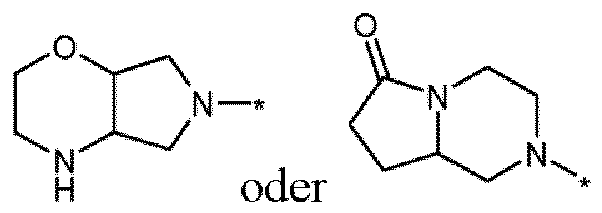
- Verbindung der Formel 1 nach einem der Ansprüche 1 bis 9 oder ein pharmazeutisch akzeptables bzw. annehmbares Salz hiervon zur Verwendung als Medikament.
- Verbindung der Formel 1 nach einem der Ansprüche 1 bis 9 oder ein pharmazeutisch akzeptables bzw. annehmbares Salz hiervon zur Verwendung in der Behandlung und/oder Vorbeugung von Erkrankungen der Atemwege und der Lunge, die begleitet werden von erhöhter Schleimproduktion, Inflammation und/oder obstruktiven Erkrankungen der Atemwege; oder Gastrointestinalbeschwerden oder -erkrankungen, inflammatorischen Erkrankungen der Gelenke, der Haut oder der Augen, Erkrankungen des peripheren oder zentralen Nervensystems oder Krebs, wie auch pharmazeutische Zusammensetzungen, die diese Verbindungen enthalten.
- Verbindung der Formel 1 nach einem der Ansprüche 1 bis 9 oder ein pharmazeutisch akzeptables bzw. annehmbares Salz hiervon zur Verwendung in der Behandlung und/oder Vorbeugung einer akuten, allergischen oder chronischen Bronchitis, chronisch obstruktiver Bronchitis (COPD), Husten, Pulmonalemphysem, allergischer oder nicht-allergischer Rhinitis oder Sinusitis, chronischer Rhinitis oder Sinusitis, Asthma, Alveolitis, Farmers Erkrankung, hyperreaktiven Atemwegen, Infektionen, Bronchitis, Pneumonitis, pädiatrischem Asthma, Bronchiektase, pulmonaler Fibrose, ARDS (acute adult respiratory distress syndrome), Bronchoödem, Pulmonalödem, Bronchitis, Pneumonie oder interstitieller Pneumonie, ausgelöst durch verschiedene Ursachen, wie Aspiration, Inhalation von toxischen Gasen, oder Bronchitis, Pneumonie oder interstitieller Pneumonie infolge von Herzversagen, Bestrahlung, Chemotherapie, zystischer Fibrose oder Mucoviszidose oder alpha-1-Antitrypsin-Mangel.
- Pharmazeutische Zusammensetzung, enthaltend mindestens eine Verbindung der Formel 1 nach einem der Ansprüche 1 bis 9 oder ein pharmazeutisch akzeptables bzw. annehmbares Salz hiervon, zusammen mit ein oder mehreren pharmazeutisch akzeptablen bzw. annehmbaren Trägern.
Priority Applications (1)
| Application Number | Priority Date | Filing Date | Title |
|---|---|---|---|
| EP11802356.3A EP2651932B1 (de) | 2010-12-17 | 2011-12-16 | Bicyclische ringsystemsubstituierte sulfonamidfunktionalisierte phenole als arzneimittel |
Applications Claiming Priority (3)
| Application Number | Priority Date | Filing Date | Title |
|---|---|---|---|
| EP10195642 | 2010-12-17 | ||
| PCT/EP2011/073026 WO2012080457A1 (en) | 2010-12-17 | 2011-12-16 | Bicyclic ring system substituted sulfonamide functionalised phenols as medicaments |
| EP11802356.3A EP2651932B1 (de) | 2010-12-17 | 2011-12-16 | Bicyclische ringsystemsubstituierte sulfonamidfunktionalisierte phenole als arzneimittel |
Publications (2)
| Publication Number | Publication Date |
|---|---|
| EP2651932A1 EP2651932A1 (de) | 2013-10-23 |
| EP2651932B1 true EP2651932B1 (de) | 2015-11-25 |
Family
ID=45420618
Family Applications (1)
| Application Number | Title | Priority Date | Filing Date |
|---|---|---|---|
| EP11802356.3A Active EP2651932B1 (de) | 2010-12-17 | 2011-12-16 | Bicyclische ringsystemsubstituierte sulfonamidfunktionalisierte phenole als arzneimittel |
Country Status (4)
| Country | Link |
|---|---|
| US (1) | US8648070B2 (de) |
| EP (1) | EP2651932B1 (de) |
| JP (1) | JP2013545790A (de) |
| WO (1) | WO2012080457A1 (de) |
Families Citing this family (10)
| Publication number | Priority date | Publication date | Assignee | Title |
|---|---|---|---|---|
| JP5788404B2 (ja) | 2009-12-11 | 2015-09-30 | アウトイフオンイ トヘラペウトイクス リミテッド | イミダゾリジンジオン誘導体 |
| TWI724056B (zh) | 2015-11-19 | 2021-04-11 | 美商卡默森屈有限公司 | Cxcr2抑制劑 |
| TWI734715B (zh) | 2015-11-19 | 2021-08-01 | 美商卡默森屈有限公司 | 趨化因子受體調節劑 |
| US10660909B2 (en) | 2016-11-17 | 2020-05-26 | Syntrix Biosystems Inc. | Method for treating cancer using chemokine antagonists |
| KR20200037857A (ko) * | 2017-08-14 | 2020-04-09 | 알러간, 인코포레이티드 | 3,4-이치환된 3-시클로부텐-1,2-디온 및 그의 용도 |
| EP3737366B1 (de) | 2018-01-08 | 2026-02-25 | ChemoCentryx, Inc. | Verfahren zur behandlung von generalisierter pustulöser psoriasis mit einem antagonisten von ccr6 oder cxcr2 |
| WO2019165315A1 (en) | 2018-02-23 | 2019-08-29 | Syntrix Biosystems Inc. | Method for treating cancer using chemokine antagonists alone or in combination |
| SG11202101827RA (en) | 2018-09-21 | 2021-04-29 | Pfizer | N-substituted-dioxocyclobutenylamino-3-hydroxy-picolinamides useful as ccr6 inhibitors |
| CN112851635B (zh) * | 2019-11-28 | 2022-09-16 | 中国医学科学院药物研究所 | 环状砜类化合物及其制备方法、用途和药物组合物 |
| JP7659381B2 (ja) * | 2020-11-06 | 2025-04-09 | 関東化学株式会社 | 光学活性アミン化合物の製造方法 |
Family Cites Families (12)
| Publication number | Priority date | Publication date | Assignee | Title |
|---|---|---|---|---|
| UY26627A1 (es) | 2000-03-24 | 2001-09-28 | Smithkline Beecham Corp | Antagonistas de receptores de il-8 |
| DE60216229T2 (de) | 2001-01-16 | 2007-10-04 | Smithkline Beecham Corp. | Il-8-rezeptorantagonisten |
| US20040097547A1 (en) | 2001-04-16 | 2004-05-20 | Taveras Arthur G. | 3,4-Di-substituted cyclobutene-1,2-diones as CXC-chemokine receptor ligands |
| US7132445B2 (en) | 2001-04-16 | 2006-11-07 | Schering Corporation | 3,4-Di-substituted cyclobutene-1,2-diones as CXC-chemokine receptor ligands |
| US20070067088A1 (en) | 2005-09-16 | 2007-03-22 | Kwang Baig | In-vehicle multifunctional information device |
| WO2007058322A1 (ja) * | 2005-11-18 | 2007-05-24 | Ono Pharmaceutical Co., Ltd. | 塩基性基を含有する化合物およびその用途 |
| US8097626B2 (en) * | 2006-04-21 | 2012-01-17 | Glaxosmithkline Llc | IL-8 receptor antagonists |
| PL2009992T3 (pl) * | 2006-04-21 | 2012-11-30 | Glaxosmithkline Llc | Antagoniści receptora IL-8 |
| EP2155670B1 (de) | 2007-06-06 | 2012-04-18 | Novartis AG | Entzündungshemmende substituierte cyclobutendionverbindungen |
| UA103198C2 (en) | 2008-08-04 | 2013-09-25 | Новартис Аг | Squaramide derivatives as cxcr2 antagonists |
| WO2010063802A1 (en) | 2008-12-05 | 2010-06-10 | Novartis Ag | 3, 4-di-substituted cyclobutene- 1, 2 -diones as cxcr2 receptor antagonists |
| WO2010131145A1 (en) * | 2009-05-12 | 2010-11-18 | Pfizer Limited | Cyclobutenedione derivatives |
-
2011
- 2011-12-13 US US13/324,248 patent/US8648070B2/en active Active
- 2011-12-16 JP JP2013543810A patent/JP2013545790A/ja active Pending
- 2011-12-16 EP EP11802356.3A patent/EP2651932B1/de active Active
- 2011-12-16 WO PCT/EP2011/073026 patent/WO2012080457A1/en not_active Ceased
Also Published As
| Publication number | Publication date |
|---|---|
| US20120316159A1 (en) | 2012-12-13 |
| US8648070B2 (en) | 2014-02-11 |
| EP2651932A1 (de) | 2013-10-23 |
| WO2012080457A1 (en) | 2012-06-21 |
| JP2013545790A (ja) | 2013-12-26 |
Similar Documents
| Publication | Publication Date | Title |
|---|---|---|
| EP2651932B1 (de) | Bicyclische ringsystemsubstituierte sulfonamidfunktionalisierte phenole als arzneimittel | |
| EP2651891B1 (de) | Bicyclische ringsystemsubstituierte amidfunktionalisierte phenole als arzneimittel | |
| AU2012331274B2 (en) | Heterocyclic compounds, medicaments containing said compounds, use thereof and processes for the preparation thereof | |
| EP2897940B1 (de) | Heterocyclische verbindungen, medikamente mit diesen verbindungen, verwendung davon und verfahren zur herstellung davon | |
| EP2794595B1 (de) | Heterocyclische verbindungen, medikamente mit diesen verbindungen, verwendung dafür und verfahren zu deren herstellung | |
| CN103068817B (zh) | 作为缓激肽b1受体拮抗剂的二取代的四氢呋喃基化合物 | |
| EP2861577B1 (de) | Tertiäramine, medikamente mit den besagten aminen, verwendung damit und verfahren zu deren herstellung | |
| JP5657253B2 (ja) | 新規な置換ピペリジル−プロパン−チオール | |
| JP5581055B2 (ja) | ピペリジル−プロパン−チオールccr3モジュレーター | |
| OA16887A (en) | Heterocyclic compounds, medicaments containing said compounds, use thereof and processes for the preparation thereof. | |
| HK1178902B (en) | Disubstituted tetrahydofuranyl compounds as antagonists of the bradykinin b1 receptor |
Legal Events
| Date | Code | Title | Description |
|---|---|---|---|
| PUAI | Public reference made under article 153(3) epc to a published international application that has entered the european phase |
Free format text: ORIGINAL CODE: 0009012 |
|
| 17P | Request for examination filed |
Effective date: 20130717 |
|
| AK | Designated contracting states |
Kind code of ref document: A1 Designated state(s): AL AT BE BG CH CY CZ DE DK EE ES FI FR GB GR HR HU IE IS IT LI LT LU LV MC MK MT NL NO PL PT RO RS SE SI SK SM TR |
|
| DAX | Request for extension of the european patent (deleted) | ||
| 17Q | First examination report despatched |
Effective date: 20150129 |
|
| GRAP | Despatch of communication of intention to grant a patent |
Free format text: ORIGINAL CODE: EPIDOSNIGR1 |
|
| INTG | Intention to grant announced |
Effective date: 20150619 |
|
| GRAS | Grant fee paid |
Free format text: ORIGINAL CODE: EPIDOSNIGR3 |
|
| GRAA | (expected) grant |
Free format text: ORIGINAL CODE: 0009210 |
|
| AK | Designated contracting states |
Kind code of ref document: B1 Designated state(s): AL AT BE BG CH CY CZ DE DK EE ES FI FR GB GR HR HU IE IS IT LI LT LU LV MC MK MT NL NO PL PT RO RS SE SI SK SM TR |
|
| REG | Reference to a national code |
Ref country code: GB Ref legal event code: FG4D |
|
| REG | Reference to a national code |
Ref country code: CH Ref legal event code: EP |
|
| REG | Reference to a national code |
Ref country code: AT Ref legal event code: REF Ref document number: 762531 Country of ref document: AT Kind code of ref document: T Effective date: 20151215 |
|
| REG | Reference to a national code |
Ref country code: IE Ref legal event code: FG4D |
|
| REG | Reference to a national code |
Ref country code: FR Ref legal event code: PLFP Year of fee payment: 5 |
|
| REG | Reference to a national code |
Ref country code: DE Ref legal event code: R096 Ref document number: 602011021690 Country of ref document: DE |
|
| REG | Reference to a national code |
Ref country code: LT Ref legal event code: MG4D |
|
| REG | Reference to a national code |
Ref country code: NL Ref legal event code: MP Effective date: 20160225 |
|
| REG | Reference to a national code |
Ref country code: AT Ref legal event code: MK05 Ref document number: 762531 Country of ref document: AT Kind code of ref document: T Effective date: 20151125 |
|
| PG25 | Lapsed in a contracting state [announced via postgrant information from national office to epo] |
Ref country code: ES Free format text: LAPSE BECAUSE OF FAILURE TO SUBMIT A TRANSLATION OF THE DESCRIPTION OR TO PAY THE FEE WITHIN THE PRESCRIBED TIME-LIMIT Effective date: 20151125 Ref country code: LT Free format text: LAPSE BECAUSE OF FAILURE TO SUBMIT A TRANSLATION OF THE DESCRIPTION OR TO PAY THE FEE WITHIN THE PRESCRIBED TIME-LIMIT Effective date: 20151125 Ref country code: NO Free format text: LAPSE BECAUSE OF FAILURE TO SUBMIT A TRANSLATION OF THE DESCRIPTION OR TO PAY THE FEE WITHIN THE PRESCRIBED TIME-LIMIT Effective date: 20160225 Ref country code: NL Free format text: LAPSE BECAUSE OF FAILURE TO SUBMIT A TRANSLATION OF THE DESCRIPTION OR TO PAY THE FEE WITHIN THE PRESCRIBED TIME-LIMIT Effective date: 20151125 Ref country code: HR Free format text: LAPSE BECAUSE OF FAILURE TO SUBMIT A TRANSLATION OF THE DESCRIPTION OR TO PAY THE FEE WITHIN THE PRESCRIBED TIME-LIMIT Effective date: 20151125 Ref country code: IS Free format text: LAPSE BECAUSE OF FAILURE TO SUBMIT A TRANSLATION OF THE DESCRIPTION OR TO PAY THE FEE WITHIN THE PRESCRIBED TIME-LIMIT Effective date: 20160325 |
|
| PG25 | Lapsed in a contracting state [announced via postgrant information from national office to epo] |
Ref country code: BE Free format text: LAPSE BECAUSE OF NON-PAYMENT OF DUE FEES Effective date: 20151231 Ref country code: SE Free format text: LAPSE BECAUSE OF FAILURE TO SUBMIT A TRANSLATION OF THE DESCRIPTION OR TO PAY THE FEE WITHIN THE PRESCRIBED TIME-LIMIT Effective date: 20151125 Ref country code: FI Free format text: LAPSE BECAUSE OF FAILURE TO SUBMIT A TRANSLATION OF THE DESCRIPTION OR TO PAY THE FEE WITHIN THE PRESCRIBED TIME-LIMIT Effective date: 20151125 Ref country code: GR Free format text: LAPSE BECAUSE OF FAILURE TO SUBMIT A TRANSLATION OF THE DESCRIPTION OR TO PAY THE FEE WITHIN THE PRESCRIBED TIME-LIMIT Effective date: 20160226 Ref country code: LV Free format text: LAPSE BECAUSE OF FAILURE TO SUBMIT A TRANSLATION OF THE DESCRIPTION OR TO PAY THE FEE WITHIN THE PRESCRIBED TIME-LIMIT Effective date: 20151125 Ref country code: AT Free format text: LAPSE BECAUSE OF FAILURE TO SUBMIT A TRANSLATION OF THE DESCRIPTION OR TO PAY THE FEE WITHIN THE PRESCRIBED TIME-LIMIT Effective date: 20151125 Ref country code: RS Free format text: LAPSE BECAUSE OF FAILURE TO SUBMIT A TRANSLATION OF THE DESCRIPTION OR TO PAY THE FEE WITHIN THE PRESCRIBED TIME-LIMIT Effective date: 20151125 Ref country code: PT Free format text: LAPSE BECAUSE OF FAILURE TO SUBMIT A TRANSLATION OF THE DESCRIPTION OR TO PAY THE FEE WITHIN THE PRESCRIBED TIME-LIMIT Effective date: 20160325 Ref country code: PL Free format text: LAPSE BECAUSE OF FAILURE TO SUBMIT A TRANSLATION OF THE DESCRIPTION OR TO PAY THE FEE WITHIN THE PRESCRIBED TIME-LIMIT Effective date: 20151125 |
|
| PG25 | Lapsed in a contracting state [announced via postgrant information from national office to epo] |
Ref country code: IT Free format text: LAPSE BECAUSE OF FAILURE TO SUBMIT A TRANSLATION OF THE DESCRIPTION OR TO PAY THE FEE WITHIN THE PRESCRIBED TIME-LIMIT Effective date: 20151125 Ref country code: CZ Free format text: LAPSE BECAUSE OF FAILURE TO SUBMIT A TRANSLATION OF THE DESCRIPTION OR TO PAY THE FEE WITHIN THE PRESCRIBED TIME-LIMIT Effective date: 20151125 |
|
| REG | Reference to a national code |
Ref country code: CH Ref legal event code: PL |
|
| REG | Reference to a national code |
Ref country code: DE Ref legal event code: R097 Ref document number: 602011021690 Country of ref document: DE |
|
| PG25 | Lapsed in a contracting state [announced via postgrant information from national office to epo] |
Ref country code: DK Free format text: LAPSE BECAUSE OF FAILURE TO SUBMIT A TRANSLATION OF THE DESCRIPTION OR TO PAY THE FEE WITHIN THE PRESCRIBED TIME-LIMIT Effective date: 20151125 Ref country code: SK Free format text: LAPSE BECAUSE OF FAILURE TO SUBMIT A TRANSLATION OF THE DESCRIPTION OR TO PAY THE FEE WITHIN THE PRESCRIBED TIME-LIMIT Effective date: 20151125 Ref country code: RO Free format text: LAPSE BECAUSE OF FAILURE TO SUBMIT A TRANSLATION OF THE DESCRIPTION OR TO PAY THE FEE WITHIN THE PRESCRIBED TIME-LIMIT Effective date: 20151125 Ref country code: EE Free format text: LAPSE BECAUSE OF FAILURE TO SUBMIT A TRANSLATION OF THE DESCRIPTION OR TO PAY THE FEE WITHIN THE PRESCRIBED TIME-LIMIT Effective date: 20151125 Ref country code: SM Free format text: LAPSE BECAUSE OF FAILURE TO SUBMIT A TRANSLATION OF THE DESCRIPTION OR TO PAY THE FEE WITHIN THE PRESCRIBED TIME-LIMIT Effective date: 20151125 |
|
| REG | Reference to a national code |
Ref country code: IE Ref legal event code: MM4A |
|
| PG25 | Lapsed in a contracting state [announced via postgrant information from national office to epo] |
Ref country code: MC Free format text: LAPSE BECAUSE OF FAILURE TO SUBMIT A TRANSLATION OF THE DESCRIPTION OR TO PAY THE FEE WITHIN THE PRESCRIBED TIME-LIMIT Effective date: 20151125 |
|
| PLBE | No opposition filed within time limit |
Free format text: ORIGINAL CODE: 0009261 |
|
| STAA | Information on the status of an ep patent application or granted ep patent |
Free format text: STATUS: NO OPPOSITION FILED WITHIN TIME LIMIT |
|
| PG25 | Lapsed in a contracting state [announced via postgrant information from national office to epo] |
Ref country code: IE Free format text: LAPSE BECAUSE OF NON-PAYMENT OF DUE FEES Effective date: 20151216 Ref country code: CH Free format text: LAPSE BECAUSE OF NON-PAYMENT OF DUE FEES Effective date: 20151231 Ref country code: LI Free format text: LAPSE BECAUSE OF NON-PAYMENT OF DUE FEES Effective date: 20151231 |
|
| 26N | No opposition filed |
Effective date: 20160826 |
|
| PG25 | Lapsed in a contracting state [announced via postgrant information from national office to epo] |
Ref country code: SI Free format text: LAPSE BECAUSE OF FAILURE TO SUBMIT A TRANSLATION OF THE DESCRIPTION OR TO PAY THE FEE WITHIN THE PRESCRIBED TIME-LIMIT Effective date: 20151125 |
|
| REG | Reference to a national code |
Ref country code: FR Ref legal event code: PLFP Year of fee payment: 6 |
|
| PG25 | Lapsed in a contracting state [announced via postgrant information from national office to epo] |
Ref country code: BE Free format text: LAPSE BECAUSE OF FAILURE TO SUBMIT A TRANSLATION OF THE DESCRIPTION OR TO PAY THE FEE WITHIN THE PRESCRIBED TIME-LIMIT Effective date: 20151125 |
|
| PG25 | Lapsed in a contracting state [announced via postgrant information from national office to epo] |
Ref country code: BG Free format text: LAPSE BECAUSE OF FAILURE TO SUBMIT A TRANSLATION OF THE DESCRIPTION OR TO PAY THE FEE WITHIN THE PRESCRIBED TIME-LIMIT Effective date: 20151125 Ref country code: HU Free format text: LAPSE BECAUSE OF FAILURE TO SUBMIT A TRANSLATION OF THE DESCRIPTION OR TO PAY THE FEE WITHIN THE PRESCRIBED TIME-LIMIT; INVALID AB INITIO Effective date: 20111216 |
|
| PG25 | Lapsed in a contracting state [announced via postgrant information from national office to epo] |
Ref country code: CY Free format text: LAPSE BECAUSE OF FAILURE TO SUBMIT A TRANSLATION OF THE DESCRIPTION OR TO PAY THE FEE WITHIN THE PRESCRIBED TIME-LIMIT Effective date: 20151125 |
|
| PG25 | Lapsed in a contracting state [announced via postgrant information from national office to epo] |
Ref country code: MT Free format text: LAPSE BECAUSE OF FAILURE TO SUBMIT A TRANSLATION OF THE DESCRIPTION OR TO PAY THE FEE WITHIN THE PRESCRIBED TIME-LIMIT Effective date: 20151125 |
|
| PG25 | Lapsed in a contracting state [announced via postgrant information from national office to epo] |
Ref country code: LU Free format text: LAPSE BECAUSE OF NON-PAYMENT OF DUE FEES Effective date: 20151216 |
|
| REG | Reference to a national code |
Ref country code: FR Ref legal event code: PLFP Year of fee payment: 7 |
|
| PG25 | Lapsed in a contracting state [announced via postgrant information from national office to epo] |
Ref country code: TR Free format text: LAPSE BECAUSE OF FAILURE TO SUBMIT A TRANSLATION OF THE DESCRIPTION OR TO PAY THE FEE WITHIN THE PRESCRIBED TIME-LIMIT Effective date: 20151125 Ref country code: MK Free format text: LAPSE BECAUSE OF FAILURE TO SUBMIT A TRANSLATION OF THE DESCRIPTION OR TO PAY THE FEE WITHIN THE PRESCRIBED TIME-LIMIT Effective date: 20151125 |
|
| PG25 | Lapsed in a contracting state [announced via postgrant information from national office to epo] |
Ref country code: AL Free format text: LAPSE BECAUSE OF FAILURE TO SUBMIT A TRANSLATION OF THE DESCRIPTION OR TO PAY THE FEE WITHIN THE PRESCRIBED TIME-LIMIT Effective date: 20151125 |
|
| PGFP | Annual fee paid to national office [announced via postgrant information from national office to epo] |
Ref country code: DE Payment date: 20251211 Year of fee payment: 15 |
|
| PGFP | Annual fee paid to national office [announced via postgrant information from national office to epo] |
Ref country code: GB Payment date: 20251219 Year of fee payment: 15 |
|
| PGFP | Annual fee paid to national office [announced via postgrant information from national office to epo] |
Ref country code: FR Payment date: 20251223 Year of fee payment: 15 |