EP2652162B1 - Procédé de production de panneau mis en forme en alliage al pour applications aérospatiales - Google Patents
Procédé de production de panneau mis en forme en alliage al pour applications aérospatiales Download PDFInfo
- Publication number
- EP2652162B1 EP2652162B1 EP11776180.9A EP11776180A EP2652162B1 EP 2652162 B1 EP2652162 B1 EP 2652162B1 EP 11776180 A EP11776180 A EP 11776180A EP 2652162 B1 EP2652162 B1 EP 2652162B1
- Authority
- EP
- European Patent Office
- Prior art keywords
- sheet
- forming
- temperature
- aluminium alloy
- strain
- Prior art date
- Legal status (The legal status is an assumption and is not a legal conclusion. Google has not performed a legal analysis and makes no representation as to the accuracy of the status listed.)
- Active
Links
Images


Classifications
-
- B—PERFORMING OPERATIONS; TRANSPORTING
- B21—MECHANICAL METAL-WORKING WITHOUT ESSENTIALLY REMOVING MATERIAL; PUNCHING METAL
- B21D—WORKING OR PROCESSING OF SHEET METAL OR METAL TUBES, RODS OR PROFILES WITHOUT ESSENTIALLY REMOVING MATERIAL; PUNCHING METAL
- B21D25/00—Working sheet metal of limited length by stretching, e.g. for straightening
-
- C—CHEMISTRY; METALLURGY
- C22—METALLURGY; FERROUS OR NON-FERROUS ALLOYS; TREATMENT OF ALLOYS OR NON-FERROUS METALS
- C22C—ALLOYS
- C22C21/00—Alloys based on aluminium
- C22C21/06—Alloys based on aluminium with magnesium as the next major constituent
-
- C—CHEMISTRY; METALLURGY
- C22—METALLURGY; FERROUS OR NON-FERROUS ALLOYS; TREATMENT OF ALLOYS OR NON-FERROUS METALS
- C22F—CHANGING THE PHYSICAL STRUCTURE OF NON-FERROUS METALS AND NON-FERROUS ALLOYS
- C22F1/00—Changing the physical structure of non-ferrous metals or alloys by heat treatment or by hot or cold working
- C22F1/04—Changing the physical structure of non-ferrous metals or alloys by heat treatment or by hot or cold working of aluminium or alloys based thereon
- C22F1/047—Changing the physical structure of non-ferrous metals or alloys by heat treatment or by hot or cold working of aluminium or alloys based thereon of alloys with magnesium as the next major constituent
Definitions
- the invention relates to a method of producing a shaped aluminium alloy panel, preferably for aerospace or automotive applications, from 5000-series aluminium alloy sheet.
- alloy designations and temper designations refer to the Aluminum Association designations in Aluminum Standards and Data and the Registration Records, as published by the Aluminum Association in 2010 as is well known in the art.
- AIMg alloys and in particular AIMgSc alloys, are suitable candidates for aerospace applications due to their low density compared to various existing aluminium alloys, while at the same time the strength and toughness level are comparable.
- the aerospace applications require the sheet to be formed to complex curved shapes, such as fuselage skin, lower wing skin, upper wing skin or wing stringers.
- creep forming is the preferred method for forming aluminium alloy sheet of the 5000-series. During creep forming, the sheet is heated in an autoclave to a temperature typically above about 300°C, and a load is applied to the sheet, for example by using a vacuum to draw the sheet into the mould. During the process, the sheet slowly deforms to the desired shape, and which may take several hours.
- the main advantage of this forming process is the high shape accuracy, and that it can be combined with laser beam welding of the stringers to the sheet. Disadvantages are the high capital costs of the creep anneal installation, and the long forming times required.
- stretch forming of 5000-series alloy sheet without the formation of PLC bands is possible at temperatures between -100°C and-25°C.
- a preferred upper limit for the forming temperature is about -30°C, more preferred about -35°C, and most preferred about -40°C.
- a preferred lower temperature limit is about -90 °C, most preferred about -80°C.
- the forming temperature is usually chosen at the higher part of the temperature range, e.g. between about -40°C and -70°C, allowing the alloy sheet to be cooled for example by dry ice, which has a temperature of only -78°C.
- This comparatively high temperature allows more flexibility in the applied stretch forming process.
- it is possible to cool the aluminium sheet prior to stretch forming i.e. the stretch forming installation need not be cooled itself.
- the sheet is cooled during forming, but possibly the active cooling may be stopped during the forming process. Cooling to the forming temperature can be done by placing cold media on the sheet, such as dry ice, by spraying with liquid nitrogen, or by cooling down the stretch forming equipment by means of an ordinary cooling apparatus as used for refrigerators.
- the sheet is cooled down prior to the stretch forming by use of dry ice, in particular by immersion in or spraying with dry ice, and no further cooling is done during the stretch forming.
- the sheet is made of a 5000 series alloy having a composition comprising 3.0-6.0% Mg, preferably 3.8-5.3% Mg, and 0.05-0.5% Sc, preferably 0.1-0.4% Sc, most preferred 0.2-0.3% Sc.
- the alloy may comprise 0.05-0.25% Zr, preferably 0.10-0.15% Zr.
- the balance is made by Fe, Si, regular impurities and aluminium.
- the aluminium alloy may contain up to 2% Zn.
- the aluminium alloy is made from the AA5024 series.
- the method is applicable to sheet material having a thickness of 0.05-10 mm, preferably about 0.8-6 mm, and a length in the longest dimension of at least 800 mm. It is characteristic for the invention that it can be industrially applied to produce larger panels with good properties.
- the alloy sheet has a length in the longest dimension of at least 1 m, preferably >3m, and preferably the alloy sheet has a width of 0.4-2 m.
- the invention is used to produce a shaped aluminium alloy panel for structural aerospace applications, wherein the shaped panel can be used as lower wing skin, upper wing skin, spar, or fuselage skin.
- the strain rate during stretch forming is above 1x10 -4 s -1 , thus resulting in a critical temperature of above about -60°C, more preferred the strain rate is above 1x10 -3 , resulting in a critical temperature about -42°C, and most preferred, the strain rate is above 2x10 -3 .
- a preferred target forming temperature is below -40°C, preferably below -50°C, but preferably above the temperature of dry ice (-78°C).
- the target temperature is that which one aims at achieving during the stretch forming.
- the temperature need not be held constant (for example at the target forming temperature) during the stretch forming step.
- the temperature may vary by ⁇ 7°C, more preferred by ⁇ 10°C, most preferred by ⁇ 15°C.
- the sheet used in the stretch forming process has preferably been processed by casting an ingot; hot rolling the ingot to an intermediate gauge, such as for example 5-10 mm; cold rolling the hot-rolled product to the final gauge, such as for example 2-6 mm, and annealing the cold-rolled product at a temperature of for example 270-280°C for 1-2 hours.
- a post-forming annealing is carried out at a temperature between 250°C and 350°C, preferably 275°C to 325°C, or inter-annealing steps between two stretch forming steps also at a temperature of 250-350°C, preferably 275°C to 325°C, in order to eliminate any remaining inhomogeneous properties, or to balance the properties to the desired application.
- the invention is also directed to a shaped aluminium alloy panel for structural aerospace or automotive applications having been shaped by the method according to the invention.
- the shaped aluminium alloy panel does not show any PLC bands and has an ultimate tensile strength of above 380 MPa, preferably above 400 MPa, and an elongation above 7%, preferably above 8%.
- the ratio of tear strength to yield strength is preferably above 1.5, more preferred above 1.6, and the yield strength is preferably above 325 MPa, more preferred above 350 MPa.
- the shaped aluminium alloy panel is preferably processed according to the above-described method steps.
- Fig. 1 summarises a number of experiments which have been carried out to find out the critical temperature, i.e. the maximum temperature below 0°C at which 5000-series alloy sheet can be stretched without PLC lines appearing.
- the circular data points indicate sample with no PLC lines, square data point represent samples with PLC lines.
- T crit °C log 10 ⁇ ⁇ s ⁇ 1 ⁇ 18.8 + 13.8 °C
- the critical temperature is drawn in Fig. 1 as a line separating samples with no PLC lines from those which showed PLC lines. Surprisingly, the higher the strain rate, the higher the stretching temperature can be. Thus, at the temperature range above about -100°C and below the critical temperature, homogeneous flow occurs during stretching. Experiments show that the dislocation movement at these temperatures is rather homogeneous, because the solute atoms cannot catch up with the moving dislocations to pin them, caused by the low diffusivity of the solute Mg atoms at the low temperatures.
- the experiments of Fig. 1 were carried out with an AIMgSc alloy having the following composition: Mg 4.5%, Sc 0.27%, Zr 0.10%, impurities ⁇ 0.05% each and ⁇ 0.15% in total, remainder aluminium.
- Alloys were cast, processed to sheet products and stretched at various temperatures and at various strain rates and total strains to investigate the advantages of the present invention.
- an alloy containing 4.5% Mg, 0.26% Sc, 0.10% Zr, impurities ⁇ 0.05% each and ⁇ 0.15% in total, remainder aluminium was cast to ingots having a diameter of 262 mm and 1400 mm length.
- rolling blocks were machined with a gauge of 80 mm.
- the rolling blocks were hot-rolled to an intermediate gauge of 8mm, cold rolled to a thickness of 4 mm, annealed for 1 hour at 275°C, cold rolled to 1.6 mm, and annealed for two hours at 325°C.
- panels were machined which were subjected to a cryogenic stretching operation at various temperatures, strain rates and total strains, as indicated in the below tables 1 and 2.
- Fig. 2-11 shall be discussed in the following to illustrate some important properties of the sheet stretched according to the invention.
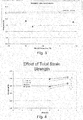
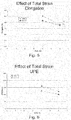
- a significant amount of work hardening occurs by stretching to a total strain of 6%, resulting in an increase of ultimate tensile strength from about 375 MPa of the unstretched reference to above 390 MPa for forming temperatures of -40 or -50°C. Yield strength increases from about 290 to above 350 MPa.
- this technique does not form an alternative, due to the clear appearance of PLC lines at these temperatures.
- the work hardening effect is considerably higher at cryogenic temperatures than at temperatures above 100°C, thus cryo-stretching yields considerably better results in this regard.
- Fig. 3 shows values for the elongation after stretching by 6%, which appears to be fairly constant for temperatures between -50°C and -100°C. This is of great advantage, since it demonstrates that the temperature need not be constant during stretch forming, but may vary by for example ⁇ 20°C, as long as the critical temperature for cryo-stretching is not overstepped.
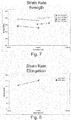
- Fig. 7-9 demonstrate the effect of strain rate on various properties. As evident from fig. 7 , the effect on strength is generally very low. Elongation seems to decrease with increasing strain rate, whereas unit propagation energy appears to be relatively unaffected by the strain rate. Thus, there appears to be no obstacle to using a high strain rate, in order to achieve a relatively high critical temperature according to Fig. 1 , and which also has the advantage of a high throughput of formed panels.
- Fig. 10 gives a summary of various properties, comparing a low strain (4%) and low strain rate with high strain (6%) and high strain rate at a temperature of -50°C.
- the diagram clearly shows that all properties remain relatively constant, which is a good indication for a homogeneous distribution of properties over a formed panel which is stretched by different amounts in different positions.
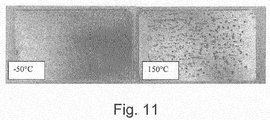
- the invention has the additional advantage that cryo-stretching does not sensitize the material, therefore there will be no loss of corrosion resistance, see Table 3 and Figure 11 in which the exfoliation and pitting corrosion for cryo-streched 5xxx sheet according to ASTM G-66 is compared with that of sheet stretched at +150°C to prevent PLC lines.
- Table 3 "PA” and "PB” stand for slight pitting and moderate pitting respectively, "PN” stands for no pitting, and "EA” stands for slight exfoliation. Because there is no recovery of the deformed microstructure, the strength values are retained. The strain hardening increases with decreasing stretch temperature. Table 3. Stretch Temperature Degree of Exfoliation Degree of Pitting / Pit-Blistering -50°C EA PN +150°C EA PB
Landscapes
- Chemical & Material Sciences (AREA)
- Engineering & Computer Science (AREA)
- Mechanical Engineering (AREA)
- Materials Engineering (AREA)
- Metallurgy (AREA)
- Organic Chemistry (AREA)
- Physics & Mathematics (AREA)
- Thermal Sciences (AREA)
- Crystallography & Structural Chemistry (AREA)
- Shaping Metal By Deep-Drawing, Or The Like (AREA)
- Continuous Casting (AREA)
- Metal Rolling (AREA)
Claims (12)
- Procédé pour produire un panneau conformé en alliage d'aluminium, de préférence pour des applications aérospatiales, à partir d'une tôle d'alliage d'aluminium de la série 5000, le procédé comprenant les étapes consistant à :- fournir une tôle réalisée en alliage de la série 5000, telle que la tôle est réalisée à partir d'un alliage d'aluminium comprenant3,0 à 6,0 % Mg,0,05 à 0,5 % Sc,0,05 à 0,25 % Zr,en option jusqu'à 2 % Zn,le reste étant constitué de Fe, Si, des impuretés régulières et de l'aluminium, et ayant une épaisseur de 0,05 à 10 mm et une longueur, dans la dimension la plus longue, d'au moins 800 mm ;- former la tôle par étirage à une température de formage entre -100° C et -25° C pour obtenir un panneau conformé en alliage d'aluminium dans lequel la température de formage est au-dessous d'une valeur Tcrit caractérisée par la formule

- Procédé selon la revendication 1, dans lequel le formage par étirage est effectué à un taux de déformation entre 0,1 et 10-4s-1.
- Procédé selon l'une quelconque des revendications précédentes, dans lequel le taux de déformation est au-dessus de 1x10⁻³s-1, et de préférence au-dessus de 2x10⁻³s-1.
- Procédé selon l'une quelconque des revendications précédentes, dans lequel la tôle est étirée, au moins dans certaines positions, avec une déformation totale de >1 à <8 %, de préférence entre 3 % et 8 %, et de manière plus préférée entre 3,5 % et 6,5 %.
- Procédé selon l'une quelconque des revendications précédentes, dans lequel la température de formage cible est au-dessous de -40° C, de préférence au-dessous de -50° C.
- Procédé selon l'une quelconque des revendications précédentes, dans lequel la température pendant le formage est maintenue constante dans ± 10° C, de préférence dans ± 15° C, de la température de formage cible, pendant le formage par étirage.
- Procédé selon l'une quelconque des revendications précédentes, dans lequel la tôle refroidie avant le formage par étirage en utilisant de la glace sèche, en particulier par immersion dans ou pulvérisation avec de la glace sèche, et aucun autre refroidissement n'est effectué pendant le formage par étirage.
- Procédé selon l'une quelconque des revendications précédentes, dans lequel la tôle réalisée en alliage de la série 5000 a été produite par- coulée d'un lingot ;- laminage à chaud ;- laminage à froid ;- recuit, de préférence pendant une à deux heures à 270-280° C.
- Procédé selon l'une quelconque des revendications précédentes, comprenant une étape de traitement postérieur consistant à recuire le panneau conformé en alliage d'aluminium à une température de 250 à 350° C, ou à effectuer un recuit intermédiaire du panneau en alliage d'aluminium entre deux étapes de formage par étirage à une température de 250 à 350° C.
- Procédé selon l'une quelconque des revendications précédentes, dans lequel la tôle est réalisée avec un alliage de la série 5000 ayant une épaisseur de 0,8 à 6 mm, et une longueur dans la dimension la plus longue d'au moins 800 mm.
- Procédé selon l'une quelconque des revendications précédentes, dans lequel la tôle est réalisée avec un alliage d'aluminium comprenant3,8 à 5,3 % Mg,0,1 à 0,4 % Sc,0,10 à 0,15 % Zr,en option jusqu'à 2 % Zn,
le reste étant constitué de Fe, Si, des impuretés régulières et de l'aluminium. - Procédé selon l'une quelconque des revendications précédentes, dans lequel la tôle est réalisée à partir d'un alliage d'aluminium de la série AA5024.
Priority Applications (1)
| Application Number | Priority Date | Filing Date | Title |
|---|---|---|---|
| EP11776180.9A EP2652162B1 (fr) | 2010-12-15 | 2011-10-28 | Procédé de production de panneau mis en forme en alliage al pour applications aérospatiales |
Applications Claiming Priority (3)
| Application Number | Priority Date | Filing Date | Title |
|---|---|---|---|
| EP10195118 | 2010-12-15 | ||
| EP11776180.9A EP2652162B1 (fr) | 2010-12-15 | 2011-10-28 | Procédé de production de panneau mis en forme en alliage al pour applications aérospatiales |
| PCT/EP2011/068966 WO2012079828A1 (fr) | 2010-12-15 | 2011-10-28 | Procédé de production d'un panneau d'alliage d'al profilé pour des applications aérospatiales |
Publications (2)
| Publication Number | Publication Date |
|---|---|
| EP2652162A1 EP2652162A1 (fr) | 2013-10-23 |
| EP2652162B1 true EP2652162B1 (fr) | 2016-08-24 |
Family
ID=44260402
Family Applications (1)
| Application Number | Title | Priority Date | Filing Date |
|---|---|---|---|
| EP11776180.9A Active EP2652162B1 (fr) | 2010-12-15 | 2011-10-28 | Procédé de production de panneau mis en forme en alliage al pour applications aérospatiales |
Country Status (8)
| Country | Link |
|---|---|
| US (1) | US9533339B2 (fr) |
| EP (1) | EP2652162B1 (fr) |
| CN (1) | CN103261462B (fr) |
| BR (1) | BR112013017630B8 (fr) |
| CA (1) | CA2821277C (fr) |
| DE (1) | DE112011104398T5 (fr) |
| RU (1) | RU2583198C2 (fr) |
| WO (1) | WO2012079828A1 (fr) |
Families Citing this family (3)
| Publication number | Priority date | Publication date | Assignee | Title |
|---|---|---|---|---|
| CN107866491A (zh) * | 2017-12-06 | 2018-04-03 | 哈尔滨工业大学 | 一种铝合金板类构件冷冻成形方法 |
| US10376943B1 (en) * | 2018-02-08 | 2019-08-13 | Shijian YUAN | Frozen forming method for large tailored plate aluminum alloy component |
| DE102018202915A1 (de) * | 2018-02-27 | 2019-08-29 | Airbus Defence and Space GmbH | Neue Materialien für Solarzellenverbinder |
Family Cites Families (10)
| Publication number | Priority date | Publication date | Assignee | Title |
|---|---|---|---|---|
| US4083220A (en) * | 1975-04-21 | 1978-04-11 | Hitachi, Ltd. | Sub-zero temperature plastic working process for metal |
| SE7702015L (sv) * | 1976-03-31 | 1977-10-01 | Union Carbide Corp | Sett att kryogent forma en metallplat av en metall med ytcentrerat kubiskt rumdgitter till ett alster av onskad kontfiguration |
| JPH05247480A (ja) | 1992-03-06 | 1993-09-24 | Kobe Steel Ltd | Al及びAl合金板低温成形用潤滑油及び低温成形方法 |
| CA2091035A1 (fr) | 1992-03-06 | 1993-09-07 | Yoshio Okamoto | Methode d'estampage de tole d'aluminium ou d'alliage d'aluminium |
| JP4014229B2 (ja) * | 1997-02-10 | 2007-11-28 | アルミナム カンパニー オブ アメリカ | アルミニウム合金製品 |
| US5819572A (en) * | 1997-07-22 | 1998-10-13 | General Motors Corporation | Lubrication system for hot forming |
| US6139653A (en) * | 1999-08-12 | 2000-10-31 | Kaiser Aluminum & Chemical Corporation | Aluminum-magnesium-scandium alloys with zinc and copper |
| JP2007268608A (ja) * | 2006-03-08 | 2007-10-18 | Kobe Steel Ltd | アルミニウム合金板のプレス成形方法およびプレス装置 |
| US9039848B2 (en) * | 2007-11-15 | 2015-05-26 | Aleris Aluminum Koblenz Gmbh | Al—Mg—Zn wrought alloy product and method of its manufacture |
| CN101880802B (zh) * | 2010-07-30 | 2013-06-19 | 浙江巨科铝业有限公司 | 汽车车身板用Al-Mg系高镁铝合金及其制造方法 |
-
2011
- 2011-10-28 CA CA2821277A patent/CA2821277C/fr active Active
- 2011-10-28 RU RU2013126799/02A patent/RU2583198C2/ru active
- 2011-10-28 CN CN201180059986.4A patent/CN103261462B/zh active Active
- 2011-10-28 WO PCT/EP2011/068966 patent/WO2012079828A1/fr not_active Ceased
- 2011-10-28 US US13/993,018 patent/US9533339B2/en active Active
- 2011-10-28 BR BR112013017630A patent/BR112013017630B8/pt active IP Right Grant
- 2011-10-28 EP EP11776180.9A patent/EP2652162B1/fr active Active
- 2011-10-28 DE DE112011104398T patent/DE112011104398T5/de not_active Withdrawn
Also Published As
| Publication number | Publication date |
|---|---|
| CA2821277A1 (fr) | 2012-06-21 |
| EP2652162A1 (fr) | 2013-10-23 |
| BR112013017630B1 (pt) | 2019-01-15 |
| CN103261462A (zh) | 2013-08-21 |
| WO2012079828A1 (fr) | 2012-06-21 |
| RU2013126799A (ru) | 2015-01-20 |
| US9533339B2 (en) | 2017-01-03 |
| RU2583198C2 (ru) | 2016-05-10 |
| DE112011104398T5 (de) | 2013-09-12 |
| CN103261462B (zh) | 2016-08-31 |
| BR112013017630A2 (pt) | 2016-10-18 |
| CA2821277C (fr) | 2019-02-12 |
| BR112013017630B8 (pt) | 2019-12-17 |
| US20130312881A1 (en) | 2013-11-28 |
Similar Documents
| Publication | Publication Date | Title |
|---|---|---|
| CA3008021C (fr) | Alliages d'aluminium 6xxx et leurs procedes de fabrication | |
| JP6771456B2 (ja) | アルミニウム合金製品及び調製方法 | |
| CA2908196C (fr) | Alliages aluminium-lithium haute resistance, haute formabilite et peu couteux | |
| US20100319817A1 (en) | Al-mg-zn wrought alloy product and method of its manufacture | |
| US20070246137A1 (en) | Method Of Making A Structural Element For Aeronautical Construction Comprising Differential Work-Hardening | |
| EP2546373A1 (fr) | Procédé de fabrication d'un produit de feuille d'alliage AI-Mg | |
| Nikulin et al. | Superplasticity in a 7055 aluminum alloy processed by ECAE and subsequent isothermal rolling | |
| EP1338664A1 (fr) | Tube en alliage d'aluminium apte à la formabilité multiple | |
| CA2539605C (fr) | Methode de production d'un alliage d'aluminium hautement tolerant aux dommages | |
| US7048816B2 (en) | Continuously cast magnesium containing, aluminum alloy sheet with copper addition | |
| EP3495520A1 (fr) | Alliage aluminium-lithium à faible coût et sensiblement sans zr pour un produit en feuille mince à haute formabilité | |
| EP2379765B2 (fr) | Procédé de fabrication de produit plat en alliage d'aluminium doté de faibles niveaux de contraintes résiduelles | |
| BR112018006499B1 (pt) | Processo de conformação de um artigo feito a partir de uma liga de alumínio endurecível por envelhecimento por envelhecimento | |
| CN105838928A (zh) | 高强度铝合金板 | |
| EP2652162B1 (fr) | Procédé de production de panneau mis en forme en alliage al pour applications aérospatiales | |
| EP3205736B1 (fr) | Feuille en alliage de magnésium obtenue par coulée entre cylindres | |
| US9314826B2 (en) | Method for the manufacture of an aluminium alloy plate product having low levels of residual stress | |
| KR20140001860A (ko) | 개선된 2xxx 알루미늄 합금 및 이의 제조 방법 | |
| US20060032560A1 (en) | Method for producing a high damage tolerant aluminium alloy | |
| EP2113576B1 (fr) | Procédé de fabrication d'un matériau de construction à partir d'un alliage à base d'aluminium contenant du magnésium | |
| JP7439994B2 (ja) | アルミニウム合金押出材及びその製造方法 | |
| KR20180046764A (ko) | 핫스탬핑 알루미늄 케이스의 제조방법 및 그 방법에 의해 제조된 핫스탬핑 알루미늄 케이스 | |
| EP3643802A1 (fr) | Tôle d'alliage de magnésium et son procédé de fabrication | |
| EP3741880B1 (fr) | Produit en tôle à flexibilité élevée et son procédé de fabrication | |
| Uan et al. | Uniform equiaxed grain structure throughout thickness of a hot-rolled 5083 Al-Mg-Mn alloy thick plate after a tempering treatment at 350° C |
Legal Events
| Date | Code | Title | Description |
|---|---|---|---|
| PUAI | Public reference made under article 153(3) epc to a published international application that has entered the european phase |
Free format text: ORIGINAL CODE: 0009012 |
|
| 17P | Request for examination filed |
Effective date: 20130611 |
|
| AK | Designated contracting states |
Kind code of ref document: A1 Designated state(s): AL AT BE BG CH CY CZ DE DK EE ES FI FR GB GR HR HU IE IS IT LI LT LU LV MC MK MT NL NO PL PT RO RS SE SI SK SM TR |
|
| DAX | Request for extension of the european patent (deleted) | ||
| 17Q | First examination report despatched |
Effective date: 20150311 |
|
| GRAP | Despatch of communication of intention to grant a patent |
Free format text: ORIGINAL CODE: EPIDOSNIGR1 |
|
| GRAJ | Information related to disapproval of communication of intention to grant by the applicant or resumption of examination proceedings by the epo deleted |
Free format text: ORIGINAL CODE: EPIDOSDIGR1 |
|
| GRAP | Despatch of communication of intention to grant a patent |
Free format text: ORIGINAL CODE: EPIDOSNIGR1 |
|
| GRAJ | Information related to disapproval of communication of intention to grant by the applicant or resumption of examination proceedings by the epo deleted |
Free format text: ORIGINAL CODE: EPIDOSDIGR1 |
|
| INTG | Intention to grant announced |
Effective date: 20160219 |
|
| RAP1 | Party data changed (applicant data changed or rights of an application transferred) |
Owner name: ALERIS ROLLED PRODUCTS GERMANY GMBH |
|
| GRAP | Despatch of communication of intention to grant a patent |
Free format text: ORIGINAL CODE: EPIDOSNIGR1 |
|
| INTG | Intention to grant announced |
Effective date: 20160302 |
|
| INTG | Intention to grant announced |
Effective date: 20160309 |
|
| INTG | Intention to grant announced |
Effective date: 20160323 |
|
| GRAS | Grant fee paid |
Free format text: ORIGINAL CODE: EPIDOSNIGR3 |
|
| GRAA | (expected) grant |
Free format text: ORIGINAL CODE: 0009210 |
|
| AK | Designated contracting states |
Kind code of ref document: B1 Designated state(s): AL AT BE BG CH CY CZ DE DK EE ES FI FR GB GR HR HU IE IS IT LI LT LU LV MC MK MT NL NO PL PT RO RS SE SI SK SM TR |
|
| REG | Reference to a national code |
Ref country code: GB Ref legal event code: FG4D |
|
| REG | Reference to a national code |
Ref country code: CH Ref legal event code: EP |
|
| REG | Reference to a national code |
Ref country code: AT Ref legal event code: REF Ref document number: 823171 Country of ref document: AT Kind code of ref document: T Effective date: 20160915 |
|
| REG | Reference to a national code |
Ref country code: IE Ref legal event code: FG4D |
|
| REG | Reference to a national code |
Ref country code: DE Ref legal event code: R096 Ref document number: 602011029652 Country of ref document: DE |
|
| REG | Reference to a national code |
Ref country code: NL Ref legal event code: FP |
|
| REG | Reference to a national code |
Ref country code: FR Ref legal event code: PLFP Year of fee payment: 6 |
|
| REG | Reference to a national code |
Ref country code: LT Ref legal event code: MG4D |
|
| REG | Reference to a national code |
Ref country code: AT Ref legal event code: MK05 Ref document number: 823171 Country of ref document: AT Kind code of ref document: T Effective date: 20160824 |
|
| PG25 | Lapsed in a contracting state [announced via postgrant information from national office to epo] |
Ref country code: NO Free format text: LAPSE BECAUSE OF FAILURE TO SUBMIT A TRANSLATION OF THE DESCRIPTION OR TO PAY THE FEE WITHIN THE PRESCRIBED TIME-LIMIT Effective date: 20161124 Ref country code: LT Free format text: LAPSE BECAUSE OF FAILURE TO SUBMIT A TRANSLATION OF THE DESCRIPTION OR TO PAY THE FEE WITHIN THE PRESCRIBED TIME-LIMIT Effective date: 20160824 Ref country code: RS Free format text: LAPSE BECAUSE OF FAILURE TO SUBMIT A TRANSLATION OF THE DESCRIPTION OR TO PAY THE FEE WITHIN THE PRESCRIBED TIME-LIMIT Effective date: 20160824 Ref country code: FI Free format text: LAPSE BECAUSE OF FAILURE TO SUBMIT A TRANSLATION OF THE DESCRIPTION OR TO PAY THE FEE WITHIN THE PRESCRIBED TIME-LIMIT Effective date: 20160824 Ref country code: HR Free format text: LAPSE BECAUSE OF FAILURE TO SUBMIT A TRANSLATION OF THE DESCRIPTION OR TO PAY THE FEE WITHIN THE PRESCRIBED TIME-LIMIT Effective date: 20160824 |
|
| PG25 | Lapsed in a contracting state [announced via postgrant information from national office to epo] |
Ref country code: GR Free format text: LAPSE BECAUSE OF FAILURE TO SUBMIT A TRANSLATION OF THE DESCRIPTION OR TO PAY THE FEE WITHIN THE PRESCRIBED TIME-LIMIT Effective date: 20161125 Ref country code: PT Free format text: LAPSE BECAUSE OF FAILURE TO SUBMIT A TRANSLATION OF THE DESCRIPTION OR TO PAY THE FEE WITHIN THE PRESCRIBED TIME-LIMIT Effective date: 20161226 Ref country code: SE Free format text: LAPSE BECAUSE OF FAILURE TO SUBMIT A TRANSLATION OF THE DESCRIPTION OR TO PAY THE FEE WITHIN THE PRESCRIBED TIME-LIMIT Effective date: 20160824 Ref country code: ES Free format text: LAPSE BECAUSE OF FAILURE TO SUBMIT A TRANSLATION OF THE DESCRIPTION OR TO PAY THE FEE WITHIN THE PRESCRIBED TIME-LIMIT Effective date: 20160824 Ref country code: LV Free format text: LAPSE BECAUSE OF FAILURE TO SUBMIT A TRANSLATION OF THE DESCRIPTION OR TO PAY THE FEE WITHIN THE PRESCRIBED TIME-LIMIT Effective date: 20160824 Ref country code: BE Free format text: LAPSE BECAUSE OF NON-PAYMENT OF DUE FEES Effective date: 20161031 Ref country code: AT Free format text: LAPSE BECAUSE OF FAILURE TO SUBMIT A TRANSLATION OF THE DESCRIPTION OR TO PAY THE FEE WITHIN THE PRESCRIBED TIME-LIMIT Effective date: 20160824 |
|
| PG25 | Lapsed in a contracting state [announced via postgrant information from national office to epo] |
Ref country code: EE Free format text: LAPSE BECAUSE OF FAILURE TO SUBMIT A TRANSLATION OF THE DESCRIPTION OR TO PAY THE FEE WITHIN THE PRESCRIBED TIME-LIMIT Effective date: 20160824 Ref country code: RO Free format text: LAPSE BECAUSE OF FAILURE TO SUBMIT A TRANSLATION OF THE DESCRIPTION OR TO PAY THE FEE WITHIN THE PRESCRIBED TIME-LIMIT Effective date: 20160824 |
|
| REG | Reference to a national code |
Ref country code: DE Ref legal event code: R097 Ref document number: 602011029652 Country of ref document: DE |
|
| PG25 | Lapsed in a contracting state [announced via postgrant information from national office to epo] |
Ref country code: BE Free format text: LAPSE BECAUSE OF FAILURE TO SUBMIT A TRANSLATION OF THE DESCRIPTION OR TO PAY THE FEE WITHIN THE PRESCRIBED TIME-LIMIT Effective date: 20160824 Ref country code: PL Free format text: LAPSE BECAUSE OF FAILURE TO SUBMIT A TRANSLATION OF THE DESCRIPTION OR TO PAY THE FEE WITHIN THE PRESCRIBED TIME-LIMIT Effective date: 20160824 Ref country code: CZ Free format text: LAPSE BECAUSE OF FAILURE TO SUBMIT A TRANSLATION OF THE DESCRIPTION OR TO PAY THE FEE WITHIN THE PRESCRIBED TIME-LIMIT Effective date: 20160824 Ref country code: SK Free format text: LAPSE BECAUSE OF FAILURE TO SUBMIT A TRANSLATION OF THE DESCRIPTION OR TO PAY THE FEE WITHIN THE PRESCRIBED TIME-LIMIT Effective date: 20160824 Ref country code: BG Free format text: LAPSE BECAUSE OF FAILURE TO SUBMIT A TRANSLATION OF THE DESCRIPTION OR TO PAY THE FEE WITHIN THE PRESCRIBED TIME-LIMIT Effective date: 20161124 Ref country code: SM Free format text: LAPSE BECAUSE OF FAILURE TO SUBMIT A TRANSLATION OF THE DESCRIPTION OR TO PAY THE FEE WITHIN THE PRESCRIBED TIME-LIMIT Effective date: 20160824 Ref country code: DK Free format text: LAPSE BECAUSE OF FAILURE TO SUBMIT A TRANSLATION OF THE DESCRIPTION OR TO PAY THE FEE WITHIN THE PRESCRIBED TIME-LIMIT Effective date: 20160824 |
|
| REG | Reference to a national code |
Ref country code: CH Ref legal event code: PL |
|
| PLBE | No opposition filed within time limit |
Free format text: ORIGINAL CODE: 0009261 |
|
| STAA | Information on the status of an ep patent application or granted ep patent |
Free format text: STATUS: NO OPPOSITION FILED WITHIN TIME LIMIT |
|
| REG | Reference to a national code |
Ref country code: IE Ref legal event code: MM4A |
|
| PG25 | Lapsed in a contracting state [announced via postgrant information from national office to epo] |
Ref country code: LI Free format text: LAPSE BECAUSE OF NON-PAYMENT OF DUE FEES Effective date: 20161031 Ref country code: CH Free format text: LAPSE BECAUSE OF NON-PAYMENT OF DUE FEES Effective date: 20161031 |
|
| 26N | No opposition filed |
Effective date: 20170526 |
|
| PG25 | Lapsed in a contracting state [announced via postgrant information from national office to epo] |
Ref country code: LU Free format text: LAPSE BECAUSE OF NON-PAYMENT OF DUE FEES Effective date: 20161028 Ref country code: SI Free format text: LAPSE BECAUSE OF FAILURE TO SUBMIT A TRANSLATION OF THE DESCRIPTION OR TO PAY THE FEE WITHIN THE PRESCRIBED TIME-LIMIT Effective date: 20160824 |
|
| REG | Reference to a national code |
Ref country code: FR Ref legal event code: PLFP Year of fee payment: 7 |
|
| PG25 | Lapsed in a contracting state [announced via postgrant information from national office to epo] |
Ref country code: IE Free format text: LAPSE BECAUSE OF NON-PAYMENT OF DUE FEES Effective date: 20161028 |
|
| PG25 | Lapsed in a contracting state [announced via postgrant information from national office to epo] |
Ref country code: HU Free format text: LAPSE BECAUSE OF FAILURE TO SUBMIT A TRANSLATION OF THE DESCRIPTION OR TO PAY THE FEE WITHIN THE PRESCRIBED TIME-LIMIT; INVALID AB INITIO Effective date: 20111028 Ref country code: CY Free format text: LAPSE BECAUSE OF FAILURE TO SUBMIT A TRANSLATION OF THE DESCRIPTION OR TO PAY THE FEE WITHIN THE PRESCRIBED TIME-LIMIT Effective date: 20160824 |
|
| PG25 | Lapsed in a contracting state [announced via postgrant information from national office to epo] |
Ref country code: MK Free format text: LAPSE BECAUSE OF FAILURE TO SUBMIT A TRANSLATION OF THE DESCRIPTION OR TO PAY THE FEE WITHIN THE PRESCRIBED TIME-LIMIT Effective date: 20160824 Ref country code: MC Free format text: LAPSE BECAUSE OF FAILURE TO SUBMIT A TRANSLATION OF THE DESCRIPTION OR TO PAY THE FEE WITHIN THE PRESCRIBED TIME-LIMIT Effective date: 20160824 Ref country code: MT Free format text: LAPSE BECAUSE OF NON-PAYMENT OF DUE FEES Effective date: 20161031 Ref country code: IS Free format text: LAPSE BECAUSE OF FAILURE TO SUBMIT A TRANSLATION OF THE DESCRIPTION OR TO PAY THE FEE WITHIN THE PRESCRIBED TIME-LIMIT Effective date: 20160824 |
|
| REG | Reference to a national code |
Ref country code: FR Ref legal event code: PLFP Year of fee payment: 8 |
|
| PG25 | Lapsed in a contracting state [announced via postgrant information from national office to epo] |
Ref country code: TR Free format text: LAPSE BECAUSE OF FAILURE TO SUBMIT A TRANSLATION OF THE DESCRIPTION OR TO PAY THE FEE WITHIN THE PRESCRIBED TIME-LIMIT Effective date: 20160824 Ref country code: AL Free format text: LAPSE BECAUSE OF FAILURE TO SUBMIT A TRANSLATION OF THE DESCRIPTION OR TO PAY THE FEE WITHIN THE PRESCRIBED TIME-LIMIT Effective date: 20160824 |
|
| REG | Reference to a national code |
Ref country code: DE Ref legal event code: R082 Ref document number: 602011029652 Country of ref document: DE Representative=s name: WEICKMANN & WEICKMANN PATENT- UND RECHTSANWAEL, DE |
|
| REG | Reference to a national code |
Ref country code: DE Ref legal event code: R081 Ref document number: 602011029652 Country of ref document: DE Owner name: NOVELIS KOBLENZ GMBH, DE Free format text: FORMER OWNER: ALERIS ROLLED PRODUCTS GERMANY GMBH, 56070 KOBLENZ, DE |
|
| P01 | Opt-out of the competence of the unified patent court (upc) registered |
Effective date: 20230517 |
|
| REG | Reference to a national code |
Ref country code: NL Ref legal event code: HC Owner name: NOVELIS KOBLENZ GMBH; DE Free format text: DETAILS ASSIGNMENT: CHANGE OF OWNER(S), CHANGE OF OWNER(S) NAME; FORMER OWNER NAME: ALERIS ROLLED PRODUCTS GERMANY GMBH Effective date: 20231016 |
|
| PGFP | Annual fee paid to national office [announced via postgrant information from national office to epo] |
Ref country code: GB Payment date: 20240919 Year of fee payment: 14 |
|
| PGFP | Annual fee paid to national office [announced via postgrant information from national office to epo] |
Ref country code: NL Payment date: 20240919 Year of fee payment: 14 |
|
| PGFP | Annual fee paid to national office [announced via postgrant information from national office to epo] |
Ref country code: IT Payment date: 20240919 Year of fee payment: 14 |
|
| PGFP | Annual fee paid to national office [announced via postgrant information from national office to epo] |
Ref country code: FR Payment date: 20250924 Year of fee payment: 15 |
|
| PGFP | Annual fee paid to national office [announced via postgrant information from national office to epo] |
Ref country code: DE Payment date: 20250923 Year of fee payment: 15 |