EP2652909B1 - Verfahren und system zur durchführung einer vorhersagenden analyse im zusammenhang mit knoten in einem kommunikationsnetz - Google Patents
Verfahren und system zur durchführung einer vorhersagenden analyse im zusammenhang mit knoten in einem kommunikationsnetz Download PDFInfo
- Publication number
- EP2652909B1 EP2652909B1 EP11778603.8A EP11778603A EP2652909B1 EP 2652909 B1 EP2652909 B1 EP 2652909B1 EP 11778603 A EP11778603 A EP 11778603A EP 2652909 B1 EP2652909 B1 EP 2652909B1
- Authority
- EP
- European Patent Office
- Prior art keywords
- nodes
- information
- event information
- communication event
- assigning
- Prior art date
- Legal status (The legal status is an assumption and is not a legal conclusion. Google has not performed a legal analysis and makes no representation as to the accuracy of the status listed.)
- Active
Links
Images
Classifications
-
- H—ELECTRICITY
- H04—ELECTRIC COMMUNICATION TECHNIQUE
- H04L—TRANSMISSION OF DIGITAL INFORMATION, e.g. TELEGRAPHIC COMMUNICATION
- H04L41/00—Arrangements for maintenance, administration or management of data switching networks, e.g. of packet switching networks
- H04L41/14—Network analysis or design
- H04L41/147—Network analysis or design for predicting network behaviour
-
- H—ELECTRICITY
- H04—ELECTRIC COMMUNICATION TECHNIQUE
- H04L—TRANSMISSION OF DIGITAL INFORMATION, e.g. TELEGRAPHIC COMMUNICATION
- H04L41/00—Arrangements for maintenance, administration or management of data switching networks, e.g. of packet switching networks
- H04L41/14—Network analysis or design
- H04L41/145—Network analysis or design involving simulating, designing, planning or modelling of a network
-
- H—ELECTRICITY
- H04—ELECTRIC COMMUNICATION TECHNIQUE
- H04L—TRANSMISSION OF DIGITAL INFORMATION, e.g. TELEGRAPHIC COMMUNICATION
- H04L41/00—Arrangements for maintenance, administration or management of data switching networks, e.g. of packet switching networks
- H04L41/50—Network service management, e.g. ensuring proper service fulfilment according to agreements
- H04L41/5061—Network service management, e.g. ensuring proper service fulfilment according to agreements characterised by the interaction between service providers and their network customers, e.g. customer relationship management
- H04L41/5064—Customer relationship management
Definitions
- the invention relates to a method and a system for carrying out predictive analysis relating to nodes of a communication network, particularly for optimizing communication networks.
- Many telecommunications networks utilize information about individual nodes, such as end-user devices or service offerings and their usage patterns, to optimize the telecommunication system. Typical examples are fraud, error, and service usage prediction or technical service optimization. All tasks depend heavily on the comprehensive and adequate set of technical attributes and related information about individual nodes (e.g. detailed usage patterns, technical attributes and information about the devices, nodes, services, and their corresponding capabilities, etc.).
- a problem is that only for some nodes of a telecommunication network, technical information is available on a sufficiently detailed level. These nodes can be characterized as information-rich nodes. However, for other nodes this is not the case at all; only rudimentary partly even smaller inadequate fractions of technical attributes are known for those nodes. These nodes can be characterized as information-poor nodes. This is a severe drawback that limits the ability to apply the same level of technical optimization, analytical insight, and statistical representation about all nodes in a network.
- a Telecommunication (Telco) Service Provider company may be taken as an example. While such a company usually has a lot of information about the devices and technical usage patterns of their customers with a legal contract (where possibly even a device tailored for the Telco provider is used), the same does not hold for the prepaid customers that may use any device and may exhibit any usages patterns. Depending on regulations and practices in various countries, very little technical and non-technical information about such customers and their mobile devices can be collected. In the extreme case, a node is only known by an identification (ID) and it is not linked either to a technical device nor is it clear whether two different IDs actually represent the same node. The only known information components are communication attributes and patterns and the geographical location, as they are needed to establish a connection.
- ID identification
- US 20080167934 A1 describes a method that acquires information indicative of customer service usage by customers, where the customer retention method then provides an analysis of the acquired information.
- These services may be related to fixed line device based services (including a Voice over Internet Protocol (VoIP) phone, Personal Computer (PC) desktop client, etc.) or a mobile device, such as a cellular telephone, personal digital assistant (PDA), laptop computer, or the like.
- VoIP Voice over Internet Protocol
- PC Personal Computer
- PDA personal digital assistant
- WO2009/077655 relates to segmenting customers in a customer relationship management systems (CRM) for prediction of customer behavior and interest.
- the segmenting of customers to retrieve one of more customer segments is done by using social network topology and/or the combination of social network topology and other properties of customers, such as demography.
- US20090190729 relates to predicting churners in telecommunication networks. Data pertaining to interactions between a plurality of customers is obtained. A graph is formed, having nodes representing the customers and edges representing interactions between the customers. A sub-set of the customers are denoted as previously churned customers. A spreading activation model is applied to the graph to identify, based on the graph and the previously churned customers, the potential churning customers.
- None of the existing prior art adequately takes into account the problem of missing information for a large number of nodes in a telecommunication network in the course of optimizing a predictive analytics task.
- a computer implemented method for carrying out predictive analysis relating to nodes of a communication network comprising the steps of:
- the data of the second set of nodes in a communication network are enriched by matching their properties based in sensor and signals with the one of the first set of nodes.
- This is of particular advantage when the second set of nodes are information-poor nodes in a telecommunication network and the first set of nodes are information-rich nodes for which this data is known. Then, this information can be transferred to optimize predictive tasks for the information-poor nodes for which these technical attributes and information components were originally not known.
- This transfer enables to improve prediction modelling for nodes for which only few information components were available initially, which would otherwise result in poor, inadequate prediction modelling capabilities when only using the original data on those nodes.
- it is possible to enrich information sets of information-poor nodes by leveraging technical information from information-rich nodes.
- the communication event information may comprise communication patterns, for instance.
- the invention can be advantageously applied to various purposes for doing predictive analytics such as predictions about errors, fraud, customer satisfaction, subscriber churn, location and calling patterns, service usage or technical service optimization.
- the selective transfer of information from the information-rich nodes of the first set of nodes to such with less information for optimization and improvement of analytics tasks for information-poor nodes of the second set of nodes may include advanced analytical insight including predictive analytics and deep statistical analysis for the information-poor nodes.
- advanced analytical insight including predictive analytics and deep statistical analysis for the information-poor nodes. The assumption is that this optimization may work rather differently for both kinds of nodes and that information should be transferred in a way that allows optimizing both separately.
- a possible application area is optimization in telecommunication networks that consist of or at least comprise post-paid subscribers (i.e. the first set of nodes) and pre-paid subscribers (i.e. the second set of nodes). While for the post-paid subscribers a sufficiently rich set of information about technical usage patterns can be collected, the same does not necessarily hold true for pre-paid customers.
- the method may comprise the step that said assigning step is done based on the communication event information available for the first set of nodes and the second set of nodes.
- the method may comprise the step that said assigning comprising describing said communication event information with at least one of the following: duration of service usage; distribution over the time; and geographical distribution.
- the method may comprise that the first set of nodes relates to information-rich nodes and the second set of nodes relates to information-poor nodes.
- information-rich nodes may relate to normal subscribers and information-poor nodes may relate to prepaid subscribers.
- the method may comprise the step that assigning nodes of the second set of nodes to one or more groups among the first set of nodes (subscriber segmentation groups) may be based on general and temporal call patterns, geographic patterns, communication patterns, and/or service usage patterns.
- the communication event information may comprise communication patterns.
- a data processing program for execution in a data processing system which comprises software code portions for performing the said predictive analysis method relating to nodes of a communication network when said program is run on a computer.
- a computer program product is proposed, which is stored on a computer usable medium, which comprises computer readable program means for causing a computer to perform said predictive analysis method relating to nodes of a communication network when said program is run on said computer.
- a computer usable medium which comprises computer readable program means for causing a computer to perform said predictive analysis method relating to nodes of a communication network when said program is run on said computer.
- the steps comprise
- a further aspect of the invention is a data processing system for execution of a data processing program comprising software code portions for performing said predictive analysis method.
- a method for carrying out predictive analysis relating to nodes of a communication network comprising the steps of:
- Attributes of a node may refer to characteristics of the device associated with the node, to the characteristics of a subscription associated with the node and/or to the characteristics of a subscriber associated with the node.
- Examples of device characteristics are type of the device and capabilities of the device.
- Examples of subscription attributes are, for instance number of services used, type of services, duration, and the like.
- Examples of the subscriber characteristics are, for instance, age, gender, geographic information, education level, profession, income and the like.
- Communication event information refers to information about communications between nodes of the communication network. Communication event information typically indicates nodes communicating with each other and when such communication takes place. An example of Communication event information is a communication pattern describing with which nodes and when a given node communicates. Communication information and/or communication patterns may indicate the duration of the communication and how often communications between nodes occurs.
- Assigning refers to assigning an information-poor node to at least one group determined for the information-rich nodes. Assigning is done based on the communication event information available for the information-poor and information-rich nodes.
- the communication event information of information-rich nodes belonging to a given group is processed to obtain a characteristic describing communications in that given group.
- the communication event information of an information-poor node is compared to the communication characteristic of the groups to find the most appropriate group(s).
- This assignment may be based on an aggregated distribution that is calculated for each of the groups of information-rich nodes.
- An example of such an aggregated distribution is, for instance, Gaussian mixtures representing service usage.
- a statistical measure such as the Kullback-Leibler divergence, may be used to compare communication event information of an information-poor node to the aggregated distributions of the groups.
- Other characteristics that can be used to describe communication event information of the groups are, by ways of example, duration of service usage, distribution over time (for instance over the day) or geographical distribution, if available.
- the proposed predictive analytics may be used at least for the following purposes: predictions about errors, fraud, customer satisfaction, subscriber churn, service usage, and location and calling patterns.
- the prediction model is derived, for example, by training. Training the prediction model consists of finding a statistical model that associates some target variable that represents the purpose of doing predictive analytics (such as e.g. churn) with a set of properties of a node and its membership to different groups. This can be achieved by encoding the membership into one input variable per group and assigning it the group memberships.
- the training itself can be done with different methods, most notably decision or regression trees and neural networks.
- the approach proposed here selectively transfers adequate pieces of information (that is, assigns the information-poor nodes to one or more groups determined for the information rich-nodes) that are used to optimize prediction modelling for information-poor nodes.
- adequate pieces of information that is, assigns the information-poor nodes to one or more groups determined for the information rich-nodes
- any attempt to identify missing values could only be executed with an unsatisfactorily low confidence level regarding the accurateness, completeness, and correctness of those values. If it is done all the same, it leads to even working with wrong information (where the rest of the process assumes it to be correct) and can introduce any kinds of errors in analytics process that are very hard to detect at a later stage.
- the inventive method in contrast, first condenses the information in information-rich nodes (i.e. first set of nodes) by using a segmentation algorithm to group these nodes into clusters of "typical" nodes, thus yielding a set of groups among the first set of nodes.
- This task can be achieved rather easily as enough information is available for these nodes.
- the basic information e.g. communication patterns
- information-poor nodes i.e. second set of nodes
- This task is much easier than actually inserting the actual missing information.
- the membership to typical groups is then used as a feature in the prediction modelling process that can be partly derived or even completely independent from the modelling process used for the information-rich nodes.
- the second step represents the core of the proposed innovative method of enriching nodes with information.
- the last step can then be any predictive analytics task and algorithm.
- the information-rich nodes i.e. the first set of nodes
- This set of groups (typically around ten groups) then contains the essential information about the information-rich nodes.
- Existing and well known analytical models including algorithms may be used to establish an adequate segmentation of the information-rich nodes, resulting in a set of groups among the information-rich nodes.
- this information is linked to information-poor nodes (i.e. the second set of nodes), assigning each to one or several groups among the information-rich nodes.
- This assigning is achieved by utilizing the information that is known for both: first communication event information and, if applicable, geographic information.
- knowledge and analytical insight about the information-rich nodes is used to enrich the analytical insight about information-poor nodes, where the assigning is established through comparable or similar communication characteristics.
- This group membership of nodes to groups is then used to enrich the data for information-poor nodes with a single new attribute, namely the aggregated information group that contains condensed information about the information-rich nodes.
- any predictive analytics algorithm may be applied to the enriched dataset to make predictions about errors, fraud, etc.
- the proposed method consists of the following three major steps:
- Finding typical groups in data is a standard task for predictive analytics and can be tackled with any state-of-the art clustering algorithm. These algorithms are also able to automatically determine a good number of groups to a certain extent.
- an aggregated distribution may be calculated in each of the groups. Then a statistical measure can be used to evaluate to which group (G1, G2, or G3) an information-poor node with a given behaviour would most likely belong. For instance, group G1 nodes may probably not make communication during nights. These assumptions are underpinned and validated with the known general and temporal call patterns of information-rich nodes.
- the third piece of evidence (geographic patterns), it can be evaluated which nodes were located in the intermediate surroundings of information-rich nodes and a majority vote can be taken among this information over time.
- An optimal combination of influence factors (that is, which pieces of information are relevant for determining assignment of information-poor nodes to the groups) can be found by, for instance, using a small test set of information-poor nodes for which the full information was assessed manually.
- a prediction model can be built using any state-of-the-art algorithm.
- Each of the information-poor nodes is extended with the group membership as additional attribute. In the present example, this would mean a group membership of every information-poor node to G1, G2, or G3.
- an information-poor node can be split into two, with corresponding weights and different group assignment.
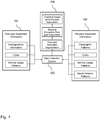
- Fig. 1 illustrates the data input components from information-rich post-paid subscribers ("first set on nodes") and information-poor pre-paid subscribers (“second set of nodes”) and the key steps to gain the required analytical insight about pre-paid subscribers.
- Incoming data is gathered, adequately transformed, and stored in data collection system 103. Following are the required processing steps 104 that are using the stored data in the data collection system 103:
- Analytic insight may include, for instance, predictions about errors, fraud, customer satisfaction, subscriber churn, location and calling patterns, service usage and/or technical service optimization.
- communication patterns for said communication event information may be used.
- predictive analysis may be used for one or more purposes, such as
- the proposed method may be applied by including leveraging existing subscriber segmentation techniques, such as the so called k-means algorithm, which is a method of cluster analysis which aims to partition a number of n observations into k clusters.
- k-means algorithm is a method of cluster analysis which aims to partition a number of n observations into k clusters.
- the invention can also be applied in such a way that pre-paid subscribers may be assigned to one or several subscriber segmentation groups based on e.g. general call patterns, temporal call patterns, geographic patterns, communication patterns, and/or service usage patterns.
- the invention allows inter alia for a refinement of subscriber segmentation based on comprehensive pre-paid subscriber insight, or for service usage prediction of pre-paid subscribers of new service offerings.
- the invention can take the form of an entirely hardware embodiment, an entirely software embodiment or an embodiment containing both hardware and software elements.
- the invention is implemented in software, which includes but is not limited to firmware, resident software, microcode, etc.
- the invention can take the form of a computer program product accessible from a computer-usable or computer-readable medium providing program code for use by or in connection with a computer or any instruction execution system.
- a computer-usable or computer-readable medium can be any apparatus that can contain, store, communicate, propagate, or transport the program for use by or in connection with the instruction execution system, apparatus, or device.
- the medium can be an electronic, magnetic, optical, electromagnetic, infrared, or semiconductor system (or apparatus or device) or a propagation medium.
- Examples of a computer-readable medium include a semiconductor or solid state memory, magnetic tape, a removable computer diskette, a random access memory (RAM), a read-only memory (ROM), a rigid magnetic disk and an optical disk.
- Current examples of optical disks include compact disk - read only memory (CD-ROM), compact disk - read/write (CD-R/W) and DVD.
- a data processing system suitable for storing and/or executing program code will include at least one processor coupled directly or indirectly to memory elements through a system bus.
- the memory elements can include local memory employed during actual execution of the program code, bulk storage, and cache memories which provide temporary storage of at least some program code in order to reduce the number of times code must be retrieved from bulk storage during execution.
- I/O devices including but not limited to keyboards, displays, pointing devices, etc.
- I/O controllers can be coupled to the system either directly or through intervening I/O controllers.
- Network adapters may also be coupled to the system to enable the data processing system to become coupled to other data processing systems or remote printers or storage devices through intervening private or public networks.
- Modems, cable modem and Ethernet cards are just a few of the currently available types of networks adapters.
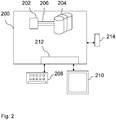
- Fig. 2 schematically depicts an example embodiment of a data processing system, consisting of a computer 200 comprising a central processing unit 202, a computer usable medium, comprising computer readable program 204 connected by a bus system 206 to the central processing unit 202, an IO system connected to input and output devices 208, 210.
- the computer is further connected to a network communication unit 214.
- the said data processing system comprises software code portions for performing said predictive analysis method according to at least one of the preferred embodiments of the invention when said program is run on said computer 200.
- Prior art often focus on the exact prediction of demographic information to add missing information to a customer relationship management (CRM) system with pre-paid customer records.
- CRM customer relationship management
- this statistically aggregated information is much more robust against errors and reduces the number of incorrect predictions for the predictive analytics task. Also this robustness reduces the amount of manual tuning considerably.
- the inventive method can be used even when predicting exact demographics would fail. From a technical point of view, first specialized statistical segmentation into a set of groups is used and then an assigning is done on these segments or groups, not on the original individual values. This step allows the proposed method to reduce the complexity of the prediction space significantly which in turn reduces the amount of necessary data and makes the models more robust and applicable. Still, it is not required that the same patterns hold for the first and second set of nodes, e.g. post-paid and pre-paid subscribers. Thus, independent models for both kinds of subscribers and a robust way to transfer as much information as possible from regular (post-paid) subscribers to pre-paid subscribers.
Landscapes
- Engineering & Computer Science (AREA)
- Computer Networks & Wireless Communication (AREA)
- Signal Processing (AREA)
- Business, Economics & Management (AREA)
- General Business, Economics & Management (AREA)
- Telephonic Communication Services (AREA)
- Data Exchanges In Wide-Area Networks (AREA)
Claims (13)
- Mit einem Computer realisiertes Verfahren zum Ausführen einer vorhersagenden Analyse in Bezug auf die Knoten in einem Datenübertragungs-Netzwerk, wobei das Verfahren die Schritte umfasst:- Bereitstellen (103) von Datenübertragungs-Ereignisdaten für eine erste Menge von Knoten (101) des Datenübertragungs-Netzwerks,- Bereitstellen (103) einer Menge von Attributen für die Knoten aus der ersten Menge (101),- Verwenden (104) der Attribute und der Datenübertragungs-Ereignisdaten zum Festlegen einer Menge von Gruppen innerhalb der ersten Knotenmenge,- Bereitstellen (103) von Datenübertragungs-Ereignisdaten für eine zweite Knotenmenge (102) des Datenübertragungs-Netzwerks,- Zuweisen (104) jedes Knotens aus der zweiten Menge an mindestens eine Gruppe aus der Menge von Gruppen beruhend wenigstens auf den Datenübertragungs-Ereignisdaten, die für die zweite Menge verfügbar sind, wobei das Zuweisen Zugehörigkeitsdaten der Knoten aus der zweiten Menge ergibt,- Herleiten (104) oder Anwenden eines Vorhersagemodells für die zweite Knotenmenge beruhend wenigstens auf den Datenübertragungs-Ereignisdaten für die zweite Menge und die Zugehörigkeitsdaten,gekennzeichnet durch- Zuweisen mindestens eines Zugehörigkeitsgewichts an jeden Knoten aus der zweiten Knotenmenge, und- Verwenden der Zugehörigkeitsgewichte jedes Knotens in der zweiten Knotenmenge zu jeder Gruppe als weitere Kenngrößen für das Vorhersagemodell,wobei der Schritt des Zuweisens Berechnen einer zusammengeführten Verteilung für jede Knotengruppe aus der ersten Knotengruppe und Verwenden eines Statistikmaßes zum Vergleichen der Datenübertragungs-Ereignisdaten von Knoten aus der zweiten Knotenmenge mit den zusammengeführten Verteilungen der Gruppen umfasst.
- Verfahren nach einem der vorhergehenden Ansprüche, wobei der Schritt des Zuweisens beruhend auf den Datenübertragungs-Ereignisdaten ausgeführt wird, die für die erste und zweite Knotenmenge verfügbar sind.
- Verfahren nach einem der vorhergehenden Ansprüche, wobei der Schritt des Zuweisens Beschreiben der Datenübertragungs-Ereignisdaten durch mindestens eines von Folgendem umfasst:- Dauer der Dienstebenutzung;- zeitliche Verteilung; und- geografische Verteilung.
- Verfahren nach einem der vorhergehenden Ansprüche, wobei sich die erste Knotenmenge auf datenreiche Knoten und die zweite Knotenmenge auf datenarme Knoten beziehen.
- Verfahren nach Anspruch 4, wobei sich die erste Knotenmenge auf nachträglich bezahlende Teilnehmer und die zweite Knotenmenge auf im Voraus bezahlende Teilnehmer beziehen.
- Verfahren nach mindestens einem der vorhergehenden Ansprüche, wobei es sich bei den Gruppenmengen um Teilnehmer-Segmentierungsgruppen handelt und das Zuweisen von Knoten aus der zweiten Knotenmenge mindestens auf allgemeinen Anrufstrukturen, vorübergehenden Anrufstrukturen, geografischen Strukturen, Datenübertragungs-Strukturen oder Dienste-Verwendungsstrukturen beruht.
- Verfahren nach einem der vorhergehenden Ansprüche, das ferner eine vorhersagende Analyse verwendet, um Netzwerk/Anrufdaten-Aufzeichnungs-hergeleitete Erkenntnisse und Dienste-Verwendungsstrukturen mit global verfügbaren demografischen Daten zu vergleichen bzw. die vorhersagende Analyse verwendet, um aus Netzwerk/Anrufdaten-Aufzeichnungen hergeleitete Erkenntnissen und Dienste-Verwendungsstrukturen mit vorhandenen Erkenntnissen über nachträglich bezahlende Teilnehmer und demografischen Daten von einem bestimmten Telefondienste-Anbieter zu vergleichen.
- Verfahren nach einem der vorhergehenden Ansprüche, wobei die Datenübertragungs-Ereignisdaten Datenübertragungs-Strukturen beinhalten.
- Verfahren nach einem der vorhergehenden Ansprüche, wobei das Vorhersagemodell durch Training hergeleitet wird.
- Verfahren nach Anspruch 9, wobei das Training durch Suchen eines Statistikmodells ausgeführt wird, das eine oder mehrere Variablen verknüpft, die den Zweck des Ausführens einer Vorhersageanalytik mit einer Menge von Eigenschaften eines Knotens aus der zweiten Menge und seinen Zugehörigkeitsdaten zu verschiedenen Gruppen darstellen, indem vorzugsweise die Zugehörigkeitsdaten in eine Eingabevariable pro Gruppe codiert werden und diese den Gruppenzugehörigkeiten zugewiesen wird.
- Datenverarbeitungs-Programm zur Ausführung in einem Datenverarbeitungs-System, das Software-Code-Abschnitte zum Ausführen eines Verfahrens nach einem der vorhergehenden Ansprüche umfasst, wenn das Programm auf einem Computer (200) ausgeführt wird.
- Computer-Programmprodukt, das auf einem für einen Computer lesbaren Medium gespeichert ist und für einen Computer lesbare Programmmittel umfasst, um einen Computer zum Ausführen der folgenden Schritte zu veranlassen, wenn das Programm auf einem Computer (200) ausgeführt wird:- Bereitstellen von Datenübertragungs-Ereignisdaten für eine erste Knotenmenge des Datenübertragungs-Netzwerks,- Bereitstellen einer Menge von Attributen für die Knoten aus der ersten Menge,- Verwenden der Attribute und der Datenübertragungs-Ereignisdaten zum Festlegen einer Menge von Gruppen in der ersten Knotenmenge,- Bereitstellen von Datenübertragungs-Ereignisdaten für eine zweite Knotenmenge des Datenübertragungs-Netzwerks,- Zuweisen jedes Knotens aus der zweiten Knotenmenge an mindestens eine Gruppe aus der Menge von Gruppen beruhend auf mindestens den Datenübertragungs-Ereignisdaten, die für die zweite Menge verfügbar sind, wobei das Zuweisen Zugehörigkeitsdaten der Knoten aus der zweiten Menge ergibt,- Herleiten oder Anwenden eines Vorhersagemodells für die zweite Knotenmenge beruhend auf mindestens den Datenübertragungs-Ereignisdaten für die zweite Menge und den Zugehörigkeitsdaten,gekennzeichnet durch- Zuweisen mindestens eines Zugehörigkeitsgewichts an jeden Knoten aus der zweiten Knotenmenge, und- Verwenden der Zugehörigkeitsgewichte jedes Knotens in der zweiten Knotenmenge zu jeder Gruppe als weitere Kenngrößen für das Vorhersagemodell,wobei der Schritt des Zuweisens Berechnen einer zusammengeführten Verteilung für jede Knotengruppe aus der ersten Knotenmenge und Verwenden eines Statistikmaßes zum Vergleichen der Datenübertragungs-Ereignisdaten von Knoten aus der zweiten Knotenmenge mit den zusammengeführten Verteilungen der Gruppen umfasst.
- Datenverarbeitungssystem zur Ausführung eines Datenverarbeitungs-Programms, das Software-Code-Abschnitte zum Ausführen eines Verfahrens nach einem der Ansprüche 1 bis 10 umfasst.
Priority Applications (1)
| Application Number | Priority Date | Filing Date | Title |
|---|---|---|---|
| EP11778603.8A EP2652909B1 (de) | 2010-12-15 | 2011-11-03 | Verfahren und system zur durchführung einer vorhersagenden analyse im zusammenhang mit knoten in einem kommunikationsnetz |
Applications Claiming Priority (3)
| Application Number | Priority Date | Filing Date | Title |
|---|---|---|---|
| EP10195219 | 2010-12-15 | ||
| EP11778603.8A EP2652909B1 (de) | 2010-12-15 | 2011-11-03 | Verfahren und system zur durchführung einer vorhersagenden analyse im zusammenhang mit knoten in einem kommunikationsnetz |
| PCT/EP2011/069328 WO2012079835A1 (en) | 2010-12-15 | 2011-11-03 | Method and system for carrying out predictive analysis relating to nodes of a communication network |
Publications (2)
| Publication Number | Publication Date |
|---|---|
| EP2652909A1 EP2652909A1 (de) | 2013-10-23 |
| EP2652909B1 true EP2652909B1 (de) | 2019-01-02 |
Family
ID=44906125
Family Applications (1)
| Application Number | Title | Priority Date | Filing Date |
|---|---|---|---|
| EP11778603.8A Active EP2652909B1 (de) | 2010-12-15 | 2011-11-03 | Verfahren und system zur durchführung einer vorhersagenden analyse im zusammenhang mit knoten in einem kommunikationsnetz |
Country Status (5)
| Country | Link |
|---|---|
| US (1) | US8644468B2 (de) |
| EP (1) | EP2652909B1 (de) |
| CN (1) | CN103250376B (de) |
| TW (1) | TWI505667B (de) |
| WO (1) | WO2012079835A1 (de) |
Families Citing this family (10)
| Publication number | Priority date | Publication date | Assignee | Title |
|---|---|---|---|---|
| US20130268595A1 (en) * | 2012-04-06 | 2013-10-10 | Telefonaktiebolaget L M Ericsson (Publ) | Detecting communities in telecommunication networks |
| US8804929B2 (en) * | 2012-10-30 | 2014-08-12 | Alcatel Lucent | System and method for generating subscriber churn predictions |
| CN105684391B (zh) * | 2013-11-04 | 2019-06-07 | 伊尔拉米公司 | 基于标签的访问控制规则的自动生成 |
| EP3066607B1 (de) | 2013-11-04 | 2018-12-12 | Illumio, Inc. | Paarung in einem verteilten netzwerkmanagementsystem unter verwendung eines logischen mehrdimensionalen etikettbasierten richtlinienmodells |
| US9674300B2 (en) | 2015-04-22 | 2017-06-06 | At&T Intellectual Property I, L.P. | Apparatus and method for predicting an amount of network infrastructure needed based on demographics |
| US11023803B2 (en) * | 2017-04-10 | 2021-06-01 | Intel Corporation | Abstraction library to enable scalable distributed machine learning |
| CN108429802B (zh) * | 2018-03-07 | 2021-01-26 | 国家计算机网络与信息安全管理中心 | 物联网设备信息获取方法及装置 |
| US11538049B2 (en) * | 2018-06-04 | 2022-12-27 | Zuora, Inc. | Systems and methods for predicting churn in a multi-tenant system |
| US10353764B1 (en) | 2018-11-08 | 2019-07-16 | Amplero, Inc. | Automated identification of device status and resulting dynamic modification of device operations |
| US12457247B1 (en) | 2024-04-29 | 2025-10-28 | Curinos, Inc. | Automated device and account security setting update initiation |
Family Cites Families (22)
| Publication number | Priority date | Publication date | Assignee | Title |
|---|---|---|---|---|
| US5822410A (en) | 1996-01-11 | 1998-10-13 | Gte Telecom Services Inc | Churn amelioration system and method therefor |
| US7035855B1 (en) * | 2000-07-06 | 2006-04-25 | Experian Marketing Solutions, Inc. | Process and system for integrating information from disparate databases for purposes of predicting consumer behavior |
| US6741995B1 (en) | 1999-03-23 | 2004-05-25 | Metaedge Corporation | Method for dynamically creating a profile |
| US8346208B2 (en) * | 2005-06-23 | 2013-01-01 | Groundhog Technologies, Inc. | Method and system for identifying mobile user cluster by call detail record |
| US20100076994A1 (en) | 2005-11-05 | 2010-03-25 | Adam Soroca | Using Mobile Communication Facility Device Data Within a Monetization Platform |
| US8712828B2 (en) | 2005-12-30 | 2014-04-29 | Accenture Global Services Limited | Churn prediction and management system |
| US20070185867A1 (en) | 2006-02-03 | 2007-08-09 | Matteo Maga | Statistical modeling methods for determining customer distribution by churn probability within a customer population |
| US8023423B2 (en) * | 2006-07-10 | 2011-09-20 | Telcordia Licensing Company, Llc | Automated policy generation for mobile communication networks |
| US8199901B2 (en) | 2007-01-04 | 2012-06-12 | Xora, Inc. | Method and apparatus for customer retention |
| US8046322B2 (en) * | 2007-08-07 | 2011-10-25 | The Boeing Company | Methods and framework for constraint-based activity mining (CMAP) |
| EP2210227A2 (de) * | 2007-10-25 | 2010-07-28 | Markport Limited | Modifikation einer dienstablieferungsinfrastruktur in kommunikationsnetzen |
| KR101136730B1 (ko) * | 2007-12-08 | 2012-04-19 | 에스케이플래닛 주식회사 | 광고 방법 및 그 sns 광고시스템 |
| FI20085399A0 (fi) | 2007-12-14 | 2008-04-30 | Xtract Oy | Menetelmä ja järjestely asiakkaiden segmentoimiseksi asiakkaiden hallintajärjestelmässä |
| US20090187520A1 (en) | 2008-01-23 | 2009-07-23 | Chao Liu | Demographics from behavior |
| US8249231B2 (en) | 2008-01-28 | 2012-08-21 | International Business Machines Corporation | System and computer program product for predicting churners in a telecommunications network |
| US8194830B2 (en) * | 2008-01-28 | 2012-06-05 | International Business Machines Corporation | Method for predicting churners in a telecommunications network |
| US8615419B2 (en) | 2008-05-07 | 2013-12-24 | Nice Systems Ltd | Method and apparatus for predicting customer churn |
| FI20085843A0 (fi) | 2008-09-08 | 2008-09-08 | Xtract Oy | Menetelmä ja järjestely käyttäjän demografisen tiedon ennustamiseksi |
| US8473327B2 (en) * | 2008-10-21 | 2013-06-25 | International Business Machines Corporation | Target marketing method and system |
| US7647287B1 (en) | 2008-11-21 | 2010-01-12 | International Business Machines Corporation | Suggesting a relationship for a node pair based upon shared connections versus total connections |
| US8700551B2 (en) * | 2009-08-10 | 2014-04-15 | Venture Lending & Leasing Vi, Inc. | Systems and methods for identifying provider noncustomers as likely acquisition targets |
| US8457605B2 (en) * | 2010-10-04 | 2013-06-04 | Telefonica, S.A. | Method for gender identification of a cell-phone subscriber |
-
2011
- 2011-08-26 US US13/219,362 patent/US8644468B2/en active Active
- 2011-11-03 EP EP11778603.8A patent/EP2652909B1/de active Active
- 2011-11-03 WO PCT/EP2011/069328 patent/WO2012079835A1/en not_active Ceased
- 2011-11-03 CN CN201180059406.1A patent/CN103250376B/zh active Active
- 2011-11-10 TW TW100141118A patent/TWI505667B/zh active
Non-Patent Citations (1)
| Title |
|---|
| None * |
Also Published As
| Publication number | Publication date |
|---|---|
| TW201233099A (en) | 2012-08-01 |
| US20120155290A1 (en) | 2012-06-21 |
| WO2012079835A1 (en) | 2012-06-21 |
| TWI505667B (zh) | 2015-10-21 |
| US8644468B2 (en) | 2014-02-04 |
| CN103250376A (zh) | 2013-08-14 |
| EP2652909A1 (de) | 2013-10-23 |
| CN103250376B (zh) | 2017-07-07 |
Similar Documents
| Publication | Publication Date | Title |
|---|---|---|
| EP2652909B1 (de) | Verfahren und system zur durchführung einer vorhersagenden analyse im zusammenhang mit knoten in einem kommunikationsnetz | |
| US10936961B1 (en) | Automated predictive product recommendations using reinforcement learning | |
| CN111382155B (zh) | 一种数据仓库的数据处理方法、电子设备及介质 | |
| US20130279672A1 (en) | Methods and Systems For Categorizing a Customer of a Service as a Churner or a Non-Churner | |
| US10218575B2 (en) | Provision, configuration and use of a telecommunications network | |
| US8788438B2 (en) | Method performed in a computer system for aiding the assessment of an influence of a user in or interacting with a communication system by applying social network analysis, SNA, functions, a computer system, computer program and computer program product | |
| CN109978575B (zh) | 一种挖掘用户流量经营场景的方法及装置 | |
| Rehman et al. | Customer churn prediction, segmentation and fraud detection in telecommunication industry | |
| US10956914B2 (en) | System and method for mapping a customer journey to a category | |
| CN120950643A (zh) | 问题的答复方法、装置、电子设备及计算机程序产品 | |
| CN108038739A (zh) | 一种根据统计数据关联度确定扩展用户的方法和系统 | |
| US12430313B2 (en) | Disambiguation of feature graph databases | |
| US20240004960A1 (en) | Telecommunication network feature selection for binary classification | |
| CN111192091A (zh) | 通信企业集团客户成员识别方法、存储介质和计算机设备 | |
| CN117436963A (zh) | 电信业务推荐方法、装置、电子设备及存储介质 | |
| Nadaf et al. | Data mining in telecommunication | |
| Ghotekar | Analysis and Data Mining of Call Detail Records using Big Data Technology | |
| CN108053260A (zh) | 一种根据统计数据兴趣度确定扩展用户的方法和系统 | |
| Khalid et al. | Identifying State-Specific Customer Churn Patterns using DM Techniques | |
| US12591575B2 (en) | Identification of feature groups in feature graph databases | |
| US12615506B2 (en) | Providing wireless services based on using subscriber geospatial activity | |
| Gruszczyński et al. | Application of social network inferred data to churn modeling in telecoms | |
| CN116132583B (zh) | 信息处理方法及装置 | |
| Droftina et al. | Predicting influential mobile-subscriber churners using low-level user features | |
| Gruszczyński et al. | Application of social network to improve effectiveness of classifiers in churn modelling |
Legal Events
| Date | Code | Title | Description |
|---|---|---|---|
| PUAI | Public reference made under article 153(3) epc to a published international application that has entered the european phase |
Free format text: ORIGINAL CODE: 0009012 |
|
| 17P | Request for examination filed |
Effective date: 20130531 |
|
| AK | Designated contracting states |
Kind code of ref document: A1 Designated state(s): AL AT BE BG CH CY CZ DE DK EE ES FI FR GB GR HR HU IE IS IT LI LT LU LV MC MK MT NL NO PL PT RO RS SE SI SK SM TR |
|
| DAX | Request for extension of the european patent (deleted) | ||
| STAA | Information on the status of an ep patent application or granted ep patent |
Free format text: STATUS: EXAMINATION IS IN PROGRESS |
|
| 17Q | First examination report despatched |
Effective date: 20180130 |
|
| GRAP | Despatch of communication of intention to grant a patent |
Free format text: ORIGINAL CODE: EPIDOSNIGR1 |
|
| STAA | Information on the status of an ep patent application or granted ep patent |
Free format text: STATUS: GRANT OF PATENT IS INTENDED |
|
| INTG | Intention to grant announced |
Effective date: 20180814 |
|
| GRAS | Grant fee paid |
Free format text: ORIGINAL CODE: EPIDOSNIGR3 |
|
| GRAA | (expected) grant |
Free format text: ORIGINAL CODE: 0009210 |
|
| STAA | Information on the status of an ep patent application or granted ep patent |
Free format text: STATUS: THE PATENT HAS BEEN GRANTED |
|
| RAP1 | Party data changed (applicant data changed or rights of an application transferred) |
Owner name: INTERNATIONAL BUSINESS MACHINES CORPORATION |
|
| AK | Designated contracting states |
Kind code of ref document: B1 Designated state(s): AL AT BE BG CH CY CZ DE DK EE ES FI FR GB GR HR HU IE IS IT LI LT LU LV MC MK MT NL NO PL PT RO RS SE SI SK SM TR |
|
| REG | Reference to a national code |
Ref country code: GB Ref legal event code: FG4D |
|
| REG | Reference to a national code |
Ref country code: AT Ref legal event code: REF Ref document number: 1085811 Country of ref document: AT Kind code of ref document: T Effective date: 20190115 Ref country code: CH Ref legal event code: NV Representative=s name: IBM RESEARCH GMBH ZURICH RESEARCH LABORATORY I, CH Ref country code: CH Ref legal event code: EP |
|
| REG | Reference to a national code |
Ref country code: DE Ref legal event code: R084 Ref document number: 602011055392 Country of ref document: DE |
|
| REG | Reference to a national code |
Ref country code: IE Ref legal event code: FG4D |
|
| REG | Reference to a national code |
Ref country code: DE Ref legal event code: R096 Ref document number: 602011055392 Country of ref document: DE |
|
| REG | Reference to a national code |
Ref country code: GB Ref legal event code: 746 Effective date: 20190205 |
|
| REG | Reference to a national code |
Ref country code: NL Ref legal event code: MP Effective date: 20190102 |
|
| REG | Reference to a national code |
Ref country code: LT Ref legal event code: MG4D |
|
| REG | Reference to a national code |
Ref country code: AT Ref legal event code: MK05 Ref document number: 1085811 Country of ref document: AT Kind code of ref document: T Effective date: 20190102 |
|
| PG25 | Lapsed in a contracting state [announced via postgrant information from national office to epo] |
Ref country code: NL Free format text: LAPSE BECAUSE OF FAILURE TO SUBMIT A TRANSLATION OF THE DESCRIPTION OR TO PAY THE FEE WITHIN THE PRESCRIBED TIME-LIMIT Effective date: 20190102 |
|
| PG25 | Lapsed in a contracting state [announced via postgrant information from national office to epo] |
Ref country code: LT Free format text: LAPSE BECAUSE OF FAILURE TO SUBMIT A TRANSLATION OF THE DESCRIPTION OR TO PAY THE FEE WITHIN THE PRESCRIBED TIME-LIMIT Effective date: 20190102 Ref country code: PL Free format text: LAPSE BECAUSE OF FAILURE TO SUBMIT A TRANSLATION OF THE DESCRIPTION OR TO PAY THE FEE WITHIN THE PRESCRIBED TIME-LIMIT Effective date: 20190102 Ref country code: NO Free format text: LAPSE BECAUSE OF FAILURE TO SUBMIT A TRANSLATION OF THE DESCRIPTION OR TO PAY THE FEE WITHIN THE PRESCRIBED TIME-LIMIT Effective date: 20190402 Ref country code: FI Free format text: LAPSE BECAUSE OF FAILURE TO SUBMIT A TRANSLATION OF THE DESCRIPTION OR TO PAY THE FEE WITHIN THE PRESCRIBED TIME-LIMIT Effective date: 20190102 Ref country code: SE Free format text: LAPSE BECAUSE OF FAILURE TO SUBMIT A TRANSLATION OF THE DESCRIPTION OR TO PAY THE FEE WITHIN THE PRESCRIBED TIME-LIMIT Effective date: 20190102 Ref country code: ES Free format text: LAPSE BECAUSE OF FAILURE TO SUBMIT A TRANSLATION OF THE DESCRIPTION OR TO PAY THE FEE WITHIN THE PRESCRIBED TIME-LIMIT Effective date: 20190102 Ref country code: PT Free format text: LAPSE BECAUSE OF FAILURE TO SUBMIT A TRANSLATION OF THE DESCRIPTION OR TO PAY THE FEE WITHIN THE PRESCRIBED TIME-LIMIT Effective date: 20190502 |
|
| PG25 | Lapsed in a contracting state [announced via postgrant information from national office to epo] |
Ref country code: IS Free format text: LAPSE BECAUSE OF FAILURE TO SUBMIT A TRANSLATION OF THE DESCRIPTION OR TO PAY THE FEE WITHIN THE PRESCRIBED TIME-LIMIT Effective date: 20190502 Ref country code: RS Free format text: LAPSE BECAUSE OF FAILURE TO SUBMIT A TRANSLATION OF THE DESCRIPTION OR TO PAY THE FEE WITHIN THE PRESCRIBED TIME-LIMIT Effective date: 20190102 Ref country code: LV Free format text: LAPSE BECAUSE OF FAILURE TO SUBMIT A TRANSLATION OF THE DESCRIPTION OR TO PAY THE FEE WITHIN THE PRESCRIBED TIME-LIMIT Effective date: 20190102 Ref country code: HR Free format text: LAPSE BECAUSE OF FAILURE TO SUBMIT A TRANSLATION OF THE DESCRIPTION OR TO PAY THE FEE WITHIN THE PRESCRIBED TIME-LIMIT Effective date: 20190102 Ref country code: BG Free format text: LAPSE BECAUSE OF FAILURE TO SUBMIT A TRANSLATION OF THE DESCRIPTION OR TO PAY THE FEE WITHIN THE PRESCRIBED TIME-LIMIT Effective date: 20190402 Ref country code: GR Free format text: LAPSE BECAUSE OF FAILURE TO SUBMIT A TRANSLATION OF THE DESCRIPTION OR TO PAY THE FEE WITHIN THE PRESCRIBED TIME-LIMIT Effective date: 20190403 |
|
| REG | Reference to a national code |
Ref country code: DE Ref legal event code: R097 Ref document number: 602011055392 Country of ref document: DE |
|
| PG25 | Lapsed in a contracting state [announced via postgrant information from national office to epo] |
Ref country code: AL Free format text: LAPSE BECAUSE OF FAILURE TO SUBMIT A TRANSLATION OF THE DESCRIPTION OR TO PAY THE FEE WITHIN THE PRESCRIBED TIME-LIMIT Effective date: 20190102 Ref country code: DK Free format text: LAPSE BECAUSE OF FAILURE TO SUBMIT A TRANSLATION OF THE DESCRIPTION OR TO PAY THE FEE WITHIN THE PRESCRIBED TIME-LIMIT Effective date: 20190102 Ref country code: AT Free format text: LAPSE BECAUSE OF FAILURE TO SUBMIT A TRANSLATION OF THE DESCRIPTION OR TO PAY THE FEE WITHIN THE PRESCRIBED TIME-LIMIT Effective date: 20190102 Ref country code: EE Free format text: LAPSE BECAUSE OF FAILURE TO SUBMIT A TRANSLATION OF THE DESCRIPTION OR TO PAY THE FEE WITHIN THE PRESCRIBED TIME-LIMIT Effective date: 20190102 Ref country code: IT Free format text: LAPSE BECAUSE OF FAILURE TO SUBMIT A TRANSLATION OF THE DESCRIPTION OR TO PAY THE FEE WITHIN THE PRESCRIBED TIME-LIMIT Effective date: 20190102 Ref country code: CZ Free format text: LAPSE BECAUSE OF FAILURE TO SUBMIT A TRANSLATION OF THE DESCRIPTION OR TO PAY THE FEE WITHIN THE PRESCRIBED TIME-LIMIT Effective date: 20190102 Ref country code: RO Free format text: LAPSE BECAUSE OF FAILURE TO SUBMIT A TRANSLATION OF THE DESCRIPTION OR TO PAY THE FEE WITHIN THE PRESCRIBED TIME-LIMIT Effective date: 20190102 Ref country code: SK Free format text: LAPSE BECAUSE OF FAILURE TO SUBMIT A TRANSLATION OF THE DESCRIPTION OR TO PAY THE FEE WITHIN THE PRESCRIBED TIME-LIMIT Effective date: 20190102 |
|
| PLBE | No opposition filed within time limit |
Free format text: ORIGINAL CODE: 0009261 |
|
| STAA | Information on the status of an ep patent application or granted ep patent |
Free format text: STATUS: NO OPPOSITION FILED WITHIN TIME LIMIT |
|
| PG25 | Lapsed in a contracting state [announced via postgrant information from national office to epo] |
Ref country code: SM Free format text: LAPSE BECAUSE OF FAILURE TO SUBMIT A TRANSLATION OF THE DESCRIPTION OR TO PAY THE FEE WITHIN THE PRESCRIBED TIME-LIMIT Effective date: 20190102 |
|
| 26N | No opposition filed |
Effective date: 20191003 |
|
| PG25 | Lapsed in a contracting state [announced via postgrant information from national office to epo] |
Ref country code: SI Free format text: LAPSE BECAUSE OF FAILURE TO SUBMIT A TRANSLATION OF THE DESCRIPTION OR TO PAY THE FEE WITHIN THE PRESCRIBED TIME-LIMIT Effective date: 20190102 |
|
| PG25 | Lapsed in a contracting state [announced via postgrant information from national office to epo] |
Ref country code: TR Free format text: LAPSE BECAUSE OF FAILURE TO SUBMIT A TRANSLATION OF THE DESCRIPTION OR TO PAY THE FEE WITHIN THE PRESCRIBED TIME-LIMIT Effective date: 20190102 |
|
| REG | Reference to a national code |
Ref country code: CH Ref legal event code: PL |
|
| PG25 | Lapsed in a contracting state [announced via postgrant information from national office to epo] |
Ref country code: LI Free format text: LAPSE BECAUSE OF NON-PAYMENT OF DUE FEES Effective date: 20191130 Ref country code: MC Free format text: LAPSE BECAUSE OF FAILURE TO SUBMIT A TRANSLATION OF THE DESCRIPTION OR TO PAY THE FEE WITHIN THE PRESCRIBED TIME-LIMIT Effective date: 20190102 Ref country code: CH Free format text: LAPSE BECAUSE OF NON-PAYMENT OF DUE FEES Effective date: 20191130 Ref country code: LU Free format text: LAPSE BECAUSE OF NON-PAYMENT OF DUE FEES Effective date: 20191103 |
|
| REG | Reference to a national code |
Ref country code: BE Ref legal event code: MM Effective date: 20191130 |
|
| PG25 | Lapsed in a contracting state [announced via postgrant information from national office to epo] |
Ref country code: IE Free format text: LAPSE BECAUSE OF NON-PAYMENT OF DUE FEES Effective date: 20191103 Ref country code: FR Free format text: LAPSE BECAUSE OF NON-PAYMENT OF DUE FEES Effective date: 20191130 |
|
| PG25 | Lapsed in a contracting state [announced via postgrant information from national office to epo] |
Ref country code: BE Free format text: LAPSE BECAUSE OF NON-PAYMENT OF DUE FEES Effective date: 20191130 |
|
| PG25 | Lapsed in a contracting state [announced via postgrant information from national office to epo] |
Ref country code: CY Free format text: LAPSE BECAUSE OF FAILURE TO SUBMIT A TRANSLATION OF THE DESCRIPTION OR TO PAY THE FEE WITHIN THE PRESCRIBED TIME-LIMIT Effective date: 20190102 |
|
| PG25 | Lapsed in a contracting state [announced via postgrant information from national office to epo] |
Ref country code: HU Free format text: LAPSE BECAUSE OF FAILURE TO SUBMIT A TRANSLATION OF THE DESCRIPTION OR TO PAY THE FEE WITHIN THE PRESCRIBED TIME-LIMIT; INVALID AB INITIO Effective date: 20111103 Ref country code: MT Free format text: LAPSE BECAUSE OF FAILURE TO SUBMIT A TRANSLATION OF THE DESCRIPTION OR TO PAY THE FEE WITHIN THE PRESCRIBED TIME-LIMIT Effective date: 20190102 |
|
| REG | Reference to a national code |
Ref country code: DE Ref legal event code: R082 Ref document number: 602011055392 Country of ref document: DE Representative=s name: KUISMA, SIRPA, FI |
|
| REG | Reference to a national code |
Ref country code: DE Ref legal event code: R079 Ref document number: 602011055392 Country of ref document: DE Free format text: PREVIOUS MAIN CLASS: H04L0012240000 Ipc: H04L0041000000 |
|
| PG25 | Lapsed in a contracting state [announced via postgrant information from national office to epo] |
Ref country code: MK Free format text: LAPSE BECAUSE OF FAILURE TO SUBMIT A TRANSLATION OF THE DESCRIPTION OR TO PAY THE FEE WITHIN THE PRESCRIBED TIME-LIMIT Effective date: 20190102 |
|
| P01 | Opt-out of the competence of the unified patent court (upc) registered |
Effective date: 20230423 |
|
| PGFP | Annual fee paid to national office [announced via postgrant information from national office to epo] |
Ref country code: DE Payment date: 20251010 Year of fee payment: 15 |
|
| PGFP | Annual fee paid to national office [announced via postgrant information from national office to epo] |
Ref country code: GB Payment date: 20251111 Year of fee payment: 15 |