EP2653560A1 - Sonde und Polymorphismusdetektionsverfahren damit - Google Patents
Sonde und Polymorphismusdetektionsverfahren damit Download PDFInfo
- Publication number
- EP2653560A1 EP2653560A1 EP20130164586 EP13164586A EP2653560A1 EP 2653560 A1 EP2653560 A1 EP 2653560A1 EP 20130164586 EP20130164586 EP 20130164586 EP 13164586 A EP13164586 A EP 13164586A EP 2653560 A1 EP2653560 A1 EP 2653560A1
- Authority
- EP
- European Patent Office
- Prior art keywords
- base
- seq
- probe
- bases
- polymorphism
- Prior art date
- Legal status (The legal status is an assumption and is not a legal conclusion. Google has not performed a legal analysis and makes no representation as to the accuracy of the status listed.)
- Granted
Links
Images


Classifications
-
- C—CHEMISTRY; METALLURGY
- C12—BIOCHEMISTRY; BEER; SPIRITS; WINE; VINEGAR; MICROBIOLOGY; ENZYMOLOGY; MUTATION OR GENETIC ENGINEERING
- C12Q—MEASURING OR TESTING PROCESSES INVOLVING ENZYMES, NUCLEIC ACIDS OR MICROORGANISMS; COMPOSITIONS OR TEST PAPERS THEREFOR; PROCESSES OF PREPARING SUCH COMPOSITIONS; CONDITION-RESPONSIVE CONTROL IN MICROBIOLOGICAL OR ENZYMOLOGICAL PROCESSES
- C12Q1/00—Measuring or testing processes involving enzymes, nucleic acids or microorganisms; Compositions therefor; Processes of preparing such compositions
- C12Q1/68—Measuring or testing processes involving enzymes, nucleic acids or microorganisms; Compositions therefor; Processes of preparing such compositions involving nucleic acids
-
- C—CHEMISTRY; METALLURGY
- C12—BIOCHEMISTRY; BEER; SPIRITS; WINE; VINEGAR; MICROBIOLOGY; ENZYMOLOGY; MUTATION OR GENETIC ENGINEERING
- C12Q—MEASURING OR TESTING PROCESSES INVOLVING ENZYMES, NUCLEIC ACIDS OR MICROORGANISMS; COMPOSITIONS OR TEST PAPERS THEREFOR; PROCESSES OF PREPARING SUCH COMPOSITIONS; CONDITION-RESPONSIVE CONTROL IN MICROBIOLOGICAL OR ENZYMOLOGICAL PROCESSES
- C12Q1/00—Measuring or testing processes involving enzymes, nucleic acids or microorganisms; Compositions therefor; Processes of preparing such compositions
- C12Q1/68—Measuring or testing processes involving enzymes, nucleic acids or microorganisms; Compositions therefor; Processes of preparing such compositions involving nucleic acids
- C12Q1/6876—Nucleic acid products used in the analysis of nucleic acids, e.g. primers or probes
- C12Q1/6883—Nucleic acid products used in the analysis of nucleic acids, e.g. primers or probes for diseases caused by alterations of genetic material
- C12Q1/6886—Nucleic acid products used in the analysis of nucleic acids, e.g. primers or probes for diseases caused by alterations of genetic material for cancer
-
- C—CHEMISTRY; METALLURGY
- C12—BIOCHEMISTRY; BEER; SPIRITS; WINE; VINEGAR; MICROBIOLOGY; ENZYMOLOGY; MUTATION OR GENETIC ENGINEERING
- C12Q—MEASURING OR TESTING PROCESSES INVOLVING ENZYMES, NUCLEIC ACIDS OR MICROORGANISMS; COMPOSITIONS OR TEST PAPERS THEREFOR; PROCESSES OF PREPARING SUCH COMPOSITIONS; CONDITION-RESPONSIVE CONTROL IN MICROBIOLOGICAL OR ENZYMOLOGICAL PROCESSES
- C12Q2600/00—Oligonucleotides characterized by their use
- C12Q2600/106—Pharmacogenomics, i.e. genetic variability in individual responses to drugs and drug metabolism
-
- C—CHEMISTRY; METALLURGY
- C12—BIOCHEMISTRY; BEER; SPIRITS; WINE; VINEGAR; MICROBIOLOGY; ENZYMOLOGY; MUTATION OR GENETIC ENGINEERING
- C12Q—MEASURING OR TESTING PROCESSES INVOLVING ENZYMES, NUCLEIC ACIDS OR MICROORGANISMS; COMPOSITIONS OR TEST PAPERS THEREFOR; PROCESSES OF PREPARING SUCH COMPOSITIONS; CONDITION-RESPONSIVE CONTROL IN MICROBIOLOGICAL OR ENZYMOLOGICAL PROCESSES
- C12Q2600/00—Oligonucleotides characterized by their use
- C12Q2600/156—Polymorphic or mutational markers
Definitions
- the present invention relates to a probe for detecting a polymorphism, a method of detecting a polymorphism, a method of evaluating the efficacy of a drug, and a reagent kit for detecting a polymorphism.
- the BRAF gene encodes the BRAF protein which is involved in intracellular signaling and cell growth. It is known that the intracellular signaling pathway becomes constitutively activated when the BRAF gene undergoes mutation such that the 600th amino acid of the BRAF protein is mutated from valine (V) to glutamic acid (E). Such a BRAF-activated mutant is called "V600E” and is observed in about 7% of human malignant tumors and about 60% of malignant melanomas (see, for example, Nature. (2010) Dec 16; 468(7326): 973-7 ). Further, it has also been reported that advanced melanoma having a V600E mutation is effectively treated with, for example, the BRAF kinase inhibitor vemurafenib.
- V600K, V600R and V600D mutations in which the 600th amino acid is mutated from valine to lysine (K), arginine (R) and aspartic acid (D), respectively, are known (see, for example, J. Transl. Med. (2010) Jul 14, 8: p67).
- V600G and V600M mutations in which the 600th amino acid is mutated to glycine (G) and methionine (M), respectively, are also known.
- the present invention is as follows.
- the present invention provides a polymorphism detection probe which allows a V600 polymorphism in the BRAF gene to be easily detected with high sensitivity, and a polymorphism detection method utilizing the probe.
- the probe for detecting a V600 polymorphism in the BRAF gene according to the present invention is a probe for detecting a V600 polymorphism in the BRAF gene which is the following P1 fluorescently labeled oligonucleotide:
- the "BRAF gene” in the present invention is already known and the base sequence thereof is available as NCBI Accession No. NG007873.
- the base sequence of SEQ ID NO:1 corresponds to the 176201 st to 176700th bases of NCBI Accession No. NG007873 and it is constituted by base numbers 1 to 500 such that the base number 1 corresponds to the 176201st base of NCBI Accession No. NG007873.
- the description of the base sequences of the sample nucleic acid to be detected in a sample and the polymorphism detection probe or primer shall also apply to complementary base sequences thereof, respectively, unless otherwise specified. Further, when the description of a particular base sequence is applied to a complementary base sequence thereof, the descriptions of base sequences recognized by the particular base sequence in the present invention should be applied provided that the recognition by the particular base sequence is replaced with recognition by a complementary base sequence of the particular base sequence, within a range of the common general technical knowledge of those skilled in the art.
- Tm value is defined as the temperature at which a double-stranded nucleic acid dissociates (dissociation temperature: Tm), and is generally defined as the temperature at which the absorbance at 260 nm has increased by 50% of the total increase in absorbance resulting from complete dissociation of the double-stranded nucleic acid. More specifically, when a solution containing a double-stranded nucleic acid such as a double-stranded DNA is heated, the absorbance at 260 nm of the double-stranded nucleic acid gradually increases.
- the single-stranded DNA exhibit an absorbance that is about 1.5 times the absorbance at the time of the initiation of the heating (i.e., the absorbance when the entire DNA is in the form of a double-stranded DNA), which serves as an indicator of the completion of the melting.
- the Tm value is defined based on this phenomenon.
- any numerical range expressed using “to” refers to a range including the numerical values before and after “to” as the minimum and maximum values, respectively.
- the indicated amount means the total amount of the multiple substances present in the composition, unless specifically stated otherwise.
- the phrase "the first to third bases from the 3' end" is used in connection with an oligonucleotide sequence, it is assumed that the base at the 3' end of the oligonucleotide chain is the first base from the 3' end.
- the present invention is described below.
- the probe for detecting a V600 polymorphism in the BRAF gene according to the present invention is a probe for detecting a V600 polymorphism in the BRAF gene which is the following P 1 fluorescently labeled oligonucleotide:
- the above-described P 1 fluorescently labeled oligonucleotide of the present invention is a probe capable of detecting a polymorphism of at least one base selected from the group consisting of the 228th to the 230 bases of the base sequence indicated in SEQ ID NO:1. More specifically, the above-described P 1 fluorescently labeled oligonucleotide of the present invention is a sequence which includes the bases corresponding to the 228th to the 237th bases of the sequence indicated in SEQ ID NO:1.
- the P1 fluorescently labeled oligonucleotide of the present invention is required to have an identity of at least 80% to a base sequence having a length of 10 to 50 bases including the 228th to the 237th bases of the base sequence indicated in SEQ ID NO:1. It is noted here that "a base sequence having a length of 10 to 50 bases including the 228th to the 237th bases of the base sequence indicated in SEQ ID NO:1" maybe hereinafter also referred to as a "specific partial base sequence" and said 10 to 50 bases are consecutive bases of SEQ ID No.
- such a fluorescently labeled oligonucleotide may also exhibit an identity of not less than 85%, not less than 90%, not less than 95%, not less than 96%, not less than 97%, not less than 98% or not less than 99%.
- identity between the above-described P1 fluorescently labeled oligonucleotide of the present invention and the base sequence having the same bases as SEQ ID NO:1 except that the base corresponding to the 237th base is C (cytosine) is less than 80%, the detection sensitivity for a sample nucleic acid containing a mutant-type BRAF gene becomes low.
- the above-described P 1 fluorescently labeled oligonucleotide of the present invention may also be an oligonucleotide (P1') having an identity of at least 80% to the above-described specific partial base sequence, in which the base corresponding to the 237th base is cytosine; at least two of the bases corresponding to the 228th to the 230th bases of the base sequence indicated in SEQ ID NO:1 are different from the ones indicated in SEQ ID NO:1; and the above-described cytosine corresponding to the 237th base is labeled with a fluorescent dye.
- P1' oligonucleotide having an identity of at least 80% to the above-described specific partial base sequence, in which the base corresponding to the 237th base is cytosine; at least two of the bases corresponding to the 228th to the 230th bases of the base sequence indicated in SEQ ID NO:1 are different from the ones indicated in SEQ ID NO:1; and the above-described cyto
- the P1' fluorescently labeled oligonucleotide tends to have an increased detection sensitivity for a sample nucleic acid containing a mutant-type BRAF gene.
- the at least two bases may be, for example, two or more bases selected from the group consisting of the following (1) to (3):
- examples thereof include those cases where the bases corresponding to the 228th, the 229th and the 230th bases are, respectively, adenine, adenine and guanine; adenine, adenine and thymine; adenine, guanine and thymine; adenine, guanine and guanine; guanine, adenine and thymine; and guanine, guanine and thymine.
- the bases corresponding to the 228th, the 229th and the 230th bases may be, respectively, adenine, adenine and guanine; adenine, guanine and guanine; or guanine, adenine and thymine.
- the above-described P1 or P1' fluorescently labeled oligonucleotide of the present invention may also be a fluorescently labeled oligonucleotide in which the base corresponding to the 228th base of the base sequence indicated in SEQ ID NO:1 is guanine or adenine; the base corresponding to the 229th base of the base sequence indicated in SEQ ID NO:1 1 is adenine or guanine; and the base corresponding to the 230th base of the base sequence indicated in SEQ ID NO:1 is guanine or thymine.
- Such a fluorescently labeled oligonucleotide exhibits a large difference in the Tm value between a wild-type and a mutant-type; therefore, a test using the fluorescently labeled oligonucleotide tends to accurately detect a mutation and is thus highly reliable and that the test can detect a mutation in a sample with high sensitivity.
- the above-described P 1 or P1' fluorescently labeled oligonucleotide also encompasses a fluorescently labeled oligonucleotide which hybridizes, under stringent conditions, to the complementary strand of a base sequence having the same bases as the above-described specific partial base sequence except that the base corresponding to the 237th base is C (cytosine).
- the hybridization may be carried out (under stringent conditions) according to a known method or a method corresponding thereto, such as a method as described in Molecular Cloning 3rd (J. Sambrook et al., Cold Spring Harbor Lab. Press, 2001 ). This document is incorporated herein by reference.
- stringent conditions means conditions in which specific hybrids are formed, but non-specific hybrids are not formed. Typical examples of the stringent conditions include, for example, conditions in which the hybridization is carried out at a potassium concentration from about 25 mM (e.g. 25 mM) to about 50 mM (e.g. 50 mM) and a magnesium concentration from about 1.0 mM (e.g.
- One example of the conditions of the present invention is conditions in which the hybridization is carried out in Tris-HCl (pH 8.6), 25 mM KCl, and 1.5 mM MgCl 2 , but examples of the conditions of the present invention are not limited thereto.
- Other examples of the stringent conditions are described in Molecular Cloning 3rd (J. Sambrook et al., Cold Spring Harbor Lab. Press, 2001 ). This document is incorporated herein by reference. Those skilled in the art may readily choose such conditions by changing the hybridization reaction and/or the salt concentration of the hybridization reaction solution.
- the P 1 or P1' fluorescently labeled oligonucleotides of the present invention encompasses a fluorescently labeled oligonucleotide having a sequence wherein a base(s) has been inserted to, deleted from and/or substituted in P1 or P1' fluorescently labeled oligonucleotides.
- the fluorescently labeled oligonucleotide having a sequence wherein a base(s) has been inserted, deleted and/or substituted is not particularly limited, as long as the oligonucleotide exhibits an effect similar to that of P 1 or P1' fluorescently labeled oligonucleotides; and, in cases where a base(s) has been inserted, deleted and/or substituted, the position(s) of the insertion(s), deletion(s) and/or substitution(s) is not particularly limited.
- the number of bases that has been inserted, deleted and/or substituted may be, for example, 1 base, or 2 or more bases, such as from 1 base to 10 bases and from 1 base to 5 bases, although this may vary depending on the total length of the fluorescently labeled oligonucleotide.
- the above-described P1 or P1' fluorescently labeled oligonucleotide of the present invention may be, for example, one having a sequence wherein a base(s) has been substituted.
- the position of the substitution is not particularly limited. From the standpoint of the detection sensitivity, for example, a base which is not the 231 st to the 237th bases of the sequence indicated in SEQ ID NO:1 may be substituted.
- the number of bases that are substituted may be, for example, 1 base, or 2 or more bases. Although the number of bases that are substituted varies depending on the total length of the fluorescently labeled oligonucleotide, it is, for example, 1 to 5 bases or 1 to 3 bases.
- the oligonucleotides in the above-described fluorescently labeled oligonucleotides also encompass oligonucleotides as well as modified oligonucleotides.
- a structural unit of the above-described oligonucleotide include ribonucleotides, deoxyribonucleotides and artificial nucleic acids.
- the artificial nucleic acids include DNAs, RNAs, LNAs (Locked Nucleic Acids) which are RNA analogues, PNAs (Peptide Nucleic Acids) which are peptide nucleic acids, BNAs (Bridged Nucleic Acids) which are cross-linked nucleic acids, and the like.
- the above-described oligonucleotides may be constituted by one or multiple types of the structural units described in the above.
- the above-described P1 and P1' fluorescently labeled oligonucleotides of the present invention are required to have a length of 10 mer to 50 mer.
- the P1 and P1' fluorescently labeled oligonucleotides have a length shorter than 10 mer or longer than 50 mer, the sensitivity for detecting a polymorphism in the BRAF gene is decreased.
- the P1 and P1' fluorescently labeled oligonucleotides of the present invention may have a length of 10 mer to 50 mer, 10 mer to 40 mer, or 10 mer to 30 mer. By setting the length in the range of 10 mer to 50 mer, for example, the detection sensitivity tends to be increased.
- the Tm value which is the dissociation temperature of a hybrid formed between the fluorescently labeled oligonucleotides and their respective complementary strands (target sequences)
- the Tm value can be adjusted to a desired value.
- Examples of the base sequence of the P1 or P1' fluorescently labeled oligonucleotide of the present invention are shown in Table 1 below, but the present invention is not limited to these. It is noted here that, in Table 1, the bases corresponding to the 228th to the 230th bases of the base sequence shown in SEQ ID NO:1 are each indicated with a capital letter.
- Table 1 also shows the Tm values of hybrids that form between each fluorescently labeled oligonucleotide and an oligonucleotide in which the bases corresponding to the 228th, the 229th and the 230th of SEQ ID NO:1 are, respectively, adenine, adenine and guanine; adenine, guanine and guanine; or guanine, adenine and thymine.
- the Tm values were calculated using MeltCalc ⁇ 99 FREE (http://www.meltcalc.com/) and under the set conditions of: Oligoconc. [ ⁇ M] of 0.2 and Na eq. [mM] of 50.
- the difference between the Tm value measured when the above-described P1 or P1' fluorescently labeled oligonucleotide is hybridized with a DNA having a base sequence complementary thereto (Tm (V600K, V600R or V600D) in Table 1) and the Tm value measured when a base sequence corresponding to the 228th to the 230th bases of the base sequence indicated in SEQ ID NO:1 is hybridized with a DNA having a sequence complementary thereto (Tm (WT) in Table 1) is, for example, not less than 3°C.
- the above-described difference in the Tm value is 3°C or larger, for example, a mutation in the 228th to the 230th bases of the base sequence indicated in SEQ ID NO:1 can be detected with a higher sensitivity.
- the above-described difference in the Tm value may be, for example, not less than 3°C, not less than 5°C or not less than 7°C.
- Examples of a method of increasing the difference in the Tm value include a method by which a probe is allowed to contain a base which mismatches with a base sequence corresponding to a region to which the probe hybridizes. Specific examples include those methods described in Nature Biotech (1997) vol. 15, pp. 331-335 and the like.
- the P 1 or P1' fluorescently labeled oligonucleotide of the present invention needs to be labeled with a fluorescent dye at its base corresponding to the 237th base (cytosine).
- the fluorescently labeled base corresponding to the 237th base may exist at a position of any one of the 1st to 3rd positions from the 3' end of the P1 or P1' fluorescently labeled oligonucleotide.
- the fluorescently labeled base may exist at the 3' end of the P 1 or P1' fluorescently labeled oligonucleotide.
- the sensitivity for detecting a polymorphism is further improved.
- the P1 or P1' fluorescently labeled oligonucleotide maybe obtained with good productivity (or efficacy).
- the above described fluorescently labeled oligonucleotide of the present invention may be a fluorescently labeled oligonucleotide in which the fluorescence intensity at the time when the oligonucleotide is hybridized to a sequence including the 228th to the 230th bases of the base sequence indicated in SEQ ID NO:1 (target sequence) is decreased (quenched) or increased as compared to the fluorescence intensity at the time when the oligonucleotide is not hybridized to the target sequence.
- the fluorescently labeled oligonucleotide of the present invention may be a fluorescently labeled oligonucleotide in which the fluorescence intensity at the time when the oligonucleotide is hybridized to its target sequence is decreased as compared to the fluorescence intensity at the time when the oligonucleotide is not hybridized to its target sequence.
- a probe that uses the "fluorescence quenching phenomenon" as described above is generally referred to as a guanine quenching probe, and it is known as Q PROBE ® .
- a guanine quenching probe an oligonucleotide which has been designed so that its 3' or 5' end is a cytosine (C) and which has been labeled with a fluorescent dye so that the fluorescence emission is reduced when the C at the 3' or 5' end comes into proximity with a guanine (G) is especially preferable.
- C cytosine
- G guanine
- a known detection method other than the detection method using a Q PROBE ® may also be applied.
- Examples of such a detection method include a TAQ-MAN probe method, a hybridization probe method, a molecular beacon method, and a MGB probe method.
- the fluorescent dye is not particularly limited, and examples of the fluorescent dye include fluorescein, phosphor, rhodamine and polymethine dye derivatives. Examples of commercially available products of such fluorescent dyes include Pacific Blue, BODIPY FL, FluorePrime, Fluoredite, FAM, Cy3 and Cy5, and TAMRA.
- the detection conditions of the fluorescently-labeled oligonucleotide are not particularly limited, and may be decided, as appropriate, in accordance with the fluorescent dye to be used.
- Pacific Blue can be detected at a detection wavelength from 445 nm to 480 nm
- TAMRA can be detected at a detection wavelength from 585 nm to 700 nm
- BODIPY FL can be detected at a detection wavelength from 520 nm to 555 nm.
- Attachment of a fluorescent dye to the oligonucleotide may be carried out according to an ordinary method, such as a method described in JP-A No. 2002-119291 . It should be noted that, in the present invention, the same fluorescent dye may be used, or alternatively, different fluorescent dyes may be used to label one or more of the oligonucleotides.
- the fluorescently-labeled oligonucleotide may have, for example, a phosphate group added to its 3' end. Addition of a phosphate group to the 3' end of the fluorescently-labeled oligonucleotide suppresses elongation of the probe itself by a gene amplification reaction.
- DNA in which the presence or absence of a mutation should be detected (target DNA) may be prepared using a gene amplification method such as PCR.
- the fluorescently-labeled oligonucleotide that has a phosphate group added to its 3' end is used, the amplification reaction can be carried out even in the presence of the oligonucleotide in the reaction solution of the amplification reaction. A similar effect can be obtained also by adding a labeling substance (a fluorescent dye) as described above to the 3' end.
- oligonucleotide having the above-described base sequence in which the C at the 3'-end is labeled with a fluorescent dye are shown below (The bases indicated with a capital letter represent the positions of mutation, and "(PB)", “(FL)” and “(TAMRA)” correspond to the respective fluorescent dyes described in the above).
- the fluorescently labeled oligonucleotide of the present invention is not restricted to the following oligonucleotides.
- the above-described P1 and P1' fluorescently labeled oligonucleotides may be used as a probe for detecting a V600 polymorphism in the BRAF gene.
- the above-described P1 and P1' fluorescently labeled oligonucleotides may be used as a probe for melting curve analysis.
- the above-described P1 and P1' fluorescently labeled oligonucleotides may also be used in a reagent for detecting a polymorphism.
- the reagent for detecting a polymorphism according to the present invention is capable of easily detecting a polymorphism in the bases corresponding to the 228th to the 230th bases of the base sequence indicated in SEQ ID NO:1 with high sensitivity.
- the P1 and P1' fluorescently labeled oligonucleotide according to the present invention may be produced according to a conventional method known as a method for synthesizing an oligonucleotide, such as a method as described in JP-A No. 2002-119291 , except that bases are used so that the base corresponding to the 237th base in the base sequence indicated in SEQ ID NO:1 is a cytosine and the base corresponding to the 237th base is labeled with a fluorescent dye.
- primers are used to amplify a sequence having a BRAF gene polymorphism to be detected by a PCR method.
- the primers that may be used in the present invention are not particularly restricted as long as they are capable of amplifying a nucleic acid containing the bases corresponding to the 228th to the 230th bases of the base sequence indicated in SEQ ID NO:1, which is the site of a BRAF gene polymorphism to be detected.
- the primer to be applied to the PCR method is not particularly limited, as long as it is capable of amplifying a region to which the probe of the present invention may be hybridized.
- a primer may be designed based on the base sequences indicated in SEQ ID NO:1 by those skilled in the art.
- the length and Tm value of the primer may be a length from 12 mer to 40 mer and a value from 40°C to 70°C, or a length from 16 mer to 30 mer and a value from 55°C to 60°C.
- the lengths of individual primers in a primer set do not need to be the same, although the Tm values of these primers are preferably approximately the same (or the difference between the Tm values of these primers is preferably within 5°C).
- primers that may be used for amplifying a base sequence containing a region to which the polymorphism detection probe according to the present invention used in the method of detecting a polymorphism according to the present invention hybridizes are shown below. It is noted here that the following examples are provided for illustrative purposes only and that, therefore, the present invention is not restricted thereto.
- the above-described primer may be (P2) an oligonucleotide which has an identity of at least 80% to a base sequence having a length of 30 to 40 bases including the 115th to the 144th bases of the base sequence indicated in SEQ ID NO:1 and amplifies a region containing the bases corresponding to the 228th to the 230th bases of the base sequence indicated in SEQ ID NO:1.
- the above-described P2 oligonucleotide may also be an oligonucleotide which hybridizes, under stringent conditions, to a complementary strand of a base sequence having a length of 30 to 40 bases including the 115th to the 144th bases of the base sequence indicated in SEQ ID NO:1.
- the above-described P2 oligonucleotide may also be an oligonucleotide having a sequence in which a base(s) is/are inserted, deleted and/or substituted in the P2 oligonucleotide.
- the above-described primer may be the following primer. That is, the above-described primer may also be (P3) an oligonucleotide which has an identity of at least 80% to a complementary strand of a base sequence having a length of 22 to 40 bases including the 239th to the 260th bases of the base sequence indicated in SEQ ID NO:1 and amplifies a region containing the bases corresponding to the 228th to the 230th bases of the base sequence indicated in SEQ ID NO:1.
- the above-described P3 oligonucleotide may also be an oligonucleotide which hybridizes, under stringent conditions, to a base sequence having a length of 22 to 40 bases including the 239th to the 260th bases of the base sequence indicated in SEQ ID NO:1.
- the above-described P3 oligonucleotide may also be an oligonucleotide having a sequence in which a base(s) is/are inserted, deleted and/or substituted in the P3 oligonucleotide.
- hybridization may be performed in accordance with the method described in the above section of probes and, as the "stringent conditions", the same conditions described in the above section of probes are applicable. Further, also for the range of the identity and the conditions of insertion, deletion and/or substitution, the same range/matters described in the above section of probes are applicable.
- primers that can be used in the method of detecting a polymorphism according to the present invention to amplify a region containing the bases corresponding to the 228th to the 230th bases of the base sequence indicated in SEQ ID NO:1 are shown below.
- the above-described P2 and P3 oligonucleotides may be used as a set of paired primers.
- the method of detecting a polymorphism is not particularly limited, as long as it is a method in which a fluorescently labeled oligonucleotide as described above is used as a probe.
- a method of detecting a polymorphism using Tm analysis is described below.
- the method of detecting a V600 polymorphism in the BRAF gene according to the present invention is a method of detecting a V600 polymorphism in the BRAF gene which includes detecting a V600 polymorphism in the BRAF gene by using at least one probe for detecting a V600 polymorphism in the BRAF gene as described above.
- the method of detecting a polymorphism of the present invention may include at least one probe for detecting a polymorphism as described above, and this may make it possible to detect a V600 polymorphism(s) in the BRAF gene easily and with high sensitivity.
- the method of detecting a V600 polymorphism according to the present invention may be employed as a method of detecting a V600 polymorphism in the BRAF gene, and may include the below-described processes or steps (I) to (IV), and may include the below-described step (V).
- the method of detecting a polymorphism according to the present invention has the feature of using the above-described probe, and other configurations, conditions and the like are not particularly limited by the description below.
- the method according to the present invention may further include amplifying the nucleic acid before obtaining the hybrid in step (I) or simultaneously with obtaining the hybrid in step (I), in addition to steps (I) to (IV) or in addition to steps (I) to (V).
- the measurement of the Tm value in step (III) may include not only measuring the dissociation temperature of the hybrid, but also measuring the differential values of the fluorescence signal that changes according to the temperature when the hybrid is melted.
- the nucleic acid in the sample may be a single-stranded nucleic acid or a double-stranded nucleic acid.
- the method may include, for example, melting (dissociating) the double-stranded nucleic acid in the sample into single-stranded nucleic acids by heating before being hybridized with the fluorescently-labeled probe. The dissociation of a double-stranded nucleic acid into single-stranded nucleic acids enables hybridization with the fluorescently-labeled probe.
- the nucleic acid contained in the sample to be detected may be, for example, a nucleic acid originally contained in a biological sample, or an amplification product obtained by amplifying a region of the gene of interest that contains a mutated site(s) of the BRAF gene by PCR or the like using a nucleic acid originally contained in a biological sample as a template with a view to improving the detection accuracy.
- the length of the amplification product is not particularly limited, and may be, for example, a length from 50 mer to 1,000 mer, or a length from 80 mer to 200 mer.
- the nucleic acid in the sample may be, for example, a cDNA that has been synthesized from RNAs derived from a biological sample (e.g., total RNAs, mRNAs, etc.) by RT-PCR (Reverse Transcription PCR).
- RNAs derived from a biological sample e.g., total RNAs, mRNAs, etc.
- RT-PCR Reverse Transcription PCR
- the addition ratio (molar ratio) of the probe according to the present invention relative to the nucleic acids in the sample is not particularly limited.
- the amount of the probe to be added may be, for example, no more than 1-fold (by mol) of the amount of DNA in the sample. From the viewpoint of ensuring a sufficient detection signal, the addition ratio of the probe according to the present invention to be added relative to the nucleic acids in the sample (in a molar ratio) may be 0.1 or lower.
- nucleic acids in the sample may be, for example, the total nucleic acids to be detected that have the polymorphism to be detected and nucleic acids, other than the nucleic acids to be detected, that do not have the polymorphism, or the total amplification products containing a detection target sequence having the polymorphism to be detected and amplification products containing a sequence, other than the detection target sequence, that does not have the polymorphism.
- the ratio of the nucleic acid to be detected relative to nucleic acids in the sample is usually unknown in advance, the consequent addition ratio of the probe relative to the nucleic acids to be detected (or the amplification products containing a sequence to be detected) (in a molar ratio) may be 10 or lower.
- the addition ratio of the probe relative to the nucleic acids to be detected (or the amplification products containing a sequence to be detected) may be 5 or lower, or 3 or lower.
- the lower limit of the ratio is not particularly limited, and may be, for example, 0.001 or higher, 0.01 or higher, or 0.1 or higher.
- the above-described addition ratio of the fluorescently-labeled probe according to the present invention relative to the DNA may be, for example, a molar ratio relative to the double-stranded nucleic acids or a molar ratio relative to the single-stranded nucleic acids.
- the measurement of the change in the signal caused by a temperature change for determining a Tm value may be carried out by measuring the absorbance at 260 nm on the basis of the principle described above.
- the measurement may be carried out by measuring a signal which is based on a signal from the label attached to the fluorescently-labeled probe, and which varies in accordance with the degree of formation of a hybrid of a single-stranded DNA and the probe. Therefore, the above-described fluorescently-labeled oligonucleotide may be used as the fluorescently-labeled probe.
- fluorescently-labeled oligonucleotide examples include a fluorescently-labeled oligonucleotide in respect of which the fluorescence intensity when the oligonucleotide is hybridized with a target sequence thereof is decreased (quenched) as compared to the fluorescence intensity when the oligonucleotide is not hybridized with the target sequence thereof, and a fluorescently-labeled oligonucleotide in respect of which the fluorescence intensity when the oligonucleotide is hybridized with a target sequence thereof is increased as compared to the fluorescence intensity when the oligonucleotide is not hybridized with the target sequence thereof.
- the former fluorescently-labeled oligonucleotide does not show a fluorescence signal or only a weak fluorescence signal when the fluorescently-labeled oligonucleotide forms a hybrid (a double-stranded DNA) with the sequence to be detected; however, the fluorescently-labeled oligonucleotide shows a fluorescence signal or shows an increased fluorescence signal when the fluorescently-labeled oligonucleotide is dissociated by heating.
- the latter fluorescently-labeled oligonucleotide shows a fluorescence signal when the fluorescently-labeled oligonucleotide forms a hybrid (a double-stranded DNA) with the sequence to be detected; however, the fluorescently-labeled oligonucleotide shows a decreased fluorescence signal or ceases to show a fluorescent signal when the fluorescently-labeled oligonucleotide is dissociated by heating. Therefore, similar to the measurement of the absorbance at 260 nm described above, the progress of melting can be monitored, and the Tm value can be determined by detecting the change in fluorescence signal from the fluorescent label under the conditions specific to the fluorescent label (for example, the fluorescence wavelength thereof).
- the method for detecting the change in signal based on a signal from the fluorescent dye in the polymorphism detection method according to the present invention is described below by way of specific examples.
- the polymorphism detection method according to the present invention has as a feature the use of the fluorescently-labeled polymorphism detection probe, and other processes and conditions of the method are not limited in any way
- the sample containing a nucleic acid that serves as a template for nucleic acid amplification is not particularly limited as long as the sample contains a nucleic acid, particularly the BRAF gene.
- a sample that is derived from or can be derived from any biological source, examples of which include: a tissue such as colon or lung; a hemocyte such as a leukocyte cell; whole blood; plasma; sputum; a suspension of oral mucosa; a somatic cell of nail, hair or the like; a germ cell; milk; ascitic fluid; a paraffin-embedded tissue; gastric juice; gastric lavage fluid; urine; peritoneal fluid; amniotic fluid; and a cell culture.
- the method for sampling the sample, the method for preparing the sample containing a nucleic acid, and the like are not limited, and, conventional methods known in the art may be employed therefor.
- a nucleic acid obtained from such a biological source may be directly used as the template, or may be used after the sample has been subjected to pretreatment that modifies the properties of the sample.
- the isolation of genomic DNA from the whole blood may be carried out by a conventional method known in the art.
- a commercially available genomic DNA isolation kit (trade name: GFX GENOMIC BLOOD DNA PURIFICATION KIT, available from GE Healthcare Biosciences), etc. may be used.
- a fluorescently-labeled polymorphism detection probe including the fluorescently-labeled oligonucleotide is added to the sample containing the isolated genomic DNA.
- the fluorescently-labeled probe may be added to a liquid sample containing the isolated genomic DNA, or may be mixed with the genomic DNA in an appropriate solvent.
- the solvent is not particularly limited, and examples of the solvent include conventional solvents known in the art, such as: a buffer solution such as Tris-HCl; a solvent containing at least one of KCl, MgCl 2 , MgSO 4 , or glycerol; and a PCR reaction solution.
- the timing of the addition of the fluorescently-labeled probe is not particularly limited.
- the fluorescently-labeled probe may be added to the PCR amplification products after the amplification process is carried out, or may be added before the amplification process is carried out.
- a fluorescent dye or a phosphate group may have been added to the 3' end of the probe, as described above.
- the method of amplifying a nucleic acid may be, for example, a method in which a polymerase is employed. Examples thereof include a PCR method, an ICAN method, a LAMP method, and an NASBA method.
- the amplification may be carried out in the presence of the fluorescently-labeled probe according to the present invention.
- Those skilled in the art would be able to easily adjust the reaction conditions of the amplification and the like in accordance with the fluorescently-labeled probe and the polymerase to be used.
- a polymorphism can be detected by analyzing the Tm value of the fluorescently-labeled probe only after the amplification of the nucleic acid is carried out, and, therefore, it is not necessary to separate the amplification product after completion of the reaction. Thus, contamination by (or of) the amplification product does not occur.
- the detection can be carried out by the same apparatus as the apparatus required for the amplification, conveyance of a vessel is unnecessary, and automatization of the process is facilitated.
- the DNA polymerase to be used in the PCR method may be selected, without particular limitation, from DNA polymerases that are usually used for PCR.
- Examples of the DNA polymerase include GENE TAQ (trade name, manufactured by NIPPON GENE CO., LTD.), PRIMESTAR MAX DNA POLYMERASE (trade name, manufactured by Takara Bio Inc.), and a Taq polymerase.
- the amount of the polymerase to be used is not particularly limited as long as a usually-applied polymerase concentration is provided.
- the concentration of the Taq polymerase may be, for example, a concentration from 0.01 U to 100 U relative to 50 ⁇ l of the reaction solution. In this range, for example, the sensitivity of the detection of the V600 polymorphism in the BRAF gene tends to be increased.
- the PCR method may be carried out under the conditions appropriately selected from usually-employed conditions.
- the amplification may be monitored using real-time PCR so that the copy number of the DNA (a sequence to be detected) contained in the sample can be measured.
- the proportion of probes forming hybrids is increased as the amplification of the DNA (a sequence to be detected) by PCR proceeds, thereby changing the fluorescence intensity.
- the copy number and/or the abundance ratio of the sequence to be detected (either a normal DNA or a mutant DNA) contained in the sample can be obtained.
- the fluorescently-labeled oligonucleotide and a single-stranded nucleic acid in the sample are brought into contact with each other, thereby allowing hybridization to occur.
- the single-stranded nucleic acid in the sample can be prepared by, for example, dissociating the PCR amplification products obtained in the above-described manner.
- the heating temperature employed for dissociation of the PCR amplification products is not particularly limited as long as it is a temperature at which the amplification products can be dissociated.
- the heating temperature may be in the range from 85°C to 95°C.
- the heating time is not particularly limited, either.
- the heating time may be, for example, in the range from 1 second to 10 minutes, or from 1 second to 5 minutes.
- the hybridization of the dissociated single-stranded DNA and the fluorescently-labeled oligonucleotide may be carried out by, for example, decreasing, after the dissociation process, the temperature from the heating temperature employed in the dissociation process.
- the temperature condition for the hybridization may be, for example, in the range from 40°C to 50°C.
- the volume and concentration of each component in the reaction solution in the hybridization process are not particularly limited.
- the concentration of DNA in the reaction solution may be, for example, a concentration from 0.01 ⁇ M to 1 ⁇ M, or a concentration from 0.1 ⁇ M to 0.5 ⁇ M.
- the concentration of the fluorescently-labeled oligonucleotide may be, for example, in a range in which the above-described addition ratio relative to the DNA is satisfied, and may be, for example, a concentration from 0.001 ⁇ M to 10 ⁇ M, or a concentration from 0.001 ⁇ M to 1 ⁇ M.
- the resultant hybrid of the single-stranded DNA and the fluorescently-labeled oligonucleotide is gradually heated, and the change in fluorescence signal caused by the temperature increase is measured.
- the fluorescence intensity when the probe is hybridized with the single-stranded DNA is decreased (or quenched) as compared to the fluorescence intensity in the dissociated state. Therefore, for example, the hybrid emitting decreased fluorescence or the quenched hybrid may be gradually heated, and the increase in fluorescence intensity caused by the temperature increase may be measured.
- the temperature range in which the change in fluorescence intensity is measured is not particularly limited, and the initial temperature may be, for example, a temperature from room temperature to 85°C, or a temperature from 25°C to 70°C.
- the fmal temperature may be, for example, a temperature from 40°C to 105°C.
- the rate of temperature increase is not particularly limited, either, and may be, for example, in the range from 0.1°C/sec to 20°C/sec, or in the range from 0.3°C/sec to 5°C/sec.
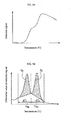
- the change in signal is analyzed to determine the Tm value. More specifically, the Tm value may be determined by calculating a differential value at each temperature (-d(Fluorescence Intensity)/dt) from the fluorescence intensity obtained, and taking the temperature at which the differential value has the lowest value as the Tm value.
- the Tm value may alternatively be determined as the point at which the increase in fluorescence intensity per unit time ((Increase in Fluorescence Intensity)/t) has the largest value.
- the signal analysis and the determination of the Tm value may be carried out by measuring the decrease in fluorescence intensity.
- the change in fluorescence signal caused by the temperature increase may be measured while heating the hybrid as described above.
- the measurement of the change in signal may alternatively be carried out, for example, during the course of hybrid formation.
- the temperature of the sample, to which the probe has been added may be decreased, and the change in fluorescence signal caused by the temperature decrease may be measured during the course of hybrid formation.
- the fluorescence intensity is high when the probe is added to the sample since the probe is in the dissociated state.
- the fluorescence is decreased (or quenched). Therefore, for example, a decrease in fluorescence intensity caused by the temperature decrease may be measured while gradually decreasing the temperature of the heated sample.
- the fluorescence intensity is low (or quenched) when the probe is added to the sample since the probe is in the dissociated state.
- the fluorescence intensity is increased. Therefore, for example, the increase in fluorescence intensity caused by the temperature decrease may be measured while gradually decreasing the temperature of the sample.
- the method of evaluating the efficacy of a drug according to the present invention includes detecting a polymorphism in the BRAF gene by the above-described polymorphism detection method; and evaluating tolerance to a therapeutic agent or the efficacy of a therapeutic agent based on the results of the detection.
- a polymorphism in the BRAF gene is detected easily with high sensitivity by using the polymorphism detection probe according to the present invention; therefore, based on this polymorphism in the BRAF gene, a therapeutic agent can be evaluated easily with high sensitivity.
- the tolerance to a therapeutic agent and its efficacy can be evaluated based on the presence or absence of a polymorphism and the abundance ratio of a mutant sequence and/or a normal sequence.
- the method of evaluating the efficacy of a therapeutic agent according to the present invention is useful in determining whether a therapeutic strategy should be changed by, for example, increasing the dosage of the therapeutic agent or using a different therapeutic agent, based on the presence or absence of a mutation and the abundance ratio of a mutant sequence.
- the drug to be evaluated include molecular-targeted therapeutic agents, malignant melanoma drugs and anticancer agents, and in particular, the drug to be evaluated may be a molecular-targeted therapeutic agent or a malignant melanoma drug.
- the reagent kit (also referred to herein as a kit) for detecting a V600 polymorphism in the BRAF gene according to the present invention includes the above-described polymorphism detection probe(s).
- This reagent kit for detecting a polymorphism includes at least one of the above-described polymorphism detection probes capable of easily detecting, in the BRAF gene, a polymorphism in the bases corresponding to the 228th to the 230th bases of the base sequence indicated in SEQ ID NO:1 with high sensitivity; therefore, for example, the reagent kit is able to detect a V600 polymorphism in the BRAF gene more easily.
- the reagent kit for detecting a polymorphism according to the present invention may also include a primer for amplifying a base sequence containing the above-described BRAF gene polymorphism(s) to be detected.
- a primer for amplifying a base sequence containing the above-described BRAF gene polymorphism(s) to be detected This enables the reagent kit for detecting a V600 polymorphism according to the present invention to detect a polymorphism in the BRAF gene with good accuracy.
- the reagent kit for detecting a polymorphism according to the present invention may further contain a primer which is capable of performing amplification using, as a template, a region having a length of 50 to 1,000 bases including the 228th to the 230th bases of the base sequence indicated in SEQ ID NO:1.
- the probe and primer that may be included in the reagent kit for detecting a polymorphism those matters described above can be applied as they are.
- the oligonucleotides may be contained as a mixture, or may be contained separately. Further, in cases where the reagent kit for detecting a polymorphism according to the present invention contains a mixture of two or more types of the probes according to the present invention or in cases where the reagent kit for detecting a polymorphism contains the probes as separate reagents but, for example, these probes are used in the same reaction system to perform Tm analysis with the respective fluorescently labeled oligonucleotides and the sequences to be detected, it is preferred that the two or more types of the probes are each labeled with a fluorescent dye having a different emission wavelength. By using probes labeled with respectively different fluorescent dyes, detection of the signal from each fluorescently-labeled oligonucleotide can simultaneously be carried out even in a single reaction system.
- the reagent kit according to the present invention may further include reagents required for carrying out nucleic acid amplification in the detection method according to the present invention.
- the probe, the primers and other reagents may be separately contained, or some of them may be contained as a mixture.
- the term "separately contained” may refer to a state in which individual reagents are separated from each other such that the non-contact state therebetween is maintained, and does not necessarily require that the individual reagents be contained in separate containers that can be independently handled.
- the reagent kit includes a primer set for amplifying a base sequence including a base at the polymorphism site (a region to which the probe can hybridize), detection of the polymorphism with higher sensitivity, for example, can be achieved.
- the reagent kit according to the present invention may further include an instruction manual that provides instructions for the generation of a differential melting curve for a sample containing a nucleic acid to be detected using the probe, and for the detection of a V600 polymorphism in the BRAF gene through Tm value analysis based on the differential melting curve, or instructions that describe various reagents that are contained, or may additionally be contained, in the reagent kit.
- PCR solution In 50 ⁇ L of PCR solution: Taq polymerase 1.88 U Tris-HCl 25 mmol/L BSA 0.20% Glycerol 4.50% KCl 45 mmol/L MgCl2 1.5 mmol/L dNTP 0.2 mmol/L BRAF-F3 0.3 ⁇ mol/L BRAF-R5 1.5 ⁇ mol/L Probe 0.1 ⁇ mol/L
- Example 1 3PB-BRAF600KDmt-F1-21 gtctagctacaAATaaatctc-(PB) 21 8
- Example 2 3FL-BRAF600Rmt-F1-18 tagctacaAGgaaatctc-(FL) 18
- Comparative Example 1 3T-BRAF600Emt-F1-16 gctacagAgaaatctc-(TAMRA) 16 7
- PCR was performed by treating the reaction solution at 95°C for 60 seconds and then repeating 50 cycles of 95°C for 1 second and 58°C for 15 seconds.
- the Tm analysis was performed after the PCR by treating the reaction solution at 95°C for 1 second and then at 40°C for 60 seconds and subsequently measuring the change in fluorescence intensity over time during a period in which the temperature of the solution was increased from 40°C to 75°C at a rate of 1°C/3 seconds.
- the fluorescent dye, PACIFIC BLUE has an excitation wavelength of 365 nm to 415 nm and a detection wavelength of 445 nm to 480 nm.
- the fluorescent dye, BODIPY FL has an excitation wavelength of 420 nm to 485 nm and a detection wavelength of 520 nm to 555 nm
- the fluorescent dye, TAMRA has an excitation wavelength of 520 nm to 555 nm and a detection wavelength of 585 nm to 700 nm. Based on these wavelengths, the changes in fluorescence intensity originating from the respective fluorescently labeled probes were measured.
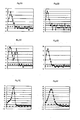
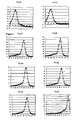
- FIG. 2 The Tm analysis yielded Fig. 2 and Fig. 3 showing the changes in the fluorescence value of the respective probes.
- the graphs (A) to (E) show the results obtained by using the probe indicated in SEQ ID NO:8 and the graphs (F) to (J) show the results obtained by using the probe indicated in SEQ ID NO:7.
- Fig. 2 the graphs (A) to (E) show the results obtained by using the probe indicated in SEQ ID NO:8 and the graphs (F) to (J) show the results obtained by using the probe indicated in SEQ ID NO:7.
- graphs (A) and (F) show the results obtained by using the wild-type plasmid as the sample
- graphs (B) and (G) show the results obtained by using the V600E plasmid (mt 5%) as the sample
- graphs (C) and (H) show the results obtained by using the V600K plasmid (mt 5%) as the sample
- graphs (D) and (I) show the results obtained by using the V600R plasmid (mt 5%) as the sample
- graphs (E) and (J) show the results obtained by using the V600D plasmid (mt 5%) as the sample.
- the graphs (A) to (E) show the results obtained by using the probe indicated in SEQ ID NO:9 and the graphs (F) to (J) show the results obtained by using the probe indicated in SEQ ID NO:7.
- graphs (A) and (F) show the results obtained by using the wild-type plasmid as the sample
- graphs (B) and (G) show the results obtained by using the V600E plasmid (mt 10%) as the sample
- graphs (C) and (H) show the results obtained by using the V600K plasmid (mt 10%) as the sample
- graphs (D) and (I) show the results obtained by using the V600R plasmid (mt 10%) as the sample
- graphs (E) and (J) show the results obtained by using the V600D plasmid (mt 10%) as the sample.
- the ordinate indicates the change in the fluorescence intensity per unit time (increase in the d-fluor
- Tm analysis was performed in the same manner as in Example 1, except that the polymorphism detection probe was changed to the probes of SEQ ID NOs:14 to 16 shown in Table 8 below.
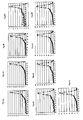
- Fig. 4 showing the changes in the fluorescence value of the respective probes was obtained.
- the ordinate indicates the change in the fluorescence intensity per unit time (increase in the d-fluorescence intensity/t) and the abscissa indicates the temperature (°C).
- graphs (A) to (E) show the results obtained by using the probe indicated in SEQ ID NO:10
- graphs (F) to (J) show the results obtained by using the probe indicated in SEQ ID NO:11
- graphs (K) to (O) show the results obtained by using the probe indicated in SEQ ID NO:12.
- graphs (A), (F) and (K) show the results obtained by using the wild-type plasmid as the sample
- graphs (B), (G) and (L) show the results obtained by using the V600E plasmid (mt 10%) as the sample
- graphs (C), (H) and (M) show the results obtained by using the V600K plasmid (mt 10%) as the sample
- graphs (D), (I) and (N) show the results obtained by using the V600R plasmid (mt 10%) as the sample
- graphs (E), (J) and (O) show the results obtained by using the V600D plasmid (mt 10%) as the sample.
Landscapes
- Chemical & Material Sciences (AREA)
- Life Sciences & Earth Sciences (AREA)
- Health & Medical Sciences (AREA)
- Organic Chemistry (AREA)
- Proteomics, Peptides & Aminoacids (AREA)
- Wood Science & Technology (AREA)
- Zoology (AREA)
- Engineering & Computer Science (AREA)
- Immunology (AREA)
- Analytical Chemistry (AREA)
- Genetics & Genomics (AREA)
- Pathology (AREA)
- General Engineering & Computer Science (AREA)
- Biotechnology (AREA)
- Physics & Mathematics (AREA)
- Biochemistry (AREA)
- Bioinformatics & Cheminformatics (AREA)
- Biophysics (AREA)
- General Health & Medical Sciences (AREA)
- Molecular Biology (AREA)
- Microbiology (AREA)
- Hospice & Palliative Care (AREA)
- Oncology (AREA)
- Measuring Or Testing Involving Enzymes Or Micro-Organisms (AREA)
- Investigating, Analyzing Materials By Fluorescence Or Luminescence (AREA)
Applications Claiming Priority (2)
| Application Number | Priority Date | Filing Date | Title |
|---|---|---|---|
| JP2012096558 | 2012-04-20 | ||
| JP2013081858A JP6153758B2 (ja) | 2012-04-20 | 2013-04-10 | 多型検出用プローブ、多型検出方法、薬効判定方法及び多型検出用キット |
Publications (2)
| Publication Number | Publication Date |
|---|---|
| EP2653560A1 true EP2653560A1 (de) | 2013-10-23 |
| EP2653560B1 EP2653560B1 (de) | 2016-06-29 |
Family
ID=48141823
Family Applications (1)
| Application Number | Title | Priority Date | Filing Date |
|---|---|---|---|
| EP13164586.3A Active EP2653560B1 (de) | 2012-04-20 | 2013-04-19 | Sonde und Polymorphismusdetektionsverfahren damit |
Country Status (5)
| Country | Link |
|---|---|
| US (1) | US9255298B2 (de) |
| EP (1) | EP2653560B1 (de) |
| JP (1) | JP6153758B2 (de) |
| AU (1) | AU2013204483B2 (de) |
| RU (1) | RU2633506C2 (de) |
Cited By (1)
| Publication number | Priority date | Publication date | Assignee | Title |
|---|---|---|---|---|
| WO2015063498A3 (en) * | 2013-10-30 | 2015-07-16 | Mast Group Limited | Nucleic acid probe with single fluorophore label bound to internal cytosine for use in loop mediated isothermal amplification |
Families Citing this family (2)
| Publication number | Priority date | Publication date | Assignee | Title |
|---|---|---|---|---|
| KR101595442B1 (ko) * | 2015-08-18 | 2016-02-18 | 대한민국 | 바이러스성 출혈성 패혈증 바이러스의 지역 특이적 유전형 판별용 프로브 및 그 용도 |
| JP7241634B2 (ja) * | 2019-07-29 | 2023-03-17 | アークレイ株式会社 | ヒトbrafのv600変異検出用プローブ及びヒトbrafのv600変異の検出方法 |
Citations (4)
| Publication number | Priority date | Publication date | Assignee | Title |
|---|---|---|---|---|
| WO2005059171A1 (en) * | 2003-12-09 | 2005-06-30 | Nanogen Recognomics Gmbh | Use of a mutation in the braf gene for the determination of the malignancy of melanoma cells |
| EP2036990A1 (de) * | 2007-09-11 | 2009-03-18 | Roche Diagnostics GmbH | Diagnosetest auf Anfälligkeit gegen B-Raf-Kinase-Hemmer |
| WO2010065626A1 (en) * | 2008-12-02 | 2010-06-10 | Globeimmune, Inc. | Genotyping tools, methods and kits |
| WO2011019704A2 (en) * | 2009-08-11 | 2011-02-17 | Response Genetics, Inc. | Methods, primers, probes and kits useful for the detection of braf mutations |
Family Cites Families (6)
| Publication number | Priority date | Publication date | Assignee | Title |
|---|---|---|---|---|
| RU2258710C2 (ru) * | 1999-03-09 | 2005-08-20 | Займодженетикс, Инк. | Новый цитокин zalpha11-лиганд |
| US7553625B2 (en) * | 2003-12-22 | 2009-06-30 | John Wayne Cancer Institute | Method and apparatus for in vivo collection of circulating biological components |
| EP2128273B1 (de) * | 2007-03-26 | 2012-11-28 | ARKRAY, Inc. | Primer-set zur genamplifikation, genamplifikationsreagens damit und verwendung davon |
| WO2009073513A1 (en) * | 2007-11-30 | 2009-06-11 | Schering Corporation | Braf biomarkers |
| JP5399188B2 (ja) * | 2009-09-28 | 2014-01-29 | 三洋電機株式会社 | 非水電解質二次電池 |
| CN102317454A (zh) | 2009-12-07 | 2012-01-11 | 爱科来株式会社 | 疾病相关基因的多态性检测用探针及其用途 |
-
2013
- 2013-04-10 JP JP2013081858A patent/JP6153758B2/ja active Active
- 2013-04-11 RU RU2013116589A patent/RU2633506C2/ru active
- 2013-04-12 AU AU2013204483A patent/AU2013204483B2/en active Active
- 2013-04-16 US US13/863,877 patent/US9255298B2/en active Active
- 2013-04-19 EP EP13164586.3A patent/EP2653560B1/de active Active
Patent Citations (4)
| Publication number | Priority date | Publication date | Assignee | Title |
|---|---|---|---|---|
| WO2005059171A1 (en) * | 2003-12-09 | 2005-06-30 | Nanogen Recognomics Gmbh | Use of a mutation in the braf gene for the determination of the malignancy of melanoma cells |
| EP2036990A1 (de) * | 2007-09-11 | 2009-03-18 | Roche Diagnostics GmbH | Diagnosetest auf Anfälligkeit gegen B-Raf-Kinase-Hemmer |
| WO2010065626A1 (en) * | 2008-12-02 | 2010-06-10 | Globeimmune, Inc. | Genotyping tools, methods and kits |
| WO2011019704A2 (en) * | 2009-08-11 | 2011-02-17 | Response Genetics, Inc. | Methods, primers, probes and kits useful for the detection of braf mutations |
Non-Patent Citations (3)
| Title |
|---|
| BENLLOCH SUSANA ET AL: "Detection of BRAF V600E mutation in colorectal cancer: Comparison of automatic sequencing and real-time chemistry methodology", JOURNAL OF MOLECULAR DIAGNOSTICS,THE, AMERICAN SOCIETY FOR INVESTIGATIVE PATHOLOGY, US, vol. 8, no. 5, 1 November 2006 (2006-11-01), pages 540 - 543, XP002505913, ISSN: 1525-1578, DOI: 10.2353/JMOLDX.2006.060070 * |
| BENTZ B G ET AL: "B-RAF V600E mutational analysis of fine needle aspirates correlates with diagnosis of thyroid nodules", OTOLARYNGOLOGY AND HEAD AND NECK SURGERY, ROCHESTER, US, vol. 140, no. 5, 1 May 2009 (2009-05-01), pages 709 - 714, XP026020798, ISSN: 0194-5998, [retrieved on 20090309], DOI: 10.1016/J.OTOHNS.2009.01.007 * |
| KIM I-J ET AL: "DEVELOPMENT AND APPLICATIONS OF BRAF OLIGONUCLEOTIDE MICROARRAY", JOURNAL OF MOLECULAR DIAGNOSTICS,THE, AMERICAN SOCIETY FOR INVESTIGATIVE PATHOLOGY, US, vol. 9, no. 1, 1 February 2007 (2007-02-01), pages 55 - 63, XP008079464, ISSN: 1525-1578, DOI: 10.2353/JMOLDX.2007.060072 * |
Cited By (3)
| Publication number | Priority date | Publication date | Assignee | Title |
|---|---|---|---|---|
| WO2015063498A3 (en) * | 2013-10-30 | 2015-07-16 | Mast Group Limited | Nucleic acid probe with single fluorophore label bound to internal cytosine for use in loop mediated isothermal amplification |
| CN105899674A (zh) * | 2013-10-30 | 2016-08-24 | 马斯特集团有限公司 | 用于环介导的等温扩增的具有与内部胞嘧啶结合的单个荧光团标记物的核酸探针 |
| US11111523B2 (en) | 2013-10-30 | 2021-09-07 | Mast Group Limited | Nucleic acid probe with single fluorophore label bound to internal cytosine for use in loop mediated isothermal amplification |
Also Published As
| Publication number | Publication date |
|---|---|
| RU2013116589A (ru) | 2014-10-20 |
| US9255298B2 (en) | 2016-02-09 |
| AU2013204483A1 (en) | 2013-11-07 |
| US20130280711A1 (en) | 2013-10-24 |
| AU2013204483B2 (en) | 2015-04-23 |
| EP2653560B1 (de) | 2016-06-29 |
| RU2633506C2 (ru) | 2017-10-12 |
| JP2013236625A (ja) | 2013-11-28 |
| JP6153758B2 (ja) | 2017-06-28 |
Similar Documents
| Publication | Publication Date | Title |
|---|---|---|
| EP2574680A1 (de) | Sonde, Methode zur Bestimmung der Polymorphismen, Methode zur Beurteilung der Wirksamkeit oder Verträglichkeit eines Medikamentes, und Reagenzienkits | |
| EP3246332B1 (de) | Oligonukleotide und verfahren zur erkennung von pik3ca-mutationen | |
| EP2578701A1 (de) | Sonde, Polymorphismusdetektionsverfahren, Verfahren zur Beurteilung der Arzneimittelwirksamkeit oder -toleranz und Reagenzkit | |
| US9200326B2 (en) | Probe for detecting polymorphism in disease-related gene and use of the probe | |
| EP2653560B1 (de) | Sonde und Polymorphismusdetektionsverfahren damit | |
| EP2520664B1 (de) | Sonde, Polymorphismusdetektionsverfahren, Verfahren zur Beurteilung der Arzneimittelwirksamkeit oder -toleranz, Krankheitsvorhersageverfahren und Reagenzkit | |
| EP2520663A1 (de) | Sonde zur Detektion von Genmutationen | |
| EP2447376A1 (de) | Polymorphismuserkennungssonde, Polymorphismuserkennungsverfahren, Bewertung der Arzneimittelwirksamkeit und Erkennungskit für Polymorphismus | |
| EP2520665B1 (de) | Sonde, Polymorphismusdetektionsverfahren, Verfahren zur Beurteilung der Arzneimittelwirksamkeit oder -toleranz und Reagenzkit | |
| EP2711435B1 (de) | Mutationserkennungssonde, Mutationserkennungsverfahren, Verfahren zur Beurteilung der Arzneimittelwirksamkeit und Mutationserkennungskit | |
| EP2520666B1 (de) | Oligonucleotid zur Detektion von Polymorphismen des Rezeptor des epidermalen Wachstumsfaktors Exon 19 und Verwendung davon | |
| US9121051B2 (en) | Method of determining the abundance of a target nucleotide sequence of a gene of interest | |
| EP2447377B1 (de) | Primersatz zur Erkennung von EGFR-exon-21 Polymorphismus und Anwendung dafür | |
| US8748095B2 (en) | Probe for detecting polymorphism in EGFR gene and use of the probe | |
| EP2774995A1 (de) | Verfahren zur messung grosser anzahlen von genen |
Legal Events
| Date | Code | Title | Description |
|---|---|---|---|
| PUAI | Public reference made under article 153(3) epc to a published international application that has entered the european phase |
Free format text: ORIGINAL CODE: 0009012 |
|
| AK | Designated contracting states |
Kind code of ref document: A1 Designated state(s): AL AT BE BG CH CY CZ DE DK EE ES FI FR GB GR HR HU IE IS IT LI LT LU LV MC MK MT NL NO PL PT RO RS SE SI SK SM TR |
|
| AX | Request for extension of the european patent |
Extension state: BA ME |
|
| 17P | Request for examination filed |
Effective date: 20140423 |
|
| RBV | Designated contracting states (corrected) |
Designated state(s): AL AT BE BG CH CY CZ DE DK EE ES FI FR GB GR HR HU IE IS IT LI LT LU LV MC MK MT NL NO PL PT RO RS SE SI SK SM TR |
|
| 17Q | First examination report despatched |
Effective date: 20150317 |
|
| RAP1 | Party data changed (applicant data changed or rights of an application transferred) |
Owner name: ARKRAY, INC. |
|
| GRAP | Despatch of communication of intention to grant a patent |
Free format text: ORIGINAL CODE: EPIDOSNIGR1 |
|
| GRAS | Grant fee paid |
Free format text: ORIGINAL CODE: EPIDOSNIGR3 |
|
| INTG | Intention to grant announced |
Effective date: 20160302 |
|
| GRAA | (expected) grant |
Free format text: ORIGINAL CODE: 0009210 |
|
| AK | Designated contracting states |
Kind code of ref document: B1 Designated state(s): AL AT BE BG CH CY CZ DE DK EE ES FI FR GB GR HR HU IE IS IT LI LT LU LV MC MK MT NL NO PL PT RO RS SE SI SK SM TR |
|
| REG | Reference to a national code |
Ref country code: GB Ref legal event code: FG4D |
|
| REG | Reference to a national code |
Ref country code: CH Ref legal event code: EP |
|
| REG | Reference to a national code |
Ref country code: AT Ref legal event code: REF Ref document number: 809169 Country of ref document: AT Kind code of ref document: T Effective date: 20160715 |
|
| REG | Reference to a national code |
Ref country code: IE Ref legal event code: FG4D |
|
| REG | Reference to a national code |
Ref country code: DE Ref legal event code: R096 Ref document number: 602013008851 Country of ref document: DE |
|
| REG | Reference to a national code |
Ref country code: LT Ref legal event code: MG4D |
|
| PG25 | Lapsed in a contracting state [announced via postgrant information from national office to epo] |
Ref country code: LT Free format text: LAPSE BECAUSE OF FAILURE TO SUBMIT A TRANSLATION OF THE DESCRIPTION OR TO PAY THE FEE WITHIN THE PRESCRIBED TIME-LIMIT Effective date: 20160629 Ref country code: NO Free format text: LAPSE BECAUSE OF FAILURE TO SUBMIT A TRANSLATION OF THE DESCRIPTION OR TO PAY THE FEE WITHIN THE PRESCRIBED TIME-LIMIT Effective date: 20160929 Ref country code: FI Free format text: LAPSE BECAUSE OF FAILURE TO SUBMIT A TRANSLATION OF THE DESCRIPTION OR TO PAY THE FEE WITHIN THE PRESCRIBED TIME-LIMIT Effective date: 20160629 |
|
| REG | Reference to a national code |
Ref country code: NL Ref legal event code: MP Effective date: 20160629 |
|
| PG25 | Lapsed in a contracting state [announced via postgrant information from national office to epo] |
Ref country code: HR Free format text: LAPSE BECAUSE OF FAILURE TO SUBMIT A TRANSLATION OF THE DESCRIPTION OR TO PAY THE FEE WITHIN THE PRESCRIBED TIME-LIMIT Effective date: 20160629 Ref country code: RS Free format text: LAPSE BECAUSE OF FAILURE TO SUBMIT A TRANSLATION OF THE DESCRIPTION OR TO PAY THE FEE WITHIN THE PRESCRIBED TIME-LIMIT Effective date: 20160629 Ref country code: SE Free format text: LAPSE BECAUSE OF FAILURE TO SUBMIT A TRANSLATION OF THE DESCRIPTION OR TO PAY THE FEE WITHIN THE PRESCRIBED TIME-LIMIT Effective date: 20160629 Ref country code: LV Free format text: LAPSE BECAUSE OF FAILURE TO SUBMIT A TRANSLATION OF THE DESCRIPTION OR TO PAY THE FEE WITHIN THE PRESCRIBED TIME-LIMIT Effective date: 20160629 Ref country code: NL Free format text: LAPSE BECAUSE OF FAILURE TO SUBMIT A TRANSLATION OF THE DESCRIPTION OR TO PAY THE FEE WITHIN THE PRESCRIBED TIME-LIMIT Effective date: 20160629 Ref country code: GR Free format text: LAPSE BECAUSE OF FAILURE TO SUBMIT A TRANSLATION OF THE DESCRIPTION OR TO PAY THE FEE WITHIN THE PRESCRIBED TIME-LIMIT Effective date: 20160930 |
|
| REG | Reference to a national code |
Ref country code: AT Ref legal event code: MK05 Ref document number: 809169 Country of ref document: AT Kind code of ref document: T Effective date: 20160629 |
|
| PG25 | Lapsed in a contracting state [announced via postgrant information from national office to epo] |
Ref country code: IS Free format text: LAPSE BECAUSE OF FAILURE TO SUBMIT A TRANSLATION OF THE DESCRIPTION OR TO PAY THE FEE WITHIN THE PRESCRIBED TIME-LIMIT Effective date: 20161029 Ref country code: CZ Free format text: LAPSE BECAUSE OF FAILURE TO SUBMIT A TRANSLATION OF THE DESCRIPTION OR TO PAY THE FEE WITHIN THE PRESCRIBED TIME-LIMIT Effective date: 20160629 Ref country code: RO Free format text: LAPSE BECAUSE OF FAILURE TO SUBMIT A TRANSLATION OF THE DESCRIPTION OR TO PAY THE FEE WITHIN THE PRESCRIBED TIME-LIMIT Effective date: 20160629 Ref country code: SK Free format text: LAPSE BECAUSE OF FAILURE TO SUBMIT A TRANSLATION OF THE DESCRIPTION OR TO PAY THE FEE WITHIN THE PRESCRIBED TIME-LIMIT Effective date: 20160629 Ref country code: EE Free format text: LAPSE BECAUSE OF FAILURE TO SUBMIT A TRANSLATION OF THE DESCRIPTION OR TO PAY THE FEE WITHIN THE PRESCRIBED TIME-LIMIT Effective date: 20160629 |
|
| PG25 | Lapsed in a contracting state [announced via postgrant information from national office to epo] |
Ref country code: SM Free format text: LAPSE BECAUSE OF FAILURE TO SUBMIT A TRANSLATION OF THE DESCRIPTION OR TO PAY THE FEE WITHIN THE PRESCRIBED TIME-LIMIT Effective date: 20160629 Ref country code: AT Free format text: LAPSE BECAUSE OF FAILURE TO SUBMIT A TRANSLATION OF THE DESCRIPTION OR TO PAY THE FEE WITHIN THE PRESCRIBED TIME-LIMIT Effective date: 20160629 Ref country code: ES Free format text: LAPSE BECAUSE OF FAILURE TO SUBMIT A TRANSLATION OF THE DESCRIPTION OR TO PAY THE FEE WITHIN THE PRESCRIBED TIME-LIMIT Effective date: 20160629 Ref country code: BE Free format text: LAPSE BECAUSE OF FAILURE TO SUBMIT A TRANSLATION OF THE DESCRIPTION OR TO PAY THE FEE WITHIN THE PRESCRIBED TIME-LIMIT Effective date: 20160629 Ref country code: PL Free format text: LAPSE BECAUSE OF FAILURE TO SUBMIT A TRANSLATION OF THE DESCRIPTION OR TO PAY THE FEE WITHIN THE PRESCRIBED TIME-LIMIT Effective date: 20160629 Ref country code: PT Free format text: LAPSE BECAUSE OF FAILURE TO SUBMIT A TRANSLATION OF THE DESCRIPTION OR TO PAY THE FEE WITHIN THE PRESCRIBED TIME-LIMIT Effective date: 20161031 |
|
| REG | Reference to a national code |
Ref country code: DE Ref legal event code: R097 Ref document number: 602013008851 Country of ref document: DE |
|
| REG | Reference to a national code |
Ref country code: FR Ref legal event code: PLFP Year of fee payment: 5 |
|
| PG25 | Lapsed in a contracting state [announced via postgrant information from national office to epo] |
Ref country code: DK Free format text: LAPSE BECAUSE OF FAILURE TO SUBMIT A TRANSLATION OF THE DESCRIPTION OR TO PAY THE FEE WITHIN THE PRESCRIBED TIME-LIMIT Effective date: 20160629 |
|
| 26N | No opposition filed |
Effective date: 20170330 |
|
| PLBE | No opposition filed within time limit |
Free format text: ORIGINAL CODE: 0009261 |
|
| STAA | Information on the status of an ep patent application or granted ep patent |
Free format text: STATUS: NO OPPOSITION FILED WITHIN TIME LIMIT |
|
| PG25 | Lapsed in a contracting state [announced via postgrant information from national office to epo] |
Ref country code: BG Free format text: LAPSE BECAUSE OF FAILURE TO SUBMIT A TRANSLATION OF THE DESCRIPTION OR TO PAY THE FEE WITHIN THE PRESCRIBED TIME-LIMIT Effective date: 20160929 Ref country code: SI Free format text: LAPSE BECAUSE OF FAILURE TO SUBMIT A TRANSLATION OF THE DESCRIPTION OR TO PAY THE FEE WITHIN THE PRESCRIBED TIME-LIMIT Effective date: 20160629 |
|
| REG | Reference to a national code |
Ref country code: CH Ref legal event code: PL |
|
| REG | Reference to a national code |
Ref country code: IE Ref legal event code: MM4A |
|
| PG25 | Lapsed in a contracting state [announced via postgrant information from national office to epo] |
Ref country code: MC Free format text: LAPSE BECAUSE OF FAILURE TO SUBMIT A TRANSLATION OF THE DESCRIPTION OR TO PAY THE FEE WITHIN THE PRESCRIBED TIME-LIMIT Effective date: 20160629 |
|
| PG25 | Lapsed in a contracting state [announced via postgrant information from national office to epo] |
Ref country code: LU Free format text: LAPSE BECAUSE OF NON-PAYMENT OF DUE FEES Effective date: 20170419 Ref country code: CH Free format text: LAPSE BECAUSE OF NON-PAYMENT OF DUE FEES Effective date: 20170430 Ref country code: LI Free format text: LAPSE BECAUSE OF NON-PAYMENT OF DUE FEES Effective date: 20170430 |
|
| REG | Reference to a national code |
Ref country code: FR Ref legal event code: PLFP Year of fee payment: 6 |
|
| PG25 | Lapsed in a contracting state [announced via postgrant information from national office to epo] |
Ref country code: IE Free format text: LAPSE BECAUSE OF NON-PAYMENT OF DUE FEES Effective date: 20170419 |
|
| PG25 | Lapsed in a contracting state [announced via postgrant information from national office to epo] |
Ref country code: MT Free format text: LAPSE BECAUSE OF NON-PAYMENT OF DUE FEES Effective date: 20170419 |
|
| PG25 | Lapsed in a contracting state [announced via postgrant information from national office to epo] |
Ref country code: AL Free format text: LAPSE BECAUSE OF FAILURE TO SUBMIT A TRANSLATION OF THE DESCRIPTION OR TO PAY THE FEE WITHIN THE PRESCRIBED TIME-LIMIT Effective date: 20160629 |
|
| PG25 | Lapsed in a contracting state [announced via postgrant information from national office to epo] |
Ref country code: HU Free format text: LAPSE BECAUSE OF FAILURE TO SUBMIT A TRANSLATION OF THE DESCRIPTION OR TO PAY THE FEE WITHIN THE PRESCRIBED TIME-LIMIT; INVALID AB INITIO Effective date: 20130419 |
|
| PG25 | Lapsed in a contracting state [announced via postgrant information from national office to epo] |
Ref country code: CY Free format text: LAPSE BECAUSE OF NON-PAYMENT OF DUE FEES Effective date: 20160629 |
|
| PG25 | Lapsed in a contracting state [announced via postgrant information from national office to epo] |
Ref country code: MK Free format text: LAPSE BECAUSE OF FAILURE TO SUBMIT A TRANSLATION OF THE DESCRIPTION OR TO PAY THE FEE WITHIN THE PRESCRIBED TIME-LIMIT Effective date: 20160629 |
|
| PG25 | Lapsed in a contracting state [announced via postgrant information from national office to epo] |
Ref country code: TR Free format text: LAPSE BECAUSE OF FAILURE TO SUBMIT A TRANSLATION OF THE DESCRIPTION OR TO PAY THE FEE WITHIN THE PRESCRIBED TIME-LIMIT Effective date: 20160629 |
|
| PGFP | Annual fee paid to national office [announced via postgrant information from national office to epo] |
Ref country code: DE Payment date: 20250422 Year of fee payment: 13 |
|
| PGFP | Annual fee paid to national office [announced via postgrant information from national office to epo] |
Ref country code: GB Payment date: 20250423 Year of fee payment: 13 |
|
| PGFP | Annual fee paid to national office [announced via postgrant information from national office to epo] |
Ref country code: IT Payment date: 20250424 Year of fee payment: 13 |
|
| PGFP | Annual fee paid to national office [announced via postgrant information from national office to epo] |
Ref country code: FR Payment date: 20250425 Year of fee payment: 13 |