EP2654232A1 - Procédés et appareil pour accusé de réception de liaison retour dans un réseau local sans fil (WLAN) - Google Patents
Procédés et appareil pour accusé de réception de liaison retour dans un réseau local sans fil (WLAN) Download PDFInfo
- Publication number
- EP2654232A1 EP2654232A1 EP13020054.6A EP13020054A EP2654232A1 EP 2654232 A1 EP2654232 A1 EP 2654232A1 EP 13020054 A EP13020054 A EP 13020054A EP 2654232 A1 EP2654232 A1 EP 2654232A1
- Authority
- EP
- European Patent Office
- Prior art keywords
- data unit
- transmitting
- message
- block
- apparatuses
- Prior art date
- Legal status (The legal status is an assumption and is not a legal conclusion. Google has not performed a legal analysis and makes no representation as to the accuracy of the status listed.)
- Granted
Links
Images





Classifications
-
- H—ELECTRICITY
- H04—ELECTRIC COMMUNICATION TECHNIQUE
- H04L—TRANSMISSION OF DIGITAL INFORMATION, e.g. TELEGRAPHIC COMMUNICATION
- H04L1/00—Arrangements for detecting or preventing errors in the information received
- H04L1/12—Arrangements for detecting or preventing errors in the information received by using return channel
- H04L1/16—Arrangements for detecting or preventing errors in the information received by using return channel in which the return channel carries supervisory signals, e.g. repetition request signals
- H04L1/18—Automatic repetition systems, e.g. Van Duuren systems
- H04L1/1829—Arrangements specially adapted for the receiver end
- H04L1/1854—Scheduling and prioritising arrangements
-
- H—ELECTRICITY
- H04—ELECTRIC COMMUNICATION TECHNIQUE
- H04L—TRANSMISSION OF DIGITAL INFORMATION, e.g. TELEGRAPHIC COMMUNICATION
- H04L1/00—Arrangements for detecting or preventing errors in the information received
- H04L1/12—Arrangements for detecting or preventing errors in the information received by using return channel
- H04L1/16—Arrangements for detecting or preventing errors in the information received by using return channel in which the return channel carries supervisory signals, e.g. repetition request signals
- H04L1/1607—Details of the supervisory signal
- H04L1/1614—Details of the supervisory signal using bitmaps
-
- H—ELECTRICITY
- H04—ELECTRIC COMMUNICATION TECHNIQUE
- H04L—TRANSMISSION OF DIGITAL INFORMATION, e.g. TELEGRAPHIC COMMUNICATION
- H04L1/00—Arrangements for detecting or preventing errors in the information received
- H04L2001/0092—Error control systems characterised by the topology of the transmission link
- H04L2001/0093—Point-to-multipoint
-
- H—ELECTRICITY
- H04—ELECTRIC COMMUNICATION TECHNIQUE
- H04W—WIRELESS COMMUNICATION NETWORKS
- H04W84/00—Network topologies
- H04W84/02—Hierarchically pre-organised networks, e.g. paging networks, cellular networks, WLAN [Wireless Local Area Network] or WLL [Wireless Local Loop]
- H04W84/10—Small scale networks; Flat hierarchical networks
- H04W84/12—WLAN [Wireless Local Area Networks]
Definitions
- the present application relates generally to the operation of wireless communication systems, and more particularly, to methods and apparatus for reverse link acknowledgment in a communication network
- One of the main features of wireless systems like an IEEE 802.11 WLAN is the acknowledgement of successfully received packets.
- Successfully received packets are those, for example, that did not collide with other transmissions or they have reception power above the receiver sensitivity threshold so that they are able to be properly decoded at the receiver.
- the MAC layer protocol data unit (MPDU) that comprises upper layer (i.e., IP layer, etc.) data is encompassed in the PLCP (Physical layer convergence procedure) layer protocol data unit (PPDU).
- the MPDU has a 32-bit CRC error detection mechanism that spans the data as well as the MAC header. Upon error free reception (no error in the CRC frame check), an acknowledgement (ACK) is sent by the receiver to the transmitter.
- ACK acknowledgement
- the ACK is sent by the receiver after a Short Interframe Space (SIFS) time so that there is enough time to decode the packet to check if the frame was intended for the decoding station, and to check for the presence of errors by computing the Cyclic Redundancy Check (CRC).
- SIFS Short Interframe Space
- CRC Cyclic Redundancy Check
- IEEE 802.11e/n introduces a Block ACK where a receiving station acknowledges reception of multiple frames by transmitting a single acknowledgement frame with a bitmap of the successfully received MPDUs.
- ACKs can increase the Quality of Service (QoS) for users in the WLAN.
- QoS Quality of Service
- ACKs may increase signaling overhead and lower the overall system efficiency.
- a reverse link acknowledgment system comprising methods and apparatus that operates to increase the efficiency of a WLAN.
- the system provides an enhanced acknowledgement mechanism to increase the efficiency at which data transmitted over a common channel to a plurality of devices is acknowledged over a reverse link.
- a method for communication using a channel that is common to a plurality of nodes.
- the method comprises receiving, at a first node of the plurality of nodes, a data communication over the common channel, the data communication being decodable by other nodes of the plurality of nodes.
- the method also comprises determining transmission resources from the data communication, wherein the transmission resources are different for each node, and transmitting a response over the common channel using the determined transmission resources.
- an apparatus for communication using a channel that is common to a plurality of nodes and the apparatus.
- the apparatus comprises a receiver configured to receive a data communication over the common channel, the data communication being decodable by the plurality of nodes.
- the apparatus also comprises a controller configured to determine transmission resources from the data communication, wherein the transmission resources are different for each of the nodes and the apparatus, and a transmitter configured to transmit a response over the common channel using the determined transmission resources.
- an apparatus for communication using a channel that is common to a plurality of nodes and the apparatus.
- the apparatus comprises means for receiving a data communication over the common channel, the data communication being decodable by the plurality of nodes.
- the apparatus also comprises means for determining transmission resources from the data communication, wherein the transmission resources are different for each of the nodes and the apparatus, and means for transmitting a response over the common channel using the determined transmission resources.
- a method for communication using a channel that is common to a plurality of nodes.
- the method comprises transmitting to the plurality of nodes a data communication over the common channel, and receiving responses from the plurality of nodes, wherein each response was sent using different transmission resources determined from the data communication.
- an apparatus for communication using a channel that is common to a plurality of nodes and the apparatus.
- the apparatus comprises a transmitter configured to transmit to the plurality of nodes a data communication over the common channel, and a receiver configured to receive responses from the plurality of nodes, wherein each response was sent using different transmission resources determined from the data communication.
- an apparatus for communication using a channel that is common to a plurality of nodes and the apparatus.
- the apparatus comprises means for transmitting to the plurality of nodes a data communication over the common channel, and means for receiving responses from the plurality of nodes, wherein each response was sent using different transmission resources determined from the data communication.
- FIG. 1 shows a MIMO WLAN system that supports a number of users and is capable of implementing various aspects of a reverse link acknowledgment system
- FIG. 2 shows a diagram illustrating the operation of the system shown in FIG. 1 to perform a transmission and reception exchange in accordance with IEEE 802.11 protocols;
- FIG. 3 shows a diagram illustrating the operation of the network shown in FIG. 1 to perform an APPDU transmission and reception exchange in accordance with IEEE 802.11 protocols;
- FIG. 4 shows a diagram illustrating aspects of an access point and a terminal that are configured to operate in accordance with aspects of a reverse link acknowledgement system
- FIG. 5 shows a diagram illustrating an APPDU transmission and reception exchange in accordance with aspects of a reverse link acknowledgement system
- FIG. 6 shows a diagram that illustrates a frequency division transmission and reception exchange in accordance with aspects of a reverse link acknowledgement system
- FIG. 7 shows an exemplary access terminal for use in aspects of a reverse link acknowledgment system
- FIG. 8 shows an exemplary access point for use in aspects of a reverse link acknowledgment system.
- FIG. 1 shows a MIMO WLAN system 100 that supports a number of users and is capable of implementing various aspects of a reverse link acknowledgment system.
- the described aspects can be used with various WLAN systems and are not limited to use with the MIMO WLAN system 100, which is shown and described for exemplary purposes.
- the MIMO WLAN system 100 includes a number of access points (APs) 110 that support communication for a number of user terminals (UTs) 120.
- an access point may comprise, be implemented as, or known as NodeB, Radio Network Controller (RNC), eNodeB, Base Station Controller (BSC), Base Transceiver Station (BTS), Base Station (BS), Transceiver Function (TF), Radio Router, Radio Transceiver, Basic Service Set (BSS), Extended Service Set (ESS), Radio Base Station (RBS), or some other terminology.
- a user terminal may comprise, be implemented as, or known as an access terminal (AT), a subscriber station, a subscriber unit, a mobile station, a remote station, a remote terminal, a user terminal, a user agent, a user device, user equipment (UE), or some other terminology.
- an access terminal may comprise a cellular telephone, a cordless telephone, a Session Initiation Protocol (SIP) phone, a wireless local loop (WLL) station, a personal digital assistant (PDA), a handheld device having wireless connection capability, or some other suitable processing device connected to a wireless modem.
- SIP Session Initiation Protocol
- WLL wireless local loop
- PDA personal digital assistant
- a phone e.g., a cellular phone or smart phone
- a computer e.g., a laptop
- a portable communication device e.g., a portable computing device
- an entertainment device e.g., a music or video device, or a satellite radio
- a global positioning system device e.g., a global positioning system device, or any other suitable device that is configured to communicate via a wireless or wired medium.
- Each user terminal 120 a-k may be dispersed throughout the system. Each user terminal may be a fixed or mobile terminal that can communicate with the access point. Each user terminal may communicate with one or possibly multiple access points on the downlink and/or uplink at any given moment.
- the downlink i.e., forward link
- the uplink i.e., reverse link
- the access point 110 a communicates with user terminals 120 a through 120 f and access point 110 b communicates with user terminals 120 f through 120 k.
- an access point may communicate with multiple user terminals simultaneously (e.g., via multiple code channels or sub-bands) or sequentially (e.g., via multiple time slots).
- a user terminal may receive downlink transmissions from one or multiple access points.
- the downlink transmission from each access point may include overhead data intended to be received by multiple user terminals, user-specific data intended to be received by specific user terminals, other types of data, or any combination thereof.
- the overhead data may include pilot, page and broadcast messages, system parameters, and so on.
- the MIMO WLAN system 100 is based on a network architecture having a centralized controller.
- a system controller 130 couples to access points 110 a-b and may further couple to other systems and networks.
- system controller 130 may couple to a packet data network (PDN), a wired local area network (LAN), a wide area network (WAN), the Internet, a public switched telephone network (PSTN), a cellular communication network, and so on.
- PDN packet data network
- LAN local area network
- WAN wide area network
- PSTN public switched telephone network
- System controller 130 may be designed to perform a number of functions such as (1) coordination and control for the access points coupled to it, (2) routing of data among these access points, (3) access and control of communication with the user terminals served by these access points, and so on.
- the access point 110 a communicates with the user terminals 120 a- 120 f.
- access point 110 a acts as the transmitter station and has packets queued for transmission to the receiving user terminals 120 a- 120 f.
- station 100 STA-100
- user terminals 120 a- 120 f STA-101 to STA-106 respectively.
- STA-101 to STA-106 stations 101 through 106
- FIG. 2 illustrates the operation of the system 100 to perform a transmission and reception exchange in accordance with an IEEE 802.11 protocols.
- a transmission and reception exchange between transmitting station STA-100 and receiving stations STA-101 through STA-106 is illustrated.
- the STA-100 transmits a packet and expects an ACK in return.
- STA-101 Upon receiving the packet from STA-100 without any errors, STA-101 sends an ACK after a SIFS time duration 202. This process is repeated for all the stations (STAs) assuming there was no error in packet reception. If there was an error in reception, then there may be retransmissions from STA-100 after an ACK timeout period.
- a PLCP preamble 204 is added for synchronization with the receiver (AGC, time, frequency) and a PLCP header 206 is added (indicating length, rate and other information).
- APC automatic phase correction correction
- a service field for descrambling by receiver
- pad bits for forward error correction decoding
- tail bits are added to the payload 208 at the physical layer. This amounts to additional overhead reducing the overall throughput of the network.
- the channel is idle due to the SIFS time between each transmission (from transmitter and receiver) in this process.
- the channel is idle for a total time duration of 12*SIFS.
- This transmission process is associated with IEEE 802.11 WLAN systems having ten receivers and a single transmitter at any instant. This reduces the overall efficiency of the network.
- the SIFS time duration between the reception of the PPDU and transmission of the ACK introduces delay and reduces the throughput of the transmitting station since it has to wait for the reception of the ACK before transmitting the next packet during a Transmission Opportunity (TxOP) duration. This reduction in throughput or inefficiency is further exacerbated as the physical data rates go up because the fixed SIFS time duration becomes a greater percentage of the total transmission time.
- TxOP Transmission Opportunity
- One way to reduce the overhead introduced by the physical layer header can be to aggregate the packets at the physical layer. This method reduces the overhead at the physical layer by transmitting a single preamble for all the PPDUs packed into a single aggregated packet (APPDU).
- APPDU aggregated packet
- the STA-100 can expect to receive a Block ACK (BA), for example, by setting an ACK policy field in a transmitted header to implicit Block ACK.
- BA Block ACK
- FIG. 3 illustrates the operation of the system 100 to perform an APPDU transmission and reception exchange in accordance with IEEE 802.11 protocols.
- the STA-100 transmits an APPDU to receiving stations STA-101 through STA-106.
- the transmitter STA-100 waits for a SIFS time duration and sends a Block ACK request (BAR) 302 to STA-101.
- BAR Block ACK request
- STA-101 waits for a SIFS time duration and sends a Block ACK 304 back to STA-100 indicating the successful reception of the PPDU in the APPDU intended for STA-101.
- the steps are repeated for all the receiving stations STA-101 through STA-106.
- This method reduces the total transmission time of STA-100 by eliminating the need for a preamble for each of the PPDUs. Also, a SIFS time duration between the individual packet transmissions from the transmitting station STA-100 is not required.
- One disadvantage of this technique is that the STA-100 has to send the BAR to each of the receiving stations STA-101 through STA-106.
- Each of the BAR transmissions is typically 24-bytes in length with an additional physical layer overhead of PLCP [Preamble + Header], Service, and Tail + Pad.
- the BAR and the BA frames are separated by a SIFS time duration, thereby introducing an additional 12*SIFS time duration to the entire transaction.
- This transmission process is associated with IEEE 802.11n systems having six receivers and a single transmitter at any instant.
- FIG. 4 shows a diagram illustrating aspects of an access point 402 and access terminal 404 that are configured to operate in accordance with aspects of a reverse link acknowledgement system.
- the access point 402 is suitable for use as the access point 110 x shown in FIG. 1
- the access terminal 404 is suitable for use as the terminal 120 y also shown in FIG. 1 .
- processing by the access point 402 and the terminal 404 for downlink and uplink communications is described in further detail below.
- the processing for the uplink may be the same, different, or complementary to the processing for the downlink.
- a transmit (TX) data processor 408 receives traffic data (i.e., information bits) from a data source 406 and signaling and other information from a controller 418 and possibly a scheduler 416.
- the controller is operable to access memory 420.
- These various types of data may be sent on different transport channels.
- the TX data processor 410 "frames" the data (if necessary), scrambles the framed/unframed data, encodes the scrambled data, interleaves (i.e., reorders) the coded data, and maps the interleaved data into modulation symbols.
- a "data symbol” refers to a modulation symbol for traffic data
- a "pilot symbol” refers to a modulation symbol for pilot.
- the scrambling randomizes the data bits.
- the encoding increases the reliability of the data transmission.
- the interleaving provides time, frequency, and/or spatial diversity for the code bits.
- the scrambling, coding, and modulation may be performed based on control signals provided by controller 418 and are described in further detail below.
- the TX data processor 408 provides a stream of modulation symbols for each spatial channel used for data transmission.
- a TX spatial processor 410 receives one or more modulation symbol streams from TX data processor 408 and performs spatial processing on the modulation symbols to provide four streams of transmit symbols to modulators/demodulators 412 a-d, one stream for each transmit antenna 414 a-d.
- the spatial processing is described in further detail below.
- the TX data processor 408 and controller 418 can aggregate the data units and perform the layering necessary to accommodate the WLAN protocols. For example, the TX data processor 408 and controller 418 are operable to generate PPDUs and APPDUs as described above.
- Each modulator/demodulator (MODEM) 422 a-d receives and processes a respective transmit symbol stream to provide a corresponding stream of OFDM symbols. Each OFDM symbol stream is further processed to provide a corresponding downlink modulated signal. The four downlink modulated signals from the modulator/demodulator 412 a through 412 d are then transmitted from the four antennas 414 a through 414 d, respectively.
- one or multiple receiving antennas 428 a-d receive the transmitted downlink modulated signals, and each receive antenna provides a received signal to a respective demodulator/modulator 430 a-d.
- Each demodulator 430 a-d performs processing complementary to that performed at modulator 412 and provides received symbols.
- a receive (RX) spatial processor 432 then performs spatial processing on the received symbols from all demodulators 430 to provide recovered symbols, which are estimates of the modulation symbols sent by the access point 402. The recovered symbols are provided to the RX data processor 434.
- An RX data processor 434 receives and de-multiplexes the recovered symbols into their respective transport channels.
- the recovered symbols for each transport channel may be symbol de-mapped, de-interleaved, decoded, and descrambled to provide decoded data for that transport channel.
- the decoded data for each transport channel may include recovered packet data, messages, signaling, and so on, which are provided to a data sink 436 for storage and/or a controller 440 for further processing.
- the controller 440 is operable to access memory 438.
- the received data can also be the various PPDUs and APPDUs as described above.
- the RX spatial processor 432 further estimates the downlink to obtain channel state information (CSI).
- the CSI may include channel response estimates, received SNRs, and so on.
- the RX data processor 434 may also provide the status of each packet/frame that is received on the downlink.
- the controller 440 receives the channel state information and the packet/frame status and determines the feedback information to be sent back to the access point 402.
- the feedback information comprises ACKs and BAs as described above.
- the feedback information is processed by a TX data processor 444 and a TX spatial processor 442 (if present), conditioned by one or more modulators 430 a-d, and transmitted via one or more antennas 428 a-d back to the access point 402.
- data may also be provided to the TX data processor from data source 446.
- the transmitted uplink signal(s) are received by antennas 414 a-d, demodulated by de-modulators 412 a-d, and processed by an RX spatial processor 426 and an RX data processor 424 in a complementary manner to that performed at the user terminal 404.
- Information from the RX data processor is provided to a data sink 422.
- the feedback that is received comprises the various ACKs and BAs as described above.
- the recovered feedback information is then provided to the controller 418 and the scheduler 416.
- the scheduler 416 uses the feedback information to perform a number of functions such as (1) selecting a set of user terminals for data transmission on the downlink and uplink, (2) selecting the transmission rate(s) and the transmission mode for each selected user terminal, and (3) assigning the available FCH/RCH resources to the selected terminals.
- the scheduler 416 and/or controller 418 further use information (e.g., steering vectors) obtained from the uplink transmission for the processing of the downlink transmission.
- a number of transmission modes are supported for data transmission on the downlink and uplink.
- the access point 402 and terminal 404 are configured to provide transmission modes comprising space division, frequency division, time division, data rate division, and code division transmission modes.
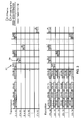
- FIG. 5 shows a diagram 500 that illustrates an APPDU transmission and reception exchange in accordance with aspects of a reverse link acknowledgement system.
- the transmission and reception exchange can be performed by the access point 402 and terminal 404 shown in FIG. 4 .
- the diagram 500 demonstrate how the various aspects operate to increase efficiency in a WLAN that utilizes block ACKs.
- aspects of the reverse link acknowledgement system utilize a scheduled block acknowledge (BAS) in order to reduce the need for transmitting multiple BARs.
- BAS scheduled block acknowledge
- STA-100 transmits an APPDU 502 packed with PPDUs for receiving stations STA-101 through STA-106 .
- An APPDU consists of multiple PPDUs destined for different stations.
- Each PPDU within the APPDU can contain a MPDU or an AMPDU.
- each receiving station STA-101 through STA-106 sends a BA 504 at their respective BAS time.
- the BAS can be determined at each station using one of the methods discussed below.
- This operation eliminates the need for the BAR frames when the ACK policy field is set to immediate Block ACK and also eliminates the corresponding SIFS time duration for each of the BAR frames sent. Hence, this operation conserves transmission of 6 BAR frames and corresponding 6*SIFS time duration for the scenario shown in FIG. 5 . This operation thereby improves the overall efficiency resulting in an enhanced data throughput. This operation is suitable for use with on other WLAN systems. Therefore, individual requests for acknowledgements for each station are no longer required to be transmitted by the transmitting station, because the original transmitted aggregated data contains an implied ACK schedule for the receivers.
- inherent information determined from the APPDU received by each of the receivers can be used at each receiver to determine a BAS schedule to determine when an ACK/BA is to be transmitted. For example, the knowledge of the total frame length of the APPDU and position of each individual PPDUs for different destinations is contained in the transmitted APPDU. The receivers can exploit this knowledge.
- Each PPDU intended for a different receiving station has PLCP Header information that comprises length and the rate information. This part of the PPDU is generally transmitted at a lower rate than that of the data frame. This part of the frame is usually transmitted at the same data rate and modulation scheme as that of the preamble. Hence, this information can be decoded by all the stations in the list of receiving stations in the APPDU frame. Thus, each individual station can estimate the duration of each PPDU (even if it is not intended for itself).
- the stations can count the number of PLCP Headers seen and the position of the PPDU intended for them.
- the station that received the first PPDU in the APPDU aggregate waits for a SIFS time duration and transmits its BA frame to the APPDU transmitter.
- the length of BA frame is fixed and hence all stations can estimate the time required to transmit a BA.
- the station receiving the second PPDU in the APPDU transmits its BA. This process is repeated by all the stations that were recipients of the APPDU.
- the transmitter embeds a schedule for the receivers in the transmitted APPDU.
- the transmitter of an APPDU can append a Block ACK schedule for each of the APPDU recipients in their MAC header.
- the transmitter of the APPDU has knowledge of the length of each PPDU and the length of each MPDU if the PPDU carries an AMPDU.
- the Block ACK schedule computation for each of the PPDU recipients of the APPDU is straight forward.
- a 16-bit BAS field can account for 65 milliseconds of delay, which is more than sufficient since the typical TxOP duration is of the order of a few milliseconds.
- the ACK policy field of each MPDU in the individual PPDUs packed in the APPDU is set to immediate Block ACK.
- each station schedules its BA at the appropriate BAS time. If a station was unable to decode the complete PPDU, it does not send its BA and hence the scheduled time for this BA goes as unutilized air time without affecting the protocol operation.
- the time duration between BA transmissions from different receiving stations can be further reduced to a value less than that of the SIFS time duration, further improving the overall efficiency.
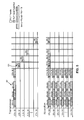
- FIG. 6 shows a diagram that illustrates a frequency division transmission and reception exchange in accordance with aspects of a reverse link acknowledgement system.
- increased efficiency of APPDU transmissions can be achieved in orthogonal frequency division multiple access (OFDMA) systems.
- OFDMA orthogonal frequency division multiple access
- the transmission and reception exchange can be performed by the access point 402 and terminal 404 shown in FIG. 4 .
- the ACK policy field of the individual PPDUs in the APPDU can be set to implicit OFDMA Block ACK (OBA).
- OBA OFDMA Block ACK
- the OFDMA tone assignment for each of the APPDU receivers is calculated by the transmitting station STA-100 and tagged along with the APPDU frame.
- individual receiving stations STA-101 through STA-106 transmit their OFDMA BA after a SIFS time duration.
- the guard interval may be increased (e.g. doubled) for the successful reception of the OFDMA BAs from the APPDU receiving stations. This increase in the guard interval maybe necessary to accommodate a large spread in the round trip times between STA-101 through STA-106.
- station STA-100 transmits an APPDU 602 for the stations STA-101 through STA-106 with the OFDMA tone assignment information embedded in each individual PPDUs.
- the receiving stations, STA-101 through STA-106 transmit an OFDMA BA 604 using their respective tone assignment to STA-100.
- the SIFS overhead time now is reduced to a single SIFS time duration that is between the reception of APPDU and transmission of OFDMA BA.
- eliminating SIFS using OFDMA BA will lead to even higher efficiency improvement gains when the physical data rate is increased (e.g. via more bandwidth, more antennas, SDMA, etc).
- acknowledgments can be received at the same time by a transmitting station but on different frequencies, etc. and thus one result is acknowledgment time will be reduced while minimizing interference.
- the station STA-100 transmits an APPDU 602 for the stations STA-101 through STA-106.
- the receiving stations STA-101 through STA-106 exploit the inherent information in the APPDU as described above to generate their own tone assignments in order to transmit their OFDMA BA 604. This can be accomplished in various ways. For example, the knowledge of the total frame length of the APPDU and position of each individual PPDUs for different destinations is contained in the transmitted APPDU.
- the receivers operate to execute an algorithm that takes this inherent information and calculates a tone assignment.
- FIG. 7 shows an exemplary access terminal 700 for use in aspects of a reverse link acknowledgment system.
- the terminal 700 provides communications using a channel that is common to a plurality of nodes and the terminal 700.
- the terminal 700 comprises one or more circuits configured to provide aspects of a reverse link acknowledgment system as described herein.
- the terminal 700 comprises a first circuit 702 for receiving a data communication over a common channel, the data communication being decodable by the plurality of nodes.
- the first circuit 702 comprises the RX spatial processor 432.
- the terminal 700 comprises a second circuit 704 for determining transmission resources from the data communication, wherein the transmission resources are different for each of the nodes and the apparatus.
- the second circuit 704 comprises RX data processor 434.
- the terminal 700 also comprises a third circuit 706 for transmitting a response over the common channel using the determined transmission resources.
- the third circuit 706 comprises the TX data processor 444.
- FIG. 8 shows an exemplary access point 800 for use in aspects of a reverse link acknowledgment system.
- the access point 800 provides communications using a channel that is common to a plurality of nodes and the access point 800.
- the access point 800 comprises one or more circuits configured to provide aspects of a reverse link acknowledgment system as described herein.
- the access point 800 comprises a first circuit 802 for transmitting to a plurality of nodes a data communication over a common channel.
- the first circuit 802 comprises the TX data processor 408.
- the access point 800 comprises a second circuit 804 for receiving responses from the plurality of nodes, wherein each response was sent using different transmission resources determined from the data communication.
- the second circuit 804 comprises the RX data processor 424.
- the system comprises a computer program product having one or more program instructions ("instructions") or sets of "codes" stored or embodied on a computer-readable medium.
- the codes are executed by at least one processor, for instance, a processor at the AP 402 or the AT 404, their execution causes the processor to provide the functions of the reverse link acknowledgment system described herein.
- the computer-readable medium comprises a floppy disk, CDROM, memory card, FLASH memory device, RAM, ROM, or any other type of memory device or computer-readable medium that interfaces to AP 402 or AT 404.
- the sets of codes when executed, operate to cause the AP 402 and AT 404 to provide the various functions/operations described herein.
- a node implemented in accordance with the teachings herein may comprise an access point or an access terminal.
- the node is a wireless node.
- Such wireless node may provide, for example, connectivity for or to a network (e.g., a wide area network such as the Internet or a cellular network) via a wired or wireless communication link.
- a network e.g., a wide area network such as the Internet or a cellular network
- DSP digital signal processor
- ASIC application specific integrated circuit
- FPGA field programmable gate array
- a general-purpose processor may be a microprocessor, but, in the alternative, the processor may be any conventional processor, controller, microcontroller, or state machine.
- a processor may also be implemented as a combination of computing devices, e.g., a combination of a DSP and a microprocessor, a plurality of microprocessors, one or more microprocessors in conjunction with a DSP core, or any other such configuration.
- a software module may reside in RAM memory, flash memory, ROM memory, EPROM memory, EEPROM memory, registers, a hard disk, a removable disk, a CD-ROM, or any other form of storage medium known in the art.
- An exemplary storage medium is coupled to the processor, such that the processor can read information from, and write information to, the storage medium.
- the storage medium may be integral to the processor.
- the processor and the storage medium may reside in an ASIC.
- the ASIC may reside in a user terminal.
- the processor and the storage medium may reside as discrete components in a user terminal.
Landscapes
- Engineering & Computer Science (AREA)
- Computer Networks & Wireless Communication (AREA)
- Signal Processing (AREA)
- Mobile Radio Communication Systems (AREA)
- Detection And Prevention Of Errors In Transmission (AREA)
Applications Claiming Priority (5)
| Application Number | Priority Date | Filing Date | Title |
|---|---|---|---|
| US4167008P | 2008-04-02 | 2008-04-02 | |
| US9041908P | 2008-08-20 | 2008-08-20 | |
| US12/329,890 US10771199B2 (en) | 2008-04-02 | 2008-12-08 | Methods and apparatus for reverse link acknowledgement in a wireless local area network (WLAN) |
| PCT/US2009/037495 WO2009123856A1 (fr) | 2008-04-02 | 2009-03-18 | Procédés et appareil pour un accusé de réception de liaison retour dans un réseau local sans fil (wlan) |
| EP09728239A EP2277277A1 (fr) | 2008-04-02 | 2009-03-18 | Procédés et appareil pour un accusé de réception de liaison retour dans un réseau local sans fil (wlan) |
Related Parent Applications (2)
| Application Number | Title | Priority Date | Filing Date |
|---|---|---|---|
| EP09728239.6 Division | 2009-03-18 | ||
| EP09728239A Division EP2277277A1 (fr) | 2008-04-02 | 2009-03-18 | Procédés et appareil pour un accusé de réception de liaison retour dans un réseau local sans fil (wlan) |
Publications (2)
| Publication Number | Publication Date |
|---|---|
| EP2654232A1 true EP2654232A1 (fr) | 2013-10-23 |
| EP2654232B1 EP2654232B1 (fr) | 2020-11-18 |
Family
ID=41133198
Family Applications (2)
| Application Number | Title | Priority Date | Filing Date |
|---|---|---|---|
| EP13020054.6A Active EP2654232B1 (fr) | 2008-04-02 | 2009-03-18 | Réception de liaison retour dans un réseau local sans fil (WLAN) |
| EP09728239A Withdrawn EP2277277A1 (fr) | 2008-04-02 | 2009-03-18 | Procédés et appareil pour un accusé de réception de liaison retour dans un réseau local sans fil (wlan) |
Family Applications After (1)
| Application Number | Title | Priority Date | Filing Date |
|---|---|---|---|
| EP09728239A Withdrawn EP2277277A1 (fr) | 2008-04-02 | 2009-03-18 | Procédés et appareil pour un accusé de réception de liaison retour dans un réseau local sans fil (wlan) |
Country Status (8)
| Country | Link |
|---|---|
| US (1) | US10771199B2 (fr) |
| EP (2) | EP2654232B1 (fr) |
| JP (3) | JP2011518495A (fr) |
| KR (1) | KR101153022B1 (fr) |
| CN (2) | CN101981855A (fr) |
| ES (1) | ES2845557T3 (fr) |
| TW (1) | TW201014256A (fr) |
| WO (1) | WO2009123856A1 (fr) |
Families Citing this family (33)
| Publication number | Priority date | Publication date | Assignee | Title |
|---|---|---|---|---|
| US9450711B2 (en) | 2008-04-02 | 2016-09-20 | Qualcomm Incorporated | Method and apparatus for extended reverse direction grant in a wireless local area network (WLAN) |
| US10771199B2 (en) | 2008-04-02 | 2020-09-08 | Qualcomm Incorporated | Methods and apparatus for reverse link acknowledgement in a wireless local area network (WLAN) |
| US9203560B2 (en) * | 2008-04-04 | 2015-12-01 | Qualcomm Incorporated | Methods and apparatus for delayed block acknowledgement in a wireless local area network (WLAN) |
| KR101764888B1 (ko) * | 2010-02-16 | 2017-08-16 | 한국전자통신연구원 | 광대역 근거리 무선 통신 장치 및 방법 |
| US8774088B2 (en) * | 2010-04-01 | 2014-07-08 | Intel Corporation | Legacy operations in a MU MIMO wireless network |
| JP5521841B2 (ja) * | 2010-07-12 | 2014-06-18 | 株式会社リコー | 無線アクセスシステム |
| US10033485B2 (en) | 2010-08-25 | 2018-07-24 | Qualcomm Incorporated | Managing acknowledgement messages from multiple destinations for multi user MIMO transmissions |
| US9319184B2 (en) * | 2011-02-01 | 2016-04-19 | Qualcomm Incorporated | Multiple wireless communication device acknowledgements |
| CN102694630B (zh) * | 2011-03-25 | 2015-08-05 | 华为技术有限公司 | 用于链路自适应的方法、装置和系统 |
| US9300442B2 (en) | 2011-07-21 | 2016-03-29 | Qualcomm Incorporated | Allowing a rejected wireless communication device access to a communication channel |
| CN103096328B (zh) * | 2011-11-02 | 2015-09-23 | 西门子公司 | 用于多链路无线数据传输的装置、系统和方法 |
| US9860785B2 (en) * | 2012-05-11 | 2018-01-02 | Qualcomm, Incorporated | Apparatus and methods for control frame and management frame compression |
| US9191469B2 (en) | 2013-02-20 | 2015-11-17 | Qualcomm Incorporated | Acknowledgement (ACK) type indication and deferral time determination |
| US9853794B2 (en) | 2013-02-20 | 2017-12-26 | Qualcomm, Incorporated | Acknowledgement (ACK) type indication and deferral time determination |
| TWI562561B (en) * | 2013-02-26 | 2016-12-11 | Qualcomm Inc | Acknowledgement (ack) type indication and deferral time determination |
| US9397792B2 (en) | 2013-12-06 | 2016-07-19 | Intel Corporation | Efficient link layer retry protocol utilizing implicit acknowledgements |
| US9325449B2 (en) | 2013-12-06 | 2016-04-26 | Intel Corporation | Lane error detection and lane removal mechanism to reduce the probability of data corruption |
| JP2015133533A (ja) * | 2014-01-09 | 2015-07-23 | 国立大学法人九州工業大学 | 無線同期通信システム |
| US11309998B2 (en) * | 2014-02-03 | 2022-04-19 | Nxp Usa, Inc. | Hybrid automatic repeat request for wireless local area network |
| US9628382B2 (en) | 2014-02-05 | 2017-04-18 | Intel Corporation | Reliable transport of ethernet packet data with wire-speed and packet data rate match |
| WO2015135105A1 (fr) * | 2014-03-10 | 2015-09-17 | 华为技术有限公司 | Procédé de transmission de données, dispositif émetteur et dispositif récepteur |
| CN105207739A (zh) * | 2014-06-16 | 2015-12-30 | 北京邮电大学 | 一种无线网络中的基于块确认的自适应帧长的方法 |
| US9936492B2 (en) | 2014-07-11 | 2018-04-03 | Qualcomm Incorporated | Methods and systems for multi user uplink compatibility with legacy devices |
| CN105376032A (zh) * | 2014-08-25 | 2016-03-02 | 华为技术有限公司 | 一种用于无线局域网络中传输数据的方法和装置 |
| US20160080115A1 (en) * | 2014-09-12 | 2016-03-17 | Samsung Electronics Co., Ltd. | Methods for efficient acknowledgement in wireless systems |
| US9775170B2 (en) * | 2014-12-04 | 2017-09-26 | Intel Corporation | Apparatus, system and method of allocation using a frame |
| EP3244676B1 (fr) * | 2015-02-02 | 2021-03-17 | Huawei Technologies Co., Ltd. | Procédé et dispositif d'indication de ressources |
| US10158474B2 (en) * | 2015-05-06 | 2018-12-18 | Qualcomm Incorporated | Block acknowledgement mechanism for acknowledging DL-MU data on UL-MU wireless communication system |
| WO2017151932A1 (fr) * | 2016-03-02 | 2017-09-08 | Marvell Semiconductor, Inc. | Agrégation de données de classe de trafic multiple dans un réseau local sans fil |
| GB2567481A (en) * | 2017-10-13 | 2019-04-17 | Canon Kk | Improved acknowledgment of grouped multi-user downlink transmissions in an 802.11ax network |
| CN109672512B (zh) * | 2017-10-16 | 2021-06-08 | 华为技术有限公司 | 一种数据联合传输方法及相关设备 |
| US20240296305A1 (en) * | 2020-12-14 | 2024-09-05 | Funai Electric Co., Ltd. | Passively powered iot devices |
| TWI768719B (zh) * | 2021-02-20 | 2022-06-21 | 瑞昱半導體股份有限公司 | 通訊裝置與碰撞偵測方法 |
Citations (2)
| Publication number | Priority date | Publication date | Assignee | Title |
|---|---|---|---|---|
| EP1589704A2 (fr) * | 2004-04-23 | 2005-10-26 | Kabushiki Kaisha Toshiba | Appareil de communication, système de communication et programme de commande de communication |
| US20060056443A1 (en) * | 2004-09-10 | 2006-03-16 | Zhifeng Tao | Frame aggregation in wireless communications networks |
Family Cites Families (39)
| Publication number | Priority date | Publication date | Assignee | Title |
|---|---|---|---|---|
| US5528605A (en) | 1991-10-29 | 1996-06-18 | Digital Equipment Corporation | Delayed acknowledgement in an asymmetric timer based LAN communications protocol |
| US5754754A (en) | 1995-07-26 | 1998-05-19 | International Business Machines Corporation | Transmission order based selective repeat data transmission error recovery system and method |
| EP1710946B1 (fr) | 2002-08-13 | 2010-05-12 | Panasonic Corporation | Protocole hybride à demande automatique de répétition |
| US7184492B2 (en) | 2003-02-10 | 2007-02-27 | Ericsson Inc. | Using antenna arrays in multipath environment |
| JP4195716B2 (ja) | 2003-06-27 | 2008-12-10 | ノキア コーポレイション | 無線通信ネットワークでのパケット集約のための方法及び装置 |
| JP3880554B2 (ja) | 2003-07-18 | 2007-02-14 | 松下電器産業株式会社 | 空間分割多重アクセス方式ワイヤレス媒体アクセスコントローラ |
| US7551581B2 (en) | 2003-09-30 | 2009-06-23 | Intel Corporation | Methods for transmitting closely-spaced packets in WLAN devices and systems |
| JP2006050519A (ja) | 2003-10-24 | 2006-02-16 | Sony Corp | 無線通信システム、無線通信装置及び無線通信方法、並びにコンピュータ・プログラム |
| US7804762B2 (en) * | 2003-12-30 | 2010-09-28 | Intel Corporation | Method and apparatus for implementing downlink SDMA in a wireless network |
| JP4528541B2 (ja) | 2004-03-05 | 2010-08-18 | 株式会社東芝 | 通信装置、通信方法、および通信システム |
| US7463642B2 (en) | 2004-04-07 | 2008-12-09 | Cisco Technology, Inc. | Multiple receiver aggregation |
| US7733866B2 (en) * | 2004-04-15 | 2010-06-08 | Qualcomm Incorporated | Packet concatenation in wireless networks |
| JP3821823B2 (ja) | 2004-05-06 | 2006-09-13 | 松下電器産業株式会社 | 無線通信端末装置および無線通信方法 |
| US8223647B2 (en) | 2004-07-21 | 2012-07-17 | Nokia Corporation | System and method for increasing data throughout using a block acknowledgement |
| US7933628B2 (en) | 2004-08-18 | 2011-04-26 | Ruckus Wireless, Inc. | Transmission and reception parameter control |
| JP4331088B2 (ja) | 2004-11-01 | 2009-09-16 | 株式会社東芝 | 通信装置および通信方法 |
| WO2006091809A2 (fr) | 2005-02-23 | 2006-08-31 | Nokia Corporation | Programmation d'accuse de reception dans des systemes acceptant l'agregation de trames |
| KR101229768B1 (ko) | 2005-03-07 | 2013-02-06 | 퀄컴 인코포레이티드 | 무선 패킷 네트워크용 블록 확인응답 프로토콜 |
| JP4364165B2 (ja) | 2005-06-17 | 2009-11-11 | 株式会社東芝 | 無線通信装置 |
| US7535858B2 (en) * | 2005-06-29 | 2009-05-19 | Intel Corporation | Apparatus and method of block acknowledgements with reduced recipient state information |
| US8600336B2 (en) | 2005-09-12 | 2013-12-03 | Qualcomm Incorporated | Scheduling with reverse direction grant in wireless communication systems |
| US8619658B2 (en) | 2005-09-21 | 2013-12-31 | Interdigital Technology Corporation | Method and apparatus for transmission management in a wireless communication system |
| KR100615139B1 (ko) | 2005-10-18 | 2006-08-22 | 삼성전자주식회사 | 무선통신 시스템에서 전송 시간 구간의 할당 방법과 장치및 그 시스템 |
| CN101292447B (zh) | 2005-10-18 | 2013-05-15 | 三星电子株式会社 | 在无线通信系统中分配传输时间段的方法和设备及其系统 |
| CN100486252C (zh) | 2005-10-18 | 2009-05-06 | 中兴通讯股份有限公司 | 支持多载波高速下行分组接入的数据并行调度系统及方法 |
| BRPI0520659B1 (pt) | 2005-11-01 | 2019-01-15 | Telefonaktiebolaget Lm Ericsson (Publ) | métodos para agendar recursos de transmissão de enlace reverso em conexão com comunicação comutada por pacotes em uma rede de radiocomunicação e para transmissão de enlace reverso em conexão com comunicação comutada por pacotes em uma estação móvel, aparelho de controle, e, estação móvel |
| US20070153760A1 (en) * | 2005-12-29 | 2007-07-05 | Nir Shapira | Method, apparatus and system of spatial division multiple access communication in a wireless local area network |
| US20070165590A1 (en) | 2006-01-13 | 2007-07-19 | Nokia Corporation | Frame Aggregation Control Parameters |
| DK1816883T3 (en) | 2006-02-03 | 2017-04-10 | Guangdong Oppo Mobile Telecommunications Corp Ltd | UPLINK RESOURCE ALLOCATION IN A MOBILE COMMUNICATION SYSTEM |
| JP2007274506A (ja) * | 2006-03-31 | 2007-10-18 | Mitsubishi Electric Corp | 光無線システム |
| US8787841B2 (en) | 2006-06-27 | 2014-07-22 | Qualcomm Incorporated | Method and system for providing beamforming feedback in wireless communication systems |
| JP2008079150A (ja) | 2006-09-22 | 2008-04-03 | Canon Inc | 通信機器及びデータ転送方法 |
| MX2009010040A (es) | 2007-03-19 | 2009-10-12 | Ntt Docomo Inc | Aparato de estacion base, equipo de usuario y metodo utilizado en el sistema de comunicacion movil. |
| CN105553633B (zh) * | 2008-01-08 | 2019-07-05 | Hmd全球公司 | 探测参考信号布置 |
| US20090203323A1 (en) * | 2008-02-13 | 2009-08-13 | Motorola, Inc. | Uplink control signaling in a communication system |
| US8335165B2 (en) * | 2008-03-04 | 2012-12-18 | Texas Instruments Incorporated | Transmission of multiple ACK/NAK bits with data |
| US10771199B2 (en) | 2008-04-02 | 2020-09-08 | Qualcomm Incorporated | Methods and apparatus for reverse link acknowledgement in a wireless local area network (WLAN) |
| US9450711B2 (en) | 2008-04-02 | 2016-09-20 | Qualcomm Incorporated | Method and apparatus for extended reverse direction grant in a wireless local area network (WLAN) |
| US9203560B2 (en) | 2008-04-04 | 2015-12-01 | Qualcomm Incorporated | Methods and apparatus for delayed block acknowledgement in a wireless local area network (WLAN) |
-
2008
- 2008-12-08 US US12/329,890 patent/US10771199B2/en active Active
-
2009
- 2009-03-18 EP EP13020054.6A patent/EP2654232B1/fr active Active
- 2009-03-18 KR KR1020107024682A patent/KR101153022B1/ko active Active
- 2009-03-18 TW TW098108786A patent/TW201014256A/zh unknown
- 2009-03-18 CN CN2009801107145A patent/CN101981855A/zh active Pending
- 2009-03-18 JP JP2011503024A patent/JP2011518495A/ja active Pending
- 2009-03-18 EP EP09728239A patent/EP2277277A1/fr not_active Withdrawn
- 2009-03-18 CN CN201310142810.6A patent/CN103178946B/zh active Active
- 2009-03-18 WO PCT/US2009/037495 patent/WO2009123856A1/fr not_active Ceased
- 2009-03-18 ES ES13020054T patent/ES2845557T3/es active Active
-
2013
- 2013-04-18 JP JP2013087528A patent/JP2013192236A/ja not_active Withdrawn
-
2015
- 2015-02-16 JP JP2015027898A patent/JP5866467B2/ja active Active
Patent Citations (2)
| Publication number | Priority date | Publication date | Assignee | Title |
|---|---|---|---|---|
| EP1589704A2 (fr) * | 2004-04-23 | 2005-10-26 | Kabushiki Kaisha Toshiba | Appareil de communication, système de communication et programme de commande de communication |
| US20060056443A1 (en) * | 2004-09-10 | 2006-03-16 | Zhifeng Tao | Frame aggregation in wireless communications networks |
Non-Patent Citations (2)
| Title |
|---|
| KYUNGHUN JANG ET AL: "SAMSUNG MAC Proposal Technical Specification", IEEE, PISCATAWAY, NJ, USA, vol. IEEE P802.11 Wireless LANs, 30 August 2004 (2004-08-30), pages 1 - 33, XP040384653 * |
| SEONGKWAN KIM ET AL: "MCCA: a high-throughput MAC strategy for next-generation WLANs [medium access control protocols for wireless LANs]", IEEE WIRELESS COMMUNICATIONS, IEEE SERVICE CENTER, PISCATAWAY, NJ, US, vol. 15, no. 1, 1 February 2008 (2008-02-01), pages 32 - 39, XP011204550, ISSN: 1536-1284 * |
Also Published As
| Publication number | Publication date |
|---|---|
| KR20100126858A (ko) | 2010-12-02 |
| JP2011518495A (ja) | 2011-06-23 |
| KR101153022B1 (ko) | 2012-06-04 |
| WO2009123856A1 (fr) | 2009-10-08 |
| JP2013192236A (ja) | 2013-09-26 |
| US10771199B2 (en) | 2020-09-08 |
| EP2654232B1 (fr) | 2020-11-18 |
| JP5866467B2 (ja) | 2016-02-17 |
| CN103178946B (zh) | 2018-10-30 |
| CN103178946A (zh) | 2013-06-26 |
| ES2845557T3 (es) | 2021-07-27 |
| TW201014256A (en) | 2010-04-01 |
| JP2015122794A (ja) | 2015-07-02 |
| US20090252100A1 (en) | 2009-10-08 |
| CN101981855A (zh) | 2011-02-23 |
| EP2277277A1 (fr) | 2011-01-26 |
Similar Documents
| Publication | Publication Date | Title |
|---|---|---|
| US10771199B2 (en) | Methods and apparatus for reverse link acknowledgement in a wireless local area network (WLAN) | |
| US9203560B2 (en) | Methods and apparatus for delayed block acknowledgement in a wireless local area network (WLAN) | |
| KR101355162B1 (ko) | 무선 근거리 통신망(wlan)에서 확장된 역방향 승인을 위한 방법 및 장치들 | |
| JP6437653B2 (ja) | 無線lanにおけるデータフレームの再送信なしにエラーを回復する方法及び装置 | |
| US8169944B2 (en) | Random access for wireless multiple-access communication systems | |
| CN101714914B (zh) | 无线通信方法和装置 | |
| TW202345652A (zh) | 用於多鏈路設備網路的網路譯碼 | |
| HK1184605A (en) | Methods and apparatus for reverse link acknowledgement in a wireless local area network (wlan) | |
| HK1184605B (zh) | 用於无线局域网(wlan)中的反向链路应答的方法和设备 | |
| HK1108248A (en) | Enhanced block acknowledgement | |
| HK1184606A (en) | Apparatus and method for managing acknowledgement messages from multiple destinations for multi user mimo transmissions |
Legal Events
| Date | Code | Title | Description |
|---|---|---|---|
| PUAI | Public reference made under article 153(3) epc to a published international application that has entered the european phase |
Free format text: ORIGINAL CODE: 0009012 |
|
| 17P | Request for examination filed |
Effective date: 20130719 |
|
| AC | Divisional application: reference to earlier application |
Ref document number: 2277277 Country of ref document: EP Kind code of ref document: P |
|
| AK | Designated contracting states |
Kind code of ref document: A1 Designated state(s): AT BE BG CH CY CZ DE DK EE ES FI FR GB GR HR HU IE IS IT LI LT LU LV MC MK MT NL NO PL PT RO SE SI SK TR |
|
| 17Q | First examination report despatched |
Effective date: 20140520 |
|
| REG | Reference to a national code |
Ref country code: DE Ref legal event code: R079 Ref document number: 602009063074 Country of ref document: DE Free format text: PREVIOUS MAIN CLASS: H04L0001160000 Ipc: H04W0028060000 |
|
| GRAP | Despatch of communication of intention to grant a patent |
Free format text: ORIGINAL CODE: EPIDOSNIGR1 |
|
| STAA | Information on the status of an ep patent application or granted ep patent |
Free format text: STATUS: GRANT OF PATENT IS INTENDED |
|
| RIC1 | Information provided on ipc code assigned before grant |
Ipc: H04W 28/06 20090101AFI20200527BHEP Ipc: H04L 1/18 20060101ALI20200527BHEP Ipc: H04W 84/12 20090101ALN20200527BHEP Ipc: H04L 1/16 20060101ALN20200527BHEP |
|
| INTG | Intention to grant announced |
Effective date: 20200617 |
|
| GRAS | Grant fee paid |
Free format text: ORIGINAL CODE: EPIDOSNIGR3 |
|
| GRAA | (expected) grant |
Free format text: ORIGINAL CODE: 0009210 |
|
| STAA | Information on the status of an ep patent application or granted ep patent |
Free format text: STATUS: THE PATENT HAS BEEN GRANTED |
|
| AC | Divisional application: reference to earlier application |
Ref document number: 2277277 Country of ref document: EP Kind code of ref document: P |
|
| AK | Designated contracting states |
Kind code of ref document: B1 Designated state(s): AT BE BG CH CY CZ DE DK EE ES FI FR GB GR HR HU IE IS IT LI LT LU LV MC MK MT NL NO PL PT RO SE SI SK TR |
|
| REG | Reference to a national code |
Ref country code: GB Ref legal event code: FG4D |
|
| REG | Reference to a national code |
Ref country code: CH Ref legal event code: NV Representative=s name: MAUCHER JENKINS PATENTANWAELTE AND RECHTSANWAE, DE Ref country code: CH Ref legal event code: EP |
|
| REG | Reference to a national code |
Ref country code: IE Ref legal event code: FG4D |
|
| REG | Reference to a national code |
Ref country code: DE Ref legal event code: R096 Ref document number: 602009063074 Country of ref document: DE |
|
| REG | Reference to a national code |
Ref country code: AT Ref legal event code: REF Ref document number: 1337096 Country of ref document: AT Kind code of ref document: T Effective date: 20201215 |
|
| REG | Reference to a national code |
Ref country code: SE Ref legal event code: TRGR |
|
| REG | Reference to a national code |
Ref country code: NL Ref legal event code: FP |
|
| REG | Reference to a national code |
Ref country code: NO Ref legal event code: T2 Effective date: 20201118 |
|
| REG | Reference to a national code |
Ref country code: AT Ref legal event code: MK05 Ref document number: 1337096 Country of ref document: AT Kind code of ref document: T Effective date: 20201118 |
|
| PG25 | Lapsed in a contracting state [announced via postgrant information from national office to epo] |
Ref country code: PT Free format text: LAPSE BECAUSE OF FAILURE TO SUBMIT A TRANSLATION OF THE DESCRIPTION OR TO PAY THE FEE WITHIN THE PRESCRIBED TIME-LIMIT Effective date: 20210318 Ref country code: FI Free format text: LAPSE BECAUSE OF FAILURE TO SUBMIT A TRANSLATION OF THE DESCRIPTION OR TO PAY THE FEE WITHIN THE PRESCRIBED TIME-LIMIT Effective date: 20201118 Ref country code: GR Free format text: LAPSE BECAUSE OF FAILURE TO SUBMIT A TRANSLATION OF THE DESCRIPTION OR TO PAY THE FEE WITHIN THE PRESCRIBED TIME-LIMIT Effective date: 20210219 |
|
| PG25 | Lapsed in a contracting state [announced via postgrant information from national office to epo] |
Ref country code: LV Free format text: LAPSE BECAUSE OF FAILURE TO SUBMIT A TRANSLATION OF THE DESCRIPTION OR TO PAY THE FEE WITHIN THE PRESCRIBED TIME-LIMIT Effective date: 20201118 Ref country code: IS Free format text: LAPSE BECAUSE OF FAILURE TO SUBMIT A TRANSLATION OF THE DESCRIPTION OR TO PAY THE FEE WITHIN THE PRESCRIBED TIME-LIMIT Effective date: 20210318 Ref country code: PL Free format text: LAPSE BECAUSE OF FAILURE TO SUBMIT A TRANSLATION OF THE DESCRIPTION OR TO PAY THE FEE WITHIN THE PRESCRIBED TIME-LIMIT Effective date: 20201118 Ref country code: BG Free format text: LAPSE BECAUSE OF FAILURE TO SUBMIT A TRANSLATION OF THE DESCRIPTION OR TO PAY THE FEE WITHIN THE PRESCRIBED TIME-LIMIT Effective date: 20210218 Ref country code: AT Free format text: LAPSE BECAUSE OF FAILURE TO SUBMIT A TRANSLATION OF THE DESCRIPTION OR TO PAY THE FEE WITHIN THE PRESCRIBED TIME-LIMIT Effective date: 20201118 |
|
| REG | Reference to a national code |
Ref country code: LT Ref legal event code: MG9D |
|
| PG25 | Lapsed in a contracting state [announced via postgrant information from national office to epo] |
Ref country code: HR Free format text: LAPSE BECAUSE OF FAILURE TO SUBMIT A TRANSLATION OF THE DESCRIPTION OR TO PAY THE FEE WITHIN THE PRESCRIBED TIME-LIMIT Effective date: 20201118 |
|
| REG | Reference to a national code |
Ref country code: ES Ref legal event code: FG2A Ref document number: 2845557 Country of ref document: ES Kind code of ref document: T3 Effective date: 20210727 |
|
| PG25 | Lapsed in a contracting state [announced via postgrant information from national office to epo] |
Ref country code: SK Free format text: LAPSE BECAUSE OF FAILURE TO SUBMIT A TRANSLATION OF THE DESCRIPTION OR TO PAY THE FEE WITHIN THE PRESCRIBED TIME-LIMIT Effective date: 20201118 Ref country code: RO Free format text: LAPSE BECAUSE OF FAILURE TO SUBMIT A TRANSLATION OF THE DESCRIPTION OR TO PAY THE FEE WITHIN THE PRESCRIBED TIME-LIMIT Effective date: 20201118 Ref country code: LT Free format text: LAPSE BECAUSE OF FAILURE TO SUBMIT A TRANSLATION OF THE DESCRIPTION OR TO PAY THE FEE WITHIN THE PRESCRIBED TIME-LIMIT Effective date: 20201118 Ref country code: EE Free format text: LAPSE BECAUSE OF FAILURE TO SUBMIT A TRANSLATION OF THE DESCRIPTION OR TO PAY THE FEE WITHIN THE PRESCRIBED TIME-LIMIT Effective date: 20201118 Ref country code: CZ Free format text: LAPSE BECAUSE OF FAILURE TO SUBMIT A TRANSLATION OF THE DESCRIPTION OR TO PAY THE FEE WITHIN THE PRESCRIBED TIME-LIMIT Effective date: 20201118 |
|
| REG | Reference to a national code |
Ref country code: DE Ref legal event code: R097 Ref document number: 602009063074 Country of ref document: DE |
|
| PG25 | Lapsed in a contracting state [announced via postgrant information from national office to epo] |
Ref country code: DK Free format text: LAPSE BECAUSE OF FAILURE TO SUBMIT A TRANSLATION OF THE DESCRIPTION OR TO PAY THE FEE WITHIN THE PRESCRIBED TIME-LIMIT Effective date: 20201118 |
|
| PLBE | No opposition filed within time limit |
Free format text: ORIGINAL CODE: 0009261 |
|
| STAA | Information on the status of an ep patent application or granted ep patent |
Free format text: STATUS: NO OPPOSITION FILED WITHIN TIME LIMIT |
|
| 26N | No opposition filed |
Effective date: 20210819 |
|
| PG25 | Lapsed in a contracting state [announced via postgrant information from national office to epo] |
Ref country code: MC Free format text: LAPSE BECAUSE OF FAILURE TO SUBMIT A TRANSLATION OF THE DESCRIPTION OR TO PAY THE FEE WITHIN THE PRESCRIBED TIME-LIMIT Effective date: 20201118 Ref country code: IT Free format text: LAPSE BECAUSE OF FAILURE TO SUBMIT A TRANSLATION OF THE DESCRIPTION OR TO PAY THE FEE WITHIN THE PRESCRIBED TIME-LIMIT Effective date: 20201118 |
|
| PG25 | Lapsed in a contracting state [announced via postgrant information from national office to epo] |
Ref country code: SI Free format text: LAPSE BECAUSE OF FAILURE TO SUBMIT A TRANSLATION OF THE DESCRIPTION OR TO PAY THE FEE WITHIN THE PRESCRIBED TIME-LIMIT Effective date: 20201118 |
|
| REG | Reference to a national code |
Ref country code: BE Ref legal event code: MM Effective date: 20210331 |
|
| PG25 | Lapsed in a contracting state [announced via postgrant information from national office to epo] |
Ref country code: IE Free format text: LAPSE BECAUSE OF NON-PAYMENT OF DUE FEES Effective date: 20210318 Ref country code: LU Free format text: LAPSE BECAUSE OF NON-PAYMENT OF DUE FEES Effective date: 20210318 |
|
| PG25 | Lapsed in a contracting state [announced via postgrant information from national office to epo] |
Ref country code: IS Free format text: LAPSE BECAUSE OF FAILURE TO SUBMIT A TRANSLATION OF THE DESCRIPTION OR TO PAY THE FEE WITHIN THE PRESCRIBED TIME-LIMIT Effective date: 20210318 |
|
| PG25 | Lapsed in a contracting state [announced via postgrant information from national office to epo] |
Ref country code: BE Free format text: LAPSE BECAUSE OF NON-PAYMENT OF DUE FEES Effective date: 20210331 |
|
| PGFP | Annual fee paid to national office [announced via postgrant information from national office to epo] |
Ref country code: ES Payment date: 20220412 Year of fee payment: 14 |
|
| PG25 | Lapsed in a contracting state [announced via postgrant information from national office to epo] |
Ref country code: HU Free format text: LAPSE BECAUSE OF FAILURE TO SUBMIT A TRANSLATION OF THE DESCRIPTION OR TO PAY THE FEE WITHIN THE PRESCRIBED TIME-LIMIT; INVALID AB INITIO Effective date: 20090318 Ref country code: CY Free format text: LAPSE BECAUSE OF FAILURE TO SUBMIT A TRANSLATION OF THE DESCRIPTION OR TO PAY THE FEE WITHIN THE PRESCRIBED TIME-LIMIT Effective date: 20201118 |
|
| PG25 | Lapsed in a contracting state [announced via postgrant information from national office to epo] |
Ref country code: MK Free format text: LAPSE BECAUSE OF FAILURE TO SUBMIT A TRANSLATION OF THE DESCRIPTION OR TO PAY THE FEE WITHIN THE PRESCRIBED TIME-LIMIT Effective date: 20201118 |
|
| REG | Reference to a national code |
Ref country code: ES Ref legal event code: FD2A Effective date: 20240507 |
|
| PG25 | Lapsed in a contracting state [announced via postgrant information from national office to epo] |
Ref country code: ES Free format text: LAPSE BECAUSE OF NON-PAYMENT OF DUE FEES Effective date: 20230319 |
|
| PG25 | Lapsed in a contracting state [announced via postgrant information from national office to epo] |
Ref country code: ES Free format text: LAPSE BECAUSE OF NON-PAYMENT OF DUE FEES Effective date: 20230319 |
|
| PG25 | Lapsed in a contracting state [announced via postgrant information from national office to epo] |
Ref country code: MT Free format text: LAPSE BECAUSE OF FAILURE TO SUBMIT A TRANSLATION OF THE DESCRIPTION OR TO PAY THE FEE WITHIN THE PRESCRIBED TIME-LIMIT Effective date: 20201118 |
|
| PGFP | Annual fee paid to national office [announced via postgrant information from national office to epo] |
Ref country code: CH Payment date: 20250401 Year of fee payment: 17 |
|
| PG25 | Lapsed in a contracting state [announced via postgrant information from national office to epo] |
Ref country code: TR Free format text: LAPSE BECAUSE OF FAILURE TO SUBMIT A TRANSLATION OF THE DESCRIPTION OR TO PAY THE FEE WITHIN THE PRESCRIBED TIME-LIMIT Effective date: 20201118 |
|
| PGFP | Annual fee paid to national office [announced via postgrant information from national office to epo] |
Ref country code: NL Payment date: 20260211 Year of fee payment: 18 |
|
| REG | Reference to a national code |
Ref country code: CH Ref legal event code: U11 Free format text: ST27 STATUS EVENT CODE: U-0-0-U10-U11 (AS PROVIDED BY THE NATIONAL OFFICE) Effective date: 20260401 |
|
| PGFP | Annual fee paid to national office [announced via postgrant information from national office to epo] |
Ref country code: SE Payment date: 20260310 Year of fee payment: 18 |
|
| PGFP | Annual fee paid to national office [announced via postgrant information from national office to epo] |
Ref country code: GB Payment date: 20260211 Year of fee payment: 18 |
|
| PGFP | Annual fee paid to national office [announced via postgrant information from national office to epo] |
Ref country code: NO Payment date: 20260223 Year of fee payment: 18 Ref country code: DE Payment date: 20260213 Year of fee payment: 18 |
|
| PGFP | Annual fee paid to national office [announced via postgrant information from national office to epo] |
Ref country code: FR Payment date: 20260209 Year of fee payment: 18 |