EP2658076A1 - Ausgabesteuervorrichtung - Google Patents
Ausgabesteuervorrichtung Download PDFInfo
- Publication number
- EP2658076A1 EP2658076A1 EP11851038.7A EP11851038A EP2658076A1 EP 2658076 A1 EP2658076 A1 EP 2658076A1 EP 11851038 A EP11851038 A EP 11851038A EP 2658076 A1 EP2658076 A1 EP 2658076A1
- Authority
- EP
- European Patent Office
- Prior art keywords
- cells
- discharge
- cell
- remaining capacity
- remaining
- Prior art date
- Legal status (The legal status is an assumption and is not a legal conclusion. Google has not performed a legal analysis and makes no representation as to the accuracy of the status listed.)
- Granted
Links
Images




Classifications
-
- H—ELECTRICITY
- H01—ELECTRIC ELEMENTS
- H01M—PROCESSES OR MEANS, e.g. BATTERIES, FOR THE DIRECT CONVERSION OF CHEMICAL ENERGY INTO ELECTRICAL ENERGY
- H01M10/00—Secondary cells; Manufacture thereof
- H01M10/42—Methods or arrangements for servicing or maintenance of secondary cells or secondary half-cells
- H01M10/44—Methods for charging or discharging
- H01M10/441—Methods for charging or discharging for several batteries or cells simultaneously or sequentially
-
- H—ELECTRICITY
- H01—ELECTRIC ELEMENTS
- H01M—PROCESSES OR MEANS, e.g. BATTERIES, FOR THE DIRECT CONVERSION OF CHEMICAL ENERGY INTO ELECTRICAL ENERGY
- H01M10/00—Secondary cells; Manufacture thereof
- H01M10/42—Methods or arrangements for servicing or maintenance of secondary cells or secondary half-cells
- H01M10/48—Accumulators combined with arrangements for measuring, testing or indicating the condition of cells, e.g. the level or density of the electrolyte
- H01M10/482—Accumulators combined with arrangements for measuring, testing or indicating the condition of cells, e.g. the level or density of the electrolyte for several batteries or cells simultaneously or sequentially
-
- H—ELECTRICITY
- H02—GENERATION; CONVERSION OR DISTRIBUTION OF ELECTRIC POWER
- H02J—ELECTRIC POWER NETWORKS; CIRCUIT ARRANGEMENTS OR SYSTEMS FOR SUPPLYING OR DISTRIBUTING ELECTRIC POWER; SYSTEMS FOR STORING ELECTRIC ENERGY
- H02J7/00—Circuit arrangements for charging or discharging batteries or for supplying loads from batteries
- H02J7/50—Circuit arrangements for charging or discharging batteries or for supplying loads from batteries acting upon multiple batteries simultaneously or sequentially
- H02J7/585—Sequential battery discharge in systems with a plurality of batteries
-
- H—ELECTRICITY
- H02—GENERATION; CONVERSION OR DISTRIBUTION OF ELECTRIC POWER
- H02J—ELECTRIC POWER NETWORKS; CIRCUIT ARRANGEMENTS OR SYSTEMS FOR SUPPLYING OR DISTRIBUTING ELECTRIC POWER; SYSTEMS FOR STORING ELECTRIC ENERGY
- H02J7/00—Circuit arrangements for charging or discharging batteries or for supplying loads from batteries
- H02J7/80—Circuit arrangements for charging or discharging batteries or for supplying loads from batteries including monitoring or indicating arrangements
- H02J7/82—Control of state of charge [SOC]
-
- H—ELECTRICITY
- H02—GENERATION; CONVERSION OR DISTRIBUTION OF ELECTRIC POWER
- H02J—ELECTRIC POWER NETWORKS; CIRCUIT ARRANGEMENTS OR SYSTEMS FOR SUPPLYING OR DISTRIBUTING ELECTRIC POWER; SYSTEMS FOR STORING ELECTRIC ENERGY
- H02J7/00—Circuit arrangements for charging or discharging batteries or for supplying loads from batteries
- H02J7/855—Circuit arrangements for charging or discharging batteries or for supplying loads from batteries with circuits adapted for supplying loads from the battery
-
- H—ELECTRICITY
- H02—GENERATION; CONVERSION OR DISTRIBUTION OF ELECTRIC POWER
- H02J—ELECTRIC POWER NETWORKS; CIRCUIT ARRANGEMENTS OR SYSTEMS FOR SUPPLYING OR DISTRIBUTING ELECTRIC POWER; SYSTEMS FOR STORING ELECTRIC ENERGY
- H02J7/00—Circuit arrangements for charging or discharging batteries or for supplying loads from batteries
- H02J7/90—Regulation of charging or discharging current or voltage
- H02J7/96—Regulation of charging or discharging current or voltage in response to battery voltage
-
- H—ELECTRICITY
- H01—ELECTRIC ELEMENTS
- H01M—PROCESSES OR MEANS, e.g. BATTERIES, FOR THE DIRECT CONVERSION OF CHEMICAL ENERGY INTO ELECTRICAL ENERGY
- H01M2220/00—Batteries for particular applications
- H01M2220/20—Batteries in motive systems, e.g. vehicle, ship, plane
-
- Y—GENERAL TAGGING OF NEW TECHNOLOGICAL DEVELOPMENTS; GENERAL TAGGING OF CROSS-SECTIONAL TECHNOLOGIES SPANNING OVER SEVERAL SECTIONS OF THE IPC; TECHNICAL SUBJECTS COVERED BY FORMER USPC CROSS-REFERENCE ART COLLECTIONS [XRACs] AND DIGESTS
- Y02—TECHNOLOGIES OR APPLICATIONS FOR MITIGATION OR ADAPTATION AGAINST CLIMATE CHANGE
- Y02E—REDUCTION OF GREENHOUSE GAS [GHG] EMISSIONS, RELATED TO ENERGY GENERATION, TRANSMISSION OR DISTRIBUTION
- Y02E60/00—Enabling technologies; Technologies with a potential or indirect contribution to GHG emissions mitigation
- Y02E60/10—Energy storage using batteries
-
- Y—GENERAL TAGGING OF NEW TECHNOLOGICAL DEVELOPMENTS; GENERAL TAGGING OF CROSS-SECTIONAL TECHNOLOGIES SPANNING OVER SEVERAL SECTIONS OF THE IPC; TECHNICAL SUBJECTS COVERED BY FORMER USPC CROSS-REFERENCE ART COLLECTIONS [XRACs] AND DIGESTS
- Y02—TECHNOLOGIES OR APPLICATIONS FOR MITIGATION OR ADAPTATION AGAINST CLIMATE CHANGE
- Y02T—CLIMATE CHANGE MITIGATION TECHNOLOGIES RELATED TO TRANSPORTATION
- Y02T10/00—Road transport of goods or passengers
- Y02T10/60—Other road transportation technologies with climate change mitigation effect
- Y02T10/70—Energy storage systems for electromobility, e.g. batteries
Definitions
- the present invention relates to a discharge controller, a discharge control method and a program for controlling discharge of cells.
- Lithium-ion secondary cells are considered promising in such secondary cells. It is expected that lead storage cells will be replaced with Lithium-ion secondary cells in response to widespread use thereof in the future.
- a system has therefore been devised in which respective switches for making connection/disconnection are provided for a plurality of cells connected in parallel with each other, and a switch that is provided only for the cell that has a higher voltage than that of the other cells is connected (maintained in the on state) at the time of discharge until the differences between the voltages of the cells become equal to or smaller than a predetermined value (see, for example, Patent Literature 1).
- Patent Literature 1 Even when the technique described in Patent Literature 1 is used, an extension of the life of the cell cannot be achieved since discharge considering this degradation region cannot be performed.
- An object of the present invention is to provide a discharge controller, a discharge control method and a program as a solution to the above-described problem.
- a discharge controller is a discharge controller for controlling discharge of a plurality of cells connected in parallel with each other, the controller including:
- a discharge control method is a discharge control method for controlling discharge of a plurality of cells connected in parallel with each other, the method including the steps of:
- a program according to the present invention is a program for making a controller that controls discharge of a plurality of cells connected in parallel with each other execute a process that consists of the steps of:
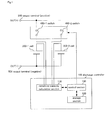
- Figure 1 is a diagram showing an exemplary embodiment of a discharge controller of the present invention.
- the present exemplary embodiment includes discharge controller 100, cells 300-1 and 300-2, switches 400-1 and 400-2, output terminal (positive) 500 and output terminal (negative) 501.
- Cells 300-1 and 300-2 are lithium-ion cells connected in parallel with each other. Negative electrode sides of cells 300-1 and 300-2 are connected to output terminal (negative) 501. Positive electrode sides of cells 300-1 and 300-2 are connected to switches 400-1 and 400-2, respectively, via discharge controller 100.
- the number of cells connected in parallel with each other is not limited to two.
- Switches 400-1 and 400-2 are switches to be closed/opened to establish or break connections between cells 300-1 and 300-2 and output terminal (positive) 500 through which cells 300-1 and 300-2 are externally discharged. This closing/opening is controlled by discharge controller 100.
- the number of switches is the same as the number of cells.
- Discharge controller 100 controls discharge of cells 300-1 and 300-2 by controlling closing/opening of switches 400-1 and 400-2 based on remaining capacities of cells 300-1 and 300-2.
- remaining capacity calculation section 110 In discharge controller 100, remaining capacity calculation section 110, storage section 120 and control section 130 are provided, as shown in Figure 1 .
- Remaining capacity calculation section 110 calculates remaining capacities of cells 300-1 and 300-2. Remaining capacity calculation section 110 calculates, as remaining capacities, values which are the results of subtraction of values obtained by measuring currents flowing from cells 300-1 and 300-2 and the time from a start of discharge of cells 300-1 and 300-2 and by multiplying the measured currents and time from the full-charge capacities of cells 300-1 and 300-2.
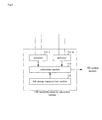
- Figure 2 is a diagram showing an example of an internal configuration of remaining capacity calculation section 110 shown in Figure 1 .
- ammeters 111-1 and 111-2, full-charge capacity hold section 112 and calculation section 113 are provided, as shown in Figure 2 .
- Ammeter 111-1 measures a current flowing from cell 300-1. Ammeter 111-1 outputs the measured current value of cell 300-1 to calculation section 113.
- Ammeter 111-2 measures a current flowing from cell 300-2. Ammeter 111-2 outputs the measured current value of cell 300-2 to calculation section 113.
- Full-charge capacity hold section 112 stores in advance the capacities of cells 300-1 and 300-2 when the capacities are fully charged.
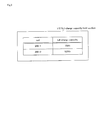
- Figure 3 is a diagram showing an example of the full-charge capacity stored in full-charge capacity hold section 112 shown in Figure 2 .
- cell 300-1 and a full-charge capacity 10 Ah are stored while being associated with each other. This indicates that the capacity of cell 300-1, when the cell is fully charged, is 10 Ah.
- cell 300-2 and a full-charge capacity 9.6 Ah are stored while being associated with each other. This indicates that the capacity of cell 300-2 when the cell is fully charged is 9.6 Ah.
- Calculation section 113 calculates remaining capacities of cells 300-1 and 300-2 based on the current values output from ammeters 111-1 and 111-2 and the full-charge capacities stored in full-charge capacity hold section 112.
- calculation section 113 multiplies the current value output from ammeter 111-1 and the time from a start of discharge (measured with a timer (not illustrated)) together and subtracts the product of multiplication from the full-charge capacity associated with cell 300-1 in full-charge capacity hold section 112 (10 Ah in the example shown in Figure 3 ). The value thereby obtained is the remaining capacity of cell 300-1.
- calculation section 113 multiplies the current value output from ammeter 111-2 and the time from the start of discharge (measured with the timer) together and subtracts the product of multiplication from the full-charge capacity associated with cell 300-2 in full-charge capacity hold section 112 (9.6 Ah in the example shown in Figure 3 ). The value thereby obtained is the remaining capacity of cell 300-2.
- Calculation section 113 outputs the calculated remaining capacities of cells 300-1 and 300-2 to control section 130.
- Storage section 120 stores a first threshold value and a second threshold value in advance.
- the first threshold value is the value at the upper side (upper limit) of the above-described “degradation region”.
- the second threshold value is the value at the lower side (lower limit) of the above-described "degradation region”.
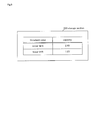
- Figure 4 is a diagram showing an example of threshold values stored in storage section 120 shown in Figure 1 .
- the upper limit and the lower limit of the degradation region are stored as threshold values, as shown in Figure 4 .
- 6 Ah is stored as a threshold value corresponding to the upper limit of the degradation region (first threshold value).
- 4 Ah is stored as a threshold value corresponding to the lower limit of the degradation region (second threshold value). This indicates that the range of remaining capacity of the cell from 6 Ah to 4 Ah is the degradation region.
- Control section 130 reads out the upper and lower limits of the degradation region stored in storage section 120, and compares the read upper and lower limits of the degradation region with the remaining capacities of cells 300-1 and 300-2 output from calculation section 113. If the remaining capacity of one of cells 300-1 and 300-2 is equal to the upper limit of the degradation region, control section 130 discharges only this cell until the remaining capacity of this cell becomes equal to the lower limit of the degradation region. At this time, priority may be giving discharging this cell. That is, in a case where three cells are connected in parallel with each other, the two-cell operation (discharge) of one of the cells whose remaining capacity is in the degradation region and one of the other two cells, two of these cells in all, may be performed.
- control section 130 maintains switch 400-1 in the closed state and maintains switch 400-2 in the open state until the remaining capacity of cell 300-1 becomes equal to the lower limit of the degradation region.
- control section 130 maintains switch 400-2 in the closed state and maintains switch 400-1 in the open state until the remaining capacity of cell 300-2 becomes equal to the lower limit of the degradation region.
- control section 130 may operate cells 300-1 and 300-2 in an ordinary two-cell parallel operation manner or may perform rotation discharge (discharge performed by control section 130 alternately repeating opening and closing of switches 400-1 and 400-2).
- control section 130 controls discharge and non-discharge of cells 300-1 and 300-2 by opening and closing switches 400-1 and 400-2.
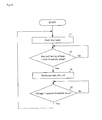
- Figure 5 is a flowchart showing a method of discharge control in the exemplary embodiment shown in Figure 1 .
- step 1 the two-cell operation (discharge) of cells 300-1 and 300-2 is started.
- discharge the above-described timer starts operating.
- control section 130 determines whether or not the remaining capacity of one of the cells is equal to the upper limit of the degradation region stored in storage section 120.
- This determination is realized by calculation in calculation section 113 multiplying together the current values measured and output by ammeters 111-1 and 111-2 and the time measured with the timer and subtracting the products of multiplication from the full-charge capacities of cells 300-1 and 300-2 stored in full-charge capacity hold section 112, and by comparing the results of subtraction with the upper limit of the degradation region stored as the first threshold value in storage section 120.
- the remaining capacity of cell 300-1 is 6.8 Ah from (Equation 1) and the upper limit of the degradation region stored in storage section 120 is 6 Ah, so that the remaining capacity of cell 300-1 and the upper limit of the degradation region are not equal to each other.
- the remaining capacity of cell 300-2 is 6 Ah from (Equation 2) and the upper limit of the degradation region stored in storage section 120 is 6 Ah, so that the remaining capacity of cell 300-2 and the upper limit of the degradation region are equal to each other.
- the cell whose remaining capacity is equal to the upper limit of the degradation region is cell 300-2.
- control section 130 does not determine in step 2 that the remaining capacity of one of the cells is equal to the upper limit of the degradation region, discharge of cells 300-1 and 300-2 is further continued.
- control section 130 determines in step 2 that the remaining capacity of one of the cells is equal to the upper limit of the degradation region, discharge of only the cell whose remaining capacity is equal to the upper limit of the degradation region is performed in step 3.
- Control section 130 performs this discharge control by using closing/opening of switches 400-1 and 400-2, as described above.
- control section 130 sets switch 400-1 in the open state. Cell 300-1 that is connected to switch 400-1 is not discharged thereafter. On the other hand, control section 130 sets switch 400-2 in the closed (connected) state. Discharge of cell 300-2 that is connected to switch 400-2 is performed thereby.
- control section 130 determines in step 4 whether or not the remaining capacity of the cell presently discharged is equal to the lower limit of the degradation region stored in storage section 120.
- the remaining capacity of cell 300-2 is calculated by remaining capacity calculation section 110, and the calculated remaining capacity and the lower limit of the degradation region stored in storage section 120 (4 Ah in the example shown in Figure 4 ) are compared.
- This remaining capacity calculation method uses the equation shown above.
- control section 130 does not determine in step 4 that the remaining capacity of the cell presently discharged is equal to the lower limit of the degradation region, that is, control section 130 determines that the remaining capacity of the cell presently discharged is not equal to the lower limit of the degradation region, discharge of this cell is further continued.
- discharge of only cell 300-2 since discharge of only cell 300-2 is performed, discharge of only cell 300-2 is continued if control section 130 determines that the remaining capacity of cell 300-2 is not equal to the lower limit of the degradation region.
- control section 130 determines in step 4 that the remaining capacity of the cell presently discharged is equal to the lower limit of the degradation region, processing in step 1 is performed.
- the two-cell operation (discharge) of cells 300-1 and 300-2 is performed (restarted) if control section 130 determines that the remaining capacity of cell 300-2 is equal to the lower limit of the degradation region.
- the remaining capacity of cell 300-1 also becomes equal to the upper limit of the degradation region stored in storage section 120. In that case, the same processing is also performed for discharge of only cell 300-1.
- Figure 6 is a diagram showing another exemplary embodiment of the discharge controller of the present invention.
- the present exemplary embodiment includes discharge controller 200, cells 300-1 and 300-2, switches 400-1 and 400-2, output terminal (positive) 500 and output terminal (negative) 501.
- Cells 300-1 and 300-2, switches 400-1 and 400-2, output terminal (positive) 500 and output terminal (negative) 501 are the same as those used in the exemplary embodiment shown in Figure 1 .
- the positive electrode side of cell 300-1 and switch 400-1 are directly connected to each other.
- the positive electrode side of cell 300-2 and switch 400-2 are directly connected to each other.
- Discharge controller 200 controls discharge of cells 300-1 and 300-2 by controlling closing/opening of switches 400-1 and 400-2 based on remaining capacities of cells 300-1 and 300-2.
- remaining capacity calculation section 210 In discharge controller 200, remaining capacity calculation section 210, storage section 220 and control section 230 are provided, as shown in Figure 6 .
- Remaining capacity calculation section 210 calculates remaining capacities of cells 300-1 and 300-2. Remaining capacity calculation section 210 calculates as remaining capacities the values of voltages across cells 300-1 and 300-2. Strictly speaking, in the case of using the voltage value as a remaining capacity as described above, the present resistance value is calculated from the present current and voltage values, and a voltage value estimated based on them by an open voltage method is calculated as the remaining capacity.
- Figure 7 is a diagram showing an example of an internal configuration of remaining capacity calculation section 210 shown in Figure 6 .
- voltmeters 211-1 and 211-2 are provided, as shown in Figure 7 .
- Voltmeter 211-1 measures the voltage across cell 300-1. Voltmeter 211-1 outputs the measured value of voltage across cell 300-1 to control section 230.
- Voltmeter 211-2 measures the voltage across cell 300-2. Voltmeter 211-2 outputs the measured value of voltage across cell 300-2 to control section 230.
- a method of calculating, when cells 300-1 and 300-2 shown in Figure 6 are discharged, remaining cell capacities, with respect to time, based upon changes in the values of voltages across cells 300-1 and 300-2 respectively measured by voltmeters 211-1 and 211-2 will be described below.
- a method of calculating a remaining capacity, with respect to time, based upon a change with respect to time in the value of voltage across cell 300-1 measured by voltmeter 211-1 when cell 300-1 is discharged will be described hereinbelow by way of example.
- a method of calculating a remaining capacity, with respect to time, based upon a change with respect to time in the value of voltage across cell 300-2 measured by voltmeter 211-2 when cell 300-2 is discharged is the same as the method of calculation with respect to cell 300-1.
- Figure 8 is a diagram showing an example of changes with respect to time in the value of voltage across cell 300-1 measured by voltmeter 211-1 when cell 300-1 shown in Figure 6 is discharged.
- the value of voltage across cell 300-1 measured by voltmeter 211-1 is lower than the actual capacity-dependent voltage indicated by the broken line because an external impedance, which is an external cause that is separate from the internal impedance of cell 300-1, is added as a causal resistance value (impedance) to the internal impedance of cell 300-1.
- the voltage value is estimated (corrected) by using the above-mentioned open voltage method.
- A shown in Figure 8 denotes a time at which discharge starts (point A)
- E shown in Figure 8 denotes a time at which discharge ends (point E).
- Point B is a point one second after point A
- point C is a point nine seconds after point B.
- a one-second average impedance between point A and point B is first calculated. Since the time period from point A to point B is one second, the impedance calculated at one point (point A) is the one-second average impedance between point A and point B. The calculated impedance is expressed as a ⁇ . This impedance a ⁇ is the sum of the internal impedance of the above-described cell 300-1 and the other external impedance.
- a one-second average impedance between point B and point C is thereafter calculated. Since the time period from point B to point C is nine seconds, impedance calculation is performed nine times at intervals of one second to obtain a one-second average value.
- the calculated impedance is expressed as b ⁇ . This b ⁇ is the internal impedance of the above-described cell 300-1.
- c ⁇ which is the external impedance
- impedance is calculated from the value of voltage across cell 300-1 measured by voltmeter 211-1.
- the voltage at point F can be obtained by adding the voltage drop that corresponds to b ⁇ from the calculated impedance at point E.
- Storage section 220 stores a first threshold value and a second threshold value in advance.
- the first threshold value is the value at the upper side (upper limit) of the above-described “degradation region”.
- the second threshold value is the value at the lower side (lower limit) of "the degradation region”.
- Figure 9 is a diagram showing an example of the threshold values stored in storage section 220 shown in Figure 6 .
- the upper limit and the lower limit are stored as threshold values in storage section 220 shown in Figure 6 .
- 2.4 V is stored as a threshold value corresponding to the upper limit of the degradation region (first threshold value).
- 1.6 V is stored as a threshold value corresponding to the lower limit of the degradation region (second threshold value). This indicates that the range of voltage value of the cell from 2.4 V to 1.6 V that corresponds to remaining capacities of the cell is the degradation region.
- Control section 230 reads out the upper and lower limits of the degradation region stored in storage section 220, and compares the read upper and lower limits of the degradation region with the voltage values output from voltmeters 211-1 and 211-2 as remaining capacities of cells 300-1 and 300-2. If the voltage value of one of cells 300-1 and 300-2 is equal to the upper limit of the degradation region, control section 230 discharges only this cell until the voltage value of this cell becomes equal to the lower limit of the degradation region.
- control section 230 maintains switch 400-1 in the closed state and maintains switch 400-2 in the open state until the voltage value of cell 300-1 becomes equal to the lower limit of the degradation region.
- control section 230 maintains switch 400-2 in the closed state and maintains switch 400-1 in the open state until the voltage value of cell 300-2 becomes equal to the lower limit of the degradation region.
- control section 230 may operate cells 300-1 and 300-2 in an ordinary two-cell parallel operation manner or may perform rotation discharge of cells 300-1 and 300-2.
- control section 230 may repeat alternately opening and closing switches 400-1 and 400-2.
- control section 230 controls discharge and non-discharge of cells 300-1 and 300-2 by opening and closing switches 400-1 and 400-2.
- Figure 10 is a flowchart showing a method of discharge control in the exemplary embodiment shown in Figure 6 .
- step 11 the two-cell operation (discharge) of cells 300-1 and 300-2 is started.
- control section 230 determines whether or not the voltage value of one of the cells measured by voltmeter 211-1 or 211-2 is equal to the upper limit of the degradation region stored in storage section 220.
- This determination is made based on the result comparing the voltage value measured by voltmeter 211-1 or 211-2 with the value equal to the upper limit of the degradation region stored in storage section 220.
- control section 230 determines that the voltage value of cell 300-1 measured by voltmeter 211-1 is equal to the upper limit of the degradation region.
- control section 230 does not determine in step 12 that the voltage value of one of the cells is equal to the upper limit of the degradation region, discharge of cells 300-1 and 300-2 is further continued.
- control section 230 determines in step 12 that the voltage value of one of the cells is equal to the upper limit of the degradation region, discharge of only the cell whose voltage value is equal to the upper limit of the degradation region is performed in step 13. Control section 230 performs this discharge control by using closing/opening of switches 400-1 and 400-2, as described above.
- control section 230 sets switch 400-2 in the open state. Cell 300-2 that is connected to switch 400-2 is not discharged thereafter. On the other hand, control section 230 sets switch 400-1 in the closed (connected) state. Discharge of cell 300-1 that is connected to switch 400-1 is performed thereby.
- control section 230 determines in step 14 whether or not the voltage value of the cell presently discharged is equal to the lower limit of the degradation region stored in the storage section 220.
- control section 230 determines that the voltage value of the cell presently discharged is not equal to the lower limit of the degradation region, discharge of this cell is further continued. Since discharge of only cell 300-1 is performed in the above-described example, discharge of only cell 300-1 is continued if control section 230 determines that the voltage value of cell 300-1 that is measured by voltmeter 211-1 is not equal to the lower limit of the degradation region.
- control section 230 determines in step 14 that the voltage value of the cell presently discharged is equal to the lower limit of the degradation region, processing in step 11 is performed. Since discharge of only cell 300-1 is performed in the above-described example, the two-cell operation (discharge) of cells 300-1 and 300-2 is performed (restarted) if control section 230 determines that the voltage value of cell 300-1 that is measured by voltmeter 211-1 is equal to the lower limit of the degradation region.
- the voltage value of cell 300-2 measured by voltmeter 211-2 also becomes equal to the upper limit of the degradation region stored in storage section 220. In that case, the same processing is also performed for discharge of only cell 300-2.
- Figure 11 is a graph showing change in remaining capacity of an ordinary cell with respect to time as the cell is discharged.
- Figure 12 is a graph showing an example of change in remaining capacity of a cell with respect to time as the cell is discharged according to the present invention.
- the degradation region passage time is reduced to 1/3 in a case where three cells are connected in parallel with each other, and the degradation region passage time is reduced to 1/4 in a case where four cells are connected in parallel with each other.
- the above-described method of calculating the remaining capacity of the cell is not exclusively used.
- Figure 13 is a diagram showing another exemplary embodiment of the discharge controller of the present invention.
- the present exemplary embodiment includes discharge controller 600, cells 300-1 and 300-2, switches 400-1 and 400-2, output terminal (positive) 500 and output terminal (negative) 501.
- Cells 300-1 and 300-2, switches 400-1 and 400-2, output terminal (positive) 500 and output terminal (negative) 501 are the same as those used in the exemplary embodiment shown in Figure 6 .
- the positive electrode side of cell 300-1 and switch 400-1 are directly connected to each other as in the exemplary embodiment shown in Figure 6 .
- the positive electrode side of cell 300-2 and switch 400-2 are directly connected to each other.
- Discharge controller 600 controls discharge of cells 300-1 and 300-2 by controlling closing/opening of switches 400-1 and 400-2 based on remaining capacities of cells 300-1 and 300-2.
- remaining capacity calculation section 210 In discharge controller 600, remaining capacity calculation section 210, storage section 620 and control section 630 are provided, as shown in Figure 13 .
- Remaining capacity calculation section 210 is the same as that shown in Figure 6 (the internal configuration is the same as that shown in Figure 7 ).
- Storage section 620 stores a threshold value in advance.
- the threshold value stored in storage section 620 is a value larger by a predetermined value than the value at the upper side (upper limit) of the above-described "degradation region”. That is, this threshold value is stored as a value on the verge of the "degradation region".
- Figure 14 is a diagram showing an example of the threshold value stored in storage section 620 shown in Figure 13 .
- a threshold value is stored in storage section 620 shown in Figure 13 .
- 2.4 V is stored as the threshold value (capacity), as shown in Figure 14 . This indicates that when the voltage value of the cell, or a remaining capacity of the cell, reaches 2.4 V, it also reaches a value on the border of the degradation region.
- Control section 630 reads out the threshold value stored in storage section 620 after starting discharge of cells 300-1 and 300-2, and compares the read threshold value and the voltage values output from voltmeters 211-1 and 211-2 as remaining capacities of cells 300-1 and 300-2. Control section 630 stops discharge of the first cell from cells 300-1 and 300-2 whose voltage value becomes equal to the threshold value. At this time, control section 630 continues discharge of the other cell - cell 300-1 or cell 300-2 - whose voltage value has not become equal to the threshold value.
- control section 630 sets switch 400-1 in the open state while maintaining switch 400-2 in the closed state.
- control section 630 sets switch 400-2 in the open state while maintaining switch 400-1 in the open state.
- Control section 630 may operate cells 300-1 and 300-2 in an ordinary two-cell parallel operation manner or may perform rotation discharge of cells 300-1 and 300-2 when the voltage value of cell 300-1 and the voltage value of cell 300-2 are each not equal to the threshold value. Specifically, in such a case, control section 630 may alternately perform opening and closing of switches 400-1 and 400-2.
- control section 630 controls discharge and non-discharge of cells 300-1 and 300-2 by opening and closing switches 400-1 and 400-2.
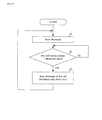
- Figure 15 is a flowchart showing a method of discharge control in the exemplary embodiment shown in Figure 13 .
- step 21 the two-cell operation (discharge) of cells 300-1 and 300-2 is started.
- control section 630 determines whether or not the voltage value of one of the cells measured by voltmeter 211-1 or 211-2 is equal to the threshold value stored in storage section 620.
- This determination is made based on the result of comparing the voltage value measured by voltmeter 211-1 or 211-2 with the threshold value stored in storage section 620.
- This voltage value may be a value calculated by using the above-described open voltage method.
- control section 630 determines that the voltage value of cell 300-1 measured by voltmeter 211-1 is equal to the threshold value.
- control section 630 does not determine in step 22 that the voltage value of one of the cells is equal to the threshold value, that is, the remaining capacities of cells 300-1 and 300-2 are each larger than the threshold value, discharge of cells 300-1 and 300-2 is continued.
- control section 630 determines in step 22 that the voltage value of one of the cells is equal to the threshold value, it stops discharge of the cell whose voltage value is equal to the threshold value, and only discharge of the other cell is performed in step 23. Control section 630 performs this discharge control by using closing/opening of switches 400-1 and 400-2, as described above.
- control section 630 sets switch 400-1 in the open state. Cell 300-1 that is connected to switch 400-1 is not discharged thereafter. On the other hand, control section 630 maintains switch 400-2 in the closed (connected) state. Discharge of cell 300-2 that is connected to switch 400-2 is continued thereby.
- the voltage value of cell 300-2 measured by voltmeter 211-2 also becomes equal to the threshold value stored in storage section 620. In that case, discharge of cell 300-2 is also stopped.
- the method of calculating the remaining capacity of the cell is not limited to that described above.
- a method using (full-charge capacity) - (current value) x (discharge time), as described above with reference to Figures 1 to 5 may alternatively be used.
- Processing operations performed by the components provided in the above-described discharge controller 100 or 200 may be performed by logic circuits made according to the purpose. Also, a program in which details of the processing operations are described may be recorded on a recording medium readable in discharge controller 100 or 200, and the program recorded on this recording medium may be read by discharge controller 100 or 200 to be executed.
- "Recording medium readable in discharge controller 100 or 200" denotes a removable recording medium such as a floppy (trademark) disk, a magneto-optical disk, a DVD or a CD, or a memory such as a ROM or a RAM, an HDD or the like incorporated in discharge controller 100 or 200.
- the program recorded on this recording medium is read by a CPU (not shown in the drawings) provided in discharge controller 100 or 200 and processing operations similar to those described above are performed under the control of the CPU.
- the CPU operates as a computer to execute the program read from the recording medium on which the program is recorded.
Landscapes
- Engineering & Computer Science (AREA)
- Power Engineering (AREA)
- Manufacturing & Machinery (AREA)
- Chemical & Material Sciences (AREA)
- Chemical Kinetics & Catalysis (AREA)
- Electrochemistry (AREA)
- General Chemical & Material Sciences (AREA)
- Secondary Cells (AREA)
- Charge And Discharge Circuits For Batteries Or The Like (AREA)
- Battery Mounting, Suspending (AREA)
Applications Claiming Priority (2)
| Application Number | Priority Date | Filing Date | Title |
|---|---|---|---|
| JP2010287837A JP2012138981A (ja) | 2010-12-24 | 2010-12-24 | 放電制御装置、放電制御方法およびプログラム |
| PCT/JP2011/077353 WO2012086369A1 (ja) | 2010-12-24 | 2011-11-28 | 放電制御装置 |
Publications (3)
| Publication Number | Publication Date |
|---|---|
| EP2658076A1 true EP2658076A1 (de) | 2013-10-30 |
| EP2658076A4 EP2658076A4 (de) | 2018-02-14 |
| EP2658076B1 EP2658076B1 (de) | 2020-11-11 |
Family
ID=46313651
Family Applications (1)
| Application Number | Title | Priority Date | Filing Date |
|---|---|---|---|
| EP11851038.7A Active EP2658076B1 (de) | 2010-12-24 | 2011-11-28 | Entladesteuerungsvorrichtung |
Country Status (5)
| Country | Link |
|---|---|
| US (1) | US20130265008A1 (de) |
| EP (1) | EP2658076B1 (de) |
| JP (1) | JP2012138981A (de) |
| CN (1) | CN103262381B (de) |
| WO (1) | WO2012086369A1 (de) |
Cited By (1)
| Publication number | Priority date | Publication date | Assignee | Title |
|---|---|---|---|---|
| EP2816701A4 (de) * | 2012-02-16 | 2015-10-28 | Nec Corp | Einstellvorrichtung, batterieanordnung und einstellverfahren |
Families Citing this family (1)
| Publication number | Priority date | Publication date | Assignee | Title |
|---|---|---|---|---|
| US10522881B1 (en) * | 2018-01-12 | 2019-12-31 | Cora Aero Llc | Estimation of self discharge rate as a measure of battery health |
Family Cites Families (13)
| Publication number | Priority date | Publication date | Assignee | Title |
|---|---|---|---|---|
| JPS62181632A (ja) * | 1986-01-31 | 1987-08-10 | 日本電気株式会社 | バツテリ−セ−ビング回路 |
| JP3580123B2 (ja) * | 1998-03-20 | 2004-10-20 | 富士通株式会社 | バッテリ装置 |
| JP5045156B2 (ja) * | 2007-03-09 | 2012-10-10 | 株式会社日立製作所 | 充放電制御装置及びそれを用いた鉄道車両 |
| JP5017009B2 (ja) | 2007-07-30 | 2012-09-05 | 株式会社東芝 | 並列接続蓄電システム |
| JP5376364B2 (ja) * | 2008-03-07 | 2013-12-25 | 公立大学法人首都大学東京 | 固体電解質構造体の製造方法、全固体電池の製造方法、固体電解質構造体及び全固体電池 |
| JP2009240078A (ja) * | 2008-03-27 | 2009-10-15 | Yokogawa Electric Corp | 電源制御装置 |
| JP5478870B2 (ja) * | 2008-10-15 | 2014-04-23 | 三菱重工業株式会社 | 蓄電システム及び電力貯蔵システム |
| JP5371462B2 (ja) * | 2009-02-04 | 2013-12-18 | 三菱重工業株式会社 | 電力供給システム及びその電力供給方法 |
| US20100213897A1 (en) * | 2009-02-23 | 2010-08-26 | Lawrence Tze-Leung Tse | Battery-Cell Converter Management Systems |
| JP4635094B2 (ja) * | 2009-04-30 | 2011-02-16 | 株式会社東芝 | 情報処理装置 |
| JP2010273519A (ja) * | 2009-05-25 | 2010-12-02 | Nippon Telegr & Teleph Corp <Ntt> | 充放電制御方法 |
| JP5665285B2 (ja) | 2009-06-15 | 2015-02-04 | 日立化成株式会社 | 光半導体素子搭載用部材及び光半導体装置 |
| CN102388499B (zh) * | 2010-03-23 | 2014-06-18 | 日本电气株式会社 | 锂离子二次电池的充电和放电方法及其充电和放电系统 |
-
2010
- 2010-12-24 JP JP2010287837A patent/JP2012138981A/ja active Pending
-
2011
- 2011-11-28 WO PCT/JP2011/077353 patent/WO2012086369A1/ja not_active Ceased
- 2011-11-28 US US13/991,329 patent/US20130265008A1/en not_active Abandoned
- 2011-11-28 EP EP11851038.7A patent/EP2658076B1/de active Active
- 2011-11-28 CN CN201180062342.0A patent/CN103262381B/zh active Active
Non-Patent Citations (1)
| Title |
|---|
| See references of WO2012086369A1 * |
Cited By (2)
| Publication number | Priority date | Publication date | Assignee | Title |
|---|---|---|---|---|
| EP2816701A4 (de) * | 2012-02-16 | 2015-10-28 | Nec Corp | Einstellvorrichtung, batterieanordnung und einstellverfahren |
| US9570923B2 (en) | 2012-02-16 | 2017-02-14 | Nec Corporation | Adjusting device, battery pack, and adjusting method |
Also Published As
| Publication number | Publication date |
|---|---|
| WO2012086369A1 (ja) | 2012-06-28 |
| CN103262381B (zh) | 2017-08-01 |
| CN103262381A (zh) | 2013-08-21 |
| EP2658076A4 (de) | 2018-02-14 |
| EP2658076B1 (de) | 2020-11-11 |
| US20130265008A1 (en) | 2013-10-10 |
| JP2012138981A (ja) | 2012-07-19 |
Similar Documents
| Publication | Publication Date | Title |
|---|---|---|
| EP3982140B1 (de) | Vorrichtung zur batterieverwaltung und verfahren zur batterieverwaltung | |
| KR102259967B1 (ko) | 배터리 충전관리 장치 및 방법 | |
| JP7145865B2 (ja) | 充電可能電池短絡予測装置および充電可能電池短絡予測方法 | |
| EP2690454B1 (de) | Vorrichtung zur degradationsmessung, akkumulatorpack, verfahren zur degradationsmessung und programm | |
| CN101960691B (zh) | 电池组的充电装置和电池组的品质判断装置 | |
| US20070222418A1 (en) | Method for Managing a Pool or Rechargeable Batteries | |
| JP2011520408A (ja) | 直列群のバッテリまたはキャパシタのセル充電状態および放電状態の分岐を検出する方法 | |
| EP3006946B1 (de) | Vorrichtung zur speicherbatterieüberwachung | |
| CN111164824B (zh) | 电池组的管理装置和电池组系统 | |
| EP2658075A1 (de) | Ausgabesteuervorrichtung | |
| JP2020079764A (ja) | 二次電池の状態判定方法 | |
| CN104113101A (zh) | 具有蓄电池模块的蓄电池系统及用于确定运行参数的方法 | |
| KR100964316B1 (ko) | 배터리 셀 밸런싱 시스템, 그 방법 및 이를 기록한기록매체 | |
| Coleman et al. | State of health determination: Two pulse load test for a VRLA battery | |
| WO2022091673A1 (ja) | 異常検知方法、異常検知装置、蓄電装置及びコンピュータプログラム | |
| EP2658076B1 (de) | Entladesteuerungsvorrichtung | |
| EP2658074B1 (de) | Entladungssteuerung | |
| JP2003243017A (ja) | 二次電池の電気的等価回路モデル作成方法、これを用いたシミュレーション方法およびプログラム | |
| US20120146589A1 (en) | Method and Device For Charging Lithium-Cobalt Cells | |
| Thakur et al. | State of Charge Estimation and Constant Current Constant Voltage Charging of Lithium Ion Battery for Electric Vehicle Applications | |
| US20260098909A1 (en) | Intelligent power management system and method for monitoring battery integrity | |
| CN119482863A (zh) | 多电池充电方法、装置、用电设备、电子设备和存储介质 | |
| Miller | Minimization of Circuitry in Large Format Lithium-ion Battery Management Systems |
Legal Events
| Date | Code | Title | Description |
|---|---|---|---|
| PUAI | Public reference made under article 153(3) epc to a published international application that has entered the european phase |
Free format text: ORIGINAL CODE: 0009012 |
|
| 17P | Request for examination filed |
Effective date: 20130710 |
|
| AK | Designated contracting states |
Kind code of ref document: A1 Designated state(s): AL AT BE BG CH CY CZ DE DK EE ES FI FR GB GR HR HU IE IS IT LI LT LU LV MC MK MT NL NO PL PT RO RS SE SI SK SM TR |
|
| DAX | Request for extension of the european patent (deleted) | ||
| RA4 | Supplementary search report drawn up and despatched (corrected) |
Effective date: 20180112 |
|
| RIC1 | Information provided on ipc code assigned before grant |
Ipc: H01M 2/10 20060101ALI20180108BHEP Ipc: H01M 10/48 20060101ALI20180108BHEP Ipc: H01M 10/44 20060101ALI20180108BHEP Ipc: H02J 7/00 20060101AFI20180108BHEP |
|
| STAA | Information on the status of an ep patent application or granted ep patent |
Free format text: STATUS: EXAMINATION IS IN PROGRESS |
|
| 17Q | First examination report despatched |
Effective date: 20190802 |
|
| RAP1 | Party data changed (applicant data changed or rights of an application transferred) |
Owner name: ENVISION AESC ENERGY DEVICES LTD. |
|
| GRAP | Despatch of communication of intention to grant a patent |
Free format text: ORIGINAL CODE: EPIDOSNIGR1 |
|
| STAA | Information on the status of an ep patent application or granted ep patent |
Free format text: STATUS: GRANT OF PATENT IS INTENDED |
|
| INTG | Intention to grant announced |
Effective date: 20200616 |
|
| GRAS | Grant fee paid |
Free format text: ORIGINAL CODE: EPIDOSNIGR3 |
|
| GRAA | (expected) grant |
Free format text: ORIGINAL CODE: 0009210 |
|
| STAA | Information on the status of an ep patent application or granted ep patent |
Free format text: STATUS: THE PATENT HAS BEEN GRANTED |
|
| AK | Designated contracting states |
Kind code of ref document: B1 Designated state(s): AL AT BE BG CH CY CZ DE DK EE ES FI FR GB GR HR HU IE IS IT LI LT LU LV MC MK MT NL NO PL PT RO RS SE SI SK SM TR |
|
| REG | Reference to a national code |
Ref country code: GB Ref legal event code: FG4D |
|
| REG | Reference to a national code |
Ref country code: CH Ref legal event code: EP |
|
| REG | Reference to a national code |
Ref country code: AT Ref legal event code: REF Ref document number: 1334369 Country of ref document: AT Kind code of ref document: T Effective date: 20201115 |
|
| REG | Reference to a national code |
Ref country code: DE Ref legal event code: R096 Ref document number: 602011069293 Country of ref document: DE |
|
| REG | Reference to a national code |
Ref country code: IE Ref legal event code: FG4D |
|
| REG | Reference to a national code |
Ref country code: NL Ref legal event code: MP Effective date: 20201111 |
|
| REG | Reference to a national code |
Ref country code: AT Ref legal event code: MK05 Ref document number: 1334369 Country of ref document: AT Kind code of ref document: T Effective date: 20201111 |
|
| PG25 | Lapsed in a contracting state [announced via postgrant information from national office to epo] |
Ref country code: FI Free format text: LAPSE BECAUSE OF FAILURE TO SUBMIT A TRANSLATION OF THE DESCRIPTION OR TO PAY THE FEE WITHIN THE PRESCRIBED TIME-LIMIT Effective date: 20201111 Ref country code: RS Free format text: LAPSE BECAUSE OF FAILURE TO SUBMIT A TRANSLATION OF THE DESCRIPTION OR TO PAY THE FEE WITHIN THE PRESCRIBED TIME-LIMIT Effective date: 20201111 Ref country code: NO Free format text: LAPSE BECAUSE OF FAILURE TO SUBMIT A TRANSLATION OF THE DESCRIPTION OR TO PAY THE FEE WITHIN THE PRESCRIBED TIME-LIMIT Effective date: 20210211 Ref country code: PT Free format text: LAPSE BECAUSE OF FAILURE TO SUBMIT A TRANSLATION OF THE DESCRIPTION OR TO PAY THE FEE WITHIN THE PRESCRIBED TIME-LIMIT Effective date: 20210311 Ref country code: GR Free format text: LAPSE BECAUSE OF FAILURE TO SUBMIT A TRANSLATION OF THE DESCRIPTION OR TO PAY THE FEE WITHIN THE PRESCRIBED TIME-LIMIT Effective date: 20210212 |
|
| PG25 | Lapsed in a contracting state [announced via postgrant information from national office to epo] |
Ref country code: AT Free format text: LAPSE BECAUSE OF FAILURE TO SUBMIT A TRANSLATION OF THE DESCRIPTION OR TO PAY THE FEE WITHIN THE PRESCRIBED TIME-LIMIT Effective date: 20201111 Ref country code: BG Free format text: LAPSE BECAUSE OF FAILURE TO SUBMIT A TRANSLATION OF THE DESCRIPTION OR TO PAY THE FEE WITHIN THE PRESCRIBED TIME-LIMIT Effective date: 20210211 Ref country code: IS Free format text: LAPSE BECAUSE OF FAILURE TO SUBMIT A TRANSLATION OF THE DESCRIPTION OR TO PAY THE FEE WITHIN THE PRESCRIBED TIME-LIMIT Effective date: 20210311 Ref country code: LV Free format text: LAPSE BECAUSE OF FAILURE TO SUBMIT A TRANSLATION OF THE DESCRIPTION OR TO PAY THE FEE WITHIN THE PRESCRIBED TIME-LIMIT Effective date: 20201111 Ref country code: PL Free format text: LAPSE BECAUSE OF FAILURE TO SUBMIT A TRANSLATION OF THE DESCRIPTION OR TO PAY THE FEE WITHIN THE PRESCRIBED TIME-LIMIT Effective date: 20201111 Ref country code: SE Free format text: LAPSE BECAUSE OF FAILURE TO SUBMIT A TRANSLATION OF THE DESCRIPTION OR TO PAY THE FEE WITHIN THE PRESCRIBED TIME-LIMIT Effective date: 20201111 |
|
| REG | Reference to a national code |
Ref country code: LT Ref legal event code: MG9D |
|
| PG25 | Lapsed in a contracting state [announced via postgrant information from national office to epo] |
Ref country code: HR Free format text: LAPSE BECAUSE OF FAILURE TO SUBMIT A TRANSLATION OF THE DESCRIPTION OR TO PAY THE FEE WITHIN THE PRESCRIBED TIME-LIMIT Effective date: 20201111 |
|
| REG | Reference to a national code |
Ref country code: CH Ref legal event code: PL |
|
| PG25 | Lapsed in a contracting state [announced via postgrant information from national office to epo] |
Ref country code: LT Free format text: LAPSE BECAUSE OF FAILURE TO SUBMIT A TRANSLATION OF THE DESCRIPTION OR TO PAY THE FEE WITHIN THE PRESCRIBED TIME-LIMIT Effective date: 20201111 Ref country code: SK Free format text: LAPSE BECAUSE OF FAILURE TO SUBMIT A TRANSLATION OF THE DESCRIPTION OR TO PAY THE FEE WITHIN THE PRESCRIBED TIME-LIMIT Effective date: 20201111 Ref country code: RO Free format text: LAPSE BECAUSE OF FAILURE TO SUBMIT A TRANSLATION OF THE DESCRIPTION OR TO PAY THE FEE WITHIN THE PRESCRIBED TIME-LIMIT Effective date: 20201111 Ref country code: SM Free format text: LAPSE BECAUSE OF FAILURE TO SUBMIT A TRANSLATION OF THE DESCRIPTION OR TO PAY THE FEE WITHIN THE PRESCRIBED TIME-LIMIT Effective date: 20201111 Ref country code: EE Free format text: LAPSE BECAUSE OF FAILURE TO SUBMIT A TRANSLATION OF THE DESCRIPTION OR TO PAY THE FEE WITHIN THE PRESCRIBED TIME-LIMIT Effective date: 20201111 Ref country code: CZ Free format text: LAPSE BECAUSE OF FAILURE TO SUBMIT A TRANSLATION OF THE DESCRIPTION OR TO PAY THE FEE WITHIN THE PRESCRIBED TIME-LIMIT Effective date: 20201111 Ref country code: LU Free format text: LAPSE BECAUSE OF NON-PAYMENT OF DUE FEES Effective date: 20201128 |
|
| REG | Reference to a national code |
Ref country code: BE Ref legal event code: MM Effective date: 20201130 |
|
| REG | Reference to a national code |
Ref country code: DE Ref legal event code: R097 Ref document number: 602011069293 Country of ref document: DE |
|
| PG25 | Lapsed in a contracting state [announced via postgrant information from national office to epo] |
Ref country code: LI Free format text: LAPSE BECAUSE OF NON-PAYMENT OF DUE FEES Effective date: 20201130 Ref country code: CH Free format text: LAPSE BECAUSE OF NON-PAYMENT OF DUE FEES Effective date: 20201130 Ref country code: DK Free format text: LAPSE BECAUSE OF FAILURE TO SUBMIT A TRANSLATION OF THE DESCRIPTION OR TO PAY THE FEE WITHIN THE PRESCRIBED TIME-LIMIT Effective date: 20201111 Ref country code: MC Free format text: LAPSE BECAUSE OF FAILURE TO SUBMIT A TRANSLATION OF THE DESCRIPTION OR TO PAY THE FEE WITHIN THE PRESCRIBED TIME-LIMIT Effective date: 20201111 |
|
| PLBE | No opposition filed within time limit |
Free format text: ORIGINAL CODE: 0009261 |
|
| STAA | Information on the status of an ep patent application or granted ep patent |
Free format text: STATUS: NO OPPOSITION FILED WITHIN TIME LIMIT |
|
| 26N | No opposition filed |
Effective date: 20210812 |
|
| PG25 | Lapsed in a contracting state [announced via postgrant information from national office to epo] |
Ref country code: AL Free format text: LAPSE BECAUSE OF FAILURE TO SUBMIT A TRANSLATION OF THE DESCRIPTION OR TO PAY THE FEE WITHIN THE PRESCRIBED TIME-LIMIT Effective date: 20201111 Ref country code: IE Free format text: LAPSE BECAUSE OF NON-PAYMENT OF DUE FEES Effective date: 20201128 Ref country code: IT Free format text: LAPSE BECAUSE OF FAILURE TO SUBMIT A TRANSLATION OF THE DESCRIPTION OR TO PAY THE FEE WITHIN THE PRESCRIBED TIME-LIMIT Effective date: 20201111 Ref country code: NL Free format text: LAPSE BECAUSE OF FAILURE TO SUBMIT A TRANSLATION OF THE DESCRIPTION OR TO PAY THE FEE WITHIN THE PRESCRIBED TIME-LIMIT Effective date: 20201111 |
|
| PG25 | Lapsed in a contracting state [announced via postgrant information from national office to epo] |
Ref country code: ES Free format text: LAPSE BECAUSE OF FAILURE TO SUBMIT A TRANSLATION OF THE DESCRIPTION OR TO PAY THE FEE WITHIN THE PRESCRIBED TIME-LIMIT Effective date: 20201111 Ref country code: SI Free format text: LAPSE BECAUSE OF FAILURE TO SUBMIT A TRANSLATION OF THE DESCRIPTION OR TO PAY THE FEE WITHIN THE PRESCRIBED TIME-LIMIT Effective date: 20201111 |
|
| PG25 | Lapsed in a contracting state [announced via postgrant information from national office to epo] |
Ref country code: IS Free format text: LAPSE BECAUSE OF FAILURE TO SUBMIT A TRANSLATION OF THE DESCRIPTION OR TO PAY THE FEE WITHIN THE PRESCRIBED TIME-LIMIT Effective date: 20210311 Ref country code: TR Free format text: LAPSE BECAUSE OF FAILURE TO SUBMIT A TRANSLATION OF THE DESCRIPTION OR TO PAY THE FEE WITHIN THE PRESCRIBED TIME-LIMIT Effective date: 20201111 Ref country code: MT Free format text: LAPSE BECAUSE OF FAILURE TO SUBMIT A TRANSLATION OF THE DESCRIPTION OR TO PAY THE FEE WITHIN THE PRESCRIBED TIME-LIMIT Effective date: 20201111 Ref country code: CY Free format text: LAPSE BECAUSE OF FAILURE TO SUBMIT A TRANSLATION OF THE DESCRIPTION OR TO PAY THE FEE WITHIN THE PRESCRIBED TIME-LIMIT Effective date: 20201111 |
|
| PG25 | Lapsed in a contracting state [announced via postgrant information from national office to epo] |
Ref country code: MK Free format text: LAPSE BECAUSE OF FAILURE TO SUBMIT A TRANSLATION OF THE DESCRIPTION OR TO PAY THE FEE WITHIN THE PRESCRIBED TIME-LIMIT Effective date: 20201111 |
|
| PG25 | Lapsed in a contracting state [announced via postgrant information from national office to epo] |
Ref country code: BE Free format text: LAPSE BECAUSE OF NON-PAYMENT OF DUE FEES Effective date: 20201130 |
|
| P01 | Opt-out of the competence of the unified patent court (upc) registered |
Effective date: 20230517 |
|
| PGFP | Annual fee paid to national office [announced via postgrant information from national office to epo] |
Ref country code: FR Payment date: 20250930 Year of fee payment: 15 |
|
| PGFP | Annual fee paid to national office [announced via postgrant information from national office to epo] |
Ref country code: DE Payment date: 20250930 Year of fee payment: 15 |
|
| PGFP | Annual fee paid to national office [announced via postgrant information from national office to epo] |
Ref country code: GB Payment date: 20251001 Year of fee payment: 15 |