EP2658542B1 - Topisch lokalisierte isoxazolinformulierung - Google Patents
Topisch lokalisierte isoxazolinformulierung Download PDFInfo
- Publication number
- EP2658542B1 EP2658542B1 EP11813330.5A EP11813330A EP2658542B1 EP 2658542 B1 EP2658542 B1 EP 2658542B1 EP 11813330 A EP11813330 A EP 11813330A EP 2658542 B1 EP2658542 B1 EP 2658542B1
- Authority
- EP
- European Patent Office
- Prior art keywords
- formulation
- utv
- compound
- methyl
- topical localized
- Prior art date
- Legal status (The legal status is an assumption and is not a legal conclusion. Google has not performed a legal analysis and makes no representation as to the accuracy of the status listed.)
- Active
Links
- 0 *c1ncc(N)nn1 Chemical compound *c1ncc(N)nn1 0.000 description 10
- XDJXKPWCKOBSLQ-HWKANZROSA-N CCO/C(/N)=C/C Chemical compound CCO/C(/N)=C/C XDJXKPWCKOBSLQ-HWKANZROSA-N 0.000 description 1
- RHOOLJLEYYXKTK-UHFFFAOYSA-N Cc1cnc(C)nc1 Chemical compound Cc1cnc(C)nc1 RHOOLJLEYYXKTK-UHFFFAOYSA-N 0.000 description 1
- FMCUPJKTGNBGEC-UHFFFAOYSA-N N[n]1cnnc1 Chemical compound N[n]1cnnc1 FMCUPJKTGNBGEC-UHFFFAOYSA-N 0.000 description 1
- NHAZGSRLKBTDBF-UHFFFAOYSA-N N[n]1ncnc1 Chemical compound N[n]1ncnc1 NHAZGSRLKBTDBF-UHFFFAOYSA-N 0.000 description 1
- OKBVMLGZPNDWJK-UHFFFAOYSA-N Nc(cc1)c(cccc2)c2c1N Chemical compound Nc(cc1)c(cccc2)c2c1N OKBVMLGZPNDWJK-UHFFFAOYSA-N 0.000 description 1
Images


Classifications
-
- A—HUMAN NECESSITIES
- A01—AGRICULTURE; FORESTRY; ANIMAL HUSBANDRY; HUNTING; TRAPPING; FISHING
- A01N—PRESERVATION OF BODIES OF HUMANS OR ANIMALS OR PLANTS OR PARTS THEREOF; BIOCIDES, e.g. AS DISINFECTANTS, AS PESTICIDES OR AS HERBICIDES; PEST REPELLANTS OR ATTRACTANTS; PLANT GROWTH REGULATORS
- A01N25/00—Biocides, pest repellants or attractants, or plant growth regulators, characterised by their forms, or by their non-active ingredients or by their methods of application, e.g. seed treatment or sequential application; Substances for reducing the noxious effect of the active ingredients to organisms other than pests
-
- A—HUMAN NECESSITIES
- A01—AGRICULTURE; FORESTRY; ANIMAL HUSBANDRY; HUNTING; TRAPPING; FISHING
- A01N—PRESERVATION OF BODIES OF HUMANS OR ANIMALS OR PLANTS OR PARTS THEREOF; BIOCIDES, e.g. AS DISINFECTANTS, AS PESTICIDES OR AS HERBICIDES; PEST REPELLANTS OR ATTRACTANTS; PLANT GROWTH REGULATORS
- A01N43/00—Biocides, pest repellants or attractants, or plant growth regulators containing heterocyclic compounds
- A01N43/72—Biocides, pest repellants or attractants, or plant growth regulators containing heterocyclic compounds having rings with nitrogen atoms and oxygen or sulfur atoms as ring hetero atoms
- A01N43/80—Biocides, pest repellants or attractants, or plant growth regulators containing heterocyclic compounds having rings with nitrogen atoms and oxygen or sulfur atoms as ring hetero atoms five-membered rings with one nitrogen atom and either one oxygen atom or one sulfur atom in positions 1,2
-
- A—HUMAN NECESSITIES
- A61—MEDICAL OR VETERINARY SCIENCE; HYGIENE
- A61K—PREPARATIONS FOR MEDICAL, DENTAL OR TOILETRY PURPOSES
- A61K31/00—Medicinal preparations containing organic active ingredients
- A61K31/33—Heterocyclic compounds
- A61K31/335—Heterocyclic compounds having oxygen as the only ring hetero atom, e.g. fungichromin
- A61K31/365—Lactones
- A61K31/366—Lactones having six-membered rings, e.g. delta-lactones
-
- A—HUMAN NECESSITIES
- A61—MEDICAL OR VETERINARY SCIENCE; HYGIENE
- A61K—PREPARATIONS FOR MEDICAL, DENTAL OR TOILETRY PURPOSES
- A61K31/00—Medicinal preparations containing organic active ingredients
- A61K31/33—Heterocyclic compounds
- A61K31/395—Heterocyclic compounds having nitrogen as a ring hetero atom, e.g. guanethidine or rifamycins
- A61K31/41—Heterocyclic compounds having nitrogen as a ring hetero atom, e.g. guanethidine or rifamycins having five-membered rings with two or more ring hetero atoms, at least one of which being nitrogen, e.g. tetrazole
- A61K31/42—Oxazoles
-
- A—HUMAN NECESSITIES
- A61—MEDICAL OR VETERINARY SCIENCE; HYGIENE
- A61K—PREPARATIONS FOR MEDICAL, DENTAL OR TOILETRY PURPOSES
- A61K45/00—Medicinal preparations containing active ingredients not provided for in groups A61K31/00 - A61K41/00
- A61K45/06—Mixtures of active ingredients without chemical characterisation, e.g. antiphlogistics and cardiaca
-
- A—HUMAN NECESSITIES
- A61—MEDICAL OR VETERINARY SCIENCE; HYGIENE
- A61K—PREPARATIONS FOR MEDICAL, DENTAL OR TOILETRY PURPOSES
- A61K47/00—Medicinal preparations characterised by the non-active ingredients used, e.g. carriers or inert additives; Targeting or modifying agents chemically bound to the active ingredient
- A61K47/06—Organic compounds, e.g. natural or synthetic hydrocarbons, polyolefins, mineral oil, petrolatum or ozokerite
- A61K47/08—Organic compounds, e.g. natural or synthetic hydrocarbons, polyolefins, mineral oil, petrolatum or ozokerite containing oxygen, e.g. ethers, acetals, ketones, quinones, aldehydes, peroxides
-
- A—HUMAN NECESSITIES
- A61—MEDICAL OR VETERINARY SCIENCE; HYGIENE
- A61K—PREPARATIONS FOR MEDICAL, DENTAL OR TOILETRY PURPOSES
- A61K47/00—Medicinal preparations characterised by the non-active ingredients used, e.g. carriers or inert additives; Targeting or modifying agents chemically bound to the active ingredient
- A61K47/06—Organic compounds, e.g. natural or synthetic hydrocarbons, polyolefins, mineral oil, petrolatum or ozokerite
- A61K47/08—Organic compounds, e.g. natural or synthetic hydrocarbons, polyolefins, mineral oil, petrolatum or ozokerite containing oxygen, e.g. ethers, acetals, ketones, quinones, aldehydes, peroxides
- A61K47/10—Alcohols; Phenols; Salts thereof, e.g. glycerol; Polyethylene glycols [PEG]; Poloxamers; PEG/POE alkyl ethers
-
- A—HUMAN NECESSITIES
- A61—MEDICAL OR VETERINARY SCIENCE; HYGIENE
- A61K—PREPARATIONS FOR MEDICAL, DENTAL OR TOILETRY PURPOSES
- A61K47/00—Medicinal preparations characterised by the non-active ingredients used, e.g. carriers or inert additives; Targeting or modifying agents chemically bound to the active ingredient
- A61K47/06—Organic compounds, e.g. natural or synthetic hydrocarbons, polyolefins, mineral oil, petrolatum or ozokerite
- A61K47/08—Organic compounds, e.g. natural or synthetic hydrocarbons, polyolefins, mineral oil, petrolatum or ozokerite containing oxygen, e.g. ethers, acetals, ketones, quinones, aldehydes, peroxides
- A61K47/12—Carboxylic acids; Salts or anhydrides thereof
-
- A—HUMAN NECESSITIES
- A61—MEDICAL OR VETERINARY SCIENCE; HYGIENE
- A61K—PREPARATIONS FOR MEDICAL, DENTAL OR TOILETRY PURPOSES
- A61K47/00—Medicinal preparations characterised by the non-active ingredients used, e.g. carriers or inert additives; Targeting or modifying agents chemically bound to the active ingredient
- A61K47/06—Organic compounds, e.g. natural or synthetic hydrocarbons, polyolefins, mineral oil, petrolatum or ozokerite
- A61K47/16—Organic compounds, e.g. natural or synthetic hydrocarbons, polyolefins, mineral oil, petrolatum or ozokerite containing nitrogen, e.g. nitro-, nitroso-, azo-compounds, nitriles, cyanates
- A61K47/18—Amines; Amides; Ureas; Quaternary ammonium compounds; Amino acids; Oligopeptides having up to five amino acids
-
- A—HUMAN NECESSITIES
- A61—MEDICAL OR VETERINARY SCIENCE; HYGIENE
- A61K—PREPARATIONS FOR MEDICAL, DENTAL OR TOILETRY PURPOSES
- A61K47/00—Medicinal preparations characterised by the non-active ingredients used, e.g. carriers or inert additives; Targeting or modifying agents chemically bound to the active ingredient
- A61K47/06—Organic compounds, e.g. natural or synthetic hydrocarbons, polyolefins, mineral oil, petrolatum or ozokerite
- A61K47/20—Organic compounds, e.g. natural or synthetic hydrocarbons, polyolefins, mineral oil, petrolatum or ozokerite containing sulfur, e.g. dimethyl sulfoxide [DMSO], docusate, sodium lauryl sulfate or aminosulfonic acids
-
- A—HUMAN NECESSITIES
- A61—MEDICAL OR VETERINARY SCIENCE; HYGIENE
- A61K—PREPARATIONS FOR MEDICAL, DENTAL OR TOILETRY PURPOSES
- A61K47/00—Medicinal preparations characterised by the non-active ingredients used, e.g. carriers or inert additives; Targeting or modifying agents chemically bound to the active ingredient
- A61K47/06—Organic compounds, e.g. natural or synthetic hydrocarbons, polyolefins, mineral oil, petrolatum or ozokerite
- A61K47/22—Heterocyclic compounds, e.g. ascorbic acid, tocopherol or pyrrolidones
-
- A—HUMAN NECESSITIES
- A61—MEDICAL OR VETERINARY SCIENCE; HYGIENE
- A61K—PREPARATIONS FOR MEDICAL, DENTAL OR TOILETRY PURPOSES
- A61K9/00—Medicinal preparations characterised by special physical form
- A61K9/0012—Galenical forms characterised by the site of application
- A61K9/0014—Skin, i.e. galenical aspects of topical compositions
-
- A—HUMAN NECESSITIES
- A61—MEDICAL OR VETERINARY SCIENCE; HYGIENE
- A61K—PREPARATIONS FOR MEDICAL, DENTAL OR TOILETRY PURPOSES
- A61K9/00—Medicinal preparations characterised by special physical form
- A61K9/0012—Galenical forms characterised by the site of application
- A61K9/0014—Skin, i.e. galenical aspects of topical compositions
- A61K9/0017—Non-human animal skin, e.g. pour-on, spot-on
-
- A—HUMAN NECESSITIES
- A61—MEDICAL OR VETERINARY SCIENCE; HYGIENE
- A61K—PREPARATIONS FOR MEDICAL, DENTAL OR TOILETRY PURPOSES
- A61K9/00—Medicinal preparations characterised by special physical form
- A61K9/08—Solutions
-
- A—HUMAN NECESSITIES
- A61—MEDICAL OR VETERINARY SCIENCE; HYGIENE
- A61P—SPECIFIC THERAPEUTIC ACTIVITY OF CHEMICAL COMPOUNDS OR MEDICINAL PREPARATIONS
- A61P33/00—Antiparasitic agents
-
- A—HUMAN NECESSITIES
- A61—MEDICAL OR VETERINARY SCIENCE; HYGIENE
- A61P—SPECIFIC THERAPEUTIC ACTIVITY OF CHEMICAL COMPOUNDS OR MEDICINAL PREPARATIONS
- A61P33/00—Antiparasitic agents
- A61P33/14—Ectoparasiticides, e.g. scabicides
Definitions
- This invention provides topical localized formulations comprising an isoxazoline compound and a pharmaceutically or veterinary acceptable liquid carrier vehicle. This invention also provides formulations for use in an improved method for controlling, and preventing parasite infestation in animals.
- a number of pests and parasites can infest or infect domestic animals such as cattle, horses, pigs, sheep and also companion animals such as cats and dogs. These pests and parasites are of great nuisance to both the animals and their owners.
- Ectoparasites such as ticks, mites, lice, flies and fleas irritate the animals and can cause disease, either by themselves, or by carrying vector transmitted pathogens.
- a new family of insecticide isoxazoline compounds has been described in various patent applications; for example, in US patent application US 2007/0066617 , and International Patent applications WO 2007/079162 , WO 2009/002809 , WO 2009/024541 , WO 2009/003075 , WO 2010/070068 , WO 2010/079077 , WO 2011/ 075591 and WO 2011/124998 .
- One known and convenient way of administering an ectoparasiticide compound to an animal is the topical localized administration, e.g. as spot-on or pour-on.
- the current invention provides topical localized formulations for the administration of isoxazoline compounds that overcome the drawbacks of the prior art.
- the formulations deliver effective amounts of isoxazoline compounds after topical localized administration and with acceptable cosmetic appearance.
- the current invention is directed to a topical localized formulation for use in the treatment or prophylaxis of parasite infestation in animals which comprises an effective amount of at least one isoxazoline compound of the Formula (I)
- R 3 and R 4 together form a substituent selected from the group consisting of: and a veterinary acceptable liquid carrier vehicle wherein the liquid carrier vehicle comprises N,N-diethyl-3-methylbenzamide as a solvent and wherein the formulation comprises 10 - 40% w/v of the isoxazoline compound of formula (I).
- liquid carrier vehicle comprises N,N-diethyl-3-methylbenzamide as sole solvent.
- at least one additional veterinary acceptable co-solvent is present.
- the composition comprises additionally an effective amount of a macrocyclic lactone compound selected from ivermectin, moxidectin, milbemycin oxime, selamectin, emamectin, latidectin and lepimectin or a salt thereof.
- a macrocyclic lactone compound selected from ivermectin, moxidectin, milbemycin oxime, selamectin, emamectin, latidectin and lepimectin or a salt thereof.
- Another aspect of the current invention is a topical localized formulation for use in the treatment or prophylaxis of parasite infestation of an animal comprising spot-on or pour-on administration of a localized topical formulation.
- the topical localized formulation according to the disclosure comprises an isoxazoline compound of the Formula (I) wherein
- T is selected from wherein in T-1, T-3 and T-4 the radical Y is hydrogen, halogen, methyl, halomethyl, ethyl, haloethyl.
- R 3 , R 4 , X and Z A are as defined above.
- Preferred compounds of Formula (I) are: (R 1 ) n R 2 R 3 R 4 T Y Q Z X 3-Cl, 5Cl CF 3 CH 2 CF 3 H T-2 - Q-1 - C(O) 3-Cl, 5Cl CF 3 CH 2 CH 3 H T-2 - Q-1 - C(O) 3-Cl, 5Cl CF 3 CH 2 CH 2 OCH 3 H T-2 - Q-1 - C(O) 3-Cl, 5Cl CF 3 CH 2 C(O)NHCH 2 CF 3 H T-2 - Q-1 - C(O) 3-Cl, 5Cl CF 3 CH 2 C(O)NHCH 2 CH 3 H T-2 - Q-1 - C(O) 3-CF 3 , 5-CF 3 CF 3 CH 2 C(O)NHCH 2 CF 3 H T-2 - Q-1 - C(O) 3-CF 3 , 5-CF 3 CF 3 CH 2 C(O)NHCH 2 CF 3 H T-2 - Q-1 - C(
- Especially preferred compounds of Formula (I) are (R 1 ) n R 2 R 3 R 4 T Y Q Z X 3-Cl, 5Cl CF 3 CH 2 CF 3 H T-2 - Q-1 - C(O) 3-Cl, 5Cl CF 3 CH 2 CH 3 H T-2 - Q-1 - C(O) 3-Cl, 5Cl CF 3 CH 2 CH 2 OCH 3 H T-2 - Q-1 - C(O) 3-Cl, 5Cl CF 3 CH 2 C(O)NHCH 2 CF 3 H T-2 - Q-1 - C(O) 3-CF 3 , 5-CF 3 CF 3 CH 2 C(O)NHCH 2 CF 3 H T-2 - Q-1 - C(O) 3-CF 3 , 5-Cl CF 3 CH 2 C(O)NHCH 2 CF 3 H T-2 - Q-1 - C(O) 3-CF 3 , 5-Cl CF 3 CH 2 C(O)NHCH 2 CF 3 H T-2 - Q-1 -
- a more preferred compound has the formula (II), wherein
- R 3 is H and R 4 is -CH 2 -C(O)-NH-CH 2 -CF 3 , -CH 2 -C(O)-NH-CH 2 -CH 3 , -CH 2 -CH 2 -CF 3 or -CH 2 -CF 3 .
- the compound of formula (I) is 4-[5-(3,5-Dichlorophenyl)-5-trifluoromethyl-4,5-dihydroisoxazol-3-yl]-2-methyl- N -[(2,2,2-trifluoro-ethylcarbamoyl)-methyl]-benzamide ( CAS RN [864731-61-3 ]).
- the compound of formula (I) is (Z)-4-[5-(3,5-Dichlorophenyl)-5-trifluoromethyl-4,5-dihydroisoxazol-3-yl]-N-[(methoxyimino)methyl]-2-methylbenzamide ( CAS RN [928789-76-8 ]).
- Especially preferred compounds of Formula (II) are: (R 1 ) n R 2 R 3 R 4 T Y Q Z X 3-Cl, 5Cl CF 3 CH 2 CF 3 H T-2 - Q-1 - C(O) 3-Cl, 5Cl CF 3 CH 2 C(O)NHCH 2 CF 3 H T-2 - Q-1 - C(O) 3-CF 3 , 5-CF 3 CF 3 CH 2 C(O)NHCH 2 CF 3 H T-2 - Q-1 - C(O) 3-CF 3 , 5-Cl CF 3 CH 2 C(O)NHCH 2 CF 3 H T-2 - Q-1 - C(O) 3-Cl, 5Cl CF 3 - T-2 - Q-6 Z B -7 3-Cl, 5Cl CF 3 - - T-2 - Q-7 Z B -7 3-Cl, 5Cl CF 3 - - T-2 - Q-5 Z B -7 3-Cl, 5Cl CF 3 - - T-2
- Isoxazoline compounds are known in the art and these compounds and their use as parasiticide are described, for example, in US patent application No. US 2007/0066617 , and International
- This class of compounds is known to possess excellent activity against ectoparasites such as ticks and fleas.
- the isoxazoline compounds may exist in various isomeric forms. A reference to an isoxazoline compound always includes all possible isomeric forms of such compound.
- a compound structure that does not indicate a particular conformation is intended to encompass compositions of all the possible conformational isomers of the compound, as well as compositions comprising fewer than all the possible conformational isomers.
- the compound is a chiral compound. In some embodiments, the compound is a non-chiral compound.
- Isoxazoline compounds of formula (I) can be prepared according to one or other of the processes described e.g. in Patent Applications US 2007/0066617 , WO 2007/079162 , WO 2009/002809 , WO 2010/070068 and WO 2010/079077 , 2011/075591 and WO 2011/124998 or any other process coming within the competence of a person skilled in the art who is an expert in chemical synthesis.
- a person skilled in the art is regarded as having at his disposal, inter alia, the entire contents of "Chemical Abstracts" and of the documents which are cited therein
- the formulations according to the disclosure are effective for long durations of time in the treatment of ectoparasites of mammals and, in particular, of fleas and ticks in small mammals such as dogs and cats.
- the formulations retain the desired physical characteristics over time, without loss of potency of the active.
- the formulations exhibit sufficient viscosity, which allows for the retention of said composition when administered topically to an animal's skin or hair.
- formulations have favorable product characteristics i.e they are stable and are cosmetically acceptable.
- Cosmetic acceptability includes the (absence of) smell of hair and skin, wetness of the hair and skin of the application site, the overall appearance of the dogs' coat, particularly signs such as dryness, wiry look, brittleness, dullness, hair loss and the appearance of residue of the hair in the proximity of the administration site.
- Topical localized formulations are understood to refer to a ready-to-use formulation in form of a spot-on, pour-on or spray-on formulation.
- spot-on or pour-on method is understood to refer to a ready-to-use concentrate intended to be applied topically and locally on the animal. This sort of formulation is intended to be applied directly to a relatively small area of the animal, preferably on the animal's back and breech or at one or several points along the line of the back and breech.
- Spot-on administration is a topical localized administration of a concentrated solution, suspension, microemulsion or emulsion for intermittent application to a spot on the animal, generally between the two shoulders in 1, 2, 3, 4, or 5 locations (spots), if more than one spot preferably down the back of the animal.
- the product is administered by administering a line.
- the pour-on formulation is typically applied by pouring in one or several lines or in a spot-on along the dorsal midline (back) or shoulder of an animal. More typically, the formulation is applied by pouring it along the back of the animal, following the spine.
- a pour-on formulation is more common for control of parasites in livestock animals, such as e.g. cattle, pigs, sheep and horses.
- the pour-on formulations of this invention can be in the form of a liquid, emulsion, foam, paste, aerosol, ointment, salve or gel. Typically, the pour-on formulation is liquid.
- the topical localized formulation allows or facilitates the isoxazoline compound to penetrate the skin and act on other body parts (e.g., the entire body).
- a pour-on or spot-on formulation can be prepared by dissolving, suspending, or emulsifying the isoxazoline in a suitable veterinarilv acceptable carrier.
- the topical localized formulation comprises a carrier comprising N,N-diethyl-3-methylbenzamide (DEET, previously called N,N-diethyl-meta-toluamide or N,N - Diethyl-m-toluamide) as a sole solvent.
- DEET N,N-diethyl-3-methylbenzamide
- at least one additional veterinary acceptable co-solvent is present.
- N,N-diethyl-3-methylbenzamide is a well known chemical compound which has long been used as an insect repellant.
- syntheses for the preparation thereof are well-known to the art
- the co-solvent for the liquid carrier includes pharmaceutically acceptable solvents known in the formulation art.
- solvents include, for example, acetone dichloromethane, glycofurol, acetonitrile, n-butyl ether, monomethylacetamide, dipropylene glycol monomethyl ether, diethyl phthalate fatty acid esters, such as the diethyl ester or diisobutyl adipate, water, alkanol, benzyl benzoate, dipropylene glycol monomethyl ether, diethylene glycol monobutyl ether, silicone, dimethylacetamide, 2,2-dimethyl-4-oxy-methylene-1,3-dioxolane.
- N,N-dimethylalkanamides e.g.
- Such solvents also include glycerol esters of saturated and unsaturated fatty acids (typically C 6 -C 22 ), such as plant seed and fruit oils (e.g. oils of olive, castor, linseed, sesame, corn (maize), peanut, sunflower, grapeseed, safflower, cottonseed, soybean, rapeseed, coconut and palm kern and mixtures thereof, e.g. polyethoxylated castor oil.
- Such solvents also include alkylated fatty acids (e.g., methylated, ethylated, butylated) wherein the fatty acids may be obtained by hydrolysis of glycerol esters from plant and animal sources, and can be purified by distillation.
- the solvent is N,N-diethyl-3-methylbenzamide
- the co-solvent is selected from the group consisting of acetone, acetonitrile, benzyl alcohol, butyl diglycol, dimethylacetamide, dimethylsulfoxide, dimethylformamide, dipropylene glycol n-butyl ether, ethyl alcohol, isopropanol, methanol, phenylethyl alcohol, isopropanol, ethylene glycol monoethyl ether, ethylene glycol monomethyl ether, monomethylaceamide, dipropylene glycol monomethyl ether, liquid polyoxyethylene glycols, propylene glycol, N- methylpyrrolidone, 2-pyrrolidone, limonene, eucalyptol, diethylene glycol monoethyl ether, ethylene glycol, diethyl phthalate, polyethoxylated castor oil, methyl ethyl ketone, glycofur
- the co-solvent is selected from the group consisting of dimethyl sulfoxide, acetone, dimethylacetamide, ethyl alcohol, dipropylene glycol monomethyl ether, methylethyl ketone, glycofurol, ethyl -L-lactate, and a mixture of at least two of these cosolvents.
- the liquid carrier vehicle comprises N,N-diethyl-3-methylbenzamide as solvent and a organic co-solvent is selected from acetone, ethyl -L-lactate, dimethyl sulfoxide, dimethylacetamide and glycofurol.
- the organic solvent in the local topical formulation is N,N-diethyl-3-methylbenzamide and the organic co-solvent is a mixture of at least two of acetone, ethyl-L-lactate, dimethyl sulfoxide, dimethylacetamide and glycofurol.
- the co-solvent can advantageously be present in the composition according to a volume/volume (V/V) ratio with respect to N,N-diethyl-3-methylbenzamide of between about 4/1 and about 1/5.
- a pour-on or spot-on formulation generally can advantageously comprise dimethylsulfoxide in a proportion of about 0 to about 50%, preferably of about 5 to about 35%, about 5%, 10%, 15%, 20%, 25%, 30%, 35%, (percentages as volume by volume).
- a pour-on or spot-on formulation generally can advantageously comprise N-methylpyrrolidone in a proportion of about 0 to about 50%, preferably of about 5 to about 35%, about 5%, 10%, 15%, 20%, 25%, 30%, 35% (percentages as volume by volume).
- a pour-on or spot-on formulation generally can advantageously comprise metylethylketone in a proportion of about 0 to about 50%, preferably of about 5 to about 40%, about 5%, 10%, 15%, 20%, 25%, 30%, 35%,40% (percentages as volume by volume).
- the topical localized formulation can also include one or more additional ingredients.
- additional ingredients are penetration enhancers, spreading agents, stabilizers such as antioxidants/preservatives, adhesion promoters and viscosity modifiers, crystallization inhibitors, UV blockers or absorbers, water scavengers and colorants.
- Surface active agents including anionic, cationic, non-ionic and ampholytic surface active agents, can also be included in these formulations.
- a topical formulation (particularly a pour-on or spot-on formulation) comprises a carrier that promotes the absorption or penetration of the isoxazoline through the skin into the blood stream, other bodily fluids (lymph), and/or body tissue (fat tissue).
- Contemplated examples of dermal penetration enhancers include, for example, dimethylsulfoxide, isopropyl myristate, dipropylene glycol pelargonate, silicone oil, aliphatic esters, triglycerides, and fatty alcohols.
- Topical localized formulations also (or alternatively) may comprise, for example, one or more spreading agents.
- These substances act as carriers that assist in distributing an active ingredient over the animal recipient's coat or skin. They may include, for example, isopropyl myristate, dipropylene glycol pelargonate, silicone oils, fatty acid esters, triglycerides, and/or fatty alcohols.
- Various spreading oil/solvent combinations also may be suitable, such as, for example, oily solutions, alcoholic and isopropanolic solutions (e.g., solutions of 2-octyl dodecanol or oleyl alcohol), solutions of esters of monocarboxylic acids (e.g., isopropyl myristate, isopropyl palmitate, lauric acid oxalic ester, oleic acid oleyl ester, oleic acid decyl ester, hexyl laurate, oleyl oleate, decyl oleate, and caproic acid esters of saturated fatty alcohols having a carbon chain of 12 to 18 carbons), solutions of esters of dicarboxylic acids (e.g., dibutyl phthalate, diisopropyl isophthalate, adipic acid diisopropyl ester, and di-n-butyl adipate), or solutions of esters of alipha
- the formulation comprises a spreading agent
- a dispersant such as, for example, pyrrolidin-2-one, N-alkylpyrrolidin-2-one, acetone, polyethylene glycol, or an ether or ester thereof, propylene glycol, or synthetic triglycerides.
- a crystallization inhibitor can be present selected from the group consisting of an anionic surfactant, a cationic surfactant, a non-ionic surfactant, an amine salt, an amphoteric surfactant or polyvinylpyrrolidone, polyvinyl alcohols, copolymers of vinyl acetate and vinylpyrrolidone, polyethylene glycols, benzyl alcohol, mannitol, glycerol, sorbitol, polyoxyethylenated sorbitan esters; lecithin, sodium carboxymethylcellulose, and acrylic derivatives, or a mixture of these crystallization inhibitors.
- the formulation can also comprise an antioxidizing agent intended to inhibit oxidation in air.
- antioxidizing agents are those conventional in the art and include, for example, butylated hydroxyanisole, butylated hydroxytoluene, ascorbic acid, sodium metabisulphite, propyl gallate, sodium thiosulphate or a mixture of them.
- Suitable exemplary polymers for gelling and/or adhering that may be used in the compositions of the invention include, but are not limited to, colloidal silicone dioxide, ethyl cellulose, methyl cellulose, methacrylic esters copolymers, carboxylated vinyl acetate, and polyvinylpropylene (PVP)/Vinyl acetate copolymers, Poloxamer 124, Poloxamer 188, Polybutene, Povidone K17 and Povidone K90.
- colloidal silicone dioxide ethyl cellulose, methyl cellulose, methacrylic esters copolymers, carboxylated vinyl acetate, and polyvinylpropylene (PVP)/Vinyl acetate copolymers
- Poloxamer 124, Poloxamer 188, Polybutene Poloxamer 188, Polybutene, Povidone K17 and Povidone K90.
- the topical localized formulation is applied as a low volume of about 0.01 to 1 ml per kg, preferably about 0.05 to 0.1 ml per kg, with a total volume from 0.3 to 100 ml per animal, preferably limited to a maximum of about 50 ml depending on the target species.
- the volume applied can be of the order of about 0.3 to about 6 ml, preferably of the order of about 0.4 to 2.0 ml per dose, for cats and of the order of about 0.4 to about 5 ml for dogs, depending on the weight of the animal.
- An exemplary composition for topical administration to warm-blooded animals typically comprises, on a weight to volume basis, about 1%-50% w/v of an isoxazoline compound of formula I; about 5 to 25% w/v of N,N-diethyl-3-methylbenzamide; about 5% to 95% v/v of a co-solvent or solvent mixture, such as DMSO by itself or in combination with about 10 to 20%v/v of acetone, and/or about 10 to 20 % v/v of a second cosolvent.
- a co-solvent or solvent mixture such as DMSO
- An exemplary composition for topical administration to warm-blooded animals typically comprises, on a weight to volume basis, about 1%-50% w/v of an isoxazoline compound of formula I; about 5 to 25% w/v of N,N-diethyl-3-methylbenzamide; about 5% to 95% v/v of a co-solvent or solvent mixture, such as N-methylpyrrolidone by itself or in combination with about 10 to 50% v/v of acetone, and/ or about 10 to 20 % w/v of a cosolvent.
- a co-solvent or solvent mixture such as N-methylpyrrolidone by itself or in combination with about 10 to 50% v/v of acetone, and/ or about 10 to 20 % w/v of a cosolvent.
- An exemplary composition for topical administration to warm-blooded animals typically comprises, on a weight to volume basis, about 1%-50% w/v of an isoxazoline compound of formula I; about 5 to 25% w/v of N,N-diethyl-3-methylbenzamide; about 5% to 95% v/v of a co-solvent or solvent mixture, such as DMA by itself or in combination with about 10 to 50%v/v of acetone, and/ or about 10 to 20 % v/v of a cosolvent.
- a co-solvent or solvent mixture such as DMA
- An exemplary composition for topical administration to warm-blooded animals typically comprises, on a weight to volume basis, about 1%-50% w/v of an isoxazoline compound of formula I; about 5 to 25% v/v of N,N-diethyl-3-methylbenzamide; about 5% to 95% v/v of a co-solvent or solvent mixture, such as DMA by itself or in combination with about 10 to 50%v/v of DMSO, and/ or about 10 to 20 % v/v of a cosolvent.
- a co-solvent or solvent mixture such as DMA by itself or in combination with about 10 to 50%v/v of DMSO, and/ or about 10 to 20 % v/v of a cosolvent.
- An exemplary composition for topical administration to warm-blooded animals typically comprises, on a weight to volume basis, about 1%-50% w/v of an isoxazoline compound of formula I; about 5 to 25% w/v of N,N-diethyl-3-methylbenzamide; about 5% to 95% v/v of a co-solvent or solvent mixture, such as DMSO by itself or in combination with about 10 to 50%v/v of Propylene glycol methyl ether, and/ or about 10 to 20 % v/v of a cosolvent.
- a co-solvent or solvent mixture such as DMSO by itself or in combination with about 10 to 50%v/v of Propylene glycol methyl ether, and/ or about 10 to 20 % v/v of a cosolvent.
- An exemplary composition for topical administration to warm-blooded animals typically comprises, on a weight to volume basis, about 1%-50% w/v of an isoxazoline compound of formula I; about 5 to 25% w/v of N,N-diethyl-3-methylbenzamide; about 5% to 95% v/v of a co-solvent or solvent mixture, such as DMA or DMSO by itself or in combination with about 10 to 50%v/v of methyl ethyl ketone, and/ or about 10 to 20 % w/v of a cosolvent.
- a co-solvent or solvent mixture such as DMA or DMSO
- the topical localized formulation comprise at least one isoxazoline compound of formula I and a macrocyclic lactone compound of the avermectin or milbemycin class of compounds.
- Macrocyclic lactone compounds are either natural products or are semi-synthetic derivatives thereof.
- the structure of at least certain macrocyclic lactone compounds are closely related, e.g., by sharing a complex 16-membered macrocyclic lactone ring.
- One compound for use within the scope of the present invention is ivermectin.
- Another macrocyclic lactone is moxidectin.
- Moxidectin also known as LL-F28249 alpha, is known from U.S. Patent No. 4,916,154 .
- Another macocyclic lactone is selamectin.
- Selamectin is 25-cyclohexyl-25-de(l- methylpropyl)-5 -deoxy-22,23 -dihydro-5 -(hydroxyimino)-avermectin B1 monosaccharide.
- Another preferred compound is milbemycin, especially milbemycin oxime.
- Milbemycin or B41
- Milbemycin is a substance which is isolated from the fermentation broth of a milbemycin-producing strain of Streptomyces.
- the microorganism, the fermentation conditions and the isolation procedures are described in U.S. Patent Nos. 3,950,360 and 3,984,564 .
- Emamectin (4"-deoxy-4"-epi-methylaminoavermectin B1), which can be prepared as described in U.S. Patent Nos. 5,288,710 and 5,399,717 , is a mixture of two homologues, 4"- deoxy-4"-epi-methylaminoavermectin Bla and 4"-deoxy-4"-epi-methylaminoavermectin B1.
- a salt of emamectin is used.
- Eprinomectin is chemically known as 4"-epi-acetylamino-4"-deoxy-avermectin B1.
- Lepimectin is (6R,13R,25R) -5-O-demethyl-28-deoxy-6,28-epoxy-13- [(Z)-[(methoxyimino)phenylacetyl]oxy] - 25-methylmilbemycin B mixture with (6R,13R,25R)-5-O-demethyl-28-deoxy-6,28-epoxy-25-ethyl-13-[(Z)-[(methoxyimino)phenylacetyl]oxy] milbemycin B.
- compositions comprises) 4-[5-(3,5-Dichlorophenyl)-5-trifluoromethyl-4,5-dihydroisoxazol-3-yl]-2-methyl- N -[(2,2,2-trifluoro-ethylcarbamoyl)-methyl]-benzamide (Compound A) and) moxidectin; or compound A; and selamectin, or Compound A and milbemycin, or Compound A and eprinomectin.
- the macrocyclic lactone compounds are well known to a person skilled in the art and are easily obtained either commercially or through techniques known in the art.
- the effective amount of the macrocyclic lactone compound is preferably between about 0.001 mg/ kg bodyweight, preferentially about 0.005 to 10 mg/kg.
- the proportions, by weight, of the isoxazoline compound of formula (I) and of the macrocyclic lactone compound are preferably between about 5/1 and about 1/0.0001.
- IGRs Insect Growth Regulators
- fenoxycarb e.g. fenoxycarb, lufenuron, diflubenzuron, novaluron, triflumuron, fluazuron, cyromazine, methoprene, pyriproxyfen etc.
- IGRs Insect Growth Regulators
- compositions comprises Compound A; and diflubenzuron or Compound A and methoprene, or Compound A; and pyriproxyfen, or Compound A and fenoxycarb, or Compound A; and fluazuron.
- the effective amount of the IGR compound is preferably between about 0.1 mg/ kg bodyweight, preferably about 1 mg, and about 10 mg.
- the proportions, by weight, of the isoxazoline compound of formula (I) and of the IGR compound are preferably between about 5/1 and about 0.000/1.
- One aspect of the current disclosure is a method for permanently combating a parasite in an environment in which the animal is subjected to strong parasitic pressure where the administration of the topical localized formulation at a frequency far below a daily administration.
- the treatment according to the invention it is preferable for the treatment according to the invention to be carried out monthly, every 2 months, 3 months, 4 months, 5 months or 6 months especially on dogs, cats or ruminants (e.g. cattle or sheep).
- the time period between treatments depends upon factors such as the parasite(s) being treated, the degree of infestation, the type of mammal or bird and the environment where it resides. It is well within the skill level of the practitioner to determine a specific administration period for a particular situation.
- the topical localized formulation of an isoxazoline of Formula (I) is for use to treat parasitoses of an animal (or make a medicament to treat parasitoses of an animal).
- parasitoses includes pathologic conditions and diseases associated with or caused by one or more ectoparasites directly, such as, for example, anemia and flea allergy dermatitis. It also includes pathologic conditions or diseases associated with caused by one or more vector-transmitted pathogens, such as, for example, Lyme disease, Ehrlichiosis (particularly Canine Ehrlichiosis), and Rocky Mountain spotted fever from vector ticks.
- treatment of parasitoses means to partially or completely inhibit the development of parasitoses of an animal susceptible to parasitoses, reduce or completely eliminate the symptoms of parasitoses of an animal having parasitoses, and/or partially or completely cure parasitoses of an animal having parasitoses.
- the treatment of parasitoses is achieved by administering the formulation according to the invention comprising an isoxazoline of Formula (I) to control an ectoparasite infestation.
- This invention also relates to a topical localized formulation for use wherein at least an ancillary goal of controlling ectoparasites in and/or on an animal is to control an ectoparasitic infestation in an environment that is occupied (periodically or continuously) by the animal.
- the animal is a companion animal (e.g., a cat or dog).
- the environment may be, for example, a house or other shelter; a room; a pen, a stall, or other confinement means; bedding; etc.
- the topical localized formulations of the present disclosure are especially suitable for for use in the treatment or prophylaxis of parasites that infest mammals (including humans).
- Mammalian subjects include primates (e.g., monkeys), bovine (e.g., cattle or dairy cows), porcine (e.g., hogs or pigs), ovine (e.g., goats or sheep), equine (e.g., horses), canine (e.g., dogs), feline (e.g., house cats), camels, deer, donkeys, buffalos, antelopes, rabbits, and rodents (e.g., guinea pigs, squirrels, rats, mice, gerbils, and hamsters).
- the animals to be protected are domesticated dogs (i.e. Canis lupus familiaris) and domestic house cats (i.e. Felis catus).
- invertebrate parasitic pests controlled by administering the topical localized formulation of this invention to an animal to be protected include ectoparasites (arthropods, acarines, etc) and endoparasites (helminths, e.g., nematodes, trematodes, cestodes, acanthocephalans, etc.).
- ectoparasites arthropods, acarines, etc
- endoparasites helminths, e.g., nematodes, trematodes, cestodes, acanthocephalans, etc.
- the formulations of this disclosure are effective against ectoparasites including: flies such as Haematobia (Lyperosia) irritans (horn fly), Stomoxys calcitrans (stable fly), Simulium spp. (blackfly), Glossina spp. (tsetse flies), Hydrotaea irritans (head fly), Musca autumnalis (face fly), Musca domestica (house fly), Morellia simplex (sweat fly), Tabanus spp. (horse fly), Hypoderma bovis, Hypoderma lineatum, Lucilia sericata, Lucilia cuprina (green blowfly), Calliphora spp.
- flies such as Haematobia (Lyperosia) irritans (horn fly), Stomoxys calcitrans (stable fly), Simulium spp. (blackfly), Glossina spp. (tsetse flies),
- mites such as Psoroptes spp., Sarcoptes
- the terms “about” and “approximately” designate that a value is within a statistically meaningful range. Such a range can be typically within 20%, more typically still within 10%, and even more typically within 5% of a given value or range. The allowable variation encompassed by the terms “about” and “approximately” depends on the particular system under study, and can be readily appreciated by one of ordinary skill in the art. As used herein, the term “w/w” designates weight/weight, the term “w/v” designates weight/volume, and the term “mg/kg” designates milligrams per kilogram of body weight.
- composition A - V of table 2 and the formulations of table 3 were prepared.
- An alternative approach to the preparation was to weigh-in the excipients. The required weight was calculated based on the density of each product. Or, the order of addition was changed, e.g. excipients were blended and Compound A was introduced at a later stage.
- compositions A to V of table 2 were tested using the following procedures
- Viscosity The newtonian viscosity ( ⁇ ) was determined by means of a rotational viscometer in a double gap cup and rotor system at 20 °C.
- Evaporation The evaporation was determined in a weight-recording balance. The sample pan was heated to 50 °C over 4 h and weight loss was recorded.
- the spreading diameter was determined by measuring the diameter of three 20 ⁇ L spots of test product on a sheet of plastic.
- the water absorption was determined by determining the water concentration of a test product in contact with the surrounding atmosphere at a temperature of 25 °C after one day. In addition, the physical state of the test product, e.g. whether it was a clear solution, was also recorded.
- Solubility A saturated solution, i. e. a solution of a test compound in contact with undissolved particles of the test compound, was prepared and continuously shaken, temperature was recorded. The content of the compound in the solvent phase was determined by HPLC after approximately 24 h. The content result was taken as solubility. In some cases, the content was determined again after 48 h and the lower of the two results was taken as solubility.
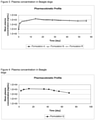
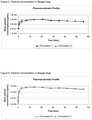
- Table 2 The formulations of Table 2 were administered as spot-on to dogs at an 4-[5-(3,5-Dichlorophenyl)-5-trifluoromethyl-4,5-dihydroisoxazol-3-yl]-2-methyl- N -[(2,2,2-trifluoro-ethylcarbamoyl)-methyl]-benzamide (Compound A) dosis of 25 mg/ kg bodyweight. Dogs were observed for local and systemic tolerance of the treatment and the cosmetic appearance of the administration site was evaluated.
- Plasma samples were taken of all dogs pre-administration and 2, 4, 8 hours after administration, on Day, D1, D3, D7 and, D14 and subsequently weekly until D56.
- the plasma was analyzed for Compound A by HPLC-MS/MS.
- Results The mean concentration of compound A in dog plasma is shown in Figures 1 to 6 .
- Formulation N of Table 2 was administered as spot-on to dogs at a Compound A dosage of 25 mg/ kg bodyweight and moxidectin dosage of 2.5 mg/ kg bodyweight. Dogs were observed for local and systemic tolerance of the treatment and the cosmetic appearance of the administration site was evaluated. Plasma samples were taken of all dogs pre-administration 2, 4, 8 hours after administration, on Day 0, D1, D3, D7 and D14 and subsequently weekly until D56. The plasma was analyzed for Compound A and moxidectin concentration.
- Results The mean plasma concentration of the compound A and moxidectin in dogs is shown in Figure 7 .
- the formulations were administered using a pipette. The dose was applied as a line at the dorsal neck at the base of the skull.
- Tick counts were transformed and geometric means were used to calculate percent efficacy for the treatments. The results are shown in Table 1.
- Table 1 Result of in vivo efficacy studies Formulation No. Study characteristics Tick efficacy after 2 days [geometric mean, %] C R. sanguineus, 6 dogs, notional control groups 88.5 - 94.5 H R. sanguineus, 6 dogs, notional control groups 91.8 - 96.1 J R. sanguineus, 4 dogs, notional control groups 81.6 - 91.1 L R. sanguineus, 4 dogs, notional control groups 45.7 - 73.9 M R. sanguineus, 4 dogs, notional control groups 98.4 - 99.2 N R. sanguineus, 4 dogs, notional control groups 96.5 - 98.3 R R. sanguineus, 4 dogs, notional control groups 98.4 - 99.2
- the study was conducted using 40 mixed sex adult dogs (n 20 per formulation) with a range of body weights and ages.
- the formulation was administered as a topical line-on directly to the skin between the shoulder blades and the lumbosacral region. The length of the line was determined by the dosing volume.
- the application site and the hair coat was observed closely for spreading of the formulations and for determining if any of the spot-on solution ran off the animal during and directly after administration. Furthermore the application site was observed for signs of residues and wetness at 8, 24, 48 and 96 hours after administration. In addition to observations of the application site appearance, the overall appearance of the dogs' coat was assessed, particularly the hair in the proximity of the administration site for signs such as dryness, wiry look, brittleness, dullness, hair loss and the appearance of residue and the smell of hair and skin.
- the skin was assessed for signs of local irritation. Furthermore dogs were observed for systemic tolerance
- Group 1 Formulation C Residues post application Time post application Number of dogs with each score reduced 3 ( severe) 2 ( moderate) 1 (slight 0 (no change) 8 hours 4 1 5 10 24 hours 2 5 3 10 48 hours 0 7 2 11 96 hours 1 4 5 10
- Group 2 Formulation H Wetness post application Time post application Number of dogs with each score reduced 3 ( wet) 2 ( greasy) 1 (slightly greasy) 0 (dry 8 hours 0 2 8 10 24 hours 0 0 2 18 48 hours 0 0 0 20 96 hours 0 0 0 20 Table D
- Group 2 Formulation H Residues post application Time post application Number of dogs with each score reduced 3 ( severe) 2 ( moderate) 1 (slight 0 (no change) 8 hours 0 0 0 20 24 hours 0 3 2 15 48 hours 0 1 4 15 96 hours 0 1 3 16
- the formulation was administered as a topical line-on directly to the skin between the shoulder blades and the lumbosacral region. The length of the line was determined by the dosing volume.
- the application site and the hair coat was observed closely for spreading of the formulations and for determining if any of the spot-on solution ran off the animal during and directly after administration. Furthermore the application site was observed for signs of residues and wetness at 8, 24, 48 and 96 hours after administration. In addition to observations of the application site appearance, the overall appearance of the dogs' coat was assessed, particularly the hair in the proximity of the administration site for signs such as dryness, wiry look, brittleness, dullness, hair loss and the appearance of residue and the smell of hair and skin.
- the skin was assessed for signs of local irritation. Furthermore dogs were observed for systemic tolerance
Landscapes
- Health & Medical Sciences (AREA)
- Life Sciences & Earth Sciences (AREA)
- Chemical & Material Sciences (AREA)
- Veterinary Medicine (AREA)
- General Health & Medical Sciences (AREA)
- Public Health (AREA)
- Medicinal Chemistry (AREA)
- Pharmacology & Pharmacy (AREA)
- Animal Behavior & Ethology (AREA)
- Epidemiology (AREA)
- General Chemical & Material Sciences (AREA)
- Chemical Kinetics & Catalysis (AREA)
- Engineering & Computer Science (AREA)
- Oil, Petroleum & Natural Gas (AREA)
- Zoology (AREA)
- Dermatology (AREA)
- Organic Chemistry (AREA)
- Tropical Medicine & Parasitology (AREA)
- Nuclear Medicine, Radiotherapy & Molecular Imaging (AREA)
- Environmental Sciences (AREA)
- Dentistry (AREA)
- Wood Science & Technology (AREA)
- Pest Control & Pesticides (AREA)
- Plant Pathology (AREA)
- Agronomy & Crop Science (AREA)
- Toxicology (AREA)
- Proteomics, Peptides & Aminoacids (AREA)
- Pharmaceuticals Containing Other Organic And Inorganic Compounds (AREA)
- Medicinal Preparation (AREA)
- Medicines That Contain Protein Lipid Enzymes And Other Medicines (AREA)
- Acyclic And Carbocyclic Compounds In Medicinal Compositions (AREA)
- Heterocyclic Carbon Compounds Containing A Hetero Ring Having Nitrogen And Oxygen As The Only Ring Hetero Atoms (AREA)
Claims (12)
- Topische lokalisierte Formulierung zur Verwendung bei der Behandlung oder Prophylaxe von Parasitenbefall, die eine wirksame Menge mindestens einer Isoxazolinverbindung der Formel (I)
 R1 = Halogen, CF3, OCF3, CN,n = eine ganze Zahl von 0 bis 3, vorzugsweise 1, 2 oder 3,R2 = C1-C3-Halogenalkyl, vorzugsweise CF3 oder CF2Cl,T = ein 5- oder 6-gliedriger Ring, der gegebenenfalls durch einen oder mehrere Reste Y substituiert ist,Y = Methyl, Halogenmethyl, Halogen, CN, NO2, NH2-C=S, oder zwei benachbarte Reste Y bilden zusammen eine Kette, CH-CH=CH-CH, N-CH=CH-CH, CH-N=CH-CH, CH-CH=N-CH, oder CH-CH=CH-N, HC=HC-CH, CH-CH=CH, CH=CH-N, N-CH=CH,Q = X-NR3R4 oder ein 5-gliedriger N-Heteroarylring, der gegebenenfalls durch einen oder mehrere Reste substituiert ist,X = CH2, CH(CH3), CH(CN), CO, CS,R3 = Wasserstoff, Methyl, Halogenethyl, Halogenpropyl, Halogenbutyl, Methoxymethyl, Methoxyethyl, Halogenmethoxymethyl, Ethoxymethyl, Halogenethoxymethyl, Propoxymethyl, Ethylaminocarbonylmethyl, Ethylaminocarbonylethyl, Dimethoxyethyl, Propinylaminocarbonylmethyl, N-Phenyl-N-methylamino, Halogenethylaminocarbonylmethyl, Halogenethylaminocarbonylethyl, Tetrahydrofuryl, Methylaminocarbonylmethyl, (N,N-Dimethylamino)carbonylmethyl, Propylaminocarbonylmethyl, Cyclopropylaminocarbonylmethyl, Propenylaminocarbonylmethyl, Halogenethylaminocarbonylcyclopropyl,
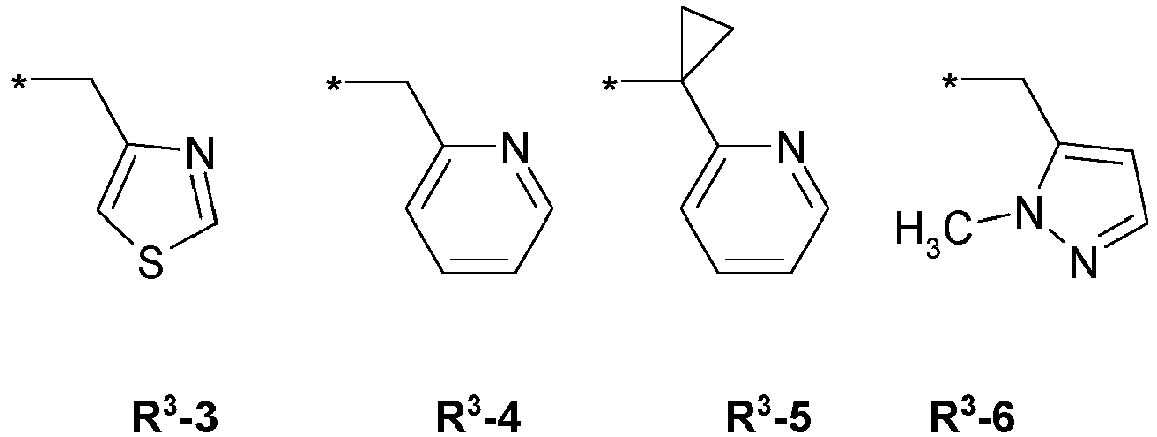
 wobei ZA = Wasserstoff, Halogen, Cyano, Halogenmethyl (CF3),R4 = Wasserstoff, Ethyl, Methoxymethyl, Halogenmethoxymethyl, Ethoxymethyl, Halogenethoxymethyl, Propoxymethyl, Methylcarbonyl, Ethylcarbonyl, Propylcarbonyl, Cyclopropylcarbonyl, Methoxycarbonyl, Methoxymethylcarbonyl, Aminocarbonyl, Ethylaminocarbonylmethyl, Ethylaminocarbonylethyl, Dimethoxyethyl, Propinylaminocarbonylmethyl, Halogenethylaminocarbonylmethyl, Cyanomethylaminocarbonylmethyl oder Halogenethylaminocarbonylethyl,oder R3 und R4 bilden zusammen einen Substituenten aus der Gruppe bestehend aus:
 und ein veterinärmedizinisch unbedenkliches flüssiges Trägervehikel, wobei das Trägervehikel N,N-Diethyl-3-methylbenzamid als Lösungsmittel umfasst und wobei die Formulierung 10 bis 40 % w/v der Isoxazolinverbindung der Formel (I) umfasst.
 - Topische lokalisierte Formulierung zur Verwendung nach Anspruch 1, wobei es sich bei der Isoxazolinverbindung um eine Verbindung der Formel II
 handelt, wobeiR1a, R1b, R1c unabhängig voneinander für Wasserstoff, Cl oder CF3 stehen, vorzugsweise R1a und R1c für Cl stehen und R1b für Wasserstoff steht,T =

 wobei Y für Methyl, Brom, Cl, F, CN oder C(S)NH2 steht,Q aus


 ausgewählt ist, wobei R3, R4, X und ZA wie oben definiert sind,ZB =
 ZD =
ZD =

- Topische lokalisierte Formulierung zur Verwendung nach Anspruch 1 oder 2, wobei R3 für H steht und R4 für -CH2-C(O)-NH-CH2-CF3, -CH2-C(O)-NH-CH2-CH3, -CH2-CH2-CF3 oder -CH2-CF3 steht.
- Topische lokalisierte Formulierung zur Verwendung nach Anspruch 1 oder 2, wobei die Formulierung 4-[5-(3,5-Dichlorphenyl)-5-trifluormethyl-4,5-dihydro-isoxazol-3-yl]-2-methyl-N-[(2,2,2-trifluorethyl-carbamoyl)methyl]benzamid umfasst.
- Topische lokalisierte Formulierung zur Verwendung nach den Ansprüchen 1 bis 4, wobei die Formulierung 1 bis 50 % N,N-Diethyl-3-methylbenzamid umfasst.
- Topische lokalisierte Formulierung zur Verwendung nach Anspruch 1, wobei das flüssige Trägervehikel N,N-Diethyl-3-methylbenzamid als Lösungsmittel und ein Cosolvens aus der Gruppe bestehend aus Dimethylsulfoxid, Aceton, Dimethylacetamid, Ethylalkohol, Eukalyptusöl, Dipropylenglykolmonomethylether, Methylethylketon, Glycofurol, Ethyl-L-lactat und einer Mischung von mindestens zwei dieser Cosolventien umfasst.
- Topische lokalisierte Formulierung zur Verwendung nach Anspruch 6, wobei das flüssige Trägervehikel N,N-Diethyl-3-methylbenzamid als Lösungsmittel und eine Mischung von mindestens zwei von Aceton, Ethyl-L-lactat, Dimethylsulfoxid, Dimethylacetamid und Glycofurol umfasst.
- Topische lokalisierte Formulierung zur Verwendung nach den Ansprüchen 1 bis 7, wobei die Zusammensetzung zusätzlich eine wirksame Menge einer makrocyclischen Lactonverbindung und/oder einer Insektenwachstumsregulatorverbindung umfasst.
- Topische lokalisierte Formulierung zur Verwendung nach Anspruch 8, wobei die topische lokalisierte Formulierung zusätzlich eine wirksame Menge einer makrocyclischen Lactonverbindung umfasst.
- Topische lokalisierte Formulierung zur Verwendung nach Anspruch 9, wobei die makrocyclische Lactonverbindung aus Ivermectin, Moxidectin, Milbemycin, Selamectin, Emamectin, Latidectin und Lepimectin oder einem Salz davon ausgewählt ist.
- Topische lokalisierte Formulierung zur Verwendung nach Anspruch 10, wobei die Zusammensetzung 4-[5-(3,5-Dichlorphenyl)-5-trifluormethyl-4,5-dihydroisoxazol-3-yl]-2-methyl-N-[(2,2,2-trifluorethylcarbamoyl)methyl]-benzamid und Moxidectin, Selamectin, Milbemycin oder Eprinomectin umfasst.
- Topische lokalisierte Formulierung zur Verwendung nach Anspruch 10, wobei die Zusammensetzung 4-[5-(3,5-Dichlorphenyl)-5-trifluormethyl-4,5-dihydroisoxazol-3-yl]-2-methyl-N-[(2,2,2-trifluorethylcarbamoyl)methyl]-benzamid und Moxidectin umfasst.
Priority Applications (1)
| Application Number | Priority Date | Filing Date | Title |
|---|---|---|---|
| PL11813330.5T PL2658542T5 (pl) | 2010-12-27 | 2011-12-22 | Preparat izoksazoliny do stosowania miejscowego |
Applications Claiming Priority (3)
| Application Number | Priority Date | Filing Date | Title |
|---|---|---|---|
| EP10197089 | 2010-12-27 | ||
| US201161430240P | 2011-01-06 | 2011-01-06 | |
| PCT/EP2011/073828 WO2012089622A2 (en) | 2010-12-27 | 2011-12-22 | Topical localized isoxazoline formulation |
Publications (3)
| Publication Number | Publication Date |
|---|---|
| EP2658542A2 EP2658542A2 (de) | 2013-11-06 |
| EP2658542B1 true EP2658542B1 (de) | 2022-01-26 |
| EP2658542B2 EP2658542B2 (de) | 2025-06-04 |
Family
ID=43971048
Family Applications (1)
| Application Number | Title | Priority Date | Filing Date |
|---|---|---|---|
| EP11813330.5A Active EP2658542B2 (de) | 2010-12-27 | 2011-12-22 | Topisch lokalisierte isoxazolinformulierung |
Country Status (19)
| Country | Link |
|---|---|
| US (4) | US9173870B2 (de) |
| EP (1) | EP2658542B2 (de) |
| JP (3) | JP6002148B2 (de) |
| KR (2) | KR102027723B1 (de) |
| CN (2) | CN105616406B (de) |
| AU (2) | AU2016201954B2 (de) |
| BR (1) | BR112013015503A2 (de) |
| CA (1) | CA2822839C (de) |
| DK (1) | DK2658542T4 (de) |
| ES (1) | ES2908094T5 (de) |
| FI (1) | FI2658542T4 (de) |
| HU (1) | HUE058291T2 (de) |
| MX (2) | MX383895B (de) |
| NZ (1) | NZ611476A (de) |
| PL (1) | PL2658542T5 (de) |
| PT (1) | PT2658542T (de) |
| RU (2) | RU2633061C2 (de) |
| WO (1) | WO2012089622A2 (de) |
| ZA (1) | ZA201304514B (de) |
Cited By (1)
| Publication number | Priority date | Publication date | Assignee | Title |
|---|---|---|---|---|
| EP2658541B2 (de) † | 2010-12-27 | 2025-12-17 | Intervet International B.V. | Topisch lokalisierte isoxazolinformulierung mit glycofurol |
Families Citing this family (38)
| Publication number | Priority date | Publication date | Assignee | Title |
|---|---|---|---|---|
| NZ611476A (en) * | 2010-12-27 | 2015-10-30 | Intervet Int Bv | Topical localized isoxazoline formulation |
| PT3172964T (pt) | 2011-09-12 | 2020-11-30 | Boehringer Ingelheim Animal Health Usa Inc | Composições parasiticidas compreendendo um agente ativo de isoxazolina, método e utilizações das mesmas |
| CN104168900A (zh) | 2012-02-06 | 2014-11-26 | 梅里亚有限公司 | 包含全身性地起作用的活性剂的杀寄生虫口服兽用组合物、方法及其用途 |
| JO3626B1 (ar) | 2012-02-23 | 2020-08-27 | Merial Inc | تركيبات موضعية تحتوي على فيبرونيل و بيرميثرين و طرق استخدامها |
| BR112014024833B1 (pt) * | 2012-04-04 | 2022-10-04 | Intervet International B.V. | Produto farmacêutico veterinário mastigável macio, processo para sua fabricação e seu uso, bem como uso de pamoato de sódio |
| CN105873925B (zh) | 2013-11-01 | 2019-09-10 | 勃林格殷格翰动物保健美国公司 | 抗寄生物的和杀虫的异噁唑啉化合物 |
| JP6581586B2 (ja) * | 2013-12-20 | 2019-09-25 | インターベット インターナショナル ベー. フェー. | イソオキサゾリン組成物および動物における寄生虫侵襲の予防または処置におけるその使用 |
| RU2688167C1 (ru) | 2013-12-20 | 2019-05-20 | Интервет Интернэшнл Б.В. | Применение изоксазолиновых соединений на домашней птице |
| ES2765405T3 (es) | 2014-04-17 | 2020-06-09 | Boehringer Ingelheim Animal Health Usa Inc | Utilización de compuestos de malononitrilo para proteger animales de parásitos |
| US20170232024A1 (en) | 2014-08-04 | 2017-08-17 | Jerry Tan Eye Surgery Pte Ltd | Pharmaceutical compositions for demodex related blepharitis and eyelid crusting |
| CA2971296A1 (en) | 2014-12-22 | 2016-06-30 | Intervet International B.V. | Use of isoxazoline compounds for treating demodicosis |
| PY1609250A (es) | 2015-02-26 | 2018-03-01 | Merial Inc | Formulaciones inyectables de acción prolongada que comprenden un agente activo isoxazolina, métodos y usos de las mismas |
| CN107835818B (zh) | 2015-05-20 | 2022-04-29 | 勃林格殷格翰动物保健美国公司 | 驱虫缩酚酸肽化合物 |
| US20170333305A1 (en) * | 2016-05-23 | 2017-11-23 | Microban Products Company | Topical skin product having retention property |
| CN110381738B (zh) | 2016-10-14 | 2021-07-16 | 勃林格殷格翰动物保健美国公司 | 农药的和杀寄生物的乙烯基异噁唑啉化合物 |
| EP3541789A1 (de) | 2016-11-16 | 2019-09-25 | Boehringer Ingelheim Animal Health USA Inc. | Anthelmintische depsipeptidverbindungen |
| ES2944616T3 (es) | 2017-08-14 | 2023-06-22 | Boehringer Ingelheim Animal Health Usa Inc | Compuestos de pirazol-isoxazolina plaguicidas y parasiticidas |
| CA3082048A1 (en) * | 2017-11-23 | 2019-05-31 | Ceva Sante Animale | Composition containing moxidectin for treating parasites infestations |
| CN119157876A (zh) | 2017-12-15 | 2024-12-20 | 塔苏斯制药有限公司 | 用于治疗睑炎的异恶唑啉驱虫剂制剂和方法 |
| AR113997A1 (es) * | 2017-12-21 | 2020-07-08 | Intervet Int Bv | Composiciones antiparasitarias para unción dorsal continua |
| MX2021000293A (es) | 2018-07-09 | 2021-07-15 | Boehringer Ingelheim Animal Health Usa Inc | Compuestos heterociclicos antihelminticos. |
| EP3883648A1 (de) | 2018-11-20 | 2021-09-29 | Boehringer Ingelheim Animal Health USA Inc. | Indazolylcyanoethylaminoverbindung, zusammensetzungen davon, verfahren zur herstellung und verfahren zur verwendung davon |
| KR102079347B1 (ko) * | 2018-11-30 | 2020-02-19 | 문현규 | 치과용 유닛 체어 |
| JP7637630B2 (ja) | 2019-03-19 | 2025-02-28 | ベーリンガー インゲルハイム フェトメディカ ゲーエムベーハー | 駆虫性アザベンゾチオフェンおよびアザベンゾフラン化合物 |
| US12502377B2 (en) | 2019-04-04 | 2025-12-23 | Tarsus Pharmaceuticals, Inc. | Method of eradicating ticks that attach to humans using lotilaner formulations |
| EP3962448A1 (de) * | 2019-05-03 | 2022-03-09 | Intervet International B.V. | Injizierbare pharmazeutische zusammensetzungen und verwendungen davon |
| MX2022007455A (es) | 2019-12-18 | 2022-08-15 | Elanco Tiergesundheit Ag | Derivados de isoxazolina como plaguicidas. |
| FR3107531B1 (fr) * | 2020-02-20 | 2022-02-25 | Rl Innovation | .composition liquide ou en gel, ecologique permettant l’enlevement des graffittis, chewing-gums, colles, resines sur tous supports poreux ou non ainsi que tous marquages routier |
| PH12022553222A1 (en) | 2020-05-29 | 2024-02-12 | Boehringer Ingelheim Animal Health Usa Inc | Anthelmintic heterocyclic compounds |
| JP7724845B2 (ja) | 2020-07-24 | 2025-08-18 | エランコ・ユーエス・インコーポレイテッド | イソオキサゾリン化合物及びその中間体を作製するための方法 |
| CH717763A2 (de) | 2020-08-18 | 2022-02-28 | Swibox Ag | Abzweigsystem für elektrische Leiter. |
| KR20230061465A (ko) | 2020-09-04 | 2023-05-08 | 엘랑코 유에스 인코포레이티드 | 기호성 제형 |
| CA3209562A1 (en) | 2021-01-27 | 2022-08-04 | Intervet International B.V. | Cyclopropylamide compounds against parasites in fish |
| US20240116854A1 (en) | 2021-01-27 | 2024-04-11 | Intervet Inc. | Cyclopropylamide compounds against parasites in fish |
| JP7857414B2 (ja) | 2022-02-17 | 2026-05-12 | ベーリンガー インゲルハイム フェトメディカ ゲーエムベーハー | 流体製品メーラーを提供する方法及びシステム |
| AU2024226640A1 (en) * | 2023-02-23 | 2025-10-09 | Control Solutions, Inc. | Pour-on formulation for controlling pests in animals |
| NO20240925A1 (en) | 2023-09-15 | 2025-03-17 | Evah Atlantic Inc | Dihydroisoxazole compound for use in reducing ectoparasite infestations on fish |
| WO2025191150A2 (en) | 2024-03-15 | 2025-09-18 | Krka, D.D., Novo Mesto | Stable isoxazoline formulation for topical application to the skin |
Citations (17)
| Publication number | Priority date | Publication date | Assignee | Title |
|---|---|---|---|---|
| US5874479A (en) | 1991-03-01 | 1999-02-23 | Warner-Lambert Company | Therapeutic permeation enhanced-wound healing compositions and methods for preparing and using same |
| WO2006042099A1 (en) | 2004-10-08 | 2006-04-20 | Wyeth | Amitraz compositions |
| WO2006127487A1 (en) | 2005-05-24 | 2006-11-30 | Wyeth | Useful high load concentrate compositions for control of ecto-and endo-parasites |
| WO2006127406A2 (en) | 2005-05-24 | 2006-11-30 | Wyeth | Gel compositions for control of ecto-parasites |
| WO2006127399A2 (en) | 2005-05-24 | 2006-11-30 | Wyeth | Versatile high load concentrate compositions comprising metaflumizone for control of ecto-parasites |
| US20070066617A1 (en) | 2004-03-05 | 2007-03-22 | Nissan Chemical Industries, Ltd. | Isoxazoline-substituted benzamide compound and pesticide |
| WO2007079162A1 (en) | 2005-12-30 | 2007-07-12 | E. I. Du Pont De Nemours And Company | Isoxazolines for controlling invertebrate pests |
| WO2008098168A2 (en) | 2007-02-09 | 2008-08-14 | Wyeth | High-dose, long-acting ectoparasiticide for extended control |
| WO2008151214A2 (en) | 2007-06-05 | 2008-12-11 | Wyeth | Stable non-aqueous pour-on compositions |
| WO2009002809A2 (en) | 2007-06-26 | 2008-12-31 | E. I. Du Pont De Nemours And Company | Naphthalene isoxazoline invertebrate pest control agents |
| WO2009003075A1 (en) | 2007-06-27 | 2008-12-31 | E.I. Du Pont De Nemours And Company | Animal pest control method |
| WO2009024541A2 (en) | 2007-08-17 | 2009-02-26 | Intervet International B.V. | Isoxazoline compositions and their use as antiparasitics |
| WO2010070068A2 (en) | 2008-12-19 | 2010-06-24 | Novartis Ag | Organic compounds |
| WO2010079077A1 (en) | 2008-12-18 | 2010-07-15 | Novartis Ag | Isoxazolines derivatives and their use as pesticide |
| WO2010096623A1 (en) | 2009-02-23 | 2010-08-26 | Wyeth Llc | Improved-scent ectoparasiticidal formulation |
| WO2018039508A1 (en) | 2016-08-25 | 2018-03-01 | Merial, Inc. | Method for reducing unwanted effects in parasiticidal treatments |
| EP2658541B1 (de) | 2010-12-27 | 2022-01-26 | Intervet International B.V. | Topisch lokalisierte isoxazolinformulierung mit glycofurol |
Family Cites Families (17)
| Publication number | Priority date | Publication date | Assignee | Title |
|---|---|---|---|---|
| US3950360A (en) | 1972-06-08 | 1976-04-13 | Sankyo Company Limited | Antibiotic substances |
| US3984564A (en) | 1972-06-08 | 1976-10-05 | Sankyo Company Limited | Antibiotic substances B-41, their production and their use as insecticides and acaricides |
| JPS60218303A (ja) * | 1984-04-13 | 1985-11-01 | Mitsubishi Chem Ind Ltd | 忌避剤組成物 |
| US4916154A (en) | 1986-09-12 | 1990-04-10 | American Cyanamid Company | 23-Imino derivatives of LL-F28249 compounds |
| IL98599A (en) | 1990-06-28 | 1995-06-29 | Merck & Co Inc | Stable salts of 4"-deoxy-4"-epi-methylamino avermectin b1a/b1b and insecticidal compositions containing them |
| JPH04217606A (ja) * | 1990-11-30 | 1992-08-07 | Mitsubishi Gas Chem Co Inc | 吸血害虫の吸血阻害剤 |
| US5399717A (en) | 1993-09-29 | 1995-03-21 | Merck & Co., Inc. | Glycosidation route to 4"-epi-methylamino-4"-deoxyavermectin B1 |
| US7906128B2 (en) * | 2002-10-21 | 2011-03-15 | Wyeth Llc | Use of neuronal sodium channel antagonists for the control of ectoparasites in homeothermic animals |
| US8119150B2 (en) * | 2002-10-25 | 2012-02-21 | Foamix Ltd. | Non-flammable insecticide composition and uses thereof |
| WO2005035088A2 (en) | 2003-07-18 | 2005-04-21 | Baxter International, Inc. | Method for preparing small spherical by controlled phase separation |
| US7422215B2 (en) | 2003-10-08 | 2008-09-09 | Seven Generations, Inc. | Biased card deal |
| CN100566566C (zh) * | 2004-10-08 | 2009-12-09 | 惠氏公司 | 三亚螨(amitraz)组合物 |
| WO2007139182A1 (ja) * | 2006-05-31 | 2007-12-06 | National University Corporation Hokkaido University | パーフルオロアルキル基を有するフルオロアミン、その製造方法及びそれを用いるフッ素化方法、並びにパーフルオロアルキル基を有するアミドの回収方法 |
| ME02432B (de) | 2009-12-17 | 2016-09-20 | Merial Inc | Antiparasitäre dihydroazolverbindungen und zusammensetzungen damit |
| CN101780020B (zh) * | 2010-02-09 | 2011-12-28 | 广东名臣有限公司 | 一种清凉、止痒、驱蚊的花露水 |
| WO2011124998A1 (en) | 2010-04-08 | 2011-10-13 | Pfizer Inc. | Substituted 3,5- di phenyl - isoxazoline derivatives as insecticides and acaricides |
| NZ611476A (en) | 2010-12-27 | 2015-10-30 | Intervet Int Bv | Topical localized isoxazoline formulation |
-
2011
- 2011-12-22 NZ NZ611476A patent/NZ611476A/en unknown
- 2011-12-22 JP JP2013545416A patent/JP6002148B2/ja active Active
- 2011-12-22 PT PT118133305T patent/PT2658542T/pt unknown
- 2011-12-22 MX MX2018007542A patent/MX383895B/es unknown
- 2011-12-22 MX MX2013007500A patent/MX356926B/es active IP Right Grant
- 2011-12-22 CN CN201610036739.7A patent/CN105616406B/zh active Active
- 2011-12-22 KR KR1020187032742A patent/KR102027723B1/ko active Active
- 2011-12-22 HU HUE11813330A patent/HUE058291T2/hu unknown
- 2011-12-22 FI FIEP11813330.5T patent/FI2658542T4/fi active
- 2011-12-22 ES ES11813330T patent/ES2908094T5/es active Active
- 2011-12-22 DK DK11813330.5T patent/DK2658542T4/da active
- 2011-12-22 CN CN201180062852.8A patent/CN103260621B/zh active Active
- 2011-12-22 PL PL11813330.5T patent/PL2658542T5/pl unknown
- 2011-12-22 RU RU2013135280A patent/RU2633061C2/ru active
- 2011-12-22 WO PCT/EP2011/073828 patent/WO2012089622A2/en not_active Ceased
- 2011-12-22 CA CA2822839A patent/CA2822839C/en active Active
- 2011-12-22 KR KR1020137016602A patent/KR20130130761A/ko not_active Ceased
- 2011-12-22 RU RU2017118161A patent/RU2749733C2/ru active
- 2011-12-22 EP EP11813330.5A patent/EP2658542B2/de active Active
- 2011-12-22 BR BR112013015503A patent/BR112013015503A2/pt not_active Application Discontinuation
- 2011-12-22 US US13/996,263 patent/US9173870B2/en active Active
-
2013
- 2013-06-19 ZA ZA2013/04514A patent/ZA201304514B/en unknown
-
2015
- 2015-09-28 US US14/867,641 patent/US9532978B2/en active Active
-
2016
- 2016-03-30 AU AU2016201954A patent/AU2016201954B2/en active Active
- 2016-07-14 JP JP2016139272A patent/JP6246864B2/ja active Active
- 2016-11-22 US US15/359,036 patent/US20170071914A1/en not_active Abandoned
-
2017
- 2017-10-30 AU AU2017254818A patent/AU2017254818B2/en active Active
- 2017-11-10 JP JP2017217049A patent/JP6514754B2/ja active Active
- 2017-11-21 US US15/819,523 patent/US10864195B2/en active Active
Patent Citations (17)
| Publication number | Priority date | Publication date | Assignee | Title |
|---|---|---|---|---|
| US5874479A (en) | 1991-03-01 | 1999-02-23 | Warner-Lambert Company | Therapeutic permeation enhanced-wound healing compositions and methods for preparing and using same |
| US20070066617A1 (en) | 2004-03-05 | 2007-03-22 | Nissan Chemical Industries, Ltd. | Isoxazoline-substituted benzamide compound and pesticide |
| WO2006042099A1 (en) | 2004-10-08 | 2006-04-20 | Wyeth | Amitraz compositions |
| WO2006127487A1 (en) | 2005-05-24 | 2006-11-30 | Wyeth | Useful high load concentrate compositions for control of ecto-and endo-parasites |
| WO2006127406A2 (en) | 2005-05-24 | 2006-11-30 | Wyeth | Gel compositions for control of ecto-parasites |
| WO2006127399A2 (en) | 2005-05-24 | 2006-11-30 | Wyeth | Versatile high load concentrate compositions comprising metaflumizone for control of ecto-parasites |
| WO2007079162A1 (en) | 2005-12-30 | 2007-07-12 | E. I. Du Pont De Nemours And Company | Isoxazolines for controlling invertebrate pests |
| WO2008098168A2 (en) | 2007-02-09 | 2008-08-14 | Wyeth | High-dose, long-acting ectoparasiticide for extended control |
| WO2008151214A2 (en) | 2007-06-05 | 2008-12-11 | Wyeth | Stable non-aqueous pour-on compositions |
| WO2009002809A2 (en) | 2007-06-26 | 2008-12-31 | E. I. Du Pont De Nemours And Company | Naphthalene isoxazoline invertebrate pest control agents |
| WO2009003075A1 (en) | 2007-06-27 | 2008-12-31 | E.I. Du Pont De Nemours And Company | Animal pest control method |
| WO2009024541A2 (en) | 2007-08-17 | 2009-02-26 | Intervet International B.V. | Isoxazoline compositions and their use as antiparasitics |
| WO2010079077A1 (en) | 2008-12-18 | 2010-07-15 | Novartis Ag | Isoxazolines derivatives and their use as pesticide |
| WO2010070068A2 (en) | 2008-12-19 | 2010-06-24 | Novartis Ag | Organic compounds |
| WO2010096623A1 (en) | 2009-02-23 | 2010-08-26 | Wyeth Llc | Improved-scent ectoparasiticidal formulation |
| EP2658541B1 (de) | 2010-12-27 | 2022-01-26 | Intervet International B.V. | Topisch lokalisierte isoxazolinformulierung mit glycofurol |
| WO2018039508A1 (en) | 2016-08-25 | 2018-03-01 | Merial, Inc. | Method for reducing unwanted effects in parasiticidal treatments |
Non-Patent Citations (4)
Cited By (1)
| Publication number | Priority date | Publication date | Assignee | Title |
|---|---|---|---|---|
| EP2658541B2 (de) † | 2010-12-27 | 2025-12-17 | Intervet International B.V. | Topisch lokalisierte isoxazolinformulierung mit glycofurol |
Also Published As
Similar Documents
| Publication | Publication Date | Title |
|---|---|---|
| US10864195B2 (en) | Topical localized isoxazoline formulation | |
| CA2822853C (en) | Topical localized isoxazoline formulation comprising glycofurol | |
| AU2011351578B2 (en) | Topical localized isoxazoline formulation | |
| KR102193090B1 (ko) | 국소 적용 이속사졸린 제제 |
Legal Events
| Date | Code | Title | Description |
|---|---|---|---|
| PUAI | Public reference made under article 153(3) epc to a published international application that has entered the european phase |
Free format text: ORIGINAL CODE: 0009012 |
|
| 17P | Request for examination filed |
Effective date: 20130729 |
|
| AK | Designated contracting states |
Kind code of ref document: A2 Designated state(s): AL AT BE BG CH CY CZ DE DK EE ES FI FR GB GR HR HU IE IS IT LI LT LU LV MC MK MT NL NO PL PT RO RS SE SI SK SM TR |
|
| DAX | Request for extension of the european patent (deleted) | ||
| STAA | Information on the status of an ep patent application or granted ep patent |
Free format text: STATUS: EXAMINATION IS IN PROGRESS |
|
| 17Q | First examination report despatched |
Effective date: 20181023 |
|
| REG | Reference to a national code |
Ref country code: DE Ref legal event code: R079 Ref document number: 602011072457 Country of ref document: DE Free format text: PREVIOUS MAIN CLASS: A61K0031420000 Ipc: A61K0009080000 |
|
| GRAP | Despatch of communication of intention to grant a patent |
Free format text: ORIGINAL CODE: EPIDOSNIGR1 |
|
| STAA | Information on the status of an ep patent application or granted ep patent |
Free format text: STATUS: GRANT OF PATENT IS INTENDED |
|
| RIC1 | Information provided on ipc code assigned before grant |
Ipc: A61P 33/14 20060101ALI20210930BHEP Ipc: A61K 47/18 20170101ALI20210930BHEP Ipc: A61K 31/42 20060101ALI20210930BHEP Ipc: A61K 9/08 20060101AFI20210930BHEP |
|
| INTG | Intention to grant announced |
Effective date: 20211021 |
|
| GRAS | Grant fee paid |
Free format text: ORIGINAL CODE: EPIDOSNIGR3 |
|
| GRAA | (expected) grant |
Free format text: ORIGINAL CODE: 0009210 |
|
| STAA | Information on the status of an ep patent application or granted ep patent |
Free format text: STATUS: THE PATENT HAS BEEN GRANTED |
|
| AK | Designated contracting states |
Kind code of ref document: B1 Designated state(s): AL AT BE BG CH CY CZ DE DK EE ES FI FR GB GR HR HU IE IS IT LI LT LU LV MC MK MT NL NO PL PT RO RS SE SI SK SM TR |
|
| REG | Reference to a national code |
Ref country code: GB Ref legal event code: FG4D |
|
| REG | Reference to a national code |
Ref country code: CH Ref legal event code: EP |
|
| REG | Reference to a national code |
Ref country code: AT Ref legal event code: REF Ref document number: 1464725 Country of ref document: AT Kind code of ref document: T Effective date: 20220215 |
|
| REG | Reference to a national code |
Ref country code: IE Ref legal event code: FG4D |
|
| REG | Reference to a national code |
Ref country code: DE Ref legal event code: R096 Ref document number: 602011072457 Country of ref document: DE |
|
| REG | Reference to a national code |
Ref country code: PT Ref legal event code: SC4A Ref document number: 2658542 Country of ref document: PT Date of ref document: 20220310 Kind code of ref document: T Free format text: AVAILABILITY OF NATIONAL TRANSLATION Effective date: 20220303 |
|
| REG | Reference to a national code |
Ref country code: RO Ref legal event code: EPE |
|
| REG | Reference to a national code |
Ref country code: FI Ref legal event code: FGE |
|
| REG | Reference to a national code |
Ref country code: DK Ref legal event code: T3 Effective date: 20220324 |
|
| REG | Reference to a national code |
Ref country code: NL Ref legal event code: FP |
|
| REG | Reference to a national code |
Ref country code: SE Ref legal event code: TRGR |
|
| REG | Reference to a national code |
Ref country code: ES Ref legal event code: FG2A Ref document number: 2908094 Country of ref document: ES Kind code of ref document: T3 Effective date: 20220427 |
|
| REG | Reference to a national code |
Ref country code: GR Ref legal event code: EP Ref document number: 20220400607 Country of ref document: GR Effective date: 20220418 |
|
| REG | Reference to a national code |
Ref country code: NO Ref legal event code: T2 Effective date: 20220126 |
|
| REG | Reference to a national code |
Ref country code: LT Ref legal event code: MG9D |
|
| REG | Reference to a national code |
Ref country code: HU Ref legal event code: AG4A Ref document number: E058291 Country of ref document: HU |
|
| PG25 | Lapsed in a contracting state [announced via postgrant information from national office to epo] |
Ref country code: RS Free format text: LAPSE BECAUSE OF FAILURE TO SUBMIT A TRANSLATION OF THE DESCRIPTION OR TO PAY THE FEE WITHIN THE PRESCRIBED TIME-LIMIT Effective date: 20220126 Ref country code: LT Free format text: LAPSE BECAUSE OF FAILURE TO SUBMIT A TRANSLATION OF THE DESCRIPTION OR TO PAY THE FEE WITHIN THE PRESCRIBED TIME-LIMIT Effective date: 20220126 Ref country code: HR Free format text: LAPSE BECAUSE OF FAILURE TO SUBMIT A TRANSLATION OF THE DESCRIPTION OR TO PAY THE FEE WITHIN THE PRESCRIBED TIME-LIMIT Effective date: 20220126 Ref country code: BG Free format text: LAPSE BECAUSE OF FAILURE TO SUBMIT A TRANSLATION OF THE DESCRIPTION OR TO PAY THE FEE WITHIN THE PRESCRIBED TIME-LIMIT Effective date: 20220426 |
|
| PG25 | Lapsed in a contracting state [announced via postgrant information from national office to epo] |
Ref country code: LV Free format text: LAPSE BECAUSE OF FAILURE TO SUBMIT A TRANSLATION OF THE DESCRIPTION OR TO PAY THE FEE WITHIN THE PRESCRIBED TIME-LIMIT Effective date: 20220126 |
|
| PG25 | Lapsed in a contracting state [announced via postgrant information from national office to epo] |
Ref country code: IS Free format text: LAPSE BECAUSE OF FAILURE TO SUBMIT A TRANSLATION OF THE DESCRIPTION OR TO PAY THE FEE WITHIN THE PRESCRIBED TIME-LIMIT Effective date: 20220526 |
|
| REG | Reference to a national code |
Ref country code: DE Ref legal event code: R026 Ref document number: 602011072457 Country of ref document: DE |
|
| PLBI | Opposition filed |
Free format text: ORIGINAL CODE: 0009260 |
|
| PG25 | Lapsed in a contracting state [announced via postgrant information from national office to epo] |
Ref country code: SM Free format text: LAPSE BECAUSE OF FAILURE TO SUBMIT A TRANSLATION OF THE DESCRIPTION OR TO PAY THE FEE WITHIN THE PRESCRIBED TIME-LIMIT Effective date: 20220126 Ref country code: SK Free format text: LAPSE BECAUSE OF FAILURE TO SUBMIT A TRANSLATION OF THE DESCRIPTION OR TO PAY THE FEE WITHIN THE PRESCRIBED TIME-LIMIT Effective date: 20220126 Ref country code: EE Free format text: LAPSE BECAUSE OF FAILURE TO SUBMIT A TRANSLATION OF THE DESCRIPTION OR TO PAY THE FEE WITHIN THE PRESCRIBED TIME-LIMIT Effective date: 20220126 |
|
| PLAX | Notice of opposition and request to file observation + time limit sent |
Free format text: ORIGINAL CODE: EPIDOSNOBS2 |
|
| 26 | Opposition filed |
Opponent name: VIRBAC Effective date: 20221025 |
|
| PG25 | Lapsed in a contracting state [announced via postgrant information from national office to epo] |
Ref country code: AL Free format text: LAPSE BECAUSE OF FAILURE TO SUBMIT A TRANSLATION OF THE DESCRIPTION OR TO PAY THE FEE WITHIN THE PRESCRIBED TIME-LIMIT Effective date: 20220126 |
|
| PG25 | Lapsed in a contracting state [announced via postgrant information from national office to epo] |
Ref country code: SI Free format text: LAPSE BECAUSE OF FAILURE TO SUBMIT A TRANSLATION OF THE DESCRIPTION OR TO PAY THE FEE WITHIN THE PRESCRIBED TIME-LIMIT Effective date: 20220126 |
|
| PLBB | Reply of patent proprietor to notice(s) of opposition received |
Free format text: ORIGINAL CODE: EPIDOSNOBS3 |
|
| P01 | Opt-out of the competence of the unified patent court (upc) registered |
Effective date: 20230525 |
|
| PG25 | Lapsed in a contracting state [announced via postgrant information from national office to epo] |
Ref country code: LU Free format text: LAPSE BECAUSE OF NON-PAYMENT OF DUE FEES Effective date: 20221222 |
|
| PG25 | Lapsed in a contracting state [announced via postgrant information from national office to epo] |
Ref country code: CY Free format text: LAPSE BECAUSE OF FAILURE TO SUBMIT A TRANSLATION OF THE DESCRIPTION OR TO PAY THE FEE WITHIN THE PRESCRIBED TIME-LIMIT Effective date: 20220126 |
|
| PG25 | Lapsed in a contracting state [announced via postgrant information from national office to epo] |
Ref country code: MK Free format text: LAPSE BECAUSE OF FAILURE TO SUBMIT A TRANSLATION OF THE DESCRIPTION OR TO PAY THE FEE WITHIN THE PRESCRIBED TIME-LIMIT Effective date: 20220126 |
|
| PG25 | Lapsed in a contracting state [announced via postgrant information from national office to epo] |
Ref country code: MC Free format text: LAPSE BECAUSE OF FAILURE TO SUBMIT A TRANSLATION OF THE DESCRIPTION OR TO PAY THE FEE WITHIN THE PRESCRIBED TIME-LIMIT Effective date: 20220126 |
|
| PG25 | Lapsed in a contracting state [announced via postgrant information from national office to epo] |
Ref country code: MC Free format text: LAPSE BECAUSE OF FAILURE TO SUBMIT A TRANSLATION OF THE DESCRIPTION OR TO PAY THE FEE WITHIN THE PRESCRIBED TIME-LIMIT Effective date: 20220126 |
|
| PG25 | Lapsed in a contracting state [announced via postgrant information from national office to epo] |
Ref country code: MT Free format text: LAPSE BECAUSE OF FAILURE TO SUBMIT A TRANSLATION OF THE DESCRIPTION OR TO PAY THE FEE WITHIN THE PRESCRIBED TIME-LIMIT Effective date: 20220126 |
|
| REG | Reference to a national code |
Ref country code: AT Ref legal event code: UEP Ref document number: 1464725 Country of ref document: AT Kind code of ref document: T Effective date: 20220126 |
|
| PUAH | Patent maintained in amended form |
Free format text: ORIGINAL CODE: 0009272 |
|
| STAA | Information on the status of an ep patent application or granted ep patent |
Free format text: STATUS: PATENT MAINTAINED AS AMENDED |
|
| 27A | Patent maintained in amended form |
Effective date: 20250604 |
|
| AK | Designated contracting states |
Kind code of ref document: B2 Designated state(s): AL AT BE BG CH CY CZ DE DK EE ES FI FR GB GR HR HU IE IS IT LI LT LU LV MC MK MT NL NO PL PT RO RS SE SI SK SM TR |
|
| REG | Reference to a national code |
Ref country code: DE Ref legal event code: R102 Ref document number: 602011072457 Country of ref document: DE |
|
| REG | Reference to a national code |
Ref country code: ES Ref legal event code: DC2A Ref document number: 2908094 Country of ref document: ES Kind code of ref document: T5 Effective date: 20250812 |
|
| REG | Reference to a national code |
Ref country code: DK Ref legal event code: T4 Effective date: 20250818 |
|
| REG | Reference to a national code |
Ref country code: SE Ref legal event code: RPEO |
|
| REG | Reference to a national code |
Ref country code: NL Ref legal event code: FP |
|
| PGFP | Annual fee paid to national office [announced via postgrant information from national office to epo] |
Ref country code: PL Payment date: 20250915 Year of fee payment: 15 |
|
| REG | Reference to a national code |
Ref country code: GR Ref legal event code: EP Ref document number: 20250401660 Country of ref document: GR Effective date: 20251009 |
|
| PGFP | Annual fee paid to national office [announced via postgrant information from national office to epo] |
Ref country code: PT Payment date: 20251125 Year of fee payment: 15 |
|
| PGFP | Annual fee paid to national office [announced via postgrant information from national office to epo] |
Ref country code: NL Payment date: 20251113 Year of fee payment: 15 |
|
| REG | Reference to a national code |
Ref country code: CH Ref legal event code: U11 Free format text: ST27 STATUS EVENT CODE: U-0-0-U10-U11 (AS PROVIDED BY THE NATIONAL OFFICE) Effective date: 20260101 |
|
| PGFP | Annual fee paid to national office [announced via postgrant information from national office to epo] |
Ref country code: DE Payment date: 20251118 Year of fee payment: 15 |
|
| PGFP | Annual fee paid to national office [announced via postgrant information from national office to epo] |
Ref country code: GB Payment date: 20251113 Year of fee payment: 15 |
|
| PGFP | Annual fee paid to national office [announced via postgrant information from national office to epo] |
Ref country code: NO Payment date: 20251111 Year of fee payment: 15 |
|
| PGFP | Annual fee paid to national office [announced via postgrant information from national office to epo] |
Ref country code: AT Payment date: 20251125 Year of fee payment: 15 |
|
| PGFP | Annual fee paid to national office [announced via postgrant information from national office to epo] |
Ref country code: IT Payment date: 20251211 Year of fee payment: 15 Ref country code: FI Payment date: 20251126 Year of fee payment: 15 Ref country code: DK Payment date: 20251126 Year of fee payment: 15 |
|
| PGFP | Annual fee paid to national office [announced via postgrant information from national office to epo] |
Ref country code: HU Payment date: 20251128 Year of fee payment: 15 Ref country code: FR Payment date: 20251111 Year of fee payment: 15 |
|
| PGFP | Annual fee paid to national office [announced via postgrant information from national office to epo] |
Ref country code: BE Payment date: 20251114 Year of fee payment: 15 Ref country code: TR Payment date: 20251121 Year of fee payment: 15 Ref country code: GR Payment date: 20251125 Year of fee payment: 15 |
|
| PGFP | Annual fee paid to national office [announced via postgrant information from national office to epo] |
Ref country code: SE Payment date: 20251208 Year of fee payment: 15 |
|
| PGFP | Annual fee paid to national office [announced via postgrant information from national office to epo] |
Ref country code: IE Payment date: 20251111 Year of fee payment: 15 Ref country code: CZ Payment date: 20251118 Year of fee payment: 15 |
|
| PGFP | Annual fee paid to national office [announced via postgrant information from national office to epo] |
Ref country code: RO Payment date: 20251128 Year of fee payment: 15 |
|
| PGFP | Annual fee paid to national office [announced via postgrant information from national office to epo] |
Ref country code: ES Payment date: 20260120 Year of fee payment: 15 |
|
| PGFP | Annual fee paid to national office [announced via postgrant information from national office to epo] |
Ref country code: CH Payment date: 20260101 Year of fee payment: 15 |