EP2659685B1 - Utilisation d'information d'un réseau social pour améliorer l'utilisation de la bande passante dans des systèmes de vidéo à la demande - Google Patents
Utilisation d'information d'un réseau social pour améliorer l'utilisation de la bande passante dans des systèmes de vidéo à la demande Download PDFInfo
- Publication number
- EP2659685B1 EP2659685B1 EP11810768.9A EP11810768A EP2659685B1 EP 2659685 B1 EP2659685 B1 EP 2659685B1 EP 11810768 A EP11810768 A EP 11810768A EP 2659685 B1 EP2659685 B1 EP 2659685B1
- Authority
- EP
- European Patent Office
- Prior art keywords
- social networking
- vod
- node
- server
- user
- Prior art date
- Legal status (The legal status is an assumption and is not a legal conclusion. Google has not performed a legal analysis and makes no representation as to the accuracy of the status listed.)
- Not-in-force
Links
- 230000006855 networking Effects 0.000 claims description 115
- 238000000034 method Methods 0.000 claims description 39
- 238000004891 communication Methods 0.000 description 8
- 238000010586 diagram Methods 0.000 description 6
- 230000008901 benefit Effects 0.000 description 5
- 238000012545 processing Methods 0.000 description 5
- 230000009471 action Effects 0.000 description 3
- 230000005540 biological transmission Effects 0.000 description 3
- 238000013500 data storage Methods 0.000 description 3
- 230000008569 process Effects 0.000 description 3
- 230000001934 delay Effects 0.000 description 2
- 238000012986 modification Methods 0.000 description 2
- 230000004048 modification Effects 0.000 description 2
- 235000015429 Mirabilis expansa Nutrition 0.000 description 1
- 244000294411 Mirabilis expansa Species 0.000 description 1
- 238000007796 conventional method Methods 0.000 description 1
- 230000007423 decrease Effects 0.000 description 1
- 238000012217 deletion Methods 0.000 description 1
- 230000037430 deletion Effects 0.000 description 1
- 238000005516 engineering process Methods 0.000 description 1
- 239000000835 fiber Substances 0.000 description 1
- 238000003780 insertion Methods 0.000 description 1
- 230000037431 insertion Effects 0.000 description 1
- 230000007246 mechanism Effects 0.000 description 1
- 235000013536 miso Nutrition 0.000 description 1
- 239000013307 optical fiber Substances 0.000 description 1
- 230000002085 persistent effect Effects 0.000 description 1
- 238000012163 sequencing technique Methods 0.000 description 1
- 238000011144 upstream manufacturing Methods 0.000 description 1
Images


Classifications
-
- H—ELECTRICITY
- H04—ELECTRIC COMMUNICATION TECHNIQUE
- H04N—PICTORIAL COMMUNICATION, e.g. TELEVISION
- H04N21/00—Selective content distribution, e.g. interactive television or video on demand [VOD]
- H04N21/60—Network structure or processes for video distribution between server and client or between remote clients; Control signalling between clients, server and network components; Transmission of management data between server and client, e.g. sending from server to client commands for recording incoming content stream; Communication details between server and client
- H04N21/65—Transmission of management data between client and server
- H04N21/654—Transmission by server directed to the client
- H04N21/6543—Transmission by server directed to the client for forcing some client operations, e.g. recording
-
- H—ELECTRICITY
- H04—ELECTRIC COMMUNICATION TECHNIQUE
- H04N—PICTORIAL COMMUNICATION, e.g. TELEVISION
- H04N21/00—Selective content distribution, e.g. interactive television or video on demand [VOD]
- H04N21/20—Servers specifically adapted for the distribution of content, e.g. VOD servers; Operations thereof
- H04N21/23—Processing of content or additional data; Elementary server operations; Server middleware
- H04N21/238—Interfacing the downstream path of the transmission network, e.g. adapting the transmission rate of a video stream to network bandwidth; Processing of multiplex streams
- H04N21/2385—Channel allocation; Bandwidth allocation
-
- H—ELECTRICITY
- H04—ELECTRIC COMMUNICATION TECHNIQUE
- H04N—PICTORIAL COMMUNICATION, e.g. TELEVISION
- H04N21/00—Selective content distribution, e.g. interactive television or video on demand [VOD]
- H04N21/20—Servers specifically adapted for the distribution of content, e.g. VOD servers; Operations thereof
- H04N21/25—Management operations performed by the server for facilitating the content distribution or administrating data related to end-users or client devices, e.g. end-user or client device authentication, learning user preferences for recommending movies
- H04N21/251—Learning process for intelligent management, e.g. learning user preferences for recommending movies
- H04N21/252—Processing of multiple end-users' preferences to derive collaborative data
-
- H—ELECTRICITY
- H04—ELECTRIC COMMUNICATION TECHNIQUE
- H04N—PICTORIAL COMMUNICATION, e.g. TELEVISION
- H04N21/00—Selective content distribution, e.g. interactive television or video on demand [VOD]
- H04N21/20—Servers specifically adapted for the distribution of content, e.g. VOD servers; Operations thereof
- H04N21/25—Management operations performed by the server for facilitating the content distribution or administrating data related to end-users or client devices, e.g. end-user or client device authentication, learning user preferences for recommending movies
- H04N21/266—Channel or content management, e.g. generation and management of keys and entitlement messages in a conditional access system, merging a VOD unicast channel into a multicast channel
-
- H—ELECTRICITY
- H04—ELECTRIC COMMUNICATION TECHNIQUE
- H04N—PICTORIAL COMMUNICATION, e.g. TELEVISION
- H04N21/00—Selective content distribution, e.g. interactive television or video on demand [VOD]
- H04N21/40—Client devices specifically adapted for the reception of or interaction with content, e.g. set-top-box [STB]; Operations thereof
- H04N21/43—Processing of content or additional data, e.g. demultiplexing additional data from a digital video stream; Elementary client operations, e.g. monitoring of home network or synchronising decoder's clock; Client middleware
- H04N21/433—Content storage operation, e.g. storage operation in response to a pause request, caching operations
-
- H—ELECTRICITY
- H04—ELECTRIC COMMUNICATION TECHNIQUE
- H04N—PICTORIAL COMMUNICATION, e.g. TELEVISION
- H04N21/00—Selective content distribution, e.g. interactive television or video on demand [VOD]
- H04N21/40—Client devices specifically adapted for the reception of or interaction with content, e.g. set-top-box [STB]; Operations thereof
- H04N21/43—Processing of content or additional data, e.g. demultiplexing additional data from a digital video stream; Elementary client operations, e.g. monitoring of home network or synchronising decoder's clock; Client middleware
- H04N21/433—Content storage operation, e.g. storage operation in response to a pause request, caching operations
- H04N21/4334—Recording operations
-
- H—ELECTRICITY
- H04—ELECTRIC COMMUNICATION TECHNIQUE
- H04N—PICTORIAL COMMUNICATION, e.g. TELEVISION
- H04N21/00—Selective content distribution, e.g. interactive television or video on demand [VOD]
- H04N21/40—Client devices specifically adapted for the reception of or interaction with content, e.g. set-top-box [STB]; Operations thereof
- H04N21/43—Processing of content or additional data, e.g. demultiplexing additional data from a digital video stream; Elementary client operations, e.g. monitoring of home network or synchronising decoder's clock; Client middleware
- H04N21/433—Content storage operation, e.g. storage operation in response to a pause request, caching operations
- H04N21/4335—Housekeeping operations, e.g. prioritizing content for deletion because of storage space restrictions
-
- H—ELECTRICITY
- H04—ELECTRIC COMMUNICATION TECHNIQUE
- H04N—PICTORIAL COMMUNICATION, e.g. TELEVISION
- H04N21/00—Selective content distribution, e.g. interactive television or video on demand [VOD]
- H04N21/40—Client devices specifically adapted for the reception of or interaction with content, e.g. set-top-box [STB]; Operations thereof
- H04N21/45—Management operations performed by the client for facilitating the reception of or the interaction with the content or administrating data related to the end-user or to the client device itself, e.g. learning user preferences for recommending movies, resolving scheduling conflicts
- H04N21/466—Learning process for intelligent management, e.g. learning user preferences for recommending movies
- H04N21/4668—Learning process for intelligent management, e.g. learning user preferences for recommending movies for recommending content, e.g. movies
-
- H—ELECTRICITY
- H04—ELECTRIC COMMUNICATION TECHNIQUE
- H04N—PICTORIAL COMMUNICATION, e.g. TELEVISION
- H04N21/00—Selective content distribution, e.g. interactive television or video on demand [VOD]
- H04N21/40—Client devices specifically adapted for the reception of or interaction with content, e.g. set-top-box [STB]; Operations thereof
- H04N21/47—End-user applications
- H04N21/472—End-user interface for requesting content, additional data or services; End-user interface for interacting with content, e.g. for content reservation or setting reminders, for requesting event notification, for manipulating displayed content
-
- H—ELECTRICITY
- H04—ELECTRIC COMMUNICATION TECHNIQUE
- H04N—PICTORIAL COMMUNICATION, e.g. TELEVISION
- H04N21/00—Selective content distribution, e.g. interactive television or video on demand [VOD]
- H04N21/40—Client devices specifically adapted for the reception of or interaction with content, e.g. set-top-box [STB]; Operations thereof
- H04N21/47—End-user applications
- H04N21/478—Supplemental services, e.g. displaying phone caller identification, shopping application
- H04N21/4788—Supplemental services, e.g. displaying phone caller identification, shopping application communicating with other users, e.g. chatting
Definitions
- Video-on-Demand typically refers to an area of technology that allows client device end-users to select video content or other content from a source, such as a central server, for viewing on a suitable end-user display device, such as a television (TV) or a computer monitor.
- a source such as a central server
- a suitable end-user display device such as a television (TV) or a computer monitor.
- One type of VOD system is a "streaming" VOD system, in which video content or other content is streamed from the source to an end-user client device and viewing of the content can begin as soon as the content streams over a suitable network connection from the source to the end-user client device.
- Another type of VOD system is a "download" VOD system, in which content initially is downloaded to a video processing device, such as a set-top box, before end-user viewing begins.
- a video processing device such as a set-top box
- a VOD server system is typically maintained by a service provider, which can be, for example, a television service provider (e.g., a national or local television network), a cable television service provider or multiple system operator (MSO), an Internet service provider, a satellite broadcast system service provider, or other suitable service provider.
- a service provider e.g., a national or local television network
- MSO multiple system operator
- an Internet service provider e.g., a satellite broadcast system service provider, or other suitable service provider.
- End-users typically desire minimal content download latencies.
- bandwidth requirements typically grow linearly with the number of requests. In some cases, delays can occur even though a service provider provides the required bandwidth.
- Social networking portals include general-interest portals such as Facebook, MySpace, Orkut, Twitter, and Google Buzz, as well as portals specifically directed to social television (e.g., sharing viewing information), such as Tunerfish, Miso, Philo, Clicker Social, and TV.com Relay.
- US 2010/325675 A1 discloses a system and method for utilizing a secured service provider memory.
- An electronic device is associated with a subscriber and is in communication with a data distribution network configured to deliver data by a service provider to the subscriber.
- the data distribution network comprises a server in communication with the data distribution network and the server configured to deliver a stream of data over the data distribution network.
- the electronic device comprises a first memory communicatively connected to the server.
- the first memory is configured to receive and store data from the server and it is accessible by the subscriber.
- a second memory is also communicatively connected to the server.
- the second memory is configured to receive and store data from the server, though the second memory is accessible only by the service provider.
- a system to provide community-based recommendation engine comprises a recommendation detector and a decision module.
- a method for using social networking information to conserve bandwidth in a video-on-demand (VOD) system operated by a service provider.
- VOD video-on-demand
- a request for a VOD content item is accepted from a first client system associated with a user of the VOD system.
- a list of social networking friends of the user is obtained.
- a node-sharing group of the list of social networking friends is determined.
- the node-sharing group includes the first client system and zero or more client systems sharing a distribution node of the VOD server system with the first client system.
- a video delivery start message is sent through the shared distribution node to each client system in the node-sharing group.
- a method for using social networking information in a VOD system.
- a video delivery start message is received for a VOD content item that was requested by a requesting user of the VOD system.
- the requesting user and the receiving user are both users of a social networking server of the VOD system.
- the receiving client system and a client system associated with the requesting user share a distribution node of the VOD system.
- a priority value of the VOD content item is determined.
- a local storage of the receiving client system has insufficient storage space for the VOD content item
- locally stored content in the receiving client system having a lower priority value than the VOD content item is deleted.
- a multicast of the VOD content item is received through the shared distribution node, and the VOD content item is stored in the local storage.
- a VOD system in a further embodiment of the present invention, includes a server system comprising a VOD server and a social networking server communicatively coupled to each other and to an access network.
- a plurality of distribution nodes is communicatively coupled to the access network, and each of the plurality of distribution nodes is configured to distribute VOD content downstream to one or more client systems.
- the social networking server is configured to store, in a social television database, social networking information associated with a user of a first client system.
- the social networking information comprises a list of social networking friends of the user.
- the server system is configured to determine a node-sharing group comprising the first client system and zero or more client systems associated with the social networking friends of the user. Each client system of the node-sharing group shares a common distribution node of the plurality of distribution nodes.
- a VOD server system is able to deliver a VOD content item proactively to a requesting user and to social networking friends of that user who share a common distribution node.
- the VOD content item can be multicasted, and no additional access network resources have to be used for this purpose, thus conserving critical system bandwidth, reducing load on the access network, and helping to more efficiently use system resources.
- aspects of the present invention are able to improve customer satisfaction, in cases when a customer comes to know that his friend is watching a movie and decides to watch the same movie.
- the movie then has to be requested from the VOD server, which in turn has to find the required bandwidth to serve the customer, which may involve noticeable delay, and depending on then-current load in the access network, further delays may occur.
- the customer who has proactively been served that movie is able to begin viewing without delay, and is likely to be delighted.
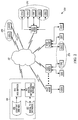
- FIG. 1 illustrates an exemplary VOD system 100 in accordance with an embodiment of the present invention.
- FIG. 1 illustrates an exemplary VOD system 100 in accordance with an embodiment of the present invention.
- FIG. 1 illustrates an exemplary VOD system 100 in accordance with an embodiment of the present invention.
- FIG. 1 illustrates an exemplary VOD system 100 in accordance with an embodiment of the present invention.
- aspects of the invention can be practiced using a system having other than the specific features or limitations of the illustrative VOD system 100 described herein.
- VOD system 100 includes a server system 101 and a plurality of distribution nodes 150A, 150B, 150C, ... 150N (each a node 150). Server system 101 and nodes 150 are connected by an access network 110. For example, communication link 111 connects the server system 101 to the access network 110, and communication links 151A, 151B, 151C, ... 151N connect the nodes 150 to the access network 110.
- VOD system 100 includes a plurality of client systems 130A ... 130N (each a client system 130).
- Each node 150 is connected to one or more client systems 130; for example, so that each node 150 can exchange data with and deliver content (e.g., from VOD server 104) downstream to its connected client systems 130.
- FIG. 1 depicts that node 150A is connected to client systems 130A, 130B, and 130C; node 150B is connected to client systems 130D, 130E, and 130F; node 150C is connected to client systems 130G and 130H; and node 150N is connected to client system 130N.
- An exemplary client system 130A is depicted, for illustrative purposes, in greater detail than other client systems 130.
- Access network 110 and communication links 111, 151 can include, for example, a transmission medium such as an optical fiber, a coaxial cable, or other suitable transmission media or wireless telecommunications.
- access network 110 comprises a hybrid fiber coaxial (HFC) network.
- HFC hybrid fiber coaxial
- the server system 101 typically is located in a headend (not shown) or other suitable location within the VOD system 100.
- the headend typically is a regional or local hub that is part of a larger service provider distribution system, such as a cable television distribution system.
- the VOD system 100 and other conventional VOD systems typically are based on a central server architecture.
- the server system 101 typically is centrally located with respect to a plurality of nodes 150, and connects to each node 150 directly via a dedicated transmission medium (in some embodiments, communication links 151) of access network 110.
- the VOD system 100 can be distributed; for example, VOD system 100 can comprise a plurality of server systems 101 located in one or more headends.
- an exemplary server system 101 includes a VOD server 104, and a social networking server 160. Further embodiments can include a user interface (UI) server, a playout controller, and/or additional servers. In some embodiments, the functionality of some or all of the foregoing servers, controllers, or processors can be separated or combined with one another, and can be executed or hosted on one or more processors or servers.
- UI user interface
- the functionality of some or all of the foregoing servers, controllers, or processors can be separated or combined with one another, and can be executed or hosted on one or more processors or servers.
- Server system 101 also includes at least one database 106 (containing, for example, media content and advertisements), and can contain any number of additional databases; illustrative examples include a social television database 161, a metadata and/or rules database containing information about content in database 106, and a subscriber database.
- database 106 and/or any of the additional databases can comprise a plurality of databases.
- database 106, social television database 161, and/or any of the additional databases can be distributed over a plurality of servers and/or storage media.
- social networking server 160 and social TV database 161 may be external to server system 101 and accessible to server system 101 via a communications network (e.g., access network 110, ⁇ or the Internet).
- social networking server 160 may be provided by a third party social networking provider (i.e., a provider other than the service provider that provides server system 101).
- Server system 101 receives, through access network 110, requests from a client system 130.
- Server system 101 and client system 103 exchange information with one another through access network 110; for example, a user interface (UI) server (not shown) of server system 101 can send information for presentation to a user 120, and the client system 130 can send to the server system 101 information, commands, and the like, received in set-top box 114 via input device 112 from user 120.
- UI user interface
- each client system 130 can be associated with one or more users 120.
- server system 101 can include a playout controller (not shown) that controls VOD server 104 for delivery of the playout of a content package provided by server system 101.
- the playout controller can establish a playout schedule for the content and advertising elements based on content rules.
- the playout controller can then establish a playlist of the desired content including the sequencing of program content and advertisement content; for example, by inserting additional advertisement content into an original content program compiled by VOD server 104.
- VOD server 104 receives requests for content (e.g., from client system 130, or from a playout controller), interprets the requests, pulls requested content from database 106, and delivers to client system 130 a content package corresponding to the requested content.
- the content package can be delivered via a video processor (not shown) in server system 101 that receives data from VOD server 104 and prepares and sends the data through access network 110 following proper protocols.
- Client system 130 includes a set-top box (STB) 114, an input device 112, and a display 116.
- Examples of display 116 include a television or a monitor.
- a client system 130 typically is located in end-user (subscriber) locations, such as a home or office of a user 120. Often, a home or other end-user location has only one client system 130, although in many cases, more than one client system 130 can be located in the same end-user location, e.g., as part of a home network or business network configuration.
- Each set-top box 114 is any suitable signal processing device or system for processing video signals, such as any signal converter or decoder (set-top) box, or other suitable computing device or video device with set-top box and/or cable modem capabilities, including a residential gateway, an internet protocol (IP), satellite or cable digital video recorder, a digital video disk (DVD) recorder, a computer, or a home media server system.
- IP internet protocol
- satellite or cable digital video recorder a digital video disk (DVD) recorder
- computer or a home media server system.
- set-top box 114 can be a laptop, notebook, or tablet computer, or a mobile device, or can be built into the display 116.
- An exemplary set-top box 114 comprises a computing device that connects the display 116 and an external signal source, turning the signal into a content stream that the display 116 is able to render and display.
- set-top box 114 can convert data signals to audio/video content and output the data to display 116.
- Set-top box 114 is communicatively coupled to the display 116 via a wired or wireless connection.
- a set-top box 114 can be completely or partially configured in the form of hardware circuitry and/or other hardware components within a larger device or group of components.
- set-top box 114 can be completely or partially configured in the form of software, e.g., as processing instructions or one or more sets of logic or computer code.
- the logic or processing instructions typically are stored in a data storage device, which typically is coupled to a processor or controller. Both the data storage device and the processor or controller can be included as part of a set-top box 114, although such is not necessary.
- the processor or controller accesses the necessary instructions from the data storage device and executes the instructions or transfers the instructions to the appropriate location within the set-top box 114.
- An exemplary set-top box 114 is able to receive input commands from input device 112 and send requests embodied in the input commands through access network 110 to server system 101.
- a user 120 can operate input device 112 to send commands to the set-top box 114; for example, by using input device 112 to control a user interface (UI) application of STB 114 (e.g., for navigation and selection of content items from menus).
- Input device 112 is communicatively coupled to the set-top box 114 either via a wired or wireless connection.
- input device 112 can be a remote control device.
- input device 112 can be a computer (e.g., a desktop, laptop, notebook, or tablet computer), or a mobile device or smartphone, and/or can be completely or partially configured in the form of software running on a computer.
- input device 112 can be built into the set-top box 114.
- the UI application upon receipt of input commands, such as changing to a new channel, causes the set-top box 114 to send corresponding instructions upstream through access network 110 to server system 101.
- server system 101 e.g., in a UI server, not shown
- server system 101 is able to convert the instruction stream to a form that a playout controller can interpret, and sends the instructions to the playout controller, which requests content from VOD server 104, which interprets the request and pulls the requested content from database 106, and delivers the content to set-top box 114.
- Database 106 stores items of content.
- the content can be any video and/or audio, non-limiting examples of which include movies, television programs, music, games, etc. Further, the content may be pre-assembled with advertisements disposed therein, or the playout controller may cause insertion of advertisements into requested content. In some embodiments, advertisements to be inserted are stored in database 106.
- An advertisement can be any video or audio that is not the content, non-limiting examples of which include commercials. The combination of content and advertisements, if included, is the content package.
- social networking data can be associated with content (such as favorite, planned, recently viewed, or currently viewed television programs or movies), while other social networking data may not be directly related to content.
- a portion of social networking data can be stored, for example, in social TV database 161.
- all or portions of social TV database 161 can be included in database 106 or in other additional databases.
- FIG. 2 illustrates an exemplary VOD system 200 in accordance with a further embodiment of the present invention.
- the VOD system 200 includes features described above with respect to FIG. 1 (e.g., server system 101, a plurality of distribution nodes 150A...150N, access network 110, and a plurality of client systems 130A...130N).
- communication links connect outside systems 230A, 230B to the access network 110, without an intervening distribution node 150.
- the outside systems 230A, 230B may be client systems having a set-top box 114 that is associated with a different service provider (i.e., a service provider other than the service provider of server system 101), or may be client systems that include a general-purpose computer adapted for Internet browsing rather than a set-top box.
- client system 130A For illustrative purposes, the focus of the present discussion is client system 130A and its user 120.
- user 120 of client system 130A can use social networking server 160 to build his online social network by adding social networking friends.
- user 120 of client system 130A can use social networking server 160 to access his online social network, e.g,. by accessing a list of social networking friends via a social networking portal (not shown).
- social networking portal not shown.
- the term “friend” is known to include connections that may or may not include friendship or relationship in real life.
- the term “friend” is commonly used in services such as Facebook.
- social networking friend is also inclusive of other terms similarly used in online social networking, such as LinkedIn connections, Twitter followers/followees, and the like.
- the list of social networking friends for user 120 can be securely maintained in social TV database 161.
- proper authentication mechanisms such as those known in the art, can be established to regulate access to information from social networking server 160 in order to maintain privacy.
- user 120 can share (e.g., with some or all of his social networking friends) social television data; for example, social networking data associated with content, e.g., favorite, planned, recently viewed, or currently viewed television programs or movies.
- social networking data associated with content, e.g., favorite, planned, recently viewed, or currently viewed television programs or movies.
- User 120 can also have the ability to hide social television data from some or all social networking friends, if desired.
- user 120 can search his list of social networking friends to find who is watching the same program that he is currently watching.
- the user 120 of client system 130A has built an online network of social networking friends that includes the users of client systems 130D, 130E, 130H, 130I, and the users of outside systems 230A and 230B.
- user 120 using social networking server 160, is able to create a network of social networking friends who commonly subscribe to the service provider of server system 101.
- user 120 has built a network of social networking friends using a third-party social networking portal.
- user 120 has built a network of social networking friends using a social networking portal such as Facebook, which provides a platform and application programming interface (API).
- API application programming interface
- the service provider of server system 101 can (with the permission of user 120) access the user's list of friends and certain information about those friends, can develop compatible social networking applications (e.g., an application hosted on social networking server 160), and can allow the user 120 and the user's friends to share information related to those applications.
- the service provider of server system 101 can use social networking server 160 to exchange information with a portal such as Facebook, can store information retrieved from a portal such as Facebook in social TV database 161, and can use features of a portal such as Facebook to allow the user 120 to more easily share data from social TV database 161 with social networking friends.
- FIG. 2 depicts user 120's network of social networking friends in exemplary groups 270, 275, 280.
- Node-sharing group 270 represents the user 120 of client system 130A and his social networking friends (users of client systems 130D and 130E) who are subscribers of the service provider of server system 101, and who share the same distribution node 150A.
- Non-node-sharing group 275 represents social networking friends who are subscribers of the service provider of server system 101, but who do not share distribution node 150A with the user 120 of client system 130A.
- Group 275 includes the users of client systems 130H and 130I.
- Non-subscriber group 280 represents social networking friends who are not subscribers of the service provider of server system 101, and who are therefore unable to receive VOD content from VOD server 104.
- Group 280 includes the users of outside systems 230A and 230B.
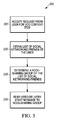
- FIG. 3 is a flow diagram that illustrates a method 300 in a server system 101 according to an embodiment of the present invention.
- the method 300 provides proactive delivery of VOD content items; e.g., by transmitting a movie or a program over the cable network to the requesting viewer (user 120) and proactively transmitting the same content item to some of user 120's social networking friends.
- method 300 includes a step 310 of accepting a request for a content item.
- user 120 of client system 130A starts by requesting a content item (e.g., a movie or a television program) from the VOD server 104, and the VOD server 104 accepts this request.
- a content item e.g., a movie or a television program
- the VOD server 104 queries the social networking server 160 for a list of social networking friends of user 120.
- user 120 is a registered user of the social networking server 160, and has granted permission to the social networking server 160 to obtain and/or store his list of social networking friends, and to share data from social TV database 161 with his social networking friends.
- the social networking server 160 or VOD server 104 is able to determine whether social networking friends of user 120 are subscribers to the service provider of server system 101, and whether they share a distribution node 150 with the user 120.
- social networking friends of user 120 must themselves be registered users of the social networking server 160 in order to be detected as subscribers to the service provider of server system 101.
- the social networking server 160 and/or VOD server 104 may have access to a subscriber database associated with server system 101.
- each registered user of the social networking server 160 may be able to store information concerning their own service provider in social TV database 161, e.g., to facilitate matching of the registered user of the social networking server 160 with a client system 130 in a subscriber database.
- social networking friends of user 120 can be properly categorized by the social networking server 160 or VOD server 104 into node-sharing group 270, non-node-sharing group 275, or non-subscriber group 280.
- Such a categorization can be stored, for example, in social TV database 161.
- the VOD server 104 is able to determine which social networking friends of user 120 are categorized into node-sharing group 270.
- the VOD server 104 has received the full list of social networking friends of user 120, and then determines which of those social networking friends are in node-sharing group 270.
- the VOD server 104 has received from social networking server 160 a list of only the social networking friends that are in node-sharing group 270.
- the VOD server 104 has received from social networking server 160 a full list of social networking friends, including group identifiers (e.g,. flags or data fields) for identifying which of those social networking friends are in node-sharing group 270.
- Social networking friends in node-sharing group 270 represent a "viewer set" of client systems 130 that can be proactively served the same content item by VOD server 104, without making additional bandwidth commitments (i.e., for bandwidth in access system 110).
- the client systems 130 who are under the same node 150 in a HFC can receive the traffic broadcasted by a cable modem termination system (CMTS) without any additional resources being reserved.
- CMTS cable modem termination system
- an embodiment allows the service provider of server system 101 to deliver the content item not only to the user 120, but to other STBs 114 in the node-sharing group 270 without making additional bandwidth commitments (i.e., for bandwidth in access system 110).
- step 340 once the node-sharing group 270 is identified by the VOD server 104, the VOD server 104 sends a video delivery start message to each STB 114 in the node-sharing group 270, including the STB 114 associated with the requesting user 120.
- This message includes information such as a multicast group session ID, required resources (e.g., storage space required for the content item), and the like.
- the STBs 114 of node-sharing group 270 which have the required resources on their end are able to join the multicast session and download the content item.
- the multicast session is then established and the content item can be delivered to the STBs 114 of those client systems 130 in the node-sharing group 270 that have sufficient resources.
- FIG. 4 is a flow diagram that illustrates a method 400 in a client system 130 according to an embodiment of the present invention.
- a processor and application software is provided in STB 114 for implementing the method 400, which can include the ability to support (e.g., directly or through an API) controlling and prioritizing stored content in local storage 115.
- each client system 130 includes (e.g., in STB 114), or is communicatively coupled to, local storage 115 such as a hard disk or other form of persistent storage. Local storage 115 is typically limited.
- An embodiment prevents proactive delivery of VOD content items, as set forth above, from overwriting lower-priority content items that a user 120 may have expressly scheduled or downloaded for watching later.
- a database or directory in local storage 115 can contain metadata associated with content items in local storage 115, including storage priority values.
- the proactively delivered content item can be marked as having a lower priority than content items expressly requested by the user of STB 114; accordingly, STB 114 can be configured to automatically overwrite such lower-priority content when storage space is needed. This helps prevent the local storage 115 from too quickly becoming filled with content that the user 120 did not expressly request.
- a client system 130 receives the video delivery start message that was sent by VOD server 104 in step 340.
- the client system 130 takes steps to determine whether to accept the delivery of the VOD content item (e.g., by joining a multicast session for receiving the VOD content item).
- step 420 client system 130 checks whether the user 120 associated with client system 130 expressly requested the VOD content item (e.g., in step 310 above). If the user 120 was the requester of step 310, the method proceeds to step 425. At step 425 a high priority is assigned to the VOD content item - in some embodiments, the highest possible priority is assigned - and the method proceeds to step 440.
- step 430 if the user 120 was not the requester of step 310, but is rather a social networking friend of the requester, additional priority determinations may need to be made before the download is accepted, and the method proceeds to step 430.
- a priority value is determined for the VOD content item.
- the priority value is based on whether the user has requested the VOD content item. For example, if the user did not request the VOD content item, the priority value will be lower than if the user did request the VOD content item.
- each user of the social networking system 160 can assign priorities to certain categories (e.g., genres, programs, and the like), indicating interest or lack of interest in each category. For example, in some embodiments, if the user of the social networking system 160 has indicated a total lack of interest in a genre, program, etc., that includes the VOD content item, the download can be declined (e.g., based on assigning a zero or negative priority value). In further embodiments, if the user of the social networking system 160 has indicated a relatively high or low lack of interest in a genre, program, etc., that includes the VOD content item, the priority of the VOD content item can be adjusted upward or downward.
- categories e.g., genres, programs, and the like
- each user of the social networking system 160 can assign rankings to his own social networking friends, e.g., based on whether the user perceives that he generally shares viewing interests with a particular social networking friend.
- a low-ranked friend e.g., based on commonality of viewing interests
- content can be declined based on assigning the content a zero or negative priority value.
- a relatively high or low ranking of a friend can result in assigning a correspondingly higher or lower priority to all VOD content items for which the friend is the requesting user, thus influencing what VOD content items are accepted for download.
- finely-grained priorities can be assigned to the lower-priority content items.
- a new content item is more popularly requested among the social networking friends of user 120 than a previously recorded content item; naturally, the new content item may be more preferred by the user 120. So when the STB 114 of a viewer does not have enough space to record the new content item, in an embodiment, it can create sufficient space by overwriting a lower-priority (e.g., less popular) content item that was cached earlier.
- an STB 114 can decline to join the multicast session (e.g., regardless of whether it has the required storage resources available), based on the priority determination in step 430. For example, in some embodiments, content can be declined if the content has been assigned a zero or negative priority value. If the content is declined, the method 400 skips to step 490 and terminates. If the content is not declined, the method 400 proceeds to step 440.
- step 440 the client system 130 determines whether it has sufficient local storage 115 available to store the VOD content item. If sufficient local storage 115 is available to store the VOD content item, the method 400 skips to step 470. If sufficient local storage 115 is not available to store the VOD content item, the method proceeds to step 450.
- step 450 the client system 130 determines whether there is enough locally stored content having a lower priority than the VOD content item, such that deleting it would create sufficient available space for storing the VOD content item. If not, the method 400 skips to step 490 and terminates without accepting the download. Otherwise, the client system 130 proceeds to step 460.
- the client system 130 can delete all or part of the locally stored content having a lower priority than the VOD content item. In some embodiments, the client system 130 can optimize which items are selected for deletion, in order to minimize the number of items deleted. The method 400 then proceeds to step 470.
- step 470 the client system 130 receives the VOD content item, e.g., by joining the multicast session identified by the video delivery start message received at step 410, and stores the VOD content item in local storage 115.
Landscapes
- Engineering & Computer Science (AREA)
- Multimedia (AREA)
- Signal Processing (AREA)
- Databases & Information Systems (AREA)
- General Engineering & Computer Science (AREA)
- Computing Systems (AREA)
- Computer Networks & Wireless Communication (AREA)
- Human Computer Interaction (AREA)
- Two-Way Televisions, Distribution Of Moving Picture Or The Like (AREA)
- Information Transfer Between Computers (AREA)
Claims (12)
- Procédé pour utiliser les informations d'un réseautage social pour conserver la largeur de bande dans un système de vidéo à la demande (VOD) exploité par un prestataire de services, le système de VOD comprenant un système de serveurs de VOD couplé de manière communicative à une pluralité de noeuds de distribution via un réseau d'accès, dans lequel les systèmes clients reçoivent le contenu de VOD du système de serveurs via un noeud de la pluralité de noeuds de distribution, le procédé comprenant :dans le système de serveurs de VOD, l'acceptation (310) d'une demande d'un item de contenu de VOD d'un premier système client associé à un utilisateur du système de VOD ;l'obtention (320) d'une liste d'amis du réseautage social de l'utilisateur ;la détermination (330) d'un groupe partageant un noeud de la liste d'amis du réseautage social, le groupe partageant le noeud comprenant le premier système client et au moins un système client de la liste d'amis du réseautage social de l'utilisateur qui partage un noeud de distribution particulier de la pluralité de noeuds de distribution avec le premier système client ; etl'envoi (340) d'un message initial de livraison de la vidéo par le biais du noeud de distribution particulier partagé à chaque système client dans le groupe partageant le noeud en réponse à l'acceptation de la demande de l'item de contenu de VOD du premier système client,dans lequel le message initial de livraison de la vidéo comprend des informations qui permettent à chaque système client de rejoindre une session de diffusion groupée de l'item de contenu de VOD de telle manière que chaque système client puisse recevoir l'item de contenu de VOD sans affecter davantage la largeur de bande.
- Procédé selon la revendication 1, comprenant en outre la diffusion groupée de l'item de contenu de VOD par le noeud de distribution partagé.
- Procédé selon la revendication 1, dans lequel l'obtention (320) de la liste d'amis du réseautage social de l'utilisateur comprend également l'obtention de la liste à partir d'une base de données de télévision sociale du système de VOD.
- Procédé selon la revendication 1, dans lequel l'obtention (320) de la liste d'amis du réseautage social de l'utilisateur comprend également l'obtention de la liste à partir d'un portail de réseautage social externe au système de VOD.
- Procédé selon la revendication 1, dans lequel la détermination (330) d'un groupe partageant un noeud comprend :le fait de déterminer si un ami du réseautage social de la liste d'amis du réseautage social est abonné au prestataire de services ; etlorsque l'ami du réseautage social est abonné au prestataire de services, le fait de déterminer si un système client associé à l'ami du réseautage social partage un noeud de distribution du système de serveurs de VOD avec le premier système client.
- Procédé selon la revendication 5, dans lequel le fait de déterminer si l'ami du réseautage social est un abonné comprend :le fait de déterminer si l'ami du réseautage social est un utilisateur inscrit d'un serveur de réseautage social du système de serveurs de VOD.
- Procédé selon la revendication 1, dans lequel la détermination (330) d'un groupe partageant un noeud comprend le stockage d'informations concernant le groupe partageant le noeud dans une base de données de télévision sociale du système de serveurs de VOD.
- Procédé selon la revendication 7, dans lequel les informations sont stockées pour chaque ami du réseautage social associé à un système client du groupe partageant le noeud.
- Procédé selon la revendication 1, dans lequel la détermination (330) d'un groupe partageant un noeud comprend l'interrogation d'une base de données de l'abonné du système de serveurs de VOD.
- Système de vidéo à la demande (VOD) comprenant : un système de serveurs (101) comprenant un serveur de VOD (104) et un serveur de réseautage social (160) couplés de manière communicative entre eux et à un réseau d'accès (110) ;
une pluralité de noeuds de distribution couplée de manière communicative au système de serveurs via le réseau d'accès (110) dans lequel chaque pluralité de noeuds de distribution est configurée pour distribuer le contenu de VOD en aval d'un ou plusieurs systèmes clients ;
dans lequel le serveur de réseautage social (160) est configuré pour stocker, dans une base de données de télévision sociale (161), les informations du réseautage social associées à un utilisateur du premier système client, dans lequel les informations du réseautage social comprennent une liste d'amis du réseautage social de l'utilisateur ; et
dans lequel le système de serveurs (101) est configuré pour déterminer un groupe partageant un noeud comprenant le premier système client et un ou plusieurs systèmes clients associés aux amis du réseautage social de l'utilisateur, et pour envoyer un message initial de livraison de la vidéo à un ou plusieurs systèmes clients en réponse à la réception d'une demande d'un item de contenu de VOD du premier système client, dans lequel chaque système client du groupe partageant le noeud partage un noeud de distribution en commun de la pluralité de noeuds de distribution, dans lequel le message initial de livraison de la vidéo comprend des informations permettant à chaque système client de rejoindre une session de diffusion groupée de l'item de contenu de VOD de telle manière que chaque système client puisse recevoir l'item de contenu de VOD sans affecter davantage la largeur de bande. - Système selon la revendication 10, dans lequel le serveur de VOD (104) est également configuré pour diffuser en groupe au groupe partageant le noeud, via le noeud de distribution en commun, l'item de contenu de VOD demandé par l'utilisateur.
- Système selon la revendication 10, dans lequel le serveur de réseautage social (160) est également configuré pour obtenir la liste d'amis du réseautage social à partir d'un portail de réseautage social externe au système de serveurs de VOD.
Applications Claiming Priority (2)
| Application Number | Priority Date | Filing Date | Title |
|---|---|---|---|
| US12/982,450 US9106972B2 (en) | 2010-12-30 | 2010-12-30 | Social networking for bandwidth conservation in video on demand systems |
| PCT/US2011/067456 WO2012092310A1 (fr) | 2010-12-30 | 2011-12-28 | Réseautage social pour une conservation de largeur de bande dans des systèmes de vidéo à la demande |
Publications (2)
| Publication Number | Publication Date |
|---|---|
| EP2659685A1 EP2659685A1 (fr) | 2013-11-06 |
| EP2659685B1 true EP2659685B1 (fr) | 2016-08-31 |
Family
ID=45498149
Family Applications (1)
| Application Number | Title | Priority Date | Filing Date |
|---|---|---|---|
| EP11810768.9A Not-in-force EP2659685B1 (fr) | 2010-12-30 | 2011-12-28 | Utilisation d'information d'un réseau social pour améliorer l'utilisation de la bande passante dans des systèmes de vidéo à la demande |
Country Status (6)
| Country | Link |
|---|---|
| US (1) | US9106972B2 (fr) |
| EP (1) | EP2659685B1 (fr) |
| KR (1) | KR101521035B1 (fr) |
| CN (1) | CN103430570B (fr) |
| MX (1) | MX2013007509A (fr) |
| WO (1) | WO2012092310A1 (fr) |
Families Citing this family (17)
| Publication number | Priority date | Publication date | Assignee | Title |
|---|---|---|---|---|
| US20120210377A1 (en) * | 2011-02-11 | 2012-08-16 | Sony Network Entertainment International Llc | Social networking feedback via second display selections |
| US10225617B2 (en) * | 2011-06-22 | 2019-03-05 | Time Warner Cable Enterprises Llc | Methods and apparatus for presenting social network content in conjunction with video content |
| US8826350B1 (en) * | 2012-01-24 | 2014-09-02 | Intellectual Ventures Fund 79 Llc | Methods, devices, and mediums for providing group video on demand |
| US9301016B2 (en) * | 2012-04-05 | 2016-03-29 | Facebook, Inc. | Sharing television and video programming through social networking |
| US9699485B2 (en) | 2012-08-31 | 2017-07-04 | Facebook, Inc. | Sharing television and video programming through social networking |
| CN103139604B (zh) * | 2013-01-14 | 2016-03-16 | 中国科学院声学研究所 | 一种基于缓存模型的ipqam频点分配与回收方法 |
| US20140317645A1 (en) * | 2013-04-22 | 2014-10-23 | Liverelay, Inc. | Television Relay for a Social Network |
| WO2015089224A1 (fr) * | 2013-12-11 | 2015-06-18 | LiveRelay Inc. | Activation d'interaction entre des utilisateurs de réseau social durant un affichage synchrone d'un canal vidéo |
| US20160014468A1 (en) | 2014-07-14 | 2016-01-14 | International Business Machines Corporation | Social delivery of iptv streams |
| CN104135687A (zh) * | 2014-07-29 | 2014-11-05 | 深圳创维数字技术股份有限公司 | 一种节目数据处理的方法及数字电视终端 |
| US9928352B2 (en) * | 2014-08-07 | 2018-03-27 | Tautachrome, Inc. | System and method for creating, processing, and distributing images that serve as portals enabling communication with persons who have interacted with the images |
| CN104394481B (zh) * | 2014-09-30 | 2016-09-21 | 腾讯科技(深圳)有限公司 | 视频播放方法及装置 |
| CN106792260A (zh) * | 2017-01-06 | 2017-05-31 | 上海易符智能科技有限公司 | 基于多用户直播的移动多媒体通信系统及其实现方法 |
| US10681417B2 (en) * | 2017-05-12 | 2020-06-09 | Google Llc | Enhanced multicast network communications |
| US11284243B2 (en) | 2017-08-29 | 2022-03-22 | Telefonaktiebolaget Lm Ericsson (Publ) | Method and device for subscribing social network service |
| CN110471987B (zh) * | 2019-08-09 | 2023-02-21 | 全链通有限公司 | 数据存储方法、设备及计算机可读存储介质 |
| US11895356B1 (en) * | 2022-11-21 | 2024-02-06 | Microsoft Technology Licensing, Llc | Systems and methods for group capture of interactive software |
Family Cites Families (9)
| Publication number | Priority date | Publication date | Assignee | Title |
|---|---|---|---|---|
| US20030066074A1 (en) * | 2001-09-29 | 2003-04-03 | Koninklijke Philips Electronics N.V. | System and method for displaying group viewing statistics during television viewing |
| US9135334B2 (en) * | 2007-01-23 | 2015-09-15 | Cox Communications, Inc. | Providing a social network |
| US8577835B2 (en) * | 2007-06-28 | 2013-11-05 | Salesforce.Com, Inc. | Method and system for sharing data between subscribers of a multi-tenant database service |
| US20090021474A1 (en) | 2007-07-17 | 2009-01-22 | Motorola, Inc. | System and method for displaying status information of a multimedia broadcast receiver on an ambient device |
| US9183513B2 (en) * | 2008-05-27 | 2015-11-10 | Intel Corporation | Aggregration, standardization and extension of social networking contacts to enhance a television consumer experience |
| US8396924B2 (en) | 2008-06-23 | 2013-03-12 | Microsoft Corporation | Content management using a website |
| US8644688B2 (en) | 2008-08-26 | 2014-02-04 | Opentv, Inc. | Community-based recommendation engine |
| US9003447B2 (en) | 2008-12-31 | 2015-04-07 | Google Technology Holdings LLC | System and method for customizing communication in a social television framework |
| US9307205B2 (en) * | 2009-06-18 | 2016-04-05 | Centurylink Intellectual Property Llc | System and method for utilizing a secured service provider memory |
-
2010
- 2010-12-30 US US12/982,450 patent/US9106972B2/en active Active
-
2011
- 2011-12-28 KR KR1020137020071A patent/KR101521035B1/ko not_active Expired - Fee Related
- 2011-12-28 EP EP11810768.9A patent/EP2659685B1/fr not_active Not-in-force
- 2011-12-28 WO PCT/US2011/067456 patent/WO2012092310A1/fr not_active Ceased
- 2011-12-28 MX MX2013007509A patent/MX2013007509A/es not_active Application Discontinuation
- 2011-12-28 CN CN201180063512.7A patent/CN103430570B/zh not_active Expired - Fee Related
Also Published As
| Publication number | Publication date |
|---|---|
| WO2012092310A1 (fr) | 2012-07-05 |
| MX2013007509A (es) | 2013-08-01 |
| KR20130100208A (ko) | 2013-09-09 |
| CN103430570B (zh) | 2017-03-29 |
| US20120174169A1 (en) | 2012-07-05 |
| CN103430570A (zh) | 2013-12-04 |
| KR101521035B1 (ko) | 2015-05-15 |
| EP2659685A1 (fr) | 2013-11-06 |
| US9106972B2 (en) | 2015-08-11 |
Similar Documents
| Publication | Publication Date | Title |
|---|---|---|
| EP2659685B1 (fr) | Utilisation d'information d'un réseau social pour améliorer l'utilisation de la bande passante dans des systèmes de vidéo à la demande | |
| US20230239535A1 (en) | Selective Interactivity | |
| US10951861B2 (en) | Systems and methods to order a content item deliverable via a media service | |
| US9563703B2 (en) | System, method and device for sharing of playlists of authorized content with other users | |
| US11363323B2 (en) | Method and system for providing content | |
| US9462339B2 (en) | Systems and methods for distributing video on demand | |
| US8893199B2 (en) | System and method of managing video content delivery | |
| US11303382B2 (en) | Server selected variable bitrate streaming | |
| KR20090057938A (ko) | 피어-투-피어 주문형 비디오 기술들 | |
| US7971223B2 (en) | Method and system of queued management of multimedia storage | |
| US8990850B2 (en) | Personalized broadcast system | |
| US12572961B2 (en) | Search result content sequencing | |
| CA2776711A1 (fr) | Visionnement synchronise de contenu media | |
| US20130145399A1 (en) | Personal television channel | |
| EP1971144A1 (fr) | Processus, logiciel et installation pour la création et distribution des canals de télévision personalisés sur internet | |
| WO2007131524A1 (fr) | procÉdÉ d'apport de donnÉes dans des rÉseaux de tÉlÉvision numÉriques |
Legal Events
| Date | Code | Title | Description |
|---|---|---|---|
| PUAI | Public reference made under article 153(3) epc to a published international application that has entered the european phase |
Free format text: ORIGINAL CODE: 0009012 |
|
| 17P | Request for examination filed |
Effective date: 20130730 |
|
| AK | Designated contracting states |
Kind code of ref document: A1 Designated state(s): AL AT BE BG CH CY CZ DE DK EE ES FI FR GB GR HR HU IE IS IT LI LT LU LV MC MK MT NL NO PL PT RO RS SE SI SK SM TR |
|
| DAX | Request for extension of the european patent (deleted) | ||
| 17Q | First examination report despatched |
Effective date: 20141111 |
|
| GRAP | Despatch of communication of intention to grant a patent |
Free format text: ORIGINAL CODE: EPIDOSNIGR1 |
|
| RIC1 | Information provided on ipc code assigned before grant |
Ipc: H04N 21/433 20110101ALI20160222BHEP Ipc: H04N 21/4788 20110101ALI20160222BHEP Ipc: H04N 21/4335 20110101ALI20160222BHEP Ipc: H04N 21/6543 20110101AFI20160222BHEP Ipc: H04N 21/2385 20110101ALI20160222BHEP Ipc: H04N 21/466 20110101ALI20160222BHEP Ipc: H04N 21/25 20110101ALI20160222BHEP |
|
| INTG | Intention to grant announced |
Effective date: 20160314 |
|
| GRAS | Grant fee paid |
Free format text: ORIGINAL CODE: EPIDOSNIGR3 |
|
| GRAA | (expected) grant |
Free format text: ORIGINAL CODE: 0009210 |
|
| AK | Designated contracting states |
Kind code of ref document: B1 Designated state(s): AL AT BE BG CH CY CZ DE DK EE ES FI FR GB GR HR HU IE IS IT LI LT LU LV MC MK MT NL NO PL PT RO RS SE SI SK SM TR |
|
| REG | Reference to a national code |
Ref country code: CH Ref legal event code: EP Ref country code: GB Ref legal event code: FG4D |
|
| REG | Reference to a national code |
Ref country code: IE Ref legal event code: FG4D |
|
| REG | Reference to a national code |
Ref country code: DE Ref legal event code: R096 Ref document number: 602011029930 Country of ref document: DE |
|
| REG | Reference to a national code |
Ref country code: AT Ref legal event code: REF Ref document number: 825884 Country of ref document: AT Kind code of ref document: T Effective date: 20161015 |
|
| REG | Reference to a national code |
Ref country code: DE Ref legal event code: R081 Ref document number: 602011029930 Country of ref document: DE Owner name: GOOGLE TECHNOLOGY HOLDINGS LLC, MOUNTAIN VIEW, US Free format text: FORMER OWNER: MOTOROLA MOBILITY LLC, LIBERTYVILLE, ILL., US |
|
| RAP2 | Party data changed (patent owner data changed or rights of a patent transferred) |
Owner name: GOOGLE TECHNOLOGY HOLDINGS LLC |
|
| REG | Reference to a national code |
Ref country code: LT Ref legal event code: MG4D |
|
| REG | Reference to a national code |
Ref country code: NL Ref legal event code: MP Effective date: 20160831 |
|
| REG | Reference to a national code |
Ref country code: AT Ref legal event code: MK05 Ref document number: 825884 Country of ref document: AT Kind code of ref document: T Effective date: 20160831 |
|
| PG25 | Lapsed in a contracting state [announced via postgrant information from national office to epo] |
Ref country code: FI Free format text: LAPSE BECAUSE OF FAILURE TO SUBMIT A TRANSLATION OF THE DESCRIPTION OR TO PAY THE FEE WITHIN THE PRESCRIBED TIME-LIMIT Effective date: 20160831 Ref country code: LT Free format text: LAPSE BECAUSE OF FAILURE TO SUBMIT A TRANSLATION OF THE DESCRIPTION OR TO PAY THE FEE WITHIN THE PRESCRIBED TIME-LIMIT Effective date: 20160831 Ref country code: RS Free format text: LAPSE BECAUSE OF FAILURE TO SUBMIT A TRANSLATION OF THE DESCRIPTION OR TO PAY THE FEE WITHIN THE PRESCRIBED TIME-LIMIT Effective date: 20160831 Ref country code: NO Free format text: LAPSE BECAUSE OF FAILURE TO SUBMIT A TRANSLATION OF THE DESCRIPTION OR TO PAY THE FEE WITHIN THE PRESCRIBED TIME-LIMIT Effective date: 20161130 Ref country code: HR Free format text: LAPSE BECAUSE OF FAILURE TO SUBMIT A TRANSLATION OF THE DESCRIPTION OR TO PAY THE FEE WITHIN THE PRESCRIBED TIME-LIMIT Effective date: 20160831 |
|
| PG25 | Lapsed in a contracting state [announced via postgrant information from national office to epo] |
Ref country code: LV Free format text: LAPSE BECAUSE OF FAILURE TO SUBMIT A TRANSLATION OF THE DESCRIPTION OR TO PAY THE FEE WITHIN THE PRESCRIBED TIME-LIMIT Effective date: 20160831 Ref country code: NL Free format text: LAPSE BECAUSE OF FAILURE TO SUBMIT A TRANSLATION OF THE DESCRIPTION OR TO PAY THE FEE WITHIN THE PRESCRIBED TIME-LIMIT Effective date: 20160831 Ref country code: SE Free format text: LAPSE BECAUSE OF FAILURE TO SUBMIT A TRANSLATION OF THE DESCRIPTION OR TO PAY THE FEE WITHIN THE PRESCRIBED TIME-LIMIT Effective date: 20160831 Ref country code: AT Free format text: LAPSE BECAUSE OF FAILURE TO SUBMIT A TRANSLATION OF THE DESCRIPTION OR TO PAY THE FEE WITHIN THE PRESCRIBED TIME-LIMIT Effective date: 20160831 Ref country code: GR Free format text: LAPSE BECAUSE OF FAILURE TO SUBMIT A TRANSLATION OF THE DESCRIPTION OR TO PAY THE FEE WITHIN THE PRESCRIBED TIME-LIMIT Effective date: 20161201 Ref country code: ES Free format text: LAPSE BECAUSE OF FAILURE TO SUBMIT A TRANSLATION OF THE DESCRIPTION OR TO PAY THE FEE WITHIN THE PRESCRIBED TIME-LIMIT Effective date: 20160831 |
|
| PG25 | Lapsed in a contracting state [announced via postgrant information from national office to epo] |
Ref country code: EE Free format text: LAPSE BECAUSE OF FAILURE TO SUBMIT A TRANSLATION OF THE DESCRIPTION OR TO PAY THE FEE WITHIN THE PRESCRIBED TIME-LIMIT Effective date: 20160831 Ref country code: RO Free format text: LAPSE BECAUSE OF FAILURE TO SUBMIT A TRANSLATION OF THE DESCRIPTION OR TO PAY THE FEE WITHIN THE PRESCRIBED TIME-LIMIT Effective date: 20160831 |
|
| PG25 | Lapsed in a contracting state [announced via postgrant information from national office to epo] |
Ref country code: PL Free format text: LAPSE BECAUSE OF FAILURE TO SUBMIT A TRANSLATION OF THE DESCRIPTION OR TO PAY THE FEE WITHIN THE PRESCRIBED TIME-LIMIT Effective date: 20160831 Ref country code: BG Free format text: LAPSE BECAUSE OF FAILURE TO SUBMIT A TRANSLATION OF THE DESCRIPTION OR TO PAY THE FEE WITHIN THE PRESCRIBED TIME-LIMIT Effective date: 20161130 Ref country code: SM Free format text: LAPSE BECAUSE OF FAILURE TO SUBMIT A TRANSLATION OF THE DESCRIPTION OR TO PAY THE FEE WITHIN THE PRESCRIBED TIME-LIMIT Effective date: 20160831 Ref country code: PT Free format text: LAPSE BECAUSE OF FAILURE TO SUBMIT A TRANSLATION OF THE DESCRIPTION OR TO PAY THE FEE WITHIN THE PRESCRIBED TIME-LIMIT Effective date: 20170102 Ref country code: BE Free format text: LAPSE BECAUSE OF FAILURE TO SUBMIT A TRANSLATION OF THE DESCRIPTION OR TO PAY THE FEE WITHIN THE PRESCRIBED TIME-LIMIT Effective date: 20160831 Ref country code: CZ Free format text: LAPSE BECAUSE OF FAILURE TO SUBMIT A TRANSLATION OF THE DESCRIPTION OR TO PAY THE FEE WITHIN THE PRESCRIBED TIME-LIMIT Effective date: 20160831 Ref country code: SK Free format text: LAPSE BECAUSE OF FAILURE TO SUBMIT A TRANSLATION OF THE DESCRIPTION OR TO PAY THE FEE WITHIN THE PRESCRIBED TIME-LIMIT Effective date: 20160831 Ref country code: DK Free format text: LAPSE BECAUSE OF FAILURE TO SUBMIT A TRANSLATION OF THE DESCRIPTION OR TO PAY THE FEE WITHIN THE PRESCRIBED TIME-LIMIT Effective date: 20160831 |
|
| REG | Reference to a national code |
Ref country code: DE Ref legal event code: R097 Ref document number: 602011029930 Country of ref document: DE |
|
| PG25 | Lapsed in a contracting state [announced via postgrant information from national office to epo] |
Ref country code: IT Free format text: LAPSE BECAUSE OF FAILURE TO SUBMIT A TRANSLATION OF THE DESCRIPTION OR TO PAY THE FEE WITHIN THE PRESCRIBED TIME-LIMIT Effective date: 20160831 |
|
| PLBE | No opposition filed within time limit |
Free format text: ORIGINAL CODE: 0009261 |
|
| STAA | Information on the status of an ep patent application or granted ep patent |
Free format text: STATUS: NO OPPOSITION FILED WITHIN TIME LIMIT |
|
| REG | Reference to a national code |
Ref country code: CH Ref legal event code: PL |
|
| 26N | No opposition filed |
Effective date: 20170601 |
|
| PG25 | Lapsed in a contracting state [announced via postgrant information from national office to epo] |
Ref country code: SI Free format text: LAPSE BECAUSE OF FAILURE TO SUBMIT A TRANSLATION OF THE DESCRIPTION OR TO PAY THE FEE WITHIN THE PRESCRIBED TIME-LIMIT Effective date: 20160831 |
|
| PG25 | Lapsed in a contracting state [announced via postgrant information from national office to epo] |
Ref country code: MC Free format text: LAPSE BECAUSE OF FAILURE TO SUBMIT A TRANSLATION OF THE DESCRIPTION OR TO PAY THE FEE WITHIN THE PRESCRIBED TIME-LIMIT Effective date: 20160831 |
|
| REG | Reference to a national code |
Ref country code: FR Ref legal event code: ST Effective date: 20170831 |
|
| REG | Reference to a national code |
Ref country code: IE Ref legal event code: MM4A |
|
| PG25 | Lapsed in a contracting state [announced via postgrant information from national office to epo] |
Ref country code: LI Free format text: LAPSE BECAUSE OF NON-PAYMENT OF DUE FEES Effective date: 20161231 Ref country code: LU Free format text: LAPSE BECAUSE OF NON-PAYMENT OF DUE FEES Effective date: 20161228 Ref country code: CH Free format text: LAPSE BECAUSE OF NON-PAYMENT OF DUE FEES Effective date: 20161231 Ref country code: FR Free format text: LAPSE BECAUSE OF NON-PAYMENT OF DUE FEES Effective date: 20170102 |
|
| PG25 | Lapsed in a contracting state [announced via postgrant information from national office to epo] |
Ref country code: IE Free format text: LAPSE BECAUSE OF NON-PAYMENT OF DUE FEES Effective date: 20161228 |
|
| PG25 | Lapsed in a contracting state [announced via postgrant information from national office to epo] |
Ref country code: CY Free format text: LAPSE BECAUSE OF FAILURE TO SUBMIT A TRANSLATION OF THE DESCRIPTION OR TO PAY THE FEE WITHIN THE PRESCRIBED TIME-LIMIT Effective date: 20160831 Ref country code: HU Free format text: LAPSE BECAUSE OF FAILURE TO SUBMIT A TRANSLATION OF THE DESCRIPTION OR TO PAY THE FEE WITHIN THE PRESCRIBED TIME-LIMIT; INVALID AB INITIO Effective date: 20111228 |
|
| PG25 | Lapsed in a contracting state [announced via postgrant information from national office to epo] |
Ref country code: MK Free format text: LAPSE BECAUSE OF FAILURE TO SUBMIT A TRANSLATION OF THE DESCRIPTION OR TO PAY THE FEE WITHIN THE PRESCRIBED TIME-LIMIT Effective date: 20160831 Ref country code: IS Free format text: LAPSE BECAUSE OF FAILURE TO SUBMIT A TRANSLATION OF THE DESCRIPTION OR TO PAY THE FEE WITHIN THE PRESCRIBED TIME-LIMIT Effective date: 20160831 |
|
| PG25 | Lapsed in a contracting state [announced via postgrant information from national office to epo] |
Ref country code: MT Free format text: LAPSE BECAUSE OF NON-PAYMENT OF DUE FEES Effective date: 20161228 |
|
| PG25 | Lapsed in a contracting state [announced via postgrant information from national office to epo] |
Ref country code: TR Free format text: LAPSE BECAUSE OF FAILURE TO SUBMIT A TRANSLATION OF THE DESCRIPTION OR TO PAY THE FEE WITHIN THE PRESCRIBED TIME-LIMIT Effective date: 20160831 Ref country code: AL Free format text: LAPSE BECAUSE OF FAILURE TO SUBMIT A TRANSLATION OF THE DESCRIPTION OR TO PAY THE FEE WITHIN THE PRESCRIBED TIME-LIMIT Effective date: 20160831 |
|
| PGFP | Annual fee paid to national office [announced via postgrant information from national office to epo] |
Ref country code: GB Payment date: 20221227 Year of fee payment: 12 |
|
| PGFP | Annual fee paid to national office [announced via postgrant information from national office to epo] |
Ref country code: DE Payment date: 20221228 Year of fee payment: 12 |
|
| P01 | Opt-out of the competence of the unified patent court (upc) registered |
Effective date: 20230515 |
|
| REG | Reference to a national code |
Ref country code: DE Ref legal event code: R119 Ref document number: 602011029930 Country of ref document: DE |
|
| GBPC | Gb: european patent ceased through non-payment of renewal fee |
Effective date: 20231228 |
|
| PG25 | Lapsed in a contracting state [announced via postgrant information from national office to epo] |
Ref country code: DE Free format text: LAPSE BECAUSE OF NON-PAYMENT OF DUE FEES Effective date: 20240702 |
|
| PG25 | Lapsed in a contracting state [announced via postgrant information from national office to epo] |
Ref country code: GB Free format text: LAPSE BECAUSE OF NON-PAYMENT OF DUE FEES Effective date: 20231228 |
|
| PG25 | Lapsed in a contracting state [announced via postgrant information from national office to epo] |
Ref country code: GB Free format text: LAPSE BECAUSE OF NON-PAYMENT OF DUE FEES Effective date: 20231228 Ref country code: DE Free format text: LAPSE BECAUSE OF NON-PAYMENT OF DUE FEES Effective date: 20240702 |