EP2660686B1 - Système d'entrée d'opération de geste et procédé d'entrée d'opération de geste - Google Patents
Système d'entrée d'opération de geste et procédé d'entrée d'opération de geste Download PDFInfo
- Publication number
- EP2660686B1 EP2660686B1 EP11853600.2A EP11853600A EP2660686B1 EP 2660686 B1 EP2660686 B1 EP 2660686B1 EP 11853600 A EP11853600 A EP 11853600A EP 2660686 B1 EP2660686 B1 EP 2660686B1
- Authority
- EP
- European Patent Office
- Prior art keywords
- gesture
- depth direction
- user
- instruction point
- distance
- Prior art date
- Legal status (The legal status is an assumption and is not a legal conclusion. Google has not performed a legal analysis and makes no representation as to the accuracy of the status listed.)
- Active
Links
Images


Classifications
-
- G—PHYSICS
- G06—COMPUTING OR CALCULATING; COUNTING
- G06F—ELECTRIC DIGITAL DATA PROCESSING
- G06F3/00—Input arrangements for transferring data to be processed into a form capable of being handled by the computer; Output arrangements for transferring data from processing unit to output unit, e.g. interface arrangements
- G06F3/01—Input arrangements or combined input and output arrangements for interaction between user and computer
- G06F3/017—Gesture based interaction, e.g. based on a set of recognized hand gestures
-
- G—PHYSICS
- G06—COMPUTING OR CALCULATING; COUNTING
- G06F—ELECTRIC DIGITAL DATA PROCESSING
- G06F3/00—Input arrangements for transferring data to be processed into a form capable of being handled by the computer; Output arrangements for transferring data from processing unit to output unit, e.g. interface arrangements
- G06F3/01—Input arrangements or combined input and output arrangements for interaction between user and computer
- G06F3/03—Arrangements for converting the position or the displacement of a member into a coded form
- G06F3/0304—Detection arrangements using opto-electronic means
Definitions
- the present invention relates to an apparatus and a method for processing operation input entered by a gesture.
- Three-dimensional television sets that allow for the viewing of stereoscopic images have become available in standard households. It has also become possible to play a Blu-ray disk in which three-dimensional images are recorded and view high-quality three-dimensional images displayed on a three-dimensional display.
- a game application that uses three-dimensional images can be played by connecting the game device to a three-dimensional display. Furthermore, a three-dimensional image of a user is sometimes captured using a camera provided with a distance sensor and brought into a game application.
- Patent document No. 1 discloses a portable game device provided with an interface that allows a user to provide an instruction from a position away from a screen.
- US 2007/0132721 A1 discloses a three dimensional virtual-touch human-machine interface system with a three dimensional time or flight sensor and a three dimensional autostereoscopic display. The sensor detects a user object within a sensor space overlapping with a three dimensional display space. If the position of the user object is substantially identical to the position of an object in the display space, a predetermined program function is performed.
- US 2010/0302145 A1 a computing system with a depth image analysis module to track a world space pose of a human in a fixed world space coordinate system is known.
- the position of a user's hand in the so-defined interface space can be used to manipulate objects on a virtual display.
- US 2010/0306715 A1 discloses a system for gesture input wherein the position of a user is captured in three dimensions with a depth camera. Certain program actions are performed depending on the user's position and on additional inputs from an interface device.
- a purpose of the present invention is to provide a technology for facilitating operation input entered by a gesture.
- operation input entered by a gesture is facilitated.
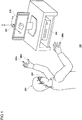
- Fig. 1 is a diagram illustrating the configuration of a three-dimensional gesture input system 300.
- the three-dimensional gesture input system 300 includes a game device 200, a display apparatus 210, and a camera 220.
- the game device 200 executes content of a game application or the like and displays a video image, an operation menu, and the like on the display apparatus 210.
- a player may be used that reproduces content stored in a recording medium.
- the display apparatus 210 is a display that allows for two-dimensional display and/or three-dimensional display. If the display apparatus 210 allows for only two-dimensional display, content is displayed as a two-dimensional image. If the display apparatus 210 also allows for three-dimensional display, content is displayed as a two-dimensional image or a three-dimensional image in accordance with an instruction from a user or an instruction from an application.
- the camera 220 captures an image of a gesture of a user 250.
- the camera 220 is provided, for example, above the display apparatus 210.
- a coordinate system is now considered where an installation position of the camera 220, the display surface, and a direction perpendicular to the display surface are set to be a point of origin, an X-Y plane, and a Z axis, respectively.
- the camera 220 has a ranging function of measuring a distance to an object in the Z-direction.
- the camera 220 may have a distance sensor for measuring a distance to an object by projecting a sound wave or light on the object and then measuring time required until the sound wave or light returns back after reflection.
- the camera 220 may have an image processing unit for calculating a depth value based on parallax images captured from two different viewpoints.
- the user 250 enters an operation command for the game device 200 by a gesture while watching an image displayed on the display apparatus 210.
- the display apparatus 210 is provided with dedicated glasses 230 for stereoscopic viewing just like a stereoscopic display, the user 250 wears the dedicated glasses 230 so as to watch a screen of the display apparatus 210.
- the user 250 gives an operation command to the game device 200 by moving, e.g., fingers of his/her hand in a three-dimensional space as instruction points 240a through 240c.
- moving e.g., fingers of his/her hand in a three-dimensional space as instruction points 240a through 240c.
- respective movement trajectories of the instruction points 240a through 240c that have been detected by the game device 200 are displayed to support gesture input of the user.
- the game device 200 detects, in a gesture image of the user 250 captured by the camera 220, the instruction points 240a through 240c by, e.g., fingers of the user 250 and obtains respective distances to the instruction points 240a through 240c from the camera 220.
- the user may stretch out only an index finger.
- the user 250 may make a gesture while wearing a finger cap with a marker on his/her finger or using a pointer with a marker.
- the user 250 may make a gesture while having a controller in his/her hand that is equipped with a position sensor capable of detecting a three-dimensional coordinate and transmit the three-dimensional coordinate detected by the position sensor to the game device 200 from the controller by wireless communication or the like.
- the game device 200 recognizes an operation command intended by the user and executes the operation command.
- the game device 200 gives a degree of freedom to a gesture of the user 250, allowing a gesture input interface to have flexibility.
- Fig. 2 is a diagram illustrating the configuration of a gesture operation input processing apparatus 100.
- a part of or the entire functional configuration of the gesture operation input processing apparatus 100 shown in Fig. 2 can be implemented in a game device 200 by hardware, software, or a combination of both.
- a part of or the entire functional configuration of the gesture operation input processing apparatus 100 may be implemented in a personal computer, a portable device, a portable terminal, or the like.
- the gesture operation input processing apparatus 100 has an instruction point extraction unit 10, a distance calculation unit 20, a distance sensor performance acquisition unit 30, a distance sensor database 32, a display performance acquisition unit 40, a display database 42, a gesture recognition parameter adjustment unit 50, a virtual screen memory unit 52, a gesture recognition processing unit 60, a display control unit 70, and an application execution unit 80.
- the instruction point extraction unit 10 acquires a gesture image of the user 250 captured by the camera 220 and extracts an instruction point 240 of the user from the gesture image. Since the instruction point 240 is a part to which a marker is added such as the tip of a finger of the user, the instruction point 240 can be extracted from the image using a commonly-used image processing function such as edge extraction, image analysis, or the like.
- a distance calculation unit 20 obtains a distance to the instruction point 240 in the depth direction. If the camera 220 has a ranging function of a triangulation type, the distance calculation unit 20 obtains a distance to the instruction point 240 in the depth direction from a parallax image captured from two different viewpoints. If the camera 220 has a distance sensor with TOF (time of flight) such as an active-type laser distance meter, a radar, or the like, the distance calculation unit 20 obtains a distance to the instruction point 240 by acquiring, from the camera 220, a round-trip time required after light is projected on the instruction point 240 until the light returns after reflection by the instruction point 240 and then by multiplying the round-trip time by the velocity of light.
- TOF time of flight
- the distance sensor performance acquisition unit 30 acquires information related to the resolution of the distance sensor of the camera 220 and provides the information to the gesture recognition parameter adjustment unit 50.
- the resolution information of the distance sensor includes identification information or the like that indicates a range of a measurable distance and indicates whether a ranging method of the distance sensor is a triangulation type or a TOF type.
- the display performance acquisition unit 40 acquires information related to the display performance of the display apparatus 210 and provides the display performance information of the display apparatus 210 to the gesture recognition parameter adjustment unit 50.
- the display performance information includes information related to three-dimensional display performance.
- the display performance information includes identification information indicating whether the display apparatus 210 is a 2D display that does not have display capability in the Z-direction just like a normal liquid crystal television, a stereoscopic display that allows for stereovision (binocular stereovision), or a 3D display that is capable of displaying a three-dimensional space.
- the gesture recognition parameter adjustment unit 50 adjusts a parameter used at the time of gesture recognition.
- the parameter used at the time of the gesture recognition is particularly used for the adjustment of sensitivity for detecting the movement of the instruction point 24 in the depth direction.
- the gesture recognition parameter adjustment unit 50 increases the sensitivity by refining the granularity for detecting the movement of the instruction point 24 in the depth direction if the resolution of the distance measurement in the depth direction is high. On the contrary, the gesture recognition parameter adjustment unit 50 decreases the sensitivity by coarsening the granularity for detecting the movement of the instruction point 24 in the depth direction if the resolution of the distance measurement in the depth direction is low. Similarly, the gesture recognition parameter adjustment unit 50 increases the sensitivity by refining the granularity for detecting the movement of the instruction point 24 in the depth direction if the three-dimensional display performance of the display is high. On the contrary, the gesture recognition parameter adjustment unit 50 decreases the sensitivity by coarsening the granularity for detecting the movement of the instruction point 24 in the depth direction if the three-dimensional display performance of the display is low.
- a virtual screen is set in front of the display apparatus 210, and the instruction point 240 is activated at an occasion when the instruction point 240 passes through the virtual screen. If the instruction point 240 is located before the virtual screen from the user's side, the instruction point 240 is deactivated so that a time when operation input is entered by a finger or the like by the user and a time when operation input is not entered by a finger or the like by the user can be easily distinguished.
- a plurality of virtual screens may be set before the display apparatus 210 so that the user can enter operation input in stages by sticking his/her finger into the screens in stages.
- the virtual screen memory unit 52 stores information regarding installation positions, installation intervals, and the like of such virtual screens.
- the gesture recognition parameter adjustment unit 50 can adjust the sensitivity for detecting the movement of the instruction point 24 in the depth direction by adjusting a parameter for the installation positions, installation intervals, and the like of the virtual screens stored in the virtual screen memory unit 52.
- the gesture recognition processing unit 60 recognizes a gesture of the user in the three-dimensional space and identifies an operation command. Based on the distance to the instruction point 240 in the depth direction, the gesture recognition processing unit 60 determines whether the instruction point 240 has passed through a virtual screen that is set in front of the display apparatus 210, activates the instruction point 240 if the instruction point 240 has passed through the virtual screen, and identifies operation input by the gesture of the user.
- the display control unit 70 displays a movement trajectory of the instruction point 240 on the display apparatus 210 in order to indicate what kind of user gesture the gesture recognition processing unit 60 recognizing.
- the application execution unit 80 executes the operation command identified by the gesture recognition processing unit 60 and reflects the operation command in an application.
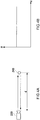
- Figs. 3A and 3B are diagrams explaining a distance measurement principle and distance resolution of a triangulation camera 220.
- a distance d to the instruction point 240 is measured by capturing a parallax image from different viewpoints using two cameras 220a and 220b or by capturing a parallax image while changing a viewpoint by moving a single camera 220.
- An example of a range camera that uses a principle of triangulation is a stereo camera.
- a graph shown in Fig. 3B indicates a distance resolution R for an absolute distance d in the triangulation camera 220.
- the horizontal axis of the graph represents the absolute distance d from a viewpoint to an object, and the vertical axis represents the distance resolution R by triangulation.
- the distance resolution R decreases as a distance to the object becomes farther away, and the measurement accuracy thus drops.
- the distance resolution R becomes higher, and the measurement accuracy is thus improved.
- Figs. 4A and 4B are diagrams explaining a distance measurement principle and distance resolution of a TOF camera 220.
- a distance to an object is measured by projecting infrared light or an ultrasonic sound wave on the object and then measuring a reflected wave thereof.
- a round-trip time t required for light that is emitted from a sensor of the camera 220 to return to the sensor after hitting and getting reflected by the instruction point 240 is measured.
- the round-trip time t is then multiplied by the velocity of light c and divided by 2 so as to obtain the distance d, as shown in the following expression.
- d t * c / 2
- a graph shown in Fig. 4B indicates a distance resolution R for an absolute distance d in the TOF camera 220.
- the distance resolution R is constant regardless of a distance to the object, and the measurement accuracy does not drop even when the distance to the object becomes farther away.
- the measurement accuracy of the triangulation camera 220 drops as the distance to the object becomes farther, the measurement accuracy can be improved by further increasing an interval between two viewpoints.
- a two-dimensional display for example, a common liquid crystal television display does not have expression ability in a Z-direction.
- a circle with a variable distance in the depth direction is often obtained when the user makes a circle in the air while watching a movement trajectory of himself/herself or an instruction point 240 reflected in the display.
- a stereoscopic display that allows for stereovision has expression ability in the Z-direction and allows the user to have a stereoscopic view by viewing a pair of left and right images with a naked eye or polarizing glasses.
- stereoscopic viewing is possible by a method where a left image and a right image are alternately entered for left and right eyes using liquid crystal shutter glasses by alternately displaying the left and right images in a time-multiplexed manner or a method where a left image and a right image can be viewed by a left eye and a right eye, respectively, with a naked eye using a parallax barrier or lenticular lens.
- a circle that is parallel to a display surface can be made when the user makes a circle in the air while watching the display.
- stereoscopic displays for which a user's viewpoint position for stereoscopic viewing is fixed, allowing for stereoscopic viewing only in a single direction from a given viewpoint. The stereoscopic displays thus cannot follow a change in the user's viewpoint position.
- a three-dimensional display with multiple viewpoints according to an integral imaging method, a holographic method, or the like allows for stereoscopic viewing from different viewpoint positions by displaying a plurality of different pairs of left and right images in accordance with a viewpoint.
- a user is able to have a stereoscopic view from any viewpoint position.
- a three-dimensional display is capable of following a change in a user's viewpoint position, thus allowing for more natural stereoscopic viewing.
- substantially unlimited pairs of left and right images can be displayed, and almost complete stereoscopic viewing is thus possible.
- the operation accuracy in the Z-direction at the time of entering an operation by a gesture by a user increases, allowing operation input to be entered by making a gesture that is rich in the Z-direction.
- an operational feeling of a user is optimized by adjusting a parameter for gesture recognition in accordance with the distance measurement resolution of the camera 220 and the three-dimensional display performance of the display apparatus 210.
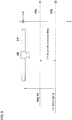
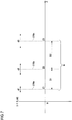
- Fig. 5 is a diagram explaining a virtual screen that is set in front of the display apparatus 210.
- a camera 220 installed on the display apparatus 210, the surface of the display apparatus 210, and a depth direction perpendicular to the surface of the display apparatus 210 are set to be a point of origin, an X-Y plane, and a Z axis, respectively, in a coordinate system.
- a first virtual screen 270a and a second virtual screen 270b which are imaginary, are provided at positions where respective distances d from the camera 220 are Z1 and Z2 (Z1 ⁇ Z2), respectively.
- the virtual screens each have a distance switch function for activating the instruction point 240 in accordance with a depth distance to the instruction point 240.
- the gesture recognition processing unit 60 may recognize the movement as an operation of selecting a button or the like on the display. If the instruction point 240 further breaks through the first virtual screen 270a at a position located at a distance Z1, the gesture recognition processing unit 60 may recognize the movement as a warp operation.
- the gesture recognition processing unit 60 can identify different operation commands based on a change in the depth direction of a gesture by the user. As the number of stages of virtual screens is increased, even more different operation commands can be identified based on the number of stages of virtual screen to be broken through. When the number of stages of virtual screens is increased, more variation can be created in operation commands by detecting a change in acceleration of movement in the depth direction.
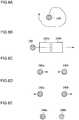
- Figs. 6A through 6E are diagrams explaining examples of operation input entered by a gesture.
- Fig. 6A represents an example where a finger is stuck into a virtual screen so as to enter relative control by moving the finger from right to left or up and down or making a circle while using a position at which the finger is stuck into a virtual screen as the origin.
- the instruction point 240 becomes active, and an object or icon displayed in the display apparatus 210 is selected.
- the object or icon displayed on the screen can be moved from right to left or up and down.
- scrolling from right to left or up and down may be achieved by moving the finger from right to left or up and down, respectively, and enlarged or reduced display may be achieved by making a circle clockwise or counterclockwise, respectively.
- Fig. 6B when a finger is stuck into a virtual screen and moved widely from side to side such that the finger passes across the respective fields of view of the cameras 220a and 220b, the gesture recognition processing unit 60 determines that the user gesture is directed to flick input, and the application execution unit 80, for example, moves to the next screen or performs continuous scrolling in accordance with operation input that has been determined.
- Figs. 6C and 6D each illustrate a state where the user enters a pinch operation a gesture.
- Pinching is a pinching movement with two fingers to increase (pinch out) or decrease (pinch in) a space between the fingers.
- Fig. 6C when two right and left fingers are stuck into a virtual screen so as to make a gesture of decreasing a space between the two fingers, the gesture recognition processing unit 60 determines that the gesture is a pinch-in operation, and the display control unit 70 performs a process of reducing a screen that is being displayed.
- Fig. 6D when two right and left fingers are stuck into a virtual screen so as to make a gesture of increasing a space between the two fingers, the gesture recognition processing unit 60 determines that the gesture is a pinch-out operation, and the display control unit 70 performs a process of enlarging a screen that is being displayed.
- the gesture recognition processing unit 60 determines that the gesture is directed to a warp operation. For example, the gesture recognition processing unit 60 may determine that sticking out only one finger is directed to pressing down a selection/execution button and that sticking out two fingers is directed to pressing down a cancel button.
- the number N of the stages, the interval D, and the dead band width d are parameters related to the sensitivity of motion detection of a gesture in the depth direction. These parameters are adjusted based on distance measurement resolution and three-dimensional display performance. These adjustable parameters may be changed depending on a distance Z in the depth direction.
- the gesture recognition parameter adjustment unit 50 increases the number N of the stages and reduces both the interval D and the dead band width d. This is because there is no harm in increasing the detection sensitivity in the Z-direction since the user can make a motion that is rich in the Z-direction as the three-dimensional display performance increases.
- the number N of the stages, the interval D, and the dead band width d are changed according to a distance in the depth direction.
- the measurement accuracy drops as an object becomes farther away from the camera 220.
- the detection sensitivity in the Z-direction is increased by increasing the number N of the stages while reducing the interval D and the dead band width d when a distance from the camera 220 is smaller than a predetermined threshold value.
- the detection sensitivity in the Z-direction is lowered by decreasing the number N of the stages while reducing the interval D and the dead band width d when the distance from the camera 220 is larger than the predetermined threshold value.
- the interval D and the dead band width d are set to be constant values. Since the measurement accuracy is high in a TOF type, the number N of the stages can be increased more compared to the case of a triangulation type.
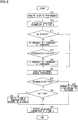
- Fig. 8 is a flowchart explaining a method for adjusting parameters related to the sensitivity of motion detection in a Z-direction by a gesture operation input processing apparatus 100.
- a flowchart shown in Fig. 8 displays a processing procedure performed by each component by a combination of "S" (initial letter of "Step"), which represents "step", and a number.
- the processing procedure is displayed while adding a letter "Y" (the initial of the word “Yes") when the determination result is positive (e.g., Y in S14) and is displayed while adding a letter "N" (the initial of the word “No") when the determination result is negative (e.g., N in S14).
- the display performance acquisition unit 40 acquires data related to display performance and, particularly, to three-dimensional display performance from the display database 42 (S10).
- a driver of the display apparatus 210 is installed in the game device 200 at the time the display apparatus 210 is connected to the game device 200.
- the display performance acquisition unit 40 acquires the data related to the three-dimensional display performance by making an inquiry to the display database 42 based on driver information of the display apparatus 210. Alternatively, if the data related to the three-dimensional display performance is included in the driver of the display apparatus 210, the display performance acquisition unit 40 may retrieve the data related to the three-dimensional display performance from the driver.
- the gesture recognition parameter adjustment unit 50 sets respective initial values of the number N of the stages, the interval D, and the dead band width d, which are adjustable parameters (S12).
- the initial values are default values based on the assumption that the display has advanced three-dimensional display performance.
- the display performance acquisition unit 40 determines whether the display apparatus 210 is a three-dimensional display (S14). If the display apparatus 210 is a three-dimensional display (Y in S14), the step proceeds to Step S22 without changing the respective initial values of the number N of the stages, the interval D, and the dead band width d.
- the gesture recognition parameter adjustment unit 50 reduces the number N of the stages and increases the interval D and the dead band width d (S16).
- the display performance acquisition unit 40 determines whether the display apparatus 210 is a stereoscopic display (S18). If the display apparatus 210 is a stereoscopic display (Y in S18), the step proceeds to Step S22 without further changing the respective values of the number N of the stages, the interval D, and the dead band width d.
- the gesture recognition parameter adjustment unit 50 further reduces the number N of the stages and increases the interval D and the dead band width d (S20).
- the distance sensor performance acquisition unit 30 then acquires data related to the distance resolution of the camera 220 from the distance sensor database 32 (S21).
- a driver of the camera 220 is installed in the game device 200 at the time the camera 220 is connected to the game device 200.
- the distance sensor performance acquisition unit 30 acquires the data related to the distance resolution by making an inquiry to the distance sensor database 32 based on driver information of the camera 220. Alternatively, if the data related to the distance resolution is included in the driver of the camera 220, the distance sensor performance acquisition unit 30 may retrieve the data related to the distance resolution from the driver.
- the distance sensor performance acquisition unit 30 determines whether the camera 220 is of a triangulation type (S22). If the camera 220 is a triangulation type, the number N of the stages, the interval D, and the dead band width d are made different according to a distance in the depth direction (S24). More specifically, the number N of the stages of a virtual screen is increased as the position of the virtual screen becomes closer to the camera 220, and the number N of the stages of a virtual screen is reduced as the position of the virtual screen becomes farther away from the camera 220. Regarding a virtual screen at a position close to the camera 220, an interval D between adjacent screens and a dead band width d are reduced since the measurement accuracy is high. Regarding a virtual screen at a position far from the camera 220, an interval D between adjacent screens and a dead band width d are enlarged since the measurement accuracy is low.
- the distance sensor performance acquisition unit 30 determines whether the camera 220 is of a TOF type based on the data related to the distance resolution (S26). If the camera 220 is a TOF type (Y in S26), the number N of the stages, the interval D, and the dead band width d of the virtual screen are set to be constant regardless of a distance in the depth direction, and the total number N of the stages of the virtual screen is increased (S28). If the camera 220 is not a TOF type (N in S26), the step proceeds to Step S30 without further adjusting the number N of the stages, the interval D, and the dead band width d.
- the gesture recognition parameter adjustment unit 50 provides the number N of the stages, the interval D, and the dead band width d, which have been adjusted, to the gesture recognition processing unit 60 (S30).
- input by a gesture can be entered according to the performance of the system, without the user feeling any stress, by appropriately adjusting the detection sensitivity of a gesture by the user particularly in the depth direction based on the measurement resolution of a distance sensor and the three-dimensional display performance of a display.
- the detection sensitivity is automatically adjusted by a system, and a seamless and highly flexible gesture input interface can thus be provided.
- the present invention is applicable to an apparatus and a method for processing operation input entered by a gesture.
Landscapes
- Engineering & Computer Science (AREA)
- General Engineering & Computer Science (AREA)
- Theoretical Computer Science (AREA)
- Human Computer Interaction (AREA)
- Physics & Mathematics (AREA)
- General Physics & Mathematics (AREA)
- User Interface Of Digital Computer (AREA)
- Position Input By Displaying (AREA)
Claims (7)
- Appareil de traitement d'entrée d'opération gestuelle, comprenant :une unité d'extraction de point d'instruction (10), configurée pour extraire un point d'instruction d'un utilisateur d'une image où un geste de l'utilisateur, effectué pendant que l'utilisateur regarde un écran, est capturé ;une unité de calcul de distance (20), configurée pour obtenir une distance au point d'instruction dans la direction de profondeur ;une unité de réglage de paramètre (50), configurée pour régler un paramètre utilisé pour le réglage de la sensibilité de détection dans la direction de profondeur quand une entrée d'opération par le geste de l'utilisateur est reconnue, sur la base d'une résolution de mesure de distance dans la direction de profondeur et/ou d'une performance d'affichage tridimensionnel d'un écran ; etune unité de traitement de reconnaissance gestuelle (60), configurée pour reconnaître l'entrée d'opération par le geste de l'utilisateur sur la base du paramètre réglé, pour détecter si le point d'instruction de l'utilisateur traverse un écran virtuel, qui est défini dans la direction de profondeur, et pour activer le point d'instruction afin de reconnaître une entrée d'opération entrée par un geste quand le point d'instruction traverse l'écran virtuel, sur la base de la distance au point d'instruction dans la direction de profondeur, calculée par l'unité de calcul de distance (20),l'unité de réglage de paramètre (50) réglant, en guise du paramètre relatif à la sensibilité de détection dans la direction de profondeur, au moins un paramètre parmi un nombre installé, un intervalle d'installation et une zone morte d'une pluralité d'écrans virtuels situés dans la direction de profondeur pour permettre au point d'instruction de les traverser.
- Appareil de traitement d'entrée d'opération gestuelle selon la revendication 1, dans lequel l'unité de réglage de paramètre (50) effectue, quand l'écran permet un affichage tridimensionnel par comparaison à quand l'écran permet un affichage bidimensionnel, au moins un réglage parmi : augmenter le nombre installé ; réduire l'intervalle d'installation ; et réduire la zone morte des écrans virtuels.
- Appareil de traitement d'entrée d'opération gestuelle selon l'une quelconque des revendications 1 et 2, dans lequel l'unité de réglage de paramètre (50) définit, quand la mesure de distance dans la direction de profondeur est effectuée par un procédé de mesure de type TOF (temps de vol), le nombre installé, l'intervalle d'installation et la zone morte des écrans virtuels comme étant constants par rapport à la distance dans la direction de profondeur.
- Appareil de traitement d'entrée d'opération gestuelle selon l'une quelconque des revendications 1 et 3, dans lequel, quand la mesure de distance dans la direction de profondeur est effectuée par un procédé de mesure de type triangulation, l'unité de réglage de paramètre (50) définit le nombre installé, l'intervalle d'installation et la zone morte des écrans virtuels comme étant variables par rapport à la distance dans la direction de profondeur.
- Procédé de traitement d'entrée d'opération gestuelle dans un système d'entrée gestuelle tridimensionnel muni d'une interface pour prendre en charge une entrée d'opération entrée par un geste d'un utilisateur, le procédé comprenant les étapes consistant à :extraire un point d'instruction d'un utilisateur d'une image où un geste de l'utilisateur, effectué pendant que l'utilisateur regarde un écran, est capturé ;obtenir une distance au point d'instruction dans la direction de profondeur ;régler un paramètre utilisé pour le réglage de la sensibilité de détection dans la direction de profondeur quand une entrée d'opération par le geste de l'utilisateur est reconnue, sur la base d'une résolution de mesure de distance dans la direction de profondeur et/ou d'une performance d'affichage tridimensionnel d'un écran ; etreconnaître l'entrée d'opération par le geste de l'utilisateur sur la base du paramètre réglé, détecter si le point d'instruction de l'utilisateur traverse un écran virtuel, qui est défini dans la direction de profondeur, et activer le point d'instruction afin de reconnaître une entrée d'opération entrée par un geste quand le point d'instruction traverse l'écran virtuel, sur la base de la distance au point d'instruction dans la direction de profondeur,l'étape de réglage comprenant l'étape consistant à régler, en guise du paramètre relatif à la sensibilité de détection dans la direction de profondeur, au moins un paramètre parmi un nombre installé, un intervalle d'installation et une zone morte d'une pluralité d'écrans virtuels situés dans la direction de profondeur pour permettre au point d'installation de les traverser.
- Programme informatique intégré sur un support d'enregistrement non temporaire et lisible par ordinateur, comprenant :un module configuré pour extraire un point d'instruction d'un utilisateur d'une image où un geste de l'utilisateur, effectué pendant que l'utilisateur regarde un écran, est capturé ;un module configuré pour obtenir une distance au point d'instruction dans la direction de profondeur ;un module configuré pour régler un paramètre utilisé pour le réglage de la sensibilité de détection dans la direction de profondeur quand une entrée d'opération par le geste de l'utilisateur est reconnue, sur la base d'une résolution de mesure de distance dans la direction de profondeur et/ou d'une performance d'affichage tridimensionnel d'un écran ; etun module configuré pour reconnaître l'entrée d'opération par le geste de l'utilisateur sur la base du paramètre réglé, pour détecter si le point d'instruction de l'utilisateur traverse un écran virtuel, qui est défini dans la direction de profondeur, et pour activer le point d'instruction afin de reconnaître une entrée d'opération entrée par un geste quand le point d'instruction traverse l'écran virtuel, sur la base de la distance au point d'instruction dans la direction de profondeur, le module configuré pour régler réglant, en guise du paramètre relatif à la sensibilité de détection dans la direction de profondeur, au moins un paramètre parmi un nombre installé, un intervalle d'installation et une zone morte d'une pluralité d'écrans virtuels situés dans la direction de profondeur pour permettre au point d'instruction de les traverser.
- Support d'enregistrement non temporaire et lisible par ordinateur, sur lequel est intégré le programme selon la revendication 6.
Applications Claiming Priority (2)
| Application Number | Priority Date | Filing Date | Title |
|---|---|---|---|
| JP2010290717A JP5711962B2 (ja) | 2010-12-27 | 2010-12-27 | ジェスチャ操作入力処理装置およびジェスチャ操作入力処理方法 |
| PCT/JP2011/007089 WO2012090429A1 (fr) | 2010-12-27 | 2011-12-19 | Système d'entrée d'opération de geste et procédé d'entrée d'opération de geste |
Publications (3)
| Publication Number | Publication Date |
|---|---|
| EP2660686A1 EP2660686A1 (fr) | 2013-11-06 |
| EP2660686A4 EP2660686A4 (fr) | 2017-02-01 |
| EP2660686B1 true EP2660686B1 (fr) | 2021-03-03 |
Family
ID=46382570
Family Applications (1)
| Application Number | Title | Priority Date | Filing Date |
|---|---|---|---|
| EP11853600.2A Active EP2660686B1 (fr) | 2010-12-27 | 2011-12-19 | Système d'entrée d'opération de geste et procédé d'entrée d'opération de geste |
Country Status (5)
| Country | Link |
|---|---|
| US (1) | US9465443B2 (fr) |
| EP (1) | EP2660686B1 (fr) |
| JP (1) | JP5711962B2 (fr) |
| CN (1) | CN103282859A (fr) |
| WO (1) | WO2012090429A1 (fr) |
Families Citing this family (44)
| Publication number | Priority date | Publication date | Assignee | Title |
|---|---|---|---|---|
| JP5711962B2 (ja) * | 2010-12-27 | 2015-05-07 | 株式会社ソニー・コンピュータエンタテインメント | ジェスチャ操作入力処理装置およびジェスチャ操作入力処理方法 |
| EP2703836B1 (fr) | 2012-08-30 | 2015-06-24 | Softkinetic Sensors N.V. | Système d'éclairage TOF et caméra TOF et procédé de fonctionnement, avec supports de commande de dispositifs électroniques situés dans la scène |
| US9760180B2 (en) | 2012-10-05 | 2017-09-12 | Nec Solution Innovators, Ltd. | User interface device and user interface method |
| US9310895B2 (en) | 2012-10-12 | 2016-04-12 | Microsoft Technology Licensing, Llc | Touchless input |
| CN103902037B (zh) * | 2012-12-28 | 2017-09-29 | 联想(北京)有限公司 | 信息处理方法及电子设备 |
| JP6282072B2 (ja) * | 2013-09-24 | 2018-02-21 | 株式会社三菱東京Ufj銀行 | 情報処理装置およびプログラム |
| US9412012B2 (en) | 2013-10-16 | 2016-08-09 | Qualcomm Incorporated | Z-axis determination in a 2D gesture system |
| CN103558919A (zh) * | 2013-11-15 | 2014-02-05 | 深圳市中兴移动通信有限公司 | 可视化内容分享方法及其装置 |
| JP6222830B2 (ja) * | 2013-12-27 | 2017-11-01 | マクセルホールディングス株式会社 | 画像投射装置 |
| CN103713536B (zh) * | 2013-12-27 | 2016-05-04 | 广东省自动化研究所 | 一种基于超声定位的3d手势识别控制器及方法 |
| KR102159994B1 (ko) * | 2014-01-22 | 2020-09-25 | 삼성전자주식회사 | 티오에프 카메라 장치 및 이의 구동 방법 |
| KR101803222B1 (ko) * | 2014-03-07 | 2017-11-29 | 폭스바겐 악티엔 게젤샤프트 | 제스처 감지 중에 입력 수단의 3d 위치를 시그널링하기 위한 사용자 인터페이스 및 방법 |
| CN104951059B (zh) * | 2014-03-31 | 2018-08-10 | 联想(北京)有限公司 | 一种数据处理方法、装置及一种电子设备 |
| JP2015200960A (ja) * | 2014-04-04 | 2015-11-12 | 株式会社リコー | 情報システム、情報処理方法、及びプログラム |
| CN104978014B (zh) * | 2014-04-11 | 2018-05-11 | 维沃移动通信有限公司 | 一种快速调用应用程序或系统功能的方法及其移动终端 |
| DE102014107683B3 (de) * | 2014-06-02 | 2015-10-01 | Insta Elektro Gmbh | Verfahren zum Betreiben einer Gebäudeinstallation mit einem Situationswächter sowie Gebäudeinstallation mit einem Situationswächter |
| KR102209354B1 (ko) * | 2014-06-20 | 2021-01-29 | 엘지전자 주식회사 | 영상 표시 기기 및 그의 동작 방법 |
| US10482670B2 (en) | 2014-12-30 | 2019-11-19 | Qingdao Goertek Technology Co., Ltd. | Method for reproducing object in 3D scene and virtual reality head-mounted device |
| CN104571510B (zh) | 2014-12-30 | 2018-05-04 | 青岛歌尔声学科技有限公司 | 一种3d场景中输入手势的系统和方法 |
| EP3283185A1 (fr) * | 2015-04-15 | 2018-02-21 | Thomson Licensing | Configuration d'une conversion d'un mouvement en trois dimensions |
| US9442575B1 (en) * | 2015-05-15 | 2016-09-13 | Atheer, Inc. | Method and apparatus for applying free space input for surface constrained control |
| US9841836B2 (en) * | 2015-07-28 | 2017-12-12 | General Electric Company | Control of non-destructive testing devices |
| JP6240135B2 (ja) * | 2015-10-26 | 2017-11-29 | 株式会社ソニー・インタラクティブエンタテインメント | 画像処理装置、画像処理方法およびプログラム |
| JP6733309B2 (ja) * | 2016-05-25 | 2020-07-29 | 株式会社ノーリツ | 給湯装置 |
| WO2018012207A1 (fr) * | 2016-07-12 | 2018-01-18 | 富士フイルム株式会社 | Système d'affichage d'image, dispositif de commande de visiocasque et procédé et programme de fonctionnement associés |
| CN106445122B (zh) * | 2016-09-08 | 2020-06-05 | 北京小米移动软件有限公司 | 设备状态控制方法及装置 |
| WO2018083737A1 (fr) * | 2016-11-01 | 2018-05-11 | マクセル株式会社 | Dispositif d'affichage et dispositif de commande d'opération à distance |
| US11243293B2 (en) * | 2017-02-07 | 2022-02-08 | Samsung Electronics Company, Ltd. | Radar-based system for sensing touch and in-the-air interactions |
| CN110249290A (zh) * | 2017-02-13 | 2019-09-17 | 索尼公司 | 信息处理设备、信息处理方法和程序 |
| CN108665480A (zh) * | 2017-03-31 | 2018-10-16 | 满景资讯股份有限公司 | 三维侦测装置的操作方法 |
| CN107255942A (zh) * | 2017-06-02 | 2017-10-17 | 昆山锐芯微电子有限公司 | 智能设备的控制方法、装置及系统、存储介质 |
| CN107300975A (zh) * | 2017-07-13 | 2017-10-27 | 联想(北京)有限公司 | 一种信息处理方法及电子设备 |
| CN109753140B (zh) * | 2017-11-02 | 2021-08-24 | 腾讯科技(深圳)有限公司 | 基于虚拟现实的操作指令获取方法、装置 |
| CN108132706A (zh) * | 2017-11-27 | 2018-06-08 | 北京用友政务软件有限公司 | 一种终端设备的操作控制方法、系统及终端设备 |
| WO2019104476A1 (fr) * | 2017-11-28 | 2019-06-06 | 深圳迈瑞生物医疗电子股份有限公司 | Moniteur et son procédé de commutation d'écran d'affichage |
| JP2019191946A (ja) * | 2018-04-25 | 2019-10-31 | パイオニア株式会社 | 情報処理装置 |
| JP7174397B2 (ja) * | 2018-06-18 | 2022-11-17 | チームラボ株式会社 | 映像表示システム,映像表示方法,及びコンピュータプログラム |
| JP6822445B2 (ja) * | 2018-07-02 | 2021-01-27 | カシオ計算機株式会社 | 投影装置、投影方法及びプログラム |
| CN109591033A (zh) * | 2018-09-28 | 2019-04-09 | 广州智伴人工智能科技有限公司 | 一种非接触式人机交互系统 |
| CN111562843A (zh) * | 2020-04-29 | 2020-08-21 | 广州美术学院 | 一种手势捕捉的定位方法、装置、设备和存储介质 |
| JP2021189659A (ja) | 2020-05-28 | 2021-12-13 | ソニーセミコンダクタソリューションズ株式会社 | 情報処理装置及びユーザの入力操作に基づく情報処理方法並びに該方法を実行するためのコンピュータプログラム |
| KR102321359B1 (ko) * | 2020-06-02 | 2021-11-02 | 국민대학교산학협력단 | 손 모양 및 조도 센서에 기초하여 가상현실 콘텐츠를 제어하는 휴대용 단말 및 이를 포함하는 vr 뷰어 시스템 |
| JP7452917B2 (ja) * | 2021-03-10 | 2024-03-19 | 株式会社ネクステッジテクノロジー | 操作入力装置、操作入力方法及びプログラム |
| WO2023021757A1 (fr) * | 2021-08-20 | 2023-02-23 | ソニーグループ株式会社 | Dispositif de traitement d'informations, procédé de traitement d'informations et programme |
Citations (1)
| Publication number | Priority date | Publication date | Assignee | Title |
|---|---|---|---|---|
| US9465443B2 (en) * | 2010-12-27 | 2016-10-11 | Sony Corporation | Gesture operation input processing apparatus and gesture operation input processing method |
Family Cites Families (19)
| Publication number | Priority date | Publication date | Assignee | Title |
|---|---|---|---|---|
| US6064354A (en) | 1998-07-01 | 2000-05-16 | Deluca; Michael Joseph | Stereoscopic user interface method and apparatus |
| JP2004265222A (ja) | 2003-03-03 | 2004-09-24 | Nippon Telegr & Teleph Corp <Ntt> | インタフェース方法、装置、およびプログラム |
| US7787009B2 (en) | 2004-05-10 | 2010-08-31 | University Of Southern California | Three dimensional interaction with autostereoscopic displays |
| US8279168B2 (en) * | 2005-12-09 | 2012-10-02 | Edge 3 Technologies Llc | Three-dimensional virtual-touch human-machine interface system and method therefor |
| JP4766340B2 (ja) * | 2006-10-13 | 2011-09-07 | ソニー株式会社 | 近接検知型情報表示装置およびこれを使用した情報表示方法 |
| US8284165B2 (en) * | 2006-10-13 | 2012-10-09 | Sony Corporation | Information display apparatus with proximity detection performance and information display method using the same |
| JP2008176438A (ja) | 2007-01-17 | 2008-07-31 | Tokai Rika Co Ltd | 画像表示装置 |
| US20080231926A1 (en) | 2007-03-19 | 2008-09-25 | Klug Michael A | Systems and Methods for Updating Dynamic Three-Dimensional Displays with User Input |
| CN101715581B (zh) | 2007-04-20 | 2014-07-23 | 索夫特基奈蒂克软件公司 | 体积识别方法和系统 |
| JP2010009558A (ja) * | 2008-05-28 | 2010-01-14 | Oki Semiconductor Co Ltd | 画像認識装置、電装機器動作制御ユニット、電化製品、画像認識プログラム、半導体装置 |
| US8971565B2 (en) * | 2008-05-29 | 2015-03-03 | Hie-D Technologies, Llc | Human interface electronic device |
| JP4318056B1 (ja) * | 2008-06-03 | 2009-08-19 | 島根県 | 画像認識装置および操作判定方法 |
| US8514251B2 (en) * | 2008-06-23 | 2013-08-20 | Qualcomm Incorporated | Enhanced character input using recognized gestures |
| JP5594733B2 (ja) * | 2008-10-01 | 2014-09-24 | 株式会社ソニー・コンピュータエンタテインメント | 情報処理装置、情報処理方法、情報記憶媒体及びプログラム |
| US20100100853A1 (en) * | 2008-10-20 | 2010-04-22 | Jean-Pierre Ciudad | Motion controlled user interface |
| JP5182202B2 (ja) * | 2009-04-14 | 2013-04-17 | ソニー株式会社 | 情報処理装置、情報処理方法及び情報処理プログラム |
| US20100302138A1 (en) * | 2009-05-29 | 2010-12-02 | Microsoft Corporation | Methods and systems for defining or modifying a visual representation |
| US9383823B2 (en) * | 2009-05-29 | 2016-07-05 | Microsoft Technology Licensing, Llc | Combining gestures beyond skeletal |
| US8487871B2 (en) * | 2009-06-01 | 2013-07-16 | Microsoft Corporation | Virtual desktop coordinate transformation |
-
2010
- 2010-12-27 JP JP2010290717A patent/JP5711962B2/ja active Active
-
2011
- 2011-12-19 CN CN2011800623628A patent/CN103282859A/zh active Pending
- 2011-12-19 EP EP11853600.2A patent/EP2660686B1/fr active Active
- 2011-12-19 WO PCT/JP2011/007089 patent/WO2012090429A1/fr not_active Ceased
-
2013
- 2013-06-19 US US13/921,558 patent/US9465443B2/en active Active
Patent Citations (1)
| Publication number | Priority date | Publication date | Assignee | Title |
|---|---|---|---|---|
| US9465443B2 (en) * | 2010-12-27 | 2016-10-11 | Sony Corporation | Gesture operation input processing apparatus and gesture operation input processing method |
Also Published As
| Publication number | Publication date |
|---|---|
| JP2012137989A (ja) | 2012-07-19 |
| JP5711962B2 (ja) | 2015-05-07 |
| EP2660686A4 (fr) | 2017-02-01 |
| CN103282859A (zh) | 2013-09-04 |
| EP2660686A1 (fr) | 2013-11-06 |
| WO2012090429A1 (fr) | 2012-07-05 |
| US9465443B2 (en) | 2016-10-11 |
| US20130278503A1 (en) | 2013-10-24 |
Similar Documents
| Publication | Publication Date | Title |
|---|---|---|
| EP2660686B1 (fr) | Système d'entrée d'opération de geste et procédé d'entrée d'opération de geste | |
| US20250054248A1 (en) | Safety for Wearable Virtual Reality Devices Via Object Detection and Tracking | |
| US11099637B2 (en) | Dynamic adjustment of user interface | |
| CN110647237B (zh) | 在人工现实环境中基于手势的内容共享 | |
| US11017257B2 (en) | Information processing device, information processing method, and program | |
| CN108469899B (zh) | 识别可穿戴显示装置的观察空间中的瞄准点或区域的方法 | |
| US20160274732A1 (en) | Touchless user interfaces for electronic devices | |
| JP6057396B2 (ja) | 3次元ユーザインタフェース装置及び3次元操作処理方法 | |
| EP3931676B1 (fr) | Dispositif de visiocasque et procédé de fonctionnement associé | |
| EP2638461B1 (fr) | Appareil et procédé pour une entrée utilisateur permettant de commander des informations affichées | |
| CN105593787B (zh) | 用于与数字设备交互的直接指向检测的系统和方法 | |
| KR101815020B1 (ko) | 인터페이스 제어 장치 및 방법 | |
| US10747395B2 (en) | Display device, program, display method and control device | |
| US12361660B2 (en) | Information processing apparatus, information processing method, and program | |
| CN103124945A (zh) | 图像识别装置和操作判断方法以及程序 | |
| KR20120068253A (ko) | 사용자 인터페이스의 반응 제공 방법 및 장치 | |
| WO2013082760A1 (fr) | Procédé et système pour répondre à un geste de sélection, par un utilisateur, d'un objet affiché en trois dimensions | |
| JPWO2011114564A1 (ja) | 立体画像表示装置およびその制御方法 | |
| KR20160121287A (ko) | 이벤트에 기반하여 화면을 디스플레이하는 방법 및 장치 | |
| WO2014185002A1 (fr) | Dispositif de commande d'affichage, procédé de commande d'affichage et support d'enregistrement | |
| US10573083B2 (en) | Non-transitory computer-readable storage medium, computer-implemented method, and virtual reality system | |
| KR101961266B1 (ko) | 시선 추적 장치 및 이의 시선 추적 방법 | |
| JP6053845B2 (ja) | ジェスチャ操作入力処理装置、3次元ディスプレイ装置およびジェスチャ操作入力処理方法 | |
| JP7616216B2 (ja) | 情報処理装置、情報処理方法及びプログラム | |
| CN114895789A (zh) | 一种人机交互方法、装置、电子设备和存储介质 |
Legal Events
| Date | Code | Title | Description |
|---|---|---|---|
| PUAI | Public reference made under article 153(3) epc to a published international application that has entered the european phase |
Free format text: ORIGINAL CODE: 0009012 |
|
| 17P | Request for examination filed |
Effective date: 20130703 |
|
| AK | Designated contracting states |
Kind code of ref document: A1 Designated state(s): AL AT BE BG CH CY CZ DE DK EE ES FI FR GB GR HR HU IE IS IT LI LT LU LV MC MK MT NL NO PL PT RO RS SE SI SK SM TR |
|
| DAX | Request for extension of the european patent (deleted) | ||
| RAP1 | Party data changed (applicant data changed or rights of an application transferred) |
Owner name: SONY INTERACTIVE ENTERTAINMENT INC. |
|
| RA4 | Supplementary search report drawn up and despatched (corrected) |
Effective date: 20170105 |
|
| RIC1 | Information provided on ipc code assigned before grant |
Ipc: G06F 3/033 20130101ALI20161223BHEP Ipc: G06F 3/041 20060101AFI20161223BHEP Ipc: G06F 3/01 20060101ALI20161223BHEP Ipc: G06F 3/048 20130101ALI20161223BHEP |
|
| STAA | Information on the status of an ep patent application or granted ep patent |
Free format text: STATUS: EXAMINATION IS IN PROGRESS |
|
| 17Q | First examination report despatched |
Effective date: 20181217 |
|
| GRAP | Despatch of communication of intention to grant a patent |
Free format text: ORIGINAL CODE: EPIDOSNIGR1 |
|
| STAA | Information on the status of an ep patent application or granted ep patent |
Free format text: STATUS: GRANT OF PATENT IS INTENDED |
|
| INTG | Intention to grant announced |
Effective date: 20201104 |
|
| GRAS | Grant fee paid |
Free format text: ORIGINAL CODE: EPIDOSNIGR3 |
|
| GRAA | (expected) grant |
Free format text: ORIGINAL CODE: 0009210 |
|
| STAA | Information on the status of an ep patent application or granted ep patent |
Free format text: STATUS: THE PATENT HAS BEEN GRANTED |
|
| AK | Designated contracting states |
Kind code of ref document: B1 Designated state(s): AL AT BE BG CH CY CZ DE DK EE ES FI FR GB GR HR HU IE IS IT LI LT LU LV MC MK MT NL NO PL PT RO RS SE SI SK SM TR |
|
| REG | Reference to a national code |
Ref country code: GB Ref legal event code: FG4D |
|
| REG | Reference to a national code |
Ref country code: AT Ref legal event code: REF Ref document number: 1367920 Country of ref document: AT Kind code of ref document: T Effective date: 20210315 Ref country code: CH Ref legal event code: EP |
|
| REG | Reference to a national code |
Ref country code: DE Ref legal event code: R096 Ref document number: 602011070308 Country of ref document: DE |
|
| REG | Reference to a national code |
Ref country code: IE Ref legal event code: FG4D |
|
| REG | Reference to a national code |
Ref country code: LT Ref legal event code: MG9D |
|
| PG25 | Lapsed in a contracting state [announced via postgrant information from national office to epo] |
Ref country code: HR Free format text: LAPSE BECAUSE OF FAILURE TO SUBMIT A TRANSLATION OF THE DESCRIPTION OR TO PAY THE FEE WITHIN THE PRESCRIBED TIME-LIMIT Effective date: 20210303 Ref country code: GR Free format text: LAPSE BECAUSE OF FAILURE TO SUBMIT A TRANSLATION OF THE DESCRIPTION OR TO PAY THE FEE WITHIN THE PRESCRIBED TIME-LIMIT Effective date: 20210604 Ref country code: FI Free format text: LAPSE BECAUSE OF FAILURE TO SUBMIT A TRANSLATION OF THE DESCRIPTION OR TO PAY THE FEE WITHIN THE PRESCRIBED TIME-LIMIT Effective date: 20210303 Ref country code: LT Free format text: LAPSE BECAUSE OF FAILURE TO SUBMIT A TRANSLATION OF THE DESCRIPTION OR TO PAY THE FEE WITHIN THE PRESCRIBED TIME-LIMIT Effective date: 20210303 Ref country code: BG Free format text: LAPSE BECAUSE OF FAILURE TO SUBMIT A TRANSLATION OF THE DESCRIPTION OR TO PAY THE FEE WITHIN THE PRESCRIBED TIME-LIMIT Effective date: 20210603 Ref country code: NO Free format text: LAPSE BECAUSE OF FAILURE TO SUBMIT A TRANSLATION OF THE DESCRIPTION OR TO PAY THE FEE WITHIN THE PRESCRIBED TIME-LIMIT Effective date: 20210603 |
|
| REG | Reference to a national code |
Ref country code: NL Ref legal event code: MP Effective date: 20210303 |
|
| REG | Reference to a national code |
Ref country code: AT Ref legal event code: MK05 Ref document number: 1367920 Country of ref document: AT Kind code of ref document: T Effective date: 20210303 |
|
| PG25 | Lapsed in a contracting state [announced via postgrant information from national office to epo] |
Ref country code: SE Free format text: LAPSE BECAUSE OF FAILURE TO SUBMIT A TRANSLATION OF THE DESCRIPTION OR TO PAY THE FEE WITHIN THE PRESCRIBED TIME-LIMIT Effective date: 20210303 Ref country code: RS Free format text: LAPSE BECAUSE OF FAILURE TO SUBMIT A TRANSLATION OF THE DESCRIPTION OR TO PAY THE FEE WITHIN THE PRESCRIBED TIME-LIMIT Effective date: 20210303 Ref country code: PL Free format text: LAPSE BECAUSE OF FAILURE TO SUBMIT A TRANSLATION OF THE DESCRIPTION OR TO PAY THE FEE WITHIN THE PRESCRIBED TIME-LIMIT Effective date: 20210303 Ref country code: LV Free format text: LAPSE BECAUSE OF FAILURE TO SUBMIT A TRANSLATION OF THE DESCRIPTION OR TO PAY THE FEE WITHIN THE PRESCRIBED TIME-LIMIT Effective date: 20210303 |
|
| PG25 | Lapsed in a contracting state [announced via postgrant information from national office to epo] |
Ref country code: NL Free format text: LAPSE BECAUSE OF FAILURE TO SUBMIT A TRANSLATION OF THE DESCRIPTION OR TO PAY THE FEE WITHIN THE PRESCRIBED TIME-LIMIT Effective date: 20210303 |
|
| PG25 | Lapsed in a contracting state [announced via postgrant information from national office to epo] |
Ref country code: SM Free format text: LAPSE BECAUSE OF FAILURE TO SUBMIT A TRANSLATION OF THE DESCRIPTION OR TO PAY THE FEE WITHIN THE PRESCRIBED TIME-LIMIT Effective date: 20210303 Ref country code: AT Free format text: LAPSE BECAUSE OF FAILURE TO SUBMIT A TRANSLATION OF THE DESCRIPTION OR TO PAY THE FEE WITHIN THE PRESCRIBED TIME-LIMIT Effective date: 20210303 Ref country code: CZ Free format text: LAPSE BECAUSE OF FAILURE TO SUBMIT A TRANSLATION OF THE DESCRIPTION OR TO PAY THE FEE WITHIN THE PRESCRIBED TIME-LIMIT Effective date: 20210303 Ref country code: EE Free format text: LAPSE BECAUSE OF FAILURE TO SUBMIT A TRANSLATION OF THE DESCRIPTION OR TO PAY THE FEE WITHIN THE PRESCRIBED TIME-LIMIT Effective date: 20210303 |
|
| PG25 | Lapsed in a contracting state [announced via postgrant information from national office to epo] |
Ref country code: RO Free format text: LAPSE BECAUSE OF FAILURE TO SUBMIT A TRANSLATION OF THE DESCRIPTION OR TO PAY THE FEE WITHIN THE PRESCRIBED TIME-LIMIT Effective date: 20210303 Ref country code: IS Free format text: LAPSE BECAUSE OF FAILURE TO SUBMIT A TRANSLATION OF THE DESCRIPTION OR TO PAY THE FEE WITHIN THE PRESCRIBED TIME-LIMIT Effective date: 20210703 Ref country code: SK Free format text: LAPSE BECAUSE OF FAILURE TO SUBMIT A TRANSLATION OF THE DESCRIPTION OR TO PAY THE FEE WITHIN THE PRESCRIBED TIME-LIMIT Effective date: 20210303 Ref country code: PT Free format text: LAPSE BECAUSE OF FAILURE TO SUBMIT A TRANSLATION OF THE DESCRIPTION OR TO PAY THE FEE WITHIN THE PRESCRIBED TIME-LIMIT Effective date: 20210705 Ref country code: ES Free format text: LAPSE BECAUSE OF FAILURE TO SUBMIT A TRANSLATION OF THE DESCRIPTION OR TO PAY THE FEE WITHIN THE PRESCRIBED TIME-LIMIT Effective date: 20210303 |
|
| REG | Reference to a national code |
Ref country code: DE Ref legal event code: R097 Ref document number: 602011070308 Country of ref document: DE |
|
| PLBE | No opposition filed within time limit |
Free format text: ORIGINAL CODE: 0009261 |
|
| STAA | Information on the status of an ep patent application or granted ep patent |
Free format text: STATUS: NO OPPOSITION FILED WITHIN TIME LIMIT |
|
| PG25 | Lapsed in a contracting state [announced via postgrant information from national office to epo] |
Ref country code: AL Free format text: LAPSE BECAUSE OF FAILURE TO SUBMIT A TRANSLATION OF THE DESCRIPTION OR TO PAY THE FEE WITHIN THE PRESCRIBED TIME-LIMIT Effective date: 20210303 Ref country code: DK Free format text: LAPSE BECAUSE OF FAILURE TO SUBMIT A TRANSLATION OF THE DESCRIPTION OR TO PAY THE FEE WITHIN THE PRESCRIBED TIME-LIMIT Effective date: 20210303 |
|
| 26N | No opposition filed |
Effective date: 20211206 |
|
| PG25 | Lapsed in a contracting state [announced via postgrant information from national office to epo] |
Ref country code: SI Free format text: LAPSE BECAUSE OF FAILURE TO SUBMIT A TRANSLATION OF THE DESCRIPTION OR TO PAY THE FEE WITHIN THE PRESCRIBED TIME-LIMIT Effective date: 20210303 |
|
| PG25 | Lapsed in a contracting state [announced via postgrant information from national office to epo] |
Ref country code: IT Free format text: LAPSE BECAUSE OF FAILURE TO SUBMIT A TRANSLATION OF THE DESCRIPTION OR TO PAY THE FEE WITHIN THE PRESCRIBED TIME-LIMIT Effective date: 20210303 |
|
| PG25 | Lapsed in a contracting state [announced via postgrant information from national office to epo] |
Ref country code: IS Free format text: LAPSE BECAUSE OF FAILURE TO SUBMIT A TRANSLATION OF THE DESCRIPTION OR TO PAY THE FEE WITHIN THE PRESCRIBED TIME-LIMIT Effective date: 20210703 |
|
| PG25 | Lapsed in a contracting state [announced via postgrant information from national office to epo] |
Ref country code: MC Free format text: LAPSE BECAUSE OF FAILURE TO SUBMIT A TRANSLATION OF THE DESCRIPTION OR TO PAY THE FEE WITHIN THE PRESCRIBED TIME-LIMIT Effective date: 20210303 |
|
| REG | Reference to a national code |
Ref country code: CH Ref legal event code: PL |
|
| REG | Reference to a national code |
Ref country code: BE Ref legal event code: MM Effective date: 20211231 |
|
| PG25 | Lapsed in a contracting state [announced via postgrant information from national office to epo] |
Ref country code: LU Free format text: LAPSE BECAUSE OF NON-PAYMENT OF DUE FEES Effective date: 20211219 Ref country code: IE Free format text: LAPSE BECAUSE OF NON-PAYMENT OF DUE FEES Effective date: 20211219 |
|
| PG25 | Lapsed in a contracting state [announced via postgrant information from national office to epo] |
Ref country code: BE Free format text: LAPSE BECAUSE OF NON-PAYMENT OF DUE FEES Effective date: 20211231 |
|
| PG25 | Lapsed in a contracting state [announced via postgrant information from national office to epo] |
Ref country code: LI Free format text: LAPSE BECAUSE OF NON-PAYMENT OF DUE FEES Effective date: 20211231 Ref country code: CH Free format text: LAPSE BECAUSE OF NON-PAYMENT OF DUE FEES Effective date: 20211231 |
|
| PG25 | Lapsed in a contracting state [announced via postgrant information from national office to epo] |
Ref country code: HU Free format text: LAPSE BECAUSE OF FAILURE TO SUBMIT A TRANSLATION OF THE DESCRIPTION OR TO PAY THE FEE WITHIN THE PRESCRIBED TIME-LIMIT; INVALID AB INITIO Effective date: 20111219 Ref country code: CY Free format text: LAPSE BECAUSE OF FAILURE TO SUBMIT A TRANSLATION OF THE DESCRIPTION OR TO PAY THE FEE WITHIN THE PRESCRIBED TIME-LIMIT Effective date: 20210303 |
|
| P01 | Opt-out of the competence of the unified patent court (upc) registered |
Effective date: 20230519 |
|
| P02 | Opt-out of the competence of the unified patent court (upc) changed |
Effective date: 20230527 |
|
| PG25 | Lapsed in a contracting state [announced via postgrant information from national office to epo] |
Ref country code: MK Free format text: LAPSE BECAUSE OF FAILURE TO SUBMIT A TRANSLATION OF THE DESCRIPTION OR TO PAY THE FEE WITHIN THE PRESCRIBED TIME-LIMIT Effective date: 20210303 |
|
| PG25 | Lapsed in a contracting state [announced via postgrant information from national office to epo] |
Ref country code: TR Free format text: LAPSE BECAUSE OF FAILURE TO SUBMIT A TRANSLATION OF THE DESCRIPTION OR TO PAY THE FEE WITHIN THE PRESCRIBED TIME-LIMIT Effective date: 20210303 |
|
| PG25 | Lapsed in a contracting state [announced via postgrant information from national office to epo] |
Ref country code: MT Free format text: LAPSE BECAUSE OF FAILURE TO SUBMIT A TRANSLATION OF THE DESCRIPTION OR TO PAY THE FEE WITHIN THE PRESCRIBED TIME-LIMIT Effective date: 20210303 |
|
| PGFP | Annual fee paid to national office [announced via postgrant information from national office to epo] |
Ref country code: DE Payment date: 20241121 Year of fee payment: 14 |
|
| PGFP | Annual fee paid to national office [announced via postgrant information from national office to epo] |
Ref country code: GB Payment date: 20241122 Year of fee payment: 14 |
|
| PGFP | Annual fee paid to national office [announced via postgrant information from national office to epo] |
Ref country code: FR Payment date: 20241121 Year of fee payment: 14 |